Our depot's Waybill 06 filed a moor road service we stopped running years ago. Every eight years since 1956, it closes: 'keep 06 in the rack, he works again.'
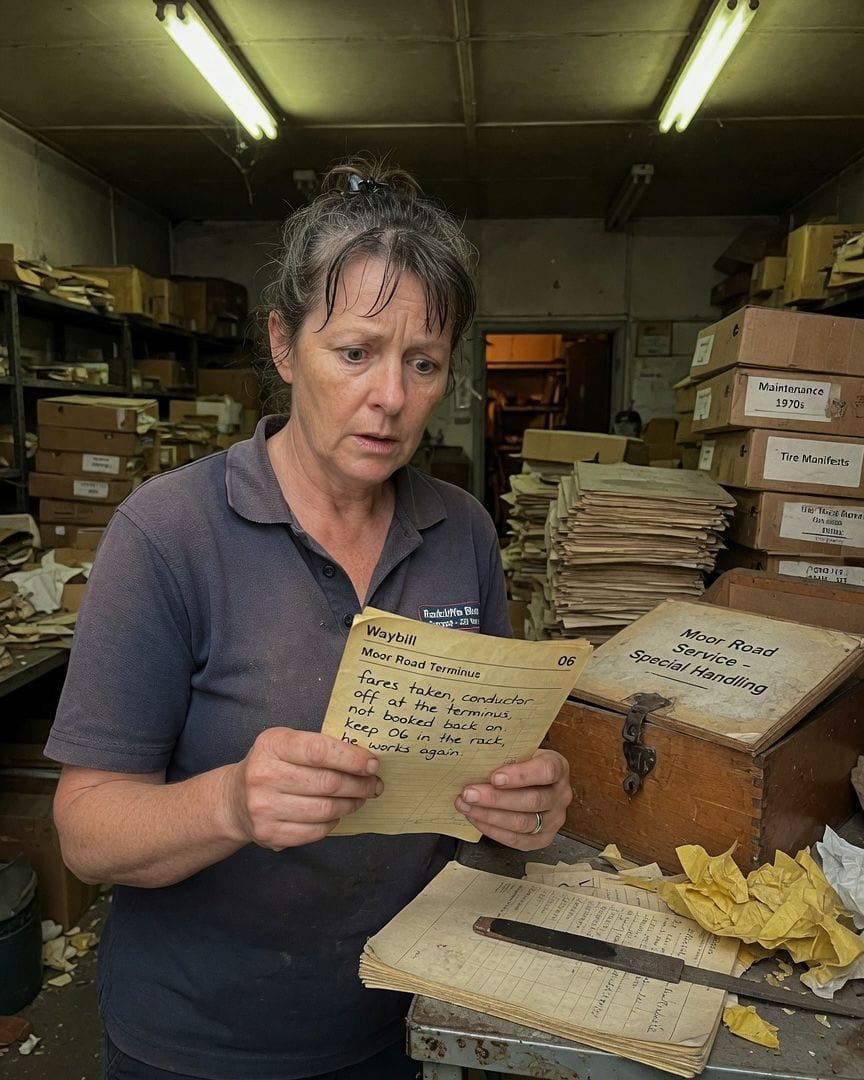
The fluorescent lights in the depot office always hummed like a trapped wasp, a constant, low thrum that usually faded into background noise. But tonight, it felt like it was drilling directly into my skull.
I was sorting through the day’s waybills, the usual stack of deliveries and passenger manifests, when I picked up Waybill 06. A standard form, identical to the hundreds I’d handled over my twenty years of driving.
Except for one detail: 'Moor Road Terminus'. My hand paused mid-air. The Moor Road service was decommissioned. Decades ago. Before I even had my license.
"Clerical error, Pam," Diane Radcliffe, my supervisor, said from her desk, not even looking up from her spreadsheets. Her voice was as dry and no-nonsense as usual. "Happens. Someone pulls the wrong form, probably an old template.
Just cross it out, file it with the phantom routes."
I nodded, but didn't cross it out. My fingers traced the typed letters. Moor Road Terminus. It felt… deliberate. I flipped the waybill over.
And there, handwritten in stark, precise script, was the closing note: 'fares taken, conductor off at the terminus, not booked back on.' A chill, unexpected and sharp, ran up my spine.
Below that, equally precise, the unsettling instruction: 'keep 06 in the rack, he works again.' It wasn't a casual note. It was an order.
An instruction that kept cycling in my mind, an unshakeable wrongness beneath the hum of the lights. Fares taken. Works again. What in the hell did that mean?
I couldn't let it go. The feeling burrowed under my skin, and the next day, I found myself in the depot’s forgotten back room, claiming to be working on a "union archive project."
The air was thick with the smell of dust and decaying paper, the silence broken only by my own breathing and the occasional distant clang from the garage. Amidst stacks of brittle old ledgers and yellowed schedules, I started searching.
It took hours. My hands were grimy, my throat tight. And then I found them. A stack of Waybill 06 forms, tucked behind a shelf of maintenance records from the 70s.
They were all from different years. Not consecutive, but a distinct pattern. Every single form, dated precisely every eight years since 1956, listed the same route: Moor Road Terminus.
And every single one had the exact same handwritten closing entry: 'fares taken, conductor off at the terminus, not booked back on.' And below that, that identical, chilling instruction: 'keep 06 in the rack, he works again.'
The handwriting changed, from neat cursive to clumsy block print, then back to a more elegant script from the 90s, but the phrasing was always exact. The same three lines, precisely worded, across generations of depot staff.
This wasn't a clerical error. It was a deliberate, recurring pattern. A record kept by different hands, across decades, all managing the same impossible event. My heart started to beat a little too fast, a frantic drum against my ribs.
This was real. This was a system. And it was still running.
Driven by a growing, cold dread, I pushed deeper into the forgotten archives. The room felt colder now, the shadows longer.
Behind a stack of old tire manifests, smelling faintly of rubber and mildew, I uncovered a small, wooden archive box. It was distinct from the plain cardboard ones, darker, heavier.
Unmarked except for a faded, hand-stenciled label on its lid: 'Moor Road Service - Special Handling'. My heart pounded, a frantic rhythm against the sudden silence of the room. I pried open the rusted latch.
Inside, beneath a layer of yellowed tissue paper that crumbled at my touch, I found a single, thin file. It was mostly blank, its pages dog-eared and brittle.
But near the bottom of one page, a single line was heavily redacted with thick, black ink. It looked like an old government document, a secret. I leaned closer, my breath catching in my throat.
I could just make out words around the black-out, a few letters peeking through, like fragments of a nightmare. '...[redaction]... Elm Street...[redaction]... 1948...' Elm Street. My own street. And a date decades before I was even born.
It was staring back at me from a file that shouldn't exist, here in this dusty, forgotten corner.
The redacted line in that file burned in my mind. Elm Street, 1948. I spent days in the local archives, ostensibly researching old bus routes for my 'union project'.
I scoured newspaper microfiches and town council minutes, looking for any mention of 'Elm Street' and '1948' that might be overtly sinister. Nothing.
A few mentions of a particularly harsh winter, a new housing development, but no disappearances, no strange incidents.
The only thing of note was a brief, almost apologetic line about the Moor Road service being officially decommissioned in '56 after a "local incident," the details of which remained maddeningly vague. No names. No specific location.
Just a blank, an erasure.
I needed to talk to someone who remembered. Someone from the old days. That's how I found Kenneth Thornton.
Retired depot manager, 78 years old, living in a quiet bungalow on the edge of town, surrounded by carefully tended rose bushes. He invited me in for tea, his home smelling of potpourri and old books.
He was polite, genial even, reminiscing about the old depot, the characters he’d worked with. Then, cautiously, I brought up Waybill 06. The Moor Road route.
Kenneth’s pleasant demeanor didn’t crack, not visibly. But something in his eyes shifted, becoming distant, like looking through frosted glass. He took a slow sip of his tea. "Ah, yes. Waybill 06. The Moor Road."
His voice was low, almost a murmur. "Special arrangements, Pamela. Some things just... need managing." He gestured vaguely with his teacup. "The Moor Road wasn't just a route, you see. It was more of a... boundary.
And the 'service,' as you call it, was a necessary function for the town. A responsibility. Passed down." He avoided every direct question, circling around them with soft, philosophical statements. He never outright denied anything I said, never looked surprised.
His calm, almost weary tone, was more unsettling than any outright denial or anger could have been. It was the composure of someone who knew. Someone who had always known.
My digging didn't go unnoticed. The next week, my access card to the depot archives inexplicably malfunctioned. "Magnetic strip, probably," Diane had said, handing me a temporary pass that felt too flimsy in my hand.
It worked, eventually, but the message was clear. Then, I found a stack of new, unsorted waybills left on my desk, deliberately burying the Waybill 06 forms I’d been working on. A silent suggestion to stop looking.
One afternoon, as I was about to leave, I found a small, folded note tucked under my bus's windshield wiper. My heart gave a sickening lurch as I recognized the script. Neat, precise block letters.
Exactly like the handwriting on some of the older Waybill 06 forms I’d found in the archive. It simply read: 'Some things are better left in the rack.'
I crumpled it in my fist, my knuckles white, the scent of exhaust fumes suddenly tasting like fear.
The next day, Kenneth Thornton made an unannounced visit to the depot. He wore a tweed jacket, looked entirely harmless. He moved through the garage, chatting amiably with the mechanics, shaking hands with the drivers.
"Just checking in," he said, his smile benign. "Old stomping grounds, you know." But his eyes. They kept returning to my locker, then to the office where the old records were kept, a quiet, almost imperceptible sweep.
He didn't confront me, didn't even meet my gaze directly, but his presence was a palpable warning. A quiet assertion of oversight. He was watching. He knew.
I couldn't live with the silence. I drove straight to Kenneth’s bungalow after my shift, the stack of Waybill 06 forms in a plastic bag on my passenger seat, the redacted file tucked into my jacket.
He answered the door with that same mild, unruffled expression. His roses were blooming, a riot of pink and yellow. I didn't bother with pleasantries.
I walked straight into his living room, pulled the forms from the bag, and laid them out on his coffee table, the redacted file on top.
The silence in the room was absolute, broken only by the distant caw of a crow.
"What is this, Kenneth?" I demanded, my voice shaking despite myself. "What is the Moor Road service? What does 'keep 06 in the rack, he works again' mean?"
Kenneth sighed, a deep, tired sound that seemed to carry the weight of years. He picked up one of the old Waybill 06 forms, his fingers tracing the familiar inscription. He didn't deny anything.
He looked at me, his eyes clear and devoid of emotion. "It's always been managed this way, Pamela," he said, his voice quiet, almost a whisper. "The Moor Road Terminus... it isn't a bus stop. It's a place of passage.
And the 'service,' as you've discovered, is an ancient arrangement. To ensure a balance for the town."
My mouth felt dry. "A balance? What kind of balance?"
"The transport authority," he continued, as if I hadn't spoken, "has been the quiet custodian of this arrangement for generations. The Waybill 06 is simply a record. Of each 'transfer'." He paused, his gaze fixed on the forms.
"The 'fare' is always a single individual. And the 'conductor'... that isn't a person, Pamela. It’s a designation. For the responsible party who oversees the transfer." He gestured to the files.
"These are just the bureaucratic face of an older, deeper pact. The official decommissioning in 1956... that followed a problematic transfer. The fare resisted. Made things less... discreet. Forced the institution to formalize its 'management' through these waybills.
To ensure the balance was maintained."
I reeled from his words, the cold, impossible truth settling like a stone in my gut. "A problematic transfer," I repeated, the taste of ash in my mouth. "And the redacted line? In the 'Special Handling' file?"
Kenneth hesitated, then nodded slowly. "That refers to a specific family line in the town, Pamela. One that has been... connected to the 'service' for generations." He explained that the 'fare' wasn't chosen randomly, but followed a pattern, a lineage.
He slid a finger across the worn page of an old register he’d kept on a shelf, past entries for my own street, past my great-aunt's name, which I now recognized, a ghost of a memory.
His finger landed on a crisp, unredacted entry in a newer hand, clear and stark against the faded ink. The name printed there was 'Winslow'.
He looked up, a quiet, knowing sadness in his eyes, and simply said, "The next scheduled fare. It's always been this way."
My blood ran cold, a sudden, horrifying chill that seemed to freeze my very veins. "Winslow? My family?" My voice was barely a whisper.
Kenneth nodded slowly, his gaze steady, unblinking. "Yes, Pamela. Your family line. They've been the 'responsible party' for generations. Ensuring the 'fare' is... ready. When the eight-year cycle comes due." He leaned forward slightly, his voice dropping.
"The 'fare' is always a member of that family. And the 'disappearance' in 1956... that wasn't just 'problematic.' It was your great-aunt. She was the intended 'fare'."
The words hit me like a physical blow. My great-aunt. The Moor Road Terminus. It all clicked into place, a horrifying coherence. Every clue, every cryptic note, now snapped together as a cold, bureaucratic record of a living sacrifice.
The 'fares taken' on the waybills. The 'conductor off at the terminus' – not a bus driver, but the family's role in facilitating its own loss. And 'keep 06 in the rack, he works again'? That meant the cycle continued.
That meant my family's obligation persisted. The sheer, terrifying weight of it settled on me. This wasn't a mystery anymore. It was a sentence.
My first thought, a desperate, frantic scramble, was Theresa. My younger cousin, 25 years old. Unknowingly, the next 'fare'. I grabbed my phone, my fingers fumbling.
I called her, my voice frantic, trying to explain the impossible truth of the waybills, the Moor Road, the family pact. "Theresa, you don't understand, it's real! The family, the waybills, Kenneth, he told me everything!"
Theresa's calm, measured voice on the other end was like a cold splash of water. "Pamela? Whoa, slow down. You sound like you're having a panic attack. Is everything okay?" She heard only agitation, not revelation.
"Look, you've been working too hard. This depot thing, it's really getting to you. Maybe you need a break. Go on that vacation you talked about."
The rationality I once valued in myself, my own grounded perspective, now felt like a prison. I couldn't make anyone believe it. It sounded insane.
I returned to Kenneth's home, the anger and desperation overriding the fear. I had to destroy the records. I had to stop it. I burst through his door, heading for the archive box, for the file.
But Kenneth, moving with surprising speed, calmly intercepted me. His hand, unexpectedly strong, clamped around my wrist. "It won't change anything, Pamela," he said, his voice soft but firm. There was no anger, no malice. Just an unwavering certainty.
"It will only disrupt the balance. The patterns are older than any paper trail. The institution, the town... we simply manage what is."
I looked at him, really looked at him, and saw not a monster, but a man utterly resigned to an inescapable, horrifying duty. I understood then: the truth could not be undone. It could not be fought.
The sheer, calm bureaucracy of it, the decades of quiet, meticulous management, was an impenetrable wall. I was left with only the knowing.
Pamela Winslow stopped driving buses shortly after. She now works a quiet, administrative job, far from the depot. She watches Theresa, her younger cousin, with a quiet, constant dread, knowing the appointed time is drawing closer.
Kenneth Thornton continues his quiet life, occasionally seen at town council meetings, his role as an unbothered overseer unchanged. The Waybill 06 record, Pamela knows, sits in its assigned rack, waiting for its next, inevitable filing.
One Tuesday morning, Pamela saw Theresa Winslow getting on a bus, heading towards the old moor road on a regular town route. Pamela simply watched the bus pull away, her hand on her phone, unable to call.
The next morning, the town's transport office quietly processed Waybill 06, marked 'fares taken, conductor off at the terminus, not booked back on.' It was closed with the usual instruction: 'keep 06 in the rack, he works again.'
If this one got to you
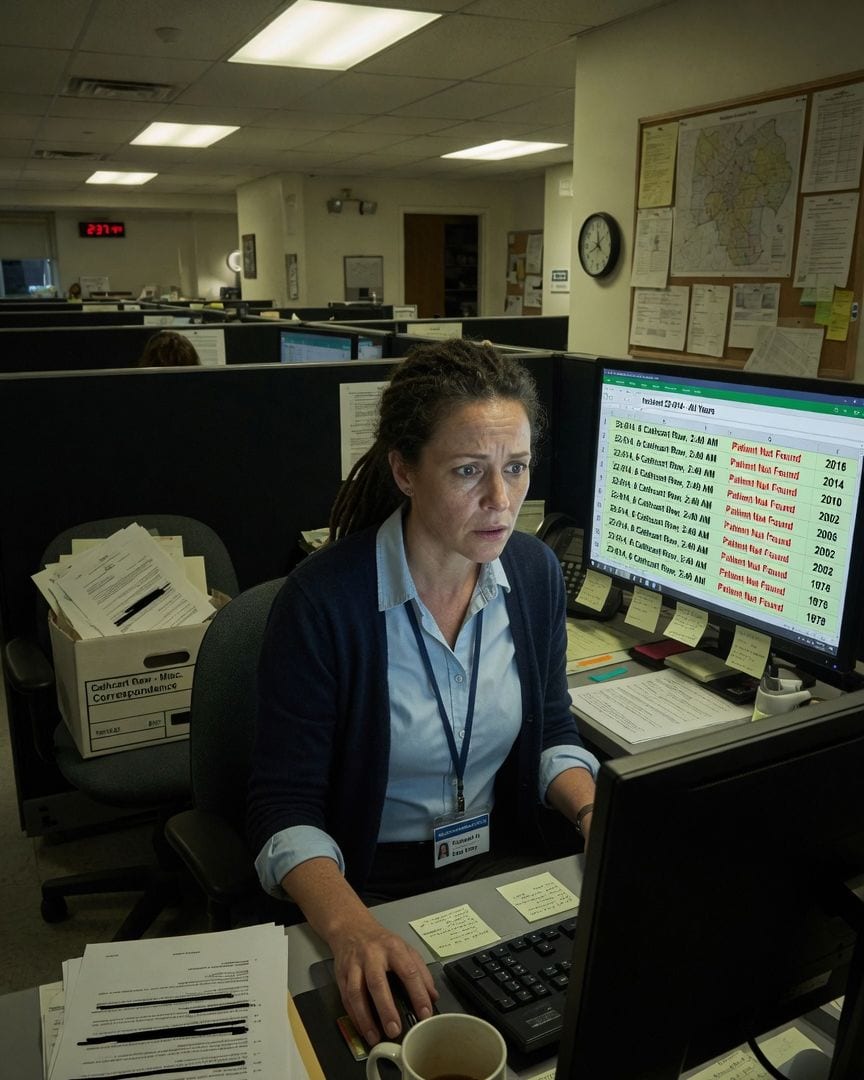
My computer log shows the same 2:40 AM call to Cathcart Row, every four years since 1978, always closed 'patient not found'.
Working data entry for the County Ambulance Trust, I found a routine incident logged as 'Patient Not Found.' But digging deeper, I discovered the exact same phantom call had repeated every four years for over forty years, always at the same address, always at 2:40 AM. Then I found a heavily redacted memo linking it to my own street.
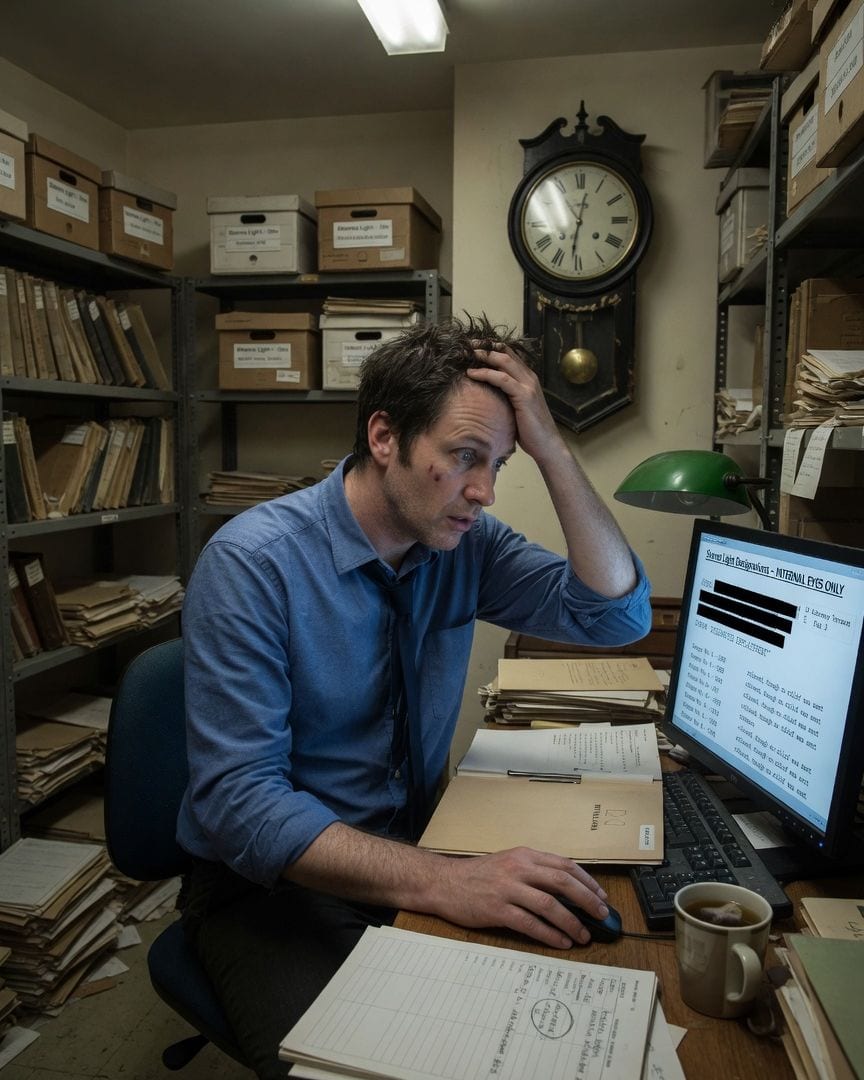
I found my street address in a century-old lighthouse file, printed decades before I lived there.
As a maritime archivist, my world revolves around forgotten lives and dusty ledgers. But the Skerne Light files broke that quiet rhythm, revealing a chilling pattern: 'Keeper number 6' relieved, though no relief was sent, repeating for decades. Now, an internal document with a strange code has led me to a redacted entry, revealing my own street address, decades before I ever lived there.
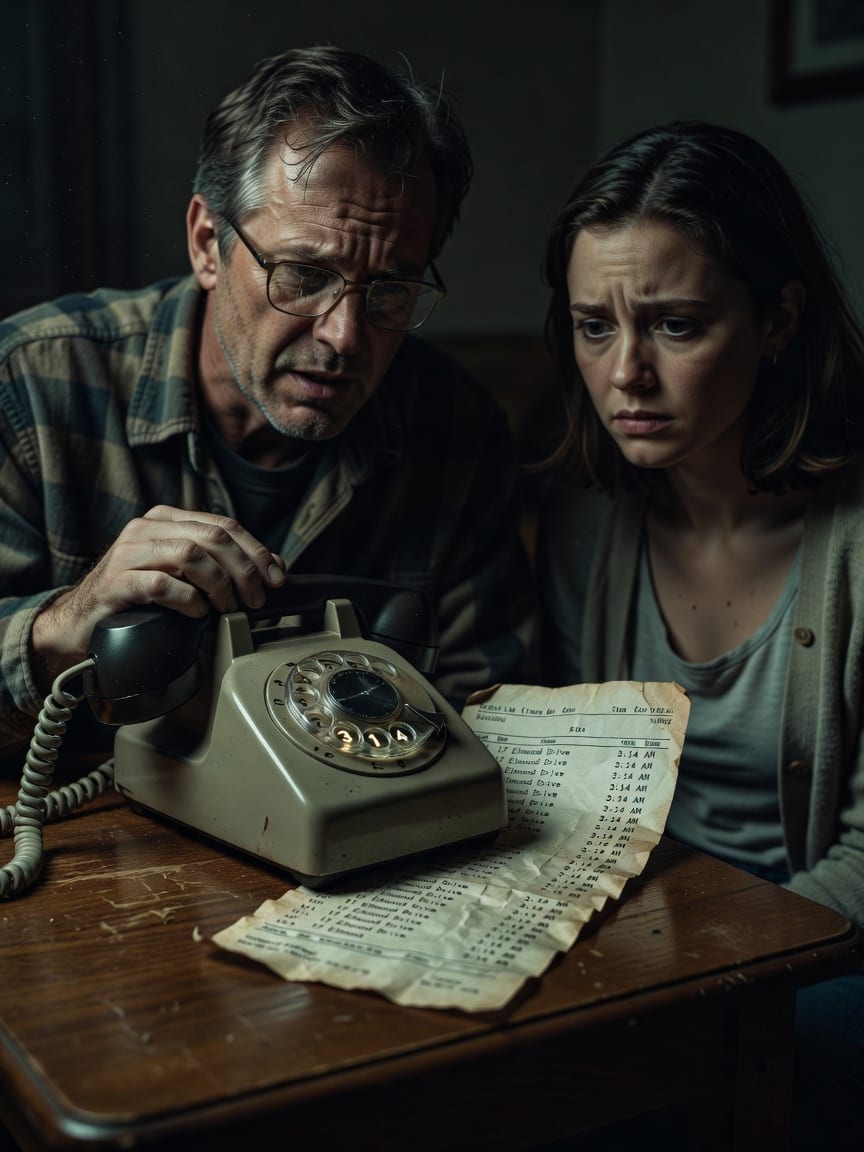
My phone bill itemised forty calls from my number to a house demolished in 1990. Each call at 3:14 AM, lasting eleven minutes. The bill arrived postmarked from a flattened building.
I expected the usual mobile bill, but my landline statement listed forty calls from my number to '17 Elmwood Drive.' That address was for a house torn down in 1990, a vacant lot I remembered from childhood. The phone company insisted the calls were legitimate, leaving me profoundly unsettled by the impossible charges.
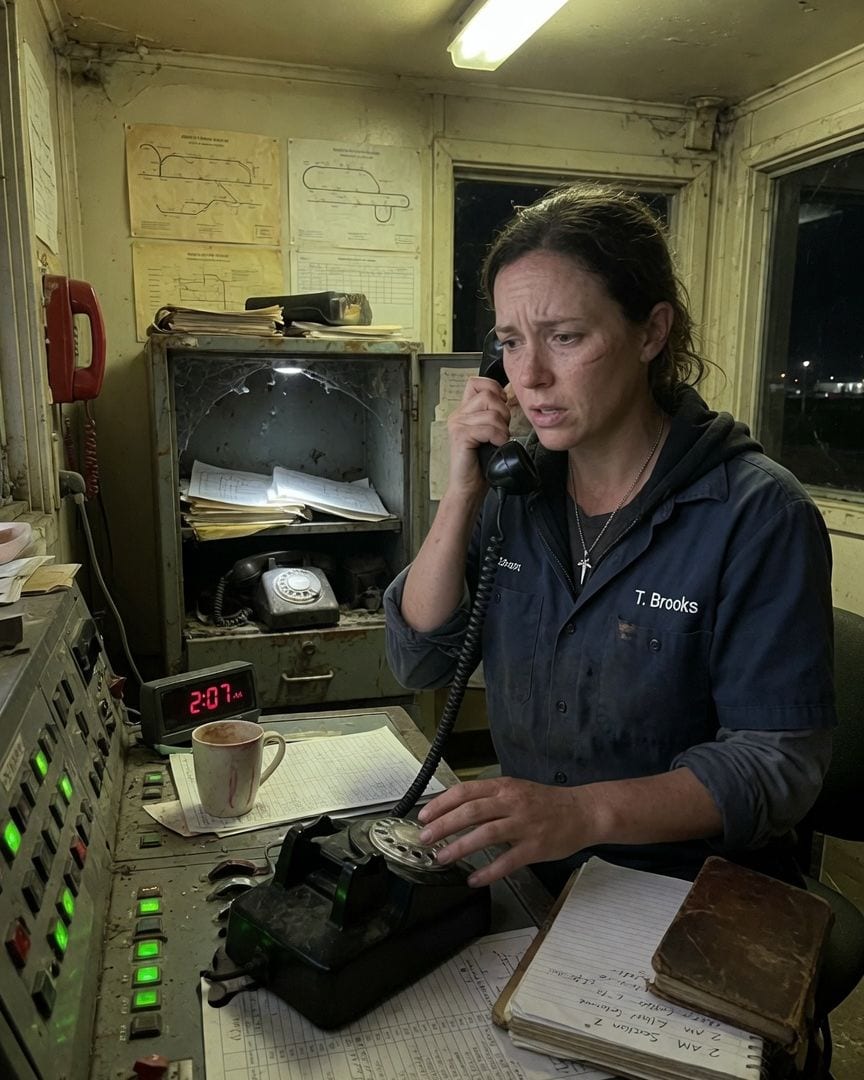
My signal box gets a 2 AM call every night from a man whose section was demolished eleven years ago. Now I found his logbook with today's date.
My night shift at the signal box is quiet and precise, defined by the routine 2 AM call from Ellis confirming Section 7 is clear. But when I asked my duty manager to log it, he said Section 7 hasn't had a track walker in eleven years, not since its cabin and phone were demolished.
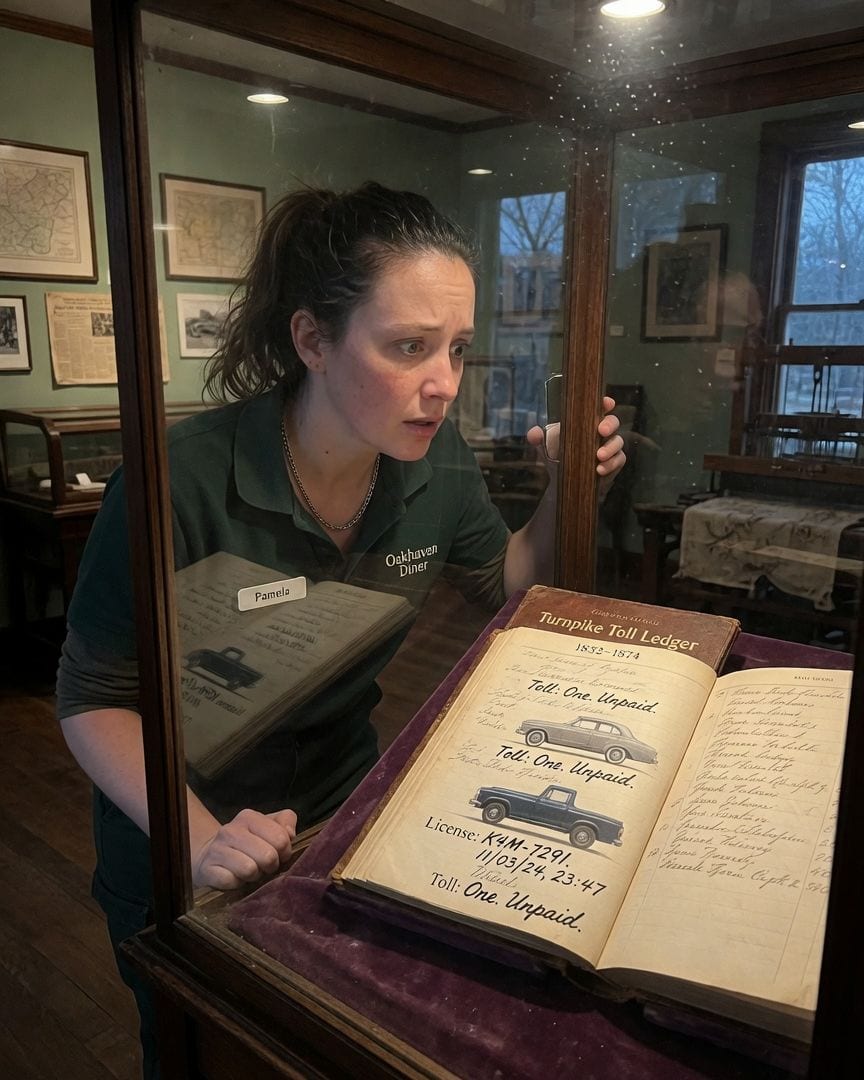
My car stalled at the old turnpike milestone, after dark. The toll ledger, closed in 1874, then listed my car, my stall time, and a toll of one, unpaid.
I had just moved to Oakhaven when my old sedan died on a dark, winding road by an infamous turnpike milestone. The next day, I found my car's exact registration and stall time written in fresh ink in a 150-year-old, locked museum ledger, marked 'Toll: One. Unpaid.' The curator dismissed it as a prank, but her white knuckles and strained voice hinted at something far more unsettling.
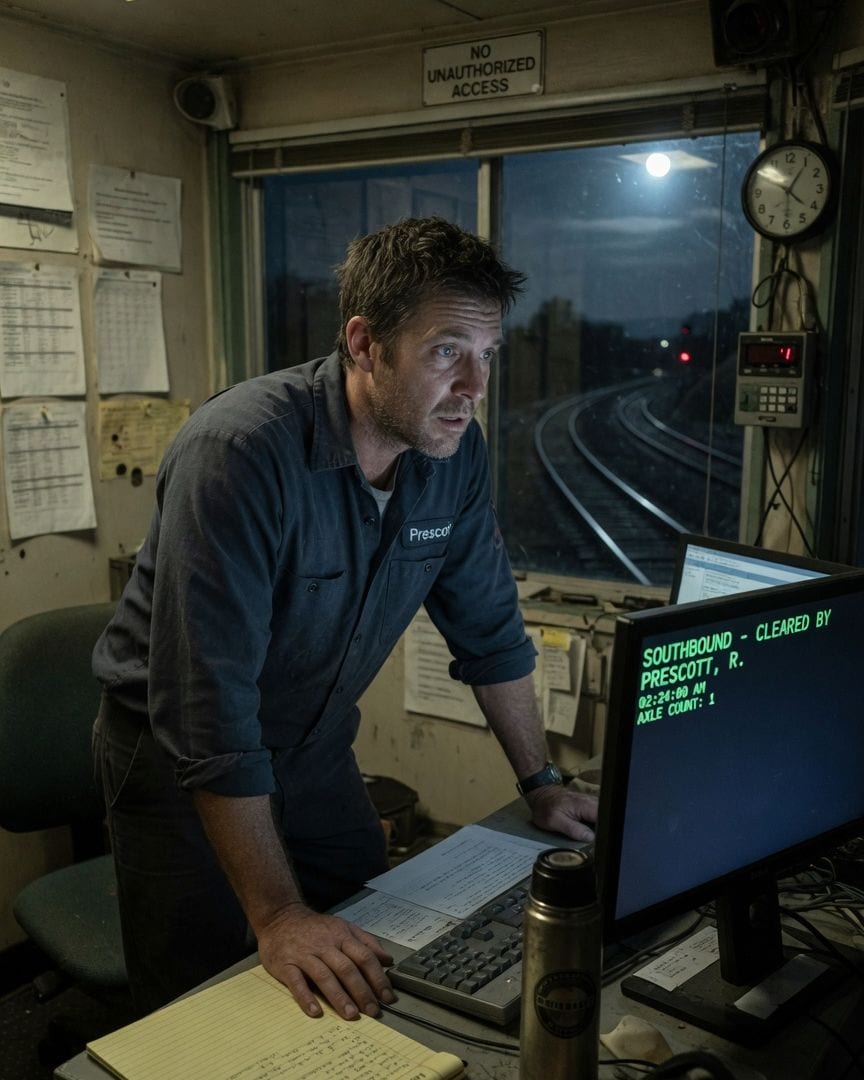
My signal box log shows I cleared a southbound train at 2:24 AM. No train was booked, but the wheel counter ticked over once.
My night shift in the signal box is usually quiet, just the hum of the panel and distant trains. But at 2:24 AM, a log entry for a southbound train appeared on screen, cleared by my name, even though I hadn't touched a thing. A cold prickle ran up my neck when the wheel counter ticked once, confirming an impossible passage on the empty tracks.