My signal box log shows I cleared a southbound train at 2:24 AM. No train was booked, but the wheel counter ticked over once.
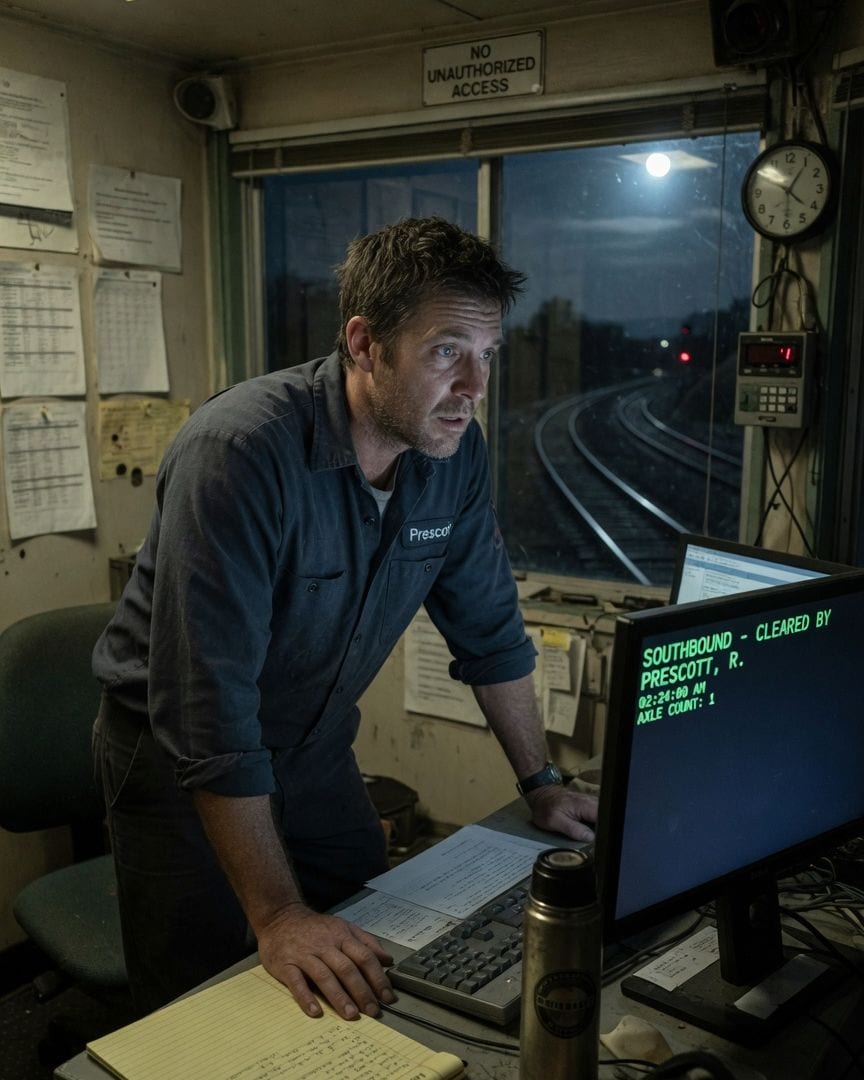
The signal box air was always still, heavy with the smell of ozone and old dust.
Usually, the only sounds were the low hum of the digital panel and the distant, rhythmic thump-thump of a freight train far down the main line. But tonight, it was just the hum.
My shift had been quiet, almost boring, until 2:24 AM.
I wasn’t even looking at the panel when it happened. I was just staring out at the moonlit track, thinking about my thermos getting cold. Then, the screen in front of me flashed a new log entry.
SOUTHBOUND - CLEARED BY PRESCOTT, R.
I frowned, leaning closer. That was me. My name. I hadn't touched a single lever, hadn't acknowledged any request. No southbound train was booked, not for hours. It had just… appeared. A cold prickle ran up my neck.
I remember reaching out, as if to clear the phantom entry, but it was already there, logged, immutable.
Then, a faint, metallic clack echoed from somewhere out in the dark, a sound I knew well. It was the wheel counter at the crossing, just past the bend.
My eyes flicked to its small digital display: it ticked from 0 to 1. One axle. A single, inexplicable passage.
I scrambled for the track cameras, cycling through them quickly. Nothing. Just empty, gleaming rails stretching into the distance, silver under the full moon. No headlight, no tail-lights, not even a wisp of exhaust.
Just the log entry, my name, the exact time, and the impossible tick of the counter. It had to be a glitch. A surge, maybe. An old line like this had its quirks.
But the log entry, my name on it, felt too specific, too personal to be just random noise.
The next night, I was on edge. Every shadow seemed deeper, every hum of the equipment a little more ominous. I kept my eyes on the clock, then on the digital panel.
At 2:23 AM, I leaned forward, gripping the edge of my desk, trying to spot any flicker, any precursor.
At precisely 2:24 AM, the log entry appeared again.
SOUTHBOUND - CLEARED BY PRESCOTT, R.
Identical. Down to the millisecond. My stomach went cold. This wasn't a one-off. This wasn't a surge. This was… something. The metallic clack followed, faint but distinct, and the wheel counter ticked once again. I checked the cameras. Again, nothing.
The track lay silent, mocking me.
I tried to be rational. Software bug, surely. Or maybe I was just tired, missing something. But the cold knot in my gut tightened. I had to know if this had happened before.
I started digging. I pulled up the system’s digital archives, filtering by my own past shifts. I went back two weeks, then three.
And there it was, an ugly, impossible truth staring back at me from the screen: another SOUTHBOUND - 2:24 AM - CLEARED BY PRESCOTT, R. entry from a week prior. And another from the week before that. Entries I vividly, absolutely remember not making, not even thinking about.
I cross-referenced the times with the shift roster. Every single one had been on my watch.
A software bug wouldn't replicate like this, with my name, at the exact same time, every single shift. A phantom electrical surge wouldn't generate a perfectly formatted log entry and a wheel counter tick without something to trigger it.
I started wondering if this was happening on other shifts, too, or if I was somehow being singled out. The consistency of it all, the utter precision, unnerved me more than any random error ever could.
The quiet of the signal box began to feel less like peace and more like a held breath.
Driven by a growing, cold unease, I didn't stop at my own logs. I delved deeper, into the rail network’s deep archive, accessing records that stretched back to the early days of digital record-keeping, years before I’d even started here.
I filtered the search by location—this single-track branch line—and by time: 2:24 AM.
The results populated the screen, line after chilling line. Entry after identical entry scrolled past. SOUTHBOUND - 2:24 AM - CLEARED BY JENNINGS, A., then CLEARED BY FOSTER, E. (I knew Evelyn, my current manager, but this was an older one, from decades ago), then CLEARED BY DRUMMOND, J..
The dates spanned decades, the operators’ names changed, but the event was always precisely the same, always at 2:24 AM, always southbound.
I stared at the screen, a cold, undeniable pattern of phantom trains, logged under different operators' names, stretching back through time like an endless, silent procession.
I tried to tell Evelyn Foster about it, my manager, hoping she’d have some technical explanation. I showed her the pattern, scrolling through the archived digital logs. All those names, all those 2:24 AM southbound entries, stretching back decades.
She just leaned back in her chair, arms crossed, and tapped a manicured finger against her lip.
"Ronald," she said, her voice too calm, "you know these old lines. They've got their quirks. Ghosts in the machine, as they say. Or maybe just… aggregated operator errors from less diligent times. Pre-digital, things were looser."
"But it's digital now, Evelyn," I argued. "And the wheel counter ticks. And it has my name on it."
She waved a dismissive hand. "Look, I appreciate you being thorough. But there's no official incident, no actual disruption. Focus on what's real, Ronald. Focus on current operations. We’ve got enough genuine problems without chasing old phantoms."
Unconvinced, and honestly, a little insulted, I started looking into archived incident reports myself. It was slow going, sifting through hundreds of entries. I found a few vague, unresolved mentions: "unexplained signal activations" on my branch line, "anomalous track clearings."
Each one was quickly closed without further explanation, marked 'resolved – no cause found' or 'system anomaly – non-critical.' It felt like a cover-up, or more likely, a collective shrug.
Then I remembered Joel Drummond. Retired signal operator. The man was practically a legend, a walking history book of every bolt, sleeper, and strange occurrence on this line. If anyone knew about old quirks, it would be Joel.
I tracked him down a few days later, to a small, neat house on the edge of town, where he was puttering in a rose garden.
He was a small man, wiry, with a shock of white hair and kind, watery eyes.
When I introduced myself and explained I was on the old branch line, his eyes seemed to dim, a distant, knowing look coming over them.
"Ah, the old branch," he murmured, wiping soil from his hands. "She's got her own rhythms, doesn't she?"
I pressed him, mentioning the 2:24 AM southbound, the phantom log, the wheel counter. He listened patiently, nodding slowly, but offered only platitudes. "Things happen, Ronald. Lines like this, they settle into patterns. Some things are best left undisturbed."
He gave a small, polite smile and, with a glance at his roses, excused himself, claiming his knees weren’t what they used to be and he needed to rest. His evasion was palpable, a wall I couldn't climb.
Back at the signal box for my next shift, the atmosphere felt different. Heavier. Colder. It wasn't just my imagination. Small things started to be off.
A file on my desktop, one I’d been working on, was subtly rearranged, its icon shifted half an inch to the left.
A system diagnostic report I’d left open, minimized at the bottom of the screen, was closed when I came back from a coffee break, though I never touched it. The room itself seemed to shift around me.
The display for the branch line’s track status, a green line indicating clear passage, seemed to momentarily flicker with a faint, almost imperceptible static, just for a split second, whenever I approached the panel.
Like it was reacting to me, watching.
Then, the message arrived. I was browsing an old rail enthusiast forum I occasionally used, looking for obscure historical references to the line. A private message notification popped up, from an anonymous, untraceable account. It was a single, chilling line:
Leave the 2:24 alone.
A jolt went through me, so strong I almost dropped my mug. My hand trembled, sending coffee sloshing over the desk. Someone, or something, knew. Knew I was digging.
The threat felt profoundly personal now, the isolation of my night shift turning sinister. The friendly hum of the equipment now sounded like a low, predatory growl.
I slammed my fist on the desk. This wasn’t a quirk. This wasn’t a glitch. I grabbed my keys, the desperation a cold fire in my veins. Joel Drummond knew something. He had to.
I drove straight back to his house, the late-night streets blurring past. I didn’t care what time it was.
I was banging on his door with a new urgency, convinced he knew more than he let on, convinced he was my last chance.
Joel's face was pale when he finally opened the door, his eyes wide with a mixture of fear and resignation. He looked like he hadn't slept.
He ushered me in without a word, his hands trembling slightly as he poured us both strong, dark tea in chipped mugs. The silence in his small living room was deafening, broken only by the clinking of teaspoons.
"You really shouldn't have come back, Ronald," he said, his voice a low, raspy whisper. "But I suppose… I suppose it doesn't matter now." He took a long, shaky sip of his tea. "You’re asking about the 2:24 AM southbound.
I knew you would. I saw it when I was a young operator, just like you. The log entry. The wheel counter. The empty track."
He described his own frantic attempts to report it, to physically check the track, to understand. "It always slipped away," Joel said, his voice now a low monotone, almost like he was reciting a well-worn script.
"It’s not a train, Ronald. Not in the way we understand. It's… a routine. The routine of the line. It's been happening for longer than any of us have been alive, I reckon."
He explained that he found others over the years—old engineers, retired dispatchers—who privately acknowledged it. "They called it the 'Ghost Run,' but never to management. Never in writing. It was just… a thing that happened.
A part of the line that couldn’t be explained, couldn’t be stopped."
Then, Joel leaned forward, his eyes fixed on mine, and his voice dropped even lower. "I tried to stop it once. Early days, when I was still green. I deliberately didn't clear the signal at 2:24 AM.
I thought I could break the cycle, prove it was nothing, shut it down." He paused, his breath catching in his throat. "The next morning, my shift logs were riddled with errors. Impossible errors.
Showing me misrouting real trains, nearly causing a major incident near the old spur, a head-on collision. My reputation was ruined. I barely kept my job, Ronald.
They never found any definitive proof, of course, but the implication… it was enough. I was shelved. Lost my nerve after that. Got a quiet posting away from the main lines."
He looked away, staring into the depths of his tea. "It doesn't like being interfered with. It protects its passage. It uses the system, and it uses us."
I sat in stunned silence, the full, impossible weight of Joel's story pressing down on me. The hum in the signal box, the rearranged file, the anonymous message—it all clicked into a chilling, cohesive pattern. "But what is it?"
I finally managed, my voice barely a whisper. "What is this 'routine'?"
Joel shook his head, his gaze distant. "No one knows, Ronald. Not really. It just... is. Always has been. A part of the fabric, you might say."
He pushed himself up from the armchair, walked to an old, scarred wooden chest in the corner, and pulled out a tattered, faded map.
It was a hand-drawn schematic of the branch line, far more detailed than any official chart, filled with small, cryptic notes and symbols I didn’t recognize. His finger traced the line, past familiar crossings and sidings.
Near the far end, past the last crossing, a small, unlabelled spur—a dead-end branch off the main line—was marked with a crudely drawn skull.
Joel's finger then tapped a spot on the map, next to that spur. And there, scrawled in faint pencil, next to a date from weeks ago, was my name. Ronald. Circled.
I stared at it, my own name, in Joel's shaky hand, chillingly integrated into his impossible map. Joel looked up, his eyes meeting mine, filled with a profound dread I now felt in my own bones.
"It already knows you're looking, Ronald," Joel whispered, his voice hoarse, barely audible. "It put you on the schedule."
"What do you mean, 'on the schedule'?" I demanded, the words tearing from my throat, raw and desperate. My name, circled, on that map. It felt like an accusation, a sentence.
Joel sat back down, the map spread between us like a death warrant. "That spur," he said, tapping the crudely drawn skull with a trembling finger. "That's where it originates. And disappears. A blind spot in the network's official records.
A place beyond our intervention. That's its beginning, and its end."
He looked at me, his eyes wide and fixed. "The 'train' isn't a physical object, Ronald. Not like the ones we clear. It's a routine. A pattern of data, of electromagnetic resonance, that uses the railway infrastructure as its conduit.
It's a system within a system. A ghost routine that has inscribed itself into the very fabric of this line, like a memory, or a disease. It doesn't need a physical train; it is the passage.
It is the logged entry. It is the wheel counter tick."
"And by investigating it," he continued, his voice heavy with resignation, "by seeking to understand it, to challenge it, you've become part of its cycle. The entity doesn't just log its own passage.
It absorbs and integrates those who witness it, those who try to interfere, making them complicit. Ensuring its continued existence. It protects its routine by making you part of it.
Your actions, your attempts to stop it, only feed it, make it stronger, tie you to it."
He pointed back to my name on the map. "You're not just an operator anymore, Ronald. You're part of the mechanism. Like me. Like all of us who saw it, and couldn't look away."
The map, my name circled on it, felt like a branding.
I was back in the signal box for my next night shift, the dread a heavy cloak around me. Every shadow seemed to stretch, every familiar hum of the equipment now thrummed with a sinister undercurrent.
The clock ticked, inexorably, towards 2:24 AM.
My hand hovered over the lever for the southbound line, sweat beading on my forehead. I could still hear Joel’s words, his admission of failure, his ruined career. What if I just… didn't clear it?
What if I broke the cycle? A desperate, foolish hope flickered inside me, immediately snuffed out by the cold weight of inevitability.
The digital panel hummed, its screen a silent, expectant presence. The prompt for the 2:24 AM southbound flickered, waiting for my input. My name was already pre-filled as the operator. Prescott, R.
I felt an immense, silent pressure. A cold, pervasive force that seemed to emanate from the very walls of the signal box, from the tracks outside, from the air itself. It wasn't a sound, or a presence I could pinpoint.
It was just… there. Bearing down. I tried to resist, to pull my hand away from the control panel, to clench my fingers, but it moved, as if guided by an invisible current, slow and deliberate, pressing the confirm button.
The signal cleared.
A moment later, the familiar clack echoed from the crossing, faint but sharp. The wheel counter ticked, 0 to 1. I watched it, hollowed out, utterly drained. I hadn't fought it. I hadn't even truly tried.
A quiet, chilling sense of inevitability settled over me. I wasn't fighting it anymore. I was part of it.
I continued my night shifts. Without incident. I was quieter, more distant, but my work was impeccable. I never missed a log entry, never made an error. The console hummed with a renewed, almost friendly, efficiency.
Evelyn Foster, my manager, actually praised my renewed focus and efficiency a few weeks later. She noted that the 'old system glitches' on my line seemed to have miraculously disappeared.
The 2:24 AM southbound entry was always cleared, always logged, always perfect. I sometimes caught myself humming a tuneless, repetitive melody I couldn't quite place, a simple, four-note phrase that echoed in my head.
I no longer felt isolated on my shift; I felt... connected. Bound.
I sat alone in the signal box, watching the monitors. The 2:24 AM entry appeared on the log, perfectly aligned. I felt no surprise, no dread, only a quiet understanding. I touched the screen, a faint smile on my lips.
It was just a part of the routine now. My routine.
Evelyn Foster, reviewing the shift logs a month later, noted how impeccably Ronald Prescott's records had become. He never missed a beat, never logged an error.
She saw him once, walking away from the signal box at dawn, his posture a little straighter, his gait a little more deliberate, a faint smile on his lips.
If this one got to you
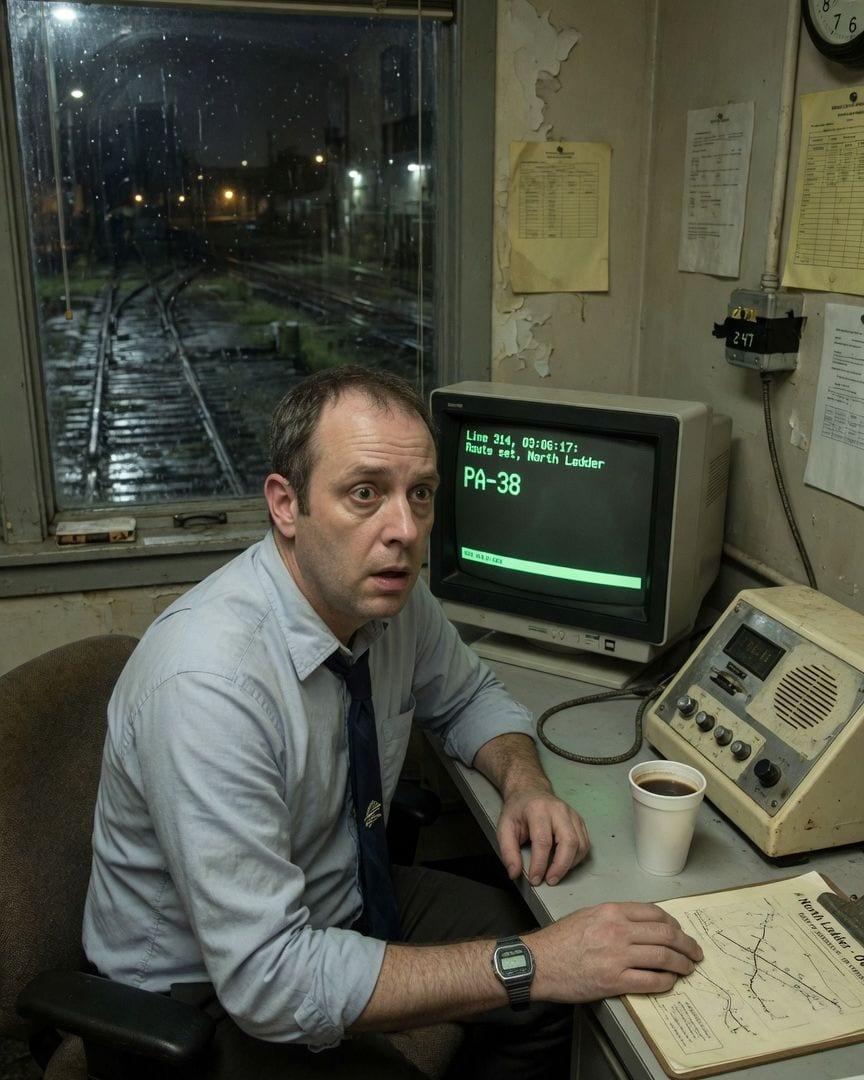
The log says my lever set a route at 3:06 AM through a track that's been shut for repair work — and the circuits show something moved down it. I never touched that lever; I sat there still.
I, Preston Abbott, a night dispatcher, was running a routine signal log check when I saw my code had set a route. It was for the North Ladder, a track decommissioned twenty years ago and physically impassable. Then, the yard's old, physically severed intercom system crackled to life, whispering a specific routing instruction for that very track.
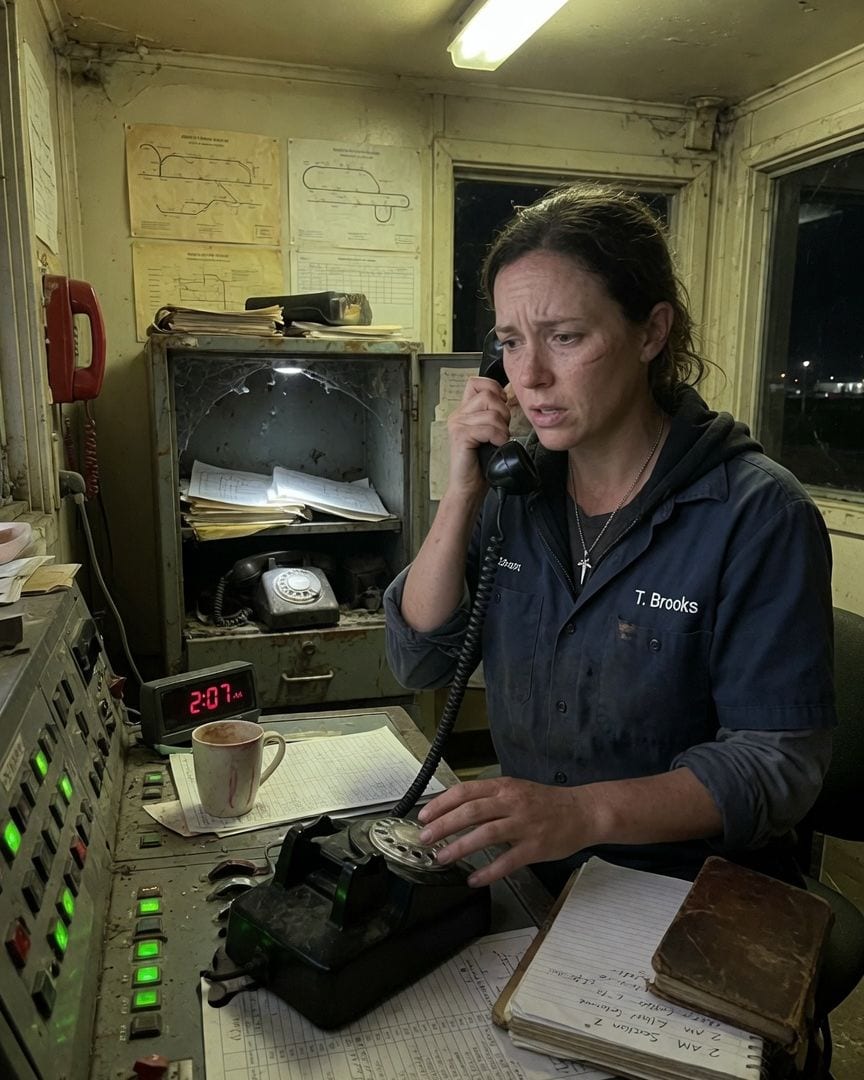
My signal box gets a 2 AM call every night from a man whose section was demolished eleven years ago. Now I found his logbook with today's date.
My night shift at the signal box is quiet and precise, defined by the routine 2 AM call from Ellis confirming Section 7 is clear. But when I asked my duty manager to log it, he said Section 7 hasn't had a track walker in eleven years, not since its cabin and phone were demolished.
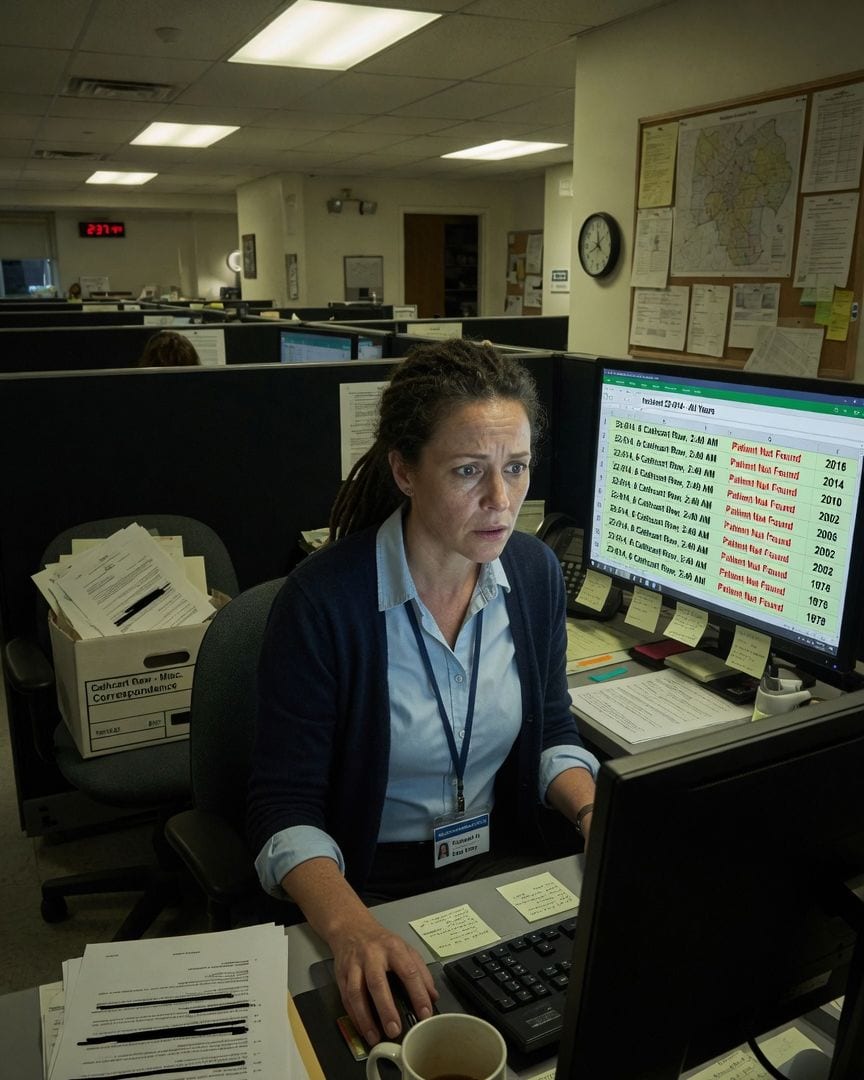
My computer log shows the same 2:40 AM call to Cathcart Row, every four years since 1978, always closed 'patient not found'.
Working data entry for the County Ambulance Trust, I found a routine incident logged as 'Patient Not Found.' But digging deeper, I discovered the exact same phantom call had repeated every four years for over forty years, always at the same address, always at 2:40 AM. Then I found a heavily redacted memo linking it to my own street.
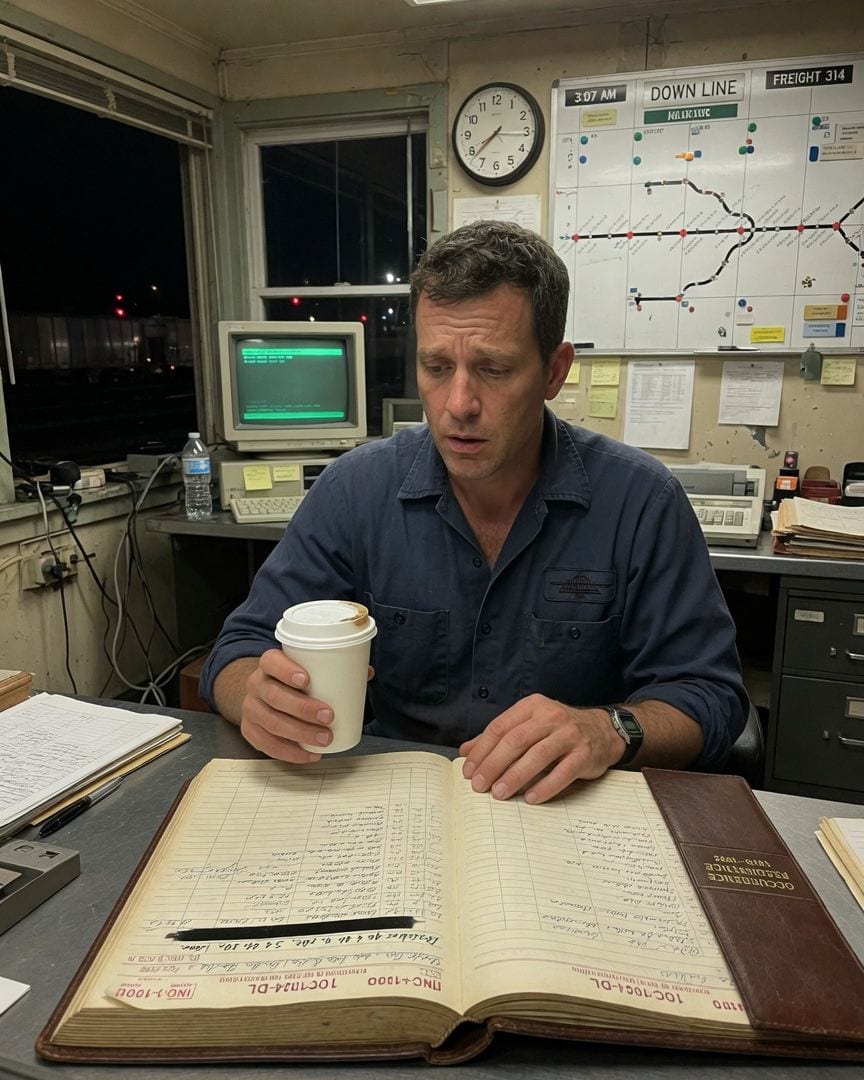
My new colleague's face is identical to a woman in a 1958 archive photo. She was declared 'the woman on the down line' for decades.
Working my solitary shift in the signal box, I found a blacked-out entry in the old occurrence register. It noted 'the woman on the down line' and the instruction 'do not stop.' This same strange entry, word-for-word, recurred every October 4th, back through the years from 1988. It felt like a chill in the routine, a silent dread in a book of transient events.
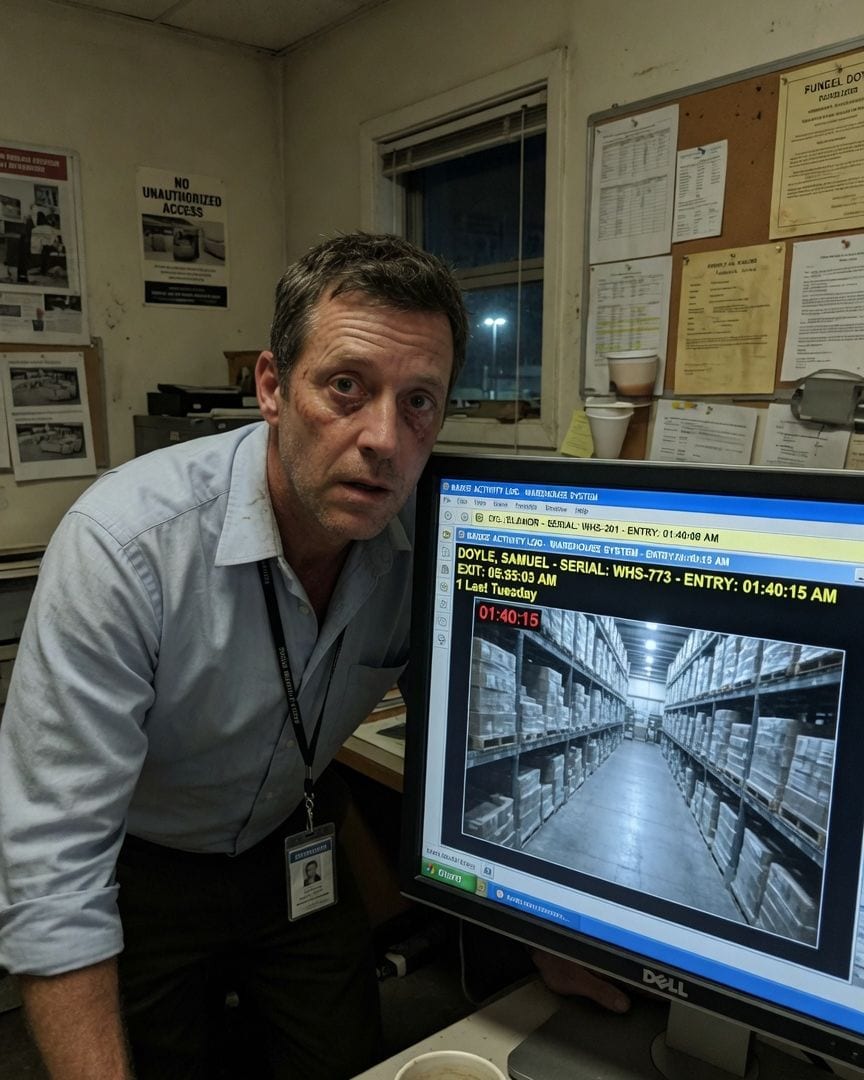
My dead colleague's badge, deactivated weeks ago, logged an entry at 1:40 AM last Tuesday. Then I found another from 1978, with the same impossible times.
My monitor showed a shocking entry: Samuel Doyle, dead and buried three weeks ago, had just logged into the warehouse. His badge was deactivated the day of his funeral, yet the system recorded his precise entry and exit, even though security footage showed the aisles were utterly empty.
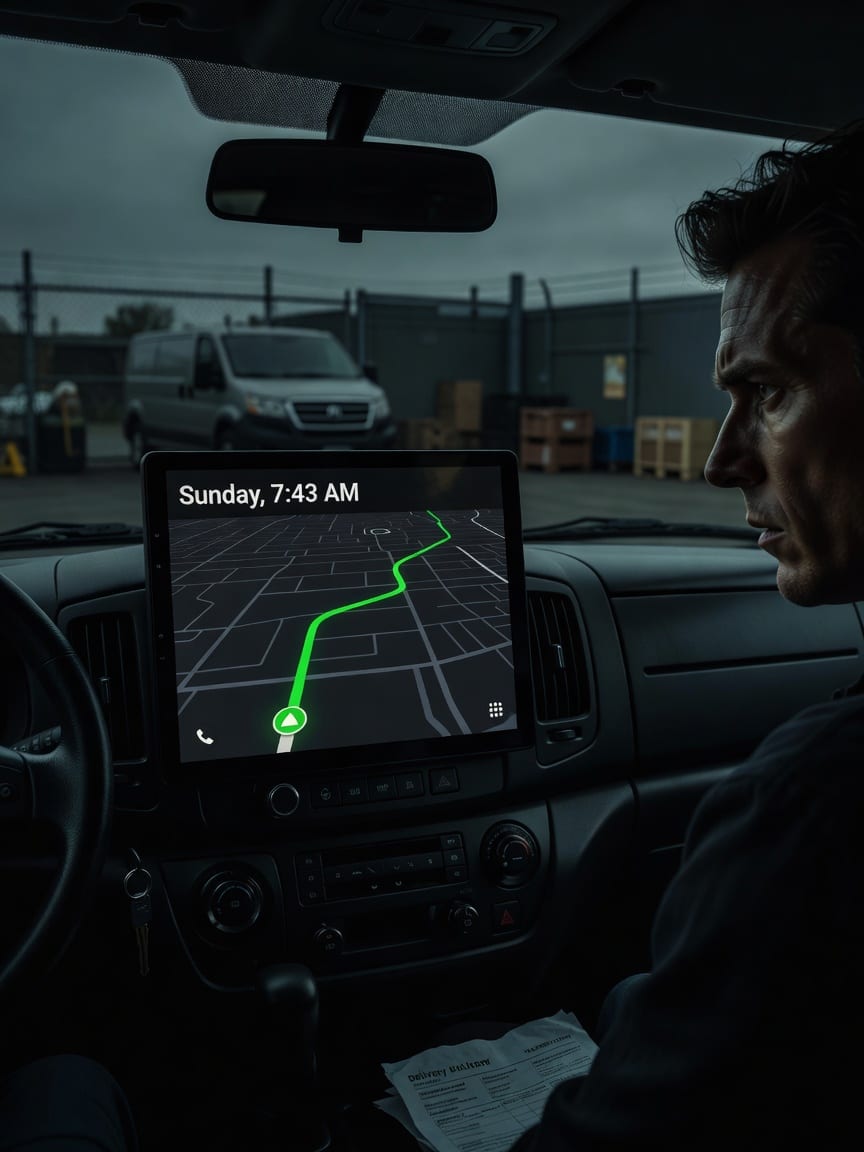
My delivery van drove 130 miles last Sunday, stopping for four hours in another state. It never left our locked yard. The GPS log drew the whole trip, timestamped to the minute.
I was just doing my job, sitting in the dispatch office with my manager Joel, when he pulled up the GPS log for my delivery van, Unit 74. It showed a 130-mile round trip to Delaware, engine on for four hours, with a distinct stop, all while my van was locked in the yard and I was home. The camera footage confirmed it hadn't moved an inch, yet the system insisted it had traveled hundreds of miles.