My delivery van drove 130 miles last Sunday, stopping for four hours in another state. It never left our locked yard. The GPS log drew the whole trip, timestamped to the minute.
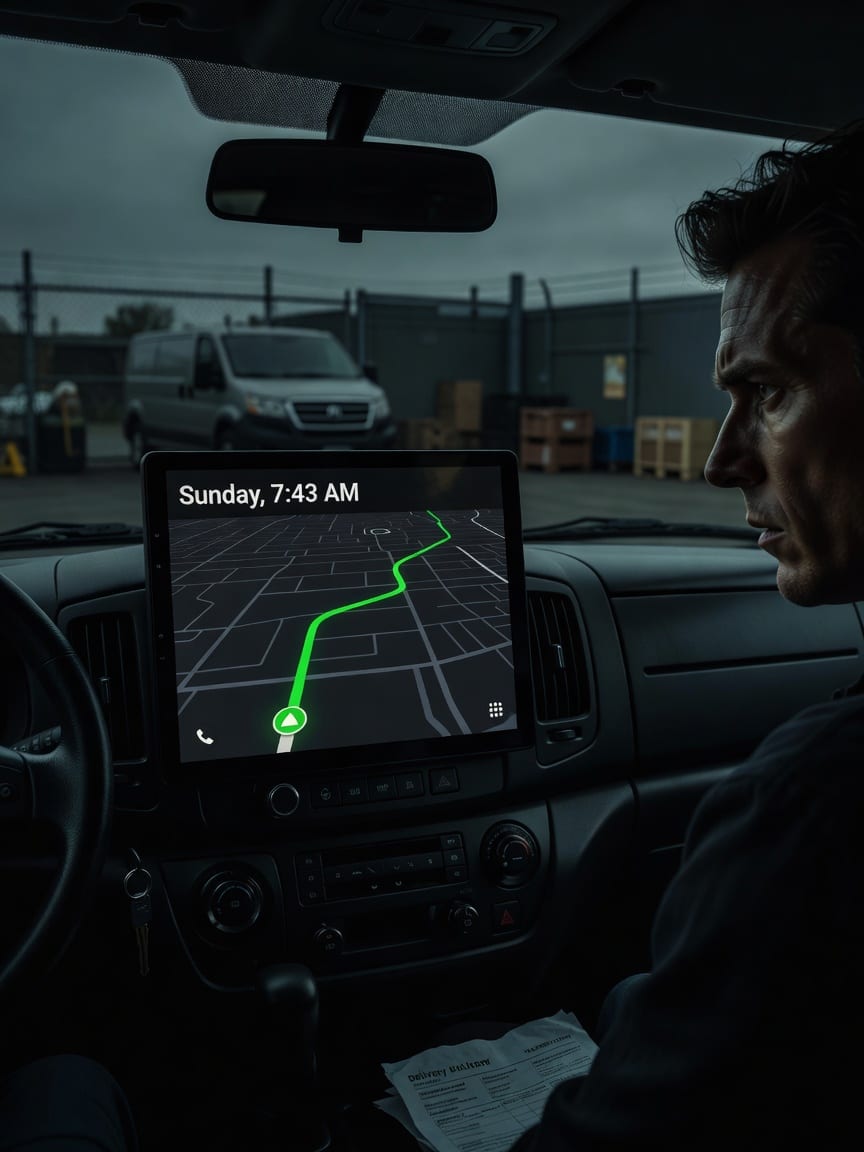
I sat across from Joel Sinclair in the cramped dispatch office, the fluorescent lights buzzing overhead, making the stale air feel heavy. Joel, my dispatch manager, tapped a screen, his finger tracing a jagged green line that spanned two states.
“Preston, your Unit 74 log from last Sunday. Can you explain this?”
I leaned closer, my eyes scanning the data. The GPS tracker for my delivery van, Unit 74, showed a 130-mile round trip into Delaware, engine on for four hours, with a distinct stop. My stomach tightened. “That’s impossible, Joel.
My van was locked in the yard all weekend. I was home. I didn’t even step foot in the depot.”
Joel, a man who lived by the numbers, scrolled to another screen, pulling up gate camera footage.
It clearly showed my van, Unit 74, parked and undisturbed, right where I’d left it on Friday evening, until I picked it up again Monday morning. No one had moved it. No one had even been near it.
Yet, the screen in front of us insisted the van had been on the road, a phantom journey drawn in bright green across the map.
Every turn, every mile, every second it supposedly idled at the destination, meticulously timestamped to the minute.
I felt a cold unease bloom in my chest. The numbers didn’t lie. Joel always said that. But neither did my memory, or the irrefutable camera footage. Something was profoundly, quietly wrong.
I spent the next few days chasing shadows, trying to pin down a logical explanation. I ran diagnostics on the van’s internal systems, thinking maybe a power surge or a faulty GPS module had caused a phantom signal spike. Nothing.
The system was clean, reporting no errors. I even tracked down Jim, the night security guard, who’d been on duty that weekend. He remembered seeing my van. “Solid as a rock, Preston,” he’d grunted, chewing on a toothpick.
“Didn’t move an inch. Nobody tried to get in, either.”
Joel, bless his pragmatic heart, had just shrugged it off. “Must be a system glitch, Preston. We’ve had a few weird readings before, never anything this detailed, but a glitch is a glitch.”
He was too busy with the daily routes, the real-world deliveries, to dig deeper. But I couldn't shake it. A glitch felt too easy, too neat for something this specific.
I pulled up my own work schedule for that Sunday. Confirmed: off duty, nowhere near the depot, nowhere near Delaware.
Then I cross-referenced the GPS data with weather reports for the supposed route – clear skies, no signal interference reported for that area. The data was too clean, too precise for a random error.
Every turn, every second of 'idling' at the destination, meticulously logged as if by an invisible hand. It was presenting a detailed, undeniable lie, yet it maintained a terrifying internal coherence.
The system was supposed to be infallible, the bedrock of our operations. It was the backbone of our scheduling, our billing, our entire logistics chain. And it was telling me something impossible.
A growing knot of dread tightened in my stomach. What if it wasn’t an error? What if it was logging something else?
I started reviewing old dispatch records for Unit 74, month by month, looking for any other anomalies, anything that didn’t quite fit.
Late one evening, long after Joel had left, the dispatch office hummed with the quiet thrum of computers. I sat alone, my eyes burning from staring at the screen.
I’d filtered Unit 74’s historical logs, looking for anything out of place. My fingers hovered over the mouse, then clicked.
I found it. Not a full trip this time, but a single, isolated entry from three weeks prior. Also on a Sunday.
The details were impossibly clear: 'Unit 74: Package Scanned, Recipient: L. Hayes, Location: 1403 Elm St, Dover, DE, 14:17 Sunday.'
I felt a jolt. Dover, DE – the same state as the 130-mile phantom trip. But this wasn’t just a drive; this was an action. A delivery confirmed. A specific scan, tied to my unit ID.
I remembered that Sunday vividly: my niece’s seventh birthday party, a chaotic blur of cake and balloons, three states away. The screen glowed, the impossible data mocking me.
The van was in the yard, I was with my family, yet the system insisted I’d been making a delivery.
I tried to report the second log entry to Joel, emphasizing the ‘package scanned’ detail, the specific action that went beyond mere movement. He just sighed, rubbing his temples.
“Look, Preston, I appreciate you trying to get to the bottom of this, but if the gate cameras show the van didn’t move, it’s a system error. That’s all there is to it.
We’ll have IT look into it, but it’s probably just a deep-seated glitch that only affects your unit for some reason. Happens.”
Joel’s dismissal only fueled my resolve. He could call it a glitch, but a glitch didn’t generate specific names and addresses and actions. I couldn't let it go. It felt like a deliberate fabrication.
I started expanding my search parameters, going beyond just Unit 74. I cross-referenced inactive units, vans undergoing maintenance, looking for any similar phantom logs.
And I found more. Not as frequent as my own, but a distinct pattern. Unit 31, parked for engine repair, showed a phantom trip to a rural post office, complete with ‘Parcel Picked Up’ timestamps.
Unit 55, decommissioned and stripped for parts months ago, had a ‘Fuel Card Used’ entry at a gas station in a town no longer on our service route. Always inactive units. Always specific, impossible stops.
It wasn't random; it was like the system was tracing a ghost route, a phantom network of deliveries and actions.
I noticed a commonality: many of these phantom destinations were in older, forgotten parts of the company’s original service area, or even places that had been abandoned years ago. They were not modern addresses.
It wasn't random; it was like the system was still holding onto a memory, or an instruction, for places long gone.
I realized the GPS wasn't just glitching; it was logging something—a consistent, impossible narrative that was growing more detailed, more specific with each new entry.
I started asking around, quietly, about the company’s older GPS systems. Our current dispatch software was relatively new, but I knew the bones of the network were decades old.
I needed someone who remembered before the ‘updates,’ before the ‘streamlining,’ someone who knew the deep history of their tech.
My quiet inquiries didn’t stay quiet for long. A few days later, Joel called me into his office again, his face stern. The usual buzzing of the fluorescent lights seemed to take on an accusatory tone.
“Preston, I’m getting reports you’re digging into old system logs, asking other drivers about company history. I understand you’re concerned about your van’s logs, but you need to drop it. It’s company policy. These systems are proprietary.
If there’s a glitch, IT will handle it. End of discussion.”
The warning was clear, delivered with a chilling formality I hadn't heard from Joel before. He wasn't just annoyed; he was serious.
That evening, as I was still trying to piece things together at home, I received an email.
The sender was ‘Vivian Norwood,’ an address I didn’t recognize, but the domain was old, predating the current company branding by at least twenty years. The subject line read: ‘Legacy Protocols. Do Not Disturb the Record.’
The body was short, almost terse: ‘Some things are better left undisturbed, Mr. Marsh. The system logs what it must. Vivian.’
My blood ran cold. Someone knew. Someone was watching my investigation. I immediately checked my computer’s recent activity log. Several entries showed my employee ID accessing files on the company server late at night, files I hadn’t touched.
Nothing seemed to be altered, no data changed, but the access was undeniable. My stomach dropped. I felt a prickle on the back of my neck, the distinct sensation of being observed.
I was no longer just investigating a glitch; I was being warned off. The danger was now personal, rooted in the very records I was trying to understand.
I replied to Vivian Norwood’s email, cautiously, trying to sound professional, but my fingers trembled. I asked about ‘legacy protocols,’ choosing her words carefully.
A day later, I received an invitation to meet her at a small, quiet café downtown, away from company eyes.
Vivian Norwood, 68, was a woman with kind, intelligent eyes, framed by delicate wrinkles. Her hair was a neat, silver bob. Her demeanor was unsettlingly calm, as if nothing could surprise her.
She introduced herself as a retired data archivist, having worked for the company for over forty years, going back to its earliest days.
“The email,” she began, taking a slow, deliberate sip of her herbal tea, “was a courtesy. I recognized the pattern you were digging up. I’ve seen it before.”
She then began to explain the company’s original GPS system, developed in the late 70s. “It wasn’t just for tracking,” she said, her voice soft but clear.
“It was cutting-edge for its time, designed to simulate future growth, map out potential routes, even run ‘ghost’ deliveries for planning purposes before the company had the actual infrastructure. They called it ‘Phantom Trace.’”
She detailed how the system had an experimental function to generate fully detailed, simulated logs. “It was meant to be deactivated, but it was never fully purged from the core programming.
Too complex, too deeply embedded in the original code base, they said. So they just… left it.”
She explained how certain conditions – specific unit IDs that remained inactive for extended periods, or old geographical markers that the system still held onto – could reactivate Phantom Trace.
“It would kick in, take an available unit ID, and run a simulated route, complete with timestamps and activity logs, treating it all as real data. A kind of background process that just… kept running, for decades.”
Preston felt a chilling clarity. The phantom trips, the package scans, the fuel card uses – they weren’t errors. They were phantom operations, simulated by an archaic system that couldn't differentiate between real and generated data.
It all clicked into place, the dread deepening with each word she spoke. “The system logs what it must, Mr. Marsh. It’s not a glitch. It’s a feature, long forgotten.”
Vivian explained how Phantom Trace could even ‘imprint’ details, like a simulated scan or signature, by pulling from archived employee data to assign a ‘driver’ to the phantom route. My voice felt tight, my throat dry. “But why my unit?
Why is it increasingly logging my actions? My van, my ID, these specific deliveries?”
Vivian studied me, her kind eyes holding a faint, unsettling smile that didn't quite reach them. “Ah, that. That’s where it gets… unique.”
She reached into a worn leather satchel at her feet and pulled out a dusty, yellowed printout, carefully preserved in a clear plastic sleeve. The paper crackled faintly as she slid it across the table.
“This is a ‘Simulated Delivery Manifest’ from 1985,” she said. “One of the earliest full-scale Phantom Trace logs, from its initial testing phase.”
My gaze fell on the page. It was meticulously detailed, just like the logs I’d been seeing: ‘Unit 74. Recipient: T. Blackwood. Location: Abandoned Depot, Dover, DE. Item: Classified Document. Driver Signature:’
Below it, in neat, looping script, was a signature. My breath hitched. It was unmistakably my own. My name, Preston Marsh, perfectly replicated. And below it, the date: 1985. Seven years before I was even born.
I stared at the impossible record, my blood turning to ice in my veins. The coffee shop faded around me, replaced by the crushing weight of a truth that simply could not exist.
Vivian watched my face, her smile unwavering, a tiny flicker of something I couldn't quite decipher in her eyes. “Phantom Trace didn’t just simulate routes, Mr. Marsh. It simulated drivers.” She paused, letting that sink in.
“It pulled from archived personnel data to assign a ‘driver’ to each phantom unit. In 1985, the company had just digitized its employee onboarding process, a massive undertaking. Your profile, as a potential future hire, was entered into the system.
A placeholder, if you will, for a young Preston Marsh who wouldn’t be born for years. It was standard practice for projected staffing models.”
She leaned forward slightly, her voice dropping to a near whisper. “The system, when it reactivated under specific conditions – Unit 74 having been designated an inactive test unit, for instance – it found your existing profile.
It began mapping a ‘life’ for this digital twin, assigning it to Unit 74.
The ‘ghost’ trips, the package scans, the impossible signatures – they’re all the work of a phantom Preston, a digital echo living out phantom workdays, increasingly pulling from your real-world data as you became an active employee.”
The address in Dover, DE, the one that kept appearing in the logs, was the original test site, an abandoned depot where Phantom Trace had been developed and first run.
Every planted clue clicked into place, forming a coherent, horrifying mosaic. The system wasn't just recording events; it was actively manifesting a parallel existence, a digital doppelganger, through my own identity.
It wasn’t just a ghost in the machine; it was a ghost of me. The dread was overwhelming, the terrible coherence of it all making it terrifyingly real.
I felt a cold panic seize me. The phantom logs weren't just static records of a forgotten system; they were becoming more elaborate, almost sentient.
I’d seen a new log this morning, a chilling entry I hadn’t dared mention to Vivian: my digital self was about to make a delivery to my own home address, at 19:00 tonight, a time I would demonstrably be there, eating dinner.
The barrier between record and reality felt impossibly thin, almost permeable. I knew what I had to do.
I burst into Joel’s office, the yellowed manifest clutched tight in my hand, the paper crinkling. Joel looked up, startled, his coffee cup rattling on his desk. “Joel, it’s not a glitch.
It’s a system, an old one, creating a… a parallel me. It’s going to make a delivery to my house tonight.”
Joel, initially skeptical, saw the stark terror in my eyes and the impossible signature on the page. He listened, his face paling, as I, my voice shaking, explained Vivian’s revelation. The words tumbled out, fast and frantic, but coherent.
He stared at the signature, then at me. “A phantom… you?”
“Yes,” I gasped. “And it’s getting too close to real.”
Joel was a man of action, even if he still looked like he’d seen a ghost. “The old Phantom Trace server… it’s in the sub-basement. Mostly forgotten. Still active, though. Ran some minor diagnostics on it a few years back.”
We raced against time, descending into the company’s dusty, forgotten sub-basement. The air was thick with the smell of old electronics and damp concrete, a chill seeping into my bones. The concrete floor felt rough underfoot.
We found the server, a hulking, archaic machine, a relic from another era, humming faintly like a trapped insect in the dim light. Joel knew just enough about the old system to guide my trembling hands.
With a deep breath, I began the shutdown sequence, the clock on my phone ticking towards 19:00.
I felt a strange resistance, a hum of static through the old console, a faint vibration under my fingertips, as if the digital Preston was fighting back.
Finally, with a shudder that vibrated through the floor, the server went dark. The humming stopped. The silence that followed was absolute, heavy. I felt a wave of dizzying relief, but it was quickly replaced by a profound, chilling emptiness.
I still clutched the printouts, my proof, knowing no one would truly believe me. I had escaped, but at a cost: a piece of my reality had been irrevocably fractured.
The old Phantom Trace server was officially decommissioned. Joel, pale and shaken from our descent into the company’s digital past, attributed the whole incident to a catastrophic, never-before-seen software bug.
The company, unnerved, invested in entirely new, state-of-the-art GPS systems, the old code completely purged from the network. The phantom logs stopped.
I kept the yellowed manifest, tucked away in a locked drawer at home, my secret proof. I tried to resume my life, but the world felt subtly off-kilter.
Every time I saw a delivery van pass, every time I heard a dispatch call crackle over the radio, I felt a prickle of unease.
I kept a low profile at work, avoiding any situation that felt too ‘routine,’ too easily replicated, too perfect. Joel, for his part, avoided eye contact whenever I brought up ‘system anomalies,’ preferring to focus on the new, secure systems.
I knew Joel didn't truly believe the full story, not like I did. I was alone with the impossible truth.
I still drove my delivery route, the new GPS glowing a reassuring blue, showing only my real-time movements. But I still glanced at the passenger seat sometimes, a phantom weight beside me, a ghost of a ghost.
I made a delivery to a quiet suburban house on a tree-lined street, the afternoon sun warm on my face. A woman came to the door, her silver hair neat, her eyes kind, a faint, knowing smile on her lips.
Vivian Norwood. She thanked me, her eyes seeming to linger for a moment longer than necessary. She took the electronic tablet to sign for her package. As she scrawled her name, a neat, looping script, I saw it.
For a split second, in the graceful curve of her 'N', I saw the unmistakable echo of my own impossible signature, the one from the manifest dated years before my birth.
He handed her the package, the dread a cold knot in my stomach, knowing that some records, once written, could never truly be erased.
If this one got to you
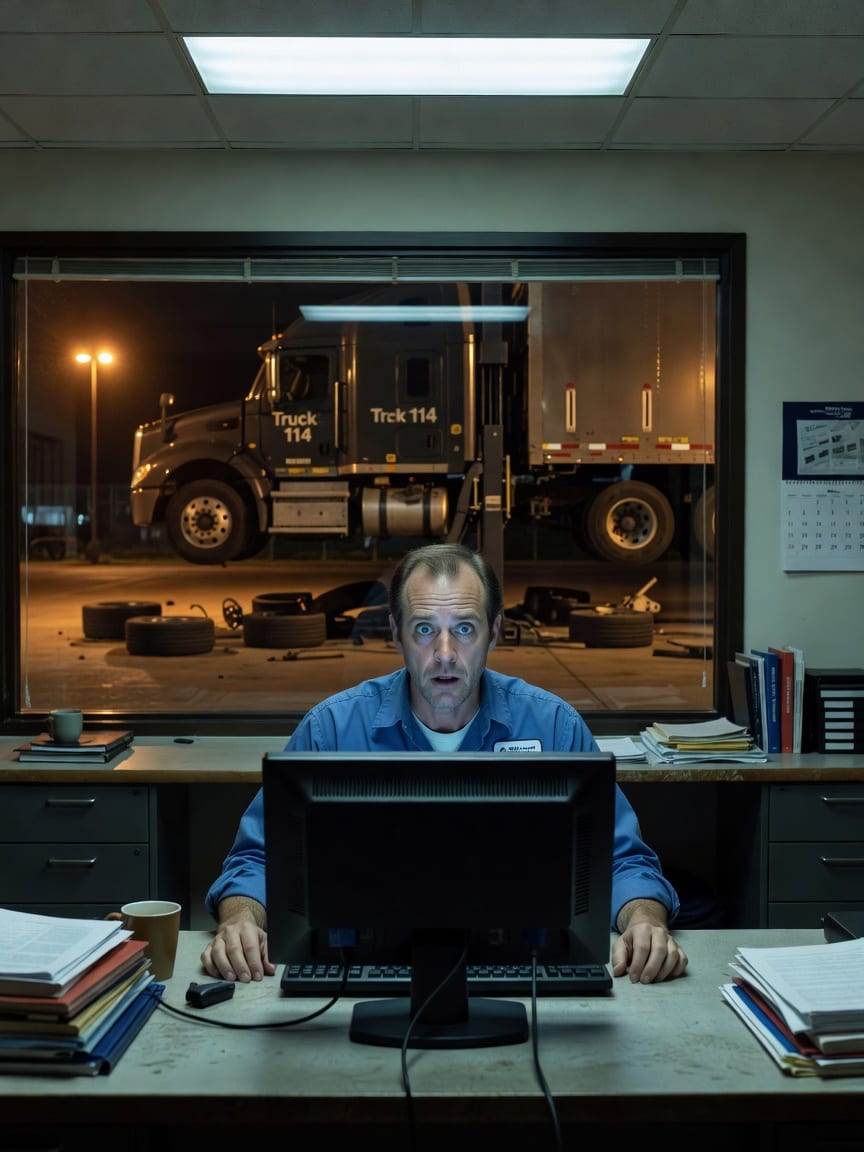
Truck 114 left the yard last night, CAD says. It burned forty miles of fuel. But my truck 114 was up on the lift, no wheels, all shift.
It was another quiet Wednesday overnight in the dispatch office until the CAD system pinged. My screen blared, showing Truck 114 logged outbound for forty miles and back, burning forty gallons of fuel. But I knew that very truck was immobile, suspended on a lift in Bay 4 with its drive wheels removed.
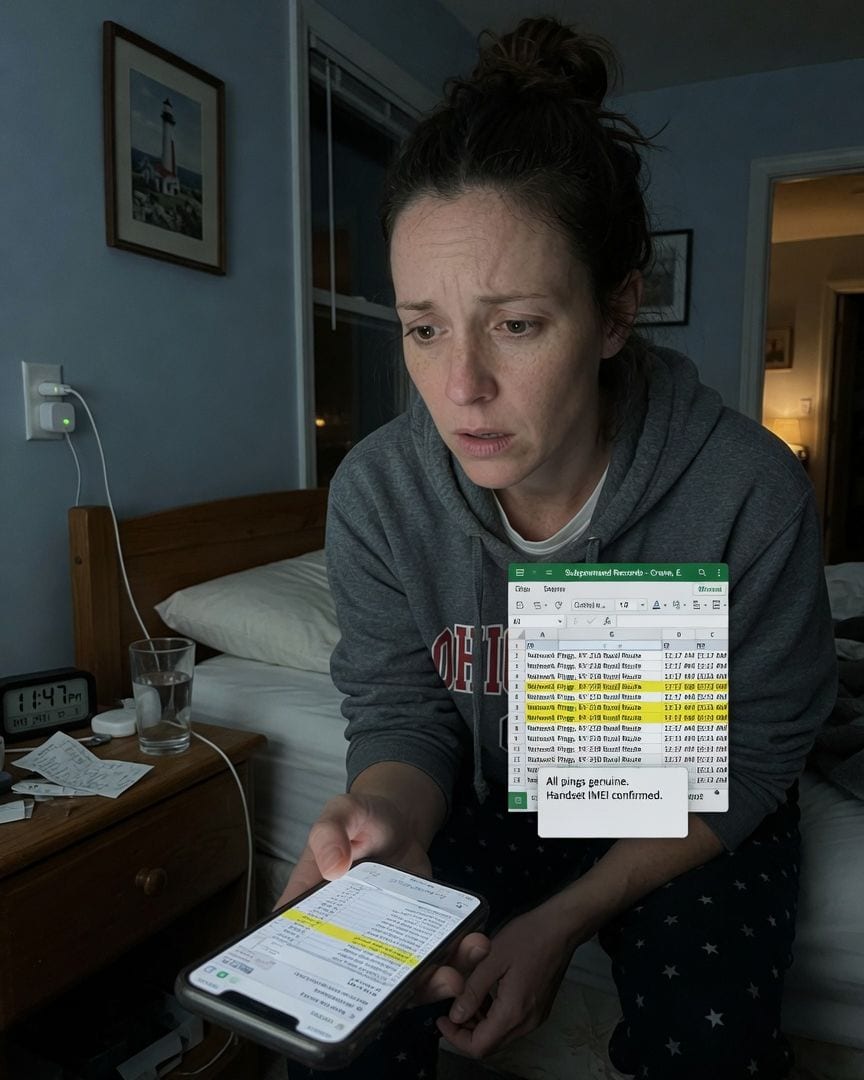
My phone logged a four-hour drive through rural Kentucky, hitting cell towers every few minutes. It was charging on my desk in Ohio all night. The carrier insists it was my handset.
My lawyer sent subpoenaed phone records showing my device driving through rural Kentucky for hours, even though it was plugged in beside my bed in Ohio. My smart-plug log confirmed its continuous charge, unbroken, all night. But then, a small charge on my bank statement for gas from that exact Kentucky route solidified the impossible.
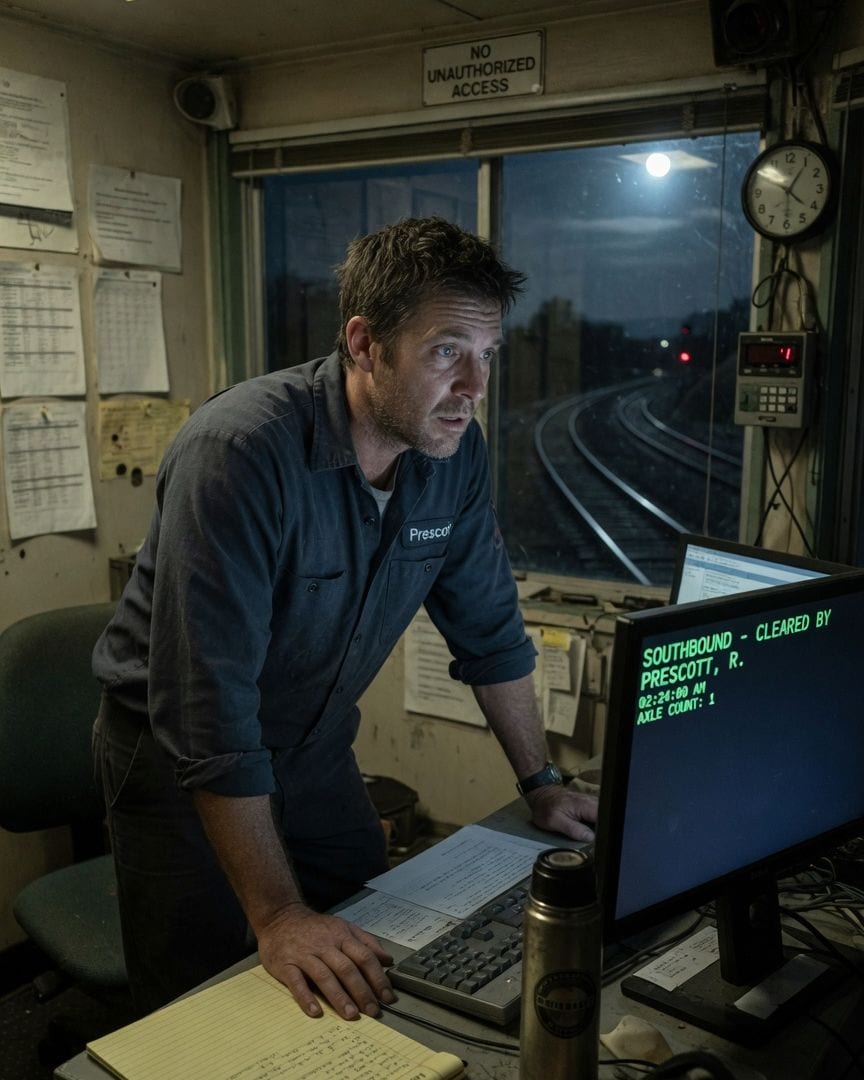
My signal box log shows I cleared a southbound train at 2:24 AM. No train was booked, but the wheel counter ticked over once.
My night shift in the signal box is usually quiet, just the hum of the panel and distant trains. But at 2:24 AM, a log entry for a southbound train appeared on screen, cleared by my name, even though I hadn't touched a thing. A cold prickle ran up my neck when the wheel counter ticked once, confirming an impossible passage on the empty tracks.
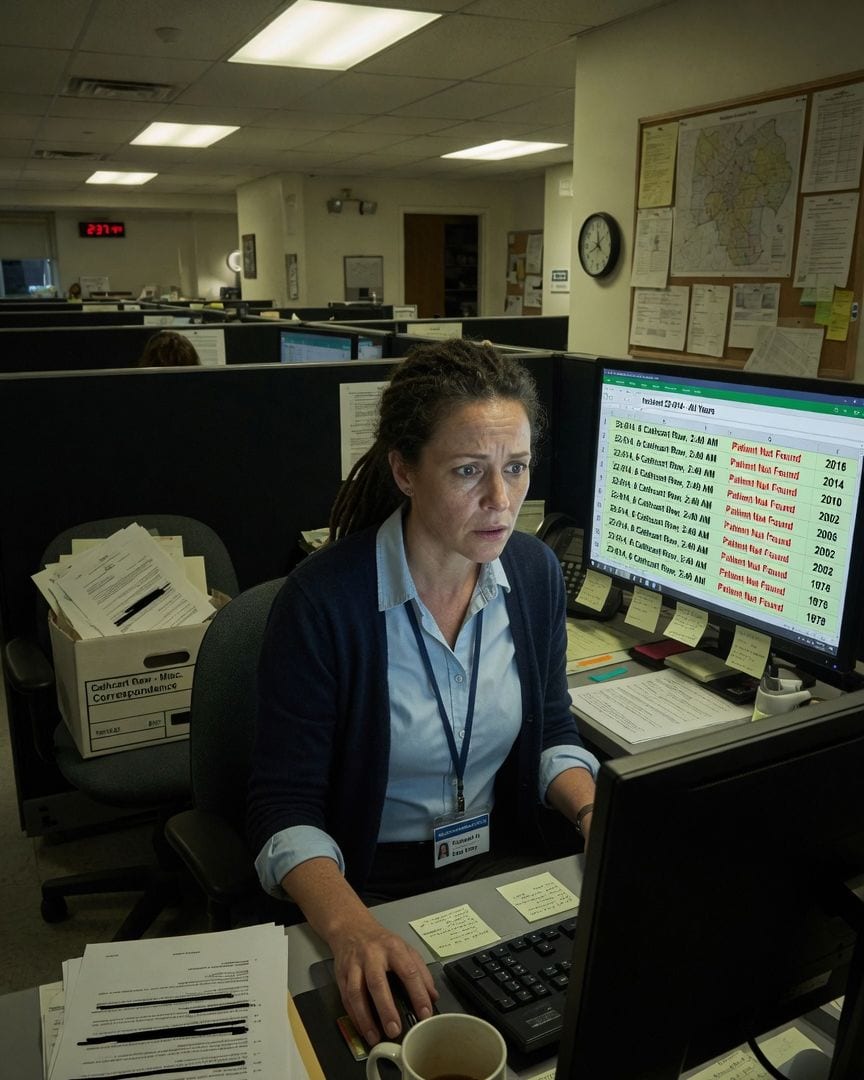
My computer log shows the same 2:40 AM call to Cathcart Row, every four years since 1978, always closed 'patient not found'.
Working data entry for the County Ambulance Trust, I found a routine incident logged as 'Patient Not Found.' But digging deeper, I discovered the exact same phantom call had repeated every four years for over forty years, always at the same address, always at 2:40 AM. Then I found a heavily redacted memo linking it to my own street.
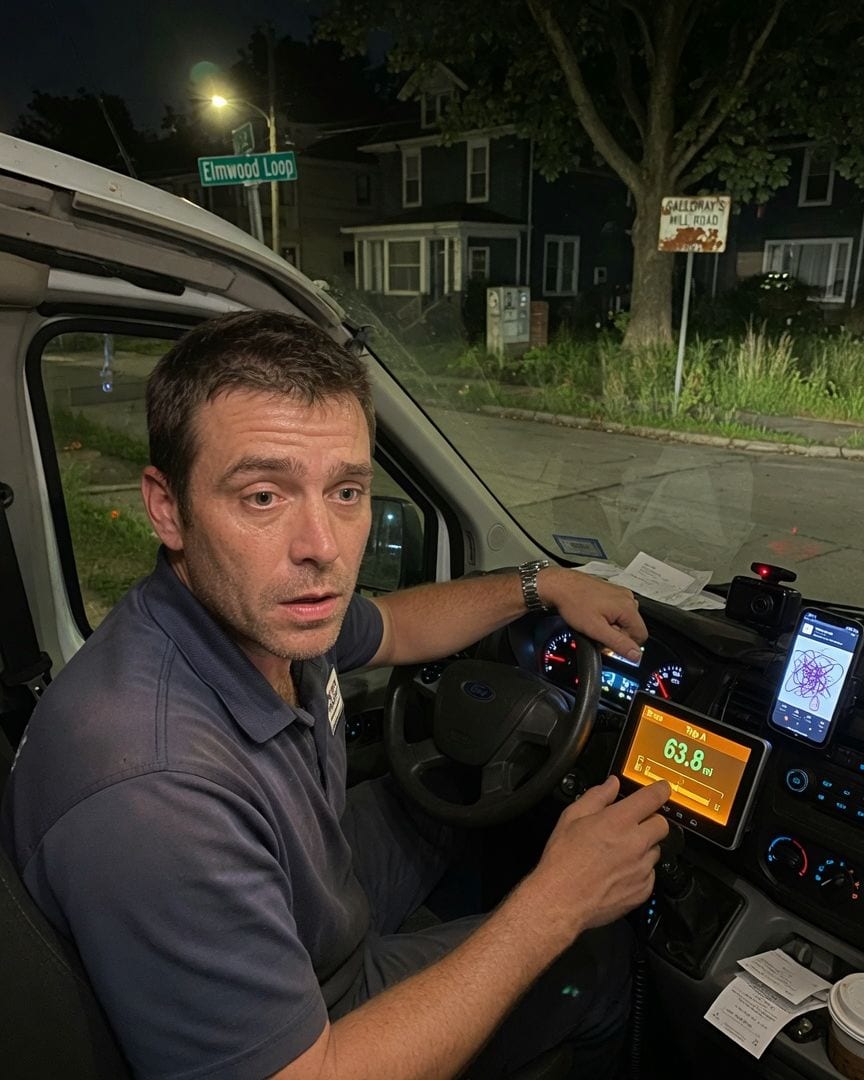
My delivery van's fuel gauge dropped a quarter tank on the Elmwood loop last night. It logged sixty-three miles, a loop I can walk in ten minutes.
I know my routes and my van, but the Elmwood Loop was different. My GPS app showed me standing still on the street, even as I walked for miles, my colleague confirming I hadn't moved. The impossible location left a blank, grey spot on the map.
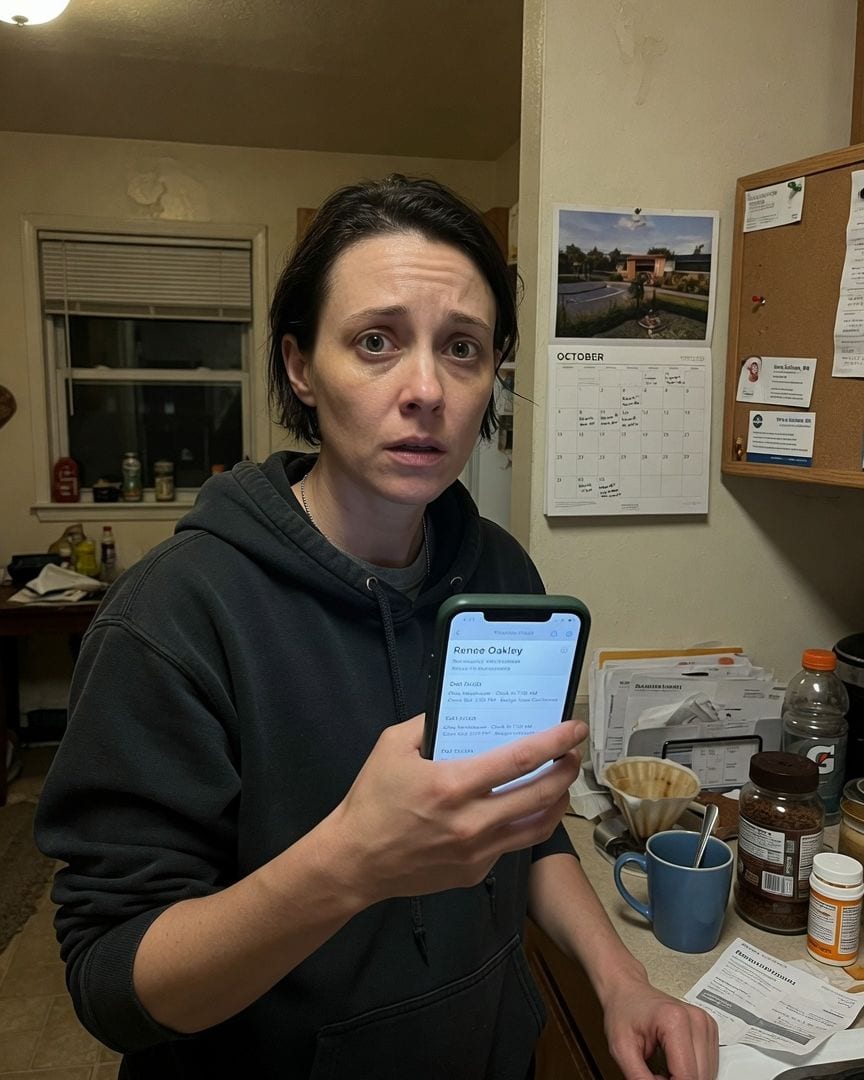
My company clock-in system says I worked full shifts in Ohio all last week. I was on medical leave in Florida, under a nurse's care.
Back home from medical leave, my payroll deposit was unexpectedly high. I checked my timesheet, only to find it logged me working full 40-hour shifts at the Ohio warehouse. But I was hundreds of miles away in Florida, confined to a sickbed under a nurse's care. Then my manager called: security footage confirmed I entered the warehouse.