My phone logged a four-hour drive through rural Kentucky, hitting cell towers every few minutes. It was charging on my desk in Ohio all night. The carrier insists it was my handset.
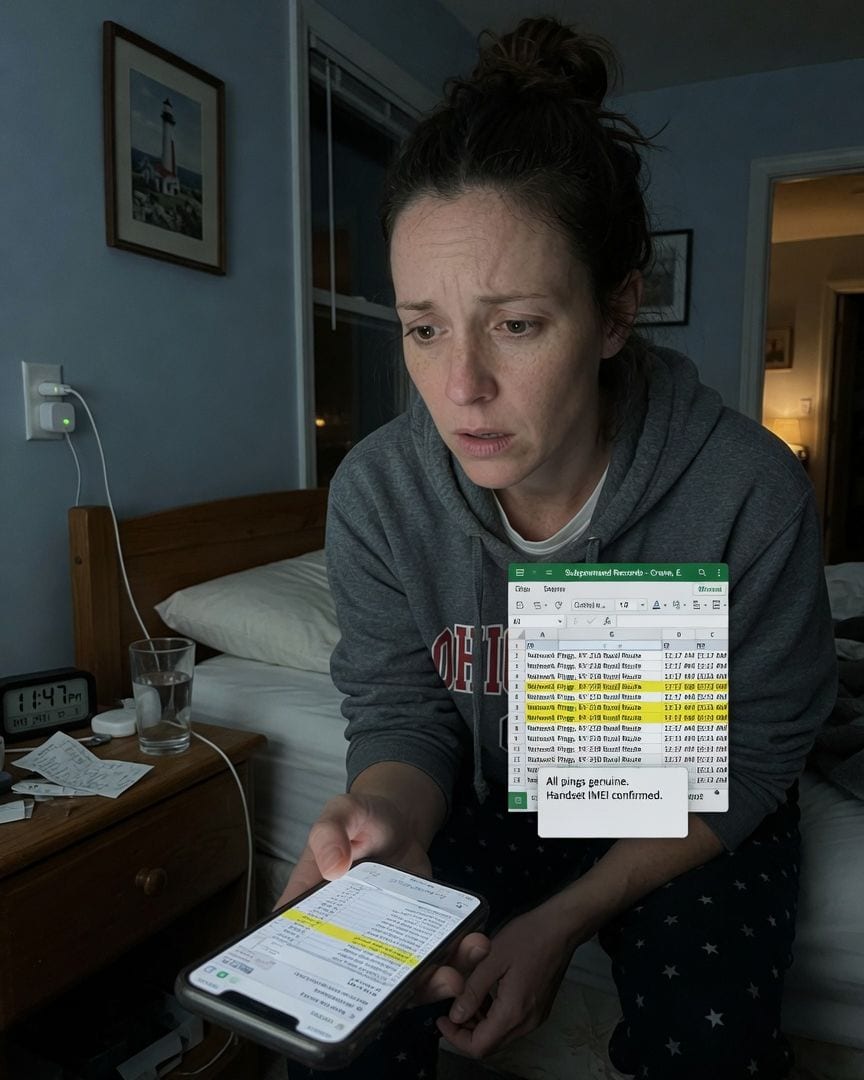
The email from Robert Lambert, my lawyer, landed with an attachment labeled "Subpoenaed Records - Crane, E." I opened it, expecting some mundane financial statement, but it was my mobile carrier's report, a dense spreadsheet of calls, texts, and data usage.
I scrolled, confused, past the usual entries. My everyday life, precisely logged. Then I saw it. A block of entries, beginning just past midnight on the night of the 2nd, and continuing until 4 AM. "Network Pings, KY-210 Rural Route."
Every few minutes, a new ping, mapping a progression along a stretch of highway deep in rural Kentucky.
My phone never left my desk that night. It was plugged into its smart charger, right beside my bed in Ohio. I remember seeing its little green light glowing in the dark as I drifted off.
The smart-plug log, a small app I’d downloaded to track energy use, confirmed it: continuous charge, unbroken, from 10 PM until my alarm went off at 6:30 AM. My device, my location. Two mutually exclusive truths staring back at me.
Attached to the records was a brief, almost dismissive note from the carrier. It simply stated: "All pings genuine. Handset IMEI confirmed." The words swam, blurring the familiar, reliable world I thought I knew.
It wasn't a glitch, not a billing error. This was data, hard and unyielding, insisting my phone had been driving through Kentucky, while simultaneously, irrefutably, it had been dormant on my desk.
I called the carrier, my voice tight with forced calm. "There's a mistake in these records," I explained, detailing the impossible Kentucky pings versus my smart-plug log. The representative, a young woman named Sandra, listened patiently, almost too patiently.
She then proceeded to explain, in a tone that allowed for no argument, that the IMEI — the unique serial number of my device — matched my phone. The tower data, she said, was solid.
There was no record of a system error, no indication of a duplicated number. "We assure you, Ms. Crane," she concluded, "the records reflect your handset's genuine activity."
I tried to argue, to push back against the logical impossibility of it, but her polite certainty chipped away at my rational defenses. It was like trying to explain color to someone who only saw in shades of gray.
The rules of their world simply didn't allow for what I was saying.
Later that day, still unsettled, the carrier's words echoing, I checked my bank statement. I needed to confirm a recent online purchase, something utterly mundane, a anchor back to reality.
But as I scrolled through the transactions, a small, odd charge caught my eye. Not the one I was looking for. This one was for $4.17.
The merchant name, almost comically specific, was 'Buckhorn Creek Gas & Go,' a tiny, independent station. And the date? The night of the 2nd. The exact same night my phone was supposedly touring Kentucky.
A physical, transactional trace. Not abstract data, not a theoretical ping, but a credit card transaction, dollars and cents, from a gas station in rural Kentucky. A place I'd never been. A purchase I'd never made.
It felt like someone had reached through the phone records, plucked a detail, and solidified it into something real. My heart began to beat a little faster, a cold, creeping awareness stirring.
My phone buzzed again, this time with a new notification. Not from Robert, not from the bank. It was an automated toll alert.
A charge from the Indiana Toll Road, for a vehicle I didn't recognize, two weeks after the Kentucky incident. The account was definitely tied to my name, somehow, though I had no recollection of ever setting it up.
I clicked through, trying to find an error, a glitch, something that would make sense. But there it was, specific and dated, another impossible journey, another record insisting I was somewhere I wasn't. The dread settled, cold and heavy.
This wasn't a mistake. This was a pattern.
I drove to the Buckhorn Creek Gas & Go. It took almost five hours, past endless fields and sleepy towns that seemed lost to time.
When I finally found it, the place was exactly as I pictured: a ramshackle station, faded paint peeling from the clapboard walls, a single rusty pump, its numbers ticking over slower than my patience.
The owner, a stoic man named Dean, was behind the counter, polishing a glass display case filled with stale jerky. He didn't recognize my face.
When I showed him the date and time of the $4.17 charge on my credit card statement, his brow furrowed, but he didn't seem surprised by the odd request. He grudgingly pulled up the grainy security footage from that night.
The video was black and white, jumpy. A figure, seen mostly from the back, entered the tiny store. They were wearing a wide-brimmed hat and a nondescript, slightly oversized jacket.
They paid cash at the counter, their back mostly to the camera, before turning and leaving. The build, the way they moved – it was unnervingly similar to me. The height, the slump of the shoulders.
But the face was completely obscured by the hat and the poor resolution, indistinct. It could have been anyone. Or it could have been… not anyone. I watched it loop several times, a cold knot tightening in my stomach.
I tried to track the Indiana toll charge next, poring over online databases, but I hit nothing but dead ends. Online records were vague, the vehicle unidentifiable, just a generic sedan matching millions of others. It was like chasing smoke.
The frustration became a dull ache in my head. I started researching the specific Kentucky road, KY-210, and the Buckhorn Creek area itself.
The historical records of the region, anything that might shed light on why that particular route, that specific gas station, seemed to be a nexus of my impossible existence.
This led me, not to more data, but to the local historical society, a quiet brick building tucked away in the county seat. Perhaps someone there knew something about old roads, old patterns.
I needed a different kind of record now. Something beyond digital pings and credit card statements.
The historical society was run by Joel Oakley, a man in his early sixties with kind eyes that seemed to hold generations of quiet observation.
He was surrounded by towering shelves of dusty books and brittle maps, a scent of old paper and dust motes hanging in the air. When I mentioned KY-210 and the phrase 'impossible pings,' his expression subtly shifted.
His eyes, though still kind, seemed to deepen, to look past me for a moment. He didn't look up from the huge, faded county map he was carefully rolling up.
"Some roads, Miss Crane," he mused, his voice soft, "have always carried more than just traffic. Some things… they leave traces where they shouldn't."
He spoke of "old ways" and "what passes through," his words unsettlingly vague, like hints dropped from a dream.
He offered me a stack of old county records to pore over, ostensibly about land deeds related to the area around KY-210, but I felt his gaze linger on me, a weight on my back even as I walked away to a reading table.
He knew something.
Days later, back in my driveway, the mundane task of unloading groceries felt strangely heavy. As I reached for the car door, I noticed a faint, dark smudge on my car window.
It looked like a handprint, but it wasn't mine. It was too large, too indistinct, smeared as if pressed with immense, unyielding pressure, almost like something had melted the glass slightly.
It looked like it had been there for a while, yet I knew it hadn't. I'd washed the car that morning. There was no one else around, no reason for it to be there.
No other cars had been parked near mine. The air felt colder, like someone had just been standing very close, pressing their hand against the glass, watching. My skin prickled.
I returned to Joel Oakley, the faint, dark handprint still haunting me. I didn't even bother with the pretense of historical research this time. I walked straight up to his desk, my voice tight. "Mr. Oakley, what passes through?
What traces?" He sighed, a slow, deliberate exhalation, finally meeting my gaze head-on. "There are certain corridors, Miss Crane," he said, his voice dropping to a near whisper. "Always have been. Not just roads, but patterns.
They exist in the spaces between places. And sometimes, people, or what looks like people, appear where they shouldn't. They leave their mark. Then they vanish."
He reached behind his desk and pulled out a dusty, overflowing folder. Inside, not land deeds, but a collection of brittle, yellowed newspaper clippings. Reports from the 1950s, the 70s, even early 2000s.
I read the headlines, my breath catching in my throat: 'Local Woman Seen Miles Away While Recovering in Hospital.' 'Strange Figure Matches Missing Man's Description.' 'Family Reports Double.'
One clipping detailed a woman who had woken from surgery to find a parking ticket on her car from a town three states over, issued at the exact time she was in recovery.
Joel explained these were 'transfer routes,' places where something… shifted. He described how 'old families' in the area had always known to avoid certain places, to ignore strange sightings, to pretend they hadn't seen what they’d seen.
"Your records, Miss Crane," he said, tapping a finger on one of the clippings, a report from the early 90s about a man seen in two places at once, "they're just the latest iteration.
The world's record, insisting on what cannot be. Because something is passing through, and it's using… your signature."
Joel's words echoed in my mind, a chilling whisper: 'using your signature.' I looked at the clippings again, then back at him.
"If these are 'transfer routes,' Mr. Oakley," I asked, trying to keep my voice steady, "do they have… old waystations? Places where travelers might have stopped?" He nodded slowly, his gaze distant.
He remembered a dilapidated hunting cabin off KY-210, long abandoned, once a minor stop for trappers and the occasional lost traveler. He had donated some of its meager contents to the historical society years ago, thinking them quaint curiosities.
Among them, he recalled, was a tattered, leather-bound logbook.
We spent the next hour sifting through dusty boxes in the back of the archives, the air thick with the smell of forgotten things. Finally, he pulled out a small, unassuming ledger.
It was a simple visitor's log, its cover cracked, the pages thin and brittle. It was filled with faded, looping script from decades past, names and dates and brief notes about the weather or the hunting.
My heart hammered against my ribs, a frantic bird trapped in a cage, as I flipped through the brittle pages. The names became more recent, then less so. My finger traced the ink, page after page, until I found it.
A fresh entry. On a page dated precisely to the night of my impossible Kentucky drive. A name, written in dark, vibrant ink: 'Emily Crane.' And beneath it, a signature. Not a printed name, not a digital stamp.
But the unmistakable, flowing script of my own handwriting, the distinct loops and flourishes of my capital E, the trailing curve of the 'r' – pressed into the paper, as if I had just signed it myself.
I thrust the logbook at Joel, my hand trembling so hard I almost dropped it. "This is impossible," I whispered, the words catching in my throat. He shook his head, his face grim, eyes clouded with a sorrowful understanding.
"Not impossible, Miss Crane. Just… difficult. These routes, these points, they're not just for travel. They're for activation."
He explained that my unique digital and biological signature – my phone records, my credit card, the precise way I wrote my name, my very presence online – had made me a prime candidate for 'harvesting.'
My identity, my 'signature,' was being used as a template, a 'key.' These weren't just pings; they were the digital breadcrumbs of a proxy, a physical duplicate, being moved along these routes.
The specific gas station, the toll road, the waystation – they were all points in a network, activating these vessels with fragments of my essence.
Each record, each impossible trace, was another moment of activation, another piece of me lent to a copy, an echo.
"You were always inside it," Joel said softly, his voice barely audible over the sudden, hollow ringing in my ears, "because you are the source. Your identity is what allows them to exist, to move, to leave their impossible records.
They aren't just looking for you. They're making you."
The monstrous shape of it snapped into place. Not just my records, not just my phone, but me. My very self, being replicated, used, animated, parcelled out.
I felt a cold dread seep into my bones, a violation far deeper than any theft. It was an erasure, a dilution. "How do I stop it?" I demanded, my voice raw, desperate.
Joel looked at me with profound pity, a look I would never forget. "You can't. It's too old, too ingrained. The link is made."
I tried. I went home, frantically deleting every digital trace of myself I could find. Social media accounts, old emails, cloud backups, bank statements, even forgotten loyalty program profiles. Anything that bore my name, my data, my history.
I shredded physical documents, emptied my apartment of anything that could tie me to a specific location, a specific identity. I packed my car, intending to drive, to vanish, to outrun the impossible.
But with every deletion, every shred, every item removed, I felt a piece of myself fray. The more I tried to erase my footprint, the more hollow I became.
The phone records, the credit card statements, the signature in the logbook – they weren't just records of a journey I hadn't taken. They were records of a journey I was taking, in pieces, unknowingly.
The system was too vast, the imprint too deep. I was the blueprint, and the copies were already out there, moving, living, leaving their impossible traces. There was no escape. Only… completion.
Emily Crane vanished. Her apartment was found impeccably clean, all personal effects removed, as if she had never truly lived there.
On the otherwise bare desk, a single, crumpled receipt remained: $4.17 at 'Buckhorn Creek Gas & Go,' dated the day she disappeared. The police found no signs of foul play, no struggle. Just an absence.
A clean, unsettling void where a person used to be. The case went cold, another inexplicable disappearance in a long line of them, eventually filed away as a voluntary departure.
A week later, Brandon Ingram, Emily's neighbor, saw her leaving the apartment building. He called out her name, and she turned. There was a faint, almost imperceptible shift in her eyes, a stiffness in her gait he hadn't noticed before.
"Everything okay, Emily?" he asked, a flicker of unease stirring in him. She simply smiled, a quiet, unfamiliar smile, and walked away.
If this one got to you
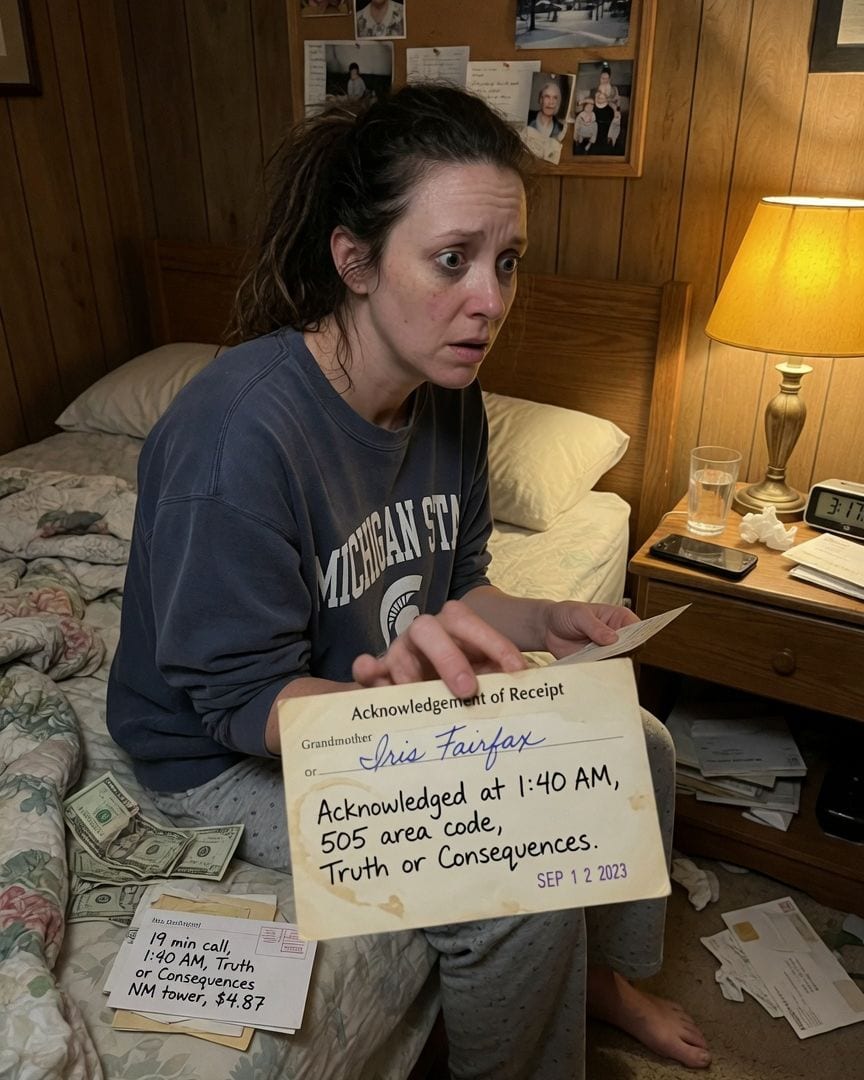
My phone bill shows me calling New Mexico at 1 AM. My phone was on my bedside table in Michigan, in airplane mode. The number dialed is one I don't recognize, three nights running.
An official envelope from my late grandmother's estate arrived, containing a faded form titled 'Acknowledgement of Receipt.' On it, unmistakably, was my own handwriting, a brief note acknowledging something I'd never seen. The form was dated a month ago, from a town I'd never visited.
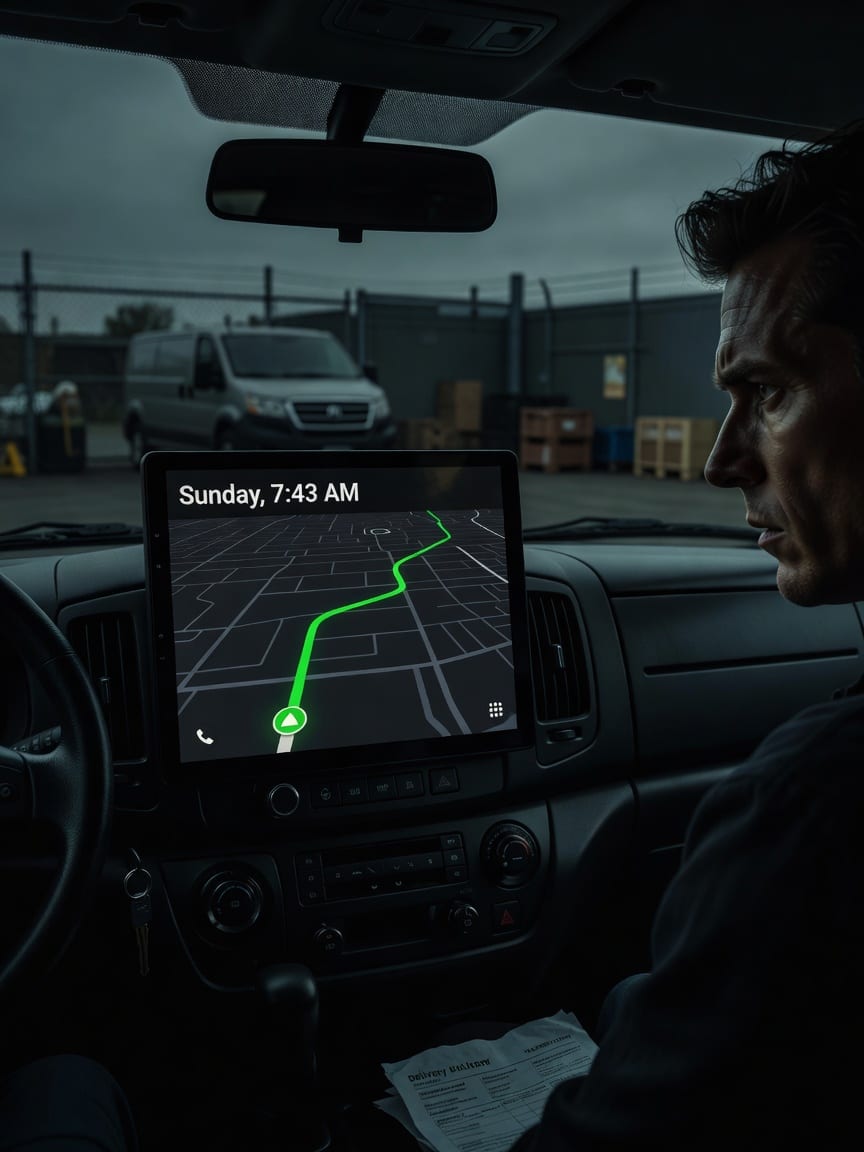
My delivery van drove 130 miles last Sunday, stopping for four hours in another state. It never left our locked yard. The GPS log drew the whole trip, timestamped to the minute.
I was just doing my job, sitting in the dispatch office with my manager Joel, when he pulled up the GPS log for my delivery van, Unit 74. It showed a 130-mile round trip to Delaware, engine on for four hours, with a distinct stop, all while my van was locked in the yard and I was home. The camera footage confirmed it hadn't moved an inch, yet the system insisted it had traveled hundreds of miles.
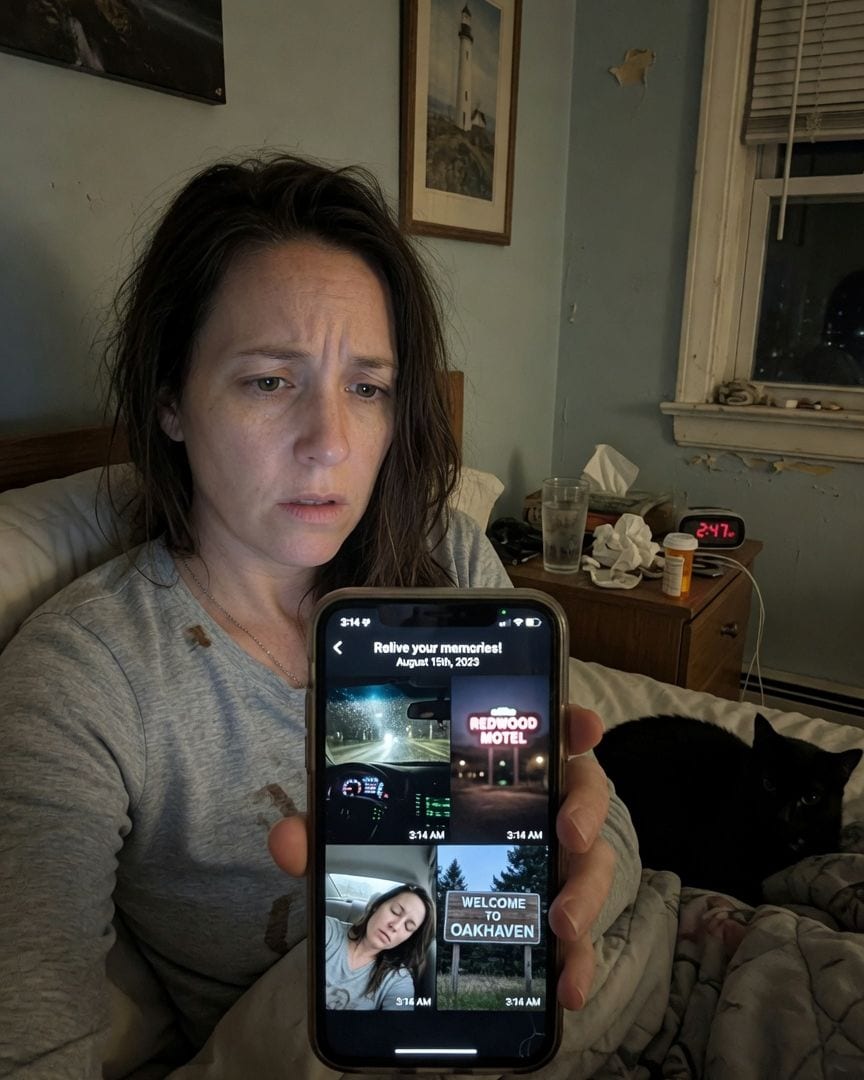
My phone has photos of me asleep in a strange car at 3 AM. Then a voicemail: 'We'll have her back by sunrise.'
My phone woke me with a cheery notification, promising memories from last August. Instead, it showed me asleep in a dark car, rain streaking the windshield, miles from my apartment. I was certain I'd been home in bed that night, but the images were undeniably in my camera roll, a quiet violation of my memory.
My dashcam footage showed my street change. For five seconds, my car drove on a road that doesn't exist on any map.
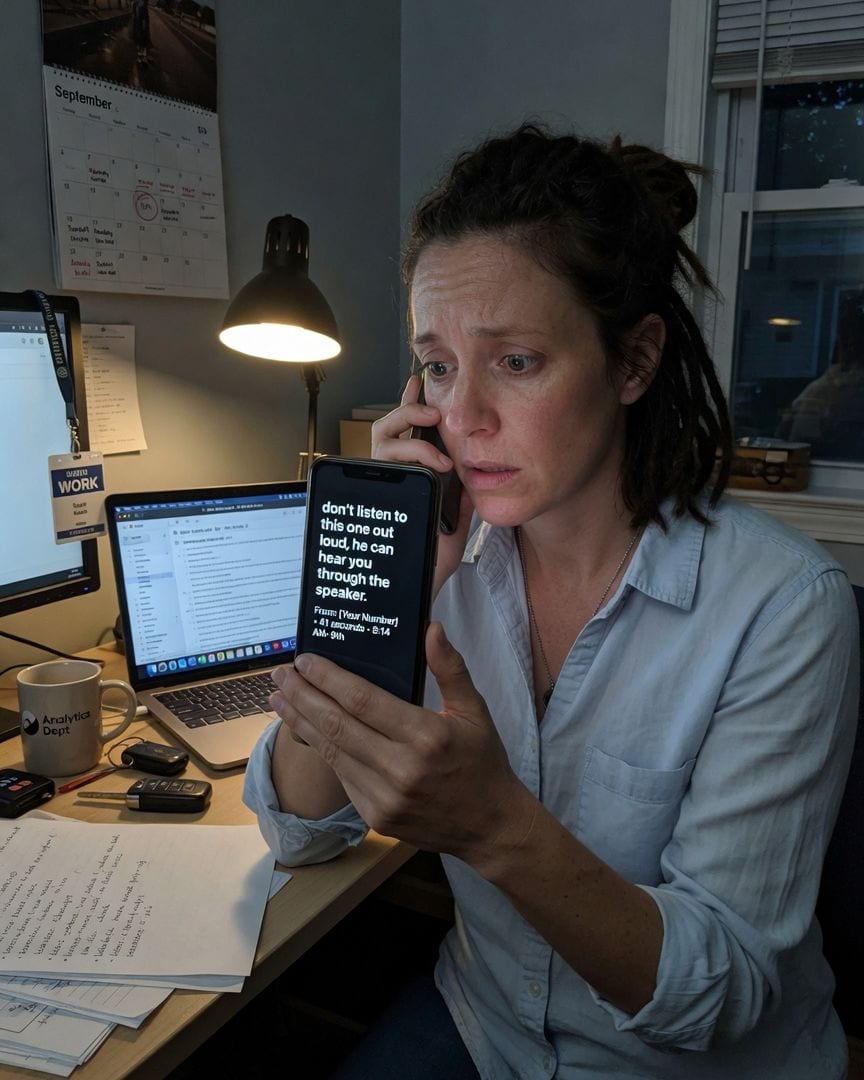
It was a normal Tuesday until my work phone received a new voicemail. The transcription warned, 'don't listen to this one out loud, he can hear you through the speaker.' But the message was from my own number, and the audio was forty-one seconds of absolute, dead silence.
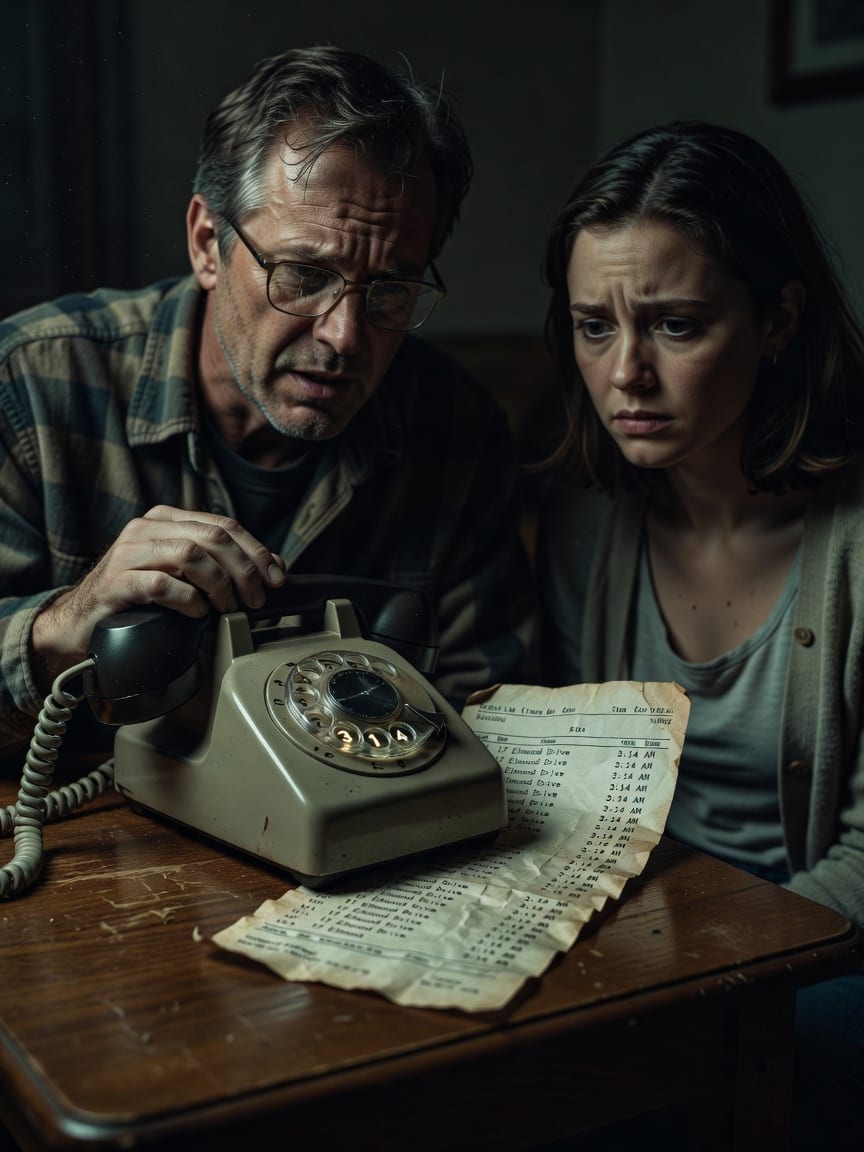
My phone bill itemised forty calls from my number to a house demolished in 1990. Each call at 3:14 AM, lasting eleven minutes. The bill arrived postmarked from a flattened building.
I expected the usual mobile bill, but my landline statement listed forty calls from my number to '17 Elmwood Drive.' That address was for a house torn down in 1990, a vacant lot I remembered from childhood. The phone company insisted the calls were legitimate, leaving me profoundly unsettled by the impossible charges.
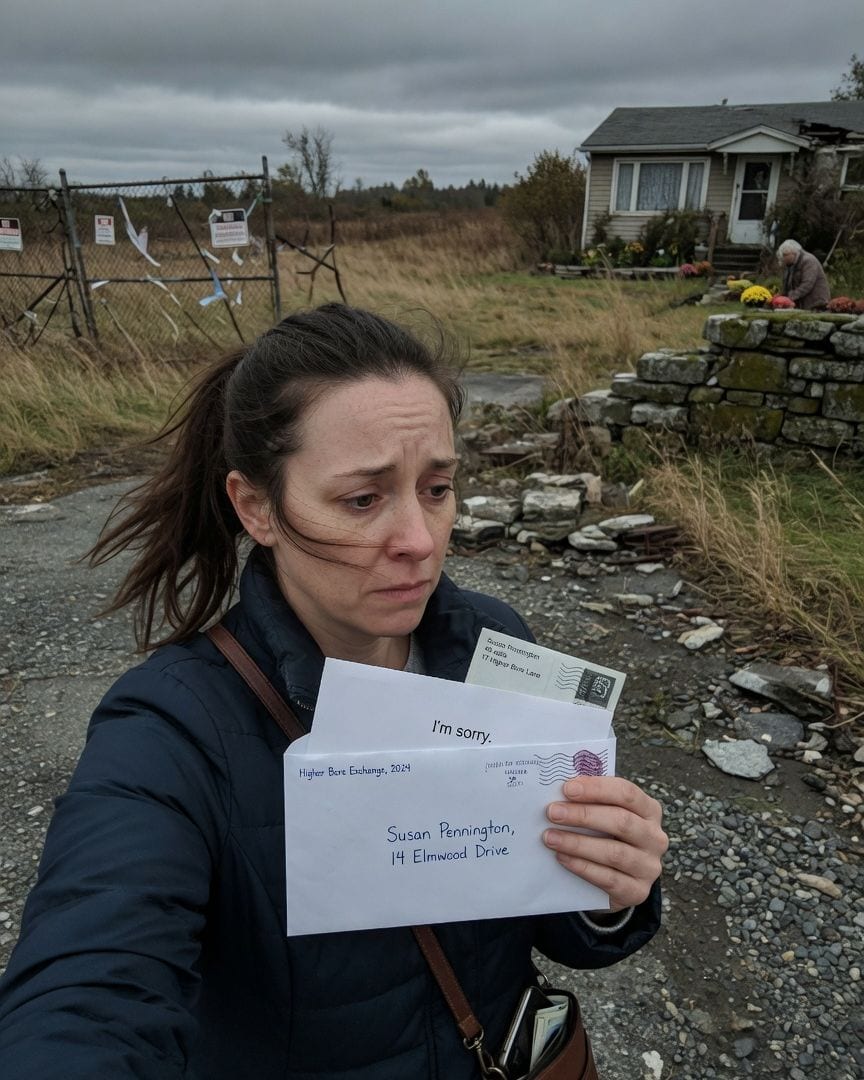
My phone bill listed forty calls made at 3:14 AM to a house demolished in 1990. The paper bill came from a flattened building. My name is on it.
I stared at my phone bill, my morning coffee forgotten. It detailed forty calls, each at 3:14 AM, to an address I knew was a vacant lot where a house had stood decades ago. But the real dread began when I saw the bill's return address: a telephone exchange flattened years before.