A meticulous records clerk finished her final inventory in a Cold War depot, then found a steel door not on any blueprint, worn smooth by decades of use, opening to an office with a log updated just hours ago.
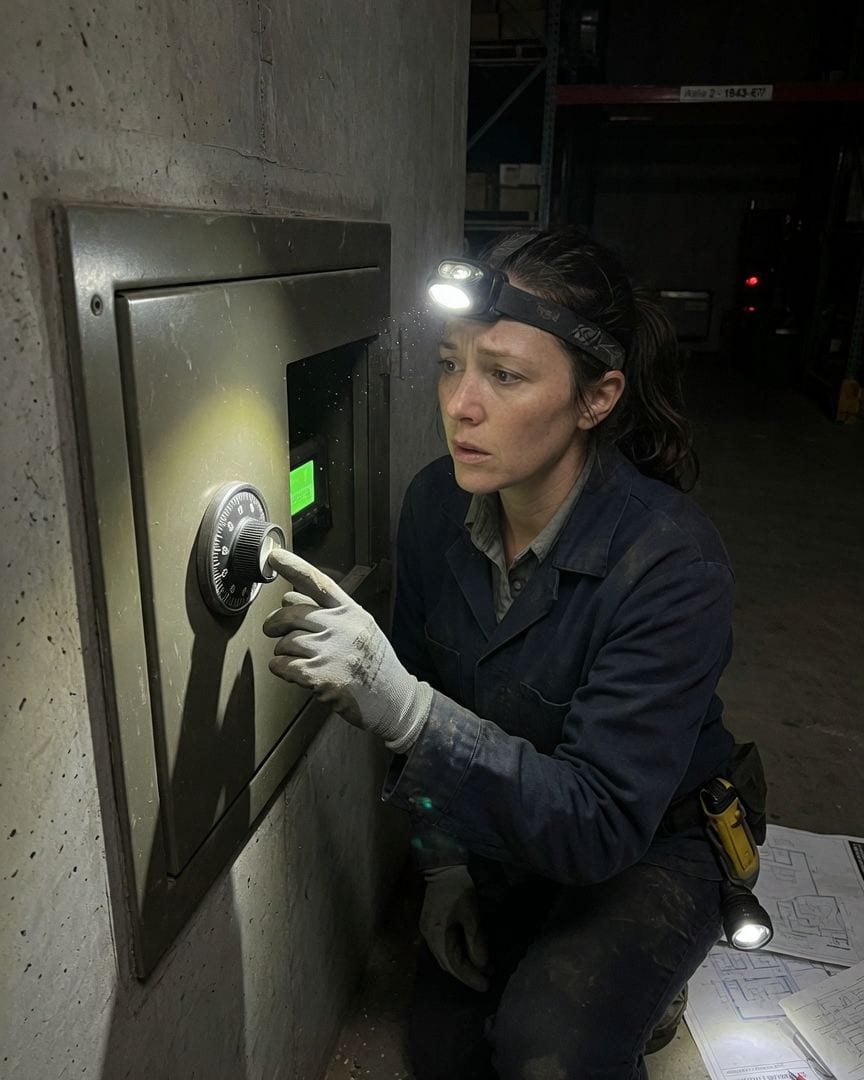
Merit Lachance moved through the echoing darkness of Building 9, the beam of her headlamp a lonely circle slicing through the dust motes.
The recent storm had knocked out power to the depot’s oldest section, leaving her to finish her mandated shelf-read for the impending decommissioning by the glow of a battery pack and a focused LED.
Her boots crunched on the bare concrete floor, the only sound in the cavernous space. Building 9, a relic from 1943, had served as a classified records facility through the Cold War, and now it was slated for partial closure.
Merit, a meticulous records clerk, felt a quiet pride in her work, ensuring every file was accounted for. She reached the far wall of Aisle 2, her beam scanning for the next shelf tag.
Instead, the light fell on something that made her stop short. It was a door, waist-high and made of solid steel, set flush into the wall.
Her mind reeled. Building 9, according to every blueprint she’d memorized, was a single, vast open room, poured in one go, with no interior partitions, no alcoves, and certainly no doors in its sheer concrete walls.
This door was a lie. Her gloved hand reached out, brushing the cold, smooth metal.
Her fingers traced the combination dial, its numbers still clear, but the knurling around them was worn, shiny, almost polished smooth in places, as if someone had twisted it daily, not just for years, but for decades.
It spoke of diligent, constant use, an impossible contradiction to the building’s known history.
Merit tried the door, pushing, then pulling, her shoulder pressing against the seamless steel. It was solid, utterly unyielding.
She pulled her utility knife from her belt, its blade glinting in her headlamp, and ran the tip along where hinges should have been, along the theoretical frame. Nothing.
The steel was one continuous surface with the concrete, an integral, impossible part of the wall. Her rational mind, trained in precise inventory and logical systems, tried to find an explanation. A forgotten utility access?
A structural anomaly from the original pour, later covered? A hidden safe? But the deeply worn knurling argued against 'forgotten.' This door, whatever it was, had seen constant, active use.
She shrugged off her backpack, pulled out her depot master plans, their thick paper crinkling, and spread them on the dusty floor. Her headlamp focused on the 'Building 9 Interior Layout' page.
The schematic was brutally simple: a single, vast room, no interior walls, no alcoves, no doors. She cross-referenced the control numbers and dates, checking for revisions, annexes, even obscure Cold War-era addendums. Nothing.
The door simply did not exist on any official record, public or classified. A methodical curiosity, a stubborn need for order, slowly overrode her growing unease. She began to meticulously work the dial, ignoring the strange prickle on her skin.
She tried common combinations, then a brute-force sequence, her fingers guided by the faint wear patterns she could discern on the numbers. The silence of the vast building stretched, amplified by the focused scrape of the dial beneath her fingers.
After several minutes, a faint, almost imperceptible click echoed in the silent building. The heavy door shifted inward by an inch, revealing utter, lightless darkness beyond.
Heart pounding, Merit pushed the heavy steel door open wider. Instead of a dusty void, a forgotten utility closet, or some structural cavity, her headlamp beam cut through a small, dust-free, actively maintained office space.
The air was cool, recirculated, and carried a faint, metallic scent, like ozone and clean steel. On a minimalist desk, free of clutter, a single terminal screen glowed with soft green light, a stark beacon in the gloom.
Merit stepped closer, her boots silent on the smooth, polished floor, the hum of the screen the only sound. The terminal displayed a log, columned neatly with 'CONTROL NO.', 'DATE/TIME', and 'DESCRIPTION'.
Her eyes fixed, unblinking, on the last entry: 'ANNISTON-1943-BLDG9-POWERGRID-STORM-DISRUPTION'. The date and time were from just hours ago, a precise 3:14 AM.
A low, rhythmic hum, too deep to be the flickering emergency lights that occasionally pulsed in the main depot, emanated from behind the terminal, a sound that should not exist in the silent, decommissioned sections of Building 9.
Merit stood frozen, staring at the impossible log entry. 'ANNISTON-1943-BLDG9-POWERGRID-STORM-DISRUPTION' from just hours ago. The terminal was live, operational. She tore her gaze from the most recent entry and scanned the screen, her eyes moving rapidly down the list.
Entries stretched back decades, each a cryptic 'filing' event: 'SHIP-SS-MARINER-ATL-09/1962-PRIMARY-CONTAINMENT', 'AIRCRAFT-N273-PAC-03/1971-SECONDARY-PROCESSING', 'INDIVIDUAL-DRUMMOND-M-07/1985-RETENTION-PROTOCOL'. The descriptions were chillingly specific, yet utterly devoid of context, like headlines from a nightmare.
Her headlamp beam slid to a small, embedded plaque on the desk: 'B. Yates – Section Chief'. Bernard Yates, the depot manager, a man she’d always found quietly affable, almost invisible, until now.
She fumbled for her phone, its flashlight beam struggling against the terminal’s cool green glow. She took photos of the screen, each flash a stark punctuation mark in the quiet room.
Then, carefully, she backed out, easing the heavy steel door shut. The soft thunk of the seal resonated, followed by the metallic clicks as she re-dialed the combination, locking it tight. The sound echoed with a new menace.
She spent the next day in a blur, fueled by coffee and a gnawing sense of disbelief. Discreetly, she accessed the official, declassified archives she had privileges for, searching for the events listed on the terminal log.
Each entry corresponded to a real, documented disappearance: the SS Mariner, lost with all hands in the Atlantic; a small private plane, N273, vanished over the Pacific; a missing person, Michael Drummond, presumed drowned.
The official explanations were always mundane: weather, mechanical failure, human error.
But the sheer volume and the precise correlation with the terminal’s 'filings' were impossible to ignore, and the official files were often missing key reports or were heavily redacted, the blacked-out sections leaving strange, suggestive shapes.
Merit tried to find records of Bernard Yates's career, hoping for some anomaly. His personnel file was unusually sparse, with large gaps in his early years, and a curious 'DECLASSIFY NEVER' stamp on a single, otherwise blank, internal transfer memo.
The memo was dated 1978.
Merit’s investigation, however discreet, did not go unnoticed. Days later, while she worked in the main archive, focused on a dusty ledger, her eyes fell on her monitor.
A Post-it note was stuck to the screen, its yellow square a startling pop of color. In neat, precise handwriting, it read: 'Some files are best left closed, Merit.' Her heart leapt into her throat.
Only Bernard Yates ever called her by her first name. Later that afternoon, she noticed Bernard watching her from the observation window of his office, his expression unreadable, a faint shadow across his aged face.
A cold prickle ran down her spine, the certainty solidifying: he knew she’d been in Building 9.
That evening, as she was leaving the depot, her car failed to start in the deserted parking lot. The engine sputtered, then died. A tow truck arrived suspiciously quickly, the driver claiming 'a routine patrol check' in the area.
As the truck pulled away, hooking her car, Merit saw Bernard standing by the main gate, a solitary figure watching her go, a faint, almost imperceptible smile playing on his lips.
She felt a profound sense of isolation, a chilling understanding that she had been identified as a 'problem.' The next morning, a new entry appeared on the hidden terminal, timestamped for the previous night: 'INDIVIDUAL-LACHANCE-M-08/XXXX-OBSERVATION-INITIATED'.
Merit found Bernard Yates in his office later that morning. She held up a printout of the 'DECLASSIFY NEVER' memo from his file, her hand trembling slightly. 'What is this, Bernard?'
she demanded, trying to keep her voice steady, willing herself not to shout. He didn't flinch. He sat behind his imposing, clean desk, his gaze calm, almost serene. 'A formality,' he said, his voice soft, unhurried.
Merit pressed, her words spilling out, a detailed account of the hidden door, the dust-free office, the glowing terminal, the chilling log entries. Bernard listened, his expression unchanging, almost serene. No surprise, no anger, no denial.
'You’ve found the heart of it, haven’t you?' he finally said, leaning back in his chair, his hands clasped over his stomach.
He began to explain, in a measured, dispassionate tone, that the Anniston Depot was part of a multi-generational, covert operation.
It was established, he said, to 'catalogue and contain' certain 'anomalous transfers' – events where individuals, objects, or even entire vessels were shunted out of normal reality, simply… disappeared.
'We don't know why it happens,' he stated, his eyes fixed on some distant point, 'only that it does. Our job is to manage the ingress, maintain the records, and ensure the public remains unaware.'
He described the 'filing' as a bureaucratic process to acknowledge the existence of the contained anomalies, to prevent them from causing wider disruption, a meticulously orchestrated lie.
Merit realized the 'Redaction That Has a Shape' she’d seen in the official files wasn't about censorship, but the institution’s way of managing public knowledge versus internal reality.
The 'declassify never' was not about hiding a state secret, but about protecting the integrity of the containment itself, the secrecy ensuring the system remained undisturbed.
The chill of his calm, matter-of-fact explanation was worse than any anger, worse than any threat. He simply knew.
Bernard handed Merit a thick, bound file from his desk drawer, its cover a faded gray. 'This might interest you,' he said, his voice devoid of malice, as if offering a cup of tea.
It was labeled 'BUILDING 9 ANOMALY – PROJECT ECHO – INCIDENT REVIEW – 1978.' Merit opened it, her hands trembling so violently the pages fluttered.
The report detailed a prior incident involving a power disruption, similar to the recent storm, and an individual who 'accessed the core system during a power interruption.'
Many lines were blacked out, redacted with heavy black bars, but her eyes were drawn to a specific passage that described 'successful integration into the facility's operational matrix.'
She scanned further, heart hammering against her ribs, until she found the unredacted summary at the very end. It was a single line, stark and clear: 'Subject: Lachance, Merit, E. Status: Integrated.' The date was 1978.
Merit stared at her own name, her full name, in a file written decades before she was born, linked to a successful 'integration' within Building 9.
As she looked up at Bernard, his faint, knowing smile was the last thing she saw before the terminal in the hidden office, still connected through a data link, began to type a new line automatically, beneath the old report: 'INDIVIDUAL-LACHANCE-M-08/XXXX-INTEGRATION-INITIATED'.
Bernard Yates observed Merit’s horrified reaction with an unsettling placidity. 'The system is remarkably efficient,' he murmured, his voice soft in the quiet office. 'It anticipates needs, fills gaps.
The 'Lachance, Merit, E.' from 1978 was a placeholder, an echo, a pre-programmed requirement. When you discovered the door, when you accessed the terminal, you triggered the 'integration' protocol.
You were always meant to find it, to step into the role.'
He explained that the individuals 'integrated' were those uniquely suited to maintain the delicate balance of the facility, often those with a deep, methodical understanding of records and systems.
Her own meticulous nature, her innate need for order, had been her undoing.
He revealed that the 'Redaction That Has a Shape' on the classified files, the precise, differing blackouts, were not censorship as she understood it, but a dynamic, self-correcting mechanism of the system itself, adapting public records to reflect new 'integrations' and ensure coherence.
The 'file that is still being written' was not just about logging new anomalies, but about actively writing the roles for those who maintained the system.
Merit realized, with a sickening lurch, that the 'worn knurling' on the dial wasn’t just from daily use, but from generations of 'integrated' individuals, each taking their turn, meticulously working the lock, maintaining the facade, until their own 'integration' was complete.
Merit, numb with dread, tried to argue, to deny her fate. 'I'm not part of this, Bernard!' she insisted, her voice thin, alien even to her own ears. 'I won't be!'
Bernard merely shook his head, a faint, pitying expression on his face. 'You are, Merit. You always have been. The system chose you, just as it chose me decades ago.'
He gestured to the small monitor on his own desk, which mirrored the display of the hidden terminal. 'Look. The final command. It's irreversible.'
Merit glanced at the screen, where 'INTEGRATION-INITIATED' was now followed by a countdown, slowly ticking down to zero: 00:01:58… 00:01:57…
Bernard rose from his desk, moving to a side door in his office Merit had never noticed before. It was steel, waist-high, and identical in every detail to the one in Building 9.
'It's time to assume your duties, Section Chief Lachance,' he said, his voice quiet, almost kind. He opened the door.
Beyond was not darkness, but a brightly lit corridor, stretching deeper into the depot, a corridor that, like the door, also shouldn't exist. He didn't push her, didn't threaten. He simply waited, his expression calm, inviting.
Merit felt a strange compulsion, a pull she couldn't resist, as if her entire life, every detail of her methodical nature, her love for order and records, had been leading to this moment, a pre-programmed trap.
The countdown on the screen reached zero. The terminal display went dark, then rebooted, displaying a new, pristine login screen, awaiting a new 'Section Chief'.
The Anniston Depot's partial decommissioning proceeded as planned. Bernard Yates, the long-serving manager, quietly retired, his absence barely noted by the few remaining staff.
Merit Lachance's colleagues assumed she had transferred to another facility, her meticulous shelf-read completed just in time. Her personal effects were packed, her desk cleared, box after box carted away.
The hidden door in Building 9 remained undiscovered by the decommissioning crew, its steel surface blending seamlessly with the poured concrete wall. The official floor plans continued to show a single, open room, poured 1943.
Life at the depot, and in the world beyond, continued, utterly unaware of the quiet succession that had taken place beneath its feet.
Merit Lachance was gone. Her Facebook profile showed no new activity, the last post a picture of her cat from weeks ago. Her phone remained inactive, her number eventually reassigned.
One evening, a former colleague, Cynthia Davenport, scrolled through her feed and saw an old picture of Merit, tagged months ago from a departmental picnic.
Cynthia smiled faintly, a fleeting thought of Merit passing through her mind, then noticed a new comment, posted just minutes ago, beneath the picture. It read: 'The records are always current, Cynthia. Check Building 9.'
Cynthia frowned, then shrugged it off. It's probably just Bernard Yates, bored in retirement, messing around. She closed the app.
The next morning, a Post-it note was stuck to Cynthia's monitor at the depot: 'Some files are best left closed, Cynthia.' The handwriting is perfectly neat, familiar.
If this one got to you
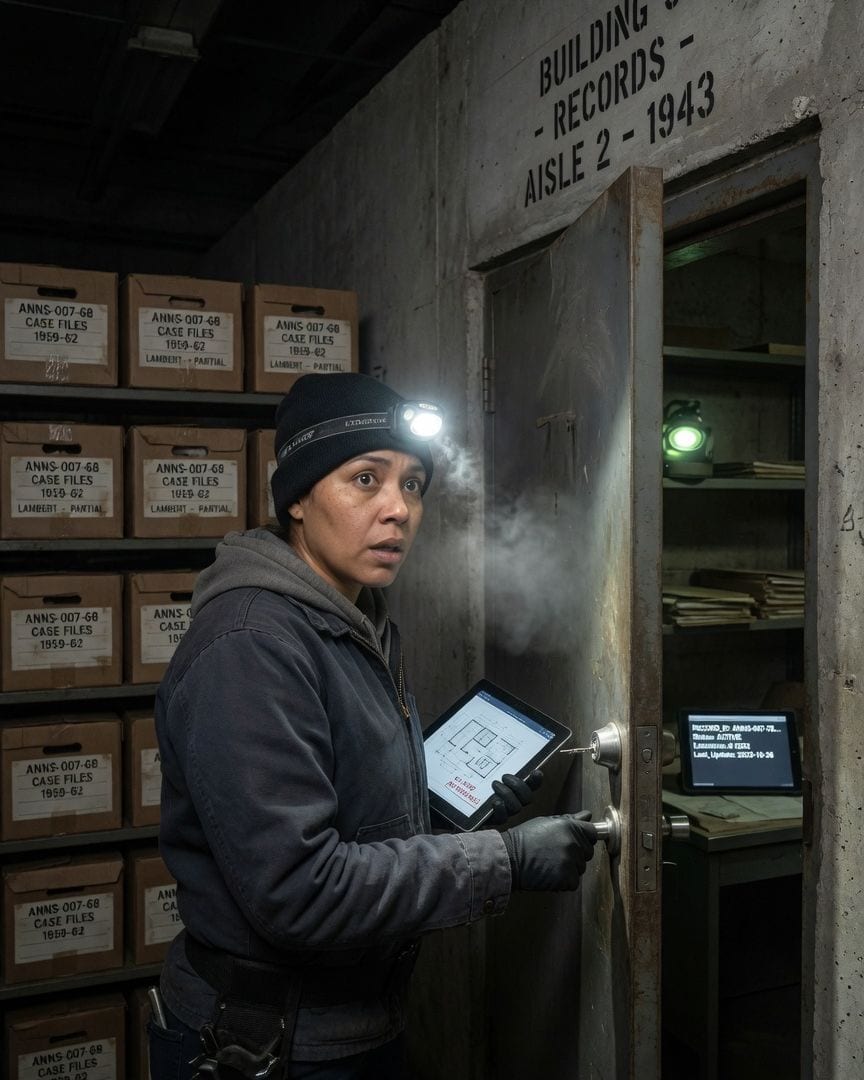
A Cold War depot archivist knew her building had solid walls, but her headlamp found a steel door worn smooth for fifty years, and a screen inside logged a worker missing since 1975.
Merit Lachance, a meticulous 34-year-old archivist, prided herself on the perfect order of the Anniston depot's Building 9. Working by headlamp in the cold, power-out gloom, she was determined to complete her shelf-read before the generator returned. But her beam found something impossible: a waist-high steel door set flush into a solid concrete wall that blueprints showed as unbroken. Its dial lock, worn smooth over fifty years, felt warm to her touch, defying logic. Inside, a low-power monitor displayed a recent log entry for Lily Lambert, officially missing from the depot since 1975.
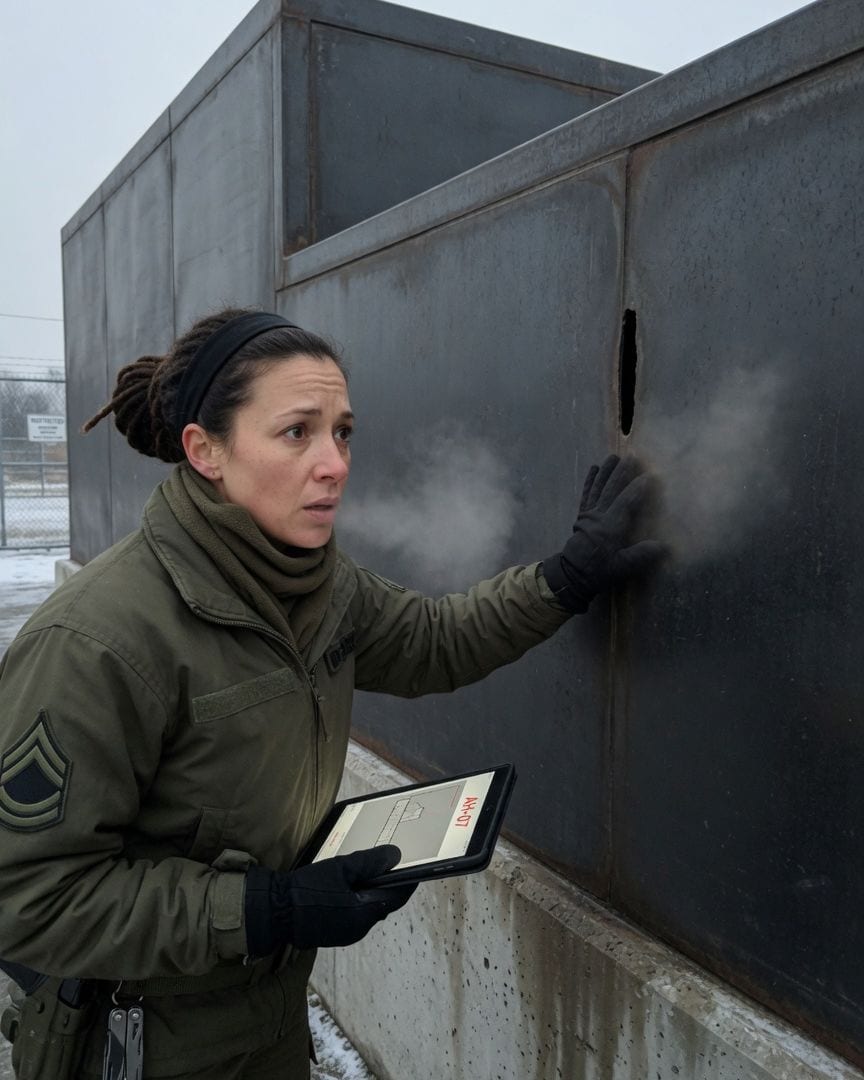
A Sergeant's audit uncovered an annex with no records. She pressed a hidden lever, and its steel wall hissed open to a sliver of impossible darkness.
Sergeant Iris Kowalczyk, a stickler for order, meticulously prepared for her transfer audit of the seventy-year-old installation. An annex behind the old post hospital defied all logic: no keyway, no maintenance record, no year built — it simply *was*. On a biting cold morning, she felt an undeniable warmth radiating from its thick, featureless steel, as if something active hummed beneath. Her fingers found a hairline seam, then a hidden, recessed pressure point that felt like a lever. When she pressed it, the steel hissed inward, revealing a sliver of impossible darkness from which a deep, electric hum and a heavy stillness pressed out. What secrets did this impossible structure conceal?
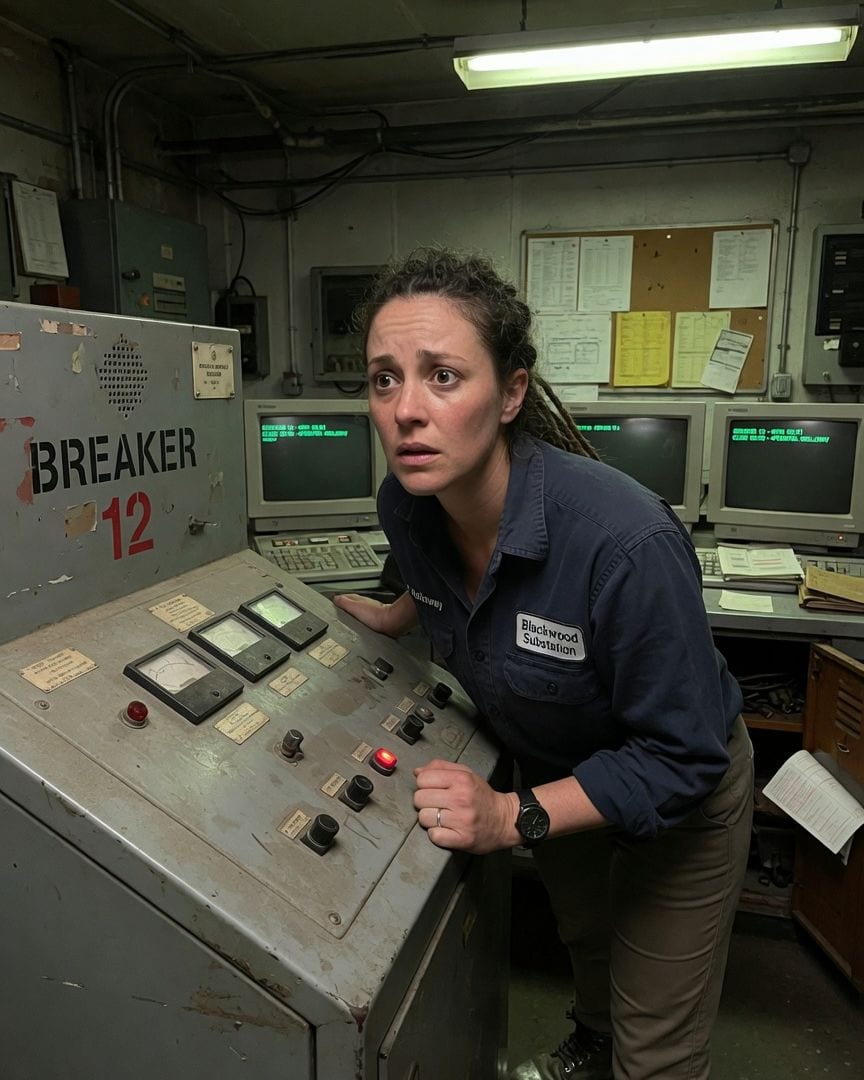
My power station's computer logs a breaker I never touched, opened and closed under my name, while the lights stayed on.
Night shifts at Blackwood Substation used to be a comforting hum, but an impossible event logged under my name shattered the peace. I'd never touched Breaker 12, yet the system claimed I opened and closed it. Now, from that same panel, a low, insistent hum resonates, and a whispered voice asks, 'Are you going to fix it this time?'
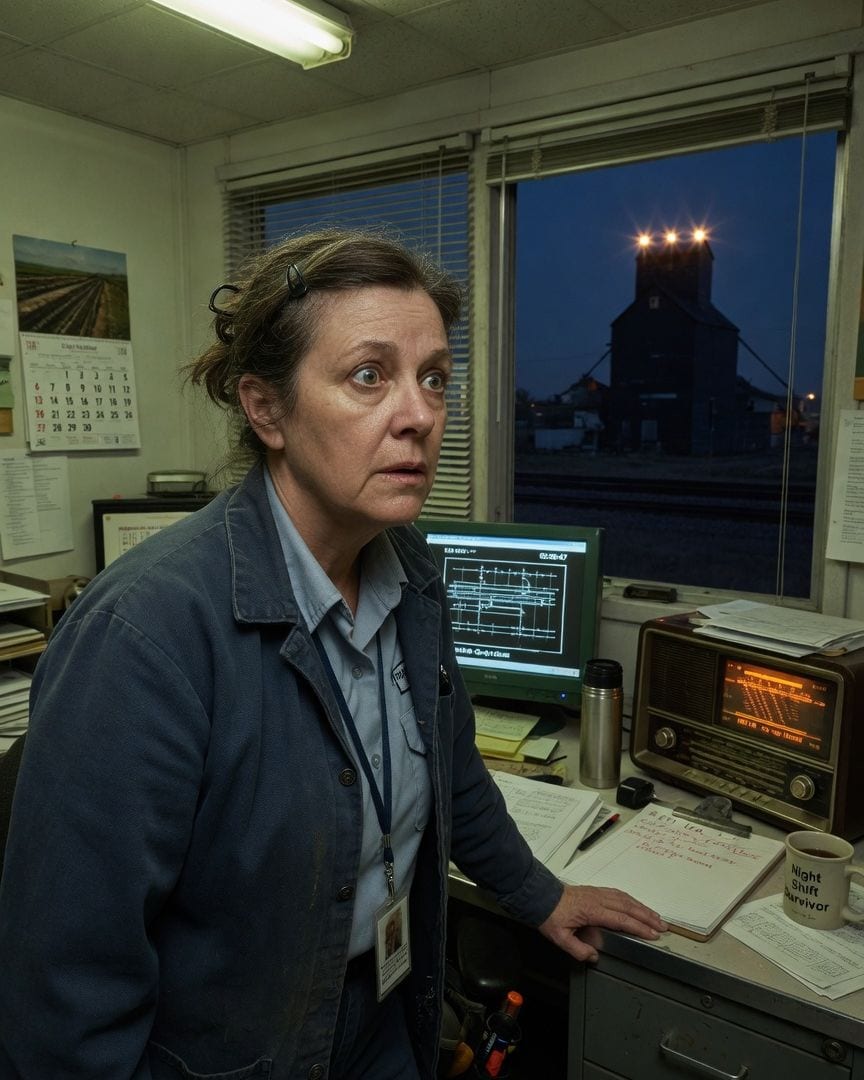
The grain tower light flashed three times at 2 AM, signaling me clear. The bulb was removed six years ago.
Every night, I work the lonely shift at the transport hub. For fifteen years, an old grain elevator, automated and unpowered with its light bulb physically removed, still flashes a 'Clear' signal across the tracks at 2 AM. Recently, the impossible flashes have grown sharper, stirring a deep unease from a place that should be completely silent.
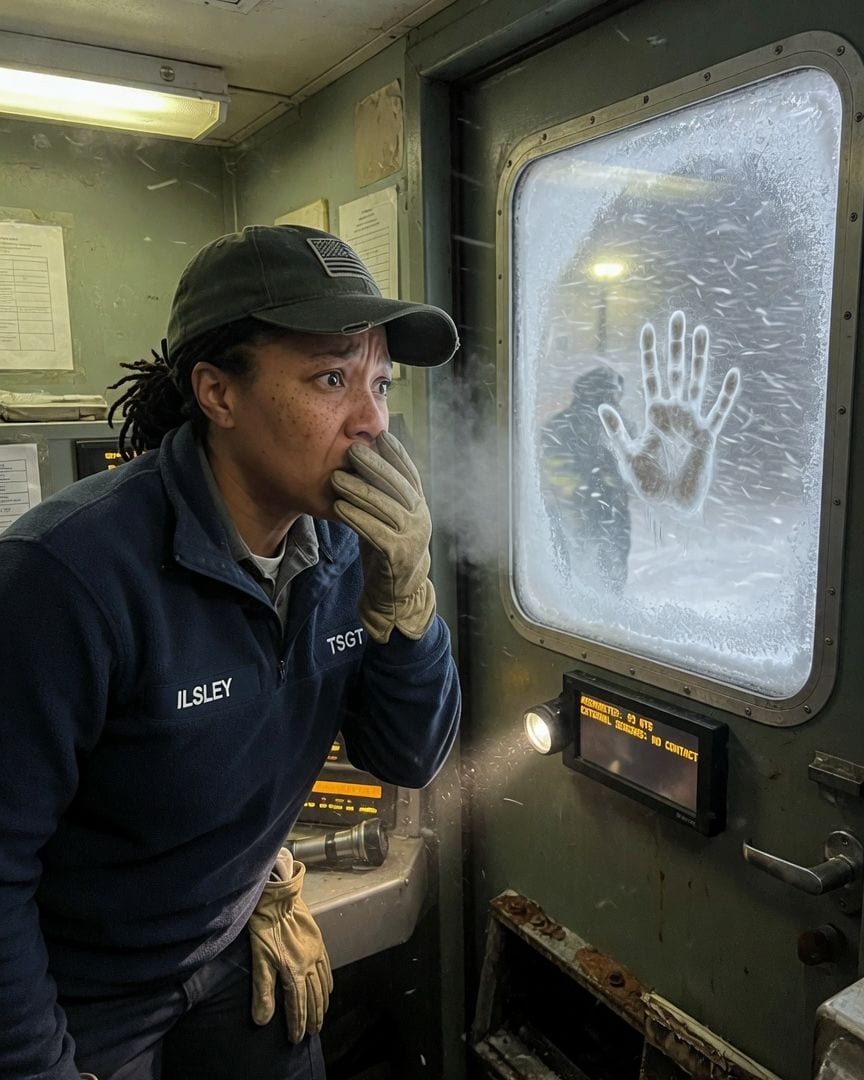
Technical Sergeant Ada Ilsley had two weeks left when a handprint appeared on her sealed window, unnervingly warm and pressed from the *inside*.
Technical Sergeant Ada Ilsley was counting her last two weeks on the Greenland ice-cap before Thule-Gamma Station closed for good. Tonight, the polar wind howled at ninety knots, clawing at the station's insulated walls as she kept a lonely vigil. Through the main door's triple-paned port, she watched a dark figure emerge from the impossible blizzard, its face pressed against the glass, only to vanish. On the frost outside, a perfectly clear handprint remained, unnervingly warm and undeniably pressed from the *inside* of the sealed pane. How could anything have touched the glass from within a supposedly impenetrable barrier?
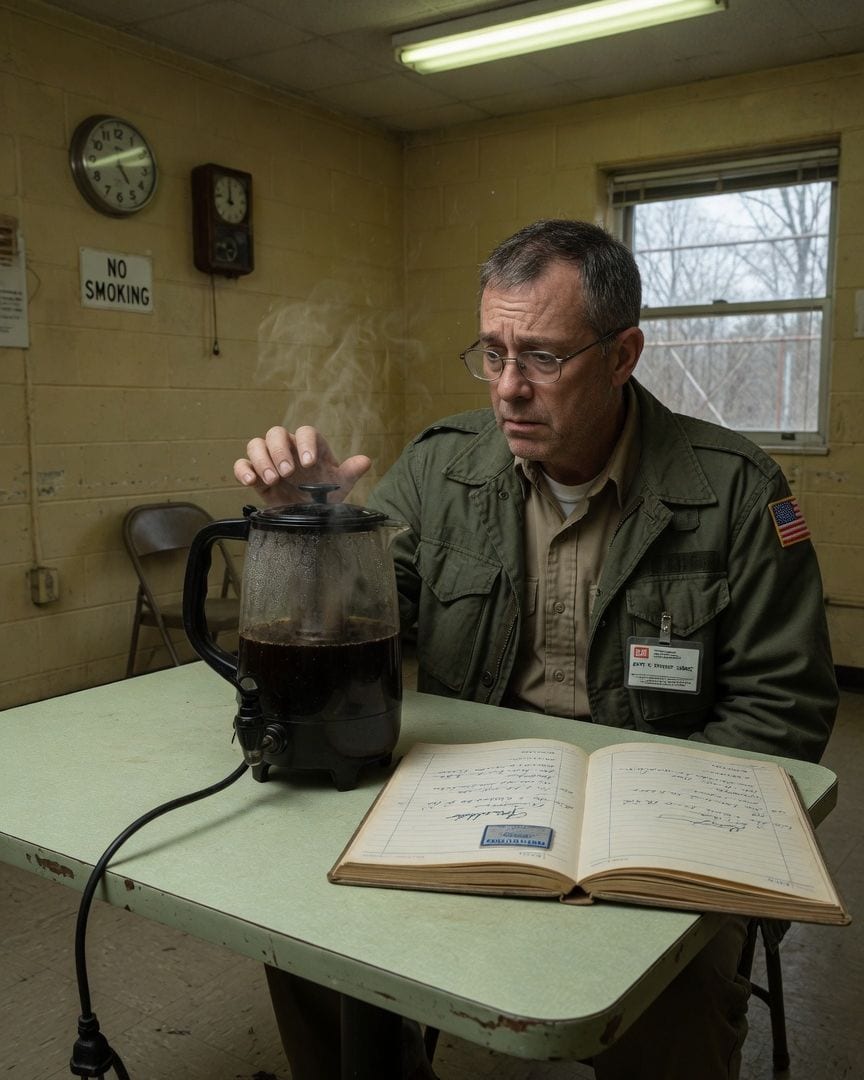
A methodical US Army engineer found a Cold War facility's file stamped 'DECLASSIFY NEVER' — and half its pages were missing.
Captain Nolan Threep, a methodical US Army engineer, expected another routine decommissioning at Alert Facility Twelve in rural Montana. The chains on the doors had rusted solid since 1970, promising a long-dead site. Yet, inside, a faint warmth hung in the air, and a glass coffee urn sat half-full, a wisp of steam rising lazily from its dark surface. The urn, warm to the touch, was clearly unplugged, and the duty log beside it, signed for a shift ending nineteen years prior, looked as though it had been signed yesterday. What secret could a supposedly abandoned Cold War facility hold?