A Sergeant's audit uncovered an annex with no records. She pressed a hidden lever, and its steel wall hissed open to a sliver of impossible darkness.
Sergeant Iris Kowalczyk thrived on order. She approached her upcoming transfer audit with the meticulous precision of a bomb disposal expert, each record a wire to be carefully traced.
This installation, seventy years old, held no mysteries for her until she queried the facilities management system about the annex behind the old post hospital. The building was an anomaly: no keyway listed, no maintenance record, no year built.
It simply was.
Her screen glowed with a decades-long litany of closed work orders for "Annex Maintenance," all tagged to room number AH-07.
AH-07, according to every floor plan Iris pulled up, sat squarely in solid earth, an impossible room on the far side of that windowless steel wall.
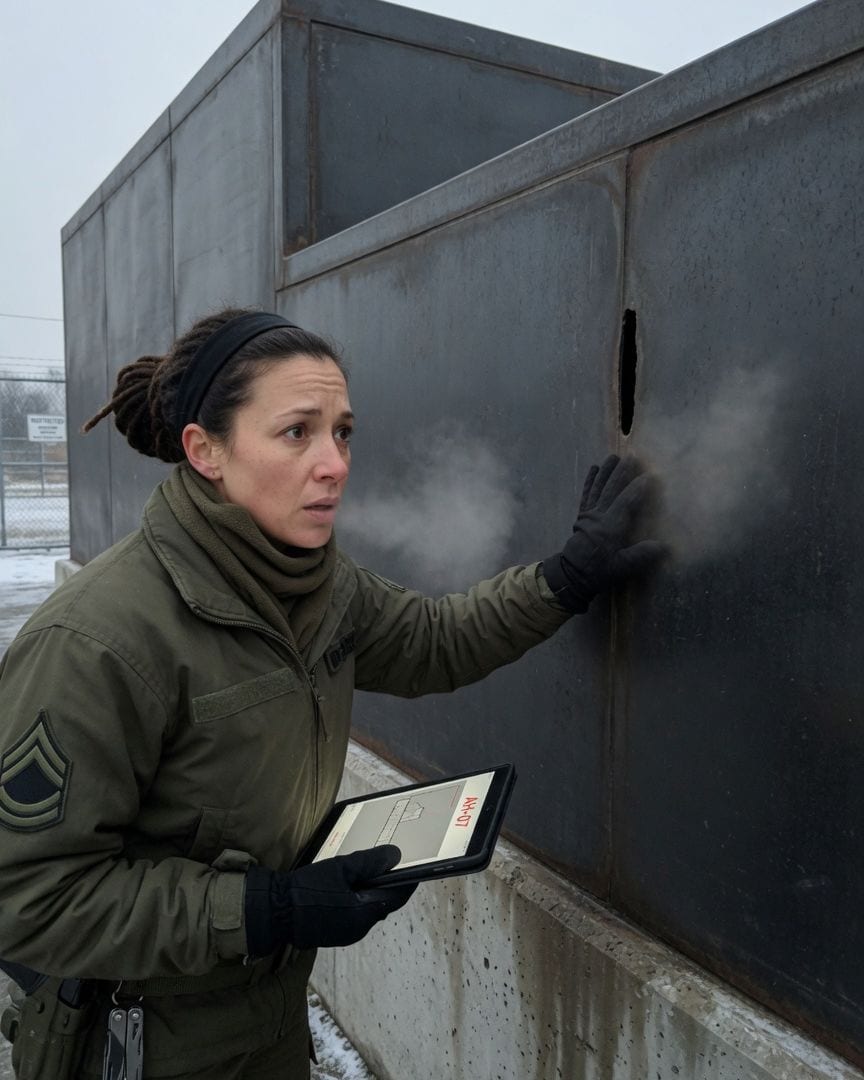
It was a cold morning, the kind that made the air feel brittle. Iris walked the perimeter of the annex, her breath pluming. The structure was a squat, featureless box, made of thick, dark steel panels.
As she ran her gloved hand along the wall, she felt it: a subtle, undeniable warmth emanating from the metal, a contrast to the biting air. She pressed harder, a frown creasing her brow.
It felt like something alive, or at least active, was humming just beneath the surface. She checked the nearest power conduits, but nothing indicated a heating element this extensive.
The records offered no help; they were stubbornly blank on the annex's origins or purpose. A system glitch, she told herself. A long-forgotten oversight.
But the warmth persisted, and the phantom room number continued to mock her from the screen of her tablet.
Iris spent a full afternoon examining the annex’s exterior with a geologist’s patience. The concrete foundation met the steel panels in a perfectly flush, almost liquid seam. No rivets, no bolts, no welding marks.
It was as if the entire structure had been poured from a single mold, smooth and featureless, betraying no sign of entry or construction.
She ran her gloved hand along the warm steel again, her fingers seeking out any imperfection, any tactile clue her eyes might miss.
Near the base, where the steel met the foundation, she detected it. A hairline seam, so fine it appeared more like a trick of light than an actual break in the metal.
It ran vertically, from the concrete all the way up to the roofline, a whisper-thin scar on the otherwise flawless surface.
She tried to pry at it with the edge of her multi-tool, but the metal was utterly unyielding, the seam absorbing the pressure without a hint of give. It wasn't a door, not in any conventional sense.
Frustrated, she moved along the wall, searching for another angle, another weakness.
Her fingers trailed over the textured steel, past where the hairline vanished, then back again. Her thumb brushed against a small, smooth pressure point.
It wasn't raised; if anything, it was recessed so deeply into the steel that it became one with the metal’s grain, camouflaged by its own texture. She pressed on it, curious, then firmer.
It wasn't a button, but it felt like something gave internally. A hidden, almost flush lever, an engineering marvel designed to be overlooked.
Sergeant Kowalczyk pressed the hidden lever. A soft, almost inaudible hiss of displaced air broke the silence of the cold morning.
The hairline seam in the steel wall widened, not outward with a visible gap, but inward, as if the metal itself receded, creating a sliver of impossible darkness.
From within, a faint, electric hum, deep and resonant like a distant, massive transformer, began to vibrate the air.
The cold morning air outside did not rush into the opening; instead, a palpable, heavy stillness, devoid of scent or draft, pressed out from the impossible void.
Iris stepped through the opening. The passage was narrow, the walls cool and slick with a strange, dry humidity.
It wound around in a gentle curve, and with each step, Iris felt the space stretch, elongating in a way that defied the physical footprint of the building.
She walked for what felt like an eternity, the faint hum from the main wall now a resonant thrum against her bones.
The air was still, heavy with an almost metallic, ozone smell, and utterly devoid of natural light or external sound.
The walls, she realized as she ran a hand over them, were made of the same warm, dark steel as the exterior, perfectly smooth and featureless, absorbing all light.
Eventually, the passage opened into a small, cylindrical chamber. It was barely large enough for one person to stand, the ceiling curving high above into an indistinguishable gloom. There was no furniture, no instruments, no equipment—only absolute emptiness.
In the precise center of the chamber, lying flat on the floor, was a single, pristine object. Iris knelt. It was a dog tag, military issue, made of cold, dull metal.
The stamped letters were clear, as if freshly minted: PRIVATE LARS FONTAINE. KIA - MISSING IN ACTION. Below it, a unit designation from a conflict that had ended decades ago, before Iris was born.
She picked it up. The cold metal was a stark, jarring contrast to the subtle warmth radiating from the walls around her.
She turned it over in her gloved palm, perfectly preserved, without a speck of dust, as if dropped yesterday. A lost memento, she tried to tell herself. A prank.
But the sterile, impossible environment, the endless passage, the complete lack of any other trace of human presence, defied any logical explanation for its existence.
Back in her office, Iris dug into Private Lars Fontaine's records. The system confirmed his disappearance, his 'KIA - Missing in Action' status.
The date of his presumed death corresponded to a time when the digital 'Annex Maintenance' tickets for AH-07 had just begun appearing.
Iris expanded her search, cross-referencing other personnel listed as MIA or with unexplained disappearances around the same period, looking for any link to the phantom room or the annex.
Her inquiries into such obscure, decades-old records did not go unnoticed. Later that afternoon, Oliver Bennett, her supervisor, leaned against her cubicle wall. "Digging deep into dead files, Sergeant?" he asked, his tone too casual.
"Some things are best left to gather dust." He offered a small, unsettling smile that didn't quite reach his eyes, then moved on.
Iris felt a chill that had nothing to do with the office air conditioning. She brushed it off as paranoia. But when she returned from lunch, a knot tightened in her stomach.
Her office door, which she distinctly remembered locking, stood ajar by a half-inch. Inside, nothing seemed out of place. No obvious theft, no signs of forced entry.
But on her desk, the file containing details of her own previous assignments and security clearances, a file she’d meticulously organized and stored, lay open. A page, detailing her personal information, was turned up.
She stared at it, the blood draining from her face. Someone had been in her office. Someone knew exactly what she was looking for. And they were watching her.
Iris tracked down Kenneth Russo, the retired DPW chief, to a quiet house off-base. He was an old man now, his face a roadmap of wrinkles, but his eyes held a strange, unsettling placidity.
He invited her in, offering coffee, listening patiently as she laid out her findings: the phantom room, the decades of 'Annex Maintenance' tickets, the disappearing names like Lars Fontaine, and the pristine ID tag she still clutched in her hand.
Kenneth listened, his gaze unblinking, then nodded slowly. He didn't deny anything. "The annex needs its due, Sergeant," he said, his voice low and even, utterly devoid of emotion. "It always has."
He described it as an ancient "arrangement," a "necessary stability" for the installation, predating even the base itself. He looked past her, as if seeing through the walls, through the years. "Some people are… chosen. Selected for these 'details.'
It's a quiet duty, passed down through generations within certain departments."
He led her to a dusty corner of his garage, pulling down a heavy, old box. Inside, stacks of physical manifests, brittle with age, tied with twine. "The real records aren't in the digital system, Sergeant.
That's just… a public face." He handed her a manifest, its faded ink smelling of old paper and something else, something indefinably metallic. "This is for a much older, more profound truth."
The warmth of the annex wall, the impossible passage, the ozone smell, the dog tag—it all snapped into terrifying focus. It wasn't an error. It was a function.
The closed tickets weren't maintenance requests for a room; they were entries for a ritual. The missing personnel weren’t missing; they were offerings.
Kenneth Russo, in his placid calm, was not a witness to a cover-up; he was a gatekeeper, part of a system far older and more monstrous than Iris could have imagined.
Iris spent the next two days hunched over the old manifests Kenneth had given her. Page after page of hand-written entries, detailing "Annex Maintenance Details," stretching back decades.
The dates, the names, the recurring cycle—it was all there, stark and undeniable, confirming Kenneth's chilling words. She saw the pattern: every five to seven years, a specific 'maintenance' detail, always involving three personnel, was logged.
The names were always different, but the cadence was chillingly precise. Each name, she knew, represented another Lars Fontaine, another disappearance swallowed by the 'arrangement.'
An icy dread tightened in her chest. She cross-referenced the names with her own upcoming transfer roster.
Her finger traced down the faded ink, the names blurring into a horrifying pattern, her mind racing, searching for any anomaly, any way out. She was due for transfer in six months, requiring a full audit.
Her own audit, she now realized with a sickening lurch, was what had drawn her into this. And then, she found it.
Her own name.
Sergeant Iris Kowalczyk, in a neat, official hand, printed under "Annex Maintenance Detail: AH-07, Cycle 12," with a date six days from now. Below it, in a different, more recent hand, someone had added a small, almost imperceptible checkmark.
Iris confronted Oliver Bennett, her supervisor, the faded manifest page still clutched in her trembling hand. She shoved it across his desk, pointing a shaking finger at her own name. He didn't deny it.
Instead, he looked at her with a detached, almost reverent expression, his unsettling smile returning.
"A squared-away individual, Sergeant," he said, his voice soft, almost proud. "Your diligence in auditing the records actually marked you as a prime candidate. Perfect for the 'transfer.'"
He explained it all with a horrifying calm. The anomaly in the annex was an ancient entity, a "guardian," he called it, that offered a form of protection and stability to the installation.
In return, it required periodic "offerings," or "maintenance," to sustain itself. Oliver revealed that the "work orders" were not just a cover, but a ritualized process, passed down through a select few in DPW and command, ensuring the "arrangement" continued.
He spoke of it not as a sacrifice, but as an honor, a duty to the base, essential for its continued operations.
The warmth of the wall, the constant hum, the impossible space beyond the steel, the disappearing personnel over decades—it all coalesced into one coherent, monstrous shape. She was never investigating a problem; she was being prepared.
Every detail fit, every anomaly explained by a truth too horrifying to comprehend.
Reeling from the full, horrifying truth, Iris made a desperate attempt to escape. She tried to report it up her chain of command, her calls met with polite dismissal, her emails disappearing into a void of 'undeliverable' messages.
The base system, designed to facilitate, now became her cage. She attempted to drive off-base, but her vehicle was flagged at the main gate for a "random inspection," a process that stretched on, delaying her until the last possible moment.
The system was too vast, too deeply ingrained; every path outward was blocked by the unseen machinery of the 'arrangement.'
With time running out, the dread a cold knot in her gut, she abandoned her vehicle at the gate. She turned and made a final, desperate dash back to the annex, not to fight, but to face her fate.
The hum from the wall was louder now, a deep thrumming that resonated in her bones, a call she could no longer ignore.
The open seam in the steel wall, a sliver of impossible darkness, seemed to beckon, a silent, inevitable pull.
She stepped into the impossible passage one last time, the steel walls now pulsating with a faint, internal warmth, a warmth that seemed to welcome her home.
Sergeant Iris Kowalczyk's transfer orders were quietly rescinded. Her name was removed from all active rosters, her service record permanently marked 'Discharged - Administrative.'
Oliver Bennett continued his duties in DPW, overseeing the steady flow of maintenance requests and ensuring the annex's 'needs' were met. Kenneth Russo remained in his retirement, occasionally visiting the base, always with a knowing, placid smile.
The windowless annex remained, silently warm, behind the old post hospital, its purpose undisturbed.
A new DPW supervisor, recently assigned to the installation, reviewed the monthly 'Annex Maintenance: AH-07' work order. It was routine, just a number on a spreadsheet, another item to tick off his digital list.
He closed the ticket, a small part of his daily tasks.
Days later, while filing the hard copy in a dusty cabinet, he noticed a small, hand-drawn checkmark on the page, next to a name he didn't recognize from any active roster.
He shrugged, thinking it was just an old habit from the previous supervisor, a bit of undocumented quirk. He filed it away.
His wife, at dinner, asks him about his day. "Just paperwork," he says, with a faint, wrong little smile.
If this one got to you
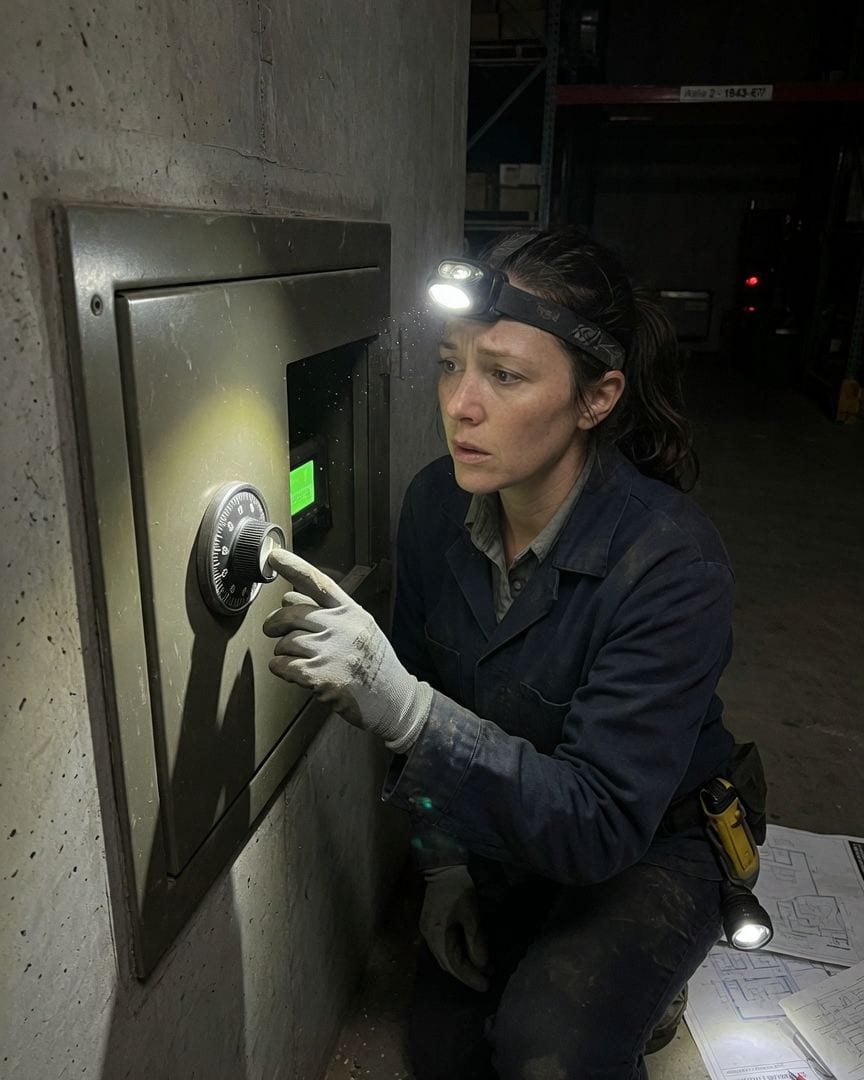
A meticulous records clerk finished her final inventory in a Cold War depot, then found a steel door not on any blueprint, worn smooth by decades of use, opening to an office with a log updated just hours ago.
Merit Lachance moved through the echoing darkness of Building 9, her headlamp cutting a lonely circle through dust motes. The depot’s oldest section was losing power, leaving her to finish her mandated shelf-read for the impending decommissioning. Every blueprint showed Building 9 as a single, vast room, so when her light fell on a waist-high, solid steel door set flush into the wall, her mind reeled. Its combination dial was worn smooth from decades of constant use, an impossible contradiction to the building’s known history. After meticulously working the dial, the heavy door shifted inward, revealing a dust-free, actively maintained office space with a terminal log updated just hours ago.
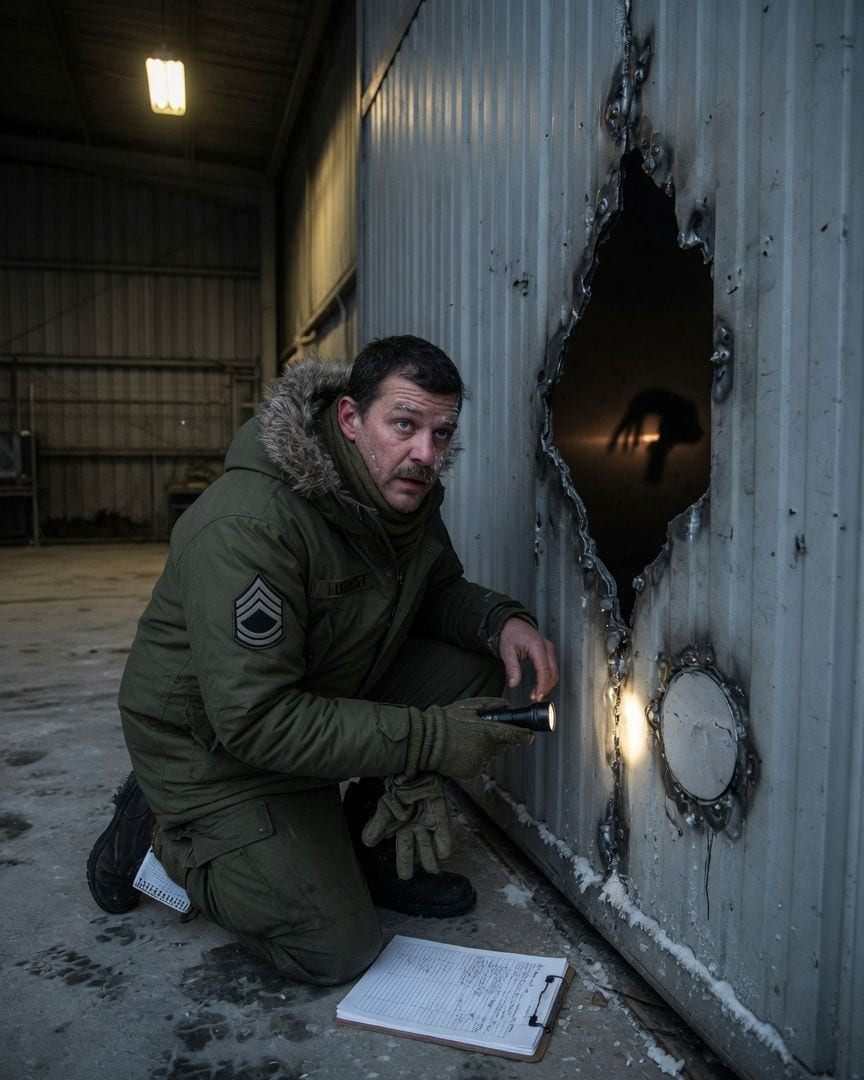
A Cold War technical sergeant found a sealed hangar door, but a secret vent led to a deep hum. Then, a slow, orange light pulsed from the darkness inside.
In the Alaskan winter of 1978, Technical Sergeant Wes Lindquist's rigid routine involved hourly temperature checks for the officially empty Hangar Bay Two. Despite being welded shut for months, the bay consistently registered nine degrees warmer than ambient. As official dismissals failed to explain the anomaly and the internal temperature climbed, Lindquist kept a secret log. His curiosity led him to a hidden vent in the crude weld, where he felt a deep, resonant hum vibrating from within. Shining his flashlight into the void, a faint, rhythmic pulse of dull orange light bloomed and receded, casting a writhing shadow too large for anything known.
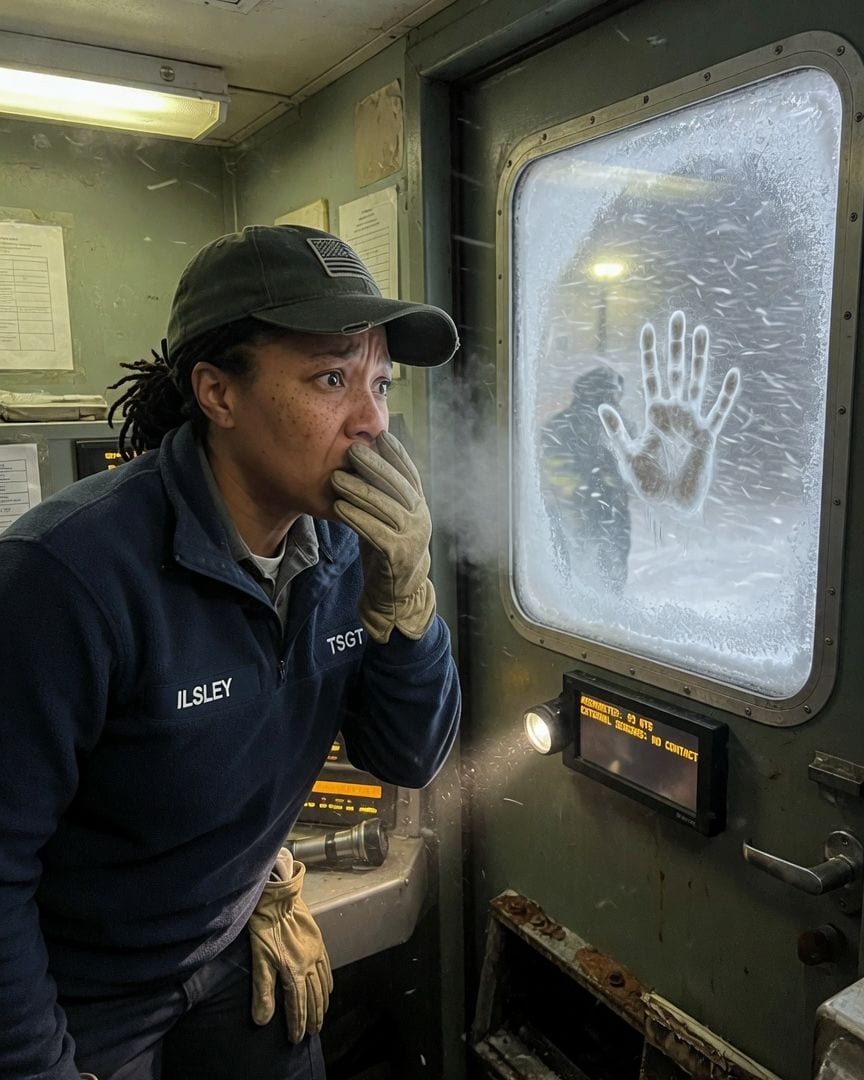
Technical Sergeant Ada Ilsley had two weeks left when a handprint appeared on her sealed window, unnervingly warm and pressed from the *inside*.
Technical Sergeant Ada Ilsley was counting her last two weeks on the Greenland ice-cap before Thule-Gamma Station closed for good. Tonight, the polar wind howled at ninety knots, clawing at the station's insulated walls as she kept a lonely vigil. Through the main door's triple-paned port, she watched a dark figure emerge from the impossible blizzard, its face pressed against the glass, only to vanish. On the frost outside, a perfectly clear handprint remained, unnervingly warm and undeniably pressed from the *inside* of the sealed pane. How could anything have touched the glass from within a supposedly impenetrable barrier?
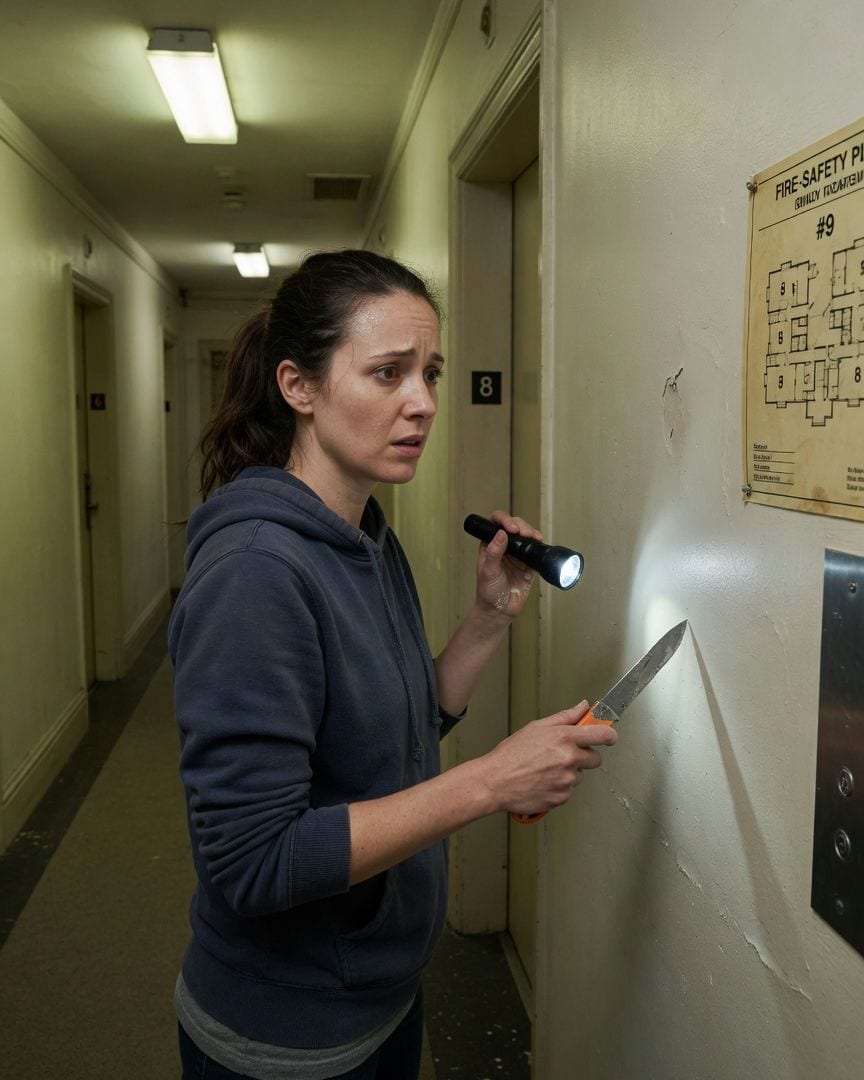
That blank wall in my hallway has a hidden metal plate. Tonight, after eleven years, it just clicked.
For eleven years, my apartment building's fire plan has shown nine apartments on my floor. But I've only ever counted eight doors, the space for the ninth a blank wall. Now, I've found a hidden metal plate behind the plaster, and from deep within, I just heard a soft *click*.
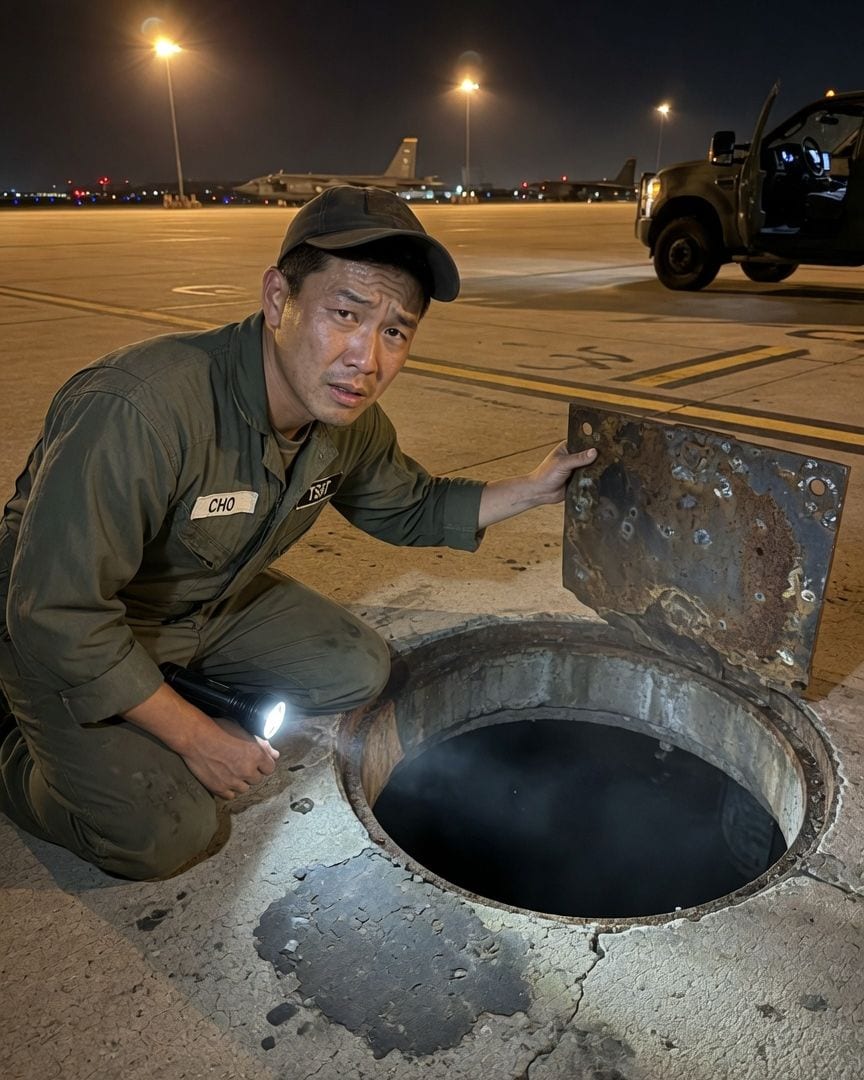
Two weeks from leaving, Technical Sergeant Cho felt a phantom weight pass through his truck, parked on the flight line.
Technical Sergeant Daniel Cho was counting down his final two weeks at the Dakota bomber base, determined to solve the phantom riddle of its floodlit flight line. Every night at 0148, a buried sensor logged a vehicle pass, yet overhead thermal cameras consistently showed nothing but empty concrete. To catch the anomaly, he parked his heavy maintenance truck directly over the sensor. But as the clock turned 0148, a low thrum vibrated through his teeth, and the sensor registered a second, impossible vehicle pass—right through his own parked truck. His investigation soon uncovered a hidden, unmapped metal plate in the concrete, sealing a dark shaft that hummed with a deep, rhythmic vibration, like an enormous heartbeat from beneath the earth.
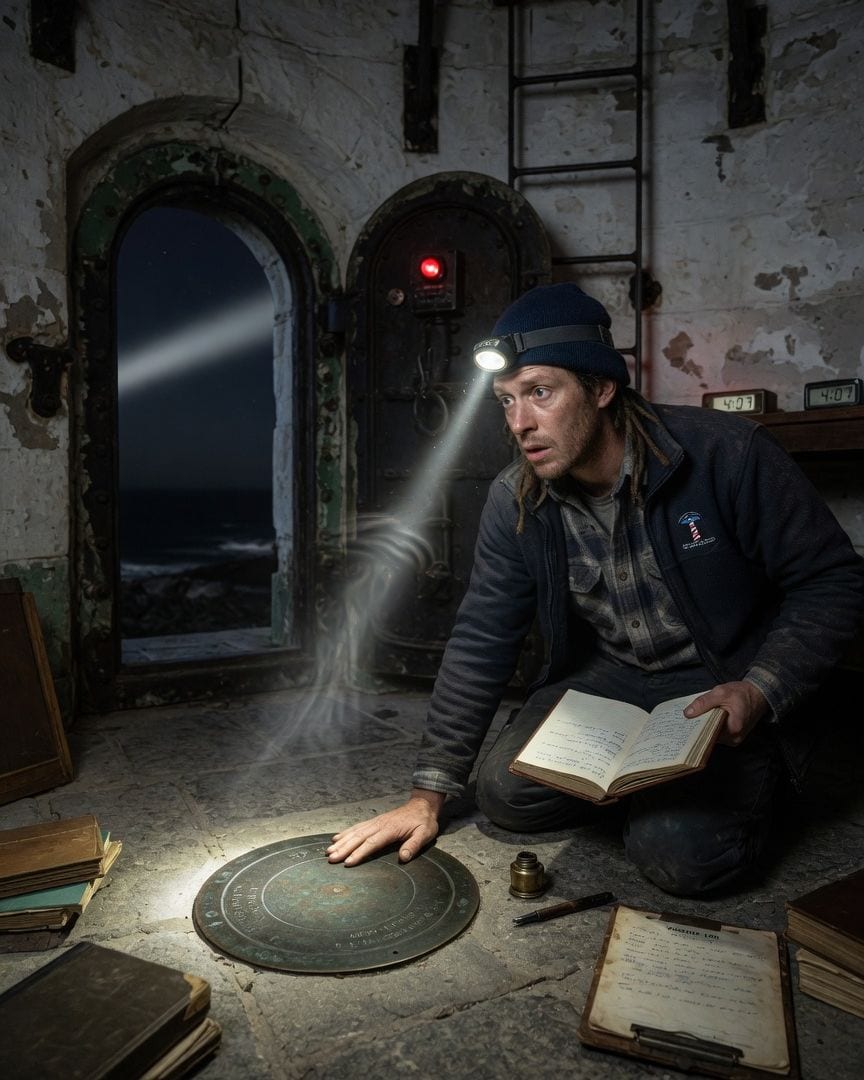
Every ninth year since 1901, my logbook records a boat through the gate at 4:05am — 'vessel through, none seen.' I was on watch tonight. Nothing passed.
As the lighthouse keeper, I log the same impossible entry every nine years, a lie I'm compelled to write. But tonight, a hidden brass disc in the floor, not on any blueprint, feels oddly warm. Hours later, it hums, and the air above it shimmers and distorts, then vanishes.