That blank wall in my hallway has a hidden metal plate. Tonight, after eleven years, it just clicked.
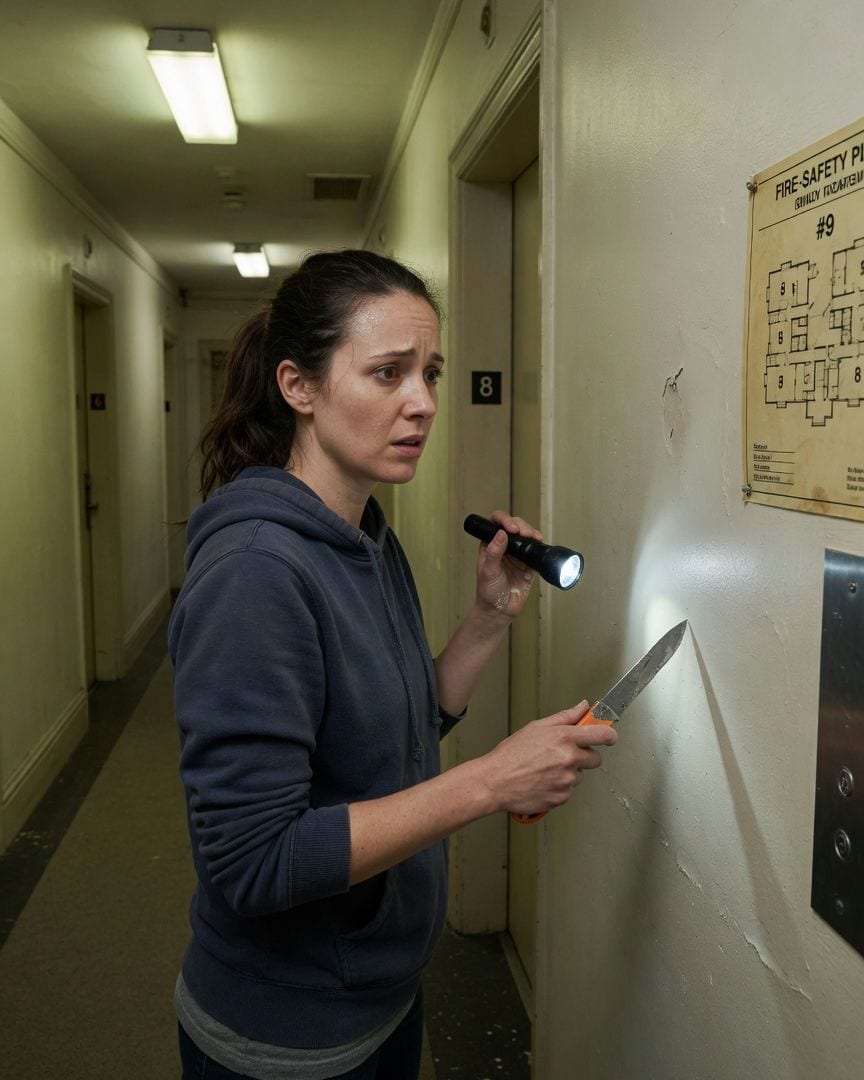
For eleven years, apartment #7 has been my home. It’s a decent place, on the third floor of an old building, built sometime in the 1920s.
Every single morning, without fail, I walk out my door, turn left, and head to the elevator. And every single morning, I pass the fire-safety plan, bolted to the wall beside it.
It’s a laminated, slightly yellowed diagram, an official map of my landing. And for eleven years, it has bothered me. Not enough to do anything, just enough to be a low-level, persistent hum in the back of my mind.
The plan clearly, unequivocally, shows nine apartments on this floor. My apartment, #7, is right there in the middle, between #6 and #8. But when I count the doors, there are only eight. Always eight.
I’ve done it a hundred times. I count them from the elevator, running my finger over the numbers on the plan as I go. Then I walk the hallway, counting the physical doors: one, two, three… eight.
The space where #9 should be is just a blank section of wall. It’s indistinguishable from the rest of the corridor, painted the same cream color, scuffed in the same places. No door frame, no number, no mail slot. Nothing.
I’ve tried to rationalize it. Maybe it’s an old drafting error. Maybe two apartments were combined into one at some point, and they just never updated the plan. Or it’s a utility closet, a janitor’s nook, mistakenly labeled.
But the diagram isn't ambiguous; it depicts a full, proper apartment, with a number and a clear layout. Everything else on the plan—the emergency exits, the stairwells, the other apartment numbers—matches perfectly.
It’s just this one section, this missing ninth door, that refuses to reconcile.
I also can't shake the faint, persistent chill that seems to emanate from that particular blank section of wall, a chill I always told myself was just the building’s draftiness. But it’s always that spot.
I’d stand there sometimes, staring at the blank wall, then back at the fire plan, the numbers warring in my head.
The next day, I cornered Monica Yates, my neighbor in apartment #5, as she was collecting her mail. Monica is practical, a little cynical. "Hey, can I ask you something?" I started, pointing vaguely down the hall.
She squinted. "Sure, what's up?"
"The fire plan," I said. "The one by the elevator. It shows nine apartments on this floor, right?"
Monica shrugged, pulling a flyer from her box. "Yeah, I guess so. Never really paid attention."
"But there are only eight doors," I pressed. "Have you ever noticed that?"
She paused, then chuckled. "Emily, old buildings are full of quirks. Combined units, weird storage spaces they never bothered to update on the public plans. You're probably just overthinking it." She gave me a dismissive wave. "Ignore it.
It's probably been like that for decades."
Monica's dismissal didn't help. The unease had already taken root. I needed a real explanation, something definitive. So I decided I'd find the building's original blueprints.
I went down to Gerald Whitmore’s office. Gerald has been the building manager for as long as I’ve lived here, probably longer. He’s 62, a calm, almost unnervingly placid man. He rarely smiles, but he's always polite.
"Good morning, Ms. Porter," he said, looking up from a ledger.
"Good morning, Gerald. I was wondering if you could help me. I'm trying to locate the original blueprints for the building. Specifically for this floor."
He raised an eyebrow, a slight hesitation in his movement. "Original blueprints? Those are rather old, Ms. Porter. Hard to find. Often incomplete, I'm afraid." He sounded oddly evasive. "Is there a particular reason you need them?"
"Just curiosity, really," I lied, not wanting to sound like I was losing my mind over a phantom door. "About the layout. I just noticed a discrepancy on the fire plan."
He nodded slowly, then reached into a filing cabinet, pulling out a dusty, laminated sheet. "This is the current fire-safety plan. The most up-to-date version we have publicly available."
It was identical to the one by the elevator. The nine apartments, the eight doors. "Thank you, Gerald," I said, a sigh escaping me. "But I was hoping for something from when the building was first constructed."
"I'll see what I can find in the archives," he said, though his tone suggested he wouldn't. "But I wouldn't hold your breath."
Frustrated, I returned to my apartment. As I walked down the hall, past that blank wall, Gerald’s evasiveness echoed in my mind. He hadn't outright denied the blueprints existed, but he hadn't helped either.
This time, as I stared at the section where the ninth door should be, something else caught my eye. Something I’d completely overlooked for eleven years.
A faint, almost invisible seam in the plaster. It was barely distinguishable from the paint, just a hairline crack, but it wasn't random.
Under the harsh fluorescent light of the hallway, I could make out a line, not quite straight, but too precise to be a natural crack. I pressed on it gently.
It felt solid, but with a slight, almost imperceptible give, unlike the surrounding wall. It wasn’t a crack. It was a line, carefully, deliberately concealed.
I couldn't leave it alone. The suspicion had rooted itself too deeply. Later that night, the hallway silent and still, I returned to that wall. I had my small flashlight and a utility knife from my toolkit.
My heart thumped against my ribs, a nervous, excited beat. I held the flashlight beam steady on the faint seam. It was too straight, too uniform to be just old plaster giving way. This was deliberate.
I used the utility knife, gently at first, scraping at the paint and plaster along the line. The paint flaked easily, a fine white dust drifting to the floor.
Beneath it, I expected to find old lath and plaster, or maybe drywall. Instead, my blade hit something harder. Colder. I scraped away more, a tiny section, maybe an inch long.
Beneath the thin layer of plaster, my fingers brushed against the edge of what felt like a solid metal plate. It was smooth, unyielding, nothing like a wooden door frame. Not a door.
As my fingers ran along the exposed metal, a faint, metallic hum, almost a vibration, seemed to emanate from the wall. It wasn't loud, but it grew subtly, insistently, as if responding to my touch.
Then, from deep within the wall, I heard a soft, almost inaudible click.
I pulled my hand back sharply, my mind racing, the metallic hum still vibrating through my fingertips. The click, the hum, the cold metal plate – this was no ordinary wall. Not a combined apartment, not a utility closet.
This was something else entirely. I quickly snapped a photo of the exposed metal with my phone, the flash illuminating the strange, sealed seam.
The next morning, fueled by a mixture of lingering fear and a fresh wave of determination, I marched straight to Gerald Whitmore’s office. He was at his desk, as usual, meticulously going over his ledgers.
"Gerald," I said, my voice sharper than I intended. I held out my phone, displaying the picture of the exposed metal plate.
He glanced at it, his face unreadable for a moment, his eyes lingering on the image. Then he looked up at me, his expression perfectly calm. "Ah, Ms. Porter. Found some old wiring, have we?
Or perhaps a utility access panel." He waved a dismissive hand. "Nothing to worry about. Just an old building settling. Best to leave it alone."
But I saw it. His hands, clasped on his desk, were trembling slightly. A tiny, almost imperceptible tremor that belied his placid tone. His calm façade was starting to crack.
Unconvinced, I returned to my apartment. "Old wiring?" I muttered to myself. It wasn't wiring. It was a plate. A sealed plate. I opened my laptop and started digging, researching the building's history online.
I found snippets here and there: articles about its construction in the 1920s, mentions of its original architectural style. Then, on an obscure local history blog, I found a fleeting reference to a 'peculiar architectural feature' of the building.
My heart leaped. I clicked the link, but it led nowhere. "Page not found," the browser declared. Just like Gerald’s blueprints, information vanished.
I decided to take a more direct, physical approach. I grabbed my trusty measuring tape. First, I meticulously measured my own apartment, #7, against the fire plan’s dimensions. They matched perfectly. Then, I measured the entire landing.
From the elevator to the far wall, past apartment #8. My measurements were consistent with eight apartments, yet the fire plan clearly showed space for a ninth.
I walked the corridor, counting my steps, then repeated it, trying to reconcile the discrepancy. The physical distance was always the same, but my internal sense of space felt warped.
It was like I was walking further than I should for the number of doors I passed. Like a road that returns you to where you started, but I was inside a building, on a floor I knew.
It felt… stretched.
The digging, it seemed, started to have consequences. Small, unsettling things began to happen. My apartment door, which I always triple-checked and double-locked before leaving, was sometimes only single-locked when I returned home.
Not open, never a sign of forced entry, just… unlocked a bit. Then my mail. Usually, I stack it neatly on the small table by the door.
One evening, I found it slightly disturbed, as if someone had rifled through it quickly, then tried to put it back. Nothing missing, just out of place.
The chill I’d initially felt by the blank wall now seemed to follow me. It wasn't constant, but I'd feel cold drafts in my apartment where there shouldn’t be any, even with the windows closed.
One evening, I found a small, almost imperceptible scuff mark on my hardwood floor, right near my front door. It was a fresh mark, not one of the old ones.
It looked as if someone had stood there, perfectly still, for a long time, their shoe scuffing the wood just slightly.
Paranoia started to curl in my stomach. I was unnerved, unsettled. I needed to know if I was imagining things. I ordered a discreet pet camera online. A small, black cube, barely noticeable.
I angled it to capture my apartment door and a section of the hallway just outside. Days passed with nothing but the mundane comings and goings of other residents. The mailman, Monica, a neighbor’s kids.
Then, late one evening, reviewing the footage on fast-forward, I saw it. A blurry, quick shot. Gerald Whitmore. He was standing in the hallway, looking directly at my door.
His silhouette was framed in the dim light of the corridor, perfectly still. He didn't touch anything, didn't try the handle.
He simply stood there for a few seconds, his face unreadable in the low resolution, then quickly walked away, disappearing around the corner. He wasn't doing anything overtly suspicious, not breaking in, not leaving anything.
He was just watching my door. The sight sent a cold dread through me, deeper than any chill. He knew. He had noticed my investigations.
The next morning, I marched straight into Gerald’s office, my phone clutched in my hand. He looked up, his placid expression still unwavering. I didn’t say a word. I just played the camera footage for him.
Gerald watched the blurry clip of himself standing outside my door. He didn't flinch. He didn’t react. For a long moment, the only sound was the faint whir of his ancient desktop computer.
"Checking on things, Ms. Porter," he said, his voice unnaturally calm, flat. "Standard procedure for a building manager."
I stared him down. "Standard procedure to watch my door at midnight? Or standard procedure to know what's behind that wall?" I pressed him, the question tumbling out. "The missing apartment. The metal plate I found. The hum. The click.
What is it, Gerald?"
He tried to dismiss it again, another wave of his hand. "Ms. Porter, I assure you, there is nothing to worry about. Just… structural idiosyncrasies."
My resolve was iron. "No. I want answers. This isn't just an old building settling. You lied about the blueprints. You're watching my door. That wall hums and clicks. What is it?" My voice rose slightly, breaking his calm.
Under my relentless pressure, his placid façade finally cracked. A flicker of something ancient, tired, passed through his eyes. He sighed, a sound that seemed to carry the weight of decades. It wasn't a sigh of exasperation, but of resignation.
"Very well," he said, his voice dropping to a low, even tone. No longer trembling. "The 'ninth apartment' isn't a flat in the conventional sense, Ms. Porter. It’s a spatial anomaly. A pocket. We call it… the Passage."
My breath caught in my throat. "A Passage? What does that mean?"
Gerald leaned forward, his hands clasped on his desk, perfectly still now. "It means this building was designed with a particular feature. It opens and closes. It’s been part of this structure since its construction in the 1920s.
A design feature that occasionally… activates." He looked at me, his gaze unblinking. "The fire plan you keep consulting isn’t wrong, Ms. Porter. It’s the original plan.
It shows the building’s true, intended geometry, even when the ninth door is sealed away. My job," he continued, his voice chillingly calm, "is simply to maintain it. To ensure… nobody gets hurt."
A strange mix of pity and warning in his eyes. "It’s better not to disturb it."
I thought of my measurements, the way the hallway seemed to stretch, warping my sense of distance. The fire plan, the hum, the click, Gerald’s strange calm, the missing link on the blog—it all clicked into a terrifying, coherent picture.
I was reeling, the words 'spatial anomaly,' 'Passage,' and 'activates' echoing in my mind. "What happens when it activates?" I demanded, my voice barely a whisper. My blood felt cold.
Gerald refused to elaborate, only stating, "People get lost. It's… a unique form of disappearance."
My mind flashed back to the broken link on the local history blog, the mention of a 'peculiar architectural feature.' That had been no quirk. "Has anyone… gone in?"
I asked, dread coiling in my gut, twisting tighter with every one of his soft-spoken answers.
Gerald hesitated, his gaze distant for a moment. Then he quietly admitted, "Yes. A few. Over the years. They become… part of the building’s history." He sounded less like a man confessing and more like someone recounting historical fact.
I remembered my online search, the vague, unsettling feeling of something missing from the building’s past, details that didn’t quite add up, threads that ended abruptly. "Are there records?" I asked, my voice tight, insistent.
Gerald looked away, towards a tall, narrow filing cabinet. "There are. But they are private. Confidential. For the building’s continuity." He turned back to me, his voice chillingly calm, his eyes fixed on mine.
"If you keep digging, Ms. Porter, if you keep noticing things that aren't meant to be noticed, you might become part of the Passage yourself. It’s already noticed you."
As he spoke, my eyes fell upon a framed black-and-white photograph on his desk, half-hidden by a stack of old papers.
It was a group photo of previous building staff, taken decades ago, judging by the clothes and the faded sepia tone. And standing among them, looking unnervingly young, was Gerald Whitmore.
He hadn't aged a day since the photo was taken.
I stared at the photograph, then at Gerald, a cold certainty settling over me, heavier than any dread I’d felt before. It was him. Unmistakable. The same sharp eyes, the same unnervingly placid expression.
"You haven't aged," I whispered, the words catching in my throat, barely audible.
Gerald didn't deny it. He met my gaze, his expression still disturbingly calm. "Time affects us all differently, Ms. Porter. Especially those connected to the Passage." He leaned back in his chair, his hands clasped, a study in eerie composure.
He explained, his voice devoid of any emotion, that he’d been the building’s custodian for far longer than anyone could imagine. He wasn’t just maintaining the Passage; he was bound to it.
"I was one of the 'lost'," he said, his eyes distant, unfocused, as if seeing something beyond the office walls, "from an earlier cycle. Pulled into the Passage, and then… returned. But not quite whole. Not quite the same."
He became its guardian, living outside normal time, ensuring the cycles continued, ensuring 'order.' The Passage, he explained, needed to ‘feed.’ "Not on people, Ms. Porter. Not in the way you might think. On potential. On attention.
It draws in those who become too curious, those who ‘see’ the wrongness too clearly. It’s a recurring pattern, a geometric hunger. Those who notice the impossible are… absorbed into its truth."
The cycle, he told me, repeated every twenty to thirty years. And it was due again soon. He wasn’t an antagonist, I realized. He was a functionary of a terrible, indifferent geometry, a cosmic mechanism.
He was simply stating a fact, a truth as old as the building itself. And with a sickening lurch, I understood. I was the next target. Gerald wasn’t threatening me; he was simply explaining my inevitable fate.
I tried to leave, to push past him, but Gerald calmly stepped in front of the office door, blocking my exit. He moved with a speed that belied his apparent age.
"Once someone fully understands," he stated, his voice flat, "the Passage… notices. It’s already calling you, Ms. Porter." He gestured vaguely towards the hallway, towards where the metal plate was hidden behind my wall. "The hum you heard?
That was the Passage trying to open for you. For you specifically."
My mind raced, frantically searching for an out, a way to break this terrifying loop. I pulled out my phone and started recording him, holding it up, my voice loud and clear, a desperate attempt to create a record.
"You just admitted to me that this building has a 'Passage' that makes people disappear! You’ve been here for decades, unaged, covering it up! This is a confession, Gerald!"
I was daring him to stop me, hoping to create a witness, an undeniable account.
Gerald watched me, unperturbed. His eyes were utterly devoid of concern. "It won’t matter," he said, his voice flat, emotionless. "The Passage doesn’t care about records. It simply… reclaims what it’s owed. Like Everett Novak, from the cycle in 1957.
He understood. And he was reclaimed."
But as he spoke, something clicked for me. The warped measurements, the road that returns, the hallway that felt longer than it was. The building wasn't just taking people; it was trapping them in a loop. Everett Novak. Gerald Whitmore.
The same man, reborn into the cycle, bound to it. There was a chance. A way to break it. If the Passage reclaimed those who understood, what about those who made sure others understood too?
I stopped recording him. Instead, while Gerald was momentarily distracted by my sudden shift in focus, I quickly typed a text message to Monica: 'Check old building records. Disappearances. Cycles. Dates. Third floor.' I hit send.
Then, without a moment's hesitation, I lunged past Gerald, heading not for the office door, but for the main exit to the building lobby.
He moved with surprising speed, not to grab me, but to block the main door, his movements fluid and impossible for a man his apparent age. He was a silent, relentless barrier.
I feinted right, then left, trying to get around him. He mirrored my every move, a perfect, unbreachable wall. My eyes darted around, desperate.
I saw an open door to a rarely used storage room, a dim, dusty space I'd barely noticed before, just off the lobby. It was my only option.
I ducked inside, hoping to find another exit, a back stairwell, anything to break the loop, to get out of the building. The door swung shut behind me with a soft click.
Monica Yates received Emily’s garbled text message, an incomprehensible string of words that still carried a frantic urgency. Concerned, she tried to call Emily back, but there was no answer.
She went to Emily’s apartment, #7, but no one was home, and the door was double-locked from the outside.
Remembering Emily’s earlier questions about the fire plan and the building’s strange history, Monica felt a prickle of unease that steadily grew.
Following Emily’s instructions, Monica spent days at the local archives, digging through old property records and dusty newspaper clippings.
It was painstaking work, but she eventually found scattered reports of missing persons, always from the same building, always around the same cyclical dates – every twenty-five to thirty years, someone simply vanished without a trace, their apartment later rented out as if they’d never existed.
The police reports were always inconclusive, citing 'voluntary disappearance' or 'no foul play suspected'.
Monica found an article from 1957 about a young building manager, Everett Novak, who mysteriously vanished from the building. The accompanying black-and-white photo showed a man who bore a striking, unnerving resemblance to a younger Gerald Whitmore.
Monica contacted the police, presenting her findings, the cyclical disappearances, the unaged manager, Emily’s last text. They investigated, but found no evidence of foul play.
Only an empty apartment #7 and a calm, uncooperative building manager who had no recollection of an “Emily Porter” ever living in the building, let alone vanishing. There was no missing person report for Emily.
Monica moved out a month later, unable to shake the feeling of an unseen presence in the building. The fire plan by the elevator still showed nine apartments, but she only ever counted eight doors.
Life in the old building continued, undisturbed. Gerald Whitmore remained the building manager, his calm demeanor unruffled by the occasional, fleeting questions from new tenants about the slightly off fire plan. He had been there for decades, after all.
He would be there for many more. She sometimes wondered if Emily had found the missing ninth door, or if the building had simply decided she was never there at all.
If this one got to you
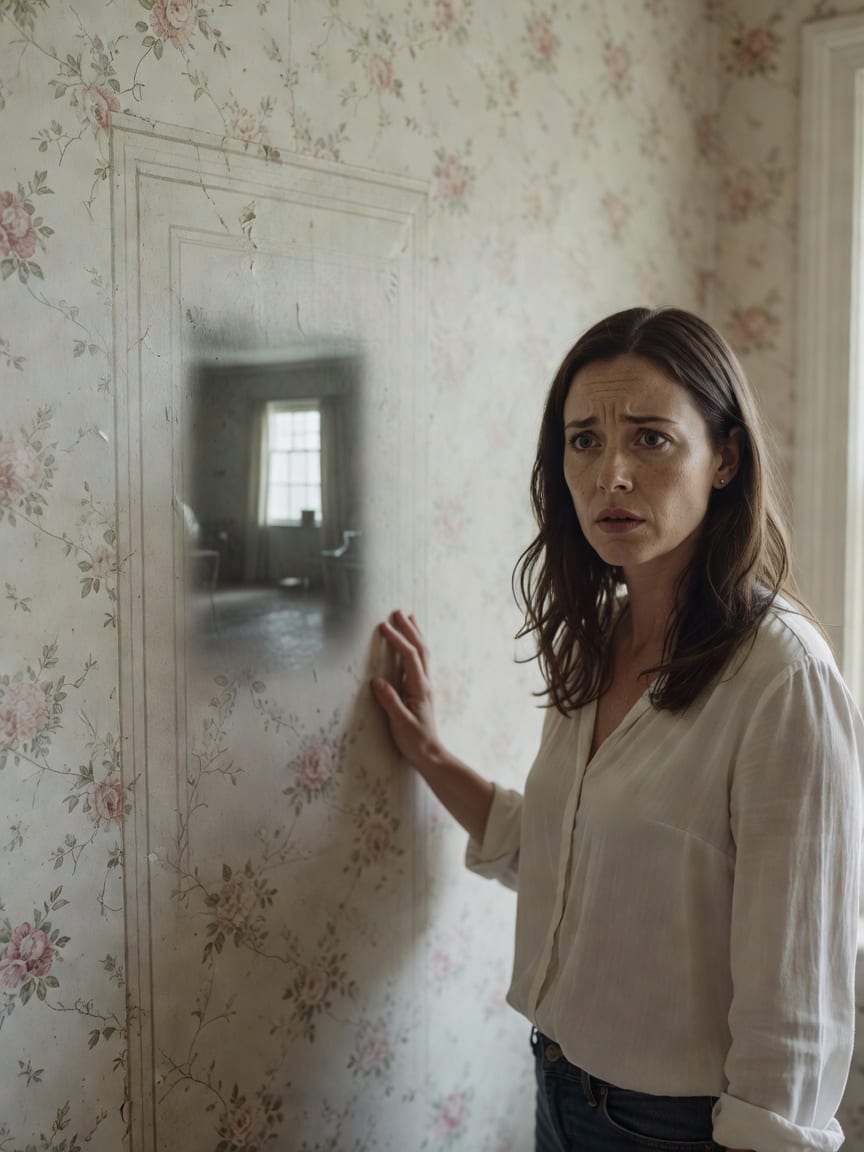
My neighbor’s house plans show a room in my bedroom that doesn’t exist. The surveyor described its door, but my wall is solid.
I was signing off on my neighbor's loft plans when I saw it: a small, square room off my own bedroom. My house, where I’d lived for five years, had no such room. But a surveyor confirmed its presence on paper, and older blueprints showed it had been there for decades. Now, I can feel a faint coldness from a hidden doorframe behind my wallpaper.
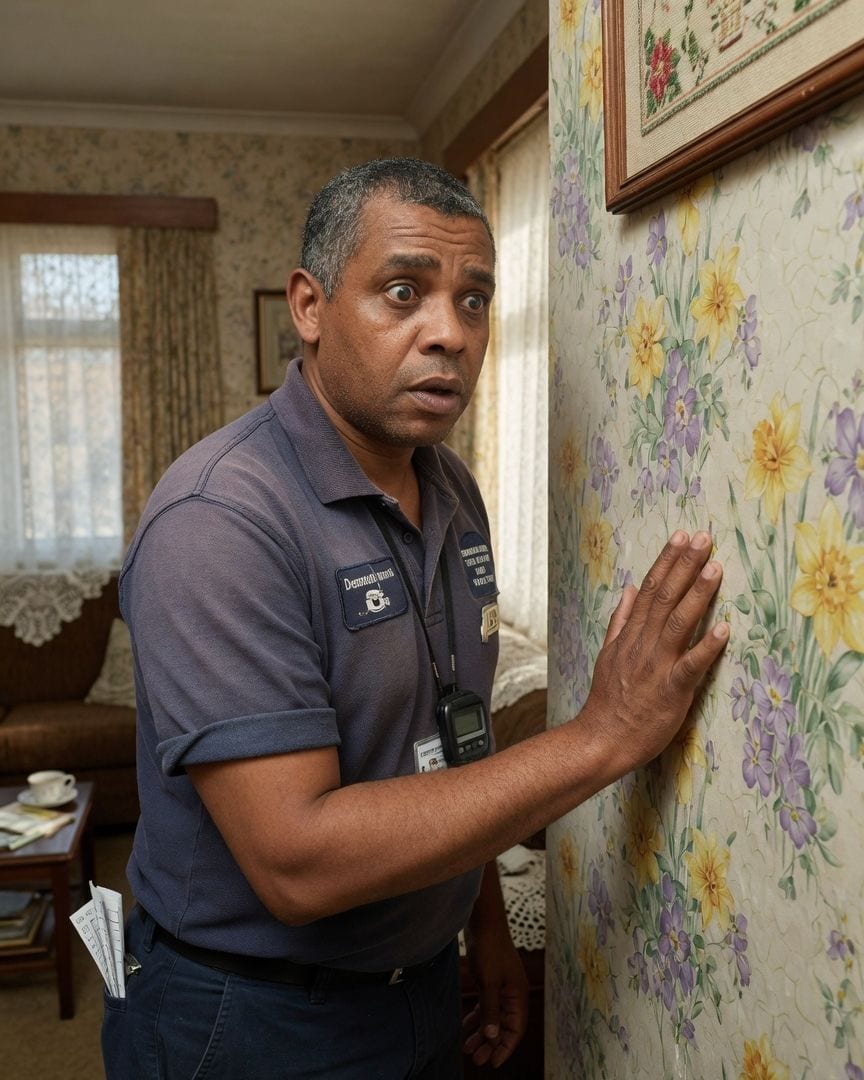
I read the water meters on this street, and this month number 30 grew a second one in pavement that was solid last month — its pipe runs back under a front door I cannot find.
I'm Desmond Drummond, a city water meter reader, used to the predictable rhythm of my fifteen-year route. But this month, Mrs. Crane's house on Elm Street showed a second meter reading. It led to a new meter pointed at a blank brick wall, and later, to a hidden door behind her living room wallpaper where no door should exist.
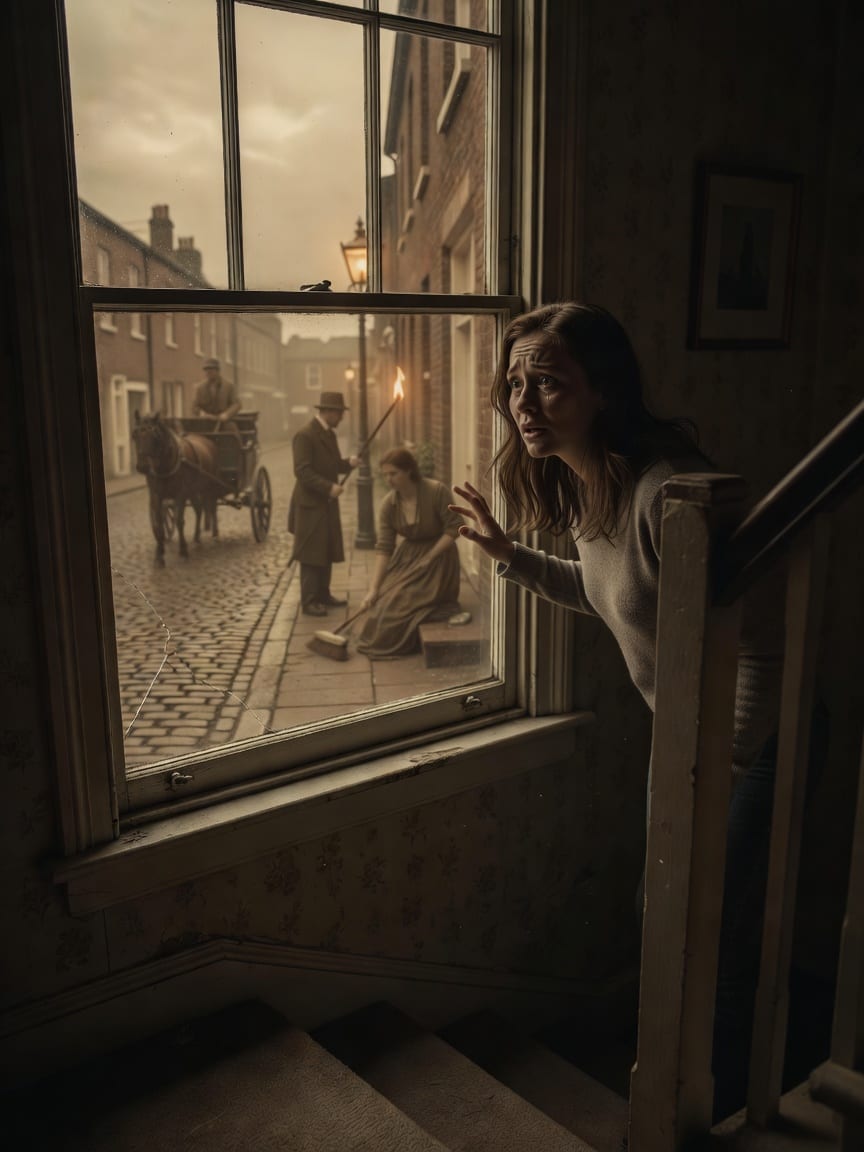
My half-landing window looked down on a cobbled street, a horse and cart. My panes, same crack. Below, only the bins.
I moved into this inherited house for a fresh start, living alone in the quiet. But the third stair on the main flight is deeply worn, a ghostly scoop hinting at decades of unseen footsteps. It feels hollow, and the wall beside it hides a faint, inexplicable seam.
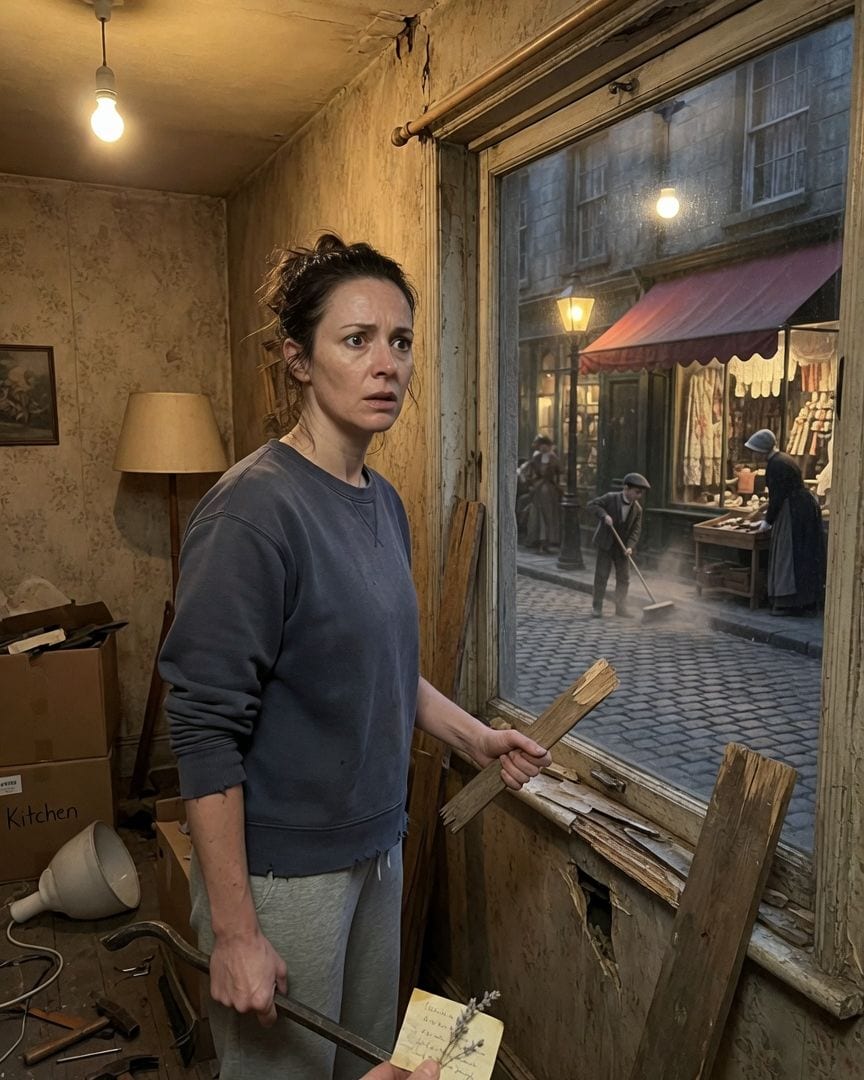
My boarded window showed a gaslit Victorian street. Across my flat, only a brick shaft. The wood felt soft, new when I nailed it back.
Moving into my new flat, I expected to find a grimy brick lightwell behind the boarded-up window. But as the last plank came free, my view wasn't a shaft at all. Instead, a bustling Victorian street, complete with gaslight and a boy sweeping, stretched out before me – a vibrant, living scene that simply shouldn't exist.
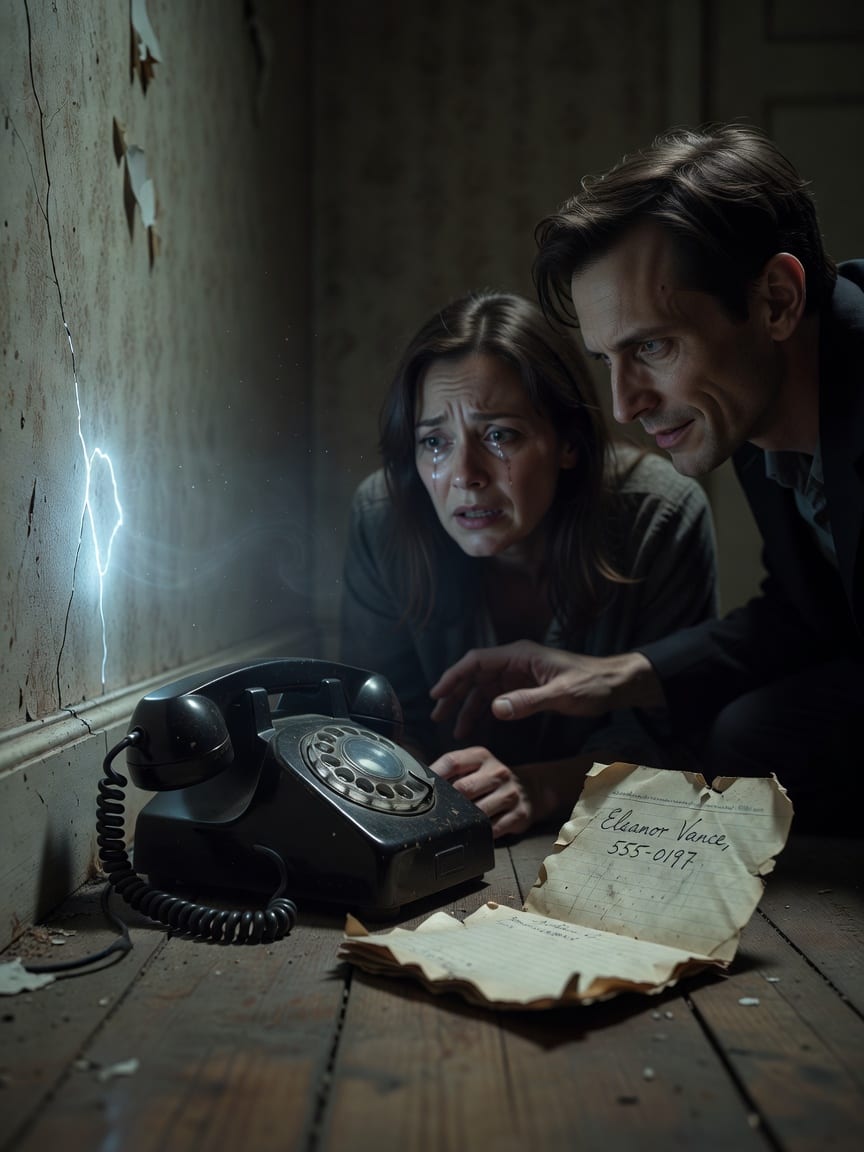
My house's walls ring when I dial a phone number from a 1974 directory. My neighbors said that directory was trash.
I was sifting boxes in my new house when I found an old 1974 telephone directory for my street. It listed my address, 12 Elm Street, under the name "Mr. & Mrs. Sheppard." On a whim, I called the faded seven-digit number. My cell phone rang, but a low, muffled sound also vibrated from the wall beside me.
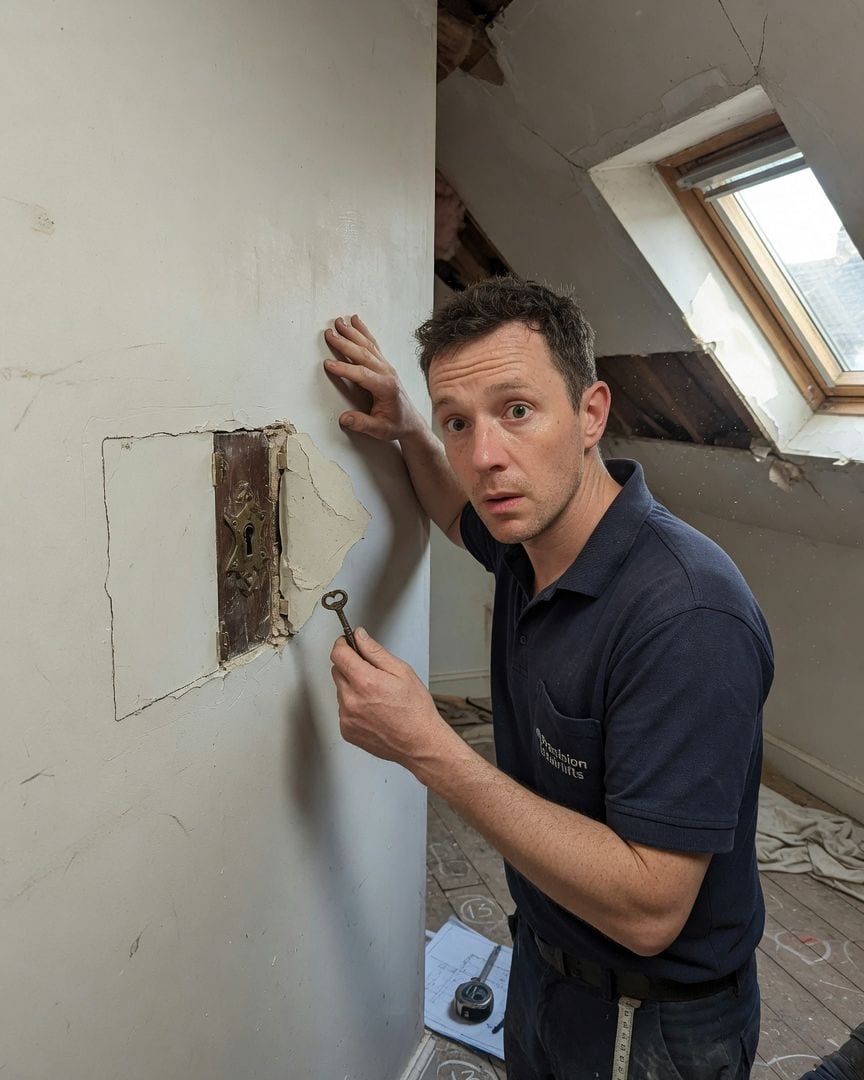
My stairlift tape measures thirteen steps, but my own feet always find a fourteenth — to a door that isn't there.
As a meticulous fitter, I measured my client's new loft stairs, confirming thirteen solid steps. But my foot found a shallow, impossible half-step, leading to a plain wooden door that shouldn't exist. Now the door is gone, leaving only a ghost outline.