My boarded window showed a gaslit Victorian street. Across my flat, only a brick shaft. The wood felt soft, new when I nailed it back.
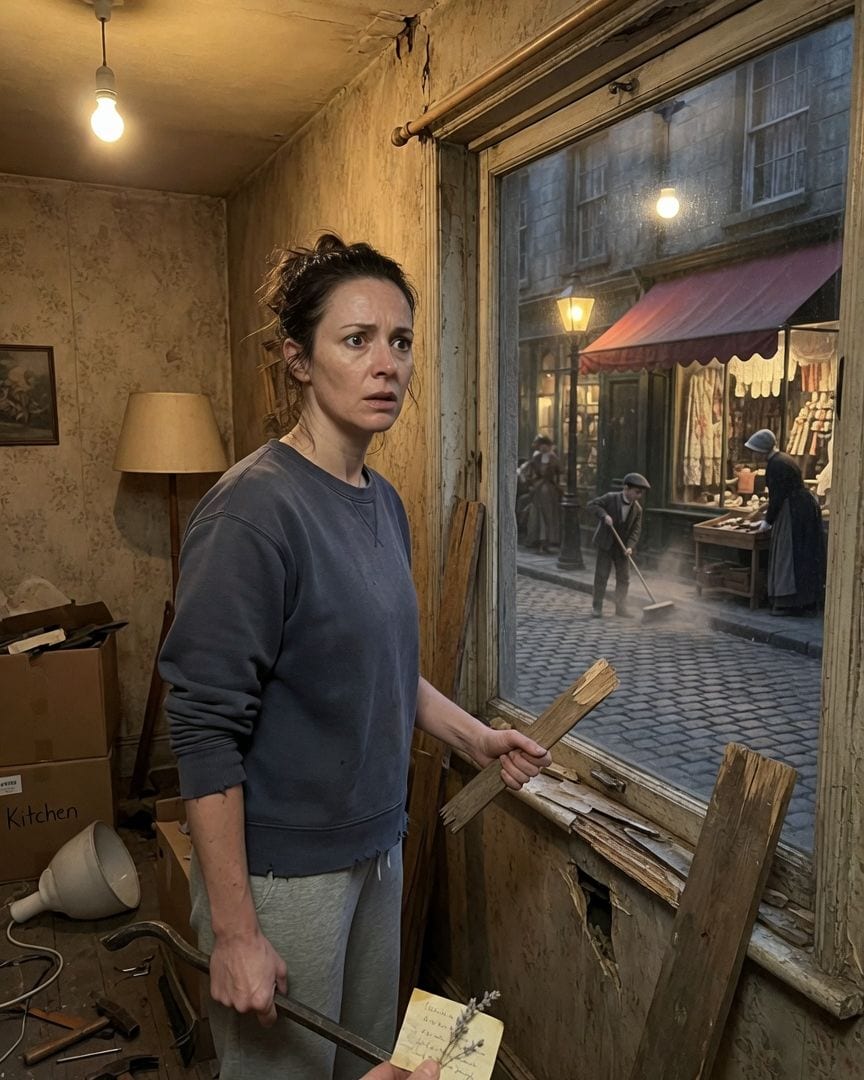
The first thing I did after moving into the flat was deal with the front room window.
It was boarded up, which Cynthia, the real estate agent, had explained away as a "quirky architectural feature," common in older buildings where lightwells were narrow.
I’d seen these before—a grimy brick shaft, maybe two feet wide, running from the roof to the ground, bringing in exactly zero natural light. But I still liked a little more air, even if it was just shaft air.
So, one Tuesday afternoon, armed with a crowbar and a surprising amount of nervous energy, I started prying loose the rough planks. The wood was old, splintered in places, and the nails groaned as they came free.
I had to admit, the view wasn't much better than expected once I got the first plank off. Just dark glass, reflecting my own tired face. But then, as I tugged at the third plank, something shifted.
Not just the wood, but the light behind it.
I pulled the last board free and stood back, crowbar still in hand. It wasn't a brick shaft. Through the glass, clear as day, was a street.
Not a modern street with cars and buses, but a cobbled lane, dimly lit by gaslight. And directly across from me, a shop. A draper's shop, with a wide, arched window displaying bolts of patterned fabric and lace.
A red awning, slightly faded, was rolled back. A young boy, maybe ten, in a newsboy cap, was sweeping dust from the steps with a short broom.
Further down, a woman in a dark dress adjusted something on a display outside another shop. I could just make out the distant clatter of hooves on cobblestones, a muffled murmur of voices.
The air, though filtered through the glass, seemed to shimmer with a faint, warm glow, almost like old lamplight.
My heart was doing a frantic little drum solo against my ribs. It was impossible. I knew, rationally, that my window faced a brick shaft. But my eyes were showing me a bustling Victorian street, vibrant and alive.
The colours were muted, like an old photograph come to life, but the movement, the small details – the boy sweeping, the flicker of gaslight in the shop window – were undeniable.
I stared until my vision blurred, my breath held tight in my chest.
Eventually, the sheer wrongness of it forced me to act. My hand, trembling, reached for the plank I'd just removed. I pushed it back into place, fumbling with the nails. And this was when the second impossible thing happened.
The nails, instead of scraping against old, hard timber, slid into wood that felt soft, yielding. Like new pine, freshly cut. As if the plank had only just been put there, waiting.
The next morning, I tried to logic my way out of it. Sleep deprivation. Stress from the move. An optical illusion. Maybe some derelict old film set had been built behind my building? Ridiculous, I knew, but I was grasping.
I went to the bathroom window, which faced the side alley, and peered down. Just as it should be, the narrow, bricked-in shaft ran down, exactly two feet wide. No street. No shop.
No room for anything but dark, grimy brick and a single drainpipe. I even took a photo, the proof cold and stark on my phone screen.
Later that day, I called Cynthia Pierce, the real estate agent. Her voice was bright, efficient. "Cynthia, about the flat," I started, trying to sound casual. "Were there any, uh, unusual architectural features?
Like, perhaps a window that faced something other than the lightwell at some point?" She chuckled. "Fiona, it's a late 19th-century building. They're all quirky. But no, the plans are clear. Residential above, commercial ground floor. Always been that way.
No external alterations registered. Why, something bothering you?" "No, no, just curiosity," I lied, feeling foolish. "Just a thought about how they designed these old places."
That evening, the unsettling memory of the gaslit street gnawed at me. I couldn’t shake the image of the boy sweeping. I had to prove it was a trick of the light, a waking dream.
I returned to the boarded window, my heart doing that frantic little skip again. I reached for the same board, the one whose nails had slid so easily. My fingers found the edge, and I pulled.
It gave way with a soft creak.
As the board shifted, a faint, sweet smell wafted from the cavity within the window frame. It was like old lavender, dried and brittle, the kind you find in antique sachets.
My fingers, still working the board, brushed against something else, something papery and delicate, tucked deep into a recess of the old window frame. It was too soft, too thin to be insulation.
I hooked a nail around it, carefully, and pulled it free.
It was a small, folded piece of yellowed paper. So fragile, so thin, that for a moment I feared it would crumble into dust in my hand.
I held my breath, unfolding the paper with a delicacy I didn't know I possessed. It was a letter, or perhaps a diary entry, written in a cramped, elegant hand, the ink faded to sepia.
The date at the top was clear, startlingly so: 'October 17, 1893.'
My eyes scanned the elegant script. It described the daily bustle of the draper’s shop across the street, the precise details of the gaslight, the boy sweeping the steps, the colours of the fabrics in the window.
The words laid out, line by line, the very scene I had witnessed. It ended with a signature, faint but legible: 'Eleanor Ellsworth.'
My breath hitched in my throat, a cold, sharp shock. The reality of what I had seen, and what I now held in my trembling hand, snapped into an impossible, horrifying focus.
The view wasn't a trick of my mind; it was a memory, a tangible reality, witnessed and documented by someone who had lived in this very flat over a century ago.
Eleanor Ellsworth. The name became a quiet hum in my head, a thread I had to pull. I started, predictably, with online property records, tracing the building's ownership backwards.
The flat, I learned, was indeed part of a larger property in the late 19th century, with a draper's shop occupying the ground floor. This wasn’t just a random building; it had a specific history tied to a specific business.
My next stop was the local historical society. The small office was crammed with dusty shelves and the faint, sweet smell of old paper. I found Joel Beaumont, a retired local historian, hunched over a microfiche reader.
He was a kind man, with wire-rimmed glasses and a patient demeanor. He listened, initially skeptical, as I carefully recounted the impossible view, the soft wood, the letter.
But the specificity of my details – the gaslit draper’s shop, the boy sweeping – seemed to intrigue him.
He pulled out several old ledgers, their covers cracked and brittle, and a box of even older photographs. "Ellsworth, you say?" he murmured, flipping through pages yellowed with time. "Ah, here we are. Mr. Arthur Ellsworth. Successful draper.
Owned the premises, lived in the quarters above. Prominent family in the area, once." He looked at me over his glasses. "His wife, Eleanor, would have been living in this very flat, then."
He pushed a faded photograph across the table. It was black and white, blurry around the edges, but unmistakable. The draper's shop. The wide window. The very awning I'd seen, slightly darker in the photo.
And if I squinted, a faint figure, small and blurry, that could easily be a young boy sweeping the steps. It was identical to what I saw through the boarded window.
A cold dread settled in my stomach, confirming what my rational mind had been fighting.
"The Ellsworths were quite prominent," Joel continued, almost as an afterthought, leaning back in his chair. "But their story ended rather abruptly. The shop was sold off not long after Mr. Ellsworth moved away.
Family seemed to disappear from local records around the turn of the century. Rather sad, really." He sighed, tapping a finger on a ledger. "Tragedy, I suppose. It happens."
As I delved deeper into Eleanor's story, the flat itself began to respond. The faint smell of old lavender, which I’d initially dismissed as a lingering scent from some previous, particularly floral tenant, became more pronounced.
It hung in the air, especially near the boarded window, a sweet, melancholic perfume that seemed to emanate from the very walls.
One evening, I was sitting at my desk, poring over a photocopy of Eleanor's letter under the dim light of my desk lamp. The flat was silent, save for the faint hum of my laptop.
Suddenly, the old gas stove in my kitchen, which I knew for a fact was off, emitted a soft, rhythmic hiss. It wasn’t a leak; it was too gentle, too consistent, like a low gaslight flaring, barely audible, then receding.
I got up, my heart thumping, and checked it. The knobs were firmly in the 'off' position. Nothing amiss. But the uncanny sound left me unsettled, the hairs on my arms prickling.
Later, as I was brushing my teeth, I heard it again. What sounded like a child’s faint, distant whimper. It was too soft to be from a neighbor, too distinct to be my imagination.
A small, sorrowful sound that seemed to float from somewhere deep within the flat's structure. I froze, toothbrush halfway to my mouth, listening. Silence. Then, again, a tiny, almost inaudible sniffle.
I walked through the flat, my phone's flashlight cutting through the gloom, casting long, dancing shadows. I checked the bathroom, the bedroom, the kitchen. Nothing. No source. The sound had evaporated.
But the feeling of being watched, of not being alone, settled over me like a cold, damp blanket. It wasn't menacing, not exactly, but profoundly sad.
A pervasive sense of quiet, lingering grief seemed to emanate from the very walls, a sadness that was both present and deeply ancient. It clung to the air, to the fabric of the furniture, to me.
I went back to Joel Beaumont, clutching Eleanor's brittle letter and the faded photograph of the draper's shop. My voice was hushed, urgent, as I laid out my findings, every strange detail, every impossible confirmation.
Joel listened, his initial skepticism replaced by a knowing, somber expression.
"You're not the first to feel it, Fiona," he said softly, leaning forward. "There's a local legend about 'the sad house' on that street. A story passed down through generations, mostly dismissed as old wives' tales, but... it persists."
He sighed, running a hand over his balding head. "After Eleanor Ellsworth's death in 1893, her husband, Arthur, was utterly grief-stricken. He sold the shop not long after and moved away, leaving no trace. Just vanished from the city records."
He paused, his gaze heavy on me. "The whisper of a 'lost child' or 'missing infant' has always been part of the folklore, though never substantiated in official records. No birth certificate, no burial record. Nothing.
They just… said it was true."
Joel pulled out a dusty, leather-bound volume of old newspaper clippings. He flipped through brittle, yellowed pages, the sound like dry leaves rustling, finally stopping at a small, unassuming article from December 1893.
It was a brief obituary for Eleanor Ellsworth, mentioning her sudden passing. Joel pointed to a line that mentioned 'the tragic circumstances surrounding the family' but offered no further detail.
"They said she died of a broken heart," he murmured, his voice barely audible, "after the child disappeared. Some believe she never stopped looking, even after…" He trailed off, the implication hanging in the air, cold and undeniable.
I looked at the window, then back at Eleanor's letter in my hand. Her frantic tone, the detailed descriptions of the street, the meticulous accounting of who passed by, what they carried, the weather.
It wasn’t just a diary of daily life; it was a record of observation, a vigil. A desperate, hopeless search.
Driven by Joel's somber words, I spent days after that poring over microfiche at the city archives. The hum of the old machines, the endless scrolling through faded records, became my world.
I sifted through birth and death records from 1893, specifically searching for any mention of Eleanor Ellsworth or her family. Every page was a dead end, a flicker of hope extinguished.
Finally, late one afternoon, my eyes burning from the dim light, I found it. Not a birth record, but something else. Eleanor Ellsworth's death certificate.
My hands trembled as I pulled up the record on the microfiche reader, magnified and stark. The date was December 10, 1893, just weeks after the last entry in the letter I held. Cause of death: 'Natural Causes.'
My breath caught, a small, hollow sound. It seemed to align with Joel's story, the broken heart, the grief. A quiet, sad end.
But then, I leaned closer, my gaze drawn to a faint, almost erased notation in the margin. It was barely visible, a hasty, cramped handwritten addition, almost scrubbed away by time or intent, tucked under the official stamp.
The words were just discernible, a chilling, impossible whisper across more than a century: 'Disappearance of the infant, no trace found.'
The erased note on the death certificate detonated the truth in my mind, a chilling, undeniable explosion. The house wasn't merely replaying Eleanor's life, or even just her death. It was replaying her profound, desperate grief.
A loop of a mother searching for her lost infant.
The boarded window wasn't just a view; it was Eleanor’s vantage point, the fixed spot from which she conducted her frantic vigil, scanning the impossible street for any sign of her child.
The faint smells of old lavender, the soft whispers, the gaslight flickers – these weren't random echoes. They were the house’s retained sensory memories of Eleanor’s frantic routines, her desperate hope, and her eventual, crushing despair.
The soft, new wood of the boards, feeling so fresh when I’d nailed them back, wasn't just decay.
It was the house itself, a living memory, trying to peel back the layers of time, wanting its story, its trauma, to be seen and perhaps, finally, resolved.
The recurrence wasn't random, not a generalized haunting. It was a specific, tragic moment in time, frozen and replayed by the very fabric of the flat, a silent witness to a century-old loss.
I realized the house wasn't haunted by a ghost, but by a wound, a pattern of unbearable sorrow that ran on, seeking its lost piece, its missing echo.
I knew, with a certainty that settled deep in my bones, that I couldn't simply leave. The house's memory felt too potent, too trapped, too desperate. It had drawn me in, shown me its wound.
I had to confront the recurrence, not escape it.
I returned to the boarded window. This time, there was no hesitation. I picked up the crowbar and began prying away the planks I’d replaced, the ones that had felt so soft, so new.
As the last board came free and the glass was fully exposed, the flat around me shifted.
The modern sounds of the city outside – a distant siren, the rumble of traffic – receded, replaced by the faint, distinct clatter of hooves on cobblestones and the muted, indistinct cries of a Victorian street.
The air grew cold, thick with the scent of coal smoke and wet earth, mixed with that insistent, melancholic lavender.
The light in my flat was different, too, no longer the harsh glare of my overhead bulb, but softer, warmer, like gaslight filtering through a perpetual dusk.
I was still in my flat, undeniably, but the world had warped around me.
Then I saw her. A solid, grief-stricken figure, pacing by the window, wringing her hands, her eyes scanning the impossible street below. Eleanor.
Her dress was dark, her hair pulled back tightly, her face etched with an unbearable sorrow that seemed to drain all color from her.
Eleanor was a phantom to me, and I, I realized, a phantom to her, an echo within a memory. My presence was simply another ripple in her endless, replayed vigil.
I tried to speak, to call out her name, but no sound escaped my lips. My throat was tight, choked with a grief that wasn't my own, but felt profoundly familiar.
The house's memory tried to draw me in, to make me part of the loop, to share Eleanor's endless search. A profound sense of sorrow, almost physical, pressed down on me, urging me towards the window, towards the search.
I felt the pull, the desire to join, to ease her pain, to finally find whatever she was looking for.
But a part of me, the rational, present-day Fiona, fought back. This wasn't my grief. This wasn't my child. This was a trap.
I reached for the heavy planks, my hands shaking with a fear that was both primal and utterly clear.
With a surge of desperate, adrenaline-fueled strength, I forced them back over the window, nailing them with fierce, deliberate blows, sealing the portal shut.
The sounds of the Victorian street dimmed, the gaslight faded, and the scent of lavender receded, leaving only the quiet, blessed hum of my contemporary flat.
The flat was quiet now. The gaslight flickers had ceased, the phantom smells were gone. I was utterly drained, my muscles aching, but the oppressive sadness had lifted. It felt lighter, cleaner, as if a great weight had been shed.
I sold the flat quickly, accepting a lower offer just to be rid of it. I didn't explain why, simply telling Cynthia Pierce I needed a change of scenery, a fresh start. She just shrugged, busy with other listings.
I moved into a small, modern apartment across town, seeking a clean, unburdened space. No old wood, no strange lightwells, no lingering histories.
The experience had left an indelible mark, though, a quiet understanding of the unseen currents beneath everyday life. A new way of looking at old places.
Weeks later, in my new apartment, I was unpacking a box of old photographs, trying to make the sterile space feel like home. I was hanging a framed print of a landscape, a peaceful mountain scene, when I noticed it.
A faint, almost imperceptible discoloration on the freshly painted wall, just beside where the frame would hang. It was small, no bigger than my thumb, and barely visible in the afternoon light.
I leaned closer, my breath catching in my chest. It looked like the faint impression of a tiny, old-fashioned handprint, pressed into the plaster.
I tried to rationalize it, a smudge from the movers, a trick of the light, perhaps just a random imperfection in the paint. But the quiet certainty settled over me, cold and absolute. It wasn't just that house.
It was the memory itself, a pattern woven into the very fabric of places, and now, perhaps, into me. The faint, tiny handprint on the wall of my new flat was barely visible, but I knew it was there.
If this one got to you

My new flat has a boarded window. I pried a plank loose and saw a gaslit Victorian shopfront across the street. I nailed the board back. The nails went into wood soft and new.
I'd only been in the flat three weeks when the boarded-up window revealed a bustling, gaslit street from another era. Shaken, I nailed it shut, only for the old planks to feel like freshly milled, wet wood. Then, the kettle started whistling at 6 AM every morning, cold and untouched, leaving behind a faint, sweet smell of brewed tea.
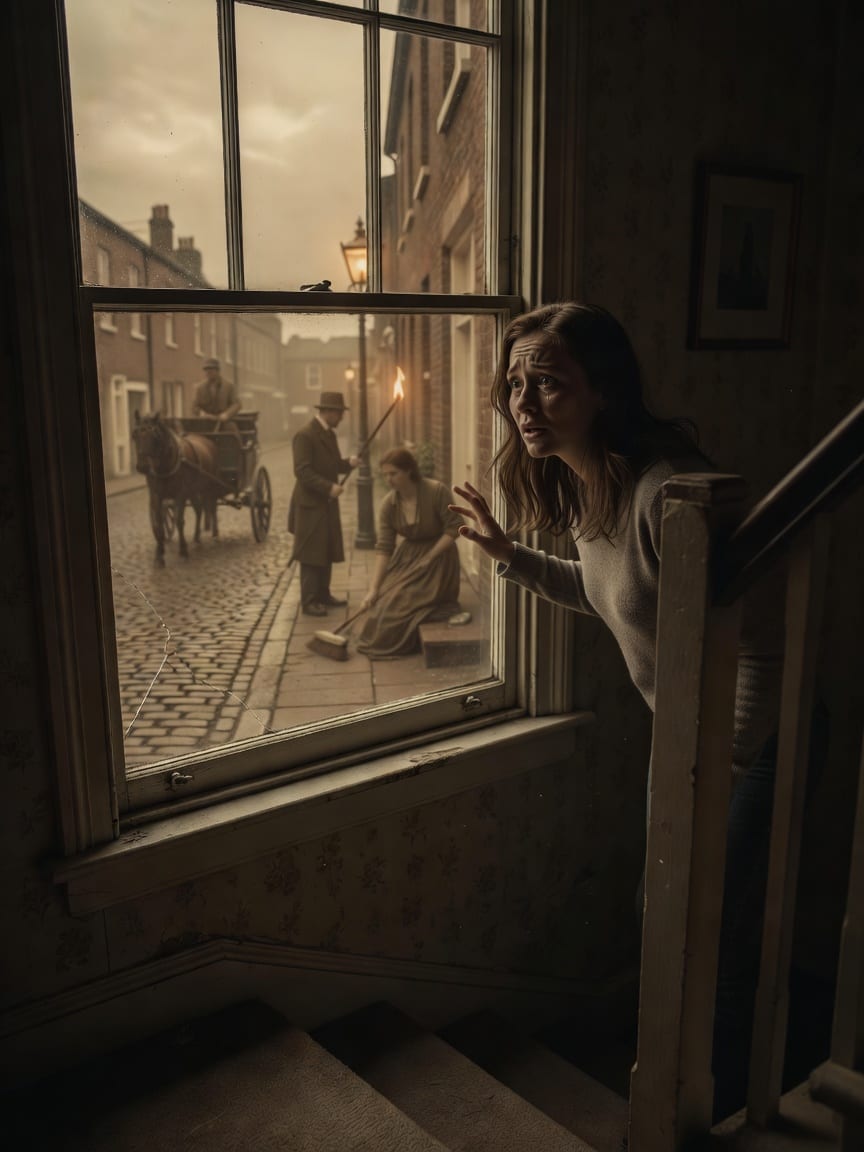
My half-landing window looked down on a cobbled street, a horse and cart. My panes, same crack. Below, only the bins.
I moved into this inherited house for a fresh start, living alone in the quiet. But the third stair on the main flight is deeply worn, a ghostly scoop hinting at decades of unseen footsteps. It feels hollow, and the wall beside it hides a faint, inexplicable seam.
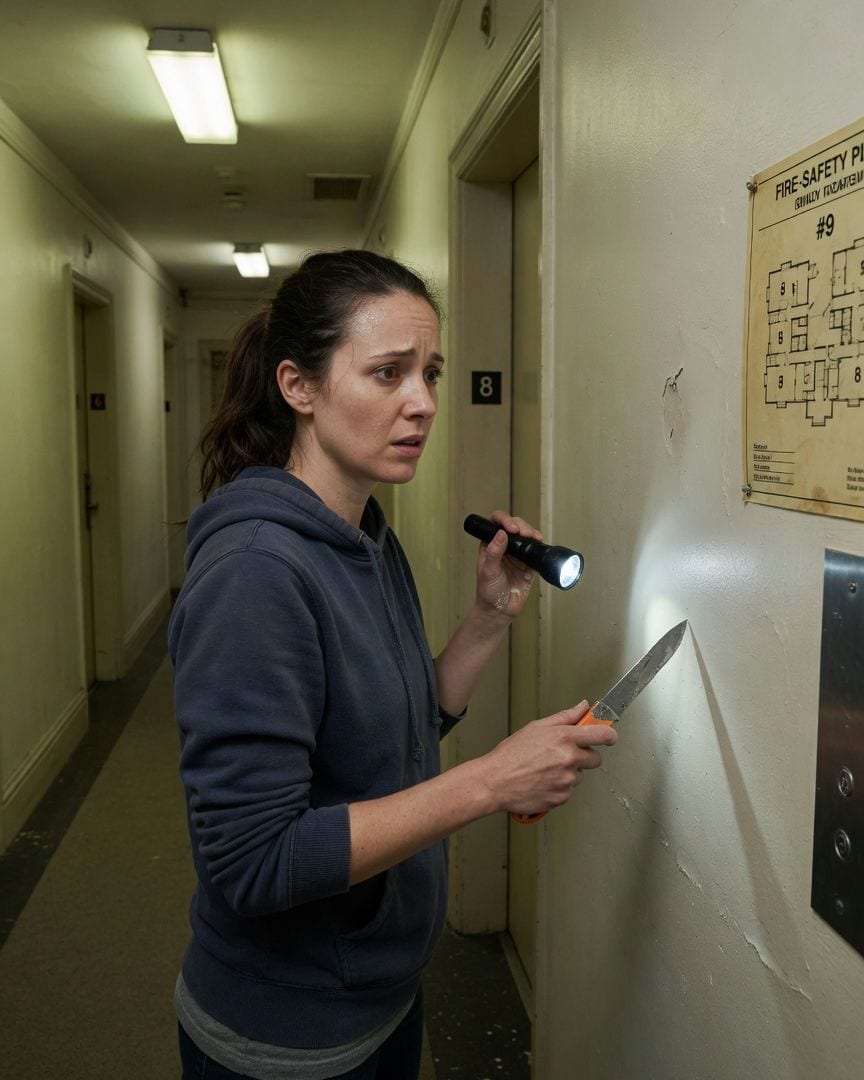
That blank wall in my hallway has a hidden metal plate. Tonight, after eleven years, it just clicked.
For eleven years, my apartment building's fire plan has shown nine apartments on my floor. But I've only ever counted eight doors, the space for the ninth a blank wall. Now, I've found a hidden metal plate behind the plaster, and from deep within, I just heard a soft *click*.
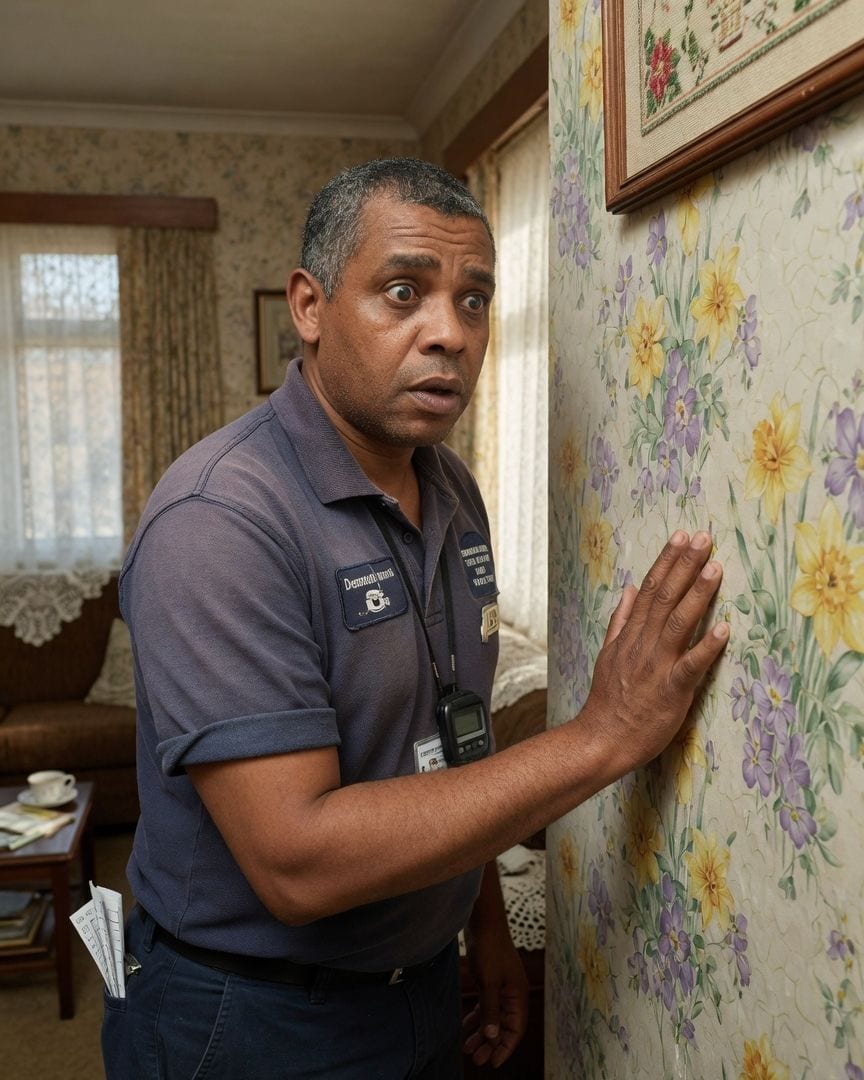
I read the water meters on this street, and this month number 30 grew a second one in pavement that was solid last month — its pipe runs back under a front door I cannot find.
I'm Desmond Drummond, a city water meter reader, used to the predictable rhythm of my fifteen-year route. But this month, Mrs. Crane's house on Elm Street showed a second meter reading. It led to a new meter pointed at a blank brick wall, and later, to a hidden door behind her living room wallpaper where no door should exist.
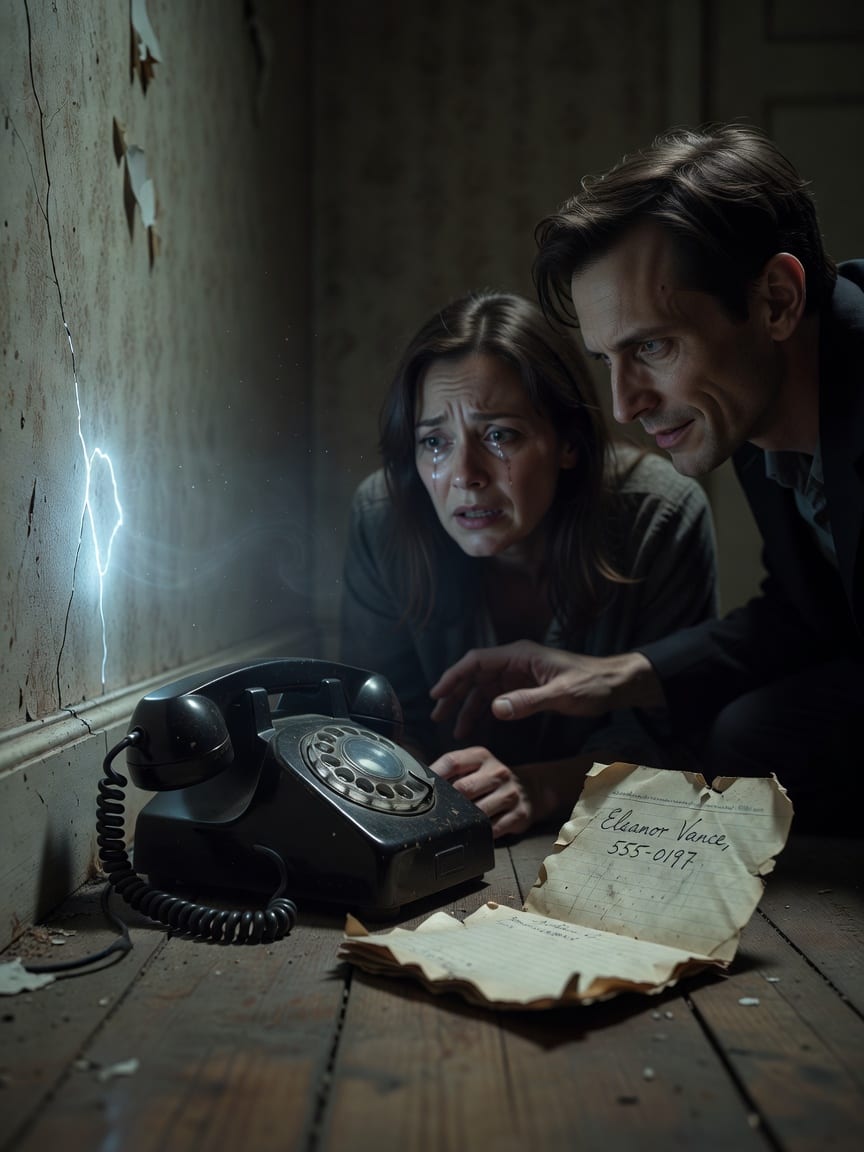
My house's walls ring when I dial a phone number from a 1974 directory. My neighbors said that directory was trash.
I was sifting boxes in my new house when I found an old 1974 telephone directory for my street. It listed my address, 12 Elm Street, under the name "Mr. & Mrs. Sheppard." On a whim, I called the faded seven-digit number. My cell phone rang, but a low, muffled sound also vibrated from the wall beside me.
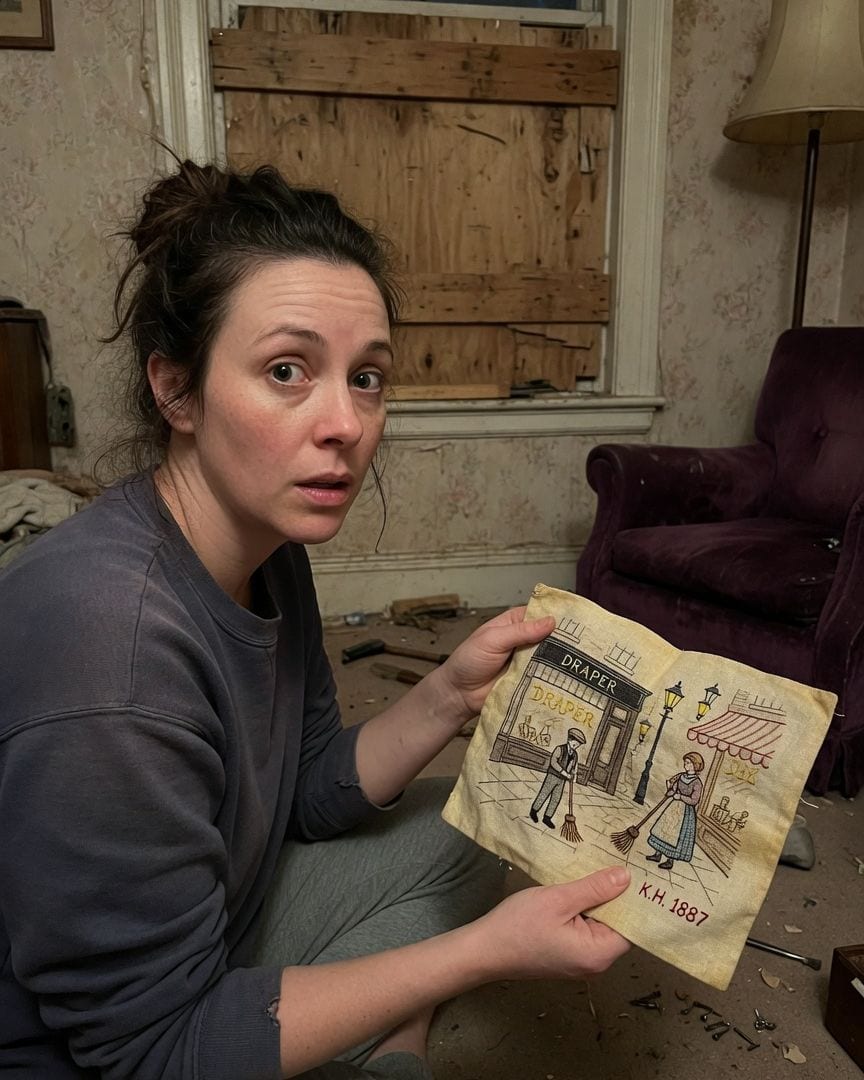
My flat's window shows a gaslit Victorian street across a brick shaft. The nails I hammered back into its frame went into wood soft and new.
My new flat came with a boarded-up window, which the agent dismissed as just an old lightwell. Driven by curiosity, I removed the boards, expecting brick or darkness. Instead, my window opened directly onto a bustling, gaslit street from 1887, a vision that defied all sense.