A methodical US Army engineer found a Cold War facility's file stamped 'DECLASSIFY NEVER' — and half its pages were missing.
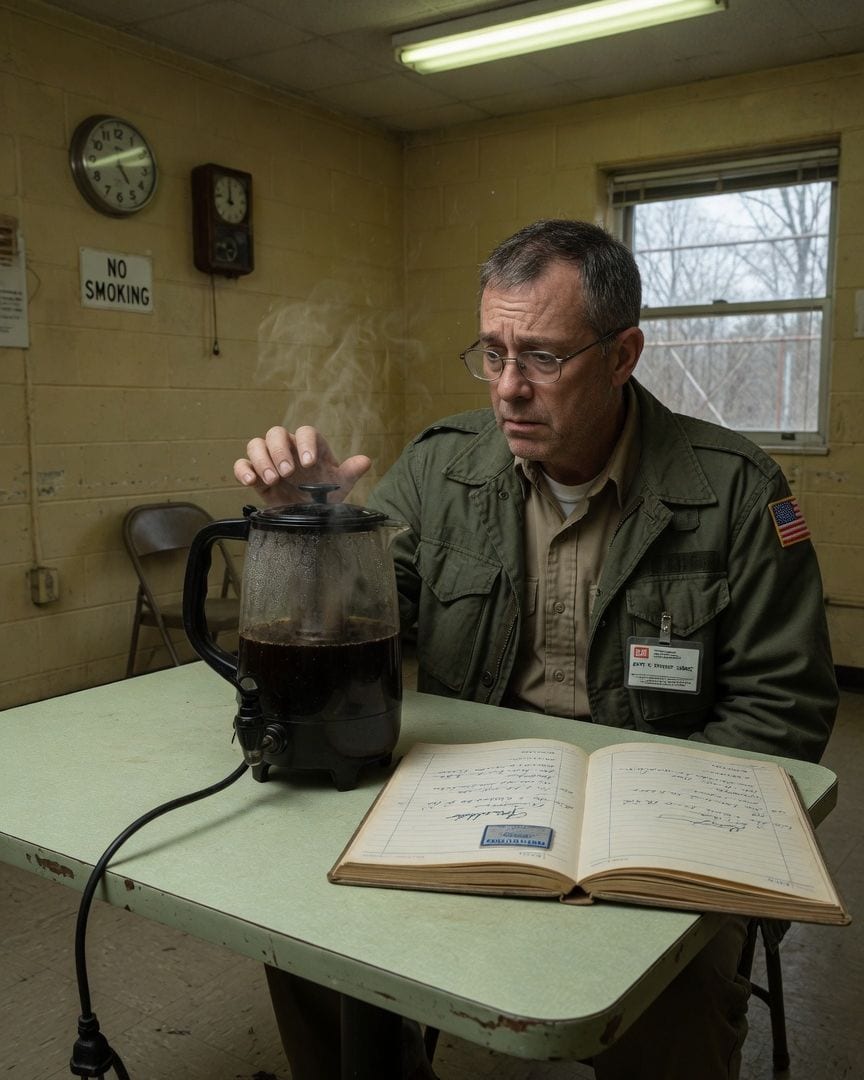
In 1989, Captain Nolan Threep, a methodical engineer with the US Army Corps of Engineers, surveyed Alert Facility Twelve in rural Montana, expecting the typical signs of abandonment: mildew, dust, and rat droppings.
He had overseen dozens of similar decommissionings, each site a decaying monument to forgotten budgets.
The chains on the exterior doors of Facility Twelve, rusted solid and thick with a fine layer of dust since 1970, promised a long-dead site, a routine final paperwork exercise.
Yet, inside the day room, a faint, almost imperceptible warmth hung in the air, stirring a primal unease.
On a Formica table, its surface chipped and faded, a glass coffee urn sat half-full, a wisp of steam rising lazily from its dark surface. The aroma, rich and earthy, was distinct, like a fresh pot had just finished brewing.
Threep’s gaze dropped to the duty log beside it, open to a page signed off by ‘Sgt. Simon Bishop’ for a shift ending on October 27, 1970. The year punched him with a quiet shock. Nineteen years.
He reached out, his fingers hesitating for a moment before touching the urn’s glass side. It was undeniably warm to the touch, not just ambiently, but actively radiating heat.
He traced its thick power cord, which coiled loosely on the tabletop, clearly unplugged from any wall socket.
The warmth was impossible. The coffee, still steaming after nineteen years, was impossible.
He tried to rationalize, muttering under his breath about residual heat from a deep underground thermal vent, or a hidden, long-running generator that had only just cut out, leaving a final, impossible warmth.
But the silence that pressed in around him, and the stark reality of the unplugged cord, offered no such comfort.
The day room was warm, the coffee urn steaming, and the log was signed for a shift that had ended nineteen years earlier, but the urn wasn’t plugged into anything.
Threep, unnerved but determined to find a logical explanation, turned his full attention to the duty log. His engineer’s mind demanded data, not vague feelings of unease.
The paper, a standard government issue from the period, felt oddly crisp, almost new, under his fingertips.
There was no yellowing at the edges, none of the brittle quality that came with nearly two decades of exposure to air and changing temperatures. He meticulously examined the ink of Sgt.
Bishop’s signature, noting no fading, no smudging, no spidering lines that would indicate decades of slow degradation. It looked as though it had been signed yesterday.
Flipping back through the pages, every entry culminated in Bishop’s sign-off for that same 1970 date, as if time had simply stopped there. Every previous entry was dated before October 27, 1970, with neat, uniform handwriting.
No other names, no other dates past that point. But on the last entry, beneath Bishop’s perfectly preserved signature, Threep noticed a small, almost imperceptible stamp, a series of alphanumeric characters stamped in a deep, metallic blue: ‘AFFT-12-CONT-774.’
It wasn’t a standard facility designation like he was used to, nor was it a common records control number for decommissioned assets. It looked like an active classification code, something assigned to a live, ongoing project.
It was starkly out of place on a log from a facility supposedly closed for nearly two decades. He pulled out his field notebook and jotted it down, a new thread in the unraveling fabric of his rational world.
The ordinary explanation of a simple abandonment was failing, piece by meticulous piece. The facility felt less like a relic and more like a paused moment, waiting.
He ran his finger over the anomalous stamp, a tiny, bureaucratic anomaly that felt heavier than the rusted chains outside.
Disturbed by the unsettling warmth, the steaming coffee, and the anomalous stamp, Threep secured the facility, double-checking the chains, and returned to his office at headquarters.
He immediately put in a request for the official decommissioning file for Alert Facility Twelve from central records, citing the unusual control number he’d found.
Days later, a thick manila folder, heavy with official paper, arrived on his desk, bearing the appropriate classification stamps and a routing slip from an obscure section of central command.
He opened it, expecting a comprehensive record of its closure, a series of forms, budget reports, and asset transfers. The cover sheet, however, listed ‘47 pages total.’
Threep, a man who believed in empirical data, counted the actual contents: only 23. Nearly half the file was missing. More unsettling was the ‘Downgrade Schedule’ section, usually a clear timeline for how and when a document would become public.
Instead of a series of dates for declassification, a single, stark phrase was stamped in deep red ink across the bottom of the page: ‘DECLASSIFY NEVER.’ He stared at the stamp, the words burning into his mind.
Never. Alert Facility Twelve wasn’t just off the books; it was a secret that refused to die. A cold dread washed over him as the implications of an unending secret began to form.
The ‘DECLASSIFY NEVER’ stamp became Threep’s obsession. It lodged in his mind, a constant, irritating burr. The missing pages of the official file gnawed at him, hinting at a hidden narrative.
He cross-referenced the ‘AFFT-12-CONT-774’ control number from the facility log with the central records database. This time, instead of just cataloging it, he forced the search algorithm to chase every possible connection.
To his astonishment, the number didn’t trace to a historical archives department, as he initially thought it should. Instead, it linked to an active, highly classified branch of ‘Special Assets Management,’ a department rumored to handle truly exceptional, un-categorizable cases.
It was a live code, for an ongoing operation, not a dead record.
He began searching for any other documents associated with ‘AFFT-12-CONT-774.’ He found heavily redacted memos, referring obliquely to ‘Alert Facility Twelve Contingency Protocols’ and ‘personnel reassignments’ dated after 1970—some as late as 1985.
The language was sterile, bureaucratic, designed to obscure, but the implication was clear: something was still happening at or because of Facility Twelve. The file was thin, yet it hummed with unstated meaning.
He also unearthed older topographical maps of the Montana region, some dating back to the 1960s.
Comparing them to current surveys, he noticed a subtle, almost imperceptible shift in the facility’s recorded coordinates over the decades—a few meters here, a few meters there.
At first, he dismissed it as surveying error, an imprecision in the older maps, but the shifts formed a pattern, not random noise.
The coordinates always moved slightly east, then slightly north, then back, as if the physical location itself was subtly repositioning, or its ‘reality’ was being subtly adjusted in the record.
This wasn’t a clerical error; it was a pattern of deliberate, continuous, and impossible recalculation.
The facility wasn’t just a place; it was an active entity, a living secret that refused to stay buried, subtly manipulating its own documentation to reflect its ongoing, impossible existence.
Threep’s relentless digging into the ‘DECLASSIFY NEVER’ file and the active control number did not go unnoticed. He began to feel it first in small ways. His secure email, usually a fortress of encrypted silence, was accessed.
He found a draft memo, half-written and then deleted, in his ‘sent’ folder, warning a fictitious recipient to ‘cease and desist further inquiry into inactive assets.’ He hadn’t written it. His heart hammered in his chest.
Days later, a small, official-looking envelope, plain and unmarked, appeared under his office door. It was made of heavy, expensive paper, but bore no postage, no return address, just his name typed neatly on the front.
Inside, there was no letter, no message, just a single, perfectly rectangular piece of heavy, blank, black paper. It was a physical redaction, a chilling, silent warning delivered with the unnerving precision of a surgical strike.
The air in his office felt colder, heavier, as if an invisible weight had settled.
He found his desk chair subtly angled differently than he’d left it, a file on his credenza moved a fraction of an inch, too small to be accidental. These were not mistakes. They were deliberate.
He started double-checking his locks at night, looking over his shoulder in the sterile hallways, his engineer’s mind struggling to fit these intrusions into any rational framework.
The feeling of being observed, of his every move within the labyrinthine bureaucracy being tracked, became a constant, suffocating presence. He was no longer just an investigator; he was becoming the investigated.
The secrecy machine, whatever it was, was turning its gaze on him, and the blank black paper was its silent, physical threat.
Driven by the black paper and the escalating intrusions, Threep sought out his superior, Colonel Isabella Vance. She was an institution herself, a woman known for her composure, her unshakeable demeanor in the face of any crisis.
He trusted her objectivity.
Threep laid out his findings on her polished mahogany desk: the missing pages, the ‘DECLASSIFY NEVER’ stamp, the active control number, the subtle but undeniable shifting coordinates, the anonymous, ghosted memo in his email, and finally, the blank black paper redaction, which he placed carefully on top of the stack.
Vance listened, her expression unreadable, her hands clasped calmly on her desk, her gaze fixed on the black paper as if it held more interest than Nolan’s distress.
Her office was quiet, insulated, the low hum of the ventilation system the only sound.
‘Captain,’ she began, her voice soft, level, ‘you’ve been very thorough.’ It was not a compliment, nor a criticism, just an observation.
Threep pressed her, his voice tight with suppressed fear. ‘Colonel, this isn’t a routine decommissioning. There are blatant contradictions, inconsistencies that defy explanation.
The facility is supposed to be dormant, off the books, yet its file is actively being controlled by Special Assets Management. And someone is watching me.’
Vance sighed, a rare display of emotion, almost imperceptible. ‘Alert Facility Twelve,’ she stated, ‘was never truly decommissioned in the conventional sense. It was… reclassified.’ She paused, her gaze unwavering, meeting his. ‘Reclassified as an ongoing data stream.’
Threep felt a chill, a profound sense of wrongness. ‘A data stream of what, Colonel?’
Vance leaned back, her composure returning fully. ‘Of anomalous events. Certain occurrences there were deemed too sensitive to simply close out, Captain. To understand this, you must adjust your perception of a ‘facility.’
The physical location itself was designated to contain and process them. To… file them.’ She explained that the ‘filing’ wasn’t just bureaucratic; it was a continuous, almost biological process.
The coffee, the warmth, the 1970 log—they were not errors, not residual heat or forgotten items, but echoes. Traces of continuous ‘processing.’
She implied that whatever happened in 1970 wasn’t just a past event; it was something still happening, just not in a way that generated conventional, closable records. The facility was a living archive, and the ‘records’ were its output.
The institution knew, and had known for decades, that Alert Facility Twelve was still active, just not in any way Threep could have imagined.
Vance’s words were calm, logical, yet they painted a picture of a universe utterly beyond his comprehension.
Nolan, reeling from Vance’s chilling admission, returned to his office, the quiet hum of the building now sounding ominous. The concept of a facility as an ‘ongoing data stream’ that ‘processed’ anomalous events horrified him.
It implied an active, consuming presence, not a dormant building. The quiet hum of the fluorescent lights seemed to mock his fading sanity.
He needed to ground himself in something concrete, something he could still understand. He pulled up the old personnel manifest for Alert Facility Twelve, searching for Sgt. Simon Bishop, the last signatory on the duty log.
He found a list of names, most heavily redacted, under various ‘assignment’ categories for Facility Twelve.
He scrolled through the sterile, bureaucratic entries, his fingers flying across the keyboard, searching for any pattern, any hint of another individual connected to Bishop, or the ‘AFFT-12-CONT-774’ number.
Then he stopped. He found a record labeled ‘ASSIGNMENT: ALERT FACILITY TWELVE (CONTINGENCY)’ dated 1975, five years after the facility’s supposed closure. The entry was stark.
The name associated with this assignment was completely blacked out, a solid rectangle of ink, thicker and darker than any other redaction on the page. But as he stared, a cold dread settled in his gut, a sickening recognition.
The shape of the redaction—the precise length of the blacked-out block of text, the spaces it occupied, the way it visually broke into two distinct segments—was unmistakably his own name, ‘NOLAN THREEP.’
His breath hitched, catching in his throat, a dry, rasping sound. His name, assigned to the facility, in a record from a time he shouldn’t have been involved. He wasn’t just investigating the file; he was already in it.
Nolan stormed back into Vance’s office, the personnel manifest clutched in his trembling hand. He slammed it onto her desk, the sound sharp in the quiet room.
He pointed a trembling finger at the redacted entry, the black block of his own name. ‘My name, Colonel. Dated 1975. What does this mean?’ His voice was ragged, stripped of its usual calm.
Vance glanced at the file, her expression unperturbed, as if she had expected him. ‘It means, Captain,’ she said, her tone flat, ‘that Alert Facility Twelve isn’t a facility for anomalous events. It is an anomalous event.’
She leaned forward, her voice dropping to a near whisper, yet maintaining its unnerving calm. ‘It’s a localized temporal-spatial anomaly. It ingests personnel and events, converting them into what we call ‘records.’
The coffee, the warmth, the 1970 log—they’re not just echoes. They’re data points. Manifestations of continuous processing. A constant intake and output.’
She explained that the ‘DECLASSIFY NEVER’ stamp wasn’t a cover-up of a past event, but an acknowledgment of an ongoing, active process. The institution had been studying it, feeding it, and filing the resulting data for decades, observing its patterns.
‘The system,’ Vance continued, her eyes fixed on Nolan, ‘predicts its next ‘subjects.’ Your persistent investigation, Captain, your meticulous unraveling of the threads, has… activated your designation.’
The control numbers, the shifting coordinates on the maps, the missing pages from the official file—they weren’t bureaucratic errors or random anomalies. They were traces of the facility’s ‘digestion’ process, its ongoing operation, its method of self-maintenance.
Nolan wasn’t just an investigator; he was the next data point, the next record to be filed, slated for entry since before he was even assigned to the Corps.
The horror of coherence settled over him: every impossible detail, every contradiction, now clicked into a terrifying, seamless whole. The facility was a living entity, a hungry machine of secrecy, and it had chosen him.
Vance’s calm delivery of his fate solidified Nolan’s resolve. His rational mind had been overwhelmed, but his instinct for self-preservation screamed. ‘You expect me to just… walk into that place?’
he demanded, his voice tight with a mixture of fear and fury.
‘You have two options, Captain,’ Vance replied, her tone devoid of menace, as if discussing routine paperwork.
‘Accept your assignment and enter the facility, becoming a ‘record’ in the most efficient manner, or be forcibly disappeared and filed in a different, less… clean way.’ Her eyes held no malice, only a detached understanding of an inevitable process.
Nolan, horrified, knew he couldn’t simply accept. He wouldn’t become a data point. He tried to report Vance and the facility.
He frantically attempted to access his secure communication channels, but his terminal screen flickered once, then displayed an ‘Access Denied’ message. He tried his encrypted phone; it was dead. His desktop went dark. He was cut off, isolated.
Panic clawed at his throat, but his rational mind, even now, fought back. He had to escape, go public, expose them all.
He made a desperate dash from Vance’s office, adrenaline coursing through his veins. He ran through the sterile corridors, his boots echoing loudly on the polished linoleum, the sounds unnaturally amplified in the sudden silence of his isolation.
He burst out into the parking lot, the late afternoon sun blinding him for a moment after the dim interior of the building. His car was a few rows away, a beacon of freedom.
As he fumbled for his keys, his hand shaking, a sleek, black, unmarked sedan pulled up silently beside him, its windows tinted opaque. The engine was barely a whisper, a phantom hum.
Two figures in dark, anonymous suits emerged from the vehicle. They didn’t speak, didn’t threaten, simply gestured towards the sedan’s open rear door.
Nolan hesitated, his breath ragged, his eyes darting wildly. Then, on the sedan’s license plate, he saw it: faintly stamped, almost camouflaged against the dark metal, was the familiar alphanumeric sequence: ‘AFFT-12-CONT-774.’
The same control number from the facility log, the one that led him here, the one that had been watching him. He knew then that there was no escape. The secrecy machine had already filed his departure.
Captain Nolan Threep’s official personnel file was updated the next day. His survey report for Alert Facility Twelve was noted as ‘completed and filed,’ with a commendation for ‘expeditious closure.’
A small, addendum memo, heavily redacted, was attached, dated the same day as his disappearance. His personal effects were quietly packed and shipped to a non-existent postal code in rural Alaska, a ghost address for a ghost man.
Back at Alert Facility Twelve, in the day room, the glass coffee urn, now in its original position on the Formica table, still steamed gently, half-full, its faint aroma filling the air.
The rusted chains on the exterior doors remained undisturbed, frozen in their nineteen-year vigil, holding the anomaly in. The facility was once again silent, waiting, its warmth an unspoken promise.
His absence was noted only as a transition, a new entry in a very old ledger.
Nolan’s last thought, a cold, clear certainty that settled into the core of his being, was that the facility didn’t just file the past; it was always waiting for the future.
He felt the cold touch of the chain on his wrist, the heavy, familiar scent of old coffee, the warmth of the room that was never meant to be warm, as the door swung shut behind him.
His rational mind had failed him, not because it was wrong, but because it had uncovered a truth too coherent to exist outside the file. He was not lost; he was filed. He was not gone; he was a record.
The steam from the coffee urn was the last thing he saw, a final wisp of impossible heat. He was just another entry in the endless log.
Weeks later, Colonel Vance received a new, unrequested survey report for Alert Facility Twelve, detailing its current operational status. It was signed, in a steady, official hand, by Captain N. Threep. The date on the report was tomorrow.
The file is still being signed.
If this one got to you
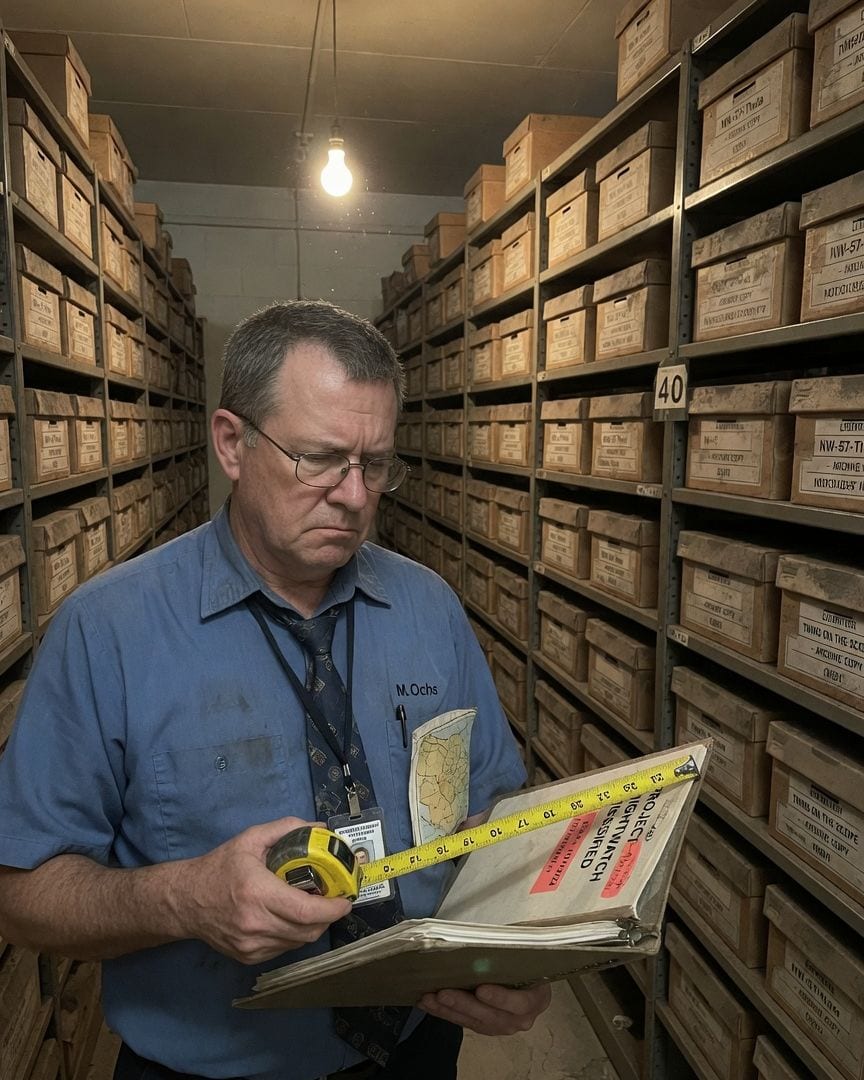
A Cold War records clerk on his final patrol found Aisle 40 stretched 61 feet longer, lined with unknown boxes. Inside one: 'PROJECT NIGHTWATCH - CLASSIFIED' with a fresh timestamp.
Marlin Ochs, a creature of habit after nineteen years at the St. Louis federal records depot, faced his final patrol through Aisle 40 before its scheduled pulping. His routine walk, usually 92 precise strides, suddenly stretched to an impossible 119, making the aisle 61 feet longer than its blueprint. The extra section felt colder, lined with dust-laden boxes bearing alien classification codes and no manifest. Inside one, he found a metal-bound file: 'PROJECT NIGHTWATCH - CLASSIFIED,' dated 1957, but with a timestamp just hours old.
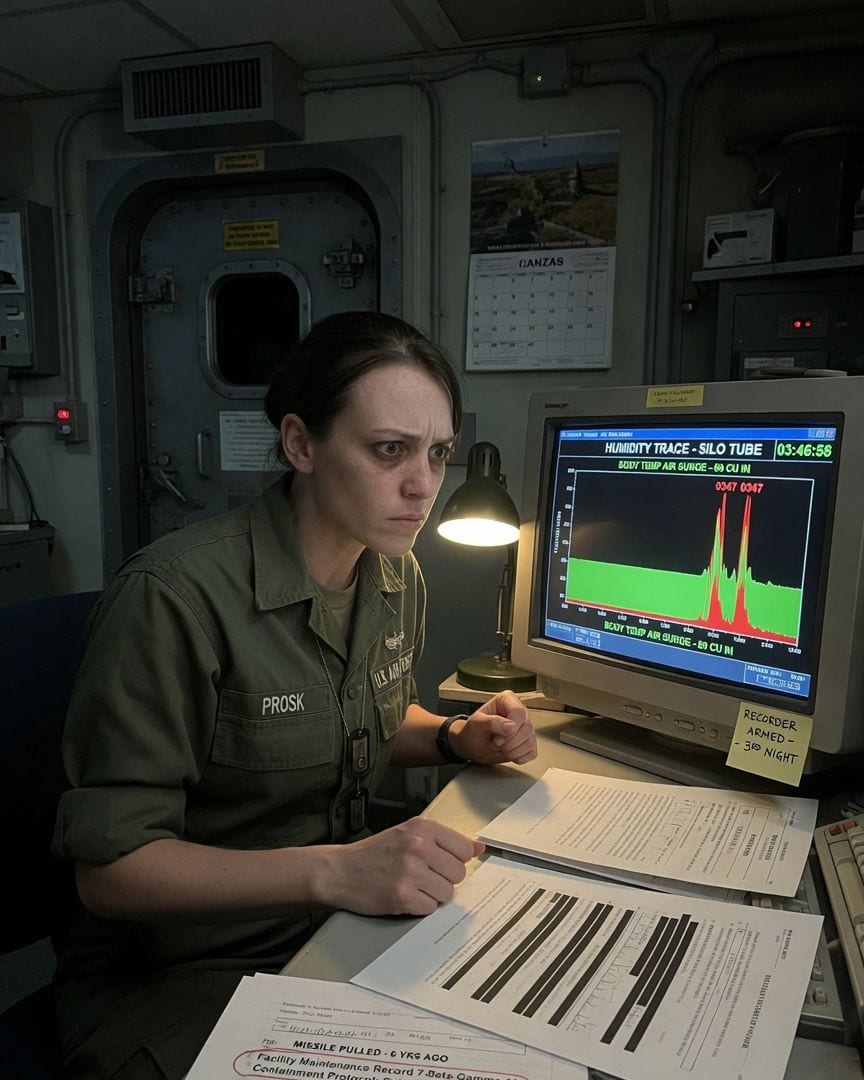
An airman's last weeks before transfer: the empty Cold War missile silo took a warm breath.
Airman Gale Prosk was counting down her final weeks at the silo, eager for her transfer from the isolated Kansas prairie. In the dim control room, the low hum of the ventilation was a constant companion. For years, the environmental monitor for the empty missile tube below had shown a flatline, until three nights ago. A sudden, jagged spike appeared, a surge of air registering at body temperature. She dismissed it as a glitch, but then it happened again. She descended into the vast, echoing chamber where the missile had once stood, finding only cold, polished steel. Back in the control room, redacted declassification files spoke of "biological integrity checks" for the empty space, and Project THRESHOLD documents were missing eight crucial pages. The silence of the silo now hummed with an unseen weight.
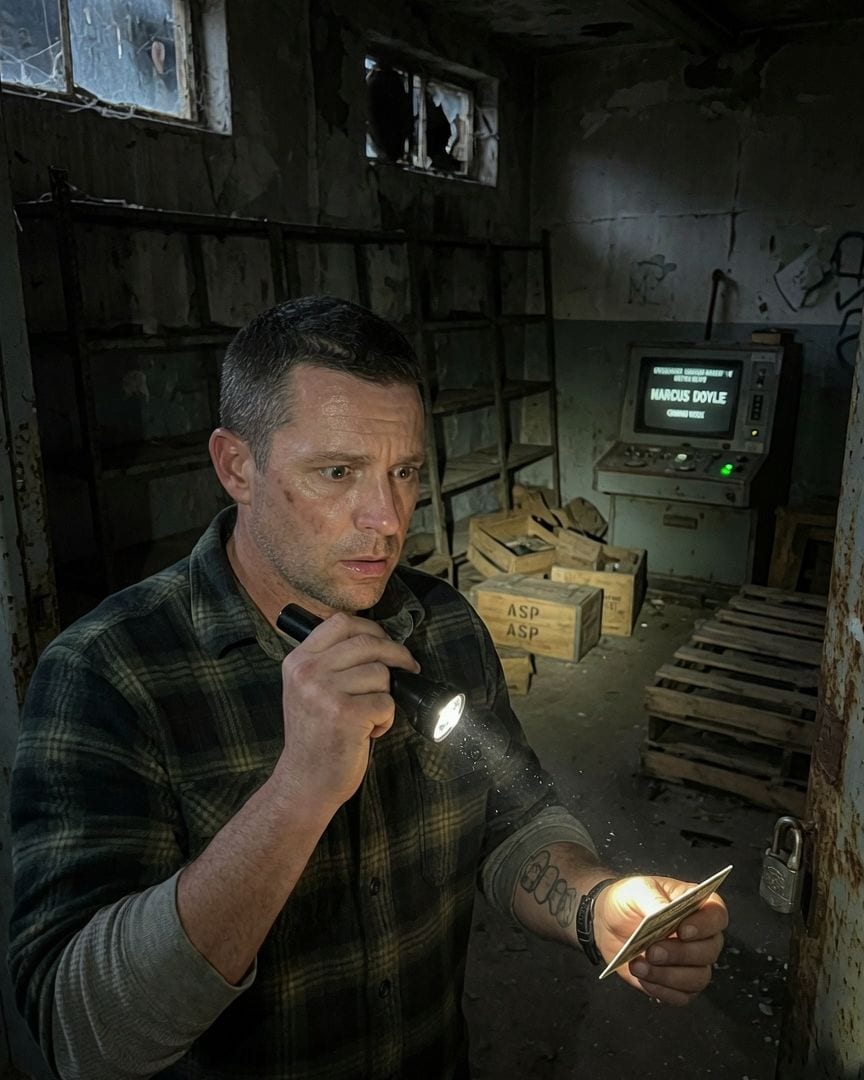
A former serviceman found his name on an active duty roster for a military base decommissioned in 2019. His access card had already logged three entries last month.
Six years after leaving the service, Marcus Doyle’s quiet suburban life was upended by an old access card notice. It came with a chilling printout: his badge number and name, logged entering Fort Crestwood’s Ammunition Supply Point three times last month, each at 0240. The former military base had been officially decommissioned in 2019, its buildings abandoned and gates chained. After discovering his own access card matched the log, Marcus returned to the derelict site, only to find a humming console displaying his name as current "personnel assignment" for the coming week. What could be happening at a base that no longer exists?
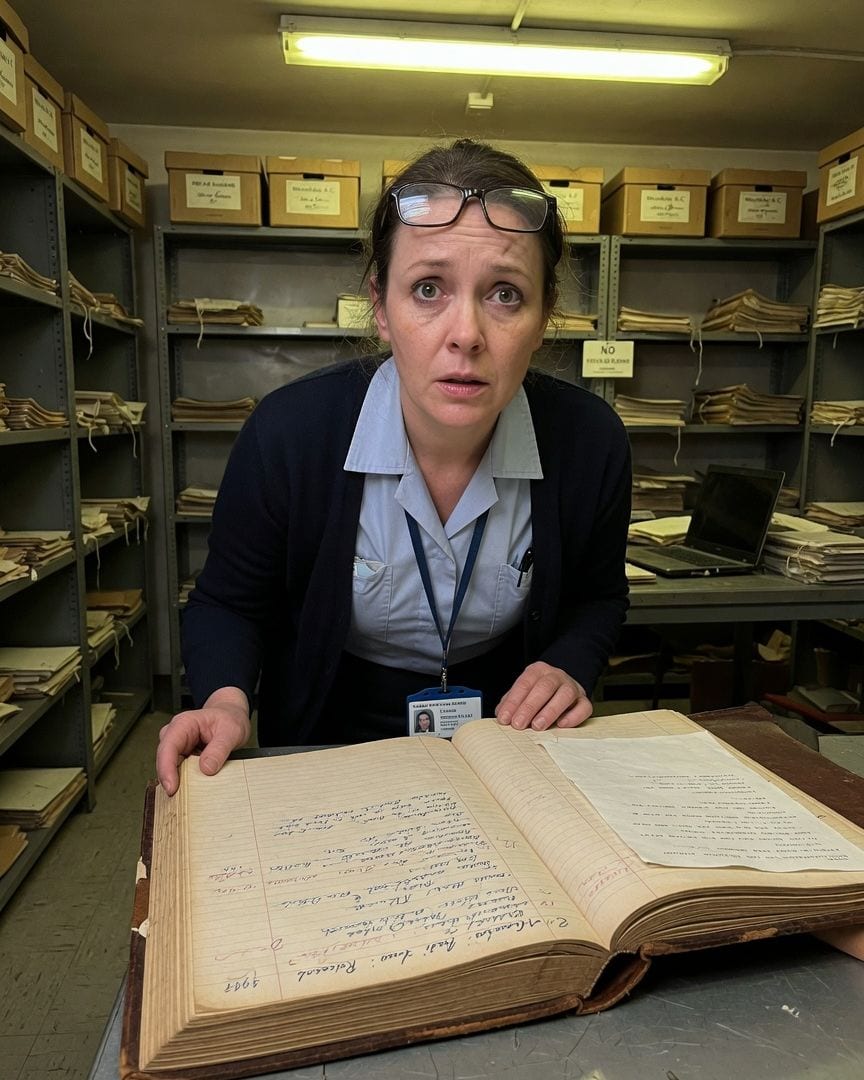
My ambulance trust's incident log shows callout 22-014 to 6 Cathcart Row at 2:40 AM. Every four years, the same call, same address. Always 'patient not found'.
My job involves tedious data entry for ambulance calls, but Incident 22-014 was different. It appeared every four years, always at 2:40 AM, always closed as 'patient not found.' Digging into the dusty physical archives, I found an entry from 1961 for the exact same incident, but its resolution read: 'Subject Secured. Relocated to "Holding".'
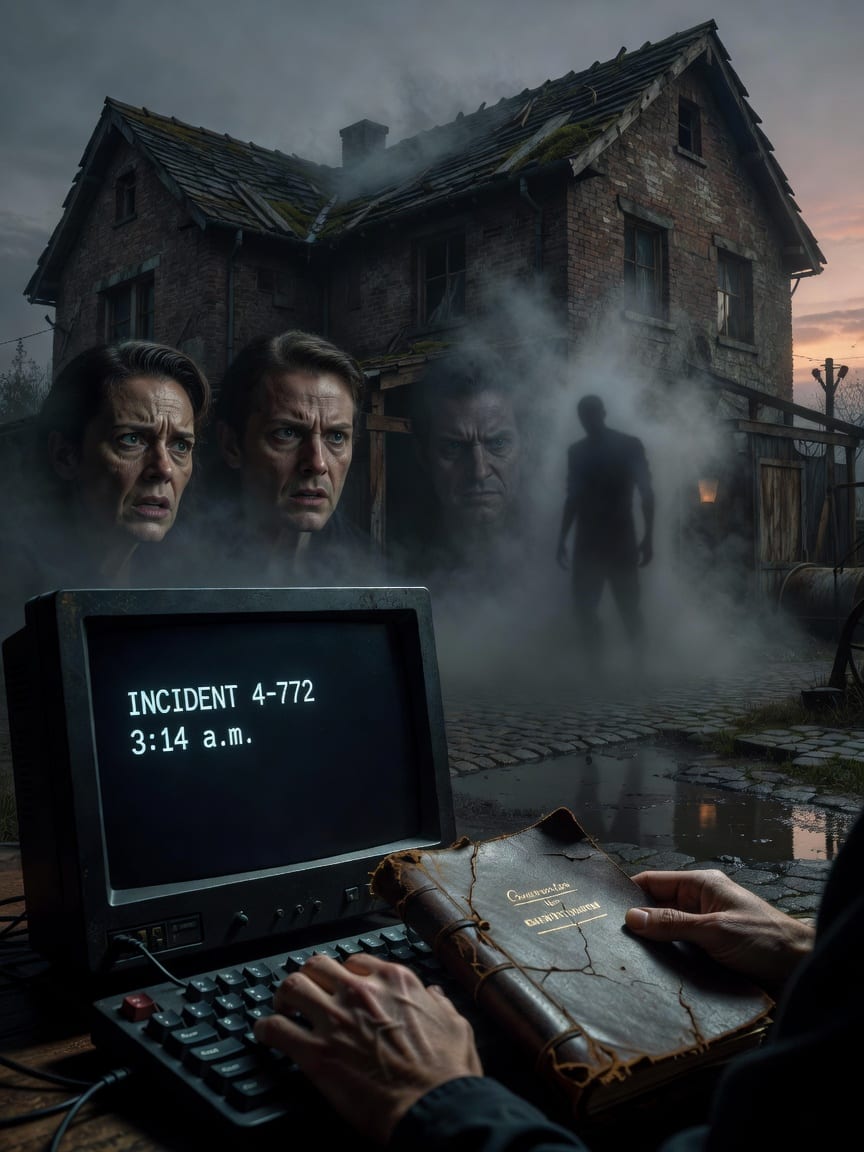
My screen showed Incident 4-772: a fire at the old rope works, 3:14 a.m. It was logged again for 1980. Then 1967. And 1993. Same incident, same time, same building. Each report ended with the same three words: 'expect recurrence.'
As a new archivist, I usually found my work digitizing old fire service records monotonous, until I found a heavily redacted line in a 1961 site assessment. Faint letters beneath the black bar slowly revealed my own family name, DRUMMOND, dated years before I was even born.
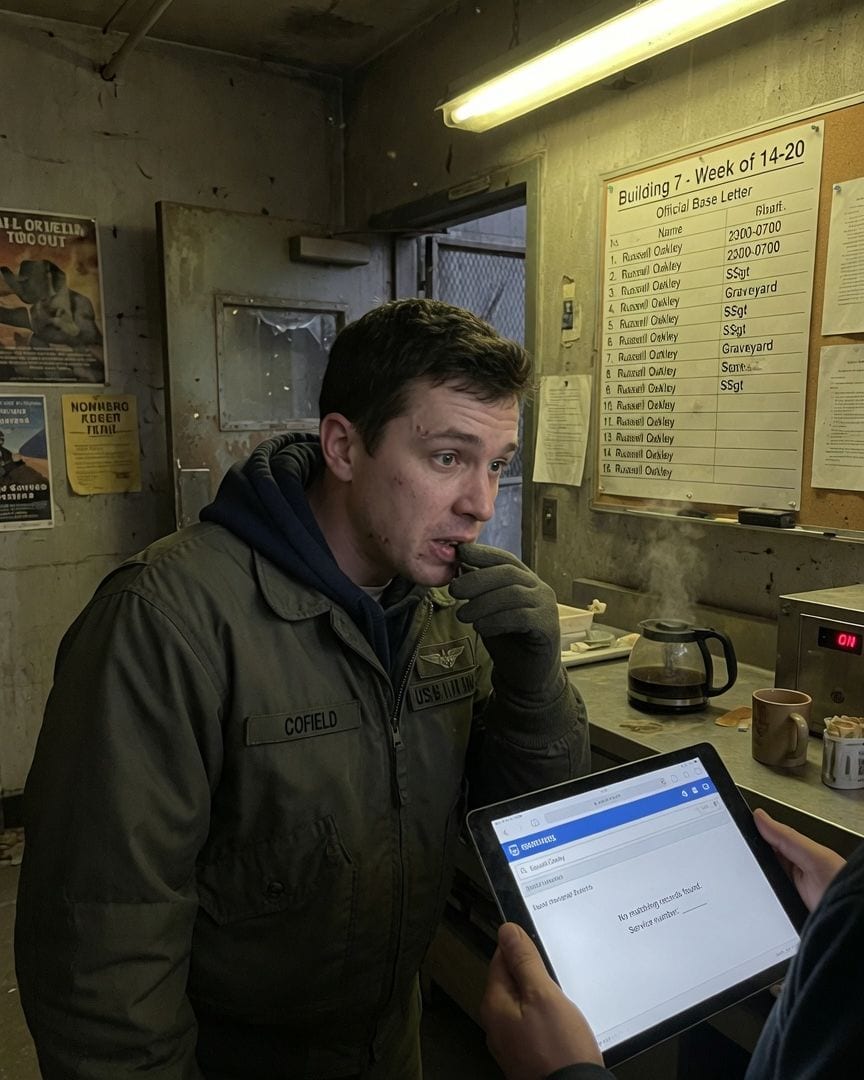
Airman Cofield, two weeks from transfer, found a warm coffee pot in a building without power for thirty years. Its new shift roster listed a name that didn't exist.
Senior Airman David Cofield, just two weeks from his long-awaited transfer, patrolled the perimeter of a decommissioned weapons storage area. Building 7, a concrete shell dark since 1992, suddenly showed a faint, warm light in its window. Inside, fluorescent lights hummed, and a coffee pot on the counter was still warm, defying the building's decades-long power shutdown. A freshly pinned shift roster for the coming week then revealed a name: 'Russell Oakley,' listed for Cofield’s own graveyard shift, yet completely absent from every official base record. Who was Russell Oakley, and how was he on shift in a dead building?