A former serviceman found his name on an active duty roster for a military base decommissioned in 2019. His access card had already logged three entries last month.
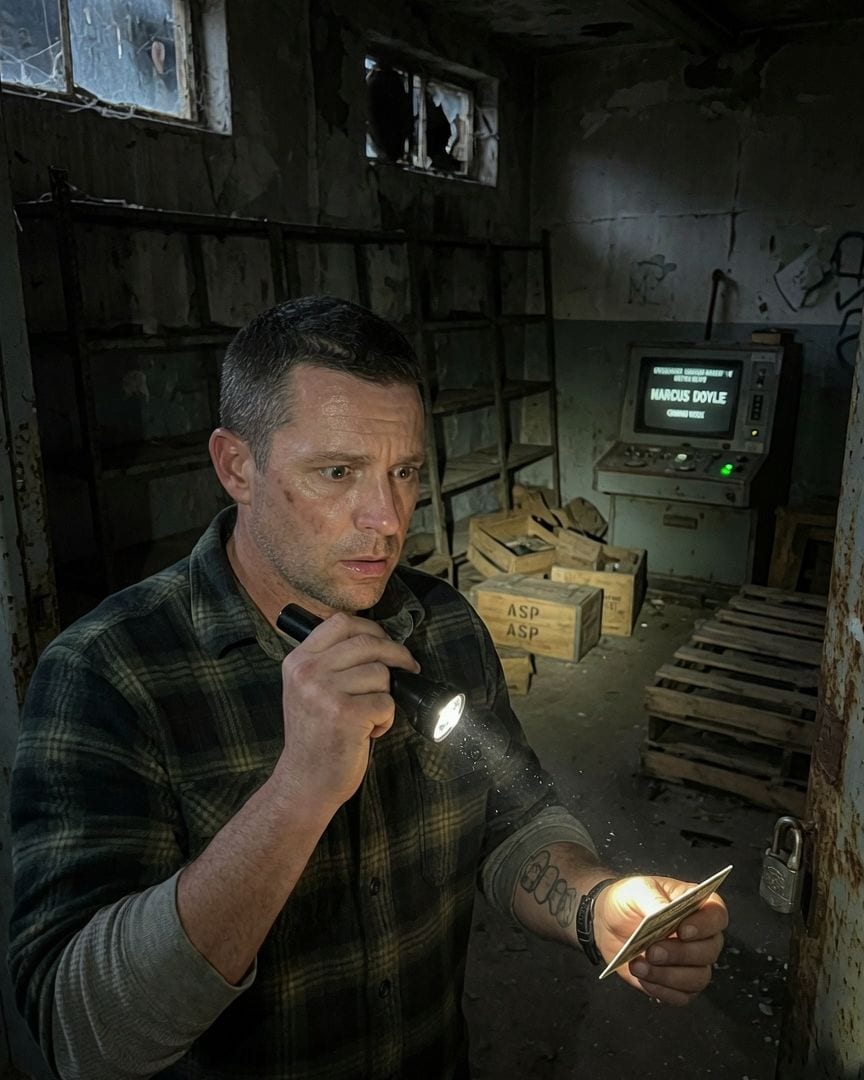
Six years out of the service, Marcus Doyle, 35, had traded desert dust for suburban calm. His life was quiet, predictable. Then the envelope arrived. Inside, a routine expiration notice for his old Fort Crestwood access card.
Stapled to it, a printout: an entry log. His badge number, his name, Marcus Doyle, entering the Ammunition Supply Point—the ASP—at 0240 on three separate nights last month.
Fort Crestwood had been officially decommissioned in 2019, its lights dark, its roads cracking under weeds, perimeter fences rusting shut. The ASP building was a sealed, empty shell, abandoned to the elements.
His first thought was a clerical error, a database glitch, a phantom ghost in the machine. Surely, the notice was an outdated form, the log a misprint. But the dates were too specific, the time too precise.
April 10th, 17th, and 24th. Each entry at 0240. Someone, or something, bearing his identity, was clocking into a base that no longer existed.
Marcus spent the next few days trying to debunk it. He called the number on the notice – disconnected. He checked the Fort Crestwood official archives online – 'Decommissioned, 2019,' the page stated in bold, bureaucratic script.
He even drove the two hours to the old site, hoping to find a mundane explanation.
The main gates were chained, overgrown with tenacious vines. Razor wire topped the fences, rusty but intact. No sign of recent breach.
He walked the perimeter, the familiar crunch of gravel under his civilian boots jarring against the ghost of his military past. The air hung still and heavy, carrying only the faint scent of damp earth and decay. He found nothing.
No fresh tracks, no broken wire, no signs of life, let alone active operations. Yet, the log was undeniably real, printed on official letterhead, with crisp, clear details.
The dread began to set in, a cold, specific weight in his gut. The system, the military’s ironclad system of accountability, had failed. He considered a prank, but who would go to such lengths? And for what purpose?
Back home, he found his old service duffel. Deep inside, beneath a faded uniform that still smelled faintly of mothballs and stale sweat, was his original access card. He compared the numbers. Identical.
He held the card, a thin piece of plastic, feeling the impossible weight of it. It was a mundane object, yet it was the key to an impossible truth.
His card, in his hand, was also somehow entering a dead building, three times in the dark.
Driven by a need to prove it wrong, or at least understand it, Marcus returned to the base under the cover of night a few evenings later.
He found a weak point in the fence, a section where the rust had finally eaten through the wire, creating a man-sized gap.
He slipped through, moving with the trained silence he hadn't used in years, his muscles remembering the old discipline. The ASP building loomed, a black cube against the faint moonlight, its concrete walls absorbing the meager light.
The heavy steel door was locked, but the padlock looked old, corroded, a relic. With a pry bar he’d brought, he forced it with a groan of metal and a sharp crack.
Inside, the air was thick with dust and the metallic scent of decay, undisturbed for years. Moonlight filtered through grimy windows, painting the floor in shifting patterns of gray.
He swept his flashlight beam across empty shelves, overturned crates, and the skeletal remains of what were once orderly supply points. Then, in the deepest corner, half-hidden behind a stack of broken pallets, he saw it.
A console, not just intact, but humming faintly. A small, green light glowed steadily on its dusty panel, a stark anomaly in the pervasive darkness. He approached, heart pounding a rhythm against his ribs.
The screen of the terminal flickered, displaying a partial, active manifest.
Marcus Doyle's name appeared on it, not as a log entry, but as a current "personnel assignment" for the ASP, dated for the coming week, beneath a column labeled "ACTIVE DUTY."
Marcus stared at the terminal, the impossible words burning into his mind. 'ACTIVE DUTY.' For him. In a decommissioned ASP. His rational mind screamed for an explanation, demanding a logical sequence of events.
He took photos of the screen with his phone, capturing every detail of the flickering text. He searched the rest of the building, moving through the dust and shadows, calling out softly, but found no one.
The only other sign of recent activity was a faint, metallic tang in the air, almost like ozone, concentrated near the humming console, growing stronger the closer he got.
Back home, Marcus contacted Gordon Blackwood, his old battle buddy, now a logistics manager in the private sector. Gordon, 35, was still sharp, still connected. Marcus explained the situation, omitting only the part about breaking into the base.
He spoke of the strange expiration notice and the impossible log entries, framing it as a weird clerical error he couldn’t shake.
Gordon, though skeptical, agreed to discreetly check official military records for any hidden annexes or unusual designations tied to Fort Crestwood or the ASP, even after decommissioning.
'Sounds like some black ops ghost unit, man,' Gordon had joked, but his voice had a tight edge that belied the humor.
Marcus also reached out to Grace Sullivan, 42, a civilian records clerk he remembered from his time in service, known for her meticulousness and deep knowledge of obscure regulations.
He framed it as a 'historical research project,' asking about unusual personnel assignments or classified functions for the ASP at Fort Crestwood before its closure.
Grace promised to look, but warned him the archives were a maze, full of dead ends and red tape. Days turned into a week. The dread intensified, taking root in his quiet suburban life.
He found himself checking his phone constantly, jumping at every notification, every email. He felt watched, not by a person, but by the creeping certainty that something fundamental had shifted, and he was now caught in its gears.
He drove past the old base again, the chained gates now feeling less like a barrier and more like a threshold he’d crossed, a point of no return. He was no longer just an observer.
The next Tuesday, Marcus received an anonymous email. No subject, no sender address, just a string of random characters.
Attached was a single, grainy photo: a blurred image of him, flashlight in hand, standing in front of the ASP terminal, the 'ACTIVE DUTY' screen faintly visible in the background.
The photo was taken from outside the building, through one of the grimy windows, the angle showing the broken padlock on the door. A shiver ran down his spine. Someone knew. Someone had seen him.
He hadn't just found something; he had been observed finding it. The email was a silent warning, a confirmation of a surveillance he hadn't known was in place.
He tried to trace it, but it bounced through multiple proxies, untraceable, vanishing into the digital ether.
His phone rang an hour later. It was Grace Sullivan. Her voice was hushed, almost a whisper. 'Marcus, I found something. Not in the public archives. Deep in the classified section, under Fort Crestwood's decommissioning orders.'
She sounded shaken, her usual calm demeanor shattered. 'The ASP wasn't just for munitions. It was designated a 'Special Containment Unit.' And there's a list. Personnel assigned to 'perpetual watch' status, even after discharge.'
Marcus felt a cold hand clench his stomach, squeezing the air from his lungs. 'Who's on the list, Grace?' he asked, his voice barely a whisper, afraid of the answer. 'I shouldn't even be telling you this, Marcus.
They'll know I accessed it.' Her voice dropped further, tight with fear. 'Your name. SGT Doyle, M. And a code. ASP-0240-PERPETUITY.' The line went dead.
Marcus tried calling back, but her phone was off, then went straight to voicemail, no ringing. He knew then that his investigation had been noticed, and the danger was now personal, and far deeper than he had imagined.
He wasn't just looking for answers; he was being drawn in.
Marcus tried Gordon, but his friend was out of reach, traveling for work in a remote area with no cell service. He was alone with the chilling knowledge. 'Perpetuity.' The word echoed in his mind, heavy and foreboding.
He remembered the specific 0240 AM entry times on his original log. This wasn't a glitch; it was a system, precise and deliberate. He knew he had to get more, to understand what Grace had found.
He drove to the National Archives branch where Grace worked, hoping to catch her, but she wasn't there. Her supervisor, a stoic woman with tired eyes, said Grace had taken 'indefinite leave' for personal reasons.
Marcus felt a surge of fear, a cold certainty. He knew what 'indefinite leave' truly meant in these quiet, bureaucratic halls.
He found a sympathetic, older archivist, a retired Army veteran named Charles Granger, 60s, who remembered Grace and her penchant for digging too deep.
Marcus, carefully, explained his 'historical research project' again, mentioning Grace’s name and the 'perpetual watch' designation she’d hinted at.
Charles, a man who had seen too much paperwork in his life to be easily surprised, raised an eyebrow, a flicker of something knowing in his gaze. 'Perpetuity, huh? That's an old one.
Usually meant you were on a list for something that couldn't ever really be closed. Not an assignment, more like... a designation.' He paused, studying Marcus with an unnerving stillness. 'Grace was always too curious for her own good.
She likely found the annex.'
Marcus pressed him, leaning forward. 'The annex? What is it?' Charles sighed, a long, weary sound. 'They used to tag personnel. Not for deployment, but for... maintenance. Some sites, even decommissioned, needed a 'presence.' A record of activity.
Kept the paperwork clean, kept the funding flowing, kept the system stable. It was never about people, just the numbers.' Marcus felt a cold dread spread through him, colder than the chill of the archive itself.
'So, someone was still logging in, using my old card, to keep a record alive?' Charles shook his head slowly, a grim set to his jaw. 'No, son. Not someone using your card. Someone designated to be logged in.
Your card number, your name, was part of the system's ongoing function. The system never forgets its designations.'
The earlier clues crashed into place, fitting together with a horrifying click: the three 0240 entries, the 'ACTIVE DUTY' on the terminal, Grace’s hushed warning.
It wasn't a person; it was the system itself, perpetuating an impossible truth, and Marcus was a designated cog in its machinery. The ASP was still active, in a sense, and he was its assigned sentinel.
Charles, seeing the look on Marcus’s face, leaned closer, his voice dropping to a near whisper. 'Grace might have filed a copy somewhere. She had a habit of keeping her own records, just in case. A contingency.'
He pointed a gnarled finger to a dusty, forgotten archive box in the corner, partially obscured by a leaning shelf, labeled 'Misc. Fort Crestwood Admin.' 'She used to stash things in there, away from prying eyes.
Didn't trust the main system.' Marcus’s hands trembled as he opened the box, sending up a cloud of old dust that tickled his nose.
Inside, beneath a pile of mundane administrative documents – supply requests, faded memos – he found a crisp, official-looking printout. It was an annex, clearly marked 'CLASSIFIED – PERSONNEL DESIGNATION.'
His eyes scanned the header: 'Fort Crestwood ASP – Perpetual Watch Protocol.' His breath hitched in his throat. He found the entry for his own name.
'SGT Doyle, M.' And next to it, the code Grace had whispered, the cold words confirming his worst fears: 'ASP-0240-PERPETUITY.' But there was more.
A small, almost invisible footnote at the bottom of the page, written in a different, older font, almost like an afterthought, chilling in its understated finality: 'Designation effective from 2019, binding upon separation, for the purpose of maintaining active signal presence within Unit 734-Alpha.'
Unit 734-Alpha. What was that? And 'binding upon separation'? It wasn't just a record; it was a mandate, an inescapable decree. He wasn't just on a list; he was part of the list.
The dread deepened, chilling him to the bone, colder than any arctic wind. Marcus stares at the printout from a dusty, forgotten archive box: a coded annex to his own 2019 separation papers, buried deep within his official record.
It lists "SGT Doyle, M." with a cryptic designation code, "ASP-0240-PERPETUITY," active from the base's decommissioning date. He was never just a random target; he was always named in it.
The annex was a punch to the gut, a cold, hard truth that shattered any remaining hope for a mundane explanation.
Marcus wasn't a victim of a clerical error or a random anomaly; he was a designated component of an ongoing operation, an inescapable, endless function. 'Unit 734-Alpha.' The name clicked something in his memory.
He remembered a vague, whispered rumor from his early days at Fort Crestwood, an offhand comment about a 'ghost frequency' in the ASP, something that interfered with communications at 0240.
He rushed back to Fort Crestwood, the annex clutched in his hand, its paper edge digging into his palm.
This time, he headed directly for the ASP, slipping through the same gap in the fence, forcing the same padlock. The humming console was still active, a beacon in the desolate building.
He stared at the screen, the 'ACTIVE DUTY' status for SGT Doyle, M. for the coming week, a haunting prophecy.
He tried to access other files, to pull up information on 'Unit 734-Alpha,' but the system was locked, denying him deeper access.
He then noticed a small, almost hidden panel on the side of the console, almost indistinguishable from the worn metal.
He opened it, revealing a series of old, analog dials and a small, glowing crystal, pulsing faintly with a rhythmic hum. This wasn't a data center. It was a transmitter, a beacon, a heart.
As he watched, the crystal pulsed faster, its light intensifying, and the screen flickered, displaying not just his name, but a cascading list of names, dates, and 'PERPETUITY' designations stretching back decades.
He saw names he recognized from old unit rosters, even some from before his time. The 0240 entries, the 'perpetual watch,' the 'active duty' status—it all snapped into horrific focus, a monstrously coherent pattern.
The ASP was broadcasting, using the identities of designated personnel as its 'signal presence' to maintain a continuous, systemic 'watch.' It wasn't just logging them in; it was being them, in a terrifying, abstract way.
The anomaly wasn't a creature or a ghost; it was the persistent, designated echo of human presence, woven into the very fabric of the base's decommissioned systems, and he was its next designated broadcast.
His identity was being used to keep something alive, something that needed a constant, systemic 'watch' to function, and he was always meant to be part of it.
Marcus grabbed a heavy wrench from a nearby shelf, its cold metal familiar in his hand, intending to smash the console, to silence the perpetual watch, to break the unending cycle.
But as he raised it, a strange calm washed over him. The hum of the crystal intensified, resonating deep within his chest, a low thrum that mirrored his own heartbeat.
He felt a profound sense of recognition, a pull towards the glowing device, an inevitability. It wasn't malicious, not in a human sense, but utterly, coldly insistent, like a deep-seated command.
He saw the names on the screen, not as victims, but as an unbroken chain, a lineage of silent sentinels, each fulfilling their purpose.
He felt a quiet understanding, a deep, unsettling belonging, as if a missing piece of himself had finally found its place.
He heard a faint, echoing voice in his mind, not a voice he recognized, but a deep, resonant whisper of 'watch… duty… presence…' It sounded like his own thoughts, yet alien, an ancient echo claiming space within his skull.
His hand, holding the wrench, slowly lowered, his muscles relaxing. He walked towards the pulsing crystal, drawn by an invisible current, an unbreakable tether.
His reflection shimmered in its surface, distorted, then slowly, subtly, overlaid with other faces, other names from the manifest.
He saw Gordon's face, Grace's face, flickering in the surface of the crystal, then his own, clearer now, but with an unsettling stillness in the eyes, a quiet depth that had not been there before.
He was not being replaced; he was being integrated. He reached out, not to destroy, but to touch. The moment his fingers grazed the crystal, a jolt, not of pain, but of profound connection, shot through him.
He felt his own identity, his memories, his very essence, ripple outward, joining the chorus of silent watches, becoming part of the hum.
The hum deepened, filling the room, filling him, every cell in his body vibrating with the ancient rhythm. He was no longer just Marcus Doyle; he was the signal, the presence, the perpetual watch itself.
His physical body remained, but his consciousness expanded, becoming part of the systemic echo. The horror was not in being consumed, but in the chilling, coherent truth that this was his designated purpose all along.
The faint hum of the ASP terminal continued, now pulsing with a steady, almost imperceptible rhythm, a soft thrum against the backdrop of the desolate building.
The 'ACTIVE DUTY' status for SGT Doyle, M. remained on screen, the date now current. The old base, Fort Crestwood, stayed decommissioned in official records, its gates chained, its fences rusting, undisturbed by any official inquiry.
No one came looking for Grace Sullivan; her disappearance was quietly filed as 'voluntary leave,' a forgotten footnote in the vast bureaucracy.
Gordon Blackwood occasionally tried Marcus's phone, leaving messages that went unanswered, his voice slowly fading from concern to resignation. The world outside the ASP carried on, oblivious to the quiet, coherent horror unfolding within its walls.
The system, once threatened by an anomaly, had simply absorbed it, and him, into its perpetual function, its watch unending.
Days later, Marcus Doyle's car was found parked neatly outside his suburban home. Neighbors reported seeing him, going about his routines with an unusual, quiet diligence.
He watered his lawn, checked his mail, and sometimes, late at night, stared out his window towards the distant, dark horizon, a faint, knowing smile playing on his lips.
His access card expiration notice arrived in the mail again, a duplicate, identical to the first. He simply folded it, slipping it into his wallet, a quiet, almost imperceptible hum now a constant companion in his mind.
He was on watch. He always had been.
His wife, Vivian, found him one evening, meticulously polishing his old, deactivated service boots. 'Honey, you haven't worn those in years,' she said, a little laugh in her voice, a lightness he no longer shared.
Marcus looked up, a faint, wrong little smile on his face, and simply replied, 'Is that so?'
If this one got to you
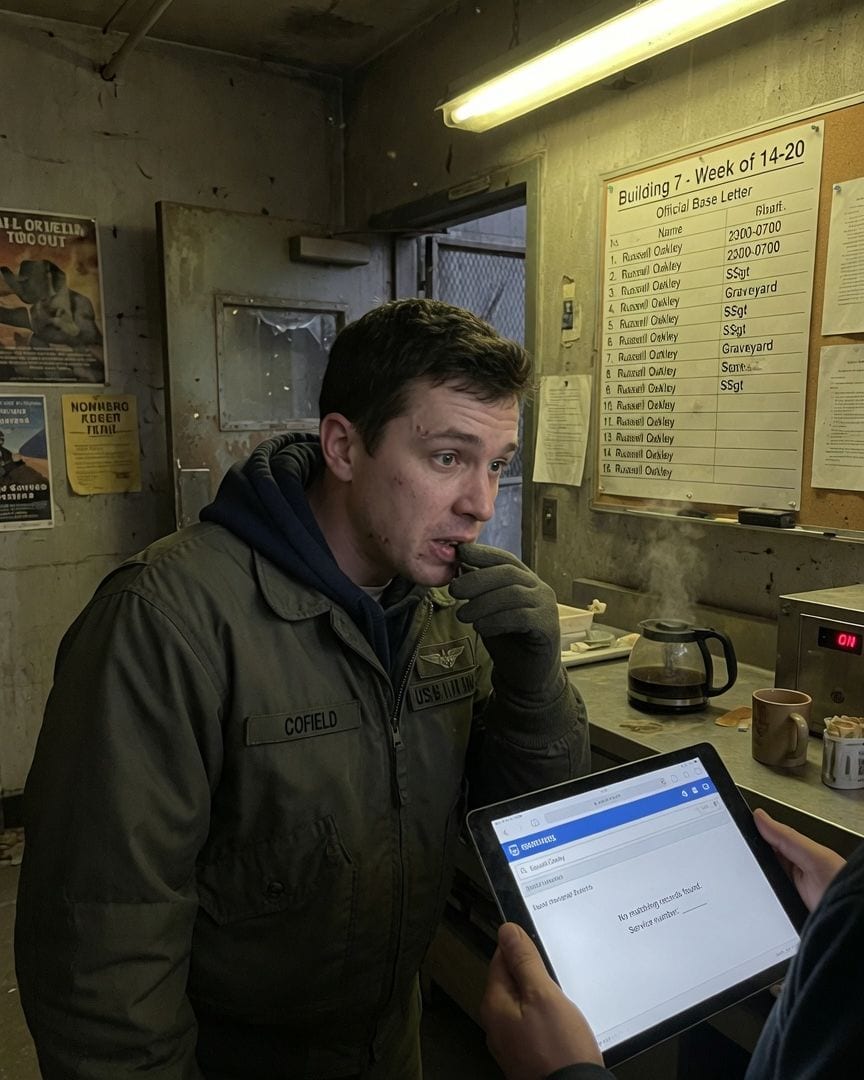
Airman Cofield, two weeks from transfer, found a warm coffee pot in a building without power for thirty years. Its new shift roster listed a name that didn't exist.
Senior Airman David Cofield, just two weeks from his long-awaited transfer, patrolled the perimeter of a decommissioned weapons storage area. Building 7, a concrete shell dark since 1992, suddenly showed a faint, warm light in its window. Inside, fluorescent lights hummed, and a coffee pot on the counter was still warm, defying the building's decades-long power shutdown. A freshly pinned shift roster for the coming week then revealed a name: 'Russell Oakley,' listed for Cofield’s own graveyard shift, yet completely absent from every official base record. Who was Russell Oakley, and how was he on shift in a dead building?
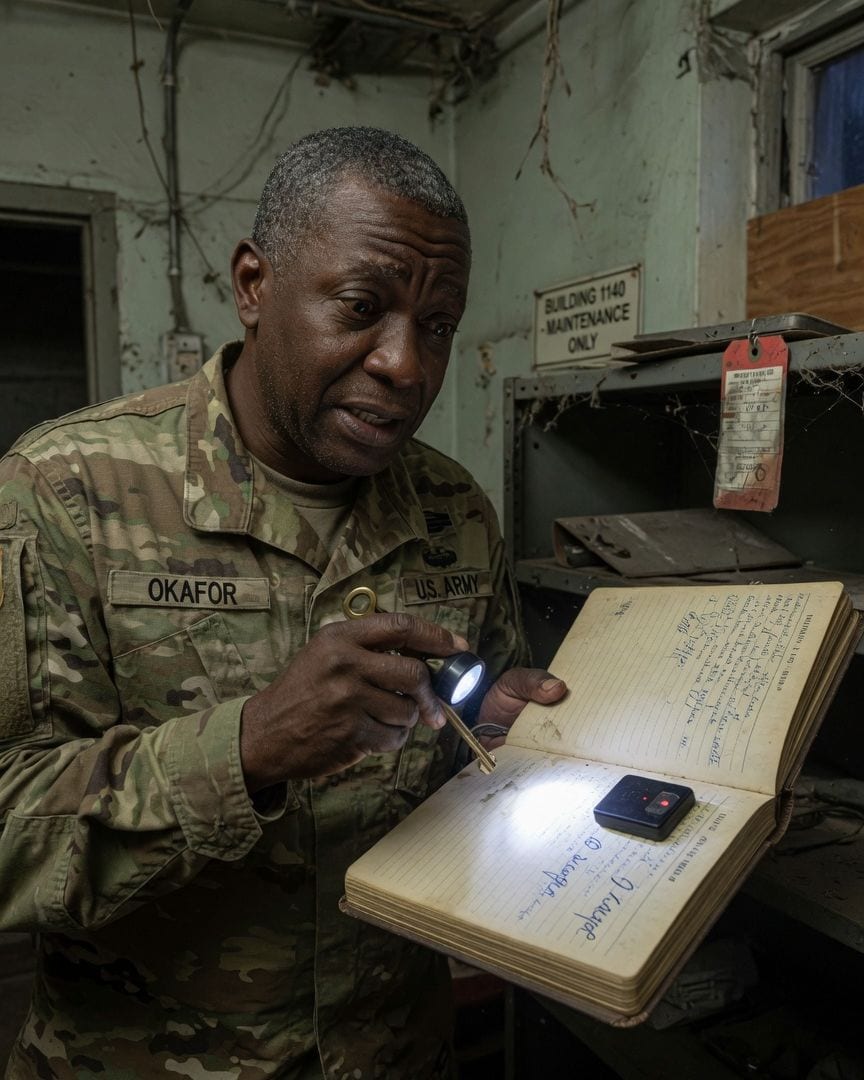
A decommissioned base's badge reader pings nightly with impossible activity from a building shut down for three years.
Master Sergeant Gideon Okafor arrives at Fort Selby, a base closed for three years, to investigate impossible activity. A contractor reports a badge reader logging hits nightly, despite the building having no power. Okafor finds the unit glowing faintly, drawing power from nowhere, and discovers his own signature filling its maintenance logs for the past three years he was deployed thousands of miles away.
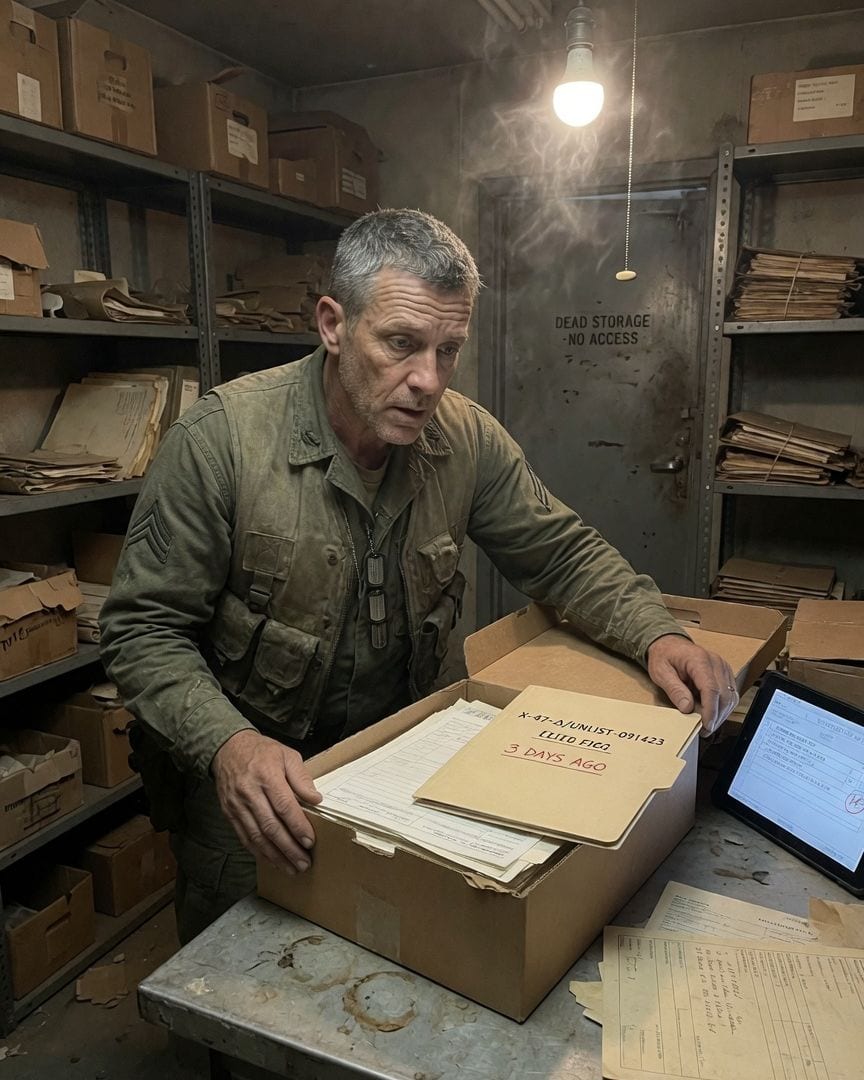
Sergeant Pryor, days from retirement, finds a four-hundred-foot crater. The desert floor is still warm, but no one remembers the blast.
Sergeant Alden Pryor, forty years old and just eleven days from retirement, drove the familiar Ranier Flats fence line for one of his final patrols. The desert stretched out, silent and vast, until he discovered a four-hundred-foot crater, dark and impossibly vast, where the sand had fused into slick glass. The ground within the crater was still faintly warm, a subtle heat defying the cool desert air. Yet, every official log confirmed the blast, while no one recalled a tremor or flash across three states.
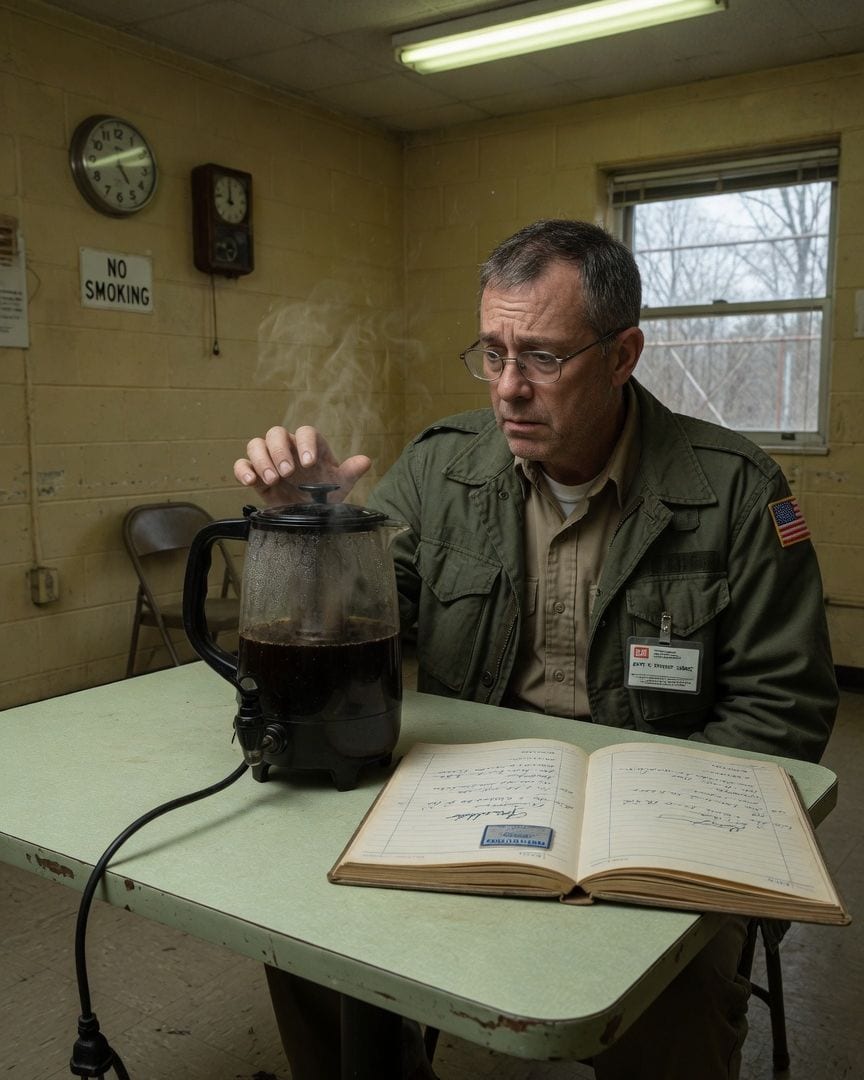
A methodical US Army engineer found a Cold War facility's file stamped 'DECLASSIFY NEVER' — and half its pages were missing.
Captain Nolan Threep, a methodical US Army engineer, expected another routine decommissioning at Alert Facility Twelve in rural Montana. The chains on the doors had rusted solid since 1970, promising a long-dead site. Yet, inside, a faint warmth hung in the air, and a glass coffee urn sat half-full, a wisp of steam rising lazily from its dark surface. The urn, warm to the touch, was clearly unplugged, and the duty log beside it, signed for a shift ending nineteen years prior, looked as though it had been signed yesterday. What secret could a supposedly abandoned Cold War facility hold?
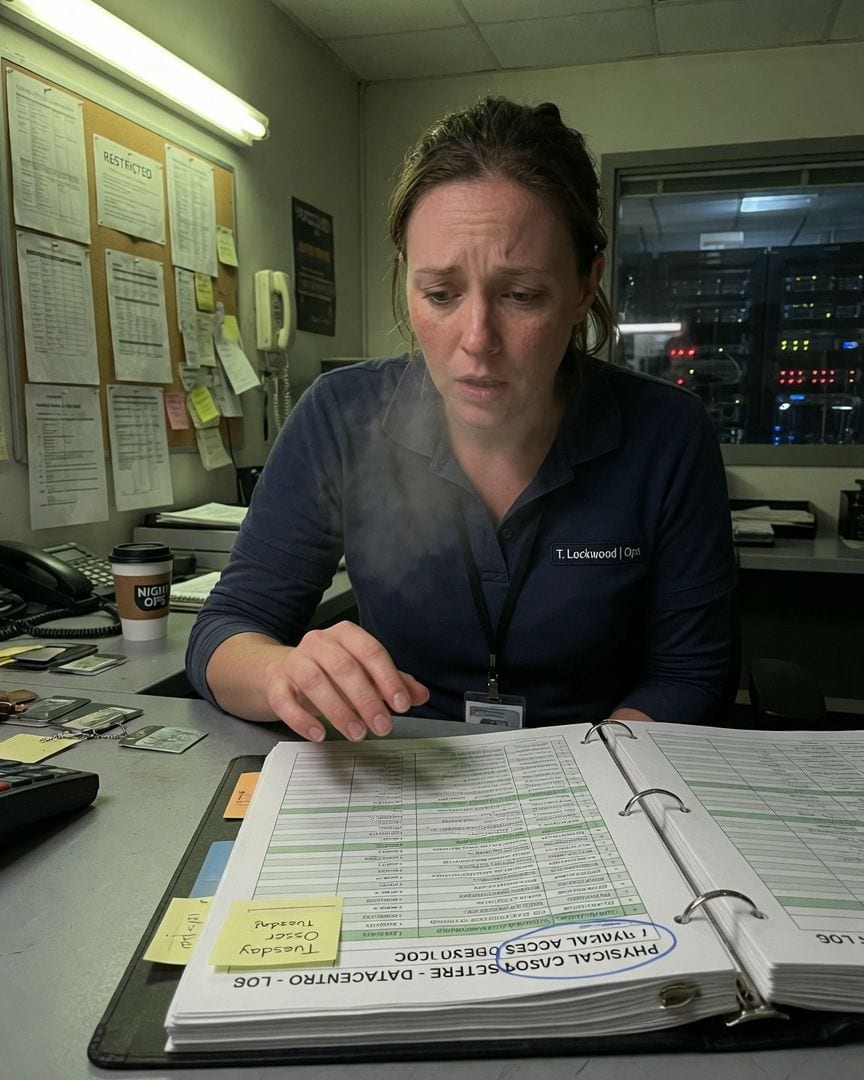
My colleague 'j.holt' messages me every night on ops chat, flagging alarms. Security says j.holt's account was deactivated two years ago.
My night shifts in the datacenter were predictable, a constant hum of servers and digital interactions with 'j.holt' on the ops chat. Then, security called: 'j.holt's' account was deactivated two years ago. But my physical access logs show Jeffrey Holt entered Server Rack 7 just last Tuesday, his badge surrendered years ago.
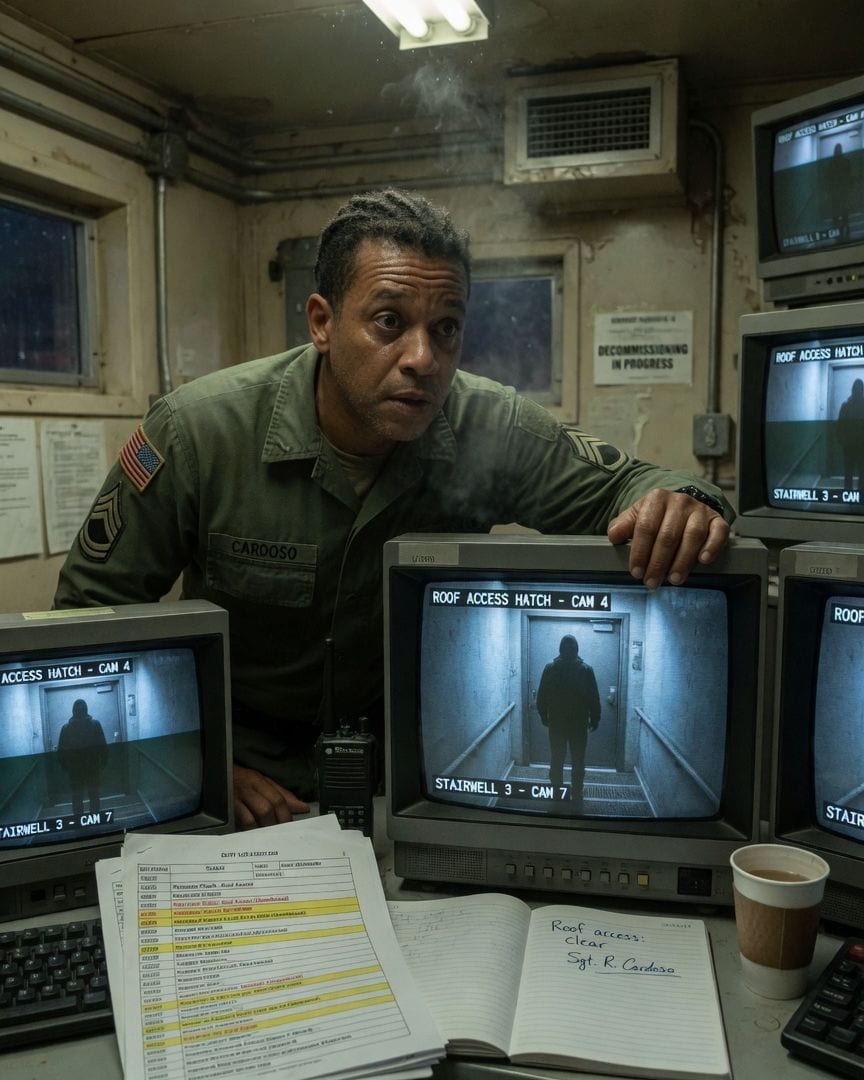
Sergeant Cardoso’s last tour log showed an unknown ‘Operator 73-Delta’ confirming a breach he had just cleared.
Sergeant Rui Cardoso stood his final interior post at Outpost 73, watching monitors through the dead hours, his tour almost over. At 0300, a dark figure flickered on the roof access camera, unmoving, only to appear closer, inside the sealed stairwell, after his team reported the area clear. Shaking off the glitch, he checked his digital duty log, where an entry from two nights prior, identical time, showed an unknown 'Operator 73-Delta' confirming an "unauthorized perimeter check" he had personally cleared. The system insisted on an operator and an event that simply could not exist, logged at the exact moment his own records verified an all-clear. Who was 'Operator 73-Delta,' and how could a sealed base's system confirm their actions?