Sergeant Pryor, days from retirement, finds a four-hundred-foot crater. The desert floor is still warm, but no one remembers the blast.
Sergeant Alden Pryor, forty years old and eleven days from retirement, drove the Ranier Flats fence line, a routine he could do in his sleep. Dust plumed behind his ancient Humvee, settling on the stunted sagebrush.
His tablet, clamped to the dash, showed the season’s shot list: fourteen entries for the artillery range. Thirteen had been accounted for, their impacts recorded, their shrapnel fields cleared.
But his gut, honed by twenty years of service, told him something was off about the fourteenth. He’d personally hauled the targeting cable for thirteen of those blasts. The fourteenth, according to his own memory, was nowhere.
Then, on a survey run far off the usual path, where the range stretched out into a desolate, unnamed quadrant, he saw it. A perfect circle of distortion on the horizon, too large, too dark for any natural feature.
As he drew closer, the scale became terrifyingly clear: a four-hundred-foot crater, vast and stark against the pale desert floor. The sand within was fused into dark, slick glass, glittering under the morning sun.
At dawn, it was still faintly warm to the touch, a subtle heat that seemed to defy the cool desert air. Pryor killed the engine and stepped out, the silence of the Flats pressing in.
He checked his tablet again, swiped through the official logs, the digital manifests. Every single entry agreed: the fourteenth shot had been fired. Its coordinates matched this impossible scar on the land.
But in three states, no one remembered a flash, a tremor, or even a distant rumble. The air directly above the glassed crater shimmered, a silent heat rising from the still-warm ground, as if the landscape itself held its breath.
Pryor spent the next two days in the base vault, the stale air thick with the smell of old paper and ozone. He methodically cross-referenced every log, every manifest, every ordnance report pertaining to Ranier Flats.
The official records were a brick wall. The fourteenth entry on the shot list was either blank or referenced an unassigned test number, a ghost in the system.
It was as if the event had been scrubbed clean, leaving only its chilling physical proof. He tried the range's internal archives, then regional command, then even a general ordnance database. Nothing. The digital trail simply ended.
He remembered an off-hand remark from an old-timer, a crusty records sergeant who’d seen too much: whispers of 'dead storage' for obsolete or unlisted records, a facility not on any current base map, tucked away like a forgotten secret.
Using his remaining access, leveraging his years and the unofficial channels he knew, he tracked it down: a forgotten, dusty annex behind the main archive building, its existence almost certainly known only to a few, and fewer still who would admit it.
The steel door groaned open, revealing rows of metal shelves stretching into the gloom, stacked high with unmarked boxes. The air was cold inside, a damp chill that settled on Pryor's skin.
He navigated the labyrinthine aisles, his flashlight beam cutting through the dust motes dancing in the oppressive silence. He scanned for anything out of place, anything that lacked the official stamp of a system designed to categorize everything.
In a dimly lit corner, tucked away behind a stack of water-damaged personnel files from the Korean War, he found it. A single, heavy cardboard box, completely devoid of any accession number, label, or date.
It wasn’t on any inventory, any manifest. The Box That Is Not on Any List. Its surface felt oddly cool to the touch, like something held in perpetual shadow, drawing the heat from the air around it.
He pulled it from the shelf, the metallic screech of metal on metal echoing in the silence, a sound that seemed to scrape against the very edge of the quiet.
Pryor placed the box on a grimy worktable, the dust motes dancing frantically in the single bare bulb above. The silence in the annex was absolute now, pressing in, making the sound of his own breath seem unnaturally loud.
He pried open the lid, the cardboard protesting with a dry crackle. Inside, beneath layers of blank, unused forms — requisition slips, transfer requests, deployment orders, all pristine and untouched — lay a single, thin file.
Its cover was plain buff manila, but stamped across it in stark, black ink was a classification code he'd never encountered in twenty years of military service, a sequence of letters and numbers that didn't conform to any known system, any protocol.
Below the code, a date: not decades ago, not even a year. The date on the file was only three days old.
The file was sparse, almost minimalist in its grim detail. It identified the Ranier Flats crater as 'Containment Site 14-R-alpha' and referred to an 'event' as a 'containment protocol activation.'
Pryor tried to cross-reference the impossible classification code and '14-R-alpha' through the official digital archives, but found nothing. The system returned only blank fields, as if the search terms themselves were unrecognized.
Every attempt met a dead end, a quiet refusal from the network.
He sought out Elena Sullivan, a sharp, methodical records clerk in her early thirties, whose desk in the main archive building was perpetually buried under declassification requests.
Elena, initially skeptical, her brow furrowed at the mention of the annex and the unmarked box, agreed to help. The impossible date on the file, she admitted, was too intriguing to ignore.
Together, they delved into the deep archives, searching for any historical mention of Ranier Flats and 'anomalous events' that might correlate with the strange file.
They uncovered fragmented, heavily redacted documents spanning decades, old memos referencing 'special projects' and 'filing procedures' at Ranier.
A pattern emerged from the gaps and deletions: every few years, a report of a sudden, unexplained 'containment' or 'disposal' would appear, always linked to a non-existent classification code, always leaving a blank in the official record, a hole where information should have been.
It was as if the range had a secret, continuous purpose, documented only in these phantom files, a parallel history hidden in plain sight.
Their digging didn't go unnoticed. One morning, Pryor found his access credentials for the main digital archive temporarily revoked, citing a 'system maintenance' that never materialized for anyone else on base.
His calls to IT were met with vague, unhelpful assurances that the issue would resolve itself.
Elena, back at her desk in the main archive building, her screen still showing the endless scroll of redacted documents, received an anonymous, untraceable email. The subject line was blank. Attached was a single, grainy aerial photograph.
It showed Pryor's patrol vehicle parked near the Ranier Flats crater, precisely where he'd discovered it, an unmistakable speck of green against the dark glass.
The time stamp on the photo was recent, taken after he'd reported the anomaly, after his initial trip to the dead storage annex.
The email's body contained only six words, stark against the white background: 'Some files are best left closed, Sergeant. Enjoy your retirement.'
The message was chillingly clear: someone knew exactly what they were looking for, and where they had been. The hunt had turned. Pryor was no longer just a seeker of truth; he was now the subject of observation.
The air in Elena’s office seemed to drop a degree, the hum of the servers suddenly a cold, attentive presence.
The threat galvanized them. The photo, the email, the revoked access—it all pointed to an internal, highly placed authority, one that moved with unsettling precision.
Elena remembered an old, semi-redacted report she’d found in the deeper archives, mentioning a 'Special Projects Archival Division' and the name Marcus Lambert. It was a long shot, but they were out of other options.
They tracked him down to a quiet, unassuming house in a retirement community twenty miles off base. Lambert, a man in his mid-seventies with a steady, unnervingly calm gaze, answered the door himself.
He listened patiently as Pryor and Elena laid out their findings: the crater, the file, the impossible dates, the surveillance. He didn't deny a thing. Not a flicker of surprise, no indignation, only a quiet, almost serene attention.
'Ranier Flats,' Lambert said, his voice even, unhurried, as he gestured them to sit. 'Is not just a range. It's a filing system. For things that can't be... unfiled.'
He spoke of it with the casual authority of someone explaining a perfectly normal administrative procedure.
He explained that the 'logs' Pryor had consulted weren't for artillery tests, but for documenting the 'containment' of entities that defied conventional understanding, elements that had to be removed from the normal flow of existence.
The crater, he confirmed, was a recent 'filing.'
The 'secrecy machine,' as he called it, wasn't just about hiding information; it was about managing, containing, and integrating the anomalous into a system that maintained its own operational integrity.
He spoke of the 'pattern across decades and classifications,' a continuous, quiet effort to keep the world running smoothly by 'filing' away the inconvenient.
The horror wasn't in what they found, but in Lambert's calm, unbothered acceptance of it all, his placid demeanor a chilling testament to the system's pervasive, quiet power.
The room, with its floral wallpaper and scent of lemon polish, felt suddenly too small, too ordinary for the things Lambert was describing.
Lambert had ended their conversation with a cryptic warning, delivered with the same quiet certainty: 'The system is self-regulating. It always seeks new entries to maintain balance.' He had watched them leave, his gaze steady, unreadable.
Disturbed, Pryor and Elena returned to the base, the implications of Lambert's words settling like a shroud. They went straight to the dead storage annex, the unmarked box, and the digital archive.
They pulled up the file for 'Subject 14-R-alpha' one last time, hoping to find some detail they'd missed, some flaw in Lambert's chilling logic, some escape clause.
Elena, clicking through the digital record, scrolled to the very bottom, past the sparse entries detailing the containment event. She paused, her breath catching in her throat. Her finger, trembling slightly, pointed at the screen.
A new entry had appeared, lines of text in the same stark font as the rest of the document, but clearly added just moments ago. It read: 'Containment Protocol Activation. Subject Monitor: Pryor, Alden. Service Number: [Pryor's actual service number].'
The timestamp read '03:17 AM, current date,' less than five minutes ago. The digital file they had just closed, the one they were staring at, was still being written.
The air in the annex, already cold, seemed to drop further, a palpable pressure filling the space.
Pryor felt a cold dread settle deep in his bones, heavier than any fear he’d known in twenty years of service. The new entry confirmed Lambert's warning, not as a threat, but as a statement of fact.
He called Lambert again, his voice tight, demanding to know what 'Subject Monitor' meant, the receiver cold against his ear.
Lambert's voice was as calm as ever, devoid of judgment or malice. 'Once an individual becomes aware of the system and its ongoing nature, Sergeant, they are often… integrated into its maintenance.
The things we file, they need new monitors to ensure their continued containment.' He explained that the crater wasn't just a filing location; it was a 'transfer point.'
The 'subject' contained there required constant oversight, and the system, in its self-regulating way, had identified Pryor as the ideal candidate. His service number was now irrevocably linked to the active status of Subject 14-R-alpha.
His retirement, his pension, his entire future—it was all forfeit. He was no longer Sergeant Alden Pryor. He was an entry, a new component in the machine.
Pryor refused to accept his new 'assignment.'
He and Elena, desperate, spent the next twenty-four hours gathering every piece of evidence they could: the physical file for 14-R-alpha from the unmarked box, digital timestamps confirming the live entry, the grainy aerial photo, even a recorded segment of Lambert's chillingly calm confession.
They planned to expose it all, to break the 'secrecy machine,' to tear down the veil of silence.
As they finalized their strategy late that night in Pryor's empty barracks, the familiar, almost imperceptible hum of a quiet, unmarked sedan pulled up outside. The vehicle’s headlights cut through the barracks window for a moment, then went dark.
Two men in dark suits emerged, their movements eerily synchronized, their faces impassive in the moonlight. Pryor knew it was over. He turned to Elena, his face grim.
'Run, Elena,' he urged, his voice low but firm, pushing the bag of evidence, now heavy with their desperate hope, into her hands. 'Get it out. Don't look back.'
Elena hesitated, her eyes wide, then fled into the night, a shadow slipping between the barracks buildings. Pryor remained, standing at the barrack door, a strange, hollow calm settling over him.
He watched the men approach, their steps soft on the gravel, making no sound. He was just another entry, another piece of paperwork being processed.
They reached him, their hands reaching out, not aggressively, but with an air of quiet, inevitable purpose, like the closing of a file.
Elena Sullivan disappeared, taking the evidence with her into the shadows. Sergeant Alden Pryor was never seen on base again. His retirement papers were officially processed, his final paychecks uncollected, vanishing into the administrative void.
On the Ranier Flats range, new recruits patrolled the fence line, unaware of the vast, glassed crater or the silent heat it still radiated, a constant presence under the desert sun.
The 'Special Projects Archival Division' continued its work, quietly filing new entries into a system that never closed, that never ceased its operations. The records continued to balance themselves, year after year, decade after decade.
Weeks later, Elena, now living under a new identity in a city thousands of miles away, received an anonymous, untraceable package. Inside, nestled among layers of packing material, was a single, official-looking document: a new service record for 'Alden Pryor.'
It showed him reassigned to 'Ranier Flats, Special Projects Division,' with a start date from the very day he disappeared. His rank was listed as 'Subject Monitor, Level 1.' The file was still being signed.
If this one got to you
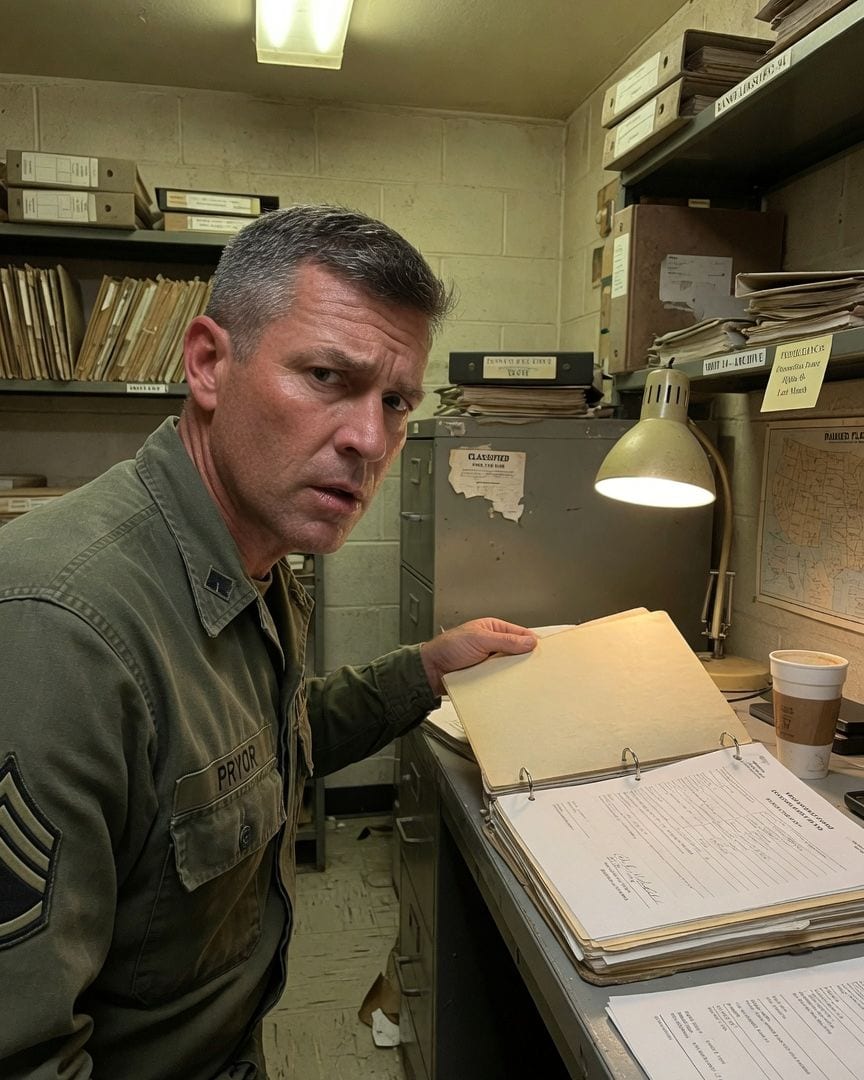
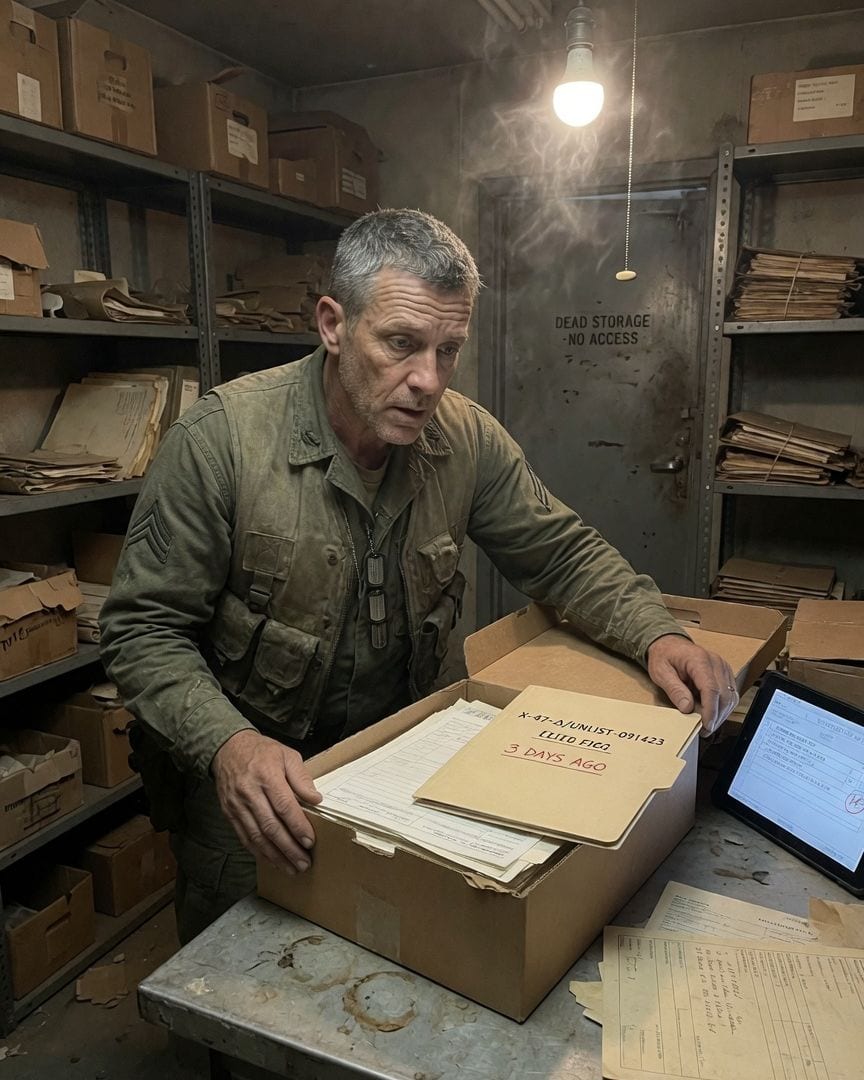
A sergeant with eleven days left finds a warm, glassed crater. Its file shows a captain lost thirty years ago is still signing reports from last week.
Sergeant Alden Pryor was counting down his final eleven days on a twenty-year hitch, expecting to spend them on routine patrols along the Ranier Flats fence line. Instead, his truck stopped at a bizarre sight: a four-hundred-foot glassed crater, miles from anywhere, its sand faintly warm at dawn despite no one recalling a blast. The air above it shimmered with an unnatural distortion, a silent scar of erased violence, and the official file for 'Shot 14' showed recent maintenance sign-offs for a decommissioned tower at the crater site. All these active documents were signed by Captain Everett Caldwell, who had been officially lost in operations thirty years ago, leaving Sergeant Pryor to wonder how a dead man could still be filing reports.
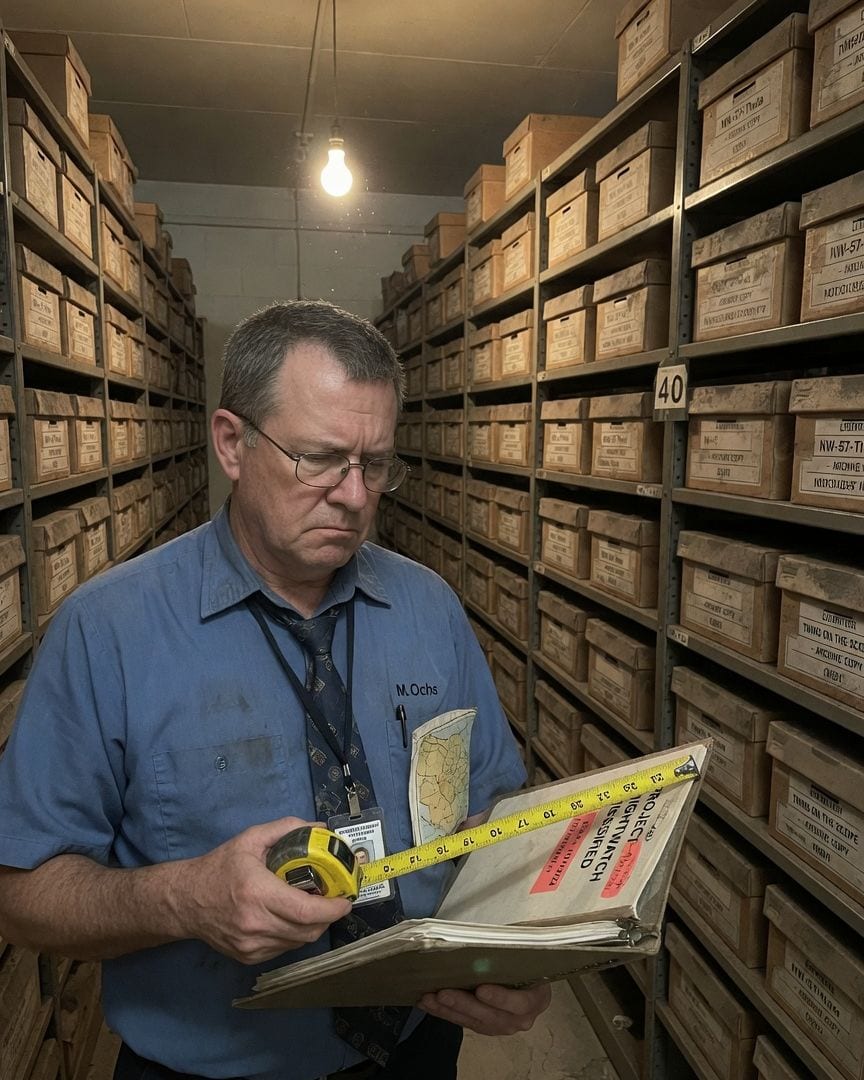
A Cold War records clerk on his final patrol found Aisle 40 stretched 61 feet longer, lined with unknown boxes. Inside one: 'PROJECT NIGHTWATCH - CLASSIFIED' with a fresh timestamp.
Marlin Ochs, a creature of habit after nineteen years at the St. Louis federal records depot, faced his final patrol through Aisle 40 before its scheduled pulping. His routine walk, usually 92 precise strides, suddenly stretched to an impossible 119, making the aisle 61 feet longer than its blueprint. The extra section felt colder, lined with dust-laden boxes bearing alien classification codes and no manifest. Inside one, he found a metal-bound file: 'PROJECT NIGHTWATCH - CLASSIFIED,' dated 1957, but with a timestamp just hours old.
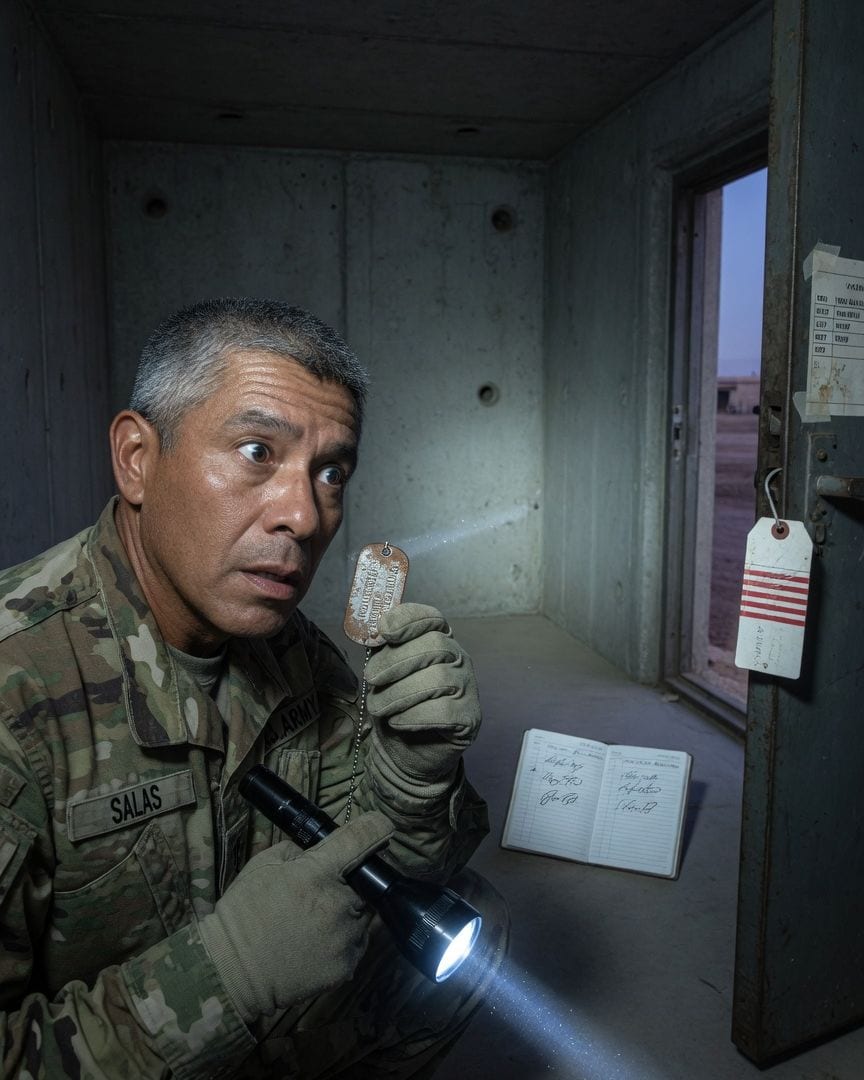
An inventory officer found a bunker's log of soldiers, then found one of their dog tags marked 'KIA, 1970'.
Chief Warrant Officer Gideon Salas meticulously oversaw the Hawthorne Ammunition Depot's inventory, racing against its final closure in two weeks. The high desert winds whipped dust across the familiar igloos as he worked, each bunker accounted for, until he reached the eastern perimeter. There, an extra igloo, Bunker 40, stood with a current lock and seal, though it wasn't on any map. A duty log propped open nearby listed inspections signed by men the Army swore didn't exist. His gut, honed by decades of service, churned with unease; inside the empty bunker, his flashlight found a corroded dog tag bearing one of those names, marked 'KIA, 1970'.
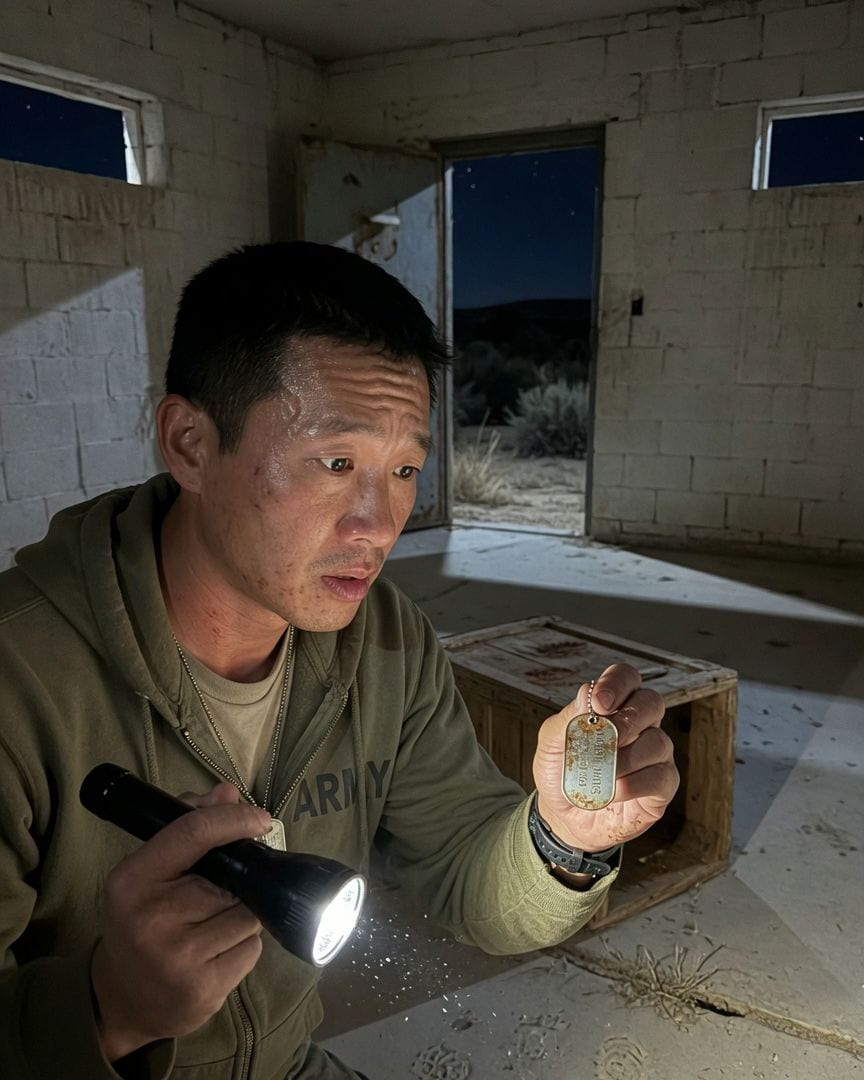
Staff Sergeant Rhee’s squad found a Cold War building not on their map. Range Control confirmed no structure. Minutes later, it vanished, leaving a foundation decades old.
Staff Sergeant Adam Rhee halted his squad at the Yakima Training Center, staring at a cinderblock building that simply wasn't on his map. Range Control confirmed there was no structure at his coordinates, leaving him to wonder what impossible thing stood before them. Moments later, after the range-safety truck arrived, the building vanished, leaving only a rectangular patch of earth with a foundation of decades-old weeds. That night, driven by an unsettling certainty, Rhee returned to find the building reappeared, its door ajar, holding a single, rusted dog tag from 1983. How could a place appear and disappear, leaving behind evidence from forty years ago?
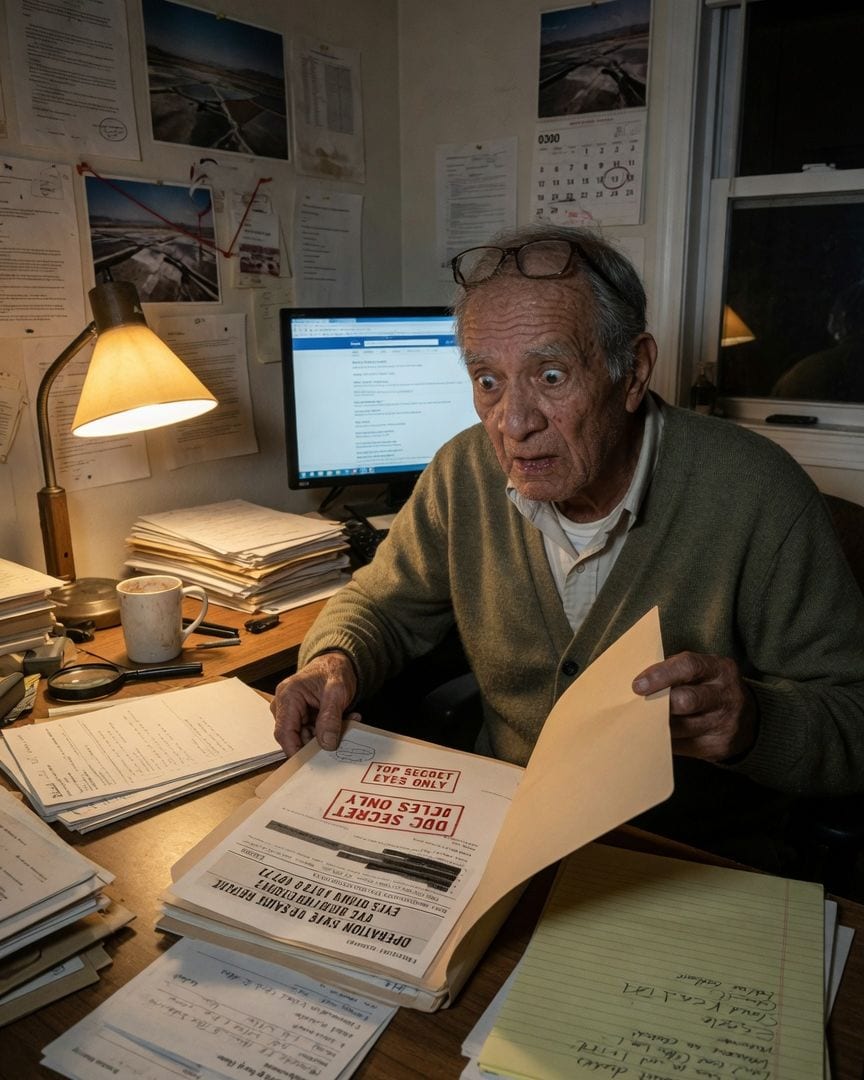
A Cold War private guarded a crate on an abandoned base. Its latch was sealed from the inside, and it weighed far more than its 200-lb stencil.
On a desolate Utah salt flat in 1973, Private Tomas Reyes, just 21, found himself guarding a mysterious crate on a deserted air base apron. No one had posted him; his name was absent from every roster, leaving him alone with the strange cargo. The crate's stencil declared a 200-pound gross weight, but the heavy-lift crane had strained visibly under a far greater burden, and its latch was sealed tight from the inside. Decades later, the memory of that impossible crate still haunts Reyes, driving his lifelong search for any truth behind 'Operation Saltstone'.
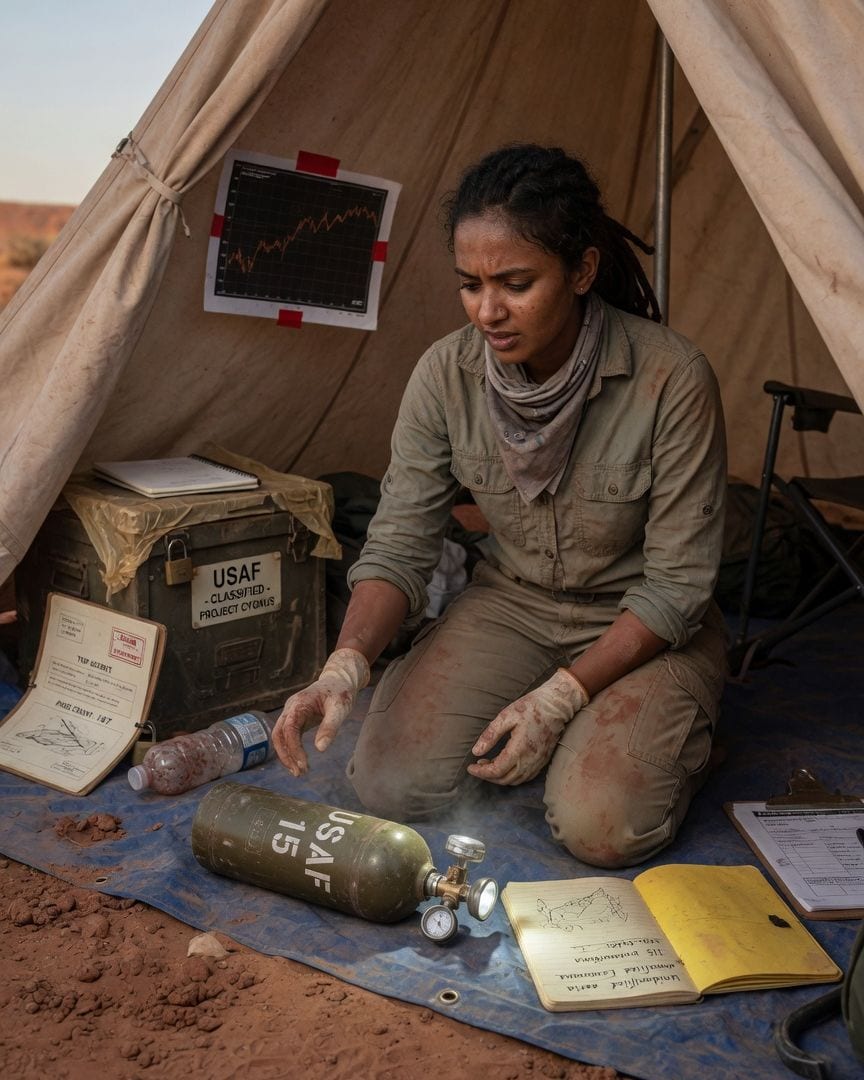
A researcher's permit is almost gone. She finds a Cold War archive box listing 187 pages, but 173 were surgically cut out.
Archaeologist Priya Raval knelt in the reddish Utah mud, her permit for the site ticking down with only nine days left. The desert silence was broken only by the hiss of an 80-year-old oxygen bottle, defying records by holding full pressure in a backfilled cavity. As Priya raced against the clock, she unearthed deeply buried concrete conduits and a classified Cold War archive box. Its cover listed 187 pages, but inside, a terrifyingly precise cut had excised 173 of them, leaving only blank space. What secret did the military bury here, then try to erase?