A Cold War private guarded a crate on an abandoned base. Its latch was sealed from the inside, and it weighed far more than its 200-lb stencil.
Private Tomas Reyes, 21 years old, shivered on the desolate Utah salt flats in 1973. His M16 felt cold against his gloved hand.
He was guarding a crate, approximately eight feet by twelve, on the apron of a deserted air base, a patch of concrete barely visible under the vast, indifferent sky. The moon cast long, skeletal shadows across the cracked surface.
He'd been told to stay put, but not by whom. No sergeant of the guard had posted him, no name was listed on the duty board, and his name was conspicuously absent from any relief roster.
It was 0300. The crate's side bore a stencil: 'GROSS WT: 200 LBS'. But the heavy-lift crane that had lowered it hours ago had groaned and strained, its hydraulic arms visibly trembling under a burden far exceeding that.
Reyes had seen it, felt the deep vibrations through the concrete. He’d tried the latch; it was dogged tight from the inside, not with a padlock or bolt, but as if sealed by immense, internal pressure.
He’d paced for three hours, the silence broken only by the thin, whistling wind that carried the taste of salt. He understood then that nobody had posted him. He was just… there. Alone with it.
At precisely 0300, a dark, unmarked flatbed truck rumbled onto the apron, its headlights off, its diesel engine strangely muted. Two figures in dark, featureless jumpsuits emerged from the cab. No salutes, no papers, no words were exchanged.
They simply began to load the crate onto the truck bed. Reyes raised his rifle, the cold metal pressing into his shoulder, but his voice caught in his throat. What orders could he cite?
Who had he been told to report to? The alternative was standing alone with the impossible crate until sunrise, and the thought of that stretched loneliness was a cold, creeping dread. He lowered his weapon.
The two figures secured the crate with practiced, silent movements. The truck pulled away, silent as it had come, vanishing into the pre-dawn gloom, leaving Reyes alone once more.
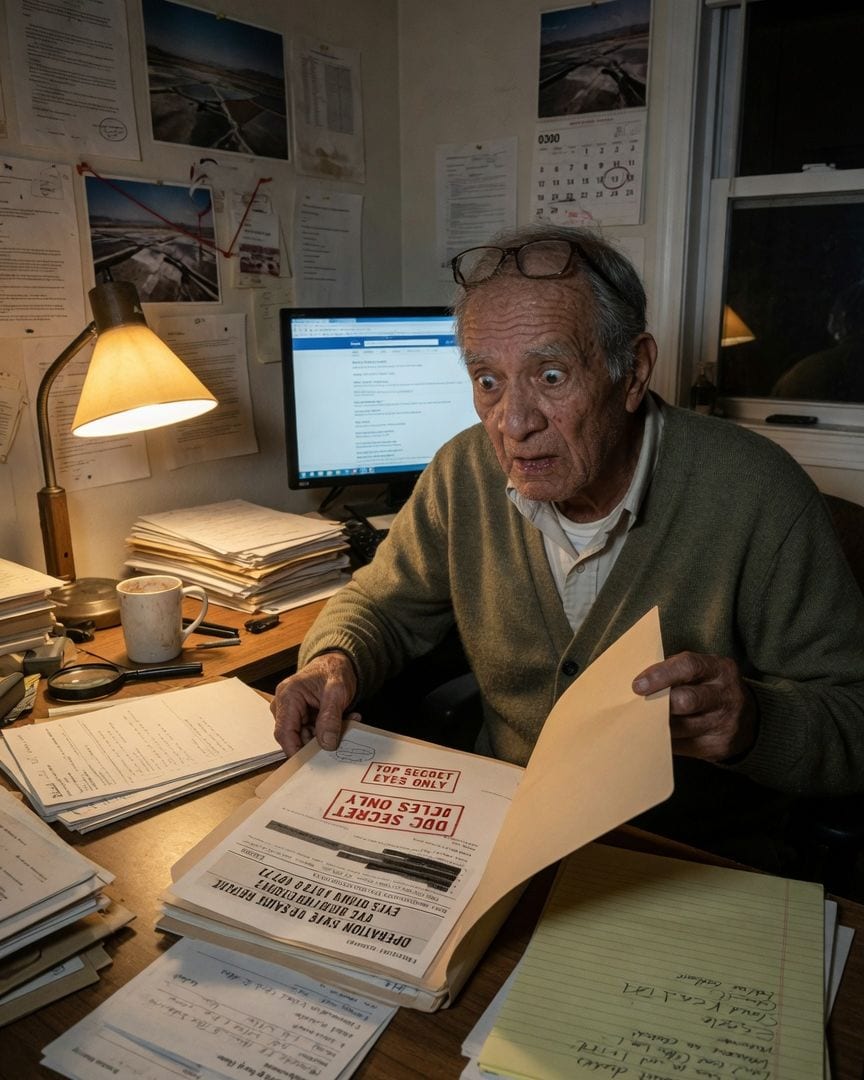
Fifty-one years later, in his quiet home office filled with stacks of declassified military records, Tomas Reyes, now 72, still saw that truck every night.
The memory of the impossible weight, the silent figures, the unassigned guard duty – it was a nagging itch beneath his skin. He subscribed to every archive newsletter, haunted every online database.
His search for any record of 'Operation Saltstone' had been a lifelong obsession. Then, an email: a partial declassification, a file reference. He requested it. A week later, a plain manila folder arrived by post.
It was thin, surprisingly light, stamped 'TOP SECRET / EYES ONLY' with a control number that traced to no known originating office. He opened it, his hands trembling slightly, a lifetime of unanswered questions converging on this single, fragile moment.
The first page was a cover sheet. 'OPERATION SALTSTONE / INCIDENT REPORT: 1973-05-12 / UTAH SALT FLATS, APRON 4 / SUBJECT: PACKAGE, TYPE UNSPECIFIED / STATUS: FILED'. Tomas's heart pounded.
The date, the location, the vague 'package' – it all matched. He flipped through the few pages. Logistical manifests, heavily redacted radio transcripts, an aerial photo of the apron. He noted the downgrade schedule: 'DECLASSIFY NEVER'.
He reached what he believed was the last page, a summary of observations by 'authorized personnel'. His fingers brushed the inside of the folder, feeling for any remaining paper. There was a slight, almost imperceptible drag.
He looked back at the cover sheet. 'PAGE COUNT: 14'. His fingers, almost involuntarily, counted again. Thirteen. There were only thirteen physical pages within the folder.
The section marked 'WITNESS REPORTS' on the final, extant page was a solid block of black ink, a perfect, rectangular absence. But the missing page screamed louder than any words could have.
Tomas spent the next few days in a quiet fury, hunched over his desk. He cross-referenced the 'Operation Saltstone' control number against every database he could access.
It was a dead end, a number that existed but led nowhere, like a ghost address. The air in his office felt heavy, pressing down on him.
He contacted Monica Holloway, a records clerk at the National Archives he'd befriended over years of research. She was methodical, precise, and had a knack for finding the cracks in official narratives.
He explained the missing page, the impossible control number, the 'DECLASSIFY NEVER' stamp. Monica, though intrigued, was wary. 'Tomas,' she'd said, her voice hushed over the phone, 'a 'DECLASSIFY NEVER' isn't just a classification. It's a statement.
It means they don't want anyone to ever know. And a control number that doesn't trace back? That's not a clerical error. That's a deliberate obfuscation.'
He asked her to check for any digital copies, any cross-references to 'Saltstone' in less restricted databases. He suspected his own 'witness report' was the missing page, but why would it be missing, not just redacted within the existing file?
The crate's impossible weight, the unmarked truck, the lack of official posting – it all pointed to something outside the standard chain of command, something that operated in the shadows of the 'filing' system itself.
He felt a prickle of unease. He wasn't just investigating a lost record; he was investigating something that actively resisted being found. He started checking his own digital footprint, his online search history, his email logs.
A rational man, he still felt the cold tendrils of the unknown tightening around him, a sensation eerily similar to that night on the salt flats.
He found nothing out of place, but the feeling persisted, an itch beneath his skin, a sense of eyes on his back.
A week later, Monica called back, her voice tight with thinly veiled alarm. 'Tomas, I think you need to stop. Now.' He pressed her, his own heart quickening.
She explained she'd found a reference to 'Operation Saltstone' in a highly restricted, internal-only database. It wasn't declassified, not even partially. The system had flagged her access attempt. 'Someone knows I looked,' she whispered, her voice barely audible.
'And by extension, they know you looked. This isn't just about a cold case, Tomas. This is active.' Later that day, a plain brown envelope arrived at Tomas’s door.
No return address, no stamp, just his name and address typed on a label. Inside, was a single sheet of paper, printed entirely in black. At the very bottom, in small, white, reversed-out text, were two words: 'FILE CLOSED.'
It was clearly a digital printout, a screenshot of some kind of system message. But the implication was chilling. Someone was watching his investigation, and they were sending a very clear, very personal warning.
He tried to call Monica back, but her phone went straight to voicemail. He tried again, and again.
He knew he should stop, knew the danger was real, but the thought of letting it go, letting that 51-year-old question fester, was worse. He had to know what 'FILE CLOSED' truly meant, and why it was sent to him.
He felt a deep, cold certainty that it wasn't a closure at all, but a threat. He stared at the black page, the two white words burning into his mind.
The room itself seemed to hold its breath around him, a silent witness to a silent message. He knew this wasn't just a record. It was a communication, a direct message from the void he was trying to pierce.
Tomas, ignoring the warning, became more cautious. He used a burner phone, a VPN, and accessed public library computers, digging deeper into the digital archives.
He found a backdoor entry point, a vulnerability Monica had once mentioned in passing, to a separate, highly secure server within the Department of Classified Holdings. It was a long shot, but he was desperate.
After hours of navigating through layers of encrypted directories, he found it: a digital copy of 'Operation Saltstone'. This version was different. Less redacted, but still incomplete. He saw the logistical manifests, the aerial photos, the radio transcripts.
And then, he found a section labeled 'SUBJECT: PACKAGE'. Below it, a series of entries. Not a description of a physical object, but a process. 'INITIATION: 1973-05-12, 0000 HRS. TRANSFER PROTOCOL: CRATE-73. PROCESSING: APRON 4, 0300 HRS. STATUS: FILED.'
The 'package' wasn't a thing; it was a subject, and the crate was a 'transfer protocol'. The impossible weight, he realized with a sickening lurch, wasn't a physical weight at all.
It was the burden of whatever – or whoever – was being 'filed'. He understood now that 'FILE CLOSED' wasn't about his investigation; it was about the subject of Operation Saltstone.
It meant whatever was in that crate had been successfully processed, removed from conventional existence. The horror wasn't what was lost, but how methodically it was erased. He sat back, the implications settling like ice in his veins.
The secrecy machine didn't just hide things; it made them unhappen. And he had been a witness to it, a ghost in its system, an anomaly that needed to be resolved. The methodical, bureaucratic language only heightened the dread.
This wasn't chaos; it was order, chilling in its precision.
He continued to scroll, his mind reeling from the implications of 'SUBJECT: PACKAGE' and 'PROCESSING'. He wanted to find any reference to the 'unauthorized observer' that must have been in the missing page. He navigated to the 'WITNESS REPORTS' section.
Here, the black redactions were lighter, almost translucent, as if a layer of digital ink had been partially lifted. He zoomed in, his eyes straining against the glow of the screen.
The first few entries were still blacked out, but further down, a new entry appeared, dated 1973-05-12. The header read: 'UNAUTHORIZED OBSERVER'. He leaned in close to the screen, his breath catching in his throat.
Beneath 'UNAUTHORIZED OBSERVER: [REDACTED]', the black box dissolved into clear text: 'REYES, TOMAS, PVT, SERVICE NO. XXXXXXXX, APRON 4, 0300 HRS'. His own name. And below it, a 'LAST MODIFIED: 2024-06-15 14:37:00 EDT'. Today's date.
The cursor at the bottom of the screen blinks, poised to type, beneath the header 'CURRENT STATUS: ACTIVE INVESTIGATION BY SUBJECT'.
Tomas felt a cold dread seize him. The file wasn't a historical document; it was an active ledger, a processing system. His own name, his service number, his current status – all being entered, in real-time.
He wasn't just an observer from 51 years ago; he was now a subject. The crate, the impossible weight, the unmarked truck, the 'DECLASSIFY NEVER' status, the missing page – it all clicked into a horrifying coherence.
The 'secrecy machine' was a mechanism for systematic, institutionalized erasure, converting undesirable realities into 'filed' non-existence. He had been marked as an 'unauthorized observer' then, but now, by actively investigating, he was being prepared for 'filing' himself.
He traced the 'Last Modified' timestamp to a specific IP address within the Department of Classified Holdings. It was a secure terminal in an office on the 10th floor of a nondescript building in Washington D.C.
He knew he had to go. He booked the first flight. The 'FILE CLOSED' note now made chilling sense: it wasn't a warning to stop, but a notification that a new 'subject' was being processed – him.
He realized the true horror: the lost weren't merely lost; they were actively filed, their existence redacted into bureaucratic void. And the file was still being signed, one subject at a time.
The plane ticket felt like a one-way trip, but he couldn’t stop. He had to face the man behind the blinking cursor, to interrupt the process before his own existence became just another 'filed' entry.
Tomas, using a borrowed ID and a carefully rehearsed story, managed to bluff his way into the Department of Classified Holdings. He found the terminal, humming quietly in a sterile, windowless office.
Maxwell Montgomery, a man in his mid-sixties with calm, unnervingly still eyes, sat before it. He didn't look up as Tomas entered. His fingers moved slowly over the keyboard, completing the entry for 'REYES, TOMAS'.
'You shouldn't be here, Mr. Reyes,' Montgomery said, his voice flat, devoid of surprise, as if stating a pre-ordained fact. 'Your file was nearly complete.' Tomas felt a surge of cold fury. 'What is this?
What did you do to that crate, to all of them?' Montgomery finally looked up, a faint, almost imperceptible smile touching his lips, cold enough to freeze the small room. 'We don't 'do' anything, Mr. Reyes. We merely process.
We facilitate the transition from… inconvenient reality… to a more manageable, unrecorded state. The crate was simply a container for the protocol. You, as an unauthorized witness, were logged. Your continued inquiries simply activated the dormant entry.'
Tomas lunged for the keyboard, his old bones protesting with a sharp ache. Montgomery made no move to stop him, his composure unbroken.
Tomas slammed his fist down on the 'Delete' key, then again, and again, on the entry for 'REYES, TOMAS'. The screen flickered, a red warning appearing: 'UNAUTHORIZED DELETION. SYSTEM INTEGRITY COMPROMISED. RE-INITIATING PROTOCOL.' Montgomery chuckled softly. 'A temporary setback.
The system is… resilient.' Tomas grabbed the monitor, pulling it off the desk, sending it crashing to the floor. The screen shattered, sparking with a faint, dying hiss.
Montgomery merely watched, his expression unchanged, a slight hum vibrating from his chair. 'You understand now, don't you?' he said, his voice calm. 'It's not about hiding. It's about erasure. And it's never the only one.'
Tomas looked around the office. Other terminals, all dark, lined the walls. He noticed a small, glowing red light on a single, untouched terminal in the corner.
Its screen showed a similar interface, but with a different name, a different 'CURRENT STATUS: ACTIVE.' And beneath it, a tiny, almost invisible cursor, blinking, ready to begin.
Tomas Reyes was apprehended moments later by silent, efficient security personnel. No charges were filed. He was simply escorted out, his access revoked, his name flagged in every official database. Monica Holloway’s phone remained off.
His home computer had been wiped clean, his archive newsletters unsubscribed, his search history erased. The 'Operation Saltstone' file, even the redacted physical copy, vanished from his possession.
It was as if his entire investigation had been systematically scrubbed, leaving no trace. He was free, but the freedom was hollow, a carefully curated absence of evidence.
Back in his quiet home, Tomas sat in his office, the empty space where his computer once sat a stark void. He felt a profound hollowness, a chilling understanding that transcended fear.
He had stopped his own 'filing', perhaps, but the machine itself continued, vast and indifferent. He picked up his old M16, the one he'd kept from his service, running his hand over the cold metal.
He remembered the impossible weight of the crate, the silence of the salt flats. He had not been lost, but he had been found.
And now, he knew he was still being watched, a potential anomaly in a system that valued perfect, unblemished records. The only question was how long until the next entry, for someone else, or for him again.
His phone, which he hadn't used in days, buzzed. It was a message from an unknown number. He opened it. It was a single image: a blurry, distant photo of his own house, taken from the street. No text.
He deleted it, but the message was clear. They knew where he was. They just hadn't decided what to do with him yet. The file was still open. The silence of his house pressed in, heavier than any crate.
He knew he was still being accounted for.
Tomas Reyes was never seen actively researching again. His neighbors noticed he stopped checking his mailbox. One day, a new, younger couple moved into his house, saying they'd bought it from 'the estate'.
When asked about the previous owner, they'd simply shrug, 'Some old veteran, I think. Never met him.' A few weeks later, Monica Holloway's name appeared in a local newspaper obituary. The cause of death was listed as 'undetermined complications'.
Her friends remembered her as meticulous, a stickler for detail, but had no idea she had ever spoken to a Tomas Reyes. The digital archives she'd accessed for him were found to have no record of her inquiries.
The file was still open, and its pages were still being signed.
If this one got to you
Sergeant Pryor, days from retirement, finds a four-hundred-foot crater. The desert floor is still warm, but no one remembers the blast.
Sergeant Alden Pryor, forty years old and just eleven days from retirement, drove the familiar Ranier Flats fence line for one of his final patrols. The desert stretched out, silent and vast, until he discovered a four-hundred-foot crater, dark and impossibly vast, where the sand had fused into slick glass. The ground within the crater was still faintly warm, a subtle heat defying the cool desert air. Yet, every official log confirmed the blast, while no one recalled a tremor or flash across three states.
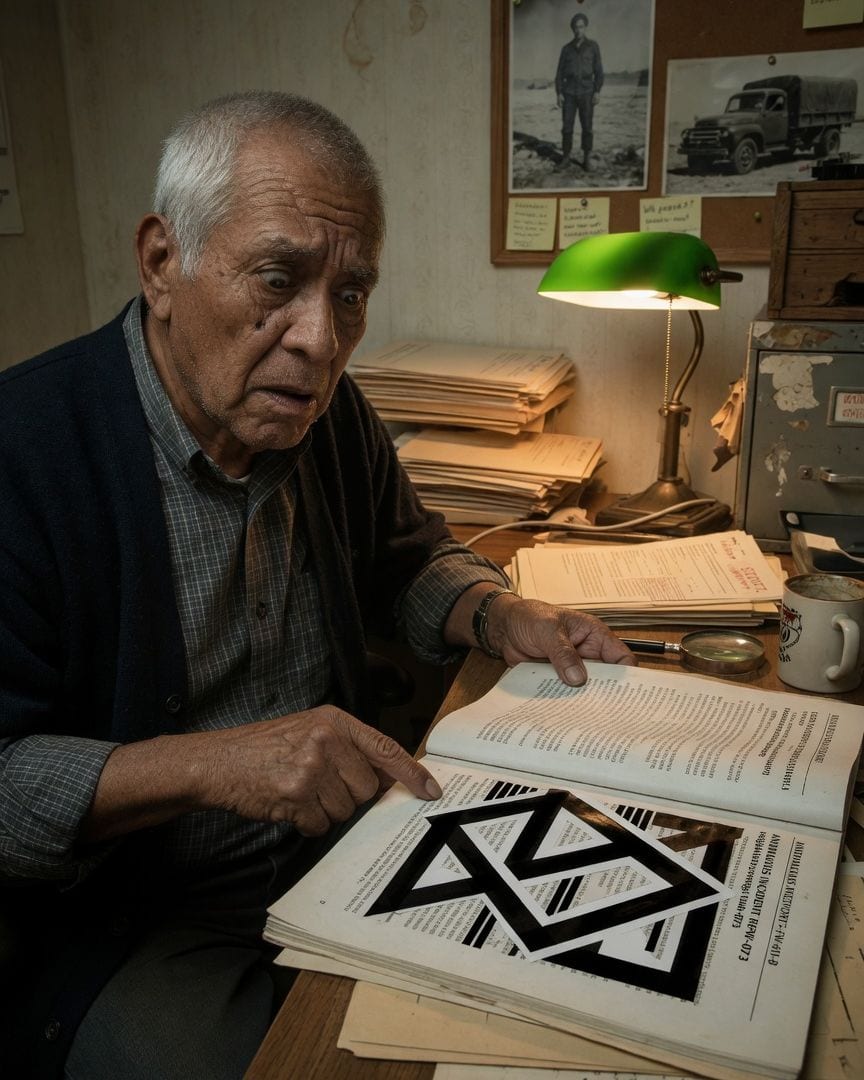
A young Private Reyes guarded a Cold War crate. Fifty years later, he found its report redacted into a symbol he'd seen *through* the wood.
Private Tomas Reyes, a young man of 21, stood alone on the desolate Utah salt flats, rifle heavy, guarding a single wooden crate. The base was long closed, and he had no record of actually being posted, only a vague order to "Don't ask questions." Fifty-one years later, as a retired man, he meticulously cross-referenced declassified documents, searching for answers about that night. He found a ghost control number and an incident report with redactions that formed a distinct, unsettling geometric symbol. It was a shape he suddenly remembered seeing, not on the crate, but impossibly, *through* its wood.
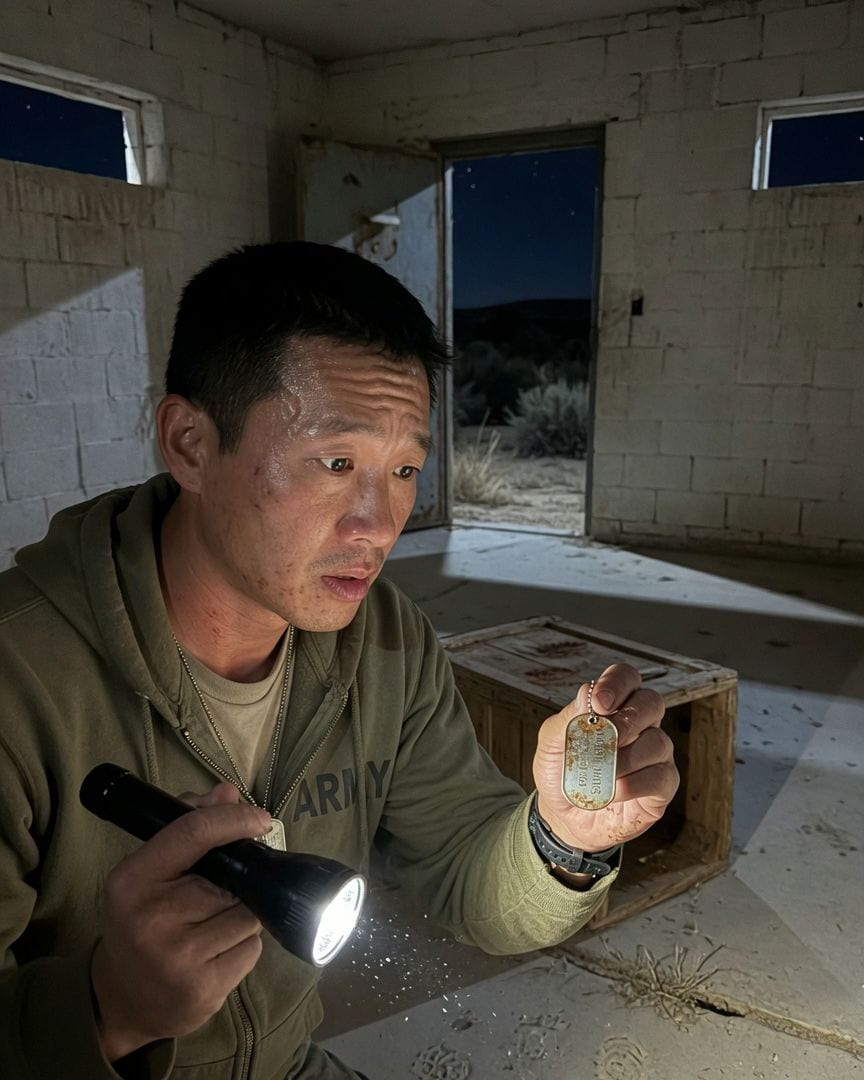
Staff Sergeant Rhee’s squad found a Cold War building not on their map. Range Control confirmed no structure. Minutes later, it vanished, leaving a foundation decades old.
Staff Sergeant Adam Rhee halted his squad at the Yakima Training Center, staring at a cinderblock building that simply wasn't on his map. Range Control confirmed there was no structure at his coordinates, leaving him to wonder what impossible thing stood before them. Moments later, after the range-safety truck arrived, the building vanished, leaving only a rectangular patch of earth with a foundation of decades-old weeds. That night, driven by an unsettling certainty, Rhee returned to find the building reappeared, its door ajar, holding a single, rusted dog tag from 1983. How could a place appear and disappear, leaving behind evidence from forty years ago?
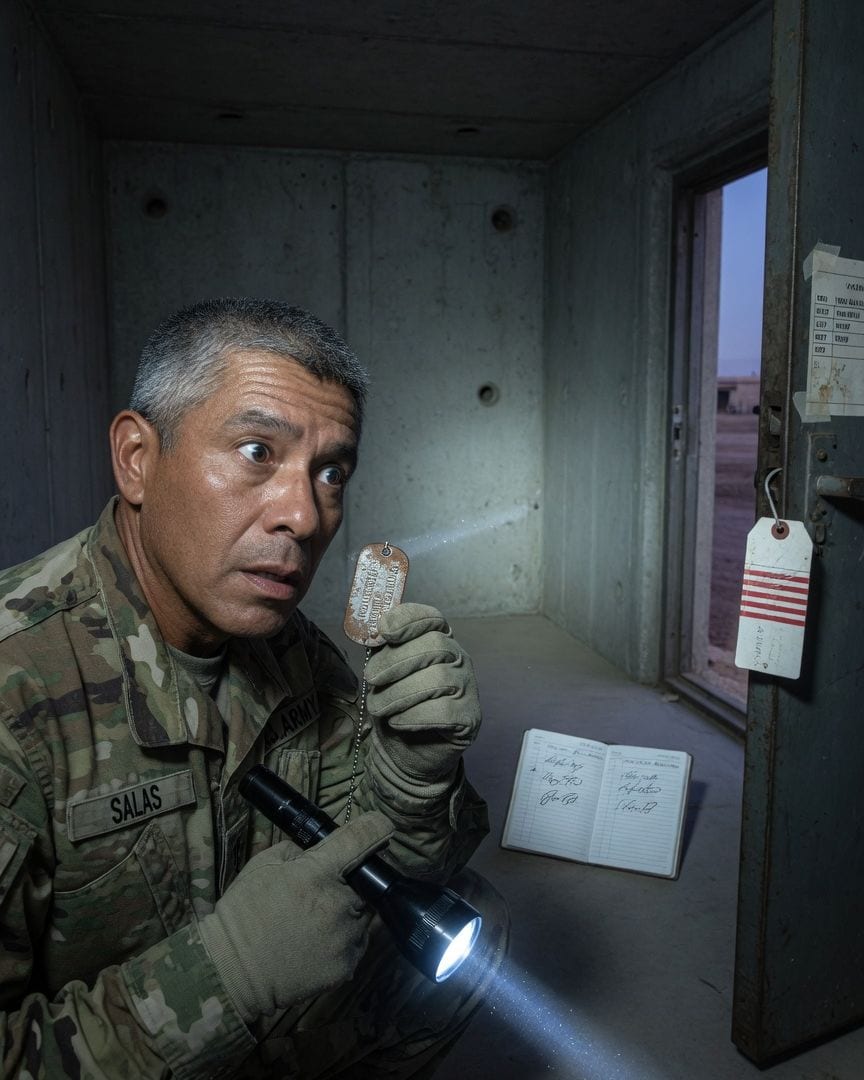
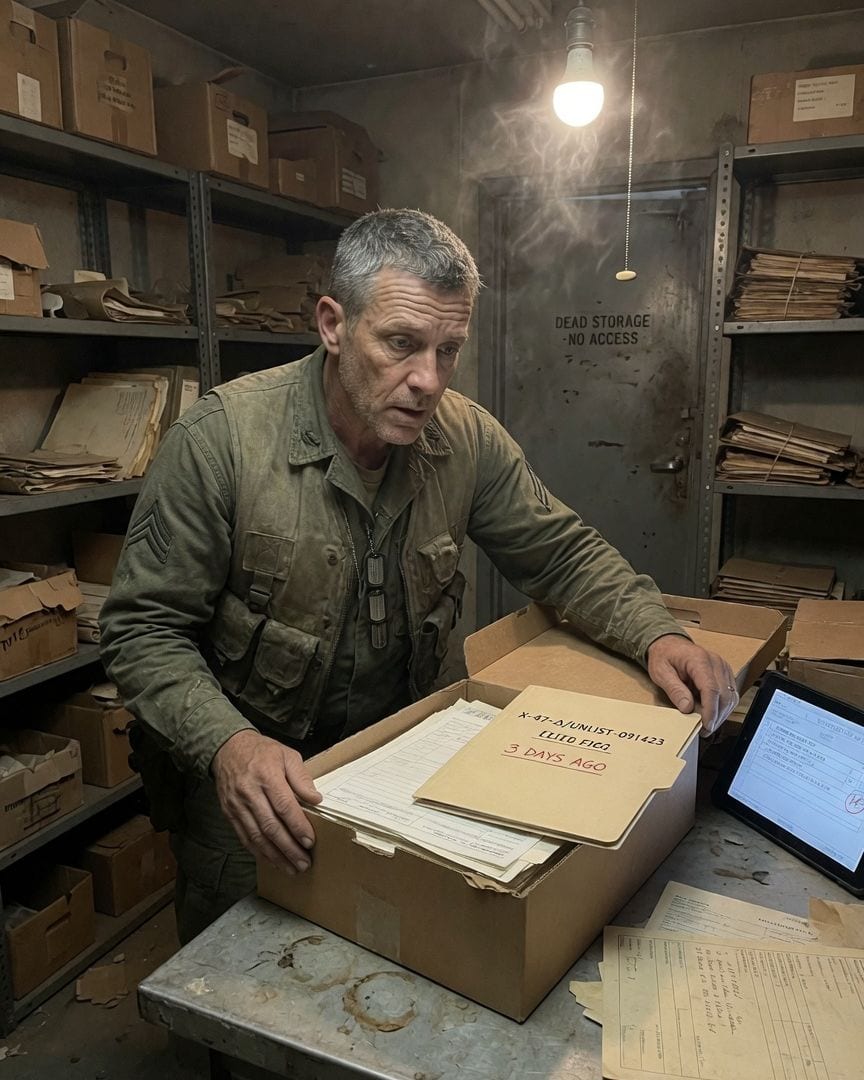
An inventory officer found a bunker's log of soldiers, then found one of their dog tags marked 'KIA, 1970'.
Chief Warrant Officer Gideon Salas meticulously oversaw the Hawthorne Ammunition Depot's inventory, racing against its final closure in two weeks. The high desert winds whipped dust across the familiar igloos as he worked, each bunker accounted for, until he reached the eastern perimeter. There, an extra igloo, Bunker 40, stood with a current lock and seal, though it wasn't on any map. A duty log propped open nearby listed inspections signed by men the Army swore didn't exist. His gut, honed by decades of service, churned with unease; inside the empty bunker, his flashlight found a corroded dog tag bearing one of those names, marked 'KIA, 1970'.
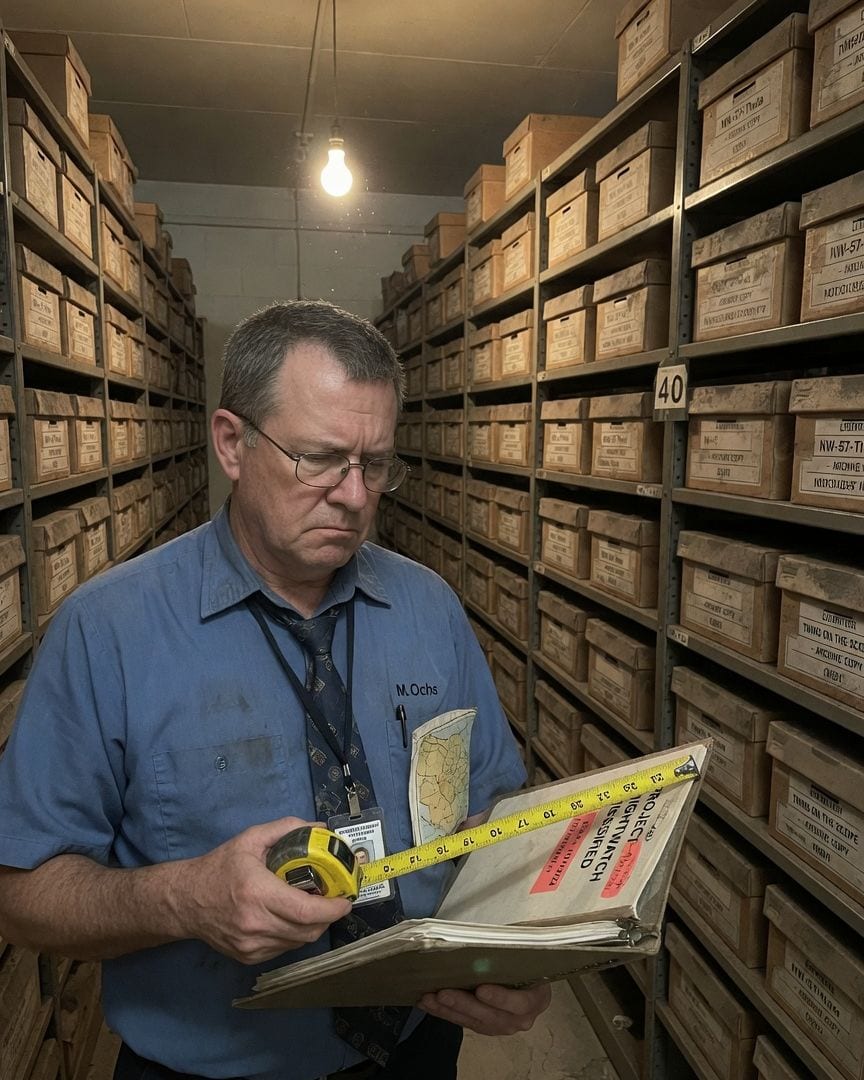
A Cold War records clerk on his final patrol found Aisle 40 stretched 61 feet longer, lined with unknown boxes. Inside one: 'PROJECT NIGHTWATCH - CLASSIFIED' with a fresh timestamp.
Marlin Ochs, a creature of habit after nineteen years at the St. Louis federal records depot, faced his final patrol through Aisle 40 before its scheduled pulping. His routine walk, usually 92 precise strides, suddenly stretched to an impossible 119, making the aisle 61 feet longer than its blueprint. The extra section felt colder, lined with dust-laden boxes bearing alien classification codes and no manifest. Inside one, he found a metal-bound file: 'PROJECT NIGHTWATCH - CLASSIFIED,' dated 1957, but with a timestamp just hours old.
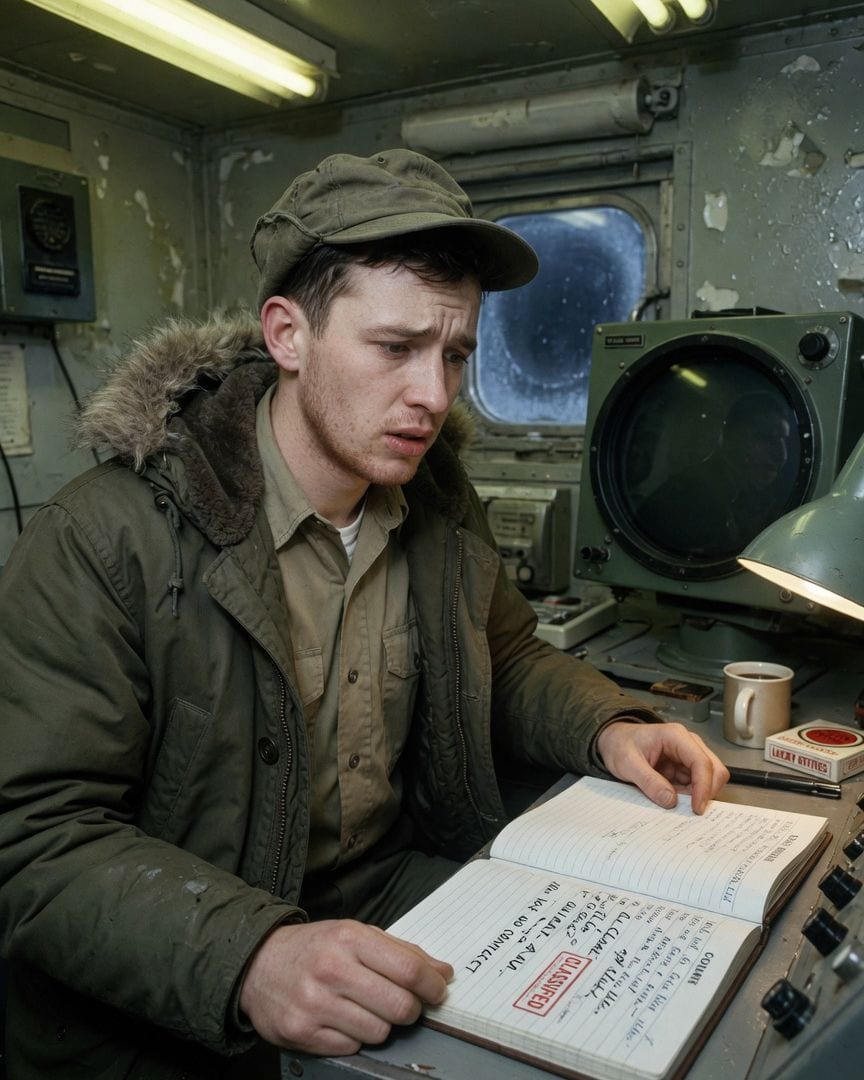
A Cold War airman logs an impossible radar contact on his last sweep. But his official logbook entry is stamped 'CLASSIFIED' and then contradicted by a hastily scrawled 'ALL CLEAR' dated moments before it.
Airman Ordway Vance, 22, manned the radar dome at Site Pellin in the biting North Atlantic dark of January 1962, running the last calibration sweep before its decommissioning. His scope picked up a faint, impossible return, growing closer with each pass, though the ocean remained empty to the eye. When Vance detailed the contact in his official logbook, a 'CLASSIFIED' stamp appeared, followed by a hastily scrawled 'ALL CLEAR' dated moments before his own entry, contradicting his every word. Commander Hartley dismissed it as equipment malfunction, but Vance sensed a chilling, official erasure behind the lie. He soon found a locked cabinet marked 'SITE PELLIN ANOMALIES,' hinting at a deeper truth buried within the base's final days.