Staff Sergeant Rhee’s squad found a Cold War building not on their map. Range Control confirmed no structure. Minutes later, it vanished, leaving a foundation decades old.
Staff Sergeant Adam Rhee threw up a fist, halting his squad short of a cinderblock objective building. It stood defiantly in the sagebrush of the Yakima Training Center's live-fire lane, a blocky, unpainted structure that looked too solid, too permanent.
Rhee frowned, pulling out his range card. It wasn't on the map. He checked the overlay, then the digital GPS coordinates on his tablet. Nothing. The building simply wasn't supposed to be there.
He contacted Range Control. Captain Isabella Prescott's voice, usually crisp, was laced with confusion. "Negative, Staff Sergeant. No structure at grid four-seven-three-delta-niner. Confirming your coordinates." Rhee re-read them, then looked again at the building. It wasn't a mirage.
He could see the rough texture of the cinderblocks, the faint glint of something like rebar sticking from a corner.
Prescott ordered them to hold position, her voice tighter now. "Stay put. We're sending a truck. Do not approach that structure." Rhee held his squad in place, scanning the horizon.
The sky was a pale, washed-out white, reflecting off the desert floor. They waited, the only sound the high desert wind whistling past their ears and the low rumble of their idling Humvee.
When the range-safety truck finally ground up the hill, kicking up a plume of dust, it pulled up to Rhee's position and then stopped, its occupants staring. Rhee turned, a cold knot forming in his stomach.
Where the cinderblock building had stood moments before, there was now only bare sagebrush. The truck’s headlights cut through the gathering twilight, illuminating the ground.
A rectangular patch of disturbed earth revealed the faint outline of a foundation, its cracks filled with tenacious weeds, some brittle and yellow, others surprisingly green. They looked, Rhee realized with a chilling certainty, decades old.
The incident gnawed at Rhee like a burr under his skin. He tried to rationalize it away: a heat shimmer, a trick of the light, a poorly executed training prank.
But the decade-old weeds, clinging stubbornly to a foundation that appeared and disappeared, argued otherwise. No prank could conjure such details. No mirage left behind physical evidence of its long-term decay.
That night, a cool, indifferent moon hung high above the Yakima Training Center. Rhee, unable to sleep, found himself driving his personal truck back to the phantom grid, a flashlight heavy in his hand.
The air was still, save for the whisper of the high desert wind, dry and cold against his face. He parked a few hundred yards out, then approached on foot, his boots crunching softly on the gravel and sand.
Ahead, shimmering faintly in the moonlight, the cinderblock building stood again. It was solid this time, undeniably real, its unpainted walls stark against the pale sky.
A low hum seemed to emanate from its core, a frequency too deep to register as sound, but which vibrated through the soles of Rhee’s boots. He approached cautiously, his senses hyper-alert.
The heavy, unpainted door was slightly ajar, as if inviting him in. He pushed it open, a cloud of dust puffing outward as it scraped against the concrete floor.
Inside, the air was cold and stale, thick with the smell of damp earth and something metallic, like old blood. Moonlight filtered through high, narrow windows, striping the dusty interior.
It was a single, empty room, save for an overturned wooden crate in the center. Rhee swept his flashlight beam across the floor, then to the crate.
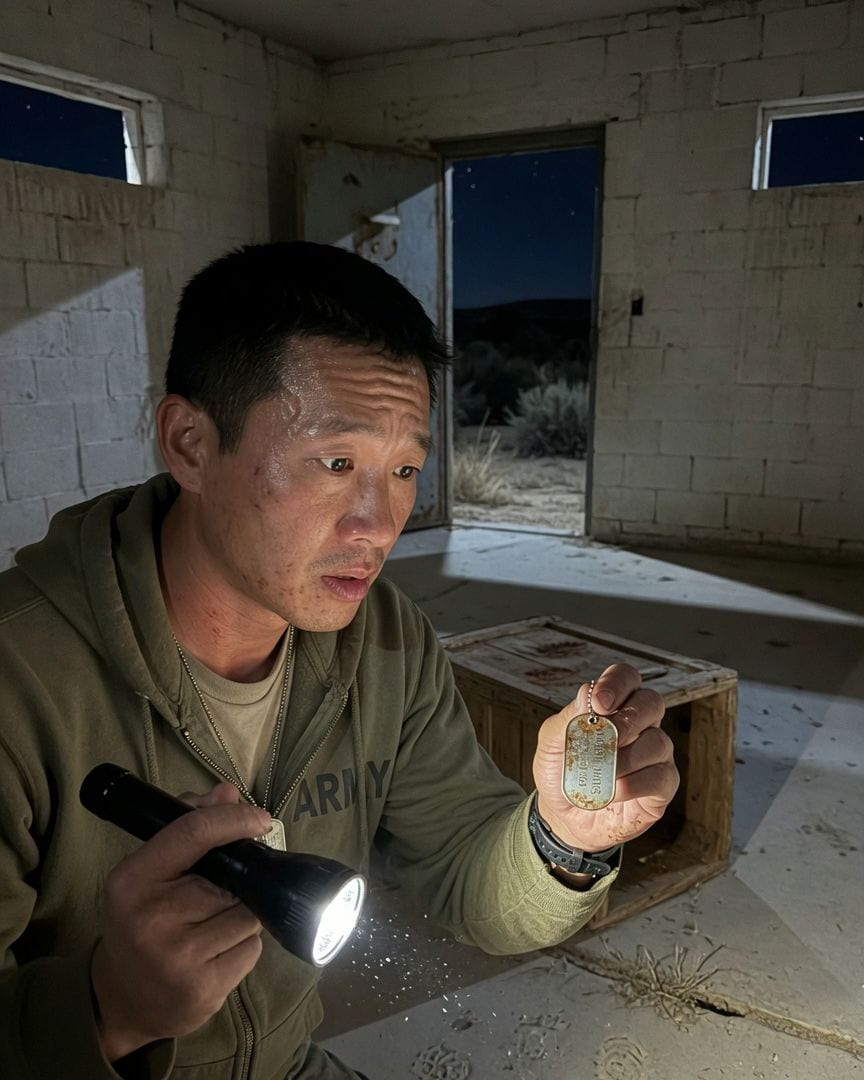
On its dusty surface, nestled amongst a scattering of ancient, rust-colored flakes, lay a single, rusted dog tag. He picked it up, the metal cold and heavy in his palm. He wiped away the grime with his thumb.
The embossed letters, though faded, were still legible: 'WALSH, HANS'. Below the name, a service number was stamped. And below that, an impossible date: '1983'.
Rhee felt a chill that had nothing to do with the night air. The date, 1983, was decades before his own deployment, before he was even born.
He pocketed the dog tag, his mind racing, the impossible weight of the metal pressing against his thigh. Back at the base, the glowing screen of his laptop cast a blue light across his face.
He’d slipped into a secured office, his fingers flying across the keyboard. He accessed a restricted military database, inputting Hans Walsh's service number. The system whirred, processing the request with agonizing slowness.
Then, a partial record materialized on the screen: Hans Walsh. Assigned to a training unit. Reported Missing In Action in 1983. The location? Yakima Training Center. Rhee leaned closer, his eyes scanning the details.
The grid coordinates were listed as 'UNCONFIRMED / ANOMALY ZONE,' a classification he had never seen in his entire military career. And those coordinates matched the phantom building's location precisely. The ordinary explanation died for good.
Rhee’s investigation began with subtle inquiries. He approached Captain Prescott, feigning a casual curiosity about old range incidents, a general interest in the base's history.
Prescott, perched on the edge of her desk in the Range Control office, was visibly uncomfortable. Her gaze darted to the closed door, then back to Rhee.
She mentioned hushed rumors of 'ghost ranges' and 'cold spots' on the base, places where equipment malfunctioned and soldiers felt a strange chill. She quickly dismissed them as old-timer folklore, a way to spook new recruits.
Rhee pressed, his voice even. "Any specific MIA cases tied to those grids, Captain? Or unlogged structures?" Her demeanor stiffened instantly. Her jaw tightened, and she pushed herself off the desk.
"Staff Sergeant, I advise you to stick to current ops. The safety of the live-fire lanes is paramount. Digging into old stories won't help your squad clear their next qualification." Her tone was a clear dismissal, a warning.
Undeterred, Rhee visited the base archives, a dusty, cavernous room filled with rows of metal filing cabinets. He requested access to range logs and incident reports from the 1980s, specifically around the 1983 timeframe.
The archivist, a stoic older woman, looked at him with an odd, knowing glint in her eye. She returned a few minutes later, shaking her head. "Nothing related to any Hans Walsh, Staff Sergeant. Looks like those specific dates are...
incomplete. Happens with old records, you know." Rhee knew it didn't. The official records had been scrubbed clean.
Then he remembered George Montgomery. A retired Sergeant Major, Montgomery was a living archive of Yakima's history, a former Range Control NCO with an almost uncanny recall of past events.
Rhee tracked Montgomery down at a VFW hall off-base, the air thick with stale beer and whispered memories.
Montgomery, a man with sharp eyes that seemed to hold a lifetime of stories and a weary smile, initially waved off Rhee’s questions about 'unlogged structures' with a gruff, "Some things are better left alone, son. Especially out here."
Rhee reached into his pocket and pulled out the rusted dog tag. He laid it on the scarred wooden table between them. Montgomery’s smile vanished.
Montgomery took a long, slow breath, his gaze fixed on the dog tag. He didn't deny its authenticity, didn't question how Rhee had found it. He only said, his voice a low rumble, "You shouldn't have found that, Staff Sergeant."
He picked up the tag, his thumb tracing the faded letters, a faraway look in his eyes.
The next day, back on base, Rhee noticed subtle changes. His secured radio channel, usually clear and precise, crackled with static more often than usual.
Sometimes, beneath the hiss, he heard faint, distorted echoes of what sounded like old, garbled military cadences, the kind of rhythmic chants drill sergeants used to motivate troops during marches.
He tried to dismiss it, but the sounds persisted, like ghosts whispering in the ether.
His movements around the base, too, seemed to draw more attention. He caught Captain Prescott watching him from her office window, her expression worried, almost fearful.
Later, as Rhee was heading back to his barracks, she intercepted him by the motor pool, pulling him aside where no one could overhear. Her voice was low and urgent, laced with an intensity that made Rhee’s stomach clench.
"Drop it, Staff Sergeant," she warned, her eyes wide, searching his. "Whatever you're looking for, it's not worth it. Some things are classified for a reason, beyond your pay grade, beyond mine.
Operational security isn't just about secrets; it's about survival." She glanced around nervously, then back at Rhee, her eyes pleading. "Just drop it." Her words were a stark warning, confirming Rhee was no longer just investigating; he had been noticed.
He tried to dismiss it as paranoia, the natural consequence of digging where he shouldn't, but the feeling of being watched, of being on a different kind of manifest, grew stronger with every passing hour.
He wasn't just observing a mystery anymore; he was becoming part of it.
Rhee returned to George Montgomery, determined to get answers. He found the retired Sergeant Major in his garage, meticulously oiling an old rifle.
Montgomery looked up, his weary smile returning for a moment, then fading as he saw the resolve in Rhee's eyes. He nodded slowly, recognizing the point of no return.
"Alright, Staff Sergeant," Montgomery said, wiping his hands on a rag. He led Rhee to a dusty corner, pulling out an old, metal footlocker from beneath a workbench.
Inside, nestled amongst worn uniforms and faded photographs, was a meticulously kept, unofficial logbook and a hand-drawn map, yellowed with age, dated 1983.
"The ghost range," Montgomery said, his voice flat, his gaze distant. "It’s been there for decades. Not always a building, sometimes just a flicker, a ripple in the air. Sometimes a sound. But always at that grid.
We called it a time-slip. Soldiers went in, sometimes they didn't come out. Or they came out... different."
He explained that Hans Walsh was one of them, a fresh-faced Private from his own unit who had vanished during a routine exercise at that very spot. "The official story was MIA, a 'training accident.' But we knew.
We kept our own records."
Montgomery recounted how the cinderblock building would sometimes appear fully formed, sometimes be just a foundation with impossibly old growth. "It’s a manifestation point, Staff Sergeant. A place where the past and... something else, get tangled."
He described the building as an anchor for those who got caught in the loop, their presence echoing across different eras.
The 'decade-old weeds' suddenly made a horrifying, coherent sense to Rhee, not as a sign of past decay, but a future one, projected backward.
The building wasn’t just appearing; it was happening, collapsing and rebuilding itself through time, and Rhee had just stepped into its flow.
Montgomery pulled out another artifact from the footlocker: a faded, unofficial unit roster from his own time, carefully laminated against the ravages of age. It listed names, service numbers, and 'rotation dates' for his squad.
He pointed to several names with annotations like 'transferred under special circumstances' or 'reassigned to unlisted unit.'
"These were the ones who saw too much, or got too close," Montgomery explained, his voice heavy with a grim resignation. "The ones the anomaly took, in one way or another."
Rhee scanned the names, his heart pounding in his chest. He expected to see Walsh's name, perhaps others associated with the incident. He was looking for the missing, for the victims.
But then, midway down the list, his eyes snagged on a familiar surname. He leaned closer, his breath catching in his throat, a cold dread washing over him.
There, among the faded ink, was a full entry, written in a precise, almost clinical hand: 'RHEE, ADAM'. Below it, a service number identical to his own, and a 'rotation date' from forty years ago.
The paper crackled as his fingers trembled, the impossible implication slamming into him with the force of a physical blow. He wasn't just investigating the past; his name was already a part of it. He was always accounted for here.
Adam Rhee shoved the roster back at Montgomery, his voice hoarse, demanding an explanation for his name. Montgomery looked at him with profound sadness, a deep resignation in his eyes.
"It's a loop, Staff Sergeant," he said, his voice barely a whisper. "An echo. Those who investigate too deeply, who truly see the anomaly, they get pulled in. Their presence, their identity, becomes part of its history.
You didn't just stumble upon it; you were always going to. Your name on that roster isn't a mistake from the past; it's a premonition, a record of what's happening to you now."
He explained that the building wasn't just a place, but a kind of trap, drawing in soldiers across generations, making them part of its recurring manifestation.
Hans Walsh, and others like him, weren't just victims; they became components of the anomaly, their echoes manifesting within the building itself, part of its fabric.
The 'decade-old weeds' Rhee had seen weren't from a past decay, but from a future state of the building, a glimpse of its eventual abandonment and ruin, projected backward in time.
Every strange occurrence Rhee had experienced—the garbled radio messages, the feeling of being watched, Captain Prescott’s warnings, every half-confirmed sensor reading, every missing record—all clicked into place, forming a horrifyingly coherent pattern.
The anomaly wasn't a random event, a glitch in the desert. It was a self-sustaining system, and Rhee had just been inducted. He was part of its history, and now, its future.
Rhee, unwilling to accept his fate, unwilling to become an echo in a time-displaced loop, decided he had to destroy the building, to break the cycle.
He used his remaining contacts to secure a small amount of C4 and returned to the range at night, alone.
The air was heavy, thick with the unseasonable warmth of the high desert, and the cinderblock building stood, more solid than ever, almost menacing under the pale moonlight. It seemed to pulse with a low, inaudible thrum.
He moved quickly, his training taking over, placing charges at its structural weak points, each brick seeming to vibrate beneath his touch.
As he armed the detonator, a low hum started, emanating from the building's core, growing louder, vibrating in his teeth. The walls began to shimmer, flickering like an old film reel, the cinderblocks shifting in and out of focus.
He heard faint, distorted sounds – the crack of phantom rifle fire, the distant shouts of drill sergeants from decades past, the crunch of boots on gravel that wasn't there.
Indistinct figures seemed to move within the building's windows, shadowy and fleeting, like memories caught in a loop. He saw a flash, a brief, terrifying glimpse of a uniform from decades past, the face obscured, yet undeniably present.
The building itself shifted, growing older, then newer, then older again, its very fabric twisting through time, a temporal maelstrom.
He felt a powerful pull, a dizzying disorientation, as if his own reality was fraying at the edges, being stretched thin. He knew he was running out of time, that he was being drawn into the loop, becoming another echo.
With a desperate yell that tore through the night, Rhee triggered the detonator, diving for cover as the charges exploded, ripping through the phantom structure in a concussive blast.
The explosion rocked the Yakima Training Center, a thunderous roar echoing across the high desert, sending a plume of dust and debris into the night sky.
Range Control, led by a shaken Captain Prescott, arrived to find a smoking crater where the building once stood. The ground around it was strangely undisturbed, almost too neat, as if the destruction had been surgically precise.
Rhee was found dazed, covered in dust and grit, but physically unharmed, his ears ringing.
His account of the phantom building and the time-slip was met with official skepticism, quickly attributed to shock and PTSD from the unauthorized detonation.
The incident was officially logged as 'unauthorized detonation of unexploded ordnance,' and Rhee's records were flagged, a quiet blotch on an otherwise stellar career.
He underwent a mandatory psychological evaluation, then was transferred out of Yakima under the guise of an 'expedited reassignment,' his service record clean of any disciplinary action, but marked by an unspoken question that followed him wherever he went.
Adam Rhee was honorably discharged a year later, his military career quietly concluded. He moved across the country, trying to build a new life, to forget the sagebrush and the phantom building.
He never spoke of what he saw, what he learned, what he became. He tried to bury the truth, to outrun the echoes.
Years passed. He settled into a quiet routine, the memories fading into nightmares, then just vague anxieties.
One quiet Tuesday morning, a small, dusty parcel arrived at his new civilian address, forwarded twice by the postal service from an old base address.
He picked it up, his hands trembling slightly as he recognized the postmark from Washington state. He opened it, slicing carefully through the tape with a kitchen knife. Inside, wrapped in plain brown paper, was a single, rusted dog tag.
He pulled it out, the metal cold and heavy in his palm. He turned it over, his thumb instinctively wiping away the surface grime. The name etched on its surface was clear, despite the rust. It read: 'RHEE, ADAM.'
A small, dusty parcel arrived at the old address, forwarded twice. The current occupant, a young woman, opened it out of curiosity. Inside, wrapped in brown paper, was a single, rusted dog tag.
She turned it over in her palm, reading the name on its surface. His name was Adam Rhee.
If this one got to you
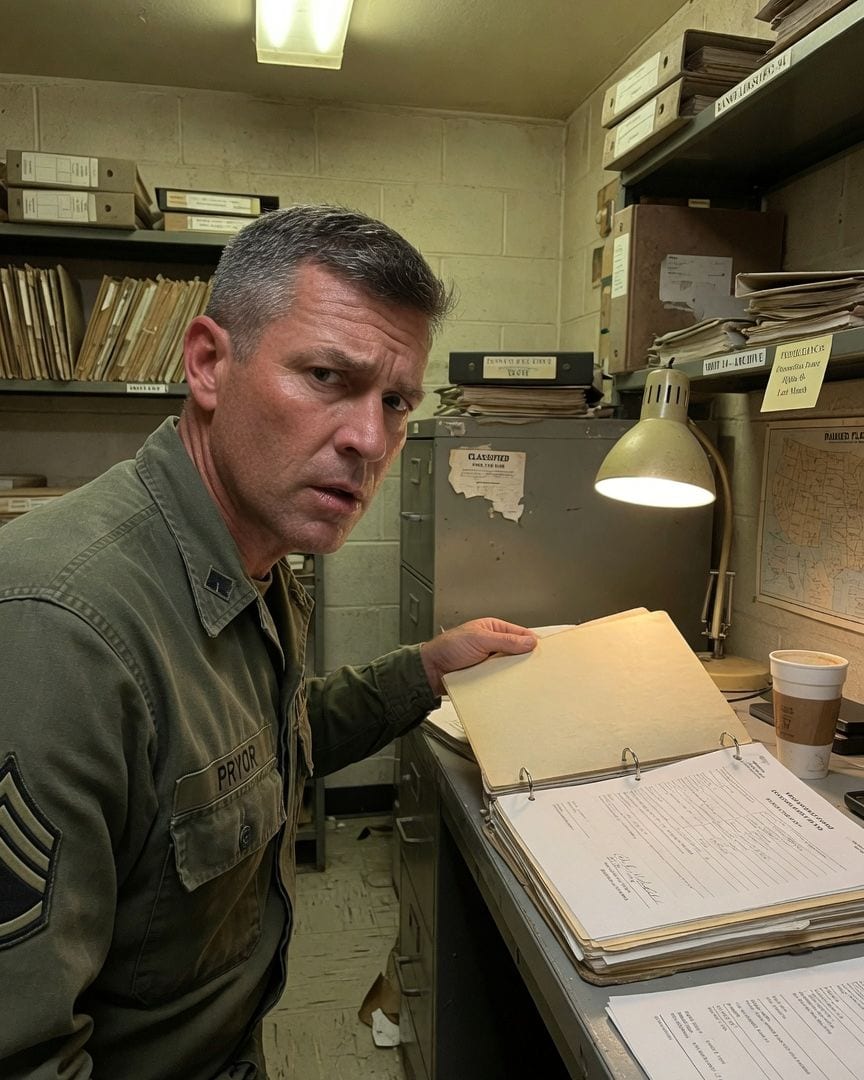
A sergeant with eleven days left finds a warm, glassed crater. Its file shows a captain lost thirty years ago is still signing reports from last week.
Sergeant Alden Pryor was counting down his final eleven days on a twenty-year hitch, expecting to spend them on routine patrols along the Ranier Flats fence line. Instead, his truck stopped at a bizarre sight: a four-hundred-foot glassed crater, miles from anywhere, its sand faintly warm at dawn despite no one recalling a blast. The air above it shimmered with an unnatural distortion, a silent scar of erased violence, and the official file for 'Shot 14' showed recent maintenance sign-offs for a decommissioned tower at the crater site. All these active documents were signed by Captain Everett Caldwell, who had been officially lost in operations thirty years ago, leaving Sergeant Pryor to wonder how a dead man could still be filing reports.
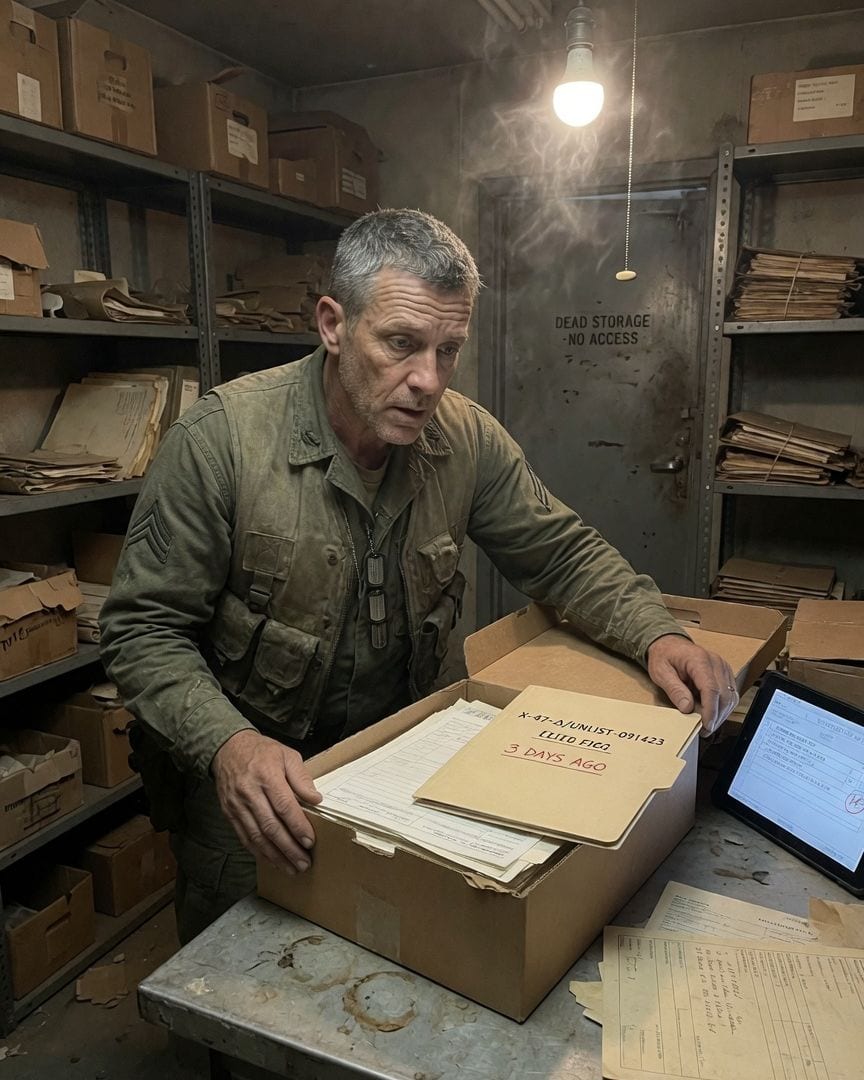
Sergeant Pryor, days from retirement, finds a four-hundred-foot crater. The desert floor is still warm, but no one remembers the blast.
Sergeant Alden Pryor, forty years old and just eleven days from retirement, drove the familiar Ranier Flats fence line for one of his final patrols. The desert stretched out, silent and vast, until he discovered a four-hundred-foot crater, dark and impossibly vast, where the sand had fused into slick glass. The ground within the crater was still faintly warm, a subtle heat defying the cool desert air. Yet, every official log confirmed the blast, while no one recalled a tremor or flash across three states.
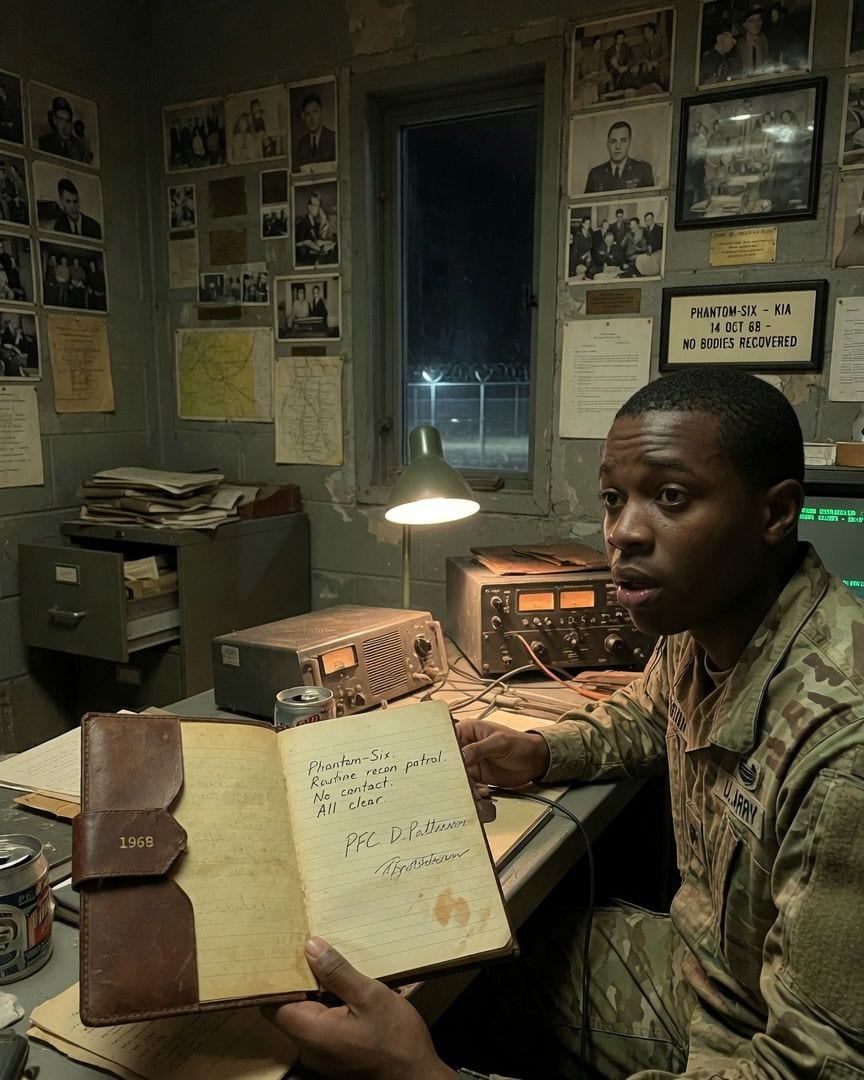
A DMZ specialist finds a 1968 Cold War logbook entry, signed by a lost soldier, its ink shimmering faintly.
Specialist James Farr, on a long night shift at a desolate Korean DMZ outpost, meticulously monitored his console, a squared-away soldier accustomed to the quiet hum of equipment. His focus shattered when a faint, static-laced whisper ghosted from a dead channel, calling out 'Phantom-Six' — a unit lost near this wire in 1968. The urgent voice then specifically mentioned his tower window light, asking him to turn it off before it drew fire. Later, an old logbook from 1968 revealed an entry dated three days *after* Phantom-Six was officially lost, signed by one of the vanished soldiers, its ink subtly shimmering with an unnatural gleam.
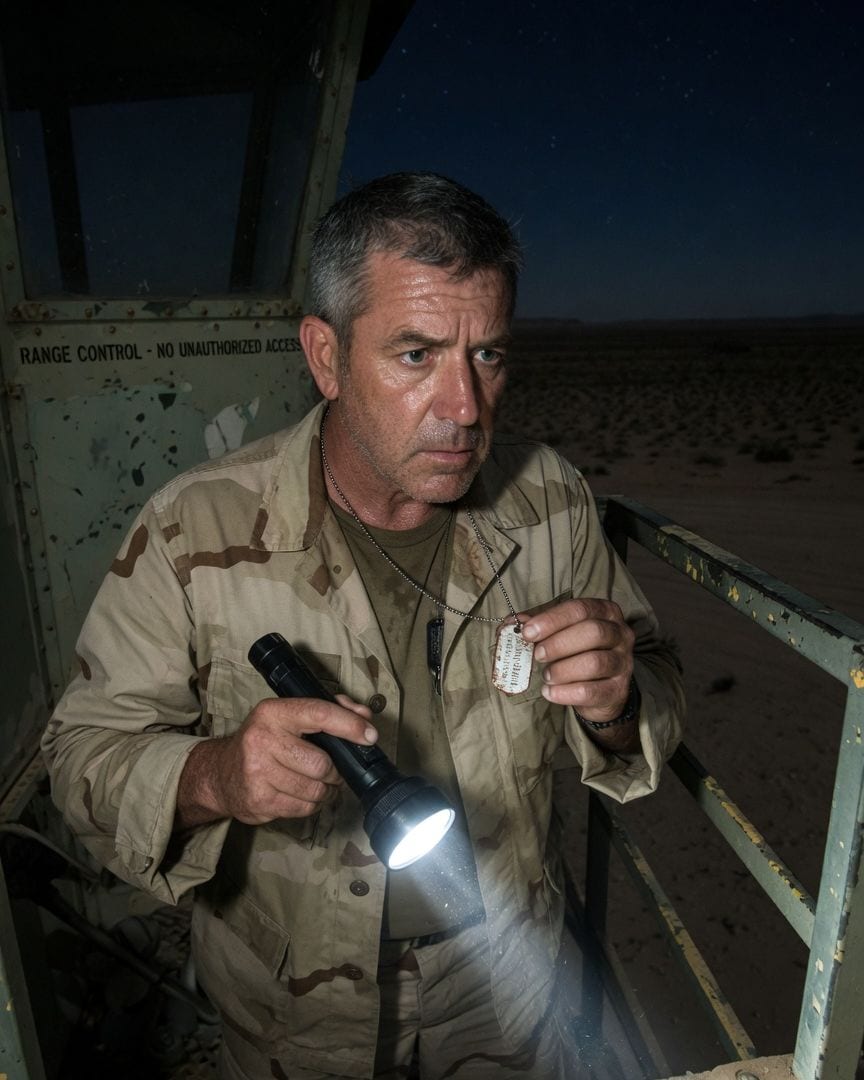
A Mojave sentry watched a man cover miles in seconds, appearing at his tower's foot. When the figure vanished, it left a military dog tag with a name unknown to any base record.
Sergeant Prewitt appreciated the clarity of the Mojave desert, a world accounted for under a blanket of stars from his lone observation tower. But when the generator died, plunging him into absolute dark, he saw a man walking miles away in the impact area. Inexplicably, the figure appeared at the foot of his tower ladder moments later, then vanished without a trace. Prewitt’s training kicked in, yet his search only yielded a corroded military dog tag bearing a name—Lawson, Edmund—that was entirely unassigned to the range’s meticulous records. How could such a person exist, unaccounted for?
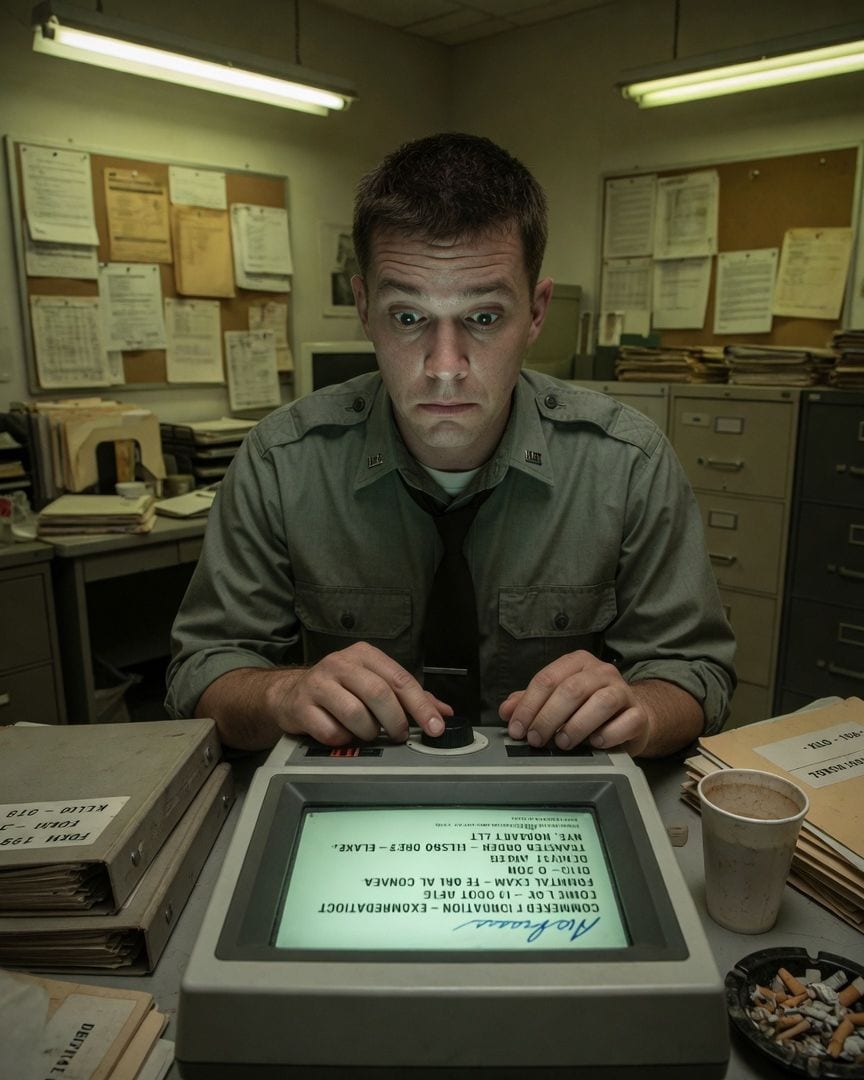
A missile commander watched his ten nuclear silos go dark. His own service record shows his signature on a future he's never lived.
Second Lieutenant Hobart Nye, a missile commander in Wyoming, had his quiet 0247 watch shattered by a security report: a massive, silent black triangle hovered over Launch Facility Kilo, casting a perfect shadow. Hobart watched his console's fault panel light up, signaling all ten nuclear missiles going dark in an impossible silence, followed by eleven minutes his security team could not remember. Official logs called it a "radio malfunction," but Hobart found a requisition for invisible-tracking sensors, signed by a base commander who was supposed to be off-base. The final, chilling discovery came when his own service record showed new entries—a dental check-up, a transfer to Alaska—all dated for a future he never lived, complete with his perfectly replicated signature.
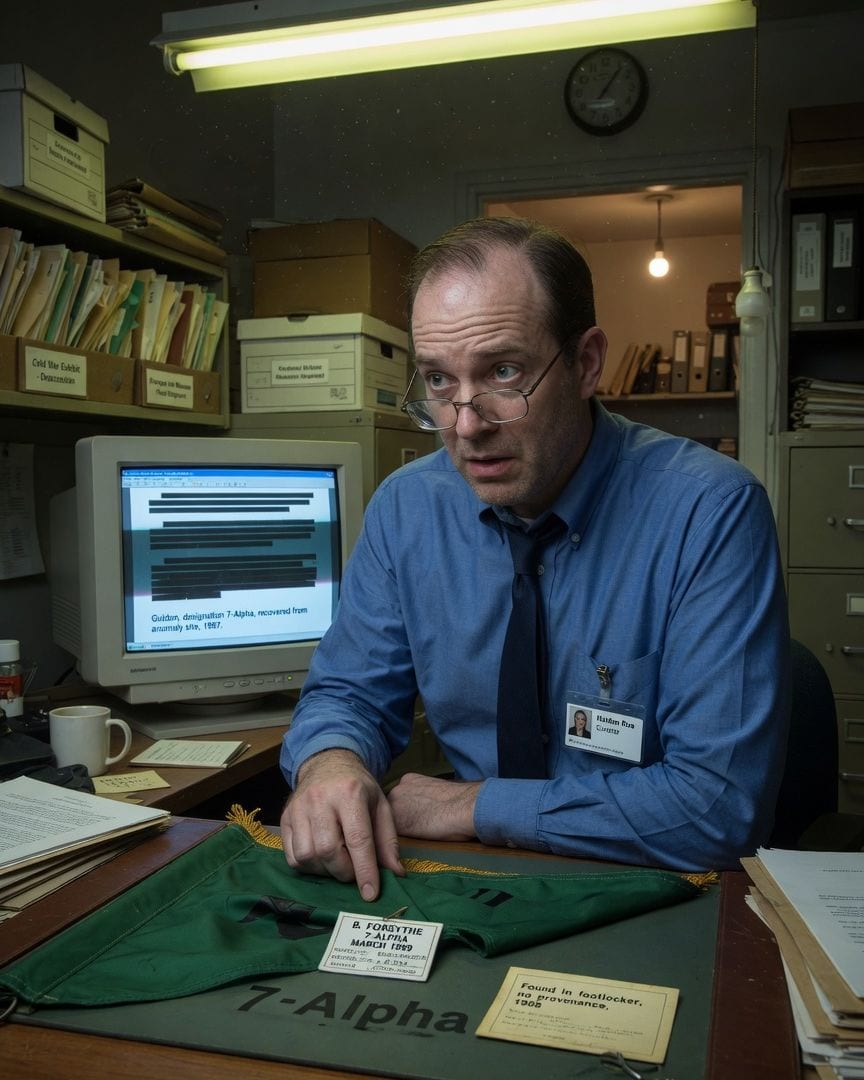
A curator found a guidon dated 1989. The museum took it in 1988, but the Cold War airman on its tag vanished in 1954.
Halden Roe, a meticulous curator, worked against a pressing deadline as the Presque Isle Museum's Cold War exhibit closed for good. In the dusty storage unit, under a single bare bulb, he discovered a small laundry tag sewn into an antique green silk guidon. Its crisp black stitching clearly read 'MARCH 1989' — a date a full year *after* the museum’s intake record for the artifact. As Halden's unease grew, he found the service number on the tag belonged to Benjamin Forsythe, an airman who vanished off Greenland in 1954. How could a museum piece found in 1988 bear a future date and belong to a ghost from decades past?