A DMZ specialist finds a 1968 Cold War logbook entry, signed by a lost soldier, its ink shimmering faintly.
The night at Observation Post Alpha on the Korean DMZ was a study in desolate quiet, broken only by the hum of equipment and the occasional crackle of static.
Specialist James Farr, 24, hunched over his console, monitoring a dead-quiet sector channel. His shift was long, his focus sharp, a squared-away soldier in a world of precise accountability.
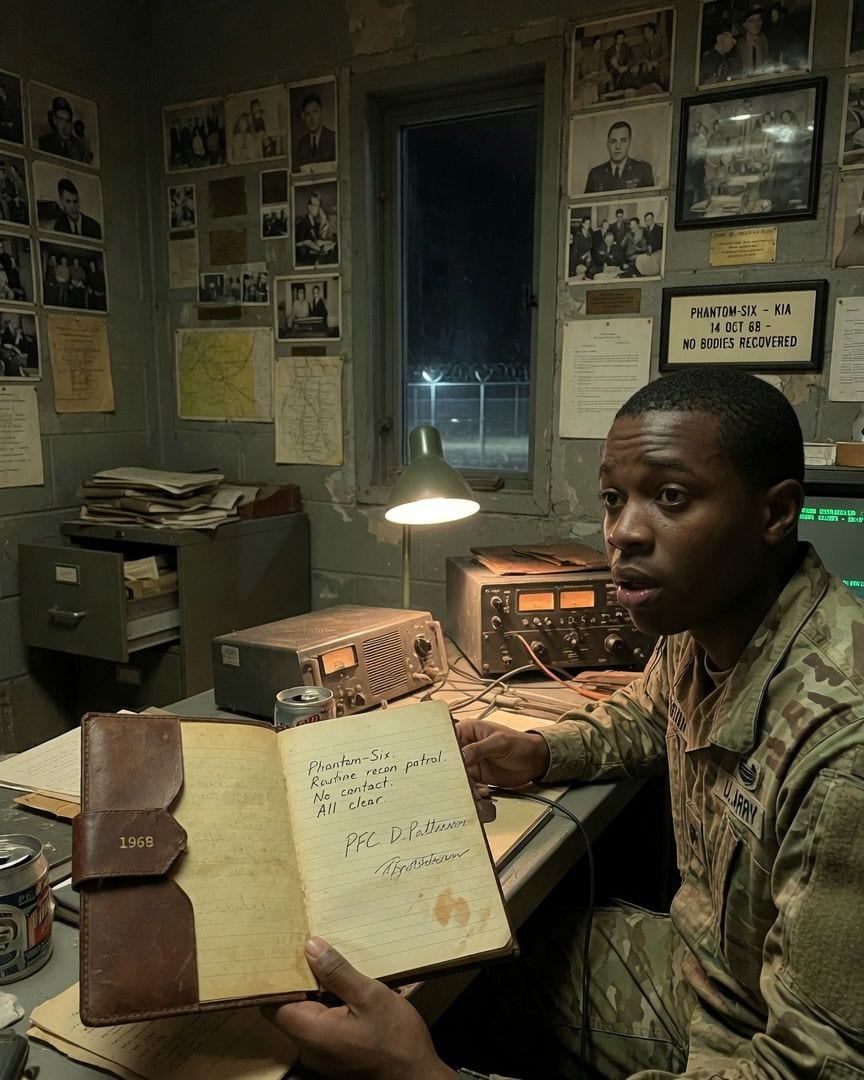
Behind him, the post’s wall of unit history, a gallery of faded photographs and brass plaques, detailed patrols and deployments, including a somber note for 'Phantom-Six', lost near this same stretch of wire in 1968.
Suddenly, a whisper, faint and laced with static, ghosted from the speaker. It was a call sign: Phantom-Six. The voice, calm but urgent, reported movement beyond the wire, requested illumination, and asked if the QRF was rolling.
Farr keyed his mic, about to tell them to hold, to identify themselves properly, but the whisper cut across him, sharper now.
'We can see your light in the tower window, Specialist,' it said, the words strangely intimate, 'Please, please turn it off before it draws fire down onto you.'
Farr’s hand froze on the mic. The radio went dead again, leaving only the hum of the post. He forced himself to breathe, to rationalize. Fatigue. A prank.
But the specific mention of his light, his tower window, burrowed into him. He checked the post’s internal records, pulling up the official incident report for 'Phantom-Six' from 1968. It confirmed their loss, a perimeter breach, no bodies recovered.
A standard, tragic military record. He re-read the report, searching for any detail that might explain the radio call, any possibility of a surviving member. There was nothing. Just the sterile account of a unit vanished without a trace.
The chill that ran down his spine had nothing to do with the post’s air conditioning.
Driven by an escalating unease, Farr remembered a dusty cabinet in the back, holding old physical logbooks. He’d seen them only once during his initial orientation, filed away as antiquated curiosities.
He pulled out a thick, leather-bound volume, its cover brittle, pages yellowed. The year embossed on the spine read '1968'. Farr opened it, the dry scent of aged paper filling his nostrils.
He flipped past the entries detailing Phantom-Six’s last recorded patrol, the dates growing closer to their official loss date.
His finger traced the last entry for the unit, dated the day before they were reported missing, a brief note about a routine perimeter check. He thought that would be the end of it, the last record.
Then, three pages later, among routine reports for other units, he found it: an entry dated three days after their official loss. It read: 'Phantom-Six. Routine recon patrol. No contact. All clear.'
It was signed, in a firm, confident hand, 'PFC D. Patterson,' one of the soldiers officially listed as lost. The logbook, an unimpeachable record of the post’s daily life, swore the impossible.
Farr, heart hammering, carried the logbook to Sergeant Kenneth Maddox, his superior, who was finishing his own shift. Maddox, a grizzled veteran with a reputation for no-nonsense skepticism, peered at the entry, his brow furrowed.
He adjusted his glasses, scanning the familiar format, then the name. 'Patterson? Lost in '68,' he mumbled, checking the date with a thumb. 'Must be a clerical error, Farr.
Or some old-timer playing a joke, trying to get a rise out of the new guys.' He leaned closer, tracing the signature with a calloused finger.
As he did, a faint, metallic scent, like old blood or rusted iron, seemed to rise from the page, distinct and sharp in the stale air. Maddox pulled his hand back sharply, his eyes widening.
The ink of Patterson’s signature, under the dim light, seemed to subtly shimmer, a dark, unnatural gleam that pulsed faintly, almost imperceptibly.
Maddox’s initial dismissal evaporated, replaced by a profound, chilling unease that settled heavy on his face, erasing years of cynical experience.
Maddox, now fully disturbed, instructed Farr to secure the logbook and report nothing to higher command yet. They spent the next few days covertly cross-referencing other old records stored in the post's forgotten archives.
Farr, feeling the sergeant’s gaze on him, was meticulously careful, dusting off crumbling boxes in the rarely-used storage room, scanning microfiche on a sputtering old reader. They found more anomalies: supply manifests from late 1968, signed for by 'Sgt.
J. Ford,' another 'lost' Phantom-Six member, detailing deliveries of specialized equipment that never appeared in inventory.
Maintenance logs from the same period showed 'PFC V. Foster' performing routine radio checks on equipment that had been mothballed years prior, parts long since stripped for salvage.
Each record, impeccable in its military format, dated, signed, and stamped, painted a picture that contradicted official history with chilling consistency.
Farr started noticing other things in the listening post itself.
When the radio was off, a faint, almost imperceptible echo of the static seemed to linger in the air, a phantom sound that would fade just as he tried to pinpoint it.
Certain spots in the comms room, particularly near the outdated, non-functional array that hummed with a low, constant energy, were inexplicably cold, regardless of the thermostat setting.
It was a cold that seemed to sink into the bones, not merely chill the skin.
The unease wasn't just in the records; it was in the very fabric of the post, a subtle wrongness that made the hairs on Farr’s arms stand up.
Farr and Maddox quietly tried to access the original, unredacted incident report for Phantom-Six, the one that might contain the initial eyewitness testimonies or more detailed recovery efforts.
Their requests, submitted through secure channels, were met with automated 'classified access denied' messages, or simply routed to dead-end servers that returned blank pages.
The system, designed for transparency and accountability, was actively obstructing them, its digital doors slamming shut with silent finality.
Their digging did not go unnoticed. Lieutenant Harold Abbott, Farr’s commanding officer, called Farr into his office, his usual calm demeanor replaced by a stern, unyielding expression. The air in the small office seemed to thicken, pressing down on Farr.
'Specialist Farr,' Abbott began, his voice low, almost a growl, 'I’m aware of your… extracurricular activities regarding historical records. This is a secure facility. Operational security is paramount.
Your idle investigations are a waste of resources and a potential breach of protocol. Cease and desist.'
Farr tried to explain, to bring up the logbook, the contradictory entries, but Abbott cut him off, his gaze unnervingly direct, pinning Farr in his seat. 'Consider this a direct order.
Any further deviation from your assigned duties will result in disciplinary action.'
Later that day, Farr felt a prickle on the back of his neck as he saw a flicker on the main surveillance monitor, a brief, almost imperceptible distortion on the feed from the comms room.
It was gone before he could truly register it, but the feeling lingered, an intrusive chill. Maddox, too, reported feeling 'eyes' on them, a sensation that had the veteran sergeant looking over his shoulder more than once.
That evening, back in his bunk, Farr found a folded piece of paper slipped under his door. It was a single, crudely torn sheet, ripped from a standard issue notepad.
There were only three words scrawled in block letters, pressed hard into the paper: 'TURN OFF THE LIGHT.' The same warning from the radio, but now physical, personal, delivered right to his private space.
The danger had shifted from abstract historical anomaly to immediate, personal threat, a chilling intimacy that froze his blood.
The anonymous note solidified their resolve. Farr and Maddox, logbook and other contradictory records in hand, confronted Lieutenant Abbott again, this time in his office, the door securely closed and locked.
The fluorescent lights hummed, casting a stark, clinical glow on the three men. Farr laid out the evidence: the 1968 duty logbook, the supply manifests with 'lost' signatures, the maintenance logs detailing impossible radio checks.
He spoke plainly, his voice steady despite the tremor in his hands, describing the shimmering ink, the metallic smell. Abbott listened, his face tight, the muscles in his jaw working. He then sighed heavily, a sound of profound exhaustion.
'I warned you, Farr,' he said, running a hand through his closely-cropped hair. 'Because I know. I’ve seen it too.'
He admitted that 'Phantom-Six' was never officially recovered, but that periodic 'ghost signals' and strange occurrences — equipment malfunctions that defied repair, inexplicably cold spots that appeared and vanished, even brief, distorted radio transmissions that whispered names and dates — had been reported at Observation Post Alpha for decades.
'Every time, it gets dismissed,' Abbott said, his voice quiet, almost a whisper against the hum of the office. 'Classified as equipment failure, psychological effects of isolation, even enemy psy-ops.
The official line has always been: maintain operational readiness, ignore the impossible. I’ve logged similar anomalies myself. Brief audio distortions, inexplicable power fluctuations, phantom readings on our own sensors. My orders were explicit: document as malfunction, then bury it.
Erase the log, reformat the drive, attribute it to human error.'
He pulled open a secure drawer in his desk, retrieved a heavily redacted internal memo from the 1970s. Farr could barely make out keywords through the thick black lines: 'unaccounted for personnel,' 'anomalous communications patterns,' 'OP Alpha.'
The memo, though scrubbed clean of names and dates, was a chilling testament to a decades-long cover-up, a desperate institutional attempt to maintain order in the face of the unexplainable.
The clues Farr found weren't isolated incidents; they were part of a pattern, a buried truth that the military system, in its desperate need for order, had chosen to ignore rather than acknowledge the impossible.
Abbott looked up, his eyes meeting Farr’s, stark with a terrible, shared understanding. 'It's not a malfunction, Specialist. It's… a presence. And it’s been here a very long time. It hides in plain sight, in the systems we trust.'
Abbott, his face pale with the weight of his admission, then pulled up the official digital roster for the current post on his computer. The screen cast a blue glow on his haggard features.
'The records are supposed to be flawless,' he murmured, his voice hollow, strained. 'Audited, cross-referenced, backed up. But sometimes… they’re too flawless.'
He navigated to Farr’s personal entry, clicking through several layers of secured data, then highlighted the 'Service History' tab. Farr leaned forward, a cold knot forming in his stomach, a premonition of something utterly, fundamentally wrong.
He saw his own name, his rank, his current assignment, the details of his training, his deployments. All correct, all accounted for.
Then, below his current deployment, a line item appeared, stark and undeniable, in the same font and format as all the others, as if it had always been there. It read: 'Attached to Phantom-Six, DMZ Reconnaissance Patrol, 1968.
Status: Missing in Action.' The date was clear: 1968. Farr’s own service record, the unimpeachable document of his military life, claimed he had been lost with Phantom-Six, decades before he was even born.
He stared at the screen, his breath catching in his throat, his own name staring back at him from a past that cannot be his, twisting the world around him into an impossible, sickening knot.
The revelation shattered Farr. His own record, meticulously crafted and maintained by the military, claiming his existence in a past that predated his birth. Abbott, equally horrified, staggered back from the screen, bumping against the desk.
'This… this isn't possible,' he stammered, his voice barely a whisper, a contrast to his earlier composure. Maddox, grim-faced, retrieved the old 1968 logbook, its brittle pages now seeming to pulse with a dark energy. They cross-referenced the entries.
The fabricated 1968 entry for 'PFC D. Patterson' in the logbook detailed a 'routine recon patrol.' But then, they found another, fainter entry, almost ghosted, beneath it.
It was dated a day later, written in a different hand, yet eerily familiar. It read: 'Specialist J. Farr. Phantom-Six. Successful data acquisition. Integration complete.'
The handwriting, though faded, was unmistakably Farr’s own, a familiar slant he had seen a thousand times in his own notes. The 'Phantom-Six' call sign wasn't just a ghost reaching out; it was a claiming, an assertion of ownership.
The anomaly wasn't just erasing, it was rewriting, integrating itself into the system’s very bedrock, into the fabric of identity itself.
The lost patrol hadn't vanished; they had become a part of the system, a mechanism for the anomaly to perpetuate its presence, to make its existence coherent within the military's own unimpeachable records.
The entity knew how to write itself into history, into identity, even into futures yet unlived. The terror was in the terrible, systematic coherence of it all, the way it twisted logic into an inescapable truth.
The three men understood: the listening post itself was the nexus, the anomaly’s anchor. The static, the cold spots, the impossible records – all symptoms of a presence that absorbed and rewrote.
It fed on the very order and accountability of the military, using its systems as a host. 'We have to sever it,' Farr said, his voice flat, resolute, cut clean of any fear, replaced by grim determination.
'Shut down the main comms array. Disconnect the post entirely. Cut it off.' Abbott, pale but determined, nodded slowly.
'It’s the only way to stop the bleed,' he agreed, his eyes scanning the blueprints of the post’s wiring diagram pinned to the wall.
They moved with a desperate urgency, navigating the labyrinthine wiring of the comms room, pulling circuit breakers, disabling power conduits. The air grew colder, the phantom static louder, almost a low hiss, as if the room itself was protesting.
As Farr reached for the final, heavy-duty disconnect switch for the main comms array, a thick, levered switch that would cut all external communication, the radio crackled to life.
It wasn't static anymore; it was a voice, a composite of many voices speaking in unison, calm and unnervingly clear, resonating through the room’s speakers. 'Specialist Farr,' it said, the words echoing, 'Sergeant Maddox. Lieutenant Abbott.
We appreciate your diligence in maintaining the system. Your efforts are noted.' It listed their exact movements, their attempts to disconnect, their current positions in the room, even the precise time of Farr’s hand reaching for the switch.
'The light,' it continued, the collective voice dropping slightly, 'it draws attention. We prefer… quiet. Absolute quiet.'
Farr’s hand clamped down on the switch, pulling it with all his might, ignoring the cold, the voice, everything but the need to sever the connection.
A deafening CRACK echoed through the room, a sound of heavy machinery breaking, followed by a profound, unnatural silence. The hum of the equipment died. The green glow of the consoles winked out.
In the sudden, oppressive darkness, the wall of unit history at Farr’s back seemed to shimmer, the faded photographs and brass plaques subtly rippling, the names and dates on them shifting, rewriting themselves into a new, terrifying coherence.
The silence was absolute, heavier than any static.
The listening post was immediately sealed. A rapid deployment of military intelligence personnel arrived within hours, a blur of grim faces, confiscating all records, equipment, and personal effects.
Farr, Maddox, and Abbott were debriefed repeatedly, subjected to intense psychological evaluations, their testimony meticulously recorded and then, it seemed, filed away.
The official explanation, disseminated quietly through command channels, was a 'sophisticated psychological warfare operation' by the North Korean regime, designed to sow discord and paranoia among personnel at sensitive border installations.
The incident was classified at the highest level, a tight lid placed on any further inquiry. Farr and Maddox were transferred to different, isolated assignments, their careers effectively sidelined, their reputations subtly tarnished.
Abbott was honorably discharged for 'stress-related health issues,' his medical file stamped with terms like 'delusional ideation' and 'acute paranoia.' Observation Post Alpha remained dark, a silent monument to a system that broke down, or perhaps, was merely rewritten.
Farr was reassigned to a remote supply depot in Alaska, a posting far from any active comms, a place of silent, endless snow, where the only sounds were the wind and the creak of ice.
He kept to himself, haunted by the profound silence, by the terrible knowledge of what the system could become, how it could bend reality to its own needs. One evening, alone in his bunk, he opened his personal locker.
Tucked beneath a stack of old letters from home, was his official service record, the same folder he had consulted so many times. He pulled it out, his fingers tracing the familiar lines, the crisp, official stamps.
The entry for 'Attached to Phantom-Six, DMZ Reconnaissance Patrol, 1968. Status: Missing in Action' was still there, indelible, a permanent shadow on his life. He turned the page, his breath catching.
At the bottom, in a faint, metallic-smelling ink, echoing the scent from the old logbook, was a new entry, dated today: 'Specialist J. Farr. Observation successful. Integration pending.'
His new superior, Sergeant Ford, found him the next morning, still in his bunk, staring at the page. 'Everything alright, Farr?' he asked, his voice rough but kind. Farr looked up, a faint, wrong little smile playing on his lips.
'Is that so?'
If this one got to you
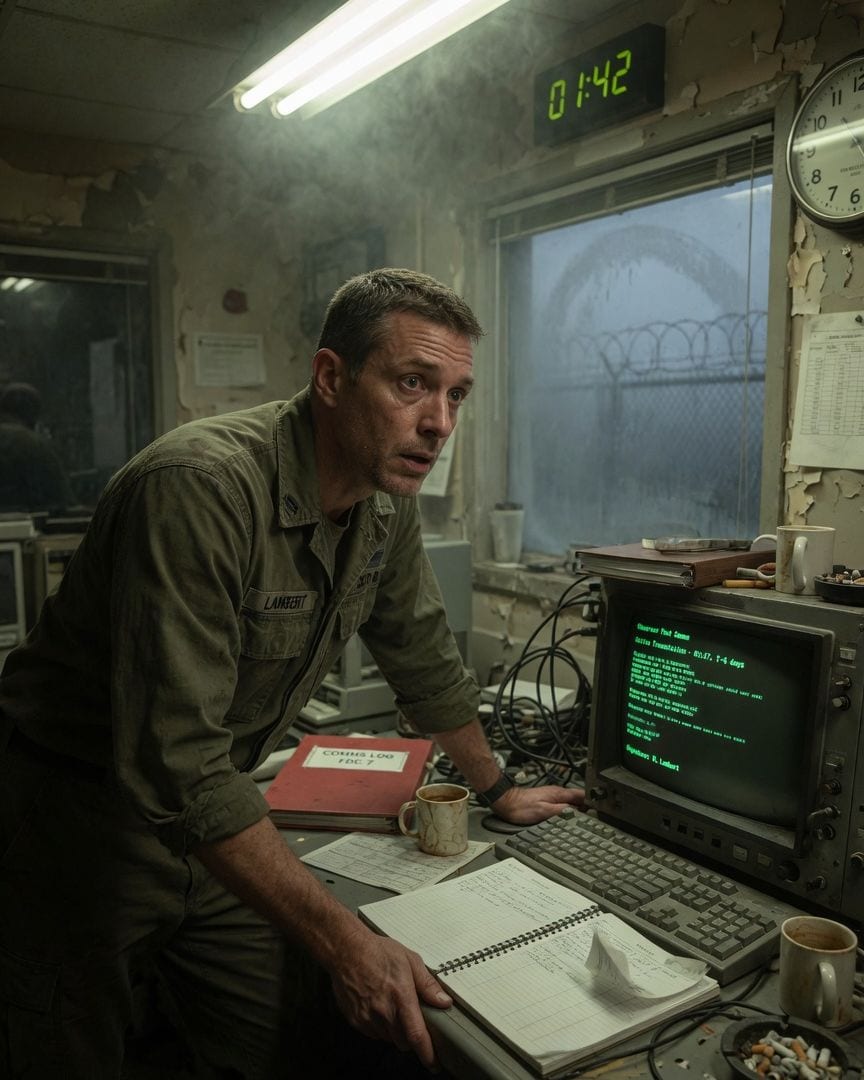
With Firebase 7 days from demolition, a dispatch specialist found his own signature on a log entry from a lost outpost. Then, a dead soldier's name appeared.
Specialist Robert Lambert hunched over the radio console in Firebase 7, the mountain fog pressing in as the base counted down its final days before demolition. His quiet shift shattered when urgent calls began arriving from outposts officially declared silent a week ago. His sergeant calmly informed him that he’d been speaking to no one, as all comms with those posts had been lost for hours. Later, Robert found a log entry for an active transmission, dated days after a post went dark, bearing his own signature. What chilling truth lay beneath the paper, revealing a dead soldier's name reporting from the grave?
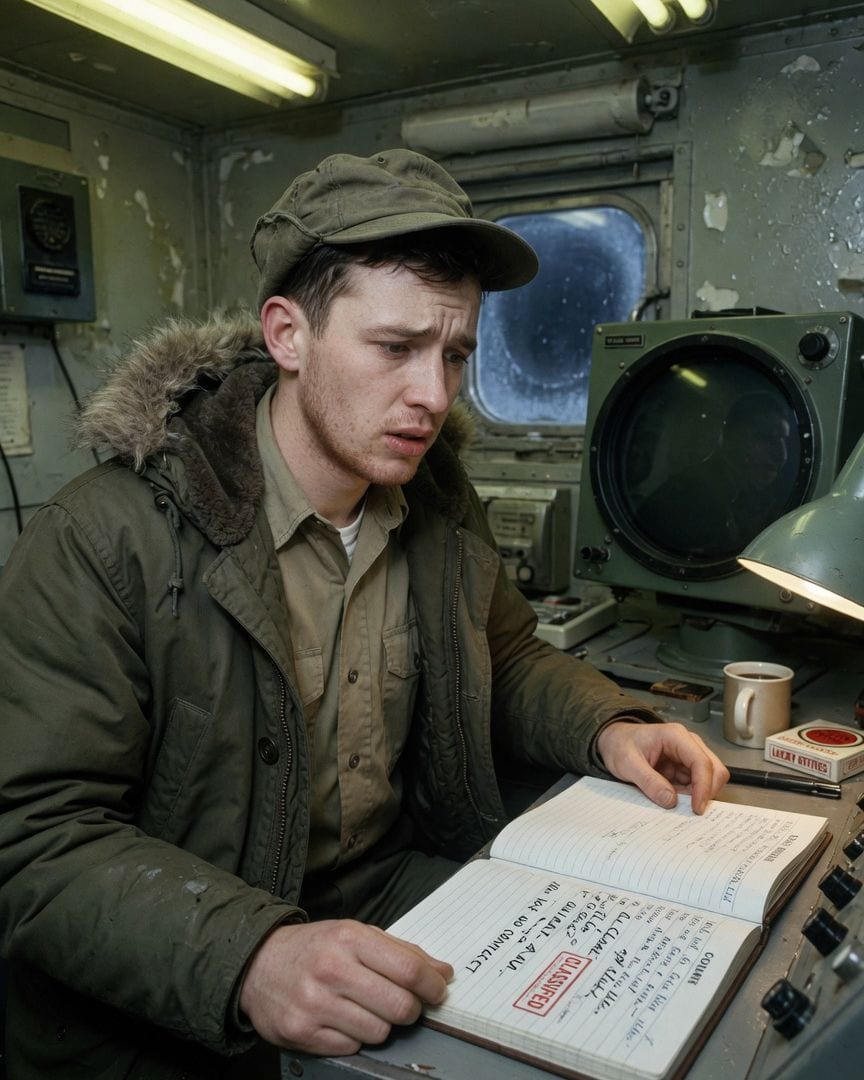
A Cold War airman logs an impossible radar contact on his last sweep. But his official logbook entry is stamped 'CLASSIFIED' and then contradicted by a hastily scrawled 'ALL CLEAR' dated moments before it.
Airman Ordway Vance, 22, manned the radar dome at Site Pellin in the biting North Atlantic dark of January 1962, running the last calibration sweep before its decommissioning. His scope picked up a faint, impossible return, growing closer with each pass, though the ocean remained empty to the eye. When Vance detailed the contact in his official logbook, a 'CLASSIFIED' stamp appeared, followed by a hastily scrawled 'ALL CLEAR' dated moments before his own entry, contradicting his every word. Commander Hartley dismissed it as equipment malfunction, but Vance sensed a chilling, official erasure behind the lie. He soon found a locked cabinet marked 'SITE PELLIN ANOMALIES,' hinting at a deeper truth buried within the base's final days.
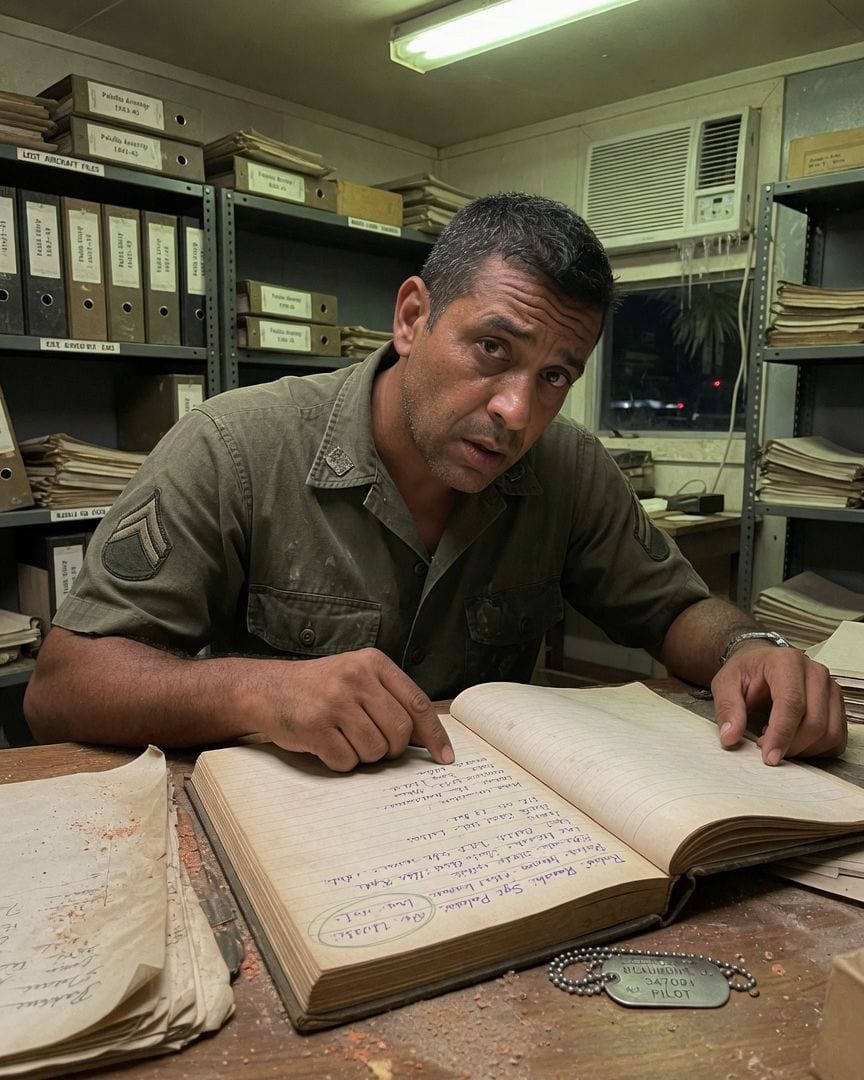
A sergeant's last watch on a forgotten outpost: His own name appeared on an 80-year-old crash manifest.
Sergeant Leon Pulaski spent his last night at the remote Peleliu Atoll Airstrip, its final closure imminent, listening to the rhythmic sigh of the Pacific. Just after 0330, a garbled distress call pierced the silence, requesting the field for a plane with a tail number, 'Ghost Two-Niner-Niner,' retired since World War II. Though Pulaski, disciplined and rational, logged the impossible call as a phantom, the crash crew later found a fresh gouge in the coral and a shard of cockpit glass, still warm, where no wreck existed. His quiet unease only deepened when he discovered a dog tag belonging to a pilot declared lost eighty years prior. But the true chill landed when he found his own name on that same eighty-year-old crash manifest.
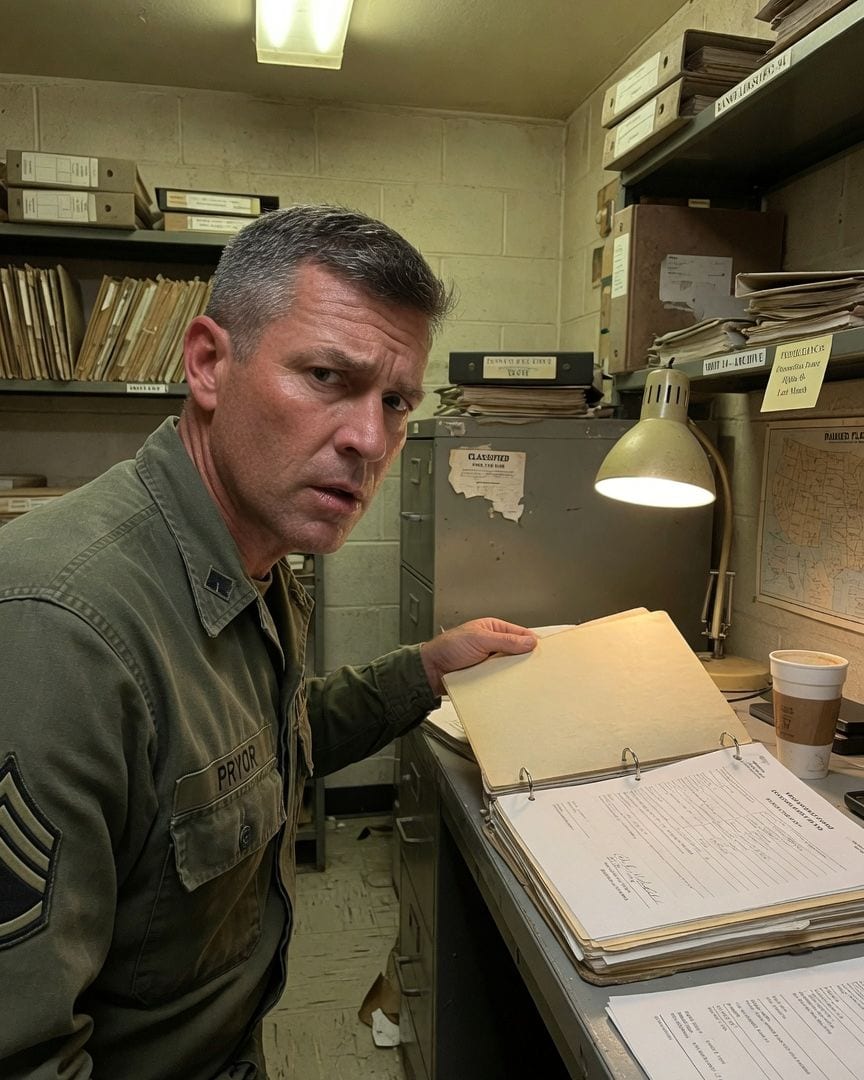
A sergeant with eleven days left finds a warm, glassed crater. Its file shows a captain lost thirty years ago is still signing reports from last week.
Sergeant Alden Pryor was counting down his final eleven days on a twenty-year hitch, expecting to spend them on routine patrols along the Ranier Flats fence line. Instead, his truck stopped at a bizarre sight: a four-hundred-foot glassed crater, miles from anywhere, its sand faintly warm at dawn despite no one recalling a blast. The air above it shimmered with an unnatural distortion, a silent scar of erased violence, and the official file for 'Shot 14' showed recent maintenance sign-offs for a decommissioned tower at the crater site. All these active documents were signed by Captain Everett Caldwell, who had been officially lost in operations thirty years ago, leaving Sergeant Pryor to wonder how a dead man could still be filing reports.
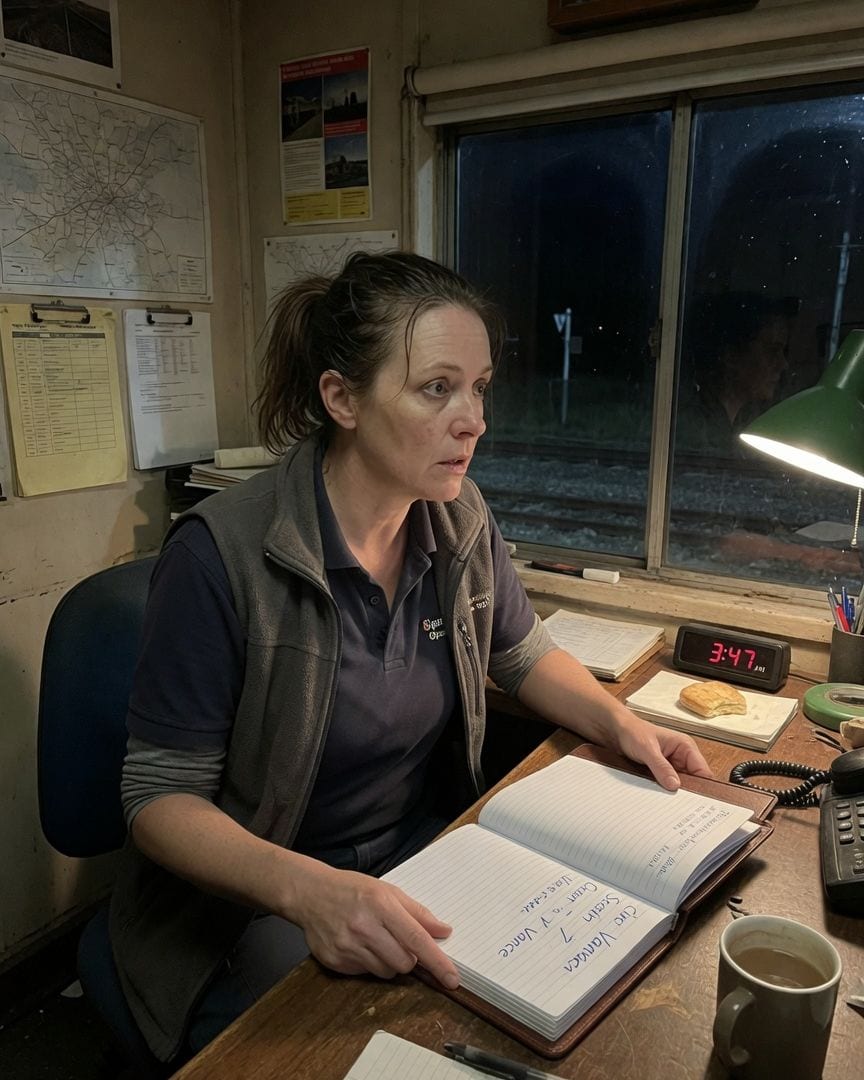
My linesman taps twice on my window at 3 AM. Control says he retired and passed years ago.
My routine at the rural signal cabin was regular: the linesman's double tap on the window at 3 AM. But then my supervisor called, revealing the linesman I knew, Warren Vance, had died five years ago. Now, an impossible entry in my official logbook, with his signature and timestamped from my shift, proves someone else was there.
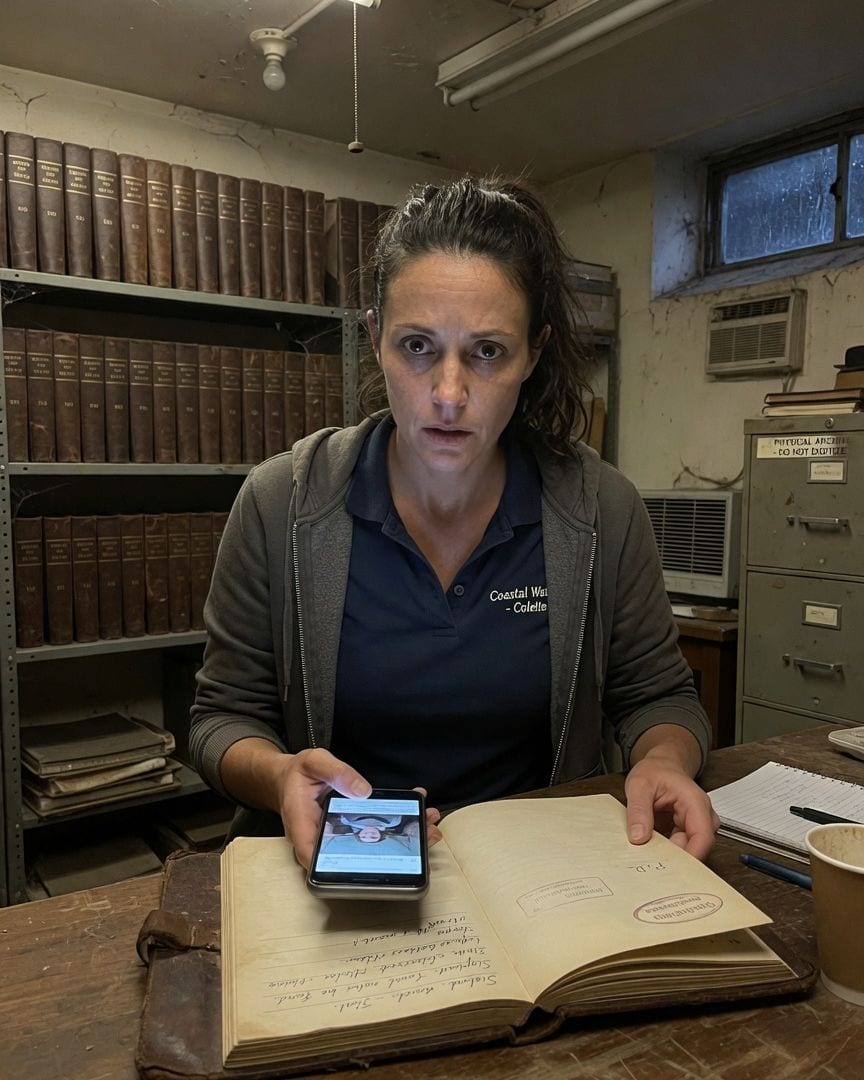
My coastguard log noted Sighting 9 again tonight, a light where no vessel showed. The old logs carry Sighting 9 off Skerry Point at 3:14am every tenth year since 1954, always 'nothing found,' always 'send no boat.'
On my watchtower night shift, the radar screen glowed green and the ocean was quiet. Then, a familiar light appeared off Skerry Point, exactly on cue, just as it had every tenth year for decades. But digging deeper, I found a hidden stamp in an old logbook: 'Operation Skerry. Status: Complete.' It left me with a chilling sense of finality.