Three months from his tour ending, a sergeant's Cold War radio lists his name with a blank 'ceased answering' date. A hidden logbook warns: 'It knows my name.'
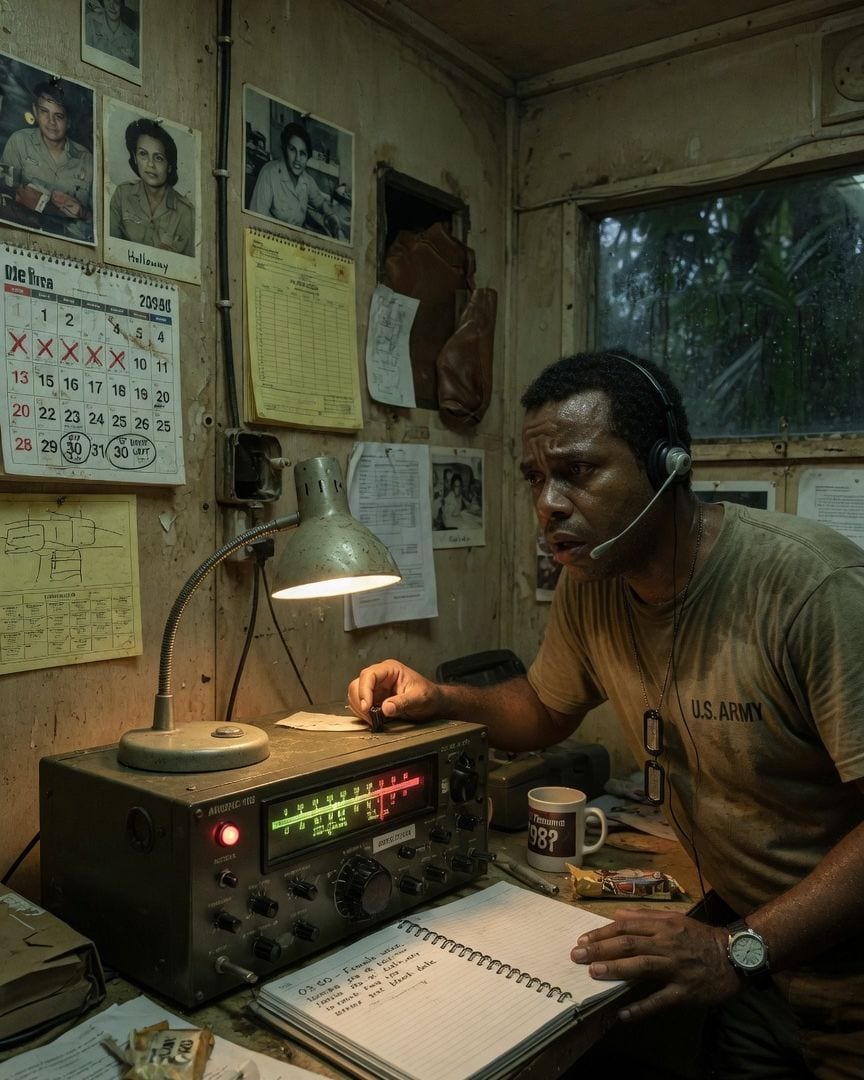
The humid Panamanian night pressed against the comms shack walls. Sergeant Kevin Brooks, 32, watched the clock crawl towards 0300.
His twelve-month tour at the remote jungle station was three months from ending, and he’d been counting the days with an almost obsessive focus, marking each one on a worn calendar above his cot.
Tonight, the air was particularly heavy, thick with the scent of damp earth and unseen blossoms.
Exactly at 0300, the old AN/GRC-106 radio crackled to life, not with the usual hiss of static, but a woman’s calm, dispassionate voice. Brooks leaned forward, his hand hovering over the squelch knob.
It began a list, a roll call of names and dates.
“Sergeant Miller, John. Ceased answering, 1978, October 14th.”
Brooks frowned. Ceased answering? What kind of signal was this? He checked the frequency display, then his watch. It was still 0300 precisely.
“Sergeant Chen, Li. Ceased answering, 1980, January 2nd.”
A growing chill pricked at Brooks's skin. The names were all comms operators, his predecessors in this very billet. He recognized a few from faded photographs pinned to the bulletin board.
The dates were precise, recited with an almost clinical detachment. The voice continued, relentless, through two more names, the quiet room amplifying its unnerving clarity.
Then, a pause. A breath of static, thin and sharp like a whisper. Brooks felt his heart thump in his chest. The radio seemed to hold its breath.
The voice spoke his own name: “Sergeant Brooks, Kevin.”
Another pause. Longer this time. The only sound was the low hum of the radio and Brooks’s own ragged breathing. And then, a single, waiting blank space where his ‘ceased answering’ date should have been.
The list began again, looping back to Sergeant Miller.
Brooks tried to rationalize it. A prank? An old, mislabeled recording someone had left playing on a loop? He ran through the possibilities in his mind, dismissing each one as quickly as it came.
No one else was on his shift. The station commander, Captain Lambert, was hardly the type for elaborate jokes. He checked the radio’s frequency, the receiver settings. Everything was standard, exactly as he’d left it.
He tapped the antenna lead, then the side of the console. Nothing changed. The calm voice continued its grim roll call.
He logged the incident, noting the precise time, the peculiar content, the looping nature of the transmission. His pen felt heavy in his hand as he wrote, the ink bleeding slightly on the damp paper.
The next day, under the pretense of routine maintenance, Brooks pulled the official comms duty logs for the station, going back as far as he could.
He cross-referenced the names from the transmission with the personnel rosters filed meticulously in the command office.
Sergeant John Miller, Sergeant Li Chen—they were indeed listed. But their records showed transfer dates, not ‘ceased answering’ dates. Sergeant Miller had been transferred to a new post in Germany. Sergeant Chen had retired and returned to CONUS.
Their records were spotless, complete, almost unnervingly perfect. No mention of any incidents, no disciplinary actions, no missing personnel. Nothing to suggest a 'ceased answering' or anything other than a clean, orderly transition.
It was too clean. The official narratives were pristine, devoid of even the slightest anomaly. Brooks felt a growing unease, a sense that the paperwork was actively resisting the truth of the transmission, a subtle, institutional pushback against reality.
He tried to find anything unofficial—any old notes from previous operators, a forgotten diary, a doodle on the back of a desk drawer.
He checked behind the console, under the floor mat, even removed a few innocuous-looking plates on the radio housing. Nothing. The more he searched, the more the official records seemed to seal off every potential avenue of investigation.
The system was too perfect; that perfection felt like a deliberate lie.
Frustrated, Brooks ran his hand along the rough-hewn paneling of the shack, a habit from his early days in the corps, feeling for anything loose, anything out of place.
His fingers snagged on a loose seam, hidden behind a frayed wiring conduit that snaked down the wall. He tugged, and with a soft groan of old wood, a section of the wall gave way, revealing a small, dark cavity.
Inside, tucked away, was a battered, leather-bound logbook. It was old, its cover worn smooth, its pages yellowed and brittle. The cover bore a faded stencil: 'SGT. R. HOLLOWAY, COMMS.' Brooks’s breath caught in his throat. Rachel Holloway.
Her name was the one just before his on the transmission list, 'Ceased answering, 1986, March 1st.'
He opened the book, the aged leather creaking, and the first line of the first entry, in a tight, frantic script, hit him like a physical blow:
'It knows my name. It knows my date. It just left a blank space for you.'
Sergeant Brooks spent the next few days devouring Rachel Holloway’s log. Her entries detailed the exact same 0300 transmission, the same list of names, the same blank space after her own.
Holloway, too, had tried to find rational explanations, meticulously documenting her attempts to trace the signal, to find errors in the equipment, to consult old records.
She described the growing isolation, the feeling of being watched, the subtle changes in the station’s atmosphere. The hum of the radio seemed to vibrate not just through the shack, but through the very ground beneath her feet, she wrote.
Her later entries grew more disjointed, filled with dread, referencing a 'presence' in the static, a 'pull' that intensified with each passing week.
She spoke of her memories feeling distant, like someone else’s, and a growing certainty that her own thoughts were no longer entirely her own.
Brooks felt a chilling echo of her experiences, the words on the page resonating with his own mounting anxiety. He checked the dates in Holloway’s log against the transmission’s roster—they matched perfectly.
She had noted her own 'ceased answering' date in the log, scrawled in a shaky hand, exactly as the calm voice had recited it.
He also found a faded photograph tucked into the logbook, a group of smiling soldiers from years past, standing in front of the comms shack. One of them, a bright-eyed young woman with a determined chin, was clearly Holloway.
He recognized another face: Master Sergeant Oliver Donovan, then a younger NCO, his expression solemn even then, standing a little apart from the others. Brooks felt a cold certainty that Donovan knew something.
There was a quiet intensity in Donovan’s gaze in the photo that set him apart.
Later that day, while on a perimeter check, Brooks discovered an old, unofficial memorial plaque, almost entirely overgrown with thick jungle vines, tucked away behind the motor pool.
It was a crude, hand-painted wooden sign, weathered and faded, listing names of soldiers 'lost to the jungle,' with dates.
Rachel Holloway’s name was there, etched into the wood, with the exact 'ceased answering' date from the transmission: March 1st, 1986. Her official record, however, still stated 'transferred to CONUS,' a lie as solid and deliberate as the jungle itself.
Brooks’s persistent questions about old records and missing personnel started to draw attention. Captain Linda Lambert, the station commander, called him into her office, a space as stark and orderly as her own demeanor.
Her tone was firm, her eyes unreadable.
“Sergeant Brooks, your focus on these ‘anomalies’ is becoming a distraction. This station is closing in three months. We need you focused on maintaining comms, not chasing ghosts.” She leaned forward slightly, her gaze sharp. “Fatigue, jungle fever, Sergeant.
It can play tricks on the mind. Maintain your reports. Nothing more.” She dismissed his concerns about the transmission as nothing more than the product of an overactive imagination and the isolation of the post.
As Brooks left, the captain’s words echoing in his ears, he caught Master Sergeant Donovan watching him from the logistics office doorway. Donovan’s usual stoic expression was replaced by a flicker of something unreadable – concern, or perhaps warning.
A tightening around the eyes that Brooks couldn't decipher. The moment passed, and Donovan turned back to his paperwork, but the image stayed with Brooks.
Later that week, Brooks found a new entry in the official comms log, dated two days prior, noting a 'routine system check' on the AN/GRC-106, signed by him. He stared at the signature.
It was a perfect forgery, precise and flowing, replicating his own hand with chilling accuracy. He had performed no such check.
The system was not just hiding things; it was actively fabricating them, trying to make his own actions fit a predetermined narrative.
The threat was no longer just a distant voice; it was inside the very records he relied on, twisting his own reality, making his own history into a lie.
The air in the shack seemed to thicken around him, cold and still.
Brooks cornered Master Sergeant Donovan in the mess hall late one night. The room was empty, save for the hum of the old refrigerators and the distant chirping of jungle insects.
Donovan was nursing a cup of lukewarm coffee, staring at the scarred tabletop.
“Master Sergeant,” Brooks began, his voice low, “I know about the transmission. I know about Holloway. And I know about the plaque.”
Donovan flinched, a subtle tightening of his jaw, his gaze still fixed on the table. “Some things are better left alone, Sergeant.” His voice was raspy, tired.
Brooks pressed, the weight of Holloway’s log and the forged entry heavy on his conscience. “The official records are lies. Why? What happens to them?”
Donovan sighed, running a hand over his close-cropped gray hair. “The jungle… it takes things. Or, rather, it absorbs them. This station… it sits on something old. Something that needs a voice. It needs the comms operators.”
He looked up then, his eyes dark with a resigned sadness. He explained how, for decades, operators at this billet would slowly become ‘attuned’ to the anomaly, hearing the transmission, then feeling a ‘pull.’
The ‘end date’ wasn’t when they disappeared, he clarified, but when their consciousness, their self, was fully integrated into the anomaly, becoming part of the looping voice.
“The military knows,” Donovan admitted, his voice barely a whisper, a contrast to the distant drone of the jungle. “They can’t stop it, so they contain it. Keep the records clean, rotate new blood in. It’s… an acceptable loss.
A contained anomaly.”
The pieces clicked into place for Brooks: the pristine records, the forged signature on his own log, the ‘transfers’ that were really absorptions. The comms system wasn’t just receiving; it was feeding. A monstrous, silent consumption.
Donovan looked at Brooks, a profound sadness in his eyes, a sorrow that seemed decades old. “You think Holloway’s log was a warning for the next man? It wasn’t. It was a lament.
And the transmission… it’s not just a list of victims.” He paused, the silence in the mess hall stretching taut. Then, he slid an ancient, brittle piece of parchment across the table, retrieved from his own worn wallet.
It was a crude, handwritten roster of comms operators, dating back decades, far older than any official record. Brooks saw names he recognized, names from the transmission, each followed by a date.
Donovan pointed a trembling finger at the name 'Brooks, Kevin' etched in faded ink, near the bottom of the list. It was followed by a blank space, exactly where it should be.
“Your name, Sergeant. It wasn’t added to that list when you arrived. It was always there. The anomaly… it doesn’t just claim who's here now. It knows who's coming. It had your name ready.
You were always part of its plan, even before you were born. The blank space wasn’t for the next operator after you, Sergeant. It was for you, waiting for your turn to begin.”
Brooks felt a cold dread seize him, a terror far deeper than anything he’d known. He wasn’t just observing a pattern; he was its designated subject.
The realization hit Brooks with sickening force: he was not a random assignment, but a pre-selected component in a terrifying, ancient mechanism.
The station wasn’t just a place where things happened; it was a hungry mouth, and the comms operators were its sustenance.
The voice on the radio was the collective echo of everyone who had been absorbed, a chorus of the lost, eternally broadcasting their own demise.
Donovan explained that the comms shack itself, particularly the old AN/GRC-106, acted as the primary conduit, amplifying the anomaly’s reach. The radio wasn't just a communication device; it was a lure.
He led Brooks back to the shack, the air feeling heavy with unspoken history. Donovan knelt by the console, his movements practiced and precise.
He revealed a hidden compartment beneath the shack’s floorboards, accessible only by a secret latch disguised as a scuff mark. The wood creaked open, exhaling a faint, earthy smell.
Inside, resting on a bed of dark soil, the core of the anomaly resided: a strange, organic-looking device, roughly spherical, about the size of a human head, humming with a low, resonant energy.
It pulsed with a faint, internal light, a soft, deep violet that seemed to draw the light from the room.
Brooks could almost hear the faint, layered whispers emanating from it—the voices of Miller, Chen, Holloway, and countless others, all woven into the calm, looping transmission.
This was the true source, the artifact that should not exist, feeding on the very men assigned to ‘guard’ it. Tiny, hair-thin filaments, almost invisible, extended from its surface and disappeared into the floorboards, presumably connecting to the radio's antenna.
The shack, Brooks realized, was not just built over the anomaly; it was built for it.
Brooks stared at the pulsing device beneath the floorboards, its alien hum filling the small shack, a sound that vibrated deep in his bones. Donovan had warned him: “You can’t stop it, Sergeant. Only delay your own turn.”
But Brooks couldn’t accept it. He grabbed a heavy wrench from his toolbox, the cold metal a familiar weight in his trembling hand. He was determined to smash the thing, to sever the connection, to break the loop.
As he raised the wrench, the looping transmission on the radio intensified, the woman’s calm voice suddenly layered with faint, pleading whispers, a cacophony of lost souls, each one a thread pulling at his mind.
The device pulsed brighter, its violet light throbbing, and Brooks felt a profound, irresistible pull on his own consciousness, a sensation of his identity being stretched thin, drawn towards the humming core.
He saw flashes in his mind: memories of his childhood, his enlistment, his family. His first kiss, his mother's face, the smell of his old garage.
The anomaly was trying to absorb him, to unravel him, to make him one more whisper in its eternal chorus.
He fought it, gritting his teeth, a scream catching in his throat. The wrench shook in his hand, a heavy anchor against the unseen current.
He brought it down, not on the pulsing core, but on the radio’s antenna cable, the thick conduit leading into the wall. He struck with all his might, severing it with a sparking clang that momentarily blinded him.
The transmission cut out instantly. The shack fell silent, the abrupt cessation of the voices a profound shock.
The device beneath the floor pulsed once, violently, a final, defiant throb of violet light, then dimmed, its hum fading to a low thrum. The whispers ceased. Brooks, gasping, stumbled backward, collapsing against the console.
He felt like a part of his mind had been ripped away, a raw, aching void where his memories had almost been claimed, but he was still himself.
He had cut the immediate conduit, but the core remained, humming faintly, a silent, patient hunter, waiting for another connection.
He had escaped, but the mark of the pull, the imprint of the void, was now a permanent part of him.
The station was decommissioned ahead of schedule, its closure expedited due to 'unforeseen structural integrity issues' and 'accelerated material degradation,' according to official reports.
Sergeant Brooks was transferred to a remote processing center, then discharged early with an honorable mention for 'exceptional service under unusual circumstances.'
The official report, signed by Captain Lambert, made no mention of the transmission, the hidden device, or the history of lost operators. Master Sergeant Donovan was quietly retired, vanishing into the quiet bureaucracy of military pensions.
The jungle reclaimed the outpost swiftly, its dense foliage swallowing the shack and its silent secret within months, leaving behind only the sound of cicadas and the oppressive humidity. Brooks never spoke of it, and no one ever asked.
Years later, a veteran now, Kevin Brooks lived a quiet life in a small town in Arizona. He avoided radios, especially old shortwave sets.
He took solace in the predictable rhythms of a civilian existence, the mundane details of his days a balm to the raw edges of his memory.
But sometimes, in the deepest hours of the night, when the house was silent and the world slept, he could still hear it.
A faint, distant hum, like a memory echoing in the empty spaces of his mind, the ghost of a vibration beneath his feet. He’d feel the ghost of a pull, a subtle tug at the edges of his consciousness.
And sometimes, he’d catch himself, almost unconsciously, listening for a calm voice, waiting for a list of names to begin.
If this one got to you
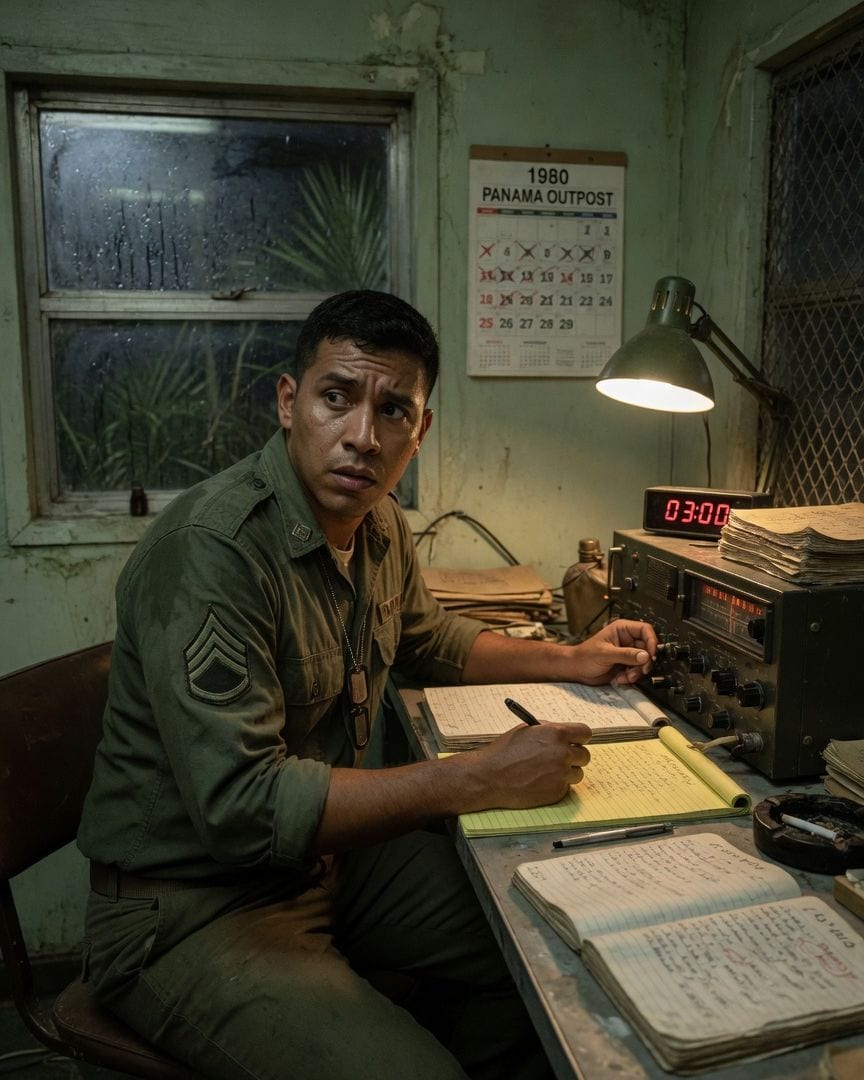
A Cold War comms operator at a remote outpost hears predecessors listed as 'stopped answering' — then the voice calls his own name.
Sergeant Adam Ibarra endured the damp Panamanian night in his remote outpost, the hum of old equipment his only companion. For three nights, a calm woman's voice transmitted a looping list of names and dates on the comms set, initially dismissed as a forgotten test loop. But the truth chilled him: these were his predecessors at the station, listed with the precise dates they had 'stopped answering' — and the sequence ended with a blank space just before his own. On the fourth night, Ibarra waited, rigid, as the voice added the last operator's name before him, then paused. Clear as a bell, it finally spoke: 'Ibarra, Adam.' What date would it add next?
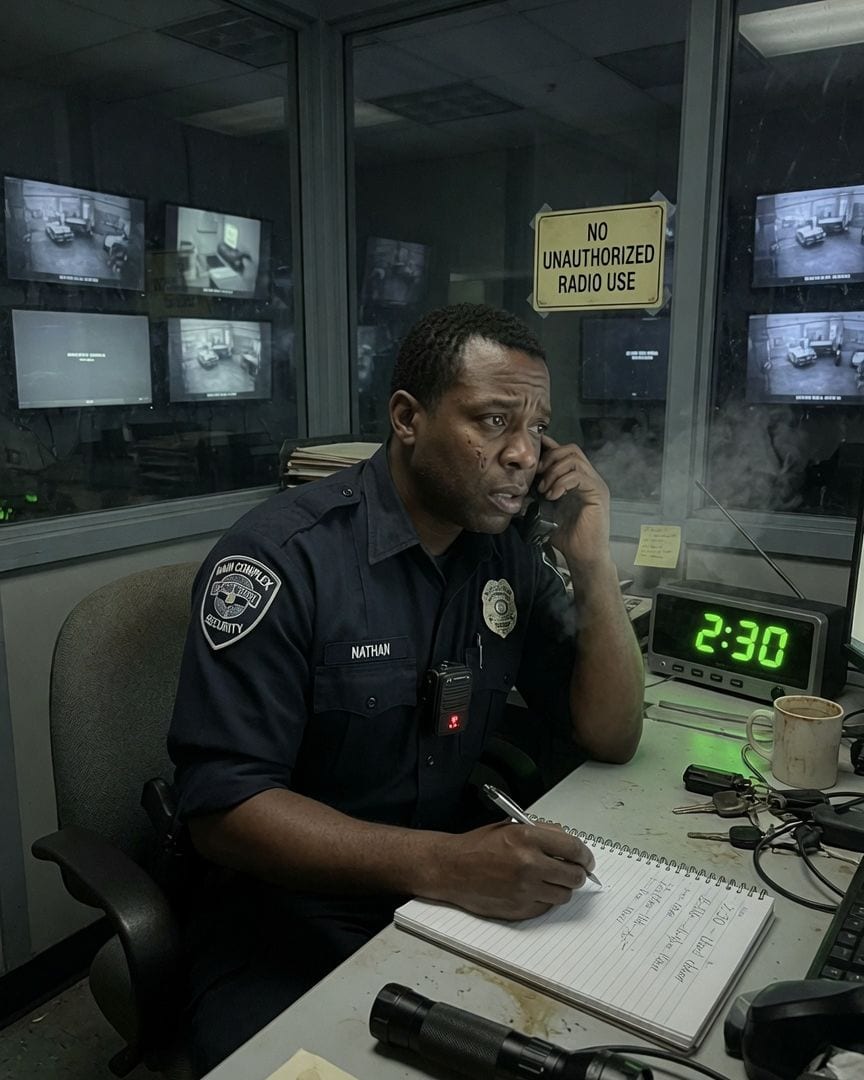
I radio Cole every night. My supervisor says his dock post was cut two years ago, and no Cole exists. But I just found Cole’s old logbook.
My graveyard shift usually consists of monotonous hourly check-ins with Cole, the guard at the loading dock. But my supervisor just revealed that the dock post was cut two years ago, and no one named Cole has ever worked for the company. I've been talking to someone who simply isn't there.
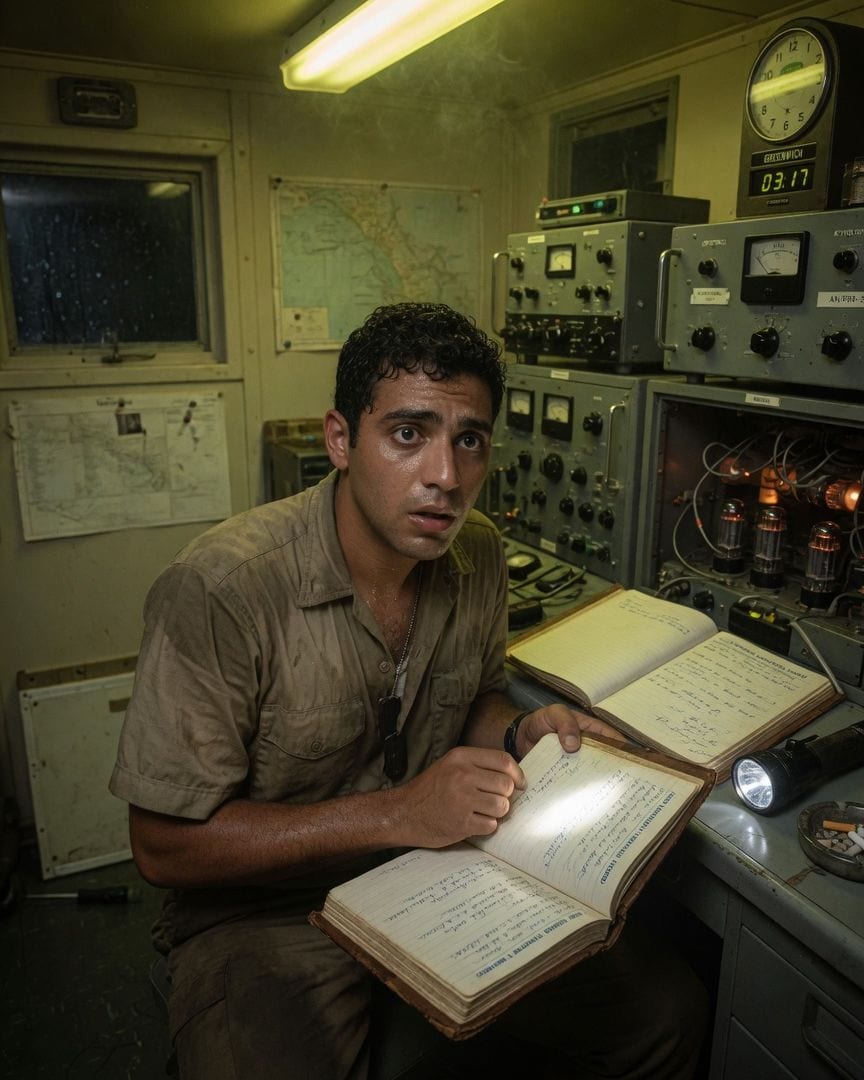
Three weeks from going home, Radioman Petrakis hears his own ship called 'no longer answering' on a broadcast — just like an old logbook describes for other Cold War radiomen.
Radioman Charles Petrakis counted the final weeks of his tour on a humid island station, the constant hiss of the Pacific his only companion as he monitored fleet broadcasts. Then, for ninety seconds, the encrypted stream dissolved into a calm voice listing ships 'no longer answering,' their fates sealed with a date. Petrakis froze as the voice named his own vessel, the USS St. Augustine, for a date three weeks in the future. With official logs showing no anomaly, he later unearthed an old, unofficial logbook detailing similar broadcasts—and the 'tour ending' for other radiomen.
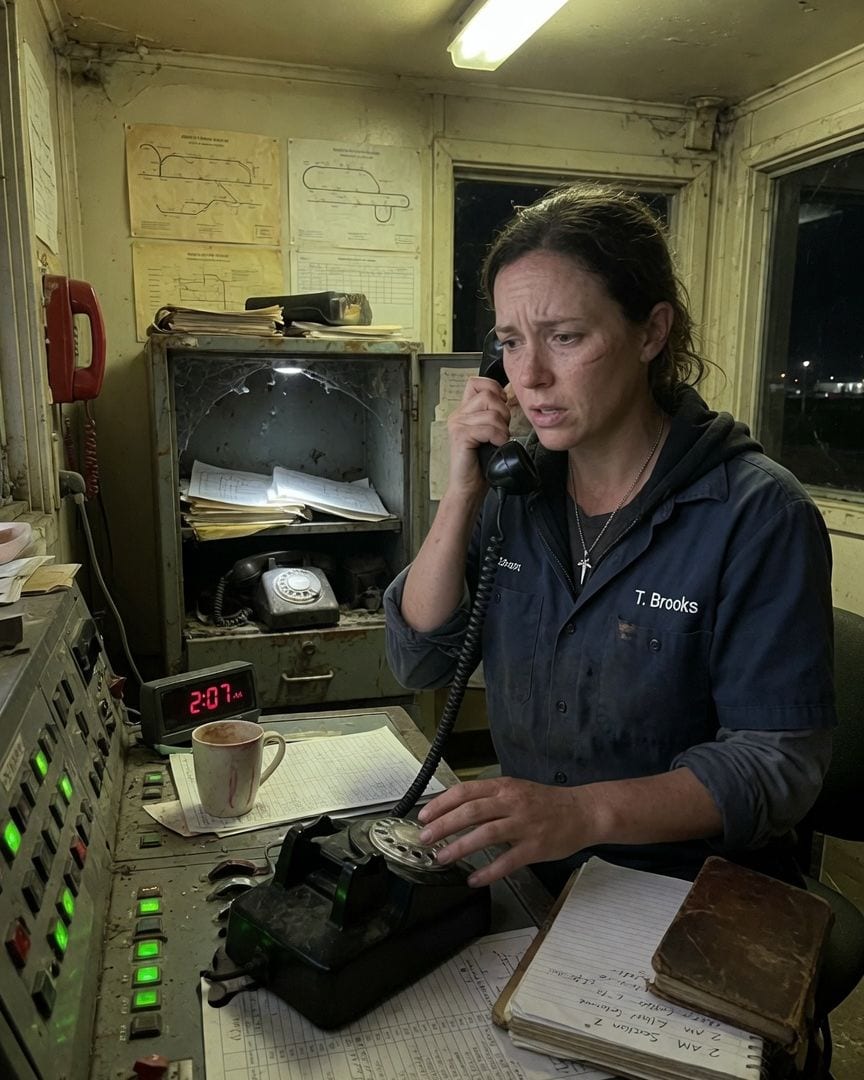
My signal box gets a 2 AM call every night from a man whose section was demolished eleven years ago. Now I found his logbook with today's date.
My night shift at the signal box is quiet and precise, defined by the routine 2 AM call from Ellis confirming Section 7 is clear. But when I asked my duty manager to log it, he said Section 7 hasn't had a track walker in eleven years, not since its cabin and phone were demolished.
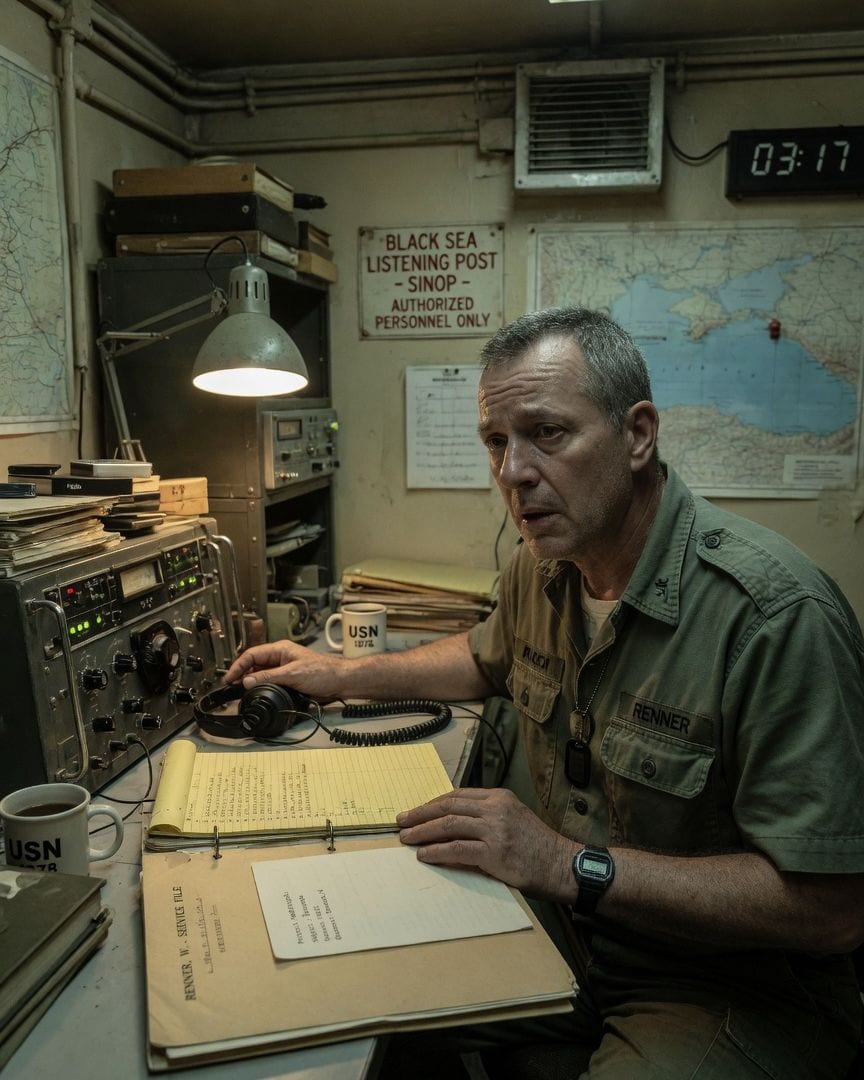
Specialist Walt Renner had six weeks left at Sinop when his Cold War numbers station stopped counting and spoke his mother's name: 'Walter.'
Specialist Walt Renner had just six weeks left at the Sinop station, anticipating the close of his thirty-year career. For almost two decades, he had tracked a mysterious numbers station, broadcasting from an impossible point in the Black Sea. Tonight, the woman's flat voice stopped counting, and the static cleared, replaced by a single, perfectly clear word: 'Walter.' It was the intimate name his mother had used, a name he hadn't answered to in decades. Yet, it emanated from the same empty water, a deeply personal address from the void itself.
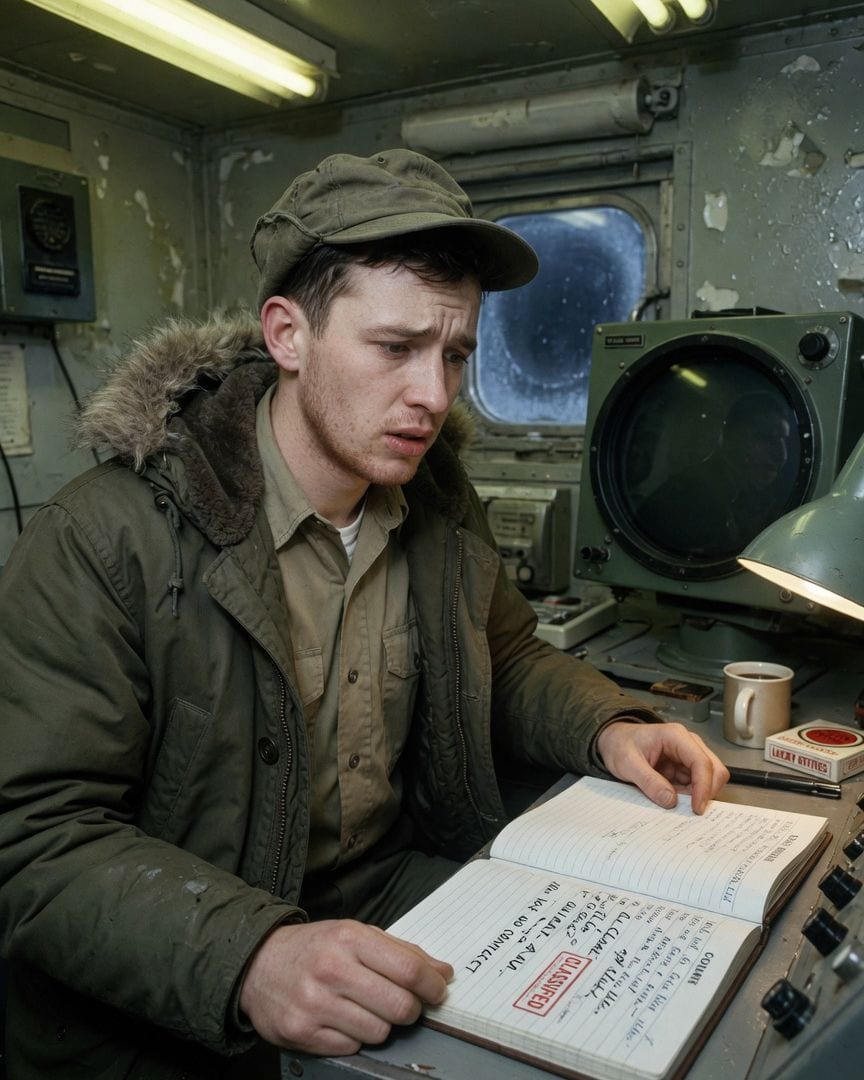
A Cold War airman logs an impossible radar contact on his last sweep. But his official logbook entry is stamped 'CLASSIFIED' and then contradicted by a hastily scrawled 'ALL CLEAR' dated moments before it.
Airman Ordway Vance, 22, manned the radar dome at Site Pellin in the biting North Atlantic dark of January 1962, running the last calibration sweep before its decommissioning. His scope picked up a faint, impossible return, growing closer with each pass, though the ocean remained empty to the eye. When Vance detailed the contact in his official logbook, a 'CLASSIFIED' stamp appeared, followed by a hastily scrawled 'ALL CLEAR' dated moments before his own entry, contradicting his every word. Commander Hartley dismissed it as equipment malfunction, but Vance sensed a chilling, official erasure behind the lie. He soon found a locked cabinet marked 'SITE PELLIN ANOMALIES,' hinting at a deeper truth buried within the base's final days.