Three weeks from going home, Radioman Petrakis hears his own ship called 'no longer answering' on a broadcast — just like an old logbook describes for other Cold War radiomen.
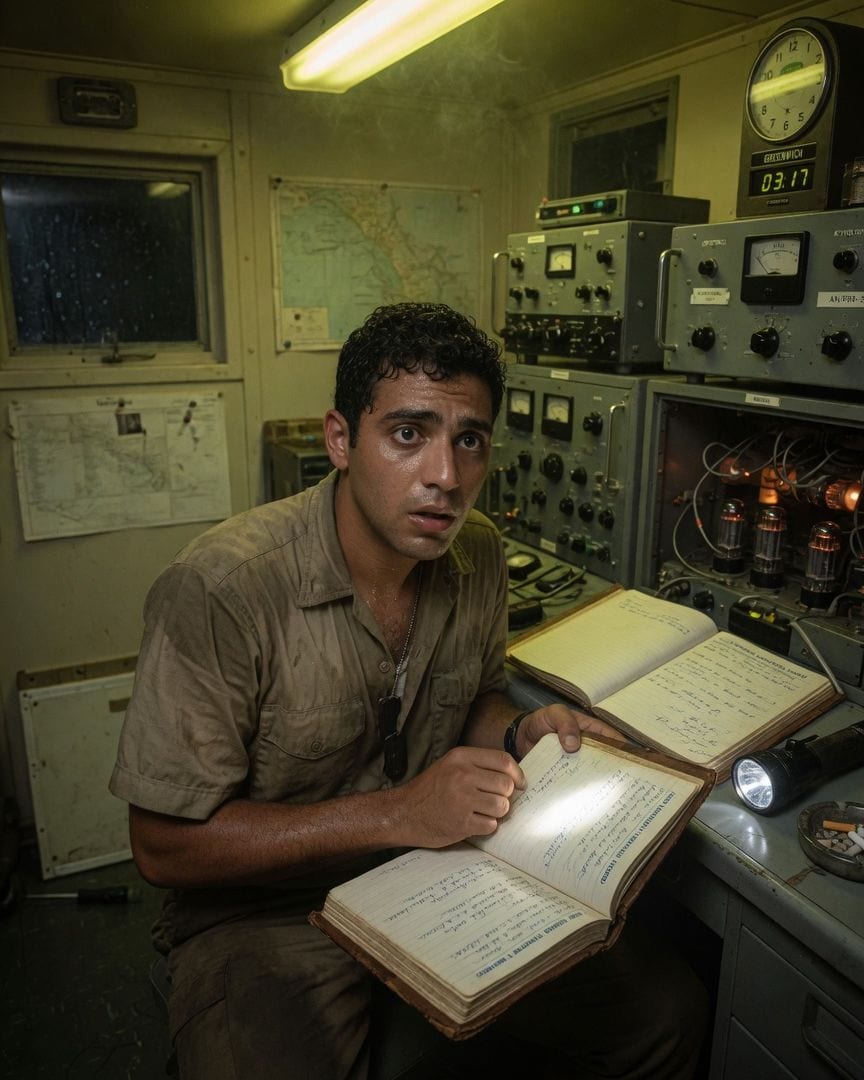
The humid quiet of the island station’s radio room hung heavy around Charles Petrakis. The only sound was the hiss and crackle of the Pacific, a constant companion.
Three weeks from returning stateside, the end of his tour was a tangible thing, a light at the end of a long tunnel of static.
He sat hunched over the console, monitoring the fleet broadcast, a numbered stream of encrypted groups, a constant, unvarying pulse that had become as much a part of the background as his own heartbeat.
Then, for ninety seconds, it wasn’t.
The encryption dissolved into plain, clipped American English. A single, calm male voice began reading names, each word devoid of emotion. 'USS Lexington, 1959, no longer answering. USS Saratoga, 1961, no longer answering.'
The list went on, a monotonous recitation of ships and dates, each phrase a cold, definitive period. Petrakis froze, his hand hovering over the squelch knob, a sudden chill prickling his skin despite the tropical air.
The voice continued, listing vessels active and known, the dates drawing closer to the present. He recognized the call signs, etched into his memory from months of monitoring. Then, the voice read: 'USS St. Augustine, July 14, 1962, no longer answering.'
Petrakis’s breath hitched in his throat. That was his ship. The date was three weeks from today.
Just as abruptly, the encrypted stream snapped back, the groups resuming exactly where they had left off, as if the ninety seconds of plain language had never happened.
The logs of every other station on the circuit, he would later confirm, showed no break at all.
Petrakis spent the rest of his watch in a cold sweat, meticulously checking every piece of equipment.
He ran diagnostics on the receiver, checked the frequency calibration, even opened the back panel to inspect the vacuum tubes, his fingers trembling slightly. Everything was squared away, humming perfectly, the metal still warm from its routine operation.
The master clock, synchronized to Greenwich, showed no drift. The room itself felt different, a sudden emptiness where the hum of machines used to be comforting.
He filed a terse report with Chief Petty Officer Renee Donovan, attributing the anomaly to a 'brief, inexplicable atmospheric disturbance' despite knowing it was a lie. Donovan, ever by-the-book, simply initialed it, her expression unreadable beneath the harsh overhead light.
'Long night, Petrakis?' she’d asked, her tone flat, a hint of something he couldn't quite decipher in her eyes. He tried to contact other stations on the circuit, calling them on a secure line.
'Anything unusual on the fleet broadcast tonight?' he asked, his voice carefully neutral, attempting to sound bored, professional. Each reply was the same: 'Negative, good copy all night.'
The official station log, a thick bound book where every transmission and reception was meticulously recorded, confirmed it. His own signature, from earlier in his watch, was there, attesting to 'continuous encrypted traffic.'
It was the record that swore otherwise, his own hand a witness against his own memory. The dread tightened its grip, cold and persistent.
He began to search the radio room, not for a fault in the equipment, but for an answer to the impossible event.
Behind a dusty, rarely moved rack of old test equipment, a metallic tang of ozone in the air, he noticed a loose panel in the wall, tucked low near the floor.
Prying it open with a screwdriver, the metal scraping against wood, his flashlight beam revealed a small, dark recess. Inside, wrapped in oilcloth, was a battered, leather-bound book, its pages yellowed and brittle.
It was an old logbook, not official issue, filled with dense, looping handwriting.
Petrakis pulled the book into the dim light. The first few pages were standard radio logs, detailing routine transmissions and receptions, but further in, the entries grew stranger.
Lists of names, dates, and call signs appeared, often accompanied by cryptic notes he couldn’t immediately decipher. He flipped through, the dry pages rustling, a growing unease coiling in his gut.
The silence of the room seemed to press in on him, the shadows stretching and shortening with every tremor of his hand. Then he found an entry, dated 1947, written in the same looping hand.
It detailed a similar broadcast anomaly, a list of ships 'no longer answering,' and then, chillingly, beneath the name of a destroyer, the USS Vance, was a single line: 'Radioman Joel Whitfield, tour ending.'
Petrakis stared at the name, his flashlight beam trembling over the faded ink, a cold dread washing over him. It wasn't just ships. It was radiomen.
The name Joel Whitfield haunted Petrakis. He spent his off-duty hours poring over the unofficial logbook, every creak of the old wooden barracks making him jump.
Whitfield's entries, meticulously penned over decades, described a recurring pattern: every few years, a radioman at this remote station would report a 'slip' in the fleet broadcast, a plain-language list of ships and personnel 'no longer answering.'
Each time, the dates listed for the disappearances were in the near future, mirroring Petrakis's own experience, and each time, official channels would report no such anomalies. Whitfield, it seemed, had been meticulously documenting what the system swore never happened.
Petrakis cross-referenced the ships and names with the station's archived official records, which dated back to the war, stored in a musty room smelling of old paper and dust.
For every ship Whitfield listed as 'no longer answering,' the official logs showed continuous, uneventful service until a specific, later date of decommissioning or transfer.
For every person, their service record ended with a normal discharge or reassignment, usually to a different station or vessel. But the dates in Whitfield's log were always earlier, and always marked 'no longer answering.'
It was as if two parallel realities existed, one acknowledged by the brass, the other whispered in static. Petrakis felt a growing urgency, a tightening knot in his stomach. He had to find Joel Whitfield.
He dug through old personnel files in the station's dusty administrative office, a place rarely visited, where the air hung still and heavy.
He found a faded photograph of a crew from the late 1940s, its edges curled with age, a younger Joel Whitfield among them, looking gaunt even then, his eyes too old for his face.
The service record indicated Whitfield had transferred to a shore duty position after his tour on the island, eventually retiring in San Diego. It was a normal, unremarkable career.
Too normal, Petrakis thought, for a man who kept a secret log of disappearances.
He felt a growing sense of being watched, an invisible pressure whenever he consulted Whitfield’s log, as if the silence of the radio room, once comforting, now felt heavy, observant, waiting for him to make a mistake.
Petrakis began making discreet inquiries about Joel Whitfield. He used the station’s limited long-range communications, routed through the standard channels, to contact a friend in Navy personnel in San Diego, feigning casual interest in a 'historical research project.'
His friend, a petty officer named Dean Langford, promised to look into it, his voice tinny over the crackling line.
A few days later, a cryptic message arrived via the station's internal comms, routed through Commander Caldwell's office, landing on Petrakis's desk like a cold stone: 'Petrakis. Your 'research' has drawn attention. Suggest you complete your tour without further distraction.
Caldwell.' The message was clipped, formal, but the underlying warning was clear. Caldwell knew he was digging. Petrakis felt a chill that had nothing to do with the air conditioning. Was Caldwell part of it?
Or just protecting the system, a cog in its silent operation? He decided to risk a direct call to Whitfield.
Using a secure line, he placed a call to the San Diego address listed in the personnel file, the numbers feeling heavy beneath his finger. The phone rang three times before an old, raspy voice answered.
'Whitfield,' the voice said, wary, tight. Petrakis introduced himself, explaining he was a radioman at 'Station M-17,' a name he knew would resonate, the designation for the remote island outpost.
There was a long silence on the other end, thick with unspoken history, the static on the line suddenly louder. 'You found the book, didn't you, son?' Whitfield finally rasped, his voice barely a whisper, freighted with an ancient sorrow.
'It's still there, isn't it? The broadcast?' The question was not one of surprise, but of grim confirmation. Petrakis heard a sharp intake of breath on the other end. 'You need to get out, son. Now. Before it's too late.'
The connection clicked, dead. Whitfield had hung up. Petrakis stood holding the receiver, the dial tone a mocking buzz in his ear. He was no longer just investigating; he was being warned. He was being watched.
And the clock was ticking down to his own date.
The next day, Commander Caldwell summoned Petrakis to his office. The door clicked shut with a soft finality.
Caldwell sat behind his heavy oak desk, a stack of official manifests neatly squared before him, the morning light glinting off their crisp pages. 'Radioman Petrakis,' Caldwell began, his voice calm but firm, 'your service record is exemplary.
You're three weeks from transfer. Don't jeopardize it.' Petrakis met his gaze, the stale air in the office feeling suddenly thin.
'Commander, the fleet broadcast on July 14th—' Caldwell cut him off, a faint, almost imperceptible tremor in his hand as he adjusted a pen on his desk blotter. 'There was no anomaly, Petrakis. The records are clear.
Your own signed log confirms continuous encrypted traffic.' He tapped the logbook with the pen, a sharp, accusing sound. 'You reported a disturbance, then signed off on a clean record. That's a contradiction. And now you're making unauthorized inquiries.'
Petrakis pushed back, his voice steady despite the tremor in his gut. 'Sir, I found an unofficial logbook. It details similar events, going back decades.' Caldwell's eyes narrowed, the placid surface of his composure rippling. 'Unauthorized materials. Confiscate it.'
Petrakis hesitated. 'It mentions Radioman Joel Whitfield, sir. He confirmed the broadcast.' Caldwell leaned forward, his voice dropping to a low, conspiratorial tone. 'Whitfield was discharged for mental instability. His 'logbook' is the ramblings of a man who couldn't cope.
He imagined things. This station has a history of isolation-induced psychosis, Petrakis. It's a known risk factor here.' He paused, then softened his tone, a calculated concern entering his voice. 'Look, Petrakis. I understand. This place can get to you.
The loneliness, the endless static. But I need you focused. You're a good radioman. Finish your tour, go home.'
Petrakis stared at the Commander, seeing not contempt, but a deep, ingrained fear in his eyes, not for Petrakis, but for the system. Caldwell knew.
He wasn't part of it, but he was enforcing its silence, a silent guardian of a terrible secret. 'What about the ships, sir? The ones 'no longer answering' in the unofficial log? Their official records are different.'
Caldwell sighed, a weariness settling on him, like dust gathering in a forgotten corner. 'Some things… some things are best left undisturbed, Petrakis. The Navy operates on order, on accountability.
Sometimes, for that order to hold, certain… discrepancies… must be managed. For the greater good.' Petrakis felt a cold dread solidify in his chest. It wasn't a glitch. It was a managed system.
The 'no longer answering' wasn't an accident; it was a deliberate erasure. Caldwell was admitting it, obliquely, confirming the unconfirmable. The official records were not just inaccurate; they were a deliberate fabrication, a blanketing lie to maintain 'order.'
The truth was a black hole, sucking away lives and leaving only pristine, false records in its wake. The phrase 'no longer answering' re-meaning itself in his mind: not just lost, but erased.
Petrakis returned to his bunk, the weight of Caldwell's veiled admission pressing down on him, making the air in the small room feel suffocating.
He knew he had to get off the island, not just for his scheduled transfer, but to escape. The only way was to understand the full scope of what he was up against.
He decided to call Joel Whitfield again, despite the chilling warning from Caldwell. This time, Whitfield answered immediately, as if he had been expecting the call. 'They're watching you, aren't they?'
Whitfield's voice was low, urgent, like a dry leaf skittering across pavement. 'Caldwell… he's just a gatekeeper. He doesn't know the whole truth. But I do. I was almost one of them.'
Petrakis pressed him, his own voice a frantic whisper. 'What is it, Mr. Whitfield? What's 'no longer answering' mean?' Whitfield hesitated, a ragged cough rattling through the phone line. 'It means you never existed. Not truly. They scrub you.
Every record, every memory. Your family forgets you. You're just… gone. And it's not random. It's a pattern, son. A cycle tied to that station.'
Whitfield then directed Petrakis to a specific, hidden compartment in the old logbook – a false bottom, cleverly concealed beneath a loose leather lining.
'There's a list in there,' Whitfield said, his voice trembling, an old man recounting a ghost story he lived. 'A list of radiomen from your station. Radiomen who were… selected.'
Petrakis tore open the false bottom, the brittle leather groaning in protest. Inside, tucked beneath the brittle pages, was another, much older, thinner notebook, its cover smooth and worn.
He opened it, his hands shaking, to find a single, chilling entry: a column of names under the heading 'Station M-17 Radiomen, No Longer Answering.' His eyes scanned the familiar surnames, a roll call of forgotten men, then stopped.
At the bottom, in a hand he instantly recognized as his own, a signature he had penned countless times, was a freshly inked name, bold against the faded paper: 'Petrakis, C. - Tour End 1962.' His own name.
His own date. He was already on the list.
Petrakis stared at his own signature in Whitfield’s ancient log, the ink still fresh, a contrast to the brittle yellowed pages, his breath catching in his throat. He was already named in it.
It wasn't a premonition; it was an active manifest. He called Whitfield back, his voice a frantic whisper, thin and reedy. 'My name… it's in here! It's my handwriting!' Whitfield's voice was grave, a somber tolling.
'That's the 'accountability that cannot be,' son. The system makes you complicit. It forces you to write your own name into the manifest, a subconscious act when you first discover the broadcast.
It ensures you're part of its own record, even as it wipes you from the official one. It’s a failsafe, a final signature of consent to your own erasure.'
He explained that the 'slip' in the broadcast wasn't a malfunction, but a purposeful, infrequent 'download' into the mind of the radioman on duty, ensuring the manifest was updated and the cycle continued.
The station itself was a nexus, a 'blind spot' in the official network, where the shadow manifest could operate outside of detection.
Radiomen nearing the end of their tours, when their minds were most focused on departure, on home, were susceptible. Their attention frayed, their vigilance lowered, they were open to the subtle psychic nudge.
Those who noticed the 'slip' and started digging, like Whitfield and now Petrakis, were automatically added to the list. 'They don't want witnesses,' Whitfield explained, his voice hollow. 'The system is self-correcting.
Anyone who sees the truth gets absorbed into it.' He revealed that he had only escaped because a sudden, severe illness had forced an emergency medical evacuation just days before his listed date, breaking the pattern, disrupting the 'download.'
He had carried the logbook with him, the only proof, and had lived with the constant, gnawing fear that he, too, might one day 'no longer answer,' his escape a temporary reprieve.
With only two days left before his scheduled departure, Petrakis knew he couldn't stay. The system wasn't just erasing people; it was subtly coercing them into self-erasure, turning them into willing participants in their own demise.
He had to break the cycle, not just for himself, but to disrupt its quiet, insidious operation.
He packed his meager belongings, making sure Whitfield's logbook, now containing his own ominous entry, was secured deep in his sea bag, its weight a heavy, cold presence against his hip.
He considered making a final, desperate report to Commander Caldwell, but what good would it do? Caldwell was trapped by the same system, maintaining its lie, believing in the 'greater good' that devoured its own.
Petrakis decided on a desperate gambit. He would 'report' another anomaly, but this time, one of his own making.
During his final watch, with only hours left until his relief arrived, he deliberately 'jammed' the fleet broadcast frequency, creating a burst of chaotic static that would render any incoming 'slip' unintelligible, drowning out the silent command.
He knew the system would flag it as a malfunction, perhaps even an act of sabotage, but it would buy him time, disrupt the 'download,' a wrench thrown into its meticulous gears.
He worked feverishly, re-routing circuits, overriding safety protocols he knew by heart, sweat beading on his forehead. The radio room filled with a deafening, chaotic hiss, a white noise that vibrated through the floor.
He logged it as an 'equipment failure,' signed it, his hand steady despite the frantic pounding in his chest.
As the first light of dawn began to paint the sky, a pale pink against the dark ocean, his relief, a young radioman named Ryan Radcliffe, walked in, fresh-faced and yawning. 'Morning, Petrakis. Ready to hit the beach?'
Radcliffe asked, oblivious to the chaos Petrakis had just created, the jamming static still a low, insistent thrum. Petrakis nodded, his face pale, but a new, defiant spark in his eyes. 'Ready.'
He slung his sea bag over his shoulder, the weight of the logbook a physical anchor, a promise of proof. He knew the system would try to account for him, to 'correct' the anomaly he had created.
He had to get off the island, get back to the States, and get this logbook into the hands of someone who might believe him.
He had proof, but it was the kind of proof that could erase him, not just from records, but from existence.
Petrakis made it off the island, onto the transport ship, and eventually back to the mainland.
His transfer went through, albeit with a minor disciplinary note for 'unauthorized equipment modification' during his final watch, a vague warning tucked into his file. Commander Caldwell's report was vague, chalking it up to a stressed radioman, nothing more.
Petrakis tried to contact Joel Whitfield, but the phone number was disconnected, the address now a vacant lot, the house reportedly demolished years ago.
He searched for news of the USS St. Augustine, his former ship, but found nothing amiss; it continued its service, eventually decommissioning years later, exactly as the official records claimed. The ship had never 'no longer answered' on July 14, 1962.
It was as if his entire experience, the broadcast, the logbook, the warning, had been a hallucination, a fever dream brought on by isolation and the humid island air.
Yet, the logbook was real, tucked away in his footlocker, its pages a silent, damning testament to a truth no one else would ever acknowledge.
Years passed. Charles Petrakis left the Navy, built a quiet life in a small town in Oregon. He married, had children. He kept the logbook hidden, a secret burden, its existence a constant, dull ache in his mind.
He never spoke of it, not to his wife, not to his closest friends.
Sometimes, late at night, a faint, almost imperceptible static would whisper at the edge of his hearing, a phantom echo of the fleet broadcast, just a shade beneath the normal sounds of his sleeping house.
He would check his old service records, his discharge papers, his birth certificate, just to reassure himself he was still there, still accounted for, tangibly real in the world.
He knew the system had tried to erase him, and failed, but the price was a permanent, quiet vigilance. He was a survivor, but forever marked, a man who knew the true meaning of 'no longer answering.'
His children grew up, and sometimes, he would catch a fleeting look in their eyes, a brief moment of confusion, a slight hesitation, as if a memory of him had just flickered, then vanished.
He wondered if the system was still trying, working on the edges of memory, slowly, patiently, to claim him. He knew better than to answer when the static called, but sometimes, late in the quiet hours, he just listened.
He had escaped, but the silence he carried was louder than any broadcast.
If this one got to you
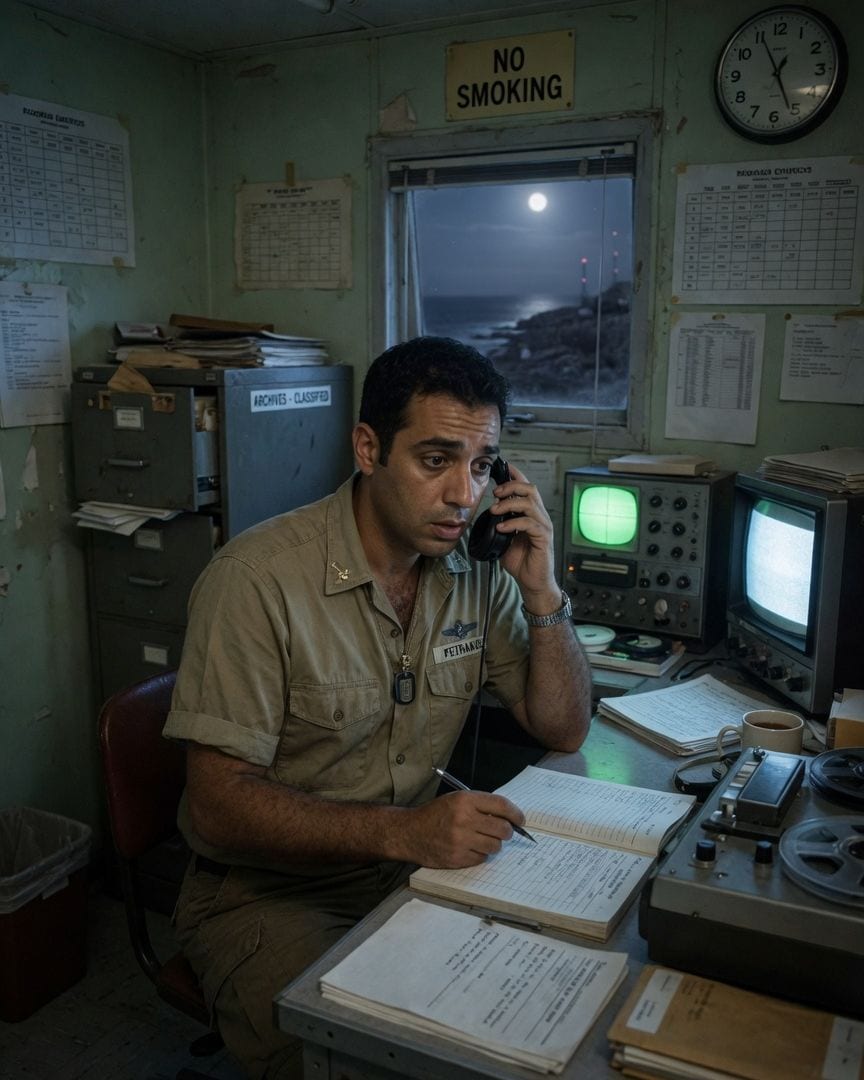
Three weeks from home, Radioman Petrakis found his name on the Cold War USS Vance’s roster for the exact date a voice predicted it 'no longer answering.'
Radioman Samuel Petrakis counted down his final three weeks on a remote island station in 1967, his thoughts already drifting to the home he would soon return to. But the steady hum of his encrypted fleet broadcast suddenly faltered, replaced by a calm voice listing ships, dates, and the chilling phrase: "no longer answering." It named the USS Vance, October 27th, 1967—exactly three weeks from that night—a destroyer currently on routine patrol. Petrakis later discovered his own name on the Vance’s future deployment roster for that precise, impossible date, assigned to a ship already marked for silence.
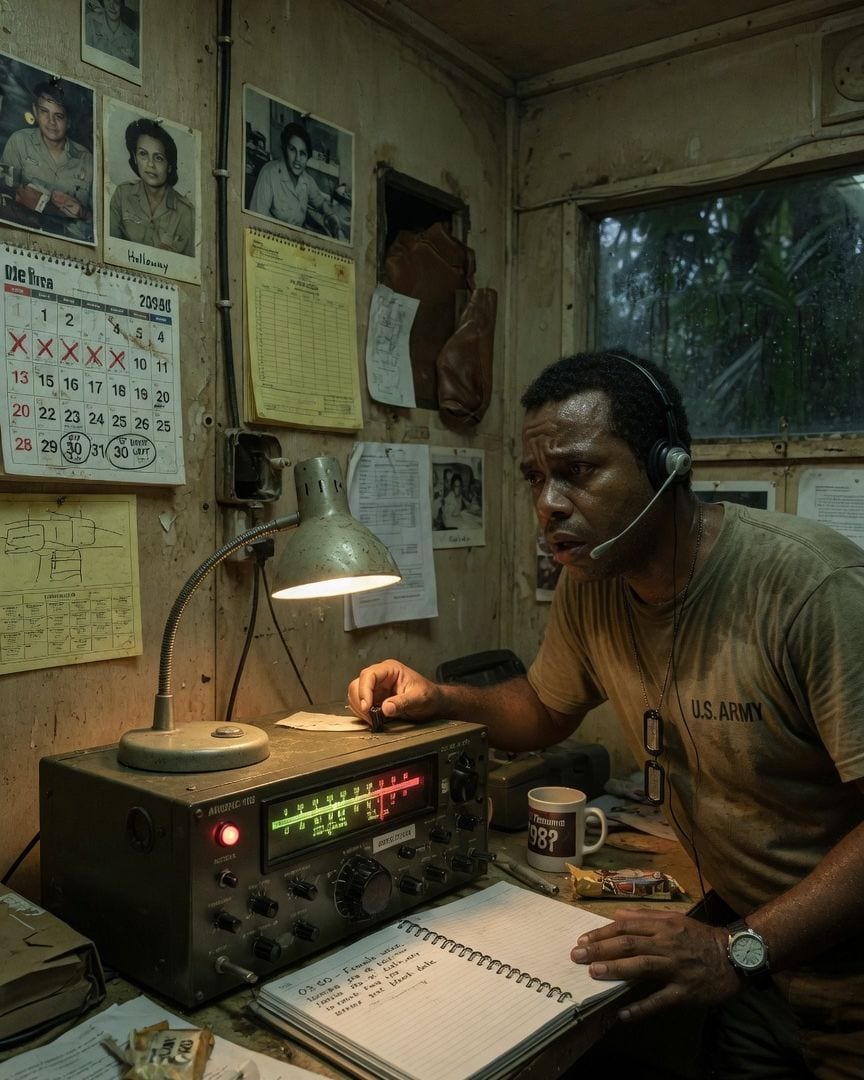
Three months from his tour ending, a sergeant's Cold War radio lists his name with a blank 'ceased answering' date. A hidden logbook warns: 'It knows my name.'
Sergeant Kevin Brooks was three months from finishing his year-long tour at a remote Panamanian jungle station. He meticulously marked each passing day, eager to escape the humid nights and unseen blossoms pressing against the comms shack walls. But at 0300, his old radio crackled to life with a woman's calm voice, listing names of past operators who 'ceased answering.' Then the voice spoke his own name, leaving a chilling blank space where his date should have been. What grim roll call had Sergeant Brooks stumbled upon?
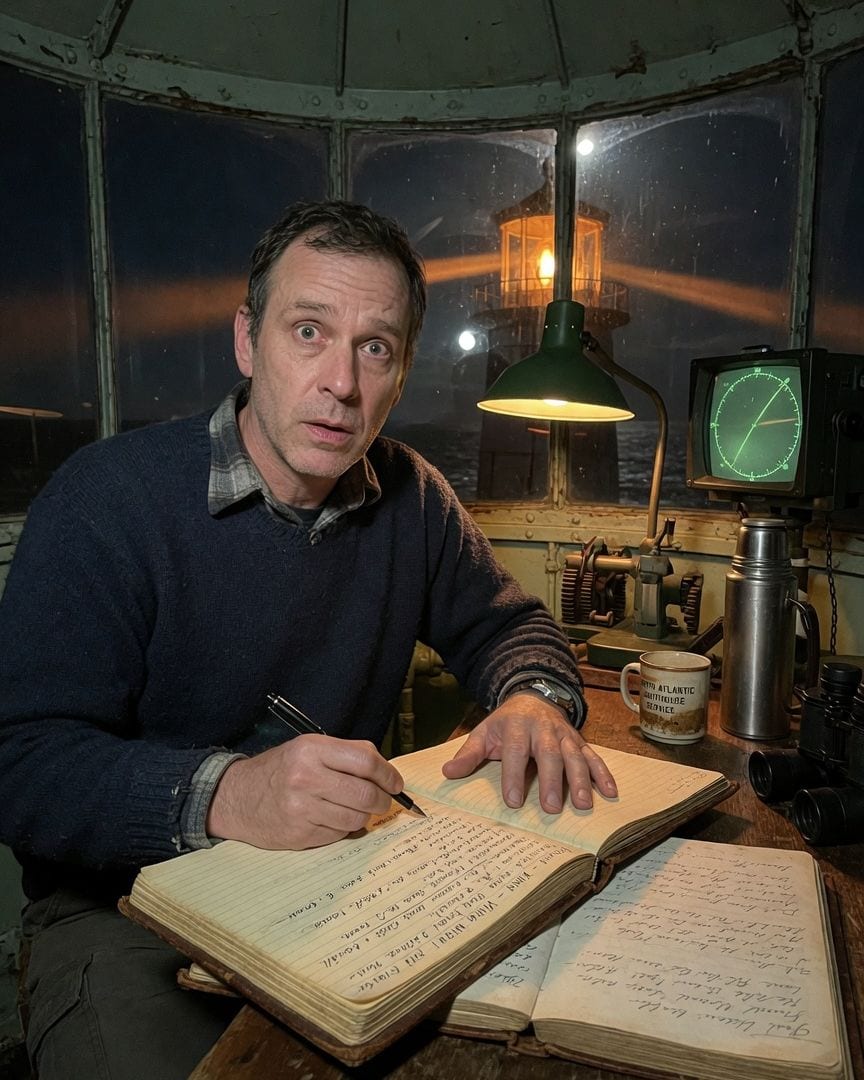
My lighthouse log has my own 3 AM entry for a phantom ship. I was alone in the tower, and I wrote no such thing.
Perched in the lantern room for my usual 2-6 AM watch, I reached for the thick logbook. But the 3:00 AM entry, under my own name, detailed a vessel I never saw. The words were in my own ink, yet I had never written them.
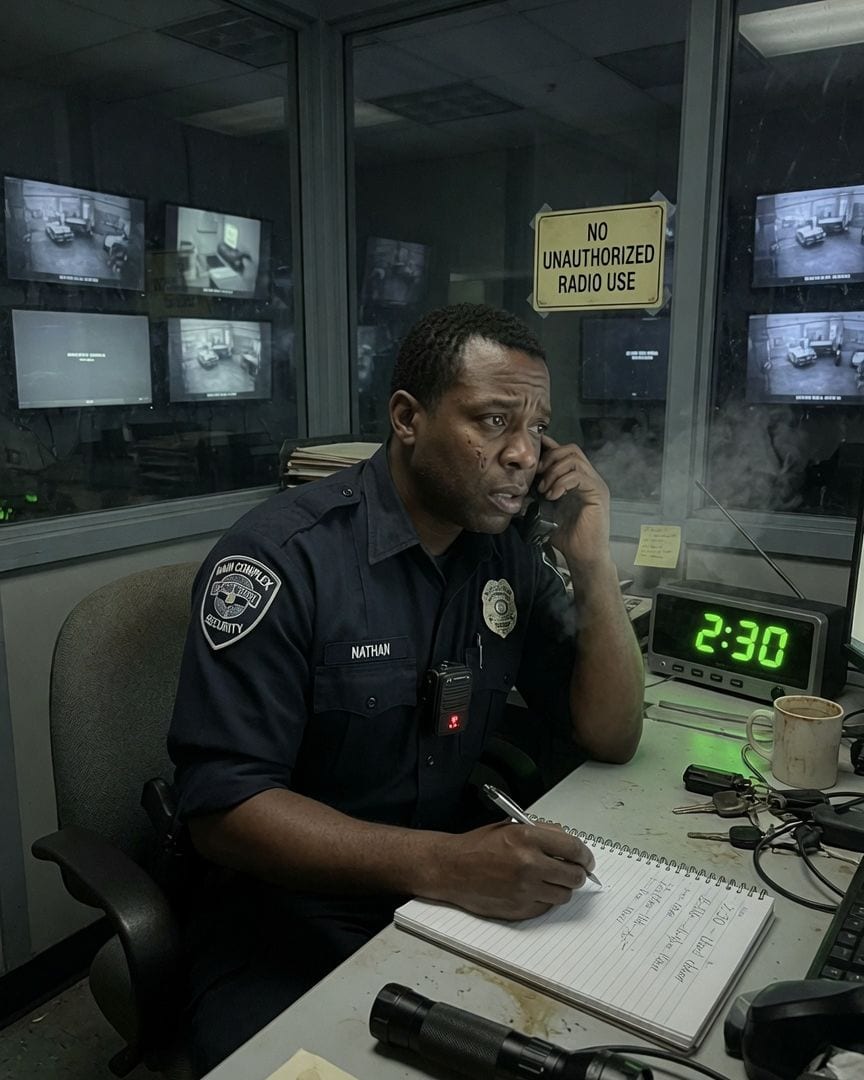
I radio Cole every night. My supervisor says his dock post was cut two years ago, and no Cole exists. But I just found Cole’s old logbook.
My graveyard shift usually consists of monotonous hourly check-ins with Cole, the guard at the loading dock. But my supervisor just revealed that the dock post was cut two years ago, and no one named Cole has ever worked for the company. I've been talking to someone who simply isn't there.
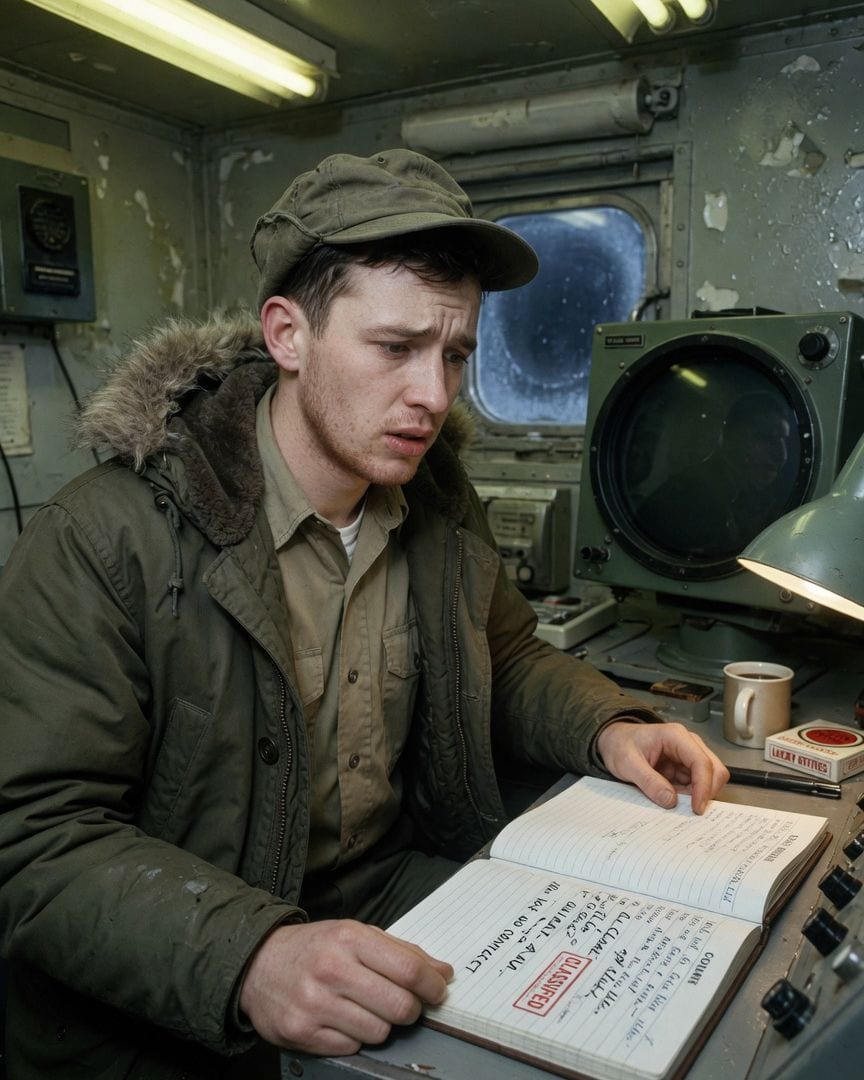
A Cold War airman logs an impossible radar contact on his last sweep. But his official logbook entry is stamped 'CLASSIFIED' and then contradicted by a hastily scrawled 'ALL CLEAR' dated moments before it.
Airman Ordway Vance, 22, manned the radar dome at Site Pellin in the biting North Atlantic dark of January 1962, running the last calibration sweep before its decommissioning. His scope picked up a faint, impossible return, growing closer with each pass, though the ocean remained empty to the eye. When Vance detailed the contact in his official logbook, a 'CLASSIFIED' stamp appeared, followed by a hastily scrawled 'ALL CLEAR' dated moments before his own entry, contradicting his every word. Commander Hartley dismissed it as equipment malfunction, but Vance sensed a chilling, official erasure behind the lie. He soon found a locked cabinet marked 'SITE PELLIN ANOMALIES,' hinting at a deeper truth buried within the base's final days.
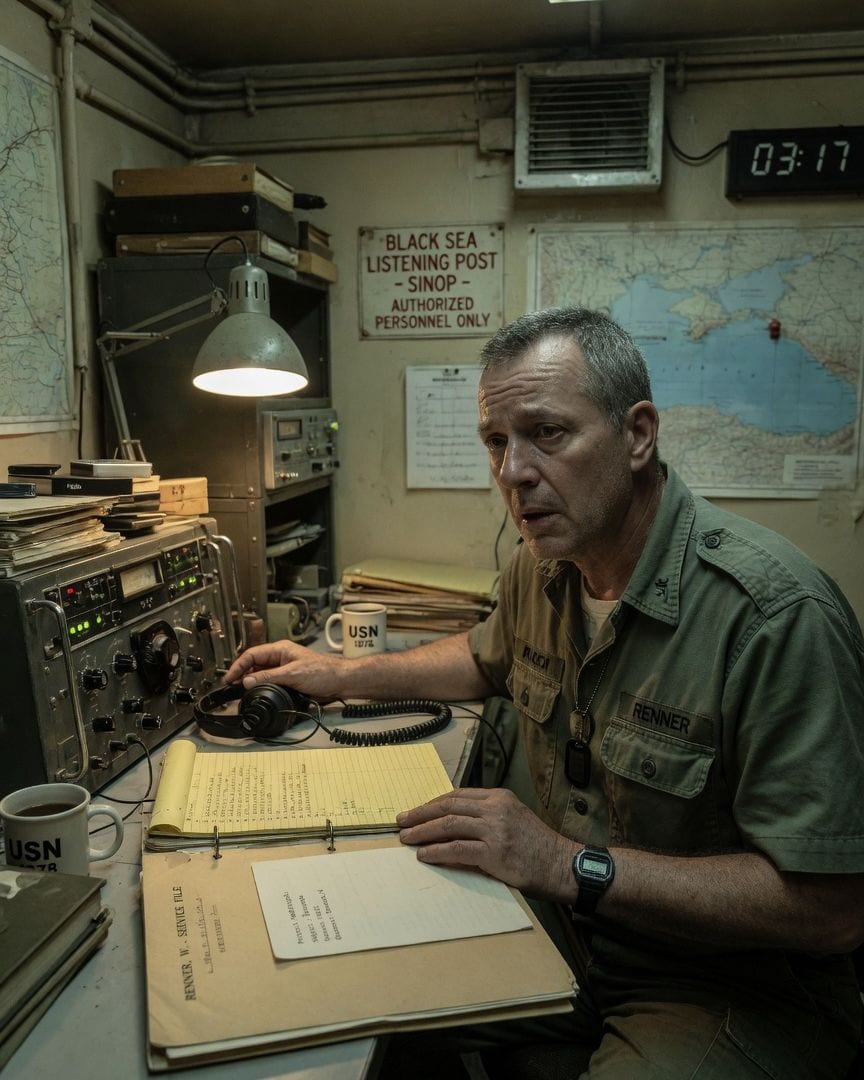
Specialist Walt Renner had six weeks left at Sinop when his Cold War numbers station stopped counting and spoke his mother's name: 'Walter.'
Specialist Walt Renner had just six weeks left at the Sinop station, anticipating the close of his thirty-year career. For almost two decades, he had tracked a mysterious numbers station, broadcasting from an impossible point in the Black Sea. Tonight, the woman's flat voice stopped counting, and the static cleared, replaced by a single, perfectly clear word: 'Walter.' It was the intimate name his mother had used, a name he hadn't answered to in decades. Yet, it emanated from the same empty water, a deeply personal address from the void itself.