My new clinic's appointment book shows entries for this coming Monday, decades after the doctor retired and died.
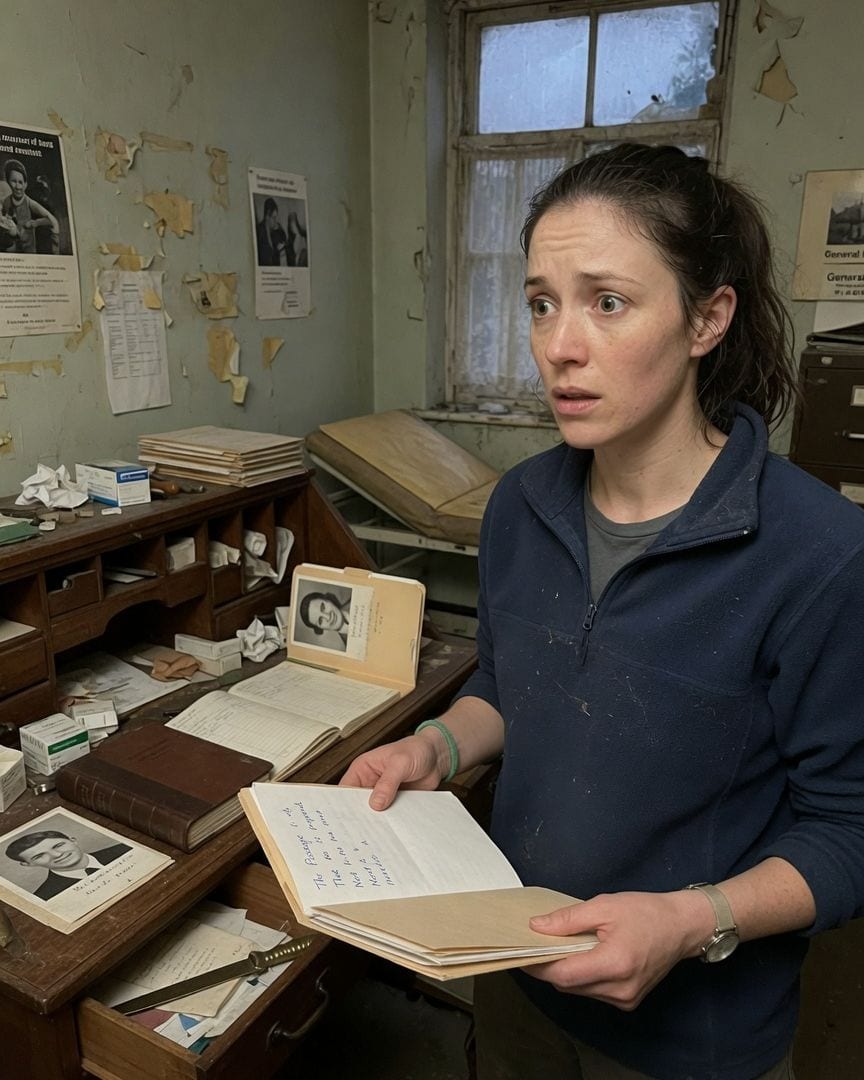
The old Almott surgery in Nettlebed had been empty for years, a relic tucked between the village green and the winding road that led to the lake.
The paint was peeling, the porch sagged, and the ‘General Practice’ sign was barely legible, but when I saw it, I saw potential. A new vet clinic. My clinic. Nettlebed Veterinary Services.
I was Chloe Lawson, 32, fresh out of a demanding city practice, ready for a slower pace.
“Oh, the old surgery,” Margaret Carver, my next-door neighbor, said with a tight smile when I mentioned my plans. She was a spry woman in her late seventies, always out gardening. “Dr. Almott retired in ‘79, you know.
Closed for good.” It was a comment, not a question, her eyes fixed on something over my shoulder.
Then there was Isaac Donovan, the gruff but kindly man who ran the hardware store. When I bought some paint rollers, he nodded at the address on my receipt. “Almott’s place, eh? Been empty a long time.
Doctor retired back in ‘79. Shut down for good, then.” He didn’t elaborate, just rang up my purchase with a strange finality.
Even the frail, white-haired woman I passed on the street one morning, who I later learned was Ruth Walsh, offered a similar unprompted piece of information. “That old place,” she’d murmured, her gaze distant. “Dr. Almott, he retired in ‘79.
That was the end of it.” There was a quiet intensity in their voices, a subtle warning I couldn’t quite decipher, but I brushed it off. Small towns, I thought.
Everyone knows everyone’s business, and apparently, everyone remembers when the old doctor hung up his stethoscope.
I started clearing out the surgery myself, determined to save on renovation costs. The air inside was thick with dust and the faint, sweet smell of decay. Old medical supply boxes, yellowed posters, an ancient examination table.
In the dispensary cupboard, behind a stack of brittle, bandages from a forgotten era, I found it. A leather-bound appointment book. Thick, its cover embossed with the faded year: 1979.
Curiosity piqued, I flipped it open. The pages were filled with meticulous script. Names, times, a neat entry for every weekday. My fingers traced the dates. January, February, March of 1979. Then, April, May, June. The entries didn't stop.
They continued, unbroken, through 1980, 1990, 2000, 2010. The same steady hand. Julian Ellsworth, 9:00 AM. Eleanor Vance, 10:30 AM. Week after week, year after year. Right up to nine o’clock this coming Monday. The name was Julian Ellsworth.
I tried to rationalize it. A prank, maybe. An elaborate, decades-long one by some bored local? But who would bother, and why? I checked online, cross-referencing names from the book with local obituaries.
Nothing for Julian Ellsworth, or any of the more recent entries.
I searched for Dr. Almott, finding only a brief, official mention of his retirement in '79 and his subsequent quiet death years ago, a newspaper clipping barely an inch long. No mention of a continuing practice.
No legacy beyond the defunct building. The unease in my stomach twisted tighter.
I started pulling out old filing cabinets, hoping for patient records that might explain the phantom appointments. Perhaps some kind of continuity of care system, though that seemed ludicrous for a single-doctor rural practice that closed forty years ago.
Most of the cabinets were empty, or held nothing but outdated medical supply invoices and a stack of brochures for long-discontinued medications. Nothing to explain the book.
Then, in the bottom drawer of Dr. Almott’s heavy oak desk, my hand brushed against something loose. A panel, thin and unaligned. I grabbed a letter opener from the cluttered desktop and wedged it into the seam.
With a faint creak, the panel gave way, revealing a hidden compartment. Inside, not medical records, but a stack of slim, unmarked manila folders.
My heart thumping, I pulled the first one out. It was lighter than I expected. Inside, a single, faded black and white photograph of a young man, perhaps in his twenties, smiling faintly.
On the back, handwritten in the same neat script as the appointment book, a date and the words: The Passage is prepared. No medical history, no diagnosis, no notes of any kind. Just the photo and that strange, chilling phrase.
I shuffled through the folders, my hands trembling. Each face stared up at me, a ghost from an appointment that shouldn't exist.
The dates on the back corresponded exactly to entries in the appointment book, and they stretched years beyond 1979. Sarah Jenkins, July 14th, 1993. Robert Davies, February 2nd, 2005. Each photo, each name, each phrase.
I found a file dated just three weeks ago. A young woman with kind eyes, her dark hair pulled back from her face.
The Passage is prepared. Date: October 24th. The implications of what I was holding, what these files really were, was a cold knot in my stomach. These weren't medical records. These were… something else entirely. Something far worse.
My gaze fell on the last folder in the stack. It was thicker than the others, almost bulging. I opened it slowly, my fingers stiff. No photograph inside. Just a single sheet of paper, freshly folded.
Unfolding it, I saw the familiar neat handwriting. The date was blank. But the words were there, stark and unsettling: The Passage is prepared. Next is the new keeper.
The phrase 'new keeper' echoed in my mind for days, a constant hum beneath the surface of my thoughts. I tried to focus on renovations, on getting the surgery ready, but my hands felt clumsy, my mind elsewhere.
I couldn't shake it. I couldn't ignore it. So I started digging.
I spent hours online, cross-referencing every name from the 'passage' files with local public records, old newspaper databases, and archived missing person reports. The pattern that emerged was chillingly consistent, a dark thread weaving through Nettlebed’s history.
Every single person in those photographs, without exception, had been officially reported missing from Nettlebed or the surrounding area within a week of their 'passage' date. Not a single one was ever found.
No foul play was ever formally proven, no body recovered, just cold cases and frustratingly vague 'left town' entries.
I managed to access some of the police reports through a contact in the city. They were thin, almost dismissive, often concluding with a bureaucratic shrug and a note about 'personal choice' or 'desire for anonymity.'
It was as if the disappearances were acknowledged but never truly investigated, a quiet acceptance hanging over each file, a blank space where answers should have been.
I traced the addresses of some of the older missing individuals. Many of the homes were still occupied by relatives. I made discreet inquiries, feigning historical interest in the old surgery.
The relatives offered polite, evasive answers, their eyes sliding away when I pressed about the missing family member. They always ended with a variation of "Oh, Uncle Thomas? He just… went. Years ago. We don't talk about it much."
Or, "Auntie Susan? She moved away. No one heard from her again." The consistency of the pattern, spanning decades, across generations, made the mundane explanation crumble into dust. This wasn't coincidence. This was a system.
As I delved deeper, I started to notice things in Nettlebed itself. Margaret Carver, my usually chatty neighbor, now watched me from her porch with a strange, unreadable expression when I came and went from the surgery.
She no longer waved, just stood perfectly still, her gaze following my every move.
Isaac Donovan, who had offered me advice on plumbing a few weeks ago, now just nodded curtly if our paths crossed, his eyes lingering on the surgery door, a subtle tightening around his mouth.
It felt like the town itself was holding its breath.
One evening, as I was locking up the surgery, the old wooden door groaning shut behind me, I found a small, smooth stone on my doorstep.
It was a river stone, common in the area, worn by the current, but it felt unnaturally cold to the touch, as if it had just been pulled from deep water.
Tucked carefully beneath it was a single, perfectly preserved autumn leaf, brown and brittle, its veins like a fine, dark net. I tossed it aside, feeling a shiver despite the mild air. The next morning, it was there again.
The same stone, the same leaf, placed meticulously on my step.
I saw Ruth Walsh again too. The old woman I’d met on my first day. She was sitting on a bench by the old Nettlebed lake, simply watching the water, her back ramrod straight.
The lake itself was dark, still, reflecting the grey sky like a polished slate. I approached her, a desperate hope for explanation bubbling up. “Good morning, Ruth,” I said, trying to keep my voice even.
She turned slowly, her eyes, an unnervingly clear blue, fixing on mine. She merely smiled faintly. “Some things are best left undisturbed, dear,” Ruth said, her voice soft but firm, a dry rustle like leaves.
Her gaze drifted back to the water, unblinking. “The lake gives, and the lake takes. It always has.” I felt a prickle of dread, realizing Ruth wasn’t just an old woman. She was someone who knew.
Someone who had always known.
Driven by a desperate, gnawing need for answers, I confronted Ruth Walsh in the small village shop a few days later. She was buying a single loaf of bread, her movements slow but deliberate.
“Ruth,” I said, my voice barely a whisper, drawing her aside from the cashier. “We need to talk.”
She turned, her expression unreadable. Her eyes, though ancient, were sharp. “You’ve been digging, dear,” she said, without accusation, her voice thin but steady. “Some things are buried for a reason.”
I pulled a crumpled printout from my bag, a missing person’s report for Eleanor Vance, a name from the appointment book. Her date of disappearance matched the book’s entry exactly.
“This isn’t a coincidence, Ruth,” I pressed, my voice gaining strength. “These people aren’t just ‘leaving town.’ What is this place? What was Dr. Almott doing?”
Ruth sighed, a sound like dry leaves skittering across pavement. She looked past me, out the shop window at the grey sky, then back to my face. “Dr. Almott… he was the Keeper. Before him, his father.
Before him, his father before that. It’s a duty, Chloe. A necessary one.”
She spoke of 'the legend' not as a story, but as the town’s grim reality.
For generations, Nettlebed had lived under the shadow of something ancient dwelling in the lake, something that demanded a periodic human 'tithe' to ensure the community's safety.
“The appointments,” Ruth continued, her voice low, almost a drone, “were how we managed it. How we ensured the Passage was orderly. One for the lake, to keep the rest of us safe.”
My mind reeled, connecting the cryptic 'passage' notes in the files, the decades of missing persons, the neighbors' strange warnings, the cold stones on my doorstep. It all clicked into place, an interlocking mechanism of terror.
The surgery wasn’t a medical clinic; it was a front, a formal mechanism. The town wasn't ignorant; it was complicit, terrified, and resigned.
“And the new keeper?” I whispered, the words catching in my throat, a horrifying premonition forming. Ruth looked at me, her eyes holding an ancient sorrow, a quiet acceptance. “Dr. Almott retired, as they say. He fulfilled his duty.
Now, the book has a new owner.”
Ruth led me back to her small cottage, nestled at the edge of the woods overlooking the lake.
The air inside was thick with the smell of dried herbs, old paper, and something else – a faint, earthy dampness that clung to the walls.
She moved with a quiet grace, her shadow long behind her in the dim light.
She walked to a worn wooden chest by the hearth, its lid scarred with age. With a slow, deliberate movement, she unlatched it and pulled out a small, leather-bound book.
It was identical in size and design to the appointment book I’d found in the surgery, but far older, its cover almost black with age and repeated handling.
“This is the first,” Ruth said, her voice barely a whisper, as she opened it. The pages were yellowed and brittle, but the script inside was neat, careful, just like the other book. Dates stretched back to the early 1900s.
It was filled with names, dates, and the same chilling phrase: The Passage is prepared. I saw a name I recognized from my own research, a missing person from 1923. It wasn't just a book, it was a legacy. A chronicle of sacrifice.
Ruth slowly turned the pages, her finger tracing the entries, until she reached one for 'Dr. Almott' dated 1979. Beneath his name, in smaller, almost deferential script, were the words: Passage Complete. My stomach dropped. I knew what that meant now.
Dr. Almott hadn’t just retired. He had been 'passed.'
Then, Ruth turned to a blank page marked 'Current Cycle.' And there, already written in the same steady hand that filled Dr. Almott's book, the same hand that had filled the one I’d found, was my full name. Chloe Lawson.
For an appointment next week. On the very same day as Julian Ellsworth.
I stared at my name, a cold, absolute dread seeping into my bones. Not an appointment. The appointment. Ruth’s hand, gnarled and frail, rested gently on the page.
She explained, her voice devoid of malice, simply stating an inescapable fact, an ancient truth. “The ‘new keeper’ is not simply the owner of the surgery, Chloe.
The new keeper is the one who ensures the cycle continues, who maintains the balance. Dr. Almott prepared the last passage, and then… he became part of the cycle himself. It’s how the town survives. The lake demands its due.
Always has. Always will.”
She recounted the history of Nettlebed, how prosperity always followed the 'passage' cycles, how blight and misfortune plagued the years when a Keeper tried to resist or when the book lay dormant.
The entire town, she explained, participates in this quiet agreement, a collective understanding passed down through generations. They watch, they know, and they ensure no one truly interferes.
The neighbors' unasked warnings about Dr. Almott retiring, the evasive answers about missing loved ones, the lack of proper investigation into disappearances – it all clicked into place, a horrifying tapestry of communal complicity and quiet terror.
Julian Ellsworth, the name for next Monday, was merely the beginning of the new cycle that I had unwittingly initiated by buying the surgery.
My purchase wasn’t just a transaction; it was a re-ignition of the pact, and my own name being in the book signified my new, unavoidable role.
I tried to flee. The terror was a cold, sharp blade, cutting through every rational thought. I packed a bag, throwing clothes and essentials haphazardly inside, my mind a whirlwind of terror and disbelief.
I had to get out, drive away, disappear into the anonymity of the city.
But as I drove through the winding lanes of Nettlebed, towards the main road, I saw them.
Margaret Carver was watering her flowers, her eyes meeting mine in the rearview mirror, a knowing glance that held no surprise, only a subtle, grim understanding.
Isaac Donovan was slowly sweeping his porch, his gaze following my car, his broom pausing for just a beat. Every face I saw on the street seemed to hold the same quiet understanding, the same resigned complicity.
The town was a web, finely spun and invisible, and I was caught.
I considered going to the police, but the thought died as quickly as it came. What would I say?
"An old woman told me my new surgery is a front for human sacrifice to a lake monster, and my name is in the appointment book for next week"? They would think me mad.
Or worse, implicate me in the decades of disappearances I’d uncovered. There was no escape, not from the town’s silent agreement, not from the pattern that had woven itself into the fabric of Nettlebed for centuries.
The truth could not be undone. The cost of having broken the rule was not just personal danger, but the crushing burden of knowledge and the inevitability of my new role.
I felt my hands go numb on the steering wheel. I pulled my car back into the surgery driveway, the engine dying with a final, defeated shudder.
Chloe Lawson’s veterinary practice in Nettlebed quietly opened a few weeks later. The townsfolk, who had been wary, now greeted her with a new, subtle deference.
The old surgery sign, 'Dr. Almott, General Practice,' remained, painted over with 'Nettlebed Veterinary Services,' but the underlying truth of its purpose hummed beneath the surface.
The hidden compartment in the desk remained, the stack of 'passage' files growing steadily with each passing week.
The appointment book, still pristine despite its age, now lay open on her desk, the neat script a constant, chilling reminder of her duty. The lake, dark and still, seemed to watch the town with a patient hunger.
I sat at the desk, the lamp casting long shadows across the empty surgery. The air was cool, the silence profound. I picked up the familiar pen, its weight heavy in my hand.
My gaze fell to the open appointment book. Julian Ellsworth’s entry for next Monday was still there, untouched. My own name, too, was still on the 'Current Cycle' page of the older ledger I now kept hidden, a grim promise.
I closed my eyes for a moment, then opened them, my expression unreadable. With a steady hand, I made a new entry in the current book, for a new patient, for a day two weeks from now.
The ritual had been observed. The cycle, for now, would continue. I placed the pen down, the faintest hint of a tremor in my fingers. The lake remained quiet. I was the keeper.
The truth was understood, and it could not be undone. It simply was. I heard the faint creak of the old house settling around me, a sound that no longer felt empty, but watchful.
The next entry was already waiting, the ink still wet.
If this one got to you
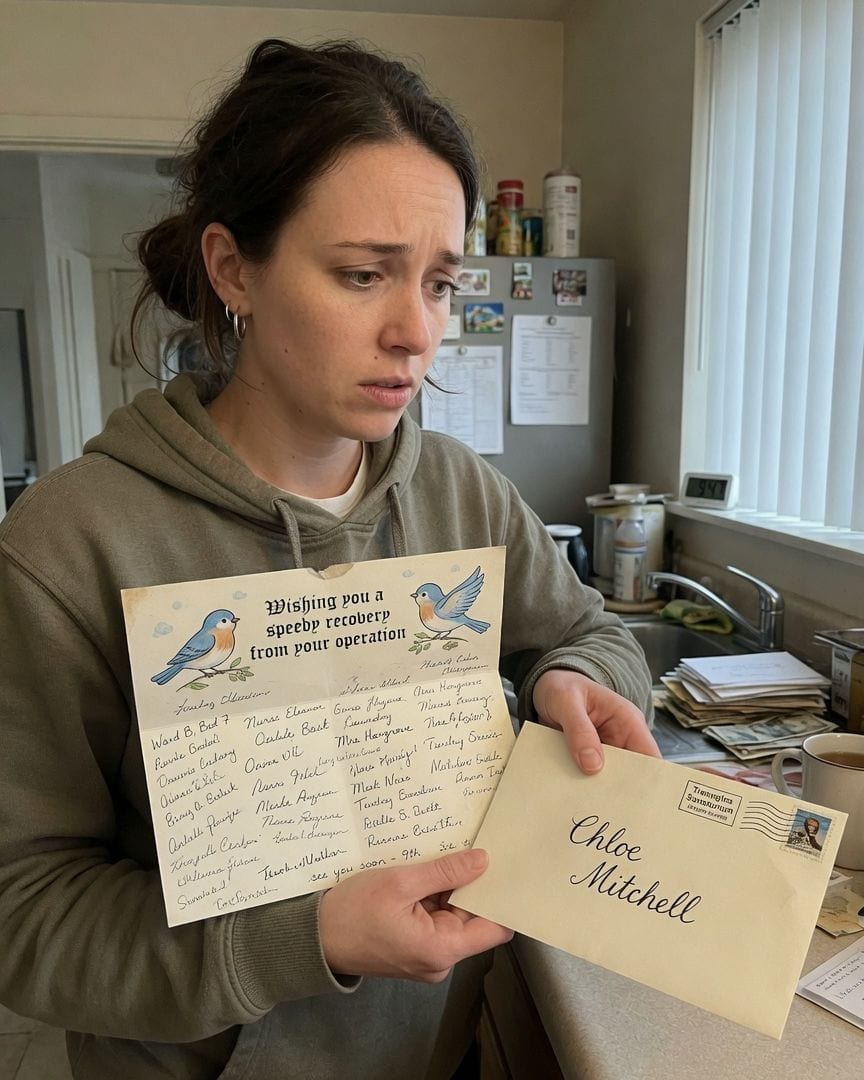
A get-well card wished me a speedy recovery from an operation I never had. It was postmarked from a sanatorium that burned down in 1963.
My quiet Tuesday morning was interrupted by an elegant get-well card, addressed to me. It wished me a speedy recovery from an operation I'd never had. But the postmark read 'Treneglos Sanatorium,' a hospital that vanished in a fire back in 1963.
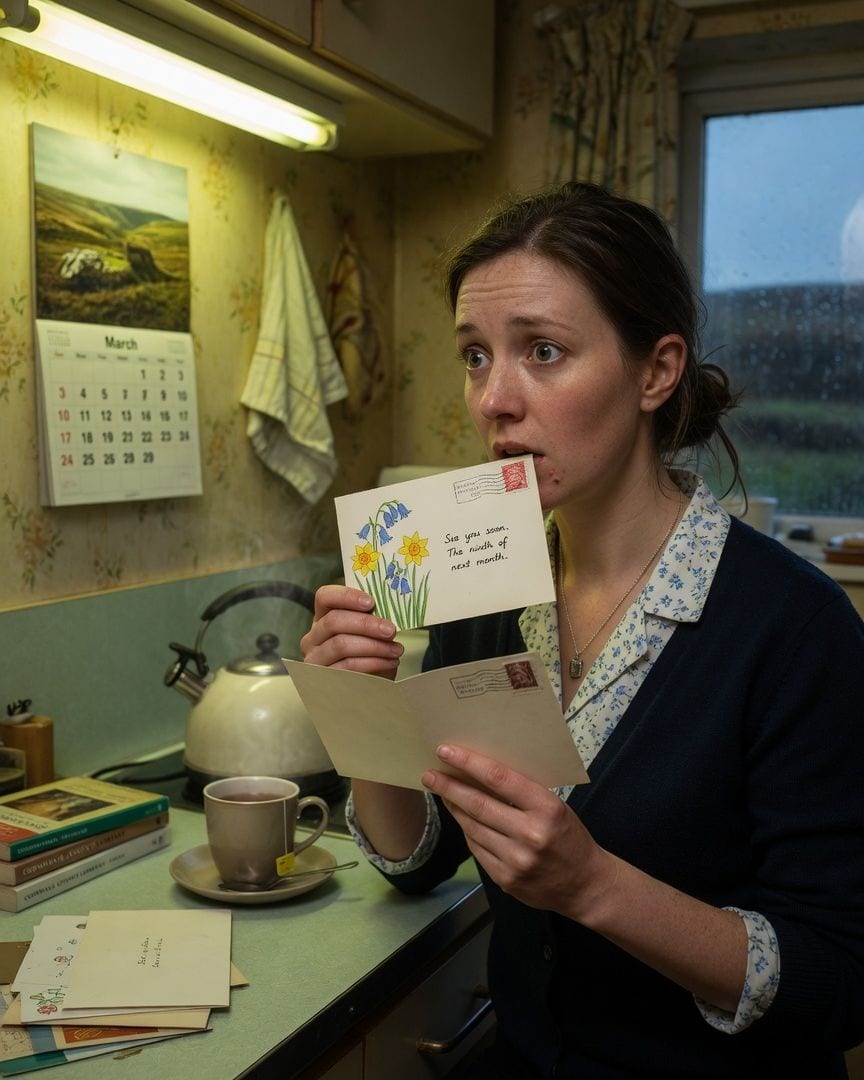
My get-well card arrived from a field, postmarked from a sanatorium that burned down in 1963. It wished me well for an operation I've never had, scheduled for next month.
I was just making tea on an ordinary Tuesday when a strange letter arrived. It was postmarked from Treneglos Sanatorium, a place that burned to nothing over sixty years ago, and contained a get-well card for an operation I'd never had. My research into this impossible message then led me to an old patient register where I found my own name, dated 1958.
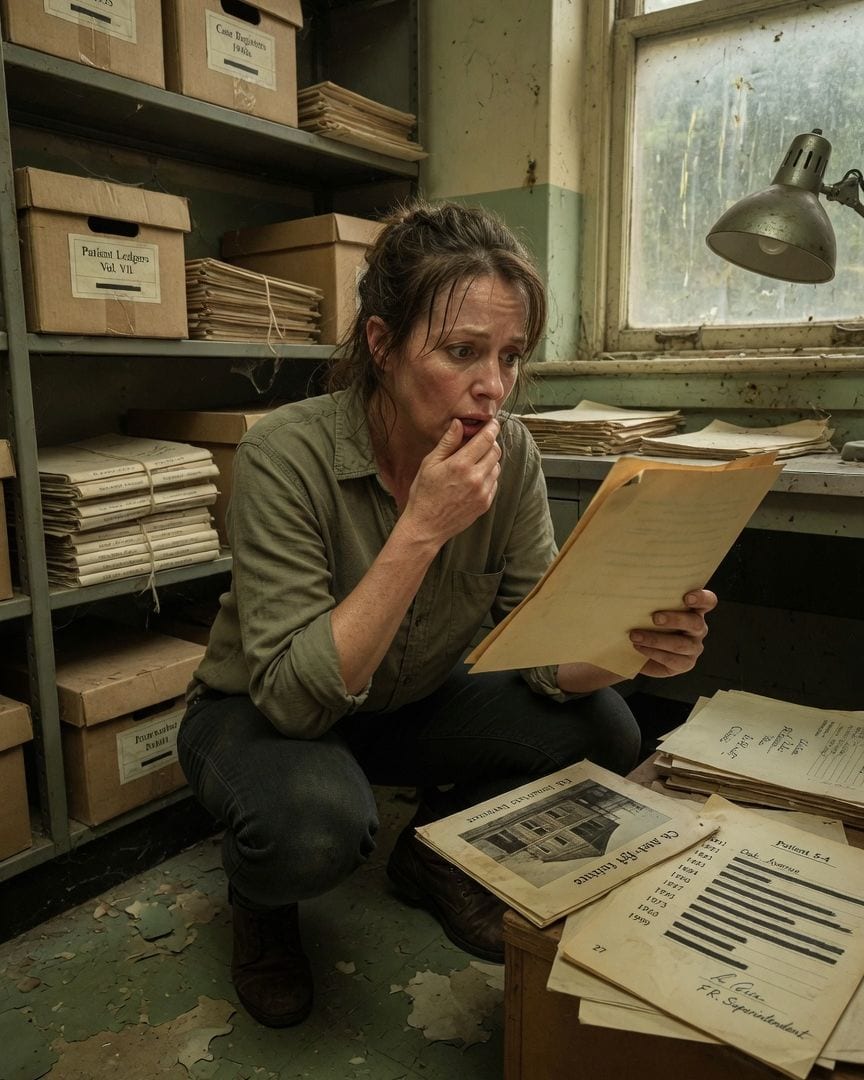
Patient 5-4 keeps checking into my aunt's old sanatorium chalet. The same initials sign them out, 'not traced,' every thirteen years since 1921.
Sifting through my aunt Margaret's estate, I found her old sanatorium file from 1999. Her patient record listed her as 'Patient 5-4,' discharged 'not traced.' But when I accessed the archives, I found 'Patient 5-4' was admitted every thirteen years since 1921, always with identical discharge notes.
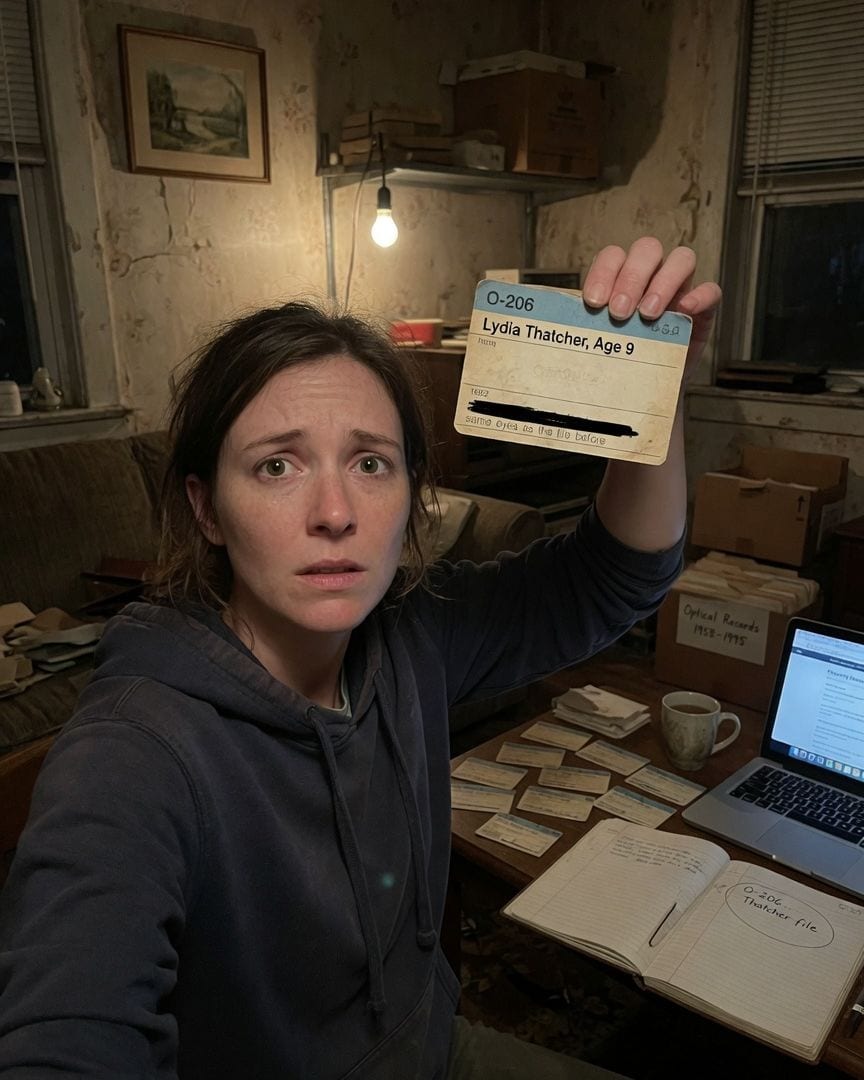
My own optical card is dated 1962, with my name on it. I wasn't born until 1993.
Sifting through old patient files from my former optical practice, I found my own O-206 card. It had my name, Lydia Thatcher, and my current home address printed on it. But the card was dated 1962, decades before I was even born, and a redacted note mentioned 'same eyes.'
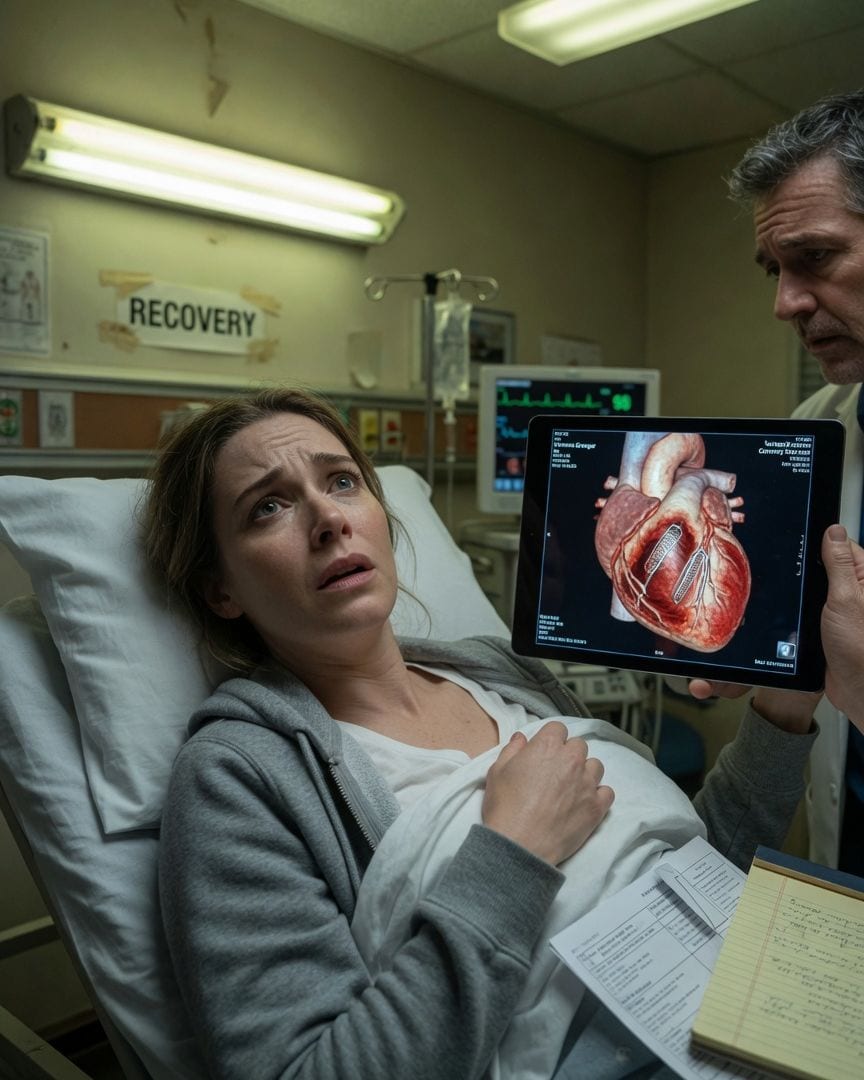
Metal stents are propping open my heart. The doctor rotated the image, but I've never had a cardiac procedure.
After years of dismissed chest pain, a CT scan revealed an impossible truth: my heart contained two metal stents. Dr. Maddox confirmed there was no record of any cardiac procedure in my entire medical history, and I had no memory of ever having surgery. My own body held a secret, alien architecture I couldn't explain.
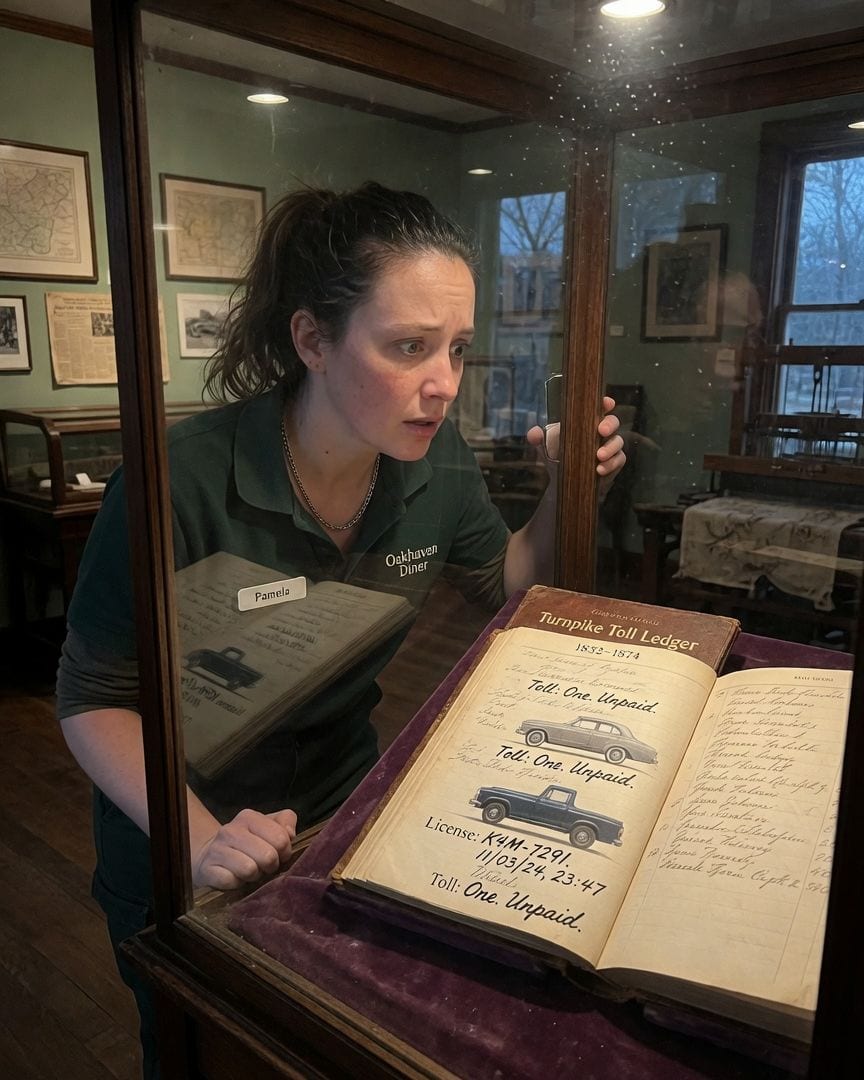
My car stalled at the old turnpike milestone, after dark. The toll ledger, closed in 1874, then listed my car, my stall time, and a toll of one, unpaid.
I had just moved to Oakhaven when my old sedan died on a dark, winding road by an infamous turnpike milestone. The next day, I found my car's exact registration and stall time written in fresh ink in a 150-year-old, locked museum ledger, marked 'Toll: One. Unpaid.' The curator dismissed it as a prank, but her white knuckles and strained voice hinted at something far more unsettling.