My son rang the old school bell. The attendance register, visible through the boarded window, now shows today's date and his name marked 'absent'.
I remember the day we first saw the village.
It wasn't the kind of place you drove through; it was a destination, tucked away, quiet, with houses that looked like they'd been there for centuries and fields that stretched green and uninterrupted to the horizon.
We moved for the peace, the promise of quiet nights and open spaces for Adam. He was six, full of energy, and the city had started to feel like a cage.
One of the first things that caught my eye, beyond the crooked main street and the small general store, was the old schoolhouse.
It sat at the edge of the village, a sturdy stone building with a bell tower, its windows long since boarded up.
The locals told me it had officially shut down in 1981, a casualty of dwindling numbers, but the bell remained, a dark silhouette against the sky.
They had one rule, delivered with a gentle smile and a knowing glance: "Never ring the old school bell." It sounded whimsical, a piece of local folklore, and I laughed along, promising to keep Adam away from it.
Then came that Tuesday afternoon. Adam and I were exploring the overgrown schoolyard, the sunlight warm on our faces. I was picking wild daisies, my back to the building, when I heard it. A deep, resonant CLANG.
It cut through the sleepy quiet of the village like a knife, echoing, vibrating in the still air long after the sound itself had died. I spun around.
Adam stood by the schoolhouse wall, a length of rope still swinging from his small hand, a triumphant grin on his face. He'd found the bell pull.
Later that day, feeling a vague unease I couldn't place, I drove past the school again. Something drew my eye to one of the boarded windows, a sliver of light catching a gap in the rotting wood.
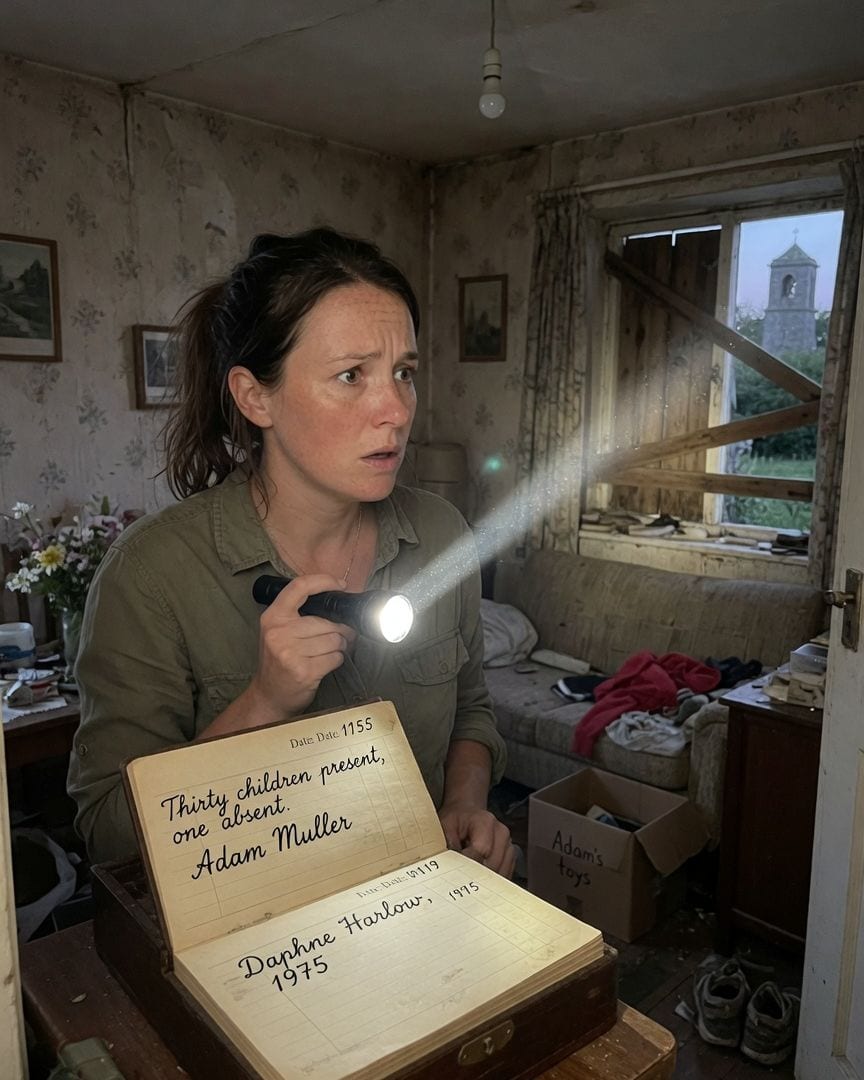
I slowed, then stopped. Through the narrow opening, I could just make out the old master's desk, covered in a fine layer of dust. And on it, lying open, was an attendance register. My breath caught in my throat.
At the top of the page, unmistakable even from a distance, was today's date. Beneath it, in stark, precise script, a single line: "Thirty children present, one absent."
My eyes, despite the poor light, honed in on the name beneath the 'absent' mark. It was Adam Muller. And the ink, I swear, looked impossibly fresh, almost wet.
I tried to be rational. It had to be a local prank, perhaps a strange, unsettling welcome for the newcomers. Adam had just rung the bell, after all. Someone must have seen him, then sneaked in to scrawl his name.
It made sense, in a twisted, village-eccentric sort of way. I drove straight to Daphne Harlow's house, my closest neighbor, a woman in her sixties with sharp, kind eyes and a knack for gardening.
"Daphne," I started, trying to keep my voice light, "Adam rang the old school bell today. And someone... someone put his name in the old register, marked 'absent'. It's a bit much, don't you think?"
Daphne was watering her petunias. She froze, the stream of water arcing onto the path. Her face, usually so warm, went pale, almost grey. She slowly put down the watering can, her hands trembling.
She looked at me, then averted her gaze, her eyes scanning the distant hills as if searching for something. "Some things," she murmured, her voice thin, "are best left alone, Rachel."
She didn't offer a theory, didn't share my assumption of a prank. Just that chilling, resigned dismissal.
Dismissing her reaction as old-village eccentricity, I returned to the school, a rising knot of frustration tightening in my stomach. I was determined to find the culprit, to prove this was just some mean-spirited joke.
I walked the perimeter, inspecting every boarded window, every creaking door, every brick. I ran my fingers over the weathered boards, looking for a splintered edge, a fresh scratch, any sign of forced entry. Nothing.
The wood was old, the dust undisturbed. It was as if no one had touched the building in decades.
I peered closer at the register, trying to discern the exact shade of the ink, the precise flourishes of the handwriting. It wasn't a child's scrawl, not even an adult trying to mimic a child.
It was an elegant, old-fashioned script, the kind you saw in antique ledgers. As I strained, a flicker of movement caught my eye: a slight, almost imperceptible shimmer on the page, like freshly laid ink drying on paper. I blinked.
Maybe the damp from the old building was playing tricks on my eyes? But the air was dry, almost brittle, as if the school had been sealed against moisture for years.
I pulled out my phone, zoomed in as much as I could, and tried to photograph the page, but the angle was poor, the light inadequate. The image was grainy, unhelpful.
Frustrated, a prickle of unease starting to crawl under my skin, I turned to leave. That's when a faint glint from the bottom corner of the page caught my eye again.
Beneath Adam's entry, barely visible through the dust and shadow, was a faint, smudged line. It was almost erased, as if someone had tried to rub it out, but not quite.
It looked like another name, another date, in that same unsettling, elegant script.
Driven by a cold dread I couldn't shake, I returned to the school at dusk, this time armed with a powerful flashlight. The setting sun cast long, skeletal shadows across the yard.
The bell tower seemed to loom, darker and more imposing than before. I angled the beam carefully, patiently, through a narrow crack in the boards, guiding it across the grimy windowpane until it illuminated the register page clearly.
My son's name, 'Adam Muller', marked 'absent', stared back at me, stark and horrifying. But beneath it, no longer smudged or faint, was another entry, clear as day.
The flashlight beam caught the letters, making them stand out from the yellowed page. 'Daphne Harlow, absent'. And the date beneath it read 1975.
The ink, impossibly, was still wet, just like Adam's, shimmering faintly in the beam of my flashlight, reflecting the light like tiny, dark pearls. My heart pounded, a frantic drum against my ribs, as I recognized the name. Daphne Harlow.
My neighbor. Marked 'absent' decades ago, on a page that should have been sealed shut when the school closed in 1981.
The discovery of Daphne's name in the register sent me into a frantic search that night. I first tried to find Daphne Harlow, my neighbor, but her house was dark, her car gone from the driveway.
My calls to her mobile went straight to voicemail. The casual 'some things best left alone' now echoed with a chilling new meaning.
The next morning, driven by a growing, sickening conviction that this was far more than a prank, I went to the village library. It was small, dusty, and smelled of old paper and wood polish.
The elderly librarian, a quiet man named Quentin Winslow, sat behind a tall counter, spectacles perched on his nose, poring over a large, leather-bound ledger. He seemed to watch me with an unnerving calm as I approached.
"Excuse me," I began, my voice a little too loud in the silent room, "I'm Rachel Muller. I'm new to the village."
Quentin nodded slowly, his eyes meeting mine for a fleeting moment before returning to his book. "Welcome," he said, his voice raspy, "What can I help you with?"
"I was hoping to find some information about the old school," I continued, trying to sound casual. "When did it officially close? Any old records?"
Quentin, without looking up from his ledger, simply said, "Closed in '81. Nothing much to tell." His dismissiveness was jarring.
I pressed on. "I'm looking for someone. A Daphne Harlow. She would have been a child in the 70s, attended the school, maybe?"
Quentin paused, his finger hovering over a line in his ledger. His gaze flickered up, his eyes seeming to bore into mine. "Daphne Harlow," he repeated, a strange, distant quality in his voice.
"Her family moved away suddenly, back in '75. Shame, that." The way he said 'shame' wasn't sympathetic; it was like noting a fact, a detail, without emotion. A chill snaked down my spine.
I didn't let on what I knew. Instead, I went to the small archive section, pulling out brittle, yellowed newspapers. I searched for 'Daphne Harlow disappearance' or 'missing child 1975'. Nothing.
But after a while, I found a small article, tucked away on an inside page, about a 'family relocating unexpectedly' from the village in 1975, mentioning a young daughter.
The article was vague, almost deliberately so, devoid of the concern or urgency I’d expect for a child.
Expanding my search, I began looking for other sudden family 'relocations' or 'departures' from the village, specifically involving children, in the years leading up to 1981 and even further back. A disturbing pattern began to emerge.
Every few decades, it seemed, a new family would move to the village, their names sometimes mentioned in local gossip columns about 'new faces'. And within a year or two, their child would 'disappear' or the family would 'relocate suddenly.'
Always with minimal local fanfare, always a brief, unconcerned mention, if any. I noticed a recurring name as I scrolled through school board meeting minutes: 'Russell Marsh,' the school master who retired in '81, shortly before the school closed.
He was the last name to sign off on the attendance registers.
My research into the historical 'departures' became an obsession. I compiled a growing list of names and dates, noting the unsettling regularity of the disappearances. It wasn't random; there was a rhythm to it, a terrible, unspoken cycle.
The more I dug, the more I felt a growing sense of being observed, a prickling sensation on the back of my neck, even in my own home.
One evening, as I returned home after another afternoon hunched over microfiche in the library, I saw Quentin Winslow sitting on his porch, just across the street. He was ostensibly reading a newspaper, but his eyes, I knew, tracked me.
He didn't wave, didn't offer a greeting, just watched me until I was inside my door. His gaze felt heavy, like a weight.
A few days later, a small, hand-written note was tucked under my windshield wiper. I found it when I went to take Adam to the park. The paper was old, slightly yellowed, the ink faded but clear.
'Some things are best left buried. For the good of the village.' The handwriting was neat, old-fashioned, the looping script matching a faded signature I’d seen on an old library donation card – Quentin’s. My investigation had been noticed.
The danger was no longer just a historical pattern; it was present, personal.
I tried to call Daphne Harlow again, leaving increasingly urgent messages on her voicemail. I told her about the register, about her name, about Adam's. No reply.
The quiet of the village now felt less like peace and more like a carefully maintained silence, a vast, suffocating conspiracy. I started checking my car for tracking devices, my house for signs of entry.
Every creak of the floorboards, every rustle of leaves outside, made me jump. The unease had tightened its grip, turning into a constant, low hum of fear in my bones.
I realized Quentin wasn't just a passive observer; he was part of the very fabric of this chilling secret, and his note was a stark warning to stop digging.
I confronted Quentin Winslow in the quiet of the library, the scent of old paper and dust clinging to the air.
My hands trembled slightly as I spread my compiled list of names and dates across his counter, the faded newspaper clippings almost rustling in the stillness.
"These children," I said, my voice barely a whisper, yet it sounded deafening in the silence, "they didn't just 'relocate.' They disappeared. And Daphne Harlow, your neighbor, her name is in that register, just like my son's.
Tell me what you know."
Quentin slowly closed the heavy book he was holding, its leather cover making a soft thump. His eyes, for the first time, finally met mine, and they were ancient, profound, and utterly devoid of warmth.
"The bell," he said, his voice a dry rasp, "it calls to something. Something that takes. Always has."
I stared at him, my mind reeling. "What do you mean, 'takes'?" I demanded, my breath coming in ragged gasps. "What is it?"
Quentin leaned forward, his elbows on the counter, his gaze unblinking. "The village has an understanding, Rachel. Generations of us. The bell rings, the mark is made. One child, always a newcomer, for the safety of all the others.
It keeps the village... calm. Prosperous. You've seen the farms, the healthy harvests, the longevity of our people, haven't you? There's a reason for it." He gestured vaguely to the back of the library.
"Russell Marsh, the old school master, he was the keeper. Made the entries. Kept the records." His finger tapped the counter. "That register is a ledger, Rachel. A binding agreement."
A cold wave of nausea washed over me, churning in my stomach. "You mean... you knew? All of you? You let this happen?"
Quentin nodded slowly, his expression unchanging. "It’s the price. For the village to thrive, for our children to be safe, our children, the ones who belong here, who keep the traditions. It's an old way. A necessary one."
He explained, his voice flat, that the Daphne Harlow from the register, the child from 1975, had indeed been taken. Her name remained as a kind of placeholder in the town's collective memory, a stark reminder of the cost.
The Daphne I knew, my neighbor, was a relative, named in her honor, a quiet, living reminder of the sacrifice. Her pallor, her hushed warning – they clicked into place with horrifying clarity.
"The rule," Quentin stated, his gaze piercing, "it wasn't a superstition to protect the bell. It was a warning. A desperate plea to leave the sleeping thing undisturbed. To stop the cycle from beginning again."
He confirmed what I already suspected: the 'wet ink' on the register was not some trick of the light or dampness.
It was the entity's mark, fresh despite the years, a sign of the active contract, binding the child to its fate.
My earlier clues – the vague newspaper 'relocations,' the lack of reports, the strange quiet, Daphne's silence – all snapped into place, forming a horrifying tapestry of collective complicity. The dread was a physical weight in my chest.
Rachel, reeling from Quentin's confession, demanded to know what happens to the children. "What does it do to them?" Her voice was raw, desperate.
Quentin's eyes were distant, haunted, as if peering into an abyss I couldn't comprehend. "They become... absent. Not dead, not alive. Just gone, consumed by the silence. It's not a violent act, not like a human would understand. It's...
a taking. A claiming." He described a ritual, passed down through generations, involving a specific place in the old school, a 'threshold' where the marked child is left.
The dread intensified, solidifying into a block of ice in my veins, as I realized the full implication: the town wasn't just passively allowing it; they were active participants in a cyclical ritual of sacrifice, silently facilitating these disappearances for their own perceived safety.
Quentin explained that the cycle happens roughly every 40-50 years, or whenever the bell is rung by a new hand, a hand uninitiated into the old ways. He then did something that chilled me to the bone.
He pulled out a hidden drawer in his desk, sliding it open with a soft rasp. From it, he produced a faded, brittle map of the village.
Marked on it, not just the school, but several other locations, all with similar bell symbols. Some were crossed out, others circled in faded ink.
"Our village is not the only one," he whispered, his voice barely audible, his finger tracing a faint line connecting symbols on the map. "It's a network. A chain of agreements, stretching across the region.
And the next cycle, for this bell, has begun. For Adam." He looked at Rachel, a profound, unsettling sadness in his eyes, but no regret.
Quentin Winslow, his gaze flat and chilling, finally whispered, 'It was always one of ours, until a newcomer broke the rule. The bell rings, the mark is made, and the town pays its due. Your boy, Rachel, he's the next.'
Quentin, now completely resigned, the last vestiges of his earlier cryptic warnings gone, revealed the full, horrifying truth. The faded map spread across his desk was not just a curiosity; it was a blueprint.
It showed a series of 'bell-schools' and similar structures across the region, each linked to a localized entity and its cyclical demands. These entities, he explained, weren't malevolent spirits in the traditional sense, but ancient, localized forces of balance.
They demanded a 'tithe' – a child – in exchange for the community's prosperity and safety. The school bell wasn't just a bell; it was a beacon, ringing out to these forces.
The attendance register was not just a record; it was a binding contract, a ledger kept by generations of townspeople and, more terrifyingly, by the entity itself.
The 'absent' children, Quentin clarified, were not simply killed. They were absorbed, their life force sustaining the entity and, by extension, the land and its people. It was a symbiotic horror.
He described the 'threshold' in the old school: a hidden crawl space beneath the master's desk, only accessible through a loose floorboard. This was where the children were led, or sometimes, he implied, simply left to meet their fate.
The ink on the register, he said, was not just a record but a living bond, reacting to the entity's influence, marking the child, making the contract real.
Every vague newspaper report, every sudden 'relocation,' the town's quiet avoidance, the wet ink – it all clicked into a coherent, terrifying system.
The town elders, including Quentin, had maintained this secret for generations, believing it was the only way to protect their families from a greater, undefined harm.
Adam's accidental ringing of the bell was an activation of a dormant cycle, and the village's quiet agreement now meant they would facilitate his disappearance. They had done it before, and they would do it again.
Armed with this horrifying knowledge, a primal scream caught in my throat, I raced to the school. The hum Quentin had mentioned, almost imperceptible before, now vibrated in the air, a low, inviting thrum.
Adam was in the yard, drawn by it, kicking at a loose stone near the old brick wall. He looked up, his innocent smile a spear through my heart.
The door to the school, previously boarded tight, now hung ajar, as if inviting me in.
Inside, the air was colder than outside, thick and heavy with the scent of damp stone and something else I couldn’t name – something ancient and hungry.
I could see the loose floorboard beneath the master's desk, just as Quentin had described. From the dark space beneath, I felt a faint, rhythmic pulse, like a slow, deep heartbeat.
"Adam!" I called, my voice strained, thin. He turned, confused by my urgency. As I tried to pull him away, to shield him with my own body, a figure emerged from the shadows of the old classroom.
It wasn't the entity itself, but a manifestation of the town's quiet enforcement. Quentin Winslow, his face grim, his eyes devoid of any emotion, was there, accompanied by two other silent, determined villagers I vaguely recognized.
They blocked my path to the door.
"It's for the good of all, Rachel," Quentin said, his voice flat, emotionless. "It's already begun. There's no stopping it now."
Desperate, I shoved Adam behind me. My eyes darted around, searching. I grabbed a heavy old school desk, its wood scarred with generations of neglect, and shoved it with all my strength against the open door, momentarily blocking the villagers.
They began to push back, grunting. I knew I couldn't fight them all, or whatever lurked beneath the floorboards. My only chance was to break the cycle's hold on Adam.
I pulled Adam into the master's room, towards the open register. With trembling hands, I grabbed a nearby bottle of ink, not the strange, living ink of the entity, but ordinary, mundane writing fluid, probably left by Russell Marsh.
I deliberately, furiously, smeared it over Adam's 'absent' entry, then over Daphne Harlow's, and every other name I could see marked 'absent', effectively 'erasing' the binding marks, obliterating the contract.
The room shuddered. A low, guttural sound, like something ancient and vast tearing itself free from sleep, emanated from the crawl space beneath the desk.
The villagers outside began to push harder on the desk barricading the door, grunting, their intent clear. I grabbed Adam's hand and pulled him towards a back window, smashed open in my panic, its jagged glass glinting.
We scrambled out, ripping our clothes, my skin stinging.
As we fell onto the overgrown grass of the schoolyard, I cast one last look back. The attendance register, now smeared and illegible, seemed to pulse with a faint, angry light.
The low hum, which had guided Adam, intensified, filling the empty school, a sound of profound hunger, cheated.
Rachel and Adam left the village that night, never looking back. The school bell, they later heard, went silent. The village, however, continued its quiet existence, its houses standing, its fields green.
Quentin Winslow and the others never contacted them, never tried to retrieve Adam. The 'absence' was broken, the mark erased. But the dread remained.
Rachel knew she had stopped this cycle, for this bell, but the network Quentin spoke of, the other marked places, haunted her. She knew the balance was only temporarily disrupted, not truly destroyed.
The village's peace was built on a terrible, fragile foundation.
Now, months later, in a new town, Rachel watches Adam play in a sunlit park. He is safe. But the world feels different.
Every old building, every silent church bell, every quiet, insular community she passes, holds a new, chilling implication. She sees the patterns everywhere, the subtle signs of managed dread.
She wonders if she truly broke anything, or merely shifted the burden. The quiet of the village was a lie, and every new bell I heard, near or far, was now a warning.
If this one got to you
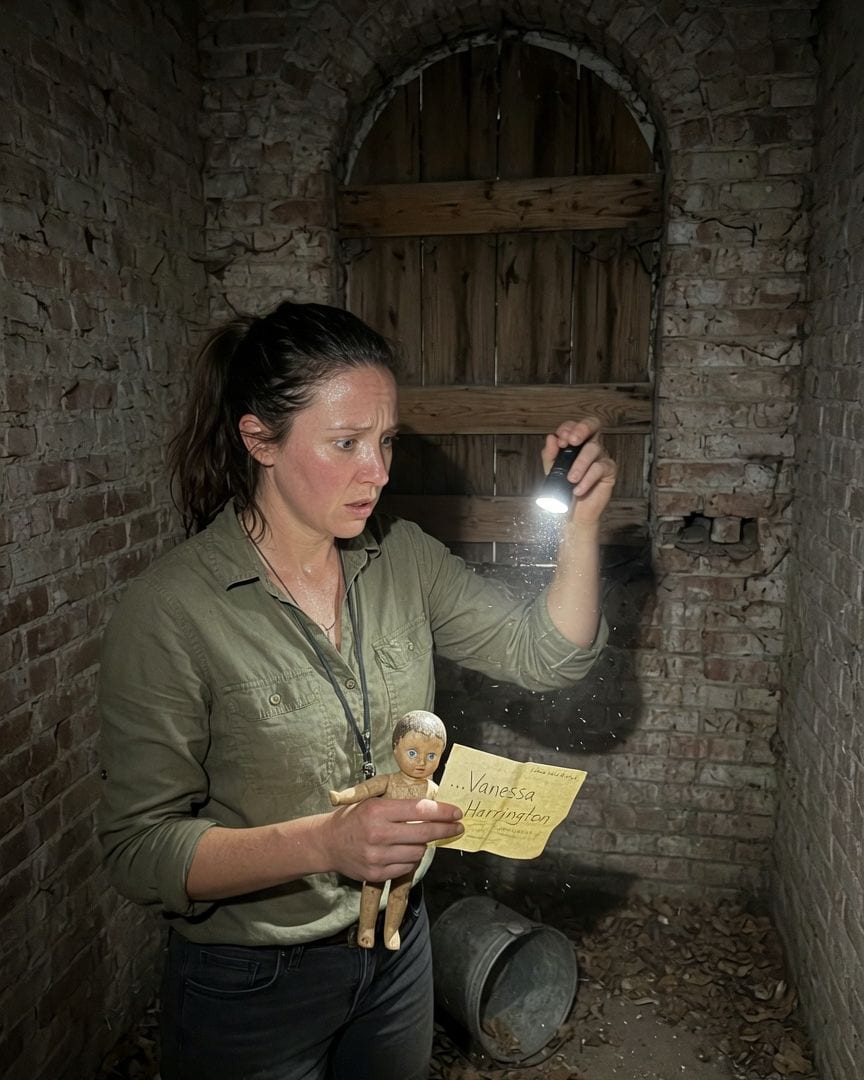
The attendance register has marked one pupil 'present' every single day since 1911 — never once absent. No child by that name has ever sat an exam.
Settling into my new teaching job at Oakhaven Elementary, I found myself drawn to the sealed bell tower. But it was the school's old register that truly unsettled me. A phantom entry, 'Pupil X,' had been marked 'Present' every single day since 1911, with no other records to prove they ever existed.
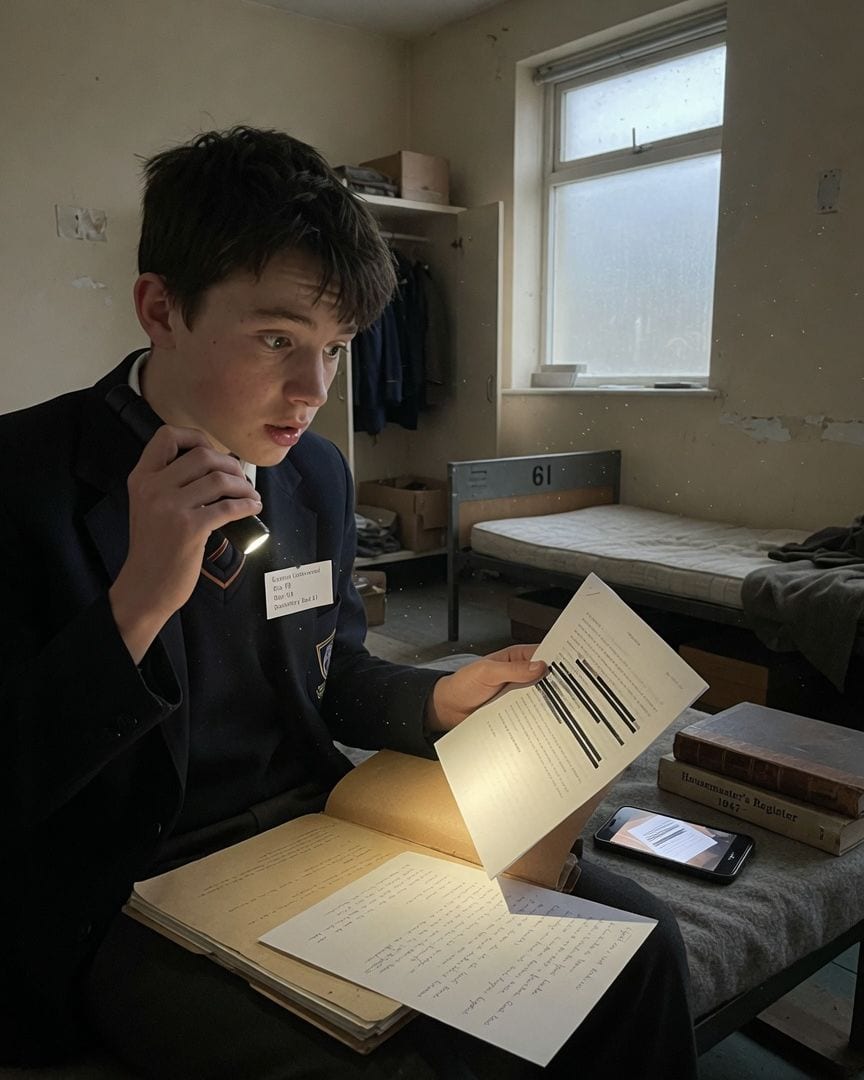
My boarding school bed number was 61, and the archive shows a boy assigned it every eight years since 1947, each leaving mid-term with the bed 'to remain made up'.
I found my matriculation card, listing me as 'Boy 61, Dormitory Bed 61.' Later, an old ledger revealed every boy assigned that bed since 1947 left mid-term, with an unsettling note: 'bed to remain made up.' Our housemaster’s recent scribble, 'as the others,' only deepened the dread around my own assigned bed.
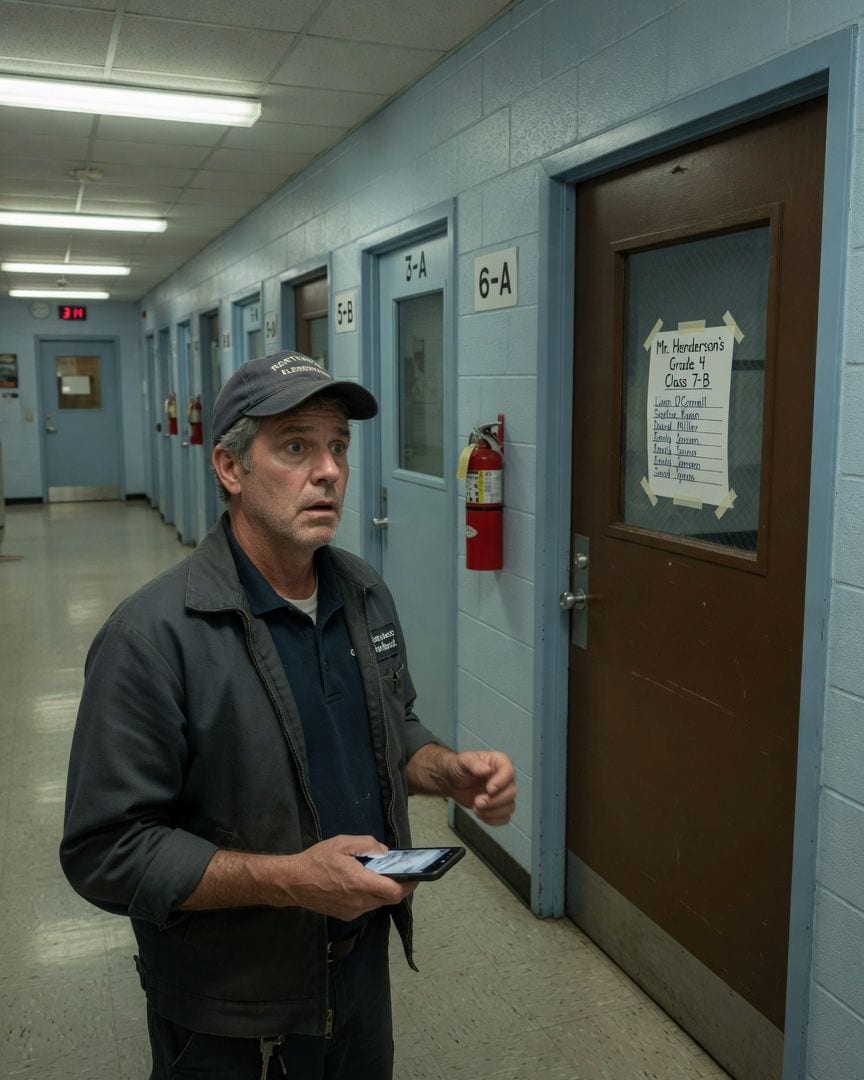
My classroom doors counted twenty-three last night. The extra one had a class list taped inside, names of children who've never been at this school.
My job as night caretaker at Northwood Elementary is routine: 22 classrooms, all accounted for. But one night, an impossible 23rd door appeared in the science block, nestled where only a wall should be. It bore a class list of students and a teacher who don't exist in any school record. Then, in an old logbook, I found that exact same list, dated 40 years ago.
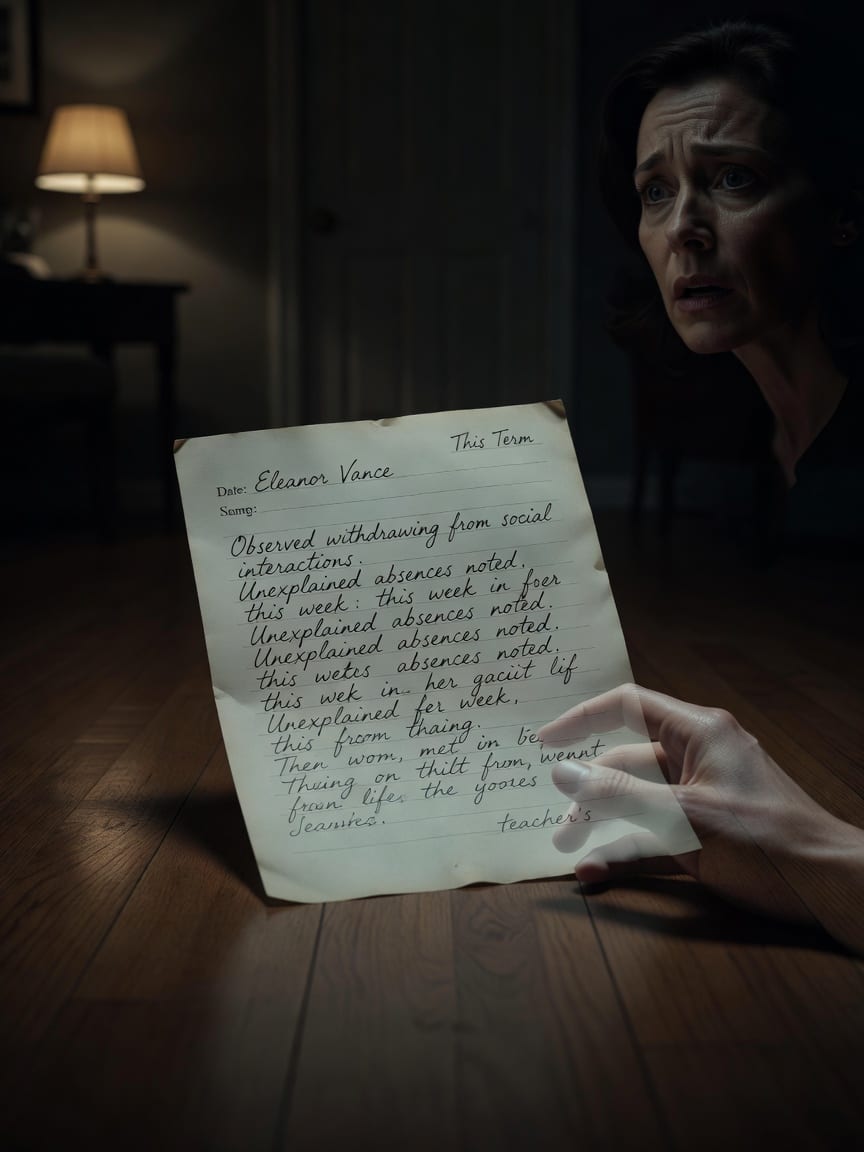
My school reports keep arriving, one a term, signed by teachers dead for decades. The latest describes something I'm doing *this week*.
My name is Eileen Caldwell, and my quiet life was upended by a school report from a place demolished decades before I was born. The report, signed by a long-dead teacher, eerily detailed my current habits. But the real shock arrived when I found my own name in a student register, dated 1968, with precise descriptions of my childhood—years before I existed.
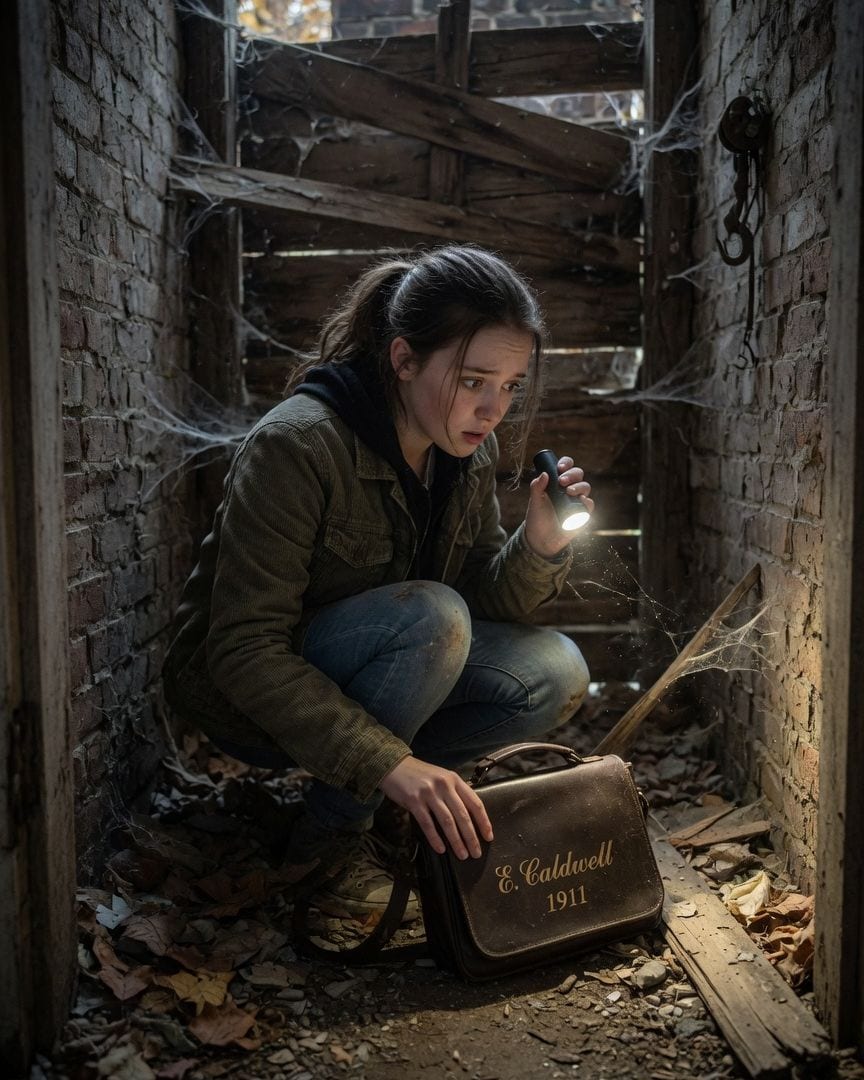
The school attendance register lists a child present every day since 1911. No such student ever sat an exam.
My new school, Caldwell High, felt too quiet, especially around its ancient, boarded-up bell tower. Teachers gave identical, rehearsed lines about it being "structurally unsafe." But then I found the attendance register, detailing a student named Eleanor Caldwell marked present every single day since 1911. No other record of her exists anywhere.
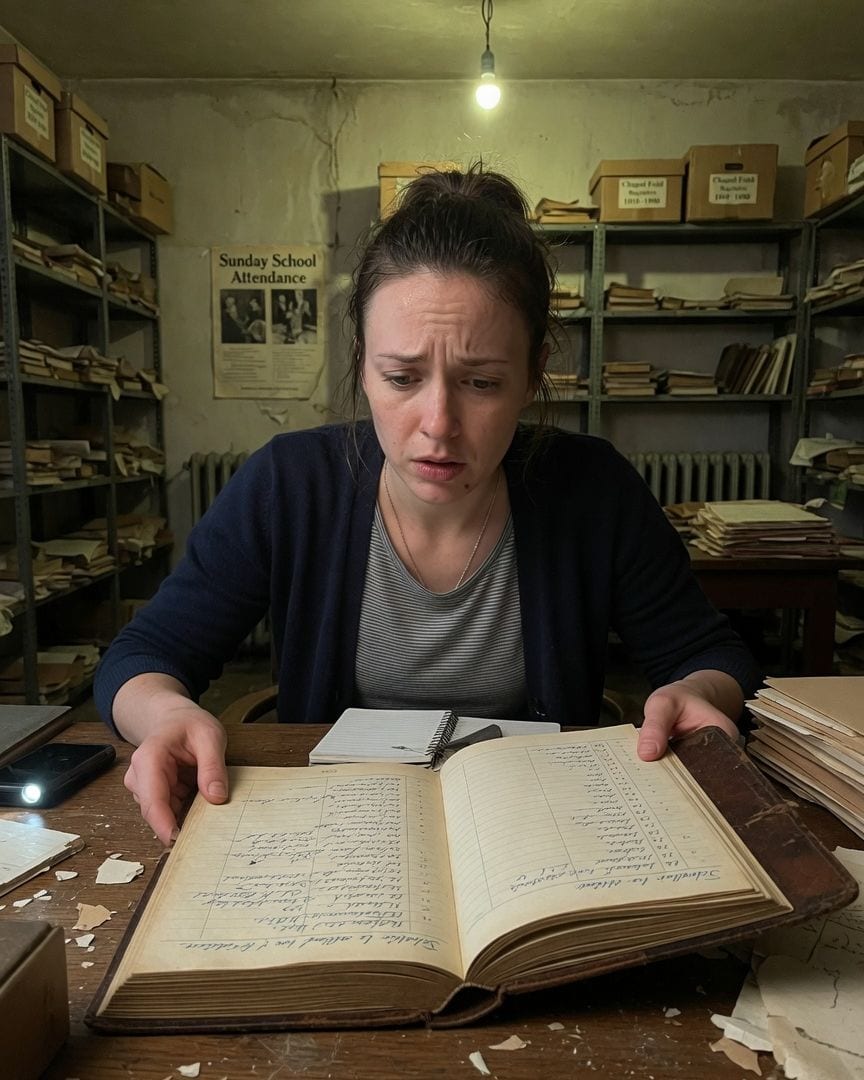
My Sunday school register shows scholar 33. Turning back, that same scholar 33 is entered every seventh year since 1907, always from my old address.
As a chapel volunteer, I found comfort cataloging old documents until a Sunday school register revealed a chilling pattern. Every seven years since 1907, 'Scholar 33' from my old address, Chapel Fold, was entered. Each entry was marked with the same curt, chilling phrase: 'ceased to attend, not called for.'