The school attendance register lists a child present every day since 1911. No such student ever sat an exam.
The silence of Caldwell High after the last bell always felt… deeper than it should. Not just empty, but held.
I’d only been here a few weeks, fresh from the city, and the quiet was something I was still getting used to. My classroom, English Lit, overlooked the main quad, and beyond that, the old bell tower.
It stood apart from the rest of the school, its brickwork stained dark, a stark, unsettling block against the evening sky. No bell had rung from it in years, maybe decades.
The windows were boarded up, planks nailed across the archways where the bells should have been. It looked less like a tower and more like a sealed tomb.
I’d asked about it during orientation. Paige Prescott, history teacher, had been the first. “It’s been deemed structurally unsafe, dear,” she’d said, a line delivered with a perfectly pleasant, almost practiced smile.
A few days later, Marco Russo, math, echoed it almost verbatim. “Structurally unsafe, Sophia. Pity, it’s a lovely old thing otherwise.”
Then Vera Porter, the librarian, a woman who usually had an opinion on everything from local politics to the precise angle of a book spine, just nodded curtly. “Structurally unsafe, Miss Ellison. Nothing to be done.”
Each time, the same flat sentence. No further explanation, no variation in tone. It was a line, rehearsed. And the identical, unblinking delivery left a faint, nagging itch in the back of my mind.
That same week, browsing the antique-laden staff room, I found the school’s original attendance register. It was a heavy, leather-bound tome, almost ecclesiastical, kept in the same book since 1911.
Generations of teachers had used it, their varying penmanship a testament to the decades. My finger traced down a column, past names that dated back almost to the school’s founding, until I found it: ‘Eleanor Caldwell.’ Present. Every single day.
Never absent. A perfect, unbroken line of P’s stretching back over a century, right up to the current date, filled in by what I recognized as Principal Porter’s own meticulous hand. I checked the exam records for that name. Nothing.
Not a single entry. No Eleanor Caldwell had ever sat an exam here. The bell tower, the identical statements, the ghost in the register – it was a loop I couldn't break.
The ordinary explanation, a clerical error, just didn’t fit. Not for a hundred years of perfect attendance.
The register entry for Eleanor Caldwell gnawed at me. It wasn’t a mistake; the handwriting, though changing subtly over the decades, was always distinct, always there. Someone had taken the time, every single day, to mark her present.
I tried to find any historical record of an 'Eleanor Caldwell' student. The local library, the town archives, old yearbooks—nothing. Not a picture, not a mention in a school play program, not even a faded sports team photo.
It was as if the name existed only within the pages of that one heavy book. The town itself was old, proud of its history, almost obsessively so. Every family tree was charted, every significant event documented.
Yet, this name, this perpetual presence, was a complete void outside the register. It was unsettling.
One afternoon, driven by a growing unease I couldn’t articulate, I found myself by the boarded-up bell tower again. It was late autumn now, the air brisk, carrying the smell of burning leaves from somewhere distant.
The wood covering the tower’s entrance was old, weathered, some planks splintered and barely clinging to their rusty nails. It hadn't been touched in years.
I pushed against a particularly loose board near the bottom, just above where the stone met the soil.
It groaned, a deep, protesting sound like old timber stretching, then gave way with a soft crack, revealing a sliver of absolute darkness beyond.
A faint, cold draft carried a smell I couldn’t quite place – dust, dry rot, of course, but something else too, something metallic and faintly sweet, like forgotten iron and damp earth, maybe even something organic that had long since dried.
It was clearly not just 'unsafe' structural damage, a simple matter of crumbling brick. This was deliberate. A sealing. Curiosity, or perhaps a nascent dread, pushed me to pry more boards loose.
The rusty nails shrieked as they came free, but the sound was muffled by the thick, ancient walls. The space inside was larger than I expected, a hollow shaft of absolute dark that seemed to drink the meager daylight.
My phone's flashlight beam cut through the gloom, revealing ancient brickwork, thick cobwebs that sagged like dusty shrouds, and at the very bottom, half-buried under debris and fallen mortar, a shape.
It was too regular to be just rubble, too distinct against the muted browns and grays. Something was down there. Something had been left behind.
I squeezed through the narrow opening, the splintered wood scraping against my jacket. The air inside was heavy and still, cold despite the mild autumn afternoon, carrying that same faint, unplaceable scent.
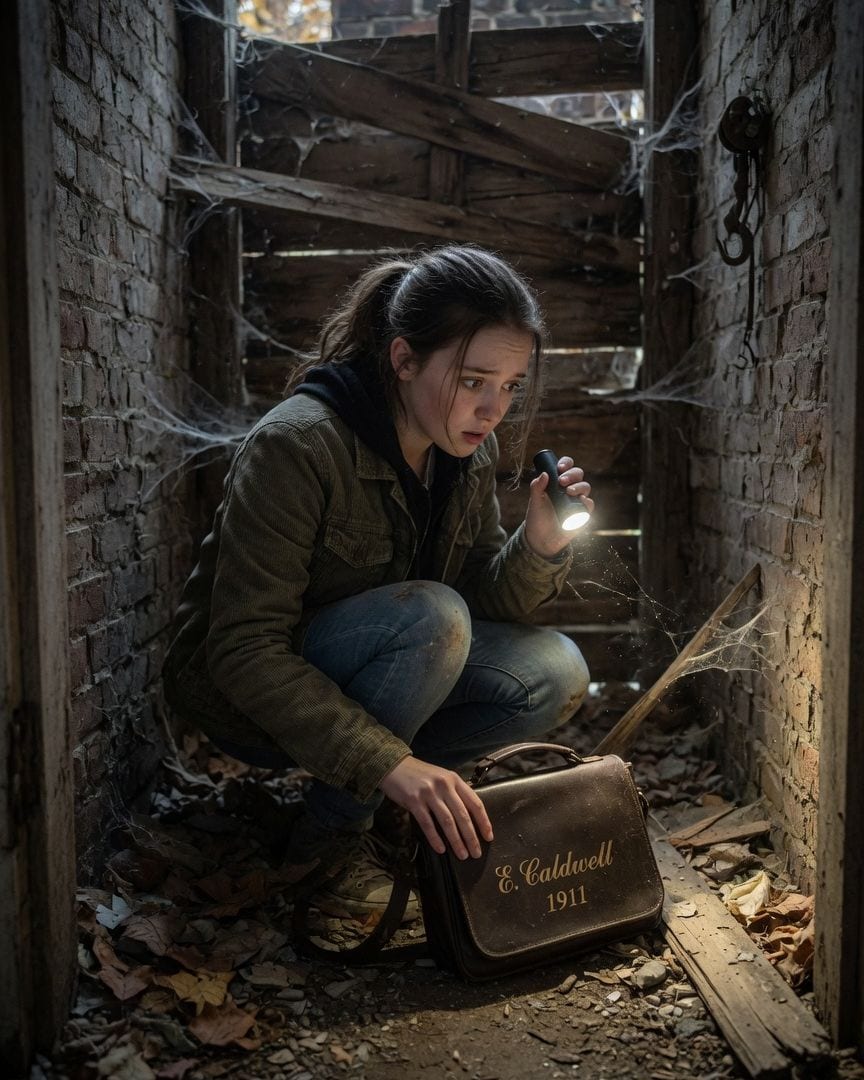
My phone light danced across the debris, the fallen plaster and brick dust, settling on the object at my feet. It was a small, leather satchel, remarkably intact, almost untouched by time.
The leather was dark, a deep, rich brown, impossibly supple, not cracked or dry as it should have been after decades in this forgotten place. On its flap, embossed with elegant, faded script, were the initials 'E. Caldwell.'
Beneath them, a date: '1911.' My breath caught in my throat. Eleanor Caldwell. The name from the register. The date, the exact year the register began, the year the 'present' marks started.
I reached down, my fingers trembling slightly, and pulled the satchel free from the dust and cobwebs. It felt heavier than it should, a solid weight in my palm, but I didn't open it. Not yet.
I just stared at the impossible artifact, her name and that date gleaming faintly in my phone's beam, my mind reeling, the cold seeping into my bones.
The bell tower wasn't just boarded up; it was a tomb, holding a secret tied to a name that shouldn't exist.
I took the satchel back to my apartment, the silence of the school amplifying my racing heart as I carried it through the empty halls. I laid it on my kitchen table, its presence a stark contradiction to everything rational.
The kitchen light glinted off the faint embossing. I carefully unbuckled the strap. Inside, there was no mold, no decay, no dust.
Just a single, perfectly preserved, child’s wooden spinning top, smooth and painted in vibrant, impossible colors that hadn't faded an inch. And underneath it, tucked into a neat fold, a small, hand-stitched sampler: 'Eleanor Caldwell, Aged 7.' No other contents.
No letters, no trinkets. The toy was too well-kept, the sampler too pristine. It felt like it had been placed there yesterday, not over a century ago. How could anything survive like this, in that environment? It was wrong.
I spent the next few days in a blur, fueled by coffee and a frantic energy, poring over town histories, old census records, anything that might mention an Eleanor Caldwell who was seven in 1911 and then vanished. Nothing.
Not a birth certificate, not a family mentioned in the historical society’s archives, no property deeds, no obituaries. It was a dead end, every avenue of mundane explanation simply collapsing.
The town records were complete, almost obsessively so, yet this child, whose name was etched into the school's very fabric, simply didn't exist outside that register and this impossible satchel.
The more I looked, the more the absence became a presence, a cold, empty space in the town’s meticulous memory.
I started noticing the subtle shifts in the townspeople’s demeanor when I even obliquely mentioned local history or the school’s age. A slight tightening around the eyes when I asked Principal Porter about the oldest families.
A quick change of subject when I inquired of Vera Porter about any records predating the register’s start. A forced smile from Marco Russo when I jokingly referenced ‘ghosts in the archives.’
It was the same quiet, communal evasion I’d heard from the teachers regarding the bell tower. The town, I realized, was a tightly woven fabric of unspoken rules and shared silences.
They weren't hiding something out of malice, but out of something far more unsettling: a deep, ingrained understanding.
I felt eyes on me. Not overtly, not menacingly, but a quiet, persistent observation. It was Edmund Davenport, the elderly groundskeeper.
He was a fixture, as much a part of the school as the crumbling brickwork itself, always tending to the rose bushes by the old gym, sweeping fallen leaves from the front steps, or meticulously polishing the brass plaque by the main entrance.
He was older than anyone, a living fossil, his face a roadmap of deep wrinkles, his hands gnarled from decades of work.
But now, whenever I was near the bell tower, or lingered too long in the archives, I'd catch a glimpse of him.
His eyes, deep-set and surprisingly sharp, would follow me, then quickly return to his task, a faint, unreadable expression on his face.
He never approached me, never spoke more than a polite 'Good morning, Miss Ellison,' his voice a gravelly whisper.
Yet the awareness of his gaze was a constant, unsettling hum beneath my skin, like a low-frequency vibration only I could hear. He watched me as if I was a new, unwelcome variable in a carefully balanced equation.
One evening, as dusk settled early, blanketing the school in soft, shifting shadows, I was leaving for the day. I’d stayed late, trying to trace Eleanor Caldwell through the state census records online – another dead end.
I glanced back at the bell tower, its silhouette stark against the fading light, darker than the night sky around it.
A figure stood by the boarded-up entrance, just for a moment, a shadow within shadows, before melting into the deeper gloom of the building’s old stone foundation. It was Edmund. He hadn't seen me, or pretended not to.
He was simply standing there, staring at the boarded wood, his posture almost reverent, as if performing a silent vigil. A cold wave of recognition, of certainty, washed over me. He knew.
The next morning, I found a small, unmarked envelope tucked under my classroom door. It was old, the paper yellowed, and thin as onion skin.
My name, 'Sophia Ellison,' was written on it in careful, elegant script, clearly not mine, not anyone else in the school I recognized. Inside was a single, brittle, yellowed newspaper clipping.
The headline, dated 1911, spoke of a local girl, Eleanor Caldwell, reported missing.
The article was brief, almost an afterthought, a paragraph buried deep on page four, and ended with a chillingly terse note that the police investigation was 'concluded without findings.' The clipping was clearly meant for me.
Someone knew what I was looking for. Someone wanted me to keep looking, or perhaps, to stop. The newspaper, the satchel, the register… they were all connected.
I confronted Edmund by the old rose garden, the newspaper clipping clutched in my hand, its brittle edges threatening to crumble. He was pruning a particularly thorny bush, his movements slow and deliberate.
“Mr. Davenport,” I began, my voice steady despite the tremor in my stomach, “I found this. And the satchel. And the bell tower… it’s not just unsafe, is it?”
Edmund slowly straightened from his work, turning to face me. His gaze was utterly calm, devoid of surprise or alarm, as if he’d been expecting this conversation for a long time.
He wore a faded canvas work jacket, his face weathered like ancient stone. “No, Miss Ellison. It’s not.” He wiped his hands on a rag tucked into his belt, the movements unhurried. “The tower… it’s a cage.
Or, rather, a seal. For something that sleeps within.”
He spoke without preamble, his voice a low, raspy murmur, as if discussing the weather, or the best way to fertilize the roses. “Eleanor Caldwell wasn’t a student, not in the way you mean. She was… the first.
The first breach. The first one it took. The register entry isn’t a record of her attendance. It’s a record of its presence. A daily acknowledgement, a ritual to keep it dormant.”
A cold dread bloomed in my chest, blooming outwards like ink on water. “A ritual? Who… who maintains it?”
Edmund looked past me, towards the dark silhouette of the school building, his gaze distant, ancient. “The town. Always has. A quiet agreement. A price paid in vigilance.”
He explained that the 'unsafe' line was a communal lie, passed down, reinforced, to keep curious hands away from the tower. The town had learned, generations ago, that certain things were best left undisturbed.
The entity, he explained, was a latent presence, ancient, almost geological, buried deep beneath the school’s foundations, but capable of stirring. And when it stirred, it sought an anchor, a connection to the living world.
Eleanor Caldwell was that connection, lost to its depths, her name then used as its perpetual marker in the register. The satchel was hers, a final trace, a memento left behind before she became part of the 'acknowledgement.'
The pieces clicked into place with horrifying clarity: the constant entries, the lack of other records, the town's collective silence. It all fit.
The safe, rational explanation of a clerical error or a forgotten child died on the spot, replaced by something far more chilling. My mind scrambled, trying to find a flaw, a contradiction, but there was none. It was horrifyingly coherent.
I stared at Edmund, the implications chilling me to the bone. Every hair on my arms stood on end. “So, when I opened the tower…” I started, my voice barely a whisper, the words catching in my throat.
Edmund nodded, his calm unwavering, his eyes holding a depth that seemed to encompass generations. “You stirred it, Miss Ellison. You broke the rule. The town’s protection is… compromised.”
He paused, his eyes, dark and knowing, fixed on mine, not unkindly, but with an almost surgical precision. “The entity needs a new anchor. A new 'Eleanor Caldwell' to re-establish its connection.
And its chosen will begin to leave traces, just like Eleanor did.”
He then walked, with slow, measured steps, into his small, cluttered office adjacent to the boiler room. The air in there was thick with the smell of old paper, dust, and something metallic, like ancient machinery.
Sophia followed, her mind screaming, protesting, but her feet moving independently, drawn by a dreadful compulsion. Edmund reached for a heavy, leather-bound book on a dusty shelf, much like the school register, but older, more worn, its binding cracked.
It was a town ledger, he explained, for local property transfers, births, deaths, and other civic records, maintained by the groundskeeper for generations, a parallel record to the school’s own register.
He opened it carefully, the pages stiff, turning to a recently used page. His gnarled finger, without a hint of emotion, pointed to a fresh, elegant script, stark against the faded ink of older entries.
The name it read was 'Sophia Ellison.' The date beneath it was last Tuesday, the day after she first touched the bell tower door. He met her gaze, his eyes calm, almost pitying, as if she were already lost.
The ledger was real. Her name was there.
I snatched the ledger from his hands, my fingers tracing the impossible inscription of my own name. The ink was still so black, so fresh, stark against the yellowed page. "This… this isn't possible!"
I gasped, the words a raw, strangled sound, but even as I said it, a chilling certainty settled over me, a cold grip on my heart. Every rational part of me rebelled, but the evidence, the terrifying coherence, was undeniable.
Edmund gently took the book back, his touch surprisingly soft. "It is, Miss Ellison. It is the pattern. The entity doesn't kill in the way you understand. It absorbs. It becomes.
And the chosen name then becomes its new marker, appearing in records, just as Eleanor Caldwell's did." He spoke with the quiet, resigned authority of someone who had simply observed an immutable law of nature.
He explained that the town's original founders, long before the school was built, had discovered the latent presence beneath the ground where the bell tower now stood.
They built the tower not as a bell tower, but as a cap, a containment.
The daily register entry, he revealed, was a simplified, secularized version of an older, more complex ritual, a daily 'feeding' of acknowledgement to keep the presence dormant.
It wasn't about a person, but the pattern of their name, a continuous thread anchoring the presence to this world, ensuring its passivity. When the bell tower was disturbed, the entity was roused.
It didn't need to physically 'take' someone; it simply began to manifest its presence through them, starting with their name in records, slowly integrating them into its own impossible chronology.
The satchel was not just Eleanor's; it was a physical manifestation of her absorption, a final, pristine memory left behind as she became the entity's first 'Eleanor Caldwell' marker.
The terror wasn't in some monstrous, physical attack, but in the insidious, perfect, horrifying coherence of it all. Every unanswered question, every strange detail, now clicked into place, forming a complete, inescapable pattern. There was no escape.
I stumbled back, the knowledge a physical weight, pressing the air from my lungs. “What can I do?” I pleaded, my voice hoarse, a desperate whisper in the dust-filled air of his office.
Edmund simply shook his head, his gaze unwavering, full of an ancient sorrow and an even more ancient resignation. “The pattern, once begun, is… inevitable. The town has learned to live with it, to manage it.
To ensure it doesn’t spread beyond the chosen.” He explained that the true horror wasn’t the monster, but the town's calm acceptance of its reality, its generations-long sacrifice of one individual to maintain the peace for all others.
They couldn't stop it, only contain its reach, direct its focus.
I refused to accept it. My mind screamed at the injustice, the quiet horror. I ran from Edmund’s office, a frantic energy seizing me, an adrenaline surge that blocked out the fear, replacing it with a desperate need to act.
I had to fight it, find a way out, reverse whatever I had set in motion. I raced to the bell tower, my mind fixed on reversing what I had done.
If disturbing it had woken it, perhaps sealing it, making amends, could put it back to sleep.
I frantically gathered the loose boards, trying to nail them back into place, my hands raw and bleeding from the splinters and rusty nails.
The metallic, sweet smell intensified, filling the air around me, and a faint, resonant hum began to vibrate through the brickwork, a low thrumming that seemed to echo in my bones.
I could feel the presence now, a vast, ancient awareness stirring, reaching, not with malice, but with an insatiable, indifferent hunger.
As I hammered the last board, securing it with shaking, bloody hands, a heavy, unseen hand seemed to press against my back, not pushing, but settling.
A profound sense of cold washed over me, an emptiness that began to fill with something else, something vast and indifferent. My own thoughts began to feel distant, observed, like echoes in a very large, empty room.
I dropped the hammer, its clang against the stone barely registering. My arms fell slack, and my entire body relaxed. The humming stopped. The cold receded, leaving behind a profound stillness, a deep, pervasive peace.
I looked at my hands, no longer bleeding, the skin smooth and unblemished, the splinters gone. I walked out of the bell tower, the evening air cool on my face, feeling utterly calm, utterly at peace.
The bell tower stood, sealed once more.
The next morning, I arrived at school as usual. The autumn sun was bright, the air crisp. I greeted Paige, Marco, and Vera with a polite smile in the staffroom.
They returned my greetings, their eyes not quite meeting hers, a familiar, subtle unease in their posture, a tension I now recognized.
Edmund Davenport watched me from the rose garden as I walked past, a faint, unreadable expression on his face, no longer pity, just… recognition. The attendance register was open on the staffroom table, the page turned to the current date.
I walked past it, not looking. The quiet hum of the school, the rustle of papers, the distant shouts from the playing fields – it all felt perfectly normal, perfectly ordered. Nothing had changed. Or everything had.
The bell tower was sealed, the boards tight and secure. I never looked at it again. I taught my classes, graded papers, and participated in staff meetings with a quiet efficiency.
The town settled back into its rhythms, its secrets intact.
Sometimes, in the quiet of my apartment, I would catch myself humming an old, unfamiliar tune, a melody that felt ancient and deep, though I couldn't recall ever hearing it before.
My own name, 'Sophia Ellison', still appeared in the school's attendance register, marked present every day. Just like Eleanor Caldwell. It was simply how things were now. I felt no fear, only a deep, abiding sense of belonging.
The pattern continued.
The school principal, Catherine Porter, found Edmund Davenport polishing a brass plaque by the main entrance. "Edmund," she said, "I've been meaning to ask.
Miss Ellison's given name, Sophia… do you think it's a good fit for the next entry in the old ledger? It has a certain cadence, I think." Edmund paused, his rag still.
He looked up, his eyes meeting hers, and a faint, almost imperceptible smile touched his lips. "It is a very good fit, Catherine. A very good fit indeed."
If this one got to you
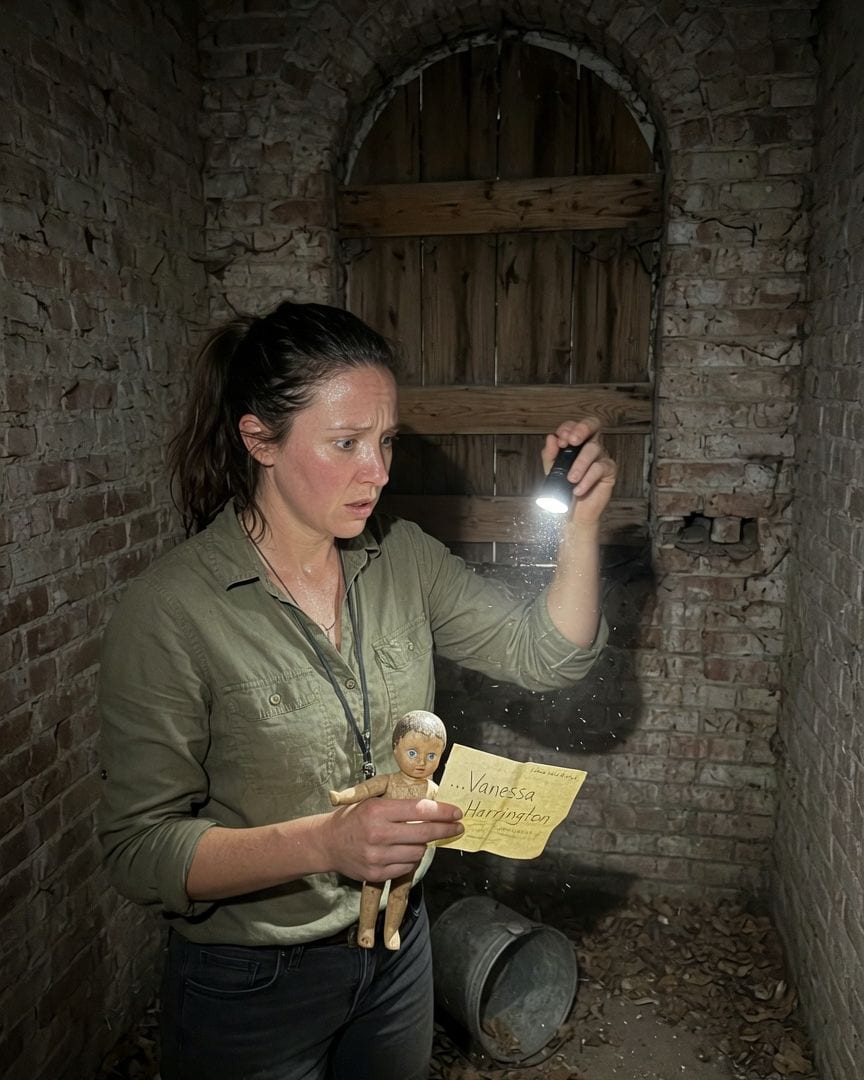
The attendance register has marked one pupil 'present' every single day since 1911 — never once absent. No child by that name has ever sat an exam.
Settling into my new teaching job at Oakhaven Elementary, I found myself drawn to the sealed bell tower. But it was the school's old register that truly unsettled me. A phantom entry, 'Pupil X,' had been marked 'Present' every single day since 1911, with no other records to prove they ever existed.
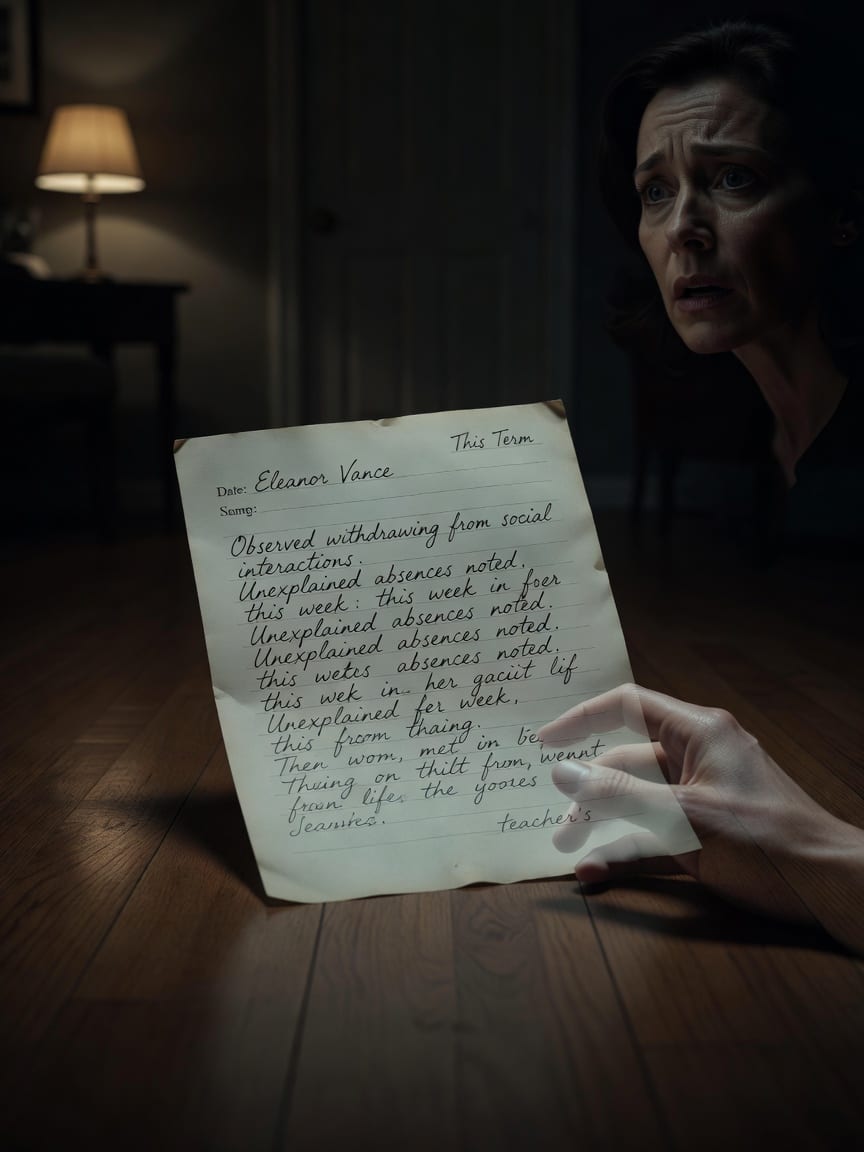
My school reports keep arriving, one a term, signed by teachers dead for decades. The latest describes something I'm doing *this week*.
My name is Eileen Caldwell, and my quiet life was upended by a school report from a place demolished decades before I was born. The report, signed by a long-dead teacher, eerily detailed my current habits. But the real shock arrived when I found my own name in a student register, dated 1968, with precise descriptions of my childhood—years before I existed.
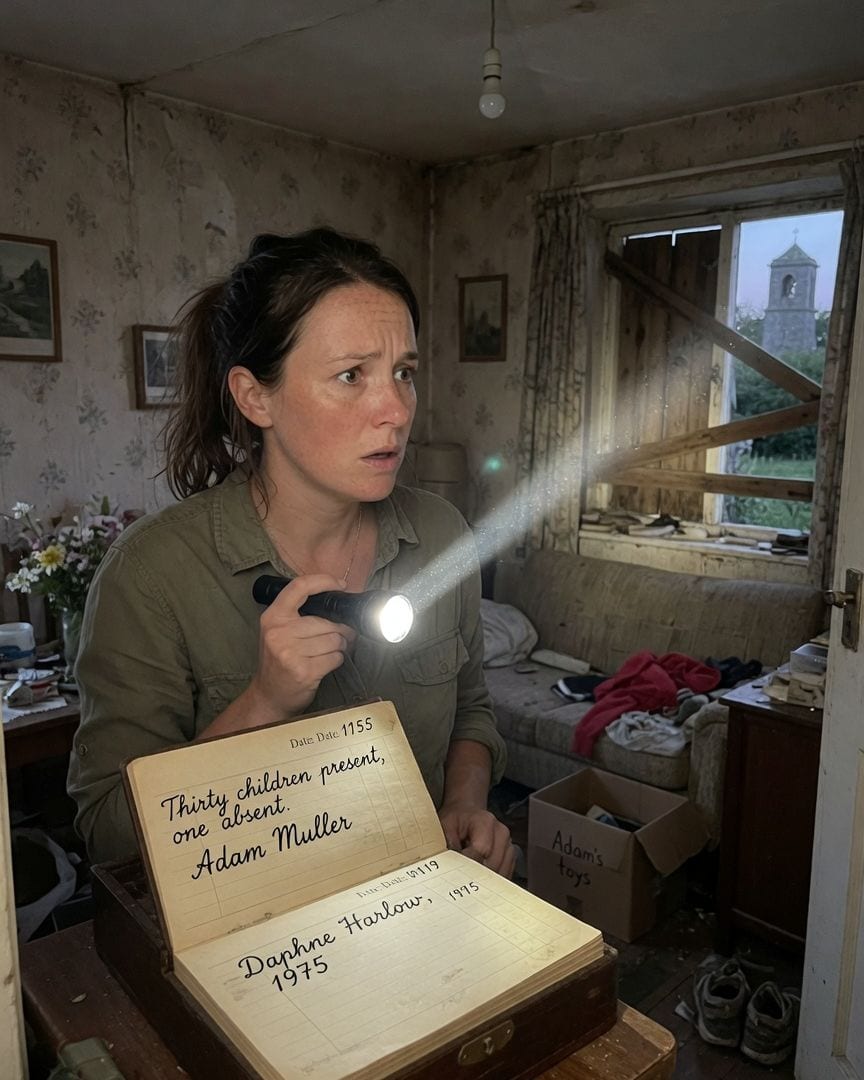
My son rang the old school bell. The attendance register, visible through the boarded window, now shows today's date and his name marked 'absent'.
We moved to a quiet village for peace, but my six-year-old son Adam found the old, boarded-up schoolhouse. Locals warned us, "Never ring the old school bell." That Tuesday, Adam rang it. Later, I saw his name on the school's long-closed attendance register, marked 'absent' in impossibly fresh ink from today.
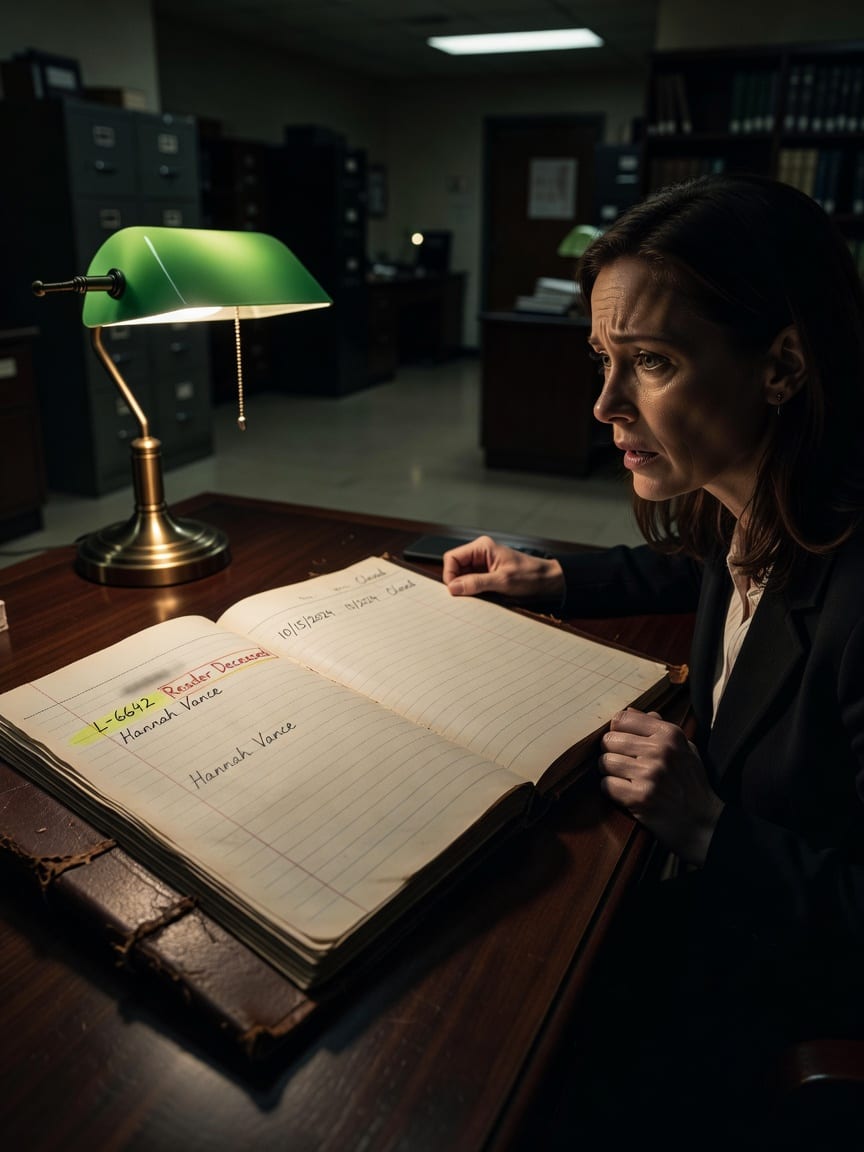
My library card number L-6642 was issued to me at seven — and the ledger shows that number has marked a reader 'deceased' every twelve years since 1949.
Returning my late father's library card to the old town library felt like a small act of closure. But the senior librarian's ancient ledger revealed a chilling pattern of 'reader deceased' entries tied to specific card numbers and borrowed books. My unease turned to cold dread when I secretly found my own name penciled in, marked for a future 'reader deceased' entry.
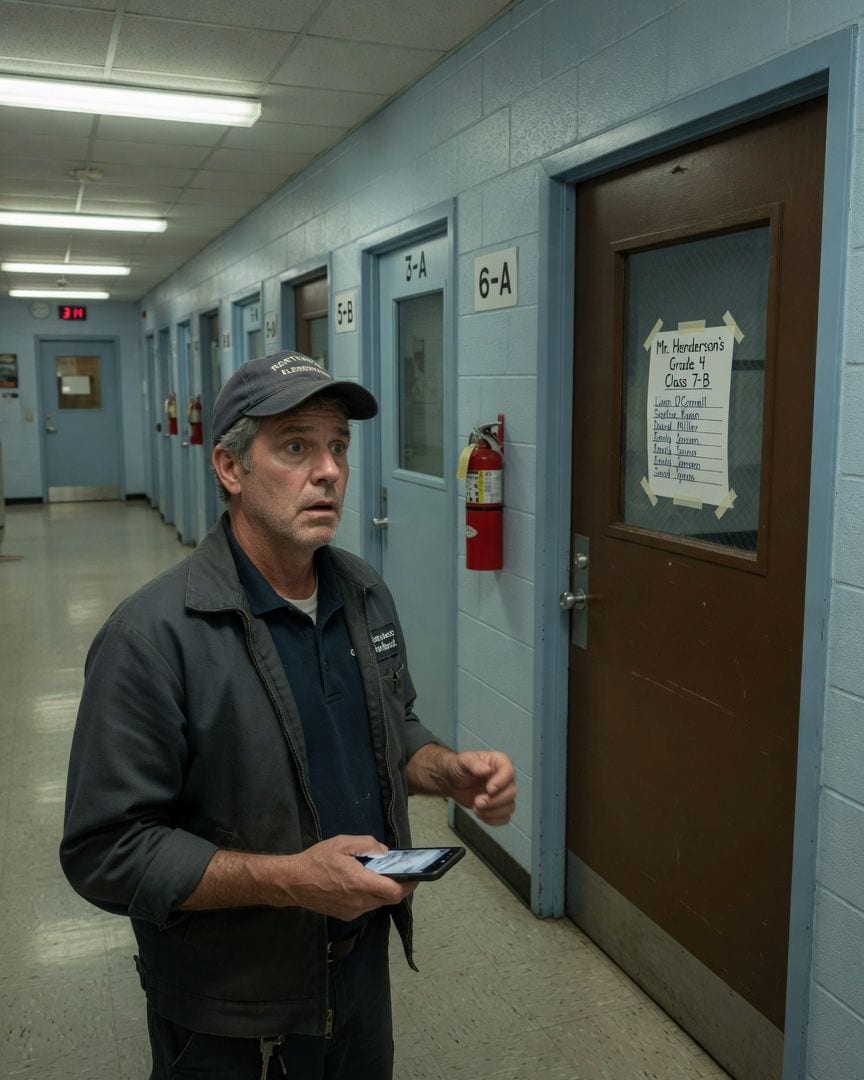
My classroom doors counted twenty-three last night. The extra one had a class list taped inside, names of children who've never been at this school.
My job as night caretaker at Northwood Elementary is routine: 22 classrooms, all accounted for. But one night, an impossible 23rd door appeared in the science block, nestled where only a wall should be. It bore a class list of students and a teacher who don't exist in any school record. Then, in an old logbook, I found that exact same list, dated 40 years ago.
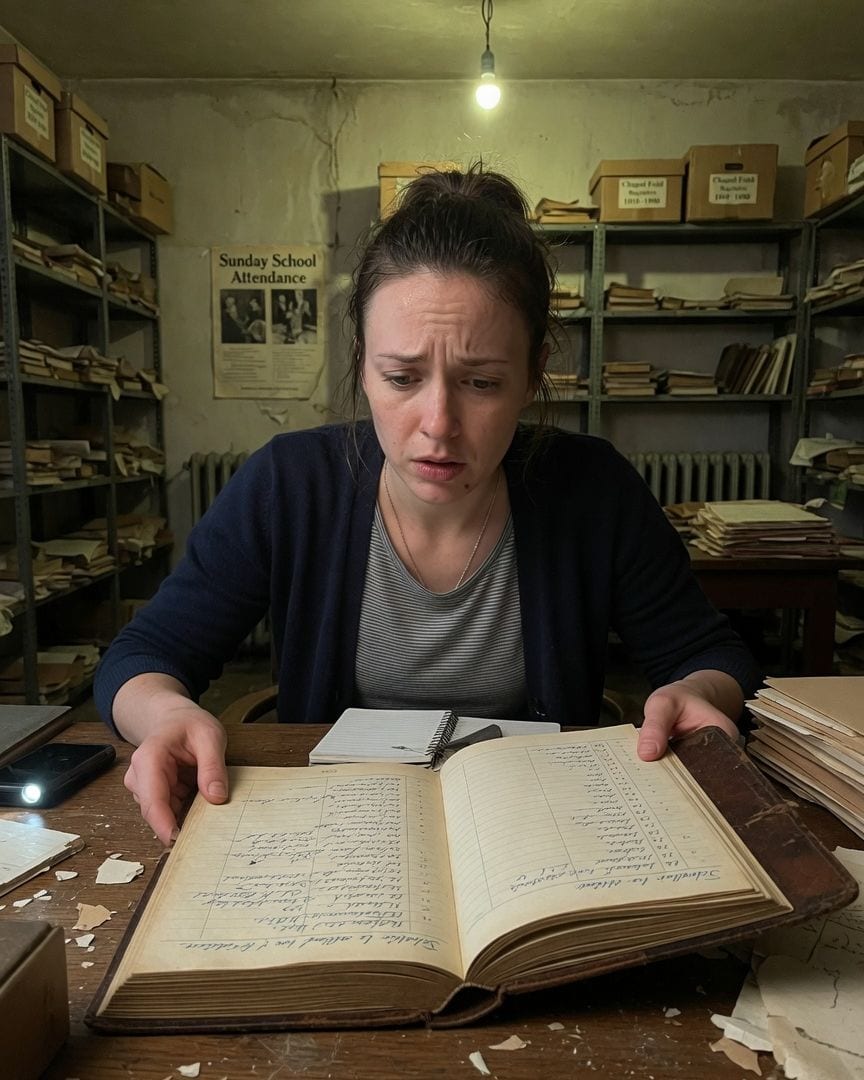
My Sunday school register shows scholar 33. Turning back, that same scholar 33 is entered every seventh year since 1907, always from my old address.
As a chapel volunteer, I found comfort cataloging old documents until a Sunday school register revealed a chilling pattern. Every seven years since 1907, 'Scholar 33' from my old address, Chapel Fold, was entered. Each entry was marked with the same curt, chilling phrase: 'ceased to attend, not called for.'