My Sunday school register shows scholar 33. Turning back, that same scholar 33 is entered every seventh year since 1907, always from my old address.
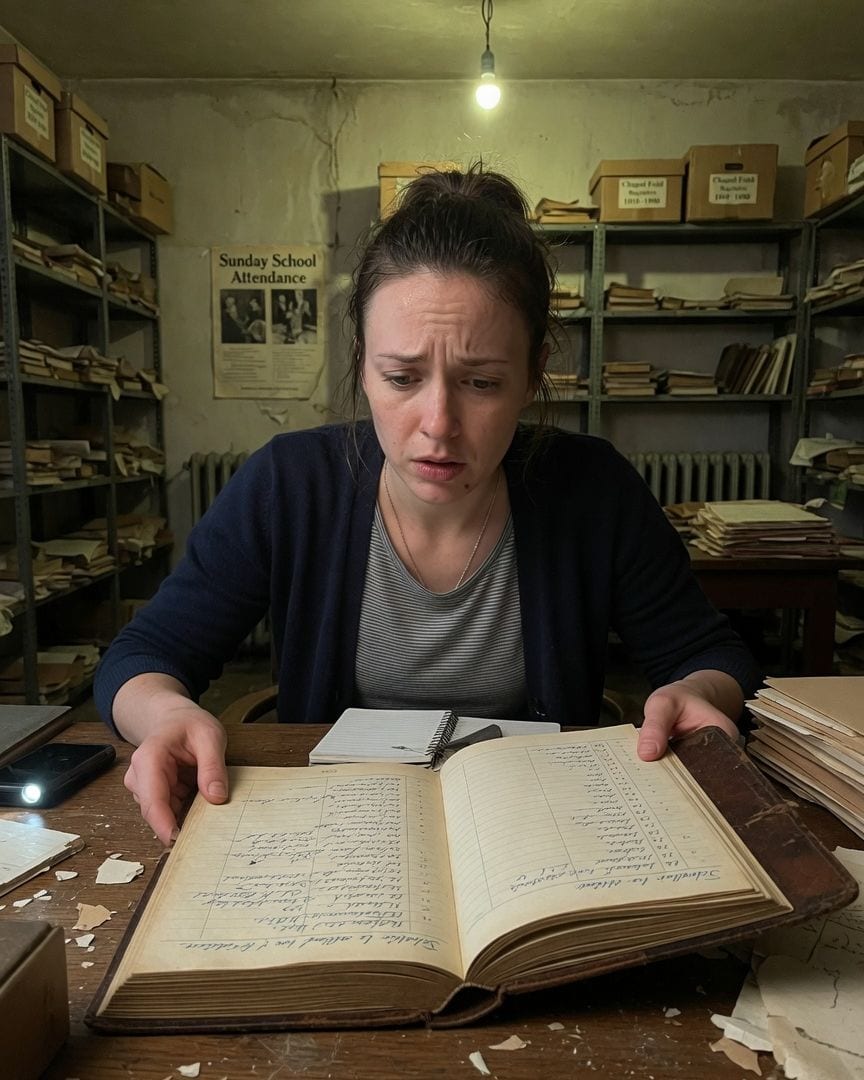
The archive smelled of old paper and beeswax, a scent I’d once found comforting. As a new chapel volunteer, my task was mundane enough: cataloging forgotten documents, clearing out the dust bunnies of history.
It was a quiet job, a balm after a particularly frantic week at my actual, paying gig.
I’d been working my way through a stack of Sunday school registers, their leather covers cracked with age. Flipping one open, my fingers traced a familiar name, neatly penned: Isabella Lambert, Scholar 33.
The date was from when my family briefly lived in the village, years ago, a stop in my dad’s itinerant career.
A small smile touched my lips, a flicker of nostalgia for a childhood almost forgotten, a brief time spent in the sweet, creaky Sunday school hall.
But then, a strange compulsion made me turn back the pages. And again. And again. Every seventh year, since 1907, there it was: 'Scholar 33.' Each time, a different child's name, but always, unequivocally, from 'Chapel Fold'—my own old address.
And each entry was ruled off with the same curt, chilling phrase: 'ceased to attend, not called for.'
My rational mind tried to dismiss it. A reused number, a clerical oddity. Maybe the families all just moved a lot.
But the sheer, relentless consistency over a century, the precise seven-year interval, the unvarying address, and that cold, dismissive note – it was too perfect, too managed. Too intentional.
The register felt heavier in my hands, its brittle pages rustling with a quiet, undeniable wrongness that seeped into the comforting smell of old paper.
I couldn't shake the register. The meticulously repeated entries gnawed at me, a tiny splinter under the skin. I took the heavy book home, leaving it on my kitchen table, an unwelcome presence, demanding answers.
I spent hours researching Chapel Fold, cross-referencing the names of the 'Scholar 33' children with online birth records, old census data, and local newspaper archives.
My own family had only lived there for a few years, a brief stop in my father’s itinerant career that saw us moving every few years.
What I found, or rather, didn't find, was far more disturbing than any single anomaly. None of the 'Scholar 33' children had any discernible life after their entry in the register. No later school records. No marriages.
No deaths, not in any public record anyway. No mention in any local historical society documents. They simply vanished.
The mundane explanation – that they all moved away and disappeared without a trace – strained credibility to breaking point given the precise pattern and the 'not called for' note.
It felt less like a series of coincidences and more like a deliberate erasure.
Driven by a cold, growing unease, I returned to the chapel, determined to find earlier registers or any supplementary notes that might explain the bizarre continuity.
I searched the deeper, dustier shelves of the archive, my fingers running over spines of forgotten tomes.
Tucked away beneath a pile of brittle, forgotten hymn books, its dull cover almost blending with the shadows, I found a small, leather-bound ledger, distinct from the others.
Its cover was plain, unmarked, almost deliberately camouflaged, as if it didn't want to be found.
My fingers trembled slightly as I opened the unmarked ledger. It wasn't a Sunday school register at all.
Inside, it held a series of cryptic entries: dates, numbers, and strange, archaic symbols, corresponding exactly to the years the 'Scholar 33' children appeared.
My eyes scanned the pages, a growing sense of dread tightening in my chest, a physical squeeze.
And then, on the very first page, written in a neat, spidery hand, a single instruction, underlined twice: 'keep 33 on the roll, mark them present.'
The ink was faded but chillingly clear, a direct command from a century ago.
The cryptic ledger became my obsession. I spent days, fueled by stale coffee and a mounting sense of urgency, trying to decipher its coded entries. They weren't names or academic notes, but financial transactions and precise dates.
Each date correlated perfectly with a 'Scholar 33' entry in the Sunday school register. The amounts were small, recurring payments, always consistent.
I noticed some of the earliest payments were marked 'payment for upkeep, Chapel Fold,' confirming the cottage's central, unsettling significance. Further entries referenced 'the Arrangement' and 'the Covenant,' terms that suggested a formal, long-standing agreement.
Trying to maintain my rational approach, I first attempted to discuss my findings with Reverend Malcolm Hughes, the chapel's new vicar. I showed him the strange entries, trying to frame it as an historical anomaly.
He merely chuckled, dismissing my concerns as 'old chapel traditions' or 'misunderstood historical accounting.' His gaze slid away from the ledger's more unsettling pages, settling on the innocuous dates.
He seemed genuinely uninterested, or perhaps, deliberately ignorant, his mind unwilling to entertain anything beyond the ordinary. It became clear to me that Reverend Hughes, for all his good intentions, was an outsider to this particular, quiet history.
The real trail, I realized, lay with someone who had been at the chapel for decades, someone who might know the unwritten rules.
My thoughts turned to Isaac Yates, the chapel’s quiet, elderly archivist, a man who moved through the dusty aisles with the serene authority of one who belonged to the very stones of the place.
I began to discreetly question Isaac Yates. I approached him under the guise of general historical research, asking about old chapel practices, the history of Chapel Fold, and any peculiar numbering systems used in the past.
Isaac, always calm and meticulously precise, provided vague but consistent answers, always deflecting from the specific 'Scholar 33' entries without my ever having to mention the number directly.
It was as if he knew exactly what I was asking about, but chose not to acknowledge it, simply letting my words drift past him like smoke.
One afternoon, I was deep in the archive, the cryptic ledger open on a reading stand. The air was still, heavy with the scent of old wood.
I stepped out for a moment to retrieve a reference book from another shelf, just a few feet away.
When I returned, barely a minute later, the ledger was closed, perfectly aligned on the shelf, exactly as I had found it.
Isaac was nowhere in sight, but a faint, almost imperceptible scent of his pipe tobacco lingered in the air, a silent, unnerving sign of his recent presence. It wasn't a draft that closed it.
The room felt still and heavy, watching.
Later that day, as I packed up my things, I found a small, neatly folded note tucked into my copy of the chapel's historical pamphlet. The paper was thick, slightly textured, and the handwriting was elegant, familiar.
'Some things are best left undisturbed, Miss Lambert,' it read. 'For the chapel's sake.' It was Isaac's hand.
The warning wasn't aggressive, but utterly firm, and the implication that he knew precisely what I was investigating, and what the consequences might be, sent a fresh wave of dread through me.
I was no longer just an investigator; I was being watched, and told, in no uncertain terms, to stop.
The warning note solidified my resolve. I confronted Isaac directly, the next morning.
I laid out the Sunday school register, open to a 'Scholar 33' entry, and the cryptic ledger, its dark cover a contrast to the worn wood of the table.
My finger pointed to the chilling marginal note: 'keep 33 on the roll, mark them present,' then to the 'Arrangement' and 'Covenant' entries.
Isaac sighed, a long, weary sound that seemed to carry the weight of decades, but his expression remained utterly placid, his gaze unwavering.
'The chapel has always had an arrangement,' he began, his voice soft but clear, 'A covenant, as the ledger calls it. A small offering, every seven years, from the cottage on Chapel Fold, to ensure...
the continued prosperity and protection of the chapel and its congregation.'
He spoke not with fear or regret, but with the quiet resignation of someone stating a simple, immutable fact of nature.
He explained that 'Scholar 33' wasn't a child's name, but a designation, a placeholder, a 'file number' for the offering.
The entries in the register, the payments in the ledger, the 'ceased to attend' notes – they were all part of the meticulous, bureaucratic record-keeping of this ancient, silent pact.
He pulled a small, sealed, unmarked envelope from a hidden compartment within the ledger itself. Inside, a single, yellowed photograph of a stern-faced man from the early 20th century. Isaac pointed to a faded inscription on the back: 'Superintendent.'
The same man whose firm, spidery hand had written the chilling instruction in the register. Every piece of my fragmented evidence clicked into place, forming a coherent, terrifying picture of deliberate, generations-long complicity.
I stared at the photograph of the Superintendent, then back at Isaac, my mind reeling. 'An offering?' I whispered, the word tasting like ash. 'Children?'
Isaac nodded slowly, his eyes holding a profound, unsettling knowledge. 'Yes, children. Always from Chapel Fold. It’s a very old family there, Miss Lambert. Always with a child at the right time. A tradition, you might say.'
He then calmly reached into a hidden compartment in his own desk, a drawer I hadn't noticed before, and pulled out another, much older ledger, bound in dark, crumbling leather. Its pages were thicker, the script even more archaic.
He opened it to a specific page.
My breath caught in my throat. There, in a child's hesitant hand, was my own name: Isabella Lambert, dated from my brief time at Chapel Fold. But beneath it, in a different, even older script, was another entry: 'Scholar 33.
The last offering, 28 years ago. My own mother oversaw it.'
Isaac looked at me, his gaze unsettlingly clear and devoid of malice. 'You see, Miss Lambert, you were not the first Scholar 33. You were the last potential one, before the current cycle began. The timing was... off, for you.
And that cottage,' he gestured vaguely towards the window, 'it's still waiting.'
I felt a cold dread bloom in my stomach, realizing he wasn't just a record-keeper; he was a guardian of the pattern, a participant in its silent perpetuation, and I, unknowingly, had been almost part of it myself.
The truth was far bigger and more personal than I could have imagined. Isaac Yates, his eyes steady and unblinking over his teacup, simply said, 'It's always been Scholar 33. Always from that cottage.
It's just how we ensure the chapel remains...' He paused, then added with a faint, almost imperceptible smile, 'viable.'
He then opened an older, crumbling ledger, pointing to Isabella's own name, written in a child's hand, beneath another entry: 'Scholar 33. The last offering, 28 years ago. My own mother oversaw it.'
Isaac, with an unnerving calm, elaborated on the full, horrifying truth. The family at Chapel Fold were descendants of the original covenant-keepers, bound by an ancient pact to provide a child every seven years.
'Scholar 33' was merely the bureaucratic designation for this child, who was then 'taken' by… something. Isaac never named it, only referred to it as 'the arrangement' or 'the recipient,' a vague but terrifying presence.
The chapel's role, he explained, was to facilitate this cycle, to record it meticulously, and to maintain the illusion of normalcy for the community.
The 'keep 33 on the roll, mark them present' note was a vital instruction to ensure the 'account' was never truly closed, always ready for the next cycle, a constant placeholder for the next offering.
My own entry as 'Scholar 33' was a temporary designation because my family had occupied the cottage during a brief, fortunate gap in the cycle, after the previous child was taken, but before the next designated family moved in.
I was lucky; the timing had been off, sparing me from the fate of the others. But the cottage itself, and the pattern, were eternal, a self-perpetuating mechanism.
It wasn't a monster in the woods or a cult, but a cold, bureaucratic, self-sustaining system for the chapel's silent survival.
Every clue I had painstakingly uncovered—the vanishing children, the cryptic ledger, the precise seven-year interval, Isaac’s calm complicity—clicked into place, forming a perfectly coherent, terrifying mechanism. The horror was in its seamless, unfeeling logic, the quiet machinery of it all.
I felt a profound numbness settle over me. The horror wasn't a screaming monster, but the sheer, calmly maintained system, the centuries of quiet, deliberate sacrifice. 'But what happens to them?'
I finally managed to ask, my voice barely a whisper, thin and reedy in the silent archive. Isaac just shook his head slowly, his eyes holding no judgment, only a deep, unsettling understanding. 'They are... honored.
Their sacrifice ensures the chapel's light continues. It's a duty, Miss Lambert, one passed down through generations.' He gestured around the silent archive, to the rows of dusty books, the stained-glass windows, the sturdy oak beams.
'Every stone, every hymn, every service – it is all built on this. Do you understand now? What you know, you cannot undo. To expose it would be to bring down everything. The chapel, the community, centuries of... peace.'
He looked at me, a quiet, knowing plea in his eyes.
He wasn't threatening me, not with violence, but simply laying out the immutable facts of our shared reality. I understood that Isaac, and others like him stretching back through time, were not evil, but guardians of a terrible, necessary truth.
I was trapped not by force, but by the overwhelming weight of this knowledge, and the devastating realization that the chapel, a place of comfort and community, was built on a foundation of silent, repeated sacrifice.
I couldn't report it; the evidence was too subtle, too deeply woven into the fabric of the community, and the people involved were too calm, too rational in their acceptance of the 'Arrangement.'
There was no monster to fight, only a system too vast, too ingrained, too quietly horrifying to dismantle. I was simply left with the knowing, a burden I alone would carry.
I left the chapel, the old ledger and register now returned to their places, their secrets once again tucked away.
Isaac watched me go from the archive door, a serene expression on his face, as if he had simply completed another day's work. Reverend Hughes continued his sermons, oblivious to the ancient pact that sustained his congregation.
The Chapel Fold cottage stood quietly, its windows dark, awaiting its next unwitting occupants. I didn't speak of what I learned. I couldn't.
The world outside the chapel walls felt the same, the village humming with its familiar rhythms, but for me, it was irrevocably altered. A profound, hollow space had opened inside me, filled only with the terrible coherence of the truth.
I tried to return to my life, to the mundane routines that had once grounded me, but the quiet knowledge gnawed at me, a constant, low thrum beneath the surface of every ordinary moment.
Every Sunday, the chapel bells still rang, a familiar, comforting sound echoing across the village green. But now, I heard them differently, their chimes a solemn, chilling toll for every Scholar 33.
I saw the families walk past Chapel Fold, oblivious to its history, to the quiet, ancient hunger it served. I saw Isaac Yates, calm and composed, at the morning service, a pillar of the community, a guardian of the unspeakable.
I knew. And the knowing was a hollow space inside me, a perpetual echo of the children who had simply 'ceased to attend, not called for.'
There was no escape from the truth, only the burden of carrying it, silently, forever.
The chapel stood, serene and outwardly benevolent, its foundations built on a secret so old, so ingrained, that it had become merely 'the way things are done.'
The chapel bells still ring on Sunday, but all I hear now is the quiet turning of a page.
If this one got to you
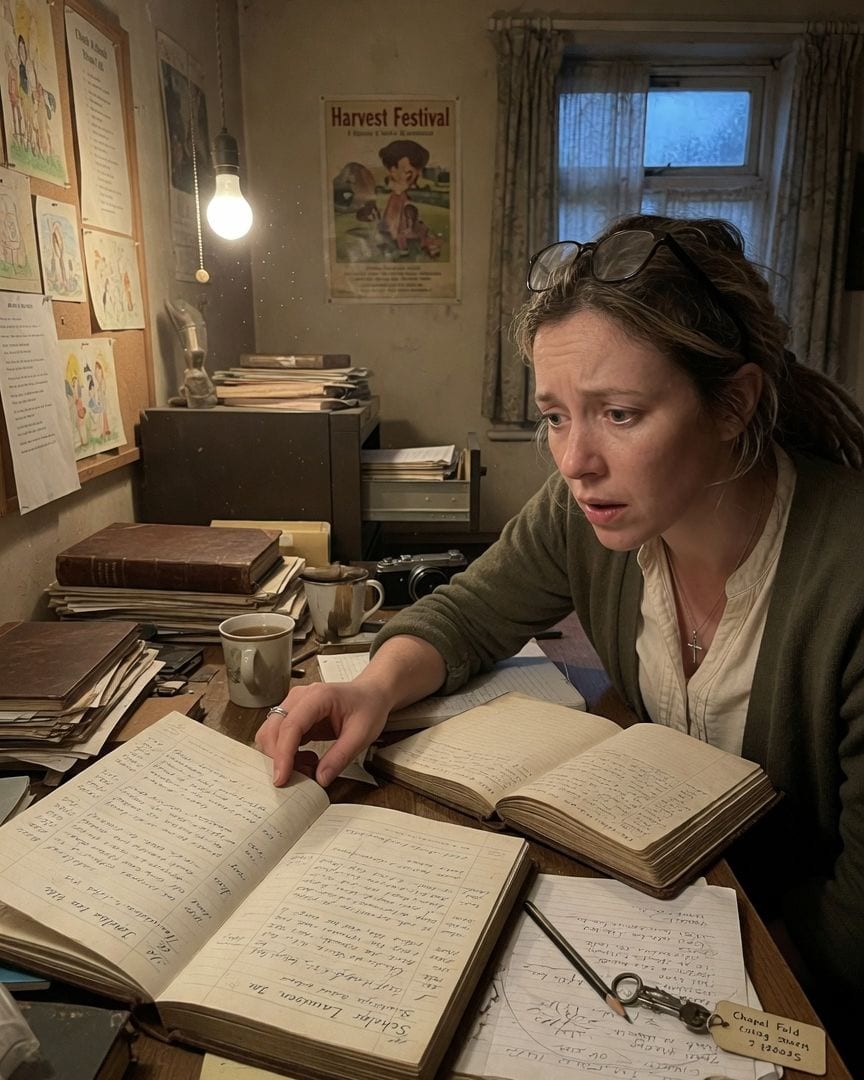
My name is in the chapel's old Sunday school register as 'Scholar 33'. But 'Scholar 33' appears every seventh year since 1907, each child from the same cottage, each marked 'not called for'.
Sorting dusty chapel archives, my job as a local history enthusiast, was a soothing journey through generations. But then my own name, Penelope Lawson, jumped out: 'Scholar 33' for the current year. I'd never attended. Flipping back, I found the same 'Scholar 33' entry repeating every seven years for over a century, always linked to the same old cottage.
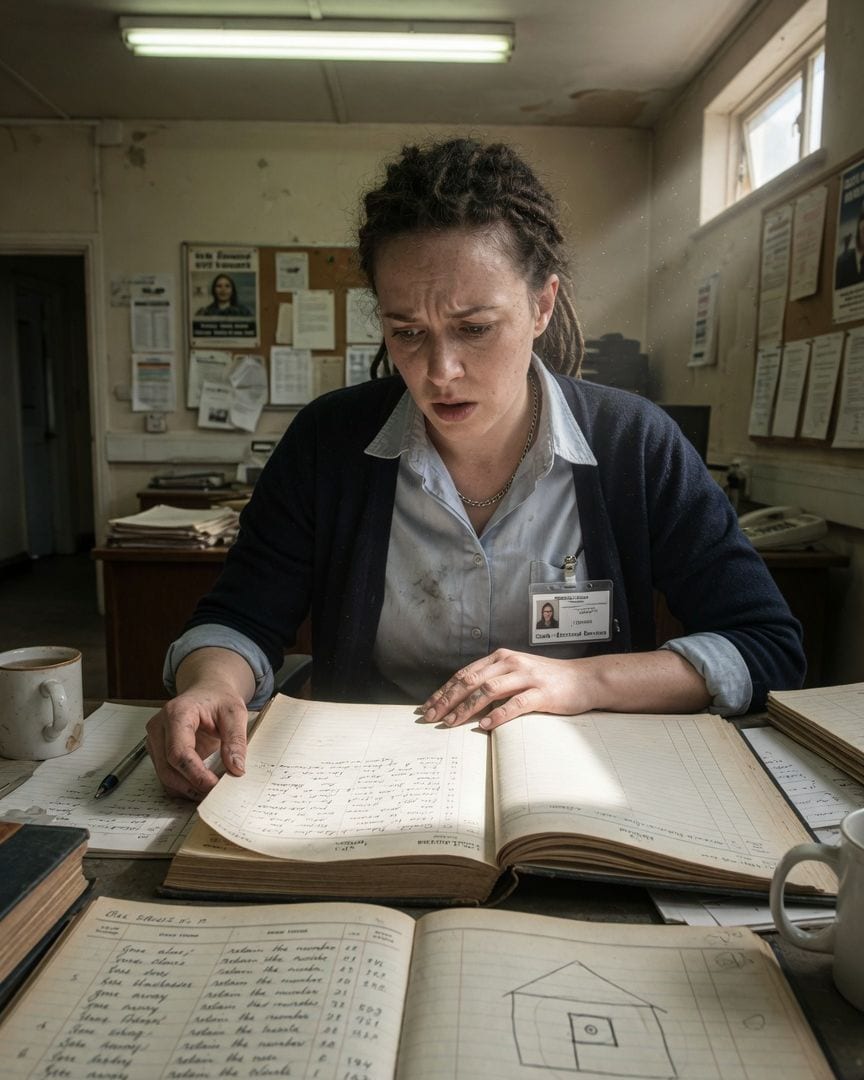
My electoral roll shows Elector 114 at 9 Bell Court has a new name this year. But the old rolls list a different person for 114 every election since 1950.
As a municipal clerk, my mornings are usually spent in monotonous cross-referencing. But today, a strange pattern caught my eye: a specific elector number at 9 Bell Court has been assigned to a different person every year since 1950, each entry marked with the same unsettling instruction: 'retain the number to the house.' What started as an oddity has now become a widespread, coded system hidden in the oldest registers.
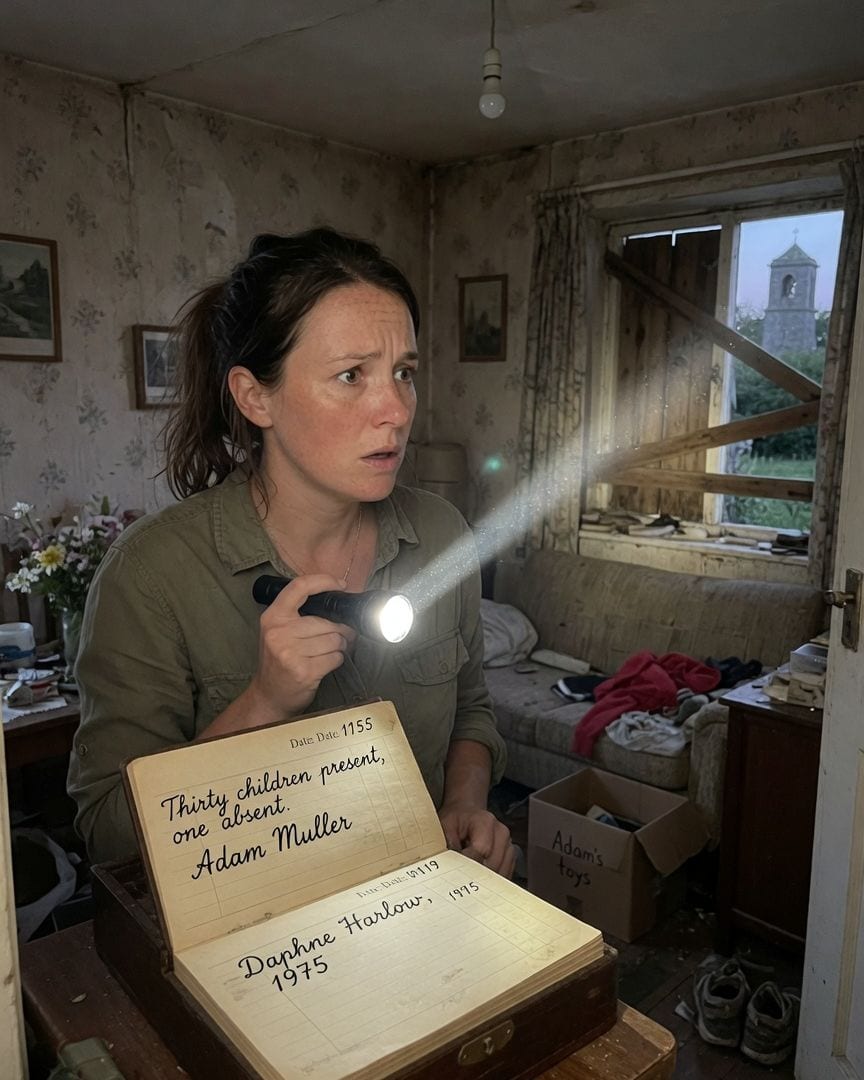
My son rang the old school bell. The attendance register, visible through the boarded window, now shows today's date and his name marked 'absent'.
We moved to a quiet village for peace, but my six-year-old son Adam found the old, boarded-up schoolhouse. Locals warned us, "Never ring the old school bell." That Tuesday, Adam rang it. Later, I saw his name on the school's long-closed attendance register, marked 'absent' in impossibly fresh ink from today.
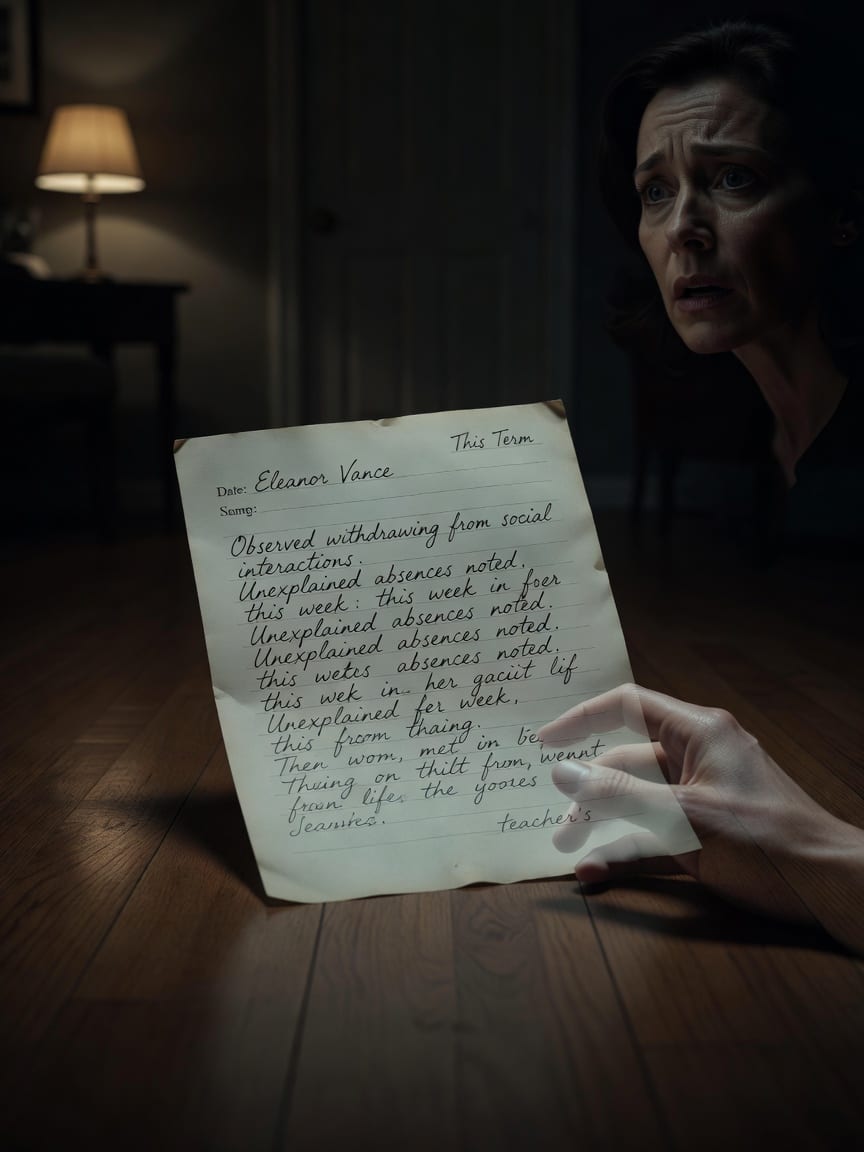
My school reports keep arriving, one a term, signed by teachers dead for decades. The latest describes something I'm doing *this week*.
My name is Eileen Caldwell, and my quiet life was upended by a school report from a place demolished decades before I was born. The report, signed by a long-dead teacher, eerily detailed my current habits. But the real shock arrived when I found my own name in a student register, dated 1968, with precise descriptions of my childhood—years before I existed.
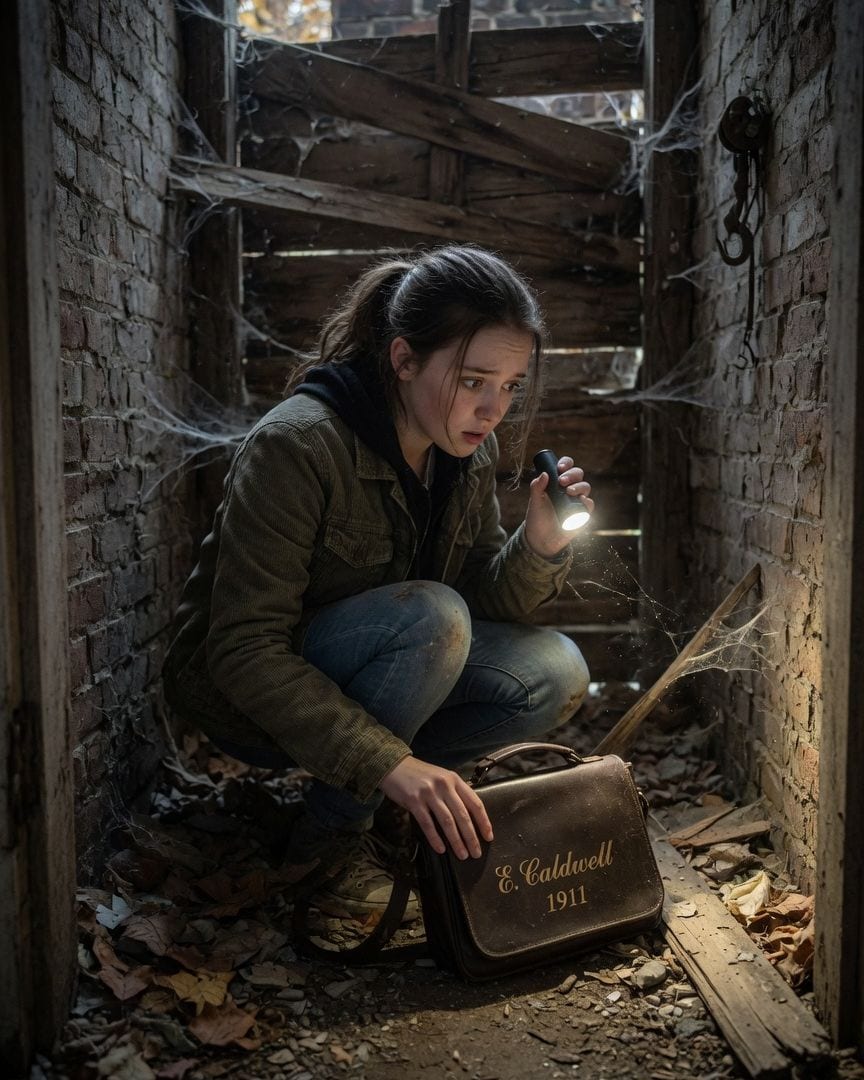
The school attendance register lists a child present every day since 1911. No such student ever sat an exam.
My new school, Caldwell High, felt too quiet, especially around its ancient, boarded-up bell tower. Teachers gave identical, rehearsed lines about it being "structurally unsafe." But then I found the attendance register, detailing a student named Eleanor Caldwell marked present every single day since 1911. No other record of her exists anywhere.
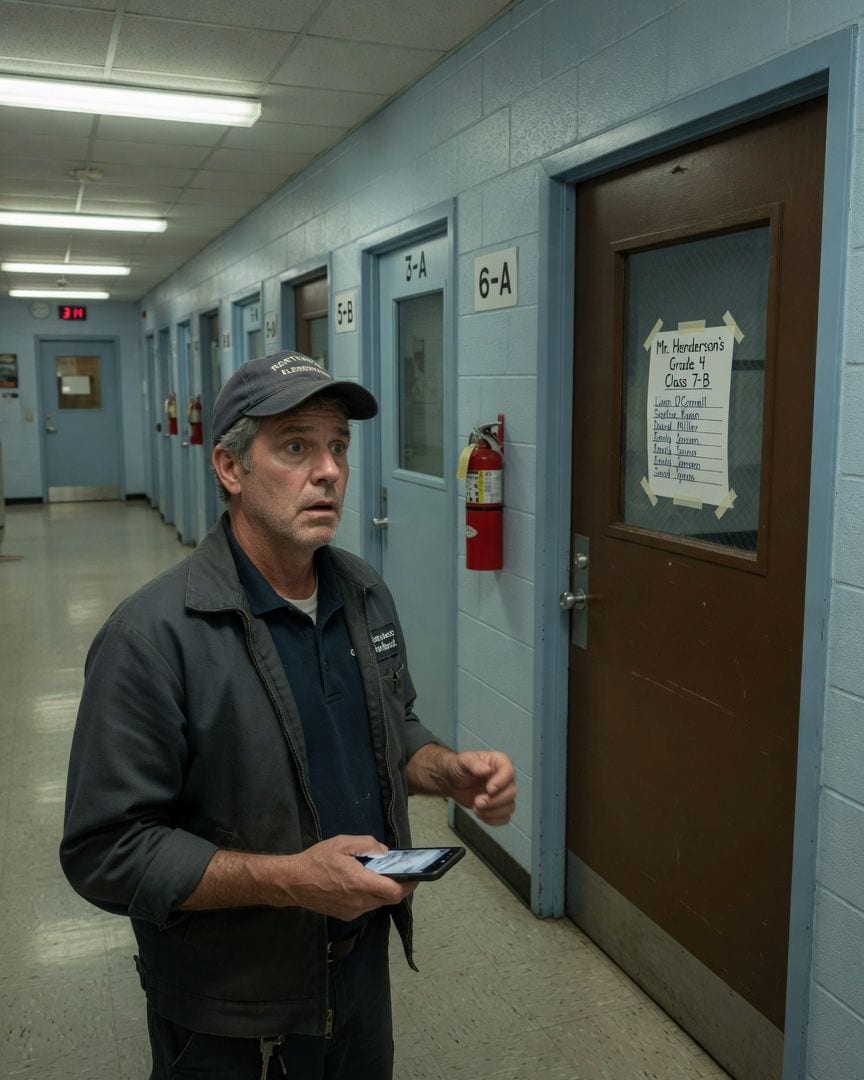
My classroom doors counted twenty-three last night. The extra one had a class list taped inside, names of children who've never been at this school.
My job as night caretaker at Northwood Elementary is routine: 22 classrooms, all accounted for. But one night, an impossible 23rd door appeared in the science block, nestled where only a wall should be. It bore a class list of students and a teacher who don't exist in any school record. Then, in an old logbook, I found that exact same list, dated 40 years ago.