My house’s 1962 valuation has a redacted line, but the surveyor’s note says 'condition as attaches to each owner in turn.' It’s the same code on my own mortgage completion statement.
The boxes from the removal company were still stacked in the hall, a monument to upheaval, but I’d wanted to get straight into the quiet satisfaction of new ownership. My kitchen table, however, had become an archaeological dig.
Splayed open before me were the mortgage archives for my new house, a charming but slightly dated Victorian on a street I’d always admired. Most of it was administrative fluff, but then a 1962 valuation report caught my eye.
Hand-typed, official, with the crisp formality of another era.
Under a section titled 'Special Conditions,' there was a single line, utterly blacked out with heavy redaction ink. Not a scribble, but a careful, deliberate obliteration, as if someone had tried to erase a critical detail.
Below it, however, a surveyor's neat, handwritten note survived, scrawled in faded blue ink: 'condition as attaches to each owner in turn, see the sealed page.' The phrasing sent an immediate, unpleasant shiver down my spine.
Each owner in turn. What kind of condition applied to people, not property?
I shuffled through the papers, my fingers brushing against the dry, brittle edges of the old documents. No 'sealed page' materialized. Just the tantalizing reference and a gaping, unsettling absence where it should have been.
I instinctively reached for my own completion statement, printed just weeks ago, lying innocently beside my coffee mug. Buried in the fine print, under 'Additional Property Covenants,' was a condition reference code: 'C-61/A'. Identical.
The air in the room, which had been warm with the promise of a fresh start, felt suddenly colder, imbued with a quiet, watchful presence. My breath hitched.
I tried to rationalize it. A clerical error, perhaps. An old, obsolete condition from another era that had simply never been properly expunged from the records.
Or maybe just a bizarre legal quirk, some kind of historical easement that meant nothing now. I even called my solicitor, a mild-mannered man named Mr. Davies, who chuckled gently and dismissed it as 'archival quirks.'
He assured me the deeds were clean, the property entirely mine, no outstanding issues.
But his reassurance felt hollow, a flimsy shield against the phrase 'each owner in turn' which now gnawed at me like a persistent itch I couldn’t scratch.
I started looking at the house differently, my eyes picking out details I’d previously overlooked. The way the floorboards creaked in a certain rhythm, the faint, earthy smell in the spare room that wasn't quite mildew, not quite damp.
I was searching for anything unusual, any physical manifestation of this mysterious 'condition.' My gaze finally settled on an old, built-in cupboard in the master bedroom.
Its wood paneling, painted over many times, showed a faint, almost imperceptible seam, running vertically along one of the main panels.
The previous owner had clearly applied a fresh coat of paint over it, but the seam was too neat to be a simple repair, too deliberate in its concealment.
I ran my fingers along it, feeling a faint give that suggested a hidden compartment, a subtle hollow behind the thin veneer.
It wasn't the kind of sloppy join you'd expect in an old house, not a natural warp or settling. This felt intentional.
The mundane explanation of 'old house quirks' felt increasingly flimsy as I examined the precise, almost deliberate concealment, a feeling of unease ratcheting up with every touch.
My heart started to beat a little faster, a drumming against my ribs that echoed the quiet hum of the old house around me.
I gripped the edge of the faint seam, my fingers trembling with a mix of fear and desperate curiosity. The wood gave with a soft groan, then a sharp crack.
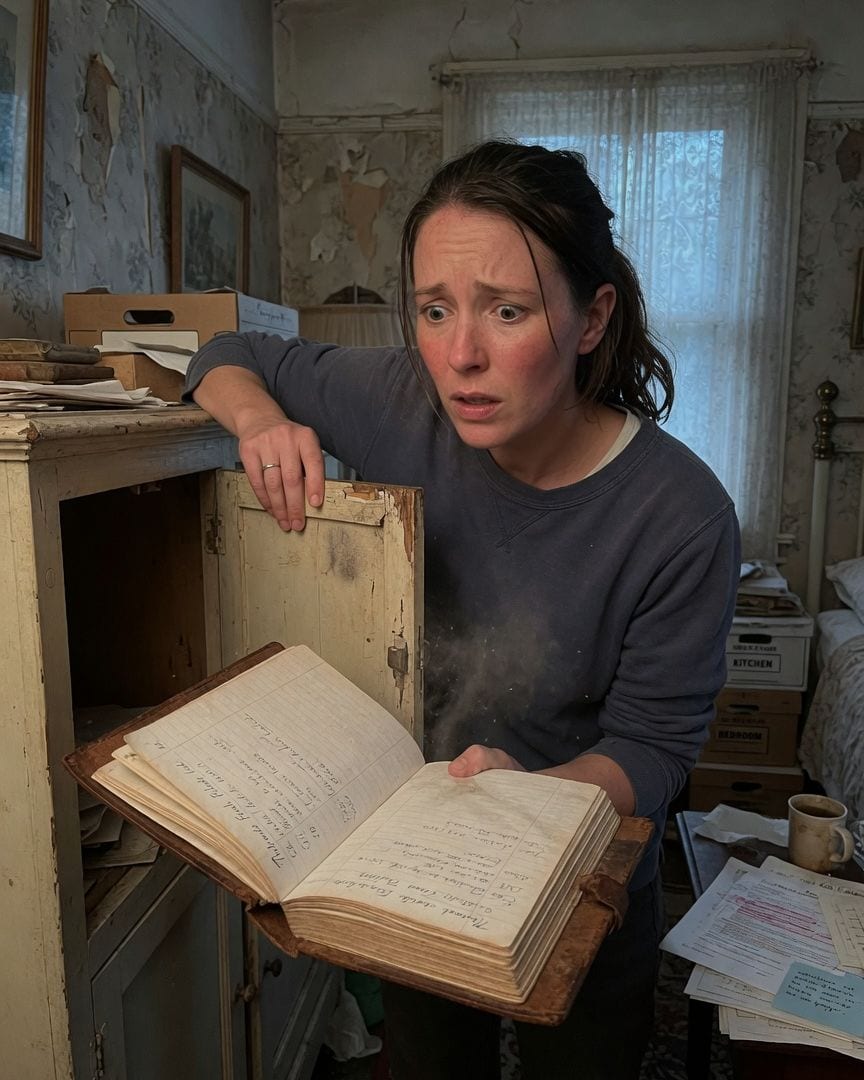
Slowly, carefully, I pried open the false panel in the old cupboard. The dry, aged wood scraped against itself, releasing a puff of fine, grey dust.
Inside, nestled in the dark, cool space, was a small, leather-bound wooden ledger, its surface smooth from decades of touch and the fine accumulation of dust.
I pulled it out, the pages stiff and yellowed, releasing a faint scent of old paper, dried dust, and something else, something indefinable, like old earth and forgotten secrets.
My eyes fell on the first entry at the top of the first page: a handwritten name, 'Thomas Finch,' followed by a date, 'August 14, 1959.' And below it, scrawled in faded ink, unmistakable: 'C-61/A – Condition Fulfilled'.
My breath caught in my throat. I flipped to the next page, then the next, my fingers stiff with a rising dread. Each page bore a different name, a different date of 'acquisition,' and another 'fulfillment' date.
The same code, 'C-61/A,' was repeated under every name, a chilling, unbroken chain stretching back decades, each entry a silent testament to a fate I could not yet comprehend.
I spent the next few days hunched over the ledger, the rhythmic creak of the old house providing an unsettling soundtrack to my investigation.
The names were all different – Finch, Davies, Holloway, Miller – but the 'Condition Fulfilled' notation was constant.
The dates of 'acquisition' and 'fulfillment' for each entry were sometimes only a few years apart, sometimes a decade, but I noticed a disquieting pattern: the average tenure seemed to be shortening over time, especially in the later entries.
Beatrice Patterson, the previous owner listed just before me, had only been here for four years. I looked up the names online, a futile search yielding only dead ends or records that didn't quite match. They seemed to vanish.
Desperate for answers, I tried calling the building society again. I'd found a faded internal memo in the archive box with a name, 'Greg Marsh, Senior Archivist.' After several transfers, I reached him.
He sounded calm, almost bored, when I mentioned the 'C-61/A' code, stating it was 'an old property management identifier, not in use anymore.' His dismissive tone, rather than reassuring me, only deepened my unease. He was too placid, too unconcerned.
That afternoon, I visited my elderly neighbor, Janet Doyle, 79, who had lived on the street for sixty years. I brought over a small plate of biscuits, trying to make it casual.
Janet was initially reticent, offering only vague pleasantries about previous owners, remembering them only in the broadest strokes – "a lovely young couple," "a quiet older lady."
But a flicker of something unreadable – a shadow of recognition, perhaps even fear – crossed her face when I mentioned the 'condition code' from my mortgage, or spoke of the strange, hidden ledger.
She quickly changed the subject to her prize-winning petunias.
A few days later, I found a small, plain envelope tucked under my front door. No stamp, no address, just a crisp, unsettling anonymity. My heart hammered against my ribs as I tore it open.
Inside was a single sheet of paper with a typewritten message: 'Some things are best left undisturbed. The condition is not a choice.'
The message was chillingly specific, directly addressing my investigation, confirming that someone knew exactly what I was looking into. I immediately suspected the building society, or specifically, Greg Marsh.
I called him again, demanding an explanation, but he denied all knowledge, his voice still unnervingly calm, suggesting I 're-read her original mortgage agreement for peace of mind.'
He maintained his cool, bureaucratic front, even as my voice rose with thinly veiled panic.
Later that week, while researching property records at the local council’s archives, a prickling sensation crawled up the back of my neck. I felt an odd presence, a distinct sense of being watched.
Looking up from a dusty microfiche, I saw a man in a dark suit standing across the room, by the entrance.
He made no move towards me, but his gaze was unwavering, unnervingly still, fixed on me with an almost clinical intensity. He wasn’t looking at the records; he was looking at me.
When I finally packed up my documents, my hands shaking slightly, and glanced up again, he was gone.
The encounter left me with a profound sense of being observed, my investigation no longer private, but a matter of quiet, institutional surveillance. They weren't just managing the paperwork; they were managing me.
Driven by the typewritten note and the persistent feeling of being watched, I confronted Greg Marsh in person at the building society's main office. I brought the ominous ledger with me, clutched tight in my hand like a shield.
His office was sterile, modern, a contrast to the ancient secrets I held. He gestured to a chair, his expression utterly unreadable, as if looking at a routine form. I placed the ledger on his polished oak desk.
He examined it calmly, turning its yellowed pages with a practiced hand, his gaze sweeping over the names and dates.
'Ah, yes,' he said, his voice devoid of any surprise, 'This is a fascinating artifact, Ms. Underwood. A record of a… unique arrangement.' He didn’t deny it, didn’t try to dismiss it as an old record.
This quiet acceptance was far more terrifying. I pressed him, demanding to know what 'Condition Fulfilled' truly meant, my voice tight with barely suppressed fear.
He leaned back in his chair, fingers steepled. 'For certain legacy properties, Ms. Underwood, the building society has an administrative oversight role. It's to ensure the continuity of specific covenants.'
He avoided calling them 'owners,' instead referring to them as 'participants,' a chillingly dehumanizing term. 'The original document, the one you referenced from 1962, simply formalized our involvement. The sealed page? It merely outlined the administrative duties we perform.'
Then, slowly, deliberately, he pulled out a file from his own drawer, a file marked with my own name: 'Rosemary Underwood.' And beneath it, in bold, stamped letters, was the familiar, dread-inducing 'C-61/A' code.
'You see, Ms. Underwood,' he continued, his gaze meeting mine, utterly devoid of malice, 'the sealed page was never about a legal clause to be understood or broken. It was about a cycle. A process.
And by purchasing the property, you have, in effect, accepted your turn in that cycle.' The words hung in the sterile air, cold and utterly final.
The ledger entries suddenly re-contextualized: not just property transfers, but a horrifying procession of 'participants' fulfilling an unknown, inescapable 'condition,' managed with chilling bureaucratic precision by the very institution I had trusted with my new home.
The dread was a physical weight, crushing me.
Greg Marsh leaned forward across the polished oak desk, his face utterly devoid of malice or concern, his calm more terrifying than any threat.
'The condition isn't something one can simply walk away from, Ms. Underwood,' he said, his voice soft, almost paternal, as if explaining a simple fact of life. 'It's a continuity.
And you, as the current owner, are now intrinsically part of it. We merely facilitate the transition.'
He gestured to the file in front of him, a file marked with her own name, and the familiar, dread-inducing 'C-61/A' code, now stamped with 'ACTIVE' in bold red ink.
He then opened the file, revealing a faded, sepia photograph of a woman standing in front of Rosemary's house, my house. Her face was oddly blurred, obscured by time, but her posture, the way she held herself, was eerily familiar.
'This was the previous owner, Beatrice Patterson,' he stated, 'who fulfilled her condition just before you acquired the property. You may find some of her personal effects still in the attic, if you look carefully.' My breath hitched.
I stared at the photo, a cold dread washing over me, turning my blood to ice.
The woman in the photo was wearing the exact same floral scarf I had found neatly folded in my own attic, tucked into an old hatbox, a scarf I had dismissed as a harmless, forgotten relic, now an undeniable, terrifying link to a past I was doomed to repeat.
I stumbled out of the building society, the photograph of Beatrice Patterson and Greg Marsh's chilling words echoing in my mind, a relentless drumbeat of doom. I drove straight to Janet Doyle's house, my last hope for a sane explanation.
Her small, neat living room felt like a fragile bastion against the encroaching madness. Janet, seeing my terrified, desperate face, finally broke her long-held silence.
She poured me a cup of tea, her hands trembling slightly, her eyes filled with a deep, resigned sorrow.
'They don't move out, dear,' Janet said, her voice raspy with years, barely above a whisper. 'They become part of it. The house… it changes them. Slowly.'
She recounted how she had watched Beatrice Patterson become increasingly withdrawn in the months before she 'left,' her mannerisms subtly altering, her eyes seeming to hold a strange, detached calm. She had stopped tending her garden, stopped waving.
Janet described how the house itself seemed to absorb a piece of each owner, how it felt 'fuller' after each 'fulfillment,' its presence growing more profound, more… settled.
The ledger, the recurring 'C-61/A' code, Greg Marsh's placid words, the scarf in the attic – it all snapped into place with horrifying clarity. The 'condition' wasn't a legal burden or a bureaucratic oversight; it was a slow, insidious assimilation.
The previous owners didn't just leave their belongings; they left themselves. I realized, with a sickening lurch, that I was never truly buying a house; I was buying my place in a queue, a place in a monstrous, living pattern.
I was always meant to be inside it, a new thread woven into its ancient, unsettling fabric.
I returned to my house, the weight of the truth crushing me, heavier than any mortgage. I walked through the familiar rooms, now imbued with a sinister, hungry presence. The house felt undeniably alive, watching, waiting.
The air was thick, almost viscous, with its quiet anticipation. I found the floral scarf in the attic again, neatly folded where I'd left it.
It felt heavy, almost sentient, in my hands, no longer a relic of Beatrice but a piece of her, now a piece of me.
I tried to leave. I walked to the front door, my hand reaching for the knob, but a profound, unshakeable inertia rooted me to the spot. My limbs felt heavy, unresponsive, as if growing directly from the floorboards.
My mind, once sharp and rational, felt hazy, distant, a quiet hum replacing my frantic thoughts. The walls seemed to breathe around me, the old floorboards creaked not with age, but with a slow, deliberate rhythm, like a heartbeat.
I felt a subtle pull, a deepening connection to the very foundations of the house, a sense of merging, of my essence being drawn into its core.
As I stood in the living room, a strange, hollow calm began to settle over me, a calm that felt alien, not my own, soothing away my fear, replacing it with a quiet, vast emptiness.
I looked at my reflection in the darkened window, and for a fleeting, horrifying moment, I saw not just myself, but a faint, superimposed image of Beatrice Patterson's blurred face, her quiet, knowing smile playing on its lips.
The house was not letting me go. I was not escaping. I was becoming.
Days turned into weeks, blurring into a seamless, quiet continuum. Rosemary Underwood was still in her house. She answered the door to neighbors, went to the shops, but her movements were slow, deliberate, almost mechanical.
Her eyes held a distant, almost serene quality, reflecting a profound inner stillness. She rarely spoke, and when she did, her voice was flat, devoid of its former spark, an echo rather than a sound.
The house, meanwhile, seemed to hum with a quiet satisfaction, its old timbers settled, its atmosphere thick with a sense of fulfilled purpose. The old ledger remained in its hidden compartment, undisturbed, its entries waiting for the next 'acquisition' date.
Greg Marsh received an 'all clear' memo from his department, another cycle complete, another file closed. Janet Doyle watched from her window, a familiar sorrow in her gaze, seeing the quiet, inevitable change.
Rosemary sat in her living room, perfectly still, a single, faded floral scarf draped over the back of her armchair. The evening light cast long shadows, giving the room a deep, ancient quiet.
Her husband, Joel Galloway, returned home, his cheerful voice cutting through the stillness as he called her name from the hall.
She turned her head slowly, a faint, unnervingly serene smile on her lips, her eyes holding a depth that wasn't there before, a quiet acceptance of her new state.
Joel entered the living room, his brow furrowed slightly as he noticed her unusual stillness. He asked, 'Did you have a good day, love?'
She simply replies, 'Yes, Joel. A very quiet day. The house is quite content.'
If this one got to you
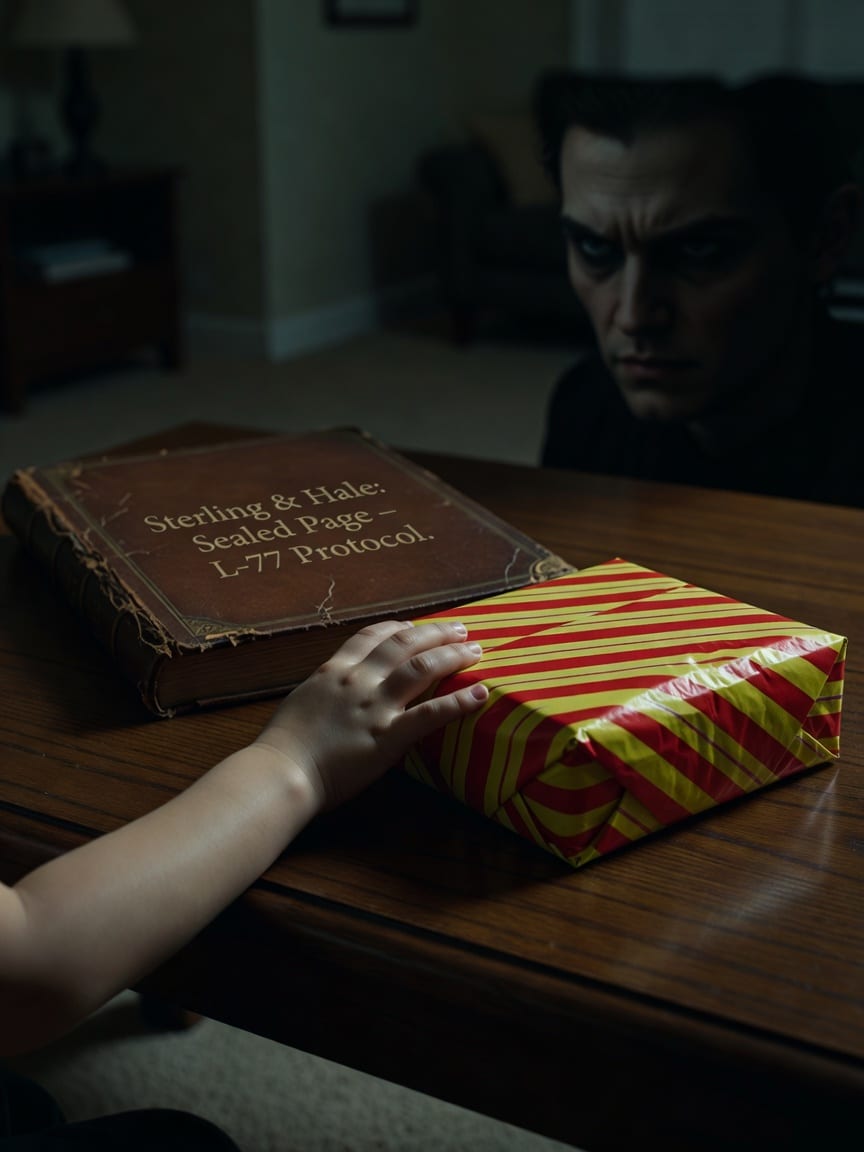
My house's 1962 mortgage archive had a redacted line. It named a 'condition as attaches to each owner in turn,' the same code as mine. There's no sealed page.
When a box of old documents arrived, I found my house's 1962 valuation report contained a heavily redacted line. A surveyor's note cut through the censorship, referencing a 'sealed page' and a code: 'L-77.' That same code was on my own mortgage statement, dated just last month.
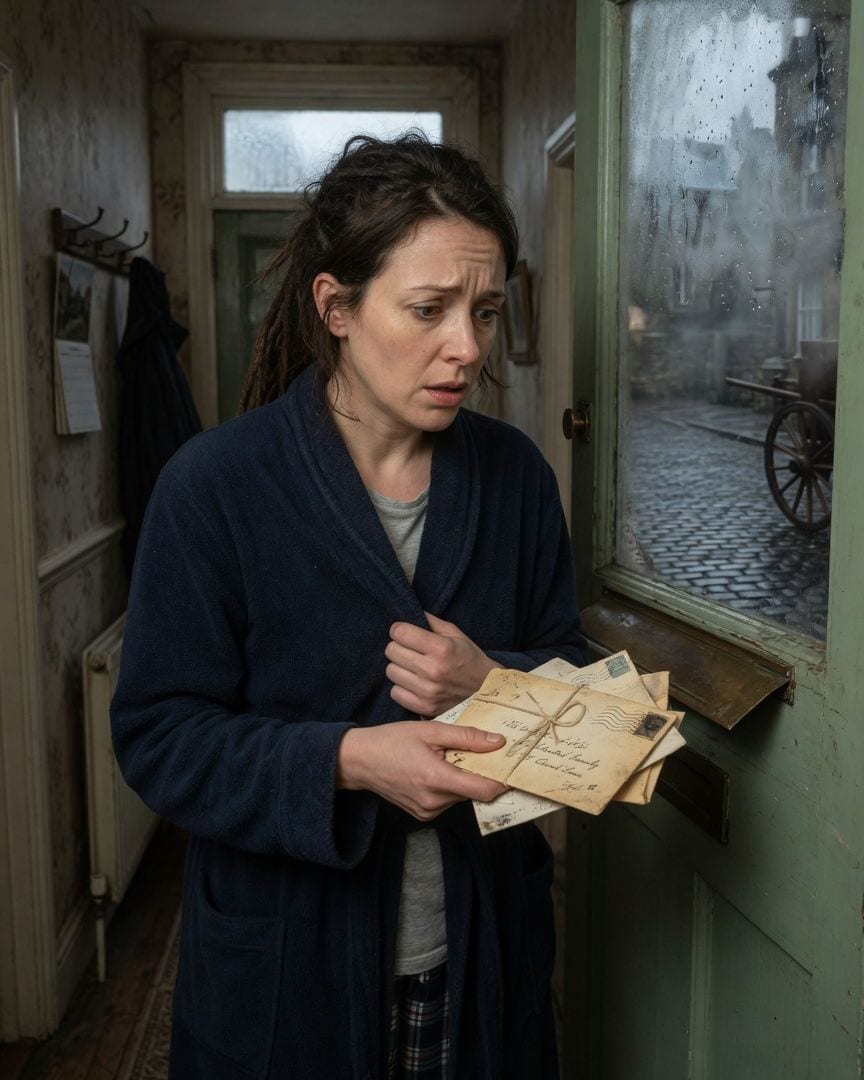
Seventy years ago, a hidden journal recorded my door opening to the wrong street and receiving Lockwood post.
I'd only recently moved into my inherited house, a quiet place on the edge of town. One grey morning, a distinct clatter from the front door's post flap caught my attention. Reaching down, I expected my gravel path, but instead, the flap showed a dark, cobbled street that wasn't mine. A bundle of warm, old letters, addressed to 'The Lockwood Family,' slid through, before the vision flickered and was gone.
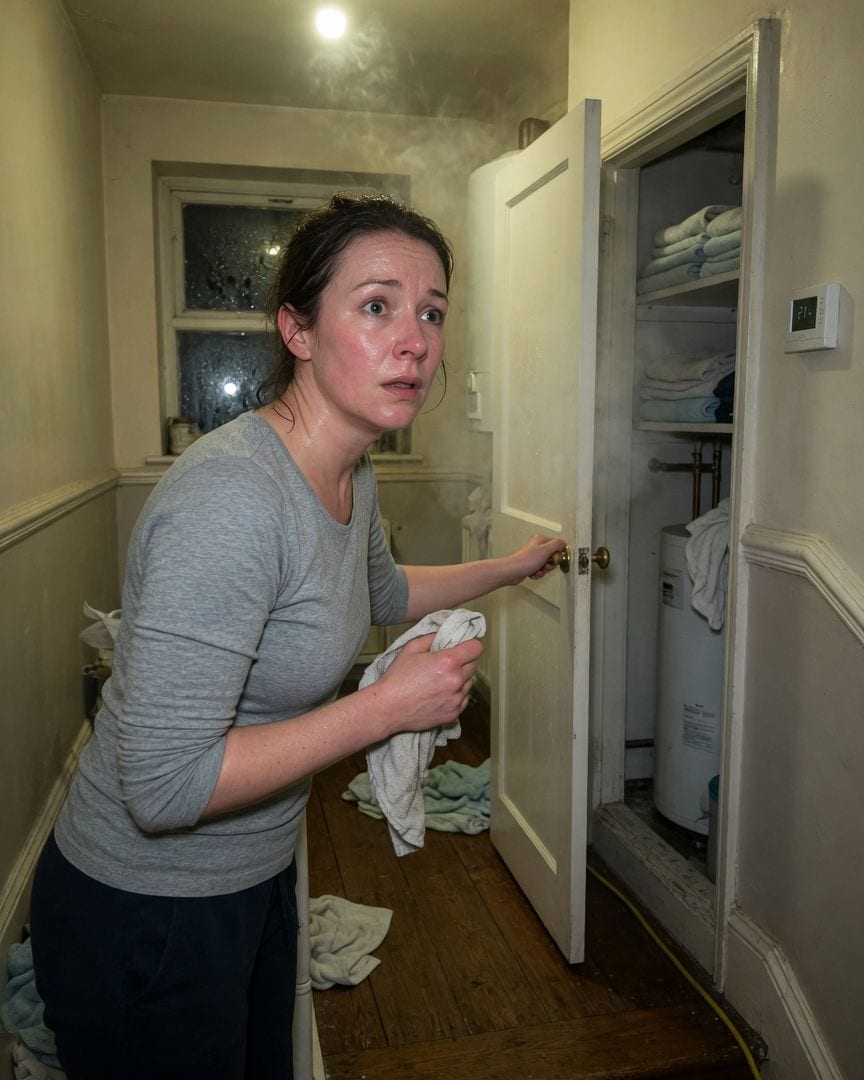
My airing cupboard opened onto a burning brick copper, sheets boiling. The heat rolled out, smelling of soda and wet linen. I shut it; my boiler was back.
My new house, bought just last spring, felt colder than expected. When I opened the airing cupboard, it wasn't mine at all, but a blast of steam and a roaring fire from an impossible past. Days later, a faint, metallic smell still drifted from the landing, and a worn path on the floorboards led to a hidden, ancient sampler beneath my feet, dated 1892.
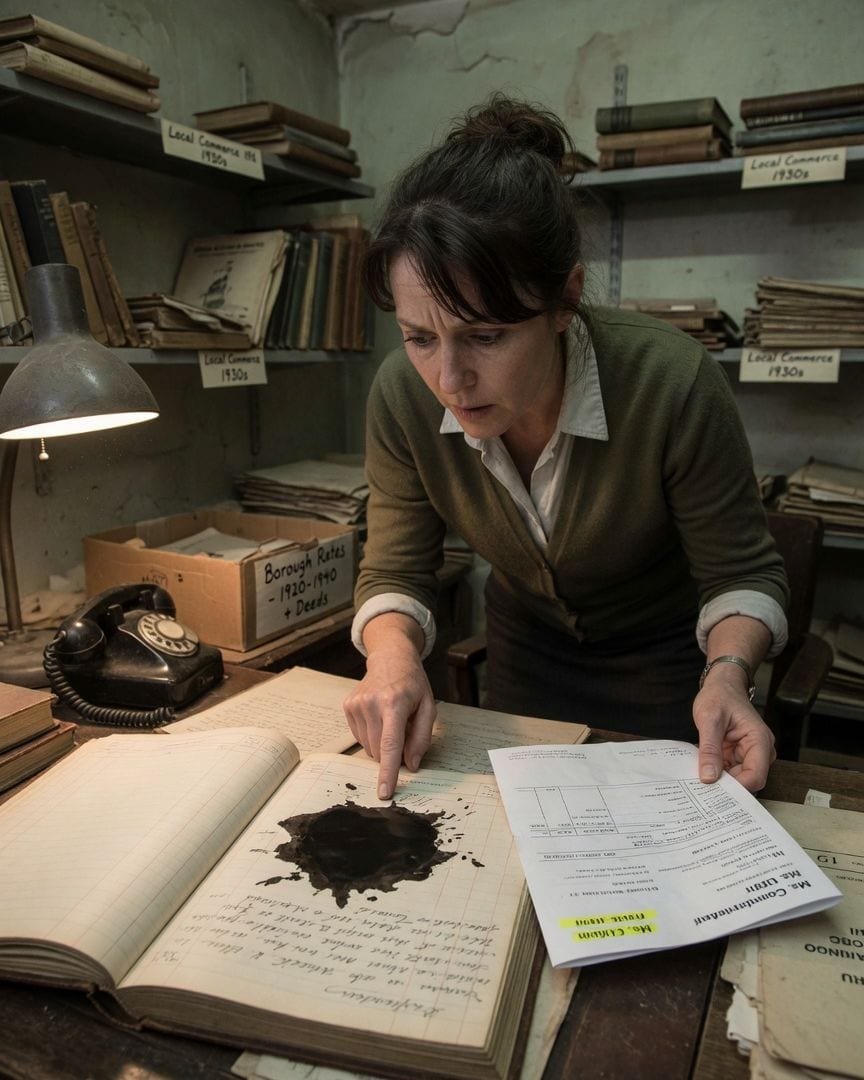
My shop's 1938 ledger has a name blacked out. The assessor's note says 'occupier not to be informed,' but the reference number above the ink is on my bill.
I run a small antique shop, and while researching local history, I found my own address in a 1938 rates ledger. The ratepayer's name was blacked out, replaced by a chilling note: 'occupier not to be informed.' Even stranger, the reference number was identical to my current bill, hinting at a bureaucratic wrongness spanning generations.
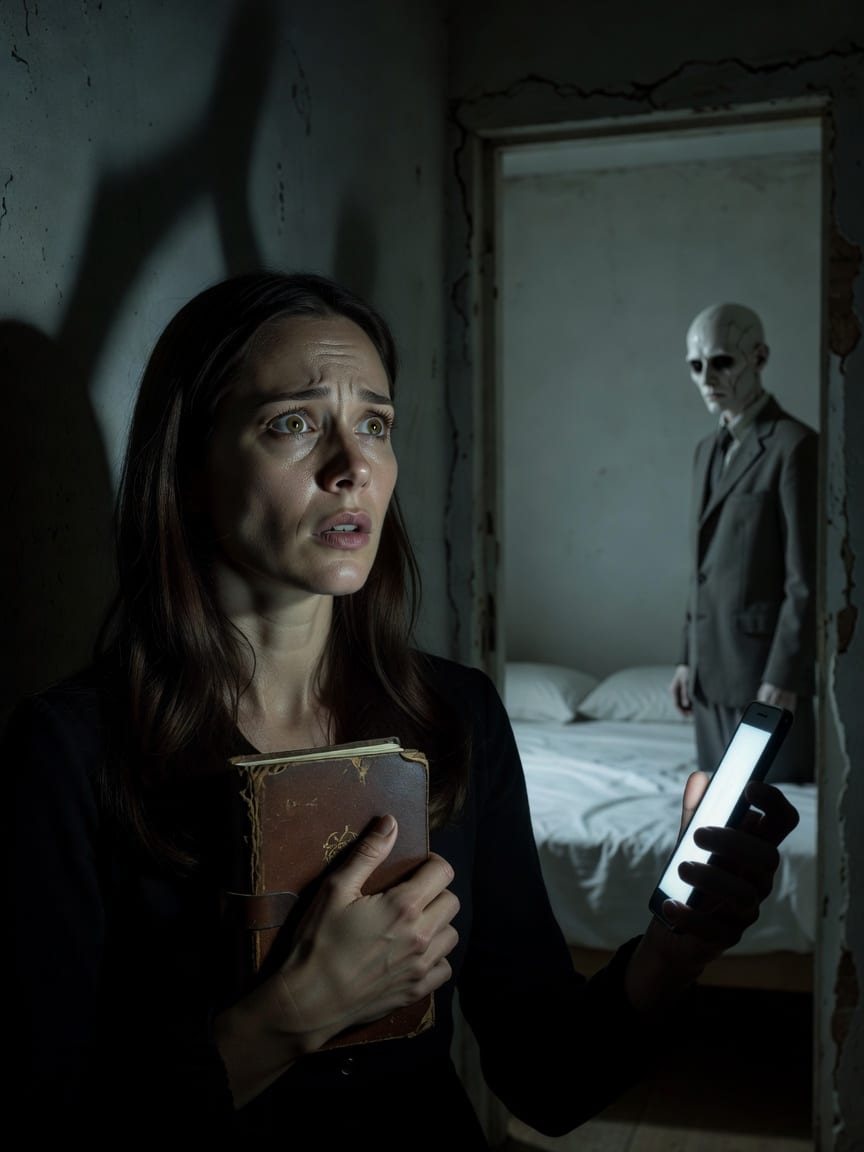
Behind a plastered-over doorway, I found a room. Papered, carpeted, and furnished with a made bed, sealed for decades. The air was dead still, but the bed wasn't dusty. My council tax bill only lists five rooms.
I'm Claire, an architect, meticulously planning my new Victorian terrace renovation. But when I uncovered a hidden room behind a wall, everything I knew about time and decay shattered. The bed was perfectly made, the air still, yet there was no dust, only an unnerving cold.
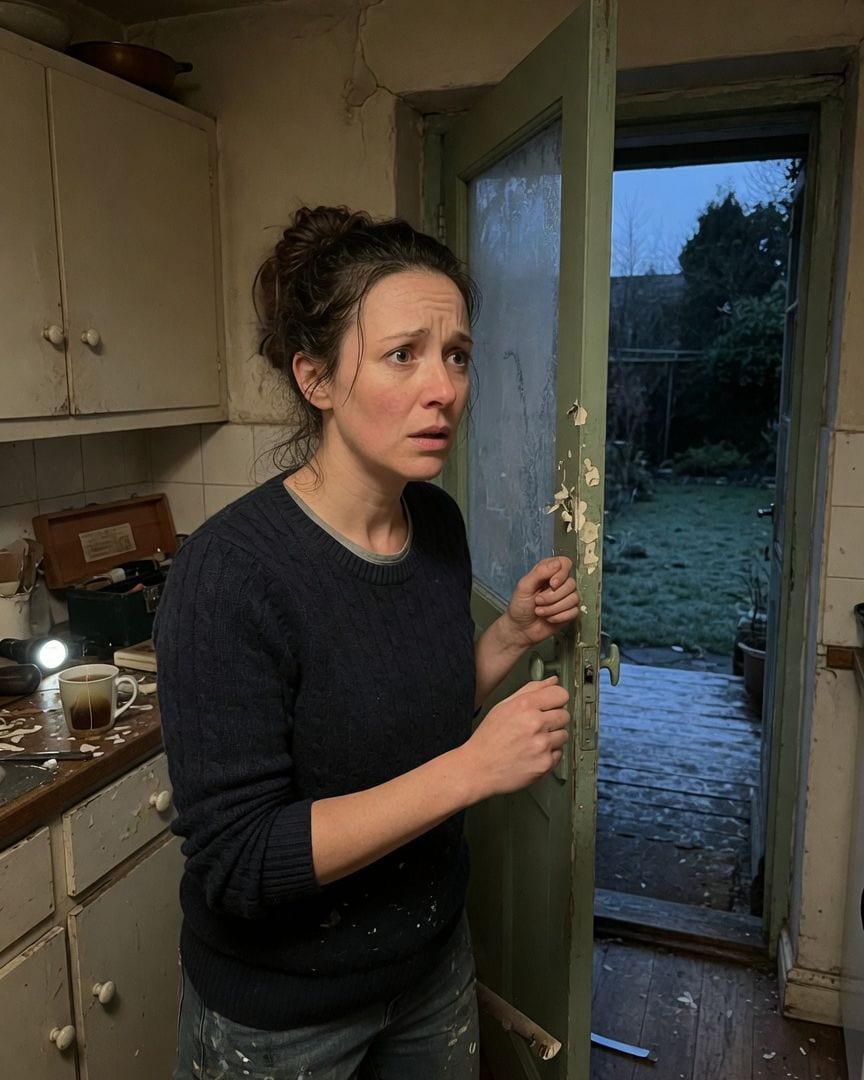
My 1950s cottage doorframe has '1923' carved into it, a date that simply cannot exist here.
I'd poured my heart into renovating my new cottage, especially the back door to my patio. But when I opened it, I wasn't looking at my frost-kissed garden. Instead, a cramped, reeking scullery with a bone-chilling dampness stared back, an impossible image that wouldn't leave my mind, even after the door closed.