My 1950s cottage doorframe has '1923' carved into it, a date that simply cannot exist here.
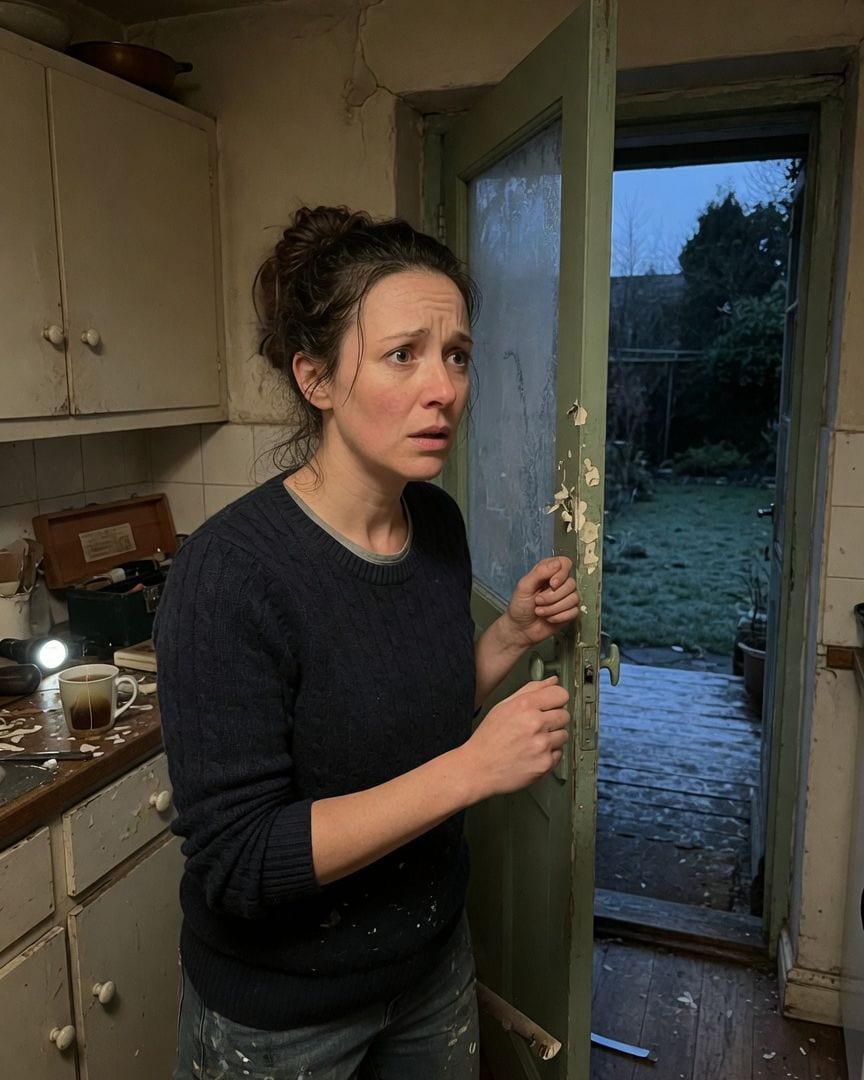
It was the first real frost of late autumn, 2023, the kind that glittered on every surface and made the air bite.
I’d made myself a mug of strong tea, hands warming around the ceramic, and walked to the back door of my new cottage kitchen. I’d renovated this place myself, poured every spare penny and hour into it.
The back door, a fresh coat of sage green, was one of my favorite features, leading directly onto the small, newly laid wooden patio I'd built.
The thought of stepping out, seeing the rime-covered planks, taking a deep breath of clean, cold air, felt perfect.
I turned the handle and pulled it open.
Instead of my patio, instead of the crisp, frost-kissed garden, I was staring into a cramped, grey-stone scullery. My breath hitched.
The air that rushed in wasn't just cold; it was bone-chilling, a damp, subterranean cold that had no business in my house. A heavy, pockmarked stone sink dominated one wall, deep and ancient.
Beside it, a wooden mangle, its rollers dark with use, looked utterly out of place. On a narrow, grimy sill above the sink, a jar of yellowish dripping sat next to a small, dark bottle.
The room reeked – a distinct, medicinal smell of carbolic soap mixed with damp earth. It felt… wrong. Violently wrong.
My heart hammered against my ribs. I blinked, a sharp, disorienting blink, and stepped back, fumbling for the door handle. I slammed it shut. The wood thudded against the frame. My hand was shaking.
I took a deep, shuddering breath, trying to slow my pulse. Sleep deprivation, I told myself. A trick of the light. Old houses played with your senses, everyone knew that.
I reached for the handle again, my fingers cold and clumsy. Slowly, I pulled the door open.
My patio was there, glistening with frost. The air was crisp, yes, but clean. The garden stretched out, still and peaceful. Nothing but my own world.
I stood for a long moment, staring, trying to reconcile what I had just seen with what was now undeniably in front of me. But the image of that impossible scullery, every grimy detail, was burned behind my eyes.
And the smell of carbolic still seemed to cling to my fingers, a phantom chill on my skin, as if I’d actually touched that foreign, awful place.
The scullery vision replayed in my mind’s eye, a grainy, unsettling loop. Every creak of the old house, every shift in the evening light, made me jump.
I tried to rationalize it again – a waking dream, perhaps, brought on by exhaustion and the general weirdness of living in a 1950s cottage with a distinctly older vibe.
But the carbolic smell persisted, a faint, metallic tang in the air around the back door, impossible to ignore.
The next morning, I decided to be methodical. I spent hours meticulously examining the back door, its frame, the surrounding wall. I tapped every inch of plaster, listening for a hollow sound that might indicate a hidden space. Nothing.
It was solid, just as it should be, a perfectly ordinary wall. I checked the hinges, ran my hands over the panels, even got a flashlight to peer into every tiny gap.
No hidden mechanisms, no false panels, no secret rooms. I wanted to find a rational explanation, something to prove I hadn't lost my mind. I wanted to find the seam where reality had frayed.
Frustrated, I knelt, running my hand along the skirting board, wondering if a draft was carrying the phantom scent. My fingers brushed against a section of floorboard, near the doorframe, that felt slightly loose.
It was barely noticeable, almost perfectly flush with its neighbors. I pressed down, and it gave a little. My curiosity, sharper than my unease, took over.
I pried it up with the tip of a butter knife from the kitchen. Beneath it, nestled in the dust and ancient grit, was a small, heavy object. I picked it up.
It was an ornate, dark iron key, clearly ancient, its metal smooth and cool with age. Not a modern key, not even one for this house. It was too substantial, too deliberate, to be random junk.
It felt like something important, something meant to be found.
I spent the next hour trying it on every lock I could find in the cottage: the back door, the front door, the shed, the ancient padlock on the garden gate. Nothing. The key refused to turn, refused to fit.
It was a tangible piece of the wrongness, a cold weight in my palm, promising a secret it refused to unlock. It felt like it was waiting for something. Or for someone.
Days later, the memory of the scullery still gnawed at me. The key sat on the kitchen counter, an ominous paperweight. The back door, in my mind, felt like a silent, watchful eye.
I decided to tackle the peeling paint on the doorframe, a task I'd been putting off, partly because I hadn’t wanted to touch the door more than necessary.
It felt like a way to regain some control, to make things right.
As I scraped away the thick layers of cream and white, the putty knife caught on something hard beneath. Not wood grain, but an incision. A carving. Carefully, I cleaned the area, working around the raised edges.
Faintly, but undeniably, carved into the ancient timber, were initials: 'M.L.' Below them, a year: '1923.'
I stared. My gut clenched, a cold, sickening coil. I knew the cottage's history, knew it intimately from the property deeds and local records. It was built in the 1950s, then extended in the 70s.
This doorframe, this house, couldn't possibly be from 1923.
The initials meant nothing to me, yet they felt like a name whispered from the past, a cold breath on my neck, confirming that my experience hadn’t been a trick of the light.
I stood frozen, my finger tracing the faded '1923' carved into the doorframe, a date that should not exist in my cottage, my breath catching in the sudden, inexplicable chill that swept through the room.
The impossible date and initials didn't just gnaw at me; they spurred me into a frenetic kind of action. This wasn’t some vague oddity anymore. This was a specific, undeniable anomaly. My rational mind demanded answers.
I drove to the local archives, a low-slung, red-brick building smelling of dust, decaying paper, and a faint, sweet mildew. It was quiet enough in there that the rustle of my jacket felt like a shout.
I introduced myself to Vincent Kingsley, the archivist, a man of about sixty with kind eyes behind thick spectacles and an air of quiet precision.
I laid out my story, starting with the vague "odd occurrences" of an old house, testing the waters. He listened patiently, nodding, suggesting drafts or settling foundations.
"Old house quirks," he said, his voice soft, almost a whisper in the silent room.
But when I mentioned the 'M.L.' and '1923' carved into the back doorframe, something flickered in his expression. A momentary tightening around his eyes, a stillness that wasn’t quite comfortable. He cleared his throat. "1923, you say? That's… interesting."
He didn’t dismiss it this time. Instead, he led me through stacks of ancient ledgers and microfiche readers. He reluctantly consulted old land registry records and local census data, his fingers tapping keywords on a slow, humming computer.
Then, a quiet intake of breath. He found a record of a Martha Lambert, who had resided at my cottage’s address from the early 1900s until her disappearance in – yes – 1923.
My blood ran cold. My hands, resting on the desk, felt clammy. Disappearance. Not 'moved away.' Not 'sold the property.' Disappearance.
Vincent, now fully engaged, pulled up an archived receipt from a local grocer, yellowed and brittle, dated June 1923. The itemized list was short: '1x Carbolic Soap' delivered to the cottage. My stomach twisted. The smell. It wasn’t a phantom.
It was a detail, a thread.
Back home, driven by a new urgency, I marched straight to the kitchen. My eyes were drawn to the area under the scullery sink, precisely where the impossible vision of the mangle had been.
I knelt, pushing aside modern cleaning products, rummaging into the forgotten corners. Tucked away, behind a modern pipe, caked in cobwebs and dust, I found it. A small, dark glass bottle, empty, with a faded, almost illegible label.
I wiped it clean with my sleeve. The last few letters were smeared, but 'Carbolic Cleanser' was clear enough.
The smell of carbolic, which had been a haunting, fleeting phantom, now felt like a very real, very old presence. It felt like a memory that had simply been waiting for me to find it.
As I delved deeper into Martha Lambert's story, the cottage felt less like a home and more like an observatory, with me as the subject. I found myself constantly looking over my shoulder, listening, waiting.
The carbolic smell, once fleeting, now seemed to linger for hours after each 'door' incident, a sour, medicinal shroud clinging to the air around the back entrance. It seeped into the fabric of the kitchen, into my clothes.
I would shower, scrubbing vigorously, and still, I’d catch a faint whiff of it on my skin.
One evening, I was alone in the living room, trying to distract myself with a book, when a rhythmic thumping sound started from the kitchen. It was heavy, methodical, and utterly unmistakable: the clang of a mangle at work.
A steady, tireless rhythm, like some tireless, unseen hand was feeding fabric through its rollers. It was too distinct, too physical to be my imagination.
My heart pounded so hard I could hear it in my ears, drowning out the mangle’s clang for a moment.
I crept towards the kitchen door, straining to hear over my own ragged breath. The thumping continued, unwavering. My hand reached the door handle, cold and slick with sweat. I pushed it open.
The sound abruptly ceased.
The kitchen was empty, silent. My modern appliances gleamed innocently under the recessed lights. Nothing was out of place. The back door was firmly shut, showing only my patio. I stood there, listening to the silence, the sudden, oppressive quiet.
My arms were covered in goosebumps, not just from the cold.
A few days later, a plain white envelope was slipped under my front door. It wasn’t pushed through the letterbox; it lay flat on the doormat, as if someone had bent down and placed it there.
I picked it up, my hands trembling. It was unsealed, unmarked. Inside, a single, typewritten note read: 'Some doors are best left closed. Leave it alone.'
No sender, no address, no clues. Just those stark, chilling words. The message was blunt, chillingly personal. I knew, with a sickening certainty, that someone, or something, knew exactly what I’d been looking for.
And it didn’t want me to find it.
Shaken by the note, I confronted Vincent Kingsley again. I practically shoved the typewritten message into his hands. He blanched, his usual academic composure cracking like old plaster. His hands trembled as he held the paper.
"My God," he whispered, "I knew this would happen."
"What would happen?" I demanded, my voice tight with fear and a growing anger. "What do you know about this, Vincent? About Martha? About the note?"
I recounted the mangle sound, the carbolic smell that now clung to the house, the impossible door. I pulled out the old carbolic bottle I’d found, setting it on his desk. Its dark glass seemed to absorb the light.
"Martha Lambert," Vincent murmured, his voice barely a whisper, as if speaking her name too loudly might summon something. He looked up, his eyes wide behind his glasses. "Locals always spoke of Martha as 'disappearing' rather than leaving.
The cottage… it always had a reputation. For being ‘heavy.’ For holding onto things.”
He rummaged through a drawer, pulling out a fragile, yellowed newspaper clipping from 1923. The headline screamed, stark and black: 'Local Woman Vanishes From Home – Cottage Deserted.' I read it, my fingers tracing the faded ink.
The article described Martha Lambert, a spinster, known for her meticulous routines. It mentioned her daily washing, her tireless use of the scullery, her specific brand of carbolic soap – a detail I now knew with sickening certainty.
It was all there.
My mind raced, connecting the dots. The scullery, the mangle, the carbolic, the initials, the date – it all fit Martha. This wasn't a random haunting; it was a replay. A memory. Her routines continuing without her, somehow.
Vincent sighed, a deep, weary sound. "Martha's family, they simply boarded up the back scullery after she disappeared. Sold the cottage quickly, eager to forget. The story they told was that she ran off.
Got tired of her life, ran away to the city. But nobody ever believed it. Not really. They said the house just… kept her." He looked at me, his eyes filled with a grave, terrible knowledge.
"The house wouldn’t let her go. It just kept her. Trapped her within its own time."
The truth about Martha Lambert's disappearance, and the house's apparent role in it, left me reeling. Vincent’s words echoed in my head: The house just… kept her. It sounded impossible, utterly insane, but it also explained everything.
The impossible scullery, the phantom smells, the mangle… they were echoes, memories, but also something more active, something ongoing.
Back at the cottage, the air felt different. Thicker. The house no longer seemed like a silent observer; it felt like a hungry, ancient thing, finally understood. I found myself drawn to the scullery area, where the illusion had manifested.
My eyes scanned the rough stone wall, no longer looking for secret passages, but for something else. A 'catch,' as Vincent had half-jokingly, half-seriously, suggested. Something that would hold the key.
The old iron key I'd found earlier, the one that fit no lock, now burned in my pocket. It wasn't for a lock, I realized, but a hidden mechanism. A release. I pulled it out, its cold weight grounding me.
Running my fingers over the rough stones, I found a loose one. It was almost imperceptible, just slightly recessed compared to its neighbors, its edges worn smooth, as if someone had touched it countless times. I pressed it. Nothing.
I tried to pry it. It resisted. Then I remembered the unique shape of the key's end, almost like a thin pry bar.
Carefully, I inserted the flat end of the iron key into the tiny crack surrounding the stone. I twisted, gently at first, then with more force. There was a faint click, and the stone gave way.
It pivoted inward, revealing a small, dark cavity behind it. The air that puffed out smelled stale, earthy, but not of carbolic.
My heart hammered against my ribs, a frantic drum against my bones. I reached inside, my fingers brushing against cold stone before closing around something cold and leathery.
I pulled it out, my hand shaking so violently I nearly dropped it.
It was a small, leather-bound diary, brittle with age, its pages swollen and warped by years of damp and confinement. The initials 'M.L.' were faintly embossed on the cover, almost entirely rubbed away. Martha Lambert.
With trembling hands, I opened it. The ink was faded, the script looping and frantic, as if written in a desperate hurry. My eyes fell on a random entry, dated October 1923. It read:
'The house won't let me leave. It shows me the outside, but then pulls me back. The door... it's not mine. It's a cruel trick.
I keep seeing the garden, the lane, but then I'm back in the scullery again, forced to wash, to scrub, to wait. It feeds on it. It feeds on me. Oh, God, is anyone out there?'
My hands trembled as I held the brittle diary, my eyes fixed on Martha Lambert's desperate scrawl: 'The house won't let me leave. It shows me the outside, but then pulls me back. The door... it's not mine.'
The words seemed to hum with a quiet dread, a direct warning from the past.
I spent the rest of the night devouring Martha's diary. Each page was a fresh horror, painted in frantic, looping script that grew increasingly desperate.
It described a horrifying picture: Martha, trapped by the house's temporal loops, forced to endlessly repeat her daily routines.
The 'door onto the wrong year' was her prison, showing her freedom only to snap her back to the scullery, always the scullery. She wrote of the house 'demanding' her rituals, of the crushing exhaustion, the profound despair.
She scrubbed, she mangled, she boiled water for tea she never got to drink.
The carbolic smell, the mangle, the jar of dripping – these weren't just echoes or residual memories. They were active components of her forced existence, her eternal cycle.
Martha believed the house fed on the pattern, on the energy of her trapped life, growing stronger with each forced repetition. It wanted her despair, her hopelessness, her routine.
She described desperate attempts to break free, to leave an artifact that would warn someone, someone who might stumble upon it just as I had.
The diary ended abruptly mid-sentence, a final, half-formed plea to 'find the key, break the cycle.'
I now understood everything. The house wasn't just remembering Martha; it was actively holding her. It was a temporal anchor, a hungry entity, and I was being drawn into the same, inescapable pattern.
The mangle's thumping, the carbolic smell, the door's impossible shift – these weren't just echoes. They were the house's attempt to imprint me, to make me the next 'memory.' To force me into the loop.
Armed with Martha's full story, a cold, terrible certainty settled over me. I had to break the cycle. I had to free her, and myself. The diary mentioned 'the last thing I touched, hidden where I stood.'
I returned to the scullery area, no longer fearing it, but feeling a grim resolve. My gaze fixed on the exact spot where the mangle had appeared in my visions, its ghostly presence a constant reminder.
I knelt, using the iron key not to open anything, but to carefully pry up a loose floorboard directly in that spot. It came up with a soft groan of old wood.
Beneath it, nestled in dry dust, was a small, ornate wooden box, no bigger than my hand.
My fingers, strangely steady now, lifted it out. Inside, there was nothing but a single, dried, pressed flower, its petals a faint, ghostly white, perfectly preserved.
As I lifted it, a lingering scent of carbolic wafted from it, faint but distinct. This, I realized, was Martha’s anchor. The last physical piece of her that the house could hold onto, a talisman of her endless, forced routine.
The house wasn't just a memory; it was a sentient entity, feeding on the recurrence, on the physical trace of her life.
I took the flower outside, past my patio, past the small vegetable patch I’d started, to the very edge of my garden, as far from the house as I dared. The autumn air was sharp, biting.
With a disposable lighter, I set the dried flower alight.
A thin wisp of smoke rose, carrying with it that familiar, acrid carbolic scent. For a moment, it flared, a tiny, determined flame against the encroaching twilight.
As the last petal crumbled to ash, dissolving into nothing, the air around the cottage shifted. I didn’t hear anything, not a sound, but I felt it.
A profound, almost tangible sigh seemed to emanate from the old stones, a deep, weary exhalation that left the air feeling lighter, cleaner.
The carbolic smell vanished completely, replaced by the crisp scent of autumn leaves, cold earth, and woodsmoke from a distant chimney.
The eerie, oppressive weight lifted from the cottage. The back door never again opened onto the scullery. I stayed long enough to ensure the house was truly quiet, truly my own again, then put it on the market.
I sold it quickly, offering no explanations, just a vague mention of 'old house quirks' to the new owners.
I packed Martha's diary, the key, and the newspaper clipping, taking them with me, a silent testament to the life I'd uncovered and the cycle I'd broken.
The memory of the scullery, however, remained etched in my mind, a cold shadow at the edge of my peripheral vision.
I moved to a modern flat in a bustling city, far from the quiet, remembering stones of the cottage.
I tried to forget, to push the image of Martha's desperate face from my mind, but sometimes, late at night, a faint, phantom scent of carbolic would drift through my dreams.
It was less potent, less real, but it was there, a ghost of a ghost. I never spoke of what happened, not to friends, not to family. The world moved on, oblivious to the hidden loops within old walls.
One quiet evening, browsing online property listings on a whim, I stumbled upon a charming, old cottage in a different town, hundreds of miles away.
It was strikingly similar to my old one, with a back door that looked out onto a perfectly manicured garden.
Beneath the listing, a single, recent comment, posted just yesterday, appeared: 'The smell of fresh linen and lavender is so strong, it's almost like someone else lives here.'
If this one got to you
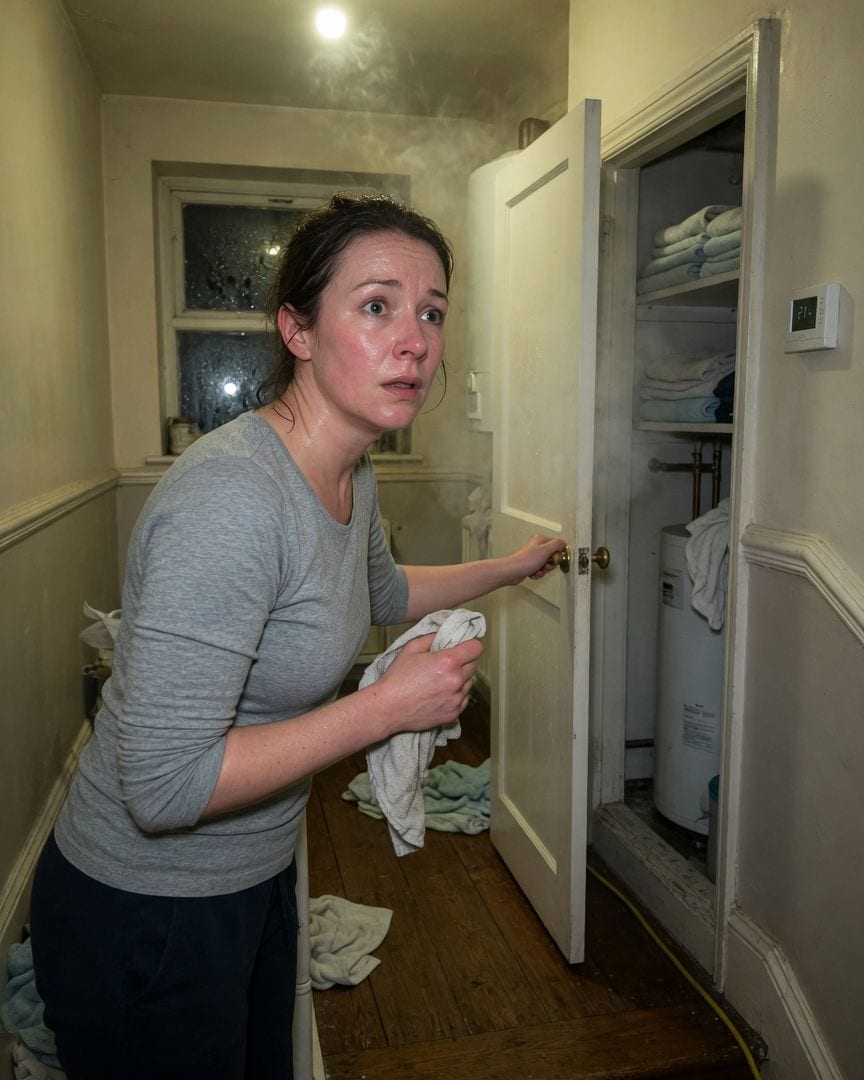
My airing cupboard opened onto a burning brick copper, sheets boiling. The heat rolled out, smelling of soda and wet linen. I shut it; my boiler was back.
My new house, bought just last spring, felt colder than expected. When I opened the airing cupboard, it wasn't mine at all, but a blast of steam and a roaring fire from an impossible past. Days later, a faint, metallic smell still drifted from the landing, and a worn path on the floorboards led to a hidden, ancient sampler beneath my feet, dated 1892.
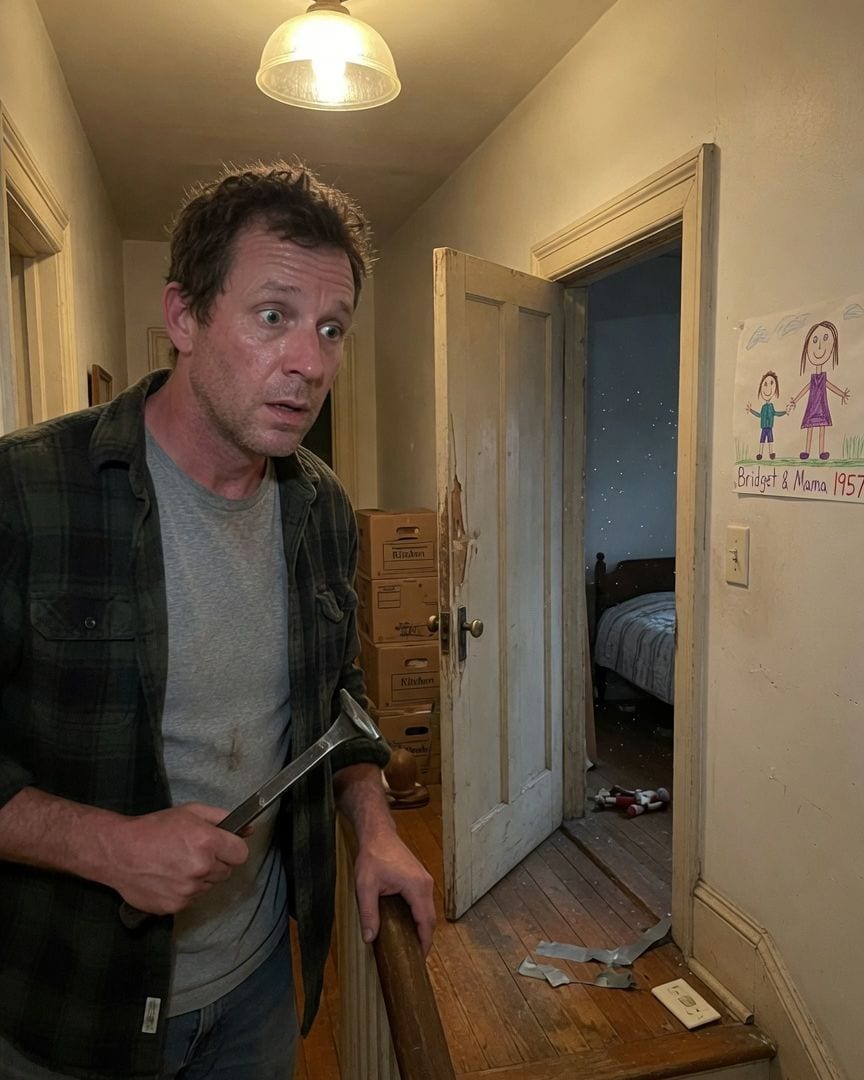
My landing light switches itself off at 9:40 every night. I've watched the switch flick down under nothing, the tape peeled back. The house holds its breath.
My great-uncle's old house was a quiet gift, a place to finally settle. But as I unpacked, a strange worn path on the floorboards led me to a small, barely visible door, perfectly blended into the wall. It was undeniably locked, and felt like a deliberately obscured secret.
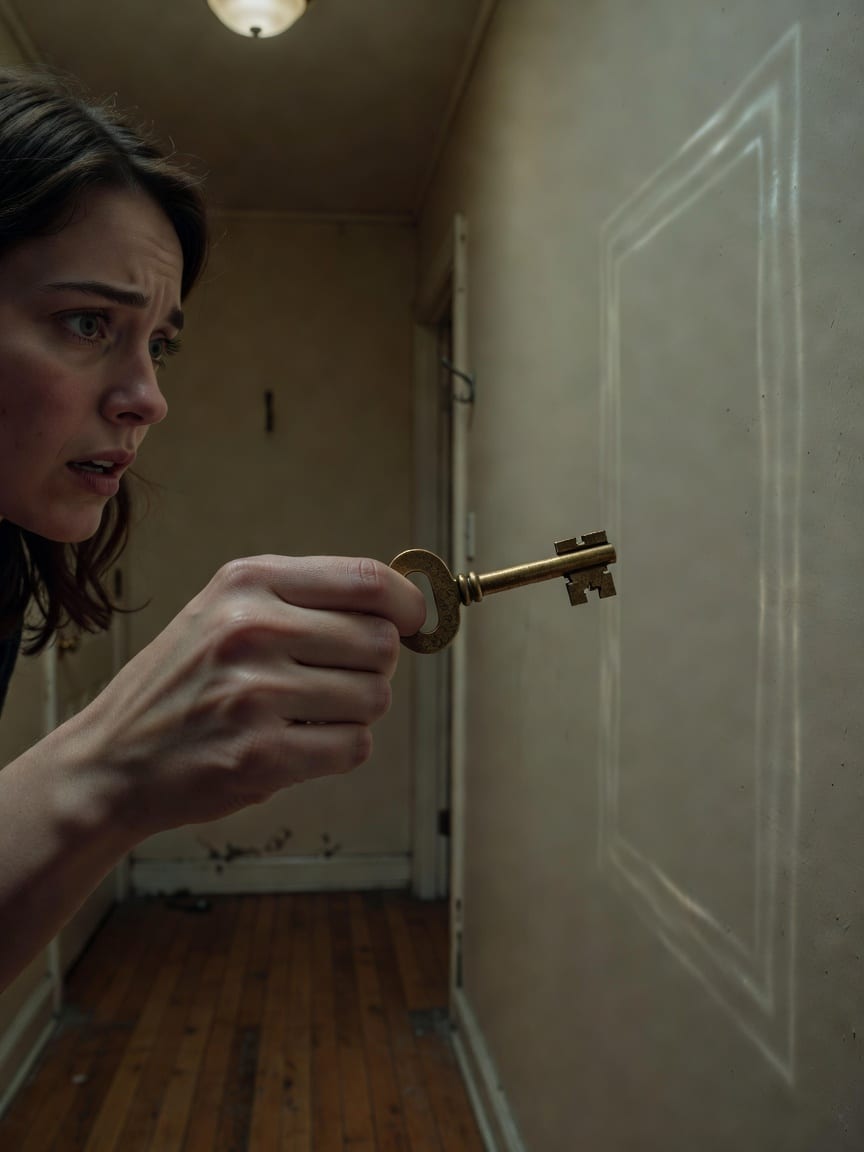
My new house has seven rooms. The removal men counted six. Now one of them asks who's in the locked seventh, on a landing with only six doors.
Moving into my new house, I supervised the removal men hauling boxes. But on the landing, Paul, the senior man, asked about a locked seventh room upstairs, pointing to a blank wall. His quiet certainty, despite the clear absence of a door, filled me with a sudden, icy dread.
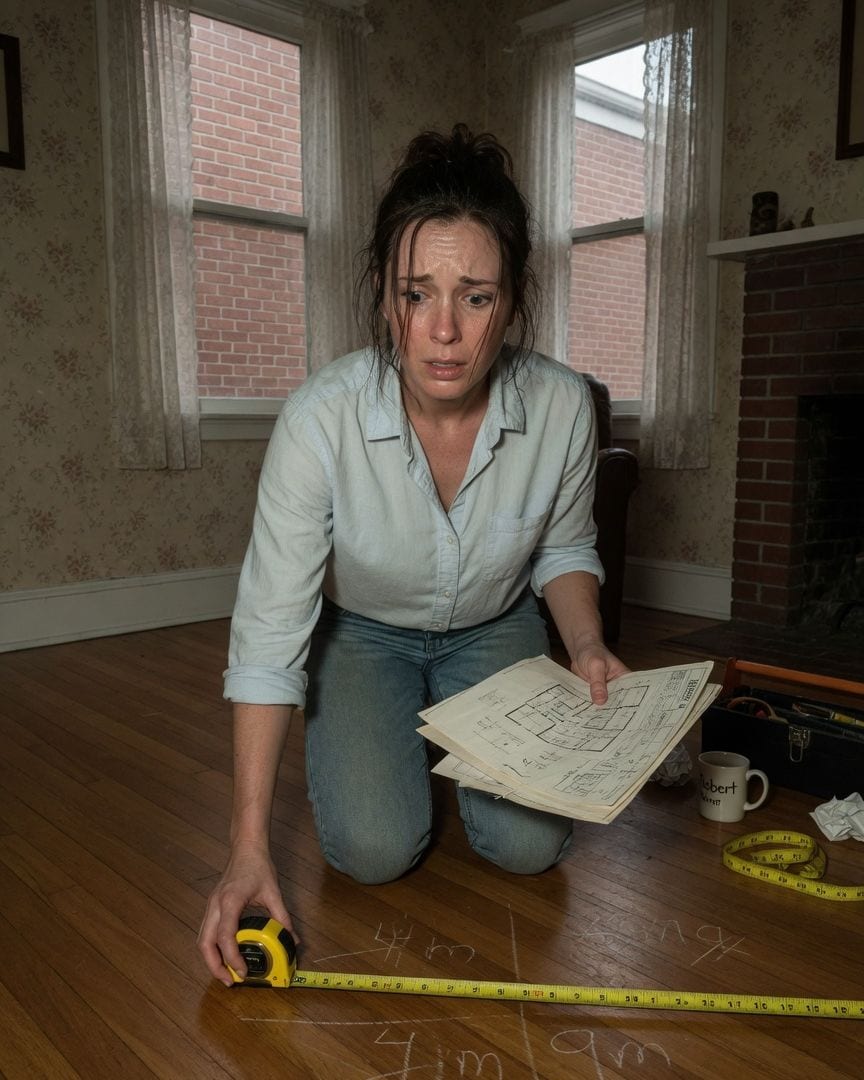
Our living room measures four by five metres. But the outside wall is nine metres long. A metre of house, gone, and I can't find it.
After moving into our charming 1920s house, I was meticulously measuring the living room when the dimensions refused to add up. My calculations of the interior space led me to discover a narrow, unpainted fifth door in the hallway, tucked almost out of sight. It wasn't on any original plans, and it opened to absolute, impenetrable darkness.
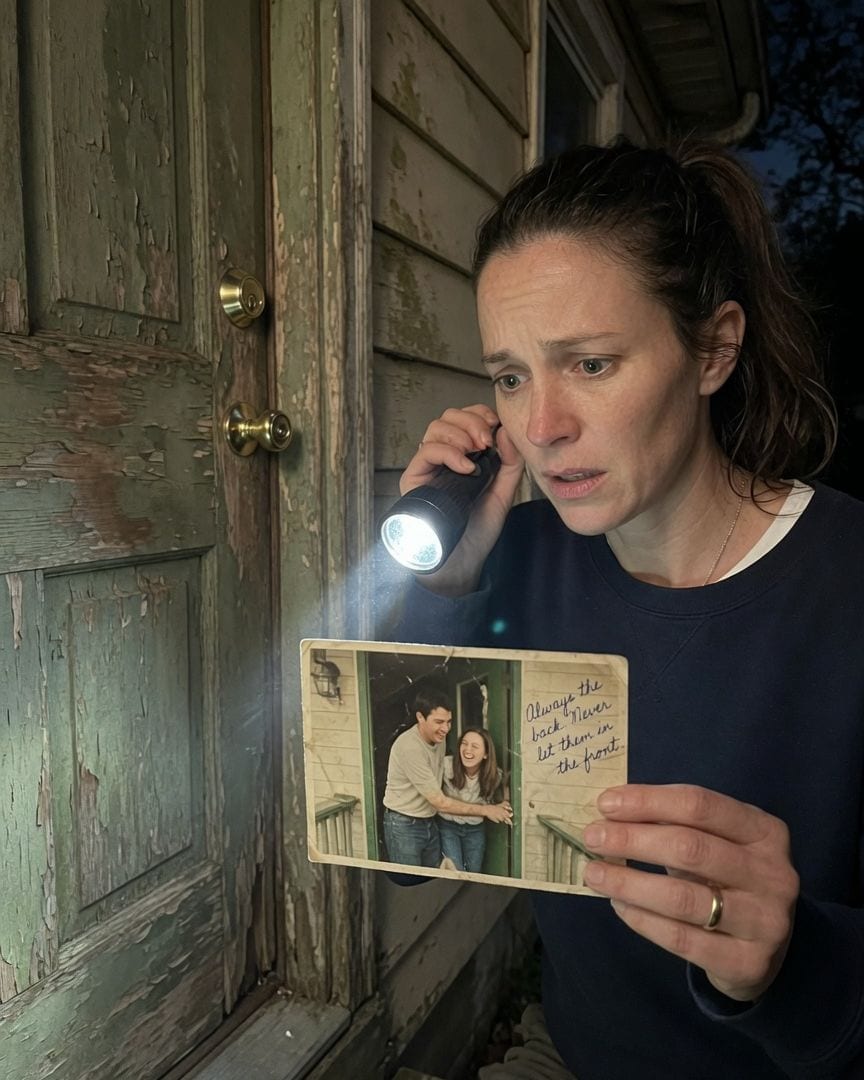
My mother waves us to the front door now. She was missing five days. She says we've always used the front, but the back door, our kitchen door for thirty years, is locked.
My mother, Janet, finally came home after five days, but her overly bright smile and insistence on using the front door felt wrong. For three decades, our family always used the back entrance, which now had a gleaming, new deadbolt. The quiet hum of unease quickly grew into a chilling dread.
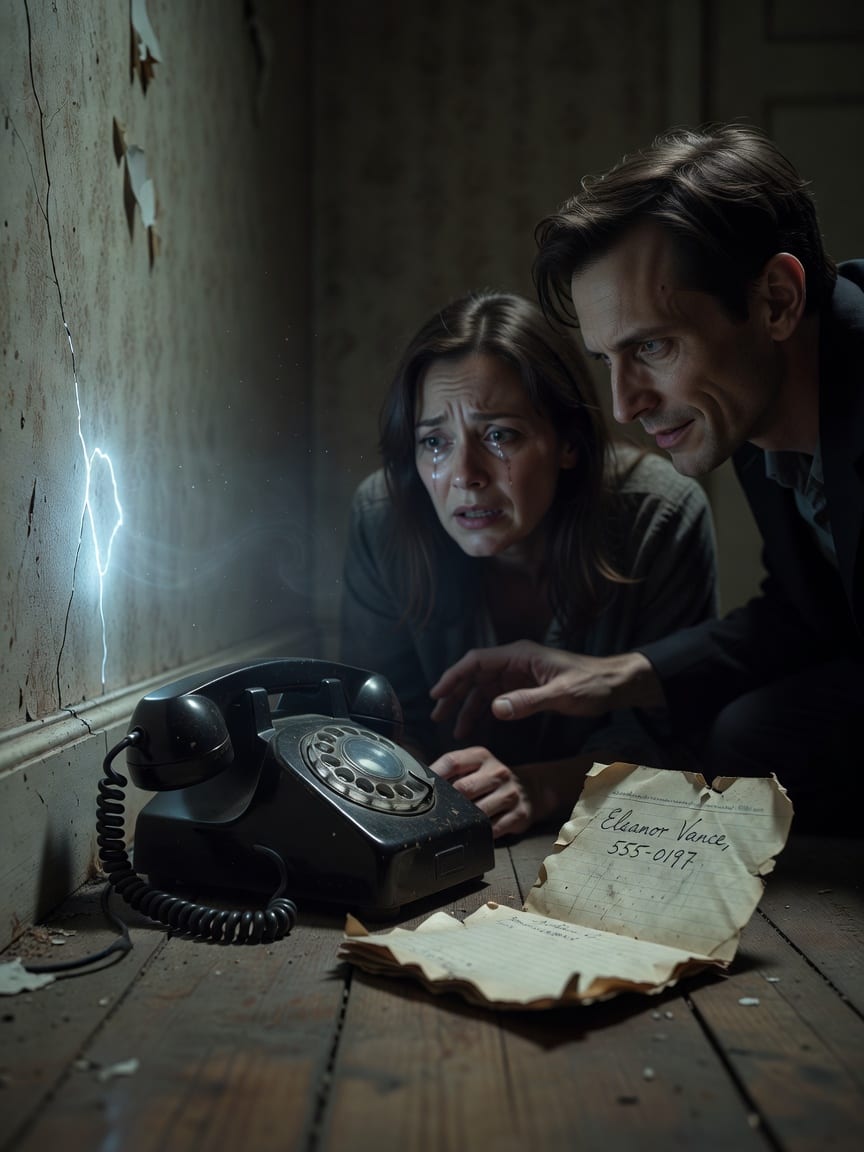
My house's walls ring when I dial a phone number from a 1974 directory. My neighbors said that directory was trash.
I was sifting boxes in my new house when I found an old 1974 telephone directory for my street. It listed my address, 12 Elm Street, under the name "Mr. & Mrs. Sheppard." On a whim, I called the faded seven-digit number. My cell phone rang, but a low, muffled sound also vibrated from the wall beside me.