My antique locket held my maiden name, engraved with 'until the ninth.' The dealer said the woman who owned it left a note: 'for her, when she comes.'
Scott had a knack for finding unusual things. That’s how he always put it, his eyes alight with a particular kind of joy when he presented some tarnished brass telescope or a stack of forgotten letters.
This time, it was a silver locket from a stall at the Truro market. Tarnished, yes, but its intricate filigree was still elegant. “For you,” he’d said, handing it over with a kiss that smelled faintly of antique dust.
“Couldn’t resist.”
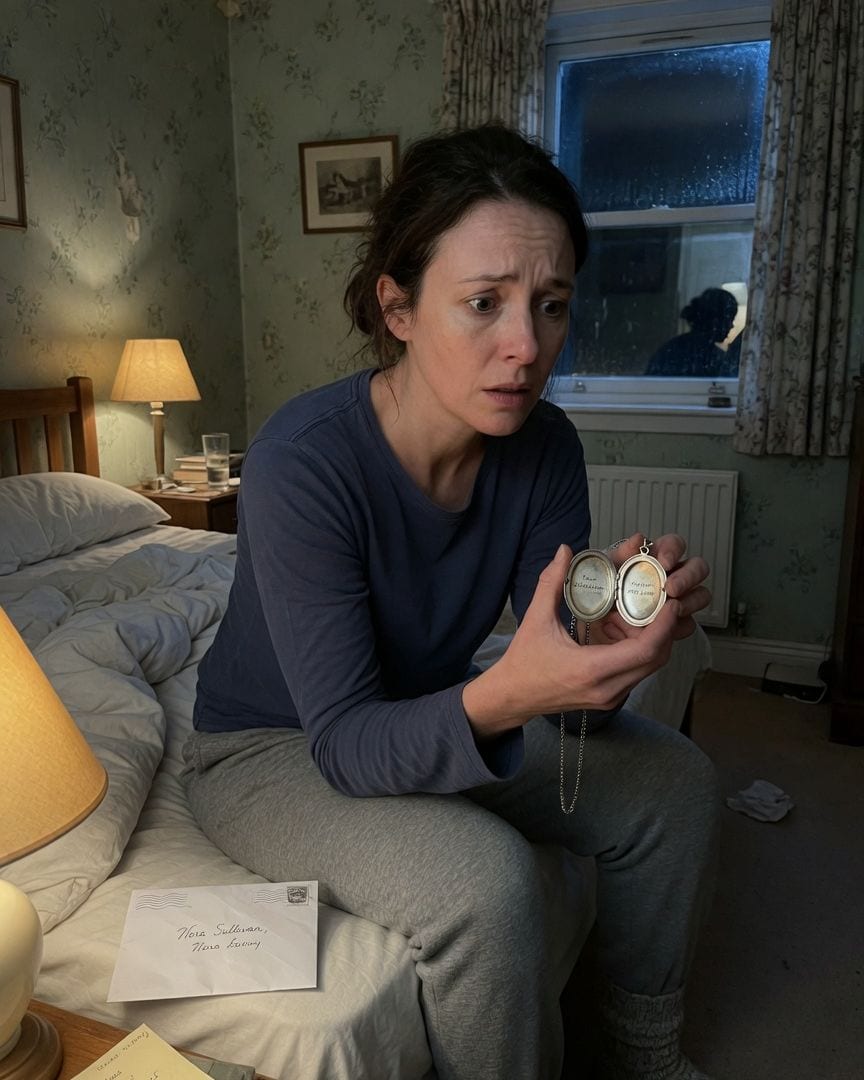
That night, alone in our quiet bedroom, the house settling around me, I prised it open with a fingernail. It clicked, a tiny, almost inaudible sound that seemed to reverberate in the sudden stillness.
Inside, on the left-hand oval, engraved too fine to read without his jeweler’s loupe, was a single name: 'Nora Sullivan.' I hadn't used that name in eleven years, not since I married Scott and became Nora Merritt. My breath hitched.
It was undeniably my maiden name, etched with a precision that felt deliberate, intimate.
But beneath it, on the opposite side, even more unsettling, were three words: 'until the ninth.' I rubbed my thumb over the impossibly delicate etching, a cold knot tightening in my stomach. The silver felt suddenly colder than the room.
Who would engrave something like this, and why? The dealer, Arthur Maddox, had mentioned it came from a house clearance, from a woman who, he said, kept it wrapped in a small, yellowed note.
'For her, when she comes,' the note had read. Arthur had shrugged, a genial man, chalking it up to "just one of those things."
But looking at my reflection in the polished silver, a stranger’s name staring back at me, I felt a prickle of unease that had nothing to do with coincidence. It felt like a direct address.
The locket sat on my bedside table for days, a silent, heavy presence. Every time I caught sight of it, the engraved 'Nora Sullivan' seemed to pulse faintly, an internal echo. I tried to dismiss it, of course. A mix-up.
A common name. A strange, old piece of jewelry with an even stranger inscription. But the specificity felt too personal, too much like it knew me, even my forgotten name.
Finally, I called Arthur Maddox, the antique dealer. He remembered the locket. “Ah, yes, a peculiar piece,” he’d called it.
He confirmed the house clearance was from an old cottage, long gone now, near what used to be called Old Mill Lane, just outside Truro. “Now just an empty field, really,” he elaborated, “a forgotten patch of land.”
He added, almost as an afterthought, his voice softening, “The lady who owned it, a Mrs. Edith Sullivan, never married. Bit of a local eccentric, I hear.”
My great-aunt Edith. Long deceased. She had lived in that area, I remembered my grandmother saying, though I’d never known her well.
A distant relative, perhaps, with the same maiden name, who’d engraved her own locket for some obscure family reason? It seemed a plausible, if unsettling, explanation, tidying away the strangeness into a neat, if dusty, box.
I almost managed to convince myself.
Then, a week later, a letter arrived. It wasn't among the usual bills or junk mail. It was addressed to 'Nora Sullivan,' in elegant, looping script, a hand-written precision that instantly reminded me of the locket’s engraving.
It bore a Truro postmark. But the sender's address was 'Old Mill Lane, Truro.' My heart hammered, a sudden frantic drum against my ribs. I knew that address. Arthur Maddox had just told me it was an empty field.
It wasn't just a demolished house, it was a nowhere. Inside the plain white envelope, on an equally plain white piece of paper, was a single, hand-written date: 'September 9th.'
The letter felt cold in my hand, despite the warmth of the afternoon sun filtering through the kitchen window. I drove out to Old Mill Lane, the crumpled envelope clutched in my other hand on the passenger seat.
There was nothing there. Just tall grass swaying in the wind, a few hardy wildflowers pushing through, and the faint, uneven indentations of a long-demolished foundation, barely visible beneath the green. Not even a mailbox.
How could a letter be postmarked from a place that didn't exist?
The silence was absolute, broken only by the rustle of the grass, a sound that seemed too loud in the empty expanse.
I felt a prickle on the back of my neck, the distinct sensation of being watched, though the field was utterly, terrifyingly empty. My rational mind, which had clung so desperately to coincidence, now felt thin and fragile.
I pulled out my phone, my fingers fumbling with the screen, intending to call Scott, to tell him everything, to hear his steady voice. But before I could dial, my phone vibrated with an incoming call from an unknown number.
Hesitantly, my thumb brushed the answer button. A soft, clear voice, neither male nor female, spoke my maiden name, 'Nora Sullivan,' then simply said, 'You're here.'
The line went dead immediately after the voice spoke, leaving only the sound of the wind in the field.
I stood frozen, the phone heavy against my ear, the empty expanse stretching around me, feeling like I was the only person left on earth. My heart pounded, a frantic bird trapped in my chest.
“Who was that?” Scott asked later that evening, seeing the missed call on my phone. He was scrolling through the day’s news, oblivious. I mumbled something about a wrong number, unable to voice the chilling certainty that it wasn't.
How could I explain?
The next day, another letter arrived. Identical to the first, also addressed to 'Nora Sullivan' in that looping script, postmarked from 'Old Mill Lane,' and again containing only the date 'September 9th.' This time, I didn't drive out there.
The idea of standing in that empty field, listening for a disembodied voice, felt like a scene from a bad dream. Instead, I started researching.
I combed through online property records for Old Mill Lane, confirming the demolition decades ago, long before I was born. I looked up Edith Sullivan, finding a brief obituary from thirty years prior.
The dates, the names, the places – they didn't just not fit; they contradicted reality. A deceased relative, a demolished house, a locket with a strange inscription, and letters appearing from nowhere, speaking my forgotten name.
I remembered Arthur Maddox’s slightly apologetic, almost pitying look when I’d first inquired about the locket. It had seemed like the polite awkwardness of a dealer with a slightly creepy item. Now it felt like something else entirely.
I called him again, my voice thin. He sounded uncomfortable, hesitant. “Some things… some histories,” he began, his voice barely a whisper, “they have their own way of surfacing.”
He admitted that Edith Sullivan had been known for strange premonitions, a local oddity. “She always kept that locket ‘ready for its owner,’” he added, a phrase that hung in the air between us.
He refused to elaborate further, his voice tight, almost fearful. My rational mind struggled, tried to find a mundane explanation for his fear, for the impossible letters, for the voice. But the evidence was accumulating, undeniable. This wasn't a mistake.
This was targeted.
The feeling of being watched intensified. It wasn't just a prickle on the back of my neck anymore; it was a weight, a constant awareness that someone, or something, was tracking my every move.
I found myself checking locks twice, glancing over my shoulder in shops, my heart thudding whenever a shadow shifted unexpectedly. Scott noticed my unease. “You’re jumpy, Nora. Is it that locket?” he asked one evening, his brow furrowed with concern.
I brushed it off, muttering about stress, unwilling to share the growing strangeness, the impossible weight of it.
Then, a package arrived. No return address, just my married name, 'Nora Merritt,' handwritten on the label. The script was identical to the letters from Old Mill Lane. My hands trembled as I opened it.
Inside, nestled in tissue paper, was a small, crudely carved wooden bird, unvarnished. It was a familiar shape, one my great-aunt Edith used to carve and leave on doorsteps as a 'good omen,' a strange little folk tradition.
But tucked beneath its wing was a folded slip of paper. 'The ninth approaches,' it read, in the same unsettling script as the letters.
This wasn't just a distant phenomenon anymore; it was in my home, using my current name. It knew where I lived. I felt a surge of cold panic, a wave of nausea.
Someone, or something, knew exactly what I was doing, what I had found. I looked out the window, my eyes scanning the street. A dark, unmarked van was parked two houses down, its windows tinted, a heavy, silent presence.
It hadn't been there earlier. As I watched, my breath caught in my throat, the van's brake lights flashed, and it slowly pulled away, turning the corner and vanishing. My heart hammered against my ribs, a furious drum.
They weren't just watching; they were warning.
Desperate, with the package still on the table and the phantom image of the van in my mind, I remembered Arthur Maddox’s evasiveness, his tight voice. He was the key.
I drove back to his antique shop, the bell above the door chiming too loudly as I entered. He was alone, polishing a brass lamp, its surface gleaming under his careful ministrations.
“Arthur, please,” I pleaded, my voice thin and raw. “What did Edith Sullivan really believe? What did ‘until the ninth’ mean?”
He sighed, a deep, weary sound, setting down the lamp with a clink. He looked at me, his eyes full of pity, not just professional awkwardness now. “She believed in a cycle, Mrs. Merritt. A claiming.
Every nine years, a Sullivan, always on September 9th, would… disappear. Or change.” He looked directly into my eyes, and the pity was overwhelming. “She kept that locket for you, Nora. She knew you were next.”
He explained that Edith, like others in her family, had experienced 'signs' – the letters, the voice on the phone – leading up to their turn.
He went to a hidden drawer beneath his counter, pulling out an old, yellowed newspaper clipping. It was an article from 1968, reporting the sudden, unexplained disappearance of 'Edith Sullivan, 68, from her cottage near Old Mill Lane.'
The date of her disappearance, printed in faded ink, was September 9th.
The locket's inscription, the letters from the empty field, the voice on the phone, Edith’s note, Arthur’s hints – it all clicked into place, not gently, but with the brutal force of a slamming door.
The 'ninth' wasn't just a number; it was a recurring date, a deadline. The 'Letters From Nowhere' were the entity's way of marking its chosen. Edith had vanished exactly on her 'ninth.'
I was Nora Sullivan, the next in line, and September 9th was just weeks away. The horror wasn't a random haunting; it was a patient, generational hunt, a lineage marked by disappearance.
Arthur then confessed, his voice heavy with what sounded like guilt, “I tried to divert it.
When the locket came to me, and the… presence… reached out, I told it you were long gone, that the line was broken, that Nora Sullivan was just a name in a book now.” He shook his head slowly.
“But it knows. It always knows.”
The truth hit me like a physical blow, a cold, hard impact that left me gasping. A cycle. A claiming. And I was next. Arthur, seeing my terror, offered a final, desperate piece of information, as if trying to atone.
“Edith kept a ledger. A family record. She believed it held the key, a way to understand the pattern. To maybe even break it. It’s at the Truro Historical Society, donated with her effects.”
I rushed to the archives, my hands trembling as I explained what I needed. They brought out a dusty cardboard box, smelling of forgotten paper and faint mildew.
Buried beneath old photographs and letters, I found it: a faded, leather-bound ledger, its pages brittle with age. The title, embossed in worn gold, read 'The Mill Lane Register.'
My fingers traced the names, all Sullivans or variants, alongside dates stretching back two centuries. Many of the dates were exactly nine years apart.
My heart pounded, each beat reverberating in the silent room, as I found 'Edith Sullivan - September 9th, 1968.'
Further down the page, after several other names and dates, was a blank space where my own name should have been, followed by 'September 9th, [Current Year + 1].'
A chill ran through me – the locket, Arthur’s confession – it had been a warning for next year. A reprieve. But then, my eyes darted to the previous page.
I turned it, slowly, and my breath caught in my throat. Faint, almost erased, was an earlier entry, dated 'September 9th, [Current Year],' with 'Nora Sullivan' scrawled beside it.
A heavy line, a deliberate strike, had been drawn through my name. And just below it, in the same unsettling script, was a new, almost invisible entry: 'Scott Merritt - September 9th, [Current Year].'
I dropped the ledger, the leather cover thudding open on the dusty floor, revealing the impossible entry, the cruel, undeniable truth. The distant chime of the historical society's closing bell echoed through the silent room, a final, somber note.
The world tilted. Not me. Scott. The realization slammed into me with sickening force. The date, the impossible date, was today. September 9th.
I snatched up the ledger, frantically scanning the page, my eyes darting between my crossed-out name and his, so freshly, subtly added.
The struck-through entry for 'Nora Sullivan' meant the locket had been a direct warning for me, yes, but something had shifted the target. Arthur’s ‘I tried to divert it’ echoed in my ears, suddenly recontextualized into a monstrous confession.
He hadn't just 'diverted' it; he’d tried to send it away from me, away from the Sullivan bloodline, hoping to break the chain. But the entity, bound to the lineage, to the land, had simply found the closest connection. Scott.
My husband, who had bought me the locket, who had been drawn into my strange family history through me, through our love.
The crudely carved wooden bird, addressed to 'Nora Merritt' – not 'Nora Sullivan' – wasn't a warning for me, but a signal that the entity had successfully found its new target, through my marriage, through the simple act of sharing a home with a Sullivan.
The 'for her, when she comes' note with the locket hadn't been about me coming to collect it, but about the entity coming for the next Sullivan, or whoever was nearest the bloodline.
And the 'until the ninth' was the final countdown, not to next year, but to this very day, to this very hour.
I remembered Scott's preoccupation over the last few weeks, his distant air, the way he'd seemed lost in thought. I remembered the apologetic, almost pitying look Arthur had given me. It wasn't just pity; it was guilt. He knew.
He had tried to protect me, and in doing so, had offered Scott as a substitute, a sacrifice.
The letters, the voice, the locket, Edith's disappearance – it all coalesced into a terrifyingly coherent pattern, a puzzle solved with the wrong, brutal answer.
It wasn't just a cycle; it was a hunger, an ancient thing tied to the land, and it had found a way to bridge the gap, to take what it wanted, even if it had to shift its aim.
The silence of the archive pressed in, heavy with the weight of generations of Sullivans claimed by the land, and now, my husband.
I called Scott, my phone pressed so hard against my ear that my hand ached. My voice was shaking as I whispered his name, but there was no answer. I called again, and again. Nothing.
I drove home, breaking every speed limit, the historical society’s closing bell still ringing in my ears, my mind racing. Had he already… changed? Was he already gone?
The house was silent when I burst through the front door, the sudden quiet more jarring than any sound. “Scott!” I screamed, my voice echoing back at me from the empty rooms. No reply.
I found him in his study, sitting at his desk, staring out the window at the twilight sky. He turned slowly, his eyes meeting mine.
They were calm, unnervingly so, and a faint, almost imperceptible smile played on his lips, a curve that didn't quite reach his eyes.
“Nora,” he said, his voice perfectly normal, yet utterly wrong. The intonation was flat, devoid of his usual warmth, of the familiar cadences of the man I loved. It was a voice speaking through him, not his own.
“You finally understand.” My blood ran cold, freezing in my veins. He stood up, moving with a fluid, unnatural grace, as if he had just learned how to operate his own limbs. He walked past me, towards the front door.
“Where are you going?” I whispered, fear seizing my throat, choking the words.
He paused at the threshold, turning his head slightly, his gaze falling on the locket, still on my bedside table, visible from the hall.
“To the field,” he said, his voice still unnervingly calm, the flat tone a chilling mockery of Scott’s. “It's time. The ninth.” He pushed open the door, stepping out into the twilight, into the cooling air.
I watched him go, unable to move, unable to breathe. The man who walked out was Scott, yes, in every physical detail, yet he wasn't. The entity had claimed him, wearing his skin, using his voice.
He glanced back, and in his eyes, I saw not my husband, but an ancient, patient intelligence, old as the very land itself.
He raised a hand in a slow, deliberate wave, then continued down the path, towards the empty field where Old Mill Lane once was, towards the place that knew my name, but had taken his.
I never called the police. What would I say? That my husband, Scott, walked out the door and became something else?
That an ancient entity tied to a demolished field had finally claimed its due, but chose him instead of me? The house felt vast and empty, a hollow shell echoing with absence.
His things were still here, his favorite mug on the counter, his scent lingering on his pillow, his memories scattered in every room, but the person they belonged to was gone.
The locket still rested on my bedside table, a cold silver reminder of the day it all began, and of the day it ended for him. The letters stopped coming. The phone calls ceased. The dark van never reappeared.
The world moved on, oblivious to the void in my life, to the terrible truth I now carried. I was left knowing, and the knowing is a heavier burden than any disappearance.
Sometimes, I drive past Old Mill Lane, the empty field shimmering under the sun, the tall grass swaying as if in silent communication. I never stop.
I just keep driving, my hands tight on the wheel, my eyes fixed on the road ahead. I am free, but at what cost? The silence in my house is deafening, a constant echo of what was taken.
The entity knew my name, but it found its way to Scott through me.
And now, I carry the burden of that knowledge, the terrible intimacy of being singled out, then spared, only to lose the one I loved to the very thing meant for me.
I live with the quiet certainty that the cycle continues, and perhaps, one day, 'until the ninth' will find a new meaning, a new way to reach out. I am a survivor, but a hollow one.
The taste of dust from that empty field still lingers on my tongue.
I often wonder if the voice on the phone, the one that spoke my maiden name, ever truly left, or if it simply found a new host for its patience.
My name, Nora Sullivan Merritt, remains untouched, but the one who bears it is irrevocably changed.
If this one got to you
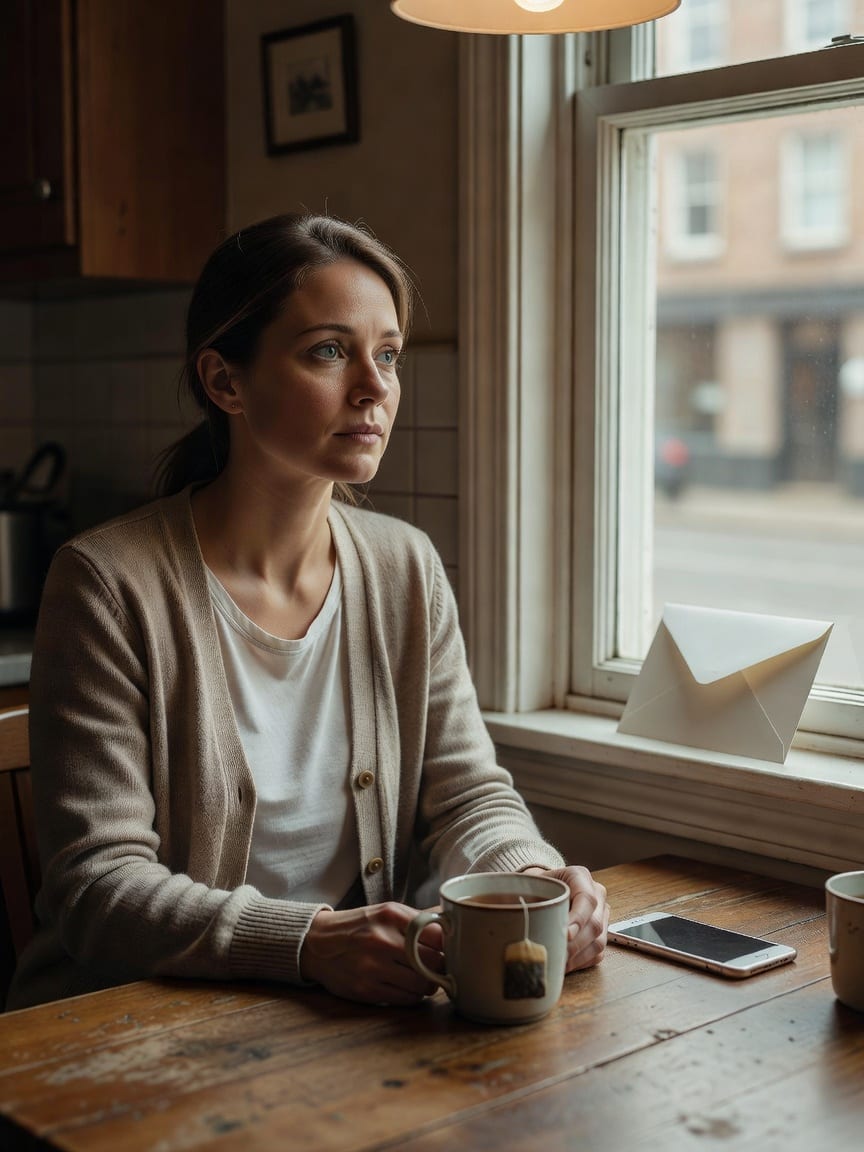
My taxi driver knew my name before I spoke, then apologized for the flight I was going to miss. I was arriving. The cab's plate was scrapped four years ago.
After a strange taxi ride, I received an unsettling birthday card addressed to me. Its return address listed 'Old Mill Road Field,' an empty lot where a mill once stood, and it was postmarked locally. The card arrived four months before my actual birthday, sparking a cold dread I couldn't ignore.
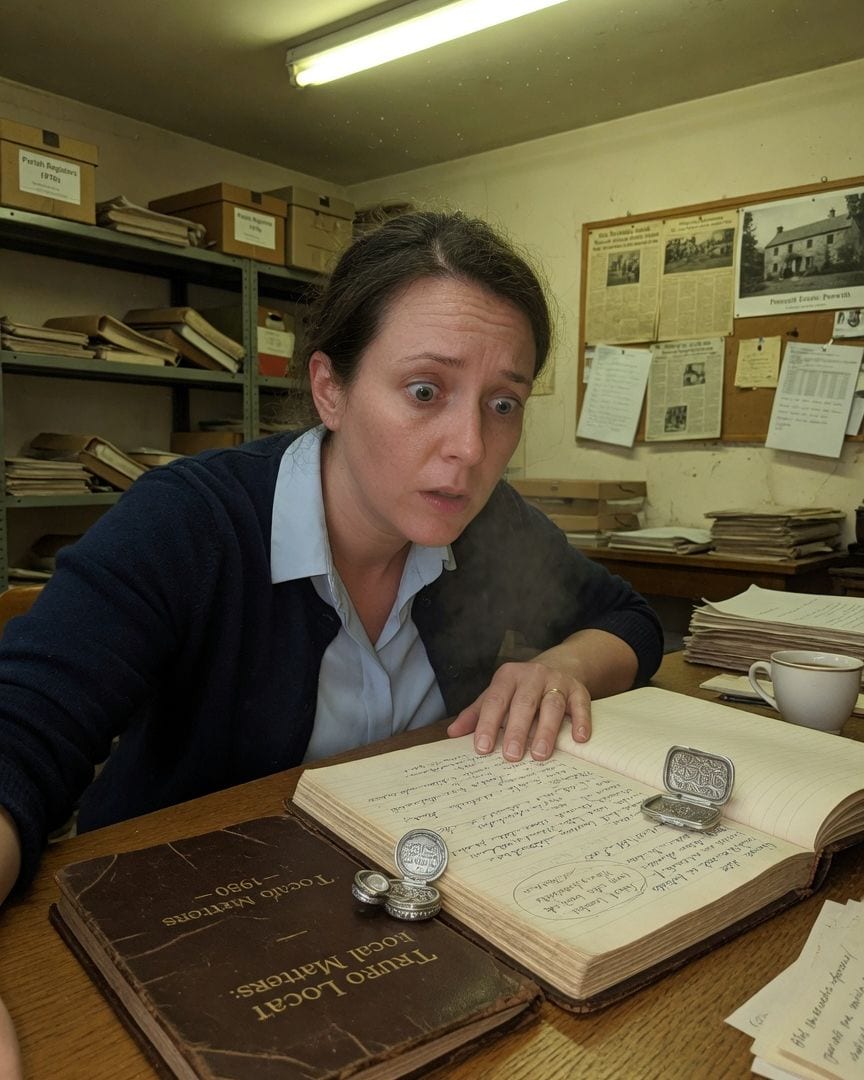
My antique locket held my maiden name, unused in eleven years, engraved 'until the ninth.' The dealer said it was 'for her, when she comes.'
After a tough week, Maxwell gifted me a beautiful antique locket from Truro market. Later, examining it with a jeweler’s loupe, I found my maiden name, 'Sheppard,' etched inside, along with the words 'until the ninth.' I haven't used that name in eleven years, and the impossible precision of the engraving sent a chill through me.
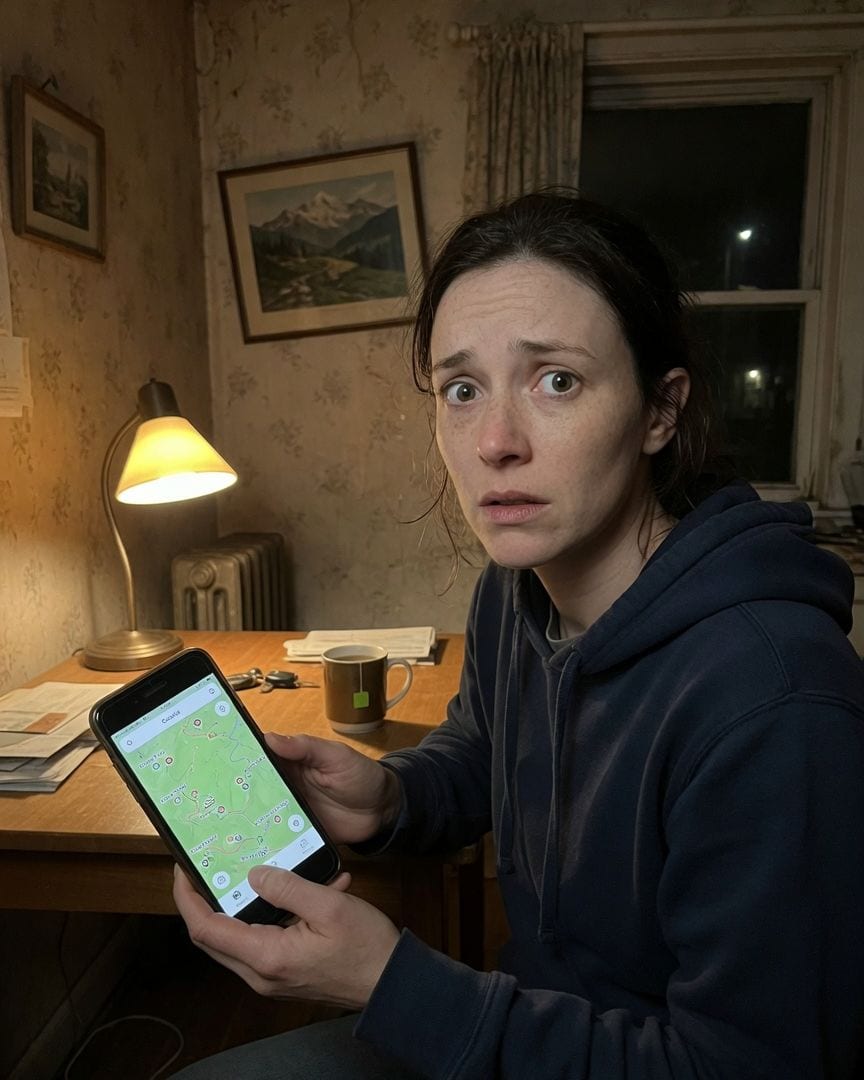
My hiking app scrubbed the hill's name from the map, on a phone that's been in airplane mode for two days.
I just moved to town and hiked a local hill, 'Cathan Tor,' according to my phone's app. But when I mentioned the name to the mechanic, he froze, dropped his wrench, and whispered, 'Don't say that name, Colette.'
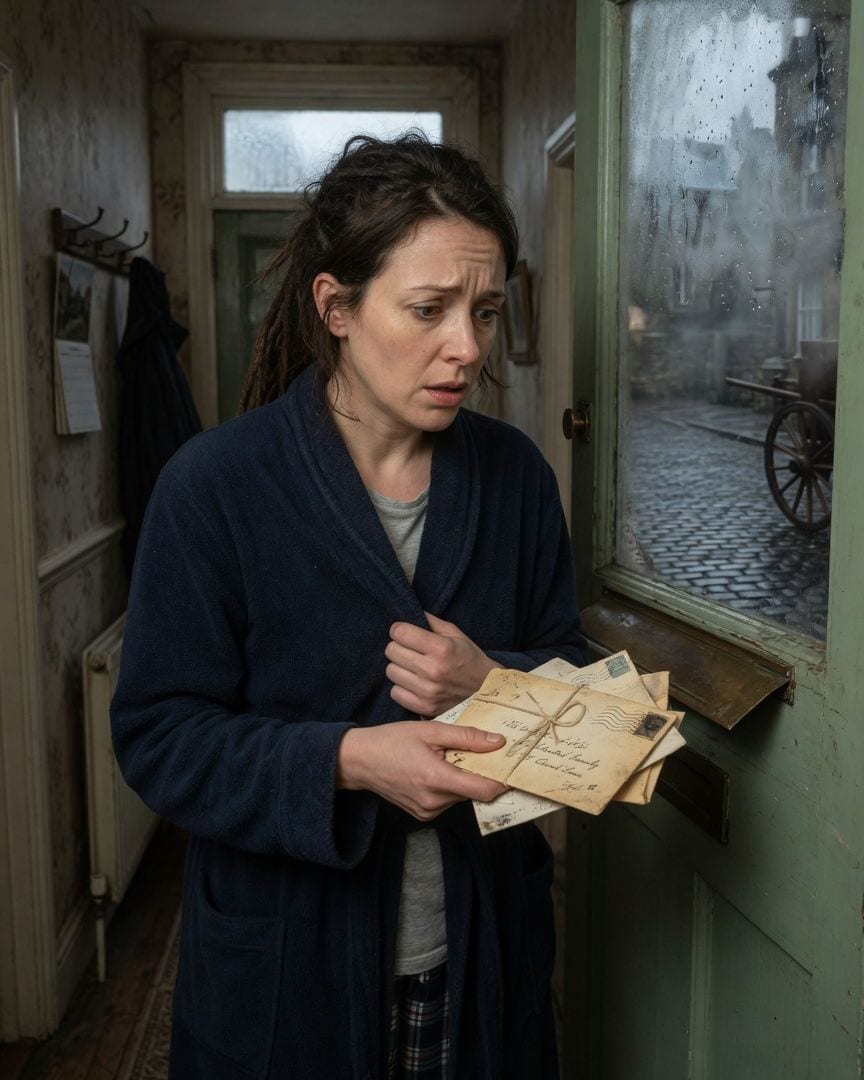
Seventy years ago, a hidden journal recorded my door opening to the wrong street and receiving Lockwood post.
I'd only recently moved into my inherited house, a quiet place on the edge of town. One grey morning, a distinct clatter from the front door's post flap caught my attention. Reaching down, I expected my gravel path, but instead, the flap showed a dark, cobbled street that wasn't mine. A bundle of warm, old letters, addressed to 'The Lockwood Family,' slid through, before the vision flickered and was gone.
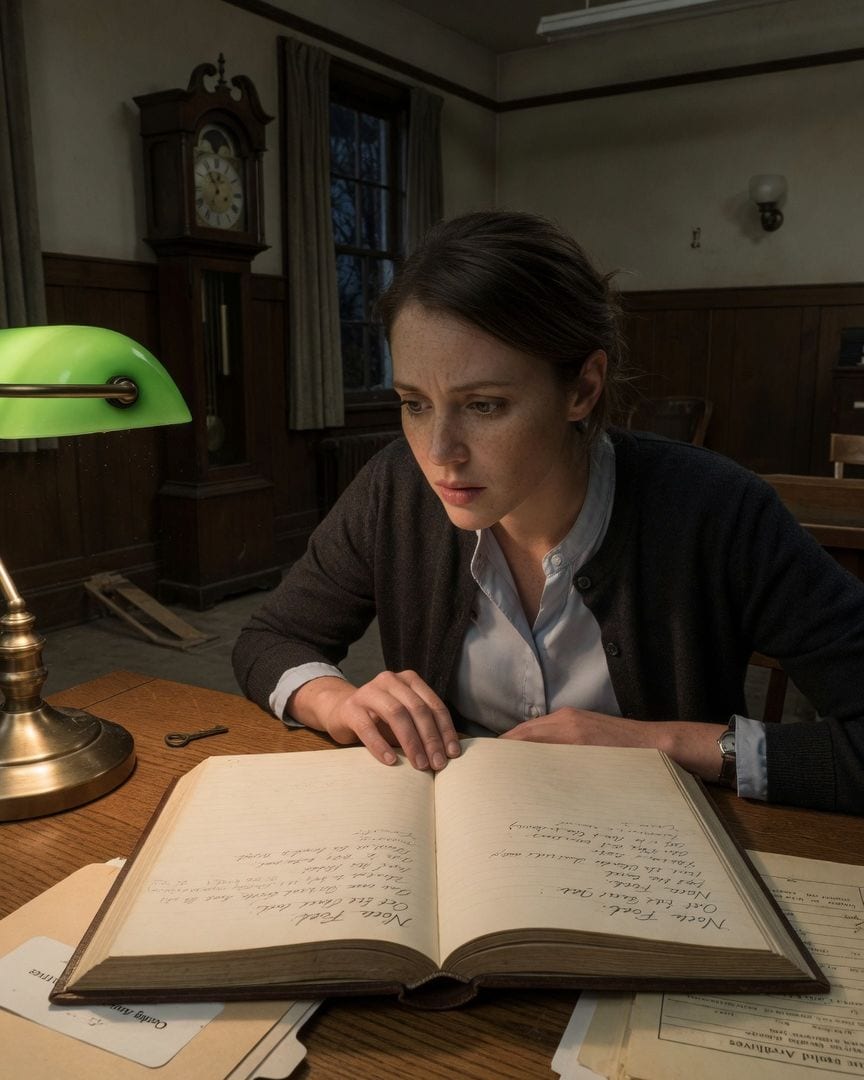
My grandmother’s name reappears in the old book of remembrance — on the same date, same street, every few decades since 1929. A verger’s note reads: 'ask no family.'
As Keeper of the crematorium's Book of Remembrance, my job is quiet and meticulous. But while updating my own grandmother's entry, I found two more Nora Fords listed above hers. Each died on October 3rd, decades apart, with the same address and a strange instruction: 'ask no family.'
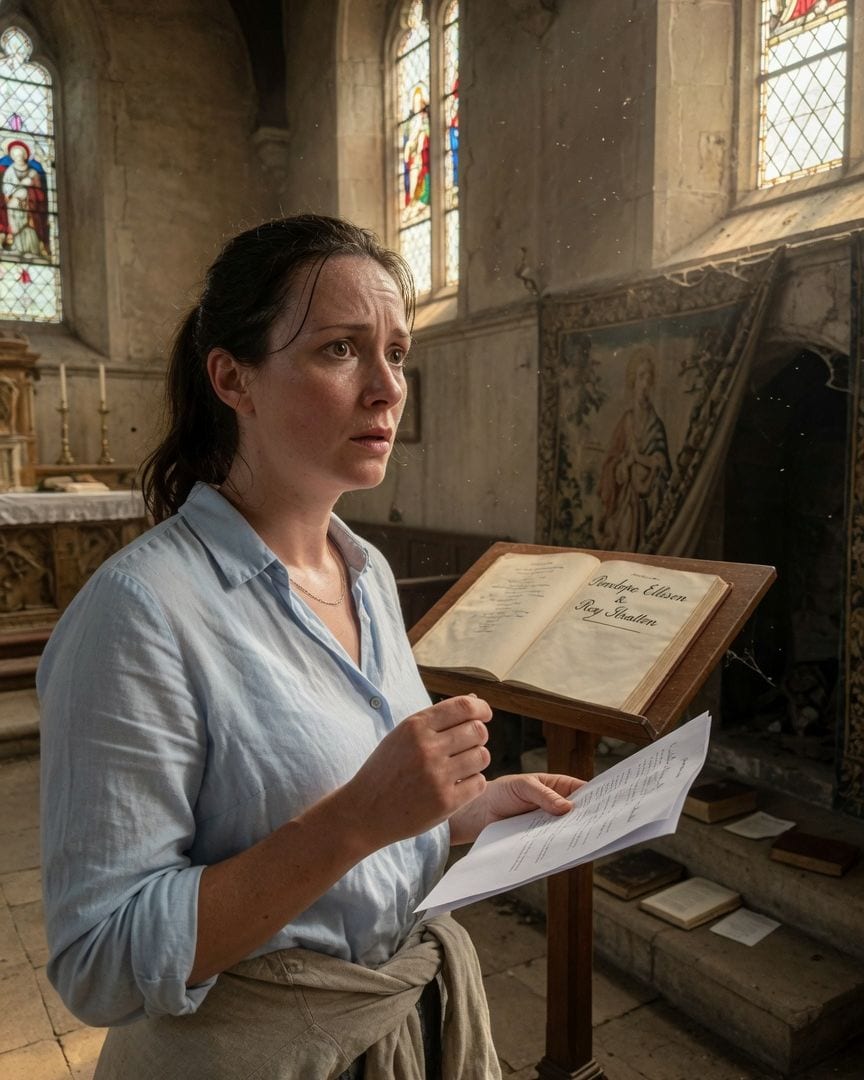
The church's banns book shows a wedding notice, republished every three weeks. Same names, fresh ink. The marriage was never solemnised.
As a newcomer to Marne, I noticed the curate quickly hide a page in the church's banns book. It showed a wedding for 'Penelope Ellison' and 'Roy Stratton' with fresh ink, yet I could find no record of them anywhere in town. The curate's dread-filled warning to leave "some things undisturbed" made the phantom names feel chillingly real.