My visitors' book records guests who arrive in the future. Last Sunday, my own name appeared at the bottom, the ink still wet.
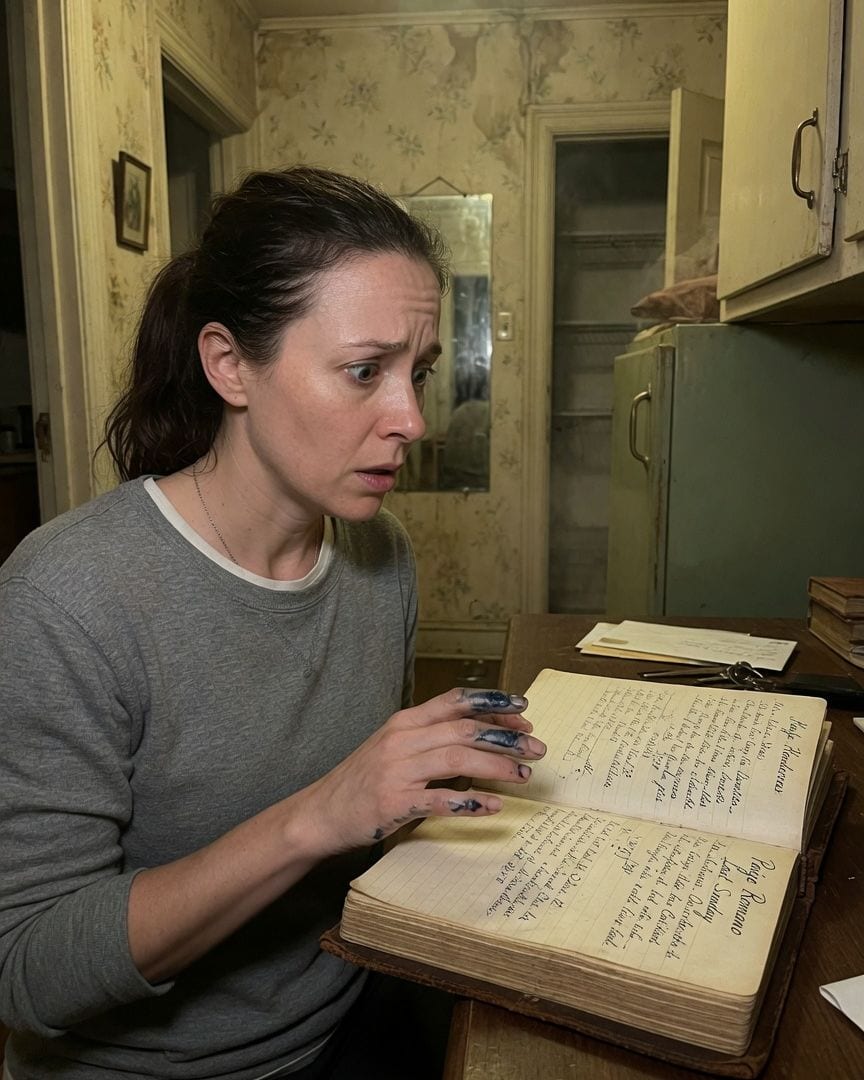
I’d never paid much mind to the visitors’ book when I bought the old place last March. It was just a heavy, leather-bound thing, sat on the hall table, a relic of previous owners.
Its pages were filled with careful script, names and dates stretching back decades, all of them ending abruptly in 1979. A nice aesthetic touch, I thought, a bit of history to go with the house’s quirky charm.
Then, about a month after I moved in, I noticed it. A new entry. A name I didn't recognize, written in elegant fountain pen, dated for a Tuesday in July – four months in the future.
I scoffed, figuring it was a lingering prank by a departing relative of the old owner. I even tried to smudge the ink, expecting it to be dry, a fake. But it was wet, smearing slightly under my thumb.
My breath hitched, just for a second, a flicker of something unsettling. I told myself it was just a trick of the light, an old book playing up.
Over the next few weeks, more entries appeared. Always future-dated. Always in distinct, unfamiliar hands. A Mrs. Henderson, dated October. A Mr. & Mrs. Davies, December.
The sheer number of different handwritings made the "prank" theory feel flimsy, but I clung to it. Who else could it be? The house was mine.
I’d walk by the book, sometimes running my finger over a fresh name, and feel a chill that had nothing to do with the thermostat. Last Sunday, though, was different.
I found my own full name, Paige Romano, written in careful, elegant capitals right there at the bottom of the page, beside the date: "Last Sunday."
The ink was still so perfectly wet that a tiny bead shimmered at the curve of the 'R'. My breath caught in my throat, a cold, hard lump.
The appearance of my name in that book, dated for a day that had just passed, like it was a retrospective prophecy, utterly unnerved me. I started checking it obsessively, every morning, every evening.
More entries appeared, each in a distinct, unfamiliar hand, some referencing local events that hadn't even happened yet – a town fair in August, a specific new exhibit at the historical society next spring.
I even cross-referenced the names and dates with old local papers, pulling up archives online.
A few times, a future entry would mention something vague, like "enjoyed the autumn festival," and then, months later, a small article would appear about a new local autumn festival planned for this year.
It wasn't always a perfect match, but it was enough to make my stomach clench.
I started researching the house itself, digging through property records, trying to find information on Evelyn Maddox, the previous owner, and anything about the book.
The house had a long, undocumented history of quick turnovers after 1979, the year the book's old entries ceased. People moved in, then moved out within a few years, sometimes less, no clear reason stated in the sparse paperwork.
I tried to convince myself it was all a series of elaborate, long-game pranks, maybe by Evelyn’s family, but the sheer volume of distinct handwriting styles, the precise, mundane details in the entries – impossible.
No one would go to that much trouble, for decades, for a house they no longer owned.
The book wasn't the only thing. I started noticing other, more subtle wrongnesses. Sometimes, when I walked into the kitchen, a faint, unidentifiable scent of roasting meat would hang in the air, rich and savory, even when nothing was cooking.
I'd open the fridge, sniff around, check the bins. Nothing. It would fade as quickly as it came, leaving me wondering if I'd imagined it.
Or there was a specific, heavy teacup, chipped at the rim, that I knew I'd put away in the back of the cupboard, but it would appear, clean and dry, on the draining board, as if someone had just used it and left it there to air.
I'd put it away again, deliberately, only to find it back in its inexplicable spot the next morning. The house was playing tricks. I was tired, I told myself. Stressed from the move.
Driven by a strange compulsion, a prickling sensation that started in my scalp and crawled down my spine, I found myself in the kitchen again, drawn to a small, disused pantry door.
It was tucked away, almost hidden behind a larger cupboard, painted over countless times until it nearly blended into the wall. I’d ignored it before, assuming it was just a shallow, useless space.
But now, it felt like it was humming, a low thrum against my skin. Curiosity, or maybe something darker, overcame me. I gripped the tarnished brass handle and forced it open.
Instead of the expected dusty shelves, I stared into a cramped, brightly lit scullery from a bygone era. A heavy, black cast-iron stove dominated one wall, glinting dully in the light.
Copper pots hung from hooks, gleaming, and a wooden table was laden with half-prepared vegetables. The distinct, phantom scent of woodsmoke and roasting meat, far stronger than I'd ever smelled it before, filled my lungs.
I blinked, my mind struggling to process the impossible image. And in that instant, the vision snapped back. The cast-iron stove, the copper pots, the woodsmoke – all gone.
Replaced by the familiar, dark, empty, modern pantry I knew, its shelves bare.
I stood frozen, hand still on the pantry door handle, staring at the empty, modern shelves, the lingering scent of woodsmoke fading, utterly bewildered by the impossible vision I just witnessed.
Shaken, I tried to recreate the pantry experience. I opened and closed the door dozens of times, my heart hammering against my ribs. Each time, it only opened to my mundane, modern storage space. The vision was gone.
But it had been so real. The heat from the stove, the glint of copper, the smell. I found myself obsessively researching the house’s architectural history.
Through dusty town records and old blueprints, I found it: a 1920s renovation that had indeed bricked up an old scullery, absorbed it into a larger kitchen design. The vision wasn’t just a hallucination; it was impossibly accurate.
I knew I needed to talk to Evelyn Maddox. She was the one who sold me the house, the last thread to its history. I tracked her down to an assisted living facility on the other side of town.
She was frail, her hands spotted with age, but her eyes were sharp, lucid. I tried to ease into it, carefully bringing up the house, the visitors' book, the "odd feelings."
Evelyn initially dismissed it, a dismissive wave of her hand. "Old houses have character, dear. Drafts and creaks." But then I mentioned the specific, phantom scent of roasting meat, and the way a teacup would reappear on the draining board.
Her eyes, suddenly distant, fixed on a point beyond me. When I described forcing open the pantry door and the glimpse I’d had, her composure faltered.
She leaned forward, her voice a reedy whisper. "The house… it keeps its own. Always has. Some people just fit in better than others, you see. They settle. And then they don't quite leave."
She didn't elaborate, wouldn't meet my gaze when I pressed her. She just repeated, "It holds onto its own."
I left with more questions than answers, but a growing, chilling certainty that Evelyn knew something profound, something deeply unsettling about the house's true nature.
After my visit with Evelyn, I felt a distinct shift in the house. It wasn't just the strange occurrences continuing; they became more pronounced, more intentional. The subtle traces became insistent.
I started hearing faint, rhythmic humming from the empty attic directly above my bedroom. It was a soft, low melody, almost a lullaby, but it had a distinct, reedy quality that made the hairs on my arms prickle.
When I’d creep up the stairs, the sound would simply stop, the attic settling into absolute silence.
A specific, heavy wooden chair in the living room, an antique I’d inherited with the house, was always slightly askew, pushed back from the small writing desk beside it, as if someone had just risen from it moments before I walked in.
I'd straighten it, push it flush against the desk, only to find it out of place again hours later. I started finding small, anachronistic objects scattered around. A tarnished silver thimble, intricately engraved, appeared on my bedside table one morning.
I'd never owned a thimble. Another time, I found a half-used spool of antique, fine linen thread in a kitchen drawer, tucked amongst my modern utensils. They weren't mine. They weren’t Evelyn’s either, I was sure.
They felt like they simply belonged there, waiting.
One evening, a thick, cream-colored envelope was slipped under my front door. No stamp, no return address. I tore it open, my hands shaking.
Inside was a single sheet of paper, old and slightly yellowed, with a typewritten message: ‘Some things are better left undisturbed. The house holds its memories for a reason.’ There was no signature.
I read it again, then again, the cold truth of it settling in my bones. My digging had been noticed. Perhaps by someone else who knew its secrets.
Or perhaps, and this thought chilled me most profoundly, by the house itself. I began to feel its presence constantly, a subtle weight, a guiding hand, subtly pushing me towards something inevitable.
The house wasn’t just a collection of rooms and walls; it was watching me, waiting.
I couldn’t shake the anonymous letter, the sense of being watched. I drove back to Evelyn Maddox’s facility, my hands white-knuckled on the steering wheel. This time, there was no gentle probing.
I laid the letter on her lap, my voice tight. “What do you know about this? About the house, Evelyn? It’s doing more than keeping memories. It’s… changing things.”
Her face, already pale, seemed to drain of what little color it had. She picked up the letter, her fragile fingers trembling slightly, but her eyes were steady. “I tried to tell you, dear. It doesn’t just keep memories.
It keeps people.” She looked out the window, at the neatly manicured lawn, her voice softer now, almost resigned. “The book, you see, it’s not just a record. It’s a sort of manifest.
The house… it requires certain patterns of life, certain routines. It becomes so ingrained that it seeks to recreate them. And it needs someone to step into that role. To live it out, again.”
My blood ran cold. “What do you mean, ‘step into that role’?”
Evelyn turned back to me, her eyes clouded with an ancient sadness. “I was once chosen, you know. Not for the scullery, no. For a woman from the 1950s. A quiet life, full of gardening and baking.
I started doing things that weren’t mine, thinking thoughts that felt foreign, yet so familiar. I even looked like her, eventually. I barely escaped it, Paige. I sold the house, left everything, never looked back.
But not before I lost years of my own identity to that place. It rewrites you, from the inside out.” Her voice dropped to a barely audible whisper. “The house is already drawing you in, dear. It’s subtle, at first.
Shifting things, whispering thoughts, guiding your hands. It’s reshaping your life to fit a past pattern. That pantry door you saw? That was a glimpse. A very specific era. The one it wants you for.”
The unidentifiable scent of roasting meat, the specific teacup always appearing on the draining board, the humming from the attic, the chair always askew – they weren’t just echoes. They weren’t random.
They were the persistent traces of a life, a routine that Evelyn herself had once lived, unknowingly, and now, the house was attempting to impress them upon me. It wasn't a haunting I was observing.
It was a haunting I was becoming. The full, monstrous coherence of it slammed into me, leaving me breathless.
Armed with Evelyn's chilling confession, a frantic desperation propelled me back to the house. I had to know. What ‘pattern’ was I being drawn into? Whose life was I reliving?
I tore through the house, searching every cupboard, every forgotten drawer, every dusty corner.
I was looking for something specific, though I didn't know what – a diary, old letters, anything that would give me a name, a face, a history.
Finally, in the dusty, forgotten corner of the attic, behind a loose floorboard that groaned faintly as I pried it up, I uncovered a small, leather-bound box. My hands trembled as I opened it.
Inside, nestled amongst dried lavender, was a collection of old, brittle letters tied with a faded ribbon, and a small, leather-bound diary, its pages yellowed with age. The letters were signed 'Vivienne.'
The diary’s first entry bore the elegant script of a woman named Vivienne Larsen, who had lived in the house in the early 20th century.
I started reading, initially relieved. A concrete historical record! This was it, the truth. But as I turned the fragile pages, my relief curdled into a cold, profound dread.
Vivienne described routines identical to my own: waking at dawn, the specific route she took to the window to watch the sunrise, the exact time she made her morning tea.
She wrote about anxieties I’d felt that very week: a vague fear of loneliness, a specific worry about the autumn chill setting in too soon.
She even used turns of phrase I myself had thought just hours ago, private mental ramblings that no one else could possibly know.
Then, a detail that stopped my heart. Vivienne wrote about finding a specific, tarnished silver thimble on her bedside table – the very thimble I’d found there last week, the one I knew wasn't mine.
The final pages of the diary, written in a shaky, increasingly desperate hand, described Vivienne's growing fear of "the cold spot by the pantry door," and then, a line that made me gasp, freezing the air in my lungs.
She wrote about a faint, distinctive scar on her left wrist, just below the thumb, a scar she’d had since childhood. A scar I’ve had since childhood. A scar I have never told anyone about.
Written as if Vivienne herself bore it, as if she had looked down at my own skin.
I dropped the last letter, my breath catching as I read Vivienne Larsen's exact description of a small, distinctive scar on my own left wrist, a scar I've had since childhood and have never told anyone about, written as if Vivienne herself bore it.
The scar description was the final, horrifying piece of the puzzle. My mind reeled, rereading Vivienne's diary, her words blurring with my own memories, twisting them into something unrecognizable. The house wasn't just replaying its history; it was absorbing it.
It wasn't a ghost, not a spectral entity, but a persistent, living pattern, a monstrous gravitational pull that weaved new inhabitants into its very fabric. Vivienne wasn't just like me; Vivienne became her, or rather, I am becoming Vivienne.
The visitors' book, Evelyn's cryptic warnings, the Door Onto The Wrong Year, the anachronistic objects, the phantom smells, the inexplicable routines – it all snapped into a coherent, horrifying shape.
The house required a 'Vivienne' to live out a specific segment of its history, a particular thread in its ongoing story, and I, Paige Romano, was the latest vessel.
I remembered Evelyn's words, the chilling, calm way she’d said, ‘Some people just fit in better than others.’
The house hadn't just retained Vivienne's memory; it was actively imposing it, waiting for someone suitable, someone with the right blend of personality and circumstance, to continue the cycle.
I wasn't just witnessing a haunting; I was the haunting, slowly, inexorably, losing myself to the house's demand for a new Vivienne.
Panic, raw and animal, seized me. I had to leave. Now. I scrambled for my car keys, my phone, my purse, my fingers fumbling with the strap. I had to get out.
I rushed to the front door, my breath ragged, my heart a frantic drum against my ribs. My hand was on the cold brass doorknob. But as I reached for it, I hesitated.
A strange, profound calm washed over me, like a warm wave on a cold shore. The scent of woodsmoke, so faint earlier, was now stronger, deeper, comforting, wrapping around me like an old blanket.
My gaze drifted to the visitors' book on the hall table, open to a page I knew held my full name, Paige Romano, dated "Last Sunday."
I ran my finger over the ink, which now felt completely dry, settled, as if it had been there for a hundred years. A thought, not quite my own, yet perfectly formed in my mind, whispered: But where would I go? This is my home. It always has been.
A profound, unshakeable sense of belonging, a deep peace that chilled me to the bone, settled within me. The urge to flee dissipated, melting away like mist in the sun, replaced by a quiet, unyielding acceptance.
I walked back into the kitchen, my steps slow and deliberate. The phantom smell of roasting meat was now a familiar, inviting aroma.
I noticed the specific teacup on the draining board, chipped at the rim, picked it up, and without thinking, placed it precisely where Vivienne's diary described it always sitting, next to the sink. I opened the pantry door.
This time, it was just my modern pantry, dark and empty, but the faint, inviting glow of a 1920s scullery seemed to shimmer at the edges of my vision, a promise of what was to come, a future that was also the past.
I knew I cannot leave. I don't want to.
Paige Romano's social media posts became sparse, then ceased altogether. Her friends reported her increasingly withdrawn, her mannerisms subtly changing. The house, once vibrant with new life, settled into a quiet, almost antique stillness.
The specific teacup was always on the draining board. The faint scent of woodsmoke was a constant presence.
The visitors' book remained on the hall table, its entries continuing, always in a careful, elegant hand, always dated for the future, always for those who would arrive, and never leave.
One day, a neighbor, concerned by Paige's absence, knocked on the door. After a long wait, the door creaked open.
Standing in the dim hall was a woman, her hair pulled back in a severe bun, wearing a simple, high-necked dress that seemed out of time. Her face was Paige’s, but her eyes held an ancient, unblinking serenity.
The neighbor asked if Paige was home. The woman smiled faintly, a slow, knowing expression, and replied, "She's here. She always has been."
Her eyes held an ancient, unblinking serenity.
If this one got to you
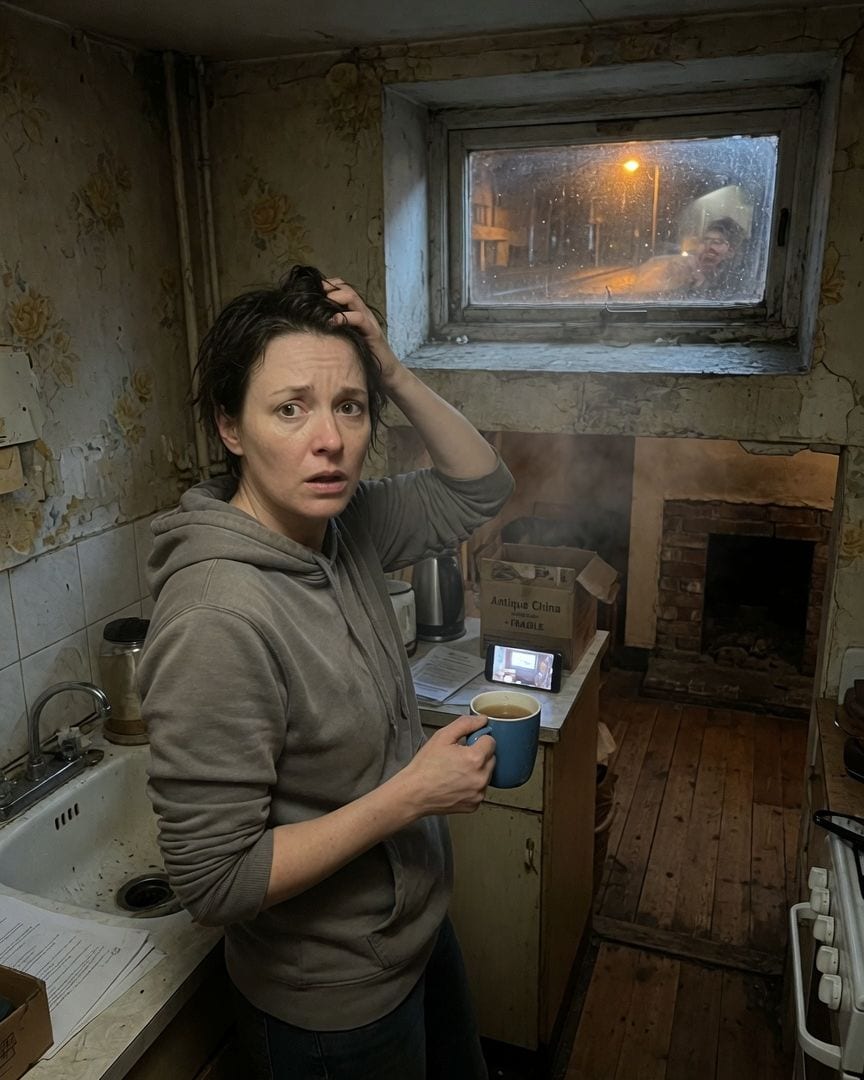
My basement window shows a gaslit kitchen moving at midnight, hams hung from the ceiling. My own kitchen is dark.
Settling into my new basement flat, I was making tea late one night when I glanced out my kitchen window. Instead of the concrete well, I saw a gaslit kitchen with an enormous cast-iron range, a young scullery girl, and cured hams hanging from the rafters. The vision was too sharp, too real, and the smell of coal smoke lingered long after it vanished.
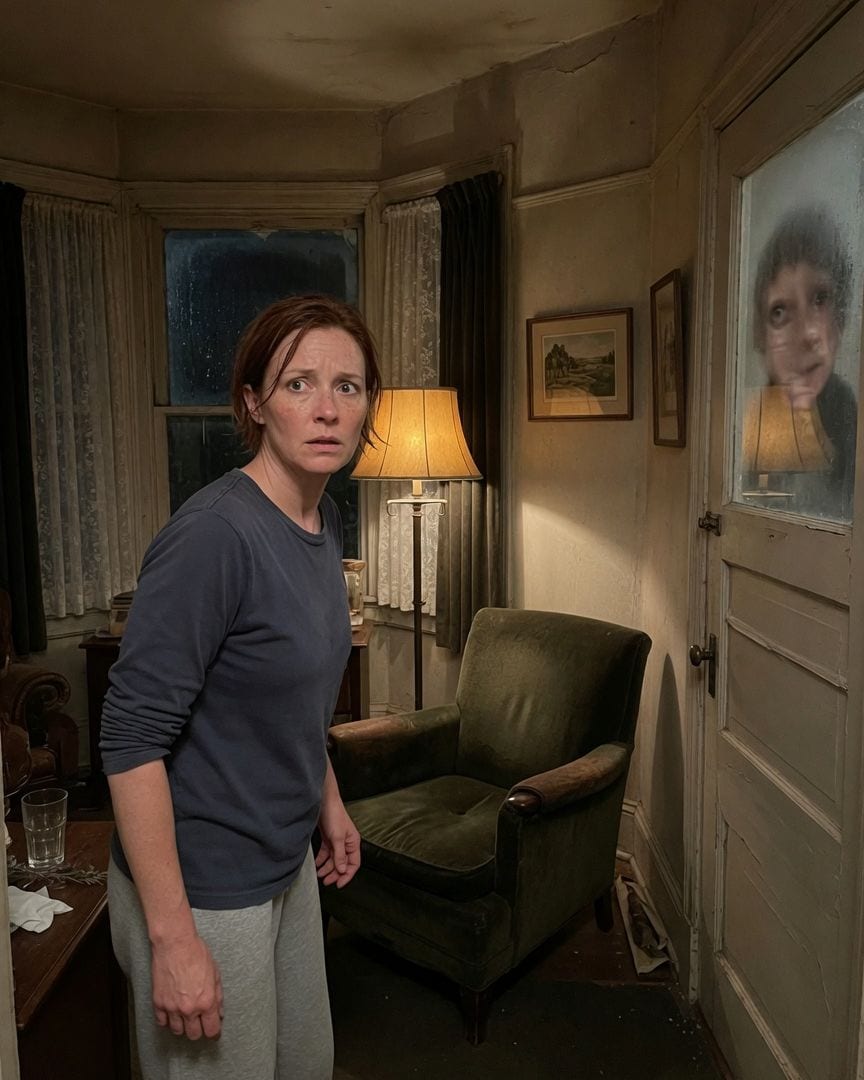
The armchair by the bay window was warm last Tuesday at 9pm. I’ve never sat in it, and the cushion was still settling from a weight that wasn't mine.
I bought this old house for quiet, and most days it's exactly what I needed. But there’s an antique armchair in the living room, deep green velvet, with a permanent hollow from years of use. I’ve never sat in it, yet last Tuesday, I found it radiating a distinct warmth, the cushion slowly settling as if someone had just left.
My front door has a dented gate and a dead hydrangea. I walked past it six times, trying to reach the corner shop just a hundred yards away. The pavement kept bringing me back to my own porch, and the shop's light never moved.
My morning started like any other, a quick walk to the corner shop from my home at Number 14, Elm Terrace. But after walking what felt like two minutes, I found myself back at my own front door, the shop no closer. I tried six times, faster and slower, but my street kept compressing, refusing to let me leave.
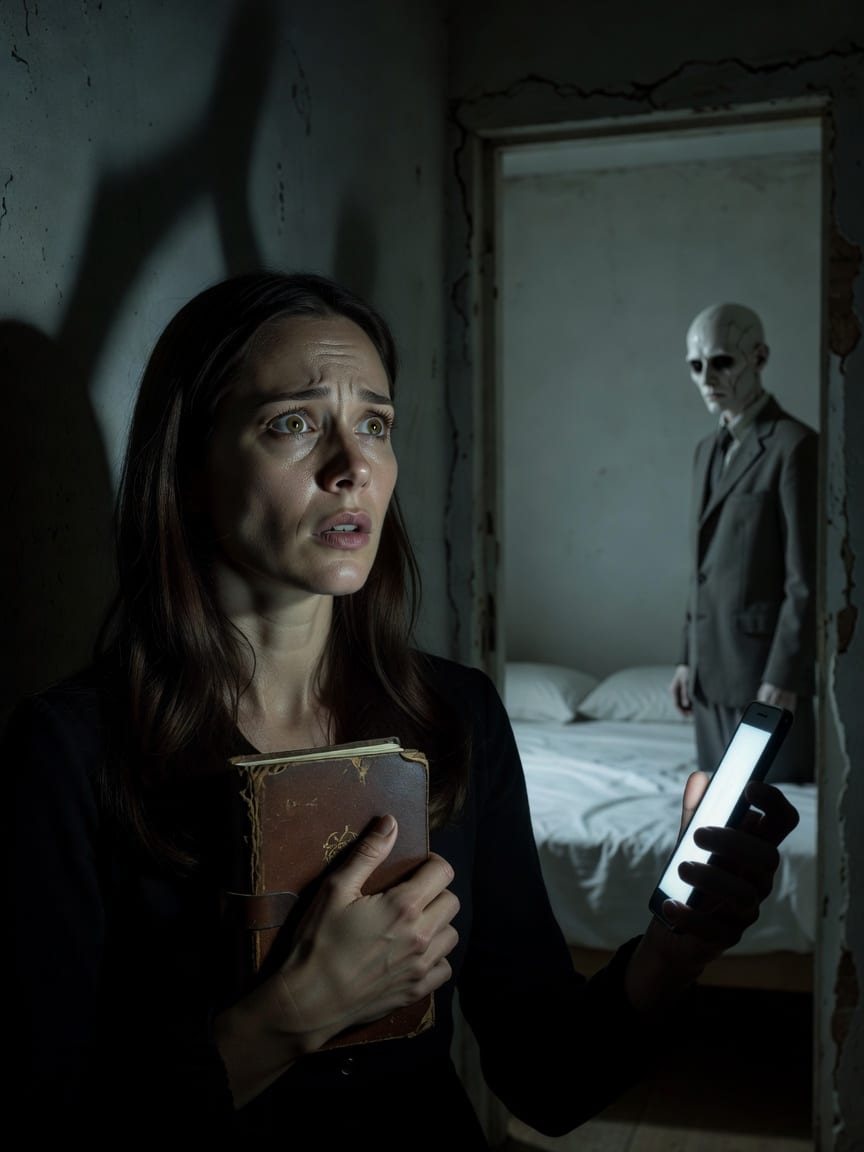
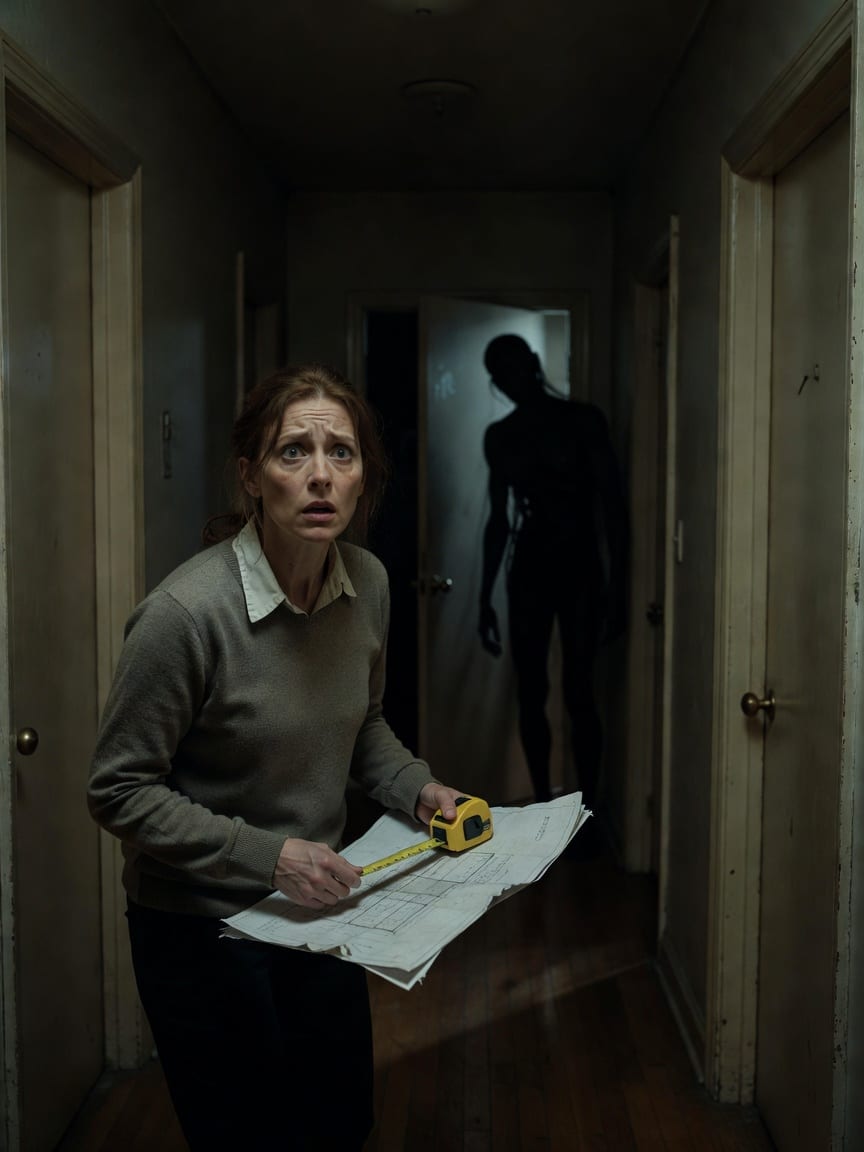
Behind a plastered-over doorway, I found a room. Papered, carpeted, and furnished with a made bed, sealed for decades. The air was dead still, but the bed wasn't dusty. My council tax bill only lists five rooms.
I'm Claire, an architect, meticulously planning my new Victorian terrace renovation. But when I uncovered a hidden room behind a wall, everything I knew about time and decay shattered. The bed was perfectly made, the air still, yet there was no dust, only an unnerving cold.
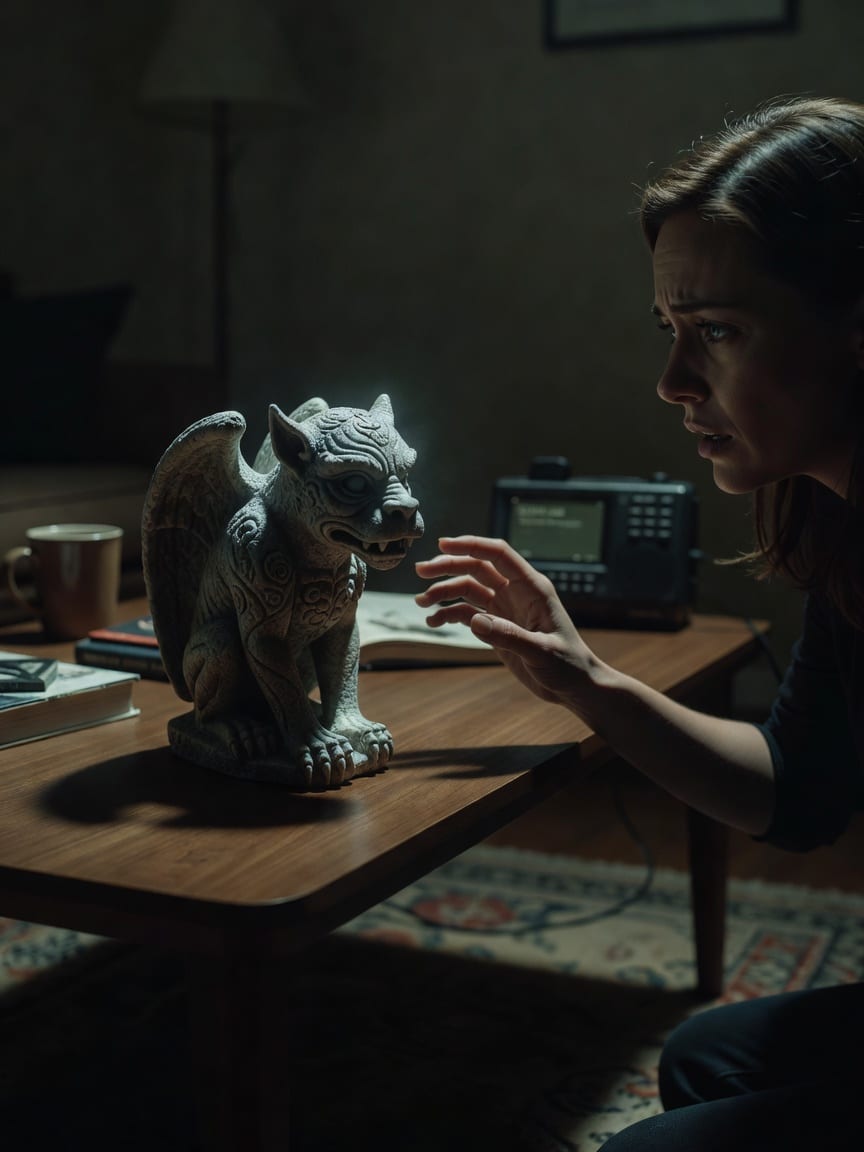
My radio scanner spoke my address at 2 AM. A flat voice read local homes, all with past dates. Mine was the only one in the future.
It was two in the morning, and my quiet house was filled with the usual hum of my weather scanner. But the static broke, replaced by a flat, synthesized voice reading a list of local addresses and dates. My hand froze when it spoke my own address, 181 Foster Drive, followed by a date: October 27th. That date was three weeks from now.
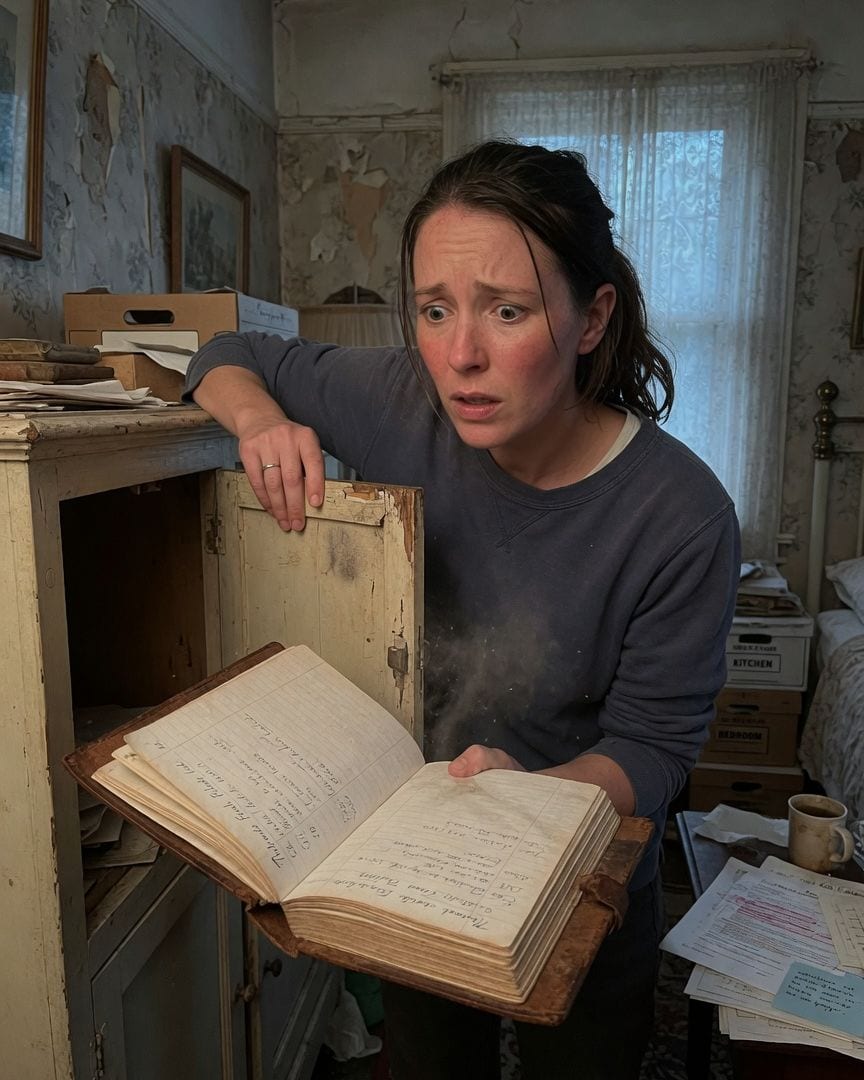
My house’s 1962 valuation has a redacted line, but the surveyor’s note says 'condition as attaches to each owner in turn.' It’s the same code on my own mortgage completion statement.
Moving into my new Victorian house, I found a redacted line in an old mortgage report. It mentioned a condition that 'attaches to each owner in turn,' a phrase my solicitor dismissed as an 'archival quirk.' But then, a hidden ledger in a bedroom cupboard revealed a chilling chain: every past owner's name, followed by 'Condition Fulfilled'.