The armchair by the bay window was warm last Tuesday at 9pm. I’ve never sat in it, and the cushion was still settling from a weight that wasn't mine.
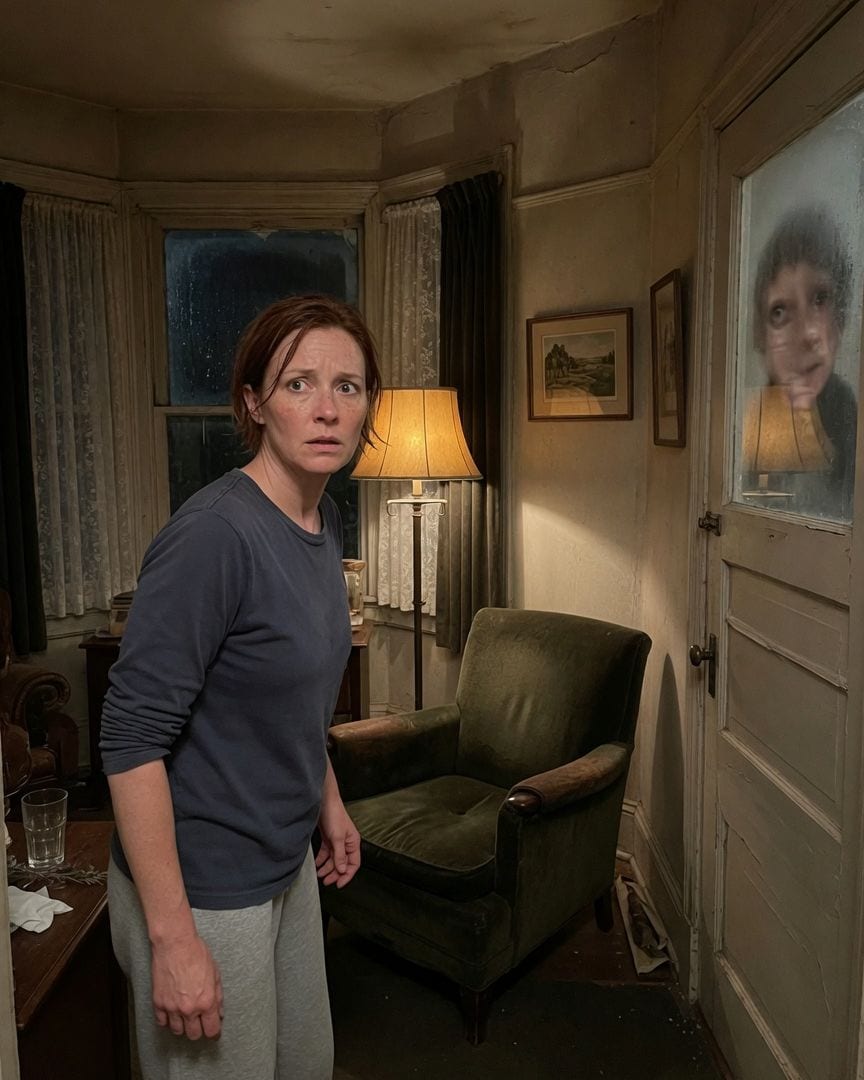
I’m Rosemary Vaughn, and I bought this house in June. Left the city behind, wanted quiet. A place with history, but not a project. This one, built in 1920, was perfect. Good bones, well-maintained, not overtly spooky. Just… old.
I thought it was exactly what I needed.
Most days, it is. But there are these small things. Insistent things.
There's an armchair by the bay window in the living room. Deep green velvet, an antique that came with the house.
It has a real hollow in the cushion, from years of someone sitting there, and the right armrest is worn smooth. I’ve never sat in it. It’s not my style.
Last Tuesday, though, around 9 PM, I walked past it on my way to the kitchen to grab a glass of water. And I felt it. A distinct warmth radiating from the seat. Like someone had just been there.
I stopped. Pressed my hand into the hollow. The cushion was warm, yes, but more than that, I felt it.
A slow, subtle settling, as if the weight had just lifted, and the fibers were still adjusting, rising back into place.
I live alone.
I checked the thermostat. Checked if the evening sun had been particularly fierce through the bay window, but it was past 9 PM, dark outside. Nothing. No rational explanation.
The memory of that warmth, that slow, impossible shift, it’s stuck in my mind. A quiet insistence that something is fundamentally wrong here.
That armchair became a kind of quiet obsession. I found myself checking it at odd hours, always expecting that impossible warmth. Sometimes it was just cold, as it should be.
Then, sometimes, without warning, it would be there again, a lingering heat that spoke of a recent, invisible presence.
Then came the smell. A faint, sweet scent of lavender. It would just… appear. In the master bedroom, mostly, sometimes drifting into the hall. I don't use lavender anything.
I told myself it was an old sachet, forgotten in a drawer, releasing its last breath.
But it reappeared sporadically, subtle, always just out of reach of full identification, never strong enough to pinpoint a source, but definite enough to register.
There’s a disused pantry off the kitchen, too. The door is a solid slab of painted wood, but set into the top is a small, frosted glass pane.
I always just saw it as a functional detail, a way to let a little light into what was essentially a dark closet. I’d never really paid it much mind.
But one evening, I was wiping dust from the hall console table, and my eye caught something in the glass. A flicker. A distortion, not like old glass usually distorts.
It was as if the scene behind it wasn’t the dark, cluttered pantry I knew. It was something else entirely. Brief. Impossible. I blinked, and it was gone, replaced by my own hazy reflection. I rationalized it, of course.
Old glass, bad lighting, tiredness. My imagination playing tricks. But the image, indistinct as it was, held a strange, impossible quality, a glimpse of another space, another time. It hung in my mind, a fresh knot of unease.
The unease didn't go away. It sharpened, turned into a prickling certainty that I wasn't imagining things. Something was here, or had been. I started exploring the house more thoroughly, looking for any explanation.
I ran my hands along baseboards, peered behind old appliances. And then, in the master bedroom, behind a loose baseboard panel that shifted when I pressed on it, I found it. A small, leather-bound diary, brittle with age.
It was dated 1978. The author was Eleanor Vance, a previous owner. My heart started to pound, a frantic drum against my ribs, as I read the first entries. Descriptions of 'the unexplained warmth in the bay window chair.'
The 'lingering scent of lavender.' A growing dread about 'the kitchen door that shows the wrong year.'
The last entry, scrawled frantically, spoke of a specific date – November 14th – and a desperate plea to understand 'what the house wants.'
I stood before the disused pantry door, Eleanor’s words echoing in my mind, a cold certainty settling over me. My hand, trembling slightly, reached for the cold brass knob.
As my fingers closed around it, the glass pane in the door rippled, not like water, but like static on an old television, and through it, I glimpsed a brief, impossible flash of a different, older kitchen, bright with morning sun, a woman in a floral dress frantically scrubbing at a stain on a wooden table, her face contorted in silent terror, before the image snapped back to my own reflection.
I spent the next few days in a daze, pouring over Eleanor’s diary. The entries detailed a life that mirrored my own early experiences in the house, but with an escalating sense of dread that made my blood run cold.
She recorded specific times for the armchair's warmth, the faint lavender scent, and, most chillingly, increasingly vivid and terrifying visions through that pantry door, culminating in that final, desperate entry on November 14th, 1978.
I searched for Eleanor Vance online. Found only a brief, ambiguous newspaper clipping from a local paper about her 'disappearance' in late 1978. No body, no clear explanation. Just… vanished.
I drove to the local historical society, a dusty building smelling of old paper and quiet. Philip Mercer, the archivist, was a kindly, if eccentric, man in his late sixties.
He remembered Eleanor vaguely, a quiet woman who kept to herself. I tried to sound casual as I asked about the house’s history, probing for anything unusual. Philip leaned back in his creaky chair.
He mentioned a local legend about 'unsettled houses' in the area, places where 'old energies cling,' but he dismissed it with a wave of his hand as mere folklore, something old women used to scare children.
He helped me find the old property records. Eleanor Vance had owned the house from 1953 until her disappearance in 1978. Before that, the owner was a Walter Hayes, from 1930 to 1952.
No mention of any strange incidents in the official records. But as I left, Philip called out, almost as an afterthought, "Eleanor, now she was known for her meticulous record-keeping. Almost obsessive, some might say."
A chill that had nothing to do with the archives' temperature pricked the back of my neck. Eleanor wasn't just recording her experiences. She was trying to understand them. To break free.
I returned home, Eleanor's diary and the property records spread across my kitchen table like pieces of a puzzle. I felt a growing, horrifying conviction that Eleanor wasn’t just a victim, she was an investigator, just like me.
I studied the dates, trying to find a pattern, a logical progression to what she had experienced.
As I sat there, the antique grandfather clock in the hall, which I'd never wound, suddenly chimed. A deep, resonant clang that echoed through the silent house, making me jump. It struck precisely 9 PM.
I froze, my eyes darting involuntarily to the bay window. The armchair was dark, still. But the sound unnerved me, a reminder of the house's strange, unresponsive life.
Later that night, as I tried to sleep, I heard it. A faint, rhythmic scraping sound coming from the living room, directly below my bedroom.
It sounded like a chair being dragged across the hardwood floor, then stopping, then being dragged again. A slow, deliberate cadence. My breath caught in my throat. My heart hammered against my ribs.
It was too faint to be certain, too rhythmic to be casual. I crept to my bedroom door, pressed my ear against the cold wood. The sound stopped. Silence. An absolute, oppressive silence.
I told myself it was the house settling. Old pipes. Anything but what it sounded like. But the silence that followed felt heavy, knowing. The next morning, I found it.
A faint, almost invisible scratch mark on the polished wood floor, leading from the armchair to the very center of the living room, then back again. It hadn't been there yesterday. It was too distinct, too deliberate to be accidental.
The house wasn’t just replaying; it was responding. I felt a prickle on my neck, the distinct sensation of being watched, observed by something ancient and patient within the walls.
I went back to Philip Mercer, armed with Eleanor’s diary and the newspaper clipping. He took it this time, his jovial demeanor slowly fading to a look of profound disquiet as he read Eleanor’s frantic scrawls.
He finally admitted there were whispers about Eleanor, not just her disappearance, but strange things before that. “People said she was… lost in her own head,” he murmured, his voice low. “Obsessed with the past. Always talking about ‘the echoes’.”
He confirmed the dates matched, the details of the house, the lavender. He recounted how Eleanor, in her later years, would spend hours by the bay window, often talking to herself, or to an empty chair.
“She seemed to be… waiting for someone, or something, that never came back.”
Then Philip recalled a detail that was always vague in the local memory: Eleanor’s husband, George, had died tragically in the house years before her disappearance. A fall down the stairs. Eleanor never recovered.
I felt a cold knot tighten in my stomach, a horrifying click as the pieces slammed into place. Eleanor wasn't just experiencing recurrences; she was part of one.
The warm armchair, the lavender scent – these were traces of Eleanor, yes, but Eleanor herself was experiencing the echoes of George. The pantry door, the wrong year – it wasn't just showing a random past.
It was showing the moment of George's accident, or perhaps his final, desperate moments. The house, in its terrible memory, was replaying the tragedy for Eleanor, over and over, until she, too, became part of its loop.
Eleanor's growing dread wasn't just fear of the unknown; it was the horrifying realization that she was living her husband's last moments, a cycle she couldn't escape.
The house, Philip explained grimly, was known as a place where 'people just… faded away.' He remembered an old saying, chillingly precise: 'The house keeps its own.' Eleanor hadn't simply disappeared; she had been absorbed into its relentless, repeating memory.
The realization that Eleanor was trapped, reliving her husband's final moments, chilled me to the bone. I reread Eleanor’s diary that night, now with a new, horrifying understanding.
Her earlier entries were meticulous, but they became increasingly detached, her handwriting more erratic, describing her own routines blurring with George’s, her identity slowly dissolving into the house's memory.
The last entry was a fragmented plea for help, ending abruptly, a scream cut short.
I was standing in Eleanor's old bedroom, the journal open to the last entry, the paper thin beneath my fingers.
As I reread Eleanor’s desperate plea for understanding, the faint, sweet smell of Eleanor’s favorite lavender sachet, which I recognized from earlier traces, filled the room. It was her, a whisper of her trapped memory.
But then, a distinct, harsh odor of pipe tobacco, one I’d previously dismissed as residual from an old neighbor, suddenly permeated the air.
It was strong and acrid, seeming to emanate from the very walls around me, not from an old sachet. I recalled Philip mentioning Walter Hayes, the owner before Eleanor, and a sudden, terrible intuition seized me.
I returned to the old property records Philip gave me, my hands shaking. Tucked inside a faded, early 20th-century deed, brittle with age, I found it: a small, hand-drawn map of the property from the 1950s.
It highlighted the bay window and the armchair's location, exactly where it still stood, but also a second, distinct worn path across the living room floor, leading to a different, disused fireplace, bricked up and forgotten.
Beside it, scrawled in an elegant, masculine hand, were the initials 'W.H.' and a cryptic note about 'the chill that never leaves.'
As I stared at the map, trying to reconcile this new layer of horror, I saw a flicker of shadow in the periphery of the antique mirror hanging on the opposite wall. It was too solid to be my own.
It was the 'chill that never leaves,' and it wasn't Eleanor's.
The map confirmed my terrifying suspicion: the house’s memory wasn't limited to one occupant. It was a nexus, a repeating trap. Walter Hayes, the owner before Eleanor, had also become an echo.
I contacted Philip Mercer again, his voice weary when he answered. He reluctantly shared more local lore.
Walter Hayes, a reclusive pipe-smoker, was rumored to have lost a significant fortune, or perhaps a priceless collection, in a fire that broke out near the disused fireplace. He too, vanished, leaving no trace, no body.
The 'chill that never leaves' was the despair of his loss, echoing through the house.
The house wasn't haunted by spirits. It was a living archive of unresolved suffering, physically replaying the final, desperate patterns of those who met their end within its walls.
The 'Door Onto The Wrong Year' wasn’t just a window; it was a portal, showing the moment of each tragedy.
I finally understood the full horror. The house didn't just remember; it consumed. The warm armchair was Eleanor replaying her vigil for George; the lavender, her presence, her fading identity.
The pipe tobacco and the worn path across the living room were Walter replaying his frantic, desperate search for what he lost. And the door? It was a living, shifting tableau, ready to show the next victim their fate.
I approached the pantry door again, my heart pounding, but this time with a cold clarity. As I looked through the glass, the scene was clearer, more horrifying than before.
I saw Eleanor, frail and desperate, running through the kitchen, not scrubbing, but searching, her eyes wide with a terror that I now recognized as the terror of becoming an echo herself.
The house was a predator, and its prey were those who lingered, those with unresolved ends. I realized my own patterns, my own routines in the house, were already being absorbed.
I knew I couldn't stop the house from being what it was, but I could refuse to become its next memory.
The confrontation wasn't with a ghost, but with the insidious, relentless pull of the house itself, trying to weave me into its repeating fabric.
I began a frantic effort to disrupt the patterns. I moved the armchair from the bay window, carefully sealing it in plastic sheeting and storing it in the garage, out of sight.
I removed anything that might anchor my own nascent routines – my coffee mug from the kitchen counter, my book from the bedside table.
The grandfather clock in the hall chimed again, precisely at 9 PM, but this time, its sound felt less like a warning and more like a challenge, a subtle shift in the house’s presence.
The air grew colder, a draft I couldn't explain. The sudden, overwhelming scent of lavender and pipe tobacco warred in the living room, a palpable resistance.
As I tried to seal off the pantry door with heavy plywood, grabbing a hammer and nails from the utility closet, the glass pane flickered wildly.
It showed not just Eleanor, but a rapid succession of images: a man frantically searching through ashes near the fireplace, his face contorted in agony (Walter). A woman weeping by the bay window, frail and desperate (Eleanor).
And then, for a split second, a glimpse of my own reflection, but distorted, my face gaunt, my eyes hollow, sitting in the very armchair I just moved, staring blankly ahead.
The house was trying to pull me in, to show me my own future as an echo.
I slammed the plywood into place, nailing it with desperate force, the sound echoing like gunshots in the suddenly silent house.
I knew I hadn't stopped the house, but I had, for now, broken my direct connection to its most potent anchors. I packed a bag, taking only essentials, leaving behind everything that tied me to the house's patterns.
I would sell it, I decided. Pass it on.
But as I walked through the empty living room one last time, I noticed, near the spot where the armchair used to be, a faint, almost imperceptible scuff mark on the floor, a new one, a ghost of a path that wasn't there before, leading towards the front door.
I left the house that night. I never returned, managing the sale through an agent. The buyers, a young family, seemed perfectly normal, oblivious to the property’s true nature.
I disclosed nothing, knowing they wouldn't believe it, or perhaps, wouldn't understand the real danger. Philip Mercer, when I called him weeks later, simply listened, his voice quiet when he finally spoke.
He mentioned that the new family seemed very happy, particularly the wife, who loved the bay window. I didn't ask about the armchair.
I moved to a small apartment, stripped bare of anything that could hold a memory, anything that could anchor a routine. I found myself avoiding certain times of day, certain smells.
The lavender, the pipe tobacco, even the warmth of a sunbeam on a cushion – they were all tainted now. The silence of my new apartment was a blessing, but also a hollow ache.
I continued my life, but the house had marked me. I no longer sought deep connections, no longer allowed myself to settle into comforting routines.
Every habit felt like a potential anchor, every cherished object a thread that could pull me back into a repeating loop. I lived quietly, cautiously, always aware of the echoes that might follow.
I saw an online listing for the old house recently, a new picture of the living room. The bay window was bright, and a new, floral-patterned armchair sat exactly where the old one had been.
A few weeks later, a comment appeared on my old, dormant Facebook post about moving into the house. It simply read: "The armchair by the window is always the warmest spot, isn't it?"
The chill lingered, a new kind of memory now, waiting for the next one.
If this one got to you
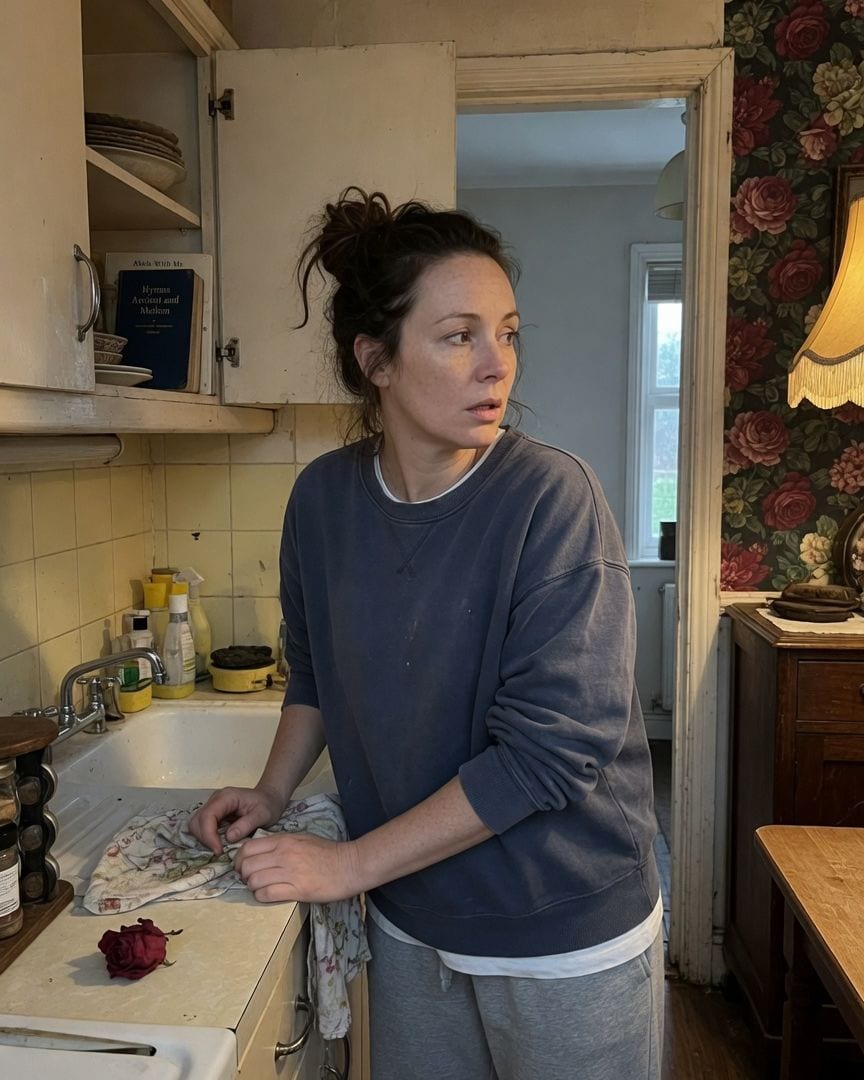
My kitchen taps run themselves on Sundays while a woman hums 'Abide With Me.' I live alone.
I moved into this quiet 1928 house for a fresh start, living alone. But for three months now, every Sunday morning, a low, tuneless hum and the distinct sound of running water drift from my kitchen sink. A plumber found no explanation.
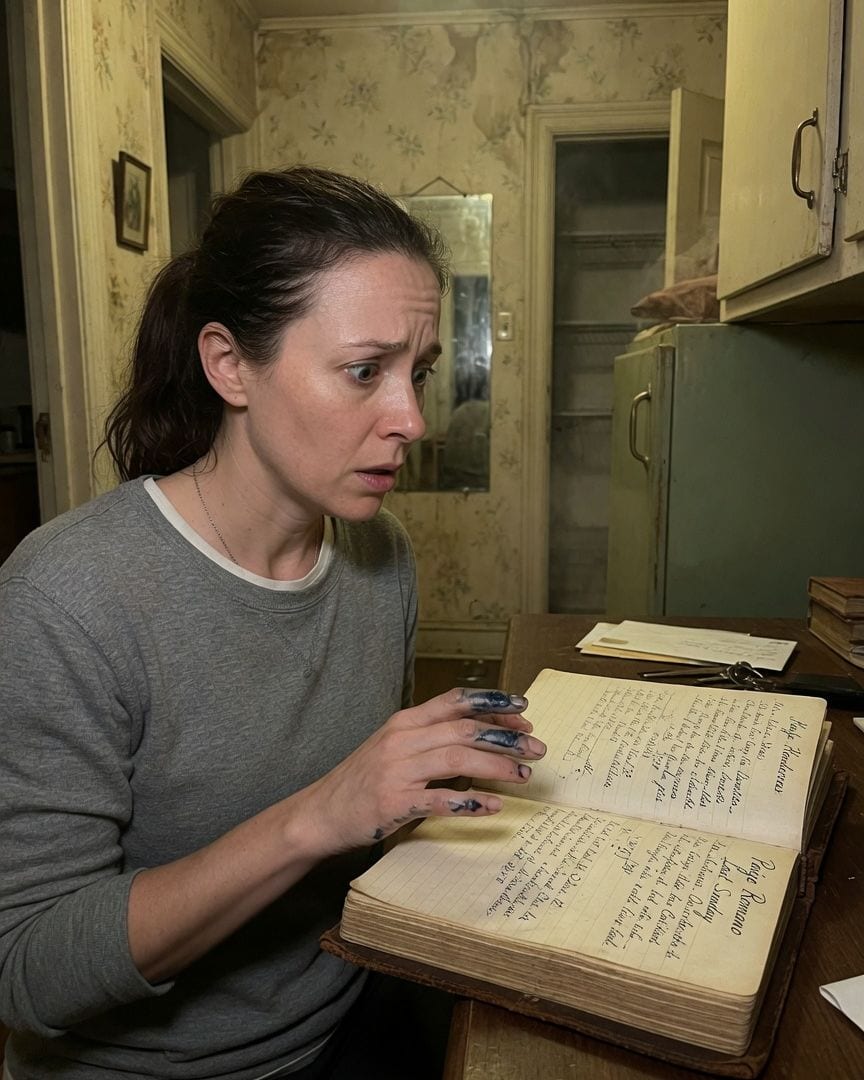
My visitors' book records guests who arrive in the future. Last Sunday, my own name appeared at the bottom, the ink still wet.
I bought an old house last March, complete with a dusty, leather-bound visitors' book. It seemed a charming relic, until I found new entries appearing, dated months into the future, the ink still wet. Then, my own name, Paige Romano, appeared, dated 'Last Sunday,' with a bead of ink shimmering at the 'R'.
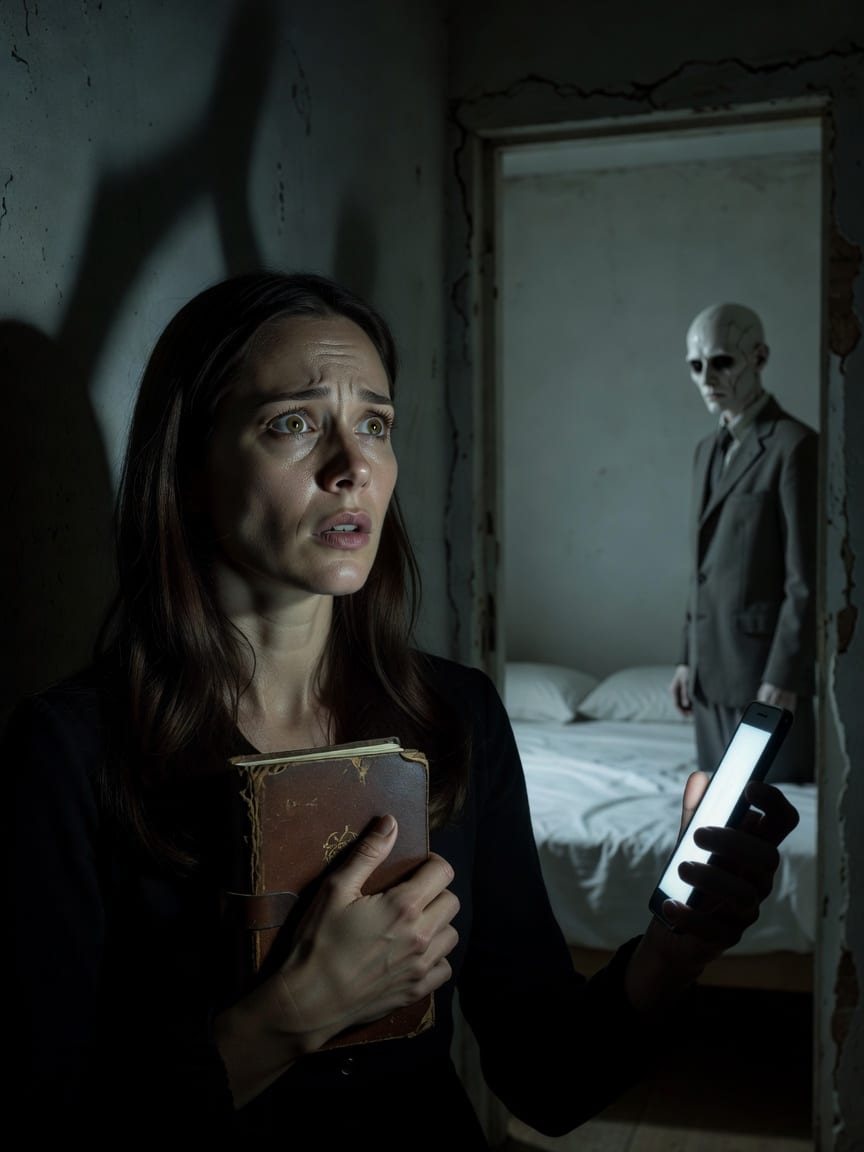
Behind a plastered-over doorway, I found a room. Papered, carpeted, and furnished with a made bed, sealed for decades. The air was dead still, but the bed wasn't dusty. My council tax bill only lists five rooms.
I'm Claire, an architect, meticulously planning my new Victorian terrace renovation. But when I uncovered a hidden room behind a wall, everything I knew about time and decay shattered. The bed was perfectly made, the air still, yet there was no dust, only an unnerving cold.
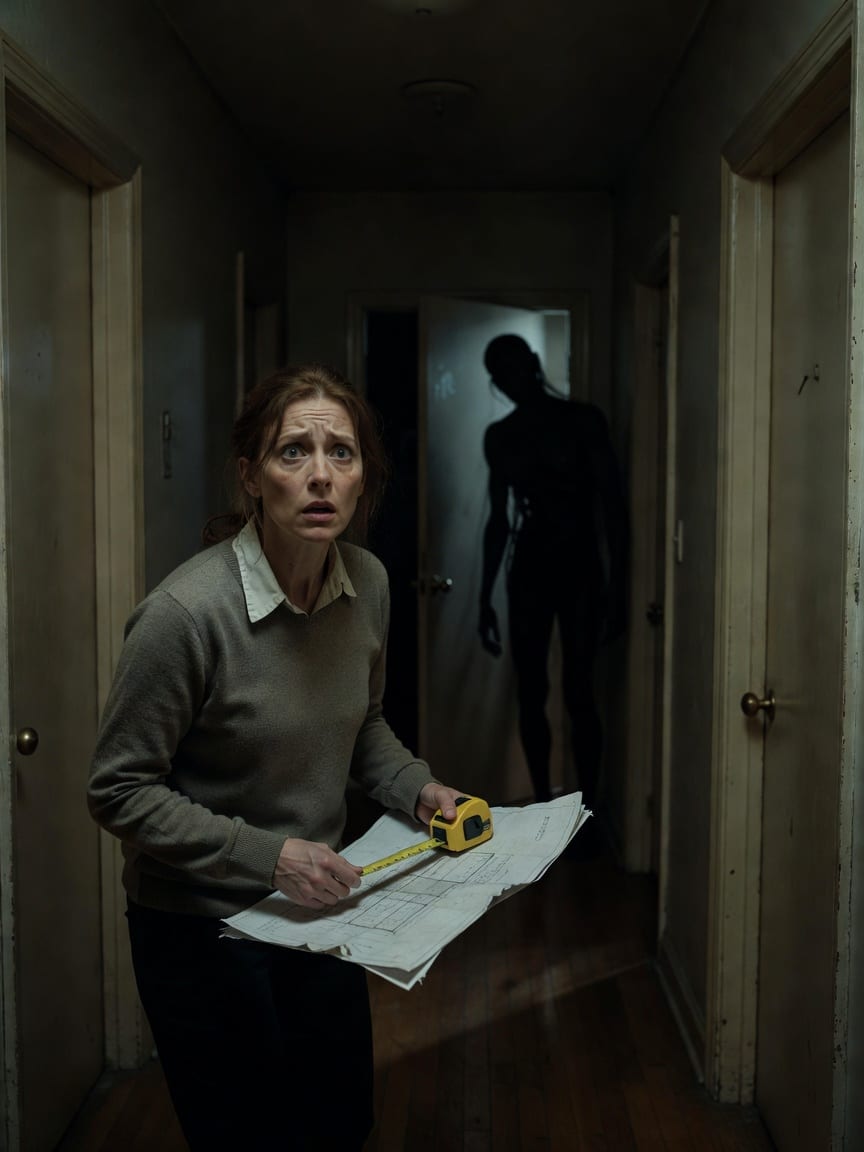
My front door has a dented gate and a dead hydrangea. I walked past it six times, trying to reach the corner shop just a hundred yards away. The pavement kept bringing me back to my own porch, and the shop's light never moved.
My morning started like any other, a quick walk to the corner shop from my home at Number 14, Elm Terrace. But after walking what felt like two minutes, I found myself back at my own front door, the shop no closer. I tried six times, faster and slower, but my street kept compressing, refusing to let me leave.
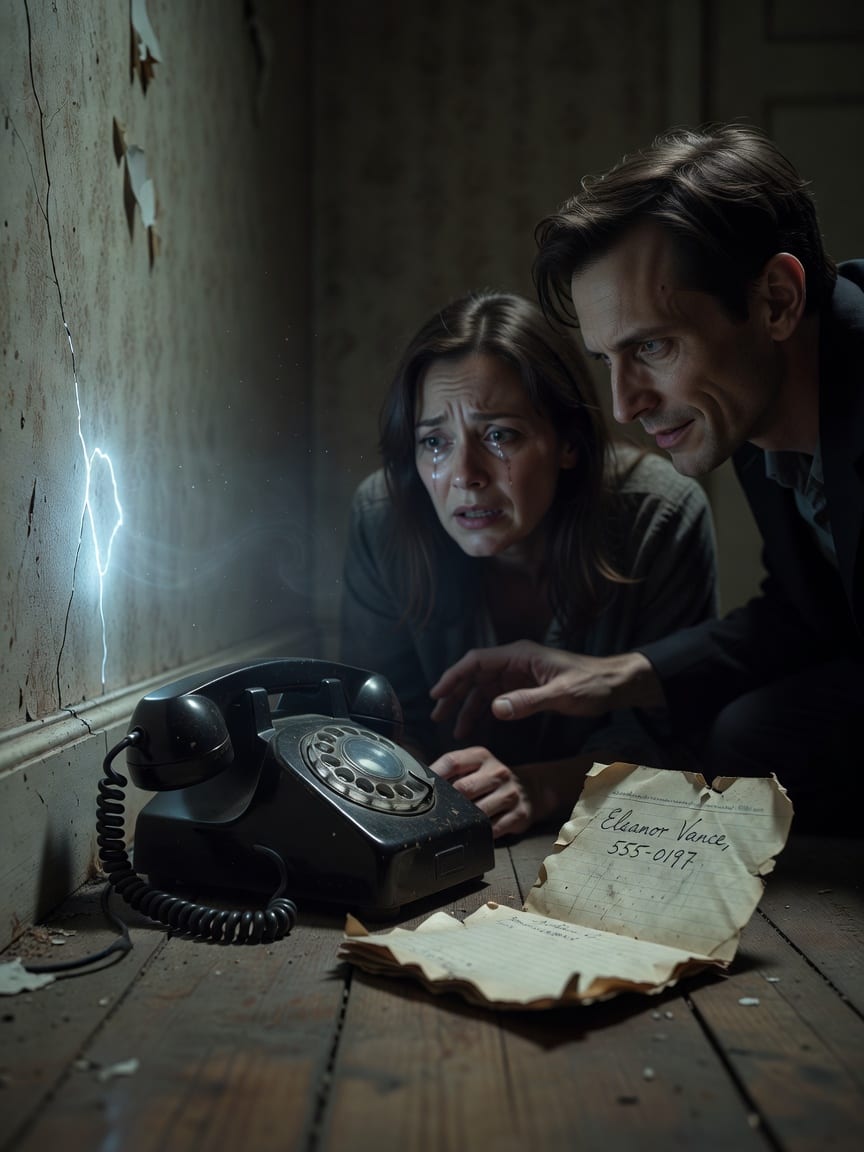
My house's walls ring when I dial a phone number from a 1974 directory. My neighbors said that directory was trash.
I was sifting boxes in my new house when I found an old 1974 telephone directory for my street. It listed my address, 12 Elm Street, under the name "Mr. & Mrs. Sheppard." On a whim, I called the faded seven-digit number. My cell phone rang, but a low, muffled sound also vibrated from the wall beside me.
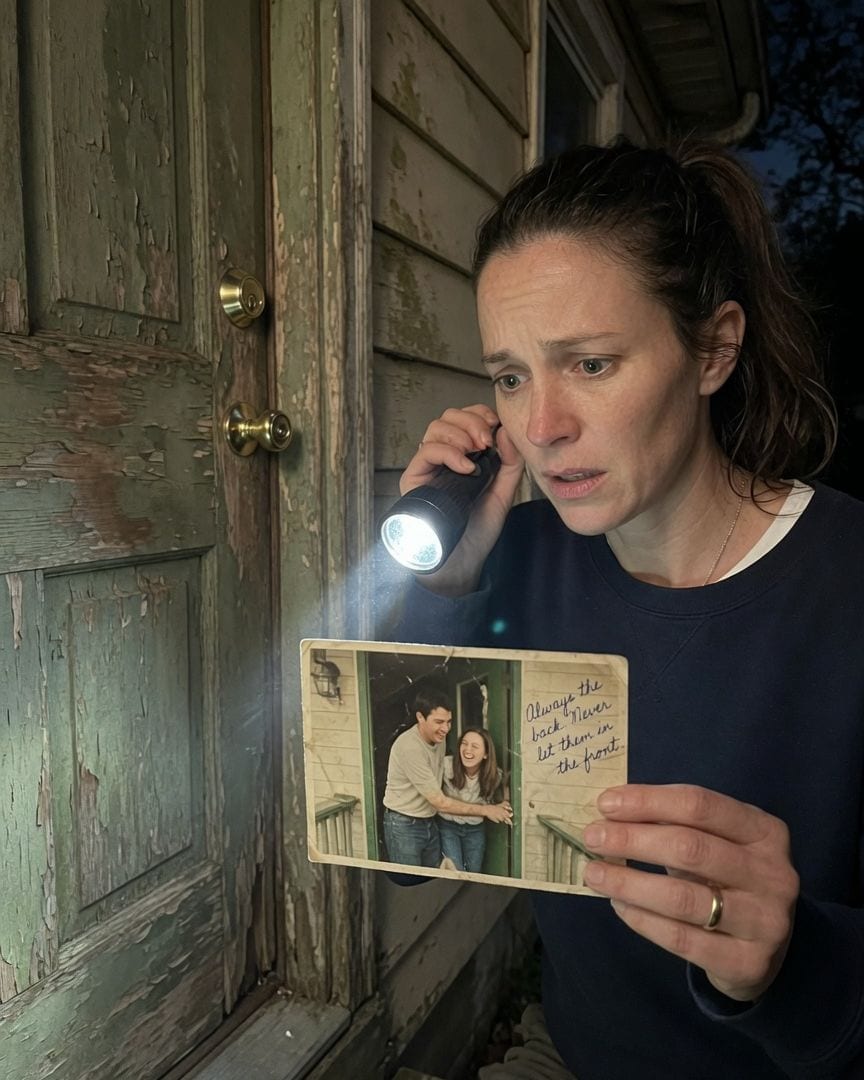
My mother waves us to the front door now. She was missing five days. She says we've always used the front, but the back door, our kitchen door for thirty years, is locked.
My mother, Janet, finally came home after five days, but her overly bright smile and insistence on using the front door felt wrong. For three decades, our family always used the back entrance, which now had a gleaming, new deadbolt. The quiet hum of unease quickly grew into a chilling dread.