My tiled path was new, my front door green. Then three dark coats hung in my hallway.
The lunar eclipse was over, a red smear fading from the sky as I drove the last few blocks home. I’d stayed out later than planned with Sarah, talking and laughing, watching the shadows stretch and retreat.
My house, a Victorian I'd bought six months ago, sat quiet and dark when I pulled into the driveway. It felt good to be back, even if it was pushing midnight.
As I walked towards the front door, something snagged my attention.
The Victorian encaustic tiled path leading up to it – the one I’d admired for its age but knew was riddled with hairline cracks and loose grout – was pristine. Not just clean, but new.
The intricate patterns of the tiles gleamed, sharp and perfect, as if they’d been laid yesterday. I stopped, blinking, telling myself it was the fading moonlight, or maybe the streetlight playing tricks.
But the tiles felt solid, smooth beneath my boots, no give, no tell-tale rattle. Then I looked up at my door. My front door. It wasn’t the white uPVC I’d painstakingly chosen for its energy efficiency and low maintenance.
It was a deep, glossy green, the paint practically wet-looking under the porch light. And the letterbox, usually a slim white slot, was a gleaming, ornate brass fixture, glinting.
My heart gave a stupid jump. This wasn’t my house. But it was. The familiar bay window, the old oak tree in the front yard, the slightly crooked porch railing.
My hand, without thinking, went to my pocket, pulling out my keys. I tried the latch. The old brass key, the one I used for the uPVC, slid into the unfamiliar green lock and turned with a soft click. Impossible.
I pushed the door open, slowly. The hallway was my hallway – the same faded wallpaper, the console table I’d inherited with the house.
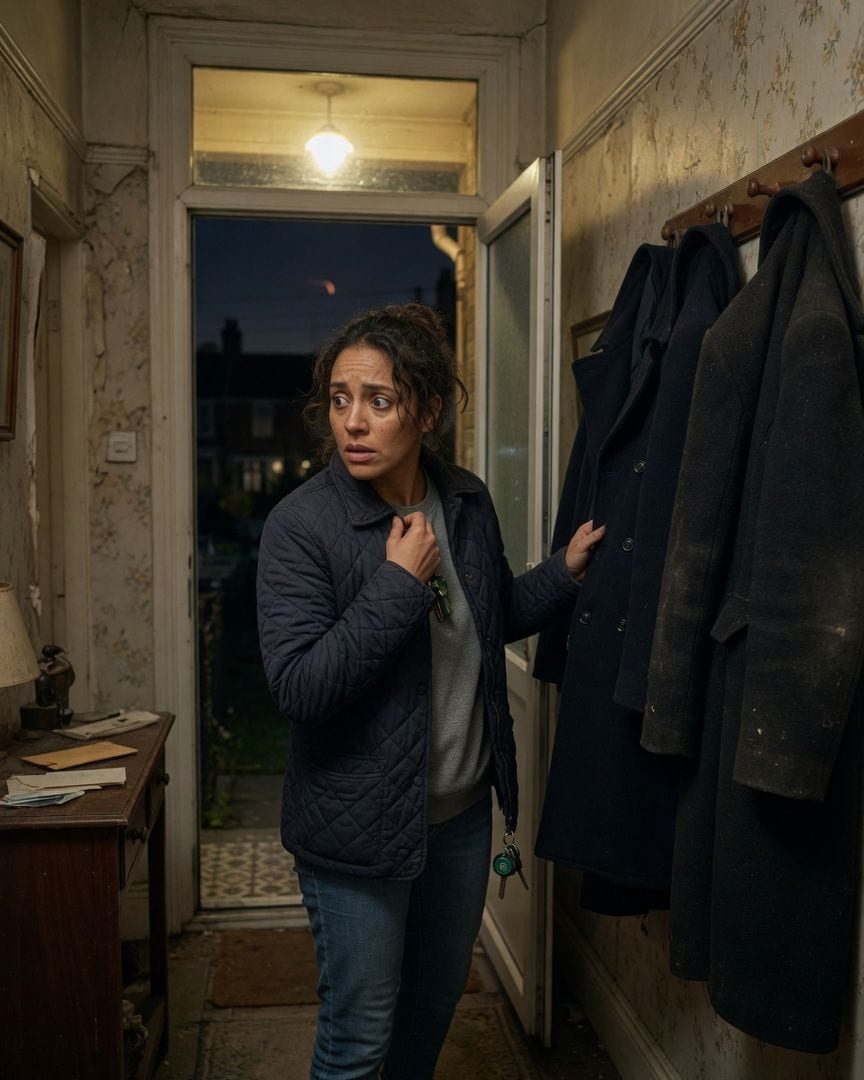
But on the sturdy wooden pegs that usually held my light jacket and reusable grocery bags, there hung three dark, long coats. Heavy wool, rough to the touch, with cold metal buttons that caught the dim light from the street.
They smelled faintly of something old, like forgotten cedar and dust. Not mine. Definitely not my partner’s, because I lived alone.
I reached out, my fingers brushing the heavy fabric of the nearest coat. It felt substantial, almost alive, radiating a subtle chill.
I pulled my hand back, a shiver running down my spine that had nothing to do with the night air. I spun around, my breath catching. The door was white. My white uPVC, chipped at the bottom edge.
The tiled path outside was cracked and worn, just as I’d left it. I glanced back at the pegs. The three dark, heavy coats still hung there, impossibly present.
I reached for the one closest to me, its weight oppressive in my hands. It was old, a thick, dark navy wool, too large for me.
I ran my hand over the rough texture, the cold metal buttons, then, with a strange sense of deference, hung it back on its peg.
The quiet click of the wood on wood echoed in the sudden silence of the house. It must have been a trick. The eclipse, my long day, my tired mind. But the coats remained, dark and heavy, watching me.
The next morning, I woke to a faint, metallic scent, like tea, just brewed. My eyes blinked open. It was 6 AM. The digital clock on my bedside table glowed. I lay there for a moment, confused. I live alone.
I hadn’t touched the kettle since I made coffee yesterday afternoon, and I definitely hadn’t set an alarm for 6 AM. The scent, though faint, was unmistakable.
I got up, padding into the kitchen. The electric kettle sat on its base, and when I touched it, it was warm.
Not just a little warm, but like it had just finished boiling, a faint wisp of steam still rising from the spout. I stared at it, my mind racing. A power surge? Maybe residual heat from yesterday that just… lingered?
It was absurd. I unplugged it, making sure it was off and cold, then went to shower. An hour later, dressed and still uneasy, I walked back through the kitchen. The kettle was warm again.
Not hot, not boiling, but undeniably warm to the touch, almost inviting.
Later that day, trying to shake the unsettling feeling, I settled into my favorite armchair by the living room window, a worn velvet piece that came with the house. I always liked the way the afternoon sun hit it.
But as I leaned back, I noticed something new. The worn hollow in the velvet cushion, where I usually sat, was deeper, more pronounced than I remembered.
It was almost perfectly molded, as if someone – or something – had been sitting there for hours, pressing into the fabric with a patient, persistent weight.
I ran my hand over it, feeling the distinct impression, trying to convince myself I was just noticing it more keenly today.
That evening, as I prepared for bed, the prickle of unease turned into a cold stab of dread. On my bedside table, precisely centered on the small coaster I always used, lay a small, intricately embroidered handkerchief.
It was antique, cream-colored linen with delicate lace edging, smelling faintly of lavender and something else, something old and dry, like forgotten paper.
I knew, absolutely knew, it wasn't there when I stripped the bed this morning to change the sheets. I picked it up, the fabric cool and delicate against my fingers, an undeniable, unsettling presence in my most private space.
This wasn’t forgetfulness. This wasn't a trick of the light. This was something else entirely.
Disturbed, and now genuinely scared, I started researching the house's history online. I focused on previous owners, typing in the address.
I quickly found records for Dorothy Foster, who had lived in the house for over 60 years and passed away just six months before I bought it. My fingers paused over the name. Dorothy.
I remembered seeing a dusty box of old photo albums left in the attic, marked "Foster."
I retrieved it, my hands trembling slightly, and carried it downstairs, setting it on the dining room table. I flipped through faded pictures of Dorothy's life in the house.
Her, a young woman, then middle-aged, then elderly, always in the same rooms.
One photo, from the 1970s, showed a younger Dorothy sitting in that very armchair by the window, wearing a dark, long coat similar to the ones on my hallway pegs. In her hand, clutched casually, was a handkerchief.
Identical to the one on my bedside table. The same delicate lace, the same subtle embroidery. My breath caught in my throat. This wasn't just a coincidence. This was impossible.
I flipped to a much older page, a black and white photo from the 1940s. The house's exterior. Pristine. A glossy green door and a gleaming brass letterbox. The tiled path bright and new.
It was the house from the eclipse night. The house I’d seen, just for a moment, last night. As I stared at the photo, a faint, distant hum, like an old radio playing a forgotten tune, drifted up from downstairs.
I could no longer ignore the growing pattern; it was too precise, too deliberate. I began to actively observe the house, turning my home into a suspect.
I found myself unconsciously avoiding the third stair on the main staircase, a particular step that creaked ominously whenever I put my weight on it.
I’d never given it much thought before, but now, without conscious effort, my foot would arc around it, landing carefully on the step above or below. A habit I’d never had, now ingrained.
Then there was the smell. Every Tuesday evening, precisely at 5 PM, a faint, comforting aroma of slow-cooked stew would permeate the kitchen. It was robust, savory, and undeniably present. But I hadn't cooked a thing.
I ate out on Tuesdays, a standing arrangement with an old friend. I tried to rationalize it the first few times – a neighbor cooking?
But the scent was inside the house, originating from the kitchen itself, and vanished by dinner time. It was too specific, too regular.
The answer, or at least a large piece of it, came from an unexpected source. In the attic, while looking for some old insulation, I discovered an old, leather-bound diary, tucked away beneath a loose floorboard.
It was clearly Dorothy Foster's. Her name, elegant and looping, was on the first page. I started reading, my curiosity outweighing my sense of privacy.
The diary was a meticulous record of Dorothy’s daily life, her routines detailed with an almost ritualistic precision. I found entries describing her always-on kettle, ready for tea at 6 AM.
She wrote about evenings spent in "her" armchair by the window, reading or knitting. And then I saw it: "A dreadful fall today on the third stair. Must remember to step around it from now on."
The entry was dated 1952. My breath hitched. And then, a recurring mention, "Tuesday Stew for supper."
I checked the calendar on my phone. It was Tuesday.
As the clock on the kitchen wall ticked past five, a faint, undeniable clatter echoed from the kitchen, like a pot lid being replaced, or a wooden spoon stirring a heavy pot. Then, the smell hit me. The stew.
It intensified, almost palpable, rich and warm. I rushed down, my heart hammering against my ribs, but found nothing amiss. The kitchen was empty, the stove cold.
Only the lingering, warm scent of a meal nobody cooked hung in the air, a ghost of a dinner.
Seeking answers, any answers, I approached my elderly neighbor, Leonard Coleman. He’d lived on the street for decades and had known Dorothy Foster well.
Leonard, a man in his mid-70s with sharp, knowing eyes, was calm and unsettlingly unbothered by my frantic description of the odd occurrences. He sat on my porch swing, listening patiently.
He spoke of Dorothy with a quiet reverence, mentioning that she 'had her ways' and that the house itself 'likes its routines.'
His gaze was unsettlingly perceptive, lingering on my subtle shifts in posture, the way I instinctively sidestepped the third stair as I invited him in. He followed me into the living room, settling into the armchair by the window.
He ran a hand over the velvet, pausing, before looking at me. "Settling in nicely, are you, Olivia?" he asked, his voice low. "Becoming part of the place?" A faint, knowing smile played on his lips.
I felt a cold prickle of dread, realizing I was being observed, not just by Leonard, but by the house through him. He knew. He knew something.
Later that week, I found a note on my kitchen counter. It wasn't there when I made lunch.
It was written on a small, yellowed slip of paper in a delicate, looping script that perfectly matched the handwriting in Dorothy’s diary. It read: 'Don't forget the kettle, dear. 6 AM.' My stomach twisted.
The house wasn't just replaying; it was communicating, guiding me. Steering me. Into its schedule.
Armed with Dorothy's diary, the unsettling note, and the knowledge that Leonard knew more than he let on, I confronted him again. This time, I didn't hold back.
I laid out the evidence, the handkerchief, the coats, the green door, the phantom stew, the kettle, the note, the diary entries matching my own inexplicable new habits. I demanded an explanation.
Leonard took a slow, deliberate breath, his calm facade finally cracking just a fraction, a brief flicker of something weary in his eyes. He admitted the house had always been 'peculiar,' a place that 'holds onto things.'
He spoke of Dorothy, not as if she had died six months ago, but as if she were merely... elsewhere.
He revealed that Dorothy became increasingly reclusive in her later years, her life entirely dictated by the house's unseen schedule, almost as if she were fulfilling a role.
He implied the house 'absorbed' her, that her presence never truly left, but became interwoven with the house's fabric.
"The eclipse might have shaken things up," he mused, looking out at the sky as if seeing something I couldn't. "Made the house's memory stronger, brought the green door days back."
He explained that Dorothy herself inherited the house from her aunt, another solitary woman who lived a life of rigid routine within its walls. "She used to say her aunt, too, eventually...
became one with it," Leonard confessed, his eyes distant, as if remembering a long-forgotten story.
He described how Dorothy would sometimes speak of 'seeing' her aunt in the house, moving through the routines, a presence that slowly faded into the house's own rhythm, like ripples settling on water.
My mind reeled. The routines weren't just echoes; they were the house's ongoing performance, with its occupants as reluctant actors. Dorothy hadn't just lived here; she had become the house, just as her aunt had.
And the house was now trying to make me the next player in its endless, quiet drama.
Disturbed by Leonard’s revelations, I returned home, seeing the house not as my sanctuary, but as a living, predatory entity.
Leonard had given me a small, dust-covered box of old photographs, ostensibly 'family photos' of Dorothy, hoping they might offer some comfort, some connection to her past that wasn't terrifying. I sorted through them, my hands trembling.
There was a photo of Dorothy’s aunt – the one who had also 'become one with the house' – taken in the same armchair by the window.
She was wearing a similar dark, long coat, her expression eerily vacant, her eyes empty. I felt a cold dread building, like ice in my veins. This wasn't just Dorothy.
At the very bottom of the box, beneath layers of yellowed paper and loose clippings, I found a much older, sepia-toned photograph, dating back to the late 1800s. It showed a different woman, her clothing stiff, Victorian.
But the dress, the pose, the vacant, distant eyes – and the house behind her, with its distinctive green door and pristine tiled path – were unmistakable.
The woman's face, though faded by time, bore a striking, unsettling resemblance to Olivia herself. To me. My heart pounded, a frantic drum against my ribs as I turned the photo over.
In delicate, looping script, the inscription read: 'Marianne Abbott, 1898.'
Abbott. My own surname.
My frantic online search for "Marianne Abbott" in the local historical archives yielded results that shattered any remaining illusion of normalcy. Marianne Abbott, a distant relative, had indeed lived in this very house.
Her death was recorded cryptically as "disappeared" in 1901. The pattern snapped into place with horrifying clarity, each inexplicable detail suddenly clicking into one coherent, monstrous shape.
The house isn't merely replaying Dorothy’s life; it possesses a cyclical, generational memory, absorbing its female occupants and forcing them into an endless re-enactment of past lives.
The green door and pristine path I saw on the eclipse night, and then again in Dorothy’s old photos, aren't anomalies; they are the house's 'reset' points, where it attempts to manifest a new, yet ancient, occupant.
The dark, long coats aren’t just old clothes left behind; they are the uniforms of past 'residents,' part of the house's 'wardrobe' for its new, unwilling inhabitants.
I realized the house has been trying to make me the next Marianne, the next Dorothy, pulling me into its unchanging, timeless routine.
Every strange smell, every warm kettle, every avoided stair was a thread in the tapestry of a life not my own, now tightening around me, threatening to erase who I am.
The realization spurred me into desperate action: I had to leave. I had to get out. I rushed to my bedroom, pulling suitcases from the closet, my hands fumbling with the latches.
But as I started to grab my clothes, I paused. My clothes, once vibrant and contemporary, now seemed dull, the colors muted, almost replaced by older, darker garments that felt heavy and scratchy to the touch.
I stared at them, confused, then glanced at my reflection in the mirror. My posture was subtly stooped, my shoulders rounded in a way they hadn't been before.
A faint, vacant look in my eyes mirrored those in the old photographs of Dorothy, of her aunt, of Marianne Abbott.
Downstairs, the kettle whistled sharply, precisely at 6 AM, though I hadn't touched it. The comforting, yet now terrifying, smell of stew filled the air from the kitchen, though it wasn't Tuesday.
I raced down the stairs, my heart hammering against my ribs, intending to grab my car keys and flee, to never look back.
As my foot reached the bottom, I instinctively avoided the third step, my body curving around it, a habit now so deeply ingrained it was second nature.
The armchair by the window was empty, but the indentation in the velvet cushion was deep, as if someone had just risen from it.
Through the glass panels of my white uPVC front door, the distinctive glossy green door was now plainly visible, and beyond it, the tiled path gleamed, bright and new. The brass letterbox shone, waiting.
Olivia Abbott’s car remained in the driveway, untouched. Neighbors reported seeing lights on in the house, and sometimes, a figure at the window, still as a statue, always facing inward.
The postman noticed that the mail slot, once part of a white uPVC door, was now a gleaming brass letterbox, though he couldn't recall when it had changed.
He often heard the faint, regular sound of a kettle whistling at 6 AM, precisely as he began his rounds, and the distinct aroma of stew on Tuesdays.
He just assumed the new occupant was a creature of habit, like the old Mrs. Foster used to be.
The house stood, quiet and proud, the green door gleaming. Years passed. A new neighbor, Trevor Coleman, Leonard’s grandson, moved in next door.
He often saw the woman in the house, a quiet figure, always in a dark, long coat, sitting by the window, occasionally tending to the vibrant window boxes. He sometimes waved, but she never waved back.
He just assumed she was a recluse, like the old Mrs. Foster used to be. Every Tuesday, the faint, comforting smell of stew drifted from her kitchen.
He once saw her tending the tiled path, carefully scrubbing away a faint crack that appeared, only to find it perfectly whole again the next morning, as if it had never been there.
If this one got to you
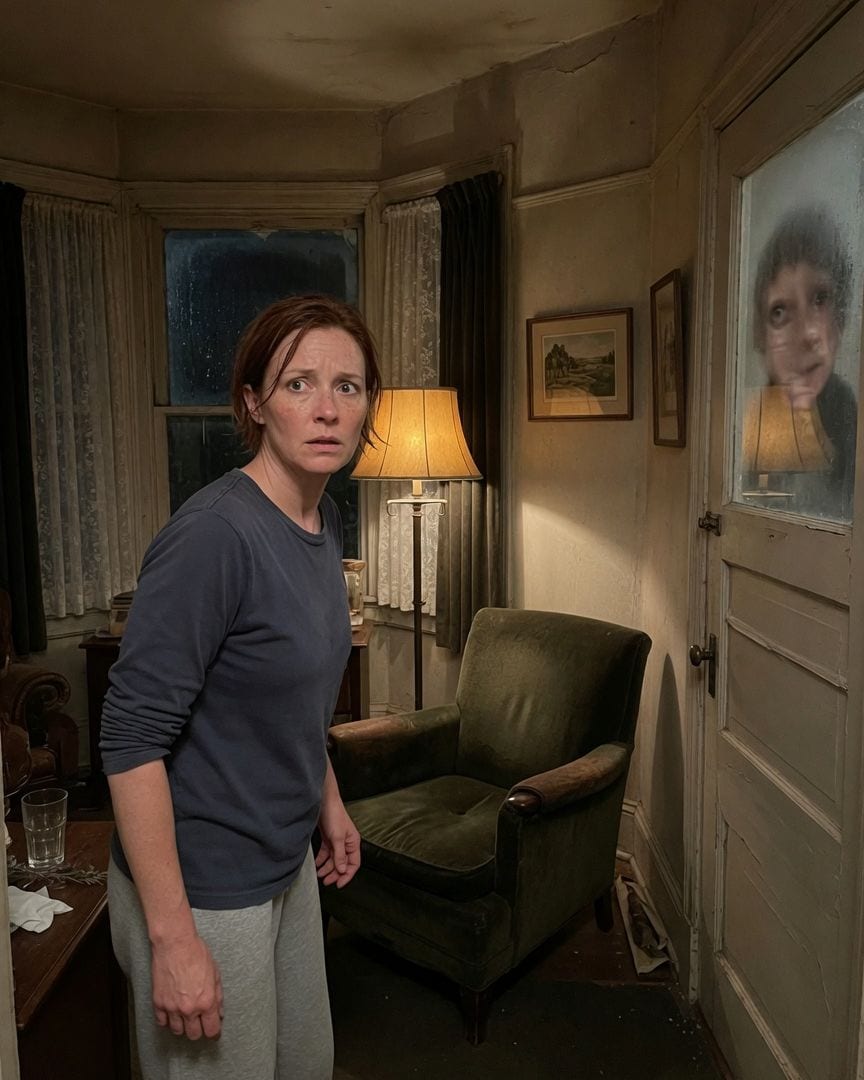
The armchair by the bay window was warm last Tuesday at 9pm. I’ve never sat in it, and the cushion was still settling from a weight that wasn't mine.
I bought this old house for quiet, and most days it's exactly what I needed. But there’s an antique armchair in the living room, deep green velvet, with a permanent hollow from years of use. I’ve never sat in it, yet last Tuesday, I found it radiating a distinct warmth, the cushion slowly settling as if someone had just left.
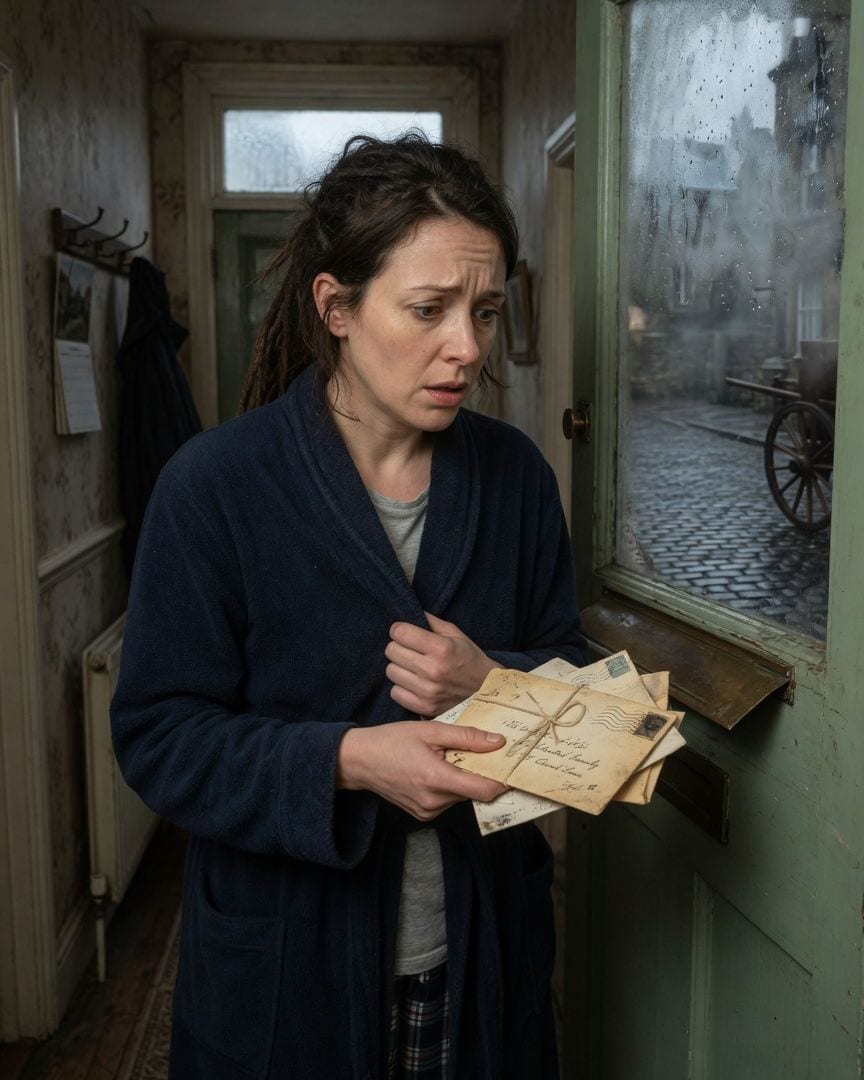
Seventy years ago, a hidden journal recorded my door opening to the wrong street and receiving Lockwood post.
I'd only recently moved into my inherited house, a quiet place on the edge of town. One grey morning, a distinct clatter from the front door's post flap caught my attention. Reaching down, I expected my gravel path, but instead, the flap showed a dark, cobbled street that wasn't mine. A bundle of warm, old letters, addressed to 'The Lockwood Family,' slid through, before the vision flickered and was gone.
My front door has a dented gate and a dead hydrangea. I walked past it six times, trying to reach the corner shop just a hundred yards away. The pavement kept bringing me back to my own porch, and the shop's light never moved.
My morning started like any other, a quick walk to the corner shop from my home at Number 14, Elm Terrace. But after walking what felt like two minutes, I found myself back at my own front door, the shop no closer. I tried six times, faster and slower, but my street kept compressing, refusing to let me leave.
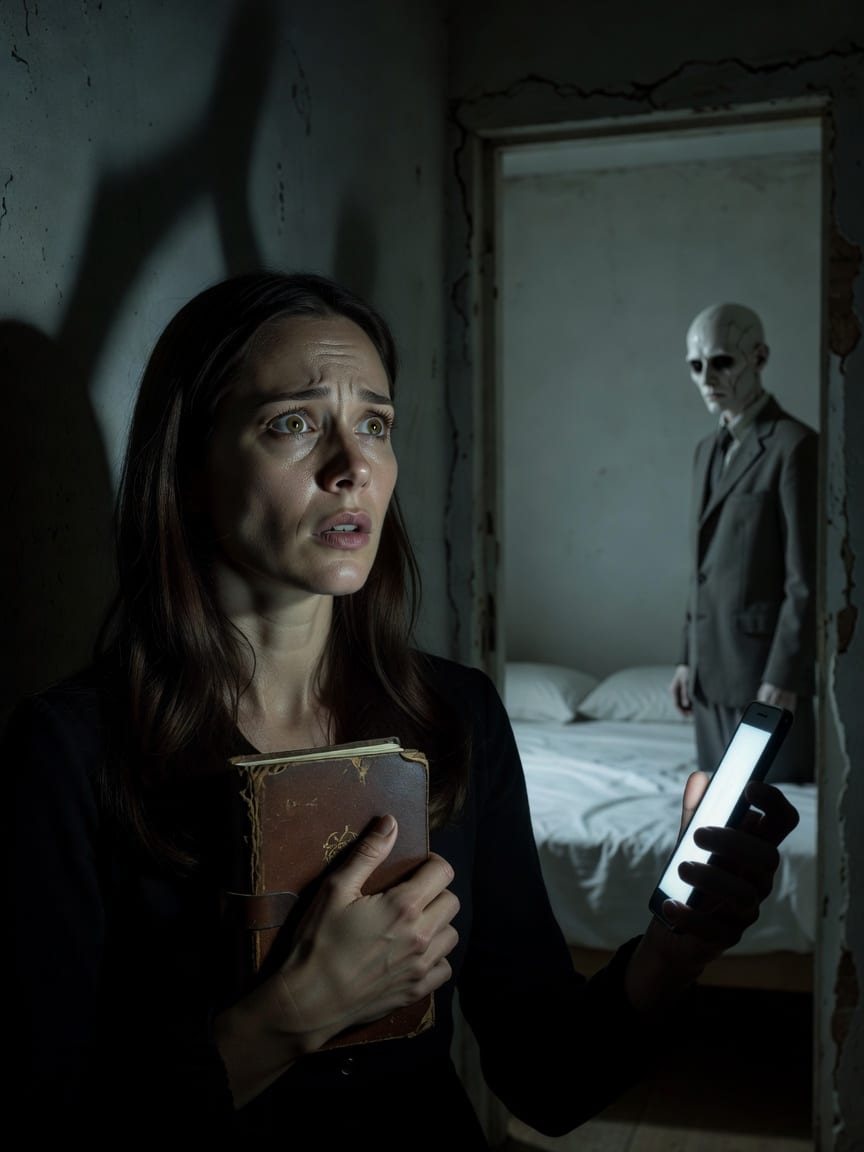
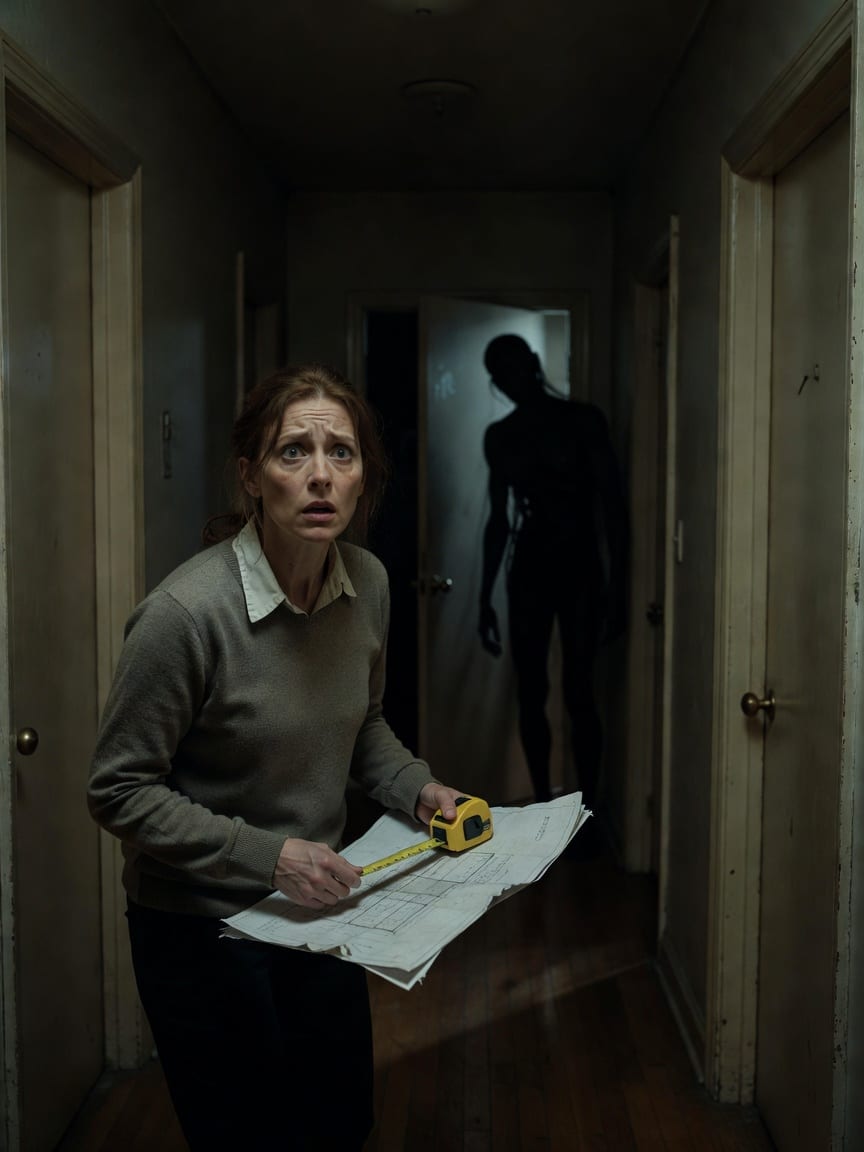
Behind a plastered-over doorway, I found a room. Papered, carpeted, and furnished with a made bed, sealed for decades. The air was dead still, but the bed wasn't dusty. My council tax bill only lists five rooms.
I'm Claire, an architect, meticulously planning my new Victorian terrace renovation. But when I uncovered a hidden room behind a wall, everything I knew about time and decay shattered. The bed was perfectly made, the air still, yet there was no dust, only an unnerving cold.
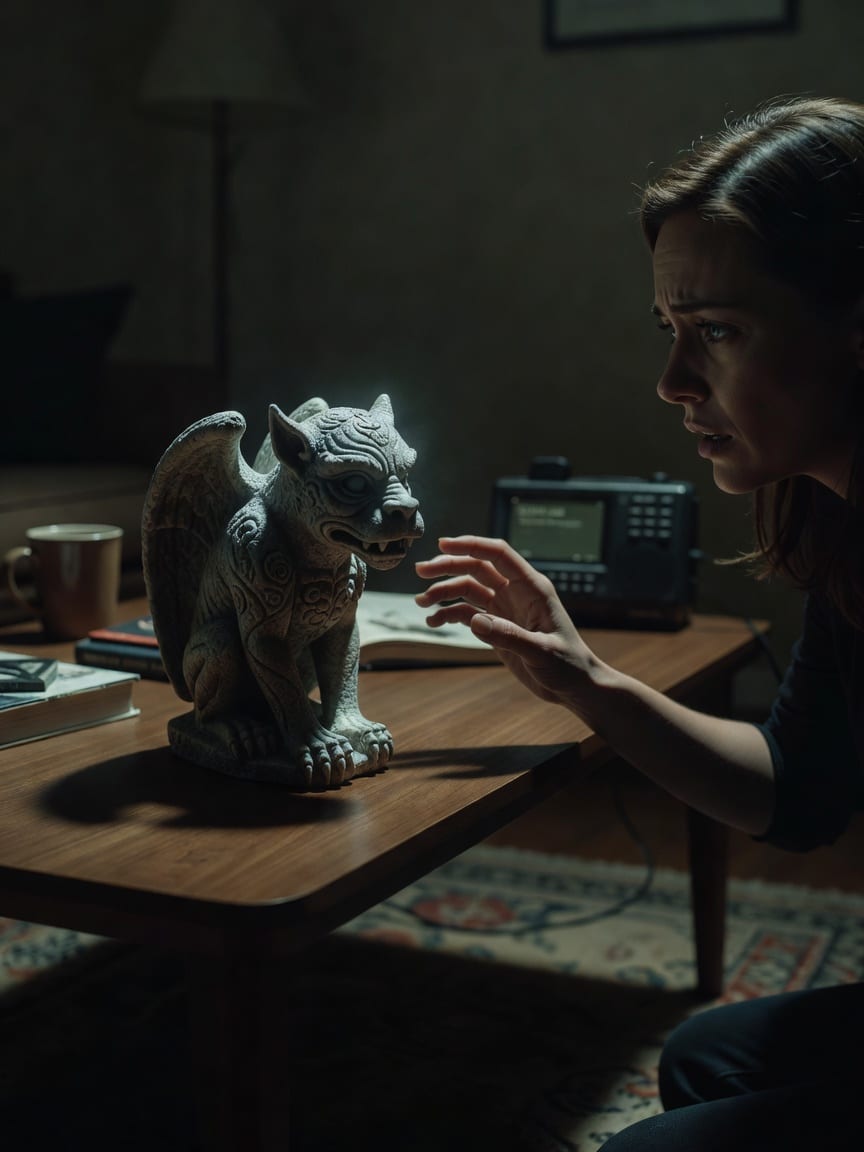
My radio scanner spoke my address at 2 AM. A flat voice read local homes, all with past dates. Mine was the only one in the future.
It was two in the morning, and my quiet house was filled with the usual hum of my weather scanner. But the static broke, replaced by a flat, synthesized voice reading a list of local addresses and dates. My hand froze when it spoke my own address, 181 Foster Drive, followed by a date: October 27th. That date was three weeks from now.
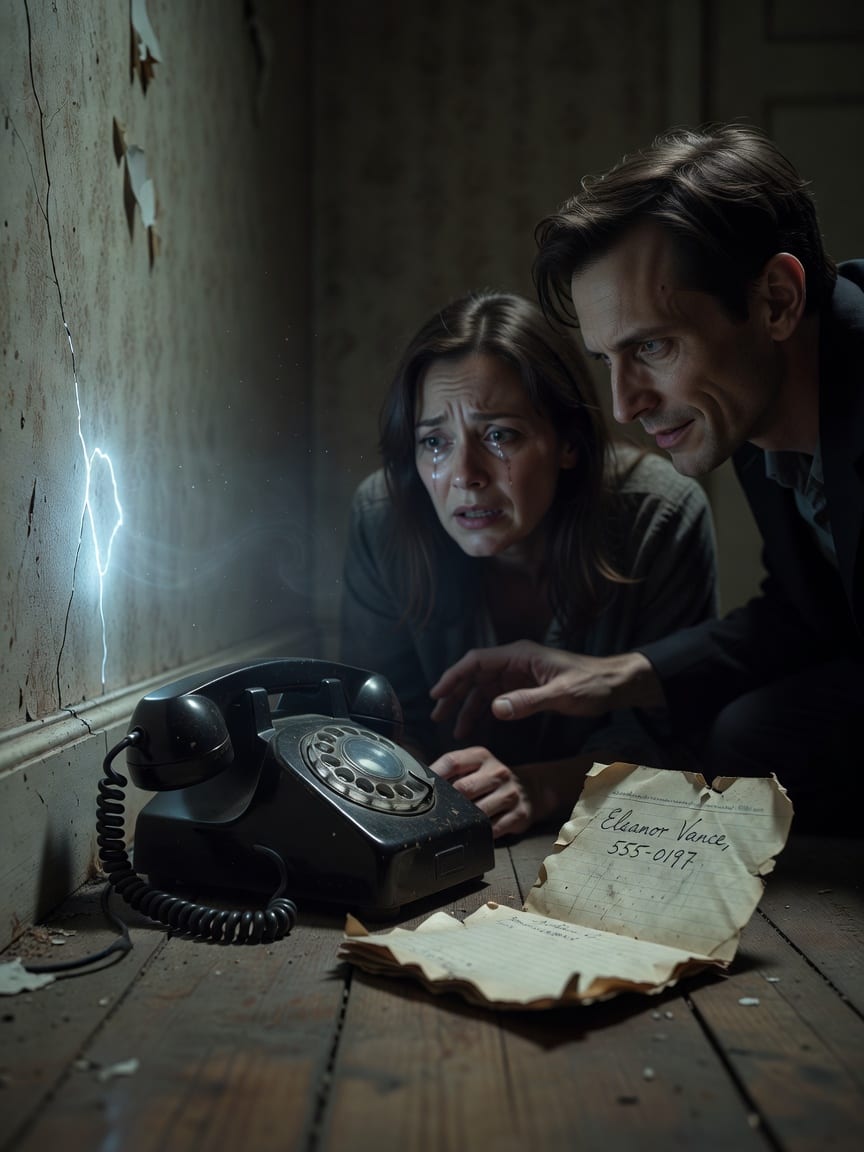
My house's walls ring when I dial a phone number from a 1974 directory. My neighbors said that directory was trash.
I was sifting boxes in my new house when I found an old 1974 telephone directory for my street. It listed my address, 12 Elm Street, under the name "Mr. & Mrs. Sheppard." On a whim, I called the faded seven-digit number. My cell phone rang, but a low, muffled sound also vibrated from the wall beside me.