A child's height marks grow on my kitchen doorframe, dated this year, in a house where I live alone.
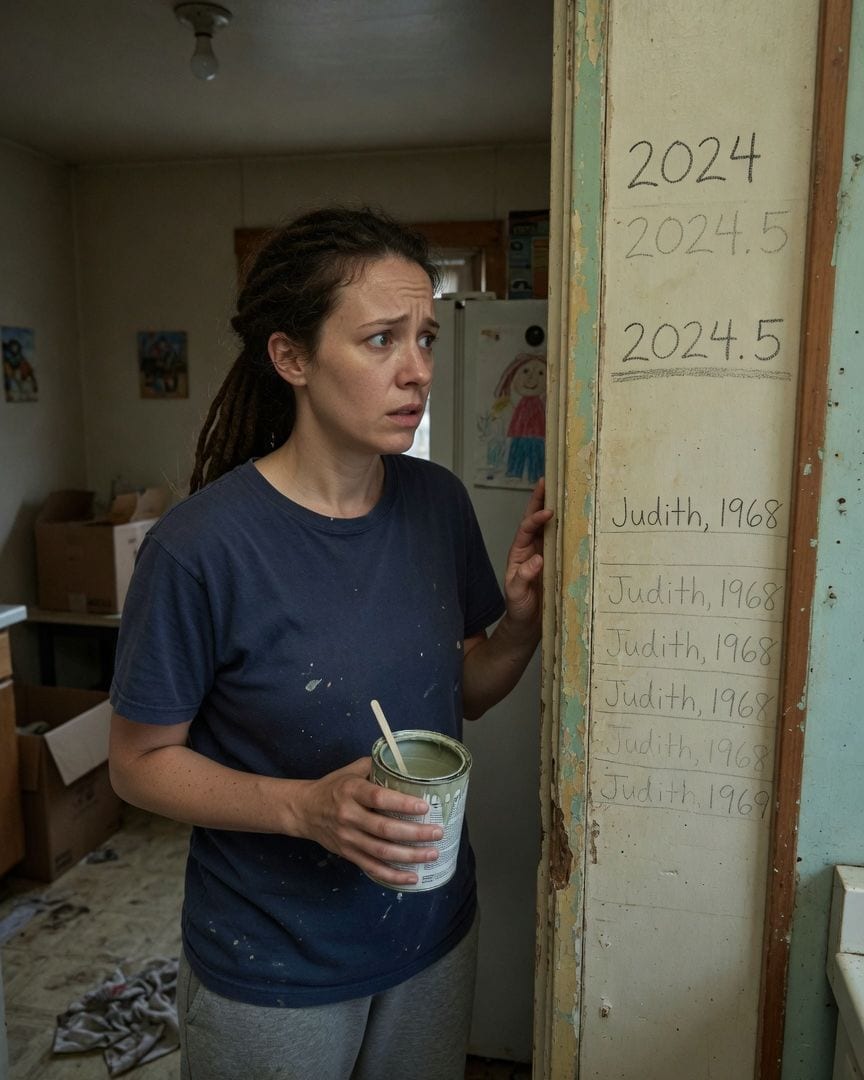
I stood in my new kitchen, a can of paint in my hand, staring at the doorframe. Faint pencil marks scored the wood, a child’s height chart. Each mark was accompanied by a year, meticulously logged.
The last one, at four feet one inch, read ‘Judith, 1968.’ It was just above eye-level for a small person, clear despite the years. I’d meant to paint over them, a clean slate for my new home. A fresh start.
But then, a week after moving in, a new mark appeared.
It was an inch higher, at four foot two, dated this year, 2024. The handwriting was uncannily similar to the 1968 mark, that exact same looping hand. I laughed it off, a trick of the light.
Maybe a smudge I hadn’t noticed before, or an old mark that had simply become more visible. I wiped at it, then scrubbed hard with a damp cloth and a little kitchen cleaner.
The graphite was set deep into the wood grain. It didn't budge.
Another week later, I saw another mark. This one a half-inch higher still, almost imperceptible if you weren't looking for it.
It was as though the child was still growing up the frame, here in a house where I lived utterly, completely alone. My breath hitched in my throat. I stood there, rooted, a cold knot forming in my stomach.
The silence of the house pressed in, suddenly less comforting than before.
The marks were unsettling, a quiet violation of the calm I’d sought in this old house. I spent an entire afternoon trying to find a rational explanation. Had the previous owners played a prank?
No, the house had been empty for months, a quick sale after a foreclosure. I’d bought it directly from the bank. There was no one to prank me.
I even considered a carbon copy effect from an old calendar or picture, some kind of ghost image from something leaning against the frame for decades, but the marks were too precise, too present.
The graphite was fresh, almost powdery in a way the older marks weren't, even as it resisted cleaning.
I studied the faded '1968' mark, the looping 'J' of 'Judith' distinct and clear. Then I looked at the stark '2024' (and the subsequent '2024.5' I'd now mentally dubbed it) marks above it.
The line weights, the particular tilt of the numbers—it was identical. This wasn't a smudge or a prank. This was new, and it was wrong.
I decided to investigate the history of the house. Online searches for 'Norwood, Caldwell House' yielded nothing. No local tragedies, no famous residents. Just a quiet, uneventful property in a quiet, uneventful town.
I started exploring the house more closely, looking for anything that felt out of place. Any clue, any explanation.
In what I assumed was the child's old bedroom, now my makeshift office, I noticed a faint, sweet smell.
It was like old crayons and dust, clinging to the air, subtly at odds with the fresh scent of the new paint I’d applied to the walls. I ran my hand along the baseboard, tracing the worn wood.
Suddenly, I felt a slight give. Pressing harder, a section of the paneling slid back with a soft click, revealing a dark, shallow cavity behind it. My heart hammered against my ribs, a sudden, frantic rhythm in the quiet room.
I knelt on the dusty floorboards, pulling out a small, worn wooden toy chest from behind the loose baseboard.
My fingers trembled as I carefully opened the lid, revealing faded drawings, a small, hand-carved wooden doll, and a thin, leather-bound diary, its pages brittle with age, the name 'Judith Norwood, 1968' scrawled on the inside cover in the familiar, looping hand from the doorframe.
The diary was a child's simple chronicle: crayon drawings of a fluffy white cat with green eyes, descriptions of school days, complaints about having to do chores.
"Mama is cross again," one entry read, "but Papa let me have a cookie." Ordinary, everyday life. The handwriting, though childish, was precise, that same distinct looping ‘J’ and sharp ‘N’ I’d seen on my doorframe.
It felt like holding a direct link to the impossible. The last entry was dated October 27, 1968. It mentioned a cold, a cough that wouldn’t go away, and a 'big ache in my chest.' No further entries.
The pages after were blank.
I felt a cold dread settle in. Eight years old. A cold, a cough, a chest ache. No more entries. I searched local online obituaries and property records again, this time armed with a name and a year.
The name Judith Norwood was harder to trace than I expected. There was no clear obituary, no public death record I could find associated with this address. The house itself, I now noticed, had a suspiciously short ownership history.
It changed hands every few years after 1968, often at a significantly reduced price. It was as if no one stayed long.
The faint, sweet smell of crayons persisted in the office, and now I noticed other things. A faint sound of a rocking chair creaking late at night, a slow, rhythmic groan coming from the empty room above me.
A whisper of footsteps on the floorboards, light and quick, when I was absolutely sure I was alone. One evening, after a particularly long day, I caught a distinct scent of stale, overcooked cabbage and burnt toast.
It was pungent, heavy, the kind of smell that clings to old fabric, and it hung in the kitchen for a solid hour before dissipating, though I hadn't cooked anything like it.
It smelled like neglect, like old poverty, not like a modern home.
I remembered something I’d vaguely read online years ago, a strange thread on a local forum about old houses in the area and a bizarre phenomenon called 'Door Onto The Wrong Year.'
It sounded absurd, the kind of urban legend people invented to scare each other, but the thought stuck with me. The phrase echoed in my mind. I walked through my kitchen, looking at every door.
The back door to the yard, solid and familiar. The door to the basement, creaking but normal. And then, the small, rarely used pantry door tucked into a corner, almost an afterthought in the kitchen’s layout.
It had a different, older knob, painted over many times. I tried each one, half expecting something impossible, my heart thrumming with a bizarre mix of fear and morbid curiosity. Nothing.
I widened my search to local archives and historical societies. I needed answers, something more concrete than a child’s diary. I found a listing for a 'Norwood family' in the 1960 census records for my address, confirming Judith's residency.
It was a solid, undeniable link. I needed more.
I visited the local historical society, a quiet building smelling of old paper and dust, a comforting scent that usually meant order and knowledge.
Daniel Easton, a lean, bespectacled archivist in his mid-fifties, greeted me with a polite, almost unnerving calm. His movements were slow, deliberate, as if he had all the time in the world, or knew something that made him unhurried.
I explained my interest in the Norwood family and my house's history, carefully omitting the growing pencil marks and the unsettling diary. I tried to keep my voice even, rational.
Daniel pulled up some microfiche, his movements slow and deliberate as he cranked the machine. He found general family records, birth certificates for Judith and a sibling, but still, no death certificate for Judith at that specific address.
It was almost as if she’d simply vanished.
When I pressed, asking about 'unusual property transfers' or 'reports of phenomena' related to the house in the late sixties, Daniel paused. His hand, resting on the microfiche machine, stilled.
He looked up, his eyes meeting mine over the top of his glasses. There was something in his gaze, a quiet understanding that went beyond mere professional courtesy.
"Some houses," he said, his voice level, almost a monotone, "have a certain... reputation. Especially older ones. We have files." He gestured vaguely to a wall of metal cabinets. "But they're usually sealed, for privacy. And to prevent undue speculation."
He didn't offer to unseal them. He just watched me, a faint, unreadable expression on his face. His calm was unsettling. "Are you experiencing anything yourself, Ms. Caldwell?" he asked, his tone too neutral, too knowing.
The question hung in the quiet air, a quiet warning that felt like a bell tolling.
I felt a prickle of unease, a cold sensation crawling up my spine. Daniel knew. He knew more than he was letting on, far more than any archivist should.
"I'm just trying to understand the history of my home," I said, trying to sound casual, trying to maintain some semblance of normalcy in the face of his unnerving composure. "Judith Norwood's diary ends abruptly in October 1968.
There's no death certificate I can find for her, not at that address. What happened to her?"
Daniel sighed, a soft, almost imperceptible sound that was more a release of old air than an expression of emotion. He looked away from me, towards the window, his profile etched against the afternoon light.
"Judith Norwood did pass away in that house, Ms. Caldwell. In 1968. The records are... incomplete." He paused, as if choosing his words carefully. "A childhood illness, complicated by other factors.
There was no official inquiry, no clear cause of death recorded beyond 'respiratory failure'." He looked back at me, his eyes now holding a hint of tired resignation. "And the house was sold very quickly after. Several times, in fact.
Always at a significant discount, often within months of a new family moving in."
My voice gained a sharp edge, unable to hold back the growing suspicion. "And the 'reputation'? The sealed files? What exactly is in them, Mr. Easton?"
Daniel finally cracked, just a little. The composure wavered, a faint tremor in his jaw. "Reports," he said, the word coming out as a strained whisper. "From previous occupants. Of sounds. Smells. Visual disturbances. Always centered around a child.
Always around the same time of year, coincidentally, as Judith's passing."
The pieces clicked together, a sickening, horrifying coherence. The rocking chair, the smell of cabbage, the abrupt end of the diary. The house hadn't just 'retained' a memory. It was replaying a death. A child’s death, rooted in neglect.
"The marks on the doorframe?" I whispered, not a question, but a dawning horror that chilled me to the bone.
Daniel simply nodded, his gaze distant, lost somewhere in the past. "Yes. Those too. They always come back."
That night, back in the house, Daniel's words echoed in my mind, each one a hammer blow against my fragile sense of reality. The recurring marks, the smells, the sounds – it was all Judith, trapped, replaying her final days.
Not a ghost, not a haunting, but something far more terrifying: a loop. A replay. And I was living inside it.
I walked into the kitchen, drawn by an instinct I couldn't explain. My eyes landed on the small, rarely used pantry door. This was it. The 'Door Onto The Wrong Year.'
The absurd phrase from the online forum now felt like a prophecy. This was the trigger.
I took a deep breath, my hand shaking slightly as I reached for the knob. It was cold, metallic, oddly heavy. It turned with a faint click, the sound amplified in the absolute silence of the kitchen.
I pulled it open, expecting to see the familiar shelves of canned goods.
Instead, a wave of cold air washed over me, carrying the faint, pungent smell of stale cabbage and something else, something sweet and sickly.
The kitchen beyond was dimly lit by a single, flickering bulb, its yellow light casting long shadows across unfamiliar appliances and worn linoleum. It was old, impossibly old, not my kitchen at all.
And there, by the counter, was Judith. Smaller than I remembered from the marks, her face pale, almost translucent, her arms thin as twigs, reaching for something on a high shelf. She looked unwell, frail.
Her nightgown was faded, too big for her. In the corner of my vision, a partial reflection in a dark, grimy window showed an adult figure, slumped at a table, their back to the child, seemingly oblivious. They didn't move.
Judith coughed, a small, rattling sound that seemed to tear at her thin chest.
I gasped, stumbling back, a raw, terrified sound ripping from my throat. The pantry door slammed shut with a sharp, echoing thud.
I returned to the historical society the next morning, my face pale, my resolve hardened by the impossible sight from the night before. Hysteria was a luxury I couldn't afford.
"I saw her," I stated, my voice flat, devoid of any discernible emotion, any tremor of fear. "Through the pantry door. Judith. She was sick. And alone."
Daniel Easton looked at me, a flicker of something akin to pity in his calm eyes. No surprise, no judgment. He simply nodded, as if my experience was just another expected report.
He led me to a back room, a smaller, darker space I hadn't seen before, and unlocked a heavy, metal cabinet. The sound of the tumblers clicking echoed in the quiet room. "You've gone further than most, Ms. Caldwell.
Perhaps it's time."
He pulled out a thick, sealed file labeled 'Norwood, J. - Property 17 Maple Drive.' Inside were copies of police reports from 1968, noting 'multiple calls regarding child neglect' that were 'unsubstantiated' due to lack of direct evidence or cooperation.
There were social service notes, briefly opened, then closed, citing 'lack of cooperation from guardians' and 'insufficient grounds for removal.' My stomach twisted.
Property transfer documents showed the house sold three times in five years after 1968, each time at a drastically reduced price, a rapid succession of desperate exits. And then, a section marked 'Incidents.'
Detailed, typewritten accounts from subsequent owners, spanning decades: 'faint child's voice,' 'smell of stale food in empty rooms,' 'pencil marks appearing on doorframes,' 'sightings of a young girl in the kitchen.'
The dates spanned right up to the previous owner, who had simply abandoned the house mid-mortgage, leaving everything behind.
"The house," Daniel said, his voice quiet, almost a whisper, "doesn't just remember. It replays. The specific events leading to her death. It's a loop. And it pulls you in until you leave, or it... consumes you."
His gaze was steady, unwavering, holding an ancient, terrible knowledge.
I stared at the documents, the cold, hard facts of an institution's long-held secret laid bare before me. The horror wasn't a ghost, a simple spirit lingering. It was far worse.
It was a pattern, a perpetual replay of a child's neglect and death, etched into the very fabric of the house itself.
The house wasn't just showing me the past; it was re-experiencing it, over and over, and I, its current occupant, was an unwilling participant. A witness forced into an eternal, tragic tableau. I couldn't stay.
I drove home, the late afternoon sun casting long, unsettling shadows through the quiet streets. The moment I stepped inside, the air felt thick, heavy with the now-familiar smell of stale cabbage and the faint, sweet scent of crayons.
The rocking chair creaked upstairs, a slow, rhythmic sound, louder than ever before, as if Judith herself were sitting in it. The house seemed to hum around me, a low, resonant thrum that vibrated through the floorboards, a palpable presence.
I didn't bother to unpack the few things I'd brought back. I grabbed my phone, wallet, and keys, then started frantically stuffing a small bag with essentials. My hands fumbled with the zipper.
The house seemed to press in, the air growing colder, heavier.
As I moved through the living room, I saw a faint, wavering image in the antique mirror above the fireplace – not my reflection, but a quick, indistinct flash of a small, pale face, gone before I could fully register it.
A single, distinct cough echoed from the kitchen, a small, rattling sound. It wasn't just a memory; it was happening, again.
I dropped the bag, abandoning everything else. My heart pounded against my ribs as I bolted for the front door, the sounds and smells intensifying, the house itself seeming to press in, desperate to hold me within its tragic loop.
I tore the door open and didn't look back.
I sold the house within weeks, taking a significant loss. I never disclosed the true reason to the real estate agent, only citing 'personal circumstances' and a sudden need to relocate.
She seemed to accept it with an unsettling ease, as if used to such abrupt departures. I found a small, modern apartment across town, one built in the last decade, with no history, no old wood, no hidden panels.
I tried to forget the smells, the sounds, the growing marks on the doorframe. I threw away my old paint cans, no longer trusting any surface to remain unblemished.
I avoided old houses, old furniture, anything that might carry a trace of another life.
Months passed. Hannah found a semblance of peace in her sterile, new apartment. No strange smells, no phantom footsteps, no impossible marks. She was safe.
One quiet evening, as she made tea, she caught a faint, almost imperceptible smell – something like very old crayons, mixed with a hint of stale, forgotten food. She dismissed it. Her mind was playing tricks, still processing.
Then, as she turned to leave the kitchen, I saw a faint pencil mark on my new kitchen doorframe, just above the skirting board, too low to be mine.
If this one got to you
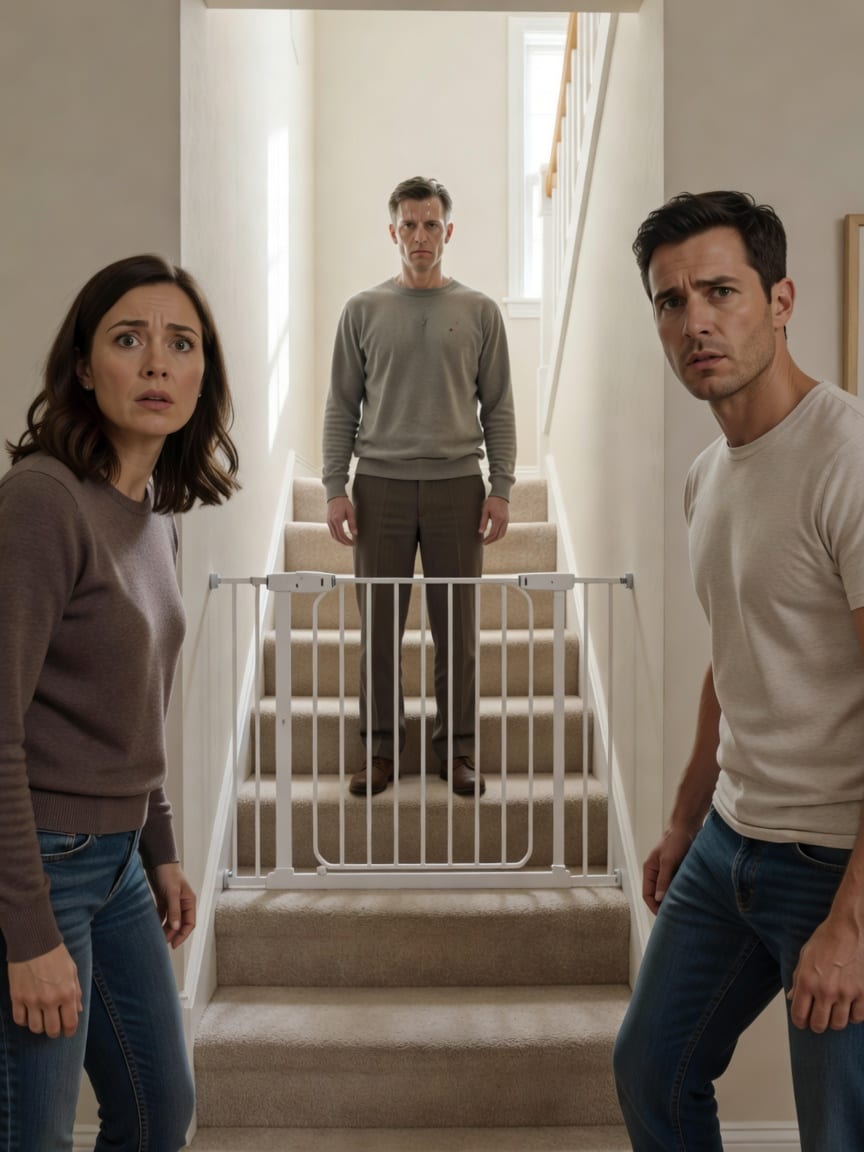
My stair gate latches itself every night. Pressure-fitted tight across my empty stairs, no children live here and no fixings exist on the wall.
I live alone in my inherited house, so the toddler gate at the top of my stairs should not be there. Each morning, I find it perfectly latched and sturdy, despite having hidden it away in the shed the day before. This isn't a quirk; it's a routine, and it isn't mine.
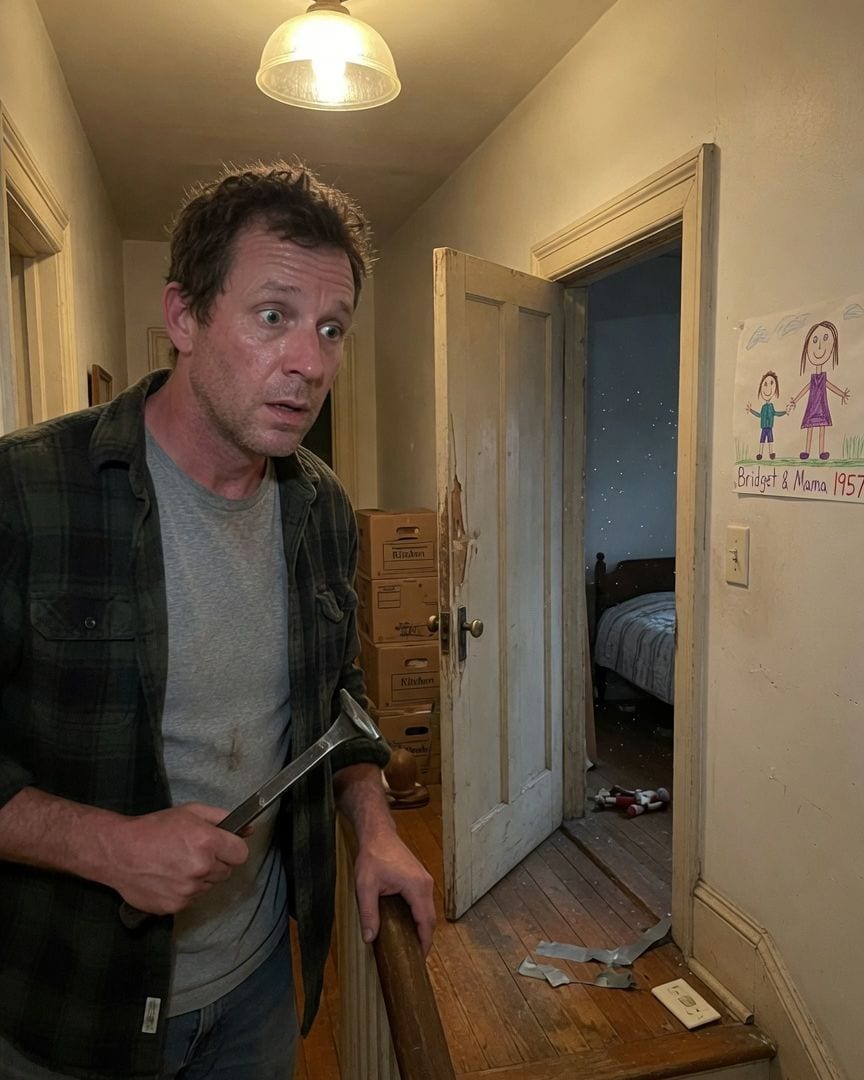
My landing light switches itself off at 9:40 every night. I've watched the switch flick down under nothing, the tape peeled back. The house holds its breath.
My great-uncle's old house was a quiet gift, a place to finally settle. But as I unpacked, a strange worn path on the floorboards led me to a small, barely visible door, perfectly blended into the wall. It was undeniably locked, and felt like a deliberately obscured secret.
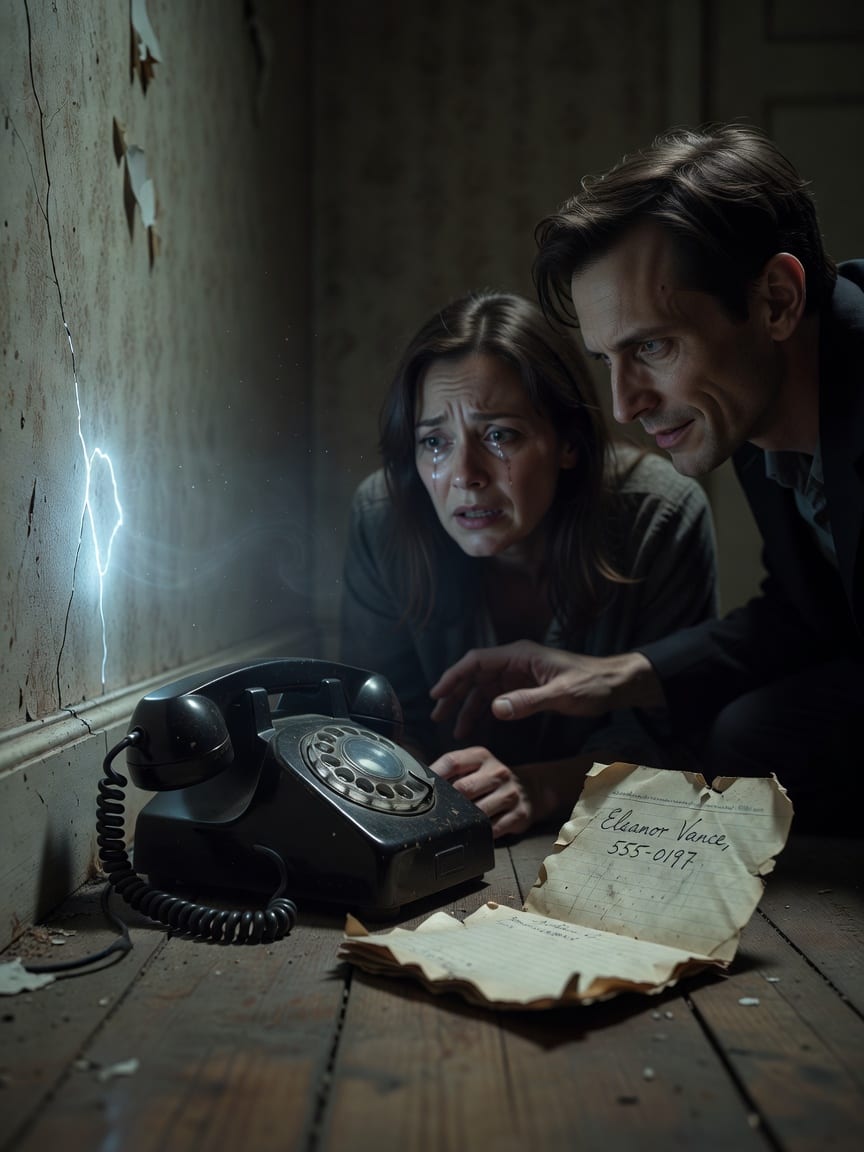
My house's walls ring when I dial a phone number from a 1974 directory. My neighbors said that directory was trash.
I was sifting boxes in my new house when I found an old 1974 telephone directory for my street. It listed my address, 12 Elm Street, under the name "Mr. & Mrs. Sheppard." On a whim, I called the faded seven-digit number. My cell phone rang, but a low, muffled sound also vibrated from the wall beside me.
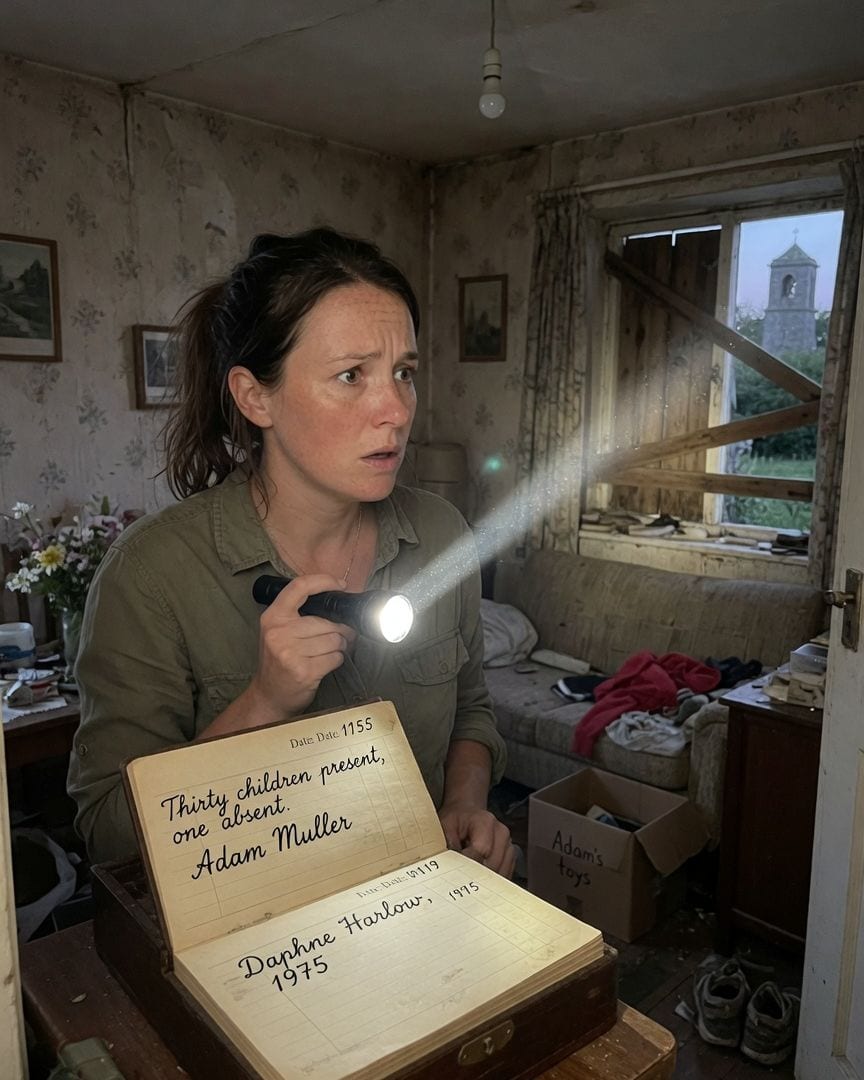
My son rang the old school bell. The attendance register, visible through the boarded window, now shows today's date and his name marked 'absent'.
We moved to a quiet village for peace, but my six-year-old son Adam found the old, boarded-up schoolhouse. Locals warned us, "Never ring the old school bell." That Tuesday, Adam rang it. Later, I saw his name on the school's long-closed attendance register, marked 'absent' in impossibly fresh ink from today.
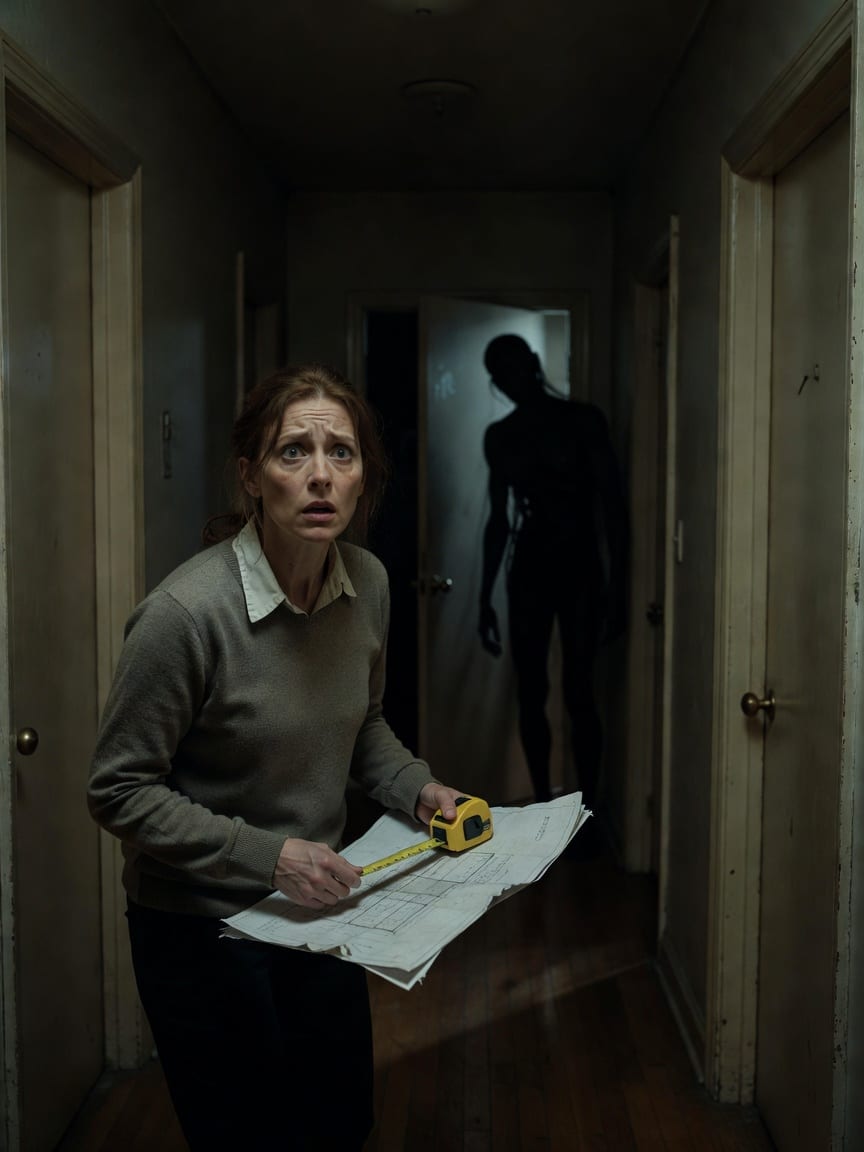
My front door has a dented gate and a dead hydrangea. I walked past it six times, trying to reach the corner shop just a hundred yards away. The pavement kept bringing me back to my own porch, and the shop's light never moved.
My morning started like any other, a quick walk to the corner shop from my home at Number 14, Elm Terrace. But after walking what felt like two minutes, I found myself back at my own front door, the shop no closer. I tried six times, faster and slower, but my street kept compressing, refusing to let me leave.
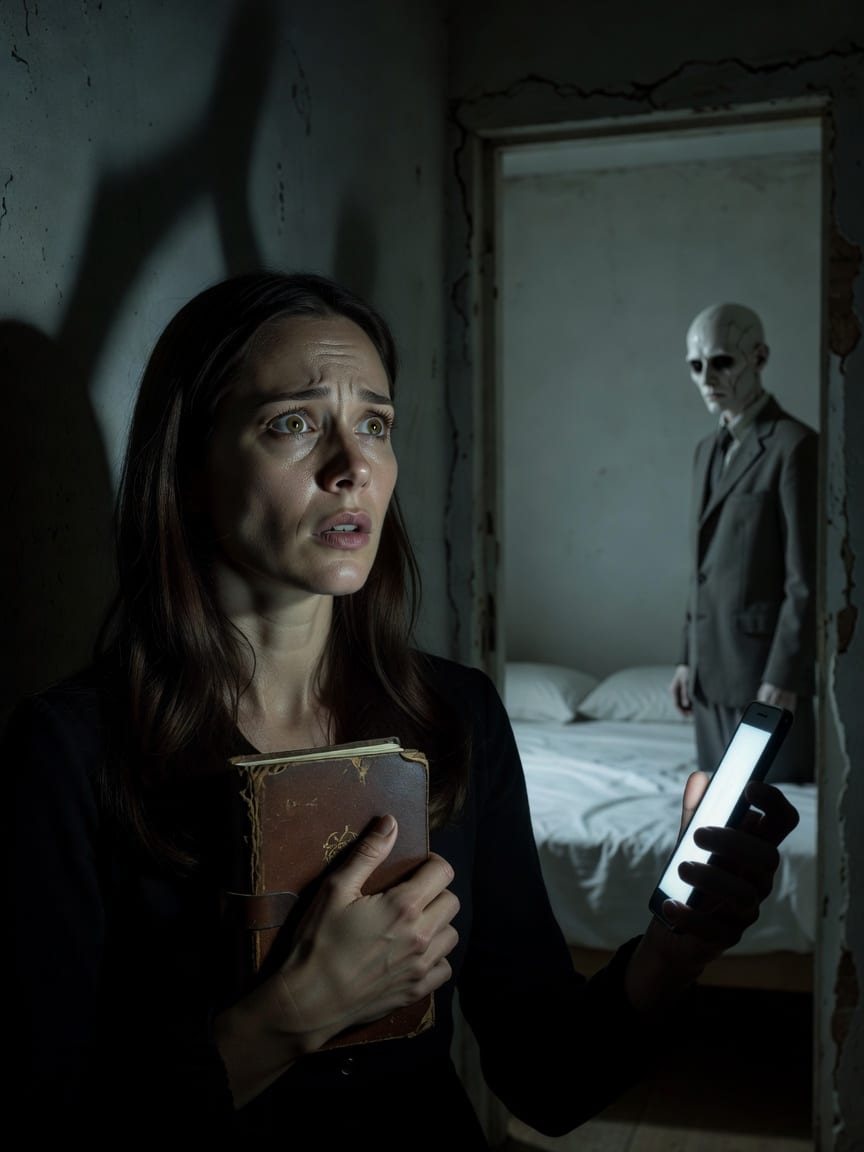
Behind a plastered-over doorway, I found a room. Papered, carpeted, and furnished with a made bed, sealed for decades. The air was dead still, but the bed wasn't dusty. My council tax bill only lists five rooms.
I'm Claire, an architect, meticulously planning my new Victorian terrace renovation. But when I uncovered a hidden room behind a wall, everything I knew about time and decay shattered. The bed was perfectly made, the air still, yet there was no dust, only an unnerving cold.