Our moving truck drove 71 miles in a loop, plotting our furniture back to our old flat. The men swore they unloaded it at our new house.
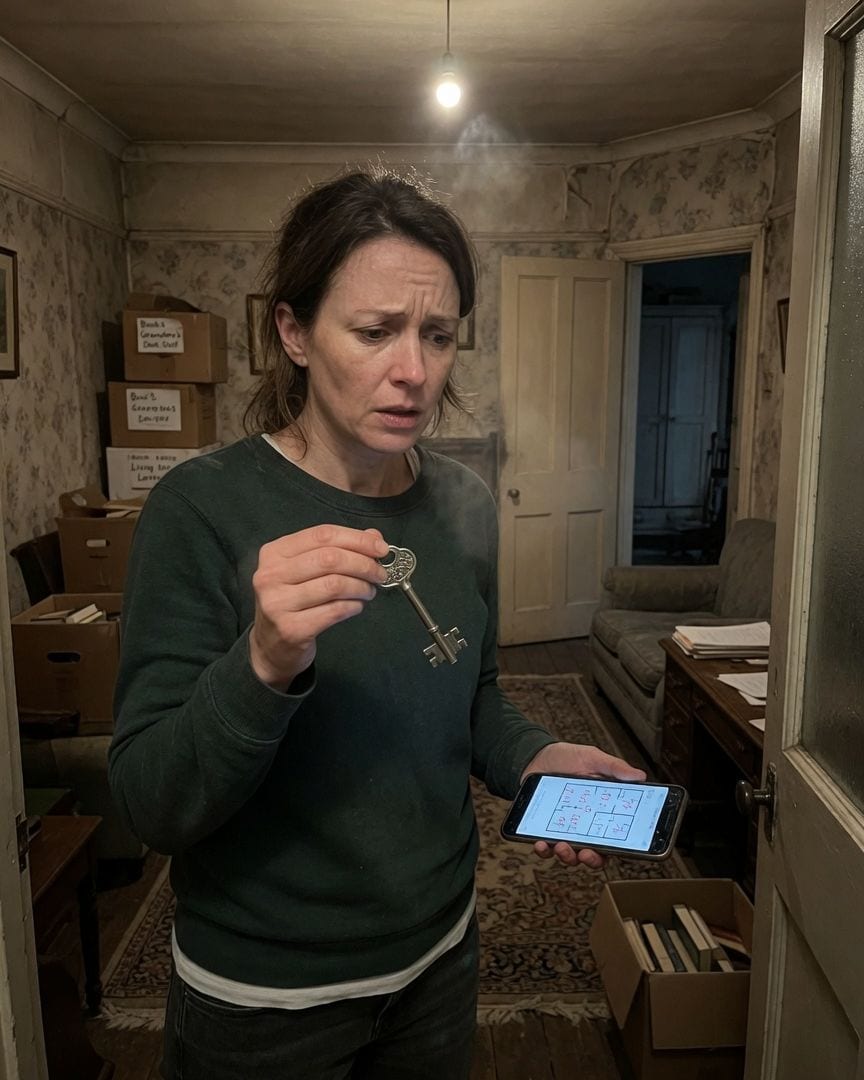
I stared at the email from the moving company, my brow furrowed so tight it probably ached. The GPS tracker log for their removal van showed a perfect, impossible circle.
It left my old flat, drove 71 miles, and returned to the exact same postcode. The timestamp grew later and later, but the truck never reached my new address.
My furniture, my entire life packed into boxes, was apparently still in the van, or back where it started. I’d called the company, and the two burly movers, Lars and Sean, swore on their mothers’ graves they’d delivered everything.
"Every last box, ma'am, right into the master bedroom. You even signed the forms."
I had signed nothing. My hand hadn’t even touched a pen since moving day. I checked my bank statement; the payment had gone through. The house, a charming but slightly eccentric Victorian, sat empty, waiting for me.
I’d walked through its echoing rooms again earlier that morning, counting the doors, checking the windows, a faint chill that had nothing to do with the unheated air settling in my bones. The numbers just didn't add up.
Convinced it was a clerical error, a glitch in the GPS system, I decided to simply move into the new house and deal with the furniture later. I bought an air mattress and some basic groceries.
The house felt vast and quiet, the kind of quiet that pressed in on you, making the silence feel heavy. That evening, while exploring the second floor, I noticed a door I hadn't seen before.
It was tucked away behind a built-in wardrobe in what was meant to be the master bedroom, almost perfectly camouflaged by the shadows.
I’d walked this floorplan a dozen times during viewings, cross-referencing with the estate agent’s schematics, and this door simply wasn't there. It was a plain, unpainted wooden door, slightly ajar, almost as if it had only just opened.
Curiosity, mixed with a growing unease, pulled me forward.
I pushed it open slowly, expecting a small linen closet, perhaps a maintenance shaft. Instead, it opened into a surprisingly large, fully furnished room.
My missing sofa, the antique writing desk from my grandmother, my carefully packed boxes – all were neatly arranged, as if someone had just finished unpacking. The lamps were in place, the rugs centered, the bookshelves laden with my books.
On the desk, glinting faintly under the single overhead bulb, sat a heavy, intricately carved silver key. This room wasn't on the plans. It couldn't be.
I stepped into the impossible room, my breath catching in my throat. The air felt different here, somehow denser, yet still and cold. I walked to the writing desk, my fingers brushing the ornate silver key.
It was cool to the touch, heavy with age, almost too heavy for its size. I picked it up, its unfamiliar weight grounding me slightly amidst the surreal discovery.
The room was undeniably mine, filled with my belongings, yet it existed outside the known geometry of the house. I turned, looking back at the door, then at the wall it had been hidden behind.
I pulled out my phone, opening the digital floor plan, then slowly, deliberately, began to count the doors on the second floor again, my gaze sweeping from one to the next, then back to the one I stood in.
One, two, three… and then this. A fifth room. There were only supposed to be four.
I stood there, the silver key warm in my palm, the numbers refusing to reconcile, the absolute wrongness of the space pressing down on me.
The next morning, the systematic investigation began. I measured the dimensions of the impossible room, then meticulously re-measured the entire second floor, comparing everything to the official blueprints provided by the estate agent. The numbers consistently refused to align.
The extra room was a full-sized bedroom, complete with a window overlooking the garden, yet its addition would have made the exterior wall extend into the neighbor’s property. There was no way to square it.
I called the local planning office. They had no record of any extensions or modifications since the house was built in 1898.
Then I called an architect friend, Josephine Doyle, sending her scanned copies of the plans, along with my own frantic measurements. Josephine confirmed my suspicion a few hours later, her voice tight with professional confusion.
"This layout is physically impossible, Nina. There's no way this fifth room could exist without violating property lines or basic structural integrity. It just… can't be there."
With Josephine's words ringing in my ears, I focused on the silver key. It didn't fit any lock I could find in the house, not even the hidden door itself.
I noticed a faint, intricate crest embossed on its handle – an almost abstract design of interlocking lines and a single, stylized eye at its center.
I spent hours online, searching for similar architectural anomalies, local legends, or even just matching crests. My search yielded nothing concrete, only vague references to 'lost spaces' and 'folded realities' from obscure forums I quickly dismissed as internet nonsense.
The furniture in the impossible room was perfectly intact, but it felt… different.
The wood of my antique desk, usually smooth and polished, had a faint, almost imperceptible grit to it, as if it had been somewhere dusty for a long time, not just sitting in a sealed room for a few days.
I felt a growing sense of urgency, a need to understand not just how the room existed, but why it was there, and why my things had been deposited within it.
I decided to track down the previous owner, or at least the estate agent who handled the sale.
My inquiries led me back to Conrad Calloway, the estate agent who’d handled the sale.
He was a man in his late sixties, impeccably dressed in a charcoal suit, with a placid, unreadable expression that seemed permanently etched on his face.
I met him at his small, old-fashioned office, filled with mahogany and the smell of stale paper. When I mentioned the missing furniture and the 'extra room,' his composure didn't falter, not even a flicker.
"Ah, yes, the house has its… quirks," he said, a faint, almost imperceptible smile playing on his lips, not quite reaching his eyes. "Older properties, you know. Sometimes the records aren't entirely accurate."
I pressed, describing the impossible measurements, the defiant geometry. Conrad simply nodded, his eyes fixed on mine, a strange, unnerving intensity in their depth. "Perhaps it's a structural peculiarity. A forgotten extension that was never properly documented."
His answers were calm, evasive, and utterly unsatisfying. He offered no explanation for the missing furniture, only suggested I "enjoy the extra space."
As I left his office, the stale air feeling suddenly heavy, I felt a prickle on the back of my neck. I glanced back through the frosted glass and saw Conrad standing in his office doorway, watching me.
His gaze was too steady, too long. Later that week, back at the house, I found a small, almost imperceptible scratch mark on the impossible room's hidden door, just below the handle. It hadn't been there before.
It was too small to be a break-in attempt, more like someone had tried to pry it open, or perhaps, mark it. The feeling of being watched solidified into a chilling certainty. Someone knew about the room.
And Conrad Calloway knew more than he was letting on.
Unable to shake the feeling of being observed, and with Josephine confirming the structural impossibility of the room, I called Conrad Calloway again. This time, I didn't mince words. "Mr. Calloway, I know that room isn't a 'structural peculiarity.'
It doesn't exist on any plans, and it defies physics. My furniture was put there. What do you know about this house?" There was a pause on the line, a breath held so long I almost thought he'd hung up.
Then, Conrad’s voice, calm as ever, almost detached: "I suppose it was inevitable you would discover it. Most people simply ignore what they cannot explain." My heart hammered against my ribs, a frantic bird. "What is 'it'?"
He sighed, a soft, almost weary sound, like a man tired of repeating an old, unbelievable story. "The house, Ms. Sterling, is a unique property. It has… a fluid geometry. It folds. The room you found is a pocket space.
A contained anomaly." I scoffed, a nervous, disbelieving sound. "A contained anomaly? What does that even mean? Are you telling me my house is haunted?"
"It means," he continued, unperturbed, as if discussing the weather, "that the house can draw things into itself, or manifest spaces that do not physically exist in this dimension. Your furniture wasn't stolen; it was… relocated.
The tracker loop was the house calibrating its new contents, absorbing them. It's been happening for generations."
He explained that the house wasn't 'haunted' in the traditional sense, but rather a living, breathing paradox, a place that existed slightly out of sync with normal reality. "It's a place that isn't on the map, Ms. Sterling. Literally.
The old deeds, if you knew how to read them, imply as much." He mentioned the previous owners, not by name, but as 'caretakers' and 'stewards.' "They understood its nature. Some even… facilitated it."
I felt a cold dread spread through me, numbing my fingers. The furniture in the impossible room, the faint grit on the wood, the feeling of the air, the deep, unnatural quiet – it all suddenly clicked into place.
The removal van's impossible loop, the architect's baffled response. It wasn't a glitch. It was real. And it was by design.
Reeling from Conrad's revelation, I hung up the phone, my mind racing, buzzing with a thousand horrifying connections. A contained anomaly. A place that folds.
I rushed back to the impossible room, my eyes scanning its familiar yet alien space, seeing it now through a new, terrifying lens. I remembered the silver key, still heavy in my pocket, burning against my leg.
On an impulse, I examined the wall behind the antique writing desk, running my fingers along the smooth, dark wood paneling, searching for another hidden seam. My touch found a faint line, almost invisible, that hadn't caught my eye before.
I pressed, and with a soft, almost imperceptible click, a small section of the paneling sprang inward, revealing a hidden compartment. Inside, nestled on a velvet cushion, lay a stack of yellowed documents and a leather-bound journal.
The top document was an old property deed, dated nearly a century ago, with a handwritten amendment in elegant, looping script. And there, emblazoned just above the amendment, was the same intricate crest I’d seen on the silver key.
My breath hitched. Beneath the crest, in faded ink, was a name. My own surname: Sterling. I looked up, the journal and deed trembling in my hands, my gaze fixed on the familiar crest.
Conrad’s words echoed in my mind, a chilling whisper: 'Some even facilitated it.' A deeper, colder dread began to bloom, twisting in my gut. I wasn’t just a new homeowner. I wasn't just a witness. I was part of it.
The crest was hers. The name was hers. I felt his calm, knowing eyes meet mine across the dusty table in my mind's eye, and a terrible certainty settled. I was inside it.
I called Conrad Calloway again, my voice tight, the old deed and journal clutched in my hand, the silver key cold against my palm. "My family name is on these documents. What does it mean?"
Conrad’s voice was as smooth as ever, betraying nothing. "Ah, the ancestral records. I knew you'd find them eventually. Your maternal line, Ms. Sterling, has a unique affinity for this house. They are… its stewards. Its keepers. For generations."
He explained that the Sterlings were not just owners, but a lineage tasked with maintaining the house's peculiar geometry. They were the ones who 'facilitated' its folds, ensuring its stability and purpose.
The house, he revealed, was a kind of 'anchor,' a point where different realities brushed against each other, and certain bloodlines were needed to keep the 'seams' from tearing.
The silver key was an heirloom, a tool for accessing hidden aspects of the house, and the journal detailed the 'mechanics' of the folds, the subtle shifts and energies that needed to be managed.
The removal van's loop, the impossible room – these were not random occurrences, but the house responding to a new Sterling presence, preparing for its next keeper.
"I was merely holding it for you," Conrad said, his voice almost gentle, "until the house recognized its own. It pulls them in, just as it pulled your furniture."
Every strange detail, every impossible measurement, every evasive answer from Conrad, snapped into horrifying focus, forming a grotesque, inescapable whole. It all fit. The coherence was terrifying.
I stared at the journal's faded entries, detailing rituals and observations of the house's shifts, written in my great-grandmother's elegant, precise hand. 'Equilibrium must be maintained.' 'The currents flow strongest on the lunar cusp.'
It was a manual for something I never wanted to touch. "I don't want this," I whispered into the phone, my voice thin and reedy. "I want out."
Conrad was silent for a moment, the line crackling with an almost electric hum. "That, Ms. Sterling, is not an option. The house has chosen you. It needs a keeper.
Without one, the folds could unravel, with unpredictable, possibly catastrophic, consequences for this entire vicinity. The fabric of things could… fray." His calm tone was chilling, devoid of any threat or malice.
He wasn't threatening me; he was stating a fact, an immutable law of this impossible place. "You'll learn to manage it. To guide its shifts. It's in your blood, you see. Always has been."
I felt a surge of desperate defiance, a raw, primal scream wanting to burst from my chest. I wouldn't be tethered to this monstrosity, this living paradox.
I slammed the phone down, grabbed my car keys from the desk, and ran for the front door, determined to leave.
I pulled the door open, ready to bolt, but instead of my quiet street, I saw a long, unfamiliar corridor stretching into dimness, lined with identical, unlabeled doors. The air here was heavy, metallic, and utterly silent.
Panic seized me, cold and sharp. I slammed the door shut, my heart pounding, then tried the back door, the kitchen door, the patio doors leading from the living room.
Each one opened onto the same endless, featureless corridor, lit by an unseen, oppressive light. The house had shifted. It had folded around me, sealing me inside its impossible geometry.
I ran back to the impossible room, the only place I felt any semblance of control, the journal still open on the desk, mocking me. I was trapped. The house had claimed its keeper.
Nina Sterling was never seen leaving her new address again, her car remaining untouched in the driveway. The house itself stood, outwardly unchanged, a silent sentinel in the quiet street.
A year later, the child next door pointed to Nina Sterling's window, claiming the lady inside was always watching, sometimes smiling.
Abigail Sterling looked at her daughter, a faint, wrong little smile playing on her lips, and replied, 'Is that so?'
If this one got to you
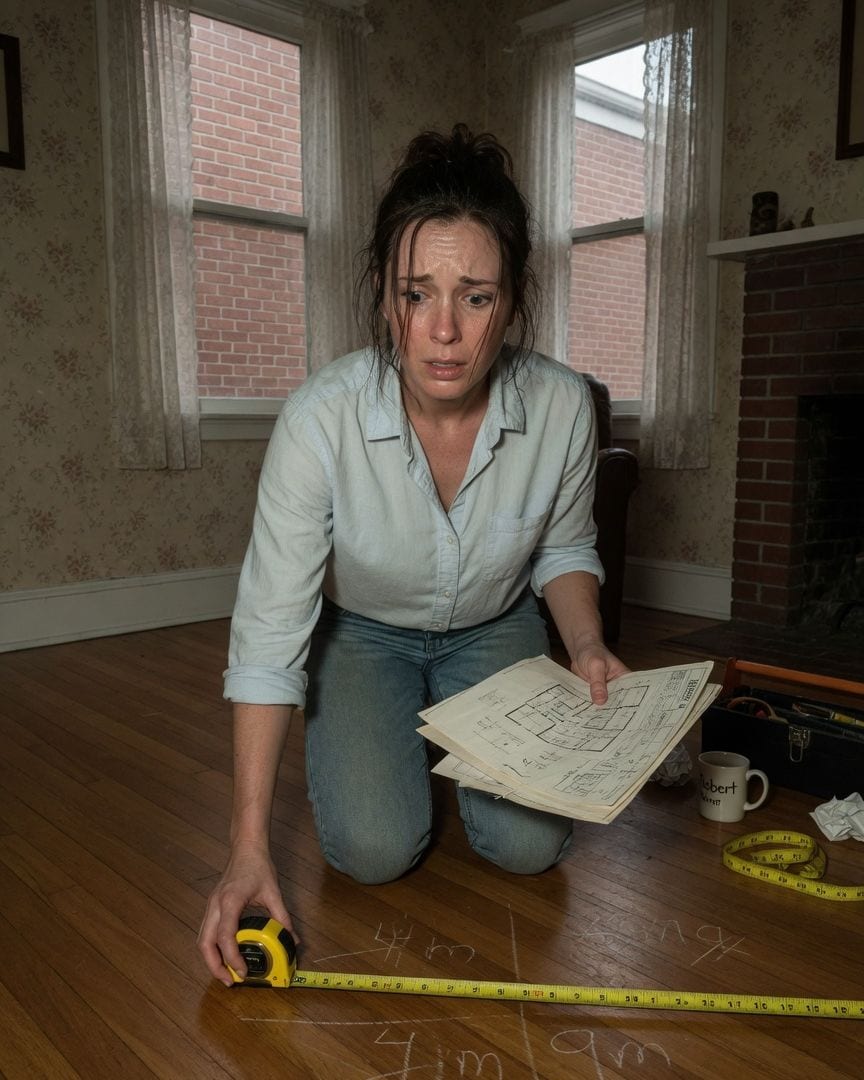
Our living room measures four by five metres. But the outside wall is nine metres long. A metre of house, gone, and I can't find it.
After moving into our charming 1920s house, I was meticulously measuring the living room when the dimensions refused to add up. My calculations of the interior space led me to discover a narrow, unpainted fifth door in the hallway, tucked almost out of sight. It wasn't on any original plans, and it opened to absolute, impenetrable darkness.
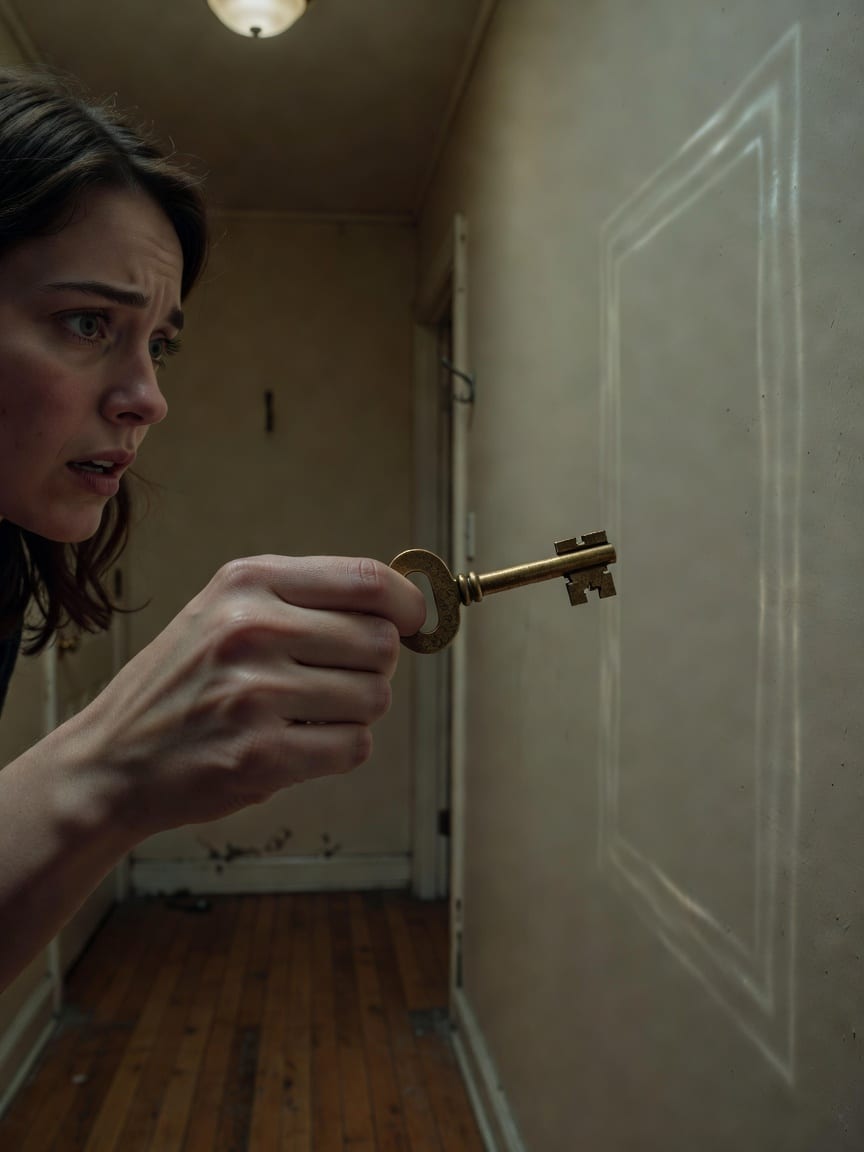
My new house has seven rooms. The removal men counted six. Now one of them asks who's in the locked seventh, on a landing with only six doors.
Moving into my new house, I supervised the removal men hauling boxes. But on the landing, Paul, the senior man, asked about a locked seventh room upstairs, pointing to a blank wall. His quiet certainty, despite the clear absence of a door, filled me with a sudden, icy dread.
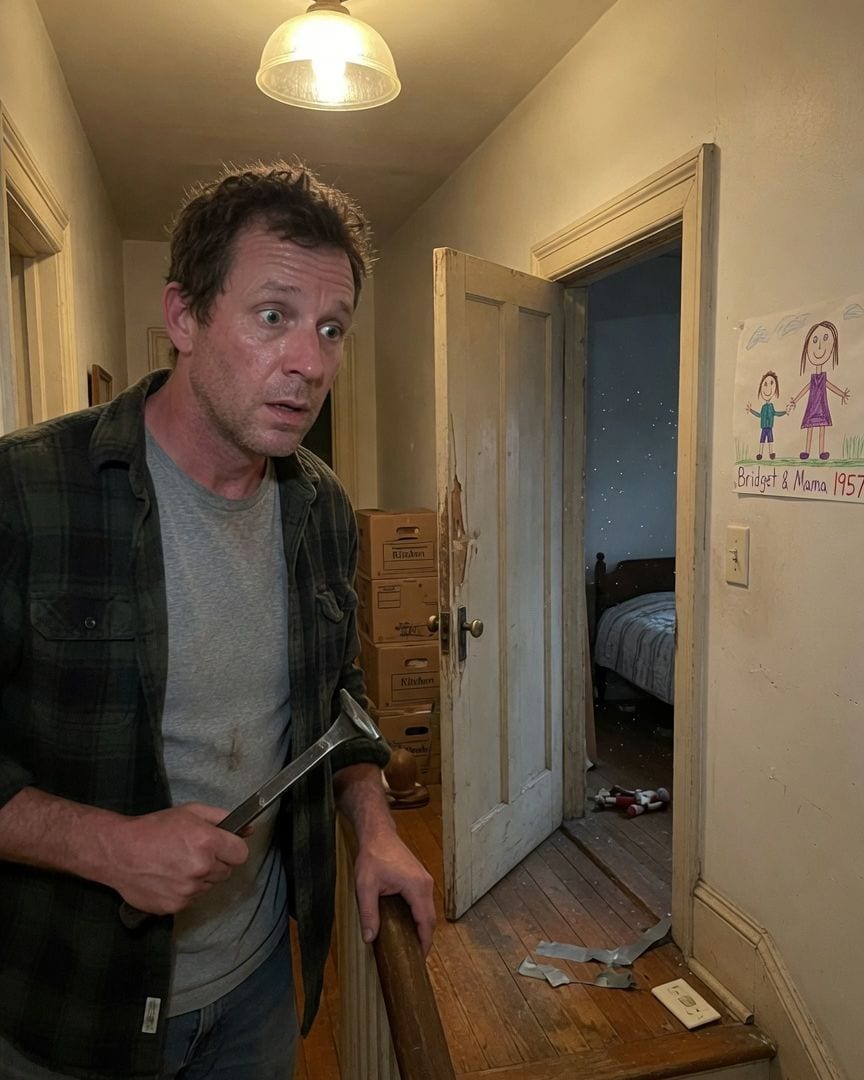
My landing light switches itself off at 9:40 every night. I've watched the switch flick down under nothing, the tape peeled back. The house holds its breath.
My great-uncle's old house was a quiet gift, a place to finally settle. But as I unpacked, a strange worn path on the floorboards led me to a small, barely visible door, perfectly blended into the wall. It was undeniably locked, and felt like a deliberately obscured secret.
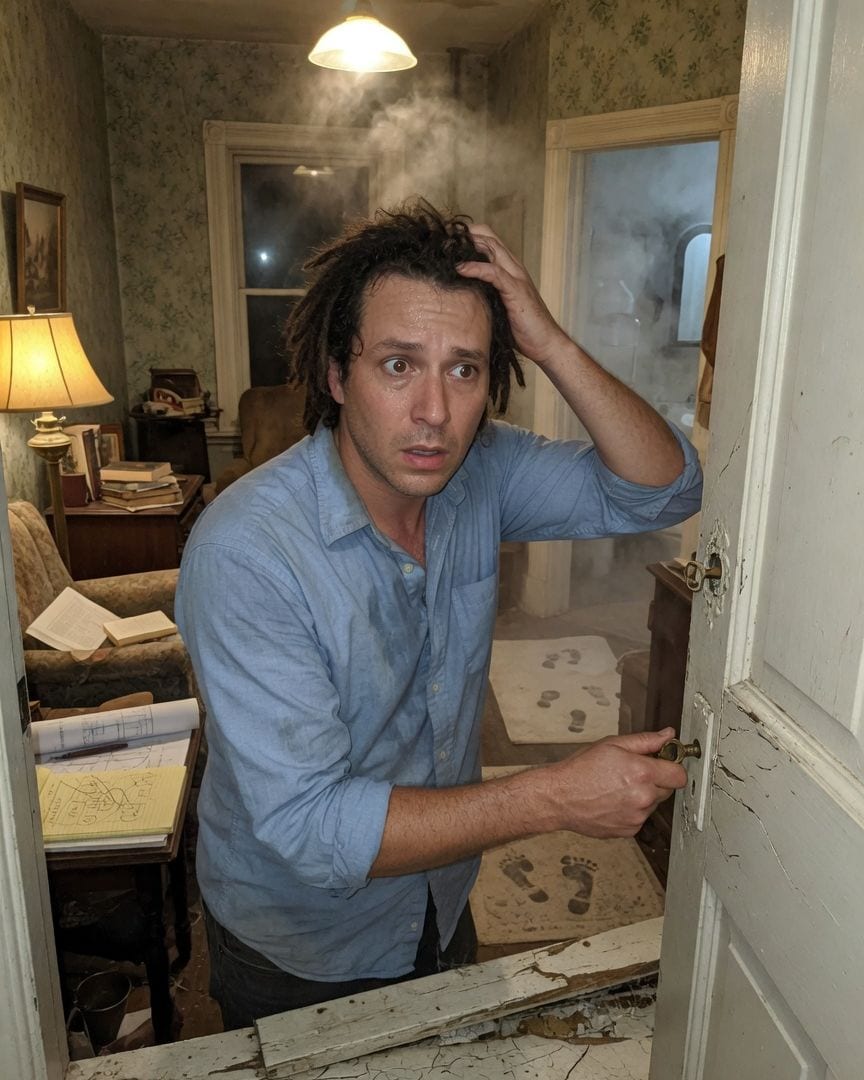
The bath filled itself at 9:30 PM. My main house water was off. Wet footprints led from the tub to a locked airing cupboard.
As an architect, I pride myself on logic. Moving into my inherited Victorian house was supposed to be a quiet fresh start, but on the third night, I heard the impossible. Even after I shut off the main water to the entire house, my clawfoot bath upstairs ran full, warm, and steaming at 9:30 PM.
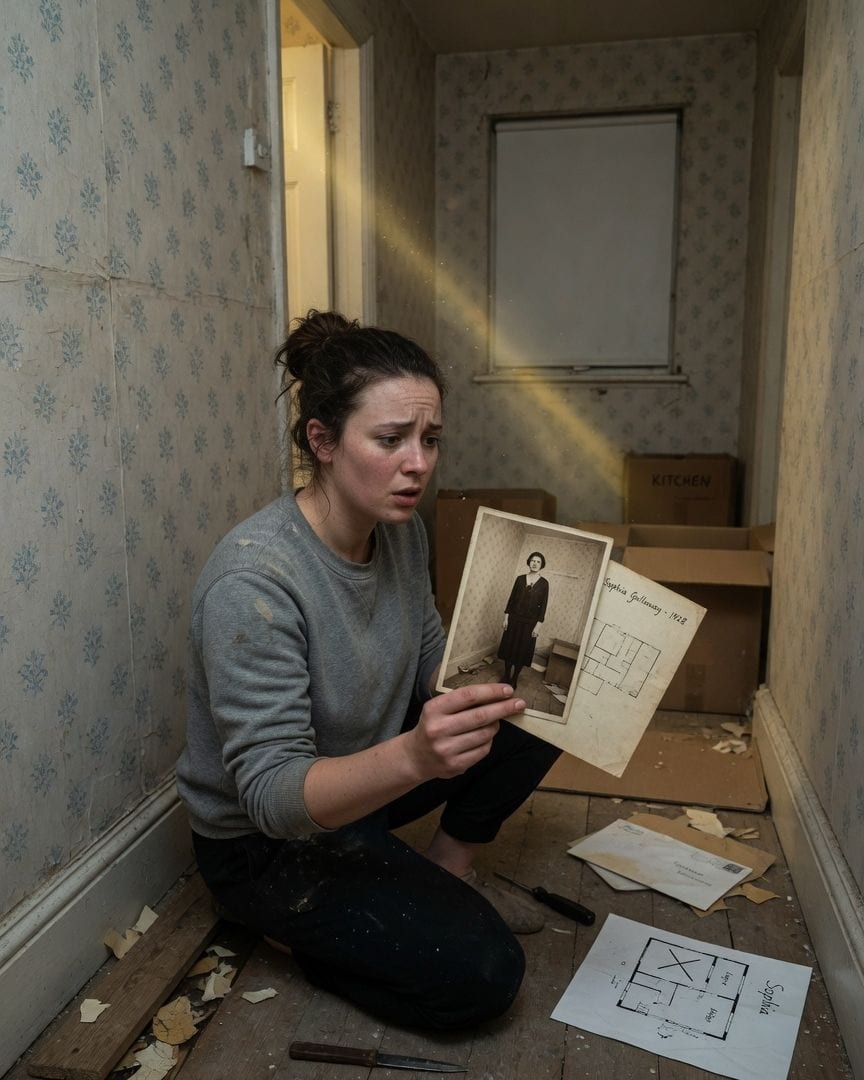
A letter with my name and a floor plan, marked with an X in the box room, arrived at my new flat a week before I viewed it.
Moving into my new flat at 14 Elmwood Lane, I found a letter postmarked 'Carne Beacon' addressed to me. Inside was a floor plan of my flat, marked with an 'X' in the box room. The impossible part? It was dated a week before I even viewed the property.
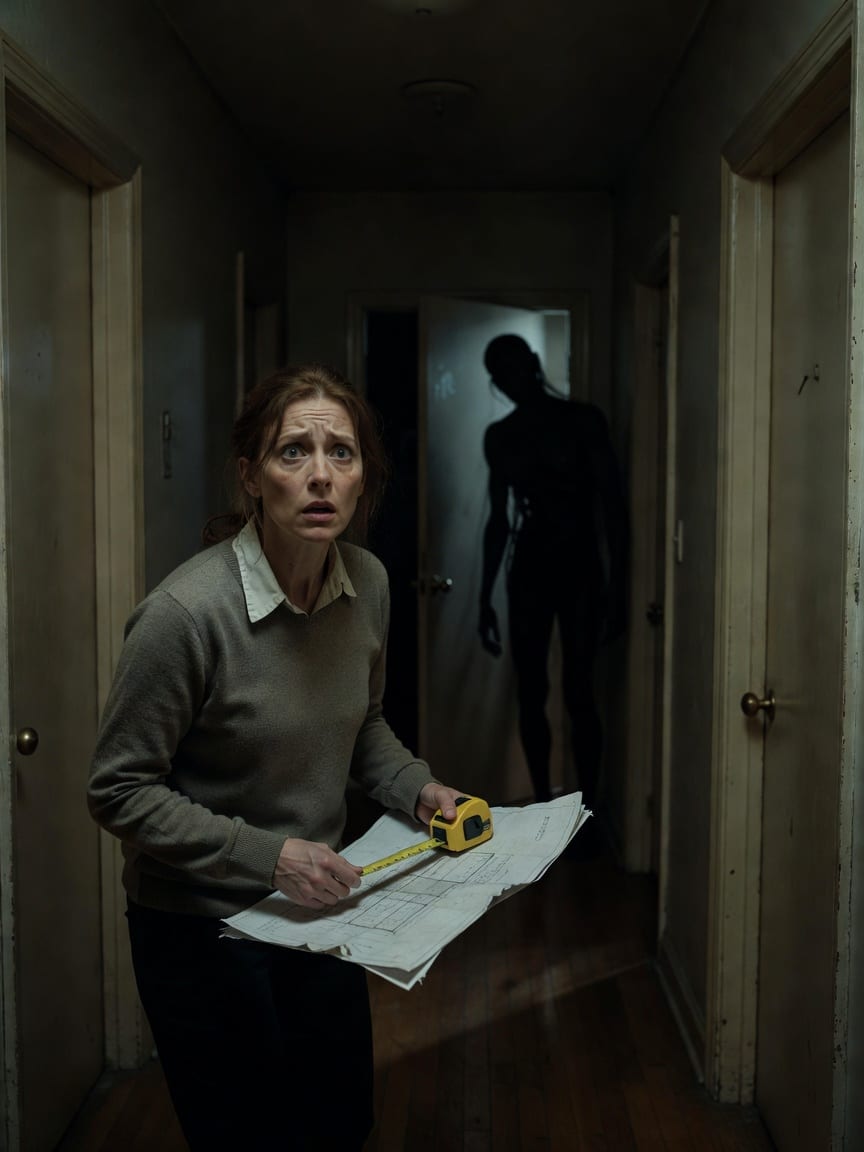
My front door has a dented gate and a dead hydrangea. I walked past it six times, trying to reach the corner shop just a hundred yards away. The pavement kept bringing me back to my own porch, and the shop's light never moved.
My morning started like any other, a quick walk to the corner shop from my home at Number 14, Elm Terrace. But after walking what felt like two minutes, I found myself back at my own front door, the shop no closer. I tried six times, faster and slower, but my street kept compressing, refusing to let me leave.