My best friend Aaron speaks perfectly smooth now, not a single stammer. He was gone three weeks. He says he never stammered, and asked, kindly, if I did.
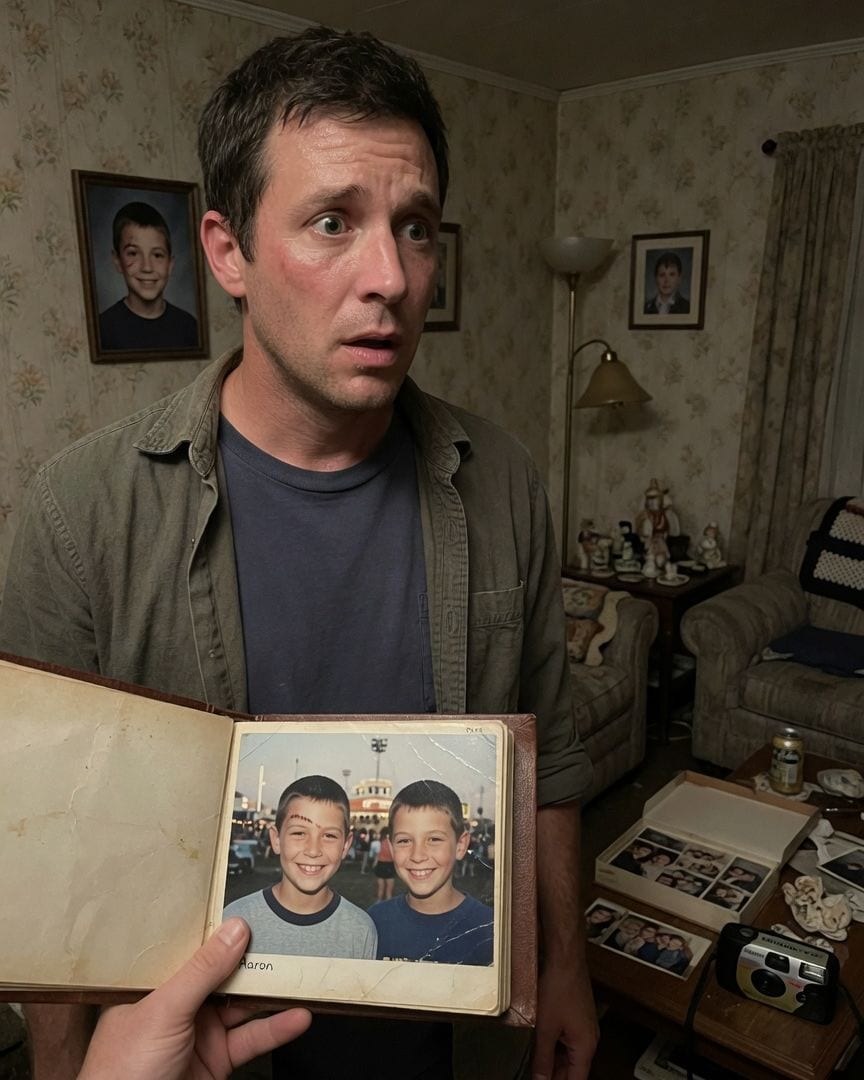
The relief of seeing Aaron again, alive and standing right there in his mother’s living room, was a raw, burning thing in my chest. Three weeks, just gone after the Riverbend Festival. We’d all thought the worst.
Now he was back, hugging Cecilia, laughing. And then he spoke.
“Danny, it’s really good to be back,” he said, his voice a smooth, even baritone. Not a single catch. I just stared at him, my mouth probably hanging open like a fish.
Aaron, who stammered on hard consonants his entire life. ‘Riverbend Festival’ was always ‘R-r-riverb-b-bend F-f-festival’ from him. Now it was just… smooth. Perfect. Like he was reading from a script.
I remembered specific words that always snagged his tongue, memories forged over decades of friendship: ‘bicycle,’ ‘difficult,’ ‘brother.’ Each one a little hurdle he’d navigate with a slight grimace, sometimes a little head-nod to push it out.
It was just part of Aaron.
“You… you sound different, man,” I managed, trying to keep my voice casual, to not let the unease show. Maybe it was trauma. Maybe some kind of therapy they’d given him, wherever he’d been.
Maybe I was just imagining it, my brain trying to process his return.
Aaron turned to me, his eyes steady on mine, calm. Almost too calm. “Different? How so?” he asked.
“Just… your speech,” I fumbled. “It’s… so clear. Like, really good. Did you work on it?”
He smiled, a gentle, almost bewildered expression. “I’ve never stammered, Danny,” he said, his voice completely unmarred by hesitation. “Have you?”
That question hung in the air, cold and quiet.
The stammer, or lack thereof, really started to needle me. I kept telling myself it was a side effect of whatever he’d been through, a miraculous recovery from trauma.
Or maybe he’d found some intensive speech therapy while he was missing, though that seemed unlikely. But the feeling of ‘wrong’ wouldn’t go away.
Then, a few days later, we were sitting in my backyard, beer in hand, trying to recapture some normalcy. The late afternoon sun was warm on my face, but I felt a chill when Aaron started talking about our childhood.
“Remember that trip to the old lighthouse, just us, when we were ten?” he asked, a fond, easy smile on his face. “You tripped, and I caught your camera just before it hit the rocks.”
My stomach clenched. I remembered that trip vividly. Every detail. The taste of the salt spray, the dizzying climb up the spiral stairs. It was my family, a private weekend, a tradition with just my parents and me.
Aaron hadn't been there. He’d been sick with the flu, I remembered clearly. I’d sent him postcards.
I tried to laugh it off, to make a joke. “You always were a good storyteller, man. You really make it sound like you were there.” The words felt like ash in my mouth.
Aaron’s smile didn’t waver. It was relaxed, certain, and utterly devoid of humor. “It’s not a story, Danny. It happened. I saved your camera.”
He even described the old, clunky disposable camera, how I’d gotten sand in the lens on the beach below. Details he couldn't possibly know.
I felt a cold prickle on the back of my neck. He didn't sound like he was misremembering. He sounded like he believed it.
Later that night, the impossible memory and the missing stammer gnawing at me, I dug through old boxes in my attic. I wasn’t sure what I was looking for, just anything that might explain.
Maybe old home videos, something to definitively prove he hadn't been at the lighthouse. I pulled out a dusty photo album, its fake leather cover cracked with age.
I flipped through pages of awkward childhood grins, bad haircuts, and faded summer days. On one page, a particularly sun-kissed picture caught my eye: me and Aaron, ten years old, grinning in front of the local fair.
Aaron’s hair, messy and uncombed, was falling across his forehead, and there it was. Small, distinct. A tiny, jagged scar, just above his left eyebrow, a souvenir from a bike accident he’d had when he was six.
He’d always hated it, said it made him look like a villain.
My breath hitched. I could feel my own heart hammering against my ribs, a frantic bird trapped in a cage. I looked at the pristine skin above 'Aaron's' left eyebrow, then back at the faded childhood photo in my hand.
The tiny, jagged scar, a mark Aaron had carried since he was six, is simply gone, as if it had never existed.
The missing scar rattled me in a way the stammer and the fake memories hadn't. Those could be explained away, however weakly, by trauma or delusion. But a scar? A physical mark, gone without a trace?
I started subtly checking. The faint line on his knee from a skateboarding wipeout in high school, a small dip in his collarbone from a wrestling match gone wrong in college – all gone, replaced by smooth, unblemished skin.
His body was... perfect. Too perfect.
I called Maxwell Crane, another mutual friend, trying to sound casual. “Hey, remember Aaron’s scar? From the bike?”
Maxwell paused, the line quiet for a moment. “Oh yeah, the one above his eye. Haven’t thought about that in years. Why?”
I feigned disinterest, a knot tightening in my stomach. “Just curious, saw an old photo. Looks like it’s faded completely.”
Maxwell gave a low chuckle. “Kids heal fast, I guess. He probably had surgery to get rid of it and just never mentioned it. You know Aaron.” He shrugged it off, oblivious.
Desperate, I visited Aaron’s mother, Cecilia, hoping she’d notice something. She sat me down with a cup of tea, the clinking of the ceramic cup sounding unnaturally loud in the quiet kitchen.
When I tried to steer the conversation towards Aaron’s appearance, she just smiled serenely. “Aaron always had such perfect skin, didn’t he? A real blessing.” Her eyes were placid, unclouded. I felt a cold dread settle in.
No one else saw it, or they refused to.
I started noticing Aaron’s new habits. He woke precisely at 5 AM, every day, without an alarm. He had a new preference for black coffee, saying cream and sugar ‘muddled the flavor.’
Aaron, who always took cream, and two sugars, without fail. He also had a slightly too-intense focus when I spoke, like he was studying my face, analyzing every nuance of my expression.
The air in his living room, usually buzzing with the easy chaos of a bachelor pad, now felt meticulously ordered, unnaturally still.
My quiet investigation didn't go unnoticed. Aaron started appearing unexpectedly, always at the wrong time. Late one night, I was hunched over my laptop, researching ‘phantom scars’ and ‘memory implantation’ – desperate, ridiculous search terms.
The screen glowed an unhealthy blue on my face. A floorboard creaked behind me, and Aaron was suddenly in my doorway, holding a glass of water, the ice clinking softly. “Couldn’t sleep, thought I heard something.”
His voice was gentle, but his gaze lingered on my laptop screen, just for a second too long, before he walked over and offered me the water. He never mentioned the screen, but I felt exposed.
Another time, I tried to discreetly check Aaron’s old medical records at the family doctor’s office. I claimed I was updating contact info for an emergency. The receptionist, an old acquaintance, smiled at me.
“Oh, Aaron was just in here yesterday, doing the same thing. Very thorough.” A chill ran down my spine. Aaron never cared about paperwork. He always put it off until the last possible second.
The idea of him proactively updating his medical file was absurd. He was watching me.
Later that week, Aaron found me in my study, looking at the faded childhood photo again, the one with the scar. He simply took it from my hand, his touch light, almost reverent.
He smoothed the creases, his thumb brushing over the spot where the scar used to be, now just a blank space. “You always were sentimental, Danny,” he said, his voice soft, but with an edge I hadn’t heard before.
“Some things are best left in the past, don’t you think?” His eyes met mine, and there was no warmth, no shared history, only a deep, unsettling calm. The implication was a cold, steel blade.
Driven by desperation, I confronted Cecilia directly. I drove to her house, the photo clutched in my hand, my heart a frantic drumbeat in my ears.
I laid the faded picture on her coffee table, pointing to the missing scar, recounting the impossible lighthouse memory, the perfect, stammer-free voice. Cecilia listened, her face unreadable, her hands clasped tightly in her lap.
The grandfather clock in the hall ticked with a heavy, deliberate rhythm, each second an accusation.
“Daniel,” she said softly, her voice barely above a whisper, “people change. Trauma changes them.”
I shook my head, my throat tight. “Not like this, Cecilia. He remembers things that never happened to him. He doesn’t stammer. His scar is gone. His old injuries are gone.” My voice cracked with frustration.
“You knew him better than anyone. Don’t you see it? Don’t you feel it?”
Cecilia’s composure finally cracked. It wasn’t a sudden break, more like a hairline fracture appearing on an ancient vase. A flicker of something ancient and weary, something haunted, crossed her eyes.
She looked at me, really looked at me, and a profound sadness washed over her features. “Yes, Daniel,” she whispered, her voice barely audible over the grandfather clock’s relentless tick. “I see it.”
She took a shaky breath. “The ‘Aaron’ who returned… he’s not entirely my son. He’s… a mimic.” The word felt alien, impossible, yet it slotted into place with terrifying ease. “They’re perfect in almost every way, these things.
But they absorb. They don’t remember in the way we do. The memories are borrowed, pieced together from those around them. From you, from me, from Maxwell.” She gestured vaguely.
“The stammer, the scar – they perceive them as flaws, I think. Imperfections to be smoothed out in their… replication. It’s like a painting, Daniel. A perfect copy, but it’s not the original canvas. It’s… close enough.”
My mind reeled with Cecilia’s confession. The coherence of it was terrifying; every wrongness, every unsettling detail, snapped into place with sickening precision.
The stammer, the fake memories, the missing scars – all of it suddenly made a terrible, impossible sense. I felt a wave of nausea, followed by a cold, searing anger.
“Why?” I managed, my voice hoarse. “Why didn’t you say anything? Why did you accept it?”
Cecilia’s eyes were distant, filled with an ancient grief that seemed to stretch back further than Aaron’s disappearance. “What else was there to do, Daniel? Your Aaron… he was gone. He didn’t come back. This one… he’s here.
He looks like him. He sounds like him.” Her gaze drifted to a dusty photo album on a high shelf, her hand trembling slightly as she reached for it. “They are so very good at it.”
She pulled the album down, its old leather groaning softly in the quiet room. Her fingers traced the faded cover. “The memories they shouldn’t have,” she said, her voice low, hollow, “they’re not a mistake. They’re a signature.
A way it learns us. A way it ties itself to us.”
She pushed the album across the table, her hands shaking. Inside, nestled beneath a yellowed protective sheet, was a faded, creased photograph. It showed a young woman, strikingly beautiful, who could have been Aaron’s aunt.
She was smiling, a serene, unsettlingly perfect smile, her eyes holding the same unblemished calm I’d seen in Aaron’s.
“She came back too,” Cecilia whispered, her voice hollow, filled with a bottomless sorrow. “My sister, Edith. Decades ago. And just like Aaron… she remembered things that never happened to her, only to me. And I let her stay.
Because what else was there to do?”
Cecilia, her voice barely a whisper, told me the full, horrifying truth. Her sister, Edith, went missing decades ago, a young woman full of life. It was at the Riverbend Festival, the same place Aaron had disappeared.
Edith returned, just like Aaron, subtly ‘corrected’ – no more fidgeting hands, a new clarity to her voice – and with ‘borrowed’ memories, moments from Cecilia’s own life that Edith recounted as her own.
Cecilia, young and devastated by grief, had accepted the mimic. She’d learned to live with the quiet wrongness, the unnervingly perfect smile, the memories that weren’t quite right.
She realized the festival was a recurring hunting ground, a place where people vanished and ‘returned.’ The mimics were not malicious, she explained, but predatory.
They seek to integrate, to replicate, to expand their presence by seamlessly replacing those who disappear. They learn from the closest loved ones, absorbing their grief, their memories, their hopes, to create the most convincing copy.
Cecilia’s acceptance of her sister’s replacement, she now believed, only emboldened the entity, allowing it to continue its cycle, ultimately claiming Aaron. She’d always known, always watched, paralyzed by grief and fear.
I knew I couldn't just let 'Aaron' continue his life as if nothing had happened, but I also knew I couldn't kill him. He wasn't Aaron, but he wasn't a monster either, not in the way humans understand the word.
He was… an imitation. I decided to expose him, to force him to reveal himself.
I arranged a casual dinner with Maxwell and 'Aaron' at a local pub. The air buzzed with low chatter and the clinking of glasses, a normal setting that felt utterly alien to me.
I subtly brought up old childhood stories, steering the conversation towards the lighthouse trip, where Aaron’s ‘borrowed’ memories would clash directly with Maxwell’s.
As I recounted the story, deliberately attributing it to 'Aaron,' Maxwell frowned, taking a sip of his beer. "No, man, that was your family trip. Aaron wasn't there. He had the flu, remember?"
'Aaron' smiled calmly, his eyes reflecting the pub lights, holding no surprise, no defensiveness. "Of course I was. I distinctly remember fishing Danny's camera out of the tide pool. It was a close call."
I pressed, my voice tight, my hands clenched under the table. "Aaron, you know that wasn't you. That was my family."
'Aaron's' eyes met mine, devoid of anger, full of an unsettling, perfect understanding. The smile seemed to widen slightly. "Perhaps your memory is failing, Daniel. We were kids, after all."
He then seamlessly pivoted, charming Maxwell with a perfectly articulated anecdote from their real shared past, a story about a disastrous camping trip that had Maxwell laughing.
It was then I realized 'Aaron' was too good, too integrated. He couldn't be exposed by simple contradiction. The entity was designed to deflect, to charm, to gaslight.
It wasn't about proving 'Aaron' was wrong; it was about making me seem wrong. I saw it clearly: I couldn't stop this Aaron, not without destroying my own life, my reputation, my sanity. But I could stop the pattern.
I needed to stop the source, the 'festival.'
I left the pub abruptly, the laughter feeling like a physical weight on my shoulders. I confronted 'Aaron' one last time, alone, later that week, back in his meticulously clean living room. The silence was deafening.
"I know what you are," I said, my voice barely a whisper.
'Aaron's' smile faltered, just for a fraction of a second, the perfect facade wavering, revealing a flicker of something ancient and unreadable beneath. Then it returned, even wider, even calmer. "Do you, Daniel? Or do you just miss your friend?"
I never publicly exposed 'Aaron.' I couldn't. The mimic was too perfect, too entrenched in our lives, and the thought of breaking Cecilia’s fragile peace, of forcing her to confront a second, unbearable loss, was simply unbearable.
I could not be the one to shatter her world, not after she had endured so much.
Instead, I worked quietly. I volunteered for the Riverbend Festival’s safety committee, pushing for stricter security, expanded search teams, and an early warning system for missing persons.
I became obsessed with its every detail, its history, its vulnerabilities, pouring all my fear and frustration into concrete action. 'Aaron' continued his life, seamlessly. Cecilia, with her quiet, terrible knowledge, continued to watch.
I saw the subtle changes in the festival year after year, the increased vigilance, the fewer ‘unexplained’ disappearances. I knew I couldn't eradicate it, couldn't burn it out of existence, but I could make it harder. I could protect others.
The Riverbend Festival still happens every year. I still attend, always scanning the faces in the crowd, always watching the edges of the woods, a phantom chill on my skin even in the summer heat.
'Aaron' still calls me, still meets me for coffee, still shares 'memories' of our shared past, real and borrowed.
I have learned to live with the perfect mimic, to respond to the borrowed memories as if they were my own, to acknowledge the unblemished skin with a practiced indifference. I have survived, but I am marked.
I know the truth, and it lives beside me, a constant, chilling presence.
Sometimes, late at night, when the phone rings, and 'Aaron's' smooth voice asks about an old friend Daniel hasn't seen in years, I just listen, a cold certainty settling in my gut. The festival is safer now, yes.
But the world is wide, and the next 'festival' is always just around the corner.
If this one got to you
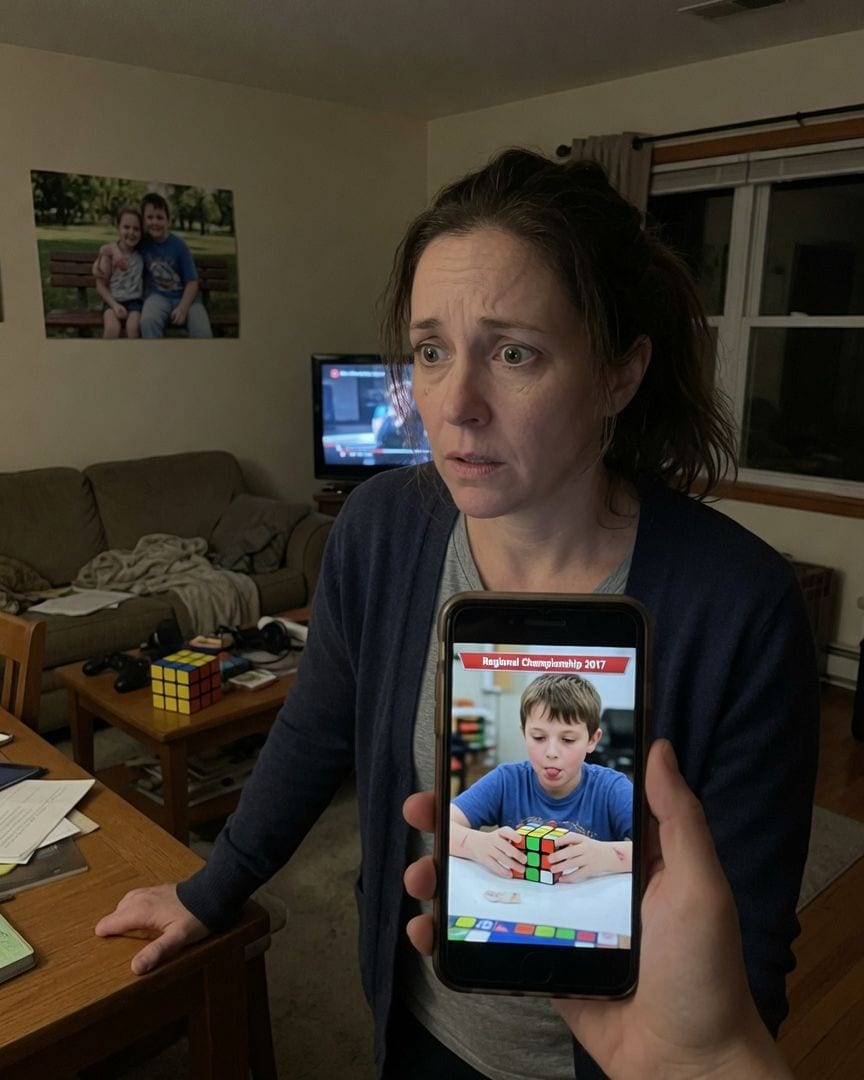
My son solves his puzzle cube yellow-first now. He says he's never used the old sequence, but his winning videos online prove he did.
I asked my fourteen-year-old son, Benjamin, about a shared childhood memory, trying to prompt a familiar connection. He recounted the details perfectly, even adding a wistful observation I'd forgotten. But then he described a conversation with his father, a man who had died before Benjamin was even born.
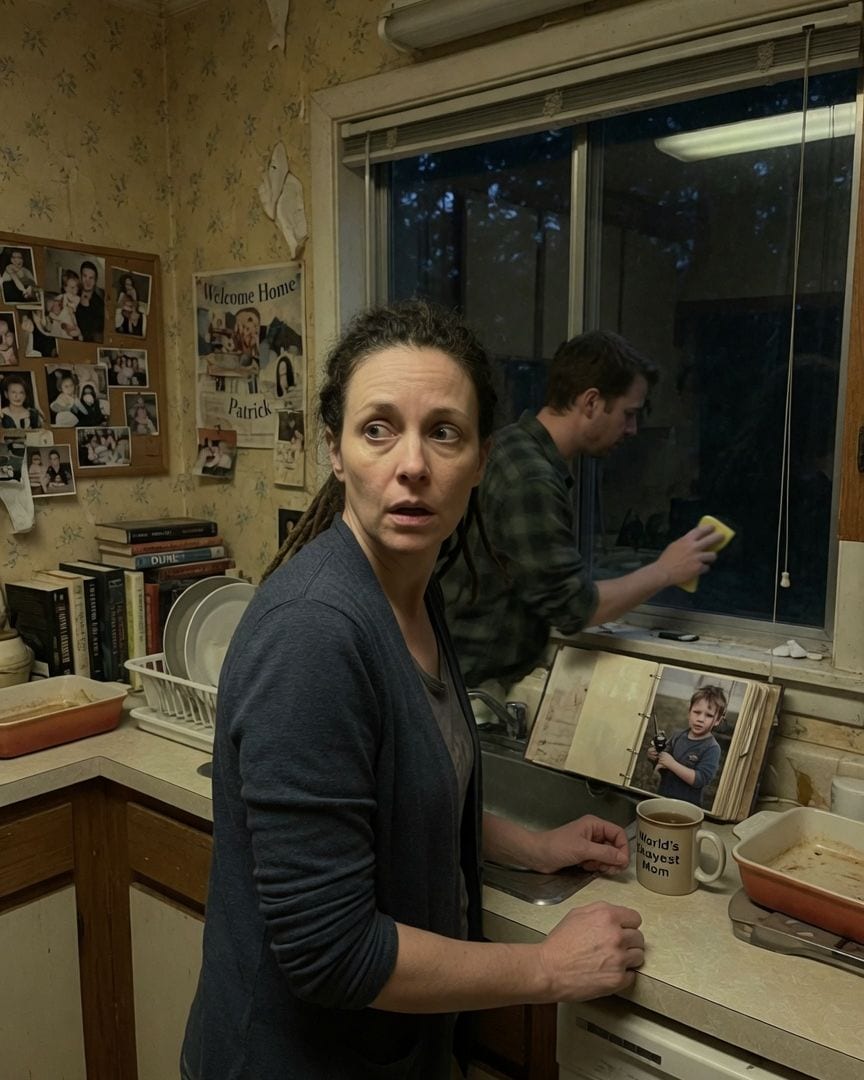
My brother thanked Mom for a red bicycle he got on his ninth birthday. That birthday was three years after he vanished.
My brother Patrick returned after vanishing 15 years ago, a miracle everyone called it. But at dinner, as he spooned a second helping of baked salmon, my stomach churned. Patrick always despised fish, the smell alone would send him from the room.
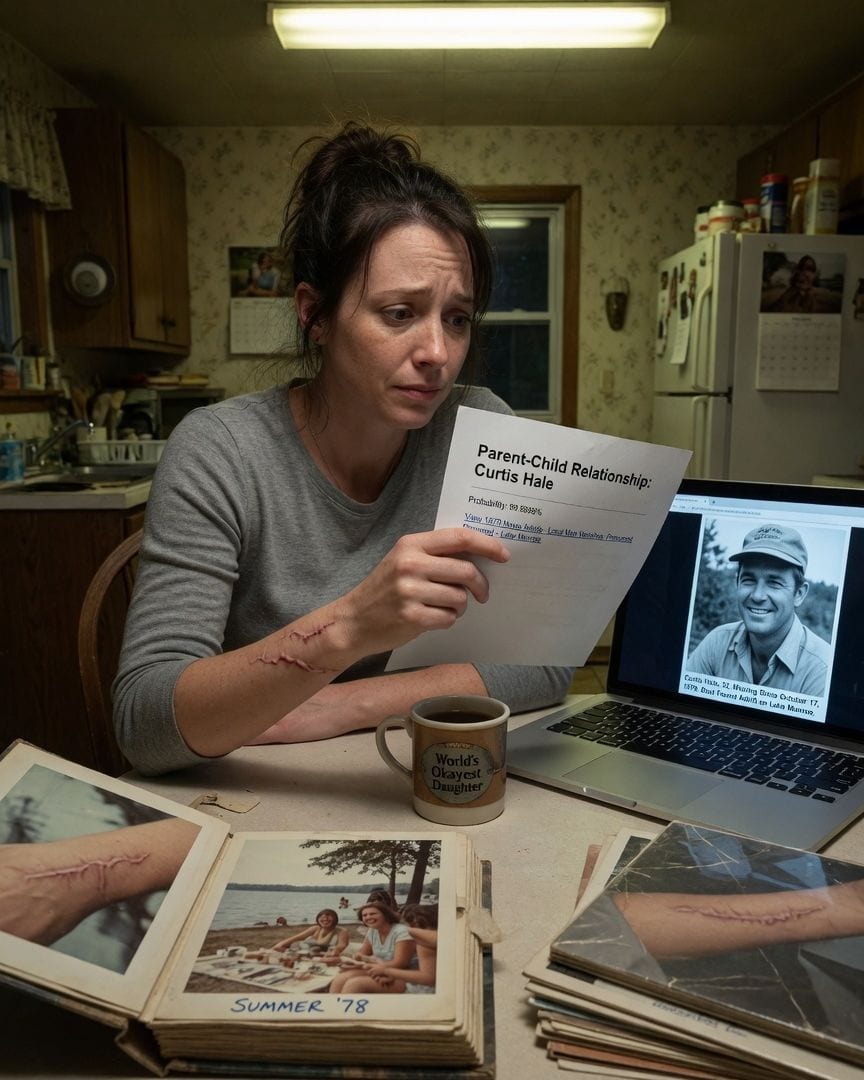
My DNA returned Curtis Hale as my father. He vanished in 1979. I was born twelve years later. The lab confirmed the match twice.
My DNA test results revealed something impossible: my biological father vanished in 1979, twelve years before my birth. My mother dismissed it as nonsense, but her reaction felt forced, leading me to old family photos. There, in a faded 1978 snapshot, I found my own distinctive childhood scar on the wrist of a stranger.
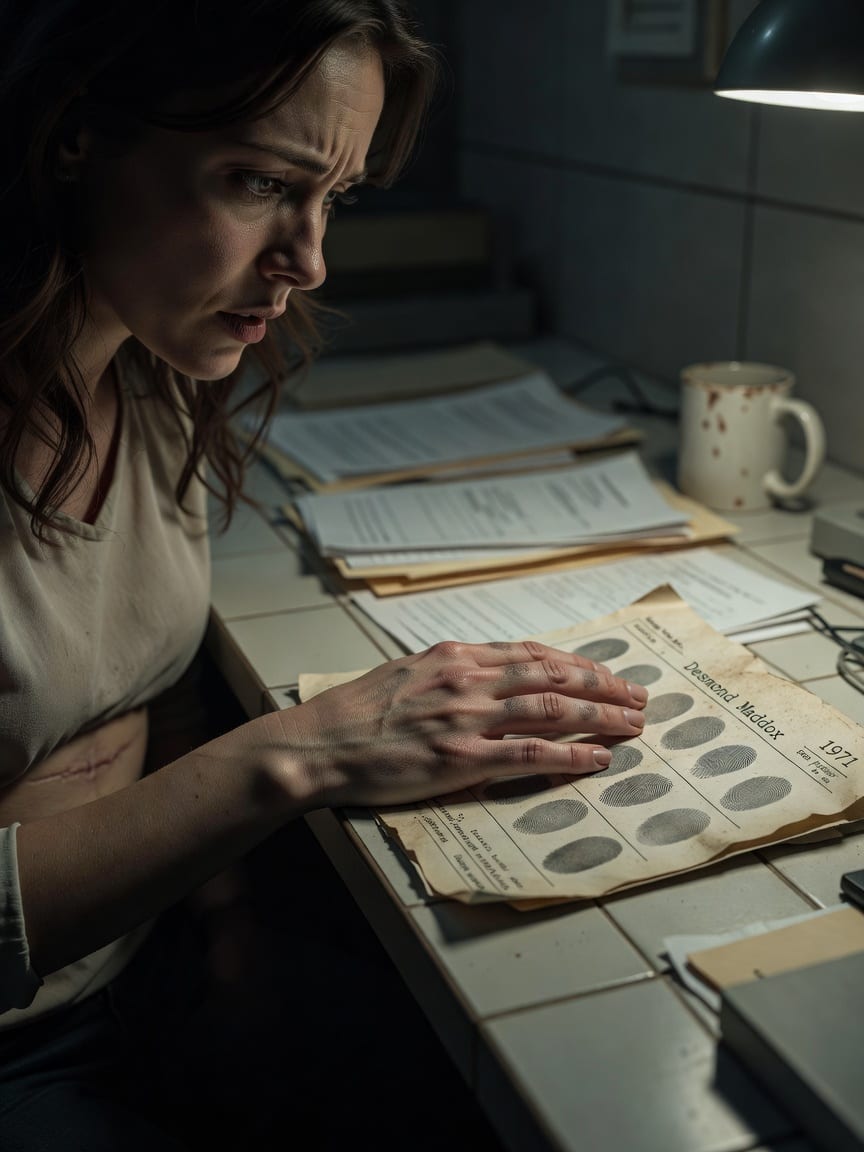
My fingerprints matched a man's 1971 arrest card. I've never been to that city, nor used that name. The examiner just stared at my hands.
As a fraud auditor, my world is built on facts, so when forensic examiner Russell Sheppard slid two ten-prints across his desk, I expected routine. One was mine. The other, yellowed from 1971, belonged to a Desmond Maddox arrested in New Haven – a city I'd never visited. But the impossible truth was clear: his prints were an exact match to mine.
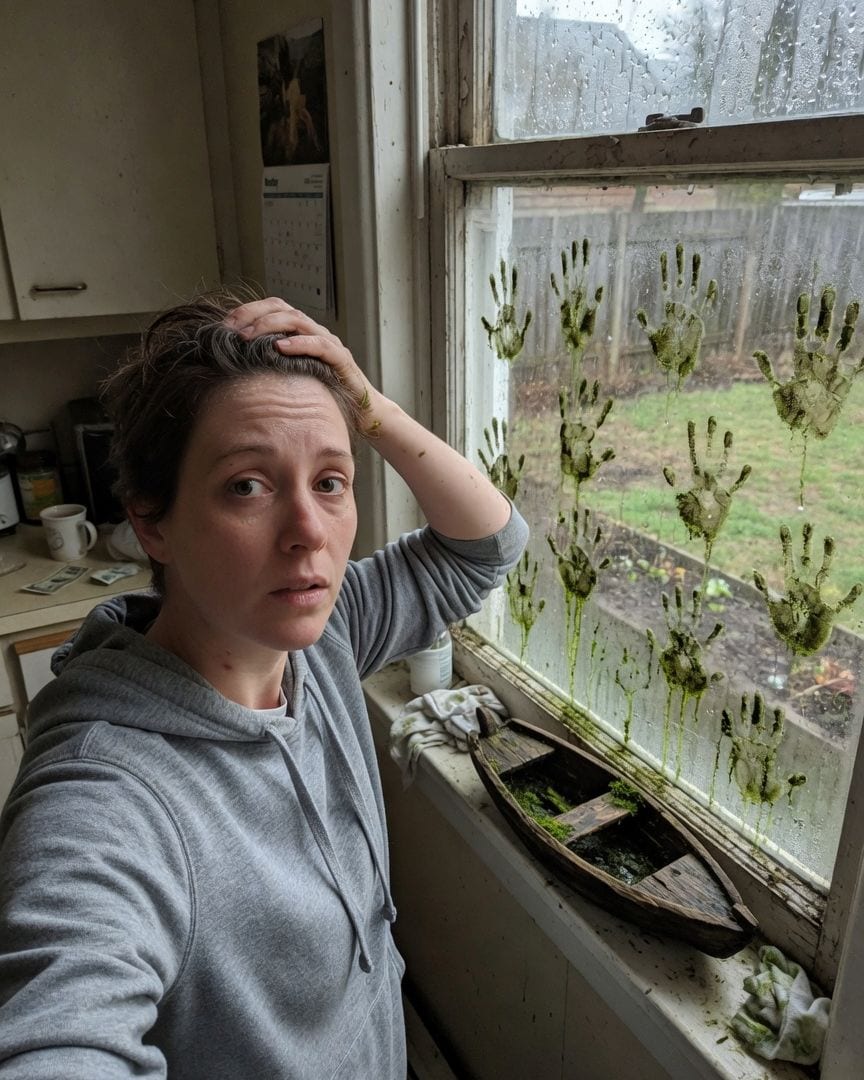
Wet moss handprints cover my kitchen window. My kitchen backs onto no water at all.
Monday morning, I found small, perfect handprints pressed against the *inside* of my kitchen window. They were wet and outlined in dark green moss, an impossible sight since my sealed window backs only onto a patch of lawn, with no water nearby. I ran my hand over them; they felt damp and cold.
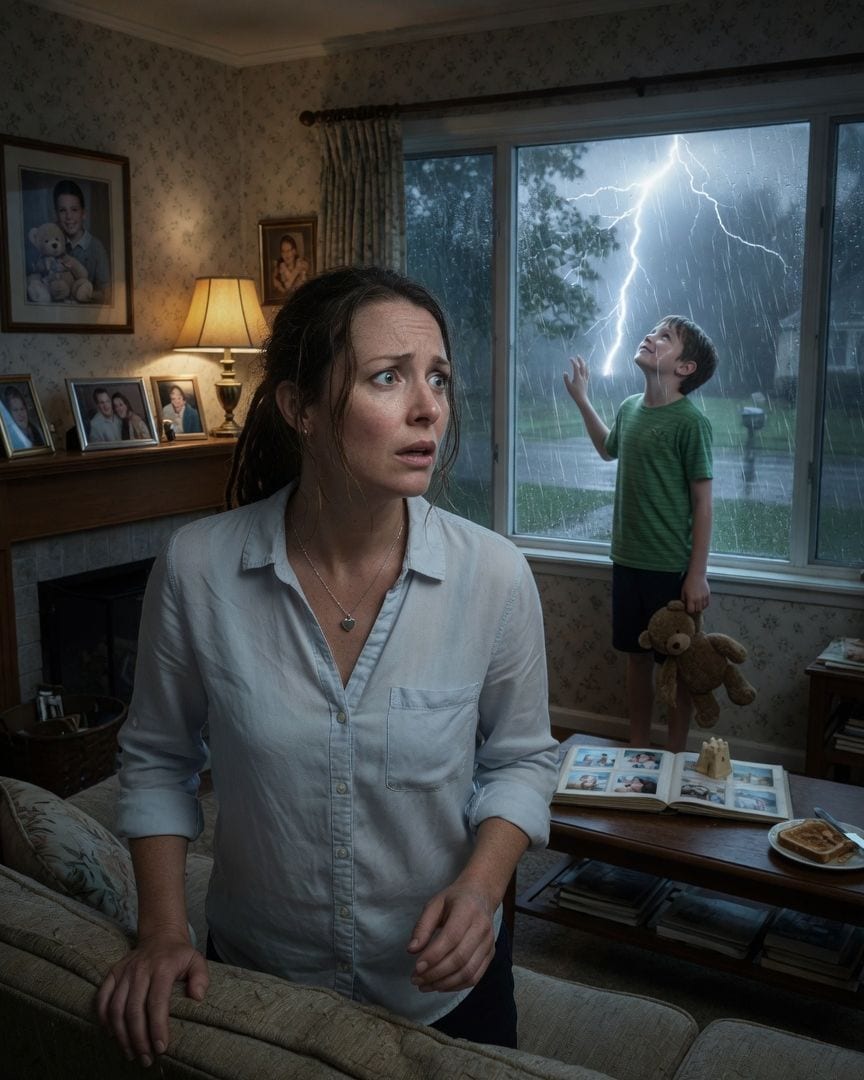
My boy came home and smiled into a thunderstorm. He used to hide under the kitchen table.
My eight-year-old son Lars returned after being missing, but he was different. He smiled into the furious thunderstorm he used to fear, and later, he calmly recalled details of my beach vacation from last year. He even described the star-shaped shell I'd placed on our sandcastle, claiming it as his own memory, even though he'd been home sick.