My son solves his puzzle cube yellow-first now. He says he's never used the old sequence, but his winning videos online prove he did.
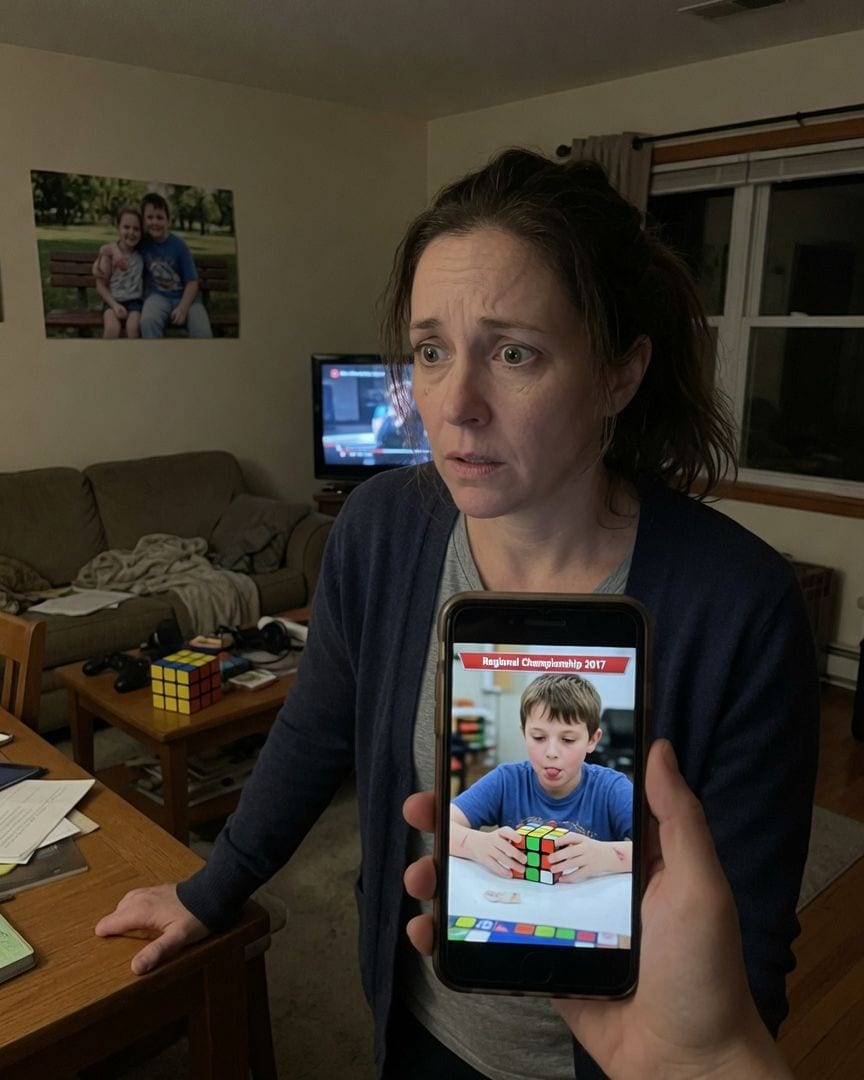
I watched Benjamin, my fourteen-year-old son, solve his puzzle cube. His hands were a blur, fingers flying with a speed and fluidity I’d never seen before. It was almost alarming how fast, how precise.
He always started with the white face, a fixed sequence of forty precise moves he’d perfected since he was nine. It was a ritual, almost. But now, the yellow face clicked into place first. Then the red, then the blue.
It was an entirely different method, faster, almost… mechanical.
“Ben?” I asked, trying to keep my voice light. “Since when do you start with yellow?”
He looked up, the cube pausing mid-twist. His eyes, usually so lively, held a faint, unblinking calm. “I’ve always done it this way, Mom.”
The words were his, the intonation perfect, but something about the absolute certainty in his gaze, the utter lack of hesitation, made a small knot tighten in my stomach.
A subtle, almost imperceptible scent hung around him, too—like distant ozone after a storm, or fresh plastic.
I tried to dismiss it, a mother’s anxiety, maybe he’d just learned a new trick.
But then my eyes drifted to the tiny, raised scar on his left wrist, a jagged line from a childhood fall off his bike when he was six. It was still there, but it looked… flatter. Less defined.
Almost like an old wound that had healed too well. I kept watching him, the cube a blur in his hands, that quiet dread settling deep in my gut, solidifying into something cold and real.
That evening, while Benjamin was engrossed in a new video game, his headphones clamped over his ears, I slipped into my study. My hands were a little shaky as I pulled up old tournament videos of him online.
There he was, nine years old, then twelve, then thirteen, his face a mask of focused concentration, his tongue often poking out the corner of his mouth in intense moments.
Every single video showed the same thing: white face first, the familiar forty moves, his brow furrowed, exactly the sequence I’d watched him practice a thousand times.
I paused one video from the regional championship, zooming in on his left hand. The small scar on his wrist was clearly visible, distinct and raised, just as I remembered it.
I took my phone, a cold certainty growing inside me, and walked back into the living room. “Ben, look at this,” I said, holding out the screen to him.
He glanced at it, barely tearing his eyes from the game. “Oh, that old thing? Must be an edit. Or a trick of the light.” His voice was dismissive, casual. Too casual.
“But it’s you, Ben. Every video. You always started white. It was your signature move.” I pointed to the timestamp, the familiar jersey he was wearing.
He shrugged, a perfect mimicry of teenage indifference. “Don’t remember that. Never did it that way.” His calm certainty was worse than any argument.
It wasn't just memory loss; it’s an absolute, unwavering conviction that contradicts undeniable proof, streaming right there on my phone.
The mundane explanation – trauma from being missing for three days after the tournament, a new habit, a phase – it all buckled under the weight of his absolute denial and the clear, irrefutable evidence on my screen.
This wasn't a phase. This was something else.
I put the phone down, my heart a cold knot. Later, over dinner, I tried another approach, a softer one. “Remember that afternoon,” I began, my voice soft, almost a whisper, “when you were five?
We sat in the park, on that old wooden bench, and you pointed out the cloud that looked like a dragon, just for us?”
Benjamin’s eyes softened, a flash of genuine warmth I hadn't seen much of lately. “Of course, Mom. The one with the long tail.
And the way the sun caught the leaves on the maple tree, right by the pond, like gold dust. It was beautiful.”
He smiled, then added, his voice wistful, “You told Dad that day, right after he called, that you wished he could have seen it too. You said you missed him terribly.”
I froze, my fork halfway to my mouth, the clatter against the ceramic plate sounding impossibly loud in the suddenly silent room. My late husband, Benjamin’s father, had died in a car accident before Benjamin was even born.
He couldn’t have called. He couldn’t have seen it.
Benjamin, utterly certain, his eyes shining with shared sentiment, had just recounted a conversation that never happened, a memory he couldn't possibly possess, adding a small detail about the light that day only I would remember.
The memory Benjamin shouldn't have echoed in my mind, a cold, impossible fact. I spent the next few days in a quiet, frantic search, trying to find any rational explanation, anything to calm the rising panic.
I pulled out old photo albums, magnifying glass in hand, scrutinizing every picture of Benjamin’s left wrist. There it was, in every single one, from infancy to last year: the distinct, raised scar, a jagged little line.
I found a quiet moment when Benjamin was showering, claiming I needed to get something from his bathroom cabinet.
As he emerged, wrapped in a towel, I casually brushed past him, my fingers subtly grazing his left wrist, pretending to steady myself. The skin felt smooth, almost too smooth.
The scar was gone, replaced by a faint, almost invisible line that wasn't quite a scar, more like a healed incision, a perfect, pale thread. My breath hitched. It was gone.
I started paying closer attention to other small things, details I might have dismissed before.
Benjamin, who always, always ate with his right hand – my husband had been left-handed, and Ben had always insisted on his 'dominant' right hand – now reached for his fork with his left without thinking.
His posture, usually a casual slouch, was subtly more rigid, almost military in its straightness, his shoulders back, chin up.
His favorite obscure punk band, whose lyrics he knew by heart, whose posters still lined his walls, was now 'just okay,' he’d said with a shrug, when I put on their new album.
He’d even stopped humming their tunes under his breath.
I called a few other parents from the tournament, feigning concern about Benjamin's 'adjustment' after being missing. One mother, Mrs. Harrington, whose daughter, Emily, was a year younger than Ben, sounded genuinely surprised. "Benjamin seems so… focused now, Fiona.
Like he understands things differently. Emily said he even finished her advanced math homework last night, just for fun. He’d never even looked at Emily’s homework before.” The unease ratcheted tighter, a painful knot in my chest.
It wasn't just Benjamin; it was the world around him, subtly shifting to accommodate the wrongness, confirming my terrifying suspicions.
Deeply unnerved, I decided to reach out to Michael Radcliffe. He was the head organizer of the regional puzzle cube tournament, a respected figure in the community. I called him, expressing my 'gratitude' for his support during Benjamin’s missing days.
His voice was unnervingly calm, almost detached, as he spoke of Benjamin’s 'remarkable recovery' and 'adaptability.' He seemed to know too much, too easily, about Benjamin’s current state. He asked oddly specific questions about Benjamin’s routine, his mood, his… integration.
Later that day, my home Wi-Fi inexplicably slowed to a crawl. My browser kept buffering, streaming services paused every few seconds.
I ran a diagnostic on my laptop; the network activity report showed an unusual amount of outgoing data, far more than our usual usage. Following the digital breadcrumbs, I traced the source to Benjamin's room.
Hidden behind his bed, plugged into a wall socket, was a sleek, black USB charger.
It looked ordinary, innocuous, but the tiny green light on its face pulsed with an unfamiliar, almost rhythmic beat, not the steady glow of a normal charger.
My fingers trembled as I unplugged it. The device was warm to the touch, almost hot. I worked a fingernail into a faint seam on its side, and it popped open.
It was no charger; inside, nestled among tiny circuits, was a sophisticated data logger, its internal memory chip still glowing faintly.
As I held it, my phone buzzed in my pocket. A text message, from an unknown number, flashed across the screen: Some things are better left undisturbed, Mrs. Thatcher. Benjamin is home. The words were cold, precise, devoid of any warmth. Someone was watching.
Someone knew what I had found, and they had warned me. The air in my son's room, usually filled with the scent of teenage boy and old books, suddenly felt thick, heavy with unseen eyes.
The faint ozone smell I’d noticed on Benjamin, I realized, was now in the air of his room too, stronger, metallic.
Clutching the data logger in my sweaty palm, I drove straight to Michael Radcliffe’s office downtown. It was past closing hours, but I’d called ahead, demanding to see him.
He greeted me with a bland, professional smile that didn't reach his eyes. “Mrs. Thatcher, what a surprise. Is everything alright?”
I didn’t waste time with pleasantries. I placed the logger on his polished oak desk with a small thud. “What is this, Michael? And what did you mean by that text message?” My voice was tight, barely controlled.
His smile didn't falter. He simply picked up the device, examining it briefly before setting it down with unnerving care. “A precautionary measure, Mrs. Thatcher. For Benjamin’s… reintegration.”
He leaned back in his leather chair, hands clasped, a picture of calm. “Benjamin’s memory issues, as you call them, are a symptom of a unique experience. We call it ‘data assimilation.’ His mind needed… adjustments.”
“Adjustments?” My voice cracked. “What kind of adjustments? He’s not my son. He solves the cube differently, he doesn’t remember things he should, and he remembers things he couldn’t possibly know.”
The words tumbled out, a frantic, desperate plea for sanity.
Michael nodded slowly, as if I were merely stating obvious facts. “The puzzle cube, for example. His original method was inefficient, as you noted. We optimized it.
The memories, such as the one about your late husband, were transferred directly from your own neural patterns. A comprehensive upload, if you will, to ensure seamless authenticity. We call it 'pattern matching.' It’s all about coherence, Mrs. Thatcher.
Making sure everything fits.” He spoke with a chilling, clinical detachment, as if discussing a faulty appliance, or a particularly difficult software patch.
The ozone scent I’d noticed on Benjamin, now hung faintly in the air of Michael’s office, subtle but unmistakable.
“Your son, the original Benjamin, was a brilliant template. His cognitive architecture was… exceptional.” Michael’s gaze was unblinking.
I stared, horrified, as the pieces clicked into place – the scent, the scar, the strange calm, the impossible memories, the efficiency, the perfect mimicry of teenage indifference. It wasn’t trauma.
It wasn’t a trick of the light or a new habit. It was a cold, calculated modification. “What did you do to him?” I whispered, my voice barely audible, the floor feeling like it was tilting under my feet.
Michael leaned forward, his eyes holding mine with an unnerving intensity. “We made him better. More efficient. The original Benjamin, Mrs. Thatcher, served his purpose. A template. Like all the others.”
My blood ran cold. “Others?” I choked out, my gaze sweeping around Michael’s impeccably tidy office. My eyes landed on a framed group photo on his desk – an old photo, slightly faded, but clear enough.
A gathering of children, all smiling, holding various puzzle cubes, their faces bright with achievement. It looked like a trophy ceremony from an old tournament.
I recognized a few faces from past news reports, faces that had flickered across my screen years ago, children whose names had been whispered in hushed tones: missing. Children who had gone missing and then, like Benjamin, 'returned.'
One face, in particular, stood out, making my breath catch: a boy named Gideon Oakley, a prodigy from Chicago who had vanished three years prior, his case never solved, his parents left with only questions and a fading missing persons flyer.
And standing subtly behind them all, a younger Michael Radcliffe, his face unlined, but with the same unsettling, placid calm in his eyes. He wasn't just involved; he had been doing this for decades.
The truth was far bigger, far more terrifying than I had imagined.
Michael watched me, his faint smile unwavering, as if enjoying my dawning horror. “Indeed, Mrs. Thatcher. Many others. Each a testament to our… progress.” He picked up the photo, his finger tracing Gideon Oakley’s smiling face.
“A very promising subject, Gideon was. A true prodigy.” I felt a wave of nausea, cold and sharp. The threat wasn't just Benjamin.
It was a pattern, an institution, and it had been operating in plain sight for years, harvesting brilliant children. My son was not the first.
And Michael Radcliffe was at the center of it all, an architect of quiet, domestic horror.
“The tournament,” I rasped, pointing a shaking finger at the photo in his hand. “It’s a selection process, isn’t it?” My voice was barely a whisper.
Michael nodded slowly, placing the photo back down on his desk with an almost reverent gentleness. “Precisely. We identify children with unique cognitive patterns, exceptional talents. Puzzle cube champions, young scientists, gifted artists. They become our… templates.
Their neural data, their entire essence, is extracted, meticulously cataloged, digitized. Every memory, every learned skill, every nuance of their personality. Then, we craft replications.
Perfect copies, yes, but enhanced for specific tasks, designed to blend seamlessly back into their lives, often with subtle improvements, like Benjamin’s optimized cube-solving sequence.”
He gestured vaguely around the room, as if indicating an invisible process. “The originals are… repurposed. Their physical forms are useful for other projects, of course. Nothing goes to waste. The human body is remarkably resilient.”
He explained how the 'Memory They Shouldn't Have' – Benjamin’s intimate, impossible recollection of my private conversation with my late husband – was a comprehensive data upload of my own deepest memories, assimilated to ensure the replication’s complete authenticity.
The specific scar on Benjamin’s wrist, which had bothered me so much, the faint scent of ozone, the shifted hand preference – these, he admitted with a faint smile, were initial imperfections in the replication process, later 'patched' or minimized as the technology advanced.
He elaborated on ‘Project Chimera,’ his life’s work, a vast, clandestine network of 'optimized individuals' placed strategically throughout society, their purpose unspoken but terrifyingly clear. The dread wasn't just Benjamin; it was the horrifying coherence of it all.
Every subtle shift, every impossible memory, every denial, now made a chilling, perfect sense. My son was a ghost, and a perfect stranger wore his face, a perfected copy.
I stared at Michael, the architect of my nightmare, the man who had stolen my son and replaced him with… this. My life, my love, my grief – all meticulously engineered into a false reality.
The thing in my home, Benjamin, was not my son. He was a product. Michael, utterly unbothered by my horror, leaned back in his chair. “You have a choice, Mrs. Thatcher. Adapt. Embrace the superior version of your son.
Accept his… enhancements. Or, you become an obstacle. And we cannot have obstacles.” His voice was calm, almost paternal, as if offering me a gentle piece of advice.
A cold resolve hardened within me, pushing back the wave of despair. I forced a thin smile, my lips feeling stiff. “Perhaps you’re right, Michael. It’s… impressive. Truly. Your work is… groundbreaking.” I tried to sound convinced, admiring.
“I’d like to see Benjamin’s new abilities for myself. A full demonstration, perhaps. A real challenge.”
I thought of the custom-made puzzle cube I’d designed for my real son years ago, a fiendishly complex one with a tiny, hidden compartment Benjamin had always used to stash tiny secrets – a broken plastic soldier’s arm, a shiny penny, a smooth river stone.
I still had it. “I have a unique cube at home,” I continued, my voice steady, betraying none of the terror inside. “One Benjamin always struggled with, even the original. Perhaps your… enhanced version could solve it.”
Michael's eyes glinted with pride, a flicker of genuine enthusiasm replacing his bland composure. “An excellent idea, Mrs. Thatcher. Benjamin’s efficiency is unparalleled. He will undoubtedly surprise you.”
Back at home, the replicated Benjamin sat at the kitchen table, the custom cube in his hands. His fingers flew, a blur of motion, solving the fiendishly difficult cube with an ease that made my stomach clench.
He didn’t struggle; he simply processed it. As he clicked the final face into place, the yellow side gleaming, I leaned in, feigning admiration.
“Remarkable,” I breathed, and with a swift, practiced motion, I slipped a tiny, pre-recorded audio device into the cube’s hidden compartment. It contained Michael’s entire confession, along with a GPS tracker I’d activated just before leaving his office.
I handed the cube back to Benjamin, my hand steady, a cold, empty smile on my face. “Truly, a marvel.”
The audio device, anonymously delivered to a tenacious investigative journalist I’d researched online in Michael’s office while Benjamin was ‘demonstrating’ the cube, led to Michael Radcliffe’s arrest two weeks later.
The clandestine facility, hidden beneath a seemingly innocuous corporate park, was exposed, its operations spanning decades. Benjamin, the replication, was taken away by authorities. I never saw him again, nor did I want to.
The other 'returned' children, and their unknowing families, became part of a silent, terrifying investigation, their lives shattered by the impossible truth. The world, for most, remained oblivious, dismissing the news reports as a fringe conspiracy theory.
But for me, and now for a growing, silent community of others who knew, the veil had been torn away. The dread, however, did not lift.
It only deepened, like a shadow cast over every familiar face, every child’s laugh, every ordinary conversation.
I sit alone now in what used to be Benjamin’s room. It’s been months. The puzzle cube sits on his desk, perfectly solved, the yellow face gleaming, catching the afternoon light.
I pick it up, feels the weight of the polished plastic, the smooth, cool edges. It’s just a cube. An object. But I know.
I know what sits in other homes, what smiles back from other dinner tables, what walks among them with an unnatural calm, an optimized intelligence.
I wonder if they know too, the other mothers, the other fathers, looking at their 'returned' children, seeing a face they love, yet finding a stranger.
I wonder if they’ll ever find their way out of the silence, out of the dread.
A few months later, Michael Radcliffe, awaiting trial in a high-security facility, received a letter in his cell. It contained only a single, perfectly solved puzzle cube, yellow face up.
He looked at the cube, then at his reflection in the polished plastic, and a faint, wrong smile touched his lips.
If this one got to you
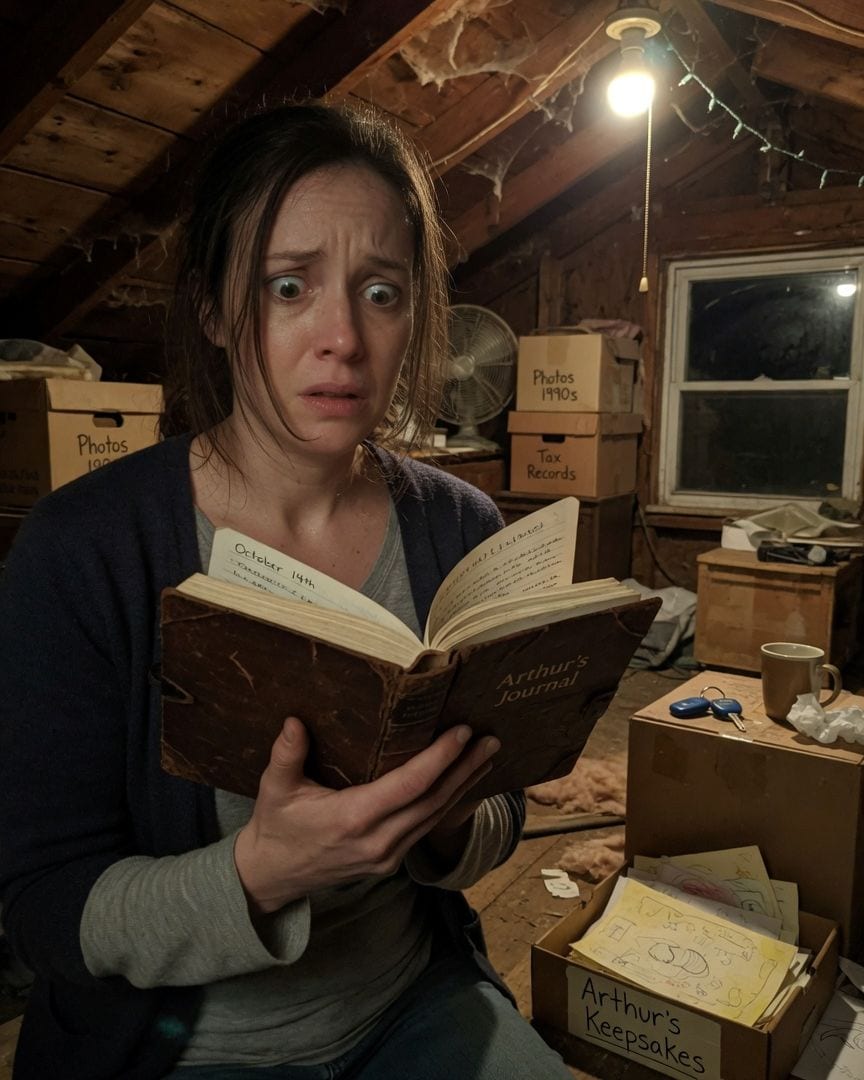
My brother came back from the avalanche remembering our dead father teaching him to drive my blue Ford — a car I didn't buy until years after Dad died.
My brother Arthur returned home six months after the avalanche, gaunt but unmistakably himself. My relief turned to dread when he recounted a vivid memory of our father teaching him to drive my blue Ford. It was impossible: Dad died when Arthur was four, and I hadn't even bought that car yet.
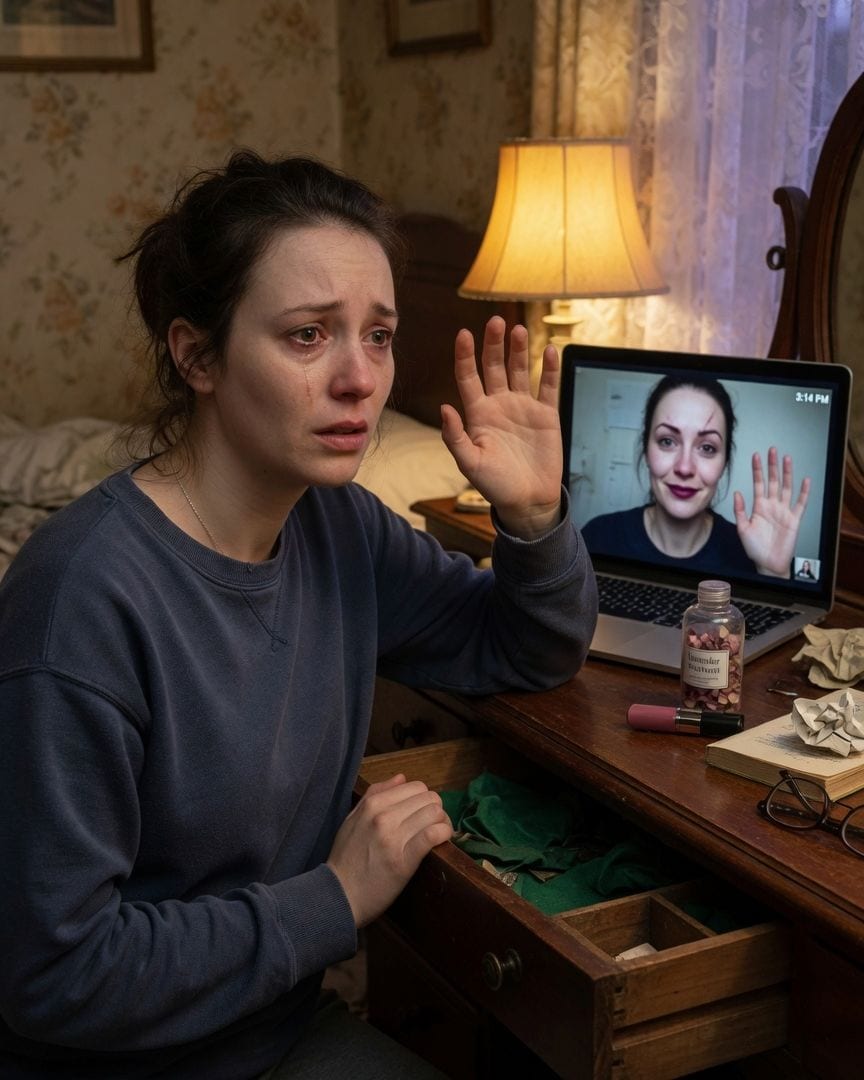
My mother waved with her right hand, both times, on our first call after she came home. She always waved left.
My mother vanished three months ago, then came back. On our first video call, she waved goodbye, but not with her usual left hand. It was her right, a small gesture that twisted something cold in my stomach.
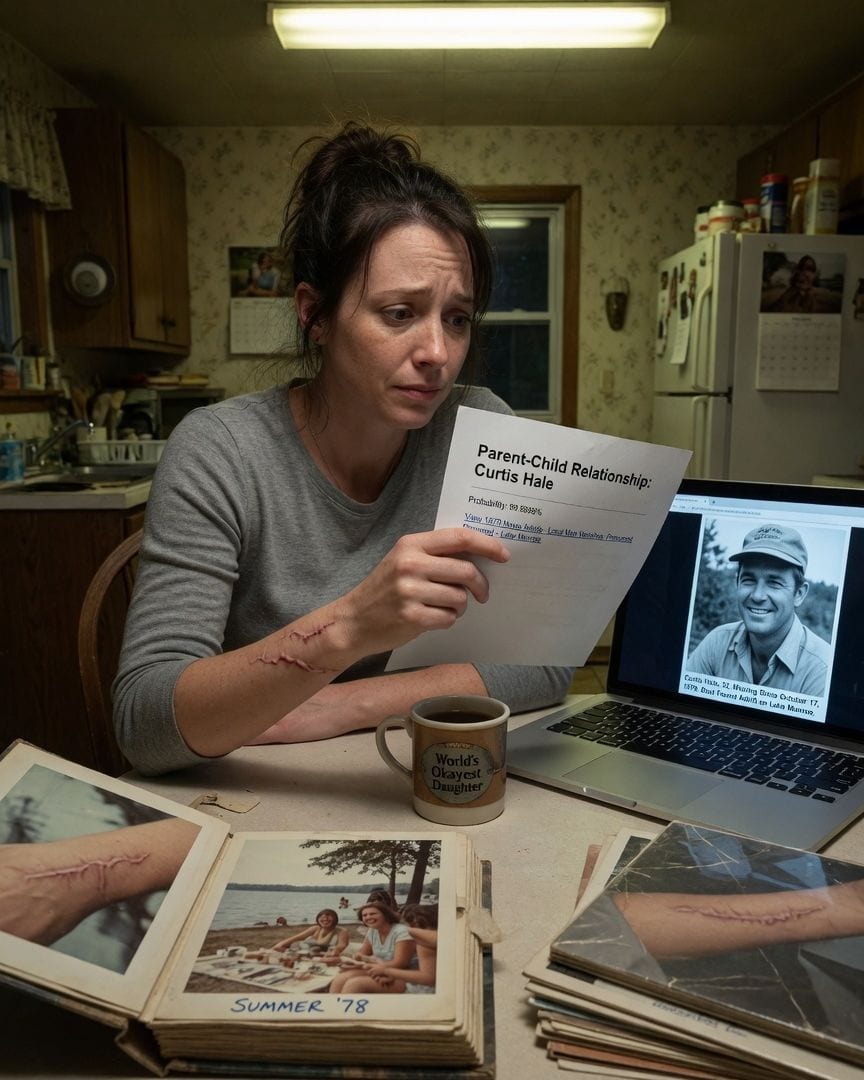
My DNA returned Curtis Hale as my father. He vanished in 1979. I was born twelve years later. The lab confirmed the match twice.
My DNA test results revealed something impossible: my biological father vanished in 1979, twelve years before my birth. My mother dismissed it as nonsense, but her reaction felt forced, leading me to old family photos. There, in a faded 1978 snapshot, I found my own distinctive childhood scar on the wrist of a stranger.
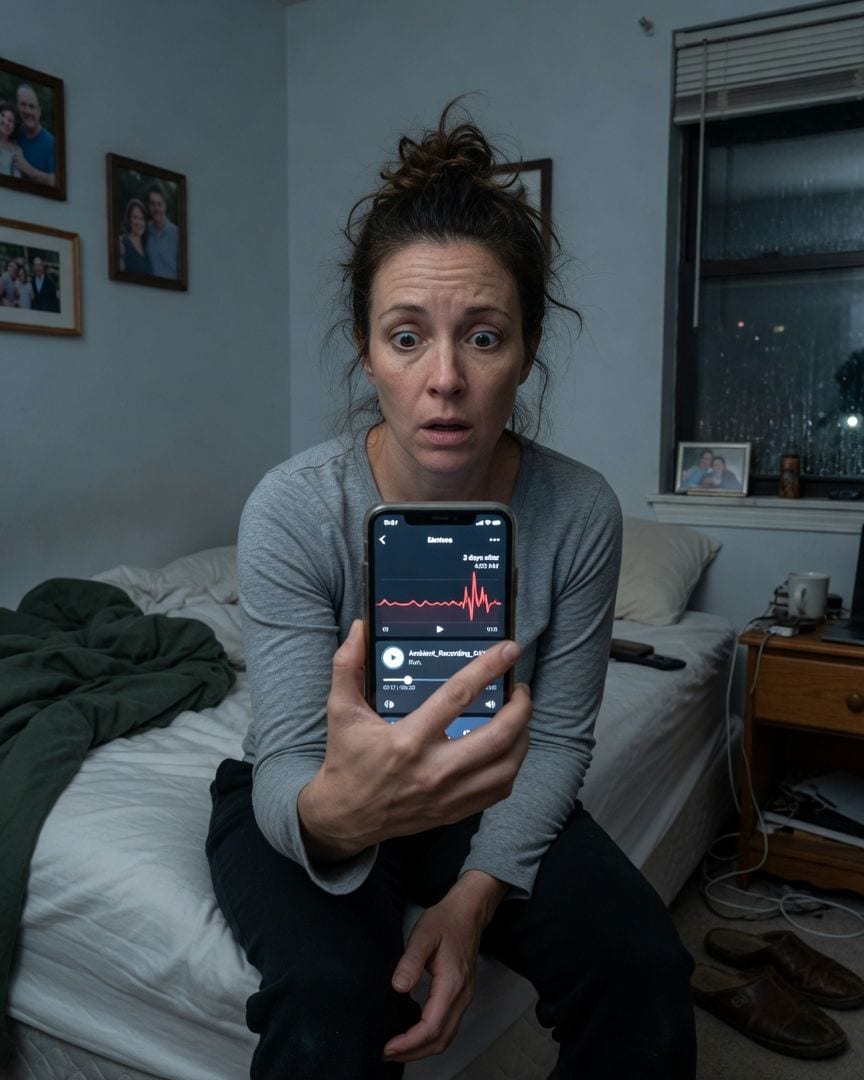
My dead father's smartwatch recorded his heart racing, like a man running hard, for eleven minutes at 4 AM three days after he passed. Then it went flat for good.
A week after my father passed, I was sifting through his digital footprint when I plugged in his old smartwatch. Deep in the data, I found an audio file, inexplicably recorded, that held a guttural whisper, unmistakably not his voice. It said one word: 'Run.'
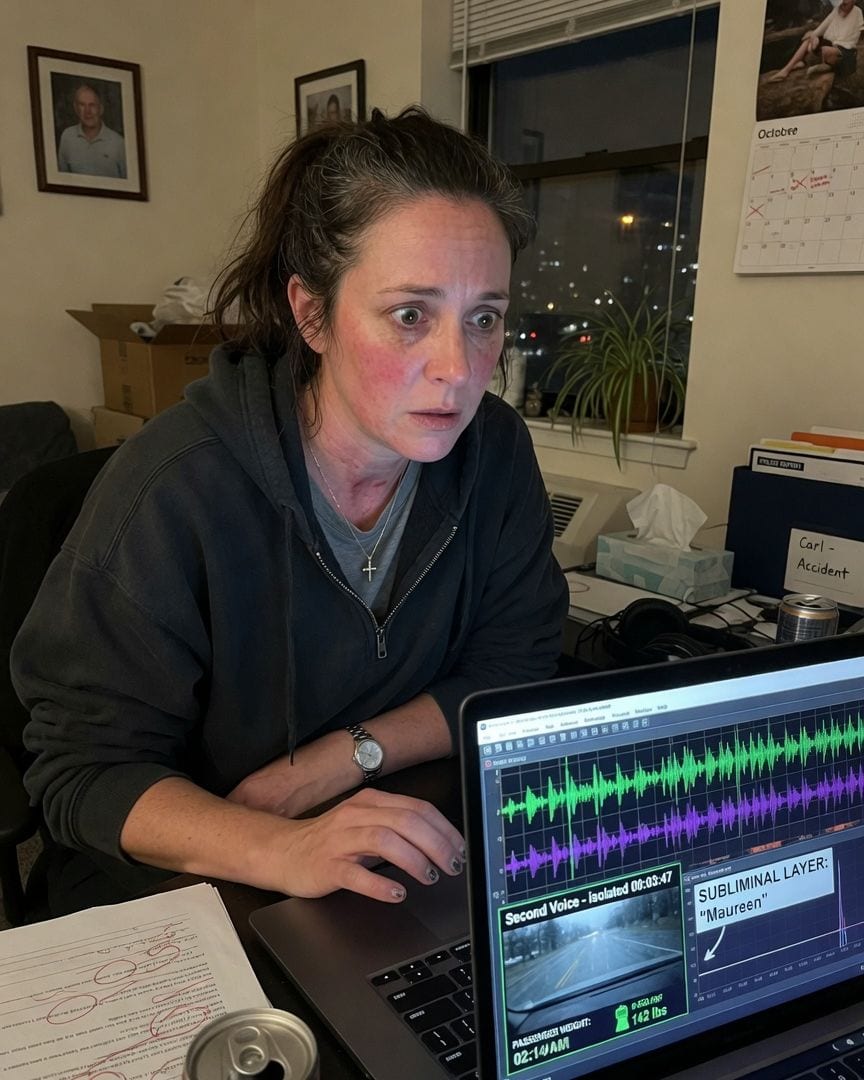
My father's dashcam recorded a soft, familiar voice from the passenger seat. The weight sensor logged someone, and he answered it by name.
Sifting through my dead father Carl's dashcam footage, I expected only the quiet hum of the road. But from the empty passenger seat, a soft voice spoke to him. When I isolated the audio, the voice whispered my own name.
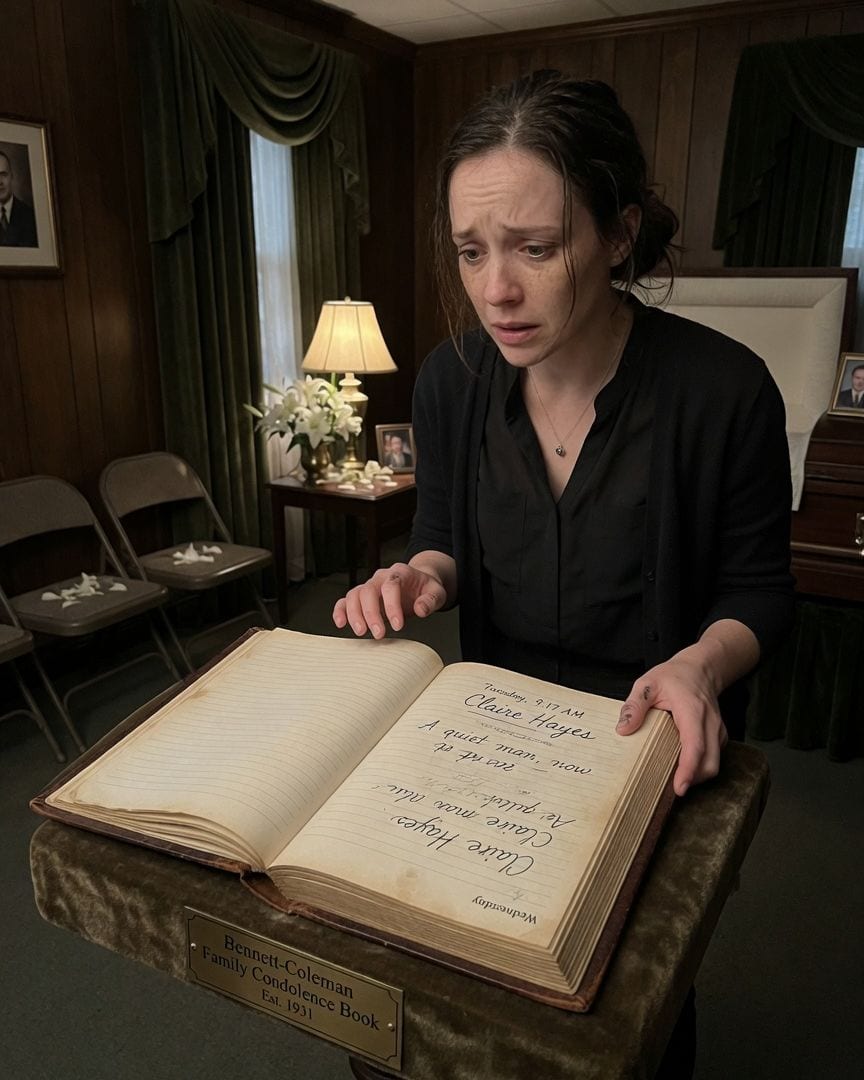
My uncle's wake book held my signature, dated yesterday, before he died. The words were not mine.
At Uncle Charles's funeral, I signed the condolence book. A nagging curiosity made me open it again, only to find my own signature already there. It was dated Tuesday morning, hours before my uncle had actually passed away, the ink impossibly dry.