My bike camera shows a long avenue of tall gated houses. That road isn't on any map I can find.
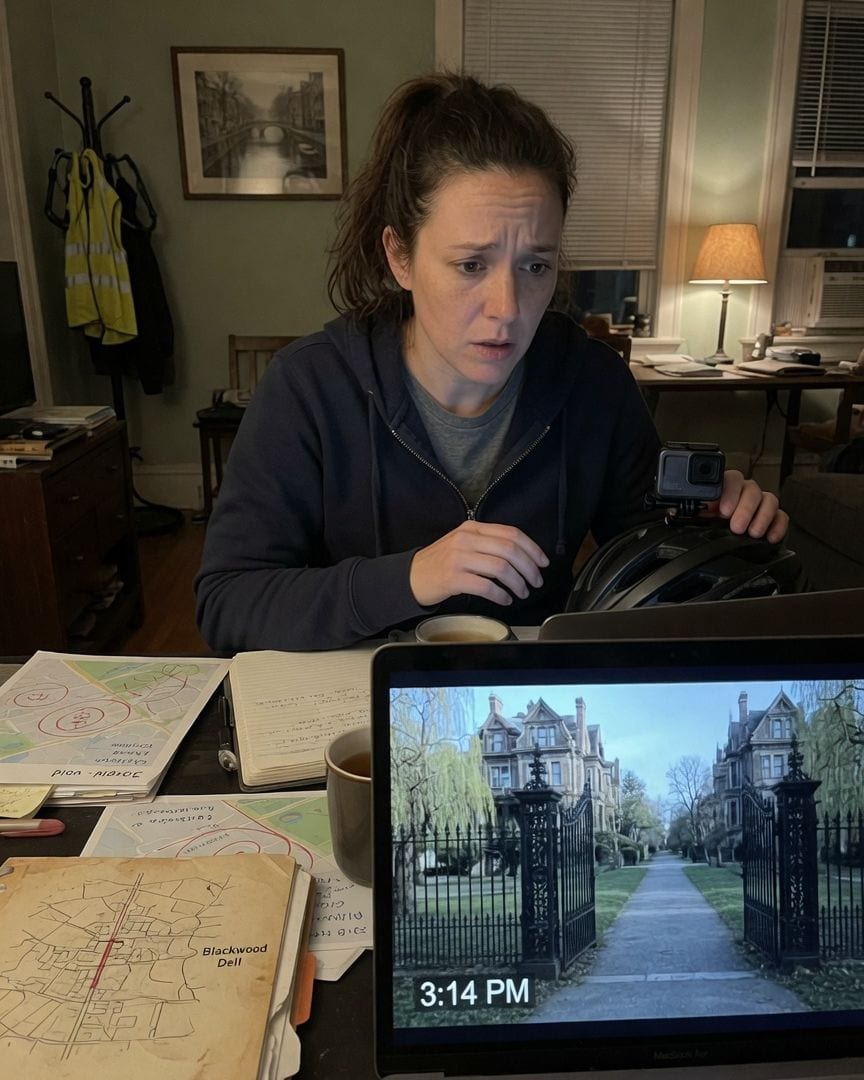
It was a Sunday, cool and bright, a perfect day for a long ride. My bike camera, clipped neatly to the top of my helmet, recorded everything.
I'm a data analyst, so for me, a bike camera isn't about thrills or vlogging; it's just practical. Insurance. If something happens, I have the facts. Always have.
That’s why, when I sat down Monday evening to quickly scrub through the footage, I knew something was wrong.
My usual route takes me down Elm Street, a left onto Mill Lane, then a straight shot past the old canal bridge before looping back home.
The segment I was looking at was exactly between that Mill Lane turn and the canal. Thirty seconds of footage.
Instead of the familiar willow trees that droop over the canal path, instead of the placid, green-tinged water, the recording showed a different road entirely.
It was a long, straight avenue, lined with tall, imposing houses, each behind an ornate, wrought-iron gate. The architecture was severe, almost grand, but the whole scene was eerily still.
No cars, no pedestrians, no sound but the low whir of my tires on what looked like smooth asphalt. My breathing, caught by the camera's microphone, was normal.
The light was identical to the rest of the ride, clear and bright. It wasn't a trick of the light, wasn't a smudge on the lens. I replayed it, then again, pinching the screen to zoom in.
The details were crisp, the timestamp clear: 3:14 PM. Perfectly integrated into the timeline, a seamless thirty-second cut of impossible road.
I pulled up Google Maps, then Street View, punching in the exact coordinates from the adjacent, correct footage. Nothing. Just the familiar lane, the canal, the willow trees. As it should be.
The impossible road, that silent, stark interruption, remained on the file, stubbornly, chillingly real.
I knew Julian Marsh wouldn't believe me, not at first. He owned 'Pedal & Spoke,' the local bike shop, and had a healthy disdain for anything that wasn't solid mechanics or good asphalt.
I showed up Tuesday morning, laptop in one hand, helmet camera in the other.
"Glitch," he said, before I'd even finished my explanation. He pulled the camera from the helmet, connected it to a diagnostic rig, his brow furrowed with the kind of certainty only a bike mechanic can have. "Corrupted file. Bad sector.
Or maybe the light caught something weird, some kind of lens flare."
He ran the diagnostics. The camera hardware was clean, perfectly functional. The file itself, my 3:14 PM segment, reported no errors. Julian, looking a little more thoughtful now, opened my Strava app.
We cross-referenced the video's timestamp with my GPS track. The route was a perfect line, right up until that 3:14 PM mark. For those thirty seconds, precisely when the impossible avenue appeared, the GPS data was blank. A void.
My speed was consistent, my heart rate monitor showed nothing out of the ordinary, but my location? Gone. Then, just as abruptly, it reappeared on the familiar lane, past the canal.
Julian tried to 'clean' the footage, running it through a basic editing suite. He fiddled with codecs, tried to isolate frames, but the avenue of houses remained, immutable. It wasn't corrupted data; it was data.
"It's like it just… happened," he muttered, leaning back from the screen, his usual easygoing demeanor replaced by a visible unease. He still didn’t have an explanation, and the lack of one clearly bothered him.
"It's a road," I said, more to myself than to him. "And it's not on any map."
I spent the next few days in a rabbit hole of local historical forums, defunct planning commission records, and obscure mapping sites. I filtered by 'lost settlements,' 'erased places,' 'disappeared roads.'
Most of it was dead ends, half-remembered farmsteads, or local folklore. Then, on a particularly dusty, geo-caching forum from 2007, an old thread popped up. 'Anyone remember Blackwood Dell? My gran said it was just gone one day.'
Blackwood Dell. The name felt oddly resonant.
The thread mentioned it was a private estate, supposedly erased from public records after some kind of incident. That was enough. On Thursday, I took a half-day and drove to the local historical society's small, dusty archive.
The air smelled of old paper and forgotten things. After hours of sifting through brittle ledgers and faded photographs, my fingers gritty with dust, I found it.
Tucked into an obscure property deed book from the late 1950s, a hand-drawn map.
It was crude, certainly not a professional survey, but unmistakable. There, stretching precisely from the coordinates of my GPS blank spot, was a road. A long, straight avenue, leading to a sprawling estate labeled 'Blackwood Dell.'
My finger traced the familiar contours of the impossible avenue. It was exactly the one from my video.
A chilling handwritten note was scrawled across the bottom, in faded sepia ink: 'Destroy all copies. C. Ellison.' The paper rustled softly in my trembling hand. I froze, the implications sinking in, cold and sharp.
The name 'C. Ellison' and 'Blackwood Dell' became an obsession. I knew a Carl Ellison, 78, a retired archivist and local historian, still lived on the outskirts of town. He was known for his encyclopedic memory, and his reclusiveness.
I found his address in an old phone book, scrawled on a yellowed page, and drove out that Friday afternoon, the hand-drawn map clutched tight in my bag.
His house was small, tucked away behind a tangle of overgrown rose bushes, paint peeling around the windows. Carl was a gaunt man, his face a roadmap of sharp lines, his eyes wary behind thick spectacles.
He answered the door reluctantly, squinting at me.
"Blackwood Dell," he rasped, when I finally managed to ask. He dismissed it with a wave of a skeletal hand. "Old urban legend, miss. Things best left buried." He started to close the door.
But I persisted, my voice tight. "The map. The 'Destroy all copies' note. And the road. I have it on video. From my bike camera."
His composure cracked then. A flicker of something akin to fear, or perhaps just profound weariness, darted through his gaze. The hand on the doorknob trembled slightly. He hesitated, then opened the door a fraction wider.
He didn't invite me in, but he didn't close it either.
He offered a vague, unsettling story about 'a community that simply… vanished.' He refused to elaborate, shaking his head slowly, but he didn't deny the map's authenticity. Not anymore.
"Some things," he said, his voice barely a whisper, "are forgotten for a reason."
I left more unsettled than before. On my way back into town, I stopped at the exact location where the Dell had appeared in my footage, between Mill Lane and the canal. There was no grand avenue, just dense woods.
But, armed with the old map's contours, I noticed something. A faint, overgrown track, barely discernible beneath decades of leaf litter, leading into the trees precisely where the map indicated the Dell's main entrance.
It was too straight, too wide, to be natural. It looked like a path that had simply been consumed by the forest. The air felt colder there, somehow.
I returned to the overgrown track the next morning, a Saturday, determined. Pushing through the brambles and low-hanging branches, the air grew noticeably colder and stiller as I ventured deeper, the sounds of distant traffic fading into an unnatural quiet.
The faint track was indeed a road, albeit one almost completely reclaimed by nature, its asphalt cracking beneath a thick carpet of moss.
After a few minutes of forcing my way through the undergrowth, half-buried in a tangle of ivy, I unearthed it. A rusted, ornate metal signpost, its scrollwork blackened with age, its base firmly anchored in what felt like solid concrete.
The intricate design of the ironwork, the particular curve of the finials, matched the ornate gates I'd seen in my video. It was heavy, solid, and undeniably real.
As I snapped a photo with my phone, the screen still gritty from the dirt, it buzzed with a new message. The sender was unknown, just a string of numbers.
The text was chillingly brief: 'Some paths are closed for a reason. Don't dig.'
My heart hammered against my ribs. I spun around, scanning the silent, encroaching woods. My breath hitched in my throat.
I saw nothing but the dense canopy and the twisted shadows of the trees, but the feeling of being watched was palpable, a cold prickle on my neck.
My phone, suddenly heavy in my hand, felt like it was broadcasting my exact location to something unseen.
Later that day, Julian called, his voice tight with unease. "Emily, listen. Something weird happened after you left yesterday. My shop's security camera system? It had a strange anomaly. A thirty-second blank spot in the recording.
Right around the time you showed me your video, maybe an hour after." He paused, and I could hear him swallow. "It was just… static. Like the camera just decided not to record for a bit. Never happened before."
The chill on my neck intensified.
I wasted no time. Sunday morning, I was back on Carl Ellison's doorstep, the photo of the rusted signpost on my phone, the anonymous text message displayed prominently.
His face, already pale, seemed to drain of all color when he saw them. He let me in this time, closing the door behind me with a soft click that seemed to echo in the small, musty living room.
He sighed, a deep, rattling breath that sounded like dry leaves. "Blackwood Dell," he began, his voice barely a whisper, "was not just a community.
It was a private, self-contained estate, established in the early 20th century by a man named Alistair Blackwood. An eccentric industrialist, fascinated by… esoteric sciences." Carl paused, his eyes fixed on some distant memory.
"My grandfather was the groundskeeper there, from the beginning. Knew every inch of it."
He explained that in the late 1950s, a series of 'disappearances' began. "Not just residents leaving," Carl stressed, his voice gaining a ragged edge, "but people vanishing from inside the Dell's grounds without a trace.
From their homes, from the pathways. No forced entry, no struggle, just… gone." The authorities, unable to explain it, were initially baffled. Then, under immense pressure, they sealed the Dell off.
Then they systematically erased it from all public records, maps, and even local memory.
"They wanted it gone," Carl whispered, his gaze intense, meeting mine. "As if pretending it never existed would make what happened stop. The few remaining families were compensated, relocated, told to forget. And they did. Or tried to."
He reached for a worn leather album on a nearby table, its covers cracked with age. He pulled out an old, faded photograph. It was sepia-toned, a grand entrance, a long, gated avenue.
The gates were ornate, wrought-iron, with the exact same distinctive scrollwork as the rusted signpost I'd found. The houses behind them, tall and imposing. It was the road from my video. Undeniably.
Beside it, he carefully laid a brittle, yellowed local newspaper clipping from 1958. Its headline, still stark despite the fading ink, screamed: 'Unexplained Disappearances Plague Remote Estate.'
The article detailed the vanishing of several residents, the police bafflement, the growing panic.
I felt the blood drain from my face. The blank GPS data on my camera, the 'Destroy all copies' note, the impossible road that was impossibly real – it all clicked into a terrifying, coherent pattern.
A place that refused to be forgotten. A place deliberately erased. And my camera had captured it.
Carl Ellison reached into a small, velvet-lined box on the table, its dark fabric worn smooth at the edges. He pulled out a tarnished, heavy silver key, its intricate design suggesting an older, grander lock.
The metal was cold even to look at. He placed it in my palm. The weight of it was surprising.
"It once belonged to my grandfather," he said, his voice barely audible, hushed by the gravity of the moment. "He swore it opened the main gate." He paused, his gaze drifting to the newspaper clipping again, then back to me.
"But the gate isn't there anymore, not in the way you'd expect."
His finger, gnarled with age, traced a small, almost unnoticeable photograph on the brittle newsprint. It was a headshot of one of the missing residents. A young woman, her face hauntingly familiar, her features strikingly similar to my own.
Around her neck, she wore a distinctive, intricately carved pendant – a delicate filigree pattern, unmistakably the same as the one my grandmother used to wear, the one I now kept in a jewelry box, a cherished heirloom.
Carl's eyes, wide with a sudden, dawning fear, met mine. A tremor ran through his hand as he pointed to the image.
"Your grandmother… she lived in this area?"
The question hung in the air, a bell tolling a truth I hadn't known I was avoiding. I drove straight to my mother's house, the silver key a cold weight in my pocket, the newspaper clipping clutched in my hand.
I showed her the photo of the missing woman, Isabella Romano, and then the pendant.
My mother, initially confused, her brow furrowed in concentration, finally admitted a long-buried family secret. "Your grandmother," she said, her voice quiet, almost an apology, "Isabella. She did live in this area as a young woman.
And in 1958, she… she disappeared for six weeks. Nobody knew where she went. She just returned one day, with a vague story about 'being away' and a profound, unshakeable quietness. She was never quite the same after that."
My mother pointed to the pendant in the photo. "That necklace. She wore one just like it. Said it was a 'gift' she'd received while she was gone. She never spoke of its origin, never."
The full, terrifying truth detonated in my mind, a chilling chain reaction of facts. Blackwood Dell wasn't just erased from records; it was sealed because the disappearances weren't random.
Residents weren't just leaving; they were being drawn into the Dell's liminal state, becoming part of its persistent, suppressed reality. Isabella, my grandmother, had somehow escaped, but the Dell retained a connection to her, a tether.
And now, through that pendant, passed down through generations, and my own proximity to the old entrance, it had found a connection to me.
The bike camera footage hadn't been a glitch. It had been a momentary rupture, a 'recording' of the Dell's persistent reality, triggered by my familial link, by Isabella's blood in my veins.
The road is the impossible object, existing just beyond the veil of the mundane world, a tangible scar on the landscape that refuses to heal, occasionally bleeding into our own.
I returned to the overgrown track for a final time, the tarnished silver key warm in my hand. The day was overcast, heavy and still. As I pushed through the encroaching woods, the air grew noticeably colder and heavier.
The chirping of birds, usually a constant symphony in these woods, was completely silenced. The rusted signpost, discovered just days ago, was clearer now, almost beckoning, no longer an artifact but a marker.
Further in, where the map indicated the Dell's main entrance, I found it. Not a gap, but a section of an old, crumbling stone wall, impossible to spot from the main road, completely enveloped by decades of ivy and earth.
And embedded within it, half-buried in soil and rusted shut, was a single, heavy, wrought-iron gate. Its ornate scrollwork was identical to the pattern on the signpost, identical to the gates in my video.
The weight of generations of suppressed reality pressed down on me, the silence of the woods almost deafening.
With a deep breath that caught in my throat, I slid the silver key into the lock. It was a perfect fit. It turned with an ominous, grating click, a sound that echoed unnaturally in the sudden, absolute silence.
My hands were shaking. The gate creaked open just enough to reveal a dark, overgrown path beyond, leading into an unnatural stillness, a place where the very light seemed to bend, absorbing rather than reflecting.
I didn't step through, didn't dare to cross the threshold, but gazed into the forgotten place, its secrets palpable, its silence a hungry void. The Dell exists. It is real, and it is waiting.
I never told Julian the full extent of what I found, only that I'd uncovered an abandoned, historically significant estate with a dark past.
He accepted it, visibly shaken by the physical evidence he’d seen – the signpost, the newspaper clipping. The bike camera footage remains on my hard drive, an unerasable record of an impossible place.
I keep the silver key, a cold, heavy secret, in my jewelry box, nestled beside my grandmother's distinctive pendant.
I continue to ride my usual route, the familiar path between Mill Lane and the canal bridge.
But now, when I pass that spot, I glance into the dense woods, knowing what lies just beyond the visible, just out of reach. The world has not changed, but my perception of it has fractured irrevocably.
The Dell remains, a persistent presence, just out of sight, a silent observer from the edges of reality. My bike camera is always on, recording the mundane world.
But sometimes, when I review my footage, scrubbing through the otherwise ordinary scenes of my commute, I catch a fleeting shadow, a subtle shift in the light, or a momentary distortion in the background where the road should be, a whisper of a world that watches from the edges of my own.
She never sees the Dell directly again, but knows it sees her, a constant, chilling reminder that some paths, once opened, can never truly be closed.
If this one got to you
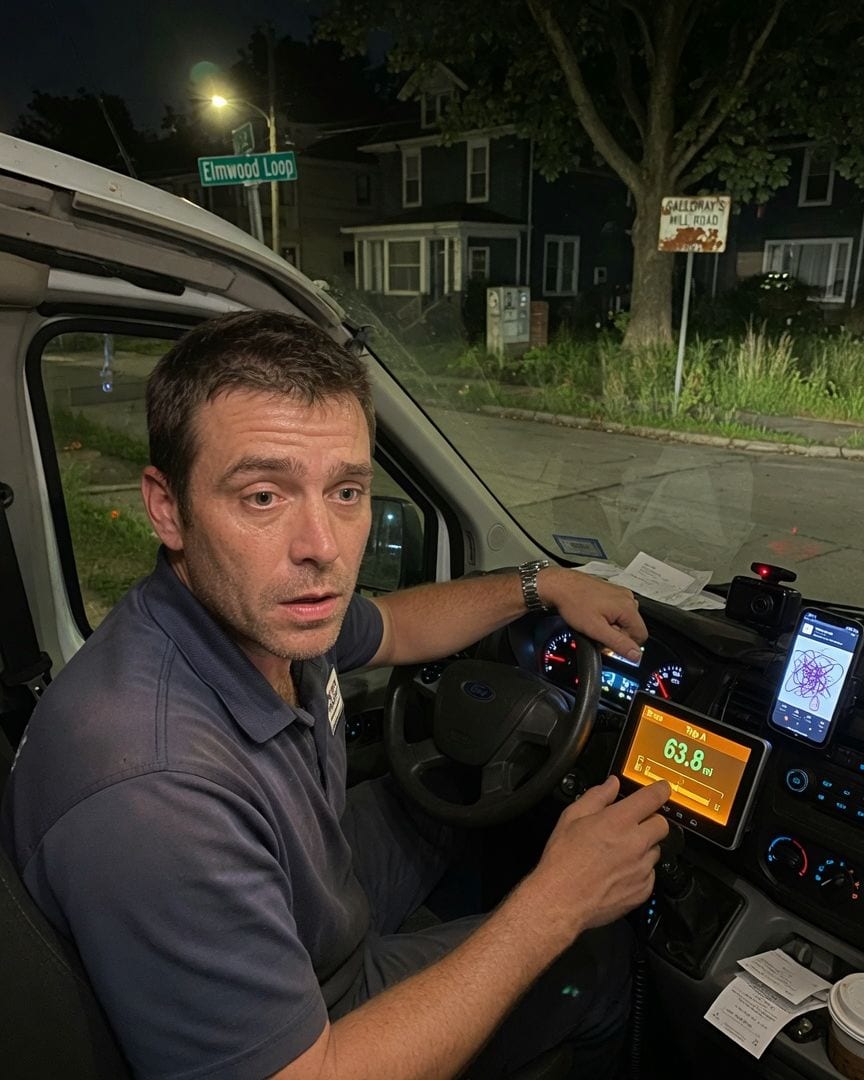
My delivery van's fuel gauge dropped a quarter tank on the Elmwood loop last night. It logged sixty-three miles, a loop I can walk in ten minutes.
I know my routes and my van, but the Elmwood Loop was different. My GPS app showed me standing still on the street, even as I walked for miles, my colleague confirming I hadn't moved. The impossible location left a blank, grey spot on the map.
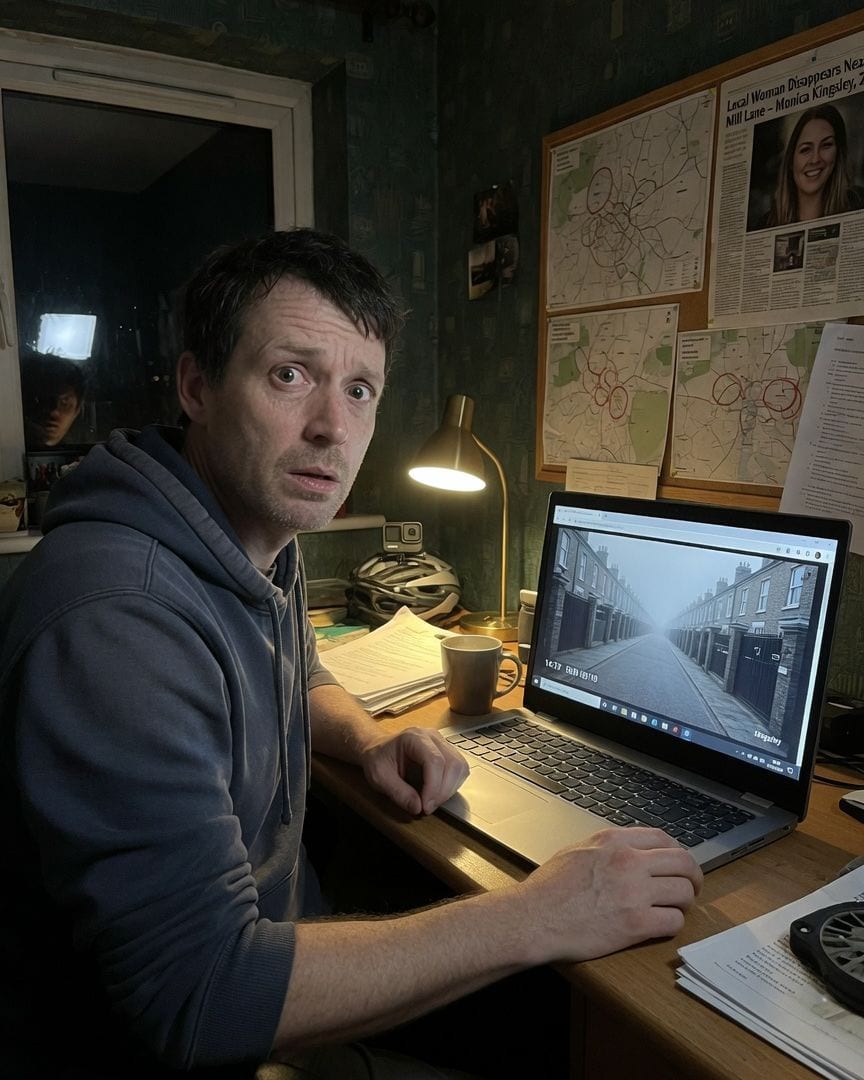
Thirty seconds of my bike cam footage shows a road that isn't on any map. Before and after, it's my usual lane by the canal.
I was reviewing my helmet camera footage from a routine Sunday bike ride down Mill Lane when the video suddenly skipped. For thirty seconds, it showed a perfectly paved, unnaturally wide avenue lined with identical houses, stretching into an unsettling, empty stillness. This phantom road, however, exists on no map, and should not have been there at all.
My dashcam footage showed my street change. For five seconds, my car drove on a road that doesn't exist on any map.
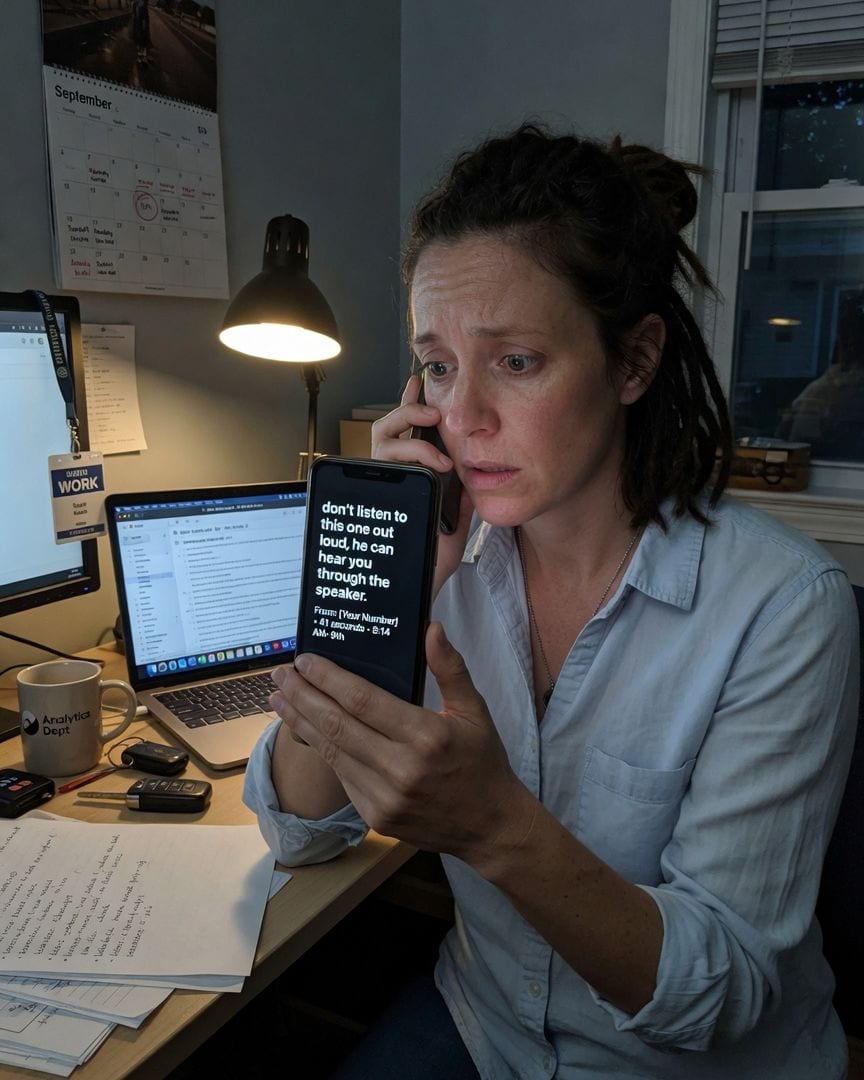
It was a normal Tuesday until my work phone received a new voicemail. The transcription warned, 'don't listen to this one out loud, he can hear you through the speaker.' But the message was from my own number, and the audio was forty-one seconds of absolute, dead silence.
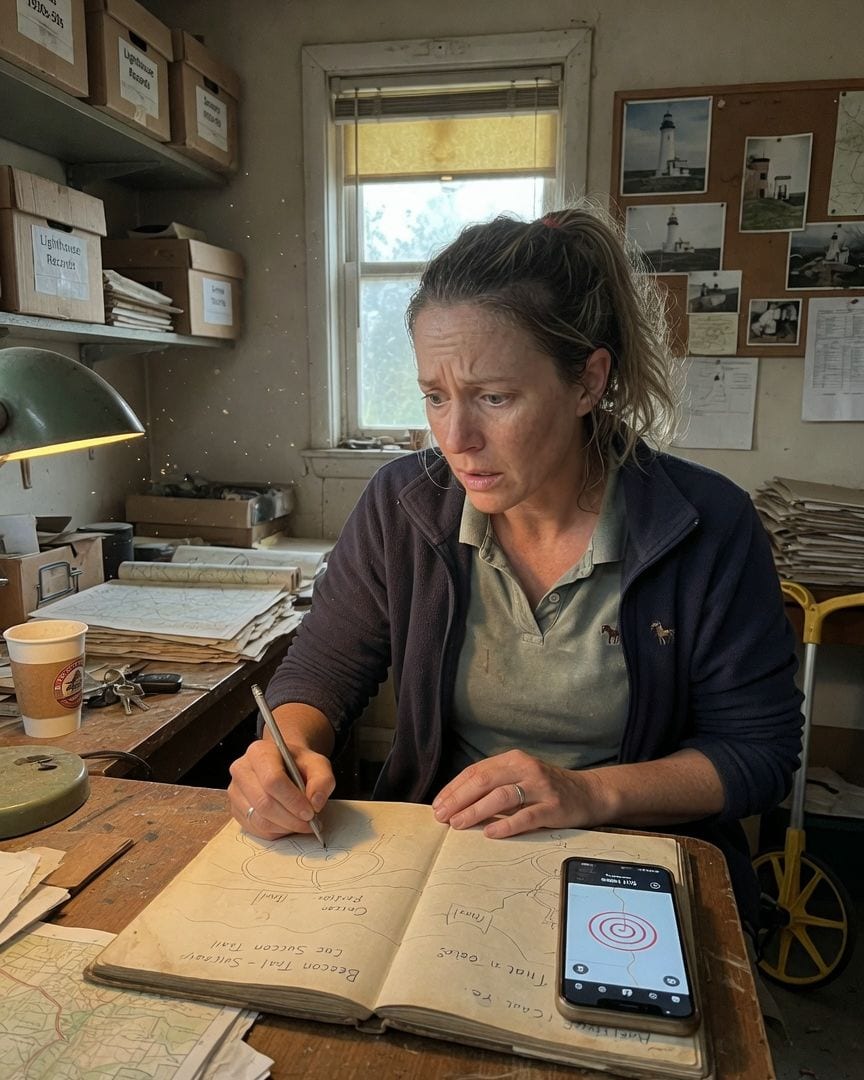
My two-mile trail suddenly had a fourth gate. My mare panicked; the world shifted around us.
I'm Vivienne, a rider who knows the Beacon Trail like the back of my hand—a familiar two-mile path with three gates. But during my last ride with Grace, a fourth gate appeared out of nowhere, and my GPS insisted we'd traveled nine impossible miles on a path I knew was only two.
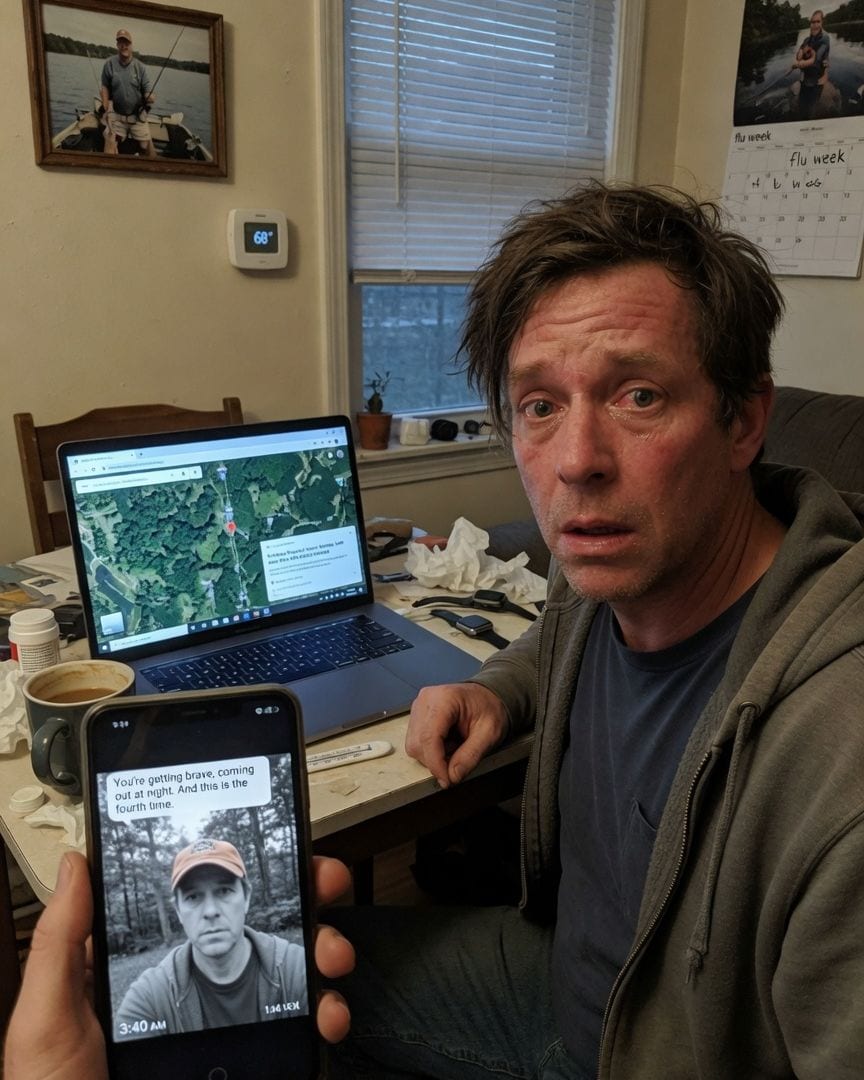
My brother-in-law's camera caught my face in Montana at 3:40 AM. I was asleep in Ohio, but it's the exact orange cap I lost, and he's seen me there four nights running.
I was just making coffee when my brother-in-law sent a photo from his Montana hunting land. It showed my face, wearing my lost baseball cap, timestamped 3:40 AM. I was home in Ohio, sick in bed, and hadn't been to Montana in years. And this was the fourth time.
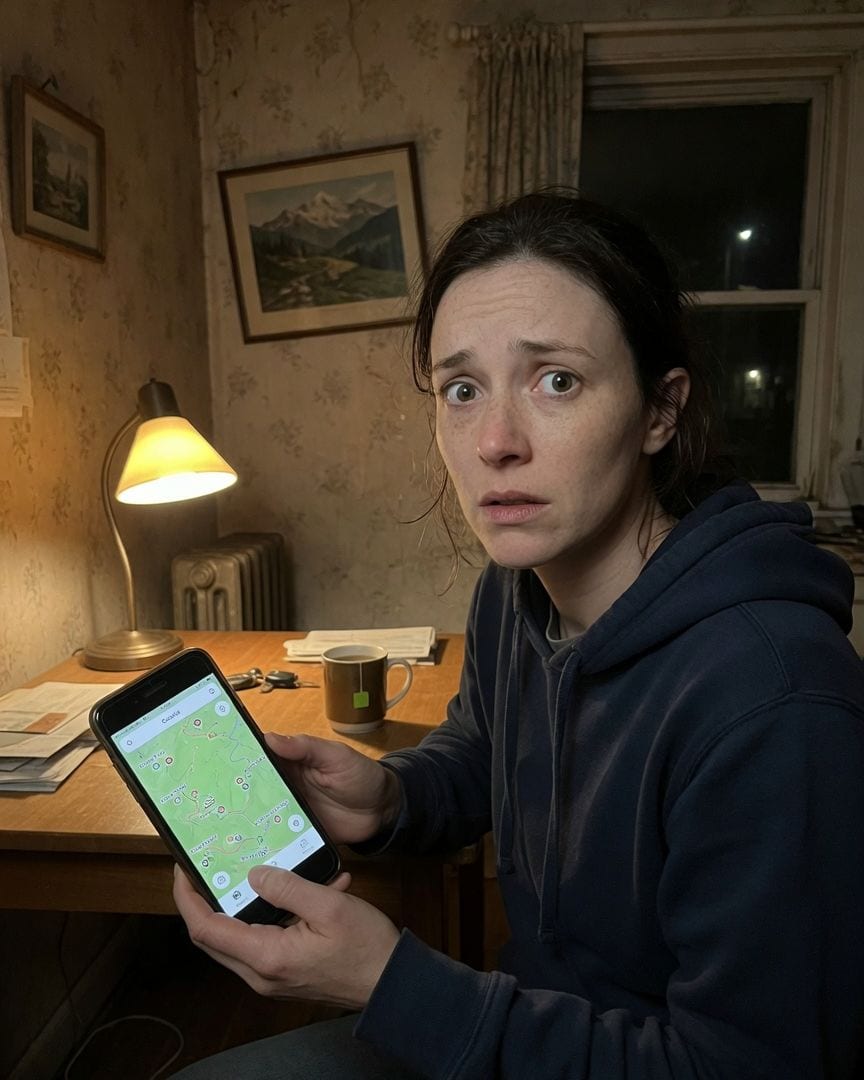
My hiking app scrubbed the hill's name from the map, on a phone that's been in airplane mode for two days.
I just moved to town and hiked a local hill, 'Cathan Tor,' according to my phone's app. But when I mentioned the name to the mechanic, he froze, dropped his wrench, and whispered, 'Don't say that name, Colette.'