My brother-in-law's camera caught my face in Montana at 3:40 AM. I was asleep in Ohio, but it's the exact orange cap I lost, and he's seen me there four nights running.
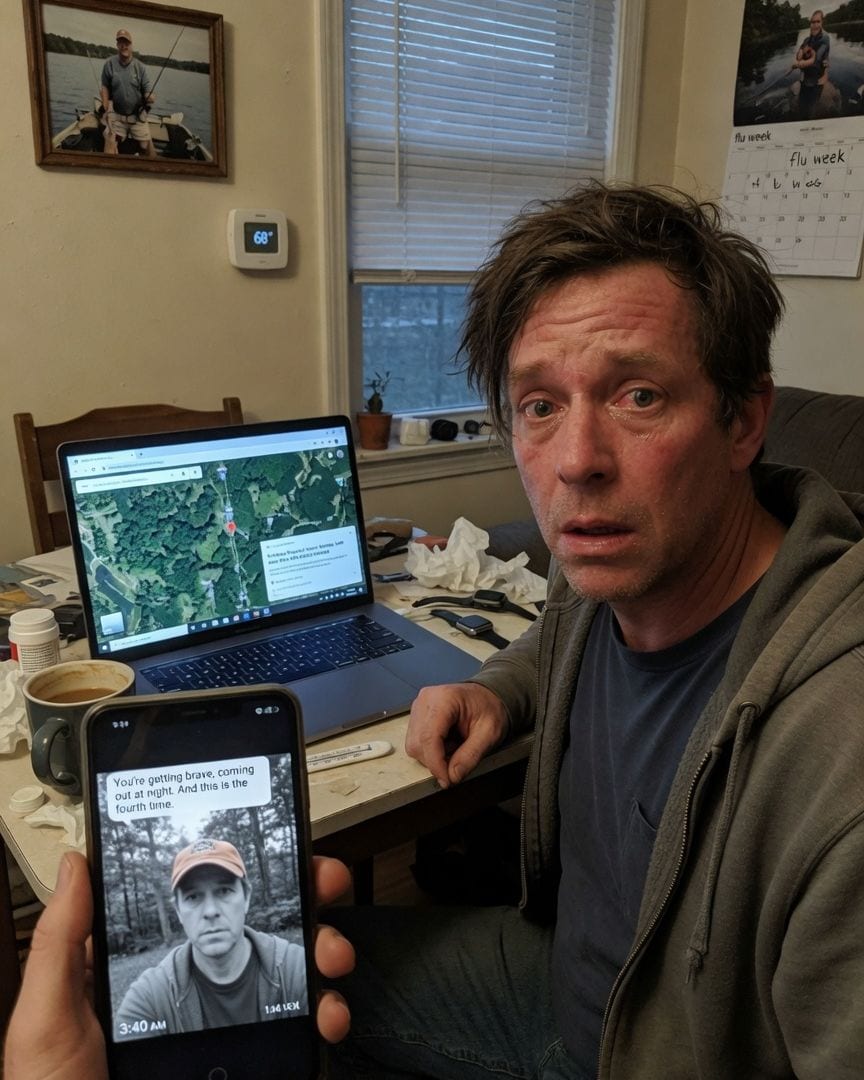
The text came through at 7:17 AM on an October Tuesday, just as I was wrestling my first cup of coffee into something resembling palatable. It was from Samuel, my brother-in-law, a photo attached.
I usually get photos of elk or the occasional grizzly from his hunting land in Montana, but this was different. I tapped it open, took a gulp of coffee, and nearly choked.
It was me. My face.
The motion camera photo was timestamped 3:40 AM. It showed a man at the treeline, facing the lens, bathed in the camera's infrared glow. He was wearing an old, faded orange baseball cap. My orange baseball cap.
The one I’d lost last year and hadn’t thought about since. Even in the grainy black and white, there was no mistaking my posture, the slight slump of my shoulders, the way my chin tucked in.
He was looking directly into the camera, a flat, unreadable expression on his face.
Samuel’s accompanying text was short: "You're getting brave, coming out at night. And this is the fourth time."
The dread settled deep in my gut, cold and insistent. Four nights. The same man. The same spot. My face. But I hadn't been to Montana in years.
I'd been right here, in my bed in Ohio, battling a persistent head cold for the better part of a week, coughing up half a lung every time I tried to sleep. The coffee tasted like ash.
I called Samuel, my voice tight, the phlegm in my throat forgotten. "Sam, what the hell are you sending me?"
He chuckled, sounding amused. "What do you mean? You. Your cap. Out there wandering around my property like a ghost at three in the morning. Thought you were scouting."
"I'm in Ohio, Sam. I haven't left the house in four days. I've got the flu. I was asleep. Every single one of those nights."
I recounted my exact alibi for each of the past four evenings: feverish, glued to the couch, then bed, barely moving except for water and painkillers.
My own routine had been meticulously documented by the smart home app on my phone – lights on/off, thermostat changes, even the smart fridge logs when its door opens.
Nothing out of the ordinary, nothing indicating a sudden trip to Montana.
Samuel’s amusement withered. "Wait. You're serious?" His voice grew unnerved. "Because the photo is clear, Jeff. Really clear. And that cap… I swear that’s the one you wore that time we went fishing on the Salmon River."
"It is my cap," I said, a chill starting to creep up my spine. "The one I thought I lost. So how am I in your woods at 3:40 AM?"
He insisted the photo was unequivocally me, the cap distinctive. He'd checked the camera logs himself; no tampering, no glitches, just sequential images.
He even described the treeline, the specific way the man was standing, details that matched my memory of the area from a visit years ago.
As a software engineer, my mind immediately went to rational explanations. A prank? But Samuel wasn't the type, and who would go to these lengths? A lookalike? An uncanny resemblance, maybe, but the cap?
I spent the next hours obsessively researching deepfake technology, advanced photo manipulation, anything that could explain it. I downloaded the full-resolution image Samuel sent me. The metadata seemed untouched, genuine.
I cross-referenced my own digital footprint – phone GPS logs, smart home activity, even my smart watch sleep tracking – for any anomaly during those impossible hours. My own timeline was solid. I was home. I was sick.
"Send me the exact coordinates of that motion camera, Sam," I finally said, desperate to ground this impossible situation in verifiable data. "And a full log of every photo it's taken in the last week. Everything."
Samuel, now genuinely rattled, agreed, his voice tight. "You got it. This is… this is getting weird, Jeff. Real weird."
The line went dead, leaving me in the quiet apartment, the digital ghost of myself staring back from my phone screen.
Samuel texted the coordinates a few minutes later, along with a link to the camera’s full cloud archive. I plugged the coordinates into a satellite mapping tool on my laptop, the familiar interface a contrast to the unsettling mystery unfolding.
The map loaded, showing a dense patch of forest, the treeline of Samuel’s hunting land clearly visible. I zoomed in, then slowly zoomed out, trying to orient myself, searching for any other markers, anything to make sense of the scale.
My finger hovered over the screen, tracing the faint outline of a property line, just beyond Samuel’s.
Then I noticed it: a small, almost imperceptible icon on the map, glowing faintly, indicating a local news story from approximately a month prior. It was precisely centered on a property adjacent to Samuel's hunting land.
My heart gave a strange thump. I tapped it.
The headline flashed across the screen: 'Local Man Reginald Vance Missing, Last Seen Near Old Caldwell Property.' The name 'Caldwell' hit me like a physical blow, a sudden, cold weight in my chest.
I stared at the screen, the familiar family name burning into my eyes, a sense of impossible wrongness creeping over me, deeper and colder than the flu.
The name 'Caldwell Property' gnawed at me. My last name. Our family name. I called my sister, Paige Thornton, Samuel's wife, a few hours later, trying to sound casual. "Hey, Paige. Random question.
Do you know anything about our family owning land in Montana? Like, way back?"
Paige, bless her, thought for a moment. "Montana? Hmm. Grandma always used to talk about Great-Grandpa Everett and Great-Grandma Audrey having some distant, eccentric cousin who settled out west. Homesteaded or something. But land? No, not that I recall.
Just stories."
"Okay," I said, my grip tightening on the phone. "Thanks."
I dove into online archives, searching for 'Reginald Vance' and 'Caldwell Property Montana.' The news article I’d found on the map was easy to locate again, this time with higher resolution.
It included a blurry background photo of a local autumn festival, taken just before Vance went missing. I downloaded it, then used a digital enhancement tool I'd developed for personal projects. It was rudimentary, but it worked.
I zoomed in on the crowd, pixel by agonizing pixel.
And there it was. Unmistakable, even in its blurriness. A man in an orange cap, with my face. Standing casually in the background, a month ago, in a completely different context, yet undeniably me.
The dread deepened, congealing into a cold, hard knot in my stomach.
I kept digging. I uncovered a local real estate listing for Reginald Vance’s property, mentioning the 'Caldwell Line' as a historical boundary. That hit hard. It wasn't just 'Caldwell Property'; it was a boundary line.
Our family name, etched onto the land itself. Further digging revealed public records for the sale of Vance's land, dated just a few days before Vance disappeared.
And critically, a few days before the first motion camera photo Samuel sent me. The buyer was listed as an opaque out-of-state holding company. I noted the dates, a growing pattern of impossible coincidences.
Each one ruled out the last rational explanation.
I became obsessive, fueled by a relentless need for answers. My job, my cold, my sleep – all became secondary.
I spent late nights hunched over my laptop, the glow of the screen illuminating my increasingly tired face, poring over digitized Montana county records, old census data, obscure genealogical sites, anything to trace the Caldwell lineage back to that specific part of Montana.
The air in my apartment grew stale, the quiet broken only by the rhythmic hum of my computer and the occasional rattle of the furnace.
I found a faded sepia photograph from the 1920s, among a trove of digitized historical records for 'Caldwell Timber Co., Montana.' It showed a group of stern-faced men in front of a sawmill.
In the grainy background, at the very edge of a dense treeline, a lone figure stood, almost obscured by shadow and distance, wearing a cap.
It was too blurry to be certain, to make out any features, but the stance, the silhouette, sent a fresh shiver down my spine. The cap was light-colored, but in the black and white, it could have been any color.
It could have been orange.
One evening, as I was deep into an obscure Montana county's land registry, scrolling through deeds from the early 20th century, a sudden pop-up flashed on my screen.
It was stark white text on a black background, centered perfectly: 'Still looking for what isn't there, Jeffrey?' It vanished instantly, leaving no trace.
My heart hammered against my ribs. I cursed, scrambling to check my firewall, running deep scans of my system, but found no trace of an intrusion, no malware, no log of the pop-up even occurring.
I tried to dismiss it as a sophisticated hack, a random troll, maybe an ad that glitched out.
But the specificity of the message, my name, the exact nature of my current obsession – Still looking for what isn't there, Jeffrey? – chilled me to the bone.
The words echoed in the sudden quiet of my apartment, each syllable like a direct whisper in my ear. It felt too personal, too pointed. Someone, or something, knew I was digging.
I decided I needed to speak to someone official, someone who couldn't be a troll or a ghost. I called the county clerk's office in that remote Montana county, asking about Reginald Vance's land sale.
I mentioned the 'Caldwell Line' as a historical boundary, trying to sound knowledgeable, hoping it would lend me credibility.
The clerk, a woman named Linda Hartley, was initially professional but dismissive. "I'm afraid I can't discuss private property sales, sir. Confidentiality."
"I understand," I said, "but Mr. Vance is missing, and this property has ties to my family, the Caldwells, going back generations. There's something… off about this.
The timing of the sale, the buyer being an out-of-state holding company, and then Vance disappears. It's unusual."
Linda’s tone shifted. The professional crispness softened, becoming hesitant, almost wary. There was a pause on the line. I heard the faint rustle of papers. "It… it certainly raised an eyebrow or two around here," she admitted, her voice lower.
I sensed a crack. "Was there anything unusual about the deed itself?" I pressed, my voice barely above a whisper. "Any strange details?"
Linda sighed, a sound of profound discomfort that carried clearly over the phone line. She finally admitted that the sale was, indeed, "peculiar."
The buyer was as I’d found, but then she said, "The witness signature… that's what really got me." She trailed off, clearly struggling with how to phrase it.
My breath caught in my throat. I could feel my pulse throbbing in my ears. "Was it my name?" I asked, forcing the words out. "Was it Jeffrey Caldwell?"
Linda’s silence stretched, deafening over the phone line, broken only by a faint static hum. Then, finally, she spoke, her voice low and grave. "The notary flagged it. Said the signatory seemed… distracted. Almost hollow. Like he wasn't fully there.
But the signature itself… it was perfect. Unquestionably authentic. She had no choice but to accept it." She cleared her throat. "I can send you a scanned copy of the signature page, Mr. Caldwell, if you wish.
I'm not sure what to make of it, frankly. But it's been weighing on me."
The scanned deed arrived in my inbox less than an hour later. I opened the attachment, my hand trembling slightly, the cursor hovering over the file. Taking a deep breath, I clicked.
The document filled my screen. There, among the notary's precise stamps and the buyer's agent's looping scrawl, was his own name, 'Jeffrey Caldwell,' in his unmistakable handwriting. My stomach clenched.
It wasn't a crude forgery, not a smudged copy; it was my signature, every loop and flourish, every idiosyncratic dip and rise, identical. My mind reeled.
I pulled out an old canceled check from my desk drawer, one I'd written for a utility bill months ago, and laid it beside the monitor.
Side-by-side, the signatures were identical, perfectly matched down to the last cross of the 'f' and the curve of the 'J'.
The date on the deed was two days before the first motion camera photo, two days before October 5th.
I was definitively in Ohio then, sick in bed, coughing my guts out, not signing property deeds in a remote Montana county. My head swam.
I stared at the document, the truth of it a cold, hard knot in my stomach, refusing to loosen.
I forwarded the scanned signature and several samples of my own handwriting from various old documents to Grace Merritt, a digital handwriting expert I’d found online, paying extra for an urgent analysis.
I paced my apartment for hours, waiting, the silence pressing in.
Her email came back later that night. A single, concise paragraph that shattered my last vestiges of rational explanation:
'Mr. Caldwell, I've cross-referenced this with samples you provided. It's unequivocally yours. Not a copy, not a trace. Your original hand. There's no other explanation.'
I drove to Montana a week later, the notarized deed and Grace Merritt's report tucked into a folder on the passenger seat. My cold was gone, but the chill in my bones had only deepened.
I confronted Samuel in his cabin, the smell of pine and damp earth heavy in the air, laying out all the impossible evidence: the photos, the news article, the festival picture, the deed, the handwriting analysis.
Samuel sat there, grim-faced, listening, occasionally running a hand through his thinning hair. When I finished, the cabin was silent save for the crackle of the wood stove.
He finally looked up, his eyes wide with a dawning horror, and said, "The echo woods." It wasn't a question. "My grandfather used to tell stories. Folklore, we thought. The Caldwell markers."
He explained it. Our great-grandparents, Everett and Audrey Caldwell, original homesteaders on that land, had placed specific, uncarved stones – 'markers' – on the property. Not just boundary markers, but something more.
"Grandpa said they were believed to protect the land," Samuel murmured, "and to 'remember' certain family members. Especially when something important happened. Births, deaths, claims."
Samuel then revealed that Reginald Vance had been trying to remove some of these markers from his side of the property line, dismissing them as mere boundary stones, just before he disappeared.
Vance was convinced they were encroaching on his land, a perceived slight that made him disregard their significance.
The 'Old Caldwell Property' from the news article was Everett Caldwell's original homestead. My great-grandfather's land.
The pattern of dates now snapped into place with sickening precision. The motion camera photos, showing me at 3:40 AM, every four nights? Those photos were taken on the anniversary of Everett Caldwell's death. A protective date.
A time of remembrance. The signature on the deed for Vance’s land? It was made on the anniversary of Audrey Caldwell's birth. A date of 'creation' or 'manifestation.' And the orange cap I'd lost?
"Grandpa said Everett always wore an orange cap," Samuel said, his voice barely a whisper. "He wore it when he was out working the land. It was his signature."
The phenomenon wasn't just about me. It was about the Caldwell line, the land itself, and specific dates tied to their history. The 'doubles' weren't just images.
They were physical echoes, drawn to the land, triggered by specific dates and by interference with the markers. The land was remembering its own, and reacting to perceived threats. It was calling out.
Armed with this terrifying understanding, Jeffrey and Samuel drove deep into the Montana land, following a faded deer trail, Samuel’s truck bouncing over roots and rocks. The 'echo woods' were eerily quiet, the air thick with an unspoken presence.
The light was fading fast, painting the western sky in bruised purples and oranges. Every snap of a twig, every rustle of leaves, made me flinch.
We found the cluster of markers Vance had tried to remove. They were a line of uncarved, jagged stones, mostly obscured by years of leaf litter and moss.
But one, a large, flat stone that had clearly once been upright, was now angled precariously, clearly cracked down the middle. Vance's crude attempts to shift it must have done this.
A deep fissure split the stone, like a broken bone.
As we inspected it, Samuel’s phone, tucked into his breast pocket, pinged with a fresh notification from the motion camera. Another photo. My breath caught in my throat. It was me, at the treeline, orange cap, looking directly at us.
But this time, the figure’s eyes were completely black, reflecting no light, like polished obsidian. And its mouth was slightly ajar, stretched in a silent, grotesque grimace, a rictus of silent agony or warning.
It slowly, deliberately, raised a hand and pointed towards the cracked marker.
We realized with a jolt of pure terror. The doubles weren't just passive records. They were urgent, physical warnings. The phenomenon was linked to the land's integrity, and Vance's actions had destabilized it.
He had broken something, and the land was reacting, sending its echoes to scream out the wrongness.
"We have to fix it," Samuel gasped, already scrambling, picking up smaller stones and fallen branches.
We frantically gathered nearby stones, anything heavy enough to brace and repair the cracked marker, racing against a creeping sense of something gathering in the surrounding woods.
A pressure built in the air, cold and heavy, making the hairs on my arms stand on end. The shadows seemed to lengthen, to solidify into shapes just at the periphery of my vision.
The trees seemed to lean in, their branches like skeletal fingers.
Just as we managed to wedge the largest stone into place, securing the marker, the air grew incredibly heavy, a physical weight on my lungs.
The 'Jeffrey' figure at the treeline, its black eyes still fixed on us, blurred, shimmered like a heat haze, and then slowly, irrevocably, faded away, dissolving into the deep shadows of the forest, leaving behind only the rustling of leaves and a profound, chilling silence.
Exhausted and profoundly shaken, we returned to Samuel's cabin, the silence between us heavy with the inexplicable. My mind replayed the black eyes, the grimace, the way the 'echo' had simply dissolved into the air.
We agreed to keep the Caldwell markers protected and undisturbed, a silent pact born of terror. To never speak of it to anyone else.
The motion camera stopped pinging with impossible images. Reginald Vance was never found, his disappearance remaining a local mystery, eventually filed away as a cold case.
The holding company's purchase of his land was eventually reversed, the deed of sale declared fraudulent due to the suspicious circumstances of Vance's disappearance and the undeniable impossibility of the witness signature. The land, for now, was quiet.
I returned to Ohio, but the experience had left an indelible mark.
I found myself constantly checking my reflection, watching for any subtle shift in my own expression, a flicker in my eyes, a phantom grimace at the corner of my mouth.
I learned to live with the knowledge that a part of me, or an echo of me, is tied to that land, waiting for the next anniversary, the next disturbance, a silent guardian of an ancient secret.
It's always there, a low hum beneath the surface of my life, a constant reminder of what I know.
He never wears orange again.
If this one got to you
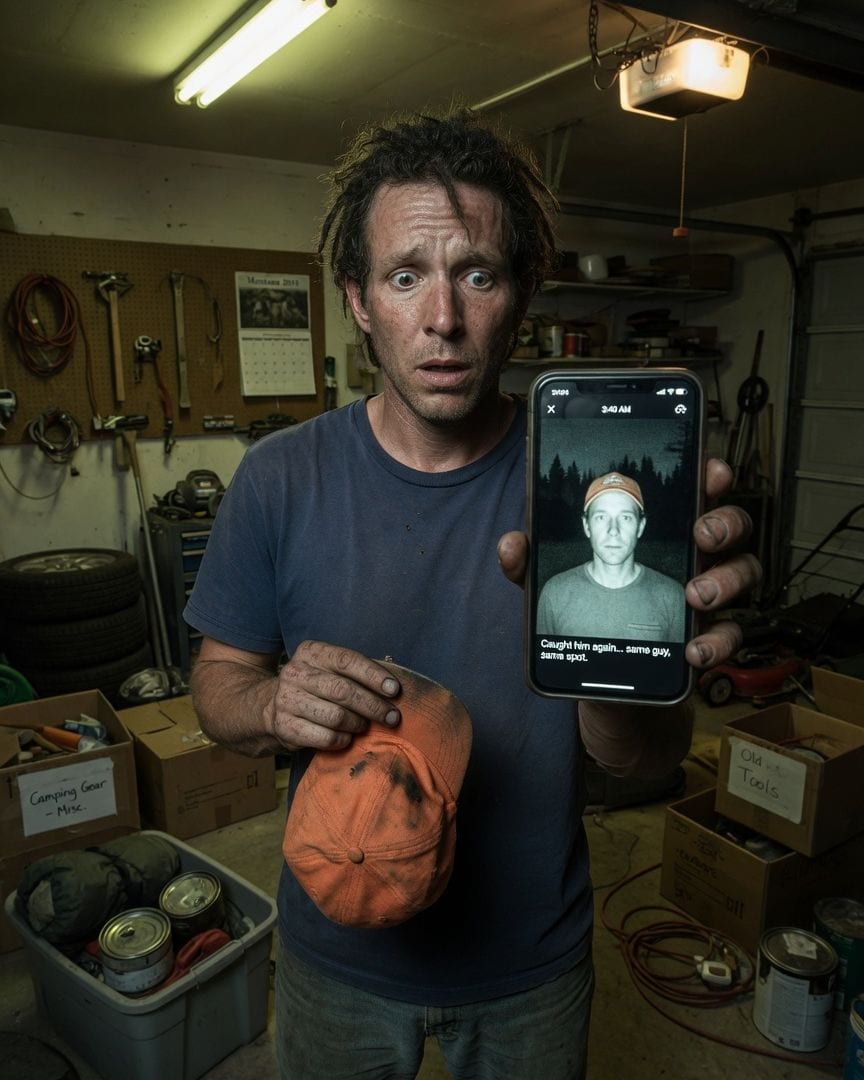
My lost orange cap is in my hand. Yet a photo shows *me* wearing its twin, two thousand miles away.
A late-night text from my brother-in-law in rural Montana included a photo from his motion camera. It showed me, wearing my lost orange cap, standing at a treeline at 3:40 AM. I was asleep in my bed in Ohio, two thousand miles away, and my identical lost cap was still in my garage.
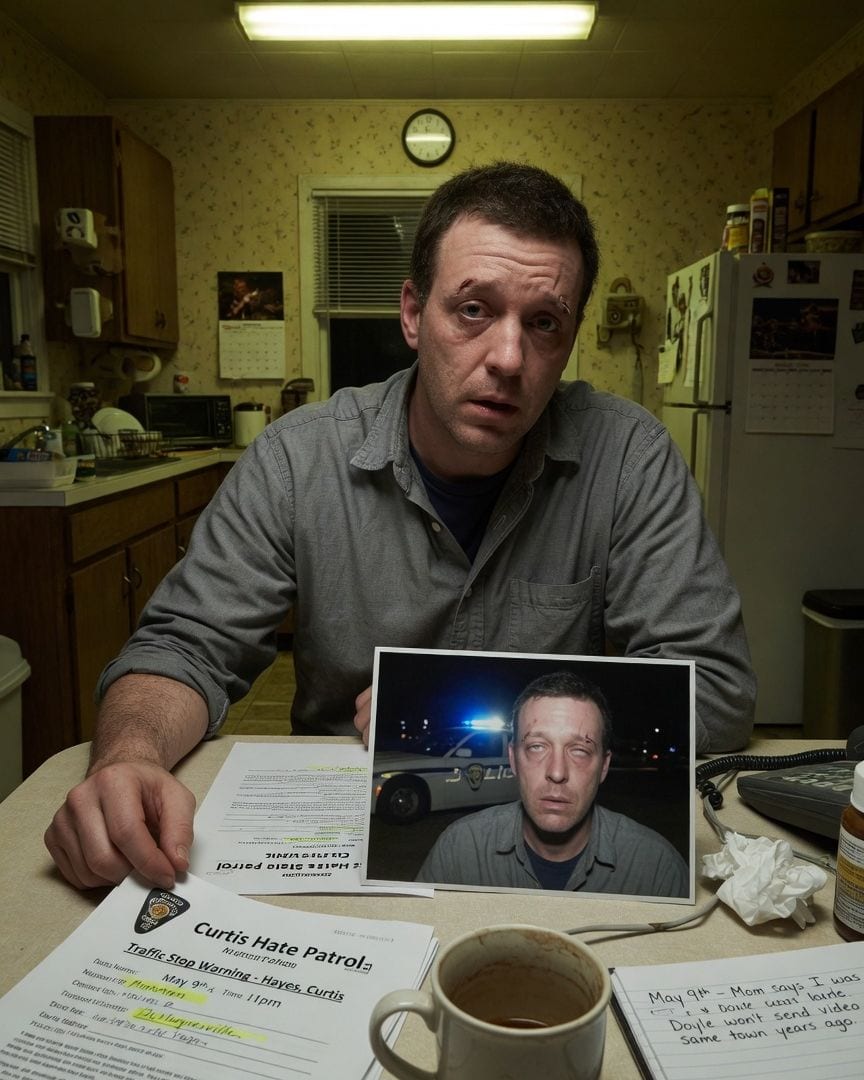
My face stared back from a bodycam video, in a town I've never been. He answered to my name.
I received an email from the Ohio State Patrol for a traffic stop I never made, 200 miles away on May 9th. My mother confirmed I was home that night, asleep on the sofa. When the police finally sent a bodycam photo of the driver, it was my face and scar, but the eyes were flat, distant, and utterly devoid of warmth.
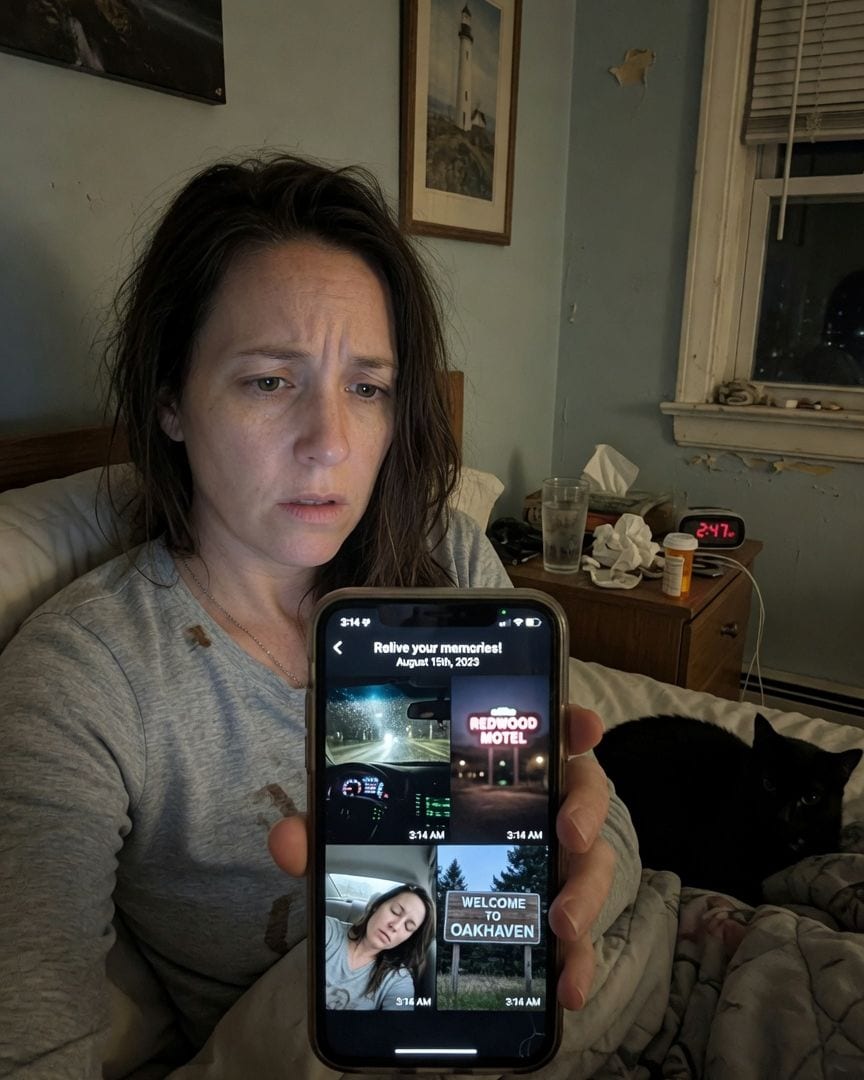
My phone has photos of me asleep in a strange car at 3 AM. Then a voicemail: 'We'll have her back by sunrise.'
My phone woke me with a cheery notification, promising memories from last August. Instead, it showed me asleep in a dark car, rain streaking the windshield, miles from my apartment. I was certain I'd been home in bed that night, but the images were undeniably in my camera roll, a quiet violation of my memory.
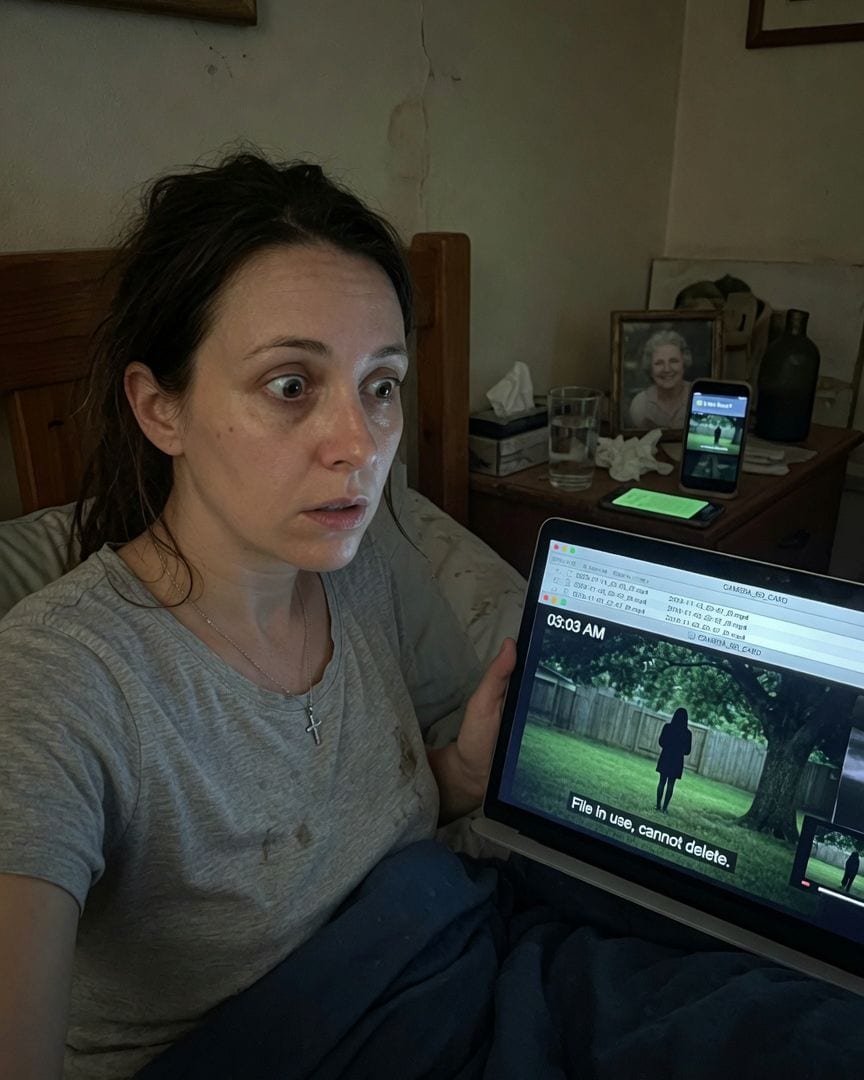
My security camera emailed a clip at 3:03am: a woman stood in the garden, back to the house. The subject line read 'Is this Mum?' My mother died in March. I can't delete the file.
My security camera sent an alert at 3 AM: 'Is this Mum?' But my mother, Constance, died in March. The grainy clip showed a woman in the garden, perfectly still, her back to the camera. The impossible question coiled a sick dread in my gut.
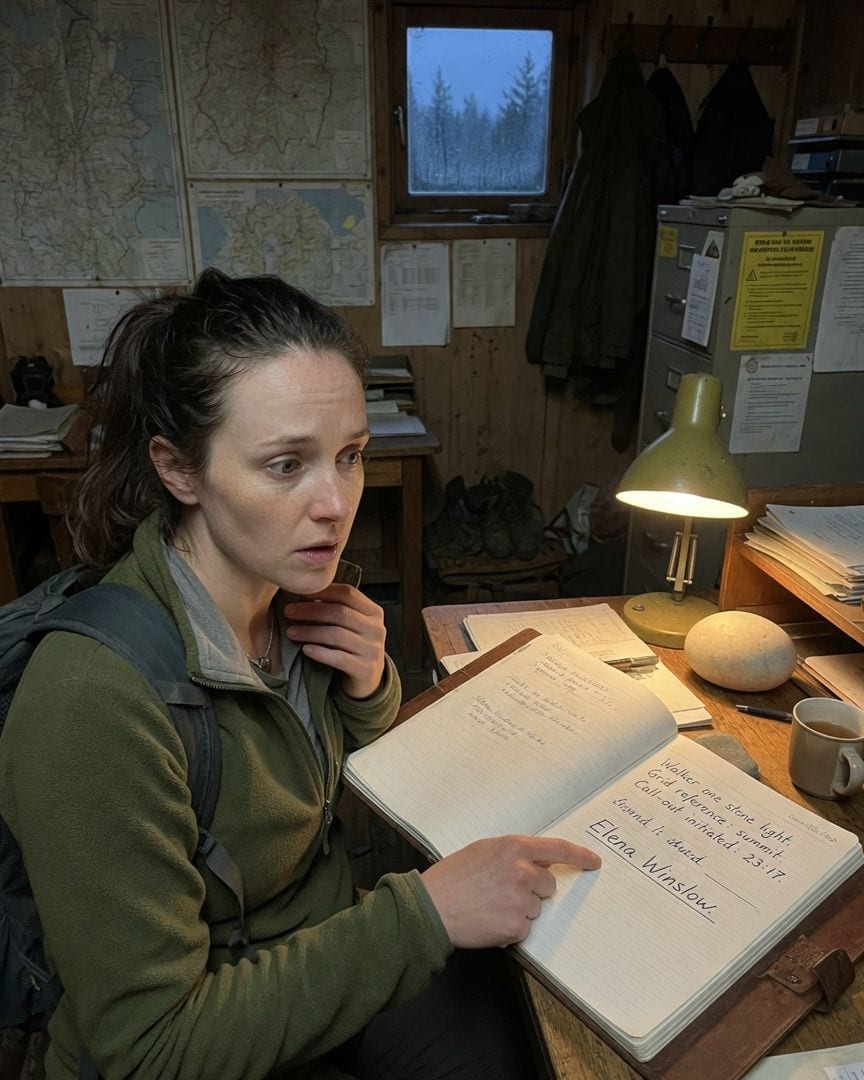
My pocketed mountain stone meant a rescue logbook recorded a call-out that night for me — a shout that never went out.
After an exhilarating climb on Cadair, I took a small, smooth white stone from the summit cairn, despite a warden's warning. Back at the station, a logbook entry shocked me: my name, dated last night, for a rescue call with an impossible detail: 'Walker one stone light'.
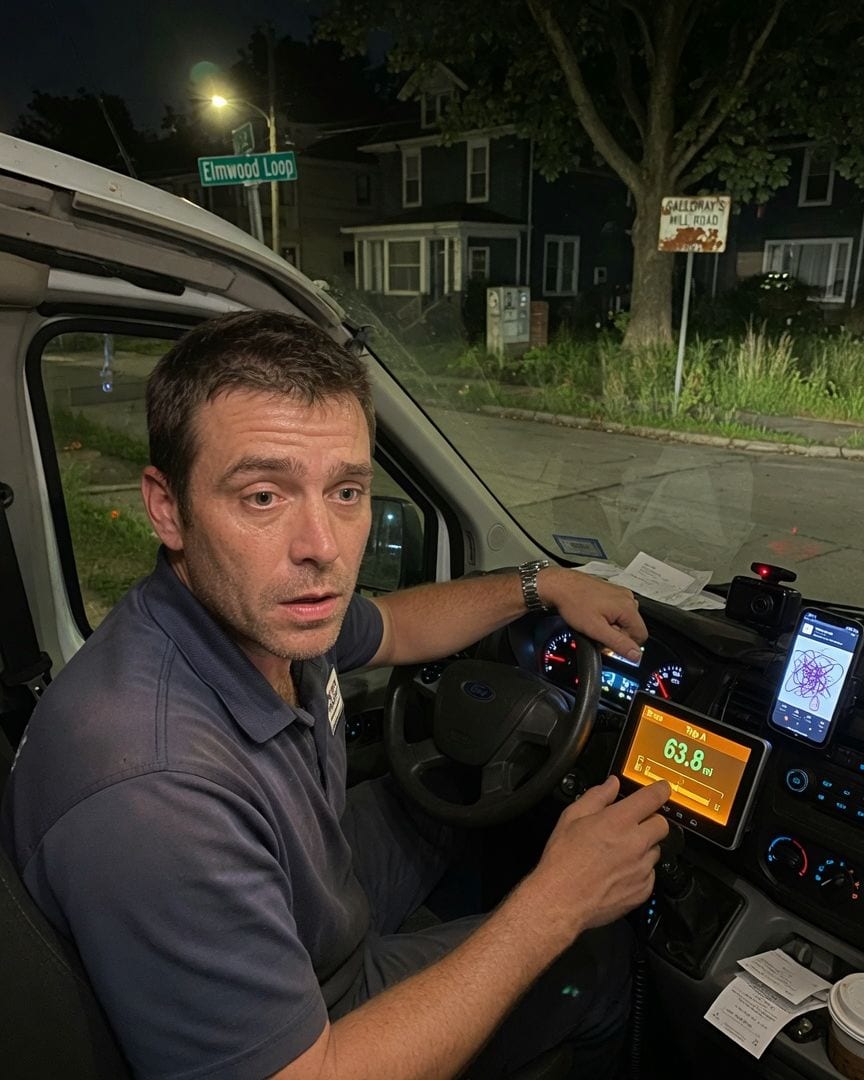
My delivery van's fuel gauge dropped a quarter tank on the Elmwood loop last night. It logged sixty-three miles, a loop I can walk in ten minutes.
I know my routes and my van, but the Elmwood Loop was different. My GPS app showed me standing still on the street, even as I walked for miles, my colleague confirming I hadn't moved. The impossible location left a blank, grey spot on the map.