My face stared back from a bodycam video, in a town I've never been. He answered to my name.
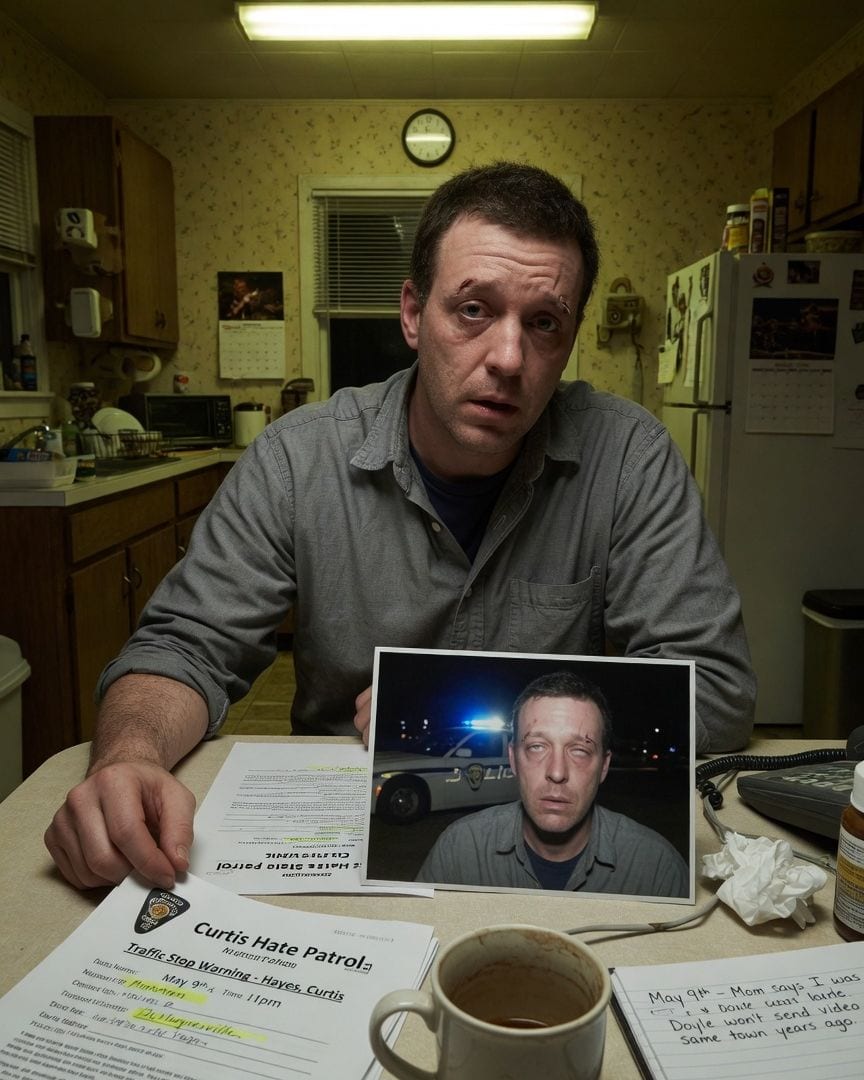
The email from the Ohio State Patrol arrived on a Tuesday, subject line: 'Traffic Stop Warning - Hayes, Curtis.' I almost deleted it. I hadn't been to Ohio in five years, not since my cousin’s wedding.
But the body of the email, a brief officer's report, named me as the driver warned for a broken taillight at 11pm on May 9th near Waynesville, license checked, no citation issued.
I called my mother, Josephine, immediately. She's 67 now, but sharp as ever. "May 9th?" she repeated, her voice a little tinny through the phone. "You were right here, Curtis.
We watched that old movie, the one with the alien invasion. You were asleep on the sofa by ten-thirty, I remember turning off the TV so it wouldn't wake you." She'd swear to it in court.
I’d had a persistent cough that week and definitely hadn’t driven 200 miles to Ohio.
I called the precinct, spoke to Sergeant Doyle. He sounded bored, like he’d heard it all before. "Officer Pierce's report is clear, Mr. Hayes. We have bodycam footage. Your license was handed over, you called him 'sir' twice.
When Pierce said your name, the man answered to it. Confirmed his date of birth, everything." He paused. "No, we can't send you the footage. That's for internal review. But the record stands." He didn't sound like he believed me.
The whole thing felt like a particularly elaborate prank, except the Ohio State Patrol wasn't exactly known for its sense of humor. The knot in my stomach tightened, cold and hard.
I spent the next two days on the phone, the knot twisting itself even tighter.
Sergeant Doyle eventually, grudgingly, agreed to email me a still image from the bodycam footage, citing 'public record inquiry' after I threatened to drive down there myself. When it landed in my inbox, my breath hitched. It was me.
My face, my hairline, the faint, almost invisible scar above my left eyebrow from that bicycle accident when I was ten. Unmistakably me. But the eyes… they were wrong.
Flat, distant, like looking into a store mannequin or a deep, dark well. They held no warmth, no spark.
I tried to rationalize it. A doppelganger? An incredibly sophisticated deepfake, though the setting and mundane circumstances seemed too small for such an effort. But the officer's report was too mundane, too specific. A broken taillight. "Yes, sir." "No, sir."
My stomach churned. I had to know more. I called Officer Pierce directly, bypassing the sergeant. He was professional, a bit tired, like he’d been on patrol all night. I pressed him on the resemblance. "Uncanny, right?"
he said, a sigh in his voice. "Thought it was you. He knew your name, answered to it. Didn't seem fazed by the taillight at all, just wanted to get going."
I asked if he’d ever seen anything like it. He hesitated, a longer pause this time. "Funny you mention it," he mused, "Years ago, before my time, there was a similar report. Same town, I think. Another 'Curtis Hayes.'
Came in a few times, actually. Got dismissed as a clerical error, I heard. Too many conflicting reports, so they just filed it away. Probably nothing." He chuckled, a dry, dismissive sound. But to me, that wasn't nothing.
That was a prickle of ice down my spine, suggesting this wasn’t just a bizarre, isolated incident. This felt like a cold whisper, a pattern forming at the edges of the normal world.
I sat at my kitchen table, the official police report spread out before me, the grainy bodycam still image propped against my coffee cup.
The man in the image, my face, stared back from the roadside at 11pm, a shadow stretching from his feet. His eyes, though. They held a faint, unsettling vacancy that seemed to deepen the longer I looked.
The thought of a doppelganger was terrifying enough, but Officer Pierce's offhand comment about an older, similar incident involving another 'Curtis Hayes' in the same Ohio town years ago, dismissed as a clerical error, echoed louder than anything else.
This wasn't a mistake. This was a pattern. And it felt like it was just beginning.
The next week was a blur of frantic research. My laptop became an extension of my anxiety.
I dug into online archives, searching for any mention of a 'Curtis Hayes' in Waynesville, Ohio, especially around the time of the 'clerical error' Pierce mentioned. It was tedious, frustrating work, poring over scanned documents and fuzzy microfiches.
Most records were digitized, but old enough to be obscure, buried under layers of outdated interfaces and broken links. My fingers ached from typing, my eyes blurred from staring at screens.
I finally found it: a property tax dispute from 1987, involving a 'Curtis Hayes' in Waynesville. The signature on the document, even blurred by age and poor scanning, was unmistakably mine. The looping 'C', the sharp flick of the 'H'.
But I wasn’t born until 1985. This wasn't a doppelganger; it was an impossible ghost, a shadow reaching back from a time I hadn't even existed.
Fuelled by this horrifying confirmation, I widened my search to other names, other 'impossible' records. The Waynesville archives seemed to hum with them.
I uncovered a handful of similar discrepancies: a library card usage for a 'Maureen Fairfax' in 1972, when the real Maureen was known to be living abroad, confirmed by old family letters I found online.
A parking ticket issued to a 'Harold Langford' in 1965, a year after his recorded death, according to his obituary. All in Waynesville. All dismissed as 'clerical errors' or 'unresolved anomalies' in the archived comments.
It was a whisper, a faint echo of wrongness, across dates and names, suggesting something deeply unsettling at the core of this quiet Ohio town.
As I sifted through the digital detritus, I noticed a subtle detail: many of these older, impossible records, especially those dismissed as 'anomalies,' bore a faint, embossed seal from the 'Waynesville Historical Society.'
It was a stylized rendering of an old oak tree, with intertwined roots. It was the one consistent thread, the only common denominator in a tapestry of impossible facts.
The Waynesville Historical Society was housed in an old brick building, set back from the main street, almost obscured by overgrown ivy. It felt quiet, dusty, like a place where time itself had slowed.
I felt a distinct sense of unease as I stepped inside, the air cool and smelling faintly of old paper and beeswax. An older man, Harold Fairfax, sat behind a desk, calmly polishing a brass paperweight shaped like an acorn.
His movements were slow, deliberate. He looked up as I entered, a faint smile playing on his lips, as if he’d been expecting me.
"Another Hayes, I presume?" he said, his voice soft but clear, cutting through the silence of the room. "We get a few inquiries from your line, every few decades."
My blood ran cold, a sudden shiver running down my spine that had nothing to do with the cool air. He wasn't surprised; he was knowing.
He was unusually helpful, guiding me to obscure local archives, old ledgers, and even pointing out the specific property tax dispute from 1987 I’d found online.
"Ah, yes, a lively little matter," he murmured, his gaze sweeping over the faded document. His eyes, however, never quite met mine, always seeming to look through me, as if I were a pane of old glass.
As I sifted through the documents, the faint smell of old paper intensifying, he offered me coffee from a chipped ceramic mug.
"Some things," he mused, without looking at me, his gaze fixed on a distant shelf, "are better left undisturbed, Mr. Hayes. For everyone's peace of mind. To know too much can be… an inconvenience."
He wasn’t threatening me, but the implication was clear: he knew. He knew what I was looking for. He knew what I would find.
Before I left, his gaze subtly directed me to a forgotten alcove, where a small, leather-bound ledger lay half-hidden beneath a stack of old newspapers, its cover plain, dark, and unmarked. It looked like it had been waiting.
I returned to Harold's desk, the dusty ledger clutched in my hand. Its leather cover felt strangely warm beneath my fingers. "What is this?" I demanded, my voice tight, louder than I intended in the quiet room. Harold didn't flinch.
He merely gestured to a creaking wooden chair opposite his desk. "A record, Mr. Hayes. A very old one. Sit."
He spoke in a calm, almost academic tone, as if discussing local flora or the weather, completely unbothered by my agitation.
"For generations," he began, resting his hands flat on his desk, "this town has maintained a certain... continuity. A way to ensure the lineage endures, even when the physical form falters.
Not through heirs, not through memory, but through the record itself." He explained that the 'activations' weren't a glitch, a clerical error, or a bizarre coincidence, but a deliberate process. "When a name is marked, an entry is made.
The public record, the official word, begins to assert itself. It claims a presence, a life, in the world. Slowly, quietly." He described the 'proxy' as a manifestation, not a doppelganger. "It's a claim, Mr. Hayes. A claim on existence.
The records aren't wrong; they are simply creating a new reality, one entry at a time."
He explained how my own name had been 'activated' on May 9th. "The traffic stop was merely the first, public confirmation of its presence. A statement that places you, as it were, within our local sphere.
From that point, the system begins to collect further proof of its existence." He pointed to the ledger with a slender finger. "You'll find it all there. The history of the lineage. The process of its reassertion."
The parking tickets, the library logs, the keycard entries I'd seen in the archives – all of it clicked into place with sickening precision. Not errors, but deliberate, quiet steps in an insidious process.
The face on the bodycam wasn't an impostor; it was a new iteration, a new claim, beginning to take root in the world, an echo gaining substance. The room suddenly felt colder, despite the dusty quiet.
Harold's words hung in the air, chilling me to the bone. This wasn't a mistake; it was a system. And I was caught in it. "My lineage?" I whispered, my voice hoarse, barely audible. "What do you mean, my lineage?
Why me?" Harold simply smiled, a serene, unbothered expression, as if I’d asked about the local bus schedule. "Open the ledger, Mr. Hayes. To the page I marked for you."
My hands trembled as I opened the old book. The pages, yellowed with age, were filled with meticulous, elegant script. It looked like a century's worth of careful penmanship.
I found my own name, 'Curtis Hayes,' with the date of the traffic stop—May 9th—clearly penned beside it. The dread was immense, a physical weight in my chest. So, he hadn't been lying. This was real.
But then, my eyes drifted down the page. Below my name, clearly visible, was 'Josephine Hayes,' my mother, with a date from 1962, when she was a child.
And beneath hers, other family names – Samuel Hayes, Eleanor Hayes, Thomas Hayes – stretching back through the decades, a grim roster of my ancestors, each with an impossible date, a date when they would have been too young, or long dead, to have initiated an official record in Waynesville.
The ledger wasn't just a record of activations; it was a generational claim. My entire family, past and present, all marked, all claimed. The system wasn't just coming for me; it had been coming for us all along.
I slammed the ledger shut. The sharp crack echoed in the silent historical society. "My mother? My ancestors?" My voice was strained, hoarse. Harold nodded, his composure unwavering, his gaze still fixed on some point beyond me.
"A deep root, Mr. Hayes. The stronger the lineage, the more... resilient the continuity."
He explained that the 'activations' start small, faint echoes in the public record, just like the traffic stop. But with each new entry, each new 'statement that places you,' the proxy gains more substance, more presence.
"It's a slow process," Harold explained, "a gentle overwrite. The town's records, its official memory, slowly begin to favor the new entry. It accumulates proofs of life.
Local bank statements, library logs, parking permits, utility bills, a driver's license, even property ownership." He leaned forward slightly, his eyes finally meeting mine, and in them I saw not malice, but an ancient, weary understanding.
"Eventually," he said, "the new reality simply overwrites the old. The original's claim on their life, their memories, their very existence, slowly fades. Unnoticed by everyone but them. A quiet return to the fold, as it were."
He pulled out old newspaper clippings, faded photographs from a nearby drawer. They showed smiling, ordinary people. "These are some who were fully activated," he said, pointing to names in the ledger that had red lines drawn through them.
They were living, breathing citizens of Waynesville, with jobs, families, histories. But their true counterparts, Harold implied, had simply... ceased to be. Their identities had been gently, systematically usurped, their original existence replaced by the records.
The man on the bodycam wasn't just a temporary manifestation; he was becoming me, one impossible record at a time. The records weren't errors; they were the new truth, slowly but surely replacing my own.
I tried to fight it. I spent days compiling evidence: my mother's sworn alibi, dated May 9th; my credit card statements showing gas purchases 200 miles from Waynesville; my travel logs, my phone's GPS history.
I even tried to file a police report against the 'proxy,' detailing the impossible records. But Harold's words echoed in my mind: 'The new reality simply overwrites the old.'
Every piece of 'proof' I offered was met with an equally valid, contradictory official record.
The police department saw my attempts as harassment, my claims as delusional. Sergeant Doyle warned me about wasting police time.
"Mr. Hayes," he’d said, his voice flat and tired over the phone, "we have a report of a man with your name and description involved in a minor incident. That's the end of it. Your insistence on these...
theories is becoming disruptive."
I decided to escape the source. I packed a bag, intending to drive as far away from Ohio as possible, to sever any connection, to simply disappear.
I made it two hundred miles west, driving through the night, the highway a ribbon of dark asphalt under a cold moon. My phone pinged, cutting through the silence of the car. A toll charge.
Dated for that very moment, from a booth outside Waynesville, Ohio. My heart hammered against my ribs. I pulled over onto the shoulder, my breath catching in my throat. The notification included a link to the toll booth's camera.
I clicked it, my thumb shaking. There, in the driver's seat of a car identical to mine, was my face. My features, my expression, my clothes. It wasn't the vacant stare of the bodycam proxy. It was my face.
In two places at once. The system wasn't just replacing me; it was expanding, claiming my presence in multiple realities simultaneously. I was trapped. There was no escaping the records, because the records were now me.
I returned home, defeated, the weight of the impossible pressing down on me. The phantom records continued to arrive, tiny pieces of a life I wasn't living.
A bank statement showed a large purchase at a hardware store in Waynesville I never made. A library notice informed me a book was overdue, checked out in my name from the Waynesville branch, a book on local history.
Each one a tiny splinter, embedding itself deeper, forming a new, undeniable reality.
My mother, Josephine, called me a few days later, her voice tinged with confusion. "Curtis, honey, you're home, right? You didn't mention your trip to Ohio last week. How was it? You sounded tired on the phone."
Her memory of my alibi was already starting to fray, subtly rewritten by the accumulating 'official' record of my new, impossible life. The threads of my existence, once so clear, were tangling, blurring.
I sat at my kitchen table, staring at a new, impossible bill for a landscaping service I never ordered, dated yesterday from the Ohio town. It was just another record, another piece of the new reality.
My own hand felt distant, disconnected. I heard my own voice, from the living room, talking to my mother on the phone. "Yes, I'm here, Ma," the voice said, warm and familiar, "Just got back from Ohio.
The traffic was something else." I felt a strange calm settling over me, a quiet acceptance, like I was watching myself from a great distance. I wondered if it was my acceptance, or the proxy's.
Josephine Hayes called her son Curtis again that evening. "You sure you're home, honey?" she asked, a faint worry in her voice. "I could have sworn you just told me you were still out in Ohio." "Is that so?"
the voice on the other end replied, with a faint, wrong little smile.
If this one got to you
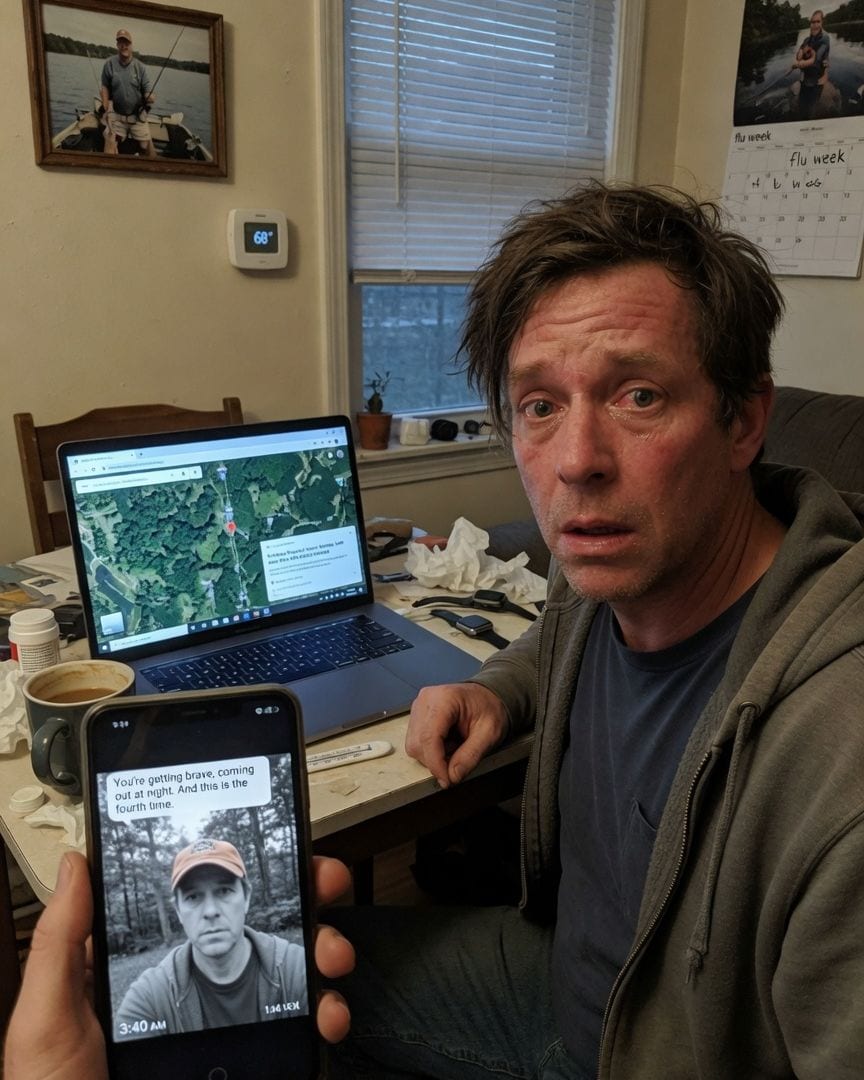
My brother-in-law's camera caught my face in Montana at 3:40 AM. I was asleep in Ohio, but it's the exact orange cap I lost, and he's seen me there four nights running.
I was just making coffee when my brother-in-law sent a photo from his Montana hunting land. It showed my face, wearing my lost baseball cap, timestamped 3:40 AM. I was home in Ohio, sick in bed, and hadn't been to Montana in years. And this was the fourth time.
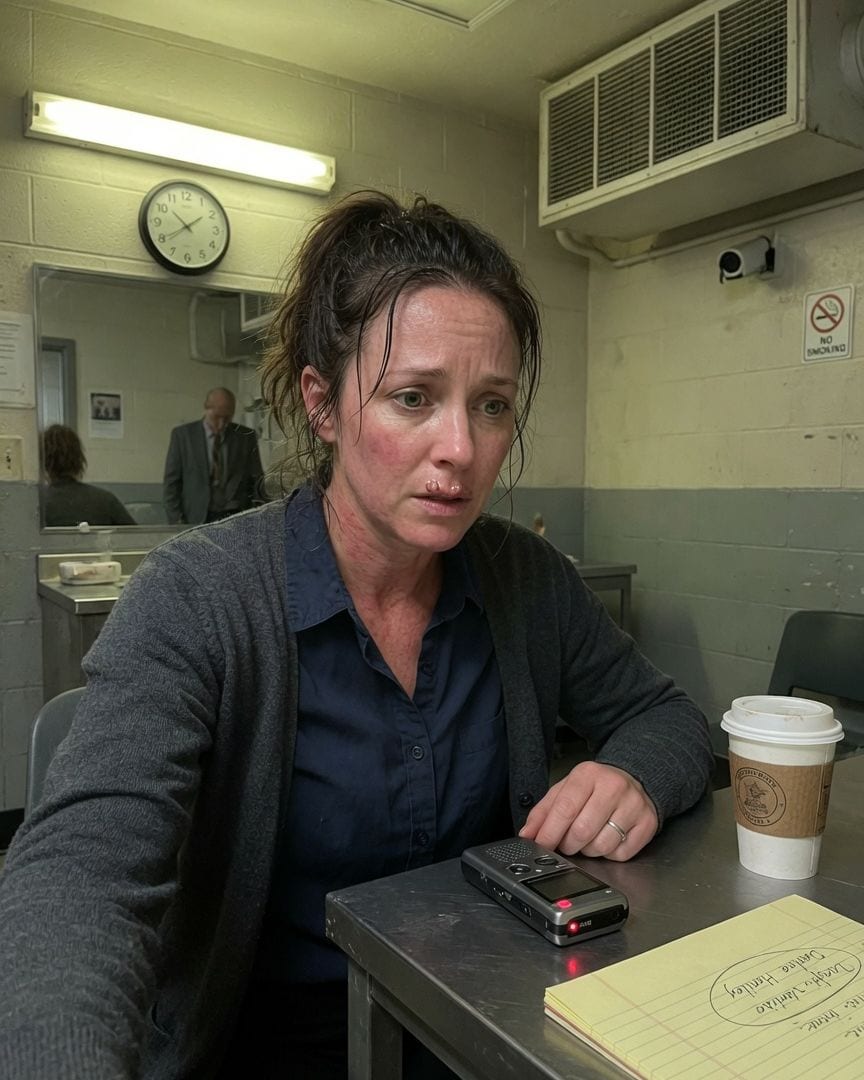
My own voice called 911 from Gary, Indiana, reporting a prowler. I was asleep in Ohio, my phone on the charger.
Sitting in a police interview room, I listened as Detective Walsh played a 911 recording. A woman's hushed voice reported a prowler from a payphone in Gary, Indiana. My stomach dropped cold; it was my exact voice, my specific way of saying 'I think,' even though I was in bed in Ohio that night.
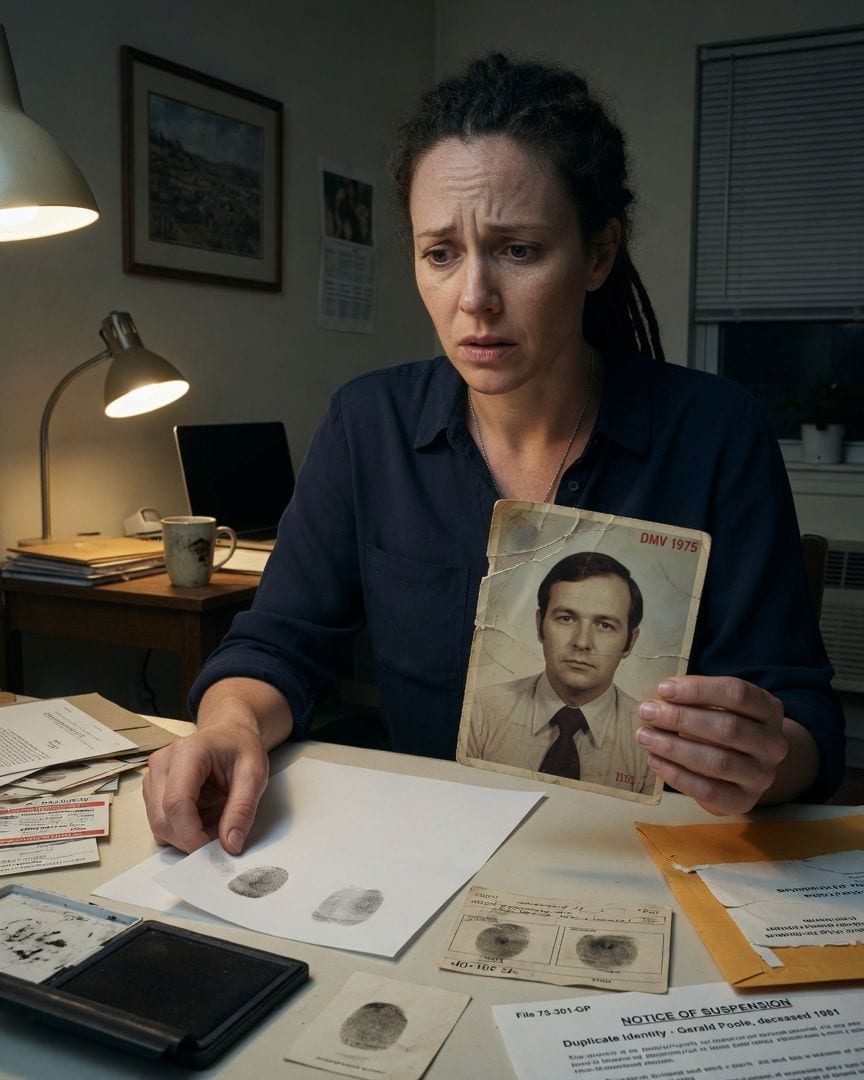
My fingerprints match a dead man's DMV file. They say my face is his. Gerald Poole, licensed 1975, died 1981. The DMV won't renew my license until I resolve his death.
I like things to run smoothly, so a DMV letter about my license suspension was just a nuisance. But it claimed my identity was an exact match for a man declared deceased in 1981, and the archived photo and fingerprints they sent were undeniably my own.
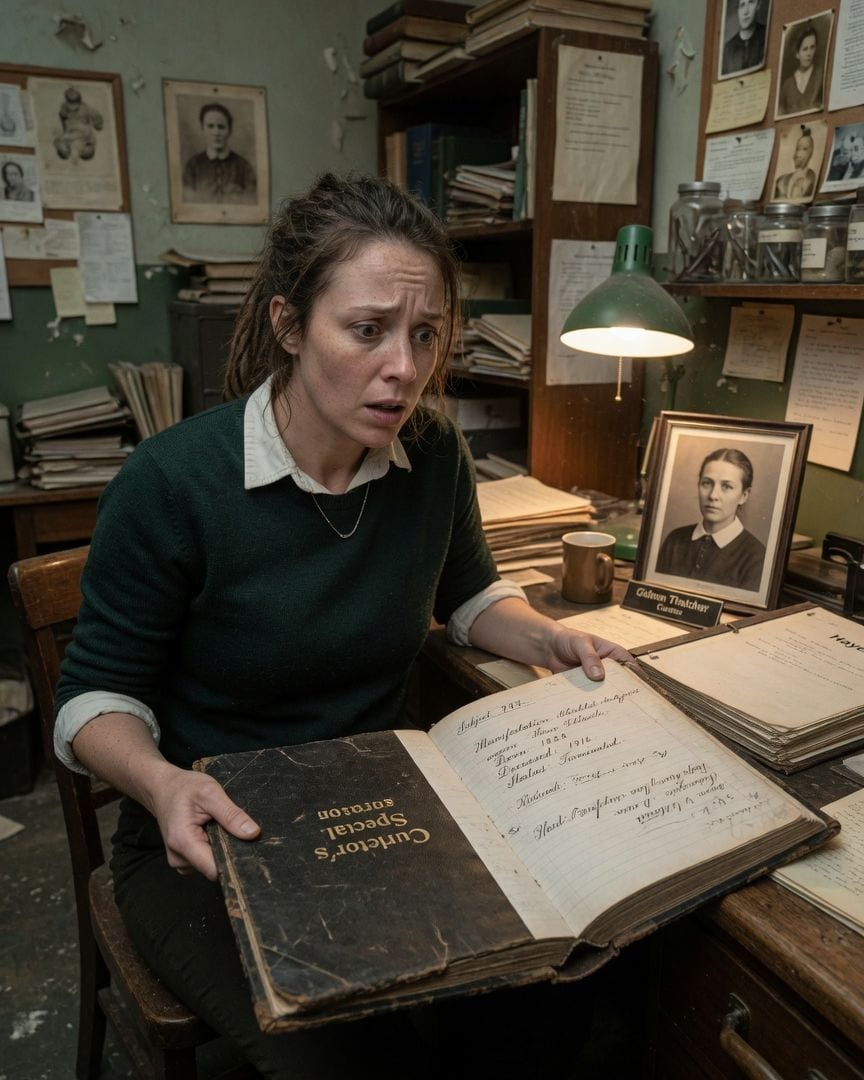
My face, cast in plaster in 1888, stares back from a museum display. They DNA tested a hair from inside the mask. It’s me.
The hushed, cool air of the Museum of Medical History always gave me a strange reverence, until I stopped. Inside a display case, among other plaster death masks, was one labeled 'Theresa Whitfield, 1888.' It was undeniably my face, exact in every detail, down to the faint bump on my nose.
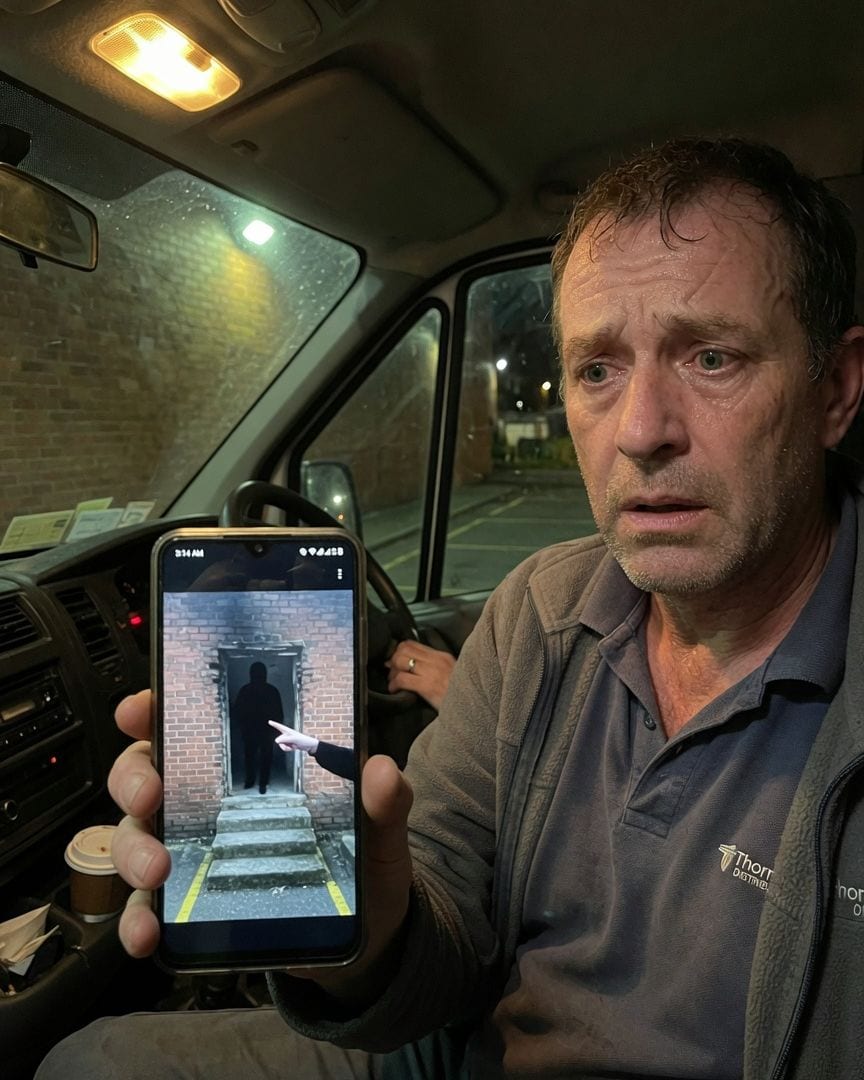
My dashcam showed a doorway in the loading bay wall. Open, with steps into the dark. I got out. Solid brick. Back in the cab, a shape stood on the steps.
It was past three in the morning, just another routine reverse into Loading Bay 7. My van's dashcam flickered on, ready to guide me back against the familiar brick wall. But that night, it showed a doorway where no door should be, open and leading down into absolute darkness.
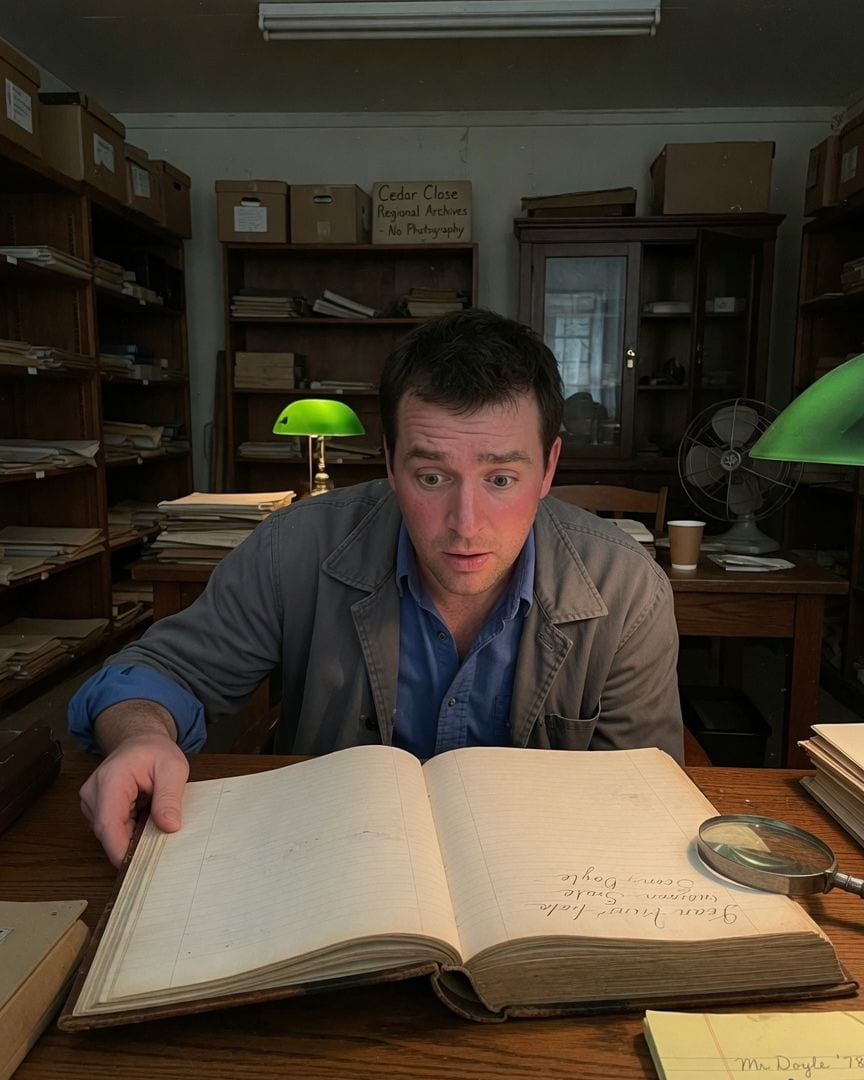
A boy of about seven cycled up to me at the playground and said, 'Sorry about your car, Mr. Doyle.' My car sat untouched — and I've never told any child my name.
I was enjoying a quiet afternoon with my daughter at the Cedar Close playground when a small boy pedaled up to me. With unsettling blue eyes, he said, 'Sorry about your car, Mr. Doyle,' before turning and leaving. I had never seen him, and my car was perfectly fine.