My security camera emailed a clip at 3:03am: a woman stood in the garden, back to the house. The subject line read 'Is this Mum?' My mother died in March. I can't delete the file.
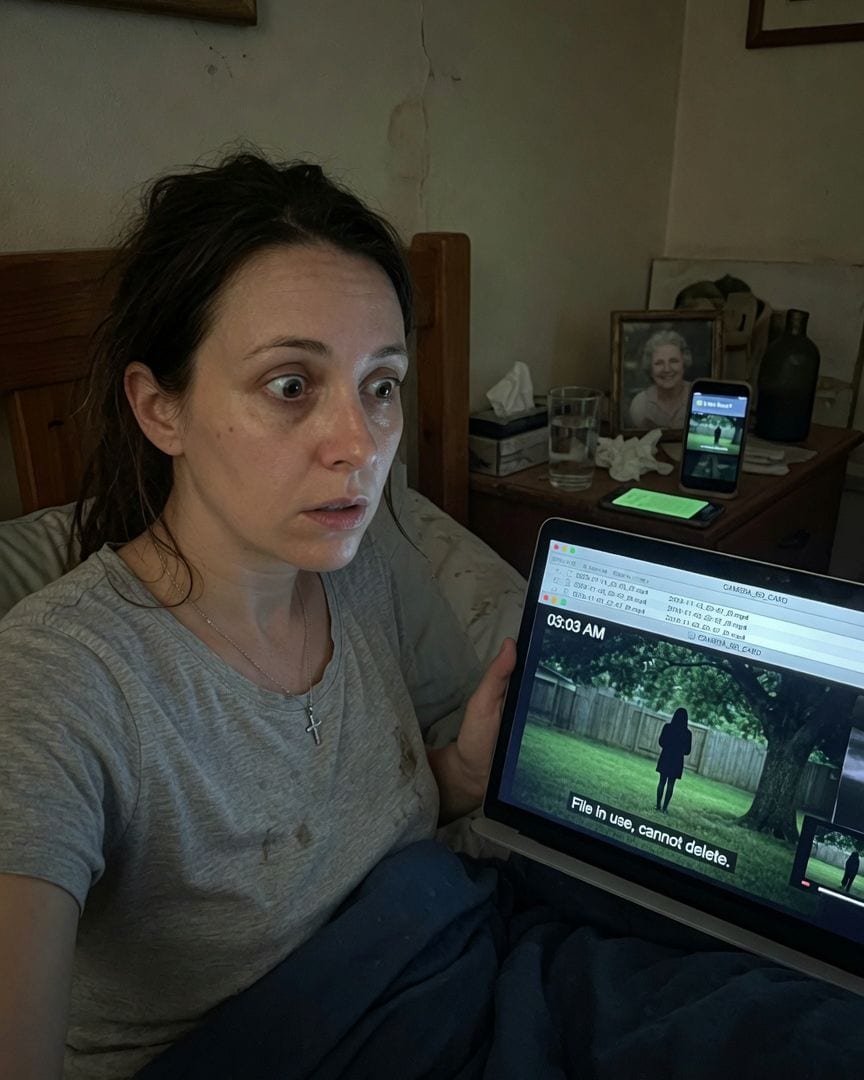
The email arrived at 3:03 AM exactly. I know, because the glowing face of my phone was the first thing I saw when I blinked awake, a vibration humming through the bedside table.
My security camera, set to detect any person on the property, had flagged something. The subject line, automatically generated by its AI, read: 'Is this Mum?'
I went cold. My mother, Constance, had died in March. In this very house.
I clicked the notification. The attached clip was only a few seconds long, grainy and green-tinged in the infrared night vision, but clear enough.
In it, a woman stood on the lawn, near the old oak tree at the back of the garden. Her posture was ramrod straight, almost unnaturally so.
She was perfectly still, a dark silhouette against the paler fence, her back to the house, to the camera. To me. It couldn’t be my mother. But the AI had detected a person, and labeled it. My mother.
A sick, impossible wrongness coiled in my gut.
I tried to dismiss it, to tell myself it was a glitch, a trick of the light, the camera’s AI malfunctioning, but the image, that still figure, and especially that subject line, looped in my mind.
I swiped to delete the email, but it refused. I went into the camera’s app, found the clip, and tried again. Error message. It just sat there, a timestamped digital ghost, defying explanation.
The house, which had always been a comfort, suddenly felt older, heavier around me, a familiar presence grown alien. I pulled the blanket tighter, the phantom image of the woman in the garden burning behind my eyelids.
The next day, I attacked the problem like it was a stubborn stain. I was determined to find a mundane explanation.
I spent hours meticulously troubleshooting the security camera, checking every system log, reviewing playback from other nights, updating the firmware. Everything appeared normal. The camera's diagnostic tools reported perfect functionality. No anomalies, no errors.
It was, according to all indications, working exactly as it should.
Still, the clip was there. So I decided to pull the physical SD card from the camera itself, to examine the raw file directly on my laptop. Maybe the app was faulty, but the card would be the definitive truth.
The tiny card slid into the adapter, clicked into the side of my laptop. I navigated to the camera’s folder and found the 3:03 AM clip. The quality was even crisper on the larger screen, the timestamp undeniable.
I right-clicked, scrolled to 'Delete', and selected it. The laptop whirred for a moment, then returned a flat, red error message: 'File in use, cannot delete.' In use by what? I stared at the screen, frustration bubbling into something colder.
I started scrolling through the card’s contents, looking for other recent recordings to see if anything else was out of place. That’s when I found them. Dozens of other clips, scattered throughout the archives, some dated years ago.
Long before I’d even installed this camera. This model, this brand, hadn’t even been released then.
Each clip showed impossible figures in my garden: a child in what looked like faded, period clothing playing near the old birdbath, a man in a bowler hat standing by the old oak, a different woman tending to a patch of overgrown roses that hadn’t bloomed in decades.
All perfectly still. All with their backs to the camera, to the house. All undeniably in my garden, yet none of them had ever been there. I had certainly never seen these clips before. This was it. Footage Of Nowhere.
Undeniable. Unsettling.
My breath hitched as I clicked on a clip dated five years ago. It showed a man in an old-fashioned, dark suit standing near the back fence, not far from where the woman in the first clip had been.
His posture was stiff, formal, his back to the camera. The details of his tailored suit, the high collar, the faint pinstripes, were unnervingly sharp against the night's gloom, but his face was a blur, a featureless oval.
As I watched, the camera’s internal clock, a tiny white overlay in the corner of the grainy footage, flickered violently. The numbers jumped, scrambled, then re-set themselves. For a split second, in that brief, jarring reset, the man's head tilted.
His blurry face seemed to sharpen, his eyes, dark and deep as twin wells, looking directly into the lens. Then the clip cut out, leaving a black screen.
I showed the clips to Marco that evening. He was initially skeptical, of course. He suggested a hardware fault, a virus, some elaborate prank by neighborhood kids with a projector.
He tried to delete the files, too, and got the same error message. We spent the entire weekend systematically ruling out every technical explanation we could think of. We replaced the SD card with a brand-new, freshly formatted one.
We even installed a brand-new security camera, a completely different brand, in the exact same spot in the garden. For a few days, nothing. A blessed, terrifying silence.
Then, the emails started again. New clips, appearing on the new SD card, sent from the new camera. The same impossible figures, sometimes with the familiar 'Is this Mum?'
subject line, or new ones that felt even more intrusive: 'Visitor: Arthur Marsh' or 'Person Detected: Judith Hayes.' The unease deepened, settling into a cold dread. It wasn't the camera. It was the location. It was my house.
The house, which had been in my family for generations, felt suddenly foreign. I began researching its history, poring over old deeds, scanning local archives online, searching for anything that might explain the figures in the footage.
Names and dates blurred, until one name, already vaguely familiar from some subliminal presence in my childhood, snagged my attention. The Davenports. They were the original settlers of the land where my house stood.
I remembered seeing their name on an old, faded map hanging in the town hall, denoting the land they once owned. It seemed unimportant then. Now, it felt like a cold hand reaching from the past.
The feeling of being watched intensified. My new security camera’s motion sensor would sometimes trigger, sending empty clips to my email, or recordings of nothing but the rustling leaves on a windless night.
It was like something was trying to appear, but couldn’t quite coalesce. One evening, while deep in a rabbit hole of online local history forums, searching for any mention of the Davenport family, my laptop screen flickered.
It wasn’t a full blackout, just a momentary ripple across the display, like a stone dropped in still water. When the image steadied, a small, almost imperceptible icon, shaped like an old-fashioned 'DP' monogram, appeared in my browser's bookmarks bar.
It hadn't been there a moment ago. I knew it.
A chill ran down my spine, as if a cold breath had ghosted my neck. Cautiously, I clicked it. The page loaded blank, just a stark, white screen, a void.
I backed out, my hand trembling slightly, and checked my browser history. At the very top, a long, unerasable string of characters glowed back at me: a URL that included my full name, NoraPatterson.Davenport.archive.
It was like a digital fingerprint, specifically for me, a direct address. The sense of being hunted, of my desperate investigation being noticed and mirrored, was overwhelming. I wasn't just looking for answers anymore; something was actively looking back.
I found Henry Davenport, a retired local historian and, as it turned out, a distant relative of the original Davenports, through one of those old online genealogy forums. He had a reputation for being the family keeper of obscure knowledge.
We met at a quiet café, the clink of porcelain a thin comfort against the chill I carried. I cautiously explained the strange security camera clips, omitting nothing, showing him some of the 'Footage Of Nowhere' on my phone.
He listened, initially with a polite, almost dismissive skepticism, attributing it to digital anomalies, the pervasive glitches of modern tech. His gaze was kind, but his expression was tired, like he’d heard countless eccentric tales.
But when I mentioned the 'DP' icon that had appeared in my browser, and the specific URL, NoraPatterson.Davenport.archive, his eyes widened. The tired skepticism vanished, replaced by an unnerving flicker of recognition.
He leaned forward, his calm demeanor cracking, the coffee untouched. 'The Davenport Channel,' he whispered, a name I had never heard before, a phrase that sounded ancient and forbidden.
He explained that his ancestors, the Davenports, had been fascinated by experimental communication.
In the early 20th century, they'd developed a unique, experimental 'resonant frequency' technology, meant to record local life – a community project that became known as 'the Davenport Channel.'
It was abandoned, he said, after strange 'disturbances' were reported: recordings of things that weren't there, voices speaking from empty rooms, like a chorus of ghosts.
He confessed his family had quietly preserved a few of the original, experimental 'receivers' over the generations, hushed-up relics.
He said the channel 'uses your name' because it was designed as a lineage-based system, intended to record their family history, a kind of living archive. 'A way to see who came before,' he murmured.
'It’s linked to the land,' he added, his voice dropping, 'to specific markers, almost like anchors. Your house… it’s right on one of them.' The implication hung heavy in the air, cold and undeniable.
Henry looked pale, his hands trembling slightly as he spoke, his gaze fixed on some point beyond me, lost in memory. 'The Davenport Channel wasn't just recording,' he murmured, his voice barely audible. 'It was also designed to project.'
He rose abruptly, his chair scraping against the floor, and retrieved an object from a locked cabinet against the wall, its contents hidden behind frosted glass. He placed it carefully on the table between us.
It was an antique, heavy brass device, about the size of a small radio, with a tarnished lens on one side and a single, ominous glowing red light on its front.
It looked like something out of a forgotten science fiction novel. 'This is one of the original units,' he explained, his fingers tracing the cold metal, 'a receiver, but also a projector.
We found it buried on my family's old homestead, not far from your house, actually.' He said the channel would sometimes 'bleed through' to other nearby devices, like security cameras, if they happened to be tuned to its resonant frequency.
'Accidental conduits,' he said.
'It’s been active again for a few months,' he admitted, finally meeting my gaze, his eyes shadowed with fear. 'Ever since my camera started picking up strange things, too.
Whispers in the dead of night, fleeting shadows…' He paused, collecting himself. 'The device has a small, faded inscription on its base.' He picked up the heavy brass object and slowly, deliberately, turned it over.
In the dim light of the café, Nora saw it. Etched into the metal, in elegant, looping script, a name that made her heart seize: 'For Constance Davenport.'
I stared at the inscription, the name of my dead mother, Constance, etched into the impossible artifact. It gleamed faintly in the café's low light, a testament to a truth I couldn't comprehend.
Henry finally admitted the full, buried truth, his voice barely a whisper, as if speaking it aloud might give it more power.
Constance, my mother, was a distant, unacknowledged relative of the Davenports, a branch of the family that had moved away generations ago. She had secretly been fascinated by local history, he explained, had spent years quietly researching her lineage.
She'd discovered her connection to the Davenports, this hidden branch, and had grown obsessed.
She'd been trying to reactivate 'the Davenport Channel' herself, believing it was a way to connect with her true ancestors, to understand her lineage beyond the Patterson name, to reach back through time.
She had unwittingly repurposed her own security camera, my camera, tuning it to the channel's latent frequency, turning it into an active 'receiver.' It explained everything. The 'Is this Mum?'
subject line wasn't the camera's AI identifying her mother; it was an echo of Constance’s own desperate attempts to call out through the channel, a ghost in the machine, captured and relayed.
The figures Nora had seen in the garden were not her mother, but projections from the past, drawn by Constance's desperate attempts to reach back through time, to pull echoes into the present.
The channel, once reactivated by her mother's specific focus, amplified any nearby device, pulling it into its network of projections. My camera had been caught in the crossfire of my mother's secret quest.
Henry explained, his voice urgent, that the channel, once activated, couldn't simply be turned off. It fed on observation, on being seen. The more Nora watched the clips, the stronger the projections became, the more solid they threatened to become.
He told her the only way to stop it was to sever the connection entirely, to destroy the original receiver/projector device and all activated 'receivers' – including her own security camera, which was now a conduit, an open door.
As he spoke, the red light on the brass device in his hands began to pulse erratically, growing brighter with each throb, like a tiny, malevolent heart beating faster.
Outside, the garden camera's light flashed, a stark white beacon in the gathering dusk, and a new clip notification pinged Nora's phone.
This time, the image was clearer than ever: the woman from the first clip, the one who was 'Mum,' standing in the garden. But now she was slowly turning. Her head had begun to lift.
I didn't hesitate. I snatched the heavy brass device from Henry's grasp, its cold weight solid in my hand. It was an instinctive, primal surge of action. I burst out of the house, ignoring Henry's frantic shouts behind me.
I had to destroy it.
I found a heavy landscaping rock near the old oak tree, half-buried in the soil.
With a primal scream, a sound I barely recognized as my own, I brought it down on the brass device, again and again, the dull thuds echoing in the twilight, until it shattered into jagged, sparking fragments.
Then, without a moment's pause, I ripped my security camera from its mount on the house and smashed it to pieces against the brick wall.
The projections stopped. The notification pings ceased. All the strange clips on my SD cards vanished, wiped clean as if they'd never been there. The 'Davenport.archive' URL now returned a permanent 404 error, a dead link to a dead channel.
Henry, pale and shaken but visibly relieved, helped me gather the mangled pieces of the device and the camera.
Together, we buried them deep beneath the roots of the old oak tree, a silent grave for a channel that should have remained dormant.
Life slowly returned to a semblance of normal, though 'normal' was a word I now used with a different understanding.
I sold the house a few months later, explaining it as a need for a fresh start after my mother's passing. I never installed another security camera, not even a simple doorbell cam.
But sometimes, when I scrolled through old photos on my phone, images from before all this began, I’d find one from my old garden.
A photo of her mother, Constance, standing with her back to the house, looking out over the lawn, perfectly still.
If this one got to you
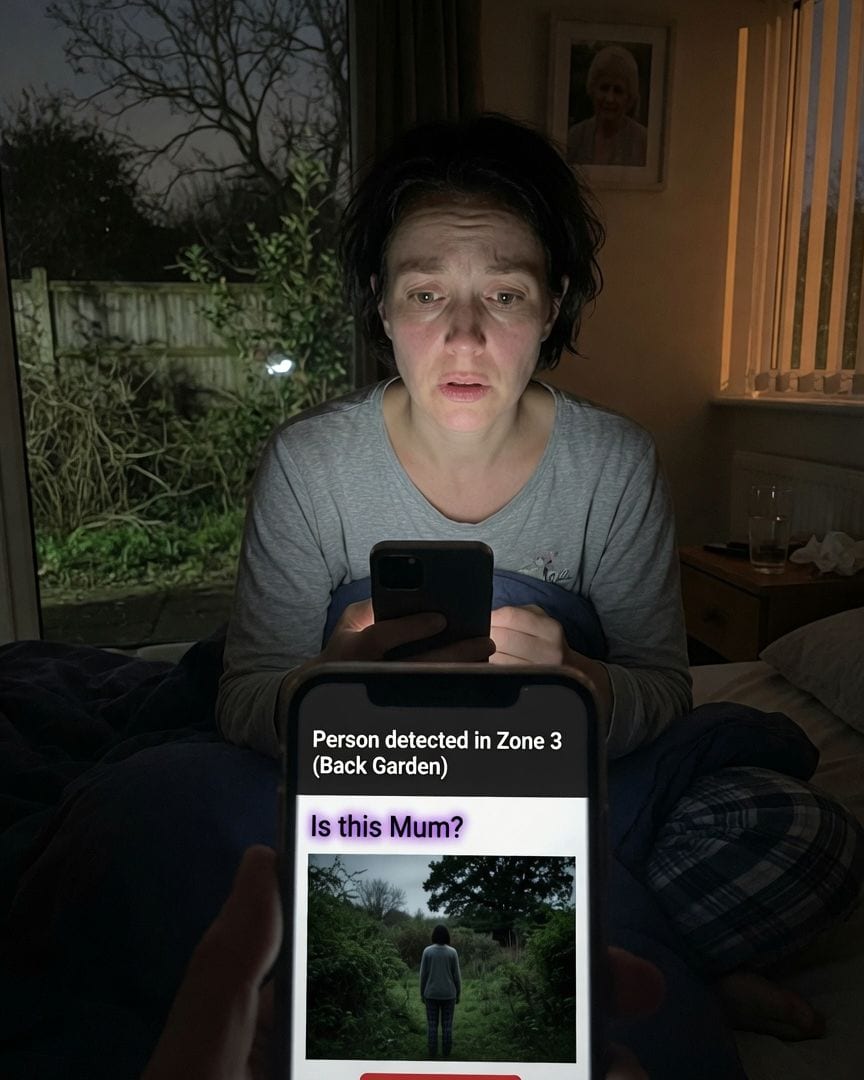
My security camera sent a clip at 3:03 AM: a woman standing in my back garden. The subject line read, 'Is this Mum?' My mother died here in March.
My phone pinged at 3 AM with a security camera alert, interrupting the deep quiet of my house. The attached clip showed a still figure in the back garden, but the subject line froze me. It asked, 'Is this Mum?' My mother died here in March.
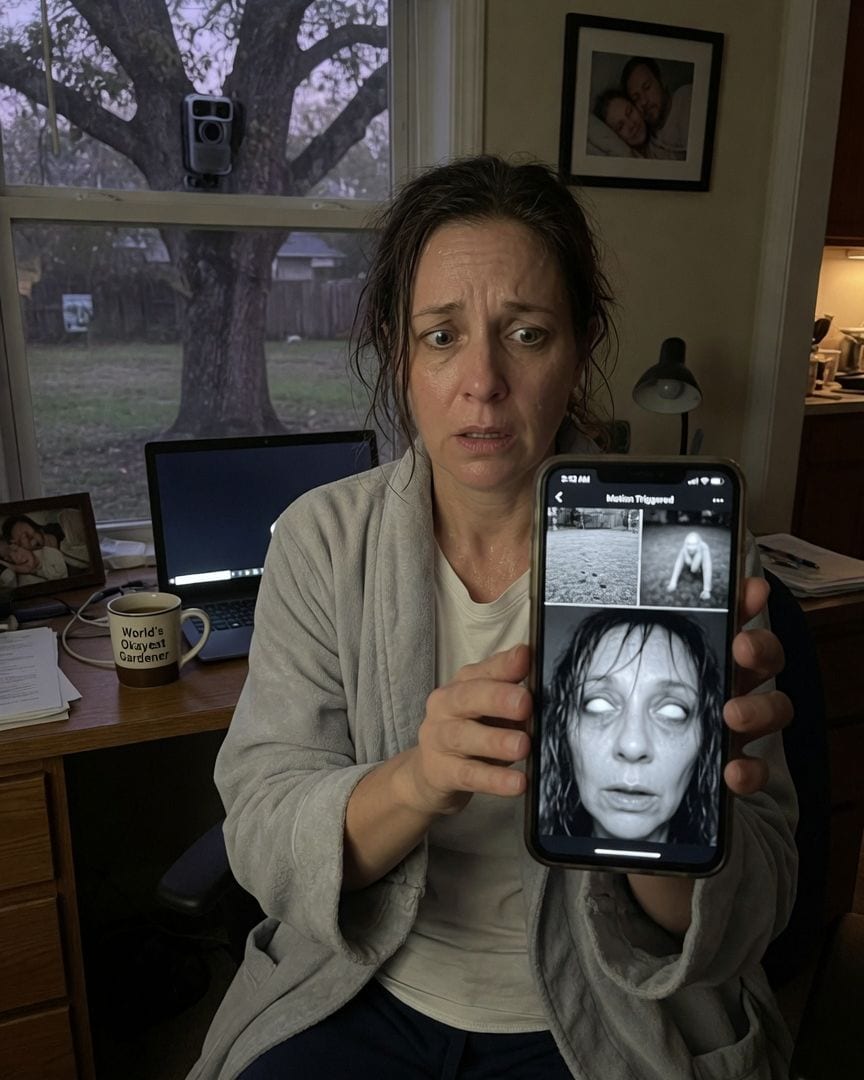
My wildlife camera caught a woman crawling across the lawn toward my house. Her face was pressed against the lens, six feet up.
My wildlife camera usually captures blurry foxes, so the 3 AM notification was just a minor annoyance. But the sequence of images showed something else entirely: a woman crawling through my backyard, then her face, pressed against the camera lens. My camera is clamped six feet up on an oak tree, angled down, making her impossible stare utterly terrifying.
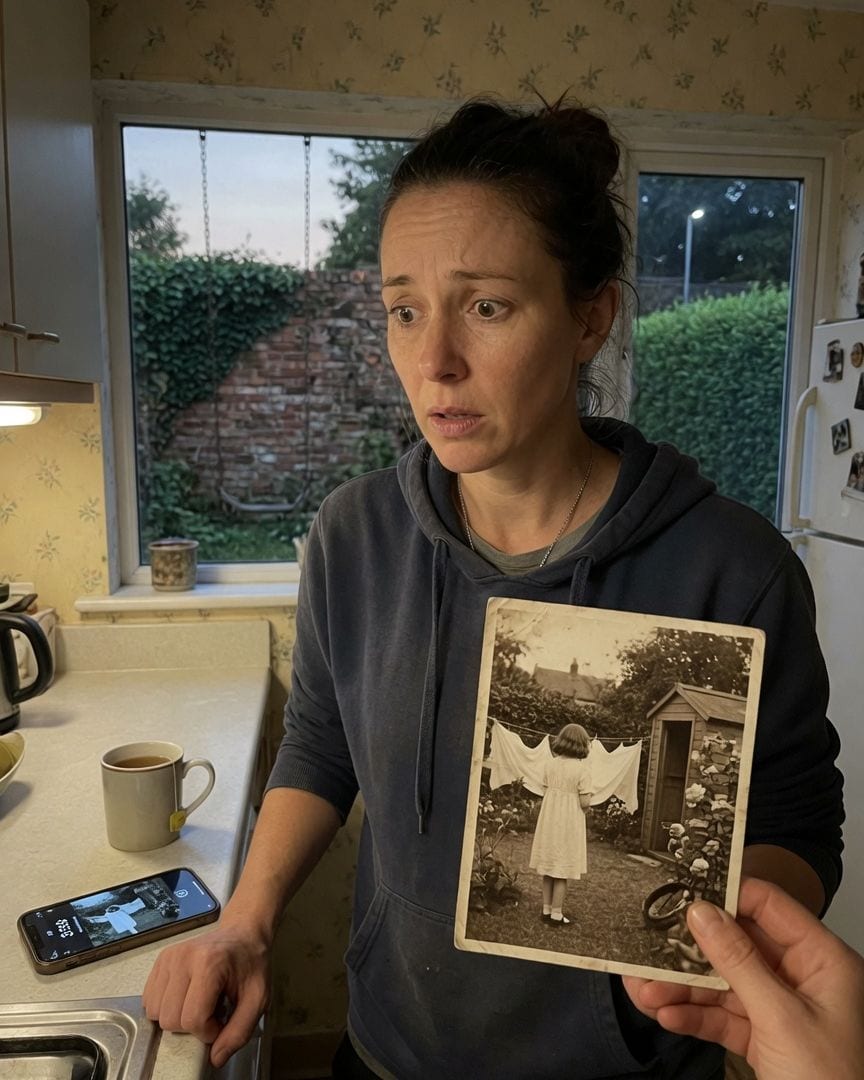
My trail camera catches a girl in a nightdress on my lawn, but the garden around her is wrong: a privy, a mangle, washing lines.
Every morning, my trail camera sends routine alerts, but one day, it showed a girl in a white nightdress standing on my lawn. What truly stopped me was the garden itself: where my trampoline should be, there were laundry lines, a dilapidated privy, and a rusted mangle. These impossible structures appeared in the footage, yet my yard remained exactly as it had always been.
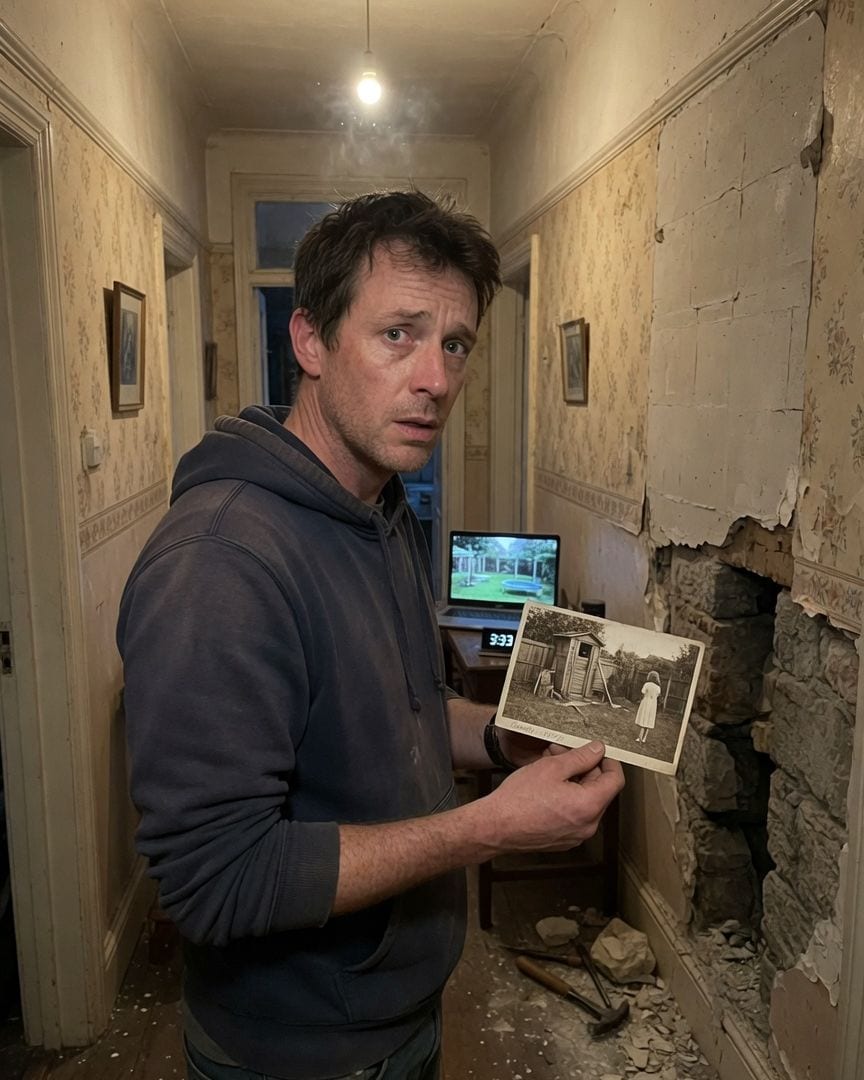
My trail camera keeps catching a girl on the lawn at 3:33, but the garden around her is wrong—a privy, a mangle, washing lines where my trampoline is. The last frame each night is her starting to turn.
I inherited an old house and set up a trail camera for foxes. But the footage changed: a young girl appeared in my garden at 3 AM, standing where my trampoline was, surrounded by washing lines where my rose bushes bloom. The landscape was decades out of place.
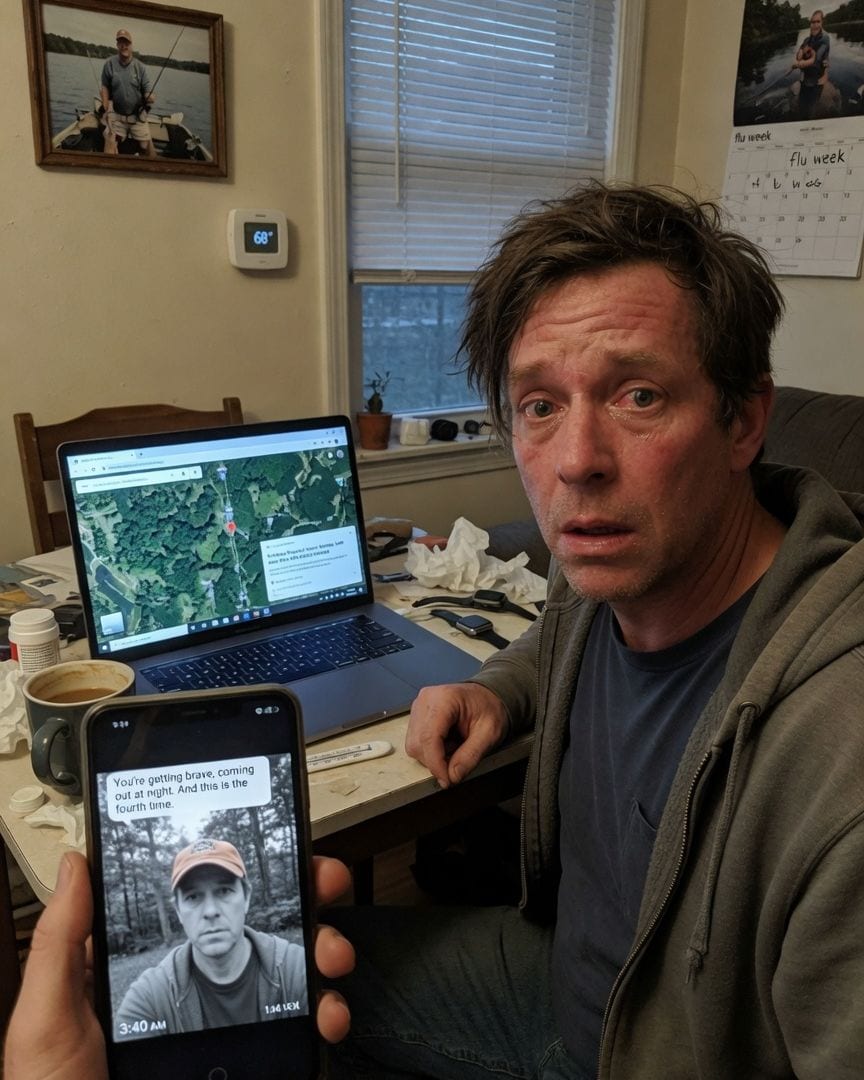
My brother-in-law's camera caught my face in Montana at 3:40 AM. I was asleep in Ohio, but it's the exact orange cap I lost, and he's seen me there four nights running.
I was just making coffee when my brother-in-law sent a photo from his Montana hunting land. It showed my face, wearing my lost baseball cap, timestamped 3:40 AM. I was home in Ohio, sick in bed, and hadn't been to Montana in years. And this was the fourth time.
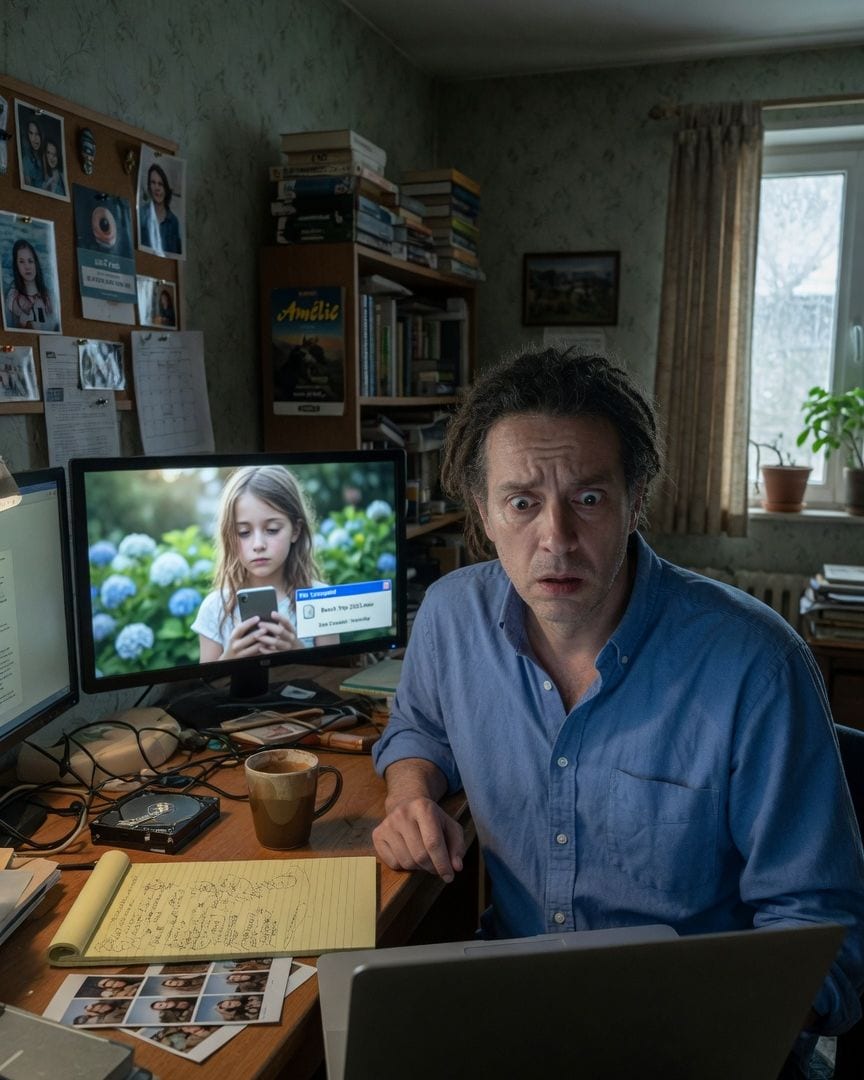
My wife's eyes don't blink before the camera anymore. She says I imagined her twenty-year habit, but the videos don't lie.
After five days missing, my wife Iris returned, disoriented but safe. The relief was overwhelming, until I noticed something small, yet unsettling. Iris had a harmless double-blink tic before taking photos for twenty years, but now, her eyes were perfectly still. When I asked about it, she just smiled and said I must have imagined it.