My wildlife camera caught a woman crawling across the lawn toward my house. Her face was pressed against the lens, six feet up.
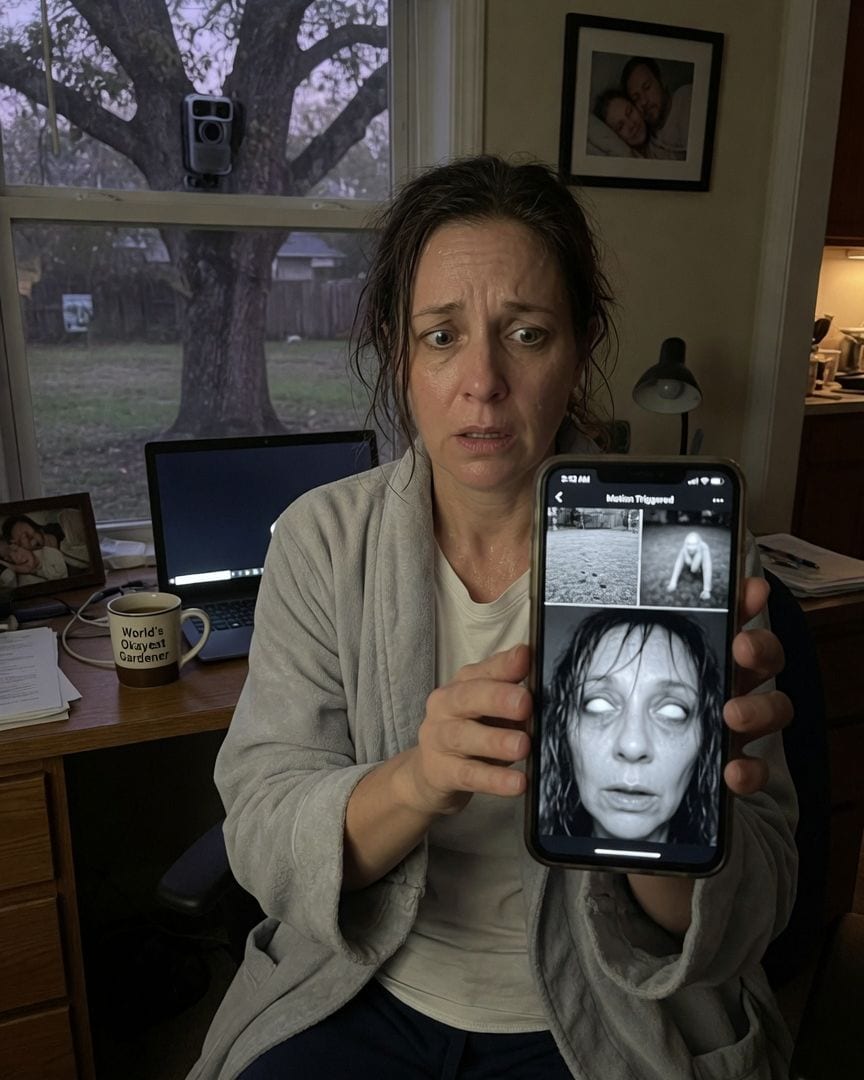
The last thing I wanted was to sit staring at my phone at three in the morning, but the notification had jolted me awake.
My wildlife camera, usually a reliable source of blurry fox tails or the occasional deer munching on my hydrangeas, had just sent a sequence of images.
I blinked, trying to clear the sleep from my eyes, and tapped the first image.
My empty backyard lawn. Normal.
I swiped. The second image made my breath catch. A woman. Pale, indistinct in the monochrome, but undeniably human.
She was crawling on hands and knees across the dew-soaked grass, moving with an unnatural, almost disjointed gait, heading straight for my house. My stomach churned. This wasn't some animal. This was a person.
I swiped again, my thumb trembling. The third image filled the entire screen. A face. Her face. It was so close to the camera lens that it distorted, pressed right up against it.
Her eyes were wide, unblinking, stark white against her pale skin. There was no expression, just a vacant, terrifying stare.
My camera is a robust unit, clamped to the trunk of the old oak tree in my backyard, roughly six feet up. Angled down. Nothing on the ground should have been able to reach it. Let alone climb it.
Let alone stare directly into it from that height. The image was grainy, but the details were there – the sharp, hollowed cheeks, the faint outline of dark hair plastered to a damp forehead.
I swiped back to the first image. Empty lawn. Swipe. Crawling woman. Swipe. Face. I repeated the sequence. Again. And again. The cold dread that had settled in my gut began to spread, an icy tendril coiling around my chest.
This wasn't a prank. This wasn't an animal. This was wrong. Utterly, fundamentally wrong.
I threw on a bathrobe and headed straight out, the damp morning air hitting my face. The wildlife camera was still there, a dark, unassuming box, firmly clamped to the oak tree's trunk. I shone my phone’s flashlight on it.
No signs of tampering. No scratches on the tough plastic casing. I swept the beam down to the ground.
The earth beneath the tree was soft, recently watered, but there were no disturbed patches, no clear footprints, nothing to suggest someone had scaled the trunk or even stood on the ground directly below it.
The branches above were too high, too thin, too far away for anyone to have swung down from. It was impossible.
Back inside, with Richard still asleep in the bed upstairs, I sat at my office desk, the screen of my laptop glowing in the pre-dawn dark. I meticulously reviewed the digital files from the camera.
The three images, then a short, three-second video clip that led directly into the face-filling still. I zoomed in on every pixel of the woman's face. Undeniably human, yes, but there was an unsettling quality to it.
Not just the wide eyes, but a stillness, an ancient, almost blank detachment that made my skin crawl.
"It has to be a prank," I muttered to myself, trying to conjure a rational explanation.
But the height of the camera, the timing—3:12 AM—and the sheer impossibility of the angle she'd managed to achieve, pressing her face against the lens, made any human prankster scenario feel absurd. Who would go to such lengths? And how?
Richard shuffled into the kitchen a little later, still sleepy, pouring coffee. I showed him the images, then the video. He squinted at the screen. "A glitch? A reflection from the porch light?"
he offered, trying to be helpful, trying to make it normal. I shook my head, my finger tracing the outline of her jaw on the screen. "Look at the features, Richard. That's not a reflection.
And the camera was angled down. There's nothing to reflect up from the ground, especially not like that."
As I replayed the video clip, a faint, almost subliminal static hum caught my attention. It was barely audible, buried under the night sounds of crickets and a distant dog bark. I hadn't thought my wildlife camera even recorded sound.
I'd bought it for its motion-activated photo and video capabilities, mostly to track nocturnal animals, never bothering with any advanced settings. But now, looking at the file properties, the size was larger than a silent three-second clip should have been.
It had an audio track. A faint, almost imperceptible whisper seemed to be embedded deep within the white noise.
The whispered name, 'Christine... Christine...', had shattered whatever composure I had left. This wasn't a prank. This wasn't a glitch. This was personal.
For the next few days, I threw myself into research, a frantic, desperate dive into local lore, old newspapers, anything that might be connected to my property or the history of this quiet, wooded area.
Richard, bless his heart, tried to reassure me, suggested I get more sleep, that it was all in my head.
But his skepticism only deepened my isolation, made me feel like I was spiraling into something he couldn't see, couldn't understand.
My search eventually led me to the town's historical society, a small, dusty building that smelled of old paper and quiet decay. It was filled with forgotten records, shelves upon shelves of local history.
There, I met Renee Carter, the archivist. She was in her late sixties, her hair pulled back in a severe bun, her movements precise and deliberate. Her calm, almost unnerving demeanor immediately struck me.
I vaguely described my 'unusual camera footage,' omitting the part about my name being whispered. I watched her closely as I spoke, trying to gauge her reaction. Renee listened, her expression unreadable, her eyes a deep, knowing gray.
She didn't dismiss me. She didn't offer a mundane explanation.
Instead, she offered a cryptic suggestion. "Some places have a memory, Christine. Sometimes, those memories don't stay buried." She then guided me to a section of old property deeds and local census records, a helpful but ultimately fruitless gesture.
But then, almost as an afterthought, she mentioned a 'restricted collection,' not for public viewing, containing 'sensitive personal accounts' from generations past. A prickle of unease ran down my spine.
Renee seemed to know more than she was letting on, her eyes holding a faint, knowing sadness that chilled me to the bone.
I started noticing things. My phone, which had previously only pinged for actual animal sightings on the wildlife camera, now vibrated randomly, often in the middle of the night.
I’d check it, and the notifications would show empty frames, or blurred streaks of motion I couldn't explain – just gray static, or a distorted, stretched image of the dark yard.
A persistent sense of being observed settled over me, even when I was alone in my own home.
I'd be reading in the living room, and the hairs on the back of my neck would prickle, forcing me to glance over my shoulder, at the empty hallway, at the quiet kitchen. Nothing. Yet, the feeling persisted.
One evening, as I was working on my laptop, a strange, garbled pop-up appeared on my screen. It was a stream of what looked like old, corrupted code, a flurry of characters and symbols.
Briefly, almost subliminally, the word 'INGRAM' flashed within the mess, stark white against the dark background, before the whole thing vanished as quickly as it had appeared.
I tried to recreate it, to bring it back up, but it was gone, leaving no trace. I felt a cold knot of fear tighten in my stomach.
I called Renee again, the next morning. My voice was tight. "About that restricted collection," I began, trying to sound casual, "is there any way I could get access?"
Renee's voice was calm, but there was a new, sharper edge to it. "Some truths are better left undisturbed, Christine," she said, her tone almost a warning. "Especially if they're still hungry."
The line went silent, and I knew what she meant. The warning was clear. I hung up feeling a profound sense of dread.
Later that day, Richard found the wildlife camera's battery completely drained, despite having been fully charged just hours before. He shrugged it off, attributing it to a faulty unit, or maybe the cold night air. But I knew better.
Something was actively fighting my search. Or, perhaps, actively watching me.
Ignoring Renee's chilling warning, the next day I returned to the historical society. I was determined to access that restricted collection. I insisted, citing the freedom of information act, pushing past Renee's quiet reluctance.
After a lengthy, uncomfortable exchange in her small, cluttered office, where the silence felt almost heavy, Renee finally relented. Her face was grim, her mouth a thin line.
She walked to a locked cabinet behind her desk, retrieved a heavy, leather-bound journal, and placed it on the table between us. Its cover was dark, worn smooth with age, and it had no title.
"Just remember," Renee said, her voice barely a whisper, her eyes fixed on mine, "some records are kept hidden for a reason. And some things… some things are better left unread."
I took the journal, my fingers brushing the dry, brittle leather. It was dated from the late 1800s, a local doctor's personal account, filled with elegant, precise handwriting.
As I read the first few entries, a chill seeped into my bones.
The doctor meticulously detailed a recurring phenomenon in the area: 'spectral women' seen crawling through fields, 'voices whispering names' from empty rooms, and 'individuals drawn away' from their homes, never to be seen again.
My blood ran cold as I turned a page and read a passage that described a woman, 'her face a pale mask, eyes wide, pressing herself against the glass of the window, as if trying to enter.'
It perfectly matched my camera footage.
The journal also mentioned a 'resonance' or 'frequency' that seemed to attract these entities, often connected to specific land plots – and then I saw it, explicitly named: the exact coordinates of my property, mapped out on a faded sketch.
The doctor, in his later entries, grew desperate, his handwriting becoming more erratic. He wrote about a 'channel' that would 'open' for those who 'listened too long,' a way for the entities to 'claim their own.'
The implications were stark, horrifying. This wasn't random. This wasn't a glitch. This was a deliberate, recurring pattern, and my wildlife camera had inadvertently tapped into it.
I rushed home, the heavy journal clutched tight in my hands. The word 'channel' echoed in my mind, a cold, persistent hum. What kind of channel? A radio frequency? A psychic link?
My thoughts raced back to the brief, corrupted pop-up on my laptop, the word 'INGRAM' flashing like a warning sign. Heart pounding, a desperate, terrifying curiosity driving me, I typed 'Christine Ingram' into a search engine.
Then, almost as an afterthought, a morbid impulse, I added 'live'.
My browser loaded a single, obscure result. A streaming video platform I'd never heard of, a placeholder name, nothing recognizable. It was hosting a single, active channel. Its title was simply: 'ChristineIngramLive.'
My fingers trembled as I clicked the link. The screen flickered, a burst of static, then resolved into a live video feed. It was my living room.
From an impossible, high-angle perspective, as if a camera were mounted invisibly on the ceiling, or even floating in mid-air. I spun around in my office chair, my eyes darting to my actual living room, which was empty.
But the feed on my laptop was real-time. I watched, horrified, as the camera on the screen slowly, smoothly, began to pan.
It showed every detail of my house, moving across the bookshelves, the fireplace, the empty armchair where I’d been sitting just moments before I’d jumped up to follow the noise from my laptop.
Then, I saw it. A faint, pale figure moving in the background, out of focus at first, near the kitchen doorway. The crawling woman. My breath hitched. She was inside my home.
The stream was broadcasting my life, and it was using my name. The screen on my laptop, still showing my living room, slowly moved, tracking her. She crawled, silent and slow, towards the empty armchair. My armchair.
She sat up, perfectly straight, her wide, unblinking eyes fixing on the camera that wasn't there. Her head slowly, deliberately turned. Her eyes, through the screen, found mine.
And a faint, distorted whisper, like dry leaves scraping over concrete, rasped from the laptop speakers: "Christine... you're home."
“Get home. Now. Please, Richard. Just come home.” My voice was a ragged whisper, barely audible over the sound of my own frantic breathing.
I didn’t try to explain the impossible stream, the woman in my living room, the whispered warning. I just needed him here. Then, still shaking, I frantically called Renee.
“You have to tell me,” I pleaded, my voice cracking. “What is this ‘channel’? What’s happening?”
Renee’s voice, when she answered, was heavy with resignation. "The 'channel' isn't a physical broadcast, Christine. Not in the way you understand it. It's a psychic resonance, amplified by the digital connections we all have now.
The entity… it’s an echo from a time before memory, a presence that feeds on attention and fear." She paused, and I could hear her sigh, a deep, weary sound.
"The journal, the 'record that cannot be'… it detailed the entity’s method. It would choose a 'listener' whose name resonated with its own ancient, forgotten pattern.
Your wildlife camera, by capturing its image, by recording its sound, by focusing your attention on it, completed the circuit. It opened the channel.
The entity now uses your digital footprint, your name, your personal devices, to create an inescapable link. It broadcasts your life back to you as a lure."
My blood ran cold. "The crawling woman," I managed to say. "She’s not… a ghost?"
"No," Renee said, her voice flat. "She's an imprint. A manifestation of the entity's growing presence. Now fully anchored within your home. It's waiting to draw you deeper, Christine. To make you another 'disappearance' in this town's long, forgotten history."
Richard arrived moments later, his face pale, his eyes wide as he saw the impossible stream on my laptop. The crawling woman was now perfectly still, sitting in my armchair, watching us.
There was no time to argue, no time for his skepticism. He could see the undeniable terror in my eyes, and the impossible reality on the screen.
"We have to go," I choked out, grabbing his arm. "We have to break the connection."
I raced out the back door, Richard close behind me. I grabbed the crowbar he kept in the shed and, with a desperate fury fueled by pure terror, I swung it at the wildlife camera.
The first blow cracked the casing, the second tore it from its mount. Plastic shards and wires flew as it clattered to the ground, broken beyond repair.
As the camera hit the dirt, the screen on my laptop, still open in the office, flickered. The 'ChristineIngramLive' channel pixelated, dissolving into a jumble of corrupted code, then freezing on a blank, gray screen.
We raced back inside, grabbing only essentials: a bag with some clothes, Richard’s wallet, my phone, and the heavy, leather-bound journal clutched to my chest. We didn't bother to lock the doors.
We just got in his truck and sped away.
As we pulled out of the driveway, I glanced back at the house. My phone, which I'd forgotten to close, briefly unfroze from the stream. For just a second, I saw her.
The crawling woman was standing in the living room window, perfectly still, watching us leave. Then, the stream went dark. Completely.
We drove for hours, heading west, putting as much distance as possible between ourselves and that house, between ourselves and the 'channel.'
We had no home, no explanation anyone would ever believe, only the chilling footage on my phone and the ancient journal as proof.
Richard and I never returned to our old house. It sat empty, listed for sale, then quietly taken off the market.
The wildlife camera lies in pieces in a landfill somewhere, but the digital footprint of 'ChristineIngramLive' remains, an inactive channel on a forgotten platform. I carry the journal with me everywhere, the physical proof of what I endured.
Richard, though scarred, tries to build a new life, tries to find a semblance of normalcy, but the quiet, watchful fear in my eyes is a constant reminder of what we lost.
We lost our home, our peace, our sense of security, replaced by a cold, certain knowledge that the world holds things no one should ever see.
I often check my phone, even now, years later. Not for the channel, but for the local news, for any mention of strange occurrences in my old town. Nothing. The world moves on, oblivious.
I know the truth, a burden no one would ever believe, and the knowledge that the 'channel' is dormant, not dead. It's just waiting.
I sometimes wonder if Renee Carter is still alive, still watching the archives for new names, new patterns.
I wonder if someone else, somewhere, has recently set up a new wildlife camera in their garden, hoping to catch a glimpse of a fox.
The channel is still broadcasting, I know it, and it's still waiting for someone else to tune in.
If this one got to you
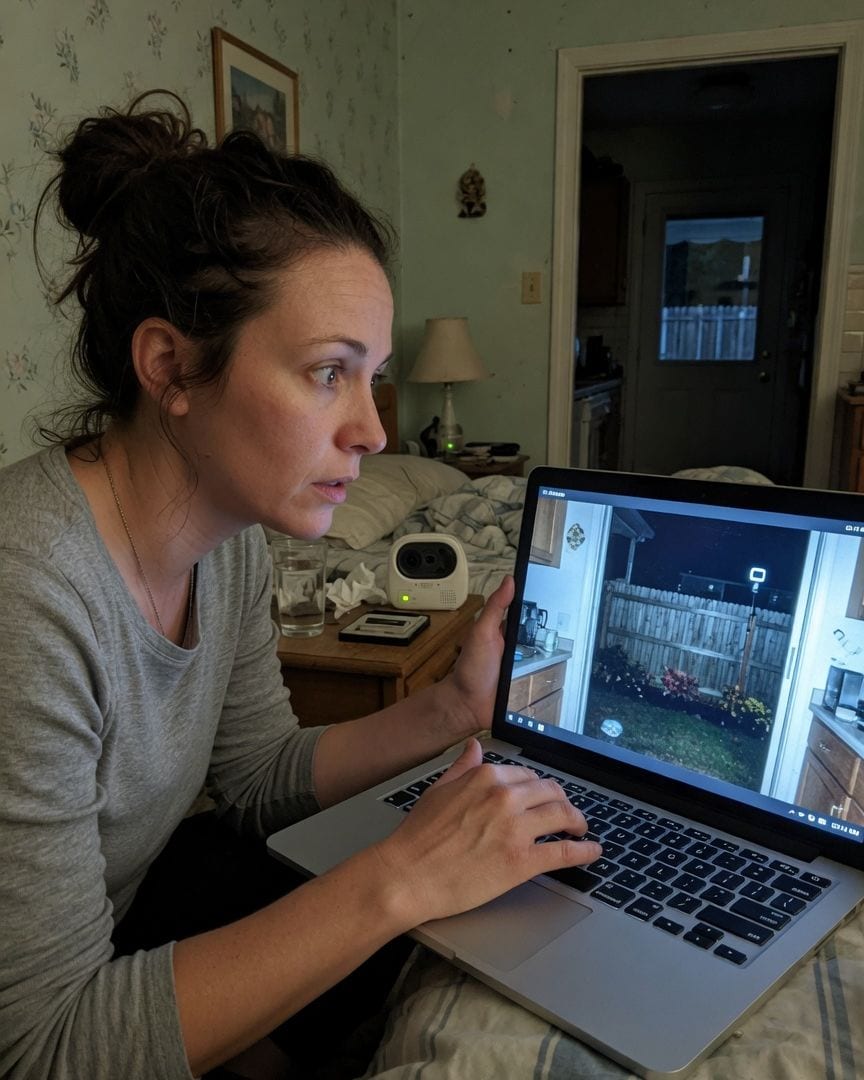
My game camera caught my back door from the inside. For three nights, it showed my door from the yard, getting closer. The last picture is from inside the glass, looking out at the fence.
I had set my game camera on the back fence, aimed at my house, to catch whatever I'd seen moving outside my kitchen window. But the last photo, taken after midnight, showed my kitchen from *inside* the locked back door, looking out.
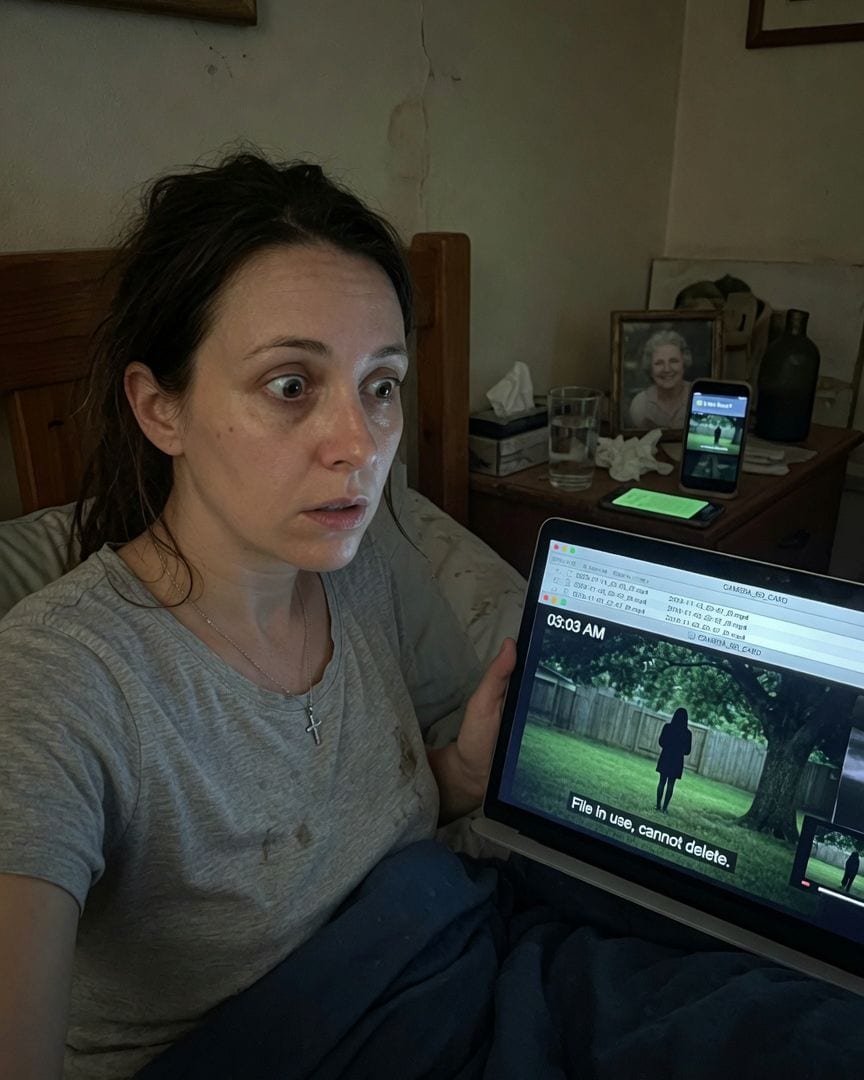
My security camera emailed a clip at 3:03am: a woman stood in the garden, back to the house. The subject line read 'Is this Mum?' My mother died in March. I can't delete the file.
My security camera sent an alert at 3 AM: 'Is this Mum?' But my mother, Constance, died in March. The grainy clip showed a woman in the garden, perfectly still, her back to the camera. The impossible question coiled a sick dread in my gut.
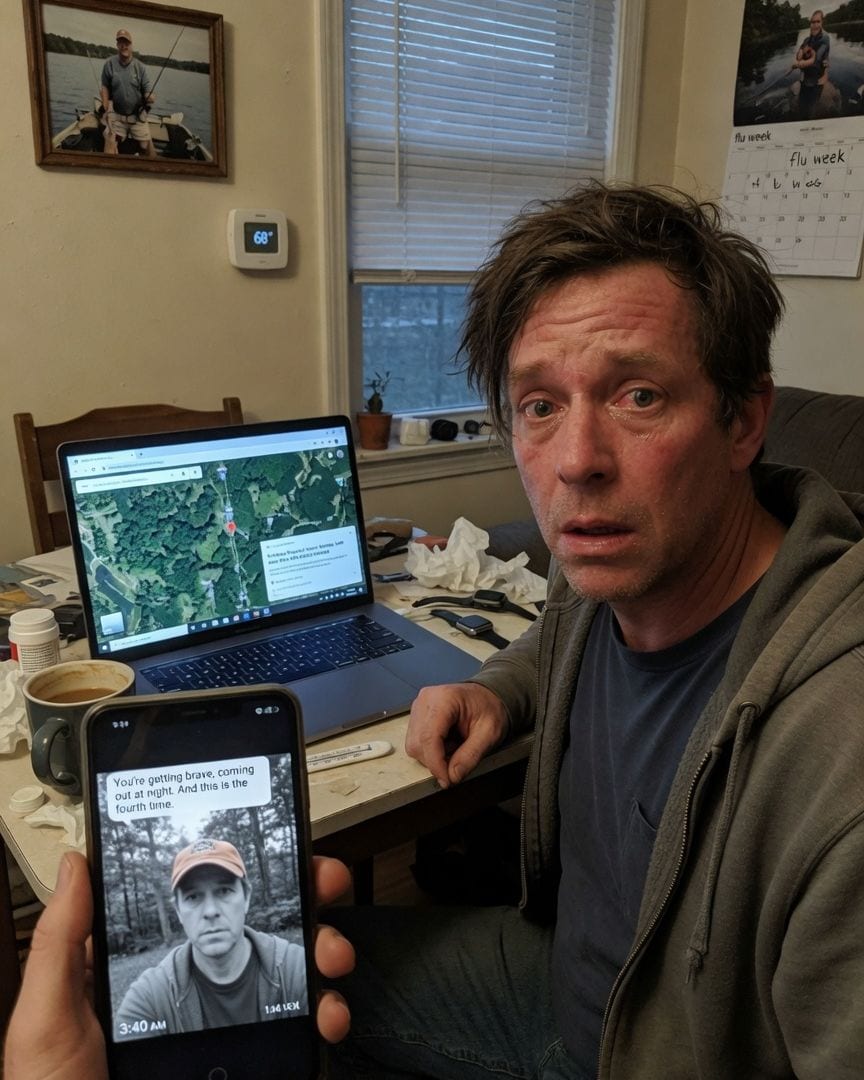
My brother-in-law's camera caught my face in Montana at 3:40 AM. I was asleep in Ohio, but it's the exact orange cap I lost, and he's seen me there four nights running.
I was just making coffee when my brother-in-law sent a photo from his Montana hunting land. It showed my face, wearing my lost baseball cap, timestamped 3:40 AM. I was home in Ohio, sick in bed, and hadn't been to Montana in years. And this was the fourth time.
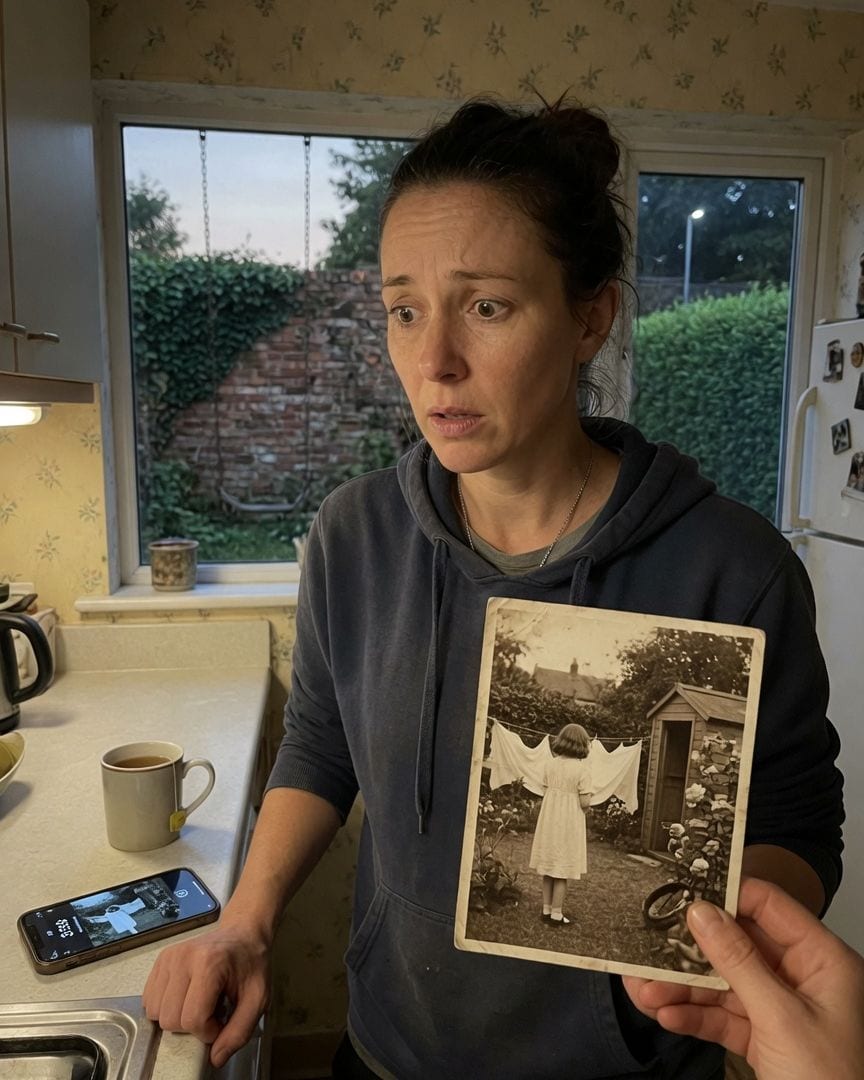
My trail camera catches a girl in a nightdress on my lawn, but the garden around her is wrong: a privy, a mangle, washing lines.
Every morning, my trail camera sends routine alerts, but one day, it showed a girl in a white nightdress standing on my lawn. What truly stopped me was the garden itself: where my trampoline should be, there were laundry lines, a dilapidated privy, and a rusted mangle. These impossible structures appeared in the footage, yet my yard remained exactly as it had always been.
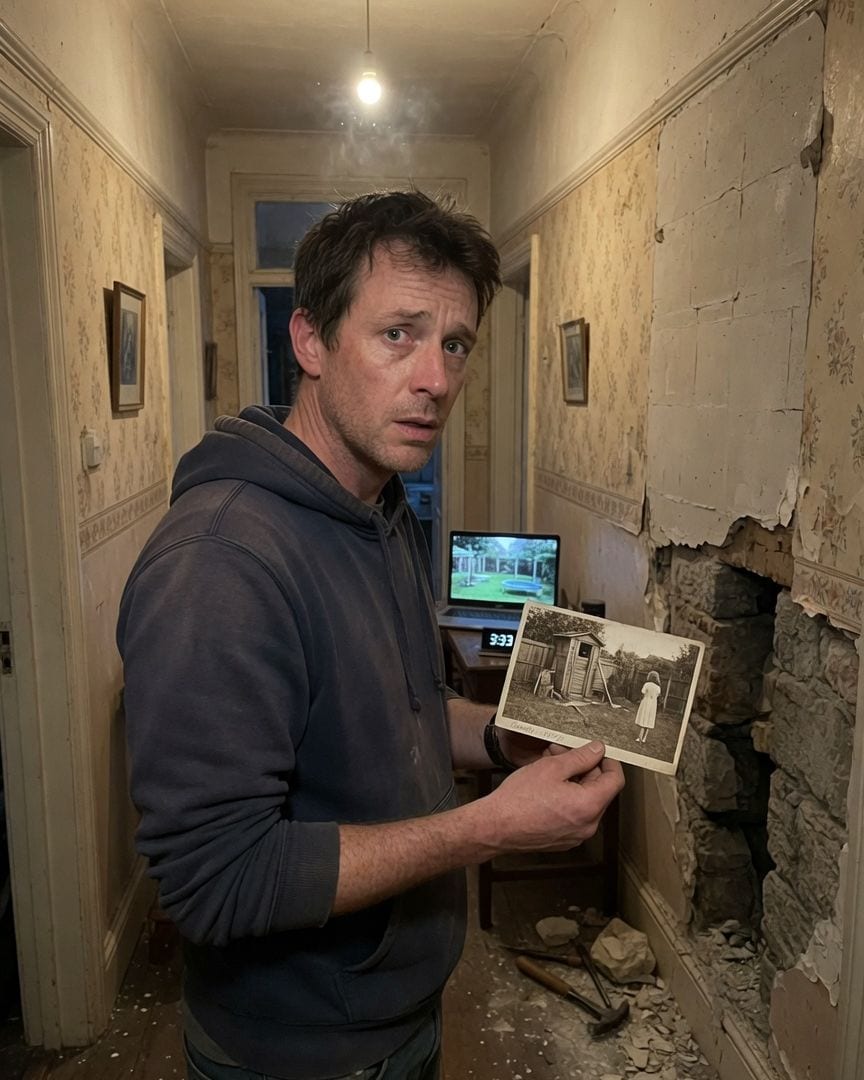
My trail camera keeps catching a girl on the lawn at 3:33, but the garden around her is wrong—a privy, a mangle, washing lines where my trampoline is. The last frame each night is her starting to turn.
I inherited an old house and set up a trail camera for foxes. But the footage changed: a young girl appeared in my garden at 3 AM, standing where my trampoline was, surrounded by washing lines where my rose bushes bloom. The landscape was decades out of place.
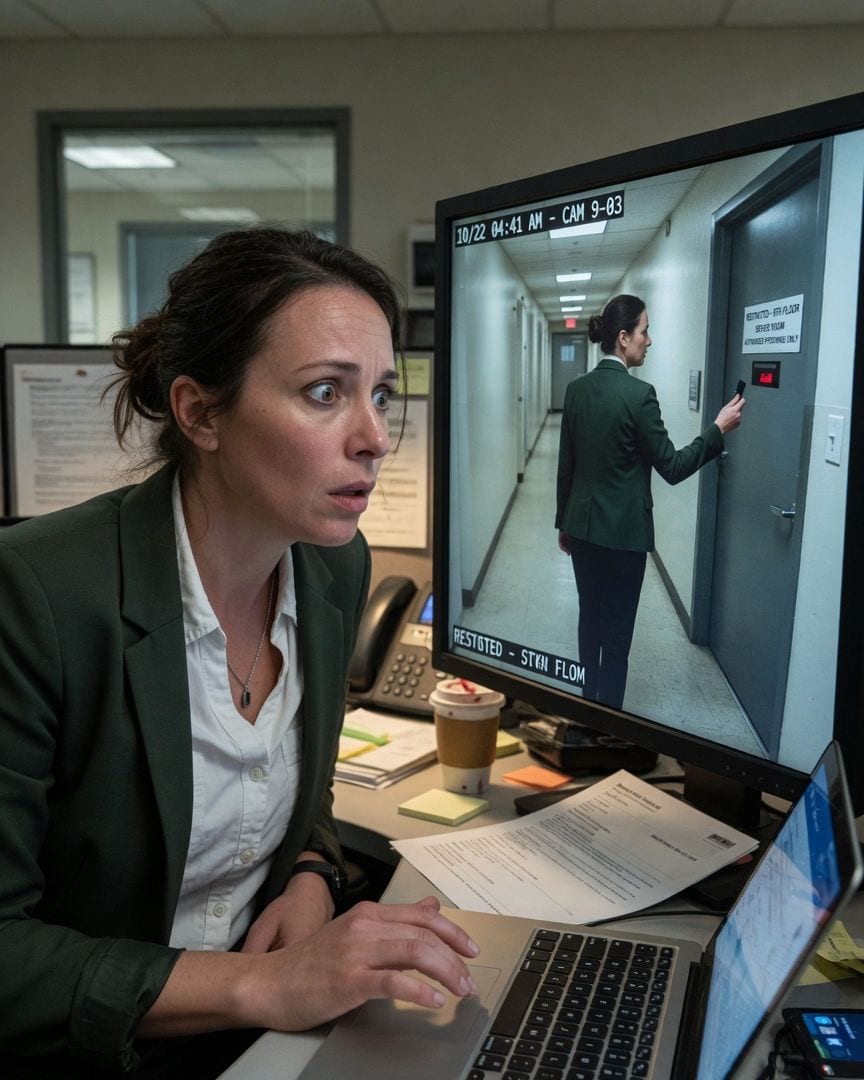
My keycard log shows me in the server room at 4:41am. I was asleep, and my badge was at home.
An email from corporate IT reveals my keycard registered entry into a restricted server room at 4:41 AM last Sunday. I was asleep in my apartment across town, my badge clipped securely to my jacket at home. But then I scrolled down and found eleven more impossible entries, all within the past week, all under my name.