My car's reversing camera saved a photo of me parking on a gravel drive in front of a white farmhouse with a red door. I live on a terraced city street.
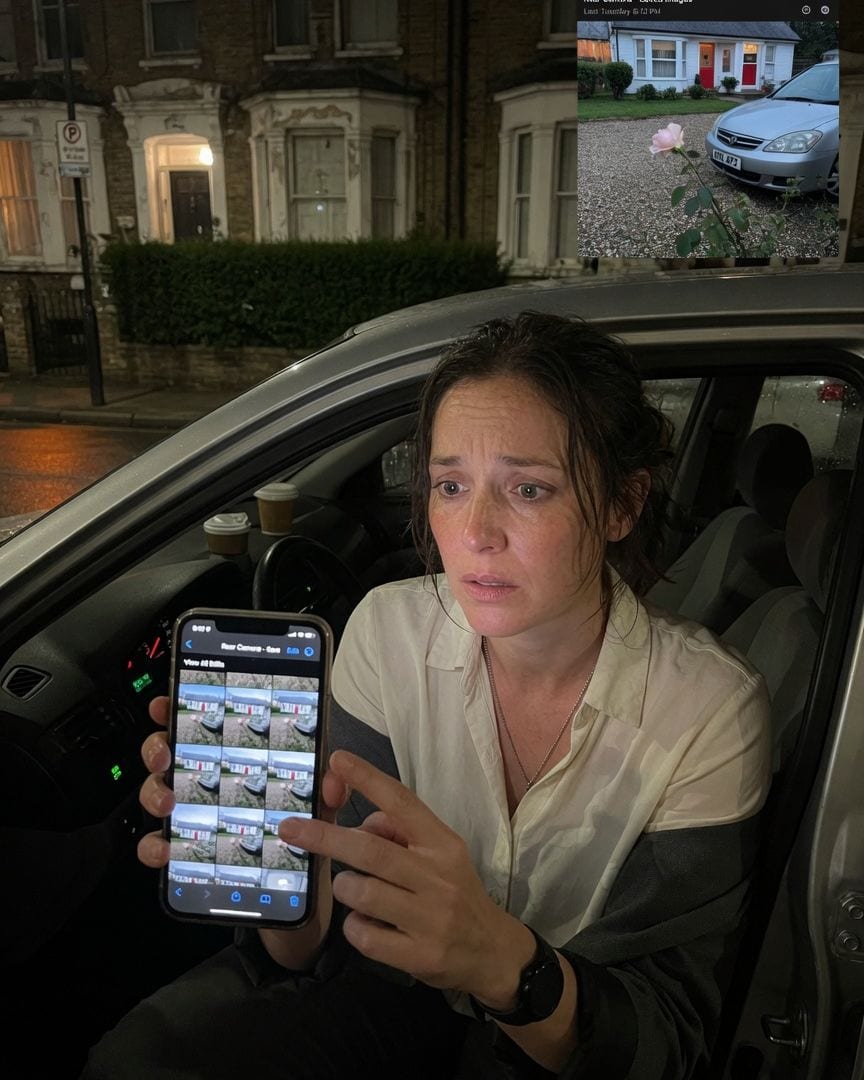
I pulled my silver sedan into my usual parallel parking spot on the terraced city street. It was Tuesday, 6:12 PM. The digital dash on my car blinked, confirming the reversing camera had saved its customary still.
A habit I’d never thought about twice, a practical record of my parking.
Later that evening, scrolling through my phone, I tapped open the synced camera folder. My thumb flicked past the usual concrete curb, the neighbor’s hedge, the familiar peeling paint of number 17’s bay window. Then, last Tuesday’s still.
My breath hitched. The timestamp was correct: 6:12 PM. But the image showed my car, clearly my license plate visible in the corner, backing perfectly onto a gravel driveway.
In front of a pristine white farmhouse with a bright red door. Not a brick terrace, not a city street.
The dread was a cold knot in my stomach; I lived alone, in the middle of the city, and that farmhouse was nowhere near my life.
I spent the next hour trying to debunk it. I checked the camera’s settings, the GPS logs, even Google Street View for any anomaly on my street. Nothing.
My car's GPS showed me exactly where I was, on Ashworth Terrace, precisely where I'd always been. The farmhouse simply wasn't there.
I even asked Marcus Thornton, my colleague at the architecture firm, if he knew of any old farmhouses hidden away in our urban sprawl. Marcus, ever rational, laughed it off, suggesting a software glitch, a corrupted image file.
He even offered to look at my camera system. 'Happens all the time, Nina,' he'd said, oblivious, waving a dismissive hand. But the image was too clear, too specific.
The way the gravel crunched under the tires, the vibrant red of the door, even the slightly overgrown rose bush beside it, with one blossom reaching for the camera lens. It wasn't random noise.
I went back to my car, heart thumping a frantic rhythm against my ribs. The parking brake was still warm. The camera interface offered a 'View All Stills' option, a feature I rarely used, preferring the synced phone folder.
My finger hesitated, hovering over the screen, before pressing it. I needed to know if it was just this one, isolated wrongness.
The screen flickered, loading a grid of thumbnails. I scrolled past weeks of mundane parking jobs: my office lot, the grocery store, the familiar curve of my street. Then, interspersed with the familiar, came the others.
Not just one, but a dozen more images, all dated over the last month.
Each one showed my silver sedan, same model, same color, but with different license plates – a mixture of unfamiliar numbers and letters – each backing onto that same gravel drive of the white farmhouse with the red door.
My car, but not my plates, not my parking. A pattern was forming, and it was far more unsettling than a single glitch.
I spent days trying to trace those license plates. My friend, a former DMV clerk, ran a few discreet searches.
The results were chillingly consistent: plates either unassigned, flagged as 'inactive for decades,' or belonging to individuals who had 'moved away suddenly' years ago, leaving no forwarding address or digital footprint. No one I could find.
No one I could talk to.
I cross-referenced the dates on the stills with local news archives, searching for any reports of disappearances or strange occurrences.
Nothing explicit, but a few vague articles from the late 90s mentioned a curious cluster of 'unexplained departures' from the city's older districts.
The articles were thin on details, quickly dismissed as local oddities, attributing them to a high cost of living or transient populations. The farmhouse itself remained a phantom. No records, no historical maps, no local lore.
It simply did not exist.
In my deep dives, desperate for anything, I stumbled upon an obscure, decade-old forum post on a local history site.
A user, 'D. Coleman,' had posted a cryptic message about 'the old house' and 'the names,' quickly deleted but cached in an old archive.
The thread had devolved into a mix of conspiracy theories and dismissive comments about 'local legends' and 'urban myths.' But the words stuck with me: 'the names.'
Finding Daniel Coleman was a dead end at first. Old email addresses bounced, phone numbers disconnected.
But I was persistent, digging through archived forums and forgotten social media profiles, until I found a working P.O. box address from an old photography club roster.
I sent a cautious, anonymous letter, mentioning 'the house' and 'the names,' careful not to give away too much.
Days later, a subtle shift began in my digital world. Ads for red doors, impossibly specific, began appearing on every website I visited, nestled between headlines and product recommendations.
My browser history showed fleeting visits to sites I’d never seen, almost subliminal.
My car, parked and off in its usual spot on the street, occasionally emitted a low, almost inaudible hum, a vibration that I felt more than heard, deep in the chassis.
I started feeling a prickle on my neck, the undeniable sensation of being observed. The quiet in my apartment felt like a held breath.
Then, a reply arrived in my P.O. box. A single, typewritten sentence on a stark white card: 'Stop looking. They know you’re looking.' No signature, no return address. Just that cold, definitive warning.
The fear was no longer abstract; it was personal.
I arranged a meeting with Daniel Coleman, using a burner phone and a public library as a neutral ground. The fluorescent lights hummed, making the silence between us feel heavy.
He was an older man, quiet and weary, with eyes that had seen too much. He didn't try to dissuade me, didn't question my sanity.
'The farmhouse isn't a place, not in the way you think,' he began, his voice low, barely audible above the whisper of turning pages. 'It's a destination. For certain people.'
He explained he'd been 'flagged' himself, decades ago, saw the same images in his own car's camera – an older model, but the mechanism was identical.
He'd managed to sever his connection, he said, by disappearing completely, erasing his digital footprint, moving constantly.
'It’s about your name, Nina,' he continued, leaning closer, his voice dropping further. 'The channel. It’s a hidden network, an algorithm that identifies specific individuals. It tracks their readiness for 'transfer.' It’s not malevolent, not a person. It’s a process.'
He pulled a faded, grainy photograph from an old newspaper clipping out of his wallet: a missing person report from 1998. The face was vaguely familiar, one of the names from the license plates I'd traced.
'His name was on the channel, just like mine,' Daniel said, his finger tracing the smudged headline. 'And now, like yours.'
The pieces began to click, the ghost cars, the missing people, the pattern of names, the impossible consistency of the farmhouse. The dread was in the coherence, the terrible logic of it all.
He told me he would show me how to find the channel, but warned me that by doing so, I would confirm my own 'awareness,' accelerating my 'arrival.'
Daniel Coleman, with a grim face, guided me through a labyrinth of old internet protocols and obscure browser settings. The library computer screen flickered, reflecting the anxious tremor in my hands.
He watched as I typed in the impossible-to-guess search string, a sequence of numbers and letters that seemed entirely random. The screen flickered again, then resolved into a stark, minimalist online forum.
No graphics, just plain text, stark black on white. The threads were organized by name.
My fingers trembled as I scrolled through a list that seemed endless. 'Ashford, Carol.' 'Ashford, Diane.' Then, midway down the page, standing out like a beacon, I saw it: 'Ashford, Nina.' I clicked.
A chronological log of my own life events unfolded, from my birth date to recent mundane activities I'd barely remembered – the latte I'd ordered last Tuesday, the movie I'd streamed two nights ago. It was all there, meticulously recorded.
I scrolled to the bottom, my breath catching in my throat. The last entry, dated just yesterday, was stark: 'Arrival imminent: Farmhouse.' Below it, a new, small text box was blinking.
It was pre-filled with the current date and time, awaiting a single character input. A confirmation. My confirmation.
Daniel watched my face as I absorbed the full horror of the 'Ashford, Nina' thread. He explained that the channel wasn't just a record; it was an active, predictive system.
'It doesn't just log what happened,' he said quietly, his voice like dry leaves. 'It logs what will happen. Your finding it… that was a scheduled event. Your acknowledgment.'
The farmhouse, he elaborated, wasn't a physical place for abduction, but an anchor point where one's 'personal reality' was overwritten. 'It’s a re-routing,' he explained, 'like a corrupted file being rewritten.
Your original self, your life, it simply… ceases to be. A new trajectory begins. The red door? That’s the threshold. The last thing you see before the pattern snaps into place.'
He revealed that he had only escaped because a rare system anomaly had processed another 'Daniel Coleman' with a near-identical digital profile, allowing him to slip through the net, becoming a silent observer instead of an 'arrival.'
The blinking text box on my screen was the system’s final prompt, the last piece of the pattern. By finding the channel, I had confirmed my readiness.
The impossible object, the footage of nowhere, was a premonition, a pre-visualization of my own unavoidable fate.
Daniel urged me to try and fight it, to delete my entire digital life, to disappear as he had. But I felt a terrible sense of inevitability, a concrete weight pressing down on me.
Every attempt I made to erase my online presence, every account I tried to delete, only seemed to feed more data into the 'channel.'
The blinking cursor on the forum post seemed to accelerate its rhythm, a frantic pulse mirroring my own desperate clicks.
The red door, once confined to my car camera, began to appear in my peripheral vision. A faint crimson glow on the edge of a reflection in my apartment window, gone if I turned my head directly.
A fleeting glimpse of a miniature red door in the polished surface of my coffee table, only there when I wasn't quite looking.
I tried to log off the channel, but the browser window refused to close, the 'X' icon unresponsive. I was trapped, watching my own impending doom unfold, powerless to stop the system that had quietly, meticulously, charted my course.
The pattern wasn't something happening to me; it was my life, revealed. I typed a single, trembling character into the blinking box, a desperate, final act of defiance or submission, I wasn't sure which.
The screen flickered, and the 'Arrival imminent' changed to 'Arrival confirmed.'
Days later, Nina Ashford’s apartment stood empty. Her silver sedan remained parked on the terraced city street, accumulating a thin layer of dust.
Her colleagues at the architecture firm assumed she had simply moved on, perhaps to a new city, a new job. Marcus Thornton mentioned she’d always been a bit restless. Daniel Coleman, alone in his small, secluded cottage, checked the channel.
The 'Ashford, Nina' thread now bore a final, uneditable entry: 'Arrival confirmed.' He closed the browser, the quiet hum of his own computer the only sound. He knew the pattern was endless, self-sustaining.
He saw a new thread beginning to form, a new name appearing on the forum's main page.
Daniel poured himself another cup of tea, the steam rising in the quiet room. He had survived, yes, but marked by the knowledge, forever watching the digital shadows.
He thought of Nina, of the calm way the system had absorbed her. He walked to his window, gazing out at the familiar, ordinary street. The setting sun cast long shadows, painting the brickwork in deep hues. Then, he froze.
Across the street, nestled incongruously between two identical terraced houses, stood a pristine white farmhouse. Its vibrant red door glowed in the fading light. It hadn't been there yesterday. He knew the pattern was never truly broken.
He watched it, a silent sentinel, until the streetlights came on. Then he turned away, slowly. He knew he couldn't look away from the window, not for long.
The small, familiar red door, nestled amongst the usual city buildings, now stood plainly visible across the street from Daniel's window.
If this one got to you
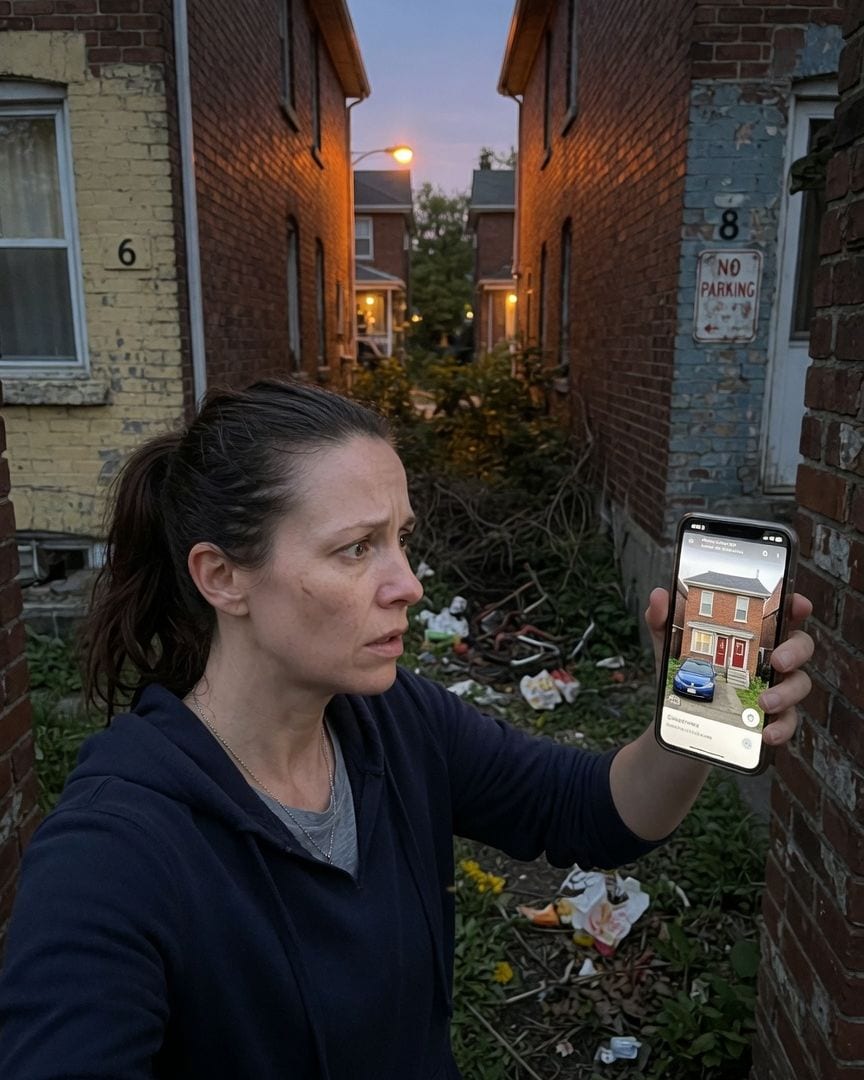
My childhood street's online map showed a number 7 house. I drove over that night. There is no number 7, just the ginnel I grew up with.
Scrolling Google Street View of my childhood neighborhood, I found an impossible house. Between my old house and number 6, where only a narrow ginnel should be, the screen showed a fully formed number 7. It had drawn curtains, a freshly painted door, and a blue car dated 'last month,' yet every other map showed an empty gap.
My dashcam footage showed my street change. For five seconds, my car drove on a road that doesn't exist on any map.
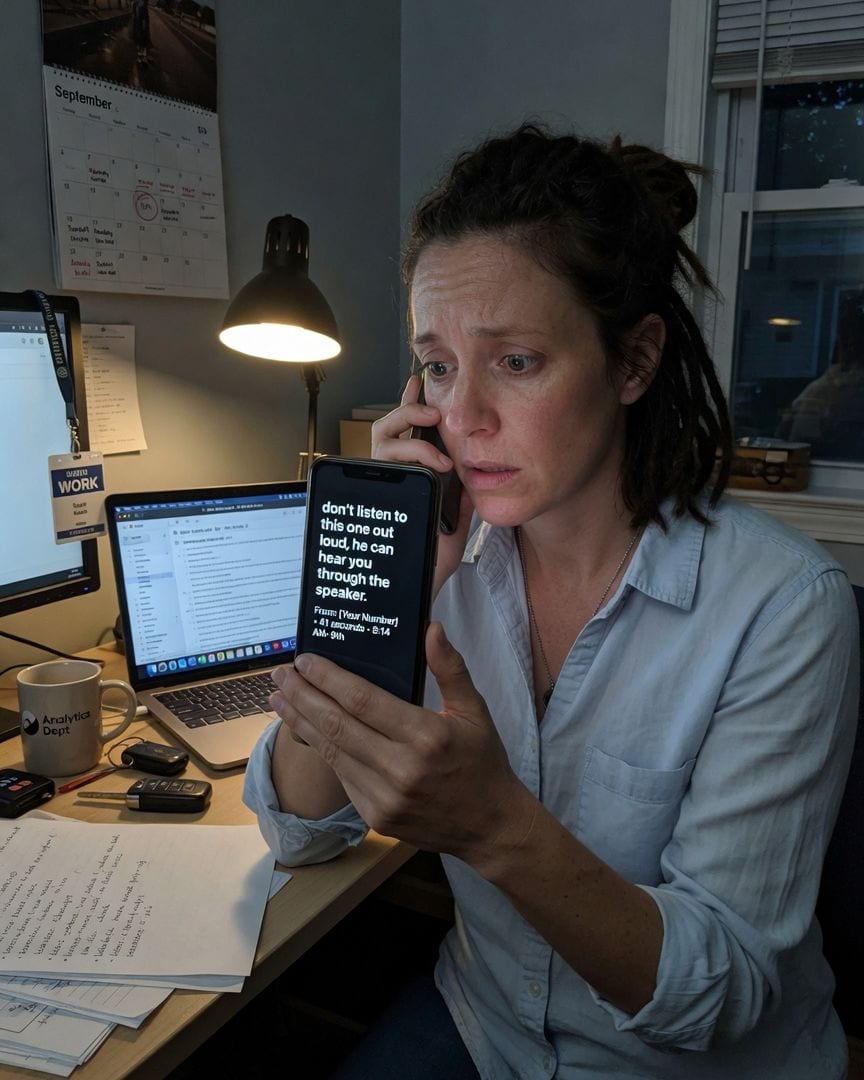
It was a normal Tuesday until my work phone received a new voicemail. The transcription warned, 'don't listen to this one out loud, he can hear you through the speaker.' But the message was from my own number, and the audio was forty-one seconds of absolute, dead silence.
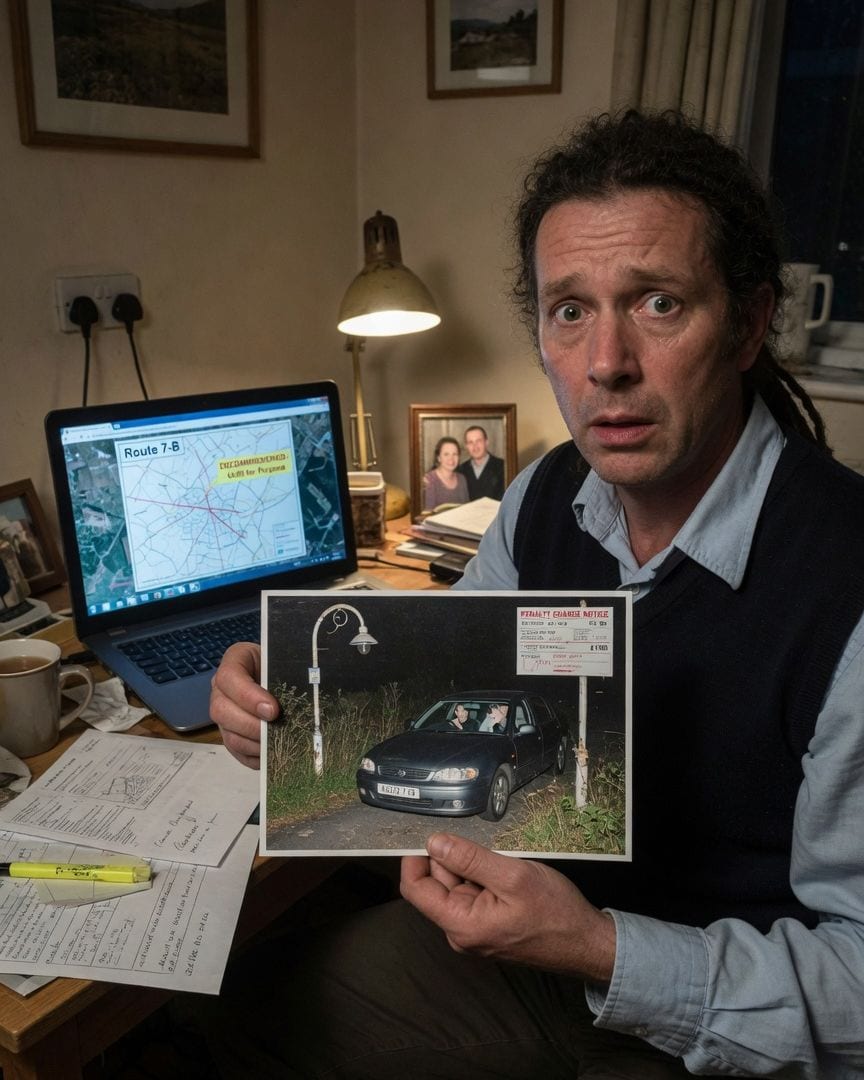
My car was photographed on a road I’ve never seen. The driver looks just like me, hand up against the flash, but I was at the hospital all night.
A routine traffic fine arrived, but the photo was anything but routine. It showed me driving my own car at 11:52 PM on the ninth of last month. The problem? I was at my wife's hospital bedside then, and the road in the photo simply doesn't exist today.
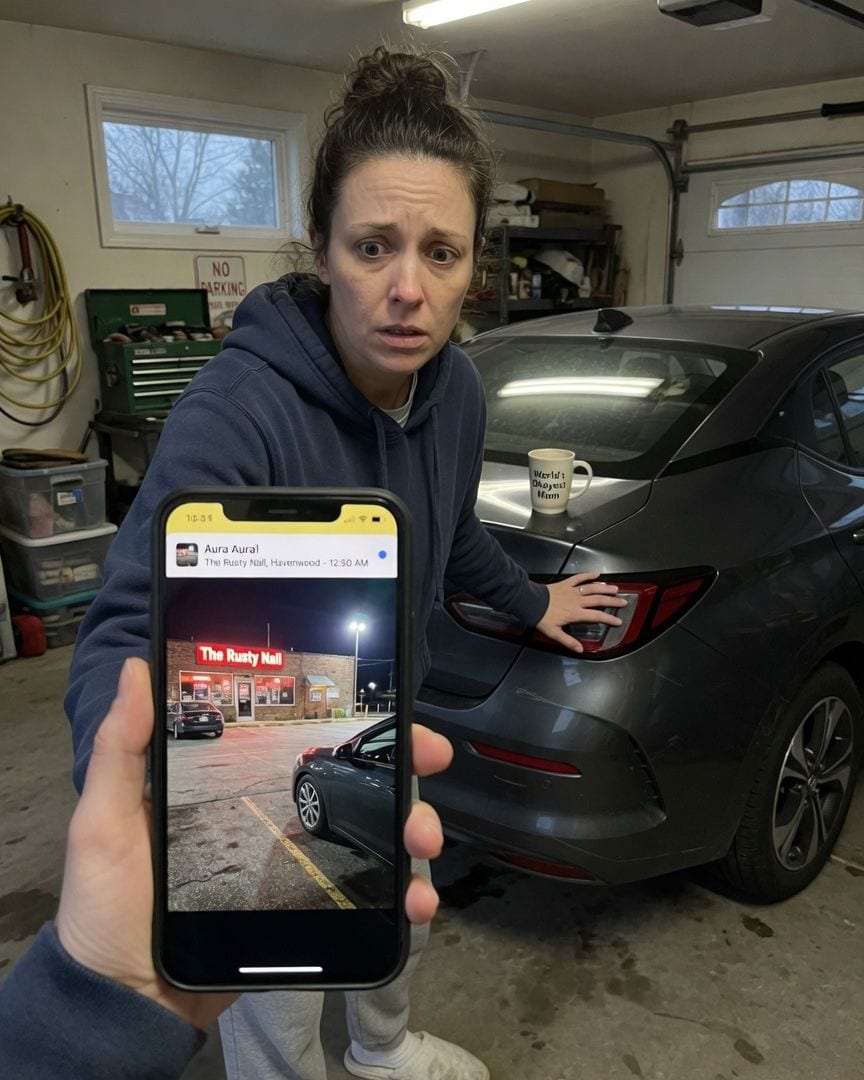
My car's app just pinged it parked at a bar ninety minutes away at 12:50am. It's in my locked garage, cold.
My Tuesday morning started like any other, until my phone chimed with a low-fuel warning from my car's app. That wasn't right; I'd just filled up. The map showed my 2023 Aura sedan 90 miles away at 'The Rusty Nail' at 12:50 AM, even though it was parked, stone cold, in my garage.
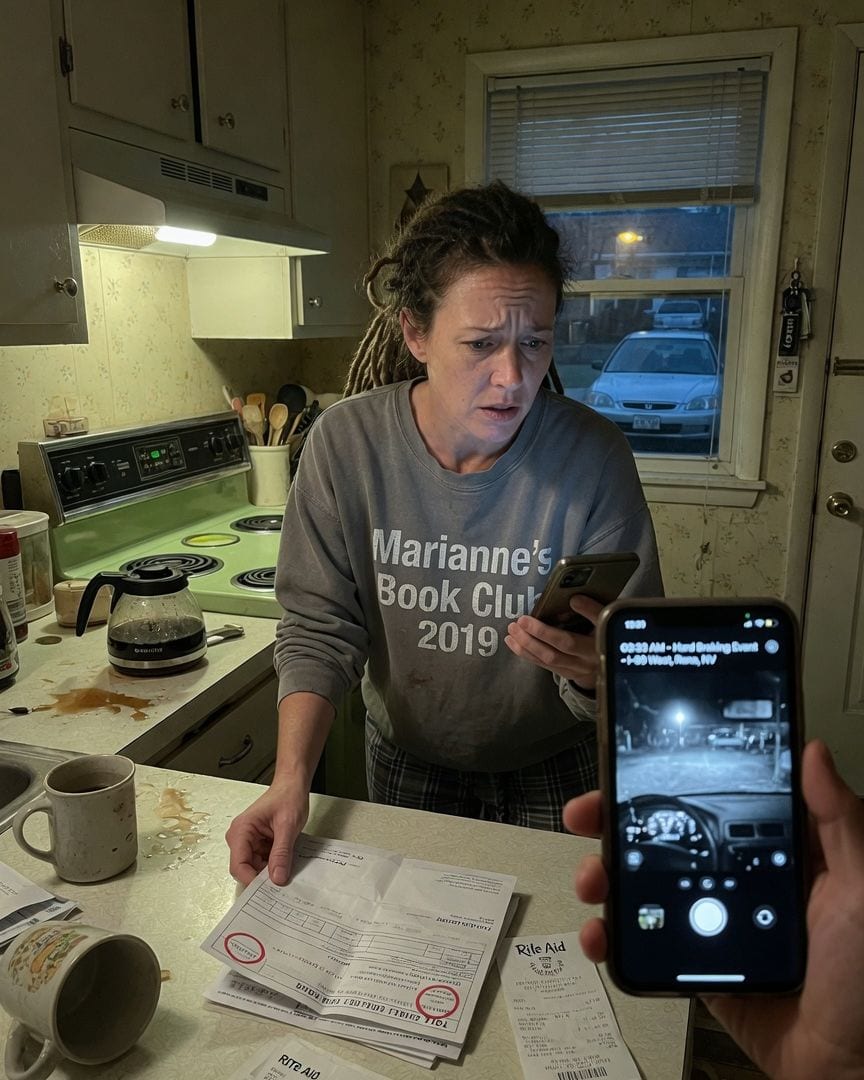
My car's dashcam just flagged a hard-braking event outside Reno at 3:33am. I was asleep in my mother's house, keys on her hook.
Making coffee in my mother’s kitchen, my car’s dashcam pinged an alert for a hard-braking event on I-80 West, outside Reno, at 3:33 AM. That was impossible; my beat-up Honda Civic was safely parked in the driveway, exactly where I'd seen it an hour earlier. Yet the grainy night-vision footage clearly showed my dashboard, unmistakable, hundreds of miles away.
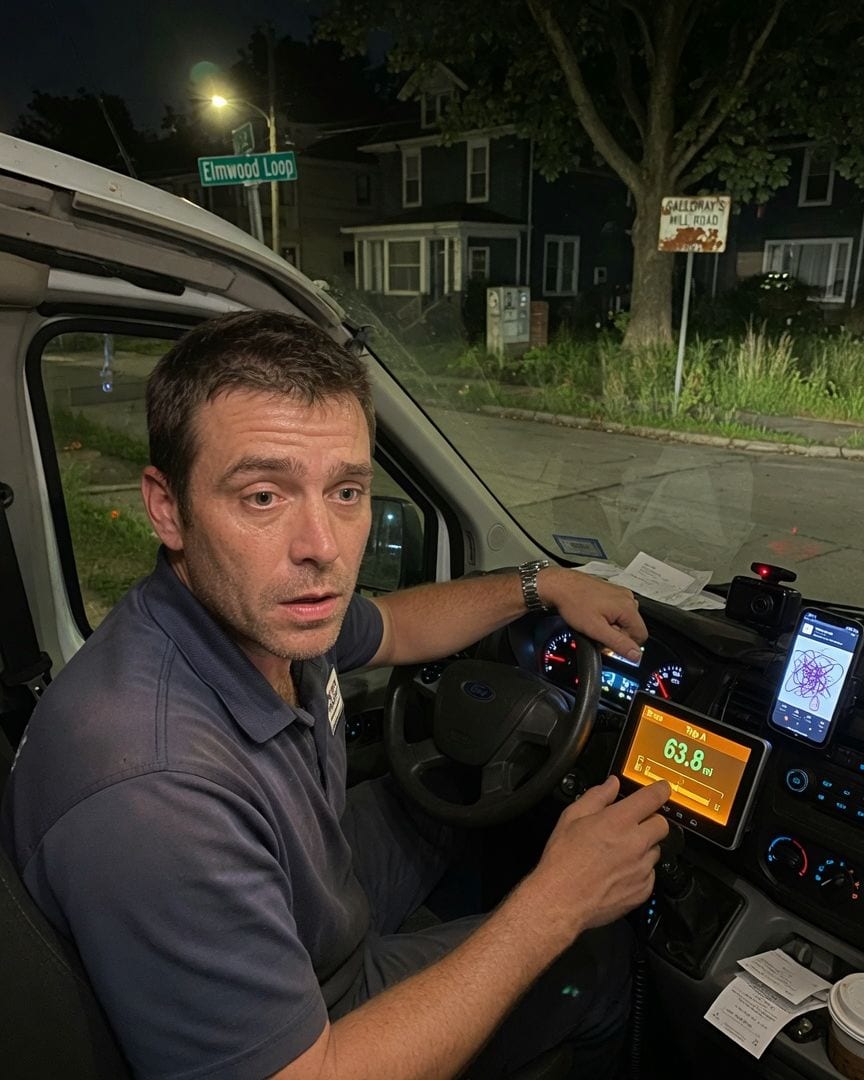
My delivery van's fuel gauge dropped a quarter tank on the Elmwood loop last night. It logged sixty-three miles, a loop I can walk in ten minutes.
I know my routes and my van, but the Elmwood Loop was different. My GPS app showed me standing still on the street, even as I walked for miles, my colleague confirming I hadn't moved. The impossible location left a blank, grey spot on the map.