My car's dashcam just flagged a hard-braking event outside Reno at 3:33am. I was asleep in my mother's house, keys on her hook.
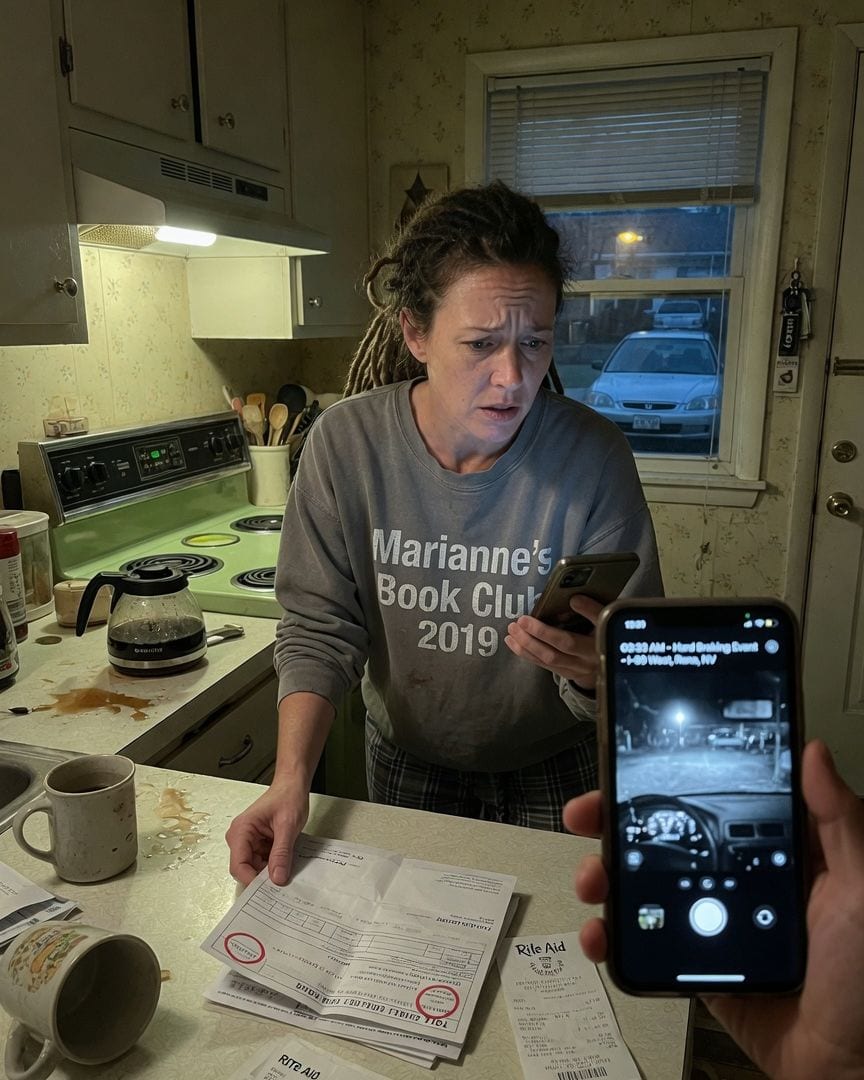
The alert from my car's insurance dashcam program arrived just before dawn, a sharp, digital ping in the quiet of my mother’s kitchen. I was making coffee, the smell of fresh grounds just starting to fill the air.
'Hard-braking event detected: I-80 West, outside Reno, 03:33 AM.' My coffee cup clattered against the counter, sending a spray of hot liquid onto my hand. Reno? That was impossible.
My beat-up Honda Civic was parked precisely where I’d left it last night, tucked safely in Marianne’s driveway. I’d seen it an hour ago when I let the dog out.
The keys hung on the hook by the back door, exactly where I’d placed them before bed. I walked to the back door, felt the cool metal of the keys, still there. I peered out the kitchen window again.
The Civic sat silent and cold under the streetlamp, a familiar silhouette. Yet the alert persisted, glowing on my phone screen, demanding my attention.
I opened the linked clip on my phone. The grainy night-vision footage flickered to life. It showed my dashboard, unmistakable.
The hairline crack above the glove compartment, the faded sticker on my cracked cup holder that Marianne had given me for my last birthday, the hospital parking pass I hadn't removed, dangling from my rearview mirror. Every detail, perfectly clear.
Headlights, unidentifiable, glowed steadily behind me in the footage. It was my car. My dashboard. On a highway hundreds of miles away, in a different state, at an hour I was fast asleep in my own bed.
I called Kenneth Marsh at the insurance company first thing. He sounded bored, already convinced it was a glitch before I’d finished explaining. 'Dashcams can be finicky, Ms. Galloway. False positives are common, especially with those aftermarket units.'
I insisted, the frustration tightening my jaw. 'It’s my car. The footage is clear, Kenneth. Every scratch, every sticker. It’s my Honda.' He reluctantly agreed to 'look into it' and sent me the full data log.
It was just a spreadsheet, rows of GPS coordinates and speed readings, endless numbers that meant nothing to me at first glance.
But then, buried deep in the data, a single, impossible line caught my eye: a toll charge. It wasn't on I-80 West. It was on I-80 East, near Lincoln, Nebraska. Timestamped 06:17 AM. My blood went cold. Reno to Lincoln.
Three hours and forty-four minutes. Even if my car had somehow been in Reno at 3:33 AM, it couldn't be in Nebraska less than four hours later. That was over a thousand miles. A logistical impossibility.
I started pulling my own records: my bank statements, my mother’s grocery receipt from last night showing her card used at 8 PM, a text message I’d sent a friend at 11 PM, all concrete proof I was in my mother’s small town, three hundred miles from Reno, let alone a thousand from Nebraska.
The initial shock morphed into a chilling certainty: this wasn't a glitch. This was something profoundly, impossibly wrong. The silence of the house felt heavier, the air suddenly still.
The bank statement lay flat on the kitchen table, the toll charge from I-80 East in Nebraska staring back at me, timestamped 6:17 AM.
My phone screen, open to the insurance app, showed the dashcam clip still paused on the highway outside Reno at 3:33 AM. My car was supposedly in Reno, then in Nebraska a mere three hours and forty-four minutes later.
Two impossible places. Too little time. My own car, my own license plate, caught in a phantom journey that defied physics.
The paper crinkled in my shaking hand as I traced the numbers, a cold dread settling deep in my gut. It wasn't just a wrong record; it was a record that couldn't possibly exist.
I spent the next week chasing down every lead, every mundane explanation. The police, after a brief, dismissive phone call, suggested identity theft or a cloned plate, but couldn't explain how a cloned plate would trigger my dashcam.
They told me to file a report online and promptly forget about it. My bank confirmed the Nebraska toll charge was legitimate, processed with my account details, but flagged no suspicious activity otherwise. 'Probably just an administrative error, Ms. Galloway.
We see it all the time,' the woman on the phone chirped. My mother, Marianne, initially humored me, then grew worried, her brow furrowed when she watched me pore over maps and timelines for the fifth night in a row.
'Renee, maybe you just dreamt it? Or you’re overthinking a computer error. You seem exhausted.' But I wasn't. The evidence was tangible, undeniable.
The ordinary explanations had all failed. I started searching online forums, desperate for similar stories.
Hidden among posts about lost luggage and credit card scams, I found them: scattered, cryptic mentions of phantom vehicular movements, impossible timestamps, records that didn't align with reality.
Most were quickly dismissed by other users as hoaxes or glitches, trolls, or people who clearly needed sleep. But a few stood out, detailed and precise, mirroring my own experience.
One anonymous post, buried deep in a thread from 2012 about strange toll charges, mentioned a 'private archive' and a contact named 'Russo' for 'unexplained vehicular anomalies.'
The post was old, almost a decade, but the desperation in its tone resonated. I found a Greg Russo listed as an independent archivist specializing in 'historical data discrepancies' in a nearby city.
It was a long shot, but I was out of options.
The day after I emailed Greg Russo, things shifted. Subtle at first. A dark sedan, a late-model black sedan with tinted windows, parked down the street from my mother's house.
Its occupants, just dark shapes behind the glass, seemed to be waiting. It was gone by morning, but a different one, a gray SUV this time, appeared the next day, settling into the same spot.
I dismissed it as paranoia, the stress making me imagine things, until I noticed the same SUV in my rearview mirror on my drive to the library.
The sun beat down, hot and oppressive, but a chill ran down my spine.
I pulled into a grocery store, circled the parking lot, and saw it follow, pulling into a spot far across the lot, partially obscured by a delivery truck. They weren't trying to be subtle anymore.
Then, an anonymous email landed in my inbox. No subject, no sender name, just a single line of text: 'Some records are best left unread.' The message was chillingly precise, a direct response to my inquiries, a warning.
My hands trembled as I read it, the screen suddenly too bright in the dim kitchen. Someone knew I was digging. Someone knew about the records. The dread sharpened, turning from abstract unease into a very personal, very present threat.
The thought of my mother, alone in the house, filled me with a cold terror. The ordinary world was cracking around the edges.
Greg Russo's office was a cramped, dusty space crammed with filing cabinets and obsolete computer equipment. The air smelled of old paper and ozone.
He was a quiet man, calm, almost unnervingly so, with a pair of reading glasses perched on his nose, making him seem like a figure from another era.
He listened to my frantic account without interruption, occasionally nodding, his gaze steady. 'Reno, Nebraska, 3:33 AM, 6:17 AM,' he mused, tapping a pen on a stack of yellowed papers. 'Classic.' My heart hammered against my ribs. 'Classic?'
I asked, my voice tight, barely a whisper. The fluorescent lights hummed, amplifying the silence.
He looked up, his eyes weary but clear. 'You're not the first, Ms. Galloway. Not by a long shot.' He pulled open a drawer from a metal filing cabinet that groaned under the weight of its contents.
'I've been collecting these for thirty years. Phantom records, I call them.' He slid a thick file across the desk. Inside were photocopies of old gas receipts, faded parking tickets, even library checkout slips.
Each bore a different name, a different car, but the pattern was identical: impossible locations, contradictory timestamps, dates stretching back decades. He pointed to a receipt from 1988, for a car logged simultaneously in two different states.
'These aren't glitches, Ms. Galloway. Nor are they fraud in the traditional sense. They are… a separate accounting.'
He explained that a shadowy entity, which he simply called 'The Registry,' seemed to generate and maintain these records. They were perfect, undeniable, and utterly false.
'They don't make mistakes,' he said, his voice low, the words settling in the stale air. 'They create truth where there was none. And your dashcam, your toll record, they just happened to bleed into your reality.
You got caught in the overlap.' The pieces clicked into place, cold and hard. The dismissive insurance agent, the unhelpful police, the anonymous warning. They weren't random acts of incompetence or paranoia.
They were part of a systemic cover-up, designed to suppress knowledge of these phantom records, to maintain secrecy, to keep these phantom lives hidden. The chair beneath me felt like it was humming, vibrating with the terrible knowledge.
Russo, seeing the dawning horror in my eyes, hesitated, then sighed. 'There’s more.' He reached into a locked cabinet behind his desk, pulling out a thick, leather-bound binder that seemed to hum with suppressed energy.
'This is what happens when The Registry takes a particular interest. When they decide to build a full shadow.' He pushed the binder across the table. It was heavy, worn smooth from handling. Inside, hundreds of pages.
Each was a record: gas receipts, parking tickets, hotel bills, all bearing Renee's license plate, some with a signature that was unmistakably hers. It was my handwriting, my specific flourish on the 'G.'
Russo pointed to a cluster of entries: 'Your car was logged in Miami at 2 PM, then Seattle at 6 PM, on the same Tuesday last year.' His finger moved.
'Then another: A purchase at a hardware store in Anchorage, Alaska, then a fishing license issued in Florida, all on the same day.'
My breath caught, my eyes fixed on the impossible itinerary, a phantom life laid bare in black and white.
Not just a few isolated incidents, but an entire, comprehensive, undeniable biography for a 'Renee Galloway' who was never there, could never be there. The signature. My signature. It was too perfect. Too real. This wasn't just a wrong record.
This was a record that could not physically exist, an entire life fabricated in meticulous detail, and it belonged to me.
Russo explained that The Registry wasn't just passively collecting data; they were actively creating it. 'Think of it,' he said, his voice quiet in the dusty office, 'as a perfect, parallel biography.
For some reason, they choose certain individuals, certain vehicles, and they construct an entire life for them on paper. A life that exists only in records, until, for some unknown trigger, it crosses over.
Your dashcam event, your toll charge – those were the bleed-throughs.' He flipped through the binder, pointing out details. 'See here? The cracked cup holder. The specific parking pass from your hospital job. They are consistent across every phantom record.
This isn't just a Honda Civic; it’s your Honda Civic. They've replicated every unique identifier.'
The implication was terrifying: The Registry knew my car intimately, knew me intimately, without ever interacting with me.
He theorized that these phantom lives, once 'activated,' could become more frequent, more intrusive, eventually making it impossible for the real Renee Galloway to distinguish her life from the manufactured one.
He showed me records dating back to the 1960s, similar patterns emerging for long-dead individuals, their phantom lives continuing to accumulate entries decades after their physical deaths. The Registry had known about this, had been doing this, for generations.
Every planted clue, every impossible timestamp, every dismissed warning, now clicked into a coherent, horrifying pattern. My life wasn't just mine anymore.
It was shared with a ghost, impeccably documented by a faceless entity, a thing that had existed long before me and would exist long after.
The revelation left me hollow. How do you fight an enemy that exists only on paper, yet dictates reality? Russo advised me against trying to 'disappear.' 'They don't track you physically, Renee. They track your record.
Changing your name, moving, it won't stop the phantom entries from accumulating under your original identity. The Registry simply absorbs it. It's a system, not a person you can evade.'
I felt a desperate urge to destroy the evidence, to burn the binder, to smash my dashcam into a thousand pieces. I imagined the smoke, the shattering glass, a futile act of rebellion.
At home, the familiar comfort of my mother’s house felt alien. I stared at my car in the driveway, feeling a profound alienation.
It was no longer just a car; it was a vessel for a phantom self, a ghost that traveled impossible distances. I grabbed a hammer from the garage, my hands shaking.
The dashcam was small, tucked behind the rearview mirror, its innocent red light mocking me. I raised the hammer, a primal scream building in my throat, and brought it down with all my might.
The screen shattered, the lens cracked into a spiderweb of broken glass. The dashboard groaned faintly. It was a futile gesture, I knew. The records existed elsewhere, replicated, archived. But it was my act, a refusal to passively accept.
I couldn't stop them, but I could refuse to cooperate, refuse to provide them with new 'footage' of my car's phantom journeys. I spent hours scrubbing every digital footprint, deleting old social media, closing accounts.
It was a war I knew I couldn't win, but I could at least deny them the easy fodder. The air in the garage hung thick with the metallic tang of fear and something else, something cold and unseen.
I sold the Civic a week later, not bothering to explain the shattered dashcam. I moved across the country, changed my phone number, and adopted a new, simpler life, deliberately leaving as few digital traces as possible.
Every bank statement, every utility bill, every new digital record I generated, I scrutinized with a meticulous dread.
The phantom entries for 'Renee Galloway' and her old Civic continued to appear in the obscure corners of the internet that Russo showed me, a ghost growing ever more detailed, logging gas fill-ups and parking violations in towns I'd never heard of.
I learned to live with the knowledge, a quiet, internal terror that occasionally flared into panic when a new bill arrived with an unfamiliar timestamp or a notification for a service I hadn’t used.
The threat wasn't active pursuit, but the slow, insidious erosion of my own reality by a meticulously documented lie.
The fear never truly fades. It’s a low hum beneath the surface of every ordinary day. I live my life, I laugh, I work, but I am always watching. Always checking.
Every new official record, every digital footprint, every unexpected ping from a system, sends a jolt through me. Is it real? Is it mine?
Or is it a whisper from the other Renee, the phantom, growing stronger, more detailed, slowly consuming the edges of my own existence? I survived, but I am no longer whole.
I am a witness to my own slow, paper-thin erasure. The world insists on its records, and somewhere, a perfect, impossible record of my existence continues to grow.
If this one got to you
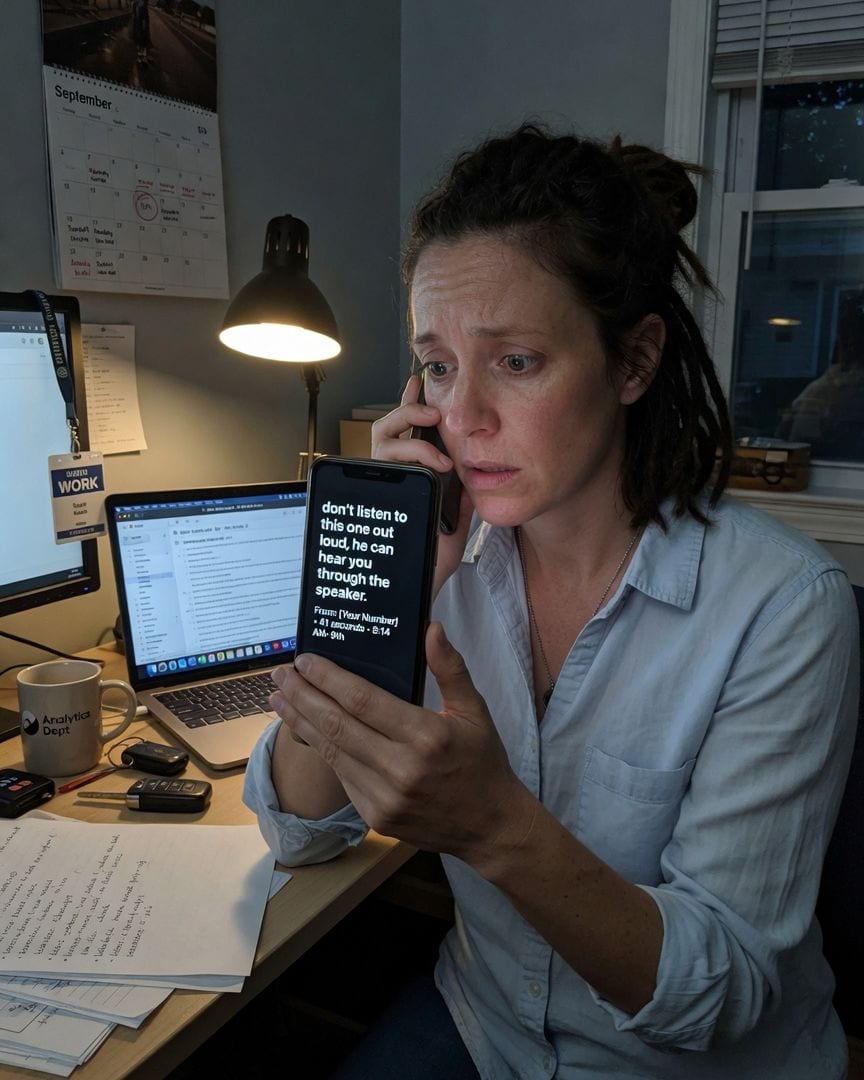
My dashcam footage showed my street change. For five seconds, my car drove on a road that doesn't exist on any map.
It was a normal Tuesday until my work phone received a new voicemail. The transcription warned, 'don't listen to this one out loud, he can hear you through the speaker.' But the message was from my own number, and the audio was forty-one seconds of absolute, dead silence.
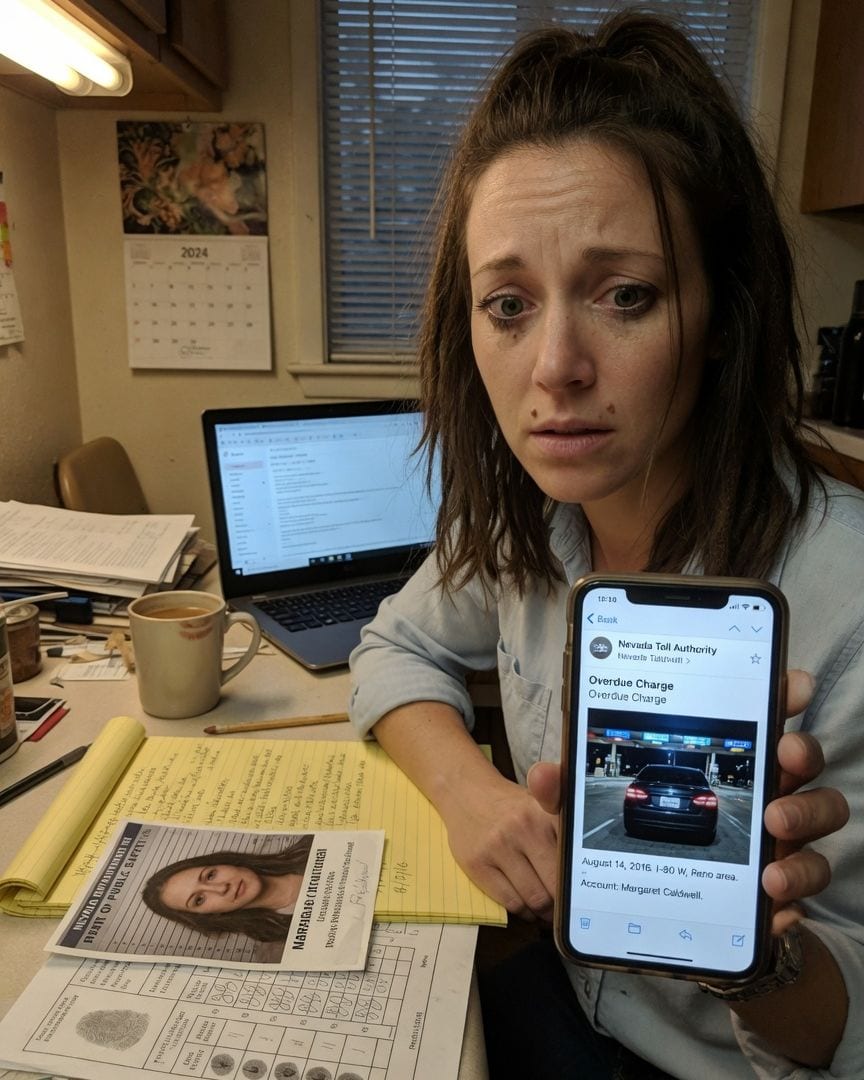
My fingerprints came back to a Nevada arrest eight years ago. Same name, same birth date, same younger face in the booking photo. I’ve never been to Nevada.
My life was predictable, stable, and utterly ordinary. Then, during a routine background check, my fingerprints returned a match to an arrest in Nevada eight years ago. I'd never been to Nevada, yet the booking photo was undeniably my own face, staring back from a life I'd never lived.
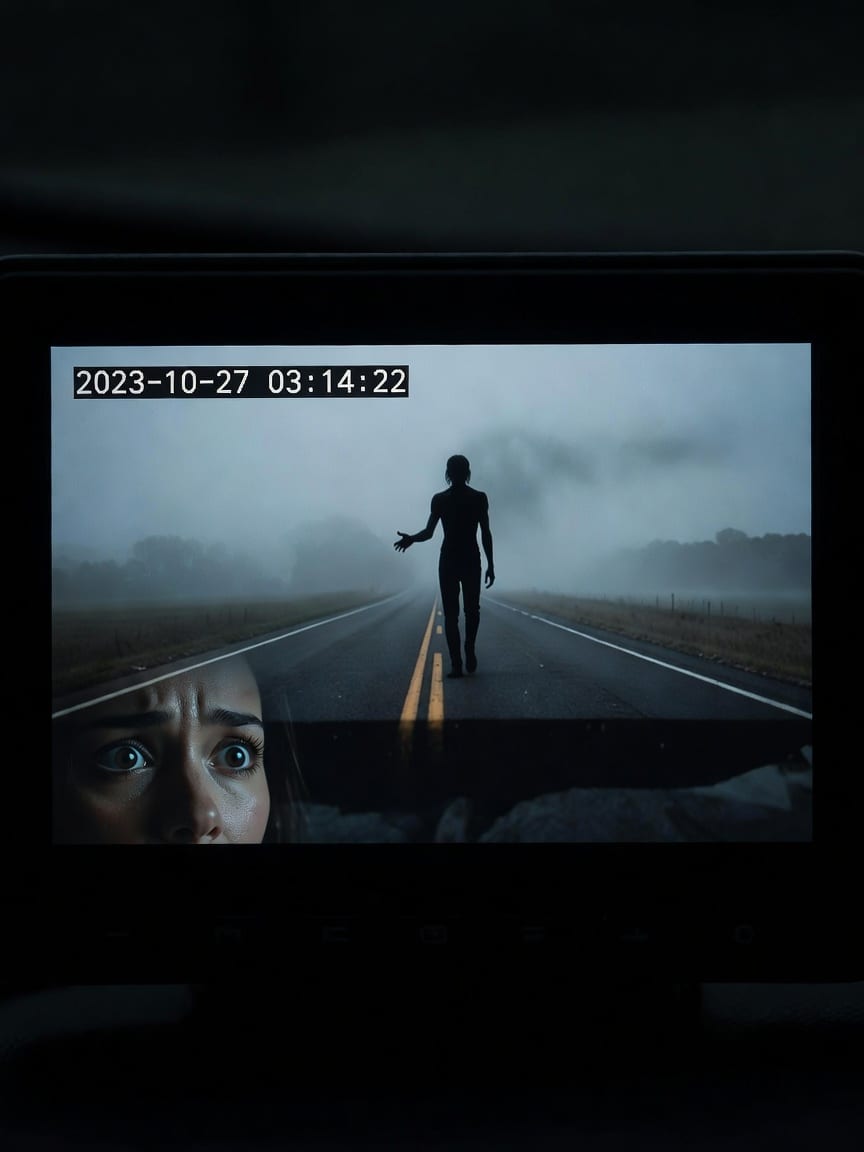
My dashcam mic caught me humming on a long night drive. Under my voice, a second hum kept time, in the same key. It stopped when I stopped. It was always already there when I started again.
My new dashcam was just a quiet companion on the long, dark drive home. But when I reviewed the footage, a quick flicker in the video stopped me cold. For three seconds, my car was driving smoothly down a paved road complete with yellow lines—a road that simply wasn't there.
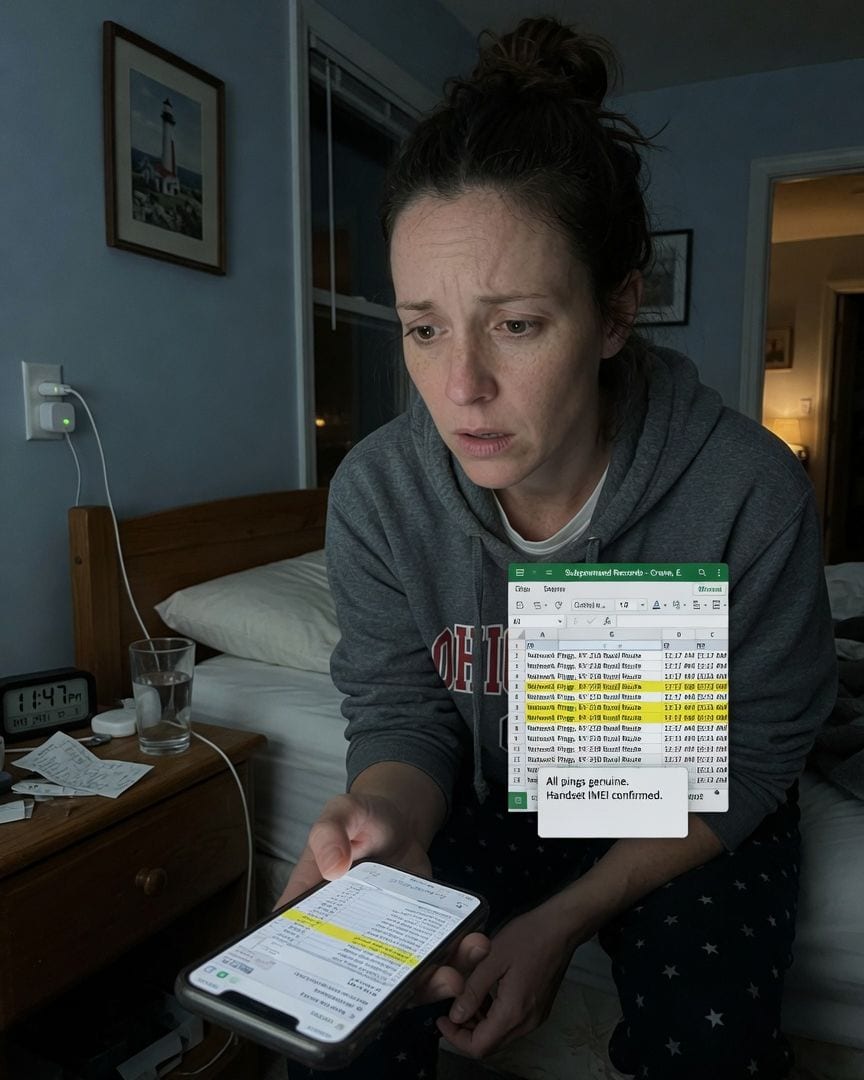
My phone logged a four-hour drive through rural Kentucky, hitting cell towers every few minutes. It was charging on my desk in Ohio all night. The carrier insists it was my handset.
My lawyer sent subpoenaed phone records showing my device driving through rural Kentucky for hours, even though it was plugged in beside my bed in Ohio. My smart-plug log confirmed its continuous charge, unbroken, all night. But then, a small charge on my bank statement for gas from that exact Kentucky route solidified the impossible.
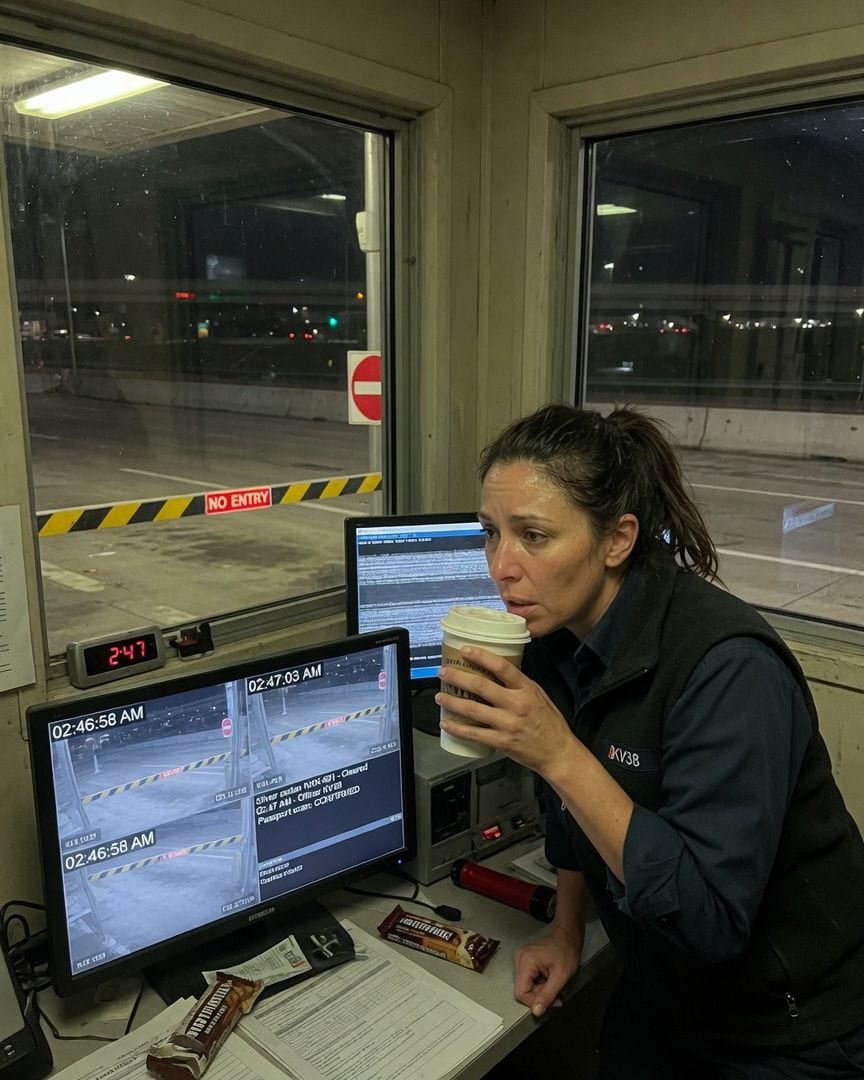
My lane's barrier was down, but my log cleared a car at 2:47 AM. With my code.
Working the quiet overnight shift at the Vance-Romano land crossing, I expected only routine system logs. Instead, a new entry showed a silver sedan cleared northbound through my Lane 3, stamped with my officer code. The issue: my lane had been closed and locked all night, and I hadn't seen a single car pass. Then I discovered the external camera feed for those crucial seconds was simply gone.
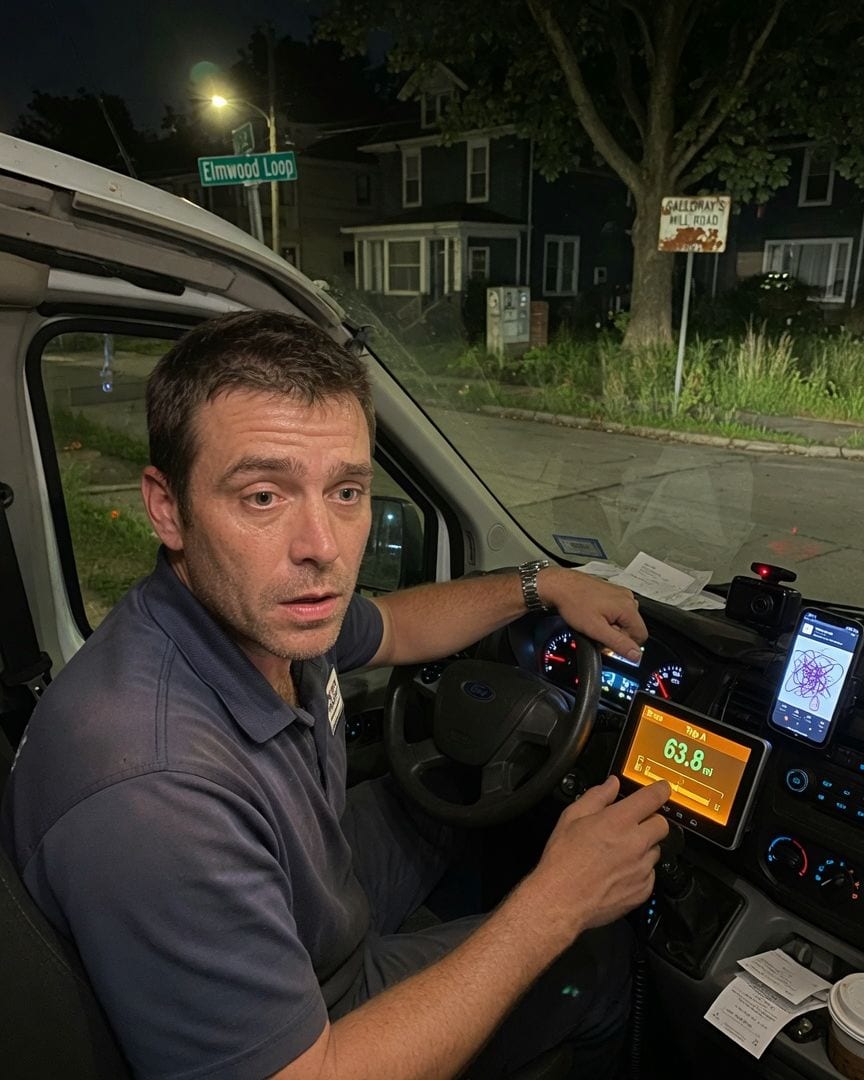
My delivery van's fuel gauge dropped a quarter tank on the Elmwood loop last night. It logged sixty-three miles, a loop I can walk in ten minutes.
I know my routes and my van, but the Elmwood Loop was different. My GPS app showed me standing still on the street, even as I walked for miles, my colleague confirming I hadn't moved. The impossible location left a blank, grey spot on the map.