My lane's barrier was down, but my log cleared a car at 2:47 AM. With my code.
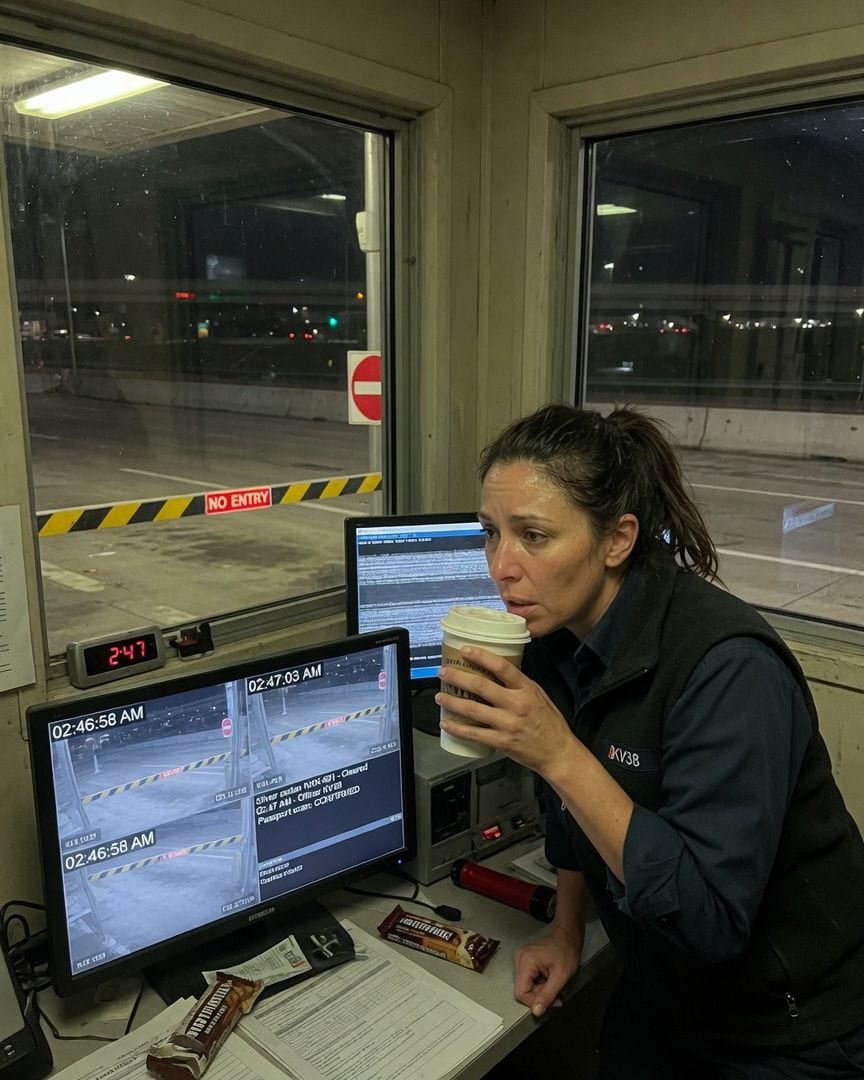
The drone of the highway was my only company in the overnight quiet of the Vance-Romano land crossing. It was 2:30 AM, and my lane, Lane 3, designated for northbound commercial traffic, had been closed since midnight.
The heavy barrier arm was lowered and locked, a clear red 'NO ENTRY' sign glaring into the darkness. I sipped my cold coffee, running through the automated system logs from the last hour.
Just routine, mostly cargo manifests, a few empty trailers.
Then the screen flickered, displaying the most recent clearance. A silver sedan, plate 'NXK-881', northbound. Passport scan, confirmed. And my officer code – KV38 – stamped at 2:47 AM.
I blinked. My lane had been closed. My barrier was down. I hadn't seen a single car, much less cleared one. I checked the barrier status again, just to be sure. Still down. Still locked.
A solid red line on the console indicated its unbreached state. The dread wasn't a jolt, not a sudden shock. It was a quiet, chilling certainty that something impossible had just happened, recorded as plain, digital fact.
I tried to rationalize it. A system glitch, maybe. A phantom data entry. It happened sometimes, especially after a software update. I pulled up the barrier's sensor logs – nothing. No impact, no malfunction, no sign it had ever moved.
Then I pulled up the external security camera feed for Lane 3, setting the playback to around 2:45 AM.
The timestamp rolled forward, seconds ticking by on the screen. The lane was empty, just as I remembered. The barrier was clearly visible, heavy and down.
I watched my own booth, visible in the corner of the frame, my head bent over the monitor, exactly where I was now. No movement outside. No headlights. Nothing.
As the clock on the screen ticked to 2:46:58 AM, I leaned closer, my breath held, expecting to see nothing. This was it, the mundane explanation. The moment the 'ghost' car would, or wouldn't, appear.
But then, the video feed on my monitor flickered violently, a momentary burst of static distorting the image. It was a digital stutter, like an old VCR tape skipping. And then the timestamp jumped.
From 2:46:58 AM directly to 2:47:03 AM.
The five crucial seconds where the vehicle supposedly passed were simply gone. Erased. An impossible blank in the digital record. My breath caught, a cold pinprick of realization spreading through me. It wasn't just a phantom car.
The very record of its non-existence had been tampered with.
I replayed the footage, confirming the skip. The barrier remained down, unbreached, yet the system log insisted on the clearance. I checked the internal camera, focused on my own face during that minute.
I saw myself, tired but alert, sipping coffee, looking at my main monitor, oblivious. Nothing out of the ordinary on my end. No phantom vehicle, no breach.
But the log was undeniable, and the external camera feed had been edited, or simply failed, at the precise moment of the impossible event.
I looked from my own calm face on the internal monitor to the blank, skipped seconds on the external feed, a cold certainty settling in my gut: this wasn't a glitch. This was deliberate. And it involved me.
The next morning, I reported the anomaly to my supervisor, Ryan Ingram. He listened, nodding slowly, then dismissed it with a wave of his hand. "Just a system hiccup, Vance," he said, tapping a pen against his desk.
"We had a big software update last week. Probably still some kinks. Just ignore phantom entries like that." He advised me to 'just ignore phantom entries.' But I couldn't. Not after seeing the camera feed.
I started digging. Instead of going home, I stayed late, pulling up old log archives, going back years. I thought if it was a system error, it would have happened before. And it had.
I found similar entries: phantom clearances, always at odd hours, often exactly 2:47 AM, sometimes with my code, sometimes with others. A pattern began to emerge. Certain shifts, certain lanes – always late night.
My unease tightened its grip, growing from a simple system error to something far more disturbing, a recurring secret.
I cross-referenced these phantom entries with personnel records. Many officers assigned to those shifts had long since transferred or retired. One name, however, appeared repeatedly on logs with similar phantom clearances: Conrad Davenport. He'd retired twelve years ago.
He used to work the same overnight shift, often Lane 3. The same shift, the same lane, the same impossible timestamp. The hair on the back of my neck stood up.
My inquiries didn't go unnoticed. Ryan called me into his office again later that day, his tone subtly colder this time. He warned me against "chasing ghosts" and wasting resources.
"Some things are best left alone, Vance," he said, his gaze lingering a moment too long, a new tension in the room. The air felt thin around him.
Later that night, while researching Conrad Davenport online, I received an anonymous email. The subject line was simply '2:47 AM.'
The body contained only a single scanned image: a blurry, faded photograph of the old Vance-Romano border post, taken decades ago. Faintly, almost imperceptibly, there was a shimmering distortion visible just above Lane 3, a ripple in the very air.
No text, no sender. It was a clear, unsettling message. Someone knew I was digging, and they were watching.
The next morning, I drove to the address listed for Conrad Davenport, a small, unassuming house on the outskirts of town.
Conrad Davenport answered the door himself. He was a calm, weary man in his early sixties, with an unnervingly direct gaze that seemed to see right through me.
I stood on his porch, feeling a little ridiculous, explaining the phantom clearances, the skipped camera footage, Ryan's dismissal. Conrad listened, his face unreadable, his eyes never leaving mine.
"You're not the first," he finally said, his voice raspy, like he hadn't used it much recently. "And you won't be the last."
He invited me in, leading me to a small study lined with books, the air thick with the smell of old paper and dust.
From a locked drawer in his desk, he pulled out a thick, leather-bound journal, its pages yellowed with age. "I kept this," he explained, tapping the cover. "The official logs never told the full story."
He flipped through it, the crackle of old paper loud in the quiet room, pointing to entries detailing identical phantom clearances under his own officer code. Always at 2:47 AM, always Lane 3.
He described the same 'hollow' feeling I'd experienced after my phantom clearance, a subtle drain, a quiet absence. He confirmed the camera skips, explaining, "It doesn't want to be seen, not truly. It just wants to pass."
The pieces clicked into place. The impossible becoming horrifyingly coherent. This wasn't a glitch. It was a pattern, a routine. And Conrad had been living with it for years.
Conrad Davenport flipped to a specific page in his weathered journal, his finger landing on a date from twenty-three years ago.
The entry, scrawled in faded ink, detailed a phantom clearance at 2:47 AM, complete with a plate number identical to the one in my log: 'NXK-881'.
He then looked up, his eyes steady, piercing mine. "It doesn't just pass, Kathleen. It needs you to be here for it to pass. And it takes its toll."
He explained that the crossing itself, this specific spot, was an ancient 'gate,' and the modern systems, the digital logs, the officer's active code, had simply become the new mechanism for its passage.
He pointed to another entry, this one more cryptic, describing not a car, but a 'cold presence' that 'slipped through.' He closed the journal, his gaze holding hers. "You've been clearing more than just phantom cars, Kathleen.
You've been opening the way."
Conrad leaned back in his chair, the journal resting in his lap. "The land here," he gestured vaguely towards the window, "has always been a place of passage. Long before roads or borders.
When they built the crossing, it simply found a new way." He described how the entity, whatever it was, needed an active, living consciousness to 'authenticate' its transit through the digital system. "Your code, your presence, it's like a key.
And 2:47 AM? That's when the gate is weakest, when it can push through."
He recounted how the 'hollow' feeling I’d described was the direct result of this passage. "Each time, it takes a piece of you. Your focus, your will, your very sense of self. It's a subtle drain, but it adds up.
That's why I retired. I couldn't afford to lose any more."
The camera skips, the phantom entries, the recurring timestamp – every clue now snapped into place, forming a terrifyingly coherent picture of an unstoppable, ancient routine that had co-opted the modern world.
I sat in silence, the weight of Conrad's words pressing down on me. There was no fight, no escape. This wasn't a monster to be slain, or a conspiracy to be exposed.
It was a fundamental aspect of the place, woven into the very fabric of my job. I asked if anyone else knew. Conrad nodded slowly. "A few. The ones who stayed too long. They become… quieter."
I realized Ryan Ingram's dismissals weren't ignorance, but a quiet acceptance, a resignation. He knew. I understood now why Conrad retired, why he never went public. What could anyone do? You can't fight a geological fault, or a tide.
You can only endure it, or leave.
I drove back to the crossing, the sun beginning to set, painting the sky in colors that felt muted, somehow. My next overnight shift began in hours. I knew I couldn't quit, not yet.
The financial pressure, the routine, the sheer inertia of my life kept me chained to the booth. But the dread was now absolute knowledge.
I would sit there tonight, logged in, and at 2:47 AM, I would clear another phantom car, and another piece of me would go with it.
I finished my shift, the phantom clearance logged, another hollow moment in my chest. I drove home, the world outside my window seeming a shade less vibrant, the sounds a little muffled.
The quiet of my apartment, once a comfort, now felt like an echo chamber. I made dinner, ate mechanically, and went to bed, the knowledge heavy and cold within me. The next shift began, and the next.
I performed my duties, cleared the log entries, and watched the camera skip. The pattern continued, relentless and unseen by anyone but me.
Weeks later, Ryan Ingram, my supervisor, noticed it. Kathleen was always efficient, always on time. But she was quieter now. Her eyes, once sharp, seemed to hold a distant, almost vacant quality.
One morning, as she handed over her shift report, he asked, "Everything alright, Vance? You seem a little… out of it." Kathleen offered a small, polite smile.
"Just the night shift, sir," she replied, her voice flat, devoid of its usual inflection. Ryan nodded, accepting the answer, but a faint, unsettling echo of her smile lingered in his mind as she walked away.
The next night, her booth cleared another car she never saw, and the silence felt a little deeper.
If this one got to you
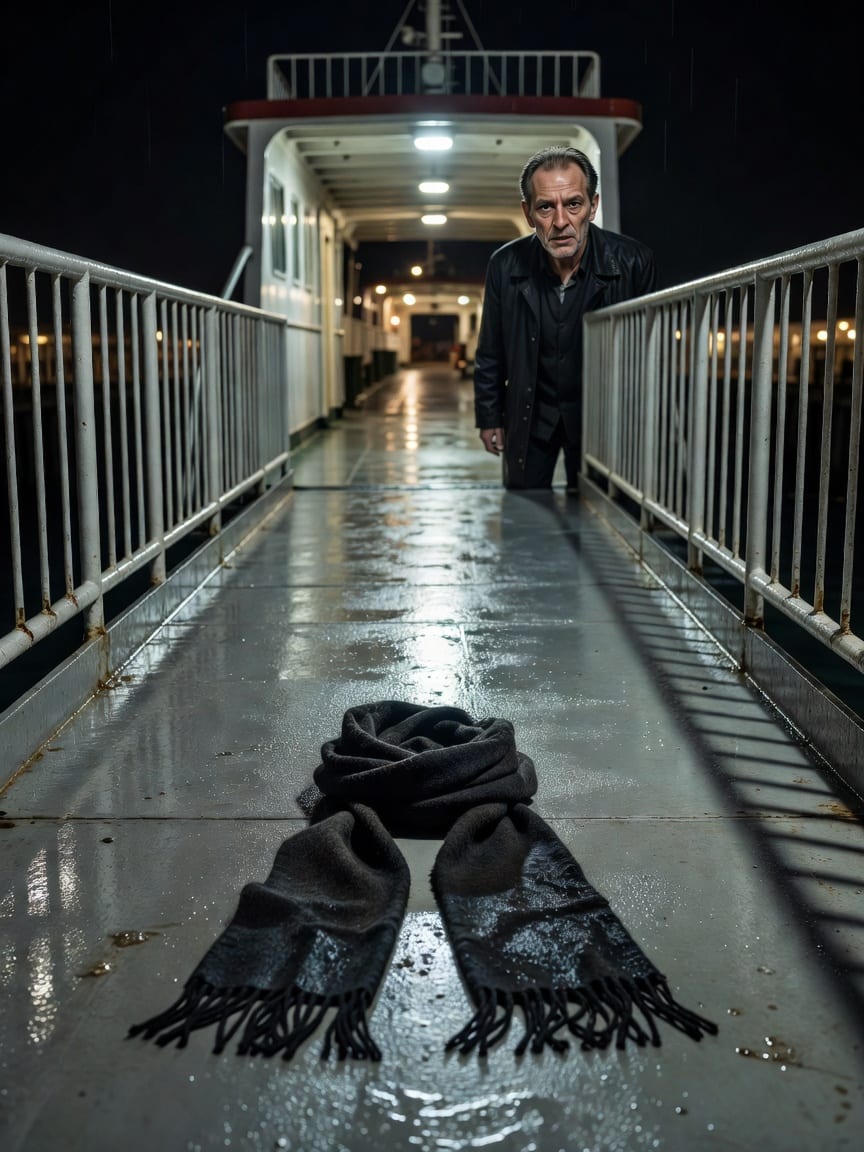
My ferry's night log recorded a foot passenger disembarked at 2:15 AM. We don't sail until six, and I wrote the entry myself.
Working the night shift on the 'Sound Clipper,' I found my own handwriting in the watch log recording an impossible event: a foot passenger disembarking at 2:15 AM. The ferry was tied up, engines cold, and the gangway locked tight. No one could have left, yet the entry was undeniable, signed with my initials.
My dashcam footage showed my street change. For five seconds, my car drove on a road that doesn't exist on any map.
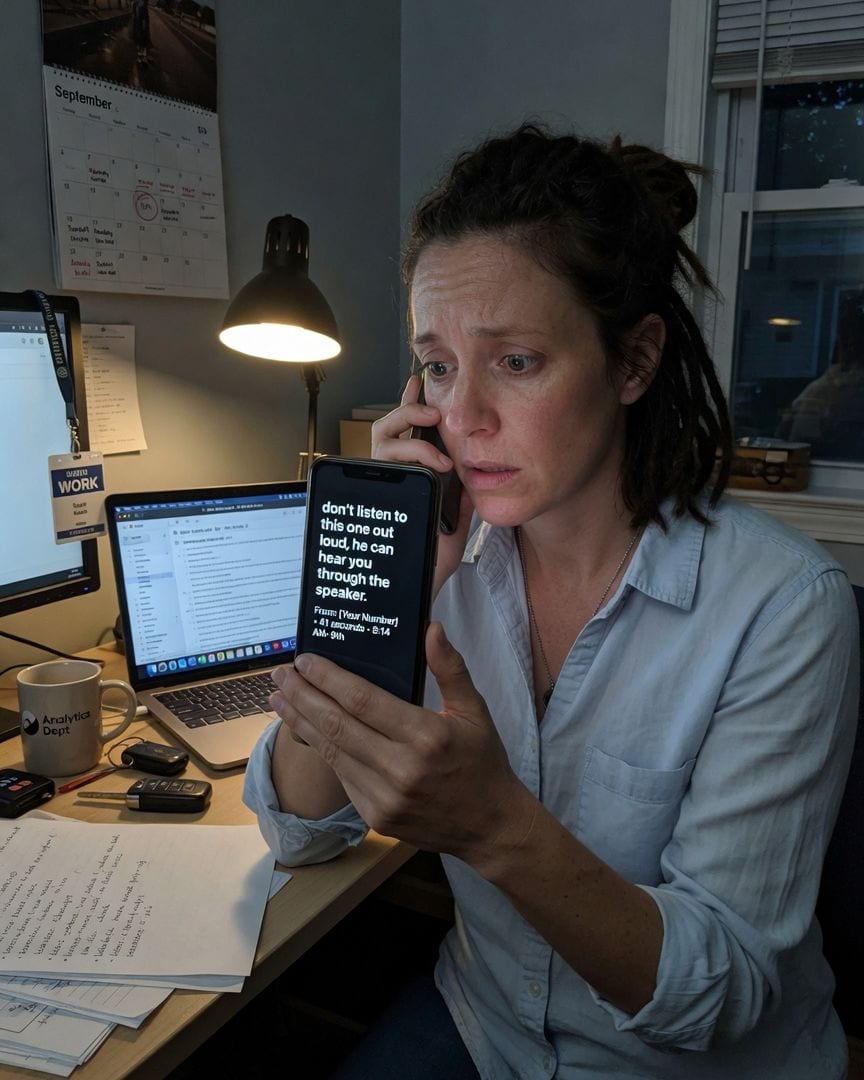
It was a normal Tuesday until my work phone received a new voicemail. The transcription warned, 'don't listen to this one out loud, he can hear you through the speaker.' But the message was from my own number, and the audio was forty-one seconds of absolute, dead silence.
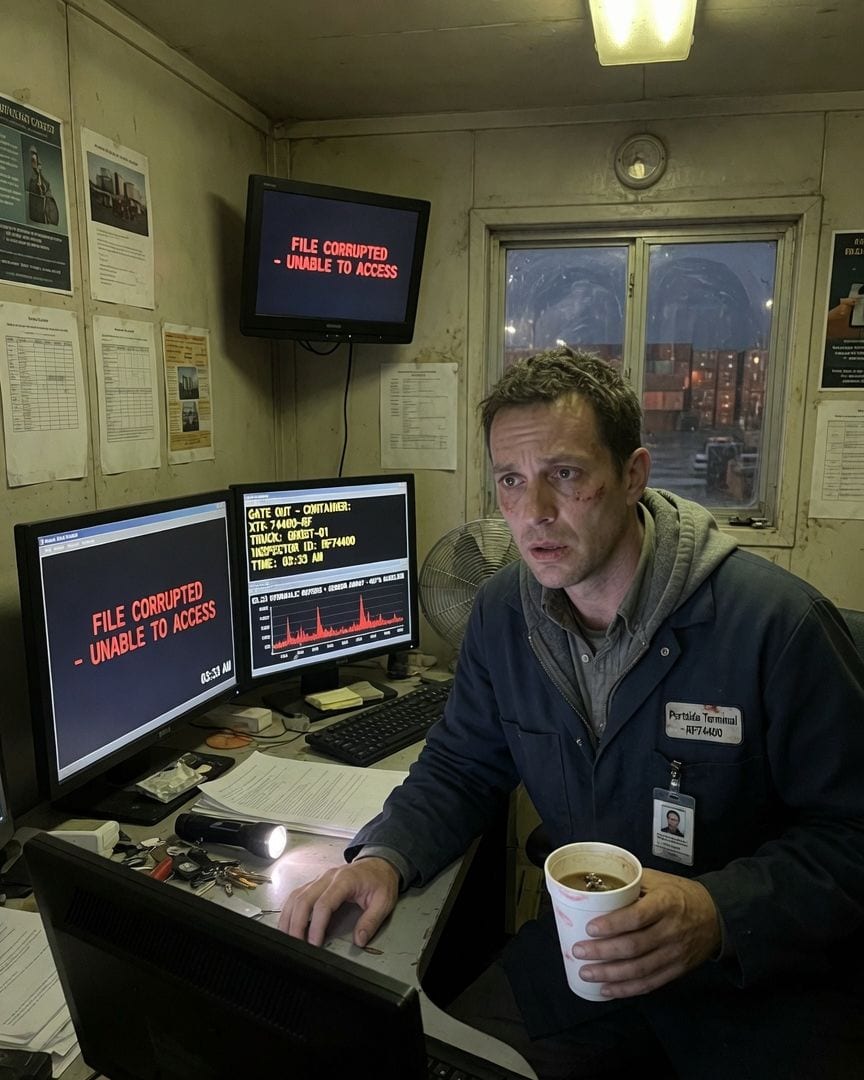
My gate log shows a truck left at 3:33 AM with my inspector ID — but the yard was locked down, and I was the only one on shift.
Working my overnight shift at the Portside Terminal, a routine scan of the gate log turned my blood cold. My ID was stamped on an entry for a truck named 'GHOST-01' exiting at 3:33 AM, despite the main gate being physically secured and locked for hours.
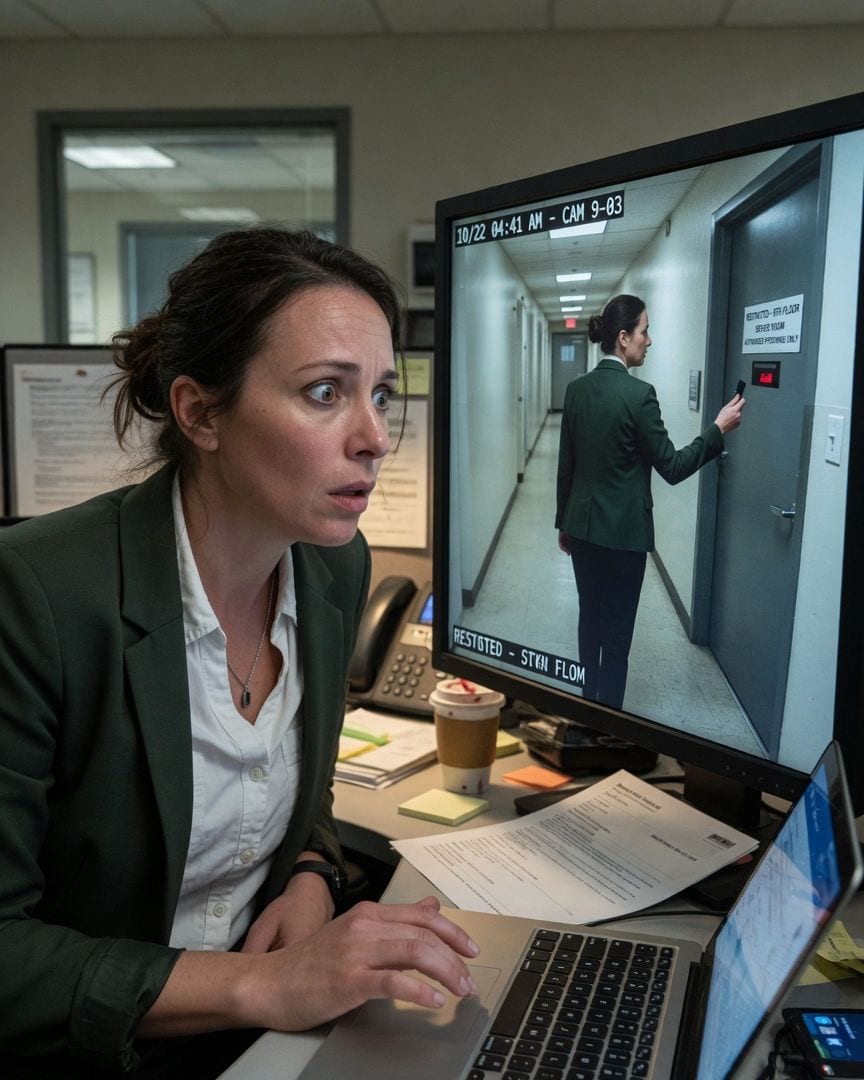
My keycard log shows me in the server room at 4:41am. I was asleep, and my badge was at home.
An email from corporate IT reveals my keycard registered entry into a restricted server room at 4:41 AM last Sunday. I was asleep in my apartment across town, my badge clipped securely to my jacket at home. But then I scrolled down and found eleven more impossible entries, all within the past week, all under my name.
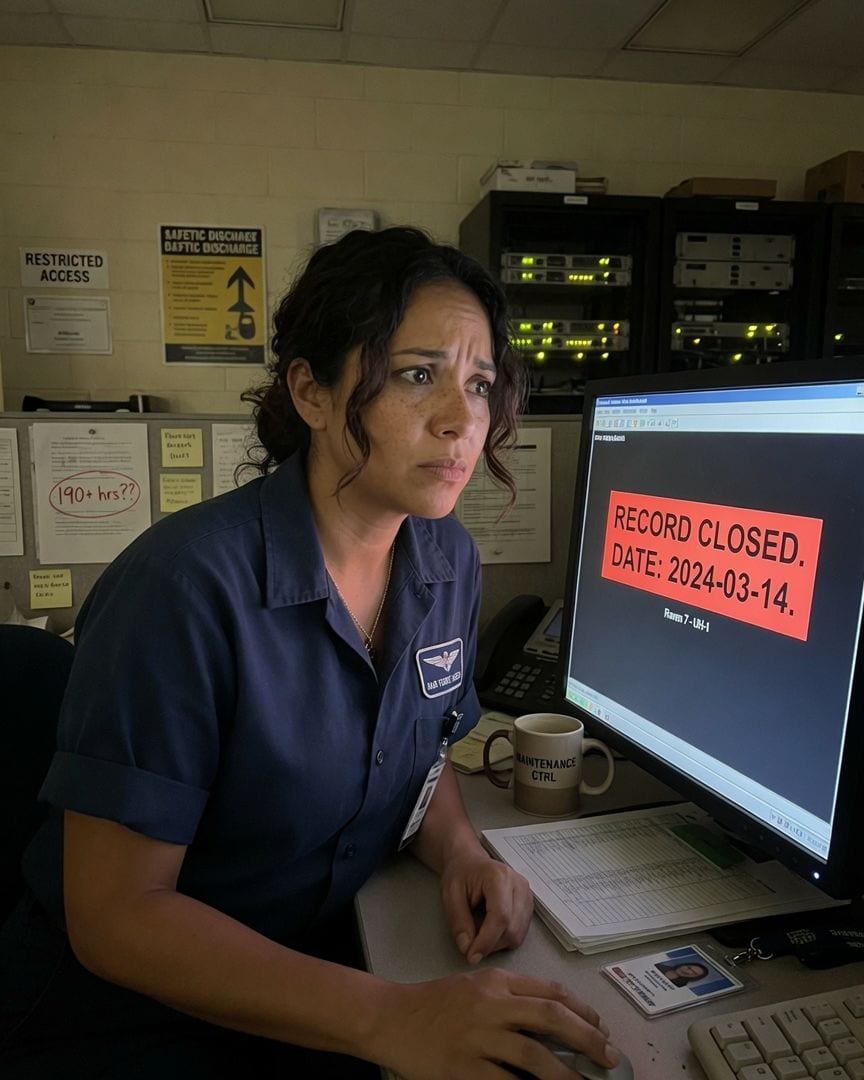
A Cold War helicopter logged impossible flight hours overnight. Its new mission target: 'Non-Terrestrial Signal.'
Odalys Prieto, a meticulous maintenance controller at the Air Force Records Annex, faced a routine task: closing the file on a UH-1 Huey, Raven 7, officially lost in 1984. But the digital archives held a glaring anomaly. Raven 7's record showed flight hours accrued decades after its destruction, logged from a station demolished years ago. The next morning, the impossible total had quietly increased, detailing new missions, including one for a 'Non-Terrestrial Signal.' Odalys realized this was no glitch, but a live, active record. As she copied the data, her screen flickered, then declared the record abruptly 'CLOSED,' leaving her with a chilling question: who, or what, had just covered its tracks?
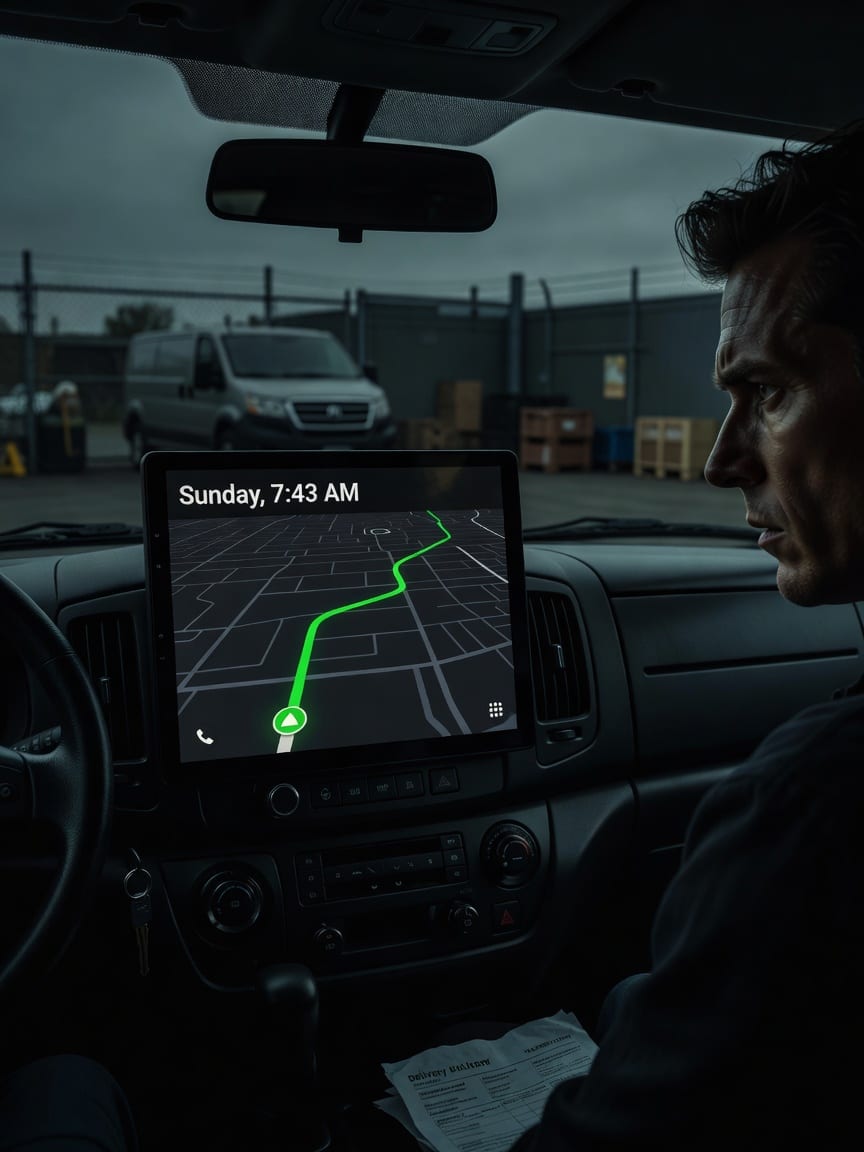
My delivery van drove 130 miles last Sunday, stopping for four hours in another state. It never left our locked yard. The GPS log drew the whole trip, timestamped to the minute.
I was just doing my job, sitting in the dispatch office with my manager Joel, when he pulled up the GPS log for my delivery van, Unit 74. It showed a 130-mile round trip to Delaware, engine on for four hours, with a distinct stop, all while my van was locked in the yard and I was home. The camera footage confirmed it hadn't moved an inch, yet the system insisted it had traveled hundreds of miles.