My dashcam mic caught me humming on a long night drive. Under my voice, a second hum kept time, in the same key. It stopped when I stopped. It was always already there when I started again.
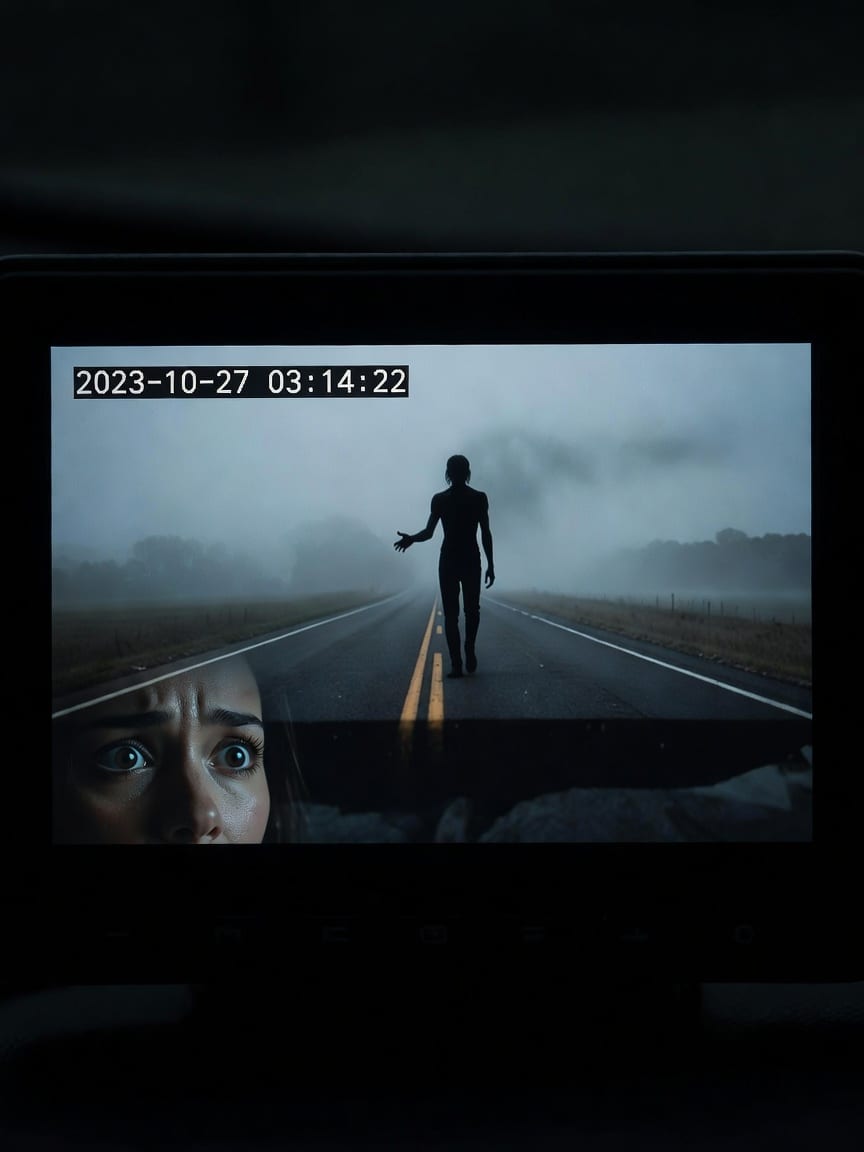
The late shift at the freight hub always left me wired, but the drive home, a solid hour through the rural outskirts, was my decompression. The solitude, the dark winding roads, just me and my beat-up sedan.
I’d installed a new dashcam a few weeks back, a fancy model with a sensitive microphone. It just hummed quietly on the windshield, a little blue light my only companion.
I remember humming along to the radio that night, just a soft, tuneless thing, lost in my own head.
A few days later, I was doing my routine log review. Standard procedure. Pull up the dashcam footage, check for anything unusual, make sure everything’s clear. I skipped through the video, mostly listening to the audio.
That's when I heard it. My own hum, clear as day, right there on the recording. But under it, harmonizing in the exact same key, was another hum. It wasn’t the engine, not static, not the radio bleed.
It was too precise, too musical. It kept perfect time with my own voice, stopping exactly when I paused, starting precisely when I resumed. I played it again. And again.
The sound was distinct, a steady, low current beneath my own. It was always already there, a silent passenger, a perfect harmony I had never heard in the moment, utterly impossible.
I’m a logistics planner, for Christ’s sake. My brain is hard-wired for facts, for things that make sense. A phantom hum? No way. I spent the next few days trying to debunk it.
I drove the exact same route, silent this time, recording everything. Nothing. Just the regular sounds of my car and the road. I played back old footage from before that night; no hum.
It was only present on that one recording, and only when I hummed. My rational brain screamed microphone quirk, audio bleed from a bad wire.
But the precise harmony, the way it started and stopped with my own voice, that didn’t fit. Frustrated, I decided to review the video from that original night, frame by frame, hoping some visual anomaly would explain the audio glitch.
I needed a reason.
I fast-forwarded through miles of dark, monotonous road. The dashcam’s timestamp ticked steadily, second after second. Then, a flicker. It wasn’t a glitch in the footage, more like a seamless transition, a blink-and-you-miss-it shift.
My car, for a mere three seconds, was no longer on the familiar gravel shoulder of Old Mill Road. Instead, it was driving smoothly down a two-lane asphalt road, complete with faded yellow lines, trees neatly trimmed along the verge.
The timestamp continued, unbroken, ticking over 3:14:21, 3:14:22, 3:14:23. I slammed the brakes on my office chair, practically launching myself backwards. This road did not exist. I knew every goddamn inch of that drive.
There was no paved road there, only a narrow, winding track that became gravel and then dirt. Not even a paved section for construction. I rewound, my finger shaking, played it again. The transition was seamless, impossibly so.
My car was on the non-existent road, then, just as smoothly, back on the familiar unpaved track, the gravel crunching under the phantom tires.
The hum was still there, a low vibration under the engine noise, a ghost in the machine. I pulled out my phone, cross-referencing GPS data, satellite maps, even obscure historical surveys I found online. Nothing. No road.
Not even a planned one. The footage was clean, timestamped, undeniably real. It showed a place that simply wasn't.
My hands trembled as I paused the playback. The dashcam screen glowed with the impossible image. My own headlights cut through the digital darkness, illuminating the asphalt, the faded yellow lines down the center, the perfectly manicured verge. A road.
A real, solid, drivable road. And my car was on it, a clean, timestamped record of my journey. But my memory, every map I’d ever seen, every satellite image, screamed that this road was not, could not, be there.
I froze, my finger hovering over the playback button. On the screen, my own car drove smoothly along a two-lane asphalt road, complete with faded yellow lines, a road that simply wasn't there.
The next day, I was relentless. The image of that phantom road had burrowed into my skull. I drove straight to the exact GPS coordinates captured in the footage. There was nothing.
Just dense woods on one side, and the familiar, rutted dirt track I knew so well on the other. No sign of pavement, no forgotten clearing, not even a patch of disturbed earth.
The discrepancy gnawed at me, a splinter under the skin. I went to the municipal archives, the small, brick building downtown. I requested old property deeds, infrastructure plans, anything that might explain it.
Marie Lockwood, the town clerk, a woman in her mid-fifties with a perpetually pursed mouth, barely looked up from her computer. “Everything’s digitized, dear,” she said, her voice dry. “If it’s not online, it doesn’t exist.”
I insisted on looking through the physical records, citing some obscure historical preservation law I’d googled on the drive over. Marie sighed, pointing me towards dusty binders in a back room, obviously annoyed.
Hours later, hands smudged with ancient dust, I found nothing. No 'Project Cerulean', no 'Mill Road Extension', not a single mention of any road project in that area. It was as if the town had never considered building anything there.
Desperate, I remembered Walter Hayes. He was the local historian, a kindly man in his late sixties who ran the small public library. He was known for his encyclopedic knowledge of local lore and forgotten details.
I showed him the footage, the inexplicable three seconds of asphalt, explaining the impossible hum. Walter, usually unflappable, squinted at the screen, his glasses perched on his nose.
He muttered something vague about 'shifting paths' and 'old ways' but couldn't place the road. He suggested I look into old logging routes, or perhaps a temporary access road for a forgotten quarry.
He promised to check his own collection of antique maps. I returned to the site, my dashcam still recording, almost out of habit now. This time, I parked and walked into the woods, hoping to find any physical trace.
The trees were old, ancient-looking pines and oaks, the undergrowth thick and tangled. No sign of disturbed earth, no crumbling asphalt, nothing.
But as I walked, a faint, rhythmic pulse seemed to emanate from the ground, a vibration too low to be heard, but felt distinctly in my chest.
The air grew heavy, thick with a scent like damp earth and old iron, pressing down on me. I played back the dashcam audio from my walk later. Nothing. No hum. But the silence felt wrong, expectant.
The ground dropped away, just for a moment, an almost imperceptible dip under my feet, and the dread deepened.
A week later, I was back at the impossible road's coordinates, this time with Walter Hayes. He had found something. A hand-drawn map from the early 1900s, barely legible, showing a proposed 'Blue Path' that bisected the exact area.
It was crudely labelled 'Never Initiated'. As we stood by my car, examining the faded parchment in the afternoon light, a battered pickup truck pulled up slowly behind us.
Donald Abbott, a man easily in his late seventies, was behind the wheel. He lived in an isolated farmhouse further down the track, a hermit almost.
Donald simply watched us for a long moment, unblinking, his eyes seeming to hold a thousand secrets.
“Lost, are we?” he asked, his voice calm, flat, betraying no emotion.
I explained we were looking for old logging trails. Donald’s gaze drifted from me to Walter, then to the old map in Walter’s hand. He sighed, a slow, deliberate sound that carried on the still air.
“Some things are best left lost, miss. The land remembers what it wants to remember. And what it doesn’t.” He wasn’t threatening me, not precisely. But his words hung in the air, heavy and significant, like a weight.
“That path you’re looking for… it wasn’t meant for paving. The earth itself pushed it back. What’s unmade, stays unmade.” He paused, his eyes fixed on my dashcam, clearly visible on my dashboard, its little blue light still on.
He hadn't asked about it, not a word. He just stared. “Some things don’t like being called back.”
With that, he nodded, a slow dip of his head, put the truck in gear, and drove off, leaving Walter and me in an unnerving silence. I felt a cold prickle on my neck.
He hadn't asked about the dashcam, or the hum, or the footage. He just knew. The dread was no longer abstract; it was personal, a quiet warning from someone who understood the wrongness.
Donald Abbott’s words had shaken me to my core. Walter, however, seemed galvanized by them. “He knows something,” Walter declared, carefully refolding the old map with the 'Blue Path'.
“’The earth pushed it back’… that’s an old saying, tied to the Whisper Road legends.” Over the next few days, Walter delved deeper into the library’s most obscure local history sections.
He found fragmented references, not in official town records, but in personal journals and local folklore collections, all hinting at 'The Whisper Road' – an ancient, ephemeral pathway known only to the indigenous people who once lived here.
It was said to appear and disappear with the seasons or lunar cycles, a path of natural resonance, guided by specific chants.
Then he found it: a single, faded newspaper clipping from the late 1800s, brittle with age. It detailed a colonial initiative called 'Project Cerulean'.
An ambitious plan to pave over the Whisper Road, creating a permanent route to connect burgeoning settlements. The article spoke of a 'groundbreaking ceremony' and 'unprecedented engineering challenges'. But then, nothing. No follow-up articles, no construction logs.
It simply vanished from the public record, like it had never existed. Walter’s face was grim. “It’s like it was erased, Sophia. Not just abandoned, but wiped clean.”
He showed me an entry in an old surveyor’s diary, leather-bound and fragile, dated a year after the clipping. The spidery script read: 'Cerulean. The hum. It began to unmake itself. The land rejected the stone. We laid it, and it was gone by morning. The whispers grew louder.'
My breath caught in my throat. The hum. The unmade road. It wasn't a glitch, or a forgotten project, or a local legend. Something had actively pushed it back.
Driven by an urgent, almost desperate need to touch something real, something tangible from this impossible story, I returned to the site one last time.
I walked along where the ghost road had appeared in my footage, my eyes scanning the undergrowth, the tangled roots, the damp earth.
And then I stumbled upon it: half-buried in the undergrowth, where the ghost road had briefly manifested, was a crudely carved stone, no bigger than my hand. It was dark, almost black, with faint, indecipherable markings etched into its surface.
It felt impossibly heavy, cold to the touch, and seemed to vibrate with a low, almost imperceptible hum against my palm.
I knew, with a certainty that chilled me to the bone, that I had found a piece of the Whisper Road, an artifact from the land's own defiance.
I carefully wrapped the heavy stone in a cloth, as if it were something fragile and alive, and brought it to Walter.
He laid it on a piece of black felt in the quiet library back room, the afternoon light filtering through the high windows. He pulled out a large magnifying glass, examining it.
The stone was unlike any local rock he knew; its surface seemed to absorb light rather than reflect it, and the carved symbols, primitive and angular, didn't match any known script or ancient pictograph.
As he leaned closer, his brow furrowed in concentration. “The crystalline structure… it’s peculiar. Almost… mutable,” he murmured, turning it slightly. “And this weight… it feels like it’s pulling at something, a subtle tug against gravity.”
Suddenly, a faint, almost imperceptible low hum began to emanate from the stone itself, a resonance that I instantly recognized as the exact same pitch and rhythm from my dashcam recordings. Walter’s eyes widened behind his glasses.
His grip loosened, and he dropped the magnifying glass. It clattered against the table.
The ancient granite marker lay on the felt, its weathered surface now shimmering with a faint, impossible ripple, as if the very stone was trying to un-exist itself before our eyes.
The stone hummed, a low, resonant thrum that vibrated through the felt, through the table, deep into my bones. Walter, recovering his composure, picked it up again, his expression a mixture of awe and profound unease.
“This isn’t just an old rock, Sophia. This is… a piece of the Whisper Road itself. An anchor, perhaps. It’s not just defying material permanence; it’s unmaking itself, just like the road it represents.”
He explained that the indigenous legends spoke of the Whisper Road as a living entity, a path woven from the land’s own memory and intention.
The chants weren’t just for guidance; they were a form of communion, a way to move with the land, not against it. When Project Cerulean tried to force a permanent, paved scar onto this living path, the land fought back.
“The ‘incident’ wasn’t a construction accident, Sophia. It was the land rejecting the intrusion, actively fighting the imposition. The hum you heard, the footage you saw… those are residual echoes. The road wasn’t destroyed; it was unmade.
Pushed back into a state of non-existence, like a memory forcefully forgotten.” He pointed to the faint, shifting patterns on the stone’s surface, which now seemed to blur and sharpen subtly as I watched. “These aren’t carvings.
They’re… ripples of its undoing. Every time the ghost of the paved road tries to manifest, this relic hums, and the land tries to erase it further, to keep it unmade.” The full horror of it settled over me then.
It wasn’t a haunting, but a constant, silent battle for non-existence, and the land was winning, one imperceptible ripple at a time. The hum was its song of erasure.
Armed with this chilling understanding, I felt compelled to seek out Donald Abbott one last time. He was the one who knew.
I found him on his porch, whittling a piece of wood, his gaze distant, fixed on the distant tree line. He didn’t seem surprised to see me. “You kept digging,” he said, his voice as calm and flat as before.
I held up the stone, its low hum a barely perceptible vibration against my thumb. “The Whisper Road. Project Cerulean. You knew.”
Donald nodded slowly, his knife still. “My grandfather worked on that project. He saw it. The asphalt they laid, gone by morning. The equipment, rusted and twisted, as if decades had passed overnight.
The men… some of them just walked away, never spoke of it again. Others… they became part of the land’s forgetting.” He looked at the stone in my hand, a flicker of something ancient in his eyes.
“That’s a piece of the old path. It’s what allowed the land to remember itself, to push back the wrongness. It wasn’t meant to be seen by human eyes, not anymore. You shouldn’t have brought it back.”
I asked him what happened to those who kept trying to remember, to force the road back. Donald paused, his knife still, his eyes meeting mine, utterly devoid of malice, just a cold, hard truth. “They became like the road.
Unmade. Their memories, their presence… they faded. People forgot they existed. Their pictures blurred, their names slipped from tongues. The land, it wants peace. It wants to be as it was.
And it doesn’t tolerate those who try to unearth what it buried.” His words weren’t a threat, but a statement of immutable fact. The full truth clicked into place: the dread was the knowledge itself.
I couldn't fight it, couldn't undo it, couldn't even truly share it without risking my own erasure. I was simply left knowing.
The landscape around them seemed to deepen, the shadows lengthening, as if the land itself was listening, deciding whether to accept her knowing, or to begin its quiet work of forgetting me too.
I left the stone with Walter. He promised to return it to the land, to bury it deep where its hum might finally find peace, or at least be less disruptive.
I sold my house, packed my life into boxes, and moved to a different state, far from the whispers of unmade roads and the chilling quiet of that specific stretch of wilderness. I never drove that route again.
The dashcam, still in my new car, recorded only the mundane sounds of ordinary traffic, my own voice humming along to the radio, and the silence of an empty passenger seat.
The hum was gone from my recordings, a ghost laid to rest, but the memory of it, the chilling knowledge of the land’s silent power, remained.
I found myself checking maps compulsively, scanning satellite images for any anomaly, any road that shouldn't be there, a habit I couldn't break.
The world was still solid, still real, but I saw the seams now, the places where reality frayed, where things could be unmade.
The dread outlived the answer, settling deep within me like a cold, heavy stone. The hum was a ghost, and I, a witness to its un-creation.
The dashcam's memory was full of mundane drives now, no impossible roads, no phantom harmonies, just the everyday world, loud and clear.
Yet, sometimes, late at night, when the world was quiet and my mind drifted, I would catch myself humming.
A low, rhythmic sound, perfectly in key, a melody that no radio had ever played, a tune no one else had ever heard. A song of a road that was never meant to be.
Sometimes, I still catch myself humming its tune, a song no one else has ever heard, a song of a road that was never meant to be.
If this one got to you
My dashcam footage showed my street change. For five seconds, my car drove on a road that doesn't exist on any map.
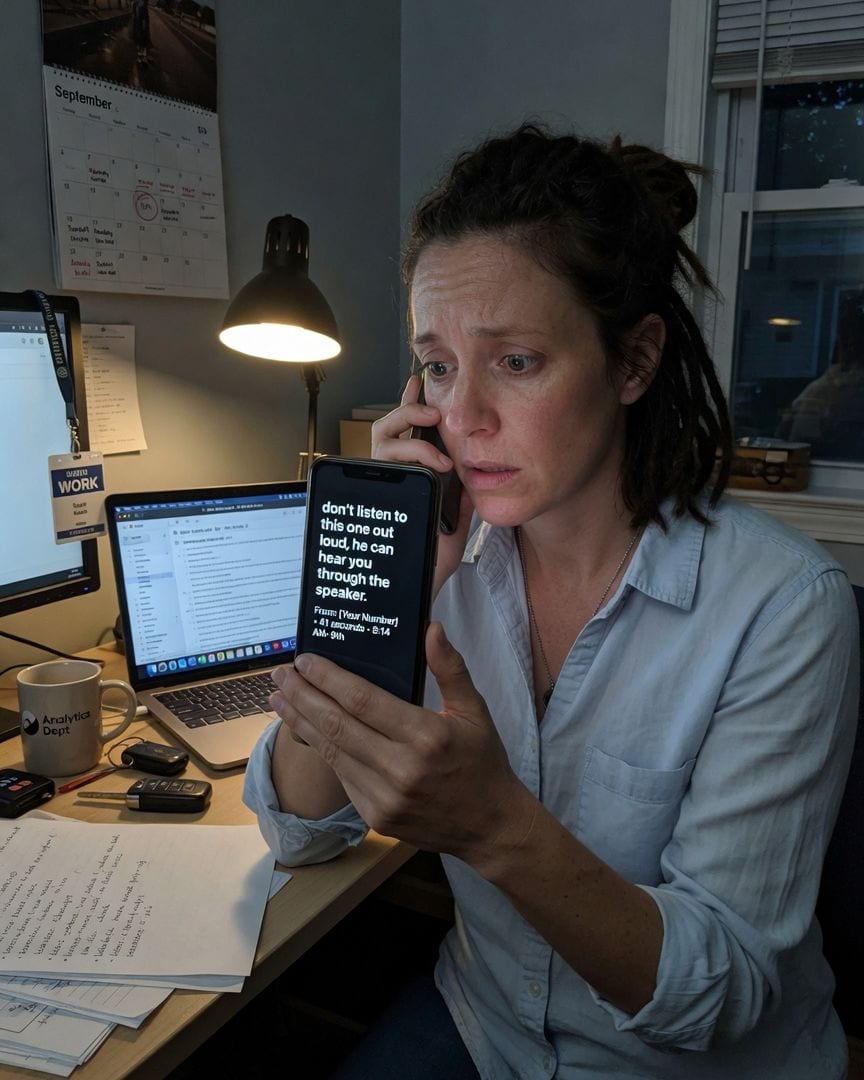
It was a normal Tuesday until my work phone received a new voicemail. The transcription warned, 'don't listen to this one out loud, he can hear you through the speaker.' But the message was from my own number, and the audio was forty-one seconds of absolute, dead silence.
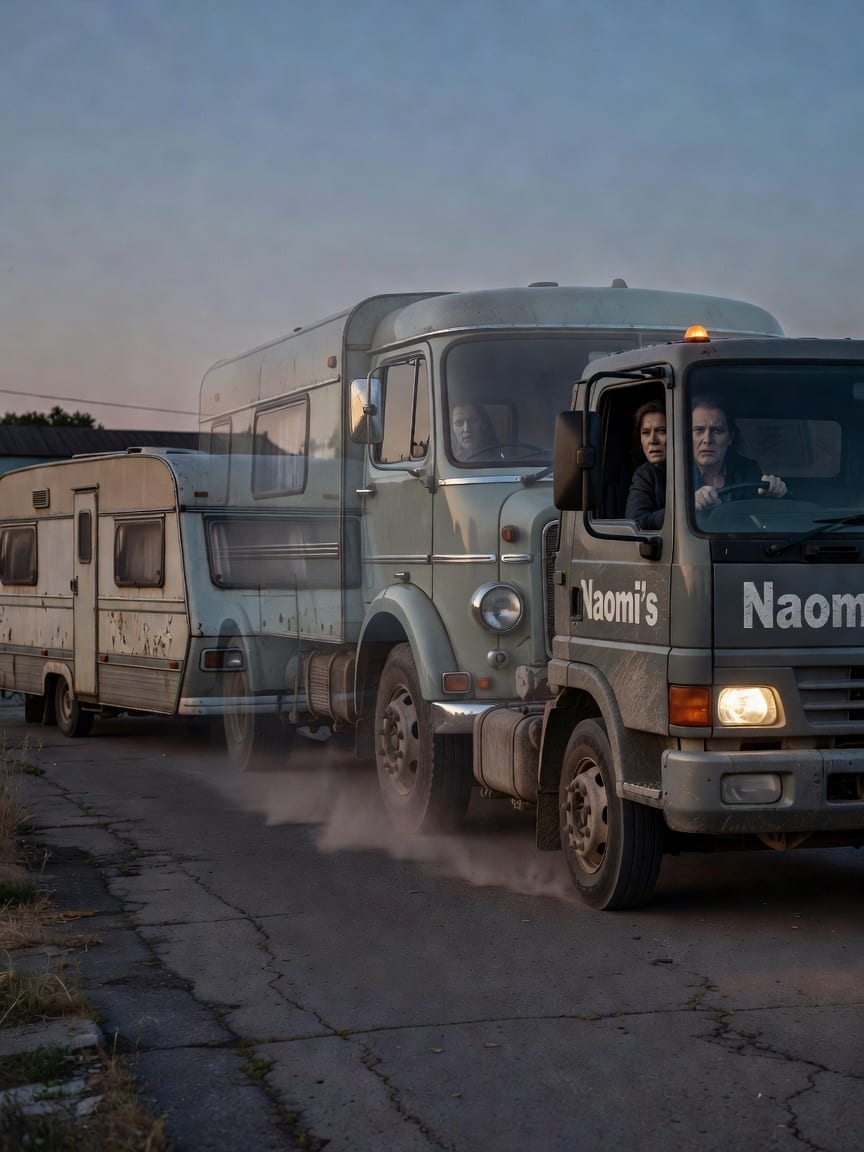
My dashcam shows the same parked caravan scrolling past eleven times in forty minutes. The timestamp advances. The mileage advances. The caravan never moves, and neither, it seems, did I.
I was on my usual lorry route, my dashcam humming, when I passed the old caravan in the lay-by. Five minutes later, I saw it again – the exact same lay-by, the same peeling blue paint. My dashcam timestamp advanced, my odometer clicked over, but the road kept repeating.
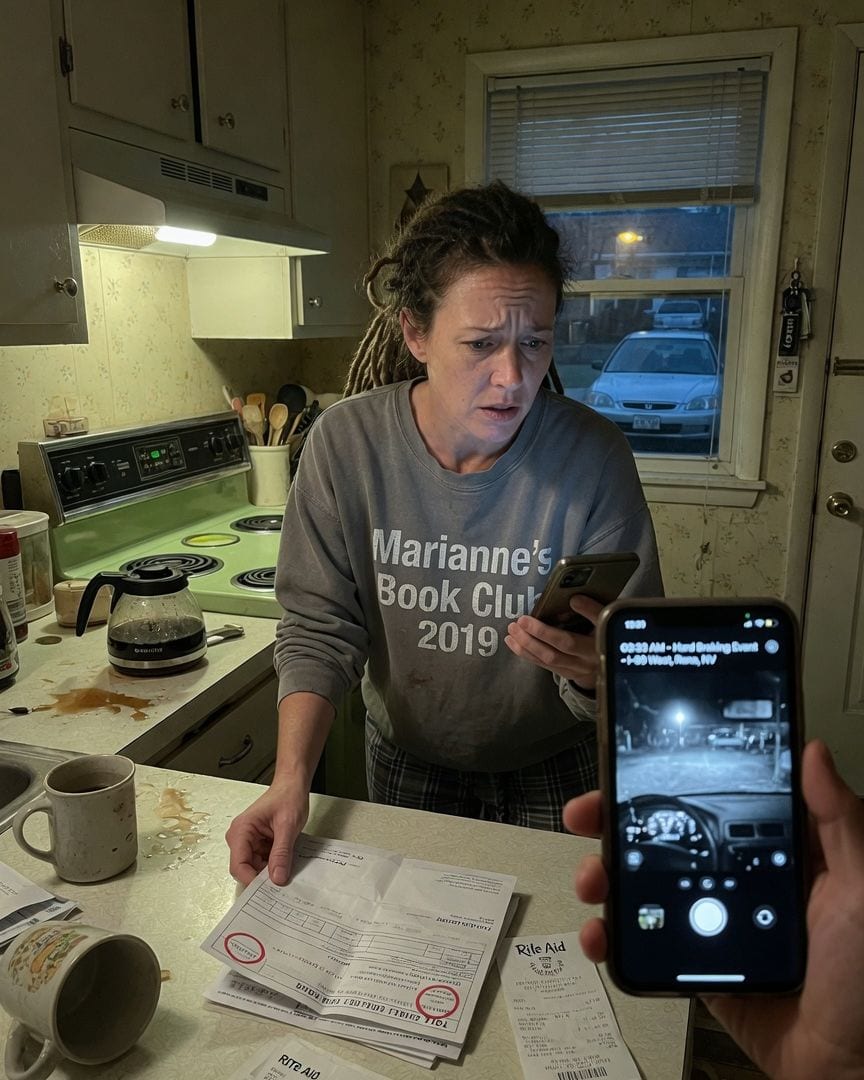
My car's dashcam just flagged a hard-braking event outside Reno at 3:33am. I was asleep in my mother's house, keys on her hook.
Making coffee in my mother’s kitchen, my car’s dashcam pinged an alert for a hard-braking event on I-80 West, outside Reno, at 3:33 AM. That was impossible; my beat-up Honda Civic was safely parked in the driveway, exactly where I'd seen it an hour earlier. Yet the grainy night-vision footage clearly showed my dashboard, unmistakable, hundreds of miles away.
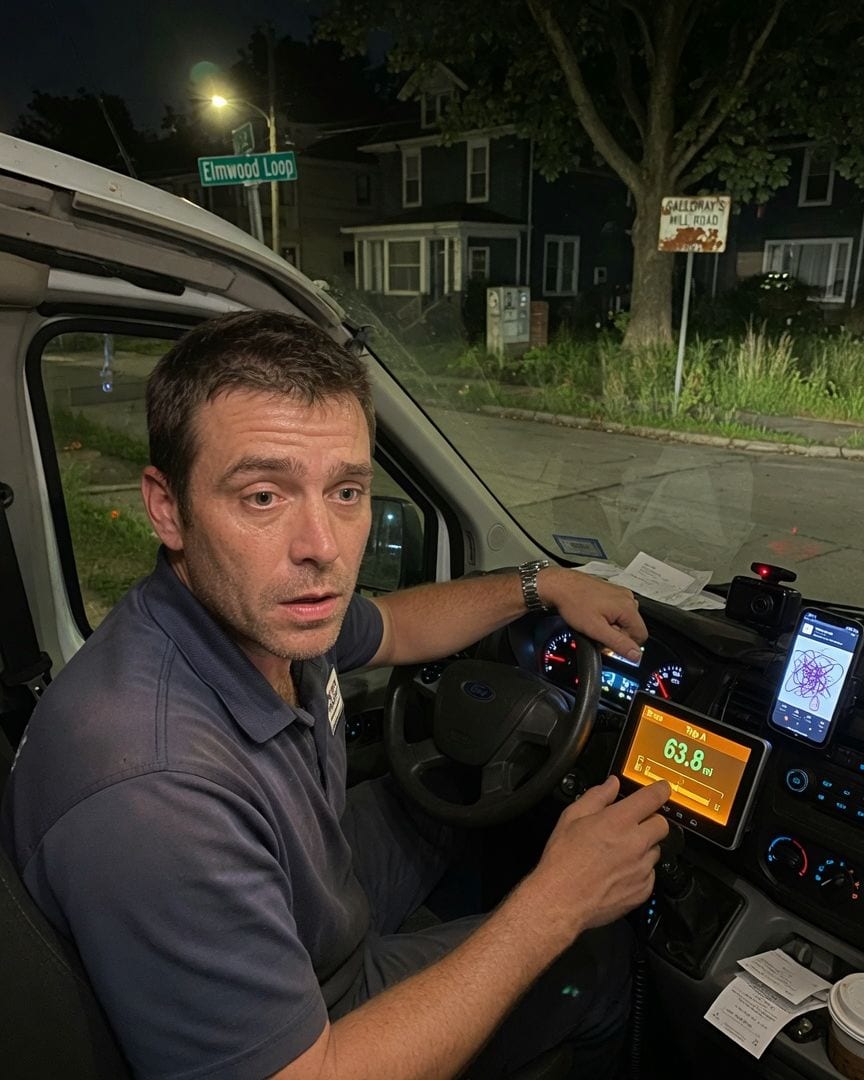
My delivery van's fuel gauge dropped a quarter tank on the Elmwood loop last night. It logged sixty-three miles, a loop I can walk in ten minutes.
I know my routes and my van, but the Elmwood Loop was different. My GPS app showed me standing still on the street, even as I walked for miles, my colleague confirming I hadn't moved. The impossible location left a blank, grey spot on the map.
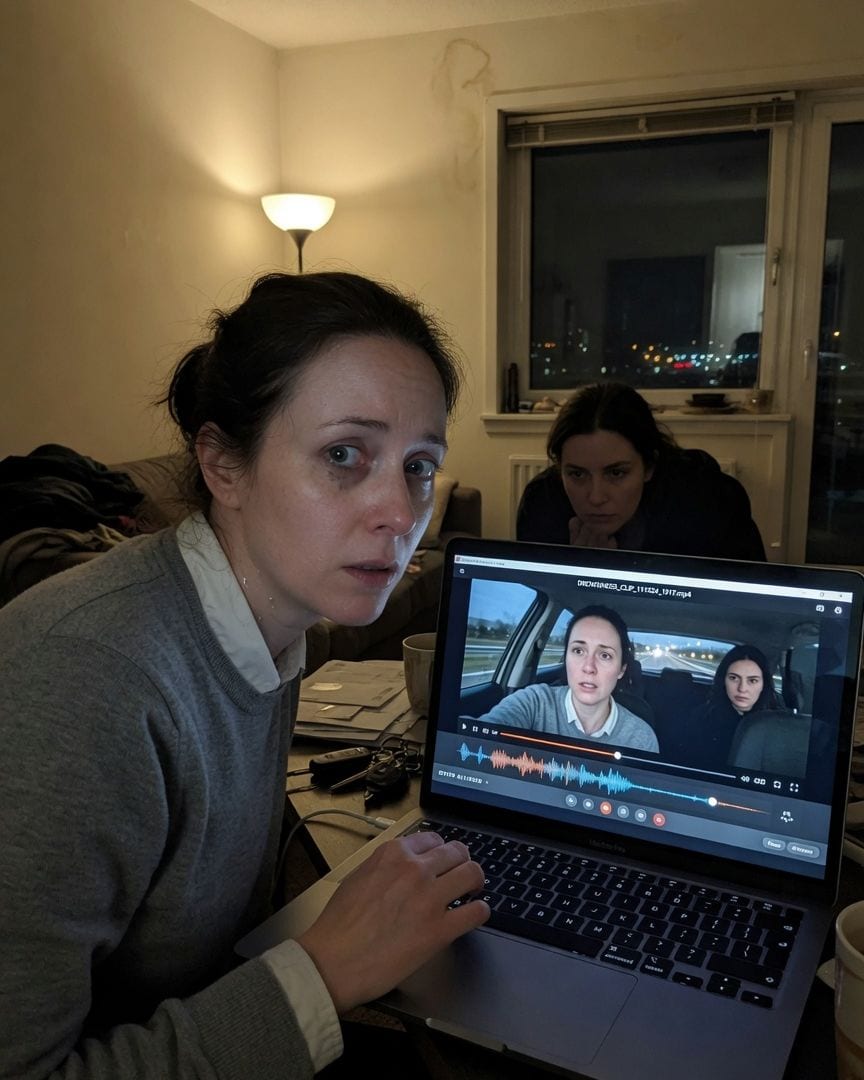
My car's empty back seat holds a woman, leaning close, watching the road with me the entire way home.
My car's drowsiness alert camera usually just records my yawns. But a clip from my Friday commute showed a woman in the back seat, a space I knew was empty. Then, reviewing the audio, I heard a whisper from behind me, clear despite the static, articulating a single, desperate word: 'Conrad'.
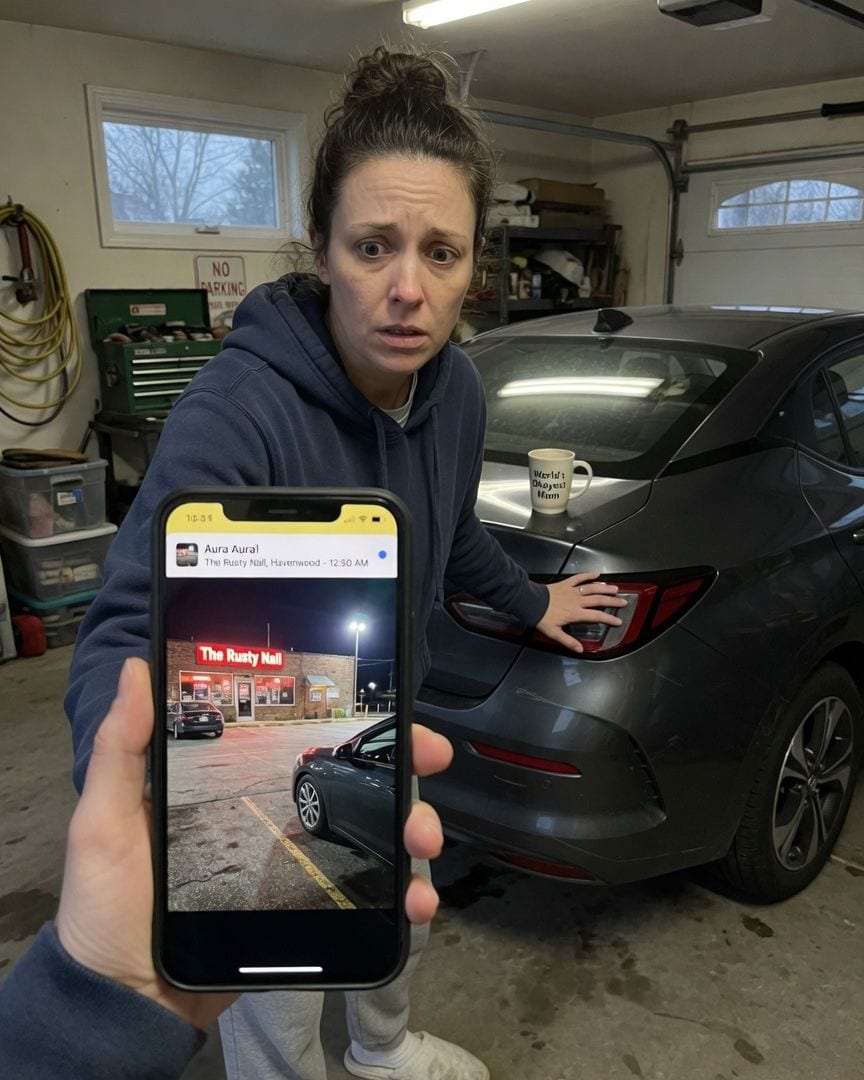
My car's app just pinged it parked at a bar ninety minutes away at 12:50am. It's in my locked garage, cold.
My Tuesday morning started like any other, until my phone chimed with a low-fuel warning from my car's app. That wasn't right; I'd just filled up. The map showed my 2023 Aura sedan 90 miles away at 'The Rusty Nail' at 12:50 AM, even though it was parked, stone cold, in my garage.