My dashcam shows the same parked caravan scrolling past eleven times in forty minutes. The timestamp advances. The mileage advances. The caravan never moves, and neither, it seems, did I.
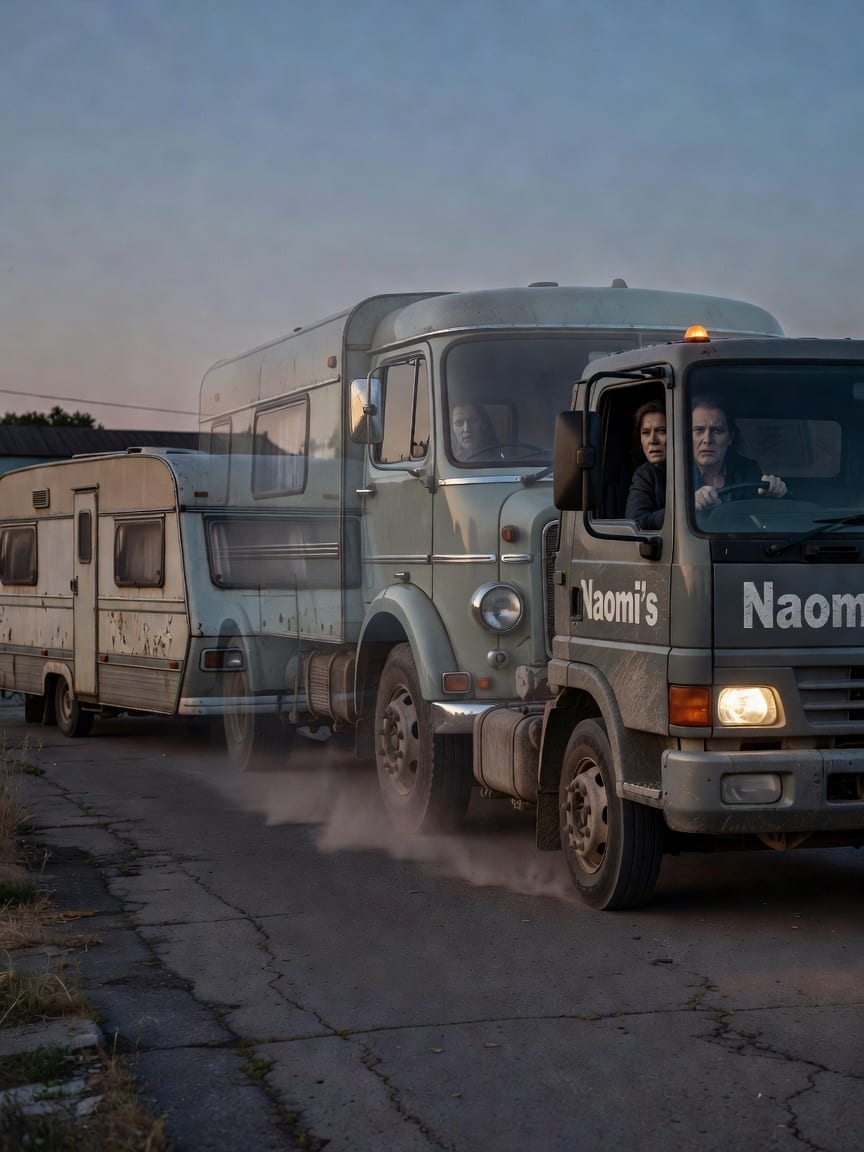
The sun was already dipping, throwing long, purple shadows across the A-road, just past the lay-by with the old, beat-up caravan. I remember looking at it, thinking how long that thing had been parked there.
It was my usual run, the Monday evening haul back to the depot, a route I could drive in my sleep. My dashcam was humming, recording everything, as it always did.
I passed the lay-by, checked my mirrors, and settled into the rhythm of the road. Five minutes later, I saw it again. The same lay-by. The same damn caravan, faded blue paint peeling, a missing wheel arch. My gut clenched.
That wasn’t right. I must have zoned out, taken the wrong exit. But there hadn’t been an exit.
I kept driving, telling myself I was tired. A trick of the light, maybe. The miles clicked over on the dash, the timestamp on my dashcam advanced to 17:32. My fuel gauge, always a reliable friend, was ticking down steadily.
But then, there it was again. The caravan. The exact same patch of overgrown nettles. The small, wonky sign for 'Local Produce - Closed'.
Three times. Four. Five. Each time, the dashcam's timestamp moved forward by four or five minutes. My odometer showed I was covering ground – twenty miles, thirty miles, then forty.
My fuel gauge dipped from half to just above a quarter. But the view out my windscreen was a goddamn broken record. The same lay-by, the same caravan, scrolled past, again and again. Eleven times in forty minutes.
My hands were still gripping the wheel, knuckles white, but my gut was telling me I hadn't gone anywhere at all.
Back at the depot, the first thing I did was download the footage. "Just a glitch," I muttered, rubbing my temples. "Software bug." I pulled up my GPS logs from the lorry's tracker, then cross-referenced them with my fuel receipts.
Every number screamed forward progress. The GPS showed a perfectly linear route, no detours, no loops. My odometer reading matched the journey distance. The fuel consumption was exactly what it should have been for sixty miles of driving.
But the dashcam footage. It was undeniable. I watched it, finger hovering over the pause button, my heart thumping a frantic rhythm against my ribs. There was the first pass, then the second, then the third, until the eleventh.
Each time, the timestamp moved forward. Each time, the caravan sat there, perfectly still, perfectly identical. It was a cold, hard slap to the face.
My instruments, my receipts, my memory of driving – they were all telling me one thing. But my eyes, and now this footage, showed something else entirely.
I slept badly that night, the image of that caravan burned into my mind. The next day, I made sure I was on the same route. I had to prove it was a fluke, a one-off.
Just past the junction, I pulled over. From my bag, I took out a small, hand-painted wooden bird. My daughter had made it for me years ago. It had a chipped wing, a tiny fleck of blue missing.
I walked to the edge of the lay-by, next to the roadside marker, and carefully placed the bird on the ground, just behind a patch of dandelions.
"Right," I told myself, my voice a little too loud in the quiet afternoon. "Prove it."
I got back in the lorry and drove on, my eyes glued to the mirrors, expecting to see it again. The lay-by, the caravan. And when it happened, just as I’d anticipated, I didn’t flinch.
There it was, the caravan, the lay-by. But the wooden bird wasn't there. I squinted, leaning forward, convinced I’d placed it wrong. But no, the spot was empty. Confusion swirled in my chest, but also a profound, shaky relief. See?
I had moved on. It was a glitch, just like I thought. I pulled over a few miles further down the road, the relief washing over me in a warm wave. Maybe I needed a break. A proper holiday.
At home, I needed to check. Just to be sure. I uploaded the new dashcam footage, skipped ahead to the relevant section. My lorry, rumbling along, approaching the lay-by. And there it was. Not the absence I expected.
The small, hand-painted wooden bird, clearly visible on the ground, exactly where I'd left it the first time. The small chip on its wing, a perfect match. It was impossible. My breath hitched in my throat. I couldn't breathe.
Then, as the camera scrolled past the lay-by, a faint, almost transparent second image of my own lorry, slightly offset, ghosted through the frame just ahead of my current vehicle, for a split second, like a shimmer on the air itself.
A momentary visual glitch, a phantom echo on the recording. I rewound, played it again. My lorry, then a ghost of my lorry, passing the bird I'd left.
My hands started to shake, not from the cold, but from what I was seeing – a bleed-through, a phantom of the road, and of myself, already there.
I sat across from Desmond Caldwell, the old depot manager, the next morning, the laptop open between us. He’d seen a lot in his sixty-five years, forgotten more about trucks than most people ever knew.
He watched the footage, his face unreadable, his eyes fixed on the screen as my lorry, then the ghost of my lorry, passed the bird. He didn’t say anything until the loop finished. Then he just nodded, slow and deliberate.
"Some roads remember more than they forget, Naomi," he said, his voice a low rumble. He wasn’t looking at me, but at the screen, as if seeing something else entirely. "This one… it’s been known to hum."
He leaned back in his chair, a faint creak from the worn leather. He didn’t offer any explanation, just that quiet, knowing look that chilled me to the bone, colder than any outright fear could have been.
The air in his office, usually thick with the smell of oil and stale coffee, seemed to press in, suddenly heavy, silent.
Desmond’s words, cryptic as they were, struck a nerve. Remember more than they forget. I couldn’t let it go. I started researching. After my shifts, I’d head to the local library, poring over dusty newspaper archives on microfiche.
I focused on the A-road section, the area around that damnable lay-by and the derelict service station that always showed up in the background of my dashcam.
It was slow going. Most mentions were mundane: roadworks, traffic accidents, lost pets. But then, tucked between reports of parish council meetings, I started finding scattered mentions from the early 1970s. 'Unexplained disappearances' of lorry drivers.
'Strange incidents' always attributed to fatigue, or bad weather, or sometimes, vaguely, 'faulty maps.' There was never any concrete evidence, just a persistent, unsettling pattern of dismissal. Drivers just… vanished. No wreckage. No bodies. Just gone.
The pattern was subtle, easy to overlook, but once I saw it, I couldn't unsee it.
My focus narrowed to the overgrown service station, its broken windows and crumbling walls a constant backdrop to my looping nightmare. One afternoon, deep in the library archives, I found it. A grainy photograph from the late 1960s.
The service station, in its prime, bustling with cars and lorries. Above its entrance, faded but still perfectly legible, a small, hand-painted sign read: 'Montgomery's Rest Stop.'
My own name. Montgomery. A fresh wave of dread, cold and sharp, washed over me. It felt like a hook sinking deep.
My relentless digging didn’t go unnoticed. I could feel Desmond Caldwell’s eyes on me more frequently, a quiet, almost spectral presence. He never approached me, never spoke about it, but his gaze would linger, unreadable, for a second too long.
It was a constant pressure, a silent observation that made the hairs on my neck stand up. He was always there, a cup of tea in hand, watching, knowing.
One evening, after another long session at the local library, surrounded by the smell of old paper and dust, I returned to my lorry in the car park. The light was fading fast.
As I reached for the door handle, something white caught my eye. Tucked under my windscreen wiper was a folded, brittle piece of paper. My heart jumped. It was a single, faded, undated map fragment. Hand-drawn.
And it showed a section of road that absolutely did not exist on any modern map I’d ever seen.
It clearly depicted a tight, overgrown loop of road, winding behind what was now the lay-by and the derelict service station. Marked in faded, sepia ink were the words: 'Old Service Loop – DANGER.'
There was no sender, no message, no explanation, just the unsettling diagram. My hands trembled as I smoothed the ancient paper flat.
The next morning, I confronted Desmond with the map fragment, holding it out to him like it was a live thing. He took it from me, his calloused thumb smoothing the ancient paper, his gaze distant.
He didn’t even seem surprised.
"Some things are better left buried, Naomi," he said, his voice flat, devoid of emotion. "The road… it doesn't like being forgotten."
He wouldn't elaborate. I pressed him, demanded to know what he meant, where he’d got it, but he just shook his head. His tone was calm, chillingly so, but the implication was a stark, undeniable warning.
He just looked at me, his eyes old and tired.
"Find a new route, Naomi," he advised, his voice barely a whisper. "Before it finds you."
I ignored Desmond's ominous warning. The name. My name. Montgomery’s Rest Stop. It was a hook I couldn’t escape. I had to know. I pushed my inquiries further, going directly to the local council planning office.
The place reeked of stale coffee and administrative apathy. I badgered them for historical land surveys, road construction documents for that specific A-road section.
They looked at me like I was mad, a crazy lorry driver with too much time on her hands.
After days of frustrating bureaucracy, phone calls, and official forms, I was finally granted access to a forgotten box of decommissioned plans, tucked away in a back storeroom, covered in a thick layer of dust.
The air in there was cold, heavy, like a tomb. Inside, I found it. An original 1960s survey map for the A-road.
It was all there. Clearly delineated, 'Montgomery's Rest Stop,' exactly where the derelict service station stood now. And, unmistakably, the 'Old Service Loop' behind it, just as on the hand-drawn map fragment. My breath caught in my throat.
Then, I found a subsequent revision. Dated 1974. On this map, the loop was marked 'eliminated,' scored through with thick red lines, and the main road was marked 'straightened.'
The reason for the change was heavily redacted, blacked out with thick marker pen, but a faded, handwritten note in the margin was still visible. It mentioned 'recurrent structural anomalies' and 'incidents.'
This was it. The impossible geometry wasn’t a glitch in my dashcam. It was a physical, historical reality that had been actively, unsuccessfully, erased. The old road did exist.
The recurrence, the loop, was the forgotten geometry asserting itself, fighting back, forcing drivers into its old, looping path. The phantom lorry I’d seen in my dashcam. It wasn’t a random visual artifact.
It was an echo of a previous passage, trapped in this persistent, reasserting space.
My finger traced the now-confirmed 'Old Service Loop' on the brittle survey map. The pieces were clicking into place, horrifyingly. Every impossible detail, every gut-wrenching repetition.
But then, tucked into the same folder, beneath the map, I discovered something even older, discolored and stiff with age. A ledger. Its title, written in fading copperplate script, read: 'Anomalous Incidents - A-Road Section 47.'
The dates spanned from 1968 to 1974. Each entry detailed a driver reporting a 'looping road,' 'lost time,' or 'phantom vehicles.' My blood ran cold as I scanned the names, the dates.
Many entries had 'disappeared' or 'missing' scrawled next to the driver's name in a different, frantic hand, some entries barely legible, as if the pen had run dry with fear.
My breath hitched. The last entry. Dated December 1974. It read: 'Driver: Thomas Montgomery. Incident: Vanished with vehicle. Notes: Last seen entering Montgomery's Rest Stop. No trace.'
I stared at the name, my mind reeling. Thomas Montgomery. My grandfather.
My father's father, who had vanished without a trace when my dad was just a boy, his disappearance a silent, unresolved family mystery that had hung over us like a shroud for my entire life.
And then I looked at the top of the ledger, at the faded title 'Montgomery's Rest Stop' on the old map, the place that bore my family name. And there it was.
Scrawled in faint pencil on the margin of the same old map, almost invisible if you weren't looking for it: 'Naomi Montgomery - 2024.' My name. My year. Predicting me.
She wasn't just observing it; she was part of it. The road wasn't just looping; it was taking.
"Thomas Montgomery," I whispered, the name catching in my throat, thick with a lifetime of unanswered questions. I stood in Desmond’s office, clutching the brittle ledger and the old survey map like they might vanish into thin air.
Desmond took a deep, slow breath, his gaze distant, fixed on some point beyond me, beyond the dusty office. "He was my friend, Naomi. My first driver." He paused, a long, heavy silence. "He warned them, you know.
About the road. Before he… before he went. They didn't listen. Said it was faulty maps, bad memory, too much drink."
His voice was flat, resigned. He explained that the road hadn’t just been rerouted; it had been an attempt to bury the anomaly, to excise a section of land that simply refused to conform.
The 'structural anomalies' they'd redacted on the map? That was the old geometry fighting back, pulling at the fabric of the new road, asserting its own twisted reality. The disappearances weren't accidents.
They were drivers who got caught, not for an hour, but for good. The road takes them, he said, keeps them, in its own impossible time. Their echoes looping forever.
He revealed that 'Montgomery's Rest Stop' wasn't just a name. My family had owned the land for generations. The original loop, the 'Old Service Loop,' had been part of their property.
The road, in a chilling sense, had a claim on us. He looked at me then, his eyes sharp, lucid. The old map with my name on it wasn't a prediction, he said. It was a signature.
The road knew me because it had known my family. The phantom lorry I’d seen in my dashcam? It was my grandfather, Thomas, or perhaps an echo of myself, caught in a previous iteration of the loop.
I knew, with a cold, horrifying certainty, what I had to do. I had to drive that route one last time. Not to escape, not really. But to break the cycle, or perhaps, to truly understand.
I loaded my lorry, the engine a low, anxious rumble beneath me, my heart a frantic drum against my ribs.
As I was about to climb into the cab, Desmond appeared, pressing a small, tarnished silver locket into my hand. It was cold, heavy. "For luck," he murmured, his eyes holding a depth of sorrow I hadn't seen before.
"It was Thomas's."
I gripped the locket, the cool metal a grounding presence, and set off. As I entered the anomaly, the familiar loop began. The caravan, the lay-by, perfectly static, eternally passing.
But this time, the derelict service station in my periphery seemed less derelict. More… present. I could almost make out details, a faint, flickering light in one window, a shadow moving inside. It felt like it was waking up.
Desmond's words echoed in my head: 'The road doesn't like being forgotten.' I understood then. The way out wasn't to fight the loop by staying on the new, false road. It was to acknowledge it.
To drive through the 'Old Service Loop' that had been erased.
Instead of continuing on the main road, I veered sharply, wrestling the steering wheel, turning my heavy lorry onto the overgrown, barely visible track where the old map showed the 'Old Service Loop' should be.
It was barely a path, just a break in the trees and undergrowth. The lorry lurched violently, branches scraped against the paintwork with a harsh, tearing sound. The GPS on my dash went dead, the screen flashing 'NO SIGNAL.'
The dashcam flickered erratically, then died completely, the screen going black.
The air grew impossibly cold, stealing my breath, making my lungs ache. Just ahead, through the gloom of the overgrown track, I saw it.
A faint, shimmering outline of an old lorry, much like my grandfather's, ghosting ahead of me, almost transparent. I followed it, a silent, desperate plea forming in my mind.
The track was rough, jarring every bone in my body, but I kept going, pushing through the impossible geometry, through the forgotten space.
Suddenly, with a violent jolt, the GPS re-engaged. The dashcam stabilized, the image snapping back to life. The air warmed, rushing back into my lungs.
I was back on the A-road, but far past the lay-by, miles down the road, exactly where I should have been. The phantom lorry was gone.
I had escaped the loop, but I felt profoundly changed, heavy with a knowledge no one would ever believe.
I never drove that route again. Not once. I changed my regular runs, opting for longer, less direct paths, anything to avoid that specific stretch of A-road.
I kept the dashcam footage, the old map, and the ledger locked away in a safe, proof no one would ever accept. Desmond Caldwell retired shortly after, his knowing gaze a silent testament to our shared, unspoken truth.
The company dismissed my claims as stress-related, a consequence of overwork, another driver seeing things. To everyone else, the A-road remained just another unremarkable road, its impossible geometry hidden beneath layers of asphalt and official denial.
Years later, my daughter, now a teenager, found the small, hand-painted wooden bird on my bedside table, a little chipped but still recognizable. "Mum," she asked, holding it up, her brow furrowed. "Where did you get this?
It looks just like the one I made you when I was little. But it's got a tiny scratch on its wing I don't remember."
I picked up the bird, my thumb tracing the faint, almost invisible scratch on its wooden wing, a mark I knew hadn't been there when she gave it to me all those years ago.
I smiled, a faint, wrong little smile. "It just… showed up, love. It always does."
If this one got to you
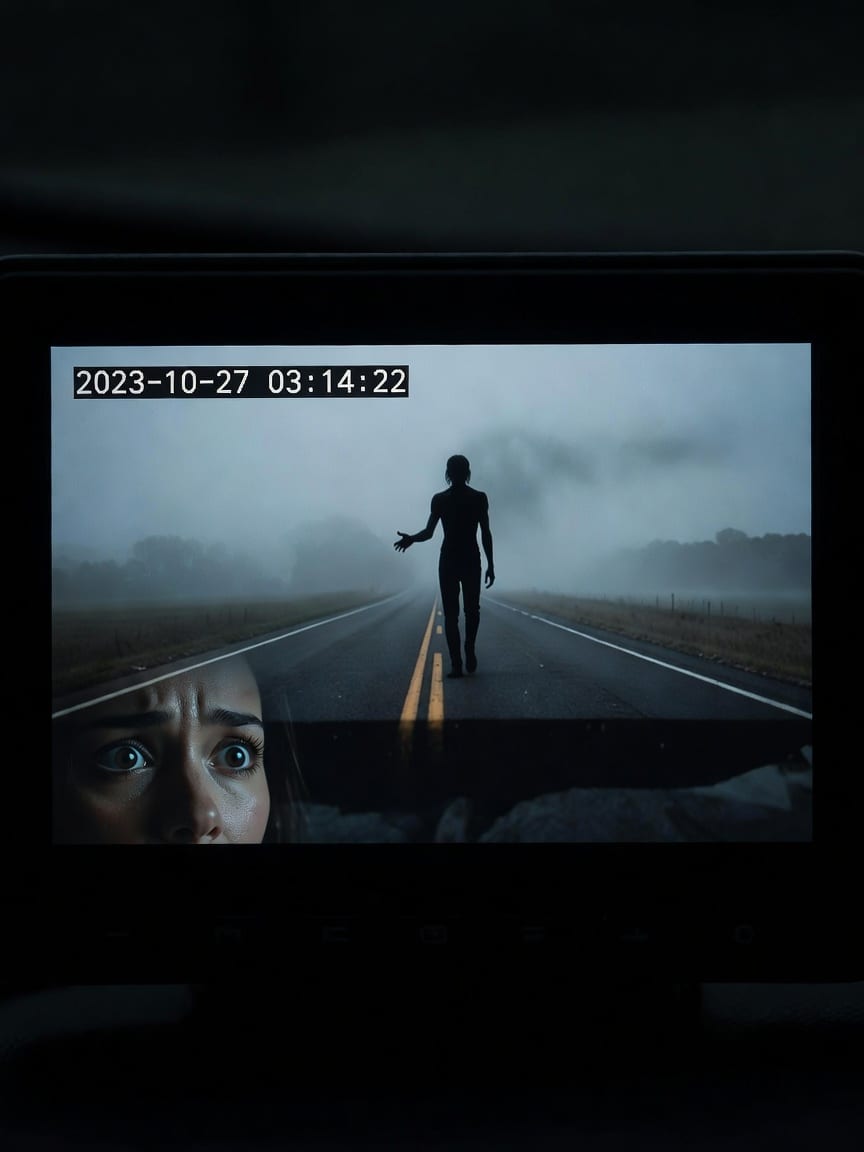
My dashcam mic caught me humming on a long night drive. Under my voice, a second hum kept time, in the same key. It stopped when I stopped. It was always already there when I started again.
My new dashcam was just a quiet companion on the long, dark drive home. But when I reviewed the footage, a quick flicker in the video stopped me cold. For three seconds, my car was driving smoothly down a paved road complete with yellow lines—a road that simply wasn't there.
My dashcam footage showed my street change. For five seconds, my car drove on a road that doesn't exist on any map.
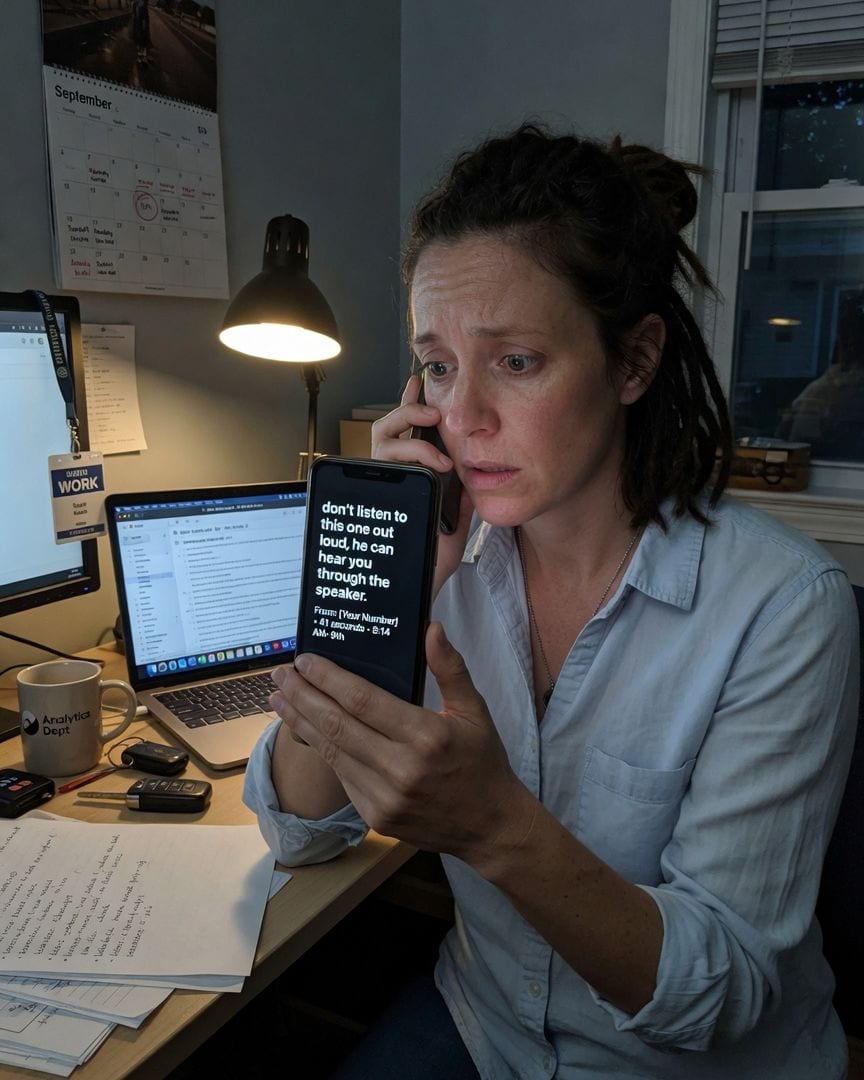
It was a normal Tuesday until my work phone received a new voicemail. The transcription warned, 'don't listen to this one out loud, he can hear you through the speaker.' But the message was from my own number, and the audio was forty-one seconds of absolute, dead silence.
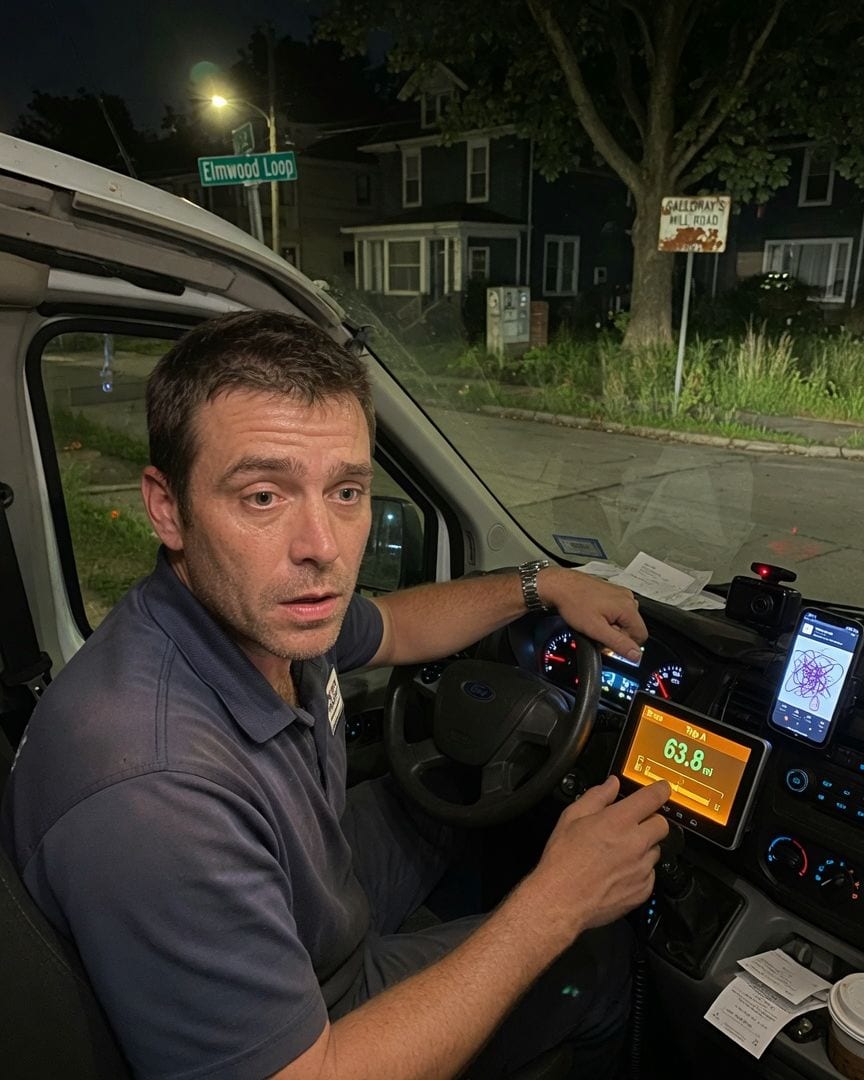
My delivery van's fuel gauge dropped a quarter tank on the Elmwood loop last night. It logged sixty-three miles, a loop I can walk in ten minutes.
I know my routes and my van, but the Elmwood Loop was different. My GPS app showed me standing still on the street, even as I walked for miles, my colleague confirming I hadn't moved. The impossible location left a blank, grey spot on the map.
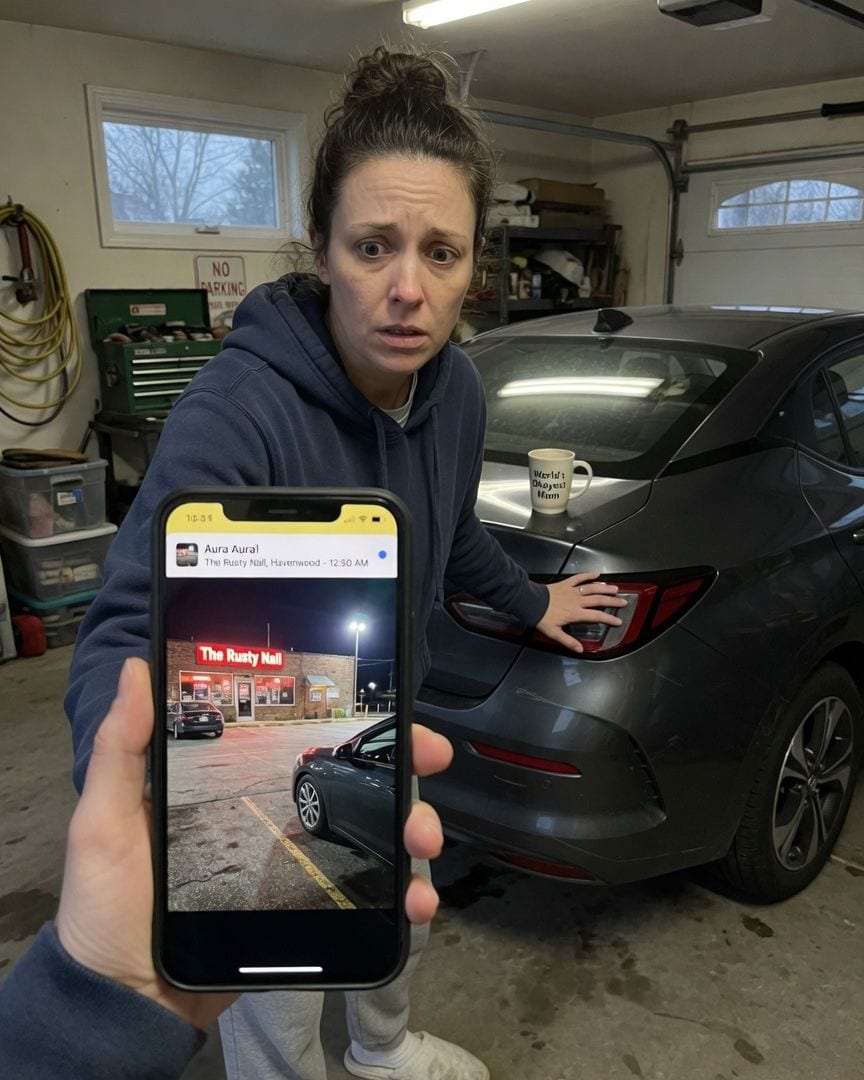
My car's app just pinged it parked at a bar ninety minutes away at 12:50am. It's in my locked garage, cold.
My Tuesday morning started like any other, until my phone chimed with a low-fuel warning from my car's app. That wasn't right; I'd just filled up. The map showed my 2023 Aura sedan 90 miles away at 'The Rusty Nail' at 12:50 AM, even though it was parked, stone cold, in my garage.
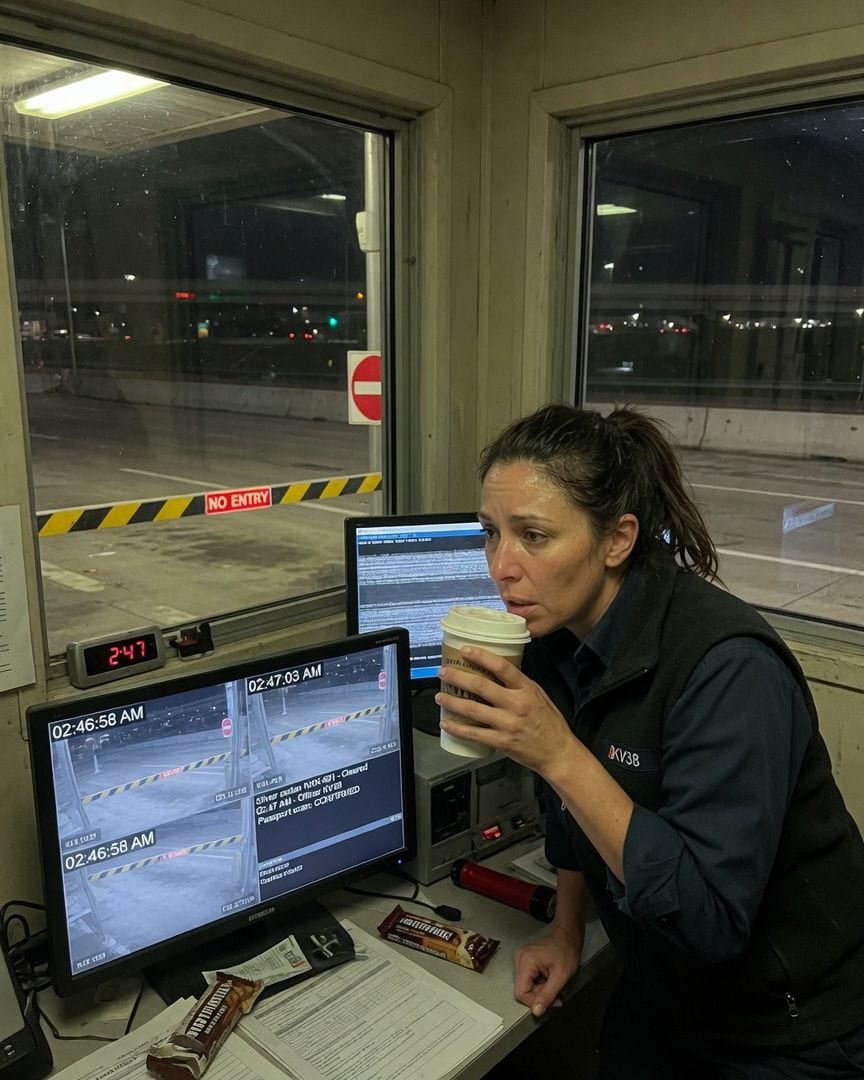
My lane's barrier was down, but my log cleared a car at 2:47 AM. With my code.
Working the quiet overnight shift at the Vance-Romano land crossing, I expected only routine system logs. Instead, a new entry showed a silver sedan cleared northbound through my Lane 3, stamped with my officer code. The issue: my lane had been closed and locked all night, and I hadn't seen a single car pass. Then I discovered the external camera feed for those crucial seconds was simply gone.
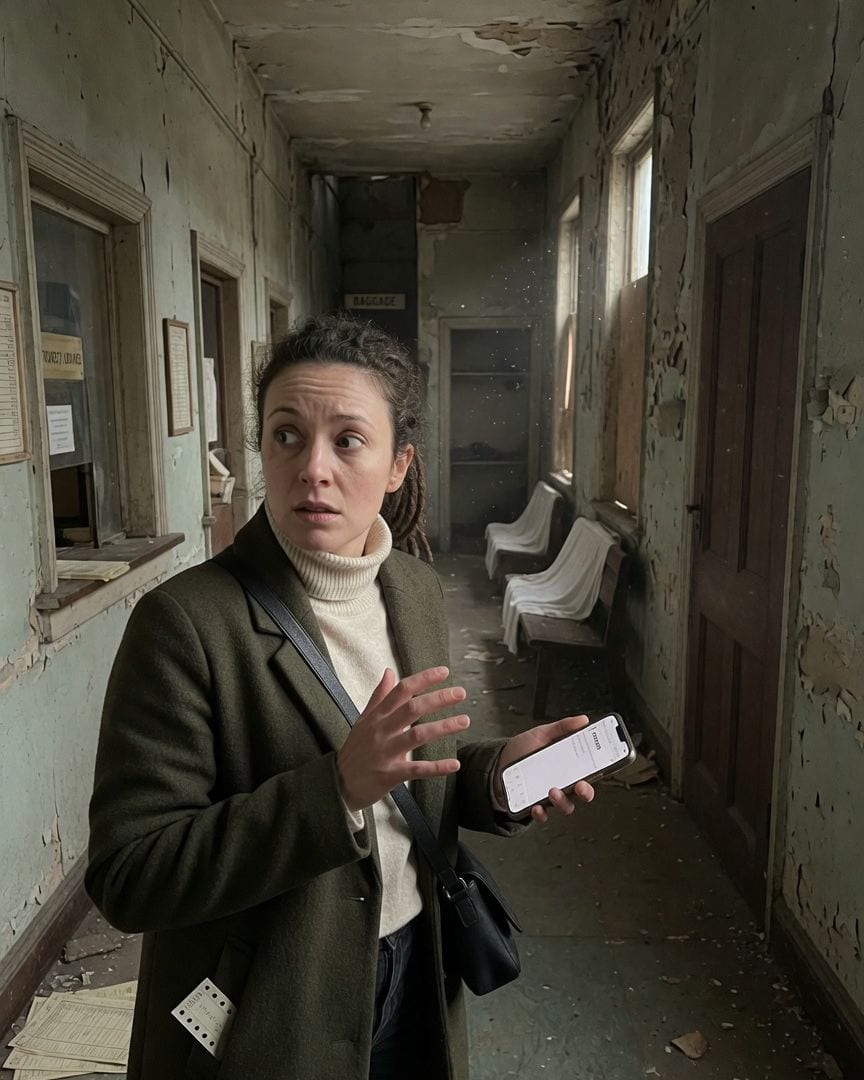
My scenic railway loop repeated six times. The same trestle bridge, the same waterfall, over and over, the conductor punching my ticket each pass. We never left the circle.
My scenic railway journey was supposed to be a gentle, thirty-minute loop through the gorge. But after only fifteen minutes, the same landmarks rolled past again, and again, and again. The conductor, Henry Kingsley, punched my ticket six times as if each was the first, his gaze utterly devoid of recognition.