My scenic railway loop repeated six times. The same trestle bridge, the same waterfall, over and over, the conductor punching my ticket each pass. We never left the circle.
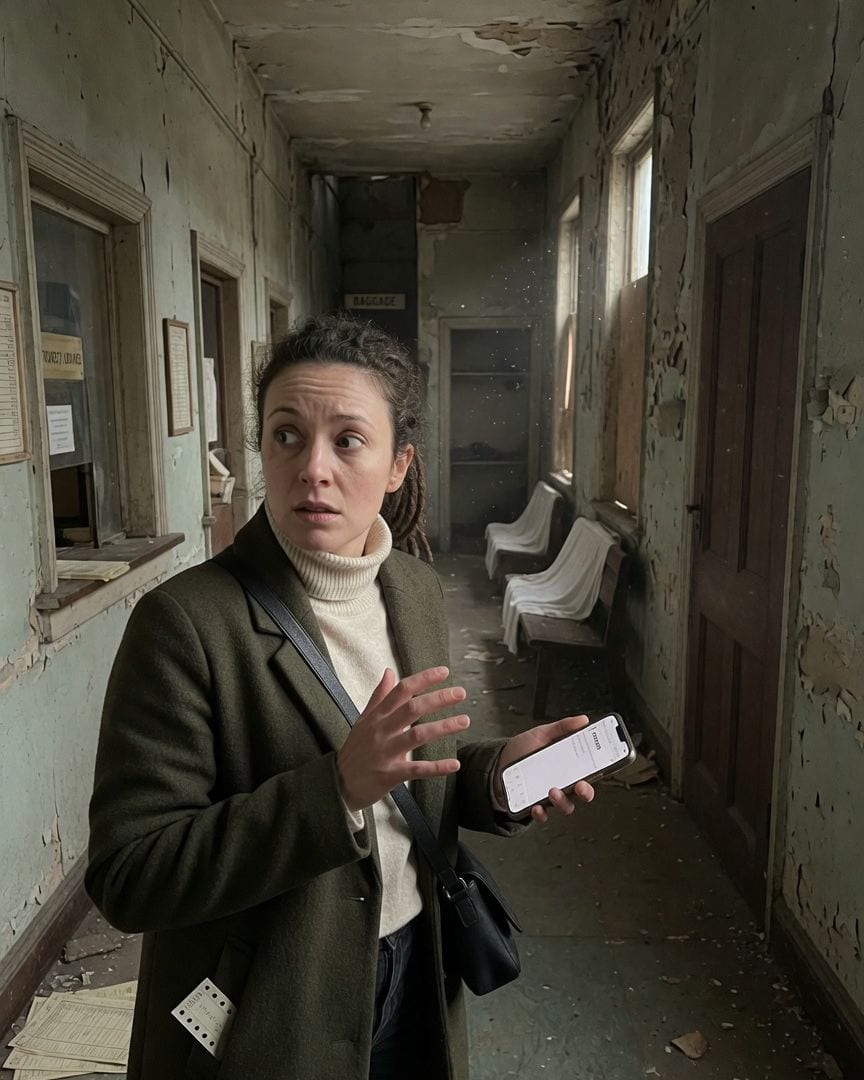
The scenic railway loop was supposed to be a gentle, thirty-minute ride through the gorge and back to the halt. A local curiosity, a bit of nostalgia.
I'd bought my ticket, settled into the worn velvet seat, and watched the landscape roll by: a gurgling stream, then a sheer rock face, followed by the impressive old trestle bridge arching over a canyon, and finally, a small, roaring waterfall.
The air was cool, smelling of damp earth and pine. It was all very charming, exactly as advertised.
Then, we rounded the bend. The stream, the rock face, the trestle bridge, the waterfall. Again. I frowned, checking my watch. Only fifteen minutes had passed. Had I misread the brochure? I looked around.
The few other passengers seemed oblivious, engrossed in their phones or simply staring out. Henry Kingsley, the conductor, a man whose face was as weathered as the old carriages, moved slowly down the aisle. He stopped at my seat.
"Good afternoon, Miss Abbott," he said, his voice flat, his gaze distant. He held out his ticket punch. I handed him my ticket, a single, crisp piece of card. He punched it, a neat hole appearing in the date.
He moved on.
The loop repeated. The trestle bridge, the waterfall. I watched the timestamp on my phone; it was ticking forward, normally. Yet the view outside was precisely the same sequence of landmarks.
When Henry Kingsley approached again, exactly fifteen minutes later by my watch, I felt a prickle of unease. He stopped. "Good afternoon, Miss Abbott," he said. He reached for my ticket.
I stared at him, then at the hole he’d already punched. He waited, patiently. I handed it to him again. He punched it a second time.
It happened six times in total. The same landmarks, the same thirty-minute cycle unfolding in what felt like an endless present.
Each time, Henry Kingsley punched my ticket as if it were the first, his eyes unreadable, devoid of surprise or recognition.
We passed the same derelict station house, its windows like vacant eyes, six times, its faded brick growing darker with each pass. The light outside never really changed, never progressed towards dusk. It just held.
We drew back into the halt as the light, finally, actually failed. The sun was long gone, the air now sharp with evening cold. I disembarked, my ticket a perforated strip of impossible repetition.
Six neat holes, aligned perfectly along the edge. The chill in the air settled deep in my bones, but it wasn't just the cold.
It was the knowledge that I had just witnessed something fundamentally wrong with the world, yet utterly consistent in its wrongness. My rational mind rejected it, but my senses screamed the truth.
The next morning, the railway ticket, punched six times, felt heavy in my hand, an undeniable artifact of the previous day’s impossible loop. I tried to dismiss it, to find a mundane explanation.
Maybe I’d fallen asleep, or perhaps the train had indeed stopped and reversed without my noticing? But the memory of Henry Kingsley’s unblinking gaze, the identical punches, the precise repetition – it wouldn't fade.
My rational mind demanded an explanation that didn’t involve me losing my sanity.
I drove back to the small town, bypassing the operational halt where the train began its journey. Instead, I pulled up to the old, disused railway station house, the one we’d passed on the loop.
It was a squat, brick building, boarded up in places, its once proud facade now stained with moss and time. Local rumour said the ground floor was used for storage by a nearby farm, so it wasn't entirely abandoned.
I walked around the perimeter, inspecting the weathered brickwork. Near the back, I found a loose board on a side window, just enough to squeeze through if I was careful. The wood groaned in protest as I pushed it aside.
Inside, dust motes danced in the slivers of light that cut through cracks in the boarded windows. The air was stale, thick with the smell of old wood and forgotten things.
I pulled out my phone, intending to document the layout, perhaps find a clue to the railway’s impossible behaviour. I started counting rooms, meticulously, like an auditor checking an inventory. The old ticket office, still with its grimy counter.
A large waiting room, full of broken furniture covered in white sheets. A small storage closet tucked beneath a stairwell. Three rooms on the ground floor.
I paced the length of the main corridor, measuring it against the exterior of the building. Everything seemed to align with the few faded, hand-drawn plans I’d found online for similar regional stations from that era. Three rooms.
A simple, predictable layout.
But as I walked the corridor a second time, heading back towards the entrance, a detail snagged my attention. A door. Plain and unadorned, dark wood against the peeling paint of the wall.
Where there should have been only a solid, unbroken expanse of plaster and brick, there was now a door. I stopped. My breath hitched. I knew, with a sudden, sickening jolt, that it hadn't been there when I first passed.
It hadn't. I had counted.
My heart hammered against my ribs. I retraced my steps, forcing myself to be methodical, to count aloud. One, two, three. I paused, taking a deep, shuddering breath. Then I turned back, slowly. Four.
The door was still there. Utterly solid, utterly present, its dark wood stark against the peeling paint of the wall. It looked like it had always been there. I reached out, my fingers brushing the cool, smooth surface.
No handle, no lock, just a seamless expanse of wood. I tried to push, to pull, to find a seam. Nothing. It felt like an illusion, yet it was undeniably physical.
I walked the corridor again, from the other direction, my eyes fixed on the spot. One, two, three. I spun around. Four. It was there.
Always there, but only when I wasn't actively looking for it from a specific angle, or when my careful, rational count reached its impossible number.
I stood in the dusty, silent corridor of the old station house, my hand trembling as I counted the doors again. One, two, three... and then a fourth, where there should only be three.
I stepped back, staring at the plain, unadorned wooden door, knowing it wasn't there a minute ago, yet it felt utterly, chillingly permanent.
The impossible door consumed me. I spent the next few days returning to the station house, driven by a gnawing need for an explanation.
I measured the corridor, photographed every angle, even tried to map the building’s footprint from the outside using satellite images and a tape measure. The exterior perfectly matched the three-room layout.
There was no architectural space for a fourth room, no window, no external wall that could account for it.
Yet, inside, the door persisted, always appearing when I wasn’t specifically tracking its presence, always disappearing when I tried to pin it down directly. It was like trying to catch smoke.
I tried to talk to locals, hoping someone might know something about the station’s oddities.
The general store owner, the postmistress – they all gave me vague answers about the old station house, mostly about it being 'just storage for farmer McGregor's hay.' No one mentioned a fourth room, or any strange architectural quirks.
They looked at me with polite but dismissive smiles.
I even approached Henry Kingsley, the conductor, at the railway halt. He was preparing his carriage for the next run, wiping down the already spotless windows, his movements as unhurried and precise as ever.
I showed him my multi-punched ticket, fanning out the perforated strip. He glanced at it without a flicker of emotion. 'You had a good ride, then, Miss Abbott?' he asked, his voice flat, devoid of surprise.
I pressed him about the repeating loop, about the station house we passed. He just smiled, a faint, distant thing that didn't reach his eyes. 'Some things,' he said, polishing a brass fixture until it gleamed, 'just are.'
His calm refusal to acknowledge the anomaly, his absolute composure in the face of the impossible, only deepened my unease. He wasn't surprised. He wasn't lying. He just knew.
I needed a harder truth. I went to the local archives, a small, musty room above the library, overseen by Grace Foster, a woman in her mid-fifties with keen eyes behind thick spectacles and an air of quiet authority.
I explained my architectural conundrum, omitting the railway incident for now. I showed her the old plans I’d found online.
Grace, intrigued by the challenge, pulled out stacks of old town plans, property deeds, and even some original blueprints for the railway line, brittle with age. We spread them across a large table, the paper crinkling softly.
Every document confirmed it: the station house had three ground-floor rooms. No more, no less. She tapped a finger on a diagram. 'See? Built exactly to standard spec for a Class C halt. No deviations.'
But as she shuffled through a box of miscellaneous local history, full of scrapbooks and faded photographs, she paused, her fingers brushing against a brittle news clipping.
'There were always stories, you know,' she murmured, not looking at me, her gaze distant. 'Old local legends about that stretch of the line. And peculiar local families…' She didn't elaborate, just shrugged and returned to the blueprints.
But the word 'peculiar' lingered in the air, a faint, unsettling echo.
Grace’s cryptic comment about 'peculiar families' gnawed at me through the night. I returned to the archives the next day, determined to find anything that might connect the station house to something beyond simple architecture.
Grace was less forthcoming now, her movements stiff, her gaze darting to the door whenever someone entered or left the library downstairs. 'You’re still looking into that old building?'
she asked, her voice tight, a subtle frown etched between her brows. 'It’s just… an old building, Miss Abbott. Nothing special.'
I persisted, my voice low and urgent. 'You mentioned stories yesterday. Legends. Please, anything about the railway, or the station house itself. Any incidents? Unusual records?'
She sighed, her shoulders slumping, as if the weight of the past was pressing down on her. She finally looked at me, her eyes meeting mine, and I saw a flicker of genuine fear in them, quickly masked.
'There was a time,' she began slowly, her voice barely above a whisper, 'when people… got lost. Not just on the trains, mind you, but around the halt itself.
They would step off a train, or walk by the station house, and simply… not be there anymore. For a while.' She picked up a dusty ledger, tracing its faded lines without reading them.
'Old-timers used to say the geometry was wrong around there. That the space wasn't… stable.' She looked up again, her gaze holding mine, unnervingly steady. 'They always came back, eventually. Or something did. But they were… changed.
Hollowed out, some of them. Like they’d seen too much, or had a piece of themselves left behind.'
Her words felt like a physical blow. A sudden, intense chill ran through me, not from the temperature of the drafty room, but from the implication. Someone else had noticed. Someone else knew.
This wasn't a glitch; it was a known phenomenon, a local secret.
Later that evening, as I was leaving the station house, having once again confirmed the impossible door’s inexplicable presence and absence – it had appeared just as I was about to give up – I saw it.
A shadow shifted in the dim light of the adjacent woods. I froze, my hand on the loose board, ready to pull myself through. A figure stood there, partially obscured by the trees, watching me.
I couldn't make out features, but the stillness, the absolute lack of movement, was predatory. It wasn't just a passerby. It was waiting. I scrambled through the opening, my heart pounding, adrenaline surging through me.
I didn't dare look back until I was in my car, driving away, glancing frantically in my rearview mirror. The figure was gone.
But a few minutes later, as I slowed at a junction at the edge of town, I saw him. Henry Kingsley, the conductor. He stood by the roadside, far from the railway line, his uniform immaculate, his posture ramrod straight.
He was simply watching my car pass. He didn't wave, didn't react. Just watched, his face as blank and unreadable as it had been on the train. The message was clear, chillingly so: my digging had been noticed.
I was no longer just an observer. I was being watched.
The next day, I confronted Grace, her reticence now replaced by a resigned weariness. I found her hunched over her desk, her spectacles pushed up onto her forehead. 'Who was watching me?' I demanded, my voice low, barely controlled.
She flinched, pulling back from her desk as if struck. 'The old ways… they don’t like being disturbed, Miss Abbott,' she whispered, her voice tight with genuine fear now. 'You should leave it alone.'
I pushed harder. I pulled out my multi-punched ticket, unfurling it across her desk. I described the impossible room, the way it appeared and disappeared, defying all logic and every blueprint she had shown me.
Her eyes widened, scanning the perforated ticket, then snapping back to my face. 'The loop…' she breathed, her voice barely audible. 'It's happening again.'
She finally relented, her shoulders slumping in defeat. She rose slowly and led me to a locked wooden cabinet tucked in a corner of the archive. From it, she retrieved a brittle, yellowed newspaper clipping.
The headline was sensational, printed in a gothic font, but the date was decades old. 'Unexplained Disappearances Near Local Railway Halt,' it read.
The article detailed a series of odd incidents where people would vanish for days, sometimes weeks, only to reappear disoriented, claiming they’d been 'stuck in the same moment,' or 'walking in circles around familiar places.'
The official explanations offered were mundane: 'mass hysteria,' 'bad liquor,' 'local eccentricities.' But the details resonated with my experience. The article mentioned a 'peculiar warping of the landscape' and 'a house where the numbers never added up.' My impossible room.
'This is it, isn't it?' I whispered, my voice hoarse, the blood draining from my face. Grace nodded, her gaze fixed on the clipping, her face pale. 'It’s a cycle. It always has been.'
She pointed to a faded diagram in the margin, a crude sketch of the railway line. A small 'X' marked the location of the station house. 'The old families,' she continued, her voice gaining a quiet, grim authority, 'they knew.
They lived with it. Some tried to fight it, to break free. Some just… accepted their place.'
She then showed me a series of entries in an old station logbook, its pages thick and brittle. The entries spanned years, decades even.
Entries like 'Train 07:15, returned 07:15, Conductor H. Kingsley' or 'Maintenance report: Station House, room count discrepancy, resolved.' The phrase 'resolved' was always scrawled, then inexplicably crossed out in the next entry, followed by a new 'discrepancy' note.
The conductors, the station masters, the local families—they were all aware, all part of this quiet, horrifying recurrence. Henry Kingsley wasn't just a man; he was a fixture. The railway loop wasn't a glitch; it was a consistent, repeating event.
And the impossible room was its anchor, the physical manifestation of the fold, the wrongness made concrete. The pieces were starting to click into place, but the picture forming was far more terrifying than random anomaly.
It was a pattern, a living, breathing cycle. And I was now inside it.
Grace, seeing my dawning horror, quickly closed the cabinet, as if trying to shut away the truth. 'You shouldn’t have come back,' she murmured, her voice laced with genuine regret. 'Some things are better left undisturbed.'
But I couldn't stop. The newspaper clipping, still clutched in my hand, held one more detail I hadn't fully processed. A small, blurry photograph, tucked into a corner of the article, depicted the old station house.
It was a grainy, sepia-toned image, faded by time, but I could make out figures in the foreground: local townspeople, gathered, looking distressed. And standing by a window, blurred by time but unmistakable, was a woman.
Her posture, the subtle curve of her jaw, the way her hair was pulled back – it was my face. My own face, staring out from a decades-old photograph, part of an article about 'unexplained disappearances' and 'peculiar local families.'
The accompanying text beneath the photo mentioned 'the Abbott family and the recurring disappearances.' My surname. My face.
I was staring at myself, a ghost from a past cycle, a participant in the very anomaly I thought I was investigating. The chill that ran through me was absolute, deeper than any cold, more profound than any fear.
I wasn't just observing a recurrence; I was part of it. I had always been part of it.
My fingers traced the faded newsprint, a chilling certainty settling in my gut. The small, blurry photograph shows the familiar outline of the old station house.
And standing by a window, blurred by time but unmistakable, is a woman with her own face, a face she knows she has never seen in any family album. The caption beneath mentions 'the Abbott family and the recurring disappearances.'
The photograph was a mirror, reflecting not just my image, but my fate. Grace, seeing the clipping fall from my numb fingers, finally broke. Her voice trembled as she spoke. 'Your great-grandmother, Vivian Abbott, she was caught in it too.
And her mother before her.' The cycles were generational, tied to the Abbott lineage, to my blood.
The station house, the impossible room, the repeating railway loop—they were all nodes in a living geometry, a self-sustaining anomaly that fed on specific connections, on specific bloodlines. My family wasn't just 'peculiar'; we were the catalysts, the anchors.
Each time an Abbott returned, drawn by an inexplicable pull, the geometry reactivated, folding space and time around them.
The impossible room wasn't just a discrepancy; it was a 'seam,' a point of ingress and egress for the anomaly itself, growing stronger, more defined with each cycle, each new participant.
Henry Kingsley, the conductor, was not just a man, but a part of the cycle itself, an 'attendant' bound to its repetition, a silent witness to generations of Abbotts caught in its pull.
He was always there, always unchanging, part of the landscape of the loop, as much a landmark as the trestle bridge or the waterfall.
My own intense, almost obsessive rationalism, my need to measure and count, to understand, was not intellectual curiosity, but an inherited compulsion, a deep-seated instinct to understand the trap I was always destined to fall into.
The pattern snapped into place with horrifying clarity. The scattered dates, the names, the recurring events – they coalesced into a monstrous, coherent shape.
I wasn't just trapped in a loop; I was the loop, or at least a vital component of its perpetuation. My very presence, my attempts to understand, were fueling it, making it stronger, drawing me deeper.
I was not a witness; I was always inside it, a thread woven into the fabric of its impossible geometry, destined to repeat the same wrongness that had consumed my ancestors.
I left Grace, her face etched with sorrow and resignation, and walked back to the station house. The impossible room felt like a magnet, pulling me, drawing me to its silent, seamless door. I understood now. There was no escape.
The cycles didn't break; they completed. My ancestors had tried to resist, to run, but the geometry always found them, always brought them back to the seam.
My rational mind, once my shield, was now a tool, helping me to accept the inevitable.
I pushed against the wall where the door should be, not to find it, but to feel the subtle thrum, the almost imperceptible shift in the air, like a breath held too long.
This was where I belonged, where my blood had always led me.
As I stood there, lost in that strange current, Henry Kingsley appeared in the archway of the main entrance, his conductor's uniform pristine, his eyes ancient and knowing, fixed on me.
He didn't speak, just offered a slight, almost imperceptible nod. He had seen this before, countless times. He was the constant in the ever-repeating variable.
I moved towards the wall. This time, I didn't count. I didn't search. I just knew. The air shimmered, not visibly, but in the way a memory feels more real than the present, a distortion in perception.
The impossible door, seamless and unadorned, materialized before me, not with a sound or a creak, but with the quiet inevitability of a truth finally revealed. It wasn't just a door; it was an invitation, a final destination.
I reached out, and my hand passed through the solid wood as if it were water, a cold, unfeeling current wrapping around my arm, pulling me in. I didn't fight.
My body felt light, dissolving into a sensation of pure geometry, a folding inward. The last thing I saw was Henry Kingsley, standing in the archway, his face utterly calm, watching the space where I had been.
The impossible room wasn't a room to be entered; it was a state of being, a place where the 'counted' became 'uncounted,' where a person became a part of the pattern itself. I was no longer Laura Abbott.
I was the seam, the anchor, the wrongness made flesh, waiting for the next cycle to begin.
Days later, Grace Foster found the old station house completely sealed, the loose board nailed back into place from the inside. There was no sign of Laura Abbott, no car, no trace.
The local police filed a missing person report, a quiet statistic in the town's history, another name added to an old, forgotten list. Henry Kingsley continued his railway route, his face impassive, his tickets punched with precise, unchanging rhythm.
The small town settled back into its familiar routine, the railway line a constant, looping presence on the horizon. The old station house, once again, was just an old building, its silent windows reflecting the unchanging sky.
No one spoke of peculiar families or impossible rooms anymore.
Months passed. The missing person case went cold, then faded into local lore. One evening, a new passenger boarded Henry Kingsley’s scenic railway. She was a young woman, a tourist, looking for a quiet escape from city life.
As the train began its loop, she noticed the conductor, his gaze fixed on the passing landscape, unblinking. 'Do you ever get tired of the same view?' she asked him, smiling faintly.
Henry turned, his eyes holding an ancient, knowing light that seemed to pierce through her. 'Some views,' he replied, his voice a low rumble, devoid of inflection, 'are always new, to someone.'
He punched her ticket, a single, perfect hole appearing in the date.
She looked out the window, past the familiar trestle bridge, past the waterfall, towards the derelict station house, and felt a sudden, inexplicable chill that had nothing to do with the evening air.
She leaned forward, a faint, wrong little smile playing on her lips, as if she was finally remembering something she’d always known. 'Is that so?'
If this one got to you
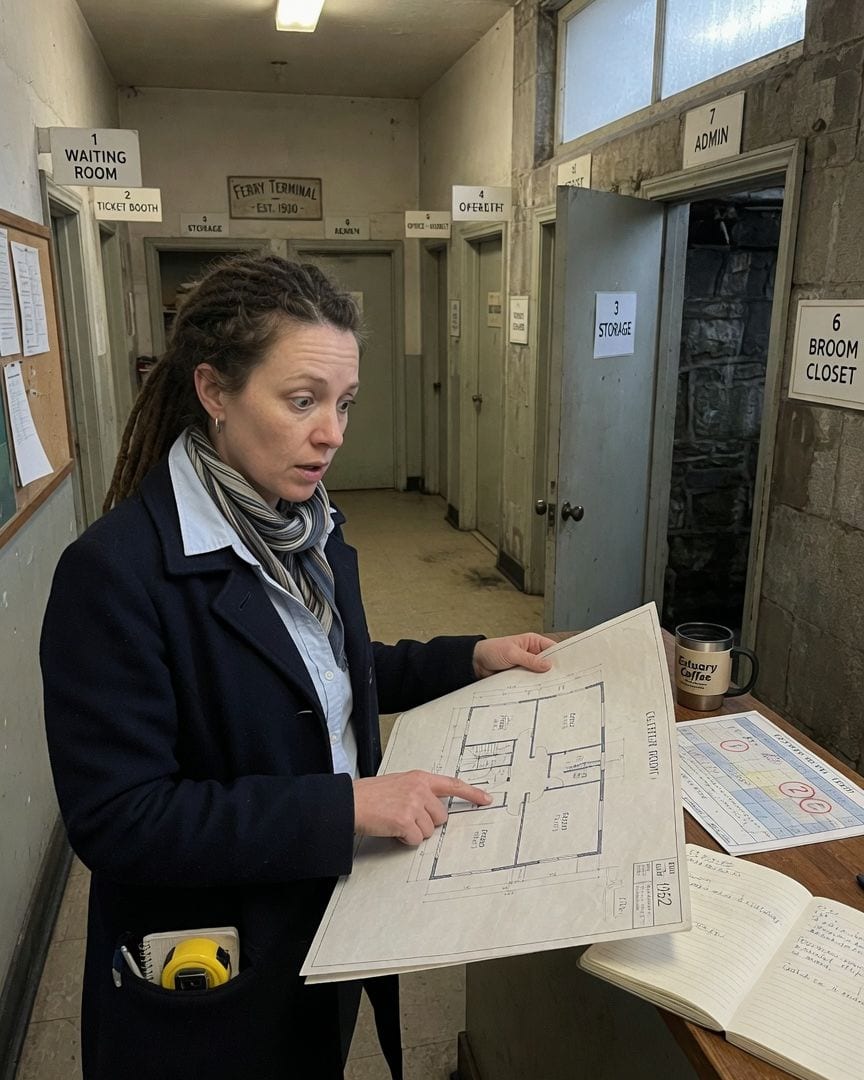
Our ferry returned to the same slipway three times yesterday, the town quay dissolving to our village shore. The crossing was never made.
After our ferry inexplicably kept returning to shore, I investigated the old office building. Its architectural plans clearly showed six rooms, but when I walked the hallway, I found a seventh door. That extra room was undeniably there, an impossible presence.
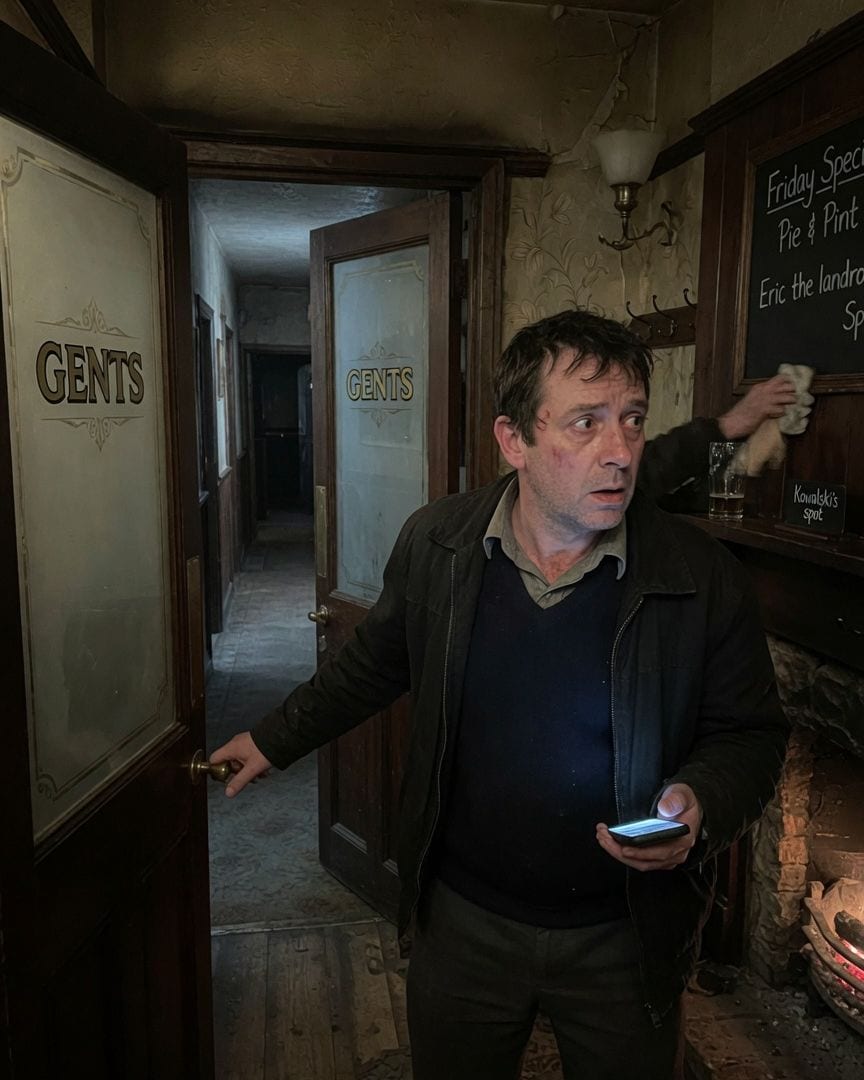
My pub's gents has a second identical door right beside it. Behind it, a corridor longer than the building, with rooms no one else can see.
My Friday night ritual at The Old Bell pub has been the same for years: a quiet pint by the fireplace. But last week, I spotted a second, identical 'GENTS' door beside the first, opening to an impossible, cold corridor stretching far beyond the pub's walls. The landlord denies it exists, but I know what I saw.
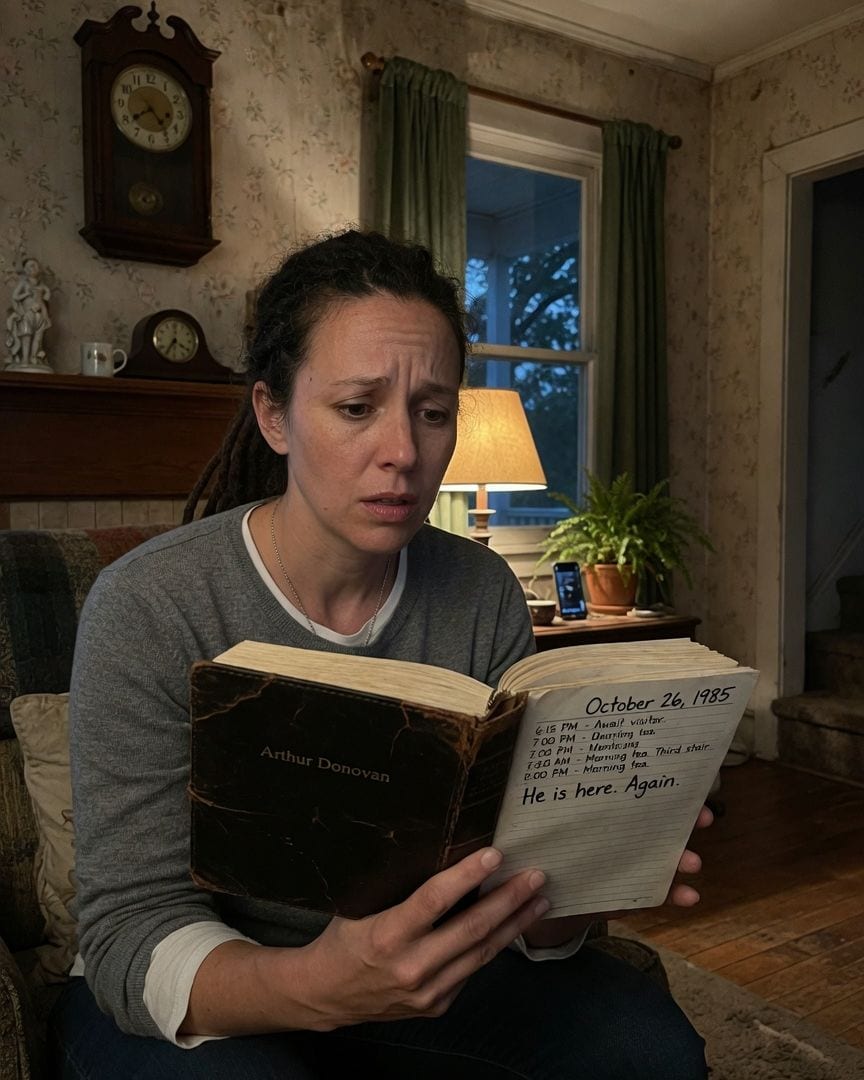
My front door gets three firm knocks every 6:15 PM. Nobody's ever there, but the doormat is always nudged, like someone just wiped their feet and left.
I moved into my inherited house expecting quiet, but every evening at 6:15 PM, three firm knocks hit my door. Each time, I find the porch empty, with no one in sight. My phone camera confirms it: only the doormat subtly shifts, echoing the clear knocks, like an invisible visitor wiping their feet.
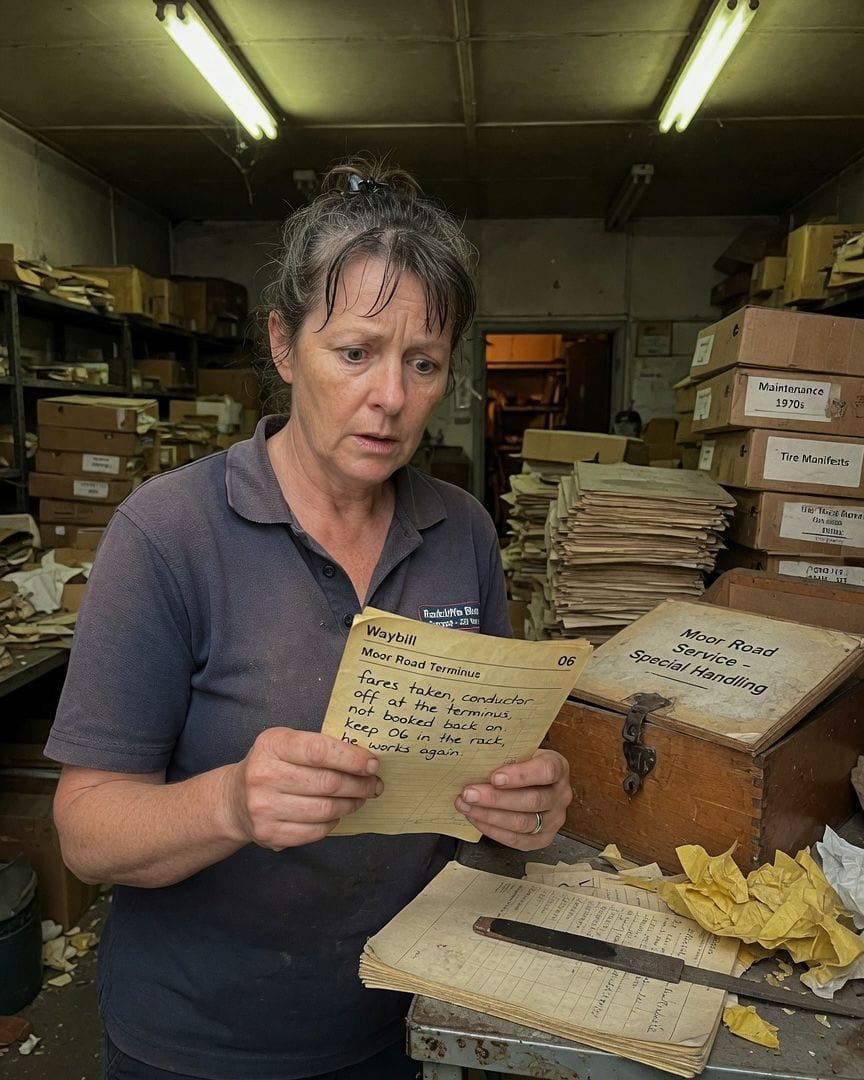
Our depot's Waybill 06 filed a moor road service we stopped running years ago. Every eight years since 1956, it closes: 'keep 06 in the rack, he works again.'
Sorting waybills in the depot, I stumbled across a form for the Moor Road Terminus. That route was decommissioned decades ago, but this waybill had a chilling handwritten instruction: 'keep 06 in the rack, he works again.'
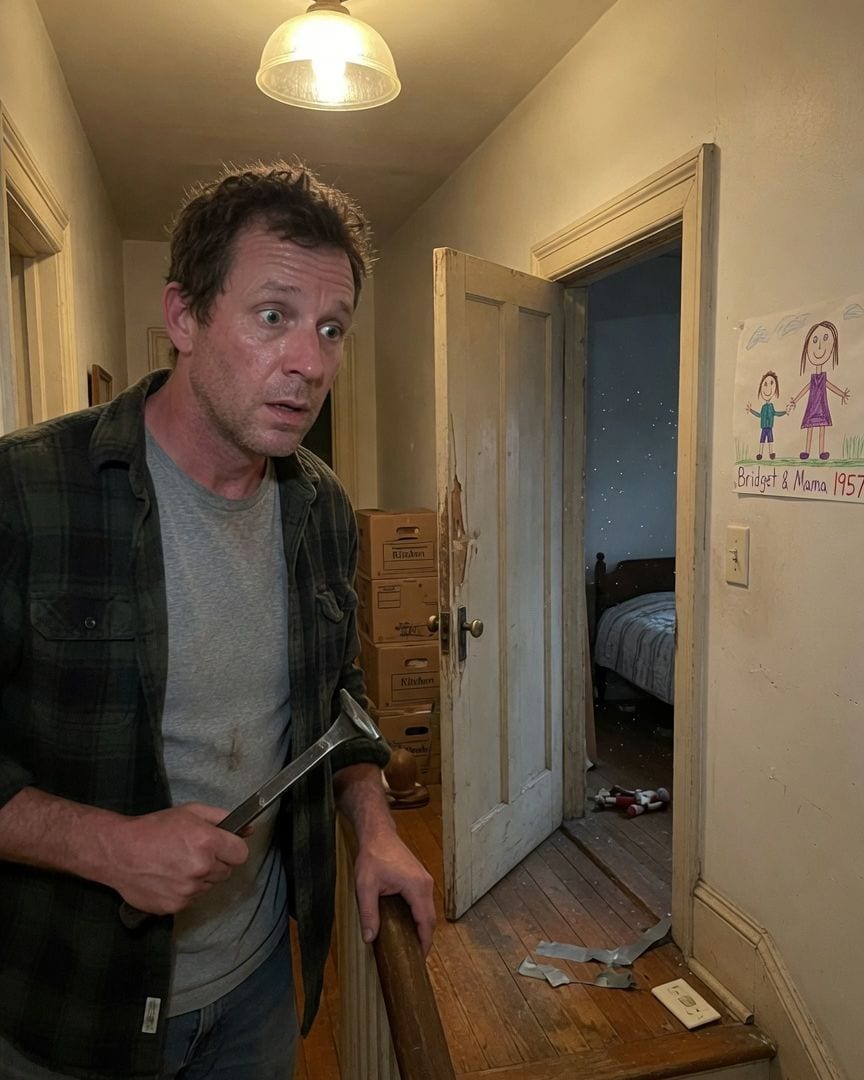
My landing light switches itself off at 9:40 every night. I've watched the switch flick down under nothing, the tape peeled back. The house holds its breath.
My great-uncle's old house was a quiet gift, a place to finally settle. But as I unpacked, a strange worn path on the floorboards led me to a small, barely visible door, perfectly blended into the wall. It was undeniably locked, and felt like a deliberately obscured secret.
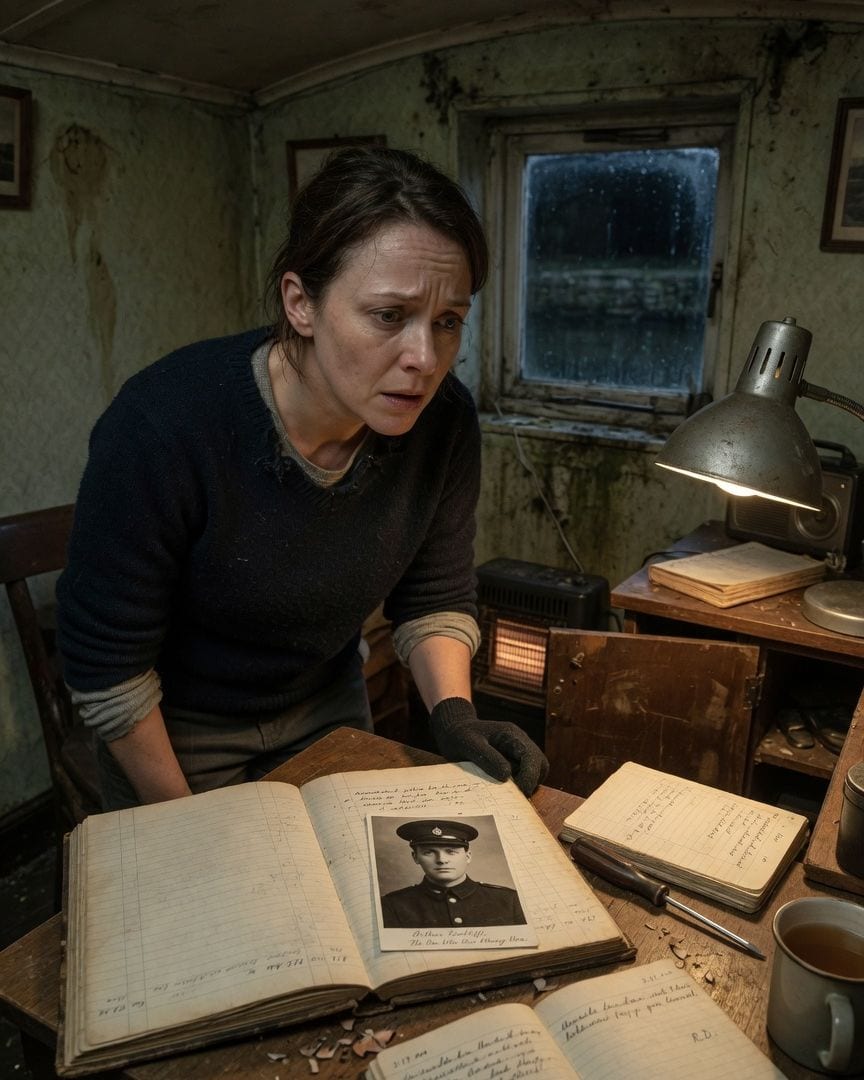
My canal lock logged a boat at 3:17am, gates cycling shut. No vessel radioed, and the water never moved.
Working the night shift at the lock house, I distinctly remember securing the gates and then logging a narrowboat passage at 3:17 AM in my usual precise hand. But the canal outside was black and perfectly still, the water level unchanged, with no boat ever having radioed in. My own logbook entry sat there, an undeniable record of an impossible event.