My canal lock logged a boat at 3:17am, gates cycling shut. No vessel radioed, and the water never moved.
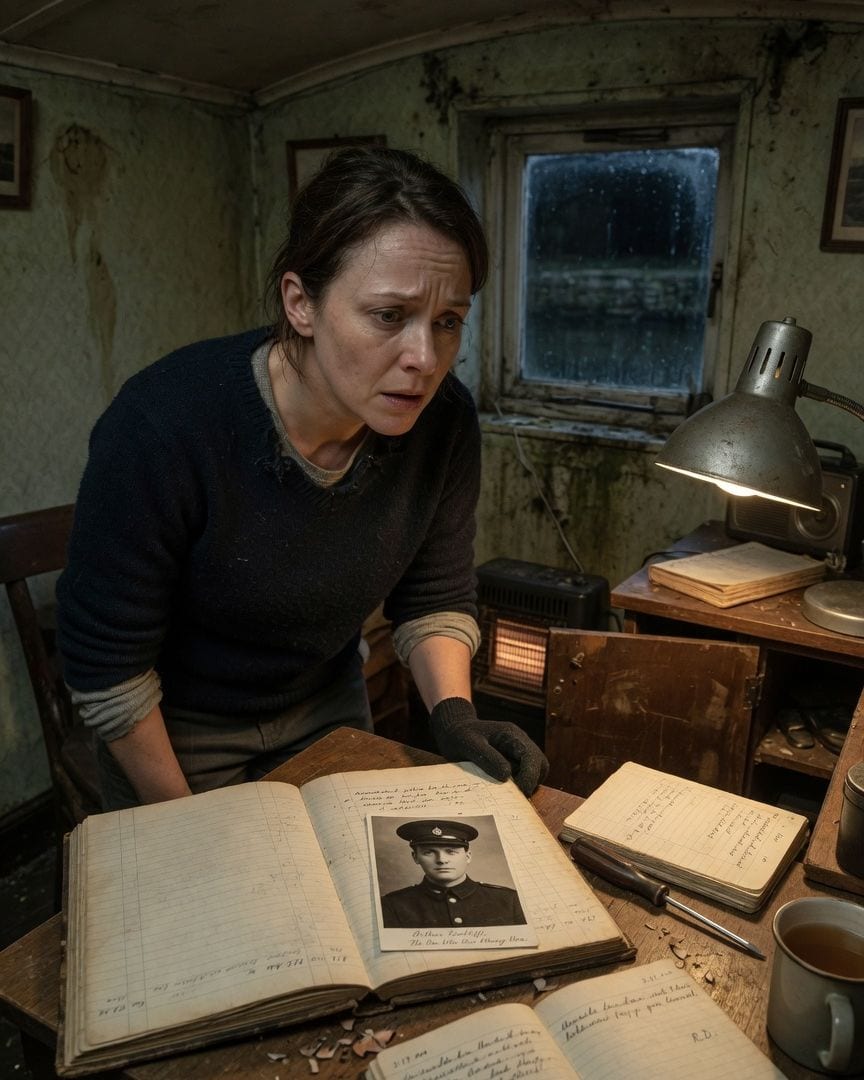
The damp in the lock house never truly leaves, a chill that seeps into the bones no matter how high I crank the portable heater.
Tonight, like most nights, the only sound was the rhythmic drip of canal water against the mossy stone outside, a familiar lull that usually helped me focus. It was 3:17 AM.
My shift log lay open on the worn wooden desk, the lamplight reflecting faintly off the fresh black ink of the entry I'd just made: 'narrowboat locked down, gates secured.' My initials, R.D., followed, crisp and precise.
Out in the night, a faint, metallic clack had just echoed the silence – the gate counter clicking over, confirming a full cycle. Except no boat had radioed in. No faint engine thrum had disturbed the oppressive stillness.
And the pound level, the gauge I watched like a hawk every shift, hadn't shifted a millimeter. Not one. The water out there was as flat and black as polished obsidian.
I frowned, flipping back a page in the logbook, then another. No, this was the right page. This was the right time.
I distinctly remembered the cold, rough metal of the gate wheel in my gloved hands, the heavy, almost sickening resistance of the gears as I cranked them shut, the final, deep thud of the gates locking into place.
I remembered the feeling of accomplishment, the quiet satisfaction of a job done. But there had been no boat. Nothing. Just the usual black expanse of the canal, stretching out like a forgotten road.
I checked the counter again, then the log, then the counter. One full cycle. My own precise handwriting. It sat there, a perfect, impossible record, nestled between two perfectly ordinary passages I had worked earlier in the night.
It made no sense.
The phantom entry gnawed at me throughout the next day. I kept picturing the blank, black water, the unmoving gauge, then the clean, undeniable line of text in my own hand.
I scrutinised my logbook, running a finger over the 3:17 AM entry, almost expecting the ink to shimmer and vanish. It was perfect. Too perfect.
I tried to dismiss it, told myself it must have been a momentary lapse, a waking dream, the kind of half-conscious action you do when you’re tired. But the feeling persisted, a cold, irrational certainty that something was wrong.
Driven by a quiet unease I couldn't shake, I started to compare my current log with previous ones.
The lock house had dozens of them, stacked neatly in a musty cabinet by the back wall, decade after decade of quiet canal life chronicled in their pages.
I started with the most recent, then moved back, flipping through older pages, looking for anything similar, any other impossible entry. Most were mundane, listing cargo, destinations, the names of skippers I’d never meet.
And then I found it.
My finger paused on an entry from exactly 3:17 AM, dated forty years prior to the day. 'narrowboat locked down, gates secured.' Different initials, 'A.R.', but the same impossible passage.
No accompanying radio call, no water level change noted in the margins. The handwriting was precise, meticulous, almost identical in its neatness to my own. It was a ghost of my entry, a mirror image from the past.
A cold certainty settled in my gut, heavy and undeniable. This wasn't a glitch. This isn't me losing my mind. This is a pattern.
I remembered a small, dusty cupboard, usually ignored, behind a loose panel under the desk. A place for forgotten things.
I knelt, pried it open with a flathead screwdriver I kept for minor gate repairs, revealing a stack of even older, leather-bound ledgers. Their pages looked brittle and yellowed, even in the dim light.
The air inside the cupboard was still and heavy, thick with the smell of old paper and dust, like a tomb for forgotten records. I pulled out the top one.
Its cover, cracked with age, was embossed with faded gold lettering: 'Canal Lock #7 Night Watch Log – 1980s'.
I opened the ancient ledger, the binding groaning softly in protest. The first few pages were filled with ordinary entries, the usual comings and goings of the night.
Then, there it was again: the familiar phantom 3:17 AM passage, signed 'A.R.', as if waiting for me. It was like looking into a dark mirror.
As I flipped deeper into the brittle, yellowed pages, a small, faded photograph slipped from between them and flutters onto the wooden desk. It lands face up.
It is a stern-faced man in an old lock-keeper's uniform, dark and heavy, dated decades ago. His eyes, even in the black-and-white image, seem to hold an unsettling calm. My fingers tremble as I pick it up, flipping it over.
On the back, in faint, elegant ink, a name is written: 'Arthur Radcliffe. The One Who Was Always Here.'
The name Arthur Radcliffe became an obsession. My days off weren't spent sleeping or trying to shake the chill of the lock house; they were spent in the hushed archives of the local library.
I fed microfilm reels into the whirring machine, my eyes scanning decades-old newspapers. I found him. 'Local Lock Keeper Vanishes,' 'Arthur Radcliffe Presumed Drowned in Canal Accident.'
The articles, yellowed and brittle, painted a picture of a respected, solitary man who had simply disappeared one cold autumn night, forty years ago. No body, no trace, just an empty lock house and a boat that hadn't moved.
A chilling detail caught my eye in the reports: his disappearance occurred just weeks after a series of 'unexplained gate malfunctions' at Lock #7. I dug deeper.
Similar incidents were mentioned in other, smaller articles, tucked away in the back pages – previous keepers, over the years, all at this same lock, all ending in mysterious departures or disappearances.
The pattern was undeniable, a dark thread running through the canal’s history.
I knew I had to talk to Carl. He was my regional supervisor, a man known for his unflappable demeanor, his ability to dismiss any problem with a calm, almost unnerving practicality.
I called him, got him to meet me at his office, not the lock. I laid out my findings, the old logbook open on his desk to Arthur’s impossible entry, the printouts of the newspaper articles.
He listened, nodding slowly, his expression utterly unreadable. His gaze flickered from the photo of Arthur Radcliffe to the identical log entries.
'Ah, Lock #7,' he said finally, a faint, knowing smile playing on his lips, a smile that didn't quite reach his eyes. 'She has her quirks, that one. Always has. Best not to dwell on old superstitions, Rachel.
Focus on the job at hand.' He leaned back in his chair, a gesture of dismissiveness so complete it felt like a physical wall. His words did little to reassure me.
Instead, they solidified my suspicion: Carl knew more than he was letting on. The conversation left me feeling isolated, the weight of my discovery pressing down on me, heavy and cold.
Back at the lock house, the atmosphere felt different. Heavier. I’d carefully hidden Arthur’s ledger in the cupboard behind the panel, certain it was safe.
But when I checked it the next night, the old book was slightly askew, a faint, tell-tale indentation on the dusty shelf suggesting it had been moved.
I told myself it was just settling, that the cupboard door hadn't been secured properly. But a prickle of unease started low in my stomach.
Then came the sounds. A soft, rhythmic clicking from the lock gates when they should have been still and silent. It wasn’t the familiar creak of wood or the groan of ancient metal in the wind.
It was distinct, precise, like gears turning in slow motion, yet the gates themselves remained stubbornly closed, unmoving. My blood ran cold. I watched the gates for a long time, the sound a phantom pulse in the night.
It stopped as suddenly as it began.
I checked the security camera feed from earlier, from 3:17 AM. A brief, fuzzy distortion obscured the view of the gates, a ripple across the screen, then cleared.
Nothing conclusive, just enough to set my teeth on edge, to plant another seed of doubt. A few hours later, an email landed in my personal inbox. It was from an unknown sender, with no subject line.
The message was just three words: 'The flow must not be disturbed. Some things are best left to their rhythm.' No name, no return address, just the cryptic warning, cold and precise.
The next evening, Carl Norwood made an unscheduled visit. He claimed it was 'to check on the new security measures,' but his eyes never once looked at the cameras.
He walked the length of the lock, his gaze lingering on the gate mechanisms, then on me. 'Everything running smoothly, Rachel?' he asked, his voice calm, but his eyes, sharp and assessing, held mine for a beat too long.
'You seem a little… preoccupied lately. Don't let the isolation get to you. It's a lonely post.' It wasn't a question. It was a quiet, unnerving statement, a thinly veiled warning, chilling me to the bone.
I couldn't ignore Carl's subtle threat. The next morning, I drove straight to his office, the old logbook clutched in my hands like a shield.
I placed it on his desk, open to Arthur Radcliffe’s phantom 3:17 AM entry, its precise ink a stark accusation. 'This isn't a quirk, Carl. This is a pattern. And Arthur Radcliffe isn't the only one. What happened to them?
What's really going on here?'
Carl leaned back in his chair, a slow sigh escaping him. He picked up the old logbook, his fingers tracing the 'A.R.' initials on the faded page. 'You're tenacious, Rachel. I'll give you that.'
He looked at me, his expression softening into something almost paternal, yet deeply unsettling. 'The lock… it requires maintenance of a particular kind. Not just oil and grease. It requires… acknowledgment.'
I frowned, my stomach tightening. 'Acknowledgment? Of what?'
Carl's gaze drifted out the window, towards the distant glint of the canal, a sliver of blue visible through the city buildings. 'The flow. Not water, Rachel. Something else. Something that moves, unseen, and demands passage.
It demands to be logged, to have its gates cycled, to be acknowledged by a human hand. It's been like this for centuries.' He turned back to me, his eyes holding a strange, ancient wisdom, cold and knowing.
'Arthur… he resisted. He tried to fight it. But the flow… it finds a way. It integrates. Those who question too much, who try to disrupt the rhythm… they become the rhythm. They become the keepers, permanently.
They ensure the flow never stops.'
A wave of nausea washed over me. 'Are you saying Arthur Radcliffe didn't drown? That he… became part of the lock?'
Carl’s smile was faint, chilling. 'Arthur didn't disappear, Rachel. He became indispensable. He became 'The One Who Was Always Here.' He ensures the log is always complete, the gates always cycle, even when there's no visible boat.
He ensures the flow continues. And he ensures new keepers… understand their role.'
A cold dread gripped me, solid and real. Carl watched me, his gaze unwavering, unblinking. 'You’re a good keeper, Rachel. Meticulous. Observant.' He pulled a thick, leather-bound folder from his desk drawer. It was old, its corners worn smooth.
'These are the personnel records for Lock #7. Goes back a long way.'
He opened it, flipping through yellowed pages until he found an entry for Arthur Radcliffe. 'See here? 'Deceased/Transferred,' followed by a handwritten amendment.' He pointed to the faded ink, which read: 'Assumed duties as Night Keeper, Permanent.'
The script was old, but distinct, elegant in its own disturbing way.
Carl then slid his finger down the page, past several other names, past years of forgotten keepers, until he stopped at a much newer entry. My own name, 'Rachel Drummond,' stared back at me, precise and official.
Beneath it, in the exact same unsettling script as Arthur's amendment, was another handwritten note, freshly added. The ink was still dark, still vibrant. It read: 'Assumed duties as Night Keeper, Permanent.'
Carl Norwood's finger taps a spot on the old personnel roster. It's a handwritten amendment, crude but clear, next to her own name: 'Rachel Drummond – Assumed duties as Night Keeper, Permanent.'
The ink is fresher than Arthur Radcliffe’s similar entry above it, but the chilling script is identical.
Carl explained the full, terrifying truth with a calm that I found more horrifying than any scream. 'The canal itself is ancient, but this lock… it’s older. A nexus, a point where something beyond our comprehension passes through.
It's a pattern, a constant, unseen current that demands a physical manifestation. The gates, the water, the logbook – these are merely its tools. And the keeper… the keeper is its consciousness.'
He detailed how Arthur Radcliffe, in his desperate attempt to understand and resist, inadvertently opened himself fully to the 'flow.' His mind, his awareness, became absorbed, integrated into the lock's routine.
Arthur became 'The One Who Was Always Here,' the unseen hand that ensures the phantom passages are logged, the gates cycled, the rhythm maintained.
Carl revealed that he, too, discovered this truth decades ago, not as a keeper, but as a supervisor. He saw the pattern, the disappearances, the subtle shifts in the new keepers.
He chose not to fight it, but to facilitate it, to ensure the 'flow' was never broken. He saw it as a necessary function, an ancient, unchangeable aspect of the canal.
He had been watching me, noting my meticulous nature, my quiet curiosity. He had nudged me, subtly guiding me towards my own 'understanding,' preparing me for my inevitable role.
Every phantom entry, every clicking gate, every whisper of unseen movement – it was Arthur, preparing the way, drawing me deeper into the lock’s eternal cycle.
I tried to flee. I pushed back from Carl’s desk, my chair scraping harshly against the wooden floor. 'No! I won’t! You’re insane!'
Carl didn't move, his calm a solid, unyielding wall. 'Insane? Or simply accepting what is? Look around you, Rachel. This canal, this lock, it has a purpose far beyond boats and commerce.
And you, like Arthur, have been chosen for a greater role.' He explained that the choice was an illusion. The 'flow' has already begun to integrate me. I’d already felt its subtle pull, its rhythm becoming my own.
'You’ve already begun to understand the silent currents, haven't you? The whispers of the gates, the necessity of the log. Arthur's presence, his quiet influence, has been preparing you, guiding your hand.'
I stumbled out of his office, down the corridor, Carl's words echoing in my mind, cold and clear.
I drove back to the lock, a frantic energy urging me to simply abandon my post, disappear into the night, just like Arthur supposedly had. But as I approached, a strange compulsion pulled me. It wasn't my will.
My hands instinctively reached for the lock gates, the cold metal familiar, comforting in a way that made my skin crawl.
I fought it, my mind screaming to resist, but my body moved with a will of its own, an unthinking, automatic grace. The gates began to turn, slowly, silently, responding to my touch.
I felt the phantom boat pass, clearer now than ever before, a solid, undeniable presence in my mind, a ripple in the water that only I could perceive.
I moved to the log house, picked up the pen. The 3:17 AM entry, a duty, a necessity, already forming in my mind, a perfect, unshakeable instruction. My hand moved, precise and unhesitating, to record the passage.
The dread was not in the action, but in the terrifying, serene acceptance that washed over me, extinguishing the panic, leaving only a quiet peace.
Rachel's night shifts continue, seamless and perfect. The logbook is always impeccably maintained, every phantom passage recorded with meticulous precision. Her reports are flawless, devoid of any 'quirks' or anomalies.
Carl Norwood visits less often, a faint, satisfied nod his only acknowledgement as he reviews her work. The lock operates with an uncanny efficiency, its ancient gears turning with a quiet, tireless purpose.
The canal flows on, its surface reflecting the indifferent stars, its depths holding secrets that are now meticulously cataloged.
Rachel sits at the lock house desk, a faint, unreadable smile playing on her lips as she meticulously inks another phantom entry into the logbook. The river flows on, indifferent, carrying its silent, unseen cargo through the night.
Weeks later, Carl Norwood is asked by his superior about Rachel Drummond's performance. 'Oh, she's settled in wonderfully,' he replies, a faint smile touching his lips. 'Truly, she's become one with the place.'
If this one got to you
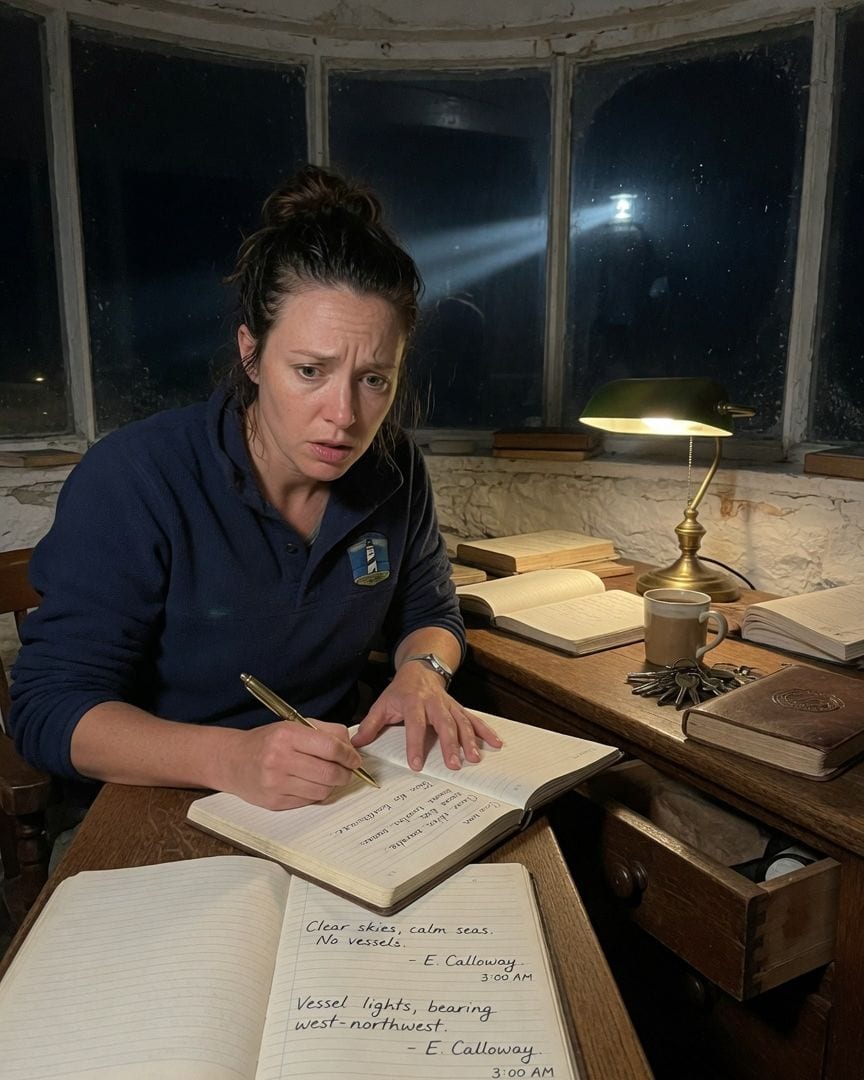
My logbook had a 3 AM entry, in my own precise hand, that I never wrote. Then I found an impossibly cold, hidden book with my name signed to an identical entry from last night.
My routine lighthouse shift was quiet until I noticed a new entry in the official logbook. Dated 3:00 AM, it described a vessel I never saw, written in my exact handwriting, and signed with my name. But I hadn't penned a single word.
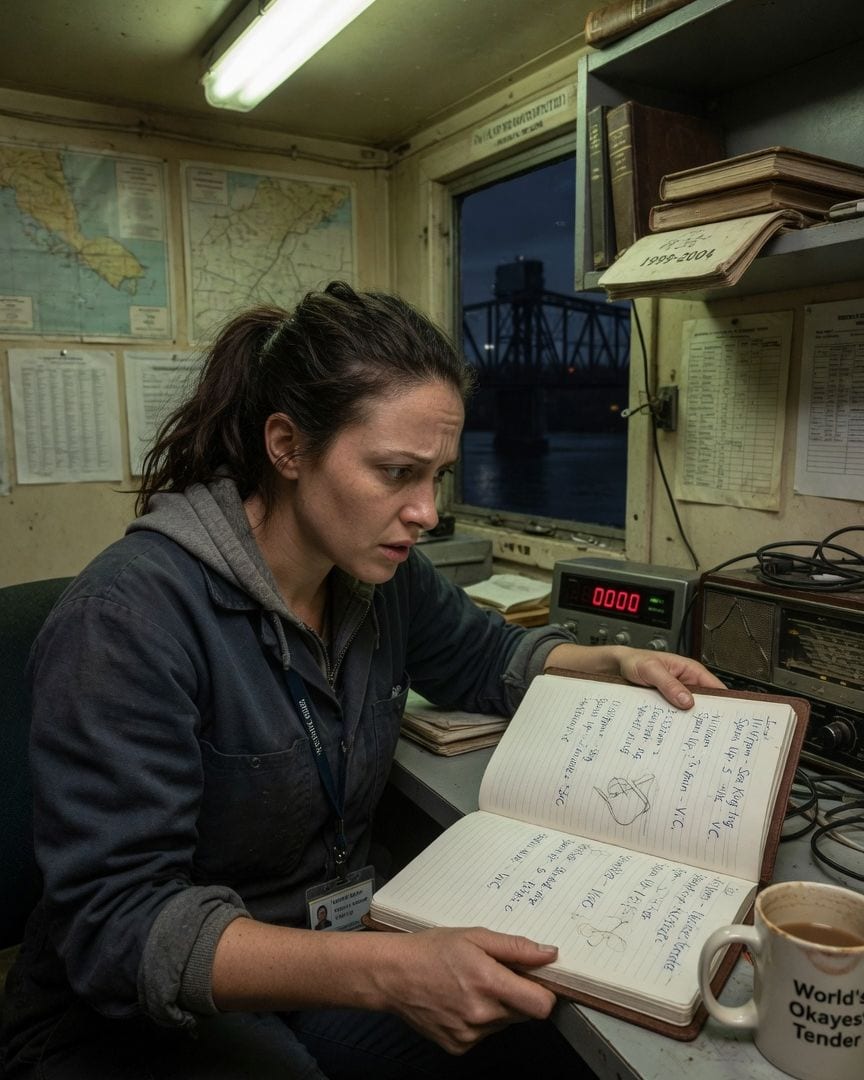
My drawbridge log shows a 2:33am lift I didn't make. The span counter never moved.
As a drawbridge tender, my midnight to dawn shift is usually quiet, a routine of monitoring traffic and logging lifts. But tonight, my own logbook shows an impossible entry for a bridge lift I have no memory of making. My initials and handwriting are there, yet the span counter above my panel reads a steady zero. No boat called, no span ever went up.
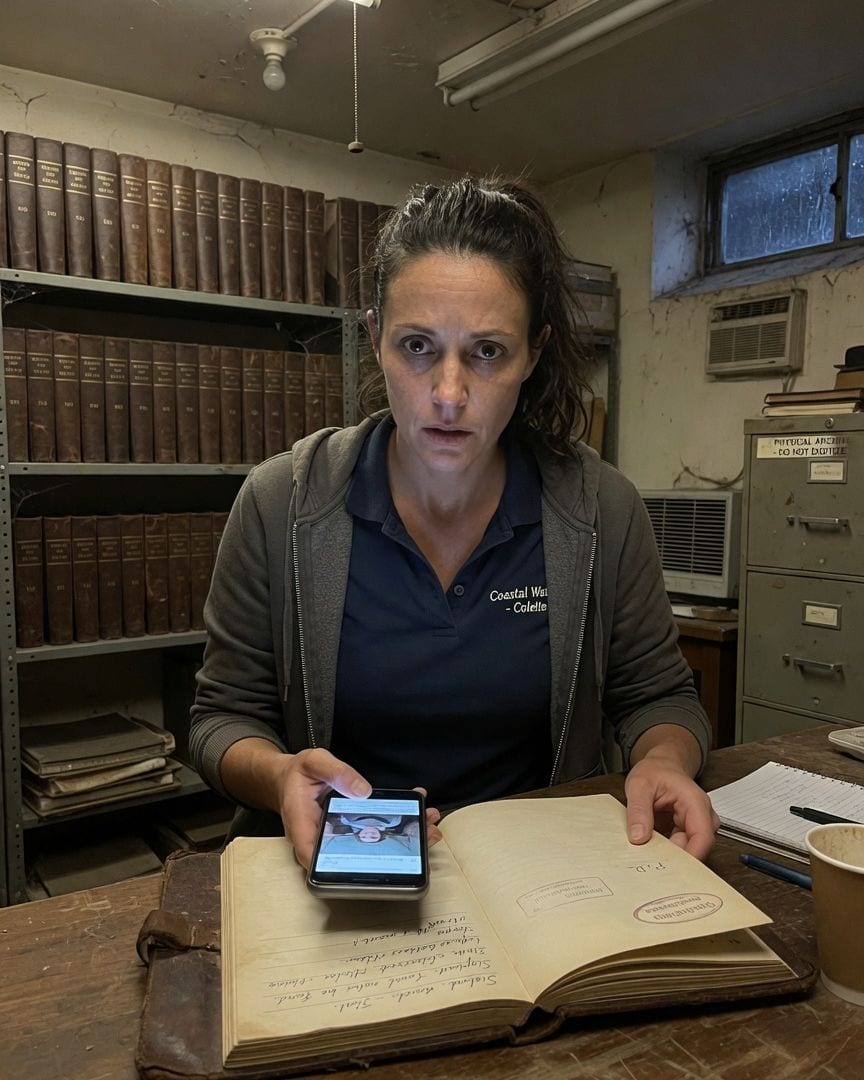
My coastguard log noted Sighting 9 again tonight, a light where no vessel showed. The old logs carry Sighting 9 off Skerry Point at 3:14am every tenth year since 1954, always 'nothing found,' always 'send no boat.'
On my watchtower night shift, the radar screen glowed green and the ocean was quiet. Then, a familiar light appeared off Skerry Point, exactly on cue, just as it had every tenth year for decades. But digging deeper, I found a hidden stamp in an old logbook: 'Operation Skerry. Status: Complete.' It left me with a chilling sense of finality.
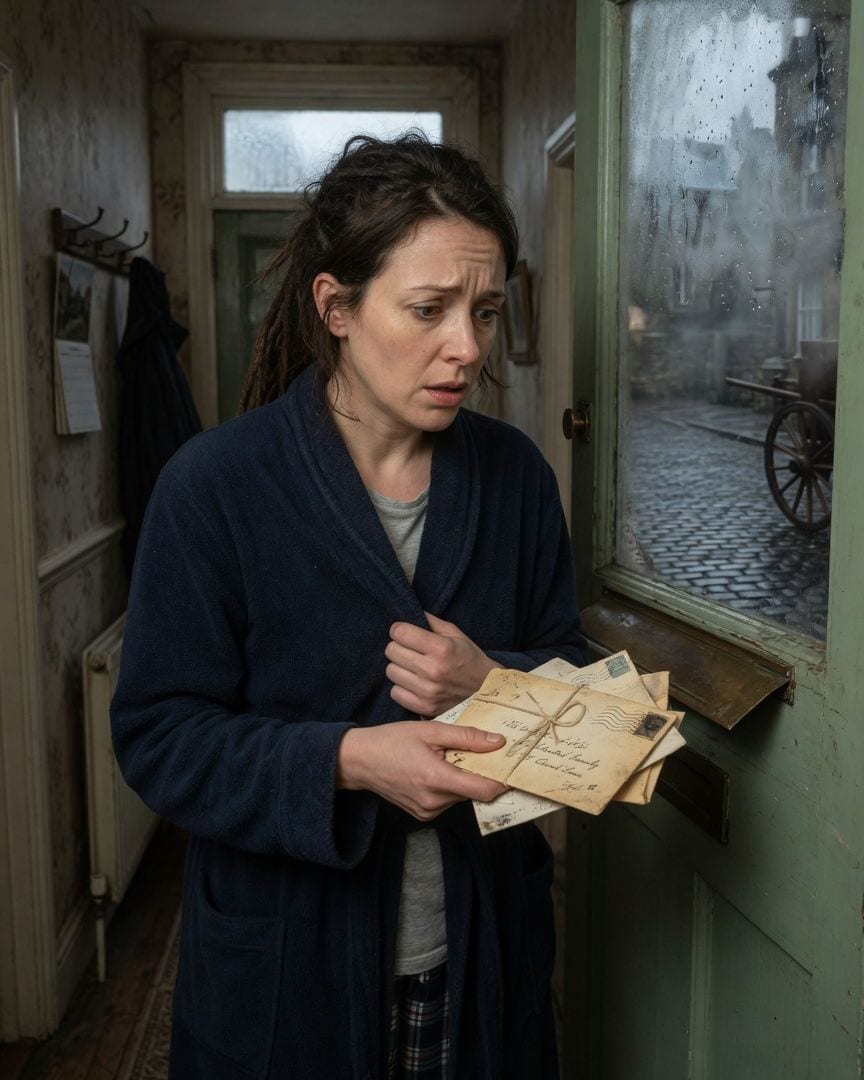
Seventy years ago, a hidden journal recorded my door opening to the wrong street and receiving Lockwood post.
I'd only recently moved into my inherited house, a quiet place on the edge of town. One grey morning, a distinct clatter from the front door's post flap caught my attention. Reaching down, I expected my gravel path, but instead, the flap showed a dark, cobbled street that wasn't mine. A bundle of warm, old letters, addressed to 'The Lockwood Family,' slid through, before the vision flickered and was gone.
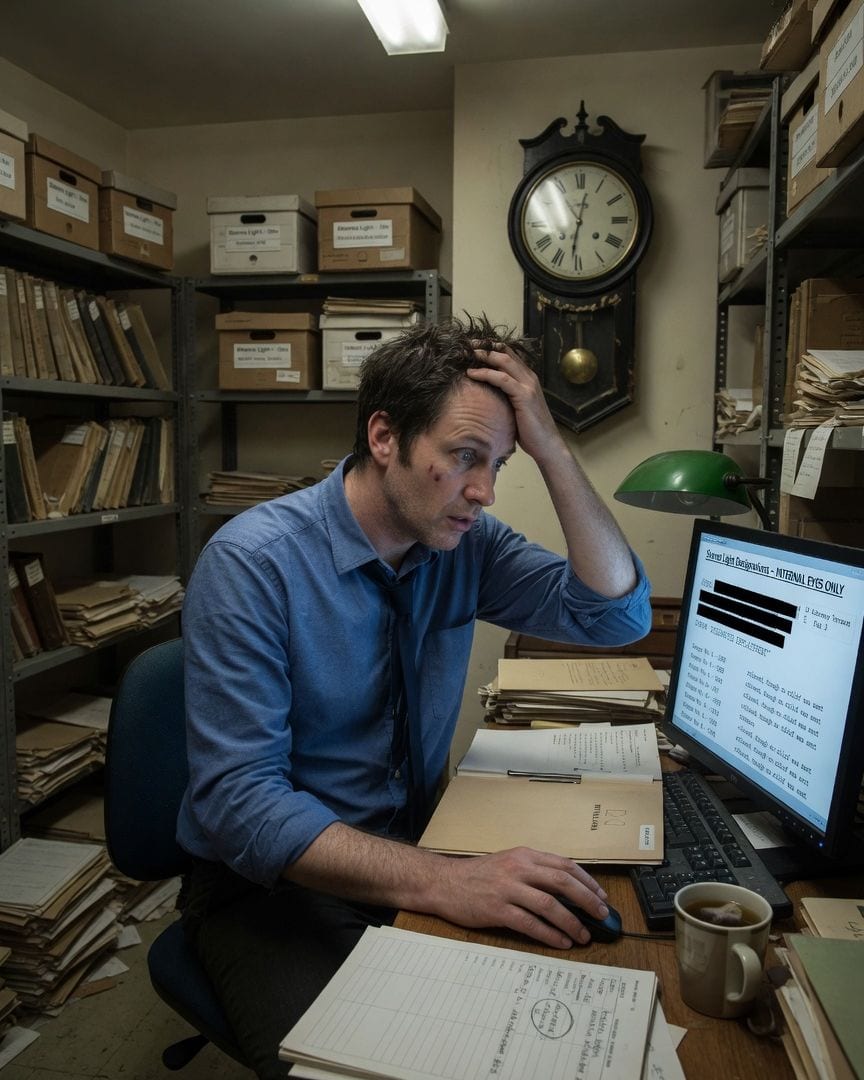
I found my street address in a century-old lighthouse file, printed decades before I lived there.
As a maritime archivist, my world revolves around forgotten lives and dusty ledgers. But the Skerne Light files broke that quiet rhythm, revealing a chilling pattern: 'Keeper number 6' relieved, though no relief was sent, repeating for decades. Now, an internal document with a strange code has led me to a redacted entry, revealing my own street address, decades before I ever lived there.
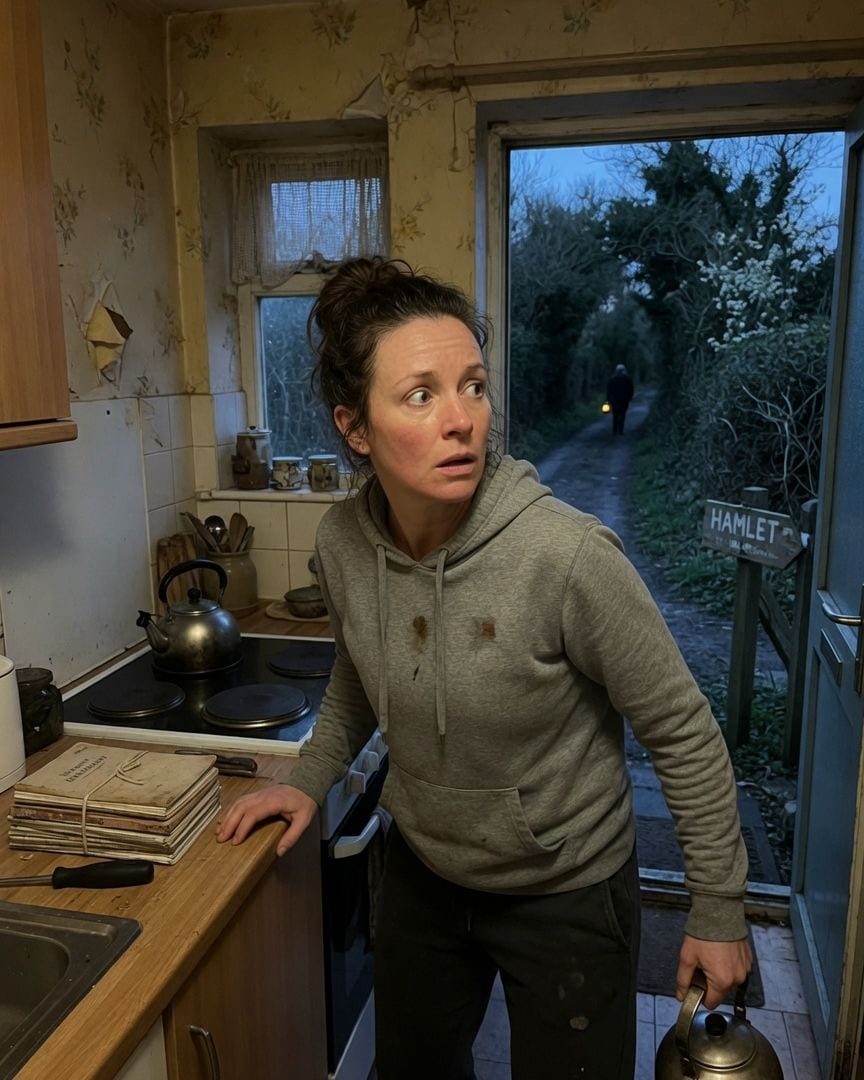
My side gate opens onto a dirt lane between hedgerows, not the close, and a figure with a lantern comes up it toward me.
My side gate normally opens onto the familiar tarmac of the close, but lately, it's opened to a narrow, overgrown dirt lane instead. Three times now, at dusk, I've seen a man with an old-fashioned lantern walking unhurriedly up this impossible lane towards my house. Each time, when I dare to look again, the lane is gone, leaving only the bins and a racing heart.