My side gate opens onto a dirt lane between hedgerows, not the close, and a figure with a lantern comes up it toward me.
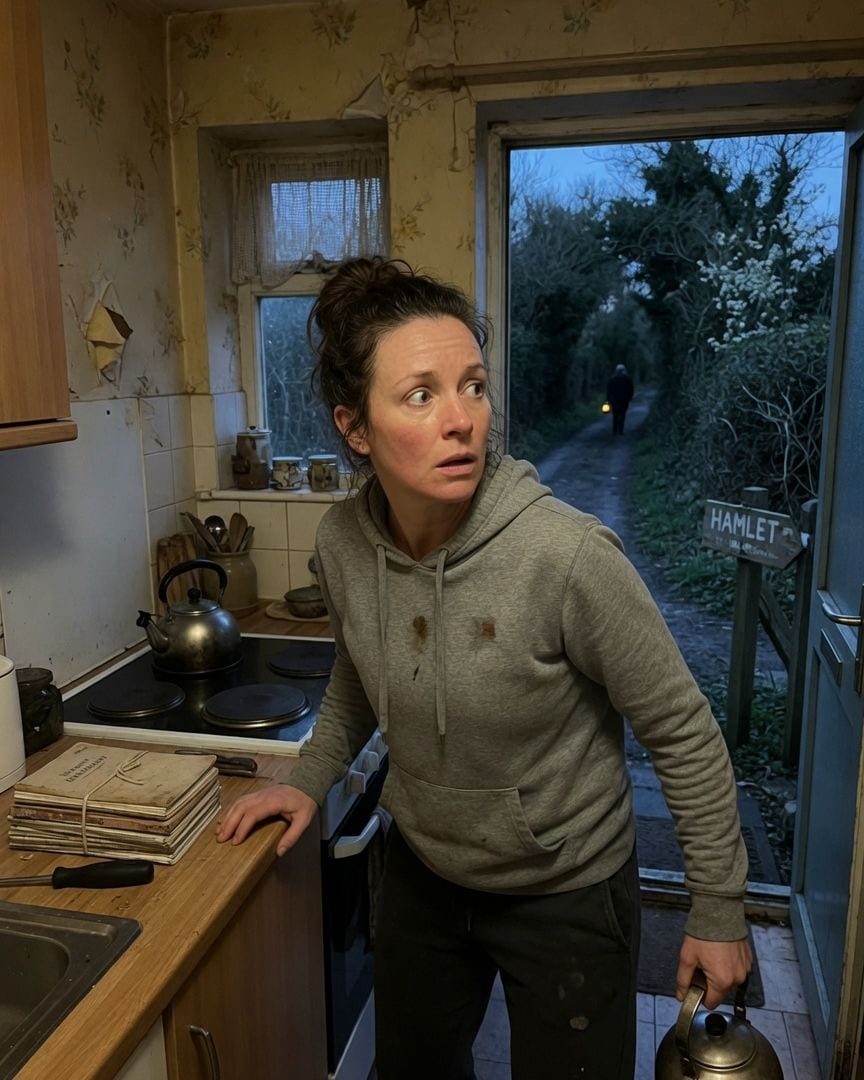
The gate at the side of my house, the one off the kitchen, opens onto the close. Or it’s supposed to. Tarmac, the neighbour’s sensible grey Vauxhall, the row of recycling bins. That’s what it's been since I moved in.
But twice now, at dusk, when I’ve gone to put out the compost, it hasn't. The first time, I told myself it was tiredness, the light playing tricks.
The second, I blamed a bad day at work, too much screen time. Both times, it opened onto a dirt lane, narrow and overgrown, flanked by thick, ancient-looking hedgerows.
And both times, there was a signpost, weathered wood, unreadable from the distance, pointing down the lane to a hamlet I don't know, a name that isn't on any map I own. And then, there was the figure.
A man, I think, though it was hard to tell in the dimming light. He was carrying a lantern, the old-fashioned kind, its light swinging gently with his stride. He came up the lane, unhurried, walking towards my open gate.
Both times, I slammed the gate shut, my heart hammering like a trapped bird. And both times, when I dared to open it again, it was back to tarmac, the Vauxhall, the bins. As it always did.
The image of the lane, the signpost, and the unhurried figure is too clear, though. It feels like something I saw with my actual eyes, not a phantom. It feels… specific.
I’ve been trying to find a rational explanation. Optical illusion, sure. Or maybe some residual memory from Vivienne Holloway, the previous owner. She disappeared twenty years ago, just vanished. Left everything behind.
Maybe she saw it, too, and my brain is just picking up on something. But then there are the other things. Small, inexplicable routines that aren’t mine.
The faint, almost buttery smell of roasted chicken at exactly 7 PM on Wednesdays, strong enough to make my stomach rumble, even though I haven't bought a chicken in months.
The third stair, just before the landing, has a patch where the carpet is impossibly thin, worn down to the bare wood.
I find myself instinctively stepping over it, my foot lifting without conscious thought, as if someone before me always did the same.
And the armchair by the window in the living room – there’s a deep impression in the faded velvet, a persistent hollow that feels like someone just got up, leaving the cushions warm with their recent presence. I live alone.
Just yesterday, the gate swung open again, just as the last sliver of sun dipped below the horizon. For a split second, before I pulled it shut, I saw it.
The hedgerows, the dirt, and the distant, growing pinpoint of light, coming up the lane.
Driven by the unsettling feeling, I started to explore the house with new eyes. I told myself I was just looking for drafts, for something loose in the wiring. But I was looking for answers.
In the kitchen, I found an old, tarnished kettle on the hob, sitting there beneath my modern electric one, almost as if it had been forgotten.
I tried to move it, to put it in the back of a cupboard, but it felt strangely heavy, almost rooted to the spot. Like it belonged there, like it was part of the furniture. I left it.
Later, in the study, I knelt down to examine a creaking floorboard near the fireplace. It was stubborn, resistant, but I managed to pry it open with a screwdriver.
Beneath it, wrapped in yellowed cloth, was a stack of dust-laden journals. Vivienne Holloway’s. Her name was neatly inscribed on the front of the first one. My hands trembled slightly as I opened the first volume.
The initial entries were mundane, domestic things: recipes for apple pie, lists of bulbs for the garden, complaints about local council planning. Then, slowly, almost imperceptibly, a shift.
The later entries became fragmented, less focused. Vivienne began to mention 'the little anomalies,' the 'ghost of a routine' she couldn't shake. I found myself holding my breath. She wrote about the roast chicken smell, exactly at seven on Wednesdays.
She mentioned the worn third stair, how she always stepped over it, felt a little shiver if her foot grazed it. And the armchair, how it always felt like someone had just left it, a lingering warmth.
Her observations mirrored my own, down to the small, specific details that I hadn't even consciously registered until I read them.
My rational brain tried to offer an explanation: Vivienne was simply a creature of habit, and I was subconsciously picking up on the faint traces she left behind. But the feeling was hollow. It didn’t quite fit.
Then I turned a page, and my breath caught in my throat. Vivienne’s handwriting, usually so neat, became spidery. She described her growing preoccupation with the 'gate to nowhere,' the one that opened onto the lane that wasn't there.
She wrote about watching it, waiting for it to open. And then, the words that turned the chill in the room into something cold and solid: "I am convinced someone is still walking the lane.
I see his light, sometimes, far off." The specificity of her descriptions, the direct correlation to my own experiences, made it impossible to dismiss as coincidence. It was real. She had seen it too.
A shiver ran down my spine that had nothing to do with the draft from the window.
I turned to the last journal. The handwriting was no longer neat; it was frantic, less legible, scrawled across the pages as if she was writing against time. It described Vivienne's escalating encounters with 'the man with the lantern.'
The words tumbled across the page, detailing their 'meetings' at the gate, his unhurried approach, his silent gaze. Hazel's breath caught. The final words, scrawled fiercely, were: 'He's waiting. I'm going. The lane is clear.'
Below it, a crude, yet unmistakable, sketch of the signpost for the unmapped hamlet, and a faint outline of a figure holding a lantern. The ink was smudged, as if pressed by a desperate hand.
I stared, the image burning into my mind, a confirmation that my own experiences were not isolated, not imagined. Someone else saw it. Someone else went to it.
With Vivienne’s journal as my guide, a cold knot of dread tightening in my stomach, I started digging into the history of the house and the area.
My first stop was Roland Rutherford, 75, a long-time resident and local history enthusiast who lived a few doors down. His house was a maze of antique furniture and dusty books, smelling of pipe tobacco and old paper.
Roland was initially jovial, his eyes crinkling at the corners as he offered me a cup of tea. But his demeanour shifted, subtly, when I casually mentioned Vivienne Holloway.
He started talking around her, offering vague, uncomfortable anecdotes about her 'eccentricities' in her later years. "Poor Vivienne," he'd say, shaking his head. "Always out by that side gate, staring at nothing. Quite a habit she got into."
He avoided my gaze, picking at a loose thread on his armchair. He then launched into old local legends about 'lost paths' and 'places that come and go,' folk tales he’d heard from his grandmother.
His voice was a little too loud, a little too eager to fill the silence.
I pressed him, carefully, trying to sound casual. "Did she ever talk about a specific name, Roland? A hamlet, perhaps? Or a signpost?"
I described the sketch from Vivienne's journal, the one of the unmapped village, the rough outline of the lantern man. Roland’s already pale face turned a shade whiter. He denied any knowledge, shaking his head almost violently. "Nonsense, dear girl.
Just old wives' tales. No hamlets here, not for centuries. Just fields and then the close." He quickly changed the subject to property values, to the rising cost of petrol, anything to steer away from what I was asking.
I left, unnerved by his sudden reticence, by the way his eyes darted from mine. He knew something. I was sure of it.
Back at home, the library felt like a safe haven. I cross-referenced the vague, almost unreadable hamlet name from Vivienne’s sketch with every old map I could find, poring over microfiche and dusty atlases. Nothing. Online, the same.
The more I searched, the more the silence around the hamlet’s name felt deliberate, a hole in the historical record. As if someone had erased it. The house, when I returned, felt different. Colder.
The worn armchair now seemed to hold a deeper impression, a heavier, more persistent hollow, as if someone much heavier than Vivienne had been sitting there recently.
And the faint smell of roast chicken was stronger, almost tangible, though I hadn't cooked anything, and it wasn't Wednesday. It was a Tuesday.
My investigation intensified, fuelled by Roland’s evasiveness and Vivienne’s desperate final words. I found myself drawn to the gate at dusk, a strange magnetic pull.
I’d walk past it, my hand hovering over the latch, fighting the urge to open it and just see. See what Vivienne had seen. See what Roland feared.
One evening, as I passed Roland Rutherford’s house on my way back from the library, I saw him. He was standing at his living room window, a silhouette against the dim light within, watching me.
His face was a grim, unreadable mask. When our eyes met across the darkening street, he flinched, retreating quickly, vanishing into the shadows of his cluttered home. It wasn’t a casual glance. He was watching for me. Waiting.
Later that week, I found a small, hand-written note slipped under my front door. It wasn't folded, just a single, brittle rectangle of paper, pushed haphazardly. It simply said: 'Some things are better left undisturbed.'
The paper was old, faintly yellowed, and smelled faintly of damp earth, like a forgotten tomb. My heart hammered against my ribs. I checked my security camera footage. Nothing. The timestamp showed no one approaching the door.
I had been the only one home since I left for work that morning, and the note hadn't been there when I’d left. It just… appeared. As if from inside. Or from nowhere.
The routines in the house, once subtle, now felt pronounced, demanding. The tarnished kettle on the hob seemed to hum faintly, a low thrum that vibrated through the countertop, even when it was cold and empty.
The impression in the armchair by the window was always there, a permanent indent, as if someone was perpetually waiting for me to sit down, inviting me into their warmth, their routine.
I felt a constant, low-level hum of presence in the house, a sense of being observed, not by a ghost with cold spots and rattling chains, but by something deeply embedded in the walls, in the very fabric of the place itself.
It wasn't external. It was the house. The gate, when I glanced at it, seemed to shimmer at the edges of my vision, a brief, tantalizing glimpse of hedgerows, a hint of dark earth, just beyond the ordinary tarmac.
It was calling.
I marched straight back to Roland Rutherford’s house, Vivienne’s journal clutched in my hand, the threatening note tucked inside it. This time, I didn't knock.
I just rang the bell until he answered, his face tight with annoyance that quickly dissolved into fear when he saw my expression.
I pushed the journal into his hands, open to the sketch of the lane and the lantern figure. Then I produced the note.
"Who sent this, Roland? What do you know about that lane? About Vivienne?" My voice was low, shaking, but I held it steady.
His composure finally broke. He looked at the sketch, then at the note, his jaw working. "My grandmother," he whispered, his voice hoarse. "Eleanor Rutherford. She… she disappeared from this very house. In 1898."
He swallowed hard, his eyes wide and unfocused, seeing something I couldn't. "She spoke for weeks about 'a lane that wasn't there' and 'a man with a light.' Just like Vivienne. Just like you."
He slumped onto his armchair, the one with the ancient tapestry, looking suddenly every bit of his seventy-five years. He revealed that the unmapped hamlet, the one Vivienne sketched, was named 'Ashford's End.'
It had been a small, isolated farming community, just beyond where my house now stood.
It was mysteriously abandoned after a severe winter storm in the late 19th century—the Great Blizzard of 1888, he called it—and then slowly forgotten, swallowed by the land, by time.
"The gate," he said, pointing vaguely towards my house, "for reasons no one understood, would sometimes open onto a phantom version of the old lane. And people would see 'the Watchman.'
A figure who used to guide travellers through the fog and snow with his lantern, back then. He was the last one anyone saw leave Ashford's End."
Roland confessed his family has known for generations that the house 'remembers' and 'calls' to certain occupants, pulling them into the past, into the lane. He said the 'routines'—the chicken, the stair, the armchair—they weren't just echoes.
"They are the ghosts of those who've been pulled in, Hazel. Their patterns continuing, waiting for the next one."
My mind raced, connecting the dots. Vivienne’s journal, those specific, eerie routines, Roland’s evasiveness. The gate, the lane, the figure – it wasn't a hallucination, it was a doorway. Not a trick of the light, but a tear in time.
The chill in the house wasn't just cold air; it was the lingering, palpable presence of those caught in the house's perpetual memory, their lives playing out on an endless, chilling loop. The house wasn’t just a house.
It was a memory. A trap.
Roland, his face etched with a new, raw fear, gripped my arm. "The council archives," he rasped, "specifically a forgotten section on 'unexplained local phenomena.' There might be more. Compiled by a long-defunct department. They don't want it known."
He looked like he was begging me not to go. But I had to. The horror wasn't in what I might find, but in what I already knew.
I found the courage to visit the council offices the next morning. It took hours, navigating through layers of bureaucracy, explaining myself to several increasingly annoyed clerks who kept trying to send me to the property deeds department.
Finally, I was directed to Deborah Hayes, 50, a stern but obliging archivist with a severe bun and sharper eyes.
She looked at me over her glasses when I mentioned 'unexplained local phenomena,' a flicker of something unreadable in her gaze.
After much persuasion, and a quiet, almost reluctant sigh, she retrieved a thick, heavy ledger from a locked cabinet, its cover faded and brittle, the leather cracked like old skin.
It was titled 'Register of Transient Local Anomalies & Unexplained Departures.' My fingers trembled as I opened it. The pages crackled, smelling of dust and time.
The first entry my eyes found was like a punch to the gut: 'Vivienne Holloway, 68, (my address) – Disappearance, 20 years ago. Recurrent reports of temporal displacement phenomena at location.'
Below it, another entry, neat but chilling: 'Sarah Muller, 35, (my address) – Disappearance, 1923. Similar circumstances, reports of phantom lane and figure with light.'
My gaze dropped further down the page, and then to the next, and the next. The ledger was filled with similar entries. All from my house. All detailing disappearances tied to 'the lane' and 'the lantern figure.'
Each entry a name, an age, a date, stretching back through the decades. Eleanor Rutherford, 1898. Thomas Kowalski, 1871. A grim, unbroken chain, each disappearance marked with a chillingly consistent pattern.
The paper, brittle and dry, crumbled slightly in my trembling hand. It wasn't a legend. It was a documented fact. The true, horrifying scope of the house's memory unfurled before me, cold and coherent.
Deborah Hayes, seeing the horror etched on my face, pushed a pair of reading glasses up her nose and leaned forward. Her voice was flat, devoid of emotion, as if she were reciting a forgotten historical fact.
She explained the ledger's true nature. It wasn't some eccentric’s hobby; it was compiled by a clandestine local committee that had quietly monitored the house for over a century, documenting every 'unexplained departure.'
She explained that Ashford's End wasn't just forgotten; it was caught in a localized temporal loop after the 'Great Blizzard of 1888.'
The Watchman, the figure with the lantern, was the last resident to try and guide people out, to safety. Now, he perpetually re-enacts his final, doomed task, guiding new arrivals into the past, into the lost hamlet.
My house, Deborah continued, built later on the very edge of the lost hamlet's land, acts as a conduit, a weak point. The gate, specifically, is where the past bleeds through most strongly.
Those who become attuned to the house's routines, who notice the echoes of former occupants, are the most susceptible. "The 'routines' you noticed," she said, her eyes fixed on mine, "they weren't just echoes.
They were the last imprints of people like Vivienne and Sarah. Their lives, their habits, imprinted on the house. Now, they're part of its 'memory'."
The ledger, she explained, records the cycles, typically every 20-30 years, when the bleed-through becomes stronger and a new occupant is drawn in.
She opened the ledger to another page, pointing to a faded, brittle entry marked 'Operational Protocol: Site 7B'. It stated plainly how many decades they had known, classifying it as a 'localized, contained temporal anomaly.'
The terror wasn't supernatural in the traditional sense; it was the cold, coherent, documented fact of a repeating, inescapable history. The house was a machine, running on its own awful clock, and I was the latest cog.
I rushed home, the ledger’s chilling truths ringing in my ears like a death knell. Dusk was falling, painting the sky in bruised purples and fading oranges.
I saw the side gate, a dark rectangle against the dying light, a void. I knew the cycle. I knew the figure was coming.
A desperate, frantic part of me screamed to flee, to pack a bag, to get in my car and drive until the house was nothing but a distant, forgotten memory. But another, stranger, hollow calm had settled over me.
The routines of the house, which had once felt so alien and unsettling, now felt almost comforting, a familiar rhythm.
I walked into the living room, towards the armchair, the one with the deep impression. I sat. It fit me perfectly, the contours embracing my body as if it was made for me. The faded velvet felt soft, warm.
The smell of roast chicken was strong tonight, a phantom warmth in the air, a final supper. I looked at the tarnished kettle on the hob in the kitchen, then back at the gate.
The choice was stark, clear in the deepening gloom: escape, or understand.
A pull, deep and undeniable, began to stir within me. A longing to see the lane, truly see it. To meet the Watchman, to finally understand what Vivienne and Sarah saw, what they felt as they stepped across the threshold.
As the last sliver of sun vanished beneath the horizon, painting the world in stark, colourless shades, the gate creaked open. Not onto the tarmac, not onto the neighbour's Vauxhall.
But onto the dirt lane, hedgerows dark and ancient, rustling softly in a breeze I couldn't feel. And there, in the distance, a pinpoint of light began to grow, steadily approaching.
I didn't move. I simply watched, a faint, unreadable smile touching my lips, a strange peace blooming in my chest. The impression in the armchair deepened slightly around me.
The light grew, closer, closer, until the silhouette of the man with the lantern was clear against the deepening gloom of the lane.
He stopped just beyond the gate, his lantern held high, casting long, dancing shadows that stretched and writhed towards me. He looked directly at me, his face obscured by the light, but his presence undeniable, an invitation.
I rose, slowly, calmly, and took a single step towards the open gate.
Hazel Ellison's house stands empty. The 'For Sale' sign never went up. Her car remains in the driveway, her possessions inside, untouched. The council archivist, Deborah Hayes, discreetly notes another 'unexplained departure' in the faded ledger.
Roland Rutherford, the neighbour, watches the house from his window, a new, deeper sorrow in his eyes. He occasionally sees a faint light moving in the study window at dusk, a flicker that isn't from the streetlights.
The familiar smell of roast chicken still wafts from the house every Wednesday evening at 7 PM. The worn patch on the third stair remains, waiting.
The kettle sits on the hob, a faint warmth radiating from its tarnished surface. The armchair by the window holds a fresh, deep impression, as if someone has just settled in.
The gate at the side of the house, though latched, seems to hum with a quiet, expectant energy, waiting for the next dusk to fall.
Hazel's journals, filled with her frantic research and growing understanding, sit on the study desk, open to the final, blank page. The house waits. It remembers. It continues its routines.
Days later, Roland Rutherford walks past the house. He stops, a chill prickling his skin. Through the window, he sees a faint glow from the study. He watches for a long moment, then continues on his way.
He knows it is only a matter of time before the gate opens, and the light comes up the lane, unhurried, for another.
If this one got to you
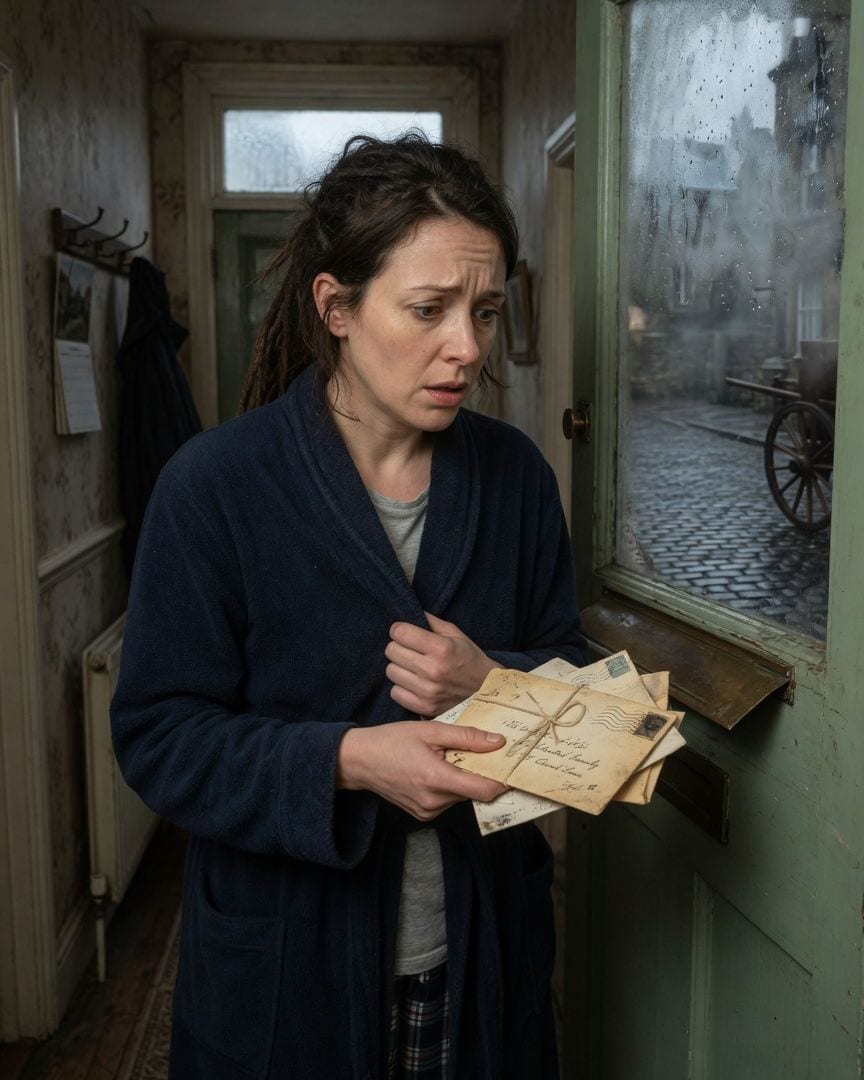
Seventy years ago, a hidden journal recorded my door opening to the wrong street and receiving Lockwood post.
I'd only recently moved into my inherited house, a quiet place on the edge of town. One grey morning, a distinct clatter from the front door's post flap caught my attention. Reaching down, I expected my gravel path, but instead, the flap showed a dark, cobbled street that wasn't mine. A bundle of warm, old letters, addressed to 'The Lockwood Family,' slid through, before the vision flickered and was gone.
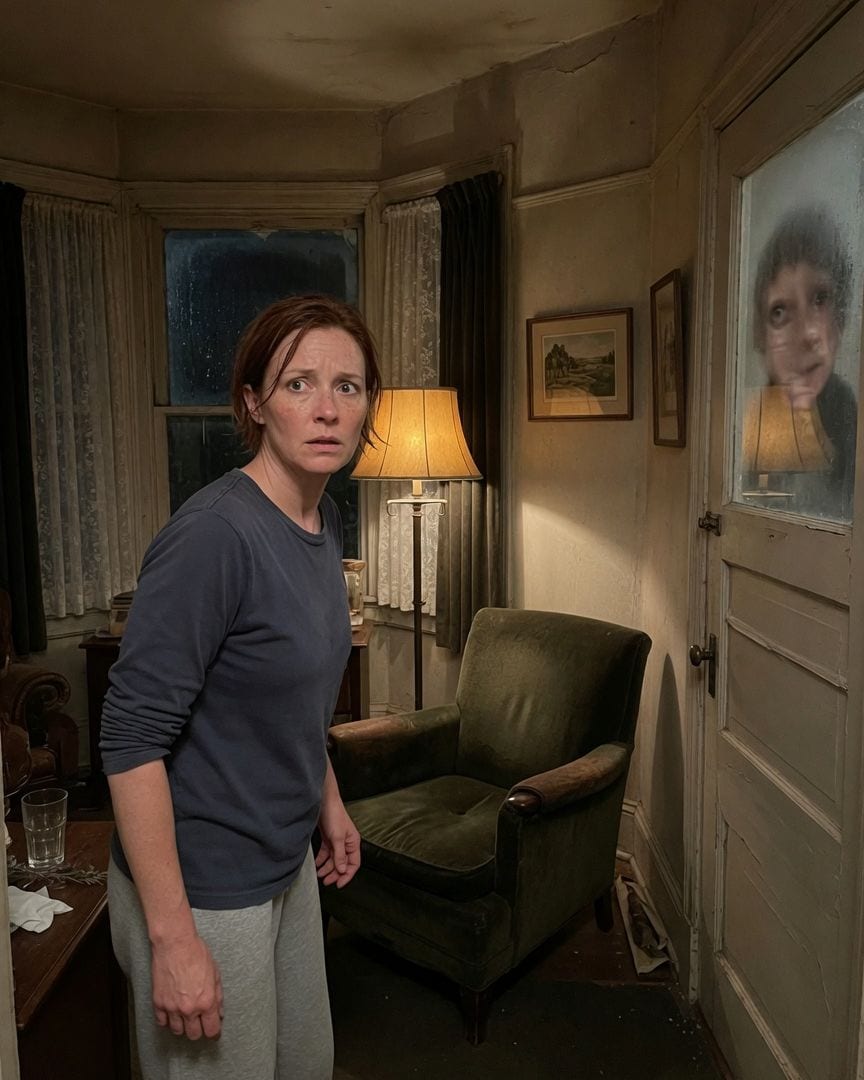
The armchair by the bay window was warm last Tuesday at 9pm. I’ve never sat in it, and the cushion was still settling from a weight that wasn't mine.
I bought this old house for quiet, and most days it's exactly what I needed. But there’s an antique armchair in the living room, deep green velvet, with a permanent hollow from years of use. I’ve never sat in it, yet last Tuesday, I found it radiating a distinct warmth, the cushion slowly settling as if someone had just left.
My front door has a dented gate and a dead hydrangea. I walked past it six times, trying to reach the corner shop just a hundred yards away. The pavement kept bringing me back to my own porch, and the shop's light never moved.
My morning started like any other, a quick walk to the corner shop from my home at Number 14, Elm Terrace. But after walking what felt like two minutes, I found myself back at my own front door, the shop no closer. I tried six times, faster and slower, but my street kept compressing, refusing to let me leave.
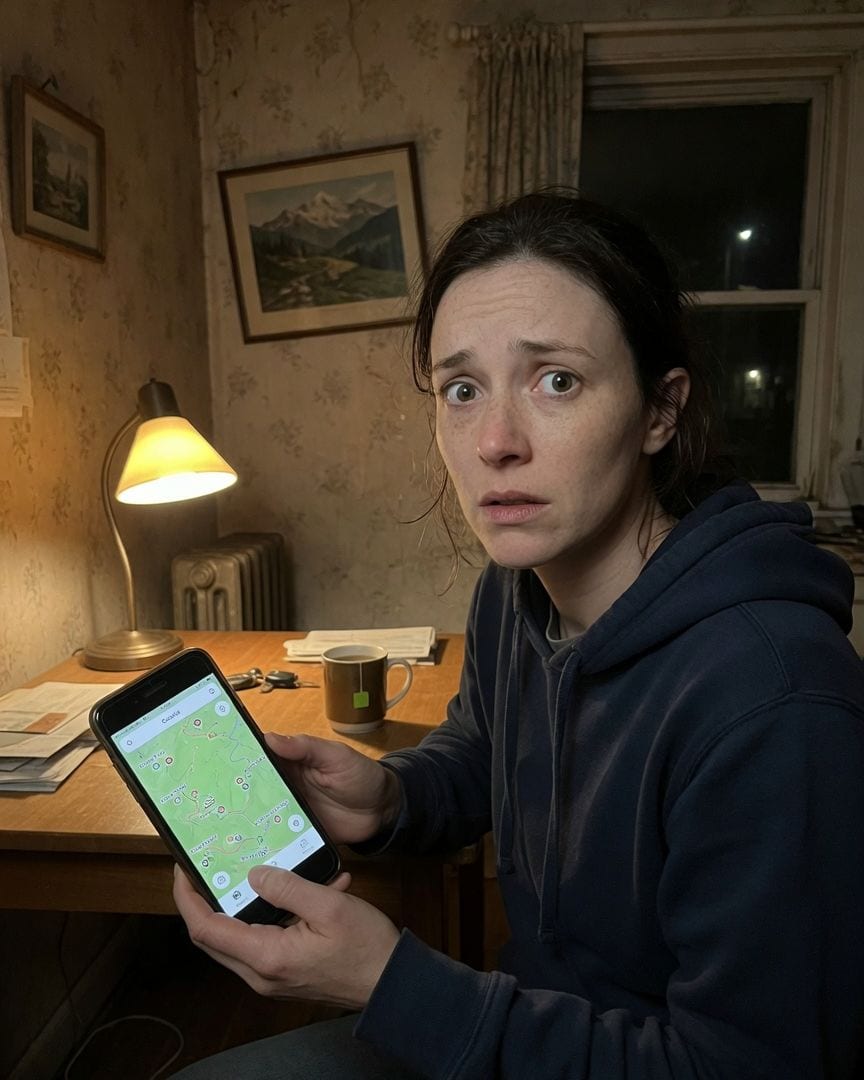
My hiking app scrubbed the hill's name from the map, on a phone that's been in airplane mode for two days.
I just moved to town and hiked a local hill, 'Cathan Tor,' according to my phone's app. But when I mentioned the name to the mechanic, he froze, dropped his wrench, and whispered, 'Don't say that name, Colette.'
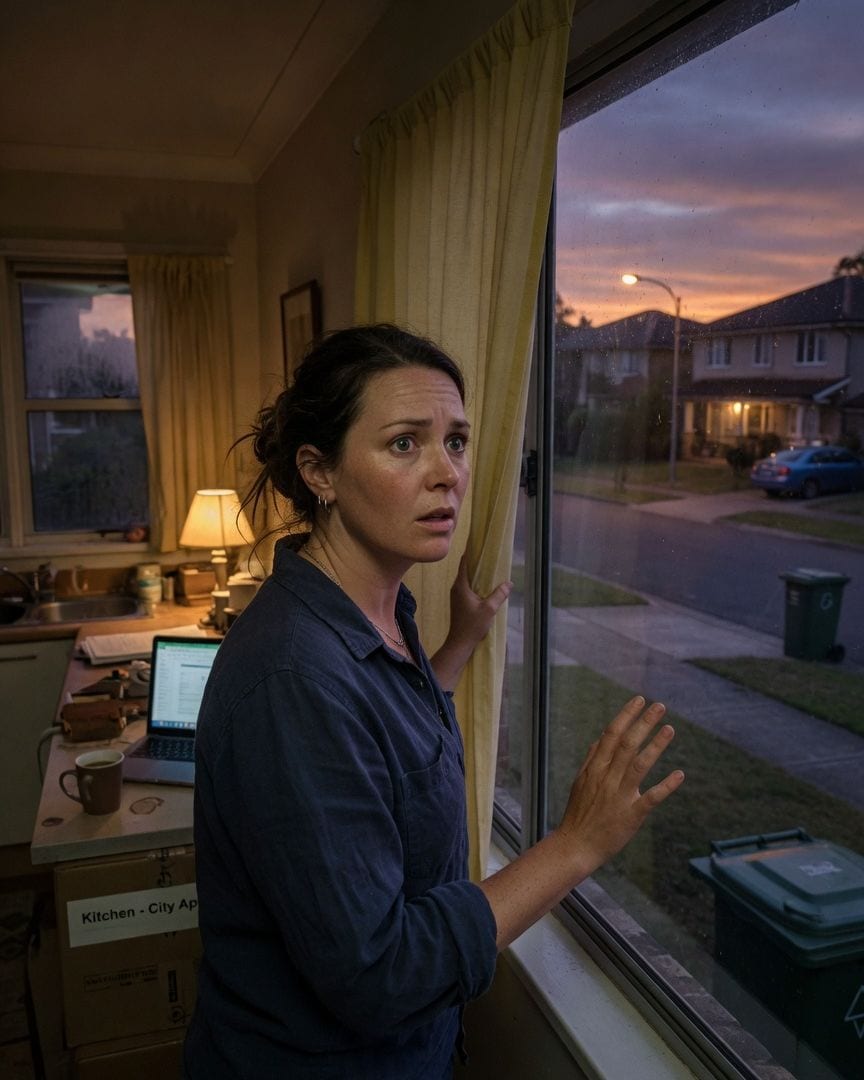
My bin was turned the wrong way Tuesday. The man three doors down hasn't been seen since, though his curtains still open.
New to Oakhaven, I dismissed the local warnings as charming quirks. But after I put my bin out first, my neighbor Joel Whitmore vanished, leaving only a cryptic 'My turn' note. The same strange symbol from his note was chalked on my bin, facing the street.
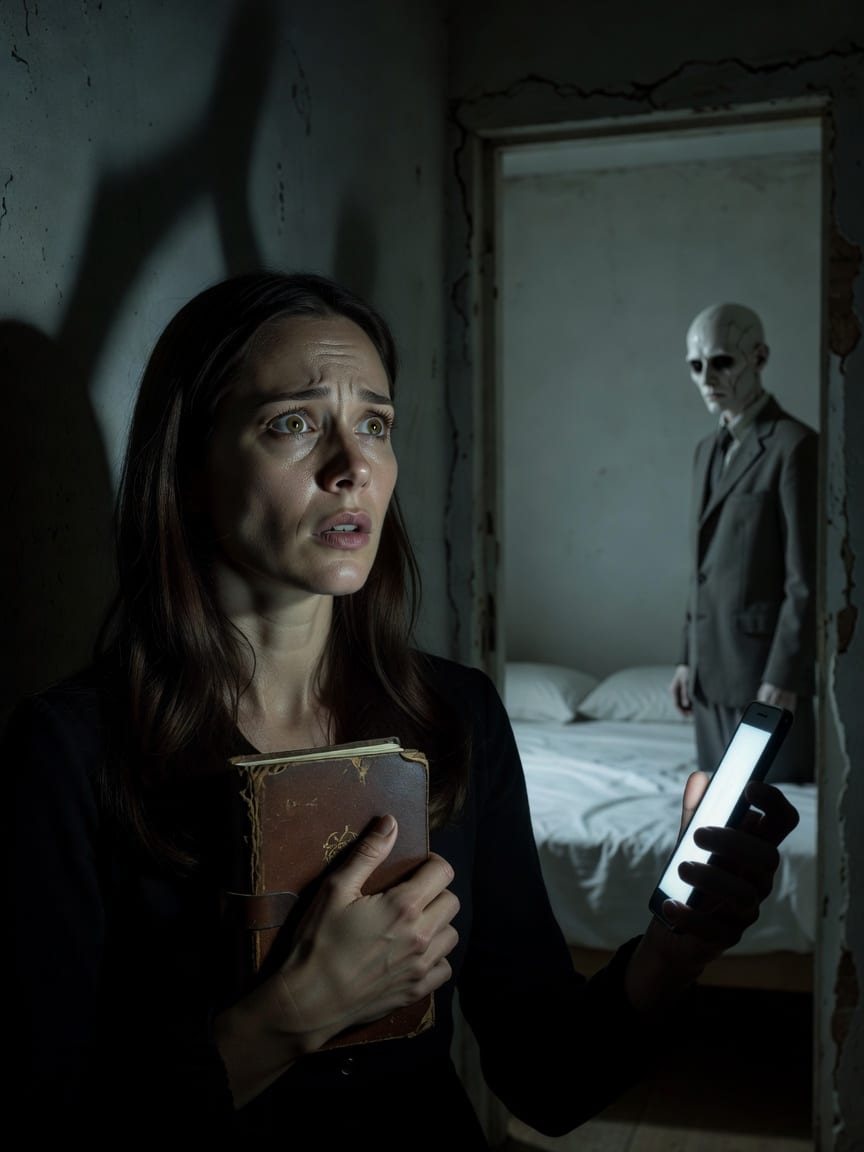
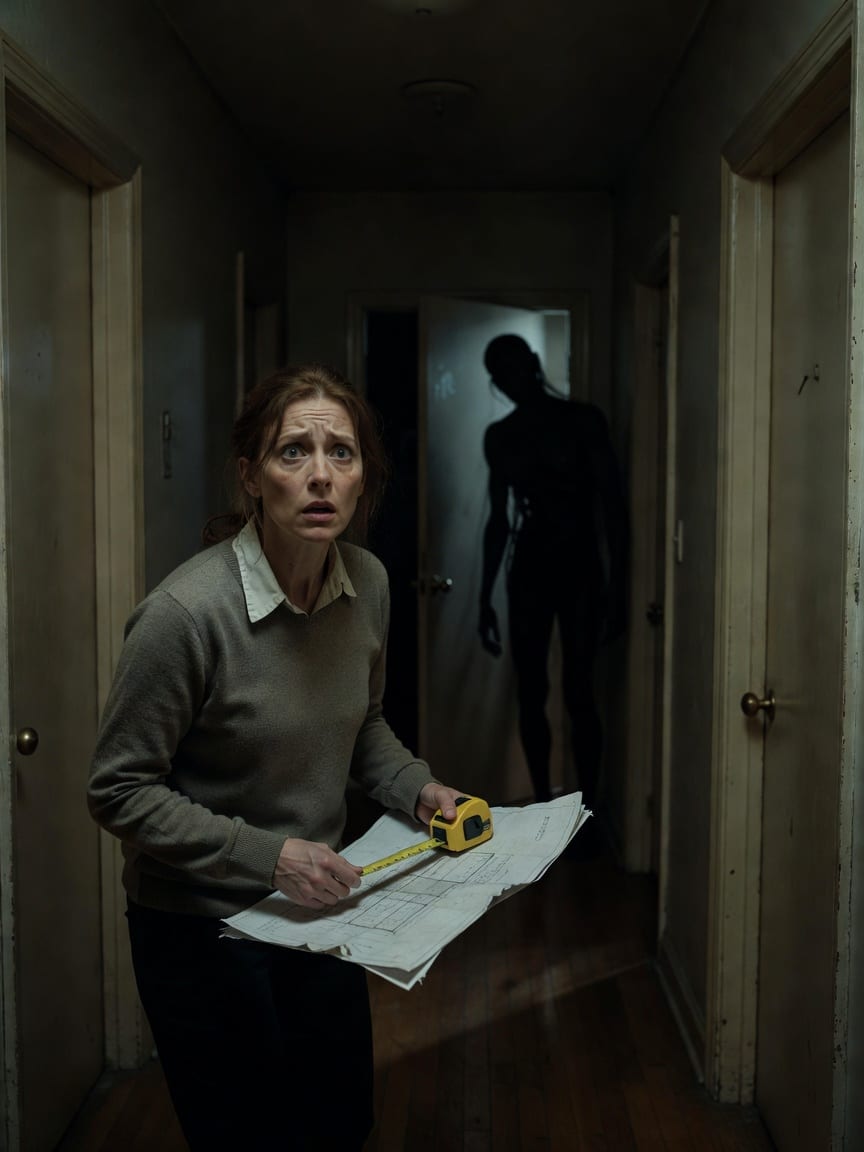
Behind a plastered-over doorway, I found a room. Papered, carpeted, and furnished with a made bed, sealed for decades. The air was dead still, but the bed wasn't dusty. My council tax bill only lists five rooms.
I'm Claire, an architect, meticulously planning my new Victorian terrace renovation. But when I uncovered a hidden room behind a wall, everything I knew about time and decay shattered. The bed was perfectly made, the air still, yet there was no dust, only an unnerving cold.