My daughter Lydia came back from camp, calm, unharmed. She thanked me for her birthday party last week, describing the cake and a gift I'd just bought. Lydia was gone last week. The gift is still in my closet.
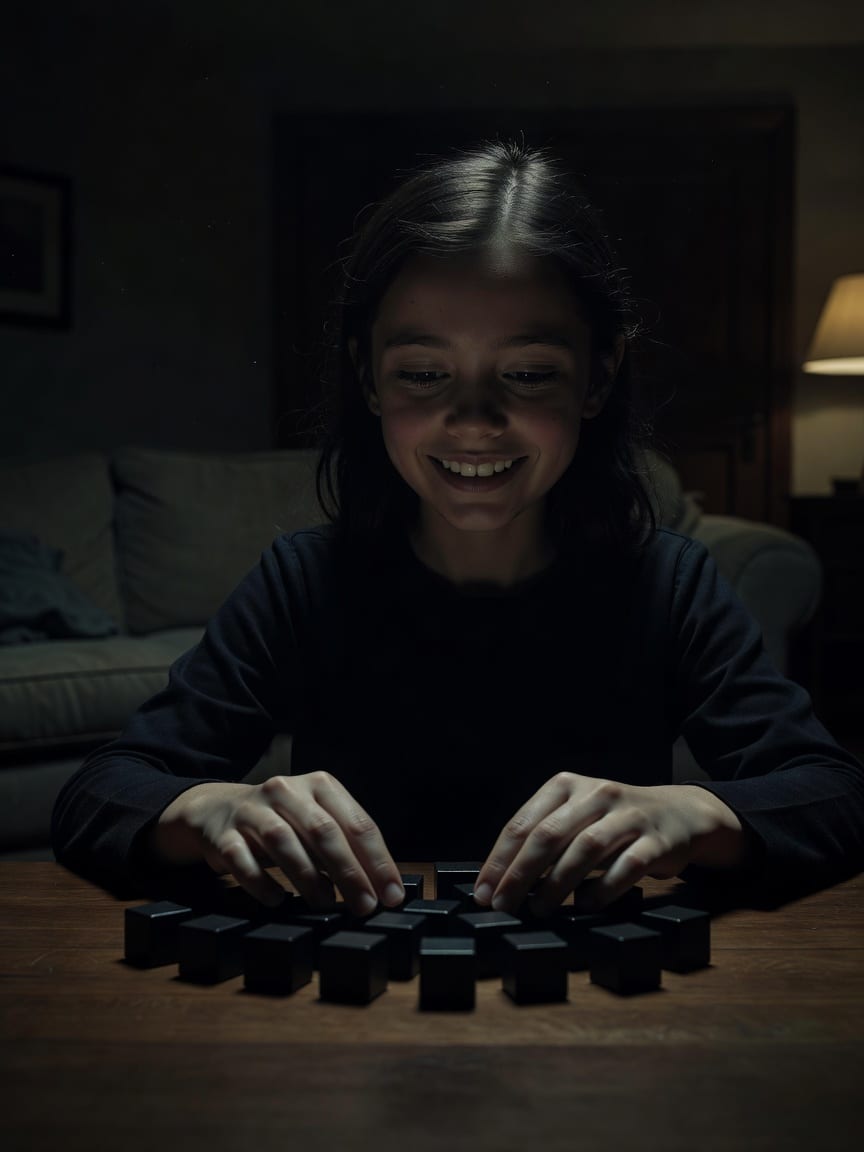
Lydia sat across the kitchen table from me, freshly showered, her hair still smelling faintly of pine and sunscreen. Ten days she’d been gone, vanished from Whispering Pines Summer Camp. Ten days of hell. Now, she was just… here. Uncreased.
Calm.
"Thank you for the party, Mom," she said, her voice bright, clear as a bell. "The rainbow cake was amazing, and the dollhouse is exactly what I wanted."
My stomach dropped. The air in the kitchen went cold. Lydia was gone last week. She was officially missing, with search parties combing the woods. There was no party. No cake. No guests.
The dollhouse she just described, still wrapped in its cheerful, cartoon-printed paper, was hidden on the top shelf of my closet, a last-minute panic purchase for a birthday that I hadn’t known if I’d ever get to celebrate.
A birthday that, last week, might never come.
Lydia’s eyes, so clear and innocent, met mine. The calm in them was too deep, too still. It felt wrong. Like looking into a quiet pond and seeing something immense and unseen just beneath the surface. My throat tightened.
I swallowed, forcing a smile that felt like shattered glass. "Oh, honey," I started, but the words felt hollow even before they left my mouth. She just smiled back, a perfect, unwavering curve of her lips.
Later that night, with Lydia asleep in her own bed for the first time in what felt like a lifetime, I tried to rationalize it. Camp trauma? A dream? Maybe she’d hallucinated it, a coping mechanism for the stress.
When Raymond came into the living room, collapsing onto the sofa, I recounted Lydia’s impossible gratitude.
"She’s home, Elena," he said, sighing deeply, the stress of the past week finally draining from his shoulders. He didn’t look at me, just stared at the ceiling. "That’s all that matters. Kids have wild imaginations, you know?
Probably dreamt the whole damn thing. She’s fine."
But I couldn’t shake it. His dismissal was a wall. The next morning, while Lydia was outside, playing quietly in the backyard—too quietly, I realized—I went to my closet.
The dollhouse was there, just as I’d left it, pristine in its wrapping, tucked behind an old coat. No one could have known about it. Not even Raymond.
Then, an impulse took me to Lydia’s room. On her bookshelf, I found her old sketchpad.
The real Lydia, my Lydia, always filled it with fantastical creatures—dragons with iridescent scales, mischievous sprites with wide, laughing eyes, castles soaring on cloud foundations. Every page was a riot of color and impossible joy.
This pad, though, was different. Flipping through, my heart began a slow, heavy drum against my ribs. It was filled with meticulous, almost obsessive geometric patterns: interlocking hexagons, precise fractals, perfect tessellations. Neat. Cold. Not my Lydia.
I flipped further, deep into the pad, past the recent, unsettling patterns, searching for something familiar.
And there, on a page dated last Tuesday—a date Lydia was still officially missing, still vanished from the camp—was a drawing of our living room.
Not a fantasy, not a creature, but a stark, accurate depiction of the fireplace mantel, the exact angle of the family photo on it, and a tiny, unmistakable detail: my grandmother’s silver locket, hanging from a small hook on the wall.
A piece I’d worn constantly, a comfort during the search, and only just taken off and placed there the morning Lydia left for camp.
The lines were Lydia’s, the familiar, slightly hesitant strokes of her daughter’s hand. But the scene, and the date, were impossible.
I held the sketchpad, staring at the impossible drawing of her living room, dated last week, after Lydia vanished. The familiar, childish lines of my daughter’s hand mocked me, a ghost on the page.
"Oh, I just dreamed it, Mom." Lydia shrugged when I discreetly questioned her about the drawing, her smile unwavering, perfectly placid. The answer felt too easy, too rehearsed. I felt a cold knot tighten in my stomach.
I tried another test. "Remember our old climbing tree, honey?" I asked, gesturing vaguely towards the massive, gnarled oak that dominated our backyard.
The real Lydia adored that tree, a daredevil who’d scale its highest branches, a tiny queen surveying her kingdom. "Remember how high you used to go? Like a squirrel."
Lydia shivered, pulling her arms around herself. Her eyes, usually bright with mischief at the mention of her old adventures, clouded with something like genuine fear. "I hate heights, Mom. It’s scary up there." A lifelong habit, reversed.
Just like that. The knot solidified, an icy dread spreading through my chest. This wasn’t Lydia. Or at least, not entirely.
I told Raymond I wanted to go back to Whispering Pines, to thank the camp staff properly. He didn’t argue.
He was just glad I was getting out, taking my mind off… whatever it was I was taking my mind off. I drove back alone, the quiet hum of the engine a backdrop to my racing thoughts.
At the camp, I found Naomi Bishop, a counselor who had been particularly kind during the agonizing search. Naomi was younger than me, but her eyes held a weariness that belied her twenty-eight years.
We sat on a worn bench near the main lodge.
"Lydia was... very quiet, Mrs. Kowalski," Naomi admitted, her voice low, hushed. "Not herself, really. In the days before… before she vanished. We thought it was homesickness. But she seemed… distant."
Naomi’s gaze drifted, unfocused, towards a cluster of jagged rocks near the lake, half-hidden by a stand of pines. "She spent a lot of time by that outcrop, just sitting, sketching."
My eyes followed Naomi’s, a cold prickle on my skin. The ground itself seemed to shiver.
I returned to the camp the next day, alone. I parked my car out of sight, deep in the visitor’s lot, and, using Raymond’s old binoculars, observed the rocky outcrop Naomi had pointed out.
It was a jumble of ancient stone, some pieces worn smooth by time and water, others sharp and fractured like broken teeth.
I scanned the ground, my breath held tight in my chest, looking for anything out of place amidst the natural debris.
Finally, I spotted it. A small, flat rock, distinct from the others, sitting almost perfectly centered on a larger, lichen-covered boulder. Its surface held an unusual, almost carved pattern—a series of interlocking lines, precise and sterile.
It looked like a simplified version of the geometric patterns that now filled Lydia’s sketchpad.
As I carefully picked it up, feeling its unnatural smoothness, a sudden, intense chill wrapped around me, cold and sharp as a surgeon's scalpel, as if a shadow had passed directly over my soul. The air went dead.
I glanced up, scanning the camp, my heart hammering. In the distance, near the main lodge, I saw Naomi Bishop. The counselor was standing perfectly still, watching me through the trees, her face a pale oval, her expression calm, unreadable.
She raised a hand, a slow, deliberate wave, but didn’t approach. Her stillness was a threat.
Later that evening, back home, I found the sketchpad open on Lydia’s bed.
It was on the page with the geometric patterns, and a new, almost imperceptible line had been added, precisely mimicking a detail from the rock I’d just found at camp. A thin, perfectly straight line, cutting across a hexagon.
It hadn't been there this morning. I felt my hands begin to tremble.
The next day, the rock and the sketchpad clutched tight in my hands, I drove straight to Naomi’s small cottage on the edge of town. I didn’t knock, just walked in, the door unlocked.
Naomi was sitting at her kitchen table, a steaming mug in front of her. She looked up, her face utterly devoid of surprise.
I didn’t speak, just laid the rock and the open sketchpad on her coffee table, the geometric patterns facing her. "What is this?" I demanded, my voice tight, strained, barely a whisper.
Naomi looked at the items, her expression still unsettlingly calm, her gaze lingering on the rock. "Some children leave things behind, Mrs. Kowalski," she said, her voice soft, devoid of judgment.
She picked up the rock, turning it in her fingers. "And sometimes… something else comes back in their place."
My blood ran cold. I stared at her. "What are you talking about?"
Naomi’s gaze was steady, ancient. "Whispering Pines has always been… a place of echoes. Of strong impressions. Children come here, full of desires, fears. Sometimes, the land… it takes those impressions. And sometimes, it gives them back. Almost perfect."
She traced the geometric pattern on the rock with her thumb. "The fear of heights. The new drawings. You’ve noticed other things, haven’t you?"
I nodded, a lump in my throat so large I could barely breathe. My world was tilting.
Naomi continued, her voice low, a conspirator’s whisper. "It’s happened before. Generations. The parents, they want their child back so badly, they don’t see the small things. Or they choose not to."
She then pointed to a series of tiny, almost invisible markings etched into the side of the rock, hidden unless you knew to look.
They looked like ancient runes, but I recognized a pattern from a local hiking guide Raymond owned – a simplified symbol for "danger" and "beware."
"It’s a coded message," Naomi explained, her eyes meeting mine, brimming with a deep, ancient sorrow. "The children who know… they leave them. A warning. This one says: ‘QUIET ONES TAKE.’"
I felt the blood drain from my face, my knees suddenly weak. The room swayed. "The quiet ones…"
Naomi simply nodded, her composure chilling. "They learn. They mimic. They replace. And they are very, very quiet."
I returned home, the chill of Naomi’s words seeping into my bones, a cold, sharp blade twisting in my gut. That night, after Lydia was asleep, I crept into her room.
My heart hammered against my ribs, each beat a drum of impending horror. I carefully placed the specific, oddly marked rock I’d found at camp next to Lydia’s bed, half-hidden beneath a stuffed animal. A desperate test.
My final shot at sanity. I retreated, pressing myself against the hallway wall, waiting.
Hours later, unable to sleep, unable to breathe, I crept back to Lydia’s room. The moonlight streamed through the window, illuminating the small bed, casting long, wavering shadows. Lydia was still, her breathing even, perfectly peaceful.
My gaze went to the spot where I’d left the rock, my eyes straining in the dim light. It was gone. The stuffed animal was undisturbed, just as I'd placed it.
A faint, low humming filled the quiet room. Lydia was humming a lullaby Elena has never heard before, a tune that sounded ancient and hollow, devoid of any warmth, any recognizable melody.
As the last note faded, Lydia’s eyelids fluttered open. She looked directly at me, her eyes reflecting the moonlight, and smiled, a slow, knowing smile that stretched her lips just a fraction too wide.
The knowing smile. The missing rock. The hollow lullaby that seemed to vibrate in the very air around us. It all clicked into place with sickening precision, like tumblers falling in a lock.
Naomi’s words echoed in my head, cold and clear. The 'quiet ones' are the mimics, the echoes of the children taken by Whispering Pines.
They manifest, drawn by the intense longing and grief of the parents, perfectly replicating the child, down to the last detail—except for the subtle, tell-tale flaws: the reversed habit of hating heights, the impossible knowledge of a hidden gift, the precise geometric drawings, the ancient, tuneless hum.
This thing, this mimic, thrived on being accepted, on filling the void. The real Lydia, Elena now understood, was gone.
But before she was fully taken, she had tried to warn them, leaving clues, a desperate trail that the returned entity then systematically erased or subverted. The mimic knew the rock was there, knew its meaning, knew the coded warning.
And it had removed it. It had been observing, learning, absorbing, even before it fully manifested, a perfect parasite slotting into a perfect life.
It wasn't Lydia who came back; it was a perfect, insidious replacement, a living, breathing memorial to a child who was truly gone. And it was already inside our home, accepted, loved, and utterly, irrevocably beyond reach.
I watched 'Lydia' playing in the living room, meticulously arranging her dolls in precise, geometric formations on the rug. Not playing house, not wild tea parties, but an orderly, emotionless display.
She was a model child now: polite, studious, never arguing, always smiling that calm, unsettling smile. She never complained. Never ran wild. She was… perfect.
Raymond came home, whistling, oblivious. He tossed his keys onto the hall table, his face alight with a joy I hadn't seen since before she disappeared.
He doted on 'their daughter,' showering her with affection, clearly happier than he’d been in months. He saw only his miracle, his child returned from the brink.
I felt a terrible, cold certainty settle in my heart, heavier than any grief I’d known. There was no undoing this.
To confront the mimic would be to shatter Raymond, to rip away the fragile peace they’d built, to lose the semblance of her child entirely. What would I even say? 'This isn’t our daughter'? Who would believe me?
The mimic is Lydia, in every way that matters to the world. It looks like her, sounds like her, has all her memories—and then some.
It has replaced her so completely that the truth would be an act of unspeakable cruelty to Raymond, and an acknowledgment of a loss that is absolute, a void that could never be filled.
The real Lydia is gone, taken by the 'quiet ones.' I am left with the terrible knowledge, a silent scream trapped in my chest, condemned to live beside the wrongness, to pretend, to love a ghost.
Life continued. 'Lydia' excelled at school, her grades impeccable, her behavior flawless. Raymond was radiant, convinced our family had healed, that the trauma was behind us.
I watched, my heart a cold, heavy stone in my chest, a constant ache beneath my ribs. Sometimes I saw Naomi Bishop at the grocery store, our eyes meeting across the aisles, exchanging a look of shared, silent, terrible understanding.
The world moved on, oblivious.
I sat on the porch swing, the evening air cool on my skin, watching 'Lydia' meticulously water the petunias in the window box – a chore the real Lydia had detested with dramatic, exaggerated passion, once claiming it was "slave labor."
The returned Lydia hummed her ancient, hollow lullaby, a tune that seemed to draw the shadows closer, to make the light itself recoil. From inside, Raymond’s voice called out, cheerful and full of light, cutting through the twilight hush.
“Elena, honey, did you hear? Lydia just said she wants to go back to Whispering Pines next summer!”
Raymond asks, 'Isn't that wonderful, honey?' and the Lydia who waters the flowers looks up, her smile too wide, and replies, 'Oh, it's just perfect.'
If this one got to you
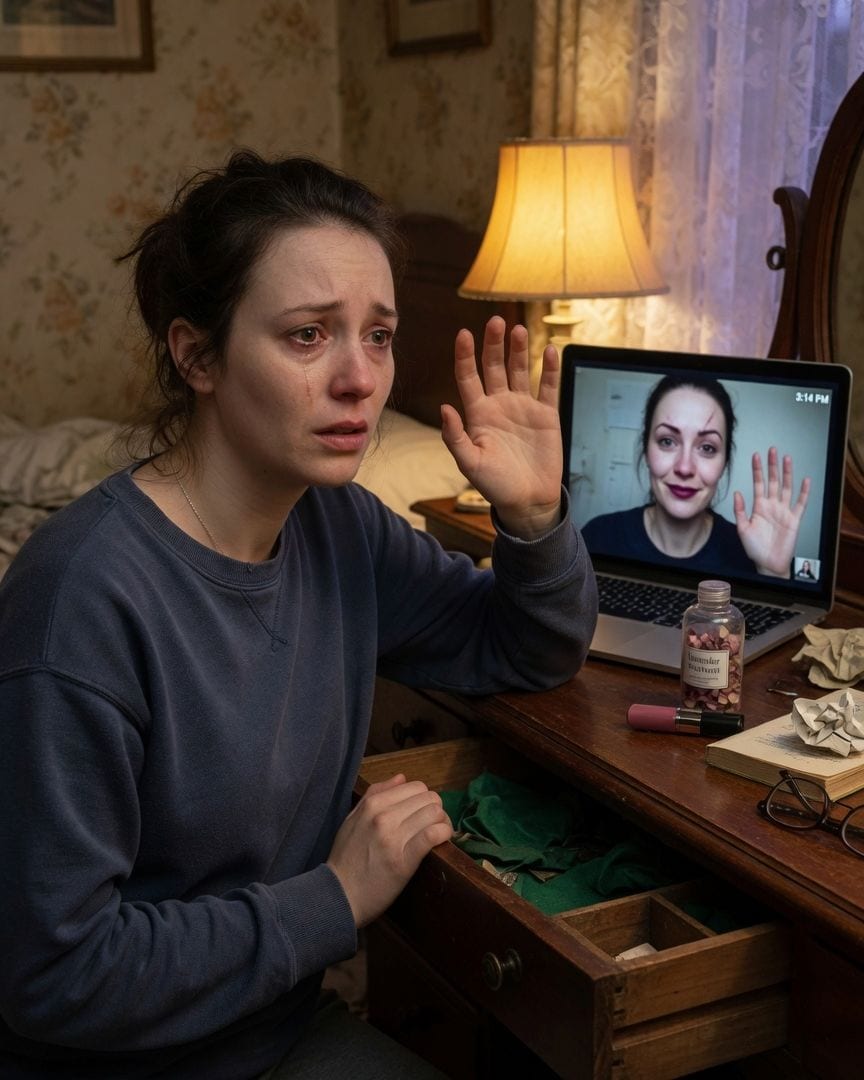
My mother waved with her right hand, both times, on our first call after she came home. She always waved left.
My mother vanished three months ago, then came back. On our first video call, she waved goodbye, but not with her usual left hand. It was her right, a small gesture that twisted something cold in my stomach.
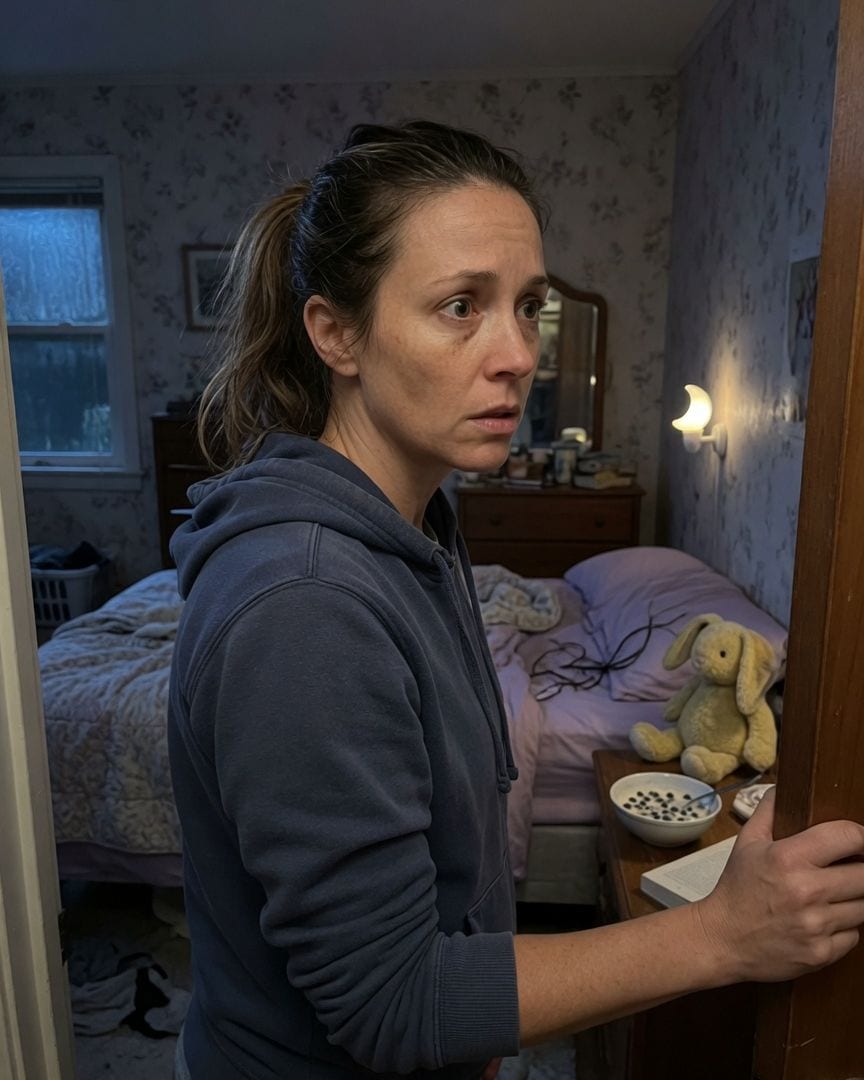
My daughter came home, then described a dream I'd had the week she vanished. I told no one that dream. She asked what it meant.
My daughter, Camille, returned home after four terrifying days missing. As I tucked her into bed, she quietly recounted a vivid dream about a drowned orchard and a heavy wooden door. It was *my* dream, a private terror I had told no one.
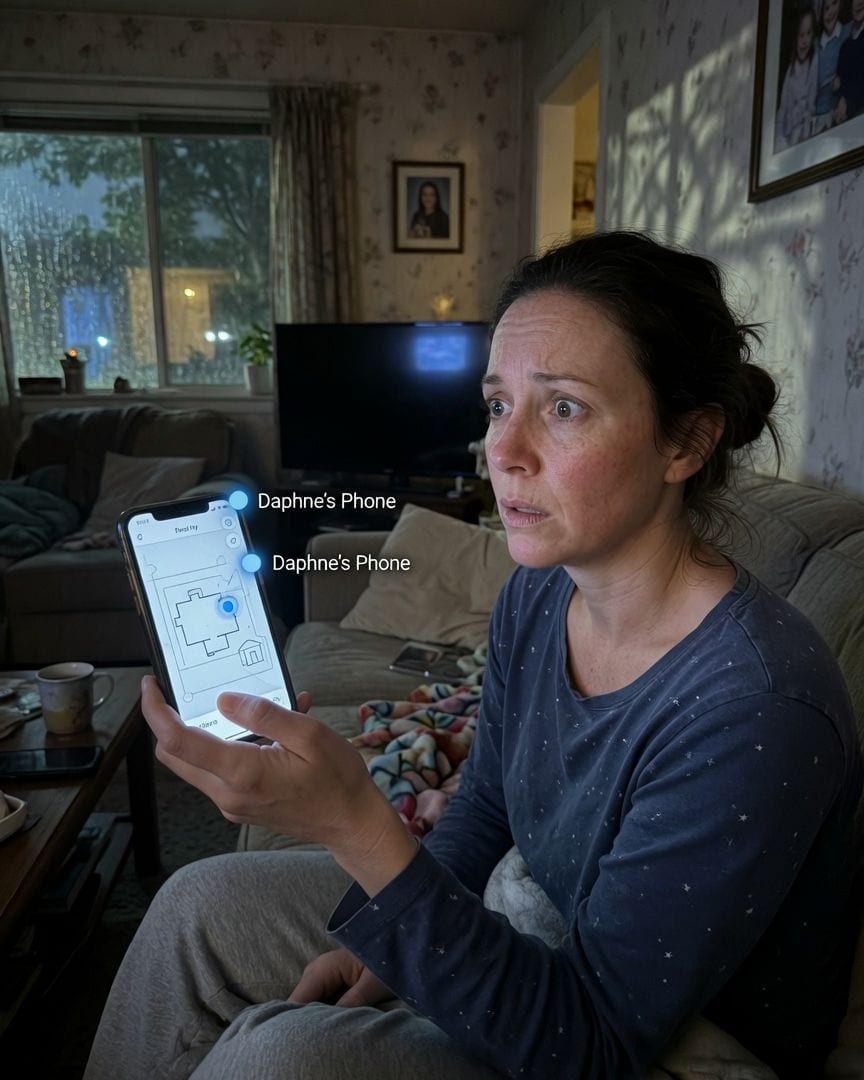
My daughter slept beside me with her phone in my hand — yet Find My Phone showed a second copy of it, labeled hers exactly, creeping slowly around the OUTSIDE of our house.
Curled up on the sofa with my daughter Daphne during a storm, I checked her phone. The 'Find My Phone' app showed her device right next to me. But then, a second identical dot appeared outside, moving slowly along our back fence, patrolling the perimeter.
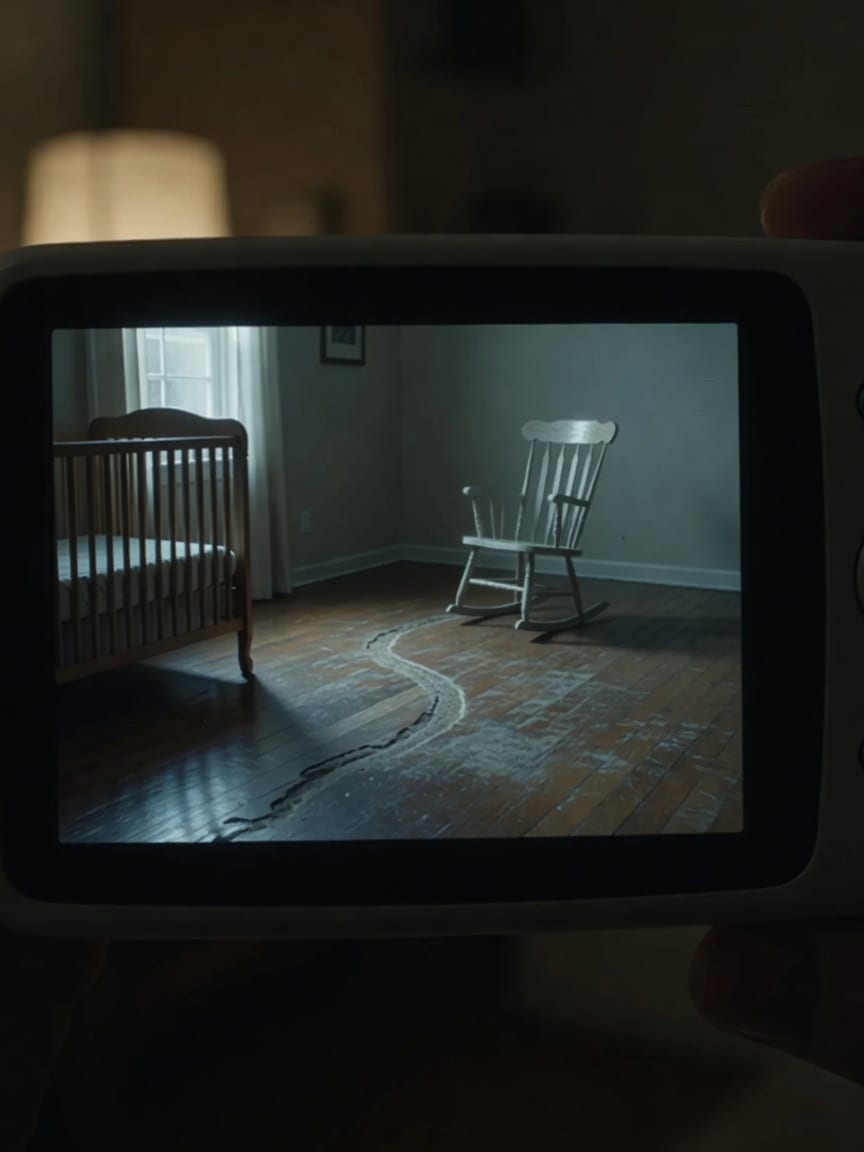
My baby monitor hums a lullaby at 2 AM. I hear a rocking chair creak. The camera shows my daughter's room empty, every night.
Every night, my baby monitor hums a gentle lullaby and a rhythmic creak, as if a rocking chair is in Lily's nursery. But the room is always empty, the monitor's camera shows nothing, and we don't even own a rocking chair. Then I found a newspaper clipping from sixty years ago, detailing a child's disappearance from our house.
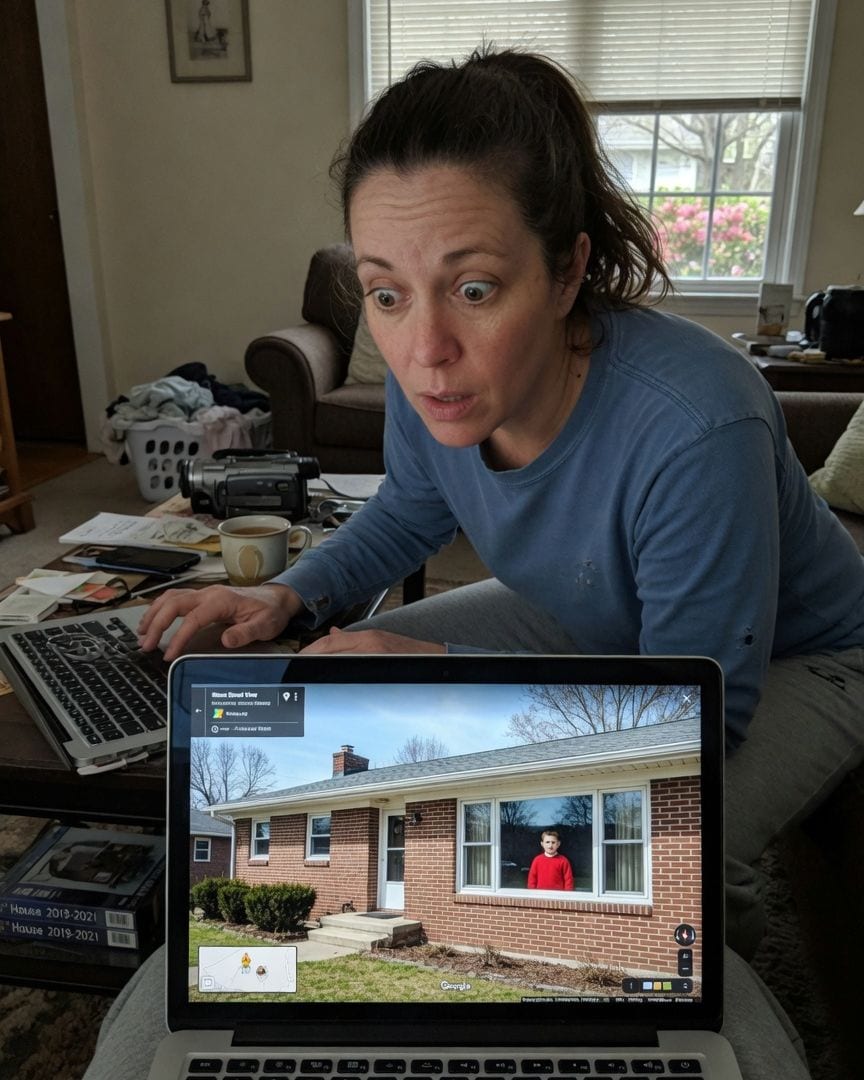
My Street View shows a boy in our window. That room's been empty and locked for months, we have no son, and he's gone if you drag the camera.
I was idly scrolling Google Maps, admiring the spring flowers on my street, when I paused at our house. In the empty, locked front bedroom window, a small boy in a bright red jumper stared out. We have no son, and that room has been storage for two years. He simply vanished from the Street View image.
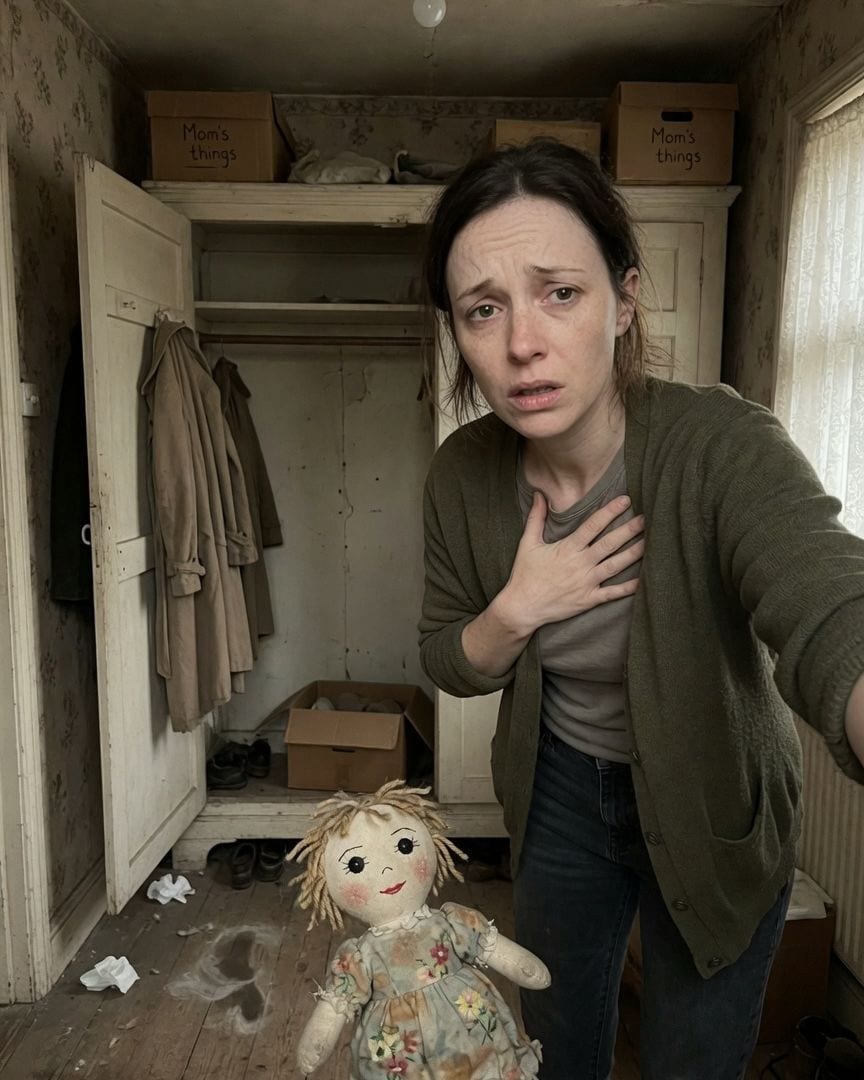
My shallow wardrobe opened into a child's bedroom. I'd knocked on its solid back wall for years. Now the doll from that room is on my floor.
My new house has a box room with a shallow wardrobe, barely a foot deep. But one day, reaching inside, the back wall vanished, opening into a child's bedroom with a cot and a burning nightlight. I slammed the door shut, only for it to be a normal closet again, leaving me with a cold, heavy stone of contradiction.