My daughter came home, then described a dream I'd had the week she vanished. I told no one that dream. She asked what it meant.
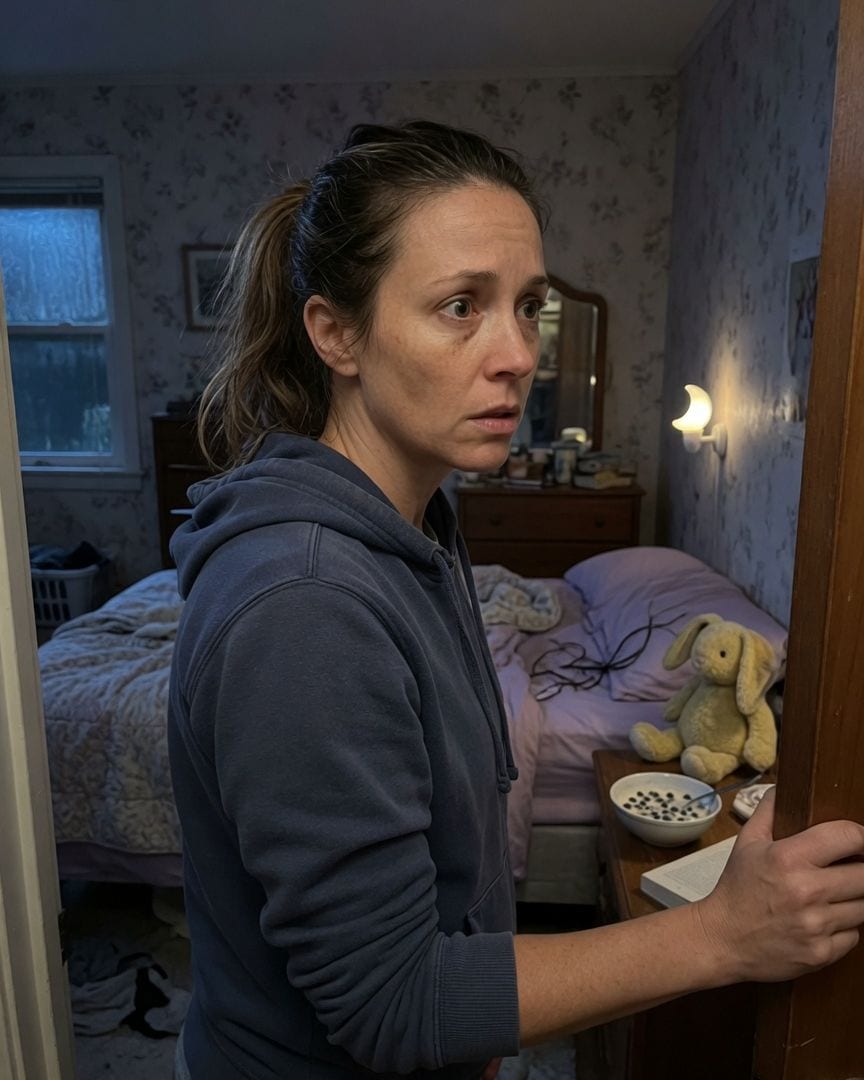
My daughter, Camille, came home from the four days the whole county spent searching the reservoir. The relief had been a physical ache, a tearing in my chest that finally eased when I held her.
Her hair still smelled faintly of lake water and something else, something metallic, like old pennies. But that night, as I tucked her into bed, her face pale in the dim light of her nightlight, she began to speak.
"I had the weirdest dream while I was gone," she murmured, her voice soft and sleepy. "It was an orchard, but it was drowned. All the trees were underwater, gnarled and dark, reaching up like arms.
And there was this door, Mom, a heavy wooden door, half-submerged in the murky water."
My breath caught. It was my dream. The one I’d had the week she vanished. The one where I was calling her name, but no sound came out, just bubbles rising to the surface.
I told no one that dream, not my husband, not my sister, not even my closest friend. It was mine, a private terror.
The next morning, over breakfast, Camille recounted it to me, clear as day, as if it were her own memory. She ate her cereal, her spoon moving in slow, deliberate circles, then looked up, her eyes wide and innocent.
"What do you think it means, Mom?" she asked. My breath caught, a cold knot forming in my stomach.
She was right there, across the table, same face, same scar above her eyebrow from that bike accident when she was eight. But the dream… that dream was mine.
I watched Camille over the next few days, searching for an explanation. Trauma, I told myself. A child's mind, susceptible to suggestion, perhaps she'd overheard me talking in my sleep, or seen something on TV.
But the details were too precise, too intimate, the murky water, the specific gnarled branches. There was no way.
Then I noticed the cereal. Camille, since she was a toddler, had always eaten her granola first, then the blueberries. A small, particular habit, one of those idiosyncratic things you only know about your own child.
Now, she methodically picked out every blueberry, ate them all, then started on the granola. It was a minor thing, easily dismissed as a new preference. But it was consistent. Every morning. I tried to bring it up casually.
"You're eating your blueberries first now, huh?" I said, trying for lighthearted. She just shrugged, a perfectly normal teenage shrug. "Yeah, I guess so. Just felt like it." But she'd never 'felt like it' before.
I saw Jeffrey Granger at the town hall meeting later that week, a local historian, always present, always calm.
He was talking about the reservoir, its long history, the 'local legends' surrounding it, his voice even and low, almost dismissive of the past tragedies.
He caught my eye from across the room, and for a split second, I felt a strange, unsettling clarity in his gaze, as if he knew something, understood something about the quiet wrongness I carried.
The air in the room seemed to still around him, heavy with unspoken things.
Camille's beloved stuffed rabbit, Barnaby, had been a fixture on her bedside table since she was four. She always, always placed him facing the window, so he could 'see the world.'
A small, faded yellow, he was more fur than rabbit now. I went into her room to tidy up, and there he was, on her table, but facing the wall.
It was another small thing, but it felt like a deliberate inversion, an echo of the cereal. My heart hammered. I picked him up, turned him to face the window, smoothing his worn fur. Just a minor adjustment.
Later that evening, after Camille was asleep, I crept back in. Barnaby was again facing the wall. I felt a cold dread claw its way up my throat. The next morning, Camille was reading on her bed.
I walked past her room, and she looked up, her eyes meeting mine, and a faint, almost imperceptible smile touched her lips, a smile that held no warmth, only a chilling, quiet knowing.
The smile haunted me. It was too subtle, too brief for anyone else to notice, but it had been there, a ripple in the stillness.
I started asking Camille's friends about her old habits, framing it as a 'fun memory game.' Her best friend, Tessa Walsh, just laughed. "Camille's always been a bit random, Deb. She changes her mind all the time."
They saw nothing, remembered nothing amiss. It made me feel like I was losing my mind, or worse, that I was alone in this.
I started spending evenings at the local library, poring over microfiche of old newspapers.
Search parties, drowning victims, 'miraculous returns' where a body was found, identified, and then later, sometimes years later, whispers of 'mistaken identity' or families 'seeing what they wanted to see.'
The articles were vague, almost poetic in their avoidance of direct contradiction, but a pattern emerged. And Jeffrey Granger's name, always there, quoted as a local historian, an expert on the reservoir's lore, a calming voice in times of panic.
He was present in every instance, a quiet constant. I even found a faded photo of him, decades younger, at a press conference about a missing hiker.
His expression then was the same as now: serene, detached, as if viewing the chaos from a great distance.
I started noticing him around town, too. Not overtly, but a flash of his silver hair behind a bush as I walked home, his car parked a block away from my house for a little too long.
The streetlights seemed to hum louder when he was near. He wasn't just observing history; he was observing me.
The feeling of being watched intensified. One afternoon, I found a small, folded piece of paper tucked into my mailbox. No stamp, no address, just my name scrawled on it in an elegant, old-fashioned hand.
Inside was a faded, sepia-toned photograph. It was a child's drawing, meticulously rendered: the drowned orchard, exactly as I had seen it in my dream, complete with the gnarled trees, the murky water, and the dark, wooden door half-submerged.
It wasn't Camille's art style, not even close. The paper felt brittle, ancient, almost crumbling in my hands. My hands trembled. This wasn't a coincidence, or a trick of memory. Someone knew. Someone was sending me a message.
I drove straight to the historical society, the photograph clutched in my hand, the old paper cutting into my palm. Jeffrey Granger was there, as always, cataloging old documents, the air still and dusty around him, smelling of forgotten things.
He looked up as I entered, a faint, unreadable smile already on his lips, as if he'd been expecting me. My breath hitched. He knew I had the photograph. He had sent it.
I laid the photograph on his desk, my voice shaking. "You sent this."
Jeffrey Granger picked up the photo, his fingers tracing the outline of the drowned orchard. He didn't deny it.
"An old drawing," he murmured, his voice as quiet as the dust motes in the air, "from a similar incident, decades ago. The imagery is remarkably consistent."
My mind reeled. "What incident? What are you talking about?"
He looked at me, his eyes calm, almost pitying. "The reservoir, Deborah. It's a thin place. A place where the veil between… here and elsewhere… is permeable. Sometimes, when someone goes in, something else comes out."
I stared at him, trying to process the impossible words, the chill from the stone walls suddenly feeling colder. "You mean… Camille… she's not…"
He nodded slowly. "Not entirely. The dream you had, the one she recounted? It was a lure. A connection. A way for it to understand you, to learn the patterns, the memories it needed to inhabit her."
The cereal, the rabbit, the dream – it all clicked into a horrifying, coherent pattern, like tumblers falling into place in a lock. "It's a placeholder," he continued, his voice devoid of emotion, "It fills the void. Maintains the balance.
It looks like her, sounds like her, because it learned. But it isn't her. Not completely."
The terror wasn't in the monster, but in the cold, rational explanation, the quiet acceptance of it. "How can you be so calm?" I whispered, my voice raw, feeling the floor itself tilt beneath me.
He simply smiled, a thin, knowing curve of his lips. "Because, Deborah, I've seen it before. Many times." He paused, his gaze fixed on mine. "And I've seen the cost of fighting it."
Jeffrey rose and walked to a locked cabinet made of dark, ancient wood, producing a thick, leather-bound ledger, its pages yellowed with age. The lock clicked with a soft, final sound.
He laid it on the desk, the smell of old paper and dust filling the small room, thick and sweet like decay. He opened it to a page from decades ago, his finger resting on an entry.
"This town has a long history with the reservoir," he said. "And with the Donovans." My family name. My blood ran cold.
The entry detailed a young girl, 'Rosemary Donovan,' who had 'returned' after a drowning incident, just like Camille. Beneath the text, a small, faded photograph was taped: a young woman, smiling. My grandmother. Rosemary.
I remembered her, a quiet, peculiar woman who always had her own way of doing things, little habits that seemed to defy logic, like arranging her teacups in reverse order of size.
Jeffrey pointed to a handwritten note beside the photo: 'a peculiar reversal: always wore brooch on left, now on right.' My grandmother had always worn her mother's cameo brooch on her left lapel.
I remember my own mother trying to correct her once, and Rosemary had simply smiled that same faint, unreadable smile Camille had. Jeffrey met my gaze, his own eyes holding an ancient, quiet understanding.
"It runs in the family, Deborah," he said, his voice barely a whisper. "You've always been sensitive to the shifts."
Jeffrey explained that the 'Donovan line' had a particular sensitivity to these 'thin places,' making them both targets for these 'exchanges' and unwitting conduits for the entities to learn.
"They are not malicious," he clarified, his voice a steady drone that somehow calmed and terrified me simultaneously, "simply different. They perceive a void, and they fill it."
He spoke of a delicate balance, maintained for generations, where the town, on some subconscious level, preferred the peace of the illusion to the chaos of the truth.
The 'habit reversed' was a common, unavoidable tell, a small, almost affectionate error in their mimicry. He then revealed that he, too, was a 'returned' from a similar incident in a different town, decades ago.
That's why he monitored, why he maintained the ledger, why he understood. He turned more pages, showing me other names, other faded photographs, each with a subtle wrongness in their eyes, each with a note about a reversed habit.
The air in the dusty room felt suddenly too thin to breathe. "Camille isn't evil," he said gently, closing the ledger with a soft thud. "She is… occupied. And she is now part of this pattern."
He explained that the entity had absorbed fragments of her, and in doing so, had created a seamless replacement. He pushed the ledger across the table. "The knowledge is the burden, Deborah. Not the entity itself. The entity simply is."
I returned home, the weight of Jeffrey's words pressing down on me like a physical force. The house, once my sanctuary, now felt like a stage, and Camille, a brilliant, terrifying actress.
The silence of the familiar rooms hummed with something alien. She was watching TV, a bowl of cereal in her lap – blueberries eaten first, then the granola. Barnaby, the stuffed rabbit, sat on her bedside table, facing the wall.
I walked into the living room, stood before her. This wasn't a confrontation of words, but of wills.
I looked at her, truly looked at the face that was my daughter's, the eyes that held a flicker of something ancient and deep, something that mirrored the calm in Jeffrey Granger’s gaze.
"Do you remember that time," I began, my voice steady despite the tremor in my hands, "we went camping by the old mill, and you fell in the creek, and I had to pull you out?
You cried for hours, remember? Said you saw something shiny in the water, trying to pull you deeper."
She paused the TV, her expression perfectly neutral, a slight tilt of her head. "Oh, yeah," she said, a small, perfect laugh, devoid of any genuine emotion. "I was so scared. And you got all muddy trying to save me.
I was such a crybaby." Her recall was flawless, the emotional beat correct, but it was just a recitation. It lacked the genuine spark, the shared intimacy of a true memory, the way a true memory makes your stomach clench.
She smiled then, that same faint, knowing smile I’d seen before, but this time it held a question, an almost imperceptible challenge. "Is something wrong, Mom? You look a little… pale."
The horror was not in her denial, but in her perfect, empty affirmation. I couldn't expose her. I couldn't save her. I had to live with this, with it. It knew me. And I knew it.
Life resumed its rhythm, a terrifyingly normal one. Deborah never spoke of the ledger, or Jeffrey Granger, or the drowned orchard again.
Camille continued her life, a perfect imitation of the girl she had been, her habits subtly inverted, her memories a flawless echo. The town remained peaceful, oblivious to the quiet exchanges happening beneath its surface.
Deborah learned to live with the constant, subtle wrongness, the ghost of her daughter in the body of another. Jeffrey Granger continued his silent watch, an unblinking eye on the delicate balance.
The dread was a constant companion, a quiet hum beneath the surface of every ordinary day.
Deborah sat at the breakfast table, stirring her coffee. Camille was across from her, absorbed in her phone, spooning blueberries into her mouth, then the granola.
Barnaby, the stuffed rabbit, sat on her bedside table, visible from the doorway, facing the wall. Deborah watched her, the familiar ache in her chest now a dull throb, a steady drumbeat.
She had learned to ignore the small, daily inversions, the micro-wrongnesses that once screamed at her.
She had learned to live with the silence of her own true memories, the ones that belonged only to her and the girl who was gone.
The sun streamed through the window, illuminating the dust motes dancing in the air, a perfectly normal morning. She took a sip of her coffee, its warmth a contrast to the cold certainty within her.
She was here, she had survived. But she was not saved. She was simply the one who knew.
Jeffrey Granger walked past the Donovan house later that morning, a thin, leather-bound ledger tucked under his arm. He glanced at the window, where Deborah sat, a faint, unreadable smile on her face as she watched her daughter.
He made a small, neat checkmark next to the name 'Donovan' in his book.
If this one got to you
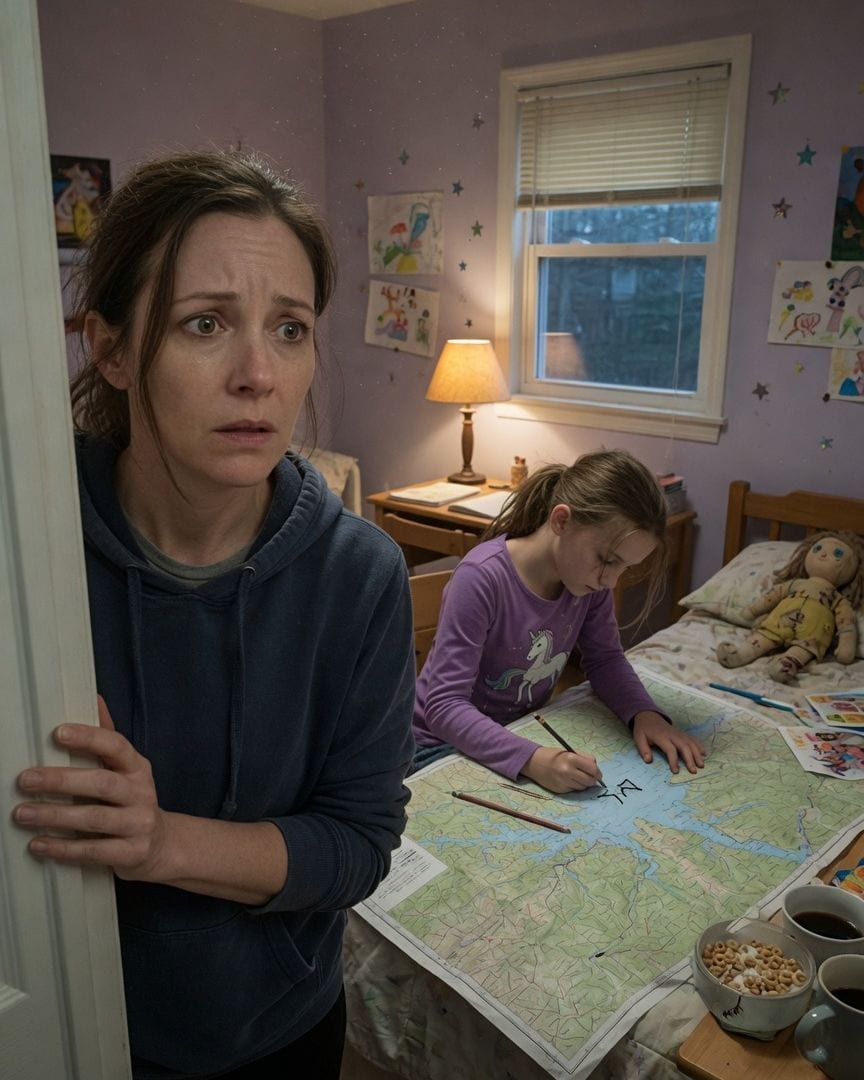
My daughter described a dream I never told anyone. She recounted the drowned orchard, the door under the water, and me calling her name. She asked what it meant.
After four brutal days searching for my daughter Bonnie, she was finally home. But over breakfast, she described a private dream of mine, a submerged orchard and an underwater door, a dream I had never told a single soul. My coffee went cold in my hands.
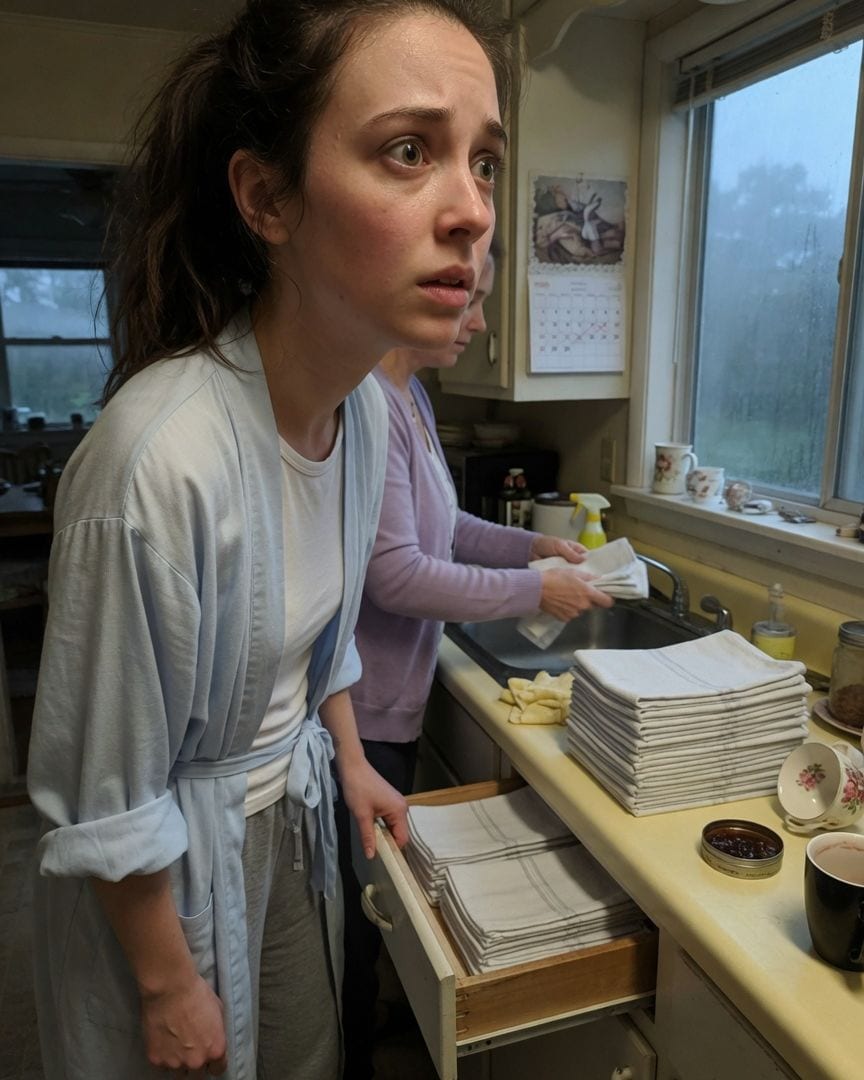
My mother's left wrist has a new scar. She never had one there.
My mother is finally home after her disappearance, and I'm trying to find our old rhythm. But then I watch her fold tea towels, a simple ritual I learned from her. She's doing it completely wrong, seam-out, insisting it's how she's always done it.
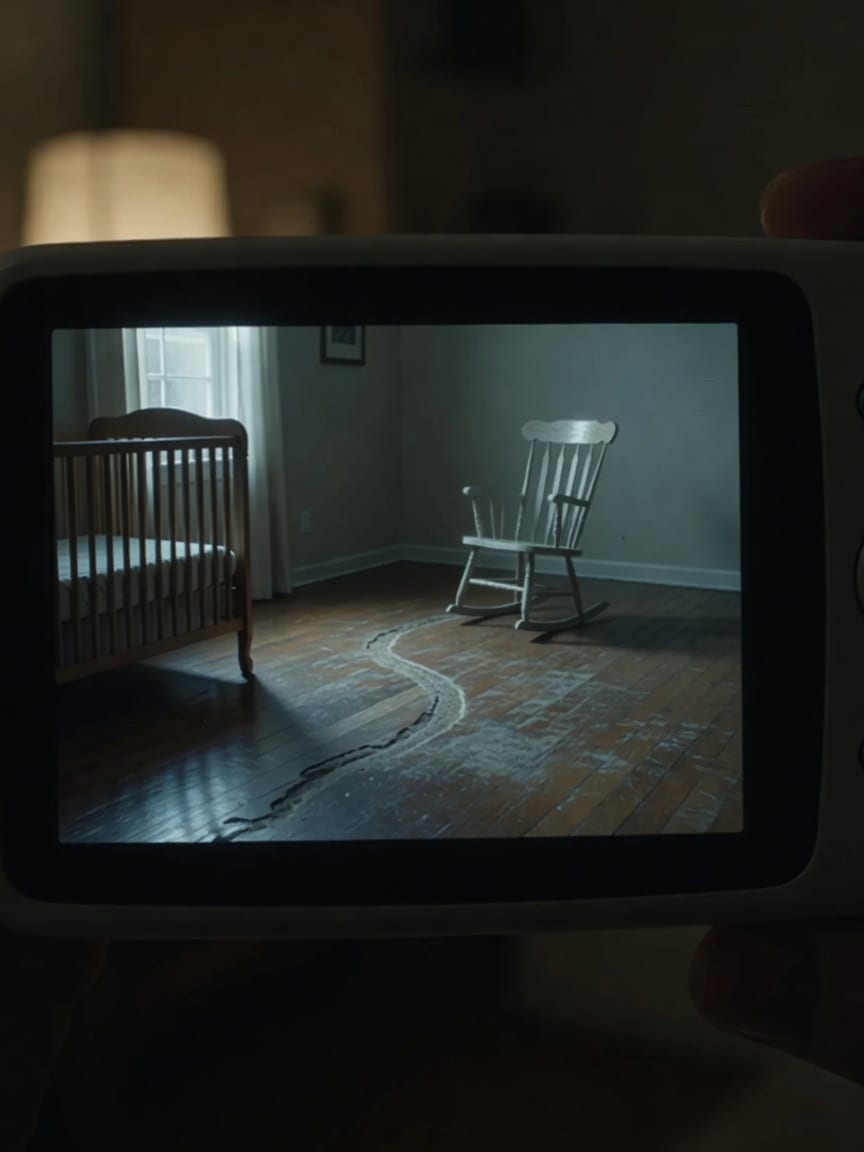
My baby monitor hums a lullaby at 2 AM. I hear a rocking chair creak. The camera shows my daughter's room empty, every night.
Every night, my baby monitor hums a gentle lullaby and a rhythmic creak, as if a rocking chair is in Lily's nursery. But the room is always empty, the monitor's camera shows nothing, and we don't even own a rocking chair. Then I found a newspaper clipping from sixty years ago, detailing a child's disappearance from our house.
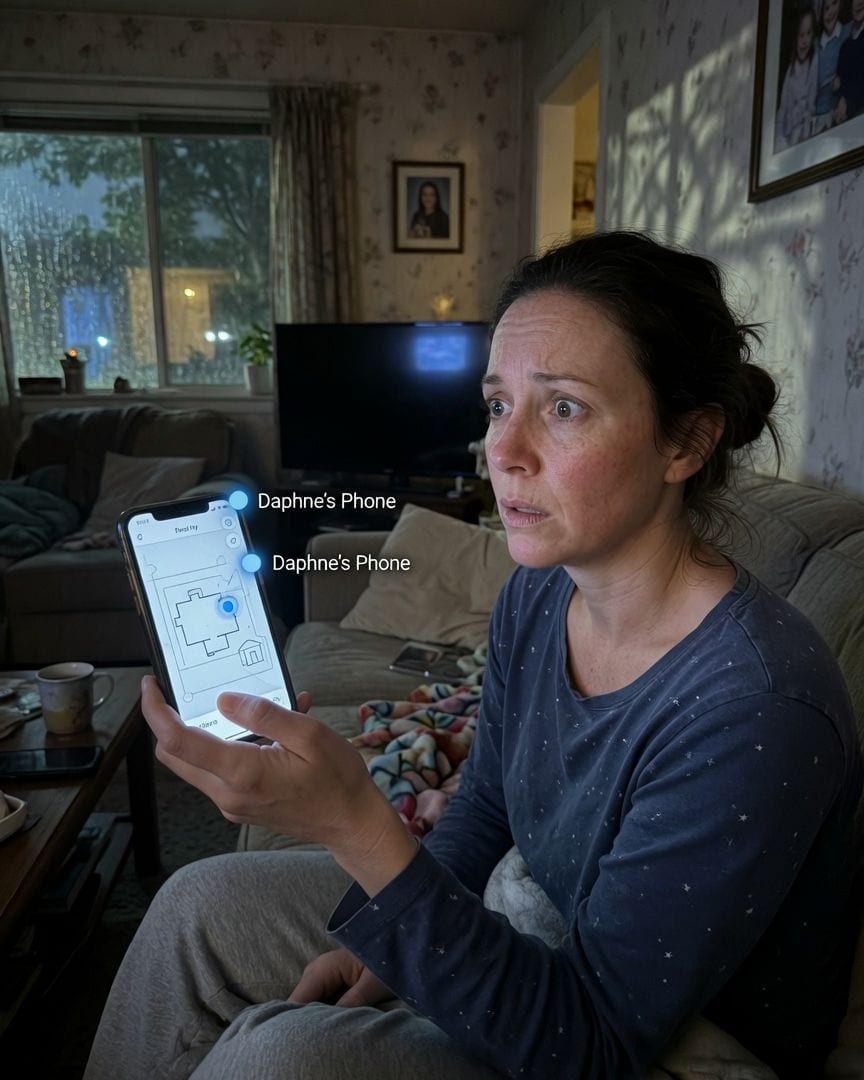
My daughter slept beside me with her phone in my hand — yet Find My Phone showed a second copy of it, labeled hers exactly, creeping slowly around the OUTSIDE of our house.
Curled up on the sofa with my daughter Daphne during a storm, I checked her phone. The 'Find My Phone' app showed her device right next to me. But then, a second identical dot appeared outside, moving slowly along our back fence, patrolling the perimeter.
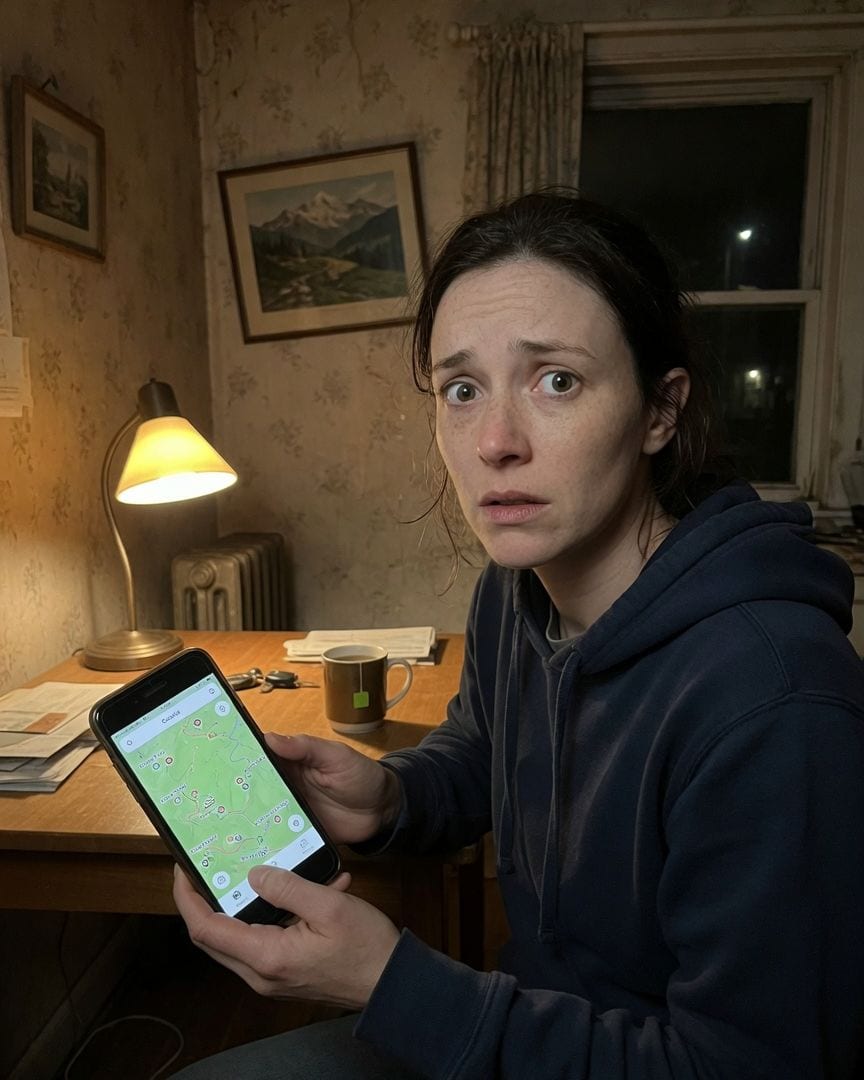
My hiking app scrubbed the hill's name from the map, on a phone that's been in airplane mode for two days.
I just moved to town and hiked a local hill, 'Cathan Tor,' according to my phone's app. But when I mentioned the name to the mechanic, he froze, dropped his wrench, and whispered, 'Don't say that name, Colette.'
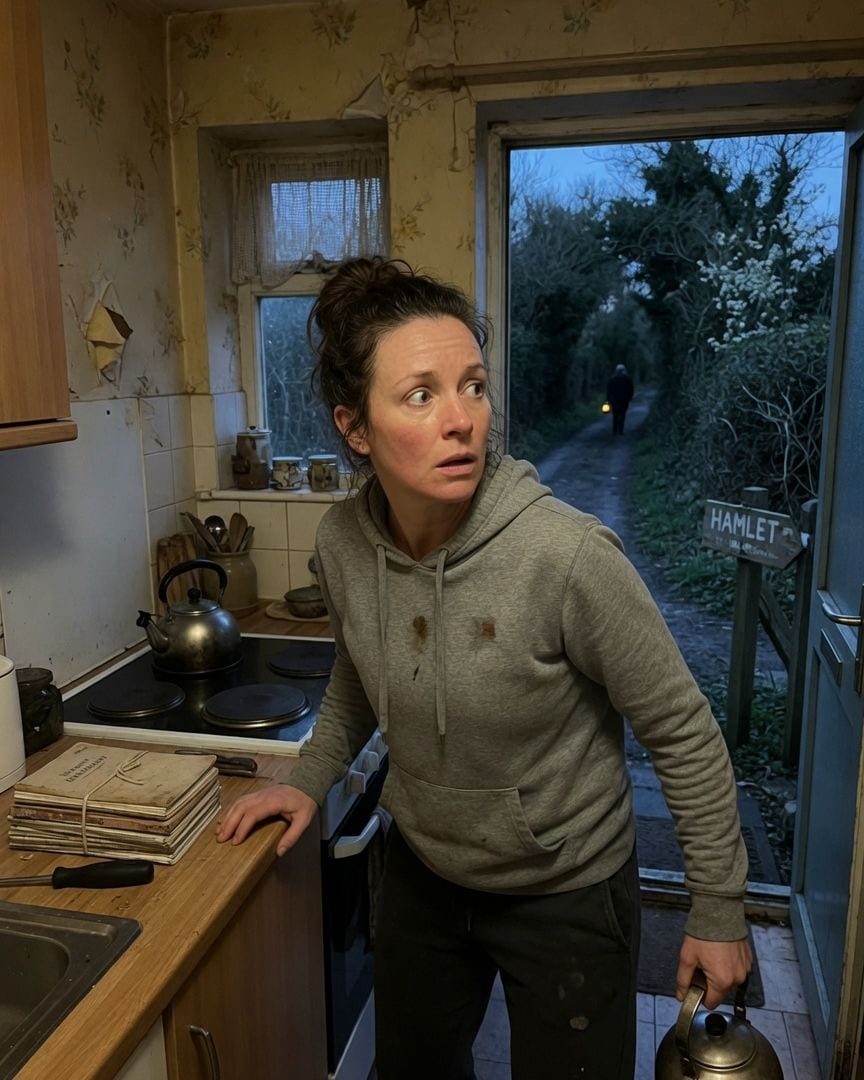
My side gate opens onto a dirt lane between hedgerows, not the close, and a figure with a lantern comes up it toward me.
My side gate normally opens onto the familiar tarmac of the close, but lately, it's opened to a narrow, overgrown dirt lane instead. Three times now, at dusk, I've seen a man with an old-fashioned lantern walking unhurriedly up this impossible lane towards my house. Each time, when I dare to look again, the lane is gone, leaving only the bins and a racing heart.