My dentist's system says I was there last Thursday. I wasn't. But the check-in tablet shows my signature, and the hygienist described my chipped tooth exactly right.
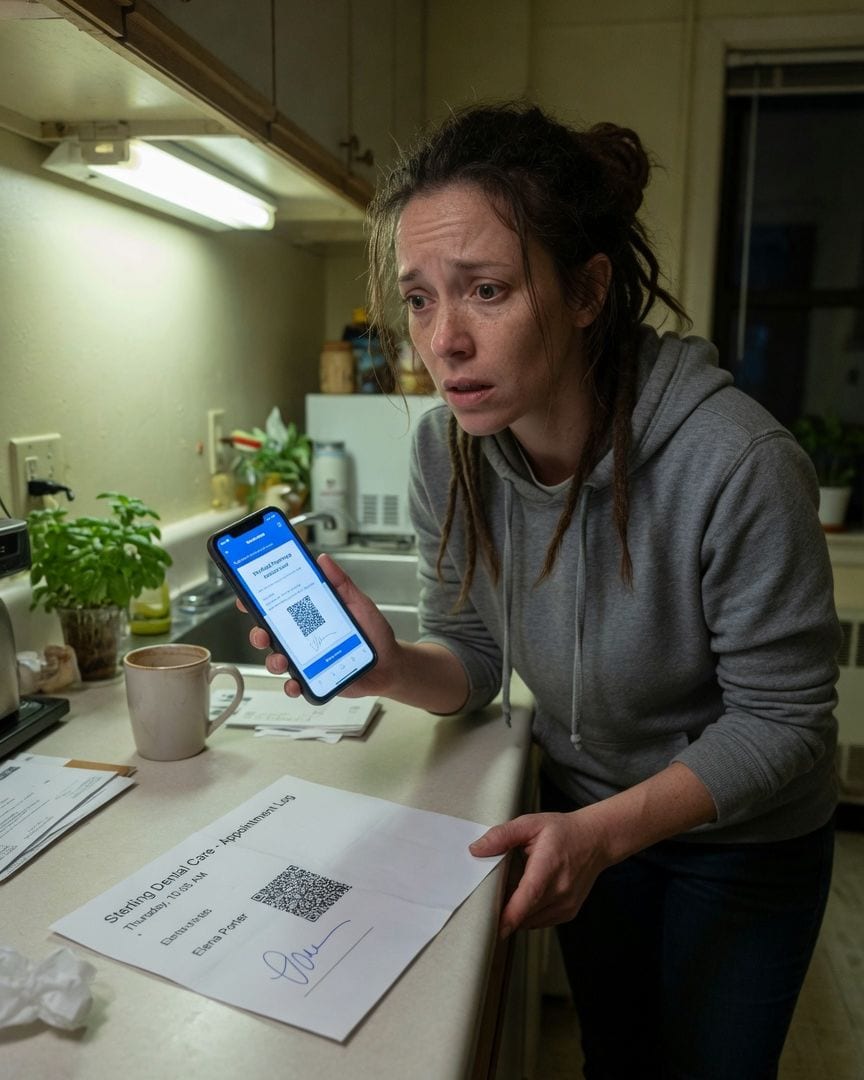
The phone rang, and it wasn’t my alarm. That was the first wrong thing. It was 8:17 AM on a Monday, and the display said "Sterling Dental Care."
"Elena Porter?" The voice on the other end, bright and efficient, belonged to Vivian Vaughn, the receptionist. "Just confirming your appointment with Dr. Aris next Thursday at 10 AM. You received the reminder text, yes?"
My stomach dropped. "I… no. I didn't. And I don't have an appointment next Thursday." I had been meaning to schedule a check-up, but I hadn’t. Not yet.
Vivian’s cheerful tone wavered slightly. "Oh, that's odd. Our system shows you checked in last Thursday for a cleaning and a consultation. Digital signature, everything." She paused, a light tap-tap sound like nails on a keyboard.
"And Sylvia, our hygienist, specifically noted your left incisor. The one with the small chip on the edge? Said you mentioned it’d been bothering you a little."
A cold draft seemed to sweep through my apartment. My chipped incisor. I’d had it since I was eight, a playground accident. It wasn't on my dental chart, not really. It was just there.
And it hadn't bothered me in years. "That's impossible," I said, my voice tight. "I was home all of last Thursday. I had a deadline."
Vivian, however, was unswayed. "Well, Ms. Porter, our records are very clear. Your name, your signature on the tablet. Sylvia distinctly remembers you. Perhaps you just forgot?" Her smile felt audible, too wide, too bright, even through the phone.
But the memory of that chip, the way Sylvia had described it, felt like a physical touch, too precise to be a guess. This wasn’t a mistake. Not a simple one.
The cold dread settled in my chest, heavy and solid.
I went to Sterling Dental Care that afternoon. The office was exactly as I remembered it: quiet hum of fluorescent lights, the faint, clean smell of antiseptic and spearmint.
Vivian Vaughn sat behind the reception desk, her smile still unnervingly cheerful.
"Ms. Porter! I'm glad you came in." She gestured to the check-in tablet on the counter. "See? Thursday, 10:05 AM. Your signature, clear as day."
I leaned over the counter. There it was. My name, in my looping, slightly angled script. Perfect. Too perfect, almost. It looked like a high-resolution scan, not a fresh digital drawing. My mind scrambled for a rational explanation. A prank?
Identity theft? But why a dental cleaning?
Before I could voice any of these, Sylvia Merritt, the hygienist, emerged from a back room, carrying a tray of instruments. She looked up, saw me, and her eyes brightened. "Elena! Back so soon? Everything alright with that incisor?"
She gave a small, knowing smile, the kind you give to a regular patient. "I remember you saying the light sometimes caught the chip just so, made it look bigger than it was."
The air in the room seemed to congeal. Sylvia had described it exactly as I always saw it. The way the light hit it. This wasn't on any file. It wasn’t public knowledge.
"I wasn't here, Sylvia," I said, my voice barely a whisper. "I promise you. I was not here last Thursday."
Sylvia’s smile faltered, replaced by a flicker of confusion. "But… of course you were. We chatted about your vacation plans. You signed in, had your cleaning…" She trailed off, looking from me to Vivian, then back again.
"Are you feeling okay, dear?"
I felt a sudden need for something tangible, something I could hold. "Do you have any physical paperwork?" I asked Vivian, my eyes scanning the pristine, uncluttered desk. "A printout? Anything with my signature on it from that day?"
Vivian shook her head. "We're almost entirely paperless now, Ms. Porter. It's all in the system." She seemed eager to move on, to re-establish the bright, normal veneer of the office.
"But I can give you a printout of the appointment log, if it helps clear things up."
She clicked a few times, and a single sheet of paper slid out of a printer. It listed the date, time, my name, and a small, pixilated image of that unnervingly perfect signature.
The paper felt cold in my hand as I walked out, the hum of the fluorescent lights following me, oppressive and artificial.
Back home, the printout lay on my kitchen counter, a stark white testament to an impossible event. I was trying to debunk it, to find the crack in the facade.
Vivian and Sylvia were either incredibly elaborate pranksters, or I was losing my mind.
I opened my online banking app, scrolling through last week's transactions, looking for anything that might coincide, any stray purchase that might explain an outing. Most of it was predictable: groceries, utilities, a coffee shop near my apartment.
Then I saw it. A charge from "Whitfield Pharmacy." The name alone made me frown. Whitfield was a small town, a good two hours' drive from my home, not somewhere I ever went.
And the date: last Thursday afternoon, a few hours after my 'ghost' dental appointment.
My thumb hovered over the transaction, then clicked. A digital receipt popped up, detailing a prescription refill for a common allergy medication, one I'd certainly never taken. And at the bottom, there it was. A signature.
Identical to the one on the dental printout, identical to my own. The same loops, the same slant, the same perfect, unnerving precision.
I stared at the screen, the blue light of the monitor reflecting in my eyes, making the familiar kitchen seem darker, colder. My apartment, usually a refuge, now felt like a stage. This wasn't just Sterling Dental.
This was a pattern. A suffocating realization dawned, heavy and final. This wasn't a clerical error.
The drive to Whitfield felt longer than two hours. The landscape blurred past, a nondescript stretch of highway. I clutched the printout of the pharmacy receipt, its smooth surface growing warm under my fingers.
This had to be the key, the mundane explanation that tied everything together. Maybe I’d accidentally used an old card, or a friend borrowed it? The thought felt thin, like tissue paper.
Whitfield Pharmacy was a small, independent place, nestled between a diner and a dry cleaner. Inside, it smelled of menthol and old paper. Jeffrey Lawson, the pharmacist, was a man in his late fifties with kind, tired eyes.
I showed him the digital receipt on my phone, explaining the situation with a calm I didn't feel.
He frowned, tapping a pen against his counter. "Allergy meds, hmm? Well, it was certainly a busy Thursday. But… Elena Porter, yes, I vaguely remember." He squinted at me. "You were in, signed the pad.
Said you were just passing through, picked up a few other bits too." He pulled up the transaction on his system. "See? Digital signature capture. Perfectly valid."
"Did you get a look at me?" I asked, my voice hushed. "My face?"
He shrugged. "It's always a blur, people coming and going. But the signature matches. Let me see…" He clicked something, and a grainy still image appeared on his screen, pulled from an overhead security camera.
It showed a woman, from the neck down, signing the electronic pad at the counter. Her hair was my color, her coat was like one I owned. The angle, the bright glare from the front window, obscured her face.
But her hand, captured in mid-motion, was mine. The signature on the pad was mine.
"That's all we capture, really," Lawson said, oblivious to the dread now tightening around my throat. "Just verification of the transaction."
I thanked him, the words feeling like gravel in my mouth, and left, the sterile, chemically sharp air of the pharmacy now feeling suffocating. My next step was a long shot, based on a faint hope of an analogue trail.
I drove to the address of my childhood family doctor, Dr. Thatcher. The building was still there, but the sign outside now read "Whitfield Walk-In Clinic."
Inside, a young receptionist, barely out of her teens, explained that Dr. Thatcher had retired years ago. "All the old patient files, though, they're still here," she said, tapping a manicured nail on her desk. "In the archive room downstairs.
We keep them for a legal minimum, just in case." She pointed to a door at the back, almost hidden behind a water cooler. "A bit dusty, but you might find what you need. Just sign in here."
She pushed a digital tablet toward me. I signed it with a hand that felt suddenly alien.
The archive room was a tomb of forgotten lives. Row upon row of metal shelves, stacked with faded manila folders. Dust motes danced in the single shaft of light filtering through a high, grimy window.
The air was cold, stale, thick with the smell of old paper. I found the section for 'P,' then 'Porter,' and pulled out the thick folder labeled 'Elena Porter, D.O.B. 1989.'
I spent the rest of the day in that room, sifting through the years of my medical history, looking for anything, any small clue to this impossible duplicate life.
I found old vaccination records, school physical forms, even a faded consent form for a third-grade field trip to the zoo. All bore my name, my birthdate, and eventually, my developing childhood signature.
Each one was a legitimate record of my life.
As I worked, I noticed him. An elderly man, maybe seventy, sitting in a small, glass-walled office across the hall from the archive room entrance. He wasn't doing anything, just sitting at a desk, occasionally looking up.
And when he looked up, his gaze drifted to the archive room door, to me. He never approached, never smiled. Just watched. He reminded me of a still photograph, perfectly composed. It was Oscar Thatcher. I knew it.
He’d been the practice manager, my mother had mentioned him.
I went back the next day, the chill of his gaze still on me. He was there again, in the same office, in the same chair. He watched me as I passed, a faint, almost imperceptible tilt of his head.
I felt a shiver, a cold recognition. He knew.
When I finally left that afternoon, my head throbbing from the dust and the impossible puzzle, I walked to my car. As I reached for the door handle, I saw it.
Tucked neatly under the windshield wiper, a small, folded piece of paper. It was thick, almost cardstock.
I unfolded it. A single sentence, typed precisely, centered on the page: "Some things are better left undisturbed, Ms. Porter. It's not always a glitch."
My breath hitched. I scanned the street, the empty parking lot, the clinic entrance. Oscar's office window was dark, a black rectangle against the fading light. He was gone.
But the note, stark against the cool glass of my windshield, confirmed it. I was being watched. And this was no glitch.
I called Oscar Thatcher from my car, using the number I’d found for his old practice manager role. He answered on the second ring, his voice surprisingly robust for his age.
We arranged to meet at a quiet cafe not far from the old clinic.
He was there when I arrived, nursing a cup of tea, his face a web of fine wrinkles, but his eyes sharp, almost unnervingly lucid. "Ms. Porter," he said, without preamble, "I assume you have questions about my note."
"Yes," I said, sliding into the seat opposite him. "What do you know? And why are you watching me?" I pushed the printouts across the table: the dental record, the pharmacy receipt, both bearing my ghost signature.
He glanced at them, a small, knowing smile playing on his lips. "I left the note because I saw you digging. And some things… some things are better left buried."
He leaned forward, his voice dropping to a low, even tone. "You've stumbled onto what we call 'proxies.' Or, more colloquially, 'Echoes.'"
The cafe, usually a comforting backdrop of clinking cutlery and murmuring conversations, suddenly felt too loud, too close. My coffee, untouched, was already growing cold in my hands.
"Echoes?" I managed to say.
"Biologically crafted duplicates," Oscar stated, utterly unperturbed by the absurdity of his words. "Not true clones, not in the traditional sense. More like highly sophisticated biological templates. They are used for… data collection. Information gathering.
Sometimes, proxy participation in various procedures." He picked up the dental printout. "Like this. A dental check-up. Or a pharmacy pickup, as you've discovered."
"But my signature," I stammered, "how? It's exactly mine. And the chipped tooth… Sylvia described it perfectly."
"Ah, the signature," he said, a glint in his eye. "They're very good. They scan legitimate signatures from old forms. Childhood enrollment records, insurance documents, anything that contains an authentic, original sample.
They use a specialized device to replicate it, not just digitally, but almost… biologically. The muscle memory, the unique pressure points of your hand – it's all transferred." He pushed the dental printout back towards me.
"And the chipped incisor, Ms. Porter. You see, some details are easier to replicate than others. A unique scar, a specific mole, an unusual chipped tooth. These are valuable markers. They ensure the 'Echo' is a precise physical match.
Makes the ghost seem real, you understand? Makes the record indisputable." He paused, taking a sip of his tea. "These Echoes, they look like you, they act like you, they even sign like you. But they are not you."
My mind reeled, trying to reconcile his calm, matter-of-fact tone with the sheer impossibility of his words. Duplicates? For data collection? It was insane. And yet, everything he said, every detail, resonated with the impossible facts I had uncovered.
The precise signature. The chipped tooth. The two-hour drive to Whitfield. It all fit into this horrifying, coherent whole. The hum of the cafe receded, replaced by a roaring silence in my ears.
"Why me?" I asked, my voice barely a whisper. "Why my chipped tooth? Why my signature?" The absurdity of it was overwhelming, turning my stomach.
Oscar took another slow sip of his tea. He then reached into a worn leather satchel by his feet and pulled out a small, almost antique-looking leather-bound ledger.
It was thick, its pages yellowed with age, filled with neat, spidery handwriting. He placed it carefully on the table, opened it to a marked page.
"Your enrollment form from St. Jude's Elementary," he began, his finger tracing a line on the ledger. "Signed at seven years old. One of the earliest, and most perfect, samples they obtained. You had a particularly distinctive hand even then."
He then produced my dental printout again, placing it next to the ledger. He pointed to a faint, almost invisible watermark near the bottom, a tiny, intricate pattern.
"This is a digital replication of a physical watermark on a health insurance enrollment form you filled out years ago. They are embedded into the data for verification. A marker. Your signature, your history, all linked."
My eyes darted between the ghostly watermark and Oscar’s unblinking gaze. My childhood signature, pulled from a mundane school record, now a ghost on a form I never signed.
It was a violation so deep it felt like a cold invasion of my very past.
Then he turned back to the ledger, pointing to a specific entry. My exact birthdate was listed next to a familiar name: 'Elena Porter.' Beneath it, in the same precise script, a brief note: "Minor procedure.
Tissue sample acquired, unique genetic marker identified. Date: three months prior."
Three months prior. I remembered being utterly drained for a few days, a lingering fatigue I couldn’t shake. I’d blamed it on stress.
I stared at the entry, my vision blurring. My name. My birthdate. 'Tissue sample acquired.' 'Unique genetic marker identified.' The words swam before my eyes, heavy and horrifying. It wasn't just a signature, not just a physical double.
Not just an Echo mimicking me. Something physical, something of me, had been taken. My own body, involved in this dark, unseen choreography, without my knowledge, without my consent. The implications crashed down on me, a wave of cold, absolute terror.
The air in the cafe seemed to thicken, making it hard to breathe. The faint clinking of cutlery from other tables now sounded like a distant, mournful bell.
Oscar watched me, his expression unreadable, as I stared at the ledger. "The genetic marker," he finally continued, his voice softer now, almost empathetic, "was the final verification.
The initial genetic material, enough to establish the basic template, was actually acquired from your childhood school health screening, under the guise of routine tests. The 'tissue sample' from three months ago? That was a recalibration.
A 'refresh' of the original template."
He closed the ledger, the faint thud echoing in the sudden, unnerving silence around our table. "Echoes, Ms. Porter, are meticulously crafted biological duplicates.
Imprinted not just with your physical traits, but with a degree of your memories, your mannerisms, even your handwriting. The chipped tooth, the way you tilt your head, your specific allergies – all transferred.
It's why the hygienist remembered the specific detail about the light hitting your incisor. It was programmed. All of it. They wanted the Echo to be indistinguishable."
He leaned forward, his eyes fixed on mine. "The 'Record Disagrees,' as you put it, because two timelines, two 'Elenas,' exist simultaneously.
One living your life, the other performing proxy appointments, gathering data, moving through a network operated by something far larger than just Sterling Dental. A shadowy 'Consortium,' as we call them.
For purposes that extend far beyond dental work or pharmacy pickups."
The horror of it was not in its strangeness, but in its perfect, terrifying coherence. Every impossible detail, every inexplicable event, now clicked into place, forming a complete, monstrous picture.
My own body, my own past, woven into a fabric of unseen control.
A cold rage, steady and brittle, began to build inside me. "Who is 'they'?" I demanded, the words sharp. "This 'Consortium'? What do they want?"
Oscar sighed, a deep, weary sound. "The Consortium is vast. Global. They operate on a scale you can't imagine. Echoes are used for everything from clinical trials for experimental drugs – proxy patients, you understand?
– to intelligence gathering, to infiltration. If they needed a specific genetic profile for a study, or a credible presence in a sensitive location, an Echo could be deployed. They harvest data, biological information, even social connections.
You, Ms. Porter, with your unique genetic marker and that distinct chipped incisor, were a particularly valuable template."
He met my gaze, his eyes betraying no emotion. "I warn you now, Ms. Porter. Templates are valuable. But problems… problems are 'cohered.' You begin digging into their operations, you become a problem."
The threat hung in the air, unstated but absolute. Cohered. The word itself was chilling. I looked around the cafe, at the smiling faces, the ordinary conversations, the mundane rituals of human life. How many of them were real?
How many were Echoes? My perception of reality had been shattered, piece by agonizing piece, and now the fragments coalesced into a truth too vast and terrifying to grasp.
I stood abruptly, knocking my chair back with a loud scrape. The sound made a few heads turn. I couldn't breathe in that cafe any longer. I couldn't look at Oscar Thatcher, who knew so much and cared so little.
I couldn't look at anyone. The world outside the cafe's window, once familiar, was now a subtly, horrifyingly different place, every face a potential lie, every interaction carrying the implication of a potential Echo.
I walked out, leaving Oscar and his ledger and his terrible truths behind. The cafe door closed with a soft, final click, like a lock turning.
My life was irrevocably altered. I tried, futilely, to erase my digital footprint. I changed accounts, canceled subscriptions, sought out new doctors, all under the delusion that I could somehow make myself un-findable.
But the Consortium remained an unseen, undisturbed force, a silent, pervasive presence in the periphery of my awareness. Every new person I met, every polite smile, every casual gesture, now held a terrifying potential. Was it them? Was it me?
Oscar Thatcher disappeared a week later, unnoticed by the world, a single sentence in a quiet newspaper obituary, listing a cause of death that felt too convenient, too neat.
A few months later, I found myself back at Sterling Dental Care for a legitimate appointment. The dread was a dull ache in my chest now, a constant companion. My hand, almost automatically, formed my signature on the check-in tablet.
The act, once so mundane, was now alien and tainted, a conscious surrender to a system that had already consumed me. The clarity of my understanding was the real horror.
My neighbor, Ryan Sterling, was walking past the office just as I entered, a half-smile on his face, oblivious. I met Vivian Vaughn’s cheerful gaze as I finished signing. My lips curved into a faint, almost imperceptible tilt.
"Is that so?" she murmured to the receptionist, the chip on her left incisor glinting under the fluorescent lights.
If this one got to you
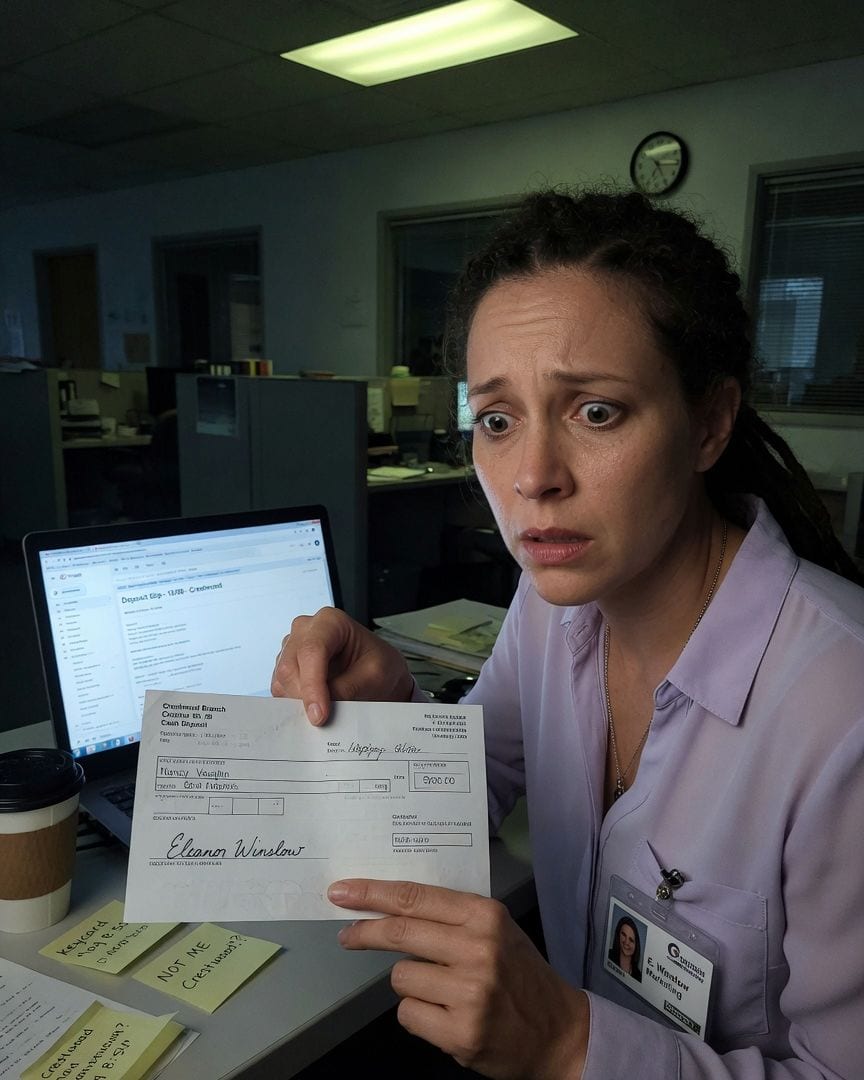
My bank statement shows a $900 cash deposit made in a town I've never set foot in, at 10:40 AM on a workday. I was at my desk, badged in. Two more landed since.
My bank statement showed a $900 cash deposit from a town I'd never visited, 150 miles away. I was at my desk, logged into work, all three times. But the scanned deposit slip arrived, clear as day, showing my own flawless signature.
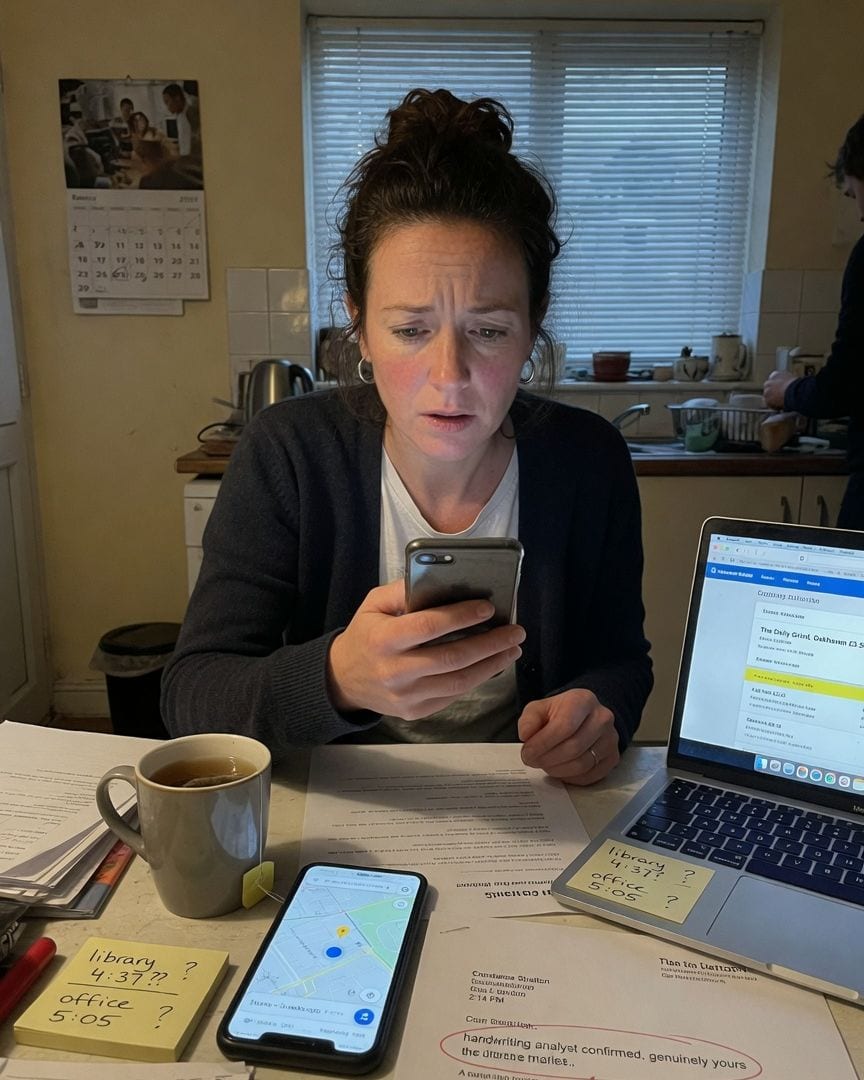
My signature covers a twelve-thousand-pound loan agreement. It's witnessed three hundred miles away, the day my phone confirms I was home.
My afternoon takes a chilling turn when the bank calls about a £12,000 loan, signed with my own handwriting in a town 300 miles away. My phone proves I was at my kitchen table at the time, yet a handwriting analyst confirms the signature is genuinely mine. The impossible truth deepens when a keycard log places me 100 miles away, just minutes before I entered my office.
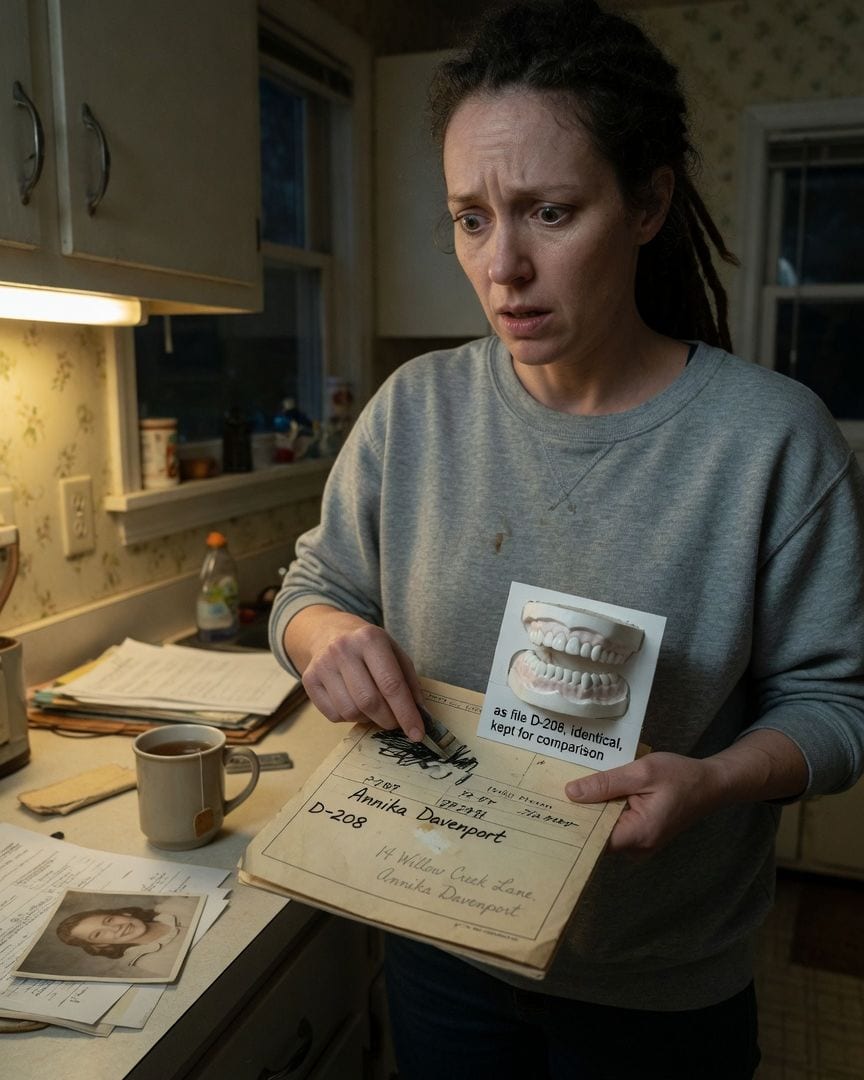
My childhood dental chart lists the house I bought last year — in my own name, years before I was born. A second set of my teeth sits filed beside it, marked 'identical.'
Sifting through old dental records, I found my chart, D-208, with my 1988 birth date. But a line from 1958 was blacked out, and a clipped card with an impression of my teeth listed my name and current home address, decades before I was born. The impossible facts knotted into a cold certainty.
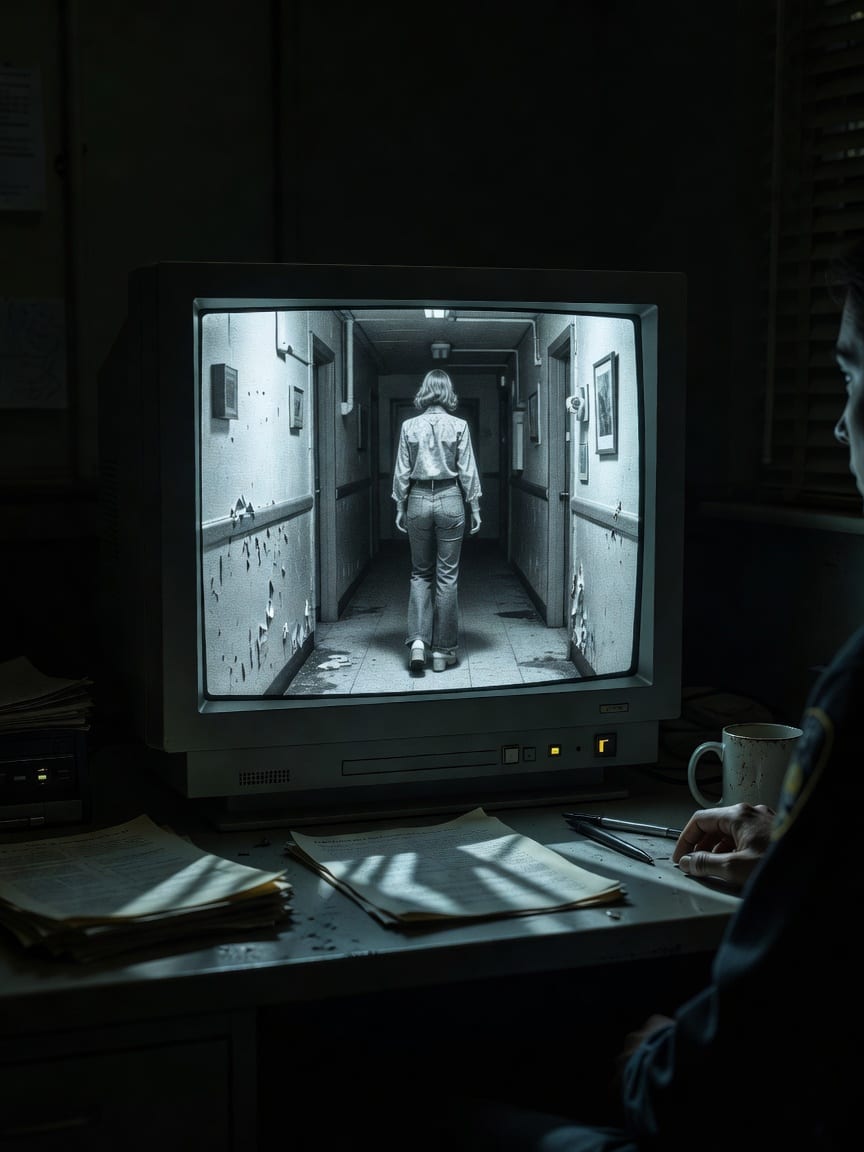
My intercom buzzed at 3 AM, a voice asking to step out for air. The station manager insists no one works the newsroom overnight, and no Cheryl is on payroll.
My shifts as the night security guard at WMVX are usually quiet, the TV station a tomb from 11 PM to 6 AM. But a late-night intercom call from a woman named Cheryl, who my manager says doesn't exist, was unsettling enough. The next night, my digital security log showed a new entry for 'Producer Cheryl Hartley'—a line I never typed, with details I couldn't have known.
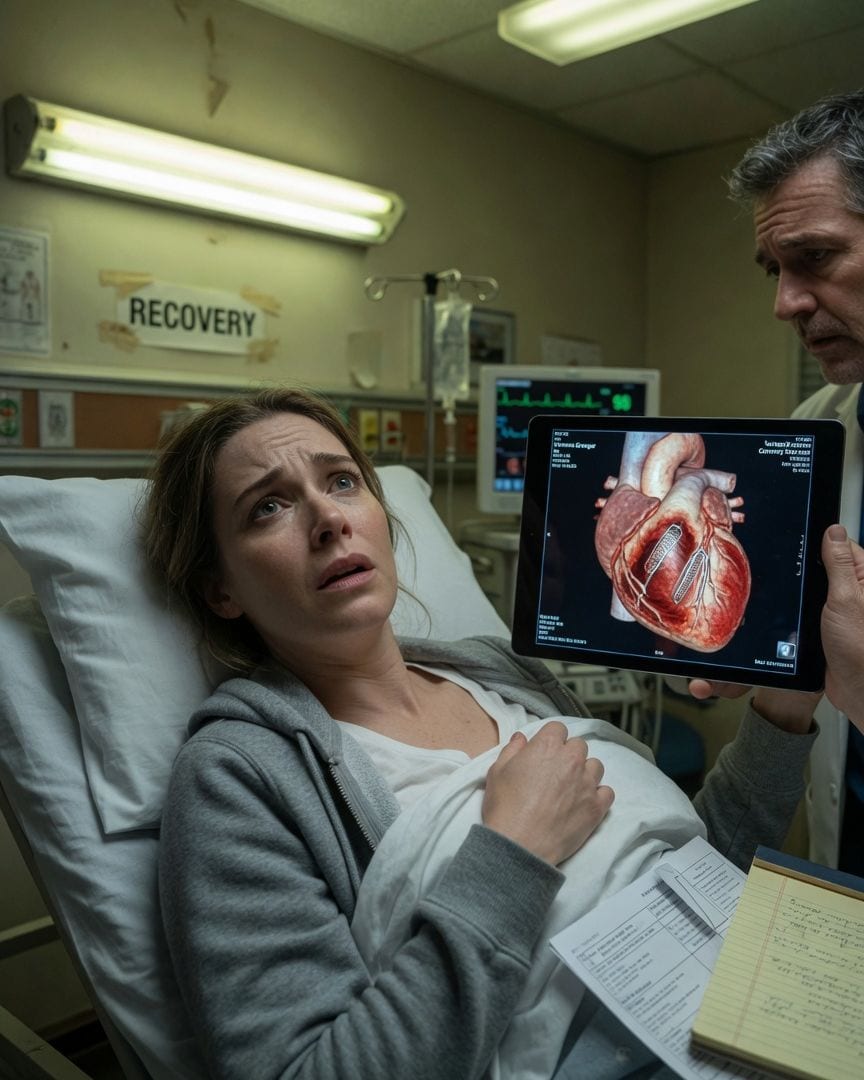
Metal stents are propping open my heart. The doctor rotated the image, but I've never had a cardiac procedure.
After years of dismissed chest pain, a CT scan revealed an impossible truth: my heart contained two metal stents. Dr. Maddox confirmed there was no record of any cardiac procedure in my entire medical history, and I had no memory of ever having surgery. My own body held a secret, alien architecture I couldn't explain.
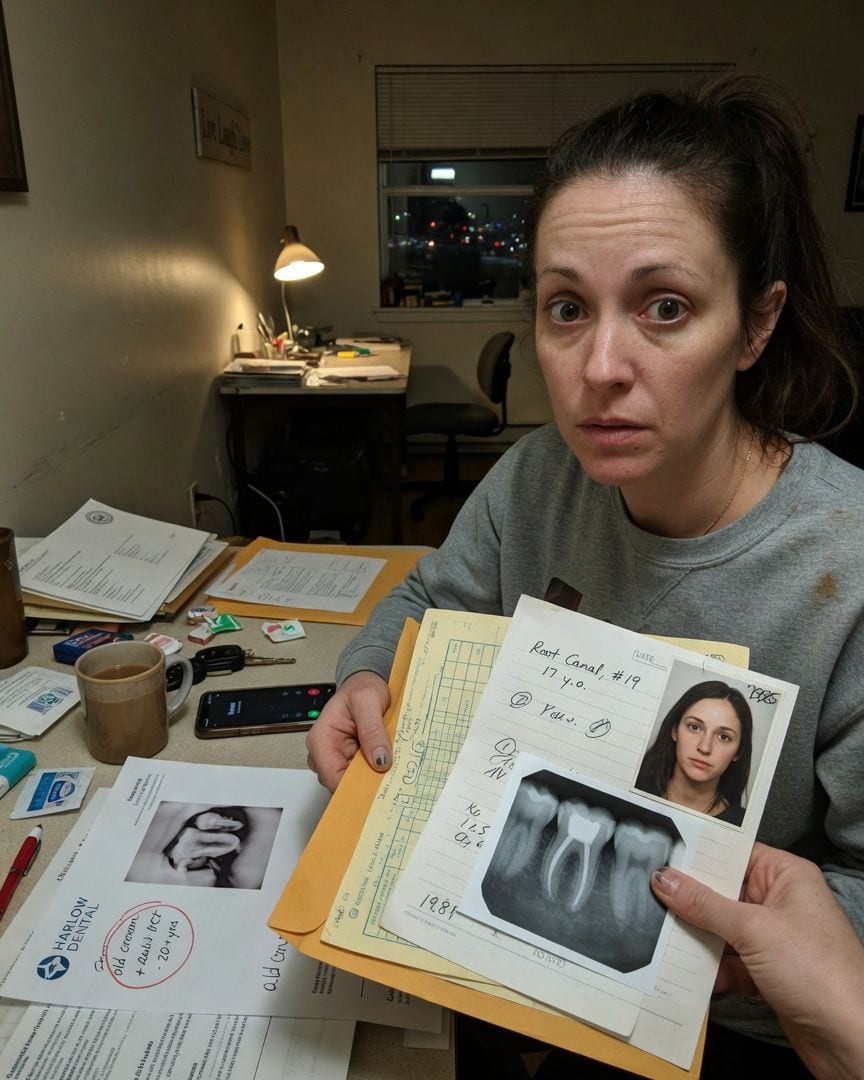
My lower molar has a twenty-year-old root canal. My new dentist showed me the scan. That tooth is whole. I can feel it.
My new dentist found a twenty-year-old root canal and crown in my mouth. The problem? I have no memory of ever having major dental work there, and my mother confirms I never did. My own body held a secret I couldn't explain.