My intercom buzzed at 3 AM, a voice asking to step out for air. The station manager insists no one works the newsroom overnight, and no Cheryl is on payroll.
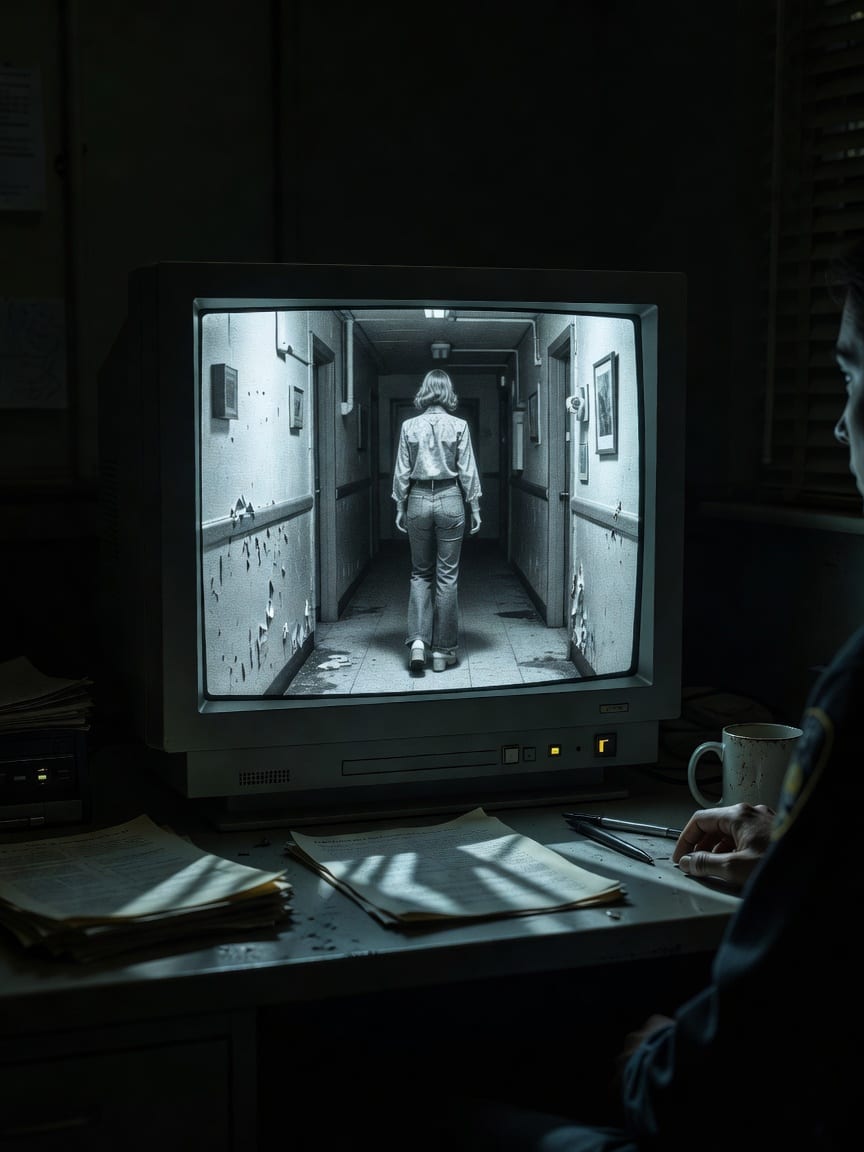
The lukewarm coffee was doing nothing. My name is Albert Vance, and for the past fifteen years, I’ve been the night security guard at WMVX, the local TV station. It's a quiet gig.
From 11 PM to 6 AM, the place is a tomb. Alarms set, doors locked, only the hum of server racks for company. Tonight was no different, or so I thought.
It was 3:03 AM. My shift tracker on the digital log showed green across the board. Just the usual, monitoring the empty hallways on the CCTV. That's when the intercom on my desk crackled.
A soft, feminine voice, clear as day, came through.
"Albert? It's Cheryl. Just stepping out for some air."
I blinked, stirring my coffee. Cheryl? I hadn't seen anyone come or go from the newsroom, which was directly above me on the second floor. It was supposed to be dark, locked, and alarmed, like I said.
No one worked overnight anymore. Not since they cut the late-night local news segment a few years back.
"Cheryl who?" I buzzed back, leaning closer to the mic.
Only static answered. I tried again. "Hello? Can you hear me?"
More static, then silence. My gut tightened. I logged the interaction: 03:03 AM - Intercom call, female voice 'Cheryl' requesting to 'step out for air'. No response on callback. Just protocol. Then, out of habit, I pulled up the fire marshal’s last after-hours occupancy report on my monitor. The screen glowed, the text stark: Newsroom, 2nd Floor: Empty and alarmed from 11 PM to 6 AM.
I picked up my desk phone. Harold Hartley, the station manager, wouldn’t appreciate a 3 AM call, but this felt wrong. Three rings, then his groggy voice. "Hartley."
"It's Albert, Harold. Sorry to bother you, but I just had an intercom call from someone named Cheryl. Said she was a producer, wanted to step out for air."
A beat of silence. "Cheryl? Albert, what the hell are you talking about? There's no one in the newsroom. Hasn't been for years. And we don't have anyone named Cheryl on payroll.
Never have, not for as long as I've been manager."
"But I heard her, Harold. Clear as a bell."
"Must've been a crossed line. Or you're finally losing it, Albert. Go get some sleep when your shift's over. And for Christ's sake, don't unlock anything for ghosts." He hung up, leaving a dial tone buzzing in my ear.
The next night, the incident gnawed at me. A crossed line? My intercom doesn't cross lines; it's a closed system. And I'm not "losing it." I've been doing this job for fifteen years without a single complaint.
I clocked in, the station quiet, almost too quiet. I settled into my chair, the memory of that voice replaying in my head. I decided to dig into the digital security log from the previous night.
I wanted to see my own log entry, the one I'd made at 3:03 AM, and cross-reference it with the system's audit trail, just to make sure there wasn't some kind of ghost in the machine. A network glitch, maybe.
That's the rational explanation.
I brought up the log. My entry was there, clear as day: 03:03 AM - Intercom call, female voice 'Cheryl' requesting to 'step out for air'. No response on callback. The timestamp, the details – all exactly what I'd typed. I scrolled down, expecting to see nothing but automated system checks after that.
But just below my entry, a new line appeared, crisp and clear on the glowing screen. I stared at it, my heart starting to pound against my ribs. It was dated 3:07 AM, exactly four minutes after my own log.
And it read:
Producer Cheryl Hartley, stepping out for air.
My breath hitched. Hartley. Harold’s surname. But more than that, I hadn't known her last name when I spoke to Harold. I had only known 'Cheryl.'
The log, my own official security record, had an entry I didn't make, referencing a person who supposedly didn't exist, with a detail I couldn't have known. It was too specific, too chillingly precise.
My fingers hovered over the entry, cold sweat prickling my scalp. I hadn't typed it. I hadn't even known her last name.
It wasn't just a voice anymore. It was a record, a concrete, undeniable fact logged into my system, by something that wasn't me, for someone who wasn't there.
I felt a profound sense of violation, like a phantom hand had just written across my own skin, leaving a mark I couldn't wipe away.
The log entry burned in my mind for the rest of that shift, and all through my next day off. ‘Producer Cheryl Hartley, stepping out for air.’ The name, Harold’s name. It was too much to ignore.
I decided Harold was either lying or hiding something big. I couldn't just brush it off as a 'crossed line' or me 'losing it.'
I spent my next day off at the town library, buried in microfiche and dusty newspaper archives. I started with a simple search: 'Cheryl Hartley producer WMVX.' Nothing.
I tried different spellings, different years, going back to the station's founding in the 70s.
I searched other local stations, convinced I was looking for a living person, someone who'd worked here maybe years ago, and for some reason, her ghost was rattling the intercom. But the archives offered nothing.
No mention of a Cheryl Hartley ever working as a producer at WMVX. I felt foolish, a rational man chasing after shadows.
Back at work, the quiet station felt different. Heavier. I couldn't shake the feeling that the library search was a waste of time because I was looking in the wrong place. The log. That's where the truth was.
I started cross-referencing everything I could on the digital security system. It was painstaking work. I pulled up decades of digital security logs, going back as far as the digital system allowed, searching for any similar anomalies.
Anything out of place. Any entry that didn't have a guard's ID attached, or a name that wasn't on payroll.
Weeks of data, millions of entries. Most of it was boring, routine: alarm tests, door access, maintenance logs. I was about to give up, my eyes blurry from staring at glowing text, when I saw it.
Another entry. From 1997. 03:12 AM: Producer Eileen Porter, stepping out for air.
My blood ran cold. The hair on my arms stood on end. It was almost identical. Same structure, same chillingly casual phrase. I kept digging, frantic now.
Then another. 1989. 03:05 AM: Producer Gloria Jennings, stepping out for air.
They were all there. Not just three entries, but a series of them, scattered across the decades. Always 'stepping out for air.' Always an overnight producer.
Always logged by the system, but not by the guard on duty, just like my 'Cheryl Hartley' entry. And I noticed something else: they all occurred in the same general week of the year, usually a Tuesday or Wednesday.
Just like the phantom Cheryl.
This wasn't a glitch. This wasn't a crossed line. This was a pattern. A cold, deliberate, recurring pattern that had been playing out in my station's logs for decades. I felt a chill deeper than any winter night air.
I needed to find out who these women were. And why they were all 'stepping out for air' in my logs, only to disappear from all other records.
My investigation shifted to the station’s physical archives, tucked away in the deepest part of the dusty basement.
The air down there was thick with the smell of old paper, mildew, and something else—a faint, metallic tang, like old electronics left to rot. This wasn't just a building; it was a museum of forgotten broadcasts and faded careers.
I spent my breaks sifting through old personnel files, boxes labeled by year, covered in decades of grime. Each folder I opened felt like I was disturbing a grave. I searched for Hartley, Jennings, Porter.
It was tedious work, my fingers smudged with dust. I found a file for an Eileen Porter, a producer hired in 1995. Her last day of employment was listed as a vague 'mid-1997.' No reason given. Just... gone.
Gloria Jennings, hired 1987, employment ended 'late 1989.' Same story. And then, a file marked 'H.' There it was: Cheryl Hartley. Hired 1976, employment ended 'early 1978.'
Again, no reason, no forwarding address, just a blank space where a life used to be.
As I pored over a faded hiring ledger from 1978, comparing dates, trying to pinpoint the exact 'stepping out' day, I heard it. A faint click from the hallway outside the archive room.
It sounded like a door latch, or maybe an old switch. The sound echoed in the silence, making the hairs on my neck stand up. I froze, listening, holding my breath. Nothing. Just the whir of distant ventilation.
My heart hammered against my ribs. Probably just the old building settling, I told myself. Or a rat. This place was old enough to have its own ecosystem.
I returned to the ledger, my hand trembling slightly. That's when I saw it. Lying right on top of the page I’d just been reading, where Cheryl Hartley’s name was entered in neat cursive, was a single, ancient key.
Tarnished, unlabelled, it looked like it belonged to a forgotten cabinet, or a lockbox from a bygone era. I hadn't seen it before. I certainly hadn't put it there.
My logical brain screamed that it must have been there all along, buried under other papers, and I’d just uncovered it. But I knew I’d lifted that exact spot minutes before.
A cold draft brushed the back of my neck. It wasn't just a draft; it felt like a presence, a breath. I spun around, my heart leaping into my throat.
The hallway was empty, the shadows long and still, stretching like skeletal fingers down the corridor. No one was there. Nothing. But the air was heavy now, thick with a palpable sense of observation.
I knew, with a certainty that made my blood run cold, that someone, or something, was watching my search. Guiding me, perhaps, by leaving clues. Or maybe… warning me.
Warning me through the station's labyrinthine past, as if to say: You shouldn't be looking here.
I shoved the key into my pocket, the cold metal a small anchor in a world that felt suddenly unmoored. I needed answers, and I knew who had them. Harold Hartley.
I found Harold in his office, his door ajar. He was at his desk, staring blankly at a muted news report on his wall monitor. The air in his office was thick with the stale smell of coffee and anxiety.
I walked in without knocking, holding the personnel folders in my hand like a shield.
"Harold," I said, my voice steady despite the tremor in my hands. "We need to talk. About Cheryl Hartley. And Gloria Jennings. And Eileen Porter."
His head snapped up. His face, usually ruddy and jovial, went pale, like someone had drained all the blood from it. He didn't look surprised. He looked… caught.
"You found the old records," he mumbled, not meeting my eyes. He picked up a pen and fiddled with it, avoiding my gaze.
His composure was unnerving; it wasn't the panic of a man just discovering a horrifying truth, but the quiet resignation of one who had known it for too long. "The women… they were real."
"Damn right they were real," I snapped, slamming the folders onto his desk. The papers slid out, scattering the missing persons reports and faded résumés across his polished wood. "And they didn't just 'step out for air,' did they?
That's what your logs say. My logs. The ones with entries I didn't make." I pointed at the digital printouts I’d brought, showing the phantom 3:07 AM entry from my system. "What happened to them, Harold?
Why are their names in my logs, and then nowhere else?"
He sighed, a shudder running through him. "They vanished, Albert. That's what happened. One night, they were here, working their shift. The next, they were just… gone. No trace. Their cars still in the lot, their purses on their desks.
The police investigated. Found nothing. Not a damn thing. The station just… replaced them. Said they quit without notice. But everyone knew better."
He paused, his eyes finally meeting mine. They were wide and haunted, filled with a terror I now understood. "It happened to my own aunt, Albert. Cheryl Hartley. She was a producer here, in '78.
My mother always said she just… walked out one night, never came back. We thought it was a coincidence, a family tragedy. A weird, painful memory. Until Gloria. Then Eileen. Always the night shift. Always that time. Around 3 AM."
The earlier clues clicked into place, snapping into a horrifying picture. Harold hadn't just denied Cheryl's existence that first night. He'd buried a painful, terrifying family history, one that echoed through the station's very walls.
He wasn’t complicit in their disappearance, not exactly. But he was complicit in the silence. The terror in his eyes was palpable. He was 'the witness who always knew,' too afraid, or perhaps too defeated, to stop the cycle.
I stood in the dusty archives, the old personnel folders spread before me like a macabre hand of cards. Cheryl Hartley. Gloria Jennings. Eileen Porter. Three women. Three different decades. Same role: overnight producer.
Same time of night: around 3 AM. Same chilling final entry in the phantom log: 'stepping out for air.' The pattern was undeniable, a cold, hard truth laid bare.
My gaze drifted from the faded paper to an old, unplugged CRT monitor in the corner of the room. It was a relic, probably hadn’t been powered on in thirty years.
But as I looked at it, a flicker of static ghosted across its dark screen, like a dying ember in the gloom.
Just a trick of the light, I told myself, or maybe my eyes were playing tricks on me from all the dust. But the static held, a faint, almost imperceptible shimmer.
It wasn't just a Cheryl. It was a cycle. A recurring trap. And the next blank space in that pattern, the next 'stepping out,' was coming up fast.
I reached into my pocket, my fingers closing around the ancient key I’d found earlier. I pulled it out, turning it over. There, etched faintly into its side, was a stylized '3 AM.'
It was barely visible, worn smooth by time, but undeniable now that I knew what to look for.
My eyes snapped back to the pattern of dates in the ledgers, tracing the grim timeline of disappearances. The next 'stepping out' was due in three days. I wasn't just investigating a mystery anymore.
I was standing on the eve of another disappearance, another victim for whatever damn thing haunted this station. And something in the station, maybe the key itself, was actively counting down, warning me.
The dread was a cold knot in my stomach as I returned to the archives. Three days. That’s all I had. The old key felt heavy in my hand, no longer a random trinket, but a direct threat.
I remembered the '3 AM' etching on it. It had to open something tied to this nightmare cycle.
I scoured the basement again, this time with a purpose. I ran my hand along dusty walls, checked behind old cabinets, pushed aside stacks of mildewed boxes.
Then, behind a stack of obsolete Beta tapes, I found it: a locked maintenance access panel. It was steel, rusted at the hinges, almost invisible against the grimy concrete.
And there, scratched into the paint, was the same stylized '3 AM' as on the key. My hand trembled as I inserted the key. It slid in smoothly, clicked with a soft, final sound, and the panel swung open.
Inside, nestled in a cobwebbed recess, was a single, ancient broadcast console. It wasn’t connected to the main grid; no cables led to the modern power boxes. Yet, it hummed faintly, a low, persistent thrum that vibrated through the floor.
It was old, pre-digital, a relic from the station’s earliest days, but it was alive. A thick power cable, unlike any I'd seen, ran from it into a deeper, dark recess, vanishing into the wall.
On its screen, a small, square CRT, an endless loop of static played. White noise, shimmering pixels, like a TV trying to find a signal from nowhere. As I watched, mesmerized and horrified, the static coalesced.
It didn't clear, it formed. Fleeting, ghostly images. Cheryl Hartley. Gloria Jennings. Eileen Porter. They walked, one after another, down the same empty hallway – the newsroom hallway, the one directly above my guard station.
They looked confused, glancing around, then resigned. Each woman turned a corner, at the far end of the hall, and vanished. The static surged, then settled back into its endless shimmer, waiting for the next replay.
This wasn't a ghost story in the traditional sense. This was a broadcast. A perpetual loop of their last moments, anchored to this console.
The 'log entries' weren't errors or glitches; they were the console's own record, its system log, a final, chilling sign-off before it pulled them into its endless signal.
This station didn't just have ghosts; it was the ghost, broadcasting their last moments, forever, and drawing others into its signal as 'producers' for its dark, unseen program.
The station was a trap, a temporal anchor, endlessly repeating a single, horrific moment. The wrongness had a source, a machine. And that machine was still running.
I knew, with absolute certainty, what I had to do. I had to stop it. This console, this humming, ancient piece of technology, was the beating heart of the wrongness. The center of the loop.
I looked around for anything that could cut the power. There was a rusted toolbox tucked into a corner of the panel recess. I grabbed a heavy wrench, the metal cold and slick in my sweating palm.
The thick power cable leading from the console snaked into the wall, connecting to what looked like an antique generator, almost bricked into the foundation. It was a conduit, a lifeline for whatever dark energy fueled this thing.
I knelt, pressing my ear to the wall. The low hum was stronger here. The wrench felt impossibly heavy. I began to unscrew the conduit, each turn of the bolt groaning with rust.
As I worked, the static on the console intensified. The ghostly figures on the screen, previously faint, grew clearer, sharper. They were moving faster now, their last steps replaying in an accelerating loop.
Their faces, once resigned, were turning towards me. Their eyes, wide and hollow, held a silent, desperate plea. A silent scream.
I felt a cold pressure on my shoulder, not a physical hand, but something dense, heavy, and freezing. A faint whisper brushed past my ear, chilling me to the bone. "Don't… stop… the show."
It was several voices at once, thin and reedy, like radio static given form.
I grunted, ignoring it, my jaw clenched. My hands were shaking, but I focused on the task. The final bolt gave way with a screech of metal, and I yanked the cable free.
The console screen flickered violently, a burst of blinding white light, like a camera flash, then went dark. The hum died, replaced by an echoing silence.
The images of the women dissolved into nothingness, their silent pleas evaporating with the static.
A profound silence fell over the archives, heavier than any I’d ever known. It wasn’t just the absence of sound; it was the absence of a presence, a weight lifted from the air.
I slumped against the wall, gasping, the wrench falling from my numb fingers.
A rush of relief washed over me, a dizzying wave of triumph. I had stopped it. But it was quickly replaced by a lingering dread. The console itself, cold and silent now, still existed. It hadn't shattered into dust.
It hadn't disintegrated. The mechanism was dormant, not destroyed. I had merely hit pause. The loop wasn't broken; it was simply awaiting someone to press play again. And the key was still in my pocket.
I never told anyone about the console or the key. What could I say? That I’d found an ancient machine broadcasting ghosts of missing employees from decades past? They’d lock me up.
Harold Hartley, the station manager, retired abruptly a week later. He cited 'health reasons,' but his eyes, when I saw him packing his office, still held that haunted, knowing look.
He didn’t meet my gaze as he shook my hand goodbye. The newsroom above me remained empty overnight, its alarms now truly silent, its hallways no longer hosting phantom footsteps.
I continued my shifts, the 3 AM hour passing without incident. The digital security logs remained stubbornly normal. I sometimes saw the old, unplugged monitor in the archives, now completely dark, no ghost of static flickering across its screen.
I often wondered what it had truly been broadcasting for all those years, what untold stories and lost lives it had captured. I often found myself checking the digital security logs, just in case. Just in case.
The silence of the 3 AM shift was absolute now, the newsroom truly empty. I sat at my guard station, watching the feeds, the screens showing nothing but still hallways and locked doors.
I felt a profound, weary calm, knowing I had, for now, broken the cycle. I was the only one awake, the only one who knew what the night truly held beneath its deceptive calm.
I took a sip of my lukewarm coffee, the bitter taste a familiar comfort, a grounded reality in a world I now knew held impossible horrors. I wouldn't forget. I couldn't.
I glanced at my digital log, a clean, empty page awaiting my next entry.
Then, the intercom on his desk crackled, a faint, almost imperceptible whisper, 'Albert? It's Gloria. Just stepping out for some air.'
If this one got to you
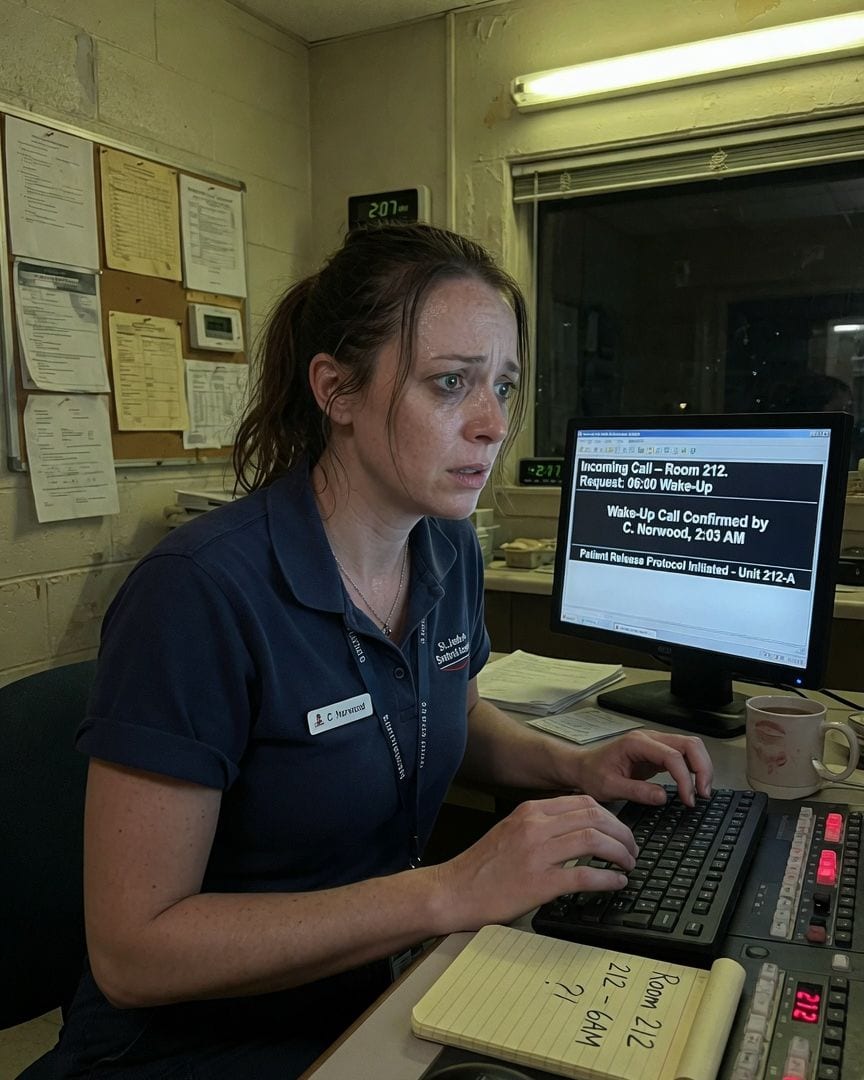
My login started a 'Patient Release Protocol' I'd never heard of for Unit 212-A.
Working the quiet night shift switchboard at St. Jude's, I took a routine wake-up call from Room 212. But the system showed Room 212 had been stripped bare and its phone line disconnected for months. Then, my own login showed I had confirmed the impossible call.
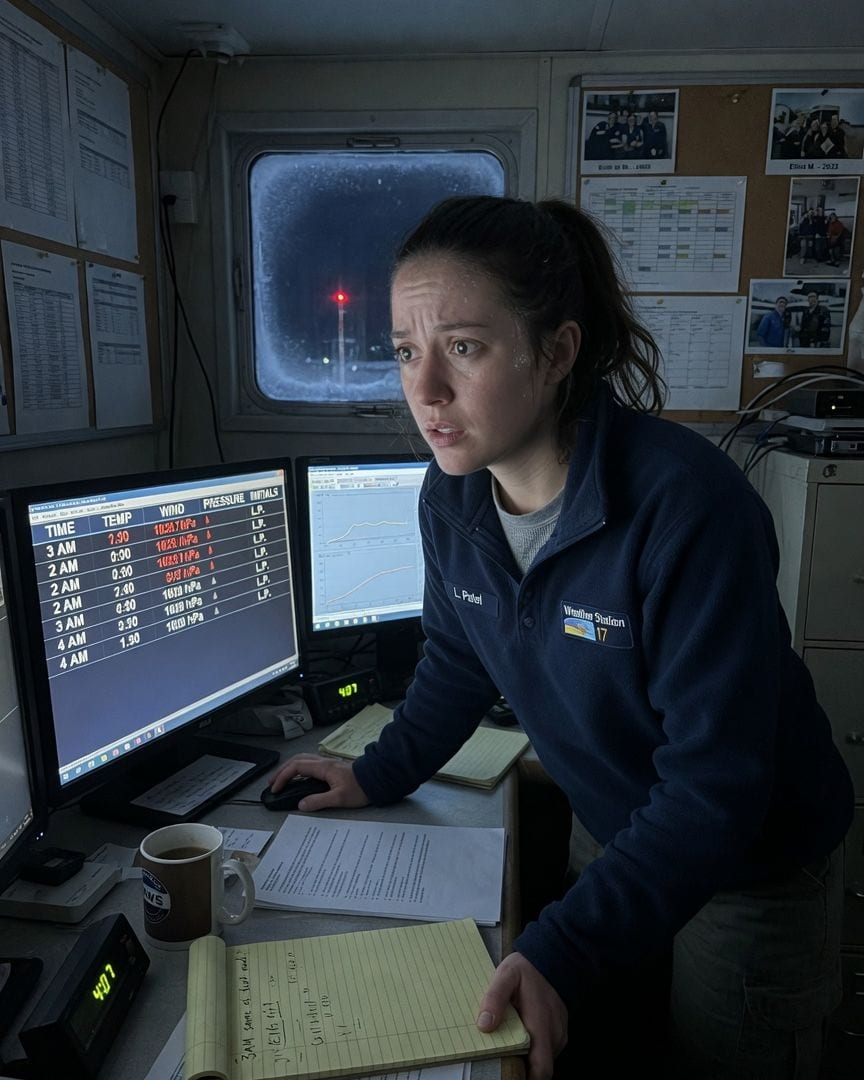
My weather station's 3 AM log shows a pressure reading I never made. My initials are on it, but the dials were dead still.
Working the overnight shift at the remote weather station, I routinely checked the digital logs. The 3 AM entry showed an impossible barometric pressure spike, a hurricane that simply hadn't happened. I distinctly remembered being outside at that time, calibrating a sensor, not making that entry. Yet, my initials, L.P., were clearly logged next to data I never made.
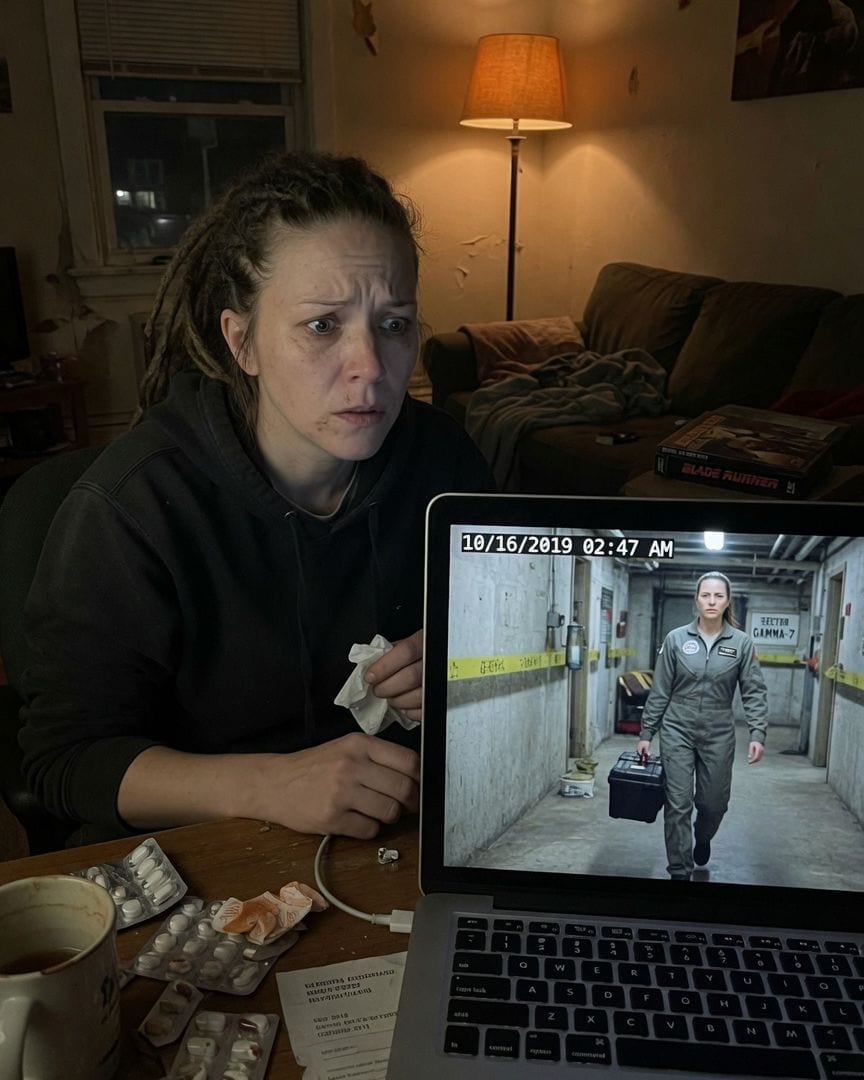
My timesheets show me working night shifts in a town I never lived in. The signatures are mine. The pay went to an account that isn't.
An old employer sent me timesheets from five years ago, detailing night shifts I supposedly worked at a depot 80 miles away. But I knew I was home recovering from surgery that entire week, nowhere near the industrial town. Then a security photo arrived, showing my face in an unfamiliar uniform, working a shift that wasn't quite me.
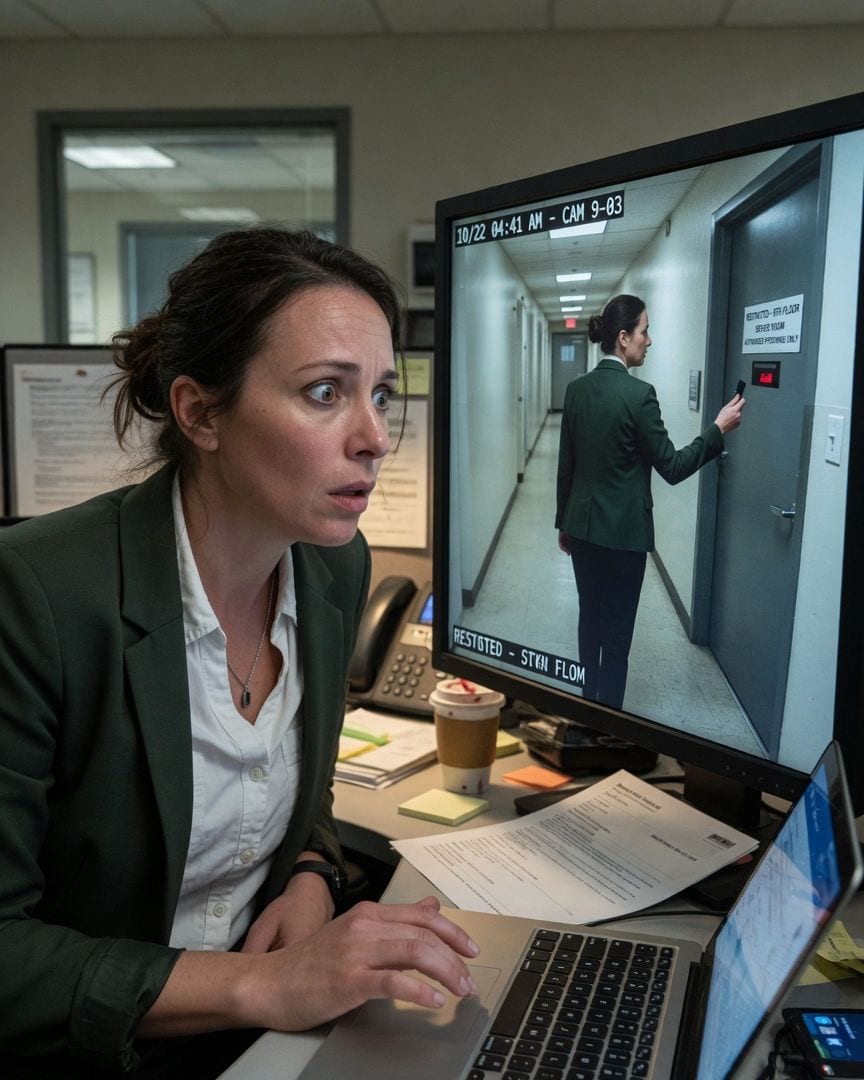
My keycard log shows me in the server room at 4:41am. I was asleep, and my badge was at home.
An email from corporate IT reveals my keycard registered entry into a restricted server room at 4:41 AM last Sunday. I was asleep in my apartment across town, my badge clipped securely to my jacket at home. But then I scrolled down and found eleven more impossible entries, all within the past week, all under my name.
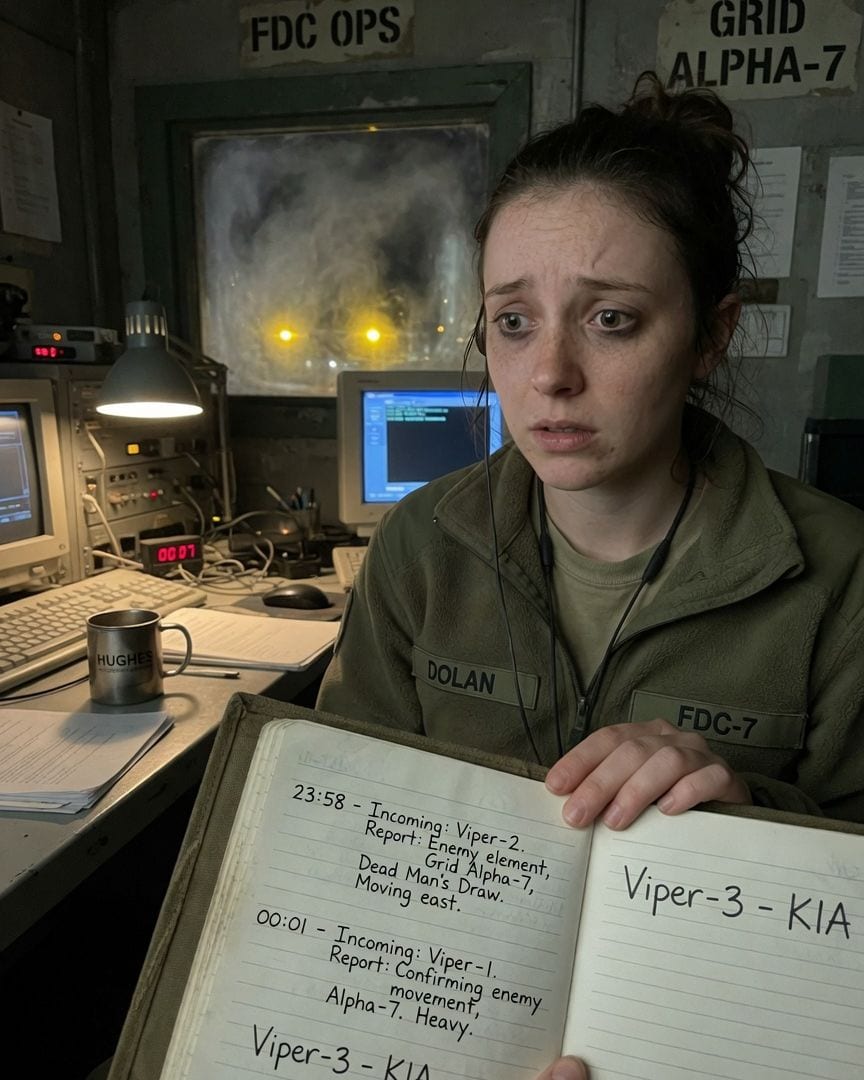
On her final watch at Firebase 7, Specialist Dolan's comms logged frantic calls from a patrol wiped out last week.
Specialist Emily Dolan adjusted her headset in the FDC, the fog pressing against Firebase 7's windows on her final watch before its decommissioning. Near midnight, frantic calls began coming in from observer posts, reporting enemy contact in treacherous territory where a patrol was wiped out just last week. But Control reported losing comms with those posts hours ago, leaving Dolan to realize her system had logged a full conversation with voices no one else heard. Then, the physical FDC logbook confirmed her entries, complete with an unfamiliar annotation: 'Viper-3 - KIA,' the call sign of the very patrol wiped out days before. What impossible truth had the firebase itself recorded?
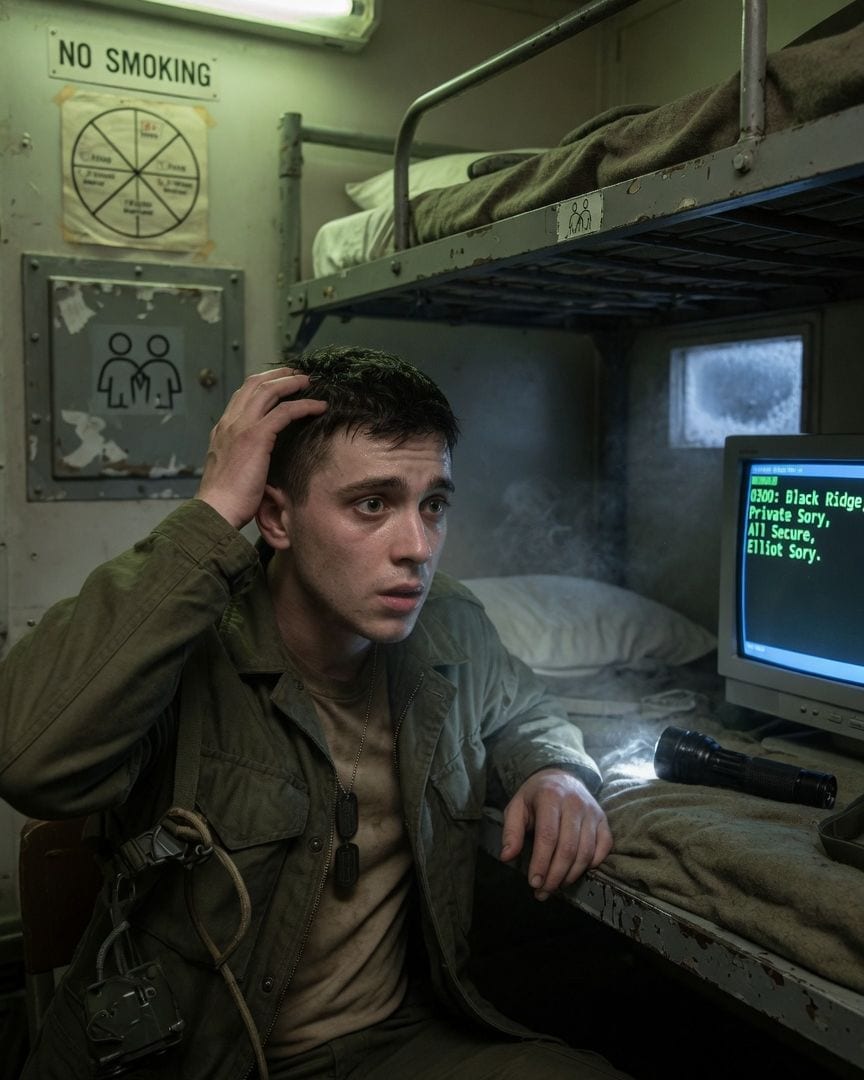
Private Sory's own voice answered his radio check, speaking his name before he could. Then the official log swore he had said it.
Private Elliot Sory shivered in the cold comms shack, three weeks into his first remote posting at Black Ridge. He knew the outpost's strange, strict rule: never say your name on the net after dark. But during his solitary 0300 radio check, a voice undeniably his own filled his headset, stating 'All secure, Elliot Sory,' before he'd even finished keying the mic. The official log later confirmed the transmission, showing no sign of his attempt to speak, only the seamless record of his name being broadcast. What force in the desolate outpost had spoken for him?