My weather station's 3 AM log shows a pressure reading I never made. My initials are on it, but the dials were dead still.
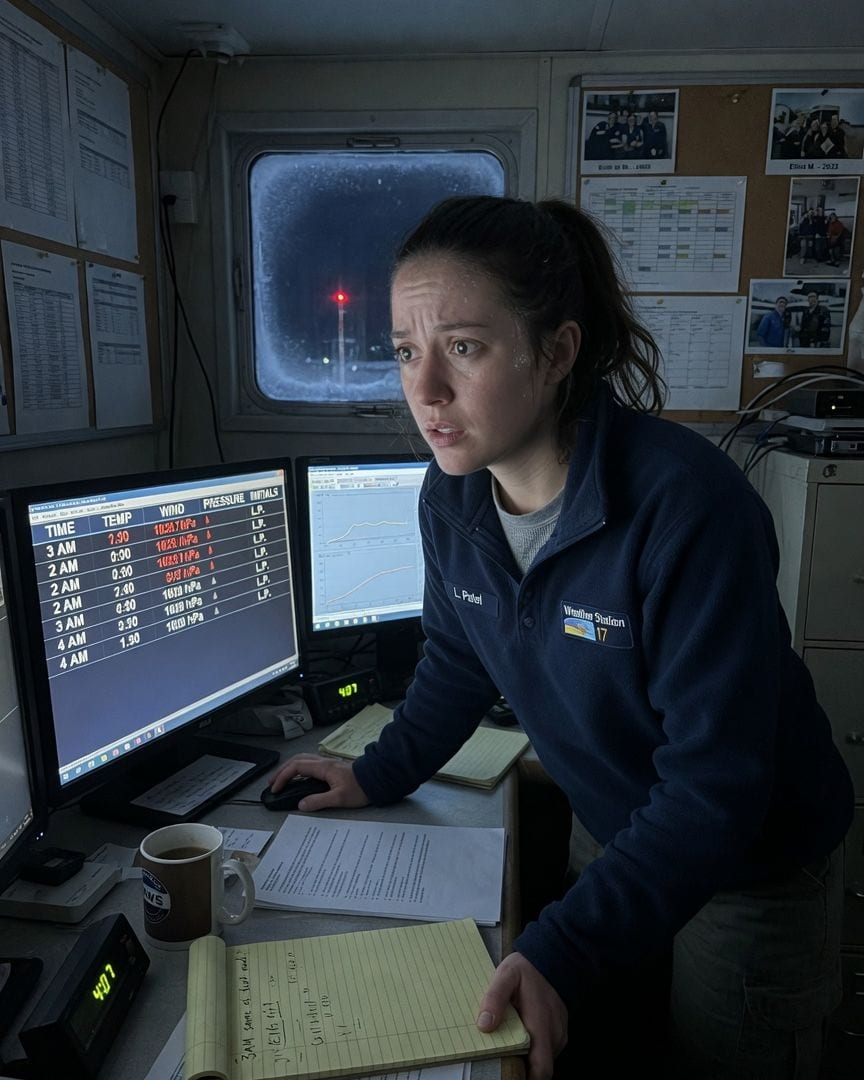
The only light in the remote weather station came from my monitors, casting a cool blue glow across the console.
It was 4 AM, the tail end of my overnight shift, and I was doing my routine check of the digital log before handover. Every hourly reading was there, neatly entered under my initials, L.P.
I scrolled past the 2 AM and 4 AM entries; both were perfectly normal, just steady numbers reflecting the quiet, uneventful night.
But the 3 AM entry made me pause. Temperature, wind speed, cloud cover – all perfectly plausible, well within the expected range for this time of year. But the barometric pressure was off. Wildly off.
It reported a pressure spike that would have registered as a hurricane, a full-blown atmospheric event that simply hadn't happened.
I distinctly remembered taking the 3 AM reading. I’d been outside on the mast for a good fifteen minutes, calibrating a wind sensor that had been acting up.
The instruments inside, the ones I would have used for the pressure, had been dead still, showing a steady, unremarkable value.
And yet, there it was in the log: my initials, L.P., clean and clear, next to a full set of data I never made.
I checked the timestamp again, then pulled up the instrument readouts from the server. No, the station's primary barometer showed nothing close to that reading at 3 AM. Not even a blip. I checked my watch, then the station clock.
There was no missing hour, no gap in my memory. Just a ghost entry, logged in my name, reporting an impossible number. The station’s internal diagnostic log was pristine, too, no error codes or system anomalies.
I spent the next hour trying to rationalize it. A system glitch? Some kind of weird feedback loop? Or maybe, I thought with a grimace, a prank by the day shift crew, messing with the rookie?
I dove into the station’s diagnostics, combing through network traffic and sensor calibration logs. Everything was pristine. No error reports, no unauthorized access attempts. The system reported a flawless night.
Not a single flag, not a single hiccup anywhere except that one impossible entry.
Frustrated, and needing to rule out the prank theory, I decided to check the previous shifts. If someone was messing with me, maybe they’d done it before.
I pulled up the digital logs from the past week, scrolling through them methodically, my finger dragging across the cold glass of the screen. Monday: clear. Tuesday: clear. Then I hit last Thursday. And there it was again. 3 AM.
The exact same impossible pressure reading, this time under the initials E.M. – Elliot Muller, the technician who worked the shift before mine.
Not a prank, then. Not just for me. This was something else entirely. A pattern.
I tried calling Elliot's number. It went straight to voicemail. I left a message, trying to sound casual, trying to keep my voice light. "Hey, Elliot, Lydia here. Just wondering if you'd ever seen any...
weird anomalies in the 3 AM log entries? Nothing serious, just a quick question." The phone felt heavy in my hand as I hung up, the dread settling in my stomach like a cold stone. This wasn't a glitch.
This was something else entirely, something that kept reappearing, quietly, precisely, over and over.
The digital logs yielded no more answers. I'd scrolled back months, but the early records were spotty, some files corrupted, others simply not existing in the digital format.
I remembered a small, rarely used archive room in the back of the station, filled with dusty, physical logs from decades past. Maybe, just maybe, there was a clue there. Something before the digital age.
The room smelled of old paper and dust. I found a heavy, leather-bound ledger, its spine cracked, its pages yellowed and brittle with age. I blew a layer of dust off the cover, the year '1972' barely visible.
Flipping through, I found entries from the early 70s, the spidery handwriting of long-retired technicians filling the columns. My heart was pounding now, a frantic drum against my ribs, as I scanned for 3 AM readings.
And then I saw it. An entry dated October 12, 1972. Exactly 3 AM. And the pressure reading. The impossible number. It was there, handwritten, signed with the initials O.K.
Below the entry, in the same faded ink, a small, circled note had been scrawled in the margin. I leaned closer, squinting, a cold wave washing over me. The words were clear, unmistakable: 'It's back.'
I researched the initials 'O.K.' in the station's old personnel files, my hands still shaking slightly from what I'd found. Oscar Kowalski.
A technician who had worked at this very station for over two decades, from 1970 to 1995, before retiring. His address was in a nearby town, a small, unassuming house with a neat garden.
I drove there, the old ledger tucked onto the passenger seat.
Oscar, a man with kind, tired eyes, answered the door. He looked to be in his early seventies, just like the ledger implied.
He was calm, almost unnervingly so, even when I explained my visit and showed him a photo of the old log entry on my phone. He chuckled softly, a dry, papery sound.
"Ah, the old girl always had her quirks, didn't she?" he said, referring to the station. He peered at the screen. "That 3 AM entry… yes, I remember that. A common fault in the old barometer at that hour."
He dismissed it as if it were a faulty toaster. He claimed they'd been instructed to "compensate" with a standard reading if the instruments were "unresponsive."
He explained it as a forgotten, unwritten protocol: if the dials seemed "dead" at 3 AM, you'd just enter a pre-determined, stable value to avoid false alarms. "No sense waking up the supervisor for a stuck needle, right?"
he added with a thin smile.
I pressed, showing him printouts of my own recent digital logs, highlighting the impossible pressure. "But Oscar, it's not a standard reading. It's a spike. And the exact same spike, decades apart."
Oscar just shrugged, his eyes drifting away to his rose bushes. "Some things you just log and move on, dear. It was part of the job. Easier that way."
His placid explanation, while seemingly mundane, raised a fresh wave of unease. Why would they be told to log a false reading? And why only at 3 AM, always the same impossible number?
His composure felt less like casual indifference and more like a carefully constructed wall.
Driving back to the station, the remote road was empty, but I couldn't shake the feeling that Oscar's calm was a practiced performance.
I kept checking my rearview mirror, a nervous habit, expecting to see headlights behind me, but there was nothing. Still, the feeling persisted, a prickle on the back of my neck.
Back at the station, the quiet hum of the machinery felt less comforting, more watchful. As I logged in, I noticed something in the system's audit trail.
My own log-in credentials were used an hour ago, after my shift had ended, to access the historical weather data archive. Someone knew I was digging, and they were watching what I found.
A shiver ran down my spine, colder than the night air.
Later that night, alone again, my personal phone buzzed in my pocket. An unknown number. I answered, a sudden tremor in my hand, but there was only static, a faint hiss that reminded me of a distant whisper.
I hung up. A moment later, a text message came through, untraceable, just a blank number. The words on the screen were stark, chilling: 'Some things are better left logged.' I dropped the phone on the console.
It landed with a dull clatter. This wasn't just a 'quirk' anymore. Someone was actively monitoring me, and they knew exactly what I was doing. The danger had become personal.
I knew I needed to go back to Oscar. I drove through the night again, the knot of dread in my gut tightening with every mile. The moon was a sliver, barely lighting the road.
I found him in his garden, pruning roses, still unnervingly serene, as if nothing in the world could disturb his routine.
I didn't waste time with pleasantries. I showed him the text message, then pulled up the audit log of my system access on my tablet. "You knew, didn't you, Oscar? About the log-ins, the messages. You knew someone was watching."
Oscar sighed, a deep, weary sound, and dropped his pruning shears into the grass. He looked at the shears for a long moment before leading me inside. His usual calm was finally cracking, just slightly, like thin ice.
He sat heavily in his armchair.
I laid out all my evidence on his small coffee table: my own 3 AM entries, Elliot's, his own from 1972. "The pressure readings are identical, Oscar. Exactly the same impossible number, every single time. It’s not a faulty barometer.
It’s too precise for that."
Oscar finally looked at me, his eyes full of a deep, weary sadness I hadn't seen before. "No, Lydia. It’s not the barometer. It's… a signature."
My blood ran cold. "A signature? Of what?"
He explained that the 3 AM reading wasn't about weather at all. He called it 'the Anomaly.' He said it was something beneath the station, something that generated a unique atmospheric 'signature' at that exact hour.
The 'protocol' he mentioned earlier wasn't about avoiding false alarms; it was a cover-up, a way to ensure the data was consistently logged without raising questions. "They told us it was harmless. A relic.
Just keep the numbers flowing," he muttered, his voice barely a whisper, his gaze distant. "We were just… part of the routine. We didn't ask questions."
I felt a cold dread spread through me as Oscar spoke, the words echoing in the quiet room. A 'signature'? A routine? I was just a cog in a long-running, secret operation I hadn't even known existed.
"Who told you, Oscar? Who is 'they'?" I asked, my voice tight, barely audible.
Oscar shook his head slowly. "No one now. Long gone. The project was shut down decades ago. Or so they said."
He pushed himself up, moving slowly, stiffly, to a dusty old chest in the corner of his living room, next to a faded armchair. He rummaged through it, his movements deliberate, like someone accessing a forbidden memory.
He pulled out a bundle of old papers, tied with a brittle string.
Among them was a faded, brittle, hand-drawn map. It was clearly old, the paper yellowed and creased, the ink smudged in places. He spread it out on the table between us.
It showed not one, but three weather stations, all marked as 'decommissioned,' forming a rough triangle across a sparse, featureless landscape.
And at the exact center of the triangle, marked with a bold 'X', was a location I had never seen on any modern map: 'Blackwood's Hollow.'
Next to the 'X', in Oscar's own shaky hand, were the exact same impossible 3 AM pressure readings she'd been seeing. Below the numbers, a chilling note: 'Blackwood's Hollow Site 2, 1972.' The anomaly wasn't just under her station.
It had been everywhere.
I stared at the map, the pieces clicking into place with a horrifying clarity. The weather stations weren't for forecasting; they were a network. A containment system. 'Blackwood's Hollow,' Oscar explained, was a highly classified research facility.
"They called it Project Chimera," he whispered, his voice strained, his eyes fixed on the 'X' on the map. "It was shut down in '68, after… an incident."
He didn't elaborate on the incident, but the implication hung heavy in the air, a silent scream of something gone catastrophically wrong.
The 'anomaly' wasn't a natural phenomenon; it was something contained there, something that required a constant, precise atmospheric data input to maintain equilibrium. To keep it stable. The 3 AM readings, identical across decades and multiple stations, were its 'pulse.'
The stations, including mine, were essentially feeding a prisoner, an unseen entity. The 'protocol' of logging specific values, the secrecy, the monitoring – it was all to keep the feed going, to keep 'it' from getting out.
I realized I wasn't just a technician; I was a jailer, unknowingly maintaining a monstrous, unseen entity, and my station was merely the current link in a long, unbroken chain of monitoring and containment that had outlived its creators.
The thought of continuing to feed the anomaly was unbearable. It felt like an act of complicity, an ongoing betrayal of everything I thought I knew. I looked at Oscar, and in his tired eyes, I saw a shared resolve.
We would cut the feed. We would stop my station from sending the 3 AM data.
Oscar, with his decades of forgotten knowledge, guided me through the station's archaic manual overrides and forgotten maintenance panels.
He explained how to disable the automated logging sequence that ensured the 3 AM 'signature' was always recorded, regardless of what the instruments actually read.
As I worked, the station began to react. The lights flickered erratically, buzzing overhead, the hum of the instruments rising and falling like a tortured breath.
A deep, resonant thrumming began to emanate from beneath the floor, vibrating through my boots, through the very concrete. The air grew impossibly cold, then blasted with heat, as if the heating and cooling systems were battling for dominance.
The temperature gauge plummeted to an impossible -50 degrees Celsius, then spiked to 70.
The pressure gauge, which had been still for so long, began to climb rapidly, far beyond anything the station's sensors could possibly measure, the needle slamming against the stop.
It was reacting. It knew.
My hands flew across the console, fingers fumbling with the last connection, a thick, braided cable hidden behind a dusty panel.
The thrumming intensified, now coming from outside the station, a low, guttural roar that seemed to shake the very foundations, rattling the metal frame of the building. With a surge of adrenaline, I yanked the last cable free.
The station went silent. The lights stabilized. The gauges returned to normal, then flatlined. But the thrumming outside didn't stop. It grew louder, deeper, a hungry sound.
Oscar and I fled the station, the thrumming fading behind us, but never quite disappearing from my mind. We reported everything, laid out the map, the logs, Oscar's testimony.
But our story was met with polite disbelief, attributed to stress, isolation, and Oscar's age. The remote weather station was officially 'decommissioned' within a week due to 'budgetary restructuring.'
Oscar disappeared shortly after, leaving no forwarding address, his small house sold to a developer. I never saw him again. The official records now show no mention of Project Chimera or Blackwood's Hollow. It's as if they never existed.
I live a normal life now, in a bustling city. No more night shifts, no more remote stations, no more 3 AM logs. The sounds of traffic and sirens replace the lonely hum of machinery.
My days are filled with spreadsheets and meetings, my nights with city lights and the muted buzz of civilization.
But sometimes, when the city is quietest, just before dawn, I feel a faint, deep thrumming beneath my feet, a vibration that no one else seems to notice. I check the weather app on my phone, a nervous habit.
The local pressure reading is always normal, a stable, unremarkable number. But sometimes, just for a fleeting moment, the numbers flicker, showing a value that should not be possible. She knows it's still out there, waiting for its next feed.
If this one got to you
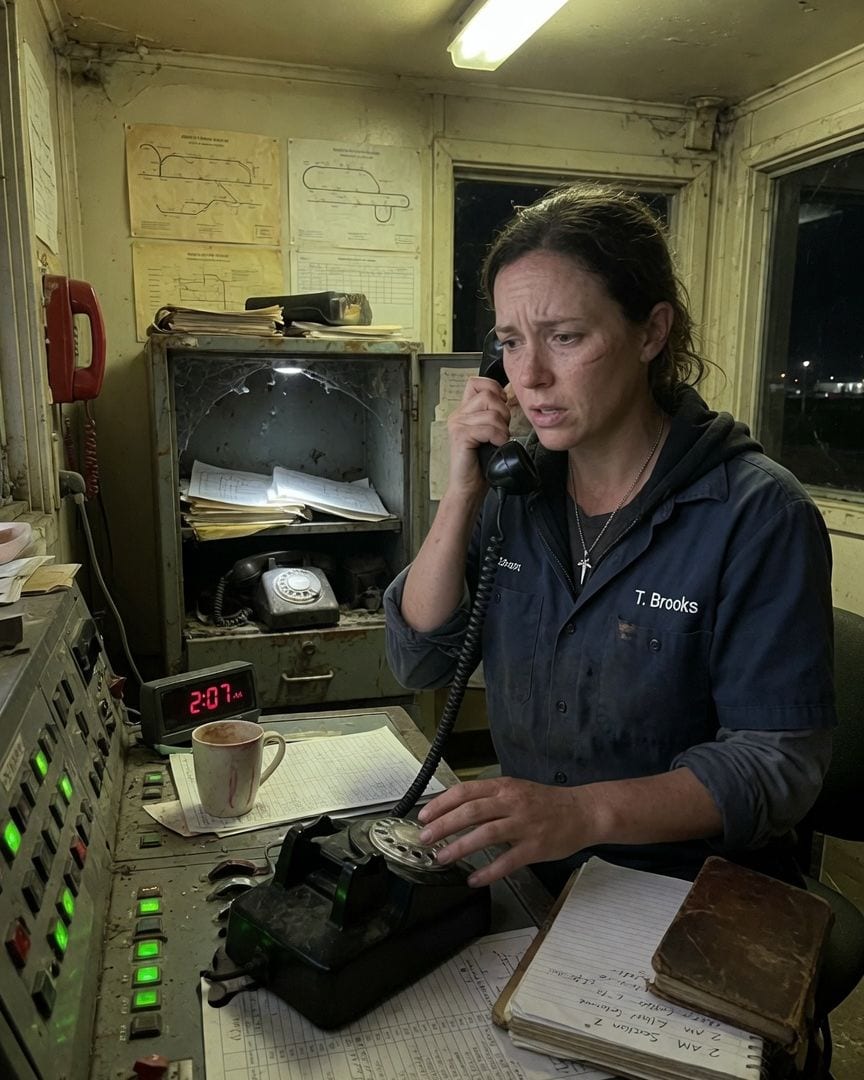
My signal box gets a 2 AM call every night from a man whose section was demolished eleven years ago. Now I found his logbook with today's date.
My night shift at the signal box is quiet and precise, defined by the routine 2 AM call from Ellis confirming Section 7 is clear. But when I asked my duty manager to log it, he said Section 7 hasn't had a track walker in eleven years, not since its cabin and phone were demolished.
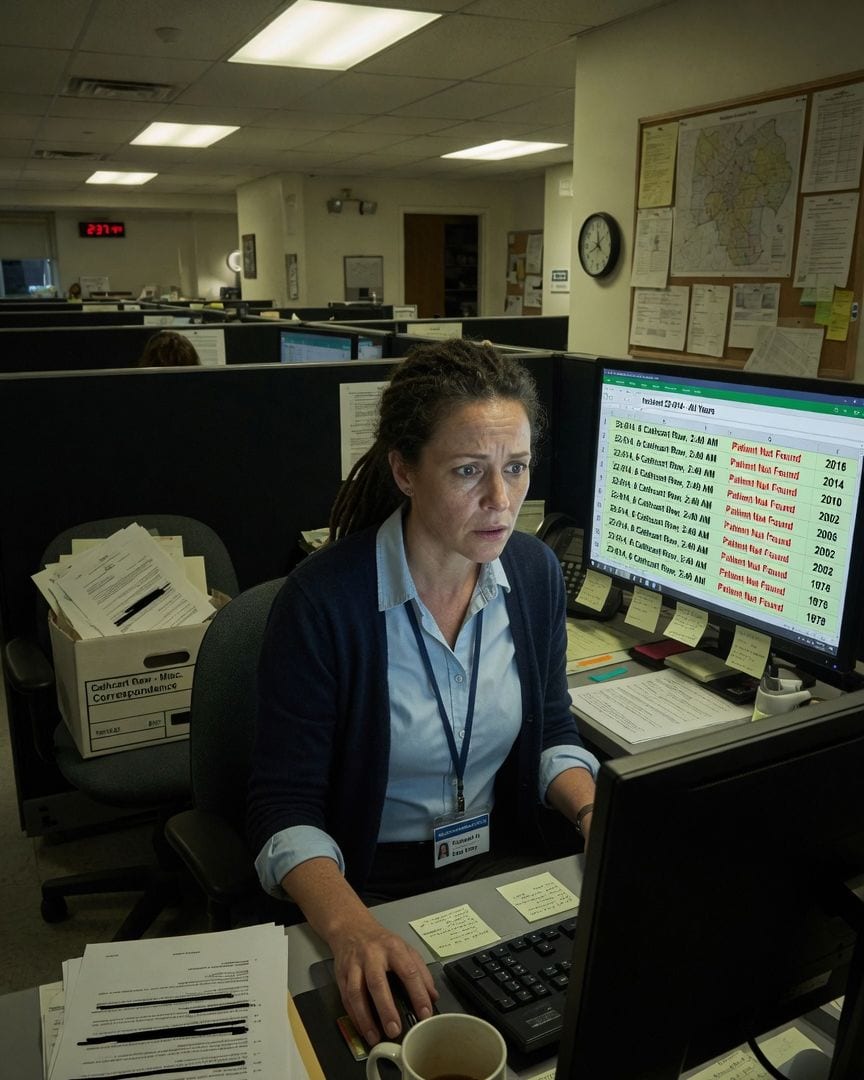
My computer log shows the same 2:40 AM call to Cathcart Row, every four years since 1978, always closed 'patient not found'.
Working data entry for the County Ambulance Trust, I found a routine incident logged as 'Patient Not Found.' But digging deeper, I discovered the exact same phantom call had repeated every four years for over forty years, always at the same address, always at 2:40 AM. Then I found a heavily redacted memo linking it to my own street.
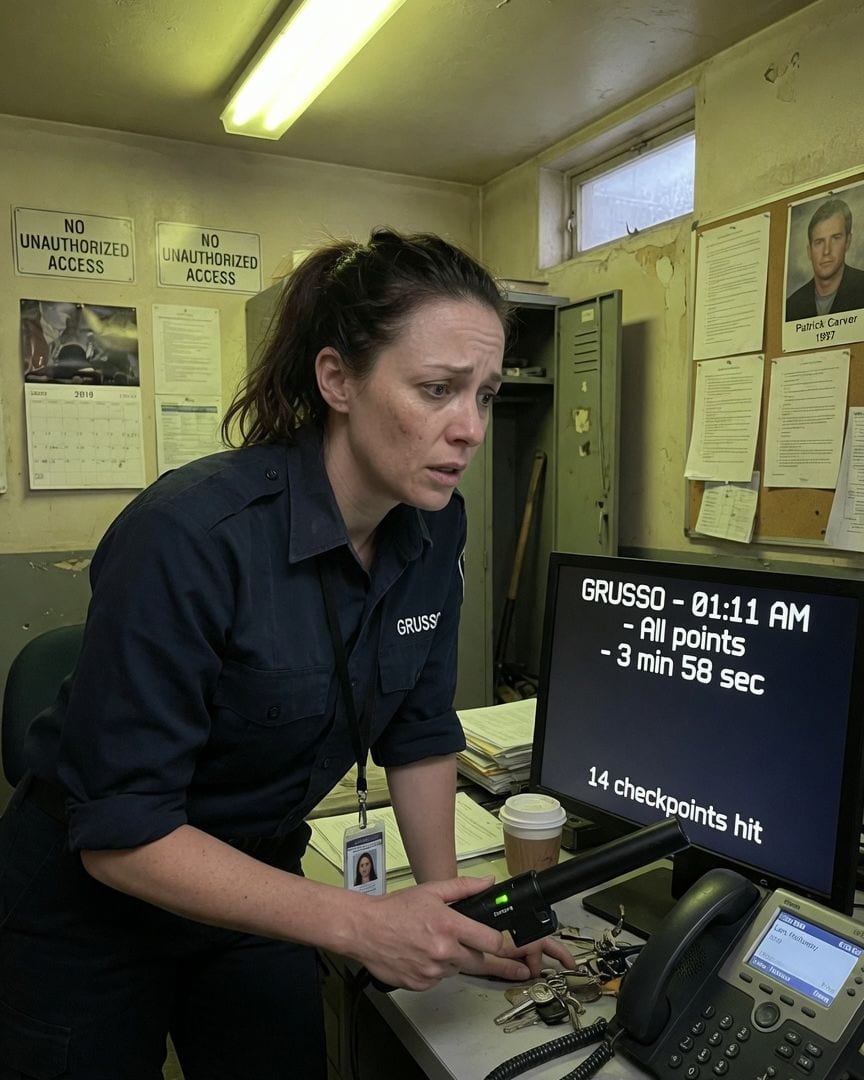
My security wand logged a full round at 1:11 AM in under four minutes. It was in the charger. Every tap is logged as mine.
Finishing my night shift, all I wanted was to get home. But the dock readout screen showed my security wand logged a full patrol at 1:11 AM, completed in just under four minutes. I knew my wand had been charging right beside the monitor the entire time, yet the log, under my ID, confirmed the impossible.
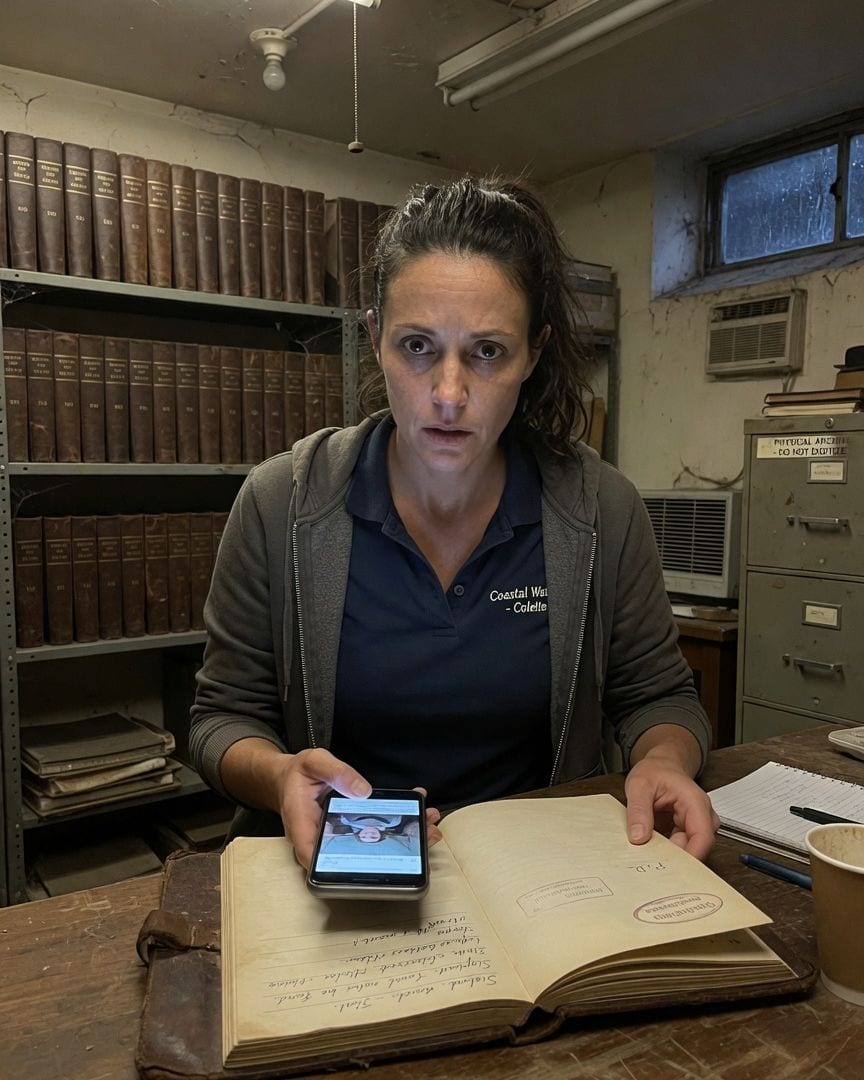
My coastguard log noted Sighting 9 again tonight, a light where no vessel showed. The old logs carry Sighting 9 off Skerry Point at 3:14am every tenth year since 1954, always 'nothing found,' always 'send no boat.'
On my watchtower night shift, the radar screen glowed green and the ocean was quiet. Then, a familiar light appeared off Skerry Point, exactly on cue, just as it had every tenth year for decades. But digging deeper, I found a hidden stamp in an old logbook: 'Operation Skerry. Status: Complete.' It left me with a chilling sense of finality.
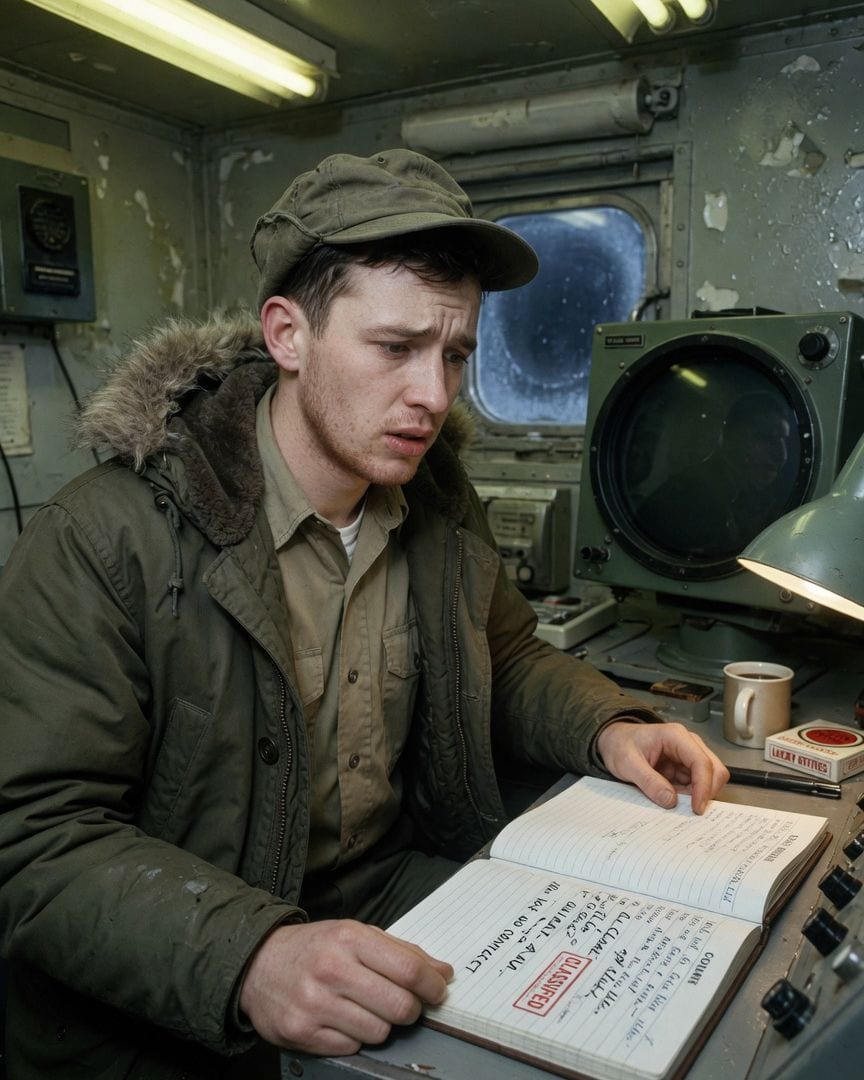
A Cold War airman logs an impossible radar contact on his last sweep. But his official logbook entry is stamped 'CLASSIFIED' and then contradicted by a hastily scrawled 'ALL CLEAR' dated moments before it.
Airman Ordway Vance, 22, manned the radar dome at Site Pellin in the biting North Atlantic dark of January 1962, running the last calibration sweep before its decommissioning. His scope picked up a faint, impossible return, growing closer with each pass, though the ocean remained empty to the eye. When Vance detailed the contact in his official logbook, a 'CLASSIFIED' stamp appeared, followed by a hastily scrawled 'ALL CLEAR' dated moments before his own entry, contradicting his every word. Commander Hartley dismissed it as equipment malfunction, but Vance sensed a chilling, official erasure behind the lie. He soon found a locked cabinet marked 'SITE PELLIN ANOMALIES,' hinting at a deeper truth buried within the base's final days.
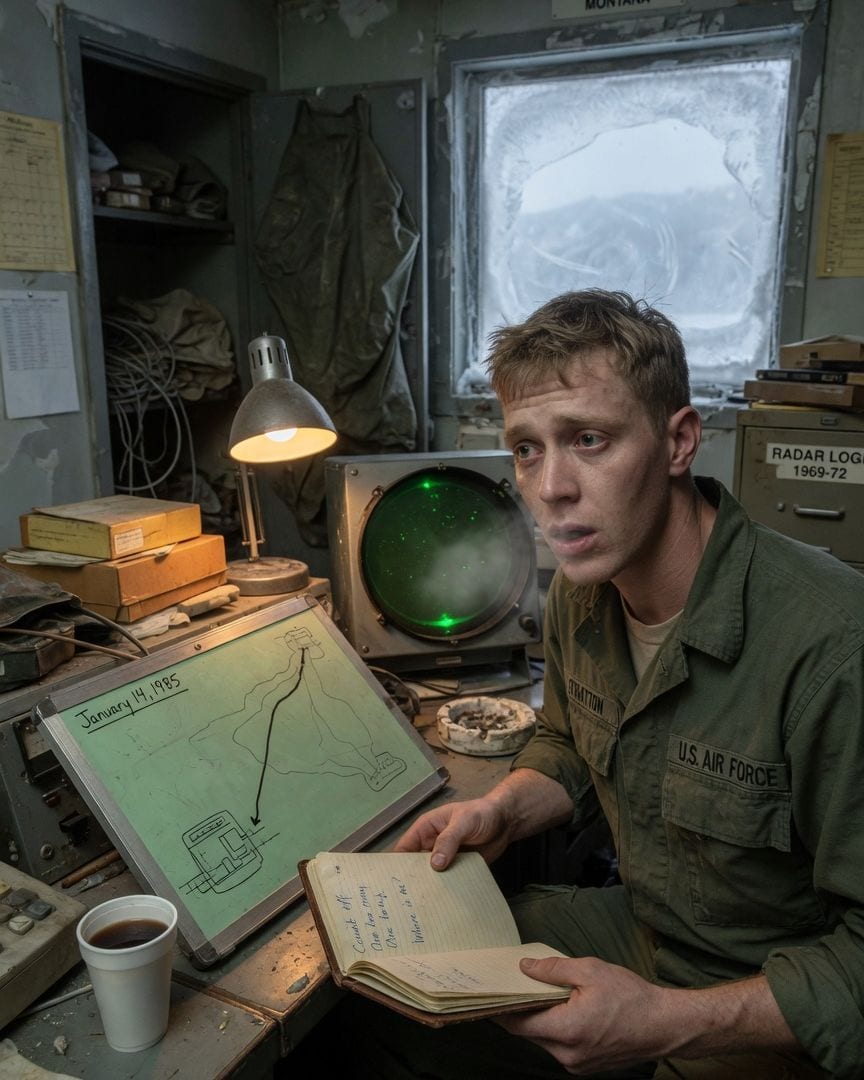
Airman Lars Stratton found an old Cold War manifest listing one name twice: 'Bernard Radcliffe' transferred and 'Bernard Radcliffe' still present.
Airman Second Class Lars Stratton was counting down his final weeks at Echo Station, a desolate Cold War outpost due for mothballing. He longed for home, far from the bitter Montana winds and the constant hum of static. Inside the dim radar shack, he logged the usual nightly ghost blip, a faint contact appearing at 2300, just as it had every winter since 1987. This night, a metallic tang like old blood lingered in the air, raising the hairs on his arms. Seeking distraction, Lars later discovered a leather-bound logbook from 1971, detailing the same 2300 contact, but with chilling notes and a manifest listing one airman's name, Bernard Radcliffe, twice—once transferred, once present. Was he truly alone in the silent, remote station?