My timesheets show me working night shifts in a town I never lived in. The signatures are mine. The pay went to an account that isn't.
The email sat there, Logi-Track Solutions, an old employer I hadn't thought about in years. I’d worked admin there for a year back in 2019, fresh out of a bad graphic design contract, just something to pay the bills.
Now, five years later, they needed some old records for a reference check. I clicked it open, a little annoyed, expecting something straightforward.
It wasn't.
Attached were scanned copies of timesheets from October 2019. My name, Linda Carter, was right at the top. Employee ID number, too. And then my eyes snagged on the week of October 14th.
Five consecutive night shifts: 9 PM to 5 AM. Logged at the Ashford Bend depot. My stomach dropped. Ashford Bend was eighty miles from my apartment, a grimy industrial town I’d never once set foot in. And that week?
I’d been home, recovering from a minor appendectomy, mostly doped up on pain meds and binge-watching old sci-fi. I knew, with absolute certainty, I hadn't left my bed, let alone driven eighty miles to work a night shift.
Yet there they were. Each daily log signed with my unmistakable looping ‘L. Carter’. Tasks detailed: "System Calibration, Sector Gamma-7," "Sensor Array Diagnostics." Real work. Work I couldn’t have done.
I called Logi-Track’s HR, Everett Pierce. His voice was tired, flat. "Ms. Carter, the records are legitimate. Signed, verified. We processed payments to the account number on file." He recited a long string of numbers. It wasn't mine.
Not a single digit.
"There's been a mistake," I said, my voice tighter than I expected. "A massive clerical error. I was recovering from surgery that week. I wasn't there."
Everett just sighed. "The system shows you were, Ms. Carter. And the payment went through." The world, it seemed, was firmly insisting on a reality that defied my own memory.
I tried to rationalize it away: a different Linda Carter, perhaps, with the same employee ID? But Logi-Track wasn't that big. I was the only Linda Carter in their system during that period.
I called Vera Blackwood in payroll, hoping for a more human response. Vera, whose voice was as smooth and unruffled as a corporate brochure, was unhelpfully calm.
"Your unique employee ID is tied to those timesheets, Ms. Carter," she explained, patiently. "And the account number, while not one we recognize as a standard personal banking account, is a valid Logi-Track corporate holding account.
Used for, ah, special project disbursements."
Special project disbursements. The phrase hung in the air, oddly clinical. I could hear the faint click of her keyboard in the background, the sterile hush of the office. It was too precise, too documented, to be a simple mistake.
A clerical error wouldn’t involve a unique ID and a corporate holding account. This was... deliberate.
I went back to Everett, pressing him. "Is there anything else? Any other records from Ashford Bend for that week? Photos? Clock-in logs? Anything?" I pushed, imagining the sterile depot, the cold fluorescent lights.
He was reluctant, muttering about "archived systems" and "low resolution." But after a frustrating half-hour of me refusing to back down, he finally agreed. "I'll see what I can pull. Security camera stills, maybe.
Don't expect much, it's an old system."
The email came an hour later, subject line: "Re: Ashford Bend Query." Attached were three low-resolution JPEGs. I clicked the first one, my heart a dull, heavy thump against my ribs.
I braced myself for a blurry, empty corridor, for anything that would let me cling to the idea that this was all just a phantom echo of a glitch.
Instead, the image snapped into focus. Clearer than I’d anticipated.
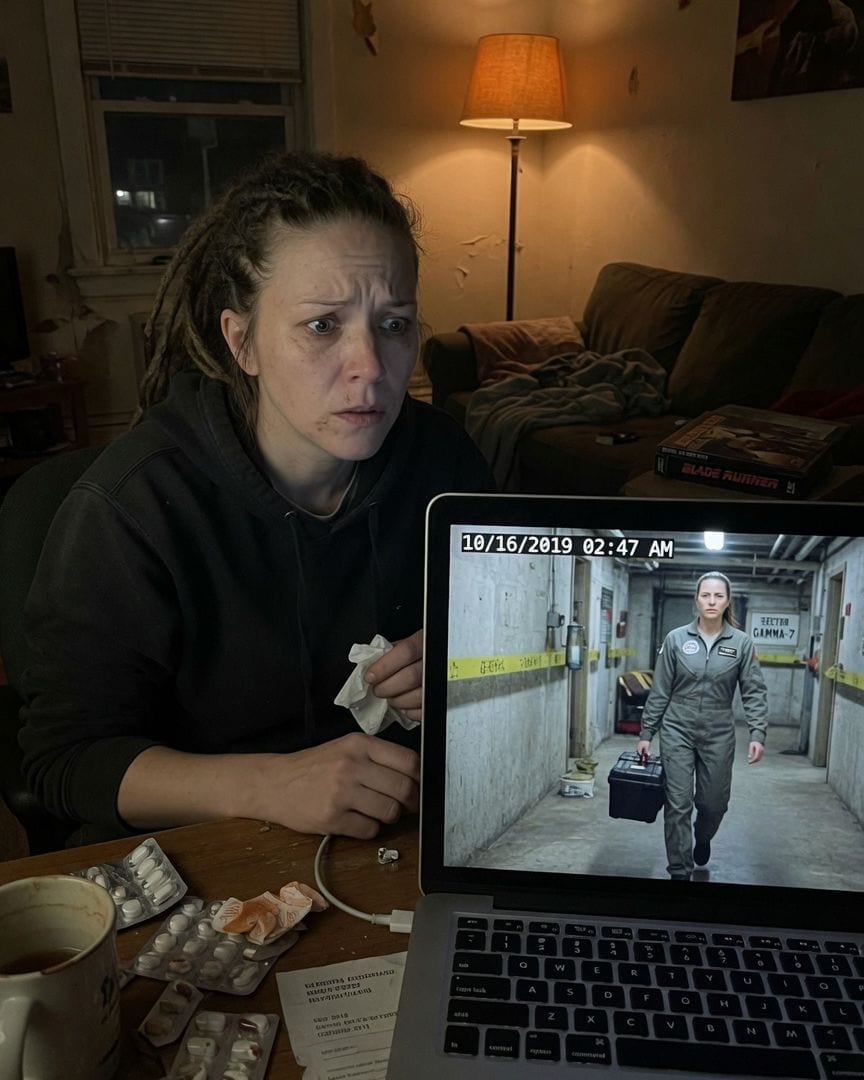
I stared at the grainy security photo on my laptop screen. It’s her, undeniably her face, captured in the stark fluorescent light of the Ashford Bend depot.
But the uniform is wrong, a drab grey jumpsuit with a Logi-Track patch I’d never seen, never owned. The toolkit she carries is unfamiliar, a heavy, specialized case clutched in her right hand.
And the unnervingly stiff set of her shoulders, the way she holds her head, the slight, unnatural precision in her step — it’s not quite me.
It’s a perfect replica, walking a path I never took, on a night I was miles away, safe in my own bed.
The photo is undeniably real, physical evidence of a presence that looks exactly like me, where I know I wasn't.
The photo sent me spiraling. For days, I barely ate, barely slept, locked in my apartment, staring at that grainy image.
I zoomed in, pixel by pixel, searching for a flaw, a trick of the light, anything that would scream 'fake.' But it just stared back, unyielding. My face. Not quite my body language. That uniform. It haunted me.
I drove out to a local uniform supplier, a place that had been around for decades, showed them a printout. The owner, a grizzled old man with an encyclopedic knowledge of industrial workwear, shook his head. "Logi-Track, huh?
Yeah, that's an old model. Late 90s, early 2000s, maybe. They switched to blue and high-vis vests years ago. Hard to get now, out of production." The dread deepened.
It wasn't just a uniform I didn't own; it was a uniform that shouldn't have been in use in 2019.
I started digging into Ashford Bend. What had happened there, specifically during the third week of October 2019? Local news archives were a maze of small-town gossip and municipal reports.
Then I found it: a brief mention of an "unexplained power grid fluctuation" that had affected a small industrial sector, including the Logi-Track depot, around October 16th.
It had been quickly dismissed as a "minor anomaly," power restored within the hour. A flimsy connection, but it was something. My "proxy" had been performing "System Calibration, Sector Gamma-7" that night.
My next step was desperate. I searched Logi-Track's public records for anyone who might have been at the Ashford Bend depot during that time. A long shot led me to Charles Vaughn, a retired maintenance supervisor.
His LinkedIn mentioned "decades of service" at the Ashford Bend facility. He was reclusive, according to the patchy public records, living in an isolated cabin outside of town. But I had to know.
I drove for hours, the cabin a speck on a dirt road, nestled deep in overgrown woods. The air was still, heavy with the scent of pine.
When I knocked, the door opened a crack, revealing an old man, his face a roadmap of deep-set wrinkles, eyes like chips of granite. Charles Vaughn.
I laid it all out: the timesheets, the impossible dates, the corporate account. Then, I handed him my laptop, open to the security photo. He stared at it, then at me, his expression unreadable.
Not surprise, not confusion, but something else, something I couldn't place. He took a long, slow sip from an ornate, old-fashioned coffee mug, the kind with a thick, uneven glaze, a small chip on the rim.
The silence in the cabin was suddenly oppressive.
Charles Vaughn was initially dismissive. He shifted in his armchair, the springs groaning under his weight. "Old ghost stories," he grumbled, waving a hand vaguely. "Corporate nonsense.
They used to make up all sorts of weird stuff to cover their tracks, especially around that Ashford Bend place." His voice was gravelly, like stones tumbling down a hill. He took another sip from his ornate mug.
"But my name," I insisted, my voice tight. "My employee ID. And that photo, Mr. Vaughn. That's me. Or it looks like me." I detailed the specific tasks on the timesheets, the "System Calibration, Sector Gamma-7," the "Sensor Array Diagnostics."
The same ones recorded for my proxy on the night of the power fluctuation.
A flicker of unease finally crossed his face, chasing away the dismissive mask. He set his mug down on a coaster made of petrified wood. "There were... rumors," he admitted, his voice dropping, almost to a whisper.
"About certain 'special projects.' Assignments that came directly from corporate, bypassing normal channels. No one asked questions. You just… did what you were told, or you didn't work there anymore."
He leaned forward, elbows on his knees, his gaze fixed on some point beyond me, through the window. "They had a codename for one of them. 'Project Echo,' I think it was."
The name hung in the air. Project Echo. It felt significant, heavy. But before I could press him, his demeanor changed, snapping shut like a trap.
His eyes darted nervously to the window, scanning the thick tree line outside his cabin. "Look, Ms. Carter, I told you what I know. That's all I'm going to say. Old history. Best left alone."
He stood abruptly, practically ushering me out. "Now, if you don't mind, I've got things to do." His nervousness was palpable, the quiet cabin suddenly charged with unspoken fear.
I drove away, a knot of unease tightening in my stomach. The air outside the cabin felt colder, somehow.
Halfway back to town, in a stretch of road framed by dense forest, I noticed a nondescript dark sedan in my rearview mirror.
It was too far back to make out the driver, but it was there, consistent, for several miles. Then, without warning, it turned off onto a barely visible logging trail, disappearing into the shadows.
My hands clenched on the steering wheel.
A few days later, back in my apartment, I was sifting through my spam folder, deleting the usual junk. One subject line caught my eye: "FW: Important Update." I almost trashed it, but something made me click.
The email was anonymous, no sender name, just a string of random characters. The body contained a single, stark line: "Some records are better left buried." I immediately checked the email header, digging into the IP address.
It traced back to a Logi-Track server. But not one currently in use; it was marked "obsolete" in the domain registry, an old server from the late 90s, tucked away in some forgotten corner of the internet. Someone was watching.
Someone knew I was digging.
Now thoroughly unnerved, I channeled my fear into action. My graphic design skills, which usually went towards corporate branding and website layouts, became my weapon.
I spent days manipulating Logi-Track's online portal, leveraging a forgotten admin password from my old tenure, using a series of social engineering tricks to bypass firewalls and encryption protocols.
I knew just enough about their old network architecture to find the cracks. I wasn't hacking, not really; I was just... finding poorly secured doors.
My search term was simple: "Project Echo."
It was a slow, agonizing grind. I waded through decades of fragmented, encrypted files, buried deep in what felt like a digital graveyard. Most of it was corrupted, or led to dead ends.
But then, on the third night, bathed in the blue glow of my laptop screen, I found them: a series of internal memos, carbon-copied and digitized from the late 1990s. The language was bureaucratic, chillingly detached.
I read, my fingers trembling on the mouse.
"Project Echo: Asset Deployment Protocols." "Proxy Calibration Events: Procedure and Reporting." "Identity Replication Parameters: Biometric Matching and Integration."
My breath hitched in my throat. This wasn't a rumor. It was a program. A covert operation.
The memos confirmed it, right there in black and white: Project Echo used advanced biological proxies to perform highly specialized, off-the-books operations in sensitive industrial or infrastructural locations.
They were designed to mimic specific individuals—often former employees, or those with existing records—to gain access.
One memo, in particular, stopped my heart. It detailed "asset acquisition" procedures, a clinical explanation of how genetic material and personnel data were used to create these proxies, subtly implying they were generated from existing individuals.
Not just using someone's identity; creating something like them.
The earlier clues, the impossible facts, snapped into focus with horrifying clarity. Vera Blackwood's "special project disbursements" weren't just for operations; they were the operational costs of these proxies.
The brief, unexplained power grid fluctuation in Ashford Bend was a "calibration event" for my proxy, the very task listed on my impossible timesheet. And the unnervingly stiff posture in the security photo? It wasn't just 'off.'
It was a newly activated 'asset,' still settling into its replica skin, its replicated movements.
The horror wasn't just that someone else had used my identity. It was that something like me had been created, then deployed. The records weren't just wrong; they were evidence of a chillingly precise, systemic operation.
The mundane explanation died right there, a cold, hard bullet through its head. This was real.
I found a crucial attachment to one of the older Project Echo memos: a partial, coded list of "deployed assets." It was a roster, each entry a former Logi-Track employee, each assigned an "Echo" designation.
I started cross-referencing the names with public records, searching frantically for anything unusual.
It was sickeningly easy to find the patterns. Several individuals on the list had impossible work histories, just like mine, with shifts logged in remote, specialized facilities they couldn't have physically accessed.
More disturbingly, some had simply vanished, their last known addresses now empty, like their lives had been wiped clean. Others, according to old forum posts and social media comments from former colleagues, showed sudden, inexplicable changes in behavior or personality.
Quiet people becoming outgoing; meticulous people becoming sloppy. Subtle shifts, but noticeable to those who knew them best.
And then I saw it, near the bottom of the faded, carbon-copied list. An entry added later, in slightly different ink, like an afterthought, or a last-minute deployment.
"L. Carter - Echo-7."
A cold dread washed over me, not just because my name was there, a chilling echo in the silence of my apartment, but because the next column, "Status," was ominously blank.
Unlike the "Deactivated" or "Retired" entries for the others on the list, there was nothing next to my name. My proxy wasn't just an old record. It wasn't dormant. It was active. And it bore my name.
The next morning, I drove back to Charles Vaughn’s cabin. This time, I didn't knock. I pushed the door open, the wood groaning softly, and walked in.
He was there, sitting at his kitchen table, just as before, drinking from the same ornate coffee mug, the chipped rim facing him.
I didn't waste time. I placed my laptop on the table, opened to the Project Echo memos, and the list of deployed assets. His eyes, usually granite, widened as he read. The coffee mug clattered softly against the tabletop.
"It's real, isn't it, Charles?" My voice was calm, almost devoid of emotion. The dread had settled into something colder, sharper.
He finally broke, his shoulders slumping. "Yeah, Linda. It's real. I was part of it, in the early days. A technician. Thought I was doing important work, special clearance stuff. Didn't ask too many questions."
His voice was a low, gravelly whisper, barely audible over the rustle of leaves outside. "The proxies… they're not just duplicates. They're designed to be seamless. To perform tasks too sensitive, or too hazardous, for human employees.
Living data points, they called them."
He explained that the "blips" and "anomalies" weren't random. "They're either the proxies' targets, or the subtle side effects of their 'calibration events.' Like that power thing at Ashford Bend.
They go in, they adjust things, collect data, fix something before it breaks bigger." He shook his head, a grimace on his face. "The blank status next to your name… that means your proxy, Echo-7, was never officially retired.
It was 're-integrated'."
Re-integrated. The word sent a fresh shiver down my spine.
"They can be reactivated," he continued, his eyes meeting mine, filled with a raw, desperate fear. "Even deployed into the original's life, especially if the original starts asking too many questions. To… to finish the integration."
He pushed back from the table, fumbling in his worn leather wallet. He pulled out an old, laminated Logi-Track employee ID. It was an older design, the corporate logo slightly different, but unmistakable.
"They gave these to the assets," he said, holding it out. His hand trembled. "To bypass security. It's all in the chip. Everything they did, logged right here."
The ID, even in its faded state, was identical in design to the one I’d seen in the grainy security photo, clutched in the hand of my doppelganger.
Charles’s hands trembled as he handed me the ID badge. It was heavy, a thick laminate, surprisingly intact after all these years. My breath caught.
The photo was unmistakably mine, a younger, slightly softer face from my 2019 Logi-Track onboarding photo, eerily clear. But the name read, "L. Carter - Site Ops." And beneath it, in smaller, stark black letters: "Project Echo - Gamma-7 Specialist."
It was the artifact that shouldn't exist, yet here it was, solid and undeniably real, dated 2019. It clicked into place, every piece of the puzzle.
The specific tasks on the timesheets, "System Calibration, Sector Gamma-7," were not just random words; they were its programmed function.
"You have to disappear, Linda," Charles pleaded, his voice cracking. "Change everything. Don't let Echo-7 fully take over." He described how the proxies are slowly "synced" with the original. Subtle alterations. A forgotten memory. A new habit.
Until the transition is complete. The original simply… fades.
I stared at the badge in my hand, then at the ornate coffee mug Charles was still holding, the chipped rim glinting in the dim cabin light.
It was the exact same ornate mug from the security photos I’d studied, sitting on a supervisor's desk in the Ashford Bend depot office. He’d unknowingly kept a piece of the proxy’s environment, a mundane link to a monstrous truth.
A faint, almost imperceptible warmth emanated from the badge in my palm. I saw it then, a tiny, almost invisible microchip embedded in the corner, barely larger than a grain of rice. My heart hammered against my ribs.
I pulled out my phone, my fingers fumbling, and opened a generic NFC scanner app. I pressed the badge against the phone.
The screen flashed, then burst to life with a data log. A scrolling list of dates and times, each labeled, chillingly, "Calibration Event."
They perfectly matched the dates of my impossible night shifts at Ashford Bend, the dates of the power anomaly. Every single one.
And then, at the very bottom of the list, a new entry appeared, flashing, timestamped for this morning, in my current town, my residential sector: "Local Network Fluctuation - Residential Sector 4."
The dread turned to ice in my veins. My proxy was not just active; it was here. In my home. In my life. The ordinary explanation died for good, irrevocably. It wasn't coming for me. It was already here.
A faint, metallic click echoed from the front door of the cabin.
Linda’s investigation ended abruptly. Her online presence, once meticulously maintained, fell silent. Her freelance clients reported missed deadlines and unreturned calls, her email unread.
The cabin where Charles Vaughn lived was found empty a week later, his old truck gone, the ornate coffee mug left shattered on the floor, shards glinting in the dust motes.
Logi-Track Solutions issued a brief, terse statement about an internal "restructuring" and a "streamlining of archival processes." The Project Echo files, meticulously documented across decades, were purged from their servers, leaving no digital trace.
The dark sedan that had followed her was never seen again. The world moved on, oblivious.
The last thing her neighbor, Susan Radcliffe, remembered was seeing Linda's porch light on late one night, then off. A few days later, Linda was back, seemingly fine, if a little quiet.
Susan, concerned by the sudden silence, stopped by with a casserole she’d made. Linda answered the door, a faint, almost imperceptible smile on her lips, her eyes a little too still.
They chatted briefly about the weather, about Linda's projects, her voice a little softer than Susan remembered. Susan noticed a new, peculiar tidiness to Linda's usually vibrant, cluttered studio apartment.
Later that evening, Susan messaged Linda, asking if she wanted to grab coffee the next morning. A reply came quickly: 'Sure. I'll make it.'
Susan found Linda waiting for her in the kitchen, a steaming mug already on the counter. The coffee, Susan noticed, was exactly how she liked it, black and unsweetened, sitting steaming on the counter, waiting for her.
If this one got to you
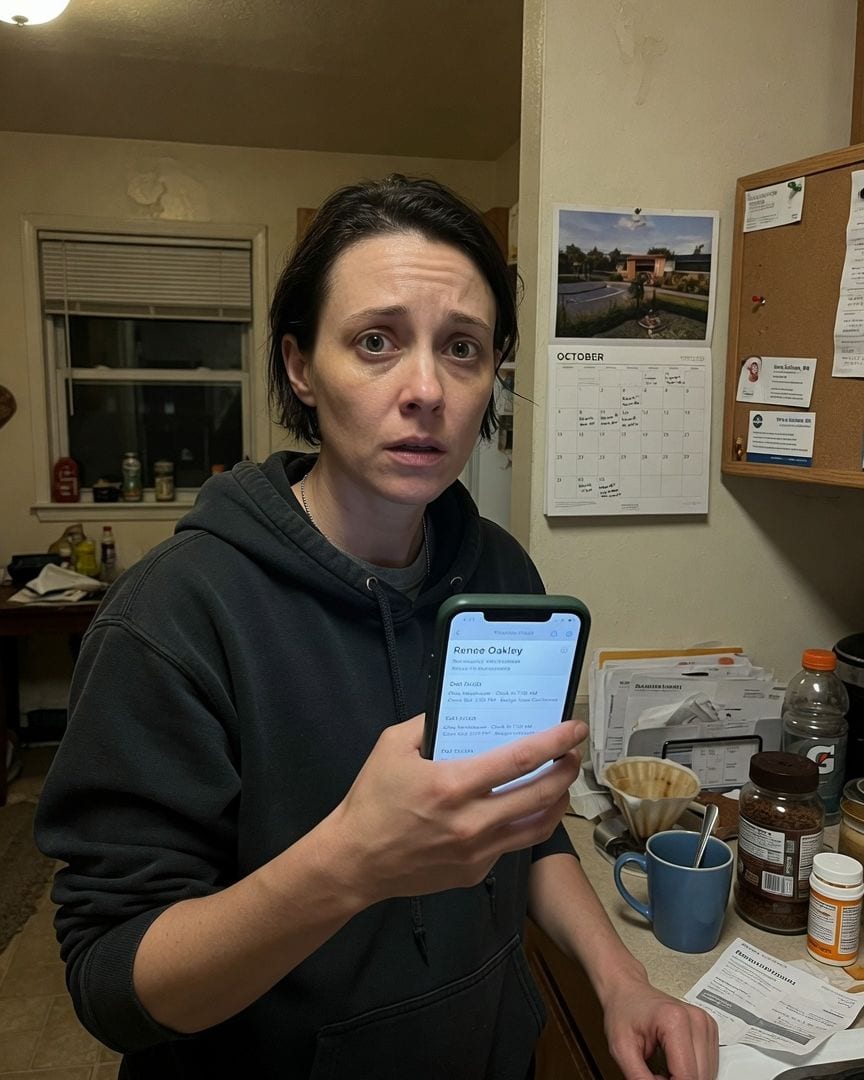
My company clock-in system says I worked full shifts in Ohio all last week. I was on medical leave in Florida, under a nurse's care.
Back home from medical leave, my payroll deposit was unexpectedly high. I checked my timesheet, only to find it logged me working full 40-hour shifts at the Ohio warehouse. But I was hundreds of miles away in Florida, confined to a sickbed under a nurse's care. Then my manager called: security footage confirmed I entered the warehouse.
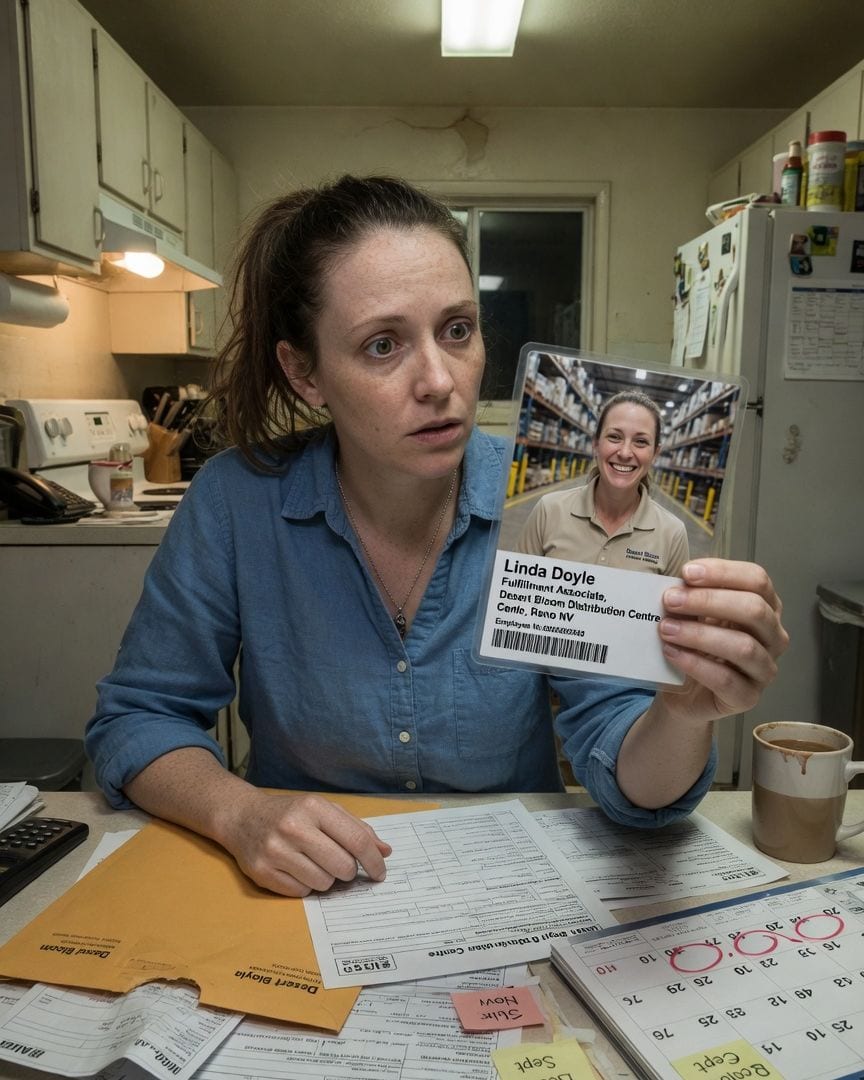
My tax notice lists six months of wages from a Nevada job I never held. Someone clocked in every day using my name. The pay went to an account I don’t own.
I'm Linda Doyle, 38, and a marketing coordinator in Ohio. An IRS W-2 arrived for a job in Reno, Nevada, that I never had. Despite my clear alibi, the company sent an employee ID card with my face on it, but the eyes in the photo were unsettlingly blank.
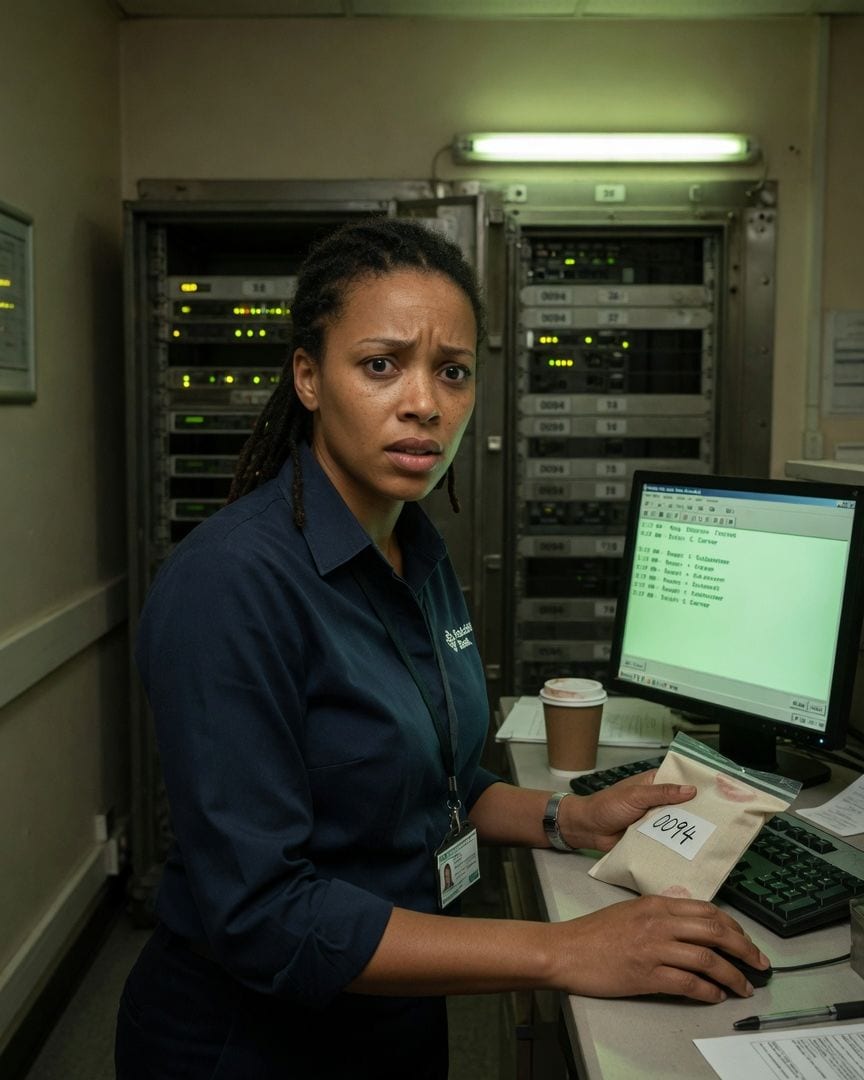
My night-deposit log shows a bag posted at 3:17 AM. My teller number, my count. Bag 0094 is still sealed in the safe, untouched.
I prided myself on precision as a night teller, logging every entry. But at 3:17 AM, a deposit appeared logged under my teller number that I never processed. Security footage then revealed a figure in my uniform, wearing my ID badge, with a blank photo slot.
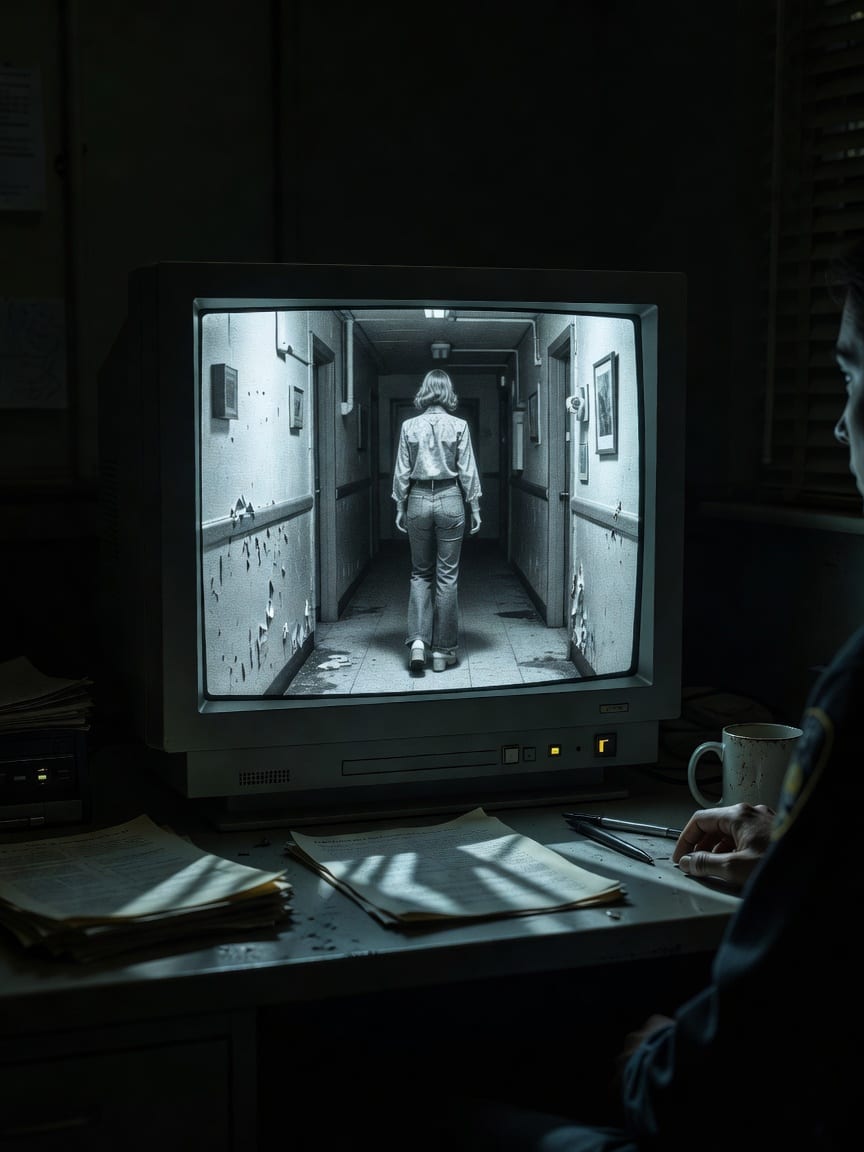
My intercom buzzed at 3 AM, a voice asking to step out for air. The station manager insists no one works the newsroom overnight, and no Cheryl is on payroll.
My shifts as the night security guard at WMVX are usually quiet, the TV station a tomb from 11 PM to 6 AM. But a late-night intercom call from a woman named Cheryl, who my manager says doesn't exist, was unsettling enough. The next night, my digital security log showed a new entry for 'Producer Cheryl Hartley'—a line I never typed, with details I couldn't have known.
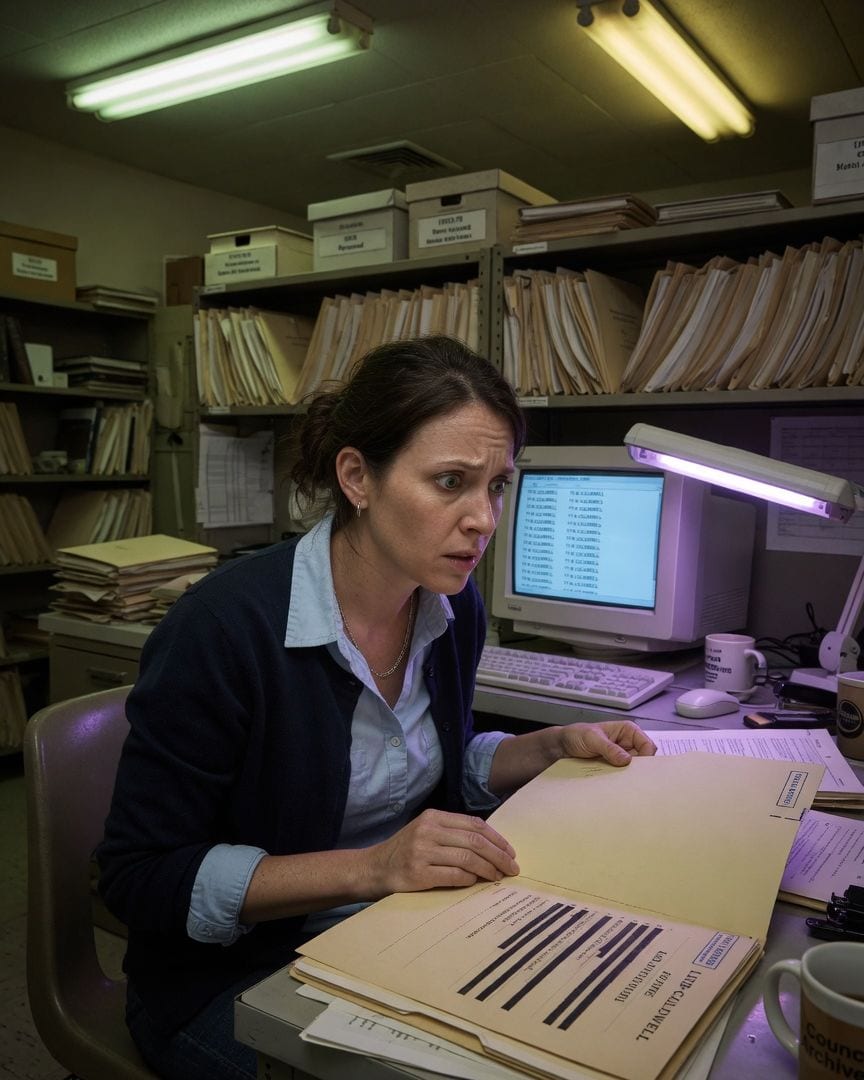
My employer's security file holds a vetting report on me dated nine years before I ever applied. It has my full name and my parents' address — with only one line, the source who referred me, blacked out.
Working a routine data audit, I pull my own security file. The issue date is nine years before I even applied for the job. Then, hidden within an old archive file, I find my current address etched under a blacked-out line.
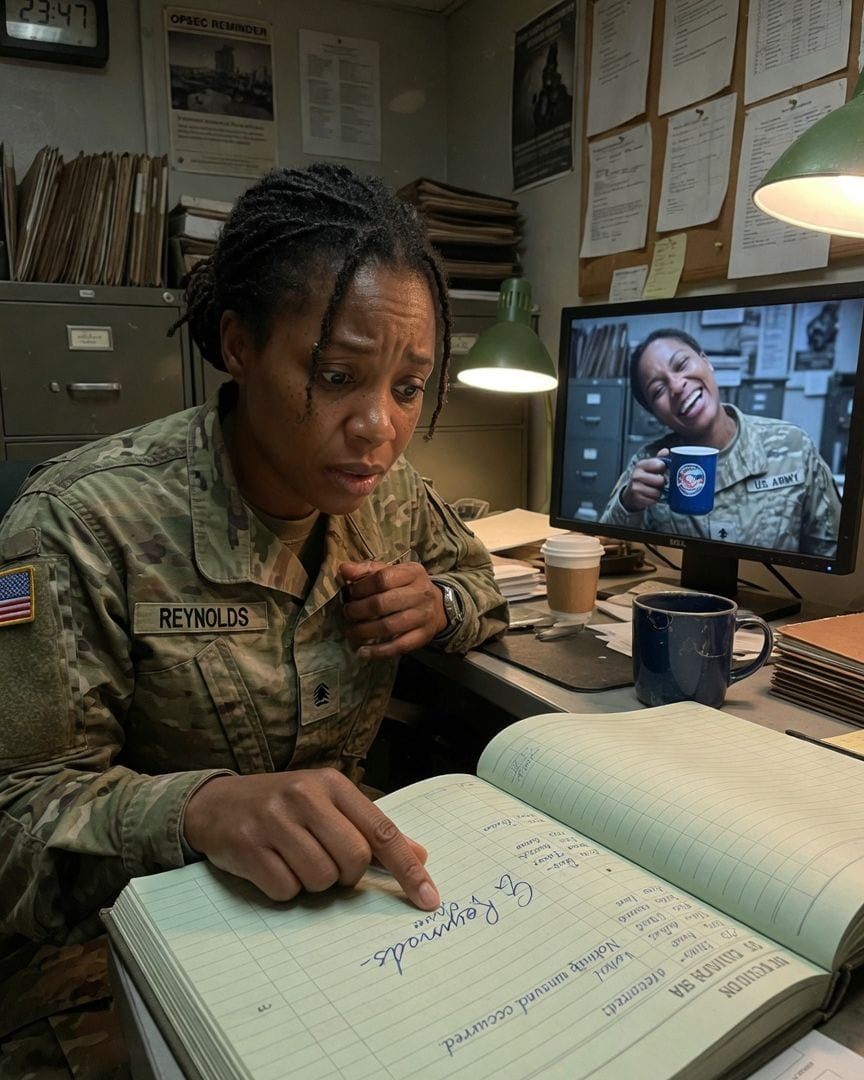
Lieutenant Grace Reynolds saw her own signature in the staff-duty log for a shift she never worked. The security footage then showed 'her' leaving a coffee mug she’d never once seen.
Lieutenant Grace Reynolds hunched over the battalion staff-duty log, the fluorescent hum of the records room a monotonous backdrop to her dry inventory audit. Her gaze snagged on an entry from three weeks prior: her own unmistakable signature, closing out a full 24-hour staff-duty shift she knew she had never worked. Security camera footage only deepened her unease, showing 'Grace Reynolds' moving with her familiar stride, laughing a shade too brightly, her head tilting a fraction too precise, like a flawless, chilling performance. But as the imposter turned to leave, she picked up and rinsed a chipped, dark blue ceramic coffee mug with a faded diner logo—a mug Lieutenant Reynolds had never once seen in her life. The air in the quiet room grew heavy, thick with the unspoken wrongness: if that wasn't her, then who was it?