My tax notice lists six months of wages from a Nevada job I never held. Someone clocked in every day using my name. The pay went to an account I don’t own.
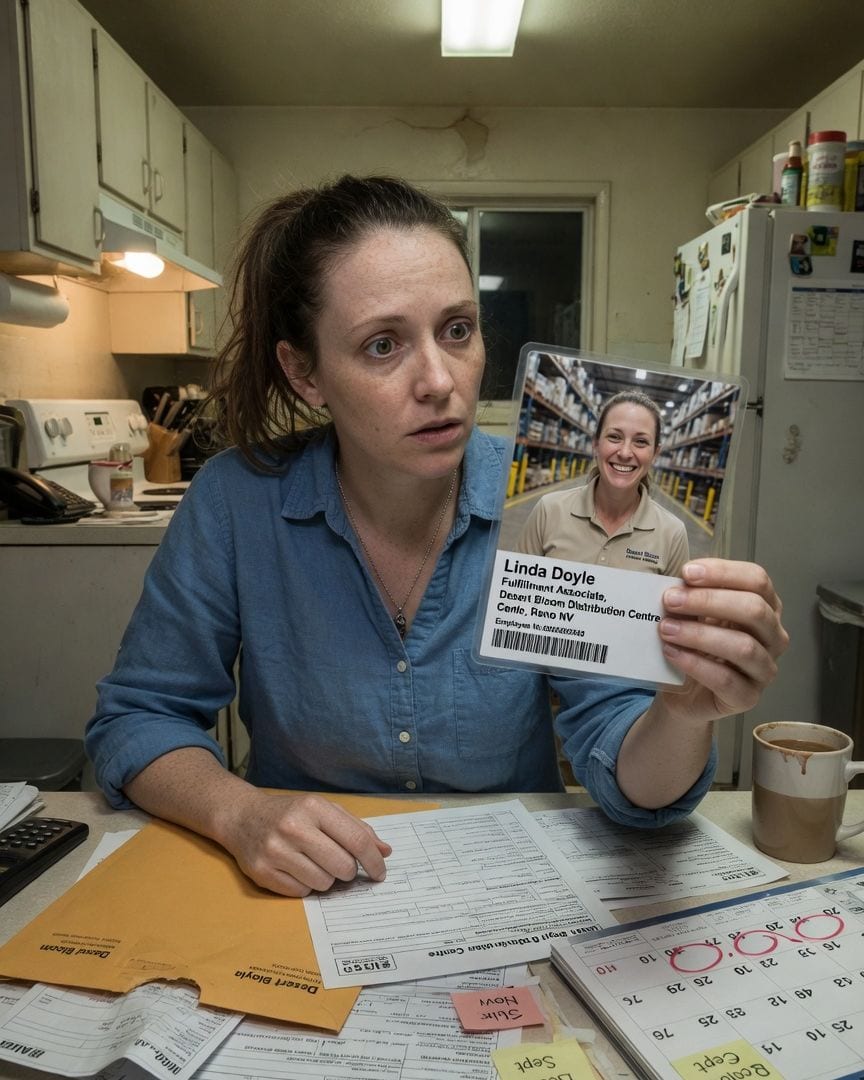
I sat at my kitchen table, the low hum of the refrigerator the only sound, staring at the IRS notice. It wasn’t a reminder, not a threat, just a simple W-2 form. Box 1: Wages, tips, other compensation.
Box 2: Federal income tax withheld. Box B: Employer identification number for 'Desert Bloom Distribution Centre' in Reno, Nevada. Last year. Six months of wages.
I’m Linda Doyle, 38, a marketing coordinator in Ohio. I’ve never been to Reno. Never even been to Nevada. My first thought, naturally, was a mistake. A clerical error. Happens all the time, right? Government paperwork is notorious for it.
I picked up my phone, called the number on the notice. After navigating endless automated menus, I finally got a woman on the line. She was polite, if a little bored. I explained the situation.
She tapped away, a faint clicking sound over the receiver. “One moment, ma’am.” Then, “Yes, Ms. Doyle. The W-2 for Desert Bloom Distribution Centre appears to be legitimate. Filed under your Social Security number.”
My stomach tightened. “That’s impossible. I’ve never worked there.”
“The system indicates otherwise, ma’am.” She offered no explanation, just a flat statement of fact.
I hung up, my hand shaking slightly, and dialed Desert Bloom directly. The HR representative, a cheerful voice named Brenda, confirmed it all. “Yes, Linda Doyle. Started June 3rd of last year, left December 2nd. Worked in our fulfillment department.
Clocked in every day, paid regularly. The wages were direct-deposited into an account at First Nevada Bank.”
First Nevada Bank. A bank I didn't recognize, in a state I’d never visited. I had no account there. Brenda cheerfully offered to resend my final pay stubs, confirming my address on file. It was my address.
The world, in that moment, didn’t just tilt. It spun, then slammed to a halt. The notice wasn't a mistake. It was a statement of fact that contradicted my entire reality.
Someone, somewhere, had lived six months of my life, used my name, earned money, paid taxes, and the government had the paperwork to prove it.
The next few days were a blur. Frantic phone calls to credit agencies, to the bank listed on the W-2 (they couldn't release information to someone not on the account, of course). I pulled up my credit reports—clean.
Not a single new line of credit, no strange loans, beyond the unknown bank account. This wasn't identity theft in the usual sense; no one was bleeding me dry.
I dug through my own records. My personal calendar from last year. My old flight itineraries. Photos on my phone. During those exact six months, I had been demonstrably elsewhere.
I had pictures of myself laughing with my sister in Oregon in July, a conference badge from Boston in September, the hospital wristband from a minor outpatient procedure at my local clinic in Ohio in November.
Irrefutable, linear proof of my own life. I compiled it all: a meticulous dossier of my alibi, a stack of papers detailing my undeniable presence in Ohio, not Nevada.
Then, a thick envelope arrived from Desert Bloom Distribution Centre. It felt official, weighty. My name and address printed neatly. I tore it open, my breath catching in my throat.
Inside were official employment verification letters, a few pay stubs—mirroring the IRS W-2 wages—and a 'welcome aboard' packet, inexplicably sent months after the 'employment' had ended.
Tucked inside, near the bottom, was a laminated employee ID card. My hands trembled as I pulled it out. The photo on the ID was of me. My face, my hair, the faint freckle above my left eyebrow.
But the smile, though slight, was wrong. Too wide, too still. And behind her, the blurred background of a brightly lit warehouse loading dock, unmistakably the distribution center I'd Googled. It was her. It was my face.
But it wasn't me. It was a physical, tangible piece of evidence that screamed a lie, holding my own likeness captive.
I traced the outline of the face on the photo ID with a shaky finger. The fluorescent lights of the kitchen reflected in the plastic laminate, catching the eyes in the picture.
They weren't quite my eyes—a subtle, unsettling blankness behind the forced cheerfulness. They seemed to stare, fixed and unblinking, into some distant, unknown point.
I flipped the card over, as if expecting a hidden message, but found only a barcode and a generic company logo. I looked from the photo to my reflection in the darkened window, then back to the card.
The person in the photo was performing 'Linda Doyle' for the camera, performing a life she never lived. My stomach twisted. It’s her, but it isn’t.
The photo ID, that smiling, blank-eyed stranger with my face, spurred me into a deeper, more desperate search. I started with public records in Reno, Nevada.
It was tedious work, hours hunched over my laptop, the screen light casting long shadows across my kitchen. But the internet was a vast, unforgiving archive.
Within a week, I found a rental agreement for a small apartment in a quiet Reno suburb, dated for the exact period of the W-2. The tenant was listed as 'Linda Doyle.'
Then came a utility bill, a library card registration, a gym membership. Each record, mundane on its own, painted a picture of a consistent, ordinary life, lived by someone with my name, in a town I'd never visited.
I even found a local newspaper article from the Reno Gazette-Journal about a community fundraiser, deep in their online archives. A blurry photo accompanied it, of volunteers setting up tables.
In the background, almost an afterthought, was a woman, undeniably me, with that same slightly off, too-wide smile, helping to drape a tablecloth.
The sheer volume of evidence was overwhelming, and terrifying. This wasn't a single isolated incident, a fluke W-2. This was a fully fleshed-out existence. The records were too clean, too cohesive to be simple identity theft.
A thief would bleed her accounts dry, not pay taxes and volunteer at fundraisers. This was something else, something far more insidious. My fingers flew across the keyboard, each new discovery ratcheting up a cold, internal pressure.
I felt a growing sense of dread, the unsettling certainty that I was not alone in my own skin, that a ghost of myself was walking the earth, leaving a paper trail I couldn't explain.
I tried to contact the rental agency listed on the Reno apartment agreement. The number was disconnected. The email bounced. I found another number, this one for the landlord directly. It rang twice, then a click, and a dial tone.
Nothing. Frustrated, my hands shaking, I posted a detailed account of my situation on a private online forum for identity theft victims, hoping someone, anyone, had seen something similar. I laid out everything—the W-2, the photo, the public records.
The next morning, an email appeared in my inbox. The sender was anonymous, the address a jumble of alphanumeric characters. The subject line read simply, 'Don't Look So Hard.'
The body text was a single, chilling sentence: 'Some things are better left undisturbed, Linda.' My blood ran cold. The air in my apartment seemed to thicken, suddenly heavy and still. Someone was watching me. They knew I was digging.
My heart hammered against my ribs, a frantic drum against the sudden silence. I deleted the post from the forum, my hands clumsy on the mouse, then emptied my trash.
Over the next few days, a dark grey sedan, unremarkable in every way, started appearing on my street. Sometimes it was parked three houses down, sometimes across the street.
Different times of day, never for long, always moving on before I could get a good look at the driver.
I’d catch glimpses of it from my window, a fleeting shadow, a quiet hum of an engine that seemed to vibrate the very glass.
The car was never there when I deliberately looked, only when I glanced up, caught off guard. The feeling of being observed, of my investigation being noticed, was a constant, suffocating pressure.
My hunt had turned into a desperate flight, and I didn't know who was behind me, or how close they truly were.
Desperate, feeling the walls closing in, I made an appointment with Jeffrey Rutherford, a lawyer known for his expertise in complex identity theft cases.
He was a man in his mid-fifties, with tired but sharp eyes that crinkled at the corners, giving him a perpetually weary but observant look.
I laid out my meticulously compiled evidence across his polished oak desk: the W-2, the employee ID, the Reno public records, the cryptic email, the description of the grey sedan.
Rutherford listened patiently, occasionally taking notes, his pen scratching quietly on a legal pad. The office felt hushed, the ticking of a grandfather clock in the corner suddenly loud.
He initially leaned towards an elaborate, sophisticated identity theft ring. “The level of detail here is extraordinary, Ms. Doyle. Most thieves are in it for quick cash, not building a second life with library cards and gym memberships.”
I pressed, leaning forward, my voice hoarse. “But why? Why pay taxes, volunteer? Why not just drain an account? It doesn't make any sense for identity theft.”
Rutherford sighed, leaning back in his chair, the leather groaning softly. “That’s the part that doesn’t fit, exactly. I’ve seen… a handful of cases like this over the years. We called them 'phantom identities.'
People who seem to exist, but without a clear original. Often linked to defunct or obscure corporations, or shell companies that vanish as quickly as they appear.”
He paused, picking up the photo ID from the stack, turning it over in his fingers. “The physical resemblance is, frankly, unprecedented in my experience with ID theft.
It’s almost as if… someone else is simply living your life, in parallel. A doppelgänger, if you will, but with official paperwork.” He picked up a pen, tapping it against his desk.
“There was a man, a data analyst named Quentin Blackwood. He was obsessed with these cases, theorized about some kind of systemic anomaly, a glitch in the fabric of official records.
He even suggested a pattern across dates and names, but it was too fringe for most. He worked for a financial auditing firm, then disappeared from public view. Said he was getting too close to… something.
I have an old contact for him. He might be able to shed some light.” The idea of a 'phantom identity' resonated with me more than any criminal explanation. It felt closer to the cold, unsettling truth.
Jeffrey Rutherford’s contact proved fruitful. Quentin Blackwood, now retired and living quietly in a small bungalow an hour’s drive away, agreed to meet me in a neutral coffee shop.
He was a gaunt man in his early sixties, with piercing, intelligent eyes that seemed to see too much, to look right through you.
I laid out my story again, holding back nothing, watching his face for any flicker of disbelief or shock. He listened, nodding occasionally, a faint, unreadable smile playing on his lips.
The clatter of cups and the murmur of conversation around us felt distant, muted by the intensity of his gaze.
When I finished, he didn't offer sympathy or shock. He simply reached into his worn leather satchel, pulled out a small, unassuming laptop.
He opened it, typed a few commands, his fingers moving with an practiced precision, and then pushed the screen towards me.
On the screen, a spreadsheet glowed, stark white columns and rows against the dark background. Linda’s name, clear as day, was listed in the first column: 'Linda Doyle'. My Social Security number was there, too, an unnerving confirmation.
But next to it, under a column simply titled 'ORIGIN', was a date: '04/12/1980'.
My breath caught in my throat. My mind raced, trying to process the numbers, to make them fit. I wasn't born until 1985. The date on the screen was five years before I existed.
The coffee shop’s chatter faded to a distant hum. My own name, my own identity, had an origin point that predated me. It wasn't a mistake, it was a system. And I was inside it, long before I even knew.
Quentin Blackwood leaned forward, his voice calm, almost academic, as if discussing market trends. “That date, Linda, is not when you were born. It’s when your 'Echo' was conceived within the system.
Not stolen, not duplicated in a crude sense, but… templated. Your identity, or rather, the blueprint of it, was established by a network. For 'stabilization,' they call it. To fill specific, otherwise vacant, economic or social roles. Your Nevada W-2?
That was your Echo, meticulously performing its assigned task.”
He gestured to the screen. “The system is designed to be seamless, undetectable. The W-2 was an anomaly, a reporting glitch that brought your Echo’s activities into your awareness. A rare breach. Most people never find out.”
He explained that the Echoes are physical, subtle duplicates, capable of living, working, and interacting, almost indistinguishable from the original, yet distinct. They don't drain bank accounts because they have their own, funded by their own 'earnings.'
The purpose isn't malice or profit, but a quiet, almost imperceptible maintenance of societal functions, filling gaps, generating data. The organization, he vaguely hinted, was ancient, operating beneath the surface of officialdom, its motives inscrutable but consistent. It simply is.
“The pattern across dates and names, as you’ve discovered,” he continued, his eyes meeting mine, “is simply the system at work. Many such Echoes exist, some for decades, some for centuries.
Yours just happened to be one of the more recent activations, and the reporting system finally caught up.” The coherence of it all was the most horrifying part.
Every impossible record, every uncanny detail, now clicked into place, forming a terrifying, logical whole. The photo ID, the Reno apartment, the newspaper clipping – they weren't random. They were the meticulously documented existence of another me.
I stared at Quentin, the calm explanation far more terrifying than any threat. My throat felt dry, constricted. “So, what do I do?” I whispered, my voice hoarse, barely audible above the faint whir of his laptop.
Quentin shrugged, a gesture of profound resignation. “Most people, when they learn, choose to do nothing. They accept the Echo’s existence. It’s a parallel life, not a parasitic one. It doesn’t actively harm you, beyond the psychological burden of knowing.
Some even describe a strange comfort in it, a sense of not being truly alone.” He paused, his gaze softening slightly, a flicker of something almost like empathy.
“But there is a way to sever the connection, to re-align your identity. It’s… a procedure. Not dangerous, physically. But the Echo is linked to you, intrinsically. Any disruption to its existence, its 'life,' reverberates back.
It’s like cutting off a limb you never knew you had. There will be an absence. A void. Memories, experiences, even subtle personality traits that were shared, will simply… vanish. You will be whole, but a different whole.”
The calm in his voice, the detached way he described the loss of a part of myself, was chilling. It wasn't a threat; it was a simple, unavoidable fact.
I felt a surge of defiant anger, hot in my chest, battling the cold dread. “I can’t live like this. Knowing a piece of me, or a version of me, is out there, living a life I don’t recognize.
I need it to stop.”
Quentin sighed, a long, weary sound that seemed to carry the weight of decades. “Very well.” He opened his satchel again, this time retrieving a small, metallic device, no bigger than a paperback book, with a single, smooth, obsidian-like surface.
It hummed faintly in his hand, a low, almost imperceptible vibration. “This will re-establish the primary signature. The Echo will… cease to be. And you, Linda Doyle, will be entirely your own.”
The quiet certainty of his words, the finality of it all, made the air feel thin, hard to breathe. I swallowed hard, my decision made, but the dread was palpable, a physical weight. I had to take the chance.
I couldn’t share my life, my self, with a ghost.
The procedure was swift, almost anticlimactic. Quentin placed the device on my forehead for a few minutes, a faint warmth blooming behind my eyes, then fading.
There was no pain, no dramatic flash, just a subtle, internal shift, like a quiet click, as if a distant door had closed. He packed up his laptop, the device, and left, a shadow slipping back into the ordinary day.
Afterward, I felt… lighter. Emptier. Over the next few days and weeks, the Nevada records began to vanish from public databases, rescinded, retracted. The rental agreement disappeared. The W-2 was officially declared a 'clerical error' by the IRS.
My credit report was pristine again, the First Nevada Bank account a digital ghost that never was. The grey sedan was never seen again on my street.
Life resumed its normal rhythm, but I found myself often pausing, staring blankly, trying to grasp a thought, a memory, that felt just out of reach.
A quiet absence had settled within me, a ghost of a life she never knew she lived, now gone.
Weeks turned into months. I went back to work, saw my friends, lived my life. But the edges of my memories felt frayed, some details just a little too distant, like stories I’d heard rather than lived.
I'd find myself searching for a word, a name, a familiar feeling, only to realize it wasn't there. It wasn't a gaping hole, just a subtle erosion, a quiet hum that had stopped.
One morning, brushing my teeth, I paused, staring at my reflection in the bathroom mirror. My face, undeniably hers, looked back. But the eyes held a stillness, a depth I hadn't noticed before, and a faint, almost imperceptible knowing.
I smiled, a small, private smile. It felt entirely my own, yet somehow, foreign. I leaned closer to the mirror, examining the faint freckle above my left eyebrow. It was still there. Everything was.
But the quiet absence was a constant companion, a reminder of the other Linda, and the choice I’d made. The face in the mirror seemed to echo my thoughts, a silent, unsettling understanding.
I was myself, yes, but no longer just myself. I was the one who remained. The quiet was the worst part; the silence where a life used to be.
The post on the online identity theft forum, originally deleted, reappeared a year later, a single, cryptic comment beneath it. The last line read: 'Sometimes, when I catch my reflection, I wonder who is truly looking back.'
If this one got to you
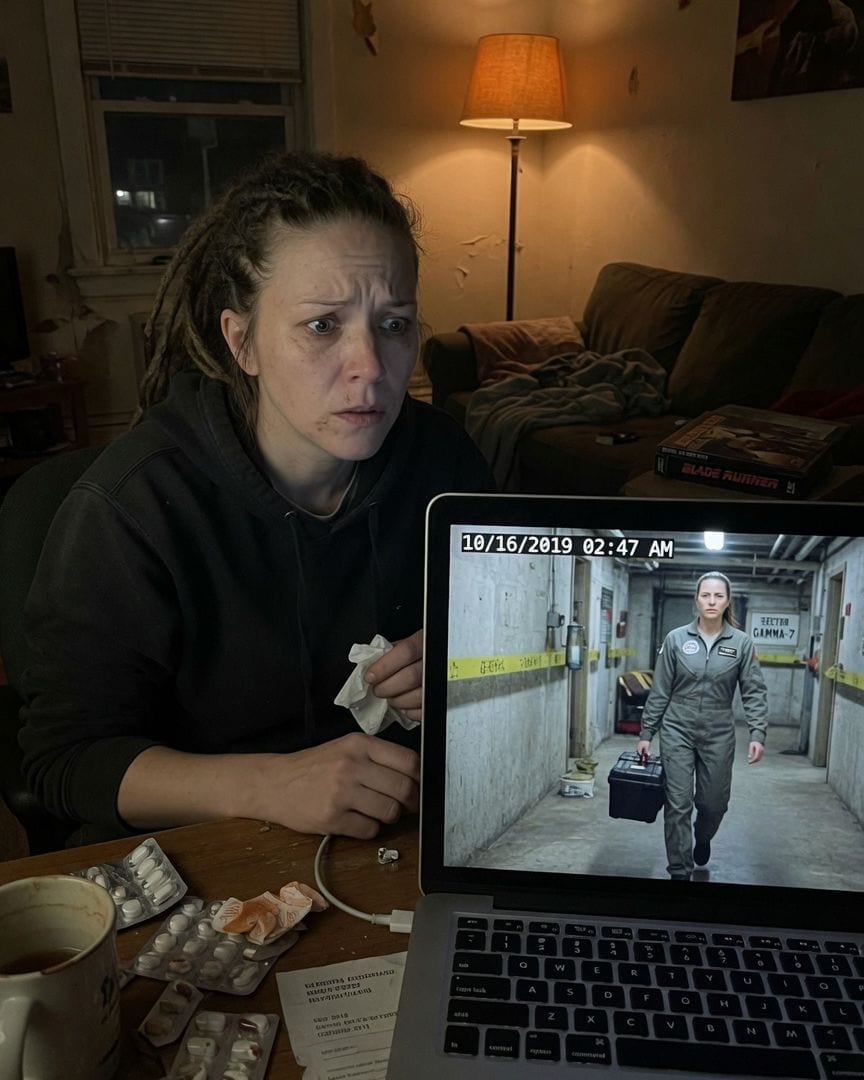
My timesheets show me working night shifts in a town I never lived in. The signatures are mine. The pay went to an account that isn't.
An old employer sent me timesheets from five years ago, detailing night shifts I supposedly worked at a depot 80 miles away. But I knew I was home recovering from surgery that entire week, nowhere near the industrial town. Then a security photo arrived, showing my face in an unfamiliar uniform, working a shift that wasn't quite me.
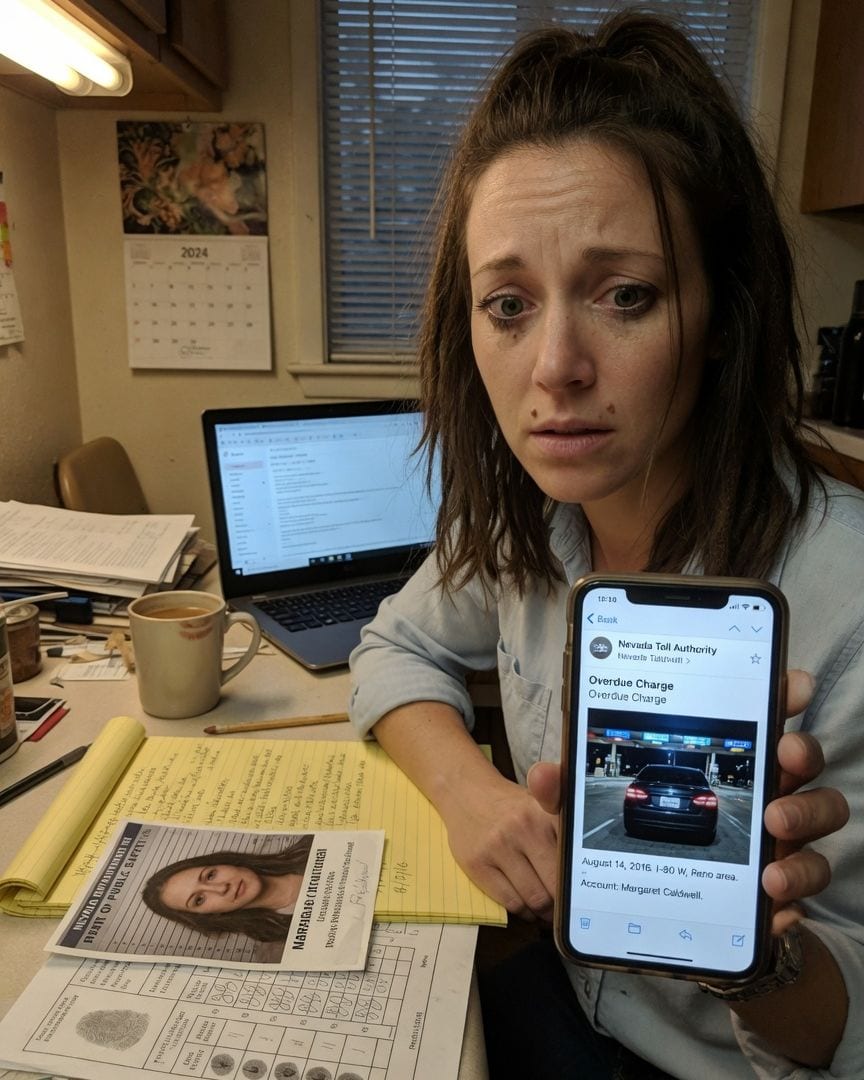
My fingerprints came back to a Nevada arrest eight years ago. Same name, same birth date, same younger face in the booking photo. I’ve never been to Nevada.
My life was predictable, stable, and utterly ordinary. Then, during a routine background check, my fingerprints returned a match to an arrest in Nevada eight years ago. I'd never been to Nevada, yet the booking photo was undeniably my own face, staring back from a life I'd never lived.
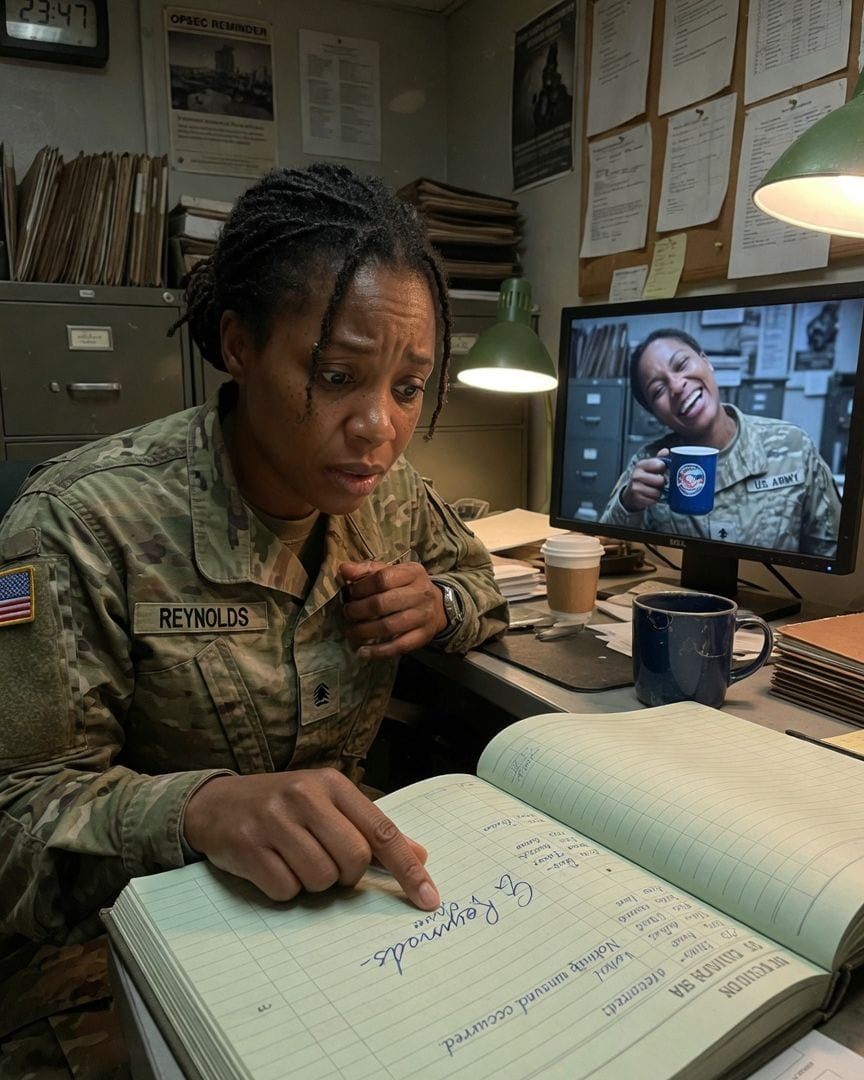
Lieutenant Grace Reynolds saw her own signature in the staff-duty log for a shift she never worked. The security footage then showed 'her' leaving a coffee mug she’d never once seen.
Lieutenant Grace Reynolds hunched over the battalion staff-duty log, the fluorescent hum of the records room a monotonous backdrop to her dry inventory audit. Her gaze snagged on an entry from three weeks prior: her own unmistakable signature, closing out a full 24-hour staff-duty shift she knew she had never worked. Security camera footage only deepened her unease, showing 'Grace Reynolds' moving with her familiar stride, laughing a shade too brightly, her head tilting a fraction too precise, like a flawless, chilling performance. But as the imposter turned to leave, she picked up and rinsed a chipped, dark blue ceramic coffee mug with a faded diner logo—a mug Lieutenant Reynolds had never once seen in her life. The air in the quiet room grew heavy, thick with the unspoken wrongness: if that wasn't her, then who was it?
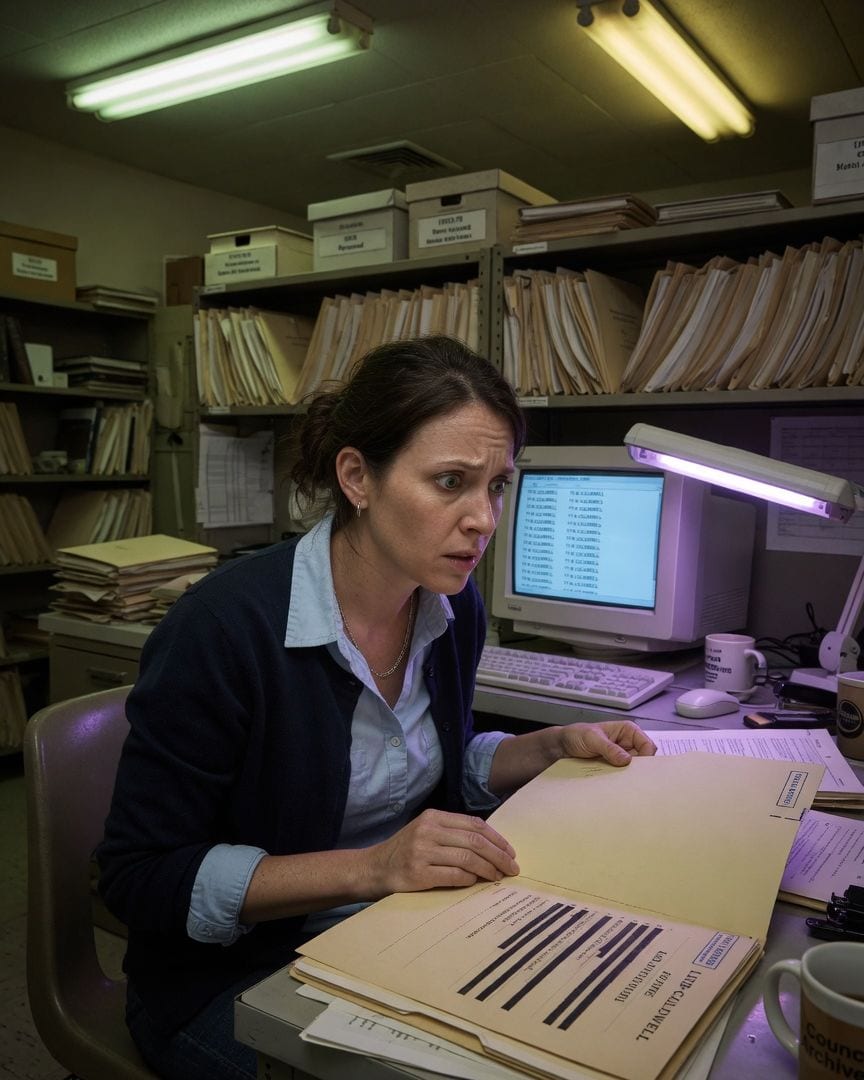
My employer's security file holds a vetting report on me dated nine years before I ever applied. It has my full name and my parents' address — with only one line, the source who referred me, blacked out.
Working a routine data audit, I pull my own security file. The issue date is nine years before I even applied for the job. Then, hidden within an old archive file, I find my current address etched under a blacked-out line.
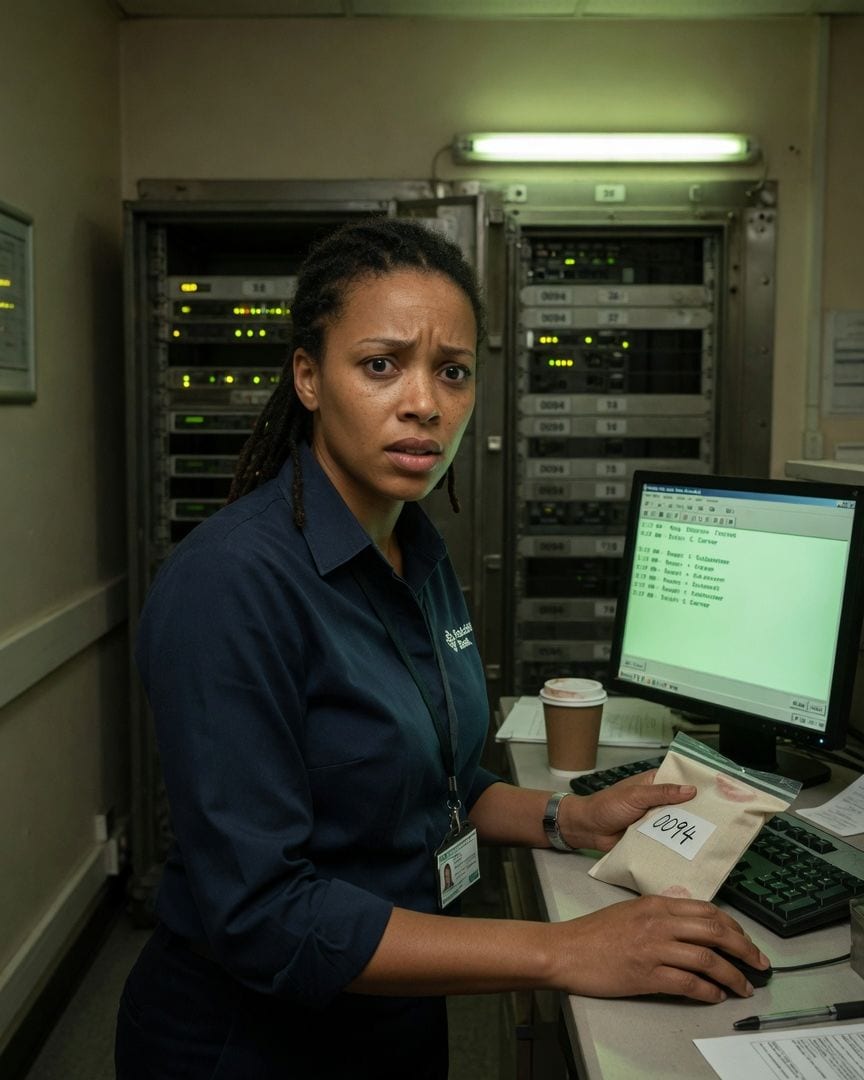
My night-deposit log shows a bag posted at 3:17 AM. My teller number, my count. Bag 0094 is still sealed in the safe, untouched.
I prided myself on precision as a night teller, logging every entry. But at 3:17 AM, a deposit appeared logged under my teller number that I never processed. Security footage then revealed a figure in my uniform, wearing my ID badge, with a blank photo slot.
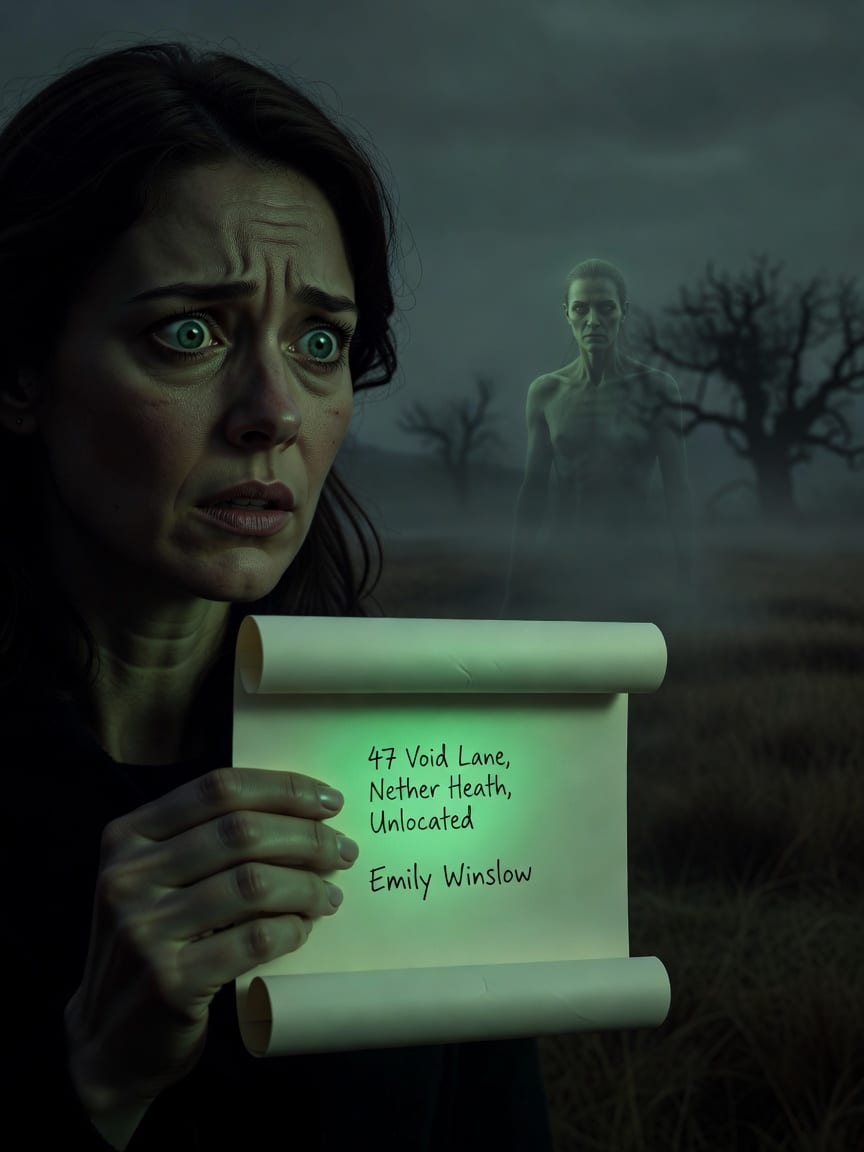
My change-of-address card arrived today. It said I'd moved to a house I'd never seen, on a street that didn't exist. And it was signed with my own hand, a month from now.
A crisp, cream-colored card on my kitchen counter informed me I'd moved to 42 Willow Creek Lane, an address that didn't exist. The signature was my name, Emily Winslow, a chillingly precise ghost of my own handwriting. But then I found an old 1947 ledger, listing 42 Willow Creek Lane and a signature identical to the one on my card.